
Da Lat Travel Guide: What to See, How Many Days, Weather, Prices and Where to Stay
No international flights land in Da Lat, so you connect through another Vietnamese city, and once you arrive most of the sights sit within ten minutes of the lake. Below: what to see and in what order, how many nights it takes, the official ticket prices, the weather month by month and which area to sleep in.
| Getting there | No international flights. Connect in Ho Chi Minh City, Hanoi or Da Nang, or drive 135km up from Nha Trang. |
|---|---|
| Airport to town | Lien Khuong to Xuan Huong Lake is 35.4km and 33 minutes by road. |
| How compact | Of the 38 sights we mapped, 26 are within a 7-minute drive of the lake. |
| Temperature | Daily highs stay between 21.4C and 25.3C all year; dawn drops to 11.7C in January. |
| Rain | September brings 283mm over 24 days; January brings 9mm over 2.2 days. |
| Tickets | Langbiang 50,000 VND, Datanla 80,000 VND, cable car 150,000 VND return, adult rates. |
1. Da Lat in short
2. The airport reopened, but not to international flights
3. Three ways in from outside Vietnam
4. From Lien Khuong to town
5. Overland: buses, sleeper vans and the Easy Rider route
6. What counts as Da Lat now
7. Drive times from the lake
8. Getting around town
9. How many nights
10. A four-day plan that uses the measured times
11. What things cost: the official price list
12. The cable car and Truc Lam
13. Datanla: the falls, the coasters and the canyoning
14. Langbiang and the radar peak
15. The Trai Mat train and Linh Phuoc
16. Lakes, gardens and waterfalls
17. Cau Dat: tea, arabica and the greenhouses
18. What the French left behind
19. Weather month by month
20. When to go
21. Where to stay
22. What to eat
23. What to bring home
24. What a day costs
25. Onward from Da Lat
26. Things worth knowing before you go
27. 🌸 More Vietnam guides
1. Da Lat in short
🏨 Where to stay in Da Lat: which places you can actually walk from →
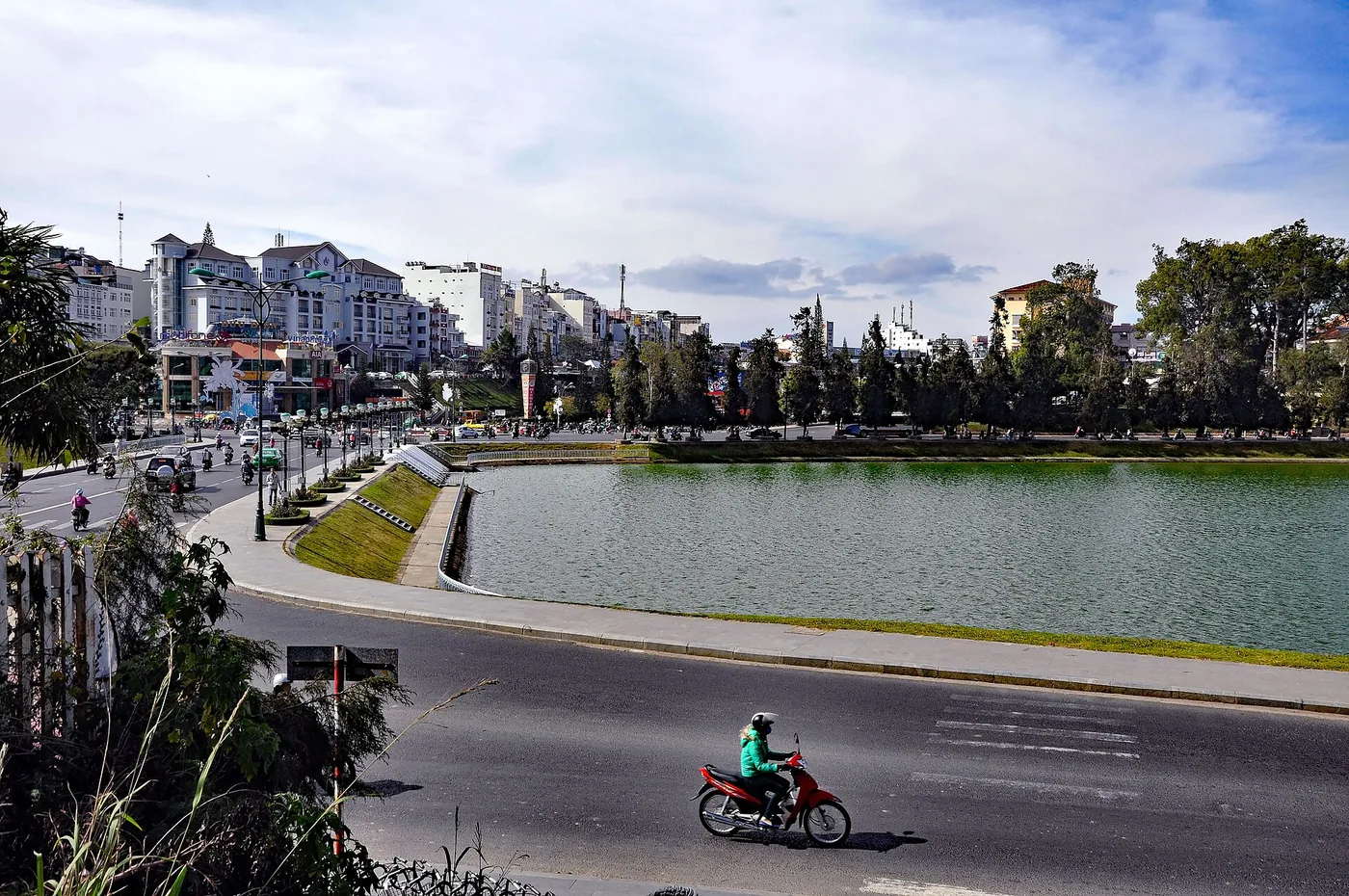
Nothing flies to Da Lat from outside Vietnam. You connect through Ho Chi Minh City, Hanoi or Da Nang, or you drive up from the coast at Nha Trang. The compensation is that distances inside town are tiny. We geocoded 38 sights and measured the driving time to each one: 26 of them are within seven minutes of Xuan Huong LakeMap.
The town sits at 1,500m on a plateau in the Central Highlands. That altitude is the whole reason it exists. Daily highs never pass 25.3C in any month, and mornings in January can start at 11.7C. People come up here from Ho Chi Minh City to put on a jacket.
The basics
| Item | Detail |
|---|---|
| Where | Lam Dong province, Central Highlands, 1,500m above sea level, 300km northeast of Ho Chi Minh City |
| Airport | Lien Khuong (DLI), 35km from town, a 33-minute drive |
| Domestic flights | Ho Chi Minh City, Hanoi, Da Nang, Vinh, Hai Phong and Can Tho |
| International flights | None scheduled right now. Kuala Lumpur is planned at four a week, Singapore at three a week from December |
| Temperature | Highs 21.4C to 25.3C, lows 11.7C to 16.4C |
| Dry season | December to March. January averages 2.2 rain days in the whole month |
| Suggested stay | Three nights covers town, Langbiang and Cau Dat |
What people actually do here
There is no coastline and there are very few old monuments. What Da Lat has is cool air, coffee and tea farms, French-era buildings, waterfalls and one serious mountain. It also has the only cable car in the province, the longest alpine coaster in Southeast Asia, and the canyoning industry that most Vietnam itineraries mean when they say adventure sports.
UNESCO added Da Lat to its Creative Cities network under music. Live music venues and festival programming have grown since then, and the flower festival now runs music stages alongside the flower displays.
2. The airport reopened, but not to international flights
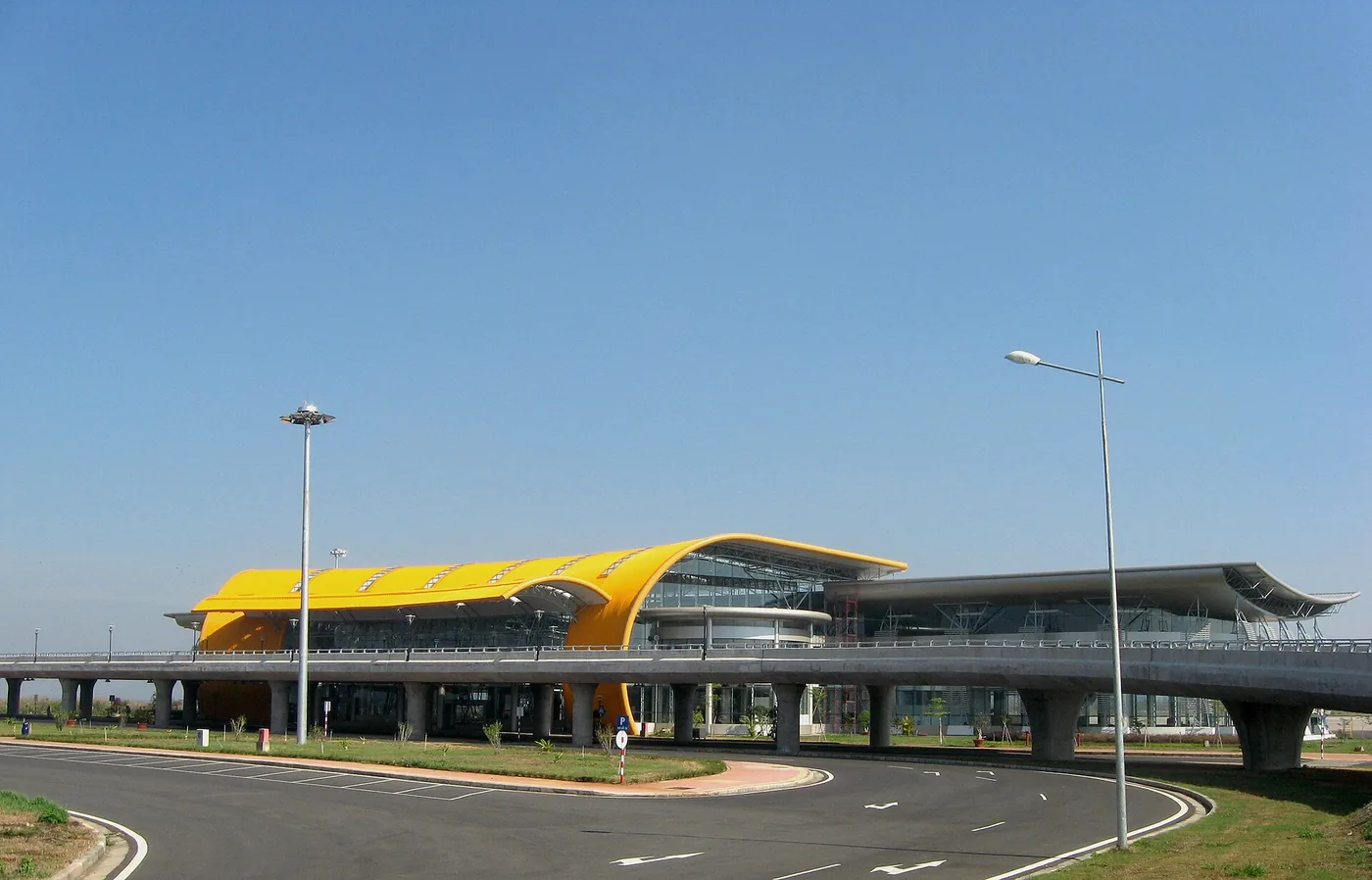
Da Lat is served by Lien Khuong (Liên Khương, DLI)Map. The name says international. The schedule currently does not.
Five and a half months closed
The runway had worn out, so the airport shut completely at midnight on 4 March and stayed shut while it was rebuilt. The old asphalt surface came out and a cement concrete one went in across the full 3,250m by 45m of runway 09/27. The project cost 1,032 billion dong.
It reopened at 00:01 on 19 August. The first arrival was Vietnam Airlines VN1380 from Ho Chi Minh City, which touched down at 07:05 with around 200 passengers and crew aboard. For those five and a half months the only way into Da Lat was by road, and that is no longer the case.
Which domestic routes run
| From | Airlines | Note |
|---|---|---|
| Ho Chi Minh City (SGN) | Vietnam Airlines, Vietjet | The densest route by some way |
| Hanoi (HAN) | Vietnam Airlines, Vietjet | The other main trunk route |
| Da Nang (DAD) | Vietnam Airlines, Vietjet | The only direct link from the centre |
| Vinh (VII) | Vietjet | Low frequency |
| Hai Phong (HPH) | Vietjet | Low frequency |
| Can Tho (VCA) | Vietnam Airlines | The Mekong Delta connection |
The airport expects 36 to 40 movements and about 6,800 passengers a day in this first phase, and roughly 816,000 passengers across the rest of the year. The rebuilt runway is rated 4D, which covers the A320, A321, ATR72 and similar aircraft. Wide-bodies still cannot use it.
International service
There are no scheduled direct flights from Korea, Japan, China, Taiwan, Hong Kong, Thailand or anywhere else in the region. Two routes are planned: Kuala Lumpur at four flights a week, and Singapore at three a week resuming in December. Anyone arriving from outside Vietnam should plan on a domestic connection.
3. Three ways in from outside Vietnam
Because there is no direct international service, the first planning decision is where you break the journey.
Connect in Ho Chi Minh City
This is the path with the most departures. Tan Son Nhat has several Da Lat flights a day and the hop takes about 50 minutes. Leave a real gap between arrival and connection: the international and domestic terminals are separate buildings and you will normally reclaim and recheck bags. Our Ho Chi Minh City guide covers the city end.
Connect in Da Nang
Useful if you are already doing the centre. The Da Nang to Da Lat flight is about an hour, but frequencies are lower than out of Saigon, so check the schedule before you fix the Da Nang half of your trip. See the Da Nang guide.
Come up by road from Nha Trang
If you are on the coast already, skipping the second flight often makes more sense. It is 135km from central Nha Trang to central Da Lat. Road data gives 2 hours 9 minutes with clear traffic; in practice, with the climb and the bends, allow three and a half to four hours. Our Nha Trang guide has the coast end. The vehicles, fares and departure times for that drive are in how to get from Nha Trang to Da Lat.
| Route | Time | Best when |
|---|---|---|
| Via Ho Chi Minh City | 50-minute hop, many daily | Da Lat is the main destination |
| Via Da Nang | 1-hour hop, fewer daily | You are combining with the centre |
| Road from Nha Trang | 3.5 to 4 hours | You want beach and highlands in one trip |
Entry paperwork
Many nationalities enter Vietnam visa free for 45 days, and an e-visa covers the rest for up to 90 days. Da Lat has no international entry point, so you will clear immigration wherever you land first. The current rules are in our Vietnam entry guide.
4. From Lien Khuong to town
The airport is not on the edge of town. It is 35.4km out, and road data puts the drive at 33 minutes on National Highway 20 up over the Prenn Pass.
Choosing how to cover it
| Option | Cost | Note |
|---|---|---|
| Airport bus | Low | Runs into the centre. Fixed departures, and awkward with large bags |
| Taxi or ride-hailing app | Mid | App bookings quote the fare before you get in |
| Pre-booked transfer | Mid to high | Driver meets you with a name board. Splits well across three or more people |
Late arrivals
The airport bus runs from early morning to evening. A late flight can land after the last one, so if your arrival is at night, arrange the car in advance. The Prenn Pass is a winding climb and takes longer in the dark.
The expressway is still being built
The road up from the south is being upgraded in two sections, Tan Phu to Bao Loc and Bao Loc to Lien Khuong. The Bao Loc to Lien Khuong section is 73.6km, designed for 100km/h, and budgeted at 17,718 billion dong. Neither section is open, so everything still runs on Highway 20 for now.
Sorting out data before you land makes the taxi app work from the arrivals hall. See our Vietnam eSIM guide.
5. Overland: buses, sleeper vans and the Easy Rider route
A large share of visitors still arrive by road. Below are road-data times from each city to Xuan Huong Lake alongside what buses actually take. The gap is the mountain sections.
| From | Distance | Road data | Real bus time |
|---|---|---|---|
| Ho Chi Minh City | 300km | 3h 50m | 6 to 8 hours |
| Nha Trang | 135km | 2h 09m | 3.5 to 4 hours |
| Phan Thiet | 177km | 2h 07m | About 4 hours |
| Mui Ne | 197km | 2h 27m | 4 to 5 hours |
| Buon Ma Thuot | 184km | 3h 02m | 4 to 5 hours |
| Da Nang | 629km | 8h 34m | 12 hours plus, overnight |
Three classes of bus
Sleeper buses have reclining berths and are the cheapest. Limousine vans seat nine to eleven in wider seats and cost roughly double, but they are far more comfortable on mountain roads. A private car is the whole vehicle, which starts to make sense at three passengers or more.
The Easy Rider ride
Da Lat is one end of the best known motorbike route in the country. Riders take passengers over the passes to Mui Ne, Nha Trang or Hoi An on the back of the bike, with luggage strapped on, over one to four days. It is a genuine way to see the highlands rather than a novelty, but you are on a motorbike for hours, so check the operator, the insurance and the bike before you commit.
Where buses stop
Most intercity services use the Da Lat intercity bus stationMap, 4.1km and five minutes from the lake. Some companies pick up and drop off at their own downtown offices instead, so confirm the boarding point when you buy.
The full picture on moving around the country is in our Vietnam transport guide.
For Mui Ne and Phan Thiet on their own, our Mui Ne and Phan Thiet guide covers both dunes with their prices, the measured drive times, the train days and where along the strip to stay.
6. What counts as Da Lat now
One thing to know before you read any map. Da Lat is no longer a city-level unit; it was split into five wards reporting straight to Lam Dong province, and in the process Lac Duong was folded in.
The five wards
| Ward | What is inside it |
|---|---|
| Xuan Huong – Da Lat | The lake, the market, the cathedral, the railway station, the cable car, Datanla, Tuyen Lam Lake |
| Lam Vien – Da Lat | The city flower garden, the Valley of Love, Than Tho Lake, Da Lat University |
| Cam Ly – Da Lat | Cam Ly falls, Domaine de Marie church, Cam Ly church |
| Xuan Truong – Da Lat | Trai Mat, Linh Phuoc pagoda, the Cau Dat tea hills |
| Lang Biang – Da Lat | Langbiang mountain, Cu Lan village, the Bao Dai palaces |
Why it matters to you
Older articles file Langbiang and Cu Lan village under day trips from Da Lat. They are inside the same administrative unit now. The driving distance is the same as it always was. What changes is the address: booking sites and map apps may show a ward name your guidebook has never heard of.
The province around it also grew. Lam Dong absorbed Dak Nong and Binh Thuan and now has 124 commune-level units, with Da Lat as the provincial seat. In practice that means the Mui Ne and Phan Thiet beaches are in the same province as the highlands, which makes a mountain-and-coast itinerary a little easier to justify. The wider region is covered in our southern Vietnam guide.
7. Drive times from the lake
This is the most useful table in the guide. We took Xuan Huong Lake as the origin and measured driving time and distance to every sight on our list.
Within seven minutes
| Place | Drive | Distance |
|---|---|---|
| Night marketMap | 2 min | 1.6km |
| Da Lat marketMap | 3 min | 1.9km |
| CathedralMap | 3 min | 2.1km |
| Lam Vien SquareMap | 3 min | 2.6km |
| Railway stationMap | 4 min | 3.1km |
| Crazy HouseMap | 4 min | 2.9km |
| Lam Dong MuseumMap | 4 min | 3.7km |
| Cam Ly fallsMap | 4 min | 3.7km |
| Domaine de MarieMap | 5 min | 3.5km |
| Valley of LoveMap | 5 min | 4.4km |
| Bao Dai Palace IIIMap | 6 min | 3.8km |
| Trai Mat stationMap | 6 min | 6.8km |
| Linh Phuoc pagodaMap | 7 min | 7.9km |
Everything further out
Read the two tables together and the shape of a day appears. The first group can be strung together on foot and by short taxi hops. Cau Dat and Pongour have to be planned as trips in their own right. Datanla and the Prenn Pass sit on the road in from the airport, which makes them easy to bolt onto an arrival or departure day.
Short distances are not an argument for renting a scooter without thinking. The gradients are steep, morning fog is common and the roads bend constantly.
8. Getting around town
Da Lat is compact but it is not flat. The streets run over the hills around the lake, so a walk that looks like 400m on a map can include a serious climb.
Ride-hailing apps
App-based cars and motorbikes both operate here. The fare is quoted before you accept, which removes the negotiation and the address problem at once. Fares within town are low enough that using the app for every hill is reasonable.
Motorbike pickups are cheaper again if you are alone with no luggage. Bear in mind that the temperature at night is genuinely cool and that in heavy rain you will wait a long time.
Metered taxis
Metered taxis are easy to find. Use a branded company car and check that the meter is running. Cars waiting outside the market or hotels sometimes prefer to agree a price instead.
Public buses
There are local bus routes, but they are infrequent and few of them stop at the entrance of anything you came to see. Unless time is very cheap for you, they are not a practical way to sightsee.
Hiring a car with a driver
On a day that includes Cau Dat, Pongour or Cu Lan village, hiring a car and driver for the day usually works out better than a string of app rides, because waiting time is included and you are not standing at a tea farm hoping something turns up.
Walking
The lake has a continuous path all the way around, and the lake to the market to the cathedral works well on foot. Look at the contours before you plan anything else that way.
| Where | Best option | Why |
|---|---|---|
| Lake and market | Walk | Flat and short |
| Around town | App car | Hills, and fares are low |
| Trai Mat and Cau Dat | Car or app | Hard to get a return ride out there |
| Langbiang and Cu Lan | Car for the day | Pairs the two into one trip |
| Pongour | Car for the day | Ninety minutes of driving round trip |
9. How many nights
Three nights is the number that works. Because journeys inside town are short, three nights covers the centre, the Prenn Pass side, Langbiang and Cau Dat without any day feeling rushed.
What fits in what
| Length | Covers | Leaves out |
|---|---|---|
| One night | Lake, market, cathedral, railway station | Langbiang, Cau Dat, all the waterfalls |
| Two nights | The above plus Langbiang or the cable car, plus Datanla | Cau Dat, Pongour |
| Three nights | The above plus the Cau Dat tea hills and the Trai Mat train | Pongour, Cu Lan village |
| Four nights | All of it, with time to sit in cafes | Nothing significant |
Count the connection days as halves
Coming through Saigon or Da Nang usually puts you on the ground in the afternoon, and then there is the 33-minute drive from the airport. Treat arrival day as an evening around the lake and nothing more. The same applies going out: allow the drive plus check-in and you have room for one thing in the morning at most.
Pair by direction
The sights cluster by compass point, which is what keeps the days short. The centre is walkable. Trai Mat and Cau Dat are both east on the same road. Datanla, the cable car, Truc Lam and Tuyen Lam Lake are all south towards the Prenn Pass. Langbiang and Cu Lan are north.
| Cluster | Direction | Contents |
|---|---|---|
| Centre | Around the lake | Market, cathedral, station, Crazy House, museum |
| South | Prenn Pass | Datanla, cable car, Truc Lam, Tuyen Lam Lake |
| East | Trai Mat road | Linh Phuoc, the heritage train, Cau Dat tea hills |
| North | Langbiang road | Langbiang, Cu Lan village, Valley of Love |
10. A four-day plan that uses the measured times
This plan uses the drive times in the table above, groups by direction, and treats the first and last days as halves.
Day one: arrive, then the lake
Thirty-three minutes from the airport, and Datanla is on that road if you land in the morning and feel like stopping. Otherwise drop the bags, walk the lake, look through the market and eat at the night market. The altitude is mild but real, and an easy first evening is not wasted.
Day two: south over the Prenn Pass
Start at Robin Hill and take the cable car down to Truc Lam. On a weekday you need to be at the station before 11:00 to beat the lunch shutdown. Walk down from the monastery to Tuyen Lam Lake, then move across to Datanla in the afternoon for the alpine coaster. Back in town for dinner.
Day three: north to Langbiang
Watch the fog before you leave; the summit is worthless in cloud. It is 13 minutes to the Langbiang gate, then a 6km climb by jeep to the radar peak. Coming back down, add Cu Lan village, or the Valley of Love if you would rather stay closer. Hotpot in town in the evening.
Day four: east to Trai Mat and Cau Dat, then out
Take the morning train from Da Lat station to Trai Mat and look at Linh Phuoc. If the service is cancelled, a car does it in seven minutes. If there is time, continue up to the Cau Dat tea hills, then drop straight down Highway 20 to the airport without going back through town.
If you only have two nights
Keep day three and drop day four. Langbiang has no substitute; the Cau Dat coffee is served in town anyway.
If you have five
Give half a day to Pongour falls, which is 43 minutes each way and much wider than anything closer in. Spend the rest of the time in cafes and the market. Da Lat rewards a slow day more than a full one.
11. What things cost: the official price list
Three of the four big paid attractions are run by the same company, and it publishes its prices and hours on its own booking pages. Those are the numbers below, not aggregator estimates.
Admission
| Site | Adult | Child | Hours |
|---|---|---|---|
| Datanla falls | 80,000 VND | 50,000 VND | 07:30 to 16:30 |
| Langbiang | 50,000 VND | 25,000 VND | 07:30 to 17:00 |
| Cable car, return | 150,000 VND | 120,000 VND | See below |
| Cable car, one way | 120,000 VND | 100,000 VND | See below |
| Crazy House | 80,000 VND | 30,000 VND | 08:30 to 18:00 |
| Lam Dong Museum | Low | Low | 07:30 to 17:30 |
Child rates go by height, not age
This catches people out. At Datanla, Langbiang and the cable car, under 100cm is free and 100cm to under 140cm pays the child rate. Crazy House uses a different line: under 120cm free, 120cm to under 140cm child rate. The same child can be free at one gate and not at the next.
There is a senior rate from 60 up, and staff ask for photo identification, so carry a passport. Promotions cannot be stacked.
Rides are separate from admission
The alpine coasters at Datanla and the vehicle up to the radar peak at Langbiang are not covered by the entrance ticket. Budget for two purchases at each of those two places. Details are in the sections below.
12. The cable car and Truc Lam
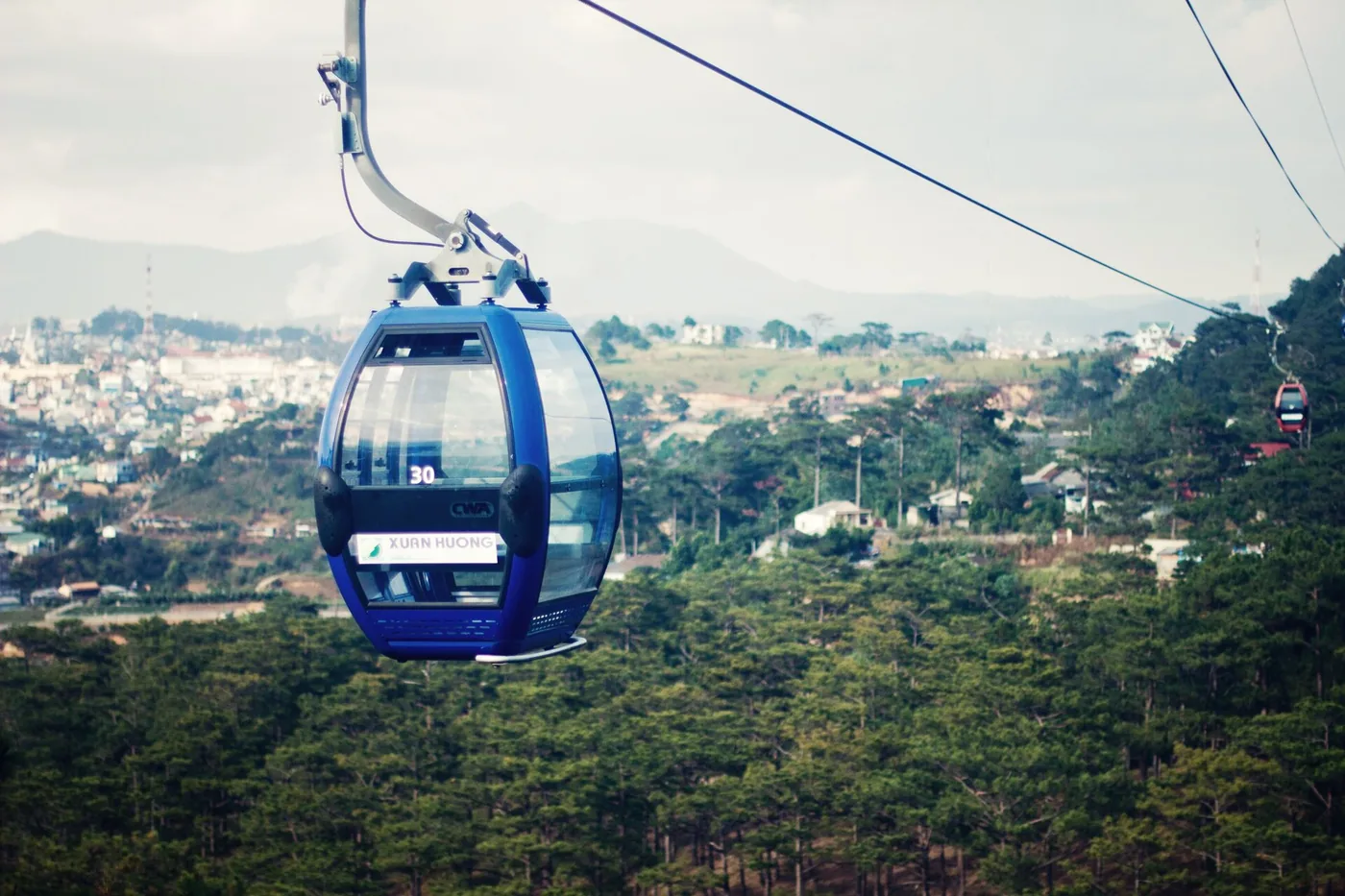
This is the only cable car in Lam Dong province. It leaves from the Robin HillMap station, crosses pine forest, and lands at Truc Lam Zen monasteryMap. The line is 2,267m long and the top station sits at 1,517m.
It stops for lunch on weekdays
The hours are not the same every day. Monday to Friday it runs 07:30 to 12:00, closes for an hour, and runs again 13:00 to 17:00. On Saturday and Sunday it runs straight through from 07:30 to 17:00. Last boarding is 16:45 whatever the day.
If you spend a weekday morning in town and roll up to Robin Hill around noon, you will wait an hour. Either be there before 11:00 or plan it for the afternoon.
Return or one way
| Ticket | Adult | Child | Use it when |
|---|---|---|---|
| Return | 150,000 VND | 120,000 VND | You are only going to see the monastery |
| One way | 120,000 VND | 100,000 VND | You want to carry on down to Tuyen Lam Lake |
The difference is 30,000 dong. Going one way lets you walk down past the monastery to Tuyen Lam Lake and call a car back into town from there. Cars are thin on the ground around the lake at some hours, so do that leg in daylight.
The monastery itself
Truc Lam is one of the larger Zen monasteries in the country and it is a working one. There is no charge to visit. The gardens, the bell tower and the view down over Tuyen Lam Lake are the reasons to go. Cover shoulders and knees.
13. Datanla: the falls, the coasters and the canyoning
🏞️ Datanla Falls and the alpine coasters: which ticket and when the counters close →
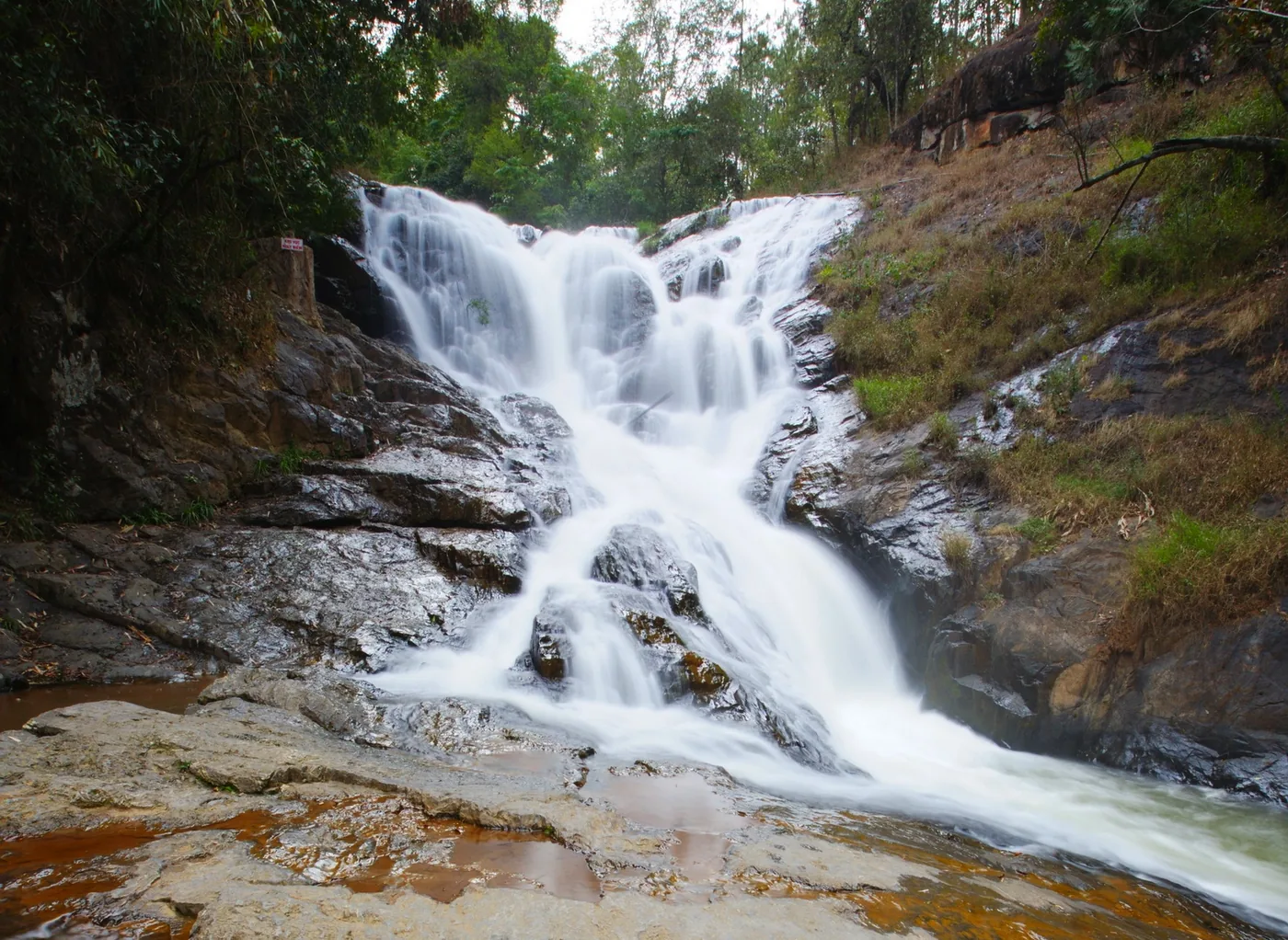
DatanlaMap is on Highway 20 at the Prenn Pass, 7.5km and nine minutes from the lake. Being on the airport road makes it a natural first or last stop.
You buy two tickets
Entry is 80,000 dong for adults and 50,000 for children. The alpine coaster is a separate purchase, and the operator says so plainly on its own booking page: visitors need to buy the falls entrance ticket as well.
| Ride | Adult | Child | Note |
|---|---|---|---|
| Alpine coaster 1, one way | 110,000 VND | 80,000 VND | About 1,200m. You walk back up the trail |
| Alpine coaster 1, return | 130,000 VND | 90,000 VND | Ride back up the same track |
| Alpine coaster 3, return | 250,000 VND | 150,000 VND | About 2,400m, the longest in Southeast Asia |
| Net playground | 150,000 VND | 150,000 VND | 08:00 to 15:30, adult and child priced the same |
Who can ride
The coasters take riders from 90cm tall, a maximum of two per car and 120kg per car. The operator states this differently on different pages: the combo pages add a minimum age of three and a waist under 90cm. Boarding runs 07:15 to 16:30.
The adventure programmes
The same operator runs the harder activities inside the same site. Prices jump by an order of magnitude, so it is worth knowing before you arrive.
| Activity | Price | Note |
|---|---|---|
| Canyoning | 1,886,000 VND | Six tiers of the falls. Departures 08:00 to 11:00 |
| Zipline, 1,500m | 1,000,000 VND | 130m above the forest. A 360 video costs 250,000 VND more |
| High ropes | 360,000 VND | More than 60 elements across five difficulty levels. Check-in 08:00 to 14:00 |
| Pine kart | 150,000 VND | Two laps, 1,200m total |
Canyoning in Vietnam is essentially a Da Lat activity, and this is where most of it happens. The operator publishes a list of medical conditions that exclude you from the zipline and the canyoning; read it rather than assume.
14. Langbiang and the radar peak
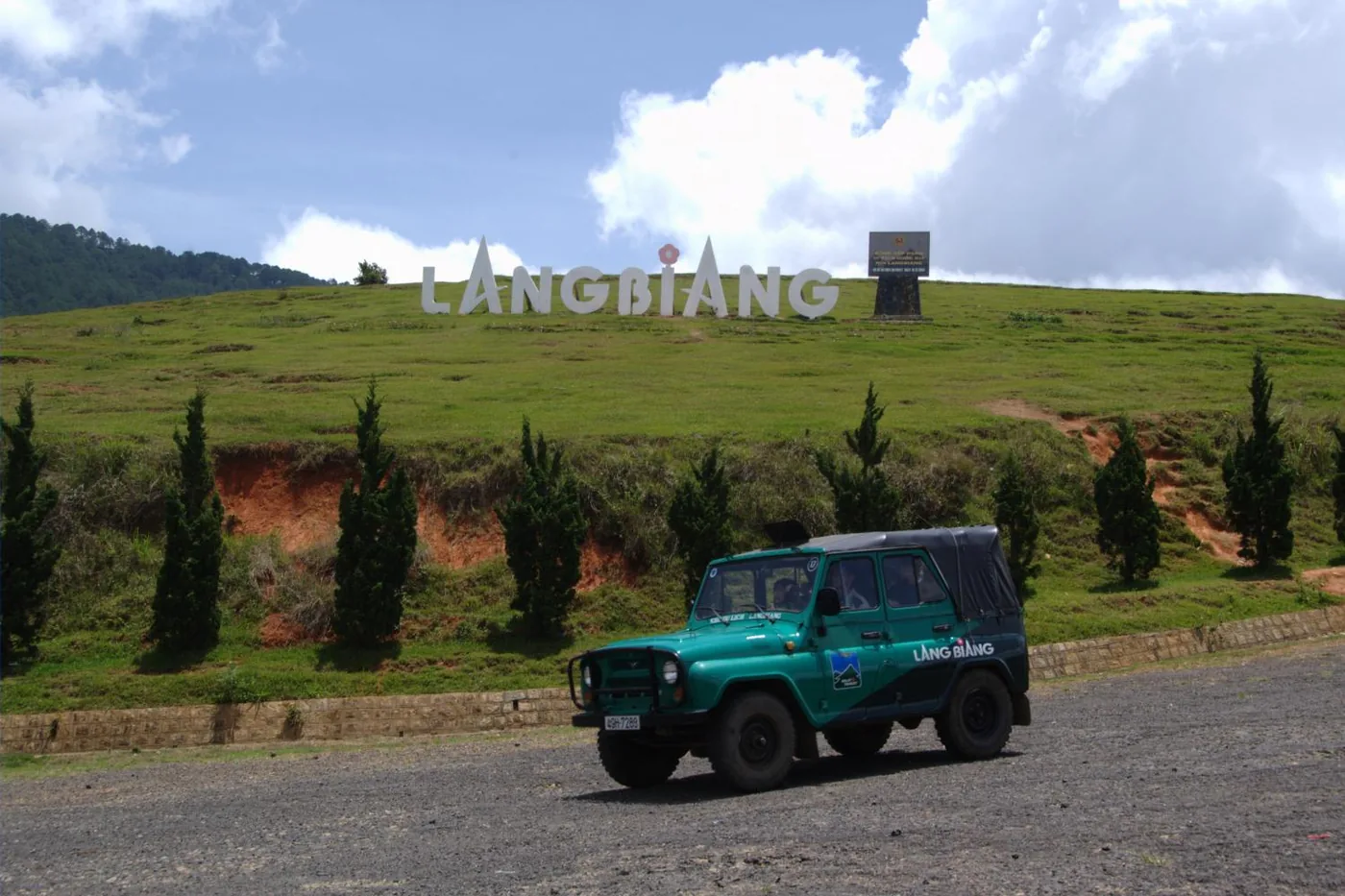
LangbiangMap is 11km and 13 minutes from the lake. It used to be filed under Lac Duong, a separate district; it is inside Da Lat now.
The gate and the summit are priced separately
Admission is 50,000 dong for adults and 25,000 for children, and that covers the area at the foot of the mountain. To reach the radar peak at 1,950m you take a vehicle, and that ride is 120,000 dong at the same price for adults and children.
The road up is about 6km of switchbacks. Walking is possible but allow three to four hours return on a real gradient. On many mornings the summit is inside cloud until the fog burns off, so look at the sky before you set out from town.
Hours
Open 07:30 to 17:00. To get up and back down you want to be through the gate by mid-afternoon.
Adding Cu Lan village
Cu Lan villageMap lies further north, 26 minutes from the lake, so it pairs naturally with Langbiang on the same day. It is a minority village presented as a visitor attraction, complete with jeep rides through the forest, and opinions on it divide. Go in knowing that it is a staged experience.
The name
Langbiang comes from a story told in these highlands about two people from different groups. The K Ho people are the long-standing inhabitants of this part of the plateau, and the performances you see at the tourist sites draw on their music and dress.
15. The Trai Mat train and Linh Phuoc
A short heritage line runs the 7km from Da Lat stationMap to Trai MatMap. It is the surviving fragment of a much longer railway, and it is the only train you can catch in Da Lat.
Schedule, and one thing to check
Six daytime services run, spaced roughly two hours apart from morning to mid-afternoon. The round trip takes about an hour and a half including a stop at Trai Mat.
One point is worth knowing in advance: a departure is cancelled if too few passengers turn up. On a quiet weekday morning this happens. If your plan depends on a particular train, ask at the ticket window on the day. Fares are posted at the station and are modest for the return trip.
The station is the main event
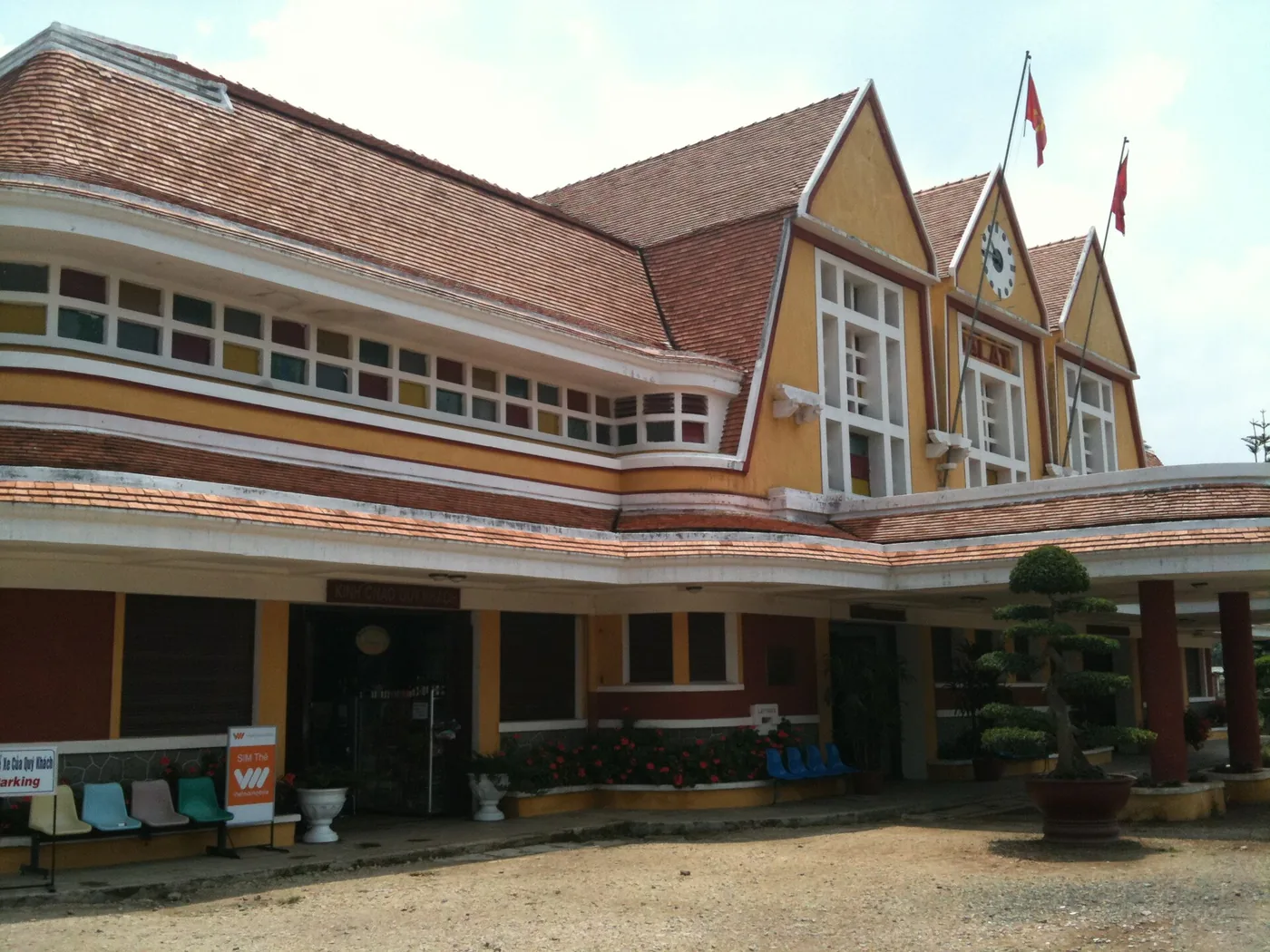
Da Lat station dates from the 1930s. It has three steep gables and much of its original coloured glass. You can walk into the trainshed without riding, and there is a small admission charge to enter.
Linh Phuoc at the other end
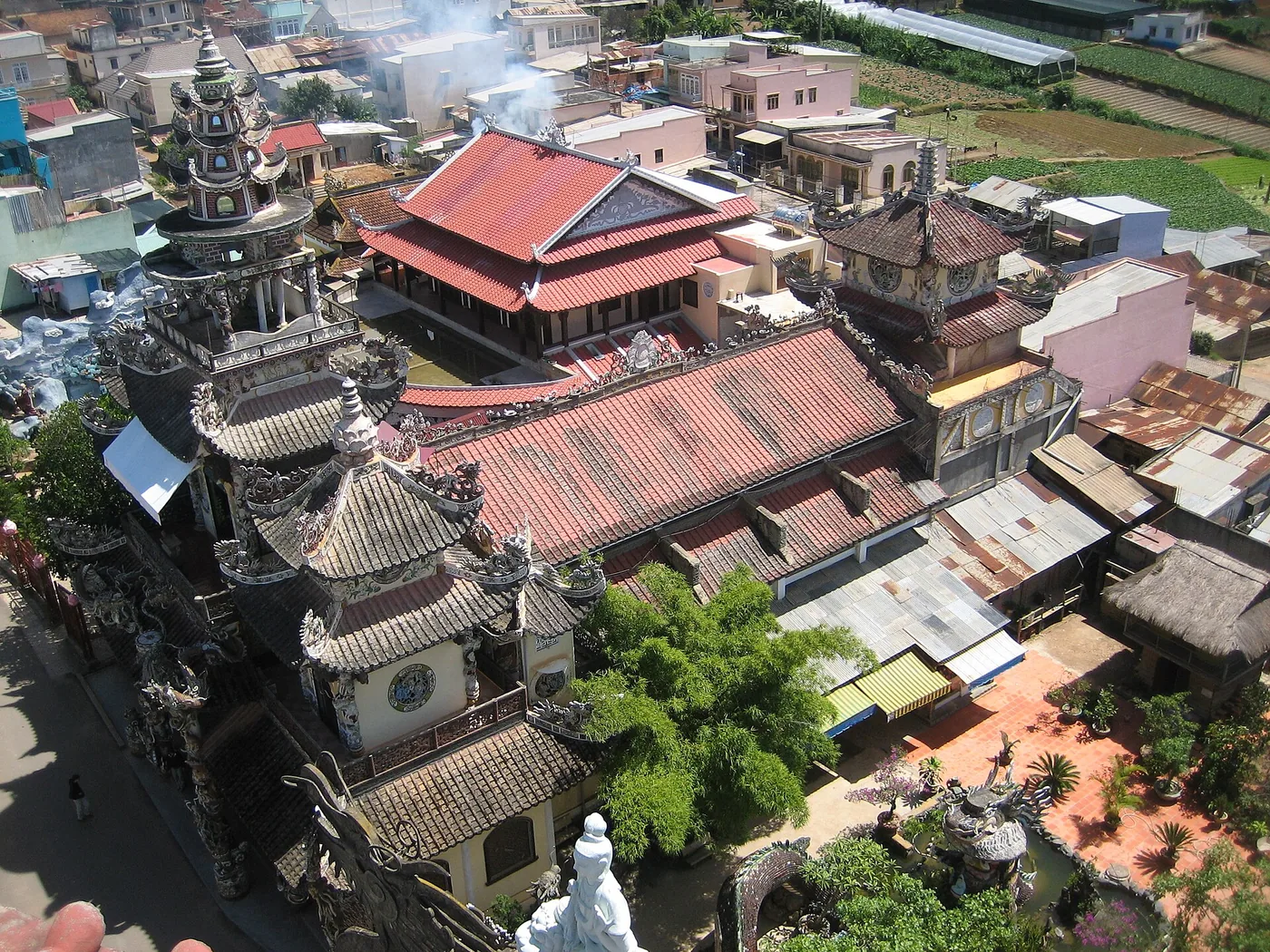
Linh Phuoc pagodaMap is a short walk from Trai Mat station. Its walls, towers and dragon are surfaced in broken pottery and glass, there is a large bell in the tower, and there are cave-like chambers underneath. There is no charge to visit.
If the train is cancelled, a car covers the same distance in seven minutes, so the pagoda is never off the table.
16. Lakes, gardens and waterfalls
Da Lat has far more water and forest than monuments. Here is what is worth your time, split by how far out it sits.
Xuan Huong Lake
It sits in the middle of town with a path all the way around and no admission. Pedal boats operate on it and cafes line the shore. Mist sits on the water in the morning and the lights come on at night.
Tuyen Lam Lake
Eleven point seven kilometres out, seventeen minutes by car. A large lake ringed by pine forest, with boats across to the far shore. Truc Lam monastery stands above it, which is why so many people ride the cable car down one way and continue here on foot.
Than Tho Lake
Seven minutes from the centre. The name translates as the lake of sighs. Pines, lawns and a modest scale; most people come for photographs rather than a long visit.
The Valley of Love
Five minutes out, 4.4km. A valley and a lake laid out as a park, with flower beds, viewpoints and a great many photo installations. There is an admission charge and the rides inside cost extra. Families and tour groups fill it at weekends.
The city flower garden
One minute from the lake and larger than it looks. It gathers the flowers grown around Da Lat in one place and it is the centre of gravity during the flower festival. Give it an hour.
Four waterfalls
| Falls | From the lake | Note |
|---|---|---|
| Cam Ly | 4 min | Inside town. Small |
| Datanla | 9 min | The coasters and the adventure programmes are here |
| Elephant falls | 28 min | Out towards Nam Ban. Steps lead down to the base |
| Pongour | 43 min | Wide and tiered. The biggest in the area |
All of them carry more water in the wet season and shrink in the dry months. If the waterfalls are the point of your trip, April to October delivers more. The steps get slippery, so wear something with grip.
The sculpture tunnel
Out towards Tuyen Lam Lake, 19 minutes from the centre, a long clay corridor has been carved with scenes of old Da Lat. It is open to the sky, so rain makes it unpleasant.
17. Cau Dat: tea, arabica and the greenhouses
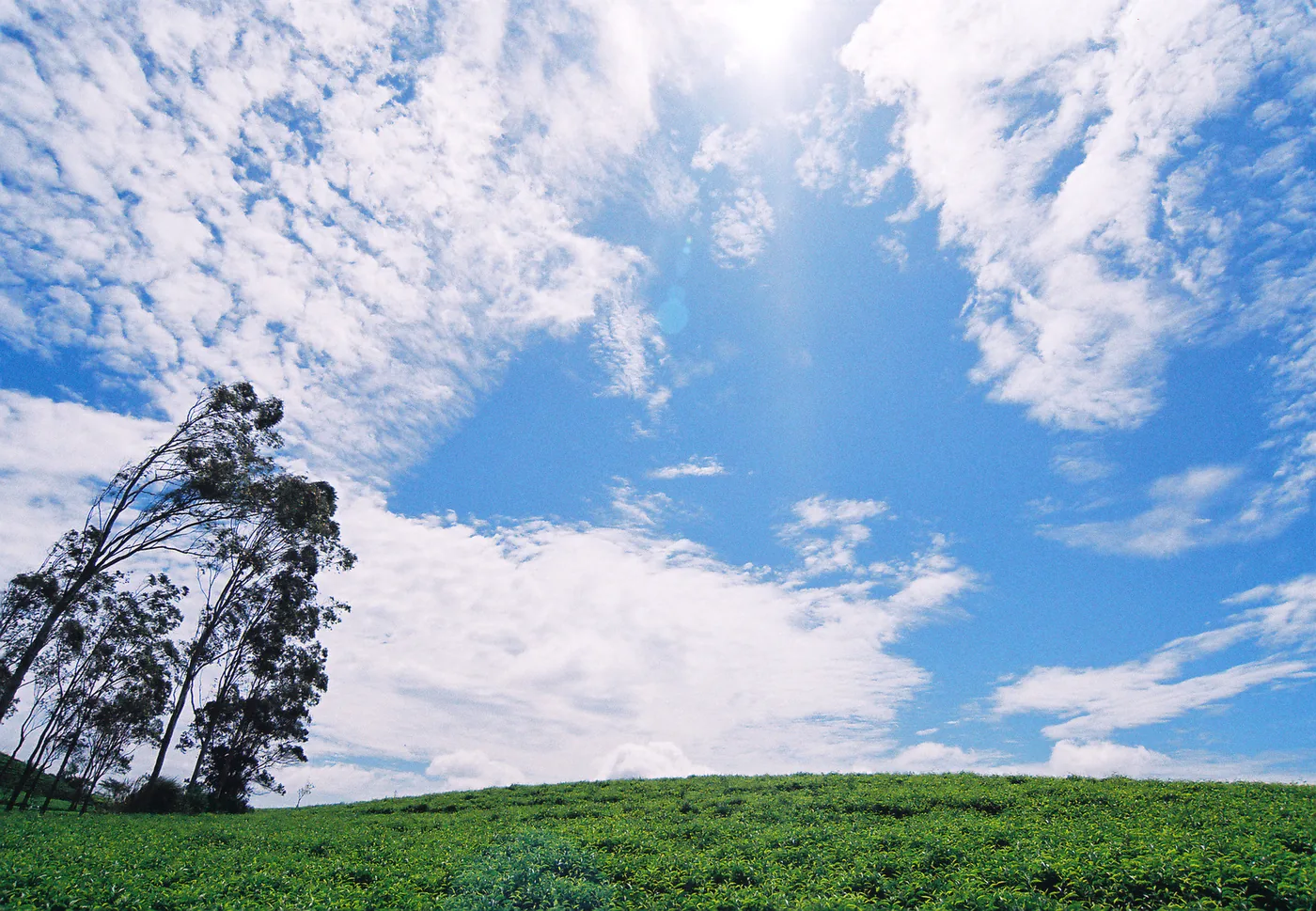
Cau DatMap is 25km east of the lake, a 21-minute drive. Tea was planted here in the French period and the hills still produce tea and coffee side by side.
This is arabica country
Most Vietnamese coffee is robusta. The highlands above 1,500m around Da Lat grow arabica instead, because of the altitude and the wide gap between day and night temperatures. A good share of the arabica poured in Da Lat cafes comes from this direction.
What you actually do there
You walk between the rows, you take photographs, and you drink tea and coffee at one of the farm cafes. Roasted beans are sold on site. Fog is frequent, and on a foggy morning the rows are simply not visible, so late morning to early afternoon is the safer window.
Combine it with Trai Mat
The road to Cau Dat passes through Trai Mat. Do Linh Phuoc and the heritage train in the morning and drive up to the tea hills after lunch and the whole day runs in one direction.
Greenhouses, strawberries and artichokes
The hills around town are covered in plastic greenhouses. The cool climate lets Da Lat grow vegetables and cut flowers that do not do well elsewhere in Vietnam, and those crops go down to Ho Chi Minh City and Hanoi. Strawberries grow here too, with pick-your-own farms near town and out towards Cau Dat. Artichoke is a local speciality, drunk as tea and sold dried in the market.
18. What the French left behind
Most of the older buildings in Da Lat date from the French period, and they are scattered around the hills rather than gathered in an old quarter.
Two churches
The cathedralMap is known locally as the rooster church for the weathervane on its spire, three minutes from the lake. Domaine de MarieMap is the pink one with the steep roof and an attached convent. Both are in use, so avoid mass times.
The three Bao Dai palaces
Three houses used by Vietnam last emperor survive. Palaces I and II are north; Palace IIIMap is six minutes from the lake and the best known, with its furniture and study left as they were. Each charges its own admission.
Crazy House
Crazy HouseMap is a concrete building shaped like tree trunks and caves, with staircases and walkways on the outside. It gets slow when it is busy. Open 08:30 to 18:00 every day. Admission is 80,000 dong for anyone 140cm or taller, 30,000 dong between 120cm and 140cm, and free below 120cm.
You can also sleep in it. There are ten themed rooms, from 1,040,000 to 2,670,000 dong a night. The building empties of day visitors in the evening, which is the appeal; the rooms are irregular in shape, which is the drawback if you travel with big bags.
Museum and college
Lam Dong MuseumMap opens 07:30 to 17:30 and holds ethnographic material from the highlands and photographs of the early town. The teacher training college, with its curved classroom block, is the other building people photograph, but it is a working school with limited access.
How the town started
Alexandre Yersin came up onto this plateau in 1893, looking for somewhere cool enough to escape the lowland heat. The town was formally established in 1916. Everything above was built in the century that followed, which is why Da Lat has no citadel, no old port and no ancient quarter.
19. Weather month by month
The temperature here barely moves across the year. Daily highs stay between 21.4C and 25.3C in every month. What changes is the rain, and it changes a great deal.
The numbers
| Month | High | Low | Rainfall | Rain days | Sunshine |
|---|---|---|---|---|---|
| January | 22.3C | 11.7C | 9mm | 2.2 | 237h |
| February | 23.9C | 11.9C | 21mm | 2.5 | 231h |
| March | 25.1C | 13.0C | 64mm | 5.8 | 240h |
| April | 25.3C | 14.7C | 170mm | 12.8 | 199h |
| May | 24.7C | 16.2C | 212mm | 20.5 | 196h |
| June | 23.6C | 16.4C | 204mm | 21.2 | 150h |
| July | 23.0C | 16.2C | 233mm | 23.8 | 147h |
| August | 22.7C | 16.2C | 238mm | 23.1 | 134h |
| September | 22.9C | 16.0C | 283mm | 24.0 | 127h |
| October | 22.8C | 15.3C | 245mm | 20.0 | 140h |
| November | 21.7C | 14.6C | 94mm | 11.5 | 169h |
| December | 21.4C | 13.2C | 36mm | 5.9 | 199h |
Sunshine and rain days
September has rain on 24 days out of 30. January has 2.2. Sunshine follows the same curve, from 240 hours in March down to 127 in September.
Wet season rain here is not usually all-day rain. It tends to arrive in the afternoon, fall hard for an hour or two and stop. Put the outdoor items in the morning and the cafes, the museum and the market in the afternoon and a wet-season trip still works.
What to pack
A long-sleeved layer is enough by day, and you want a jacket for the evening and the early morning. The Langbiang summit is colder than town and exposed to wind. In the wet season a waterproof shell beats an umbrella. If you plan to ride a motorbike, bring gloves.
20. When to go
On rainfall alone, December to March wins outright. January has 2.2 rain days and 237 hours of sunshine. The complication is that this is also the domestic high season, so room rates rise and weekends get busy.
The seasonal calendar
| Period | What is on | Note |
|---|---|---|
| Late December | Flower festival | Held every second year. Opens on the evening of 19 December and closes on the night of 31 December |
| January to early February | Mai anh dao blossom | Pink blossom on the town streets. Outlying areas such as Cau Dat start in late December |
| September to November | Da quy | Yellow wild sunflowers along the roads outside town |
| April to October | Wet season | Waterfalls run high. Plan around afternoon rain |
The flower festival is biennial
The opening ceremony is held at Lam Vien SquareMap, with eleven main programmes and twenty-five supporting events packed into the second half of December. The closing night runs into the new year concert, and hotels in that week fill early. Book months ahead if the festival is the reason you are coming.
Tet
Lunar New Year brings a large wave of Vietnamese holidaymakers to Da Lat. Room rates can more than double and domestic flights sell out. If you have to travel then, book far in advance.
Weekdays against weekends
Weekend traffic from Ho Chi Minh City fills the town from Friday evening to Sunday. The same room is cheaper midweek and the cable car queue is shorter. Just remember that the cable car takes its lunch hour on weekdays.
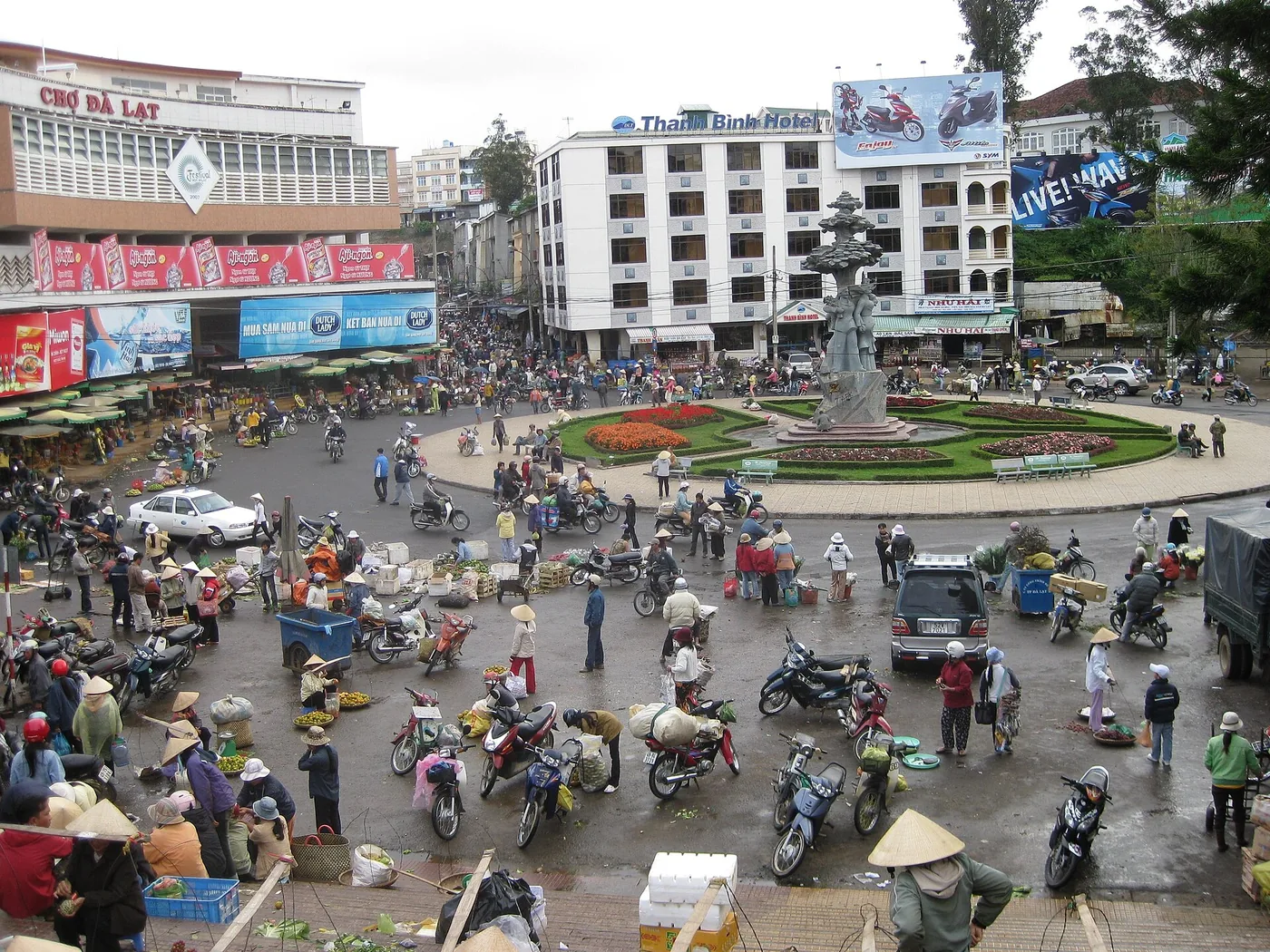
21. Where to stay
Because the town is small, the area you pick changes the character of your stay more than the length of your journeys.
Four areas
| Area | Price | Suits |
|---|---|---|
| Around the lake | Mid to high | Walking to the market and the cathedral. Many rooms with a view |
| Lanes behind the market | Low | Keeping costs down. Can be noisy at night |
| Towards Tuyen Lam Lake | High | Resorts and quiet. Fifteen minutes or more from the centre |
| Towards Langbiang | Low to mid | Farmstays and countryside. You will need a vehicle |
Check the heating
December and January mornings drop below 13C and a lot of Vietnamese hotels have no heating at all. Look for reviews that mention extra blankets and reliable hot water. This is the single most common complaint about Da Lat rooms.
Check the gradient
Four hundred metres on a map can include a hill. The lanes behind the market are steep and many of them are stepped, which is difficult with a wheeled suitcase.
Check the parking
If you are hiring a car, ask. Plenty of guesthouses in the central lanes can park motorbikes and nothing larger.
22. What to eat
The food here follows the climate. A lot of it is grilled in front of you on the street or served in a hot pot, and the vegetables come from the greenhouses on the surrounding hills.
The local list
| Dish | What it is | Where |
|---|---|---|
| Banh trang nuong | Rice paper topped with egg and other fillings, grilled over charcoal | Night market and street stalls |
| Banh can | Small rice batter cakes cooked in a moulded pan, dipped in broth | Morning shops |
| Nem nuong | Grilled pork rolls wrapped at the table with herbs and rice paper | Specialist restaurants |
| Lau ga la e | Chicken hot pot with la e leaf, a highlands herb | Dinner restaurants |
| Sua dau nanh | Hot soy milk, sold by the glass after dark | Night market |
| Kem bo | Avocado ice cream | Around the market |
The night market
The night marketMap sets up on the steps in front of the market building every evening. Grilled food and hot soy milk are the staples. During the day the marketMap itself sells vegetables, dried fruit, artichoke tea and coffee.
Coffee
Because arabica grows nearby, Da Lat has an unusual number of cafes roasting their own beans, plus a whole category of hillside cafes selling the view. Most open early. If you are buying beans to take home, ask for the roast date.
Portions and prices
Street food is inexpensive. Hot pots are normally sized for two or more, so order according to the number of people rather than per head. Restaurants inside the paid attractions cost noticeably more than the same food in town.
23. What to bring home
Da Lat souvenirs are mostly edible, and nearly all of them are in the marketMap.
| Item | Note |
|---|---|
| Arabica beans | Grown locally. Ask for the roast date |
| Artichoke tea | Loose and in bags. Light and packs flat |
| Strawberry jam and dried strawberries | Available all year even when fresh fruit is not |
| Dried fruit and vegetable crisps | Wide range, and several stalls let you taste first |
| Da Lat wine | Made in the province. Glass, so pack accordingly |
| Flowers | Fresh flowers face import rules at home. Dried arrangements are simpler |
Buying well
Some stalls on the ground floor and in the basement do not display prices. Ask at two or three before you settle. Asking for vacuum packing keeps your bag clean and is usually free.
Coffee can be sold as beans or ground. Ground coffee loses its aroma quickly, so if you have no grinder at home, have it ground and sealed on the spot.
Cabin rules
Jam, honey and wine go in checked baggage. If you are connecting onto an international flight, check whether you recheck your bags at the transfer point.
24. What a day costs
Da Lat is not an expensive place by Vietnamese standards. Admission is almost always under 100,000 dong and the short distances keep transport costs down.
Per person, per day
| Item | Frugal | Middle | Comfortable |
|---|---|---|---|
| Room | Low | Mid | High |
| Three meals | Street food | Half street, half restaurant | Restaurants |
| Admissions | Free sights only | One or two paid sites | Rides included |
| Transport | Walking | App cars | Car and driver |
Where the money actually goes
The rides are what move the number. Datanla entry at 80,000 plus the long alpine coaster at 250,000 is 330,000 dong for one person before anything else. The zipline alone is a million. At the other end, a day of the cathedral, the market and a walk around the lake costs nothing at all in admissions.
Car for the day against app rides
Which one is cheaper depends entirely on the day. Around town, app cars win. On a day that goes out to Cau Dat or Pongour, a car with a driver wins, and the gap widens with three or more people because the car price is per vehicle.
Change money at banks or gold shops in town rather than at the airport. Our Vietnam money guide has the current picture.
25. Onward from Da Lat
Most people who come here are moving on to somewhere else afterwards. These are the realistic next stops.
Nha Trang
One hundred and thirty-five kilometres, three and a half to four hours, dropping from the plateau to the coast. Cool highlands followed by a beach is a natural sequence. See our Nha Trang guide and things to do in Nha Trang.
Mui Ne and Phan Thiet
One hundred and ninety-seven kilometres to Mui Ne, four to five hours, for sand dunes and kitesurfing. Phan Thiet is 177km and around four hours. Both are now in the same province as Da Lat.
Ho Chi Minh City
Three hundred kilometres. Six to eight hours by bus or fifty minutes in the air. Take the flight to save the day, or the overnight bus to save the hotel night. Our Ho Chi Minh City guide covers arrival.
Buon Ma Thuot
One hundred and eighty-four kilometres, four to five hours, deeper into coffee country and far quieter. Worth adding if the coffee is what brought you here.
| Next stop | Distance | Time | How |
|---|---|---|---|
| Nha Trang | 135km | 3.5 to 4 hours | Bus, van, private car |
| Mui Ne | 197km | 4 to 5 hours | Bus, private car |
| Ho Chi Minh City | 300km | 6 to 8 hours, or 50 minutes flying | Bus or plane |
| Buon Ma Thuot | 184km | 4 to 5 hours | Bus |
| Da Nang | 629km | 1 hour flying | Fly |
26. Things worth knowing before you go
Morning fog changes the order of your day
Fog is normal here in the early hours. The Langbiang summit and the Cau Dat rows both need it to lift. Keep the plan loose enough to swap the morning and the afternoon.
The cable car closes at midday on weekdays
Monday to Friday, 12:00 to 13:00, nothing runs. Last boarding at 16:45 every day.
Child prices are set by height
Free below 100cm at Datanla, Langbiang and the cable car; free below 120cm at Crazy House. The same child is treated differently at different gates.
Two tickets at two places
The Datanla coasters and the Langbiang summit vehicle are extra. Arriving with only the entrance fee budgeted leaves you short.
The heritage train can be cancelled
Too few passengers and the departure does not run. Ask at the window if your plan depends on it.
Think twice about renting a scooter
Steep gradients, frequent fog and constant bends, plus the licence and insurance question. If you are not an experienced rider, use the app.
Carry cash
Cafes and larger restaurants take cards. Street stalls, market vendors and some ticket windows do not. Keep small notes.
The usual scams
Meter and change tricks are the same as anywhere else in the country and are mostly avoided by booking through an app. Our Vietnam scams guide has the list.
Spelling and airport codes
You will see Da Lat, Dalat and Đà Lạt. The airport code is DLI and the airport name is Lien Khuong, so book by code to avoid confusion with Long Thanh or Tan Son Nhat. We cover the new Saigon airport in our Long Thanh airport guide.
27. 🌸 More Vietnam guides
Guides that pair well with a Da Lat trip.
- The full Vietnam travel guide
- Southern Vietnam: Ho Chi Minh City, Mui Ne, Da Lat and the coast
- Ho Chi Minh City guide and where to stay in Ho Chi Minh City
- Nha Trang guide and things to do in Nha Trang
- Central Vietnam guide and Da Nang guide
- Getting around Vietnam and Long Thanh airport
- Vietnam entry requirements, eSIM guide, money and cash, scams to know
🎡Things to Do22
🍜Food2
🏨Where to Stay9
🚇Getting Around4
🧭Travel Tips10
🧭Vietnam-wide essentials116
Da Lat: common questions
No. Lien Khuong currently has no scheduled international service. Kuala Lumpur is planned at four flights a week and Singapore resumes at three a week in December. Arriving from abroad means a domestic connection in Ho Chi Minh City, Hanoi or Da Nang, or a road trip up from Nha Trang.
Yes. It closed at midnight on 4 March for a full runway rebuild and reopened at 00:01 on 19 August. The first arrival was Vietnam Airlines VN1380 from Ho Chi Minh City at 07:05 with about 200 people on board. Six domestic routes are running again.
35.4km, about 33 minutes by road up Highway 20 over the Prenn Pass. Choose between the airport bus, a metered taxi, a ride-hailing app or a pre-booked transfer. If you land at night, arrange the car in advance because the bus stops in the evening.
Three nights covers the centre, the Prenn Pass side, Langbiang and the Cau Dat tea hills. Two nights covers town plus one big sight. Four gets you Pongour falls and Cu Lan village. Count arrival and departure days as halves.
Cool and stable. Daily highs run 21.4C to 25.3C all year and lows 11.7C to 16.4C. Rain is the variable: September brings 283mm across 24 days, January just 9mm across 2.2 days.
December to March for dry weather and sunshine. That is also the Vietnamese high season, so rates climb. For blossom, mai anh dao flowers from early January to early February; for the yellow wild sunflowers, September to November.
50,000 dong for adults and 25,000 for children, open 07:30 to 17:00. The vehicle up to the radar peak at 1,950m is a separate 120,000 dong, charged at the same rate for adults and children.
Entry is 80,000 dong for adults and 50,000 for children, open 07:30 to 16:30. Alpine coasters are extra: coaster 1 is 110,000 one way or 130,000 return, and the 2,400m coaster 3 is 250,000 return.
Monday to Friday 07:30 to 12:00 and 13:00 to 17:00, with an hour closed at lunch. Saturday and Sunday 07:30 to 17:00 without a break. Last boarding is 16:45. A return ticket is 150,000 dong and one way is 120,000.
Height decides it, not age. Datanla, Langbiang and the cable car are free under 100cm and charge the child rate from 100cm to under 140cm. Crazy House is free under 120cm and charges the child rate from 120cm to under 140cm.
Tickets are sold at the window on the day. However, a departure is cancelled if too few passengers turn up, so ask at Da Lat station whether your train is running. If it is not, a car reaches Trai Mat in seven minutes.
Six to eight hours over 300km. Road data suggests 3 hours 50 minutes, but the highway sections and the mountain climb slow everything down. The expressway that will shorten this is still under construction.
By bus or minivan, three and a half to four hours over 135km, climbing from the coast to the plateau. It is simpler than flying via Saigon and the scenery on the way up is the reason many people choose it.
It is where canyoning happens in Vietnam. The main operator runs descents through six tiers of the Datanla falls at 1,886,000 dong, departing between 08:00 and 11:00. There is a published list of medical exclusions, so read it before booking.
Only if you ride confidently. The gradients are steep, morning fog is frequent and the roads bend constantly, and there are licence and insurance questions for foreign visitors. Ride-hailing covers town easily and a car covers the rest.
Administratively, no. It was divided into five wards reporting directly to Lam Dong province. For travellers the practical effects are that Langbiang and Cu Lan village are now inside Da Lat, and that addresses may not match older guidebooks.