
Vietnam City-to-City Travel: Trains, Buses, Flights
Vietnam runs about 1,650 km from top to bottom, and the mode that wins on one leg is the wrong answer on the next one, so this guide decides each route for you rather than listing all five and wishing you luck.
| Fastest | Flying. Hanoi to Da Nang is about 1h20 in the air, roughly 4 to 5 hours door to door once transfers and check-in are counted. |
|---|---|
| Cheapest | Sleeper bus. Most long legs run ₫250,000-650,000 (about US$10-25); short expressway hops can be under ₫100,000 (under US$4). |
| Best overnight | Soft-sleeper train on Hanoi-Hue and Hanoi-Da Nang. Night buses are cheaper but land you on a kerb before dawn. |
| No train reaches | Sapa town, Da Lat, Ha Giang, Cat Ba, Phu Quoc or Con Dao. Four of those have no airport either. |
| Book ahead | Trains open 30-60 days out and Tet stock opens earliest; Tet 2027 falls on 6 February 2027. |
| Licence trap | UK international driving permits are recognised in Vietnam. US, Canadian, Australian and New Zealand ones are not. |
| Do not plan around | High-speed rail. Approved, funded on paper, not yet under construction, and irrelevant to any trip you are booking now. |
1. Start here: which mode wins at which distance
2. Five things that decide the answer before you open a timetable
3. Plane, train, bus, van, boat: the honest comparison
4. Flying domestically: fast, cheap, and unreliable in a specific way
5. The train: what the ride is actually like
6. Sleeper buses and limousine vans: read this before booking a night bus
7. A car with a driver: not a luxury on some routes
8. Ferries and boats: the crossings that get cancelled
9. Driving yourself: your licence is probably not valid here
10. Routes out of Hanoi: Sapa, Ha Long, Ninh Binh, Ha Giang
11. Routes through the centre: Hue, Da Nang, Hoi An, Phong Nha
12. Routes out of Ho Chi Minh City: Da Lat, Mui Ne, the delta, the islands
13. Where to actually book each mode
14. Timing: Tet, typhoons, and what to do when a leg dies
15. Travelling with kids, big bags, or limited mobility
16. Chaining legs into a trip that works
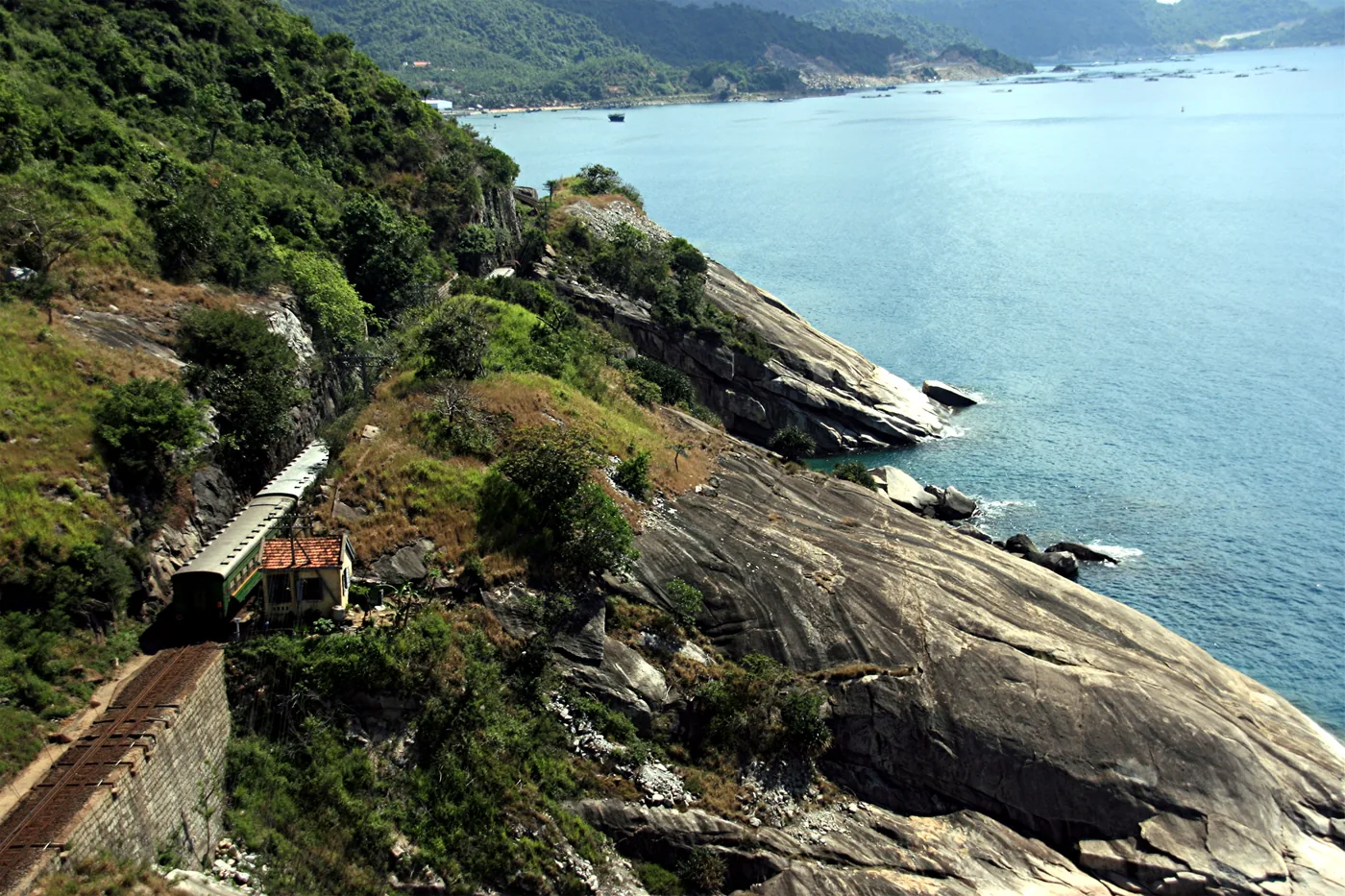
1. Start here: which mode wins at which distance
If the overland leg is under about six hours, do not fly. If it is over about twelve hours, do not go overland unless the journey itself is something you want. That single sentence resolves most Vietnamese city pairs, because the country is long and thin, the expressway network has changed dramatically since 2023, and the gap between “fast” and “sensible” opens up almost exactly where those two thresholds sit.
The reason this needs saying is that most published advice lists five modes neutrally and lets you work it out. That is not useful. On a 95 km hop from Hanoi to Ninh Binh there is exactly one right answer and four wrong ones. On the 780 km from Hanoi to Da Nang there is one right answer for almost everybody and a defensible second answer for people with a specific reason. Below is the whole matrix compressed into four distance bands.
| Distance band | Typical legs | Take this | Why the others lose |
|---|---|---|---|
| Under 150 km | Hanoi to Ninh Binh, Da Nang to Hue, Ho Chi Minh City to Vung Tau, Nha Trang to Da Lat | Limousine van or private car, in daylight | No flight exists or the airport overhead eats the whole saving. Trains run too infrequently to be convenient. |
| 150-350 km | Hanoi to Sapa, Hanoi to Ha Giang, Ho Chi Minh City to Mui Ne, Ho Chi Minh City to Can Tho | Road, still. Van by day, sleeper bus by night if the timing suits | Two of these have no railway and no airport at all. The expressways cut these legs so hard that flying became pointless even where it is possible. |
| 350-700 km | Hanoi to Hue, Da Nang to Nha Trang, Ho Chi Minh City to Nha Trang, Da Nang to Quy Nhon | This is the overnight decision. Night train if a berth is available, flight if you want the daylight | Nothing dominates here. This band is where a genuine choice exists and where most trip plans go wrong. |
| Over 700 km | Hanoi to Da Nang, Hanoi to Ho Chi Minh City, Da Nang to Phu Quoc | Fly | Overland means 15 to 37 hours of your holiday. Worth it only if the ride is the point, not the transfer. |
The band where the decision actually matters
Everything between roughly 350 and 700 km is where readers arriving on a long-haul flight get stuck, and it is worth being blunt about why. Long-haul services into Vietnam cluster at awkward hours. A great many arrive between 21:00 and 01:00, which means your first practical travel decision is made while jet-lagged, at a moment when you have either paid for a hotel night you will barely use or you are about to spend the night in transit anyway.
That produces three options and they are not equal:
- The night train. Departs in the evening, arrives mid-morning, and you sleep lying flat behind a locking cabin door. It is the only overnight mode in Vietnam where a reasonable night’s sleep is the normal outcome rather than the lucky one. It costs roughly twice a sleeper bus.
- The night sleeper bus. Cheapest by a distance, reaches places the railway does not, and drops a meaningful share of passengers between 04:00 and 06:00, sometimes at a terminal well outside the centre. Passengers consistently report the arrival hour, not the ride, as the real cost.
- Waiting for a morning flight. Costs you a hotel night and a slow start, but you land rested, and on legs over 700 km it saves so much time that the hotel night pays for itself.
The rest of this guide is built around that decision. If you only read two more sections, read the train and the sleeper bus ones, because that is where the overnight question is settled properly, with fares, berth types and the specific failure modes of each.
What is not on the list
Two absences shape Vietnamese travel more than any of the present modes. First, there is no high-speed rail and there will be none for any trip you are planning now: the North-South line was approved in November 2024 but construction has not started, and the honest section on that is further down. Second, several of the country’s headline destinations simply cannot be reached by train, including Sapa town, Da Lat, Ha Giang, Cat Ba, Phu Quoc and Con Dao. Knowing which modes do not exist on a route saves more planning time than knowing which do.
For the wider country context behind these routes, the national travel guide sets out the regions and how much time each one deserves.
For Da Lat on its own, our Da Lat travel guide covers the flights, the measured drive times, the official ticket prices and the weather month by month.
For Mui Ne and Phan Thiet on their own, our Mui Ne and Phan Thiet guide covers both dunes with their prices, the measured drive times, the train days and where along the strip to stay.
2. Five things that decide the answer before you open a timetable
Before comparing any two departures, five background facts decide most of the outcome: the country’s shape, the modes that do not exist on your route, an expressway map that changed materially in 2023 and 2025, a rainy season that cancels legs outright, and an entry rule that splits English-speaking readers into two groups. Get these right and the timetable comparison becomes trivial. Get them wrong and you will book a leg that cannot work.
1. Vietnam is long, and it is long in one direction only
The mainland stretches roughly 1,650 km from the northern border to the Ca Mau peninsula, and the railway that traces it runs 1,726 km from Hanoi to Saigon station. At its narrowest, near Dong Hoi, the country is under 50 km wide. Practically, that means almost every intercity journey in Vietnam is a north-south journey along one corridor, sharing one railway, one national highway and one expressway spine. When that corridor is disrupted, usually by weather, there is rarely a parallel route to fall back on.
It also means the three big cities are genuinely far apart. Hanoi to Da Nang is about 780 km. Da Nang to Ho Chi Minh City is a further 935 km by rail. People routinely underestimate this because the map looks compact.
2. Absent modes, stated plainly
This is the single most useful table in the guide, because it is the one thing competing guides almost never print.
| Destination | What does not exist | What you actually do |
|---|---|---|
| Sapa town | No railway station. The line ends at Lao Cai, about 38 km short, and the train ticket does not include the transfer. | Road all the way from Hanoi, about 5.5 to 6.5 hours door to door. |
| Da Lat | No functioning railway. A 7 km heritage stub runs to Trai Mat village and connects to nothing. | Bus or van from Ho Chi Minh City or Nha Trang; flights into Lien Khuong airport, 28 km out of town. |
| Ha Giang | No railway, no airport, and the Tuyen Quang-Ha Giang expressway is still under construction. | Overnight sleeper bus from Hanoi, 6 to 7 hours on an older mountain highway. |
| Cat Ba | No railway, no airport, no bridge. | Bus to the Hai Phong side, then ferry, speedboat or cable car across. |
| Phu Quoc | No railway. It is an island. | Fly, or take a fast ferry from Ha Tien or Rach Gia. |
| Con Dao | No railway, and the airport runway is too short for a fully loaded A320 or A321. | Turboprop or regional jet from Ho Chi Minh City and Can Tho, or a ferry that suspends often. |
| Mui Ne | No station in Mui Ne itself. | Train to Phan Thiet then about 24 km by road, or simply drive the whole way on the expressway. |
| Da Nang to Quy Nhon | No direct flight. Connecting means backtracking through Hanoi or Ho Chi Minh City. | Overland, roughly 6 hours. |
| Dong Hoi to Da Nang | No direct flight. | Train, sleeper bus or private car down the coast. |
3. The expressway map changed, and most guides have not noticed
Three openings in the last three years reset journey times that older articles still quote from the National Highway 1 era.
- 19 August 2025: the North-South Expressway became a continuous, unbroken link from Hanoi all the way to Da Nang. A private car on that corridor now runs roughly 10 to 12 hours. Sleeper buses are slower because they stop repeatedly and operate under speed restrictions, and published bus durations genuinely disagree with each other, so treat any single number on that leg with suspicion.
- 29 April 2023: the 99 km Dau Giay to Phan Thiet expressway opened, cutting Ho Chi Minh City to Mui Ne from about 5 hours to about 2.5. That is the largest single journey-time improvement anywhere in the Vietnamese route matrix, and it turned a grim half-day slog into an easy morning.
- April 2024 and April 2025: the Cam Lam to Vinh Hao and Van Phong to Nha Trang sections opened, pulling Ho Chi Minh City to Nha Trang down to roughly 4 to 5 hours by road, about half the old highway time.
The practical consequence is counter-intuitive. Several routes where flying used to be obvious are now road routes, because the drive collapsed while the airport overhead did not. Ho Chi Minh City to Da Lat and Ho Chi Minh City to Mui Ne are the clearest examples.
4. Weather does not delay legs here, it deletes them
Central Vietnam’s storm season technically spans July to December, with peak intensity from mid-September to mid-November and October carrying the highest risk of all, typically two to three storms and 550 to 700 mm of rain. Da Nang airport closes when sustained winds pass roughly 60 km/h. Roads between Hue and Hoi An can flood within hours. In November 2025, flooding across the central provinces produced a landslide nearly nine metres deep on the North-South railway, forced the transfer of 1,500 passengers off stranded trains, and suspended 44 services with more than 21,000 tickets refunded.
In the far south the pattern inverts by island: Phu Quoc’s calm water runs roughly November to May, while Con Dao’s calmest months are broadly March to September. Combining both islands in one trip therefore guarantees rough water on one of the two crossings. There is more on planning around this in the seasonal guides for Da Nang’s rain and storm months and the best time to visit Phu Quoc.
5. The entry rule splits English-speaking readers in two
This matters for intercity travel because your entry status changes what you must carry to board a domestic flight. British, German, French, Italian, Spanish, Nordic and several other European passport holders enter Vietnam visa-free for 45 days. American, Canadian and Australian passport holders do not, and travel on an e-visa instead.
Under Circular 14/2026/TT-BCA, effective 3 February 2026, a foreign passenger on a domestic flight presents a passport bearing the most recent entry stamp, plus evidence of residence status, except where the traveller entered visa-free. So a British reader carries the passport and nothing else. An American or Australian reader carries the passport plus their e-visa approval. Neither group needs the Vietnamese VNeID digital identity that some 2025 headlines implied was mandatory: short-term visitors cannot even register for it, and passport check-in at the counter remains available. Full detail is in the entry requirements guide and the e-visa walkthrough.
3. Plane, train, bus, van, boat: the honest comparison
Five modes exist, and each one is genuinely the best answer somewhere and a trap somewhere else. Flights win over 700 km and lose under 300. Trains win the overnight legs and the Hai Van coast. Sleeper buses win on price and on reaching places without rail. Limousine vans win almost everything under three hours. Boats are not a choice at all on island routes, they are the only alternative to a plane. Below is the whole comparison in one place, followed by the traps.
| Mode | Typical speed | Typical cost per long leg | Comfort | Reliability | Wins on | Trap |
|---|---|---|---|---|---|---|
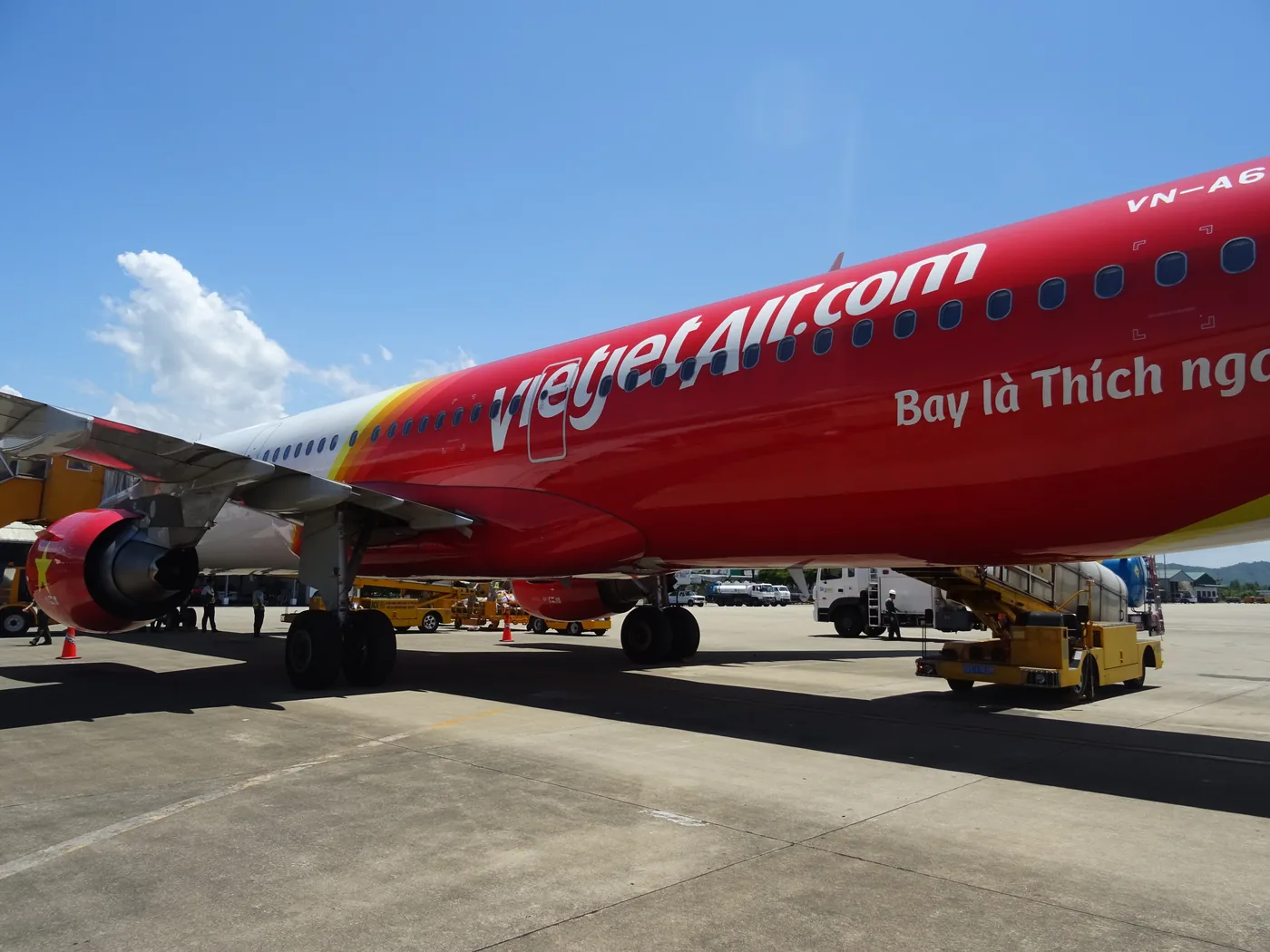
| Domestic flight | 1h15 to 2h10 in the air; add 3 hours of wrapper | ₫700,000-3,500,000 (about US$27-135) plus ₫150,000-200,000 taxes per leg | Narrow seats on the low-cost carriers, 29 inches of pitch on VietJet against 31-32 on Vietnam Airlines | Weakest of the five. Aggregate on-time performance fell to 62.6% in the first half of 2025 | Anything over 700 km, and any island | Baggage sold separately on the cheapest fares, and change fees that can exceed the ticket |
| Sleeper train | Roughly 45-60 km/h average including stops | ₫569,000-1,758,000 (about US$22-68) depending on leg and berth | Best of the overnight options. Four-berth soft sleeper with a door that latches | Good by local standards, but no published on-time statistics exist, so treat punctuality claims as unverified | Overnight legs of 8 to 17 hours, and the Hai Van coast | Booking. The official site frequently rejects foreign cards |
| Sleeper bus | Slower than the train on most corridors despite the expressway | ₫250,000-820,000 (about US$10-32) | Berths roughly 1.6-1.8 m long and 50-60 cm wide. Anyone over about 175 cm will not stretch out | Departures are frequent, so a missed bus costs an hour, not a day | Price, and every destination the railway does not reach | The 04:00 to 06:00 arrival, often at a terminal outside town |
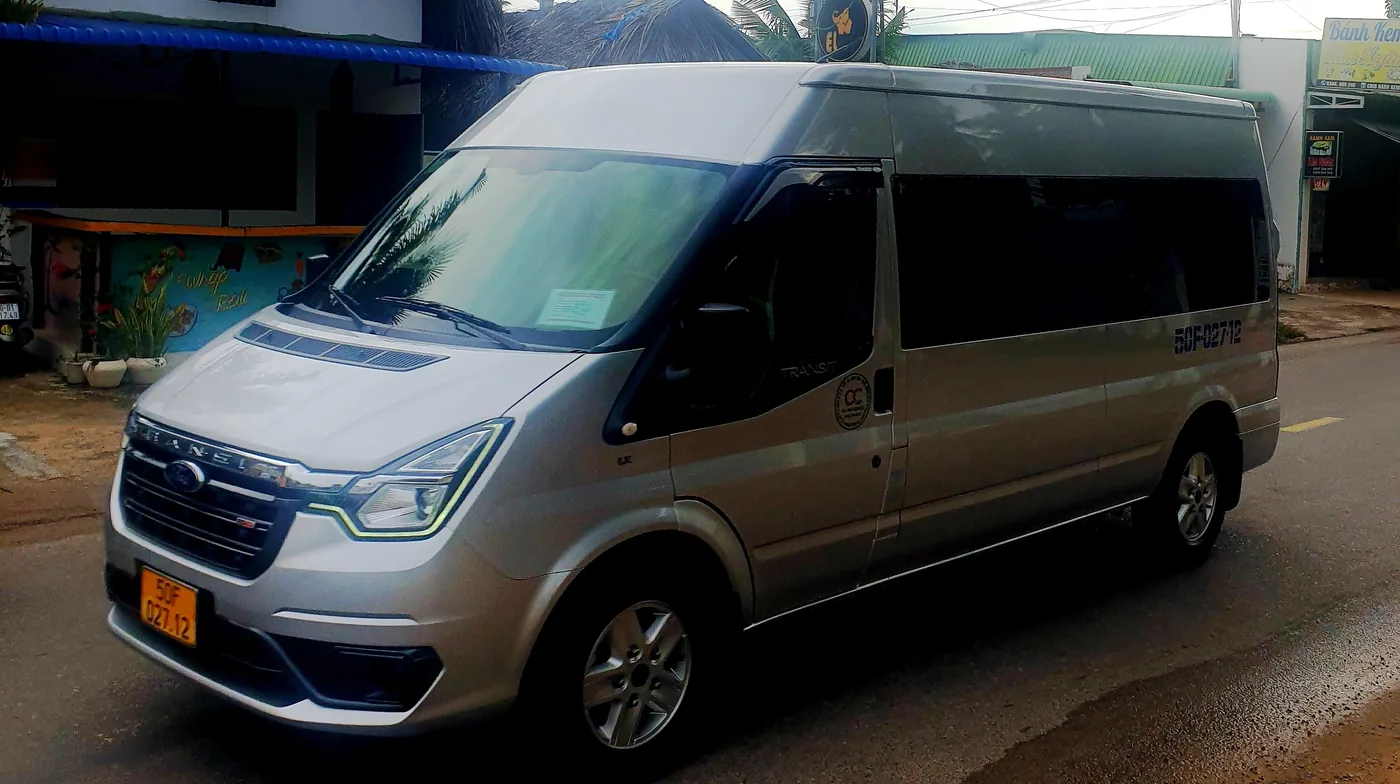
| Limousine van | Fastest door to door under about 350 km | ₫150,000-650,000 (about US$6-25) | Individual reclining captain’s chairs, 9 to 16 per vehicle | High, though pickup logistics vary | Everything under three hours, plus Hanoi to Sapa | The advertised downtown pickup is often a shuttle to a depot, adding 20 to 60 minutes |
| Ferry or fast boat | 30 minutes to 5 hours depending on crossing | ₫185,000-1,200,000 (about US$7-46) | Airline-style seating, no deck access on the fast catamarans | Lowest of all in rough season. Whole route groups suspend for days | Island access when you are already nearby | Weather cancellations that no amount of advance booking prevents |
The comparison nobody prints: cost per hour saved
The flight-versus-overland question is really an arithmetic question, and the arithmetic is unflattering on short legs. On Hanoi to Hue, a flight is about 1h15 in the air but realistically 3.5 to 4.5 hours door to door once you factor Noi Bai airport’s 25 to 35 km distance from central Hanoi, the 45 to 90 minute transfer, and the recommended check-in buffer. The overnight train is 13 to 15 hours but consumes a night you would have spent in a hotel anyway. So the flight saves roughly 10 hours of clock time but zero hotel nights, while costing perhaps US$40 to US$80 more.
Run the same sum on Hanoi to Da Nang and it inverts completely. The flight is about 1h20 in the air, and Da Nang airport is roughly 3 km from the city centre, one of the shortest airport transfers of any major city in Southeast Asia. Door to door you are looking at roughly 4 to 5 hours against 15 to 18 hours by train. That is not a close call, and it is why this guide recommends flying that corridor unless you specifically want the ride.
Three traps that catch experienced travellers
- “VIP” is a marketing word, not a standard. On buses it can mean a genuinely private curtained pod on one operator and a marginally nicer open berth on another. Independent reviews of nominally premium operators still report air-conditioning problems and late departures. Look at the vehicle photos on the booking platform rather than the tier name.
- Premium train carriages are the same train. Operators like Livitrans and Violette lease and refurbish specific carriages that are physically attached to scheduled state services. Better mattresses, branded interiors, water and a towel, sometimes a power socket at the berth. The speed, the schedule and the ride are identical, because it is the same train.
- Secondary city pairs usually require a hub. Vietnam’s domestic network radiates from Hanoi, Ho Chi Minh City and to a lesser extent Da Nang. If neither end of your route is one of those three, assume you will connect, and check whether the overland option is simply better. Vietnam Airlines dropped Hai Phong to Cam Ranh outright with effect from 1 April 2026, which is a normal event rather than an unusual one.
What each mode is genuinely bad at
Flying is bad at reliability and at short distances. Trains are bad at reaching anywhere the French did not build a line to, and at accessibility. Sleeper buses are bad at arrival timing and at accommodating anyone tall. Limousine vans are bad at long distances, where sitting upright for eight hours is worse than a berth. Boats are bad at everything the weather touches. None of this makes any of them wrong, but a trip that stacks four sleeper buses in a row will be a bad trip, and it is worth knowing that before you book rather than after the second 05:00 arrival.
4. Flying domestically: fast, cheap, and unreliable in a specific way
Two airlines matter now, the fares are low, the passport rule is simpler than the headlines suggested, and the on-time record is genuinely poor. Domestic flying is still the right answer on every leg over roughly 700 km and on every island. But Vietnam is no longer the four-airline domestic market that older guides describe, and building a same-day connection onto a Vietnamese domestic flight is a bad idea for reasons that have nothing to do with the airline you choose.
Who actually flies domestically now
| Carrier | What it is | Domestic reach | On-time, first half of 2025 | Worth knowing |
|---|---|---|---|---|
| Vietnam Airlines | Full-service flag carrier | Largest network, 20-plus domestic routes, hubs at Hanoi, Ho Chi Minh City and Da Nang | 71% | Economy includes a 23 kg checked bag on most domestic fares. Seat pitch 31-32 inches. |
| VietJet Air | Low-cost carrier | Comparable domestic volume to Vietnam Airlines; together the two handle roughly 64% of all Vietnamese departures | 50.6%, the worst of any major Vietnamese carrier | Cheapest fare tier includes zero checked baggage. Seat pitch 29 inches. |
| VASCO | Vietnam Airlines’ turboprop subsidiary | Thin and island routes, notably Con Dao from Ho Chi Minh City and Can Tho | 78% | The only Vietnam Airlines Group aircraft that can use Con Dao’s short runway. Carry-on drops to 7 kg on ATR72 services. |
| Vietravel Airlines | Small carrier tied to the Vietravel agency group | Growing. Hanoi to Ho Chi Minh City up to five times daily; Hanoi to Buon Ma Thuot added 15 June 2026 | 67.7% | Mid-market positioning rather than ultra low cost. Check baggage rules at booking, they are not well documented. |
| Sun PhuQuoc Airways | New leisure carrier, first flights 1 November 2025 | Hub-and-spoke around Phu Quoc; Da Nang and Nha Trang links added March 2026, Hai Phong routes from 25 July 2026 | Too new for published figures | Full-service model with a business cabin. Useful if Phu Quoc is a fixed point in your trip. |
| Bamboo Airways | Heavily restructured | Cut to a fraction of its former network, roughly a dozen domestic routes and a fleet of about seven aircraft as of late 2025 | 81%, best of the group | The strong punctuality figure almost certainly reflects a much smaller schedule rather than superior operations. |
| Pacific Airlines | Effectively a shell | Skeleton network on aircraft leased from Vietnam Airlines | 80.2% | Do not build an itinerary around it. Most fares carry no free checked bag. |
The punctuality problem, stated honestly
Aggregate on-time performance across all Vietnamese carriers fell to 62.6% in the first half of 2025, down 13.1 percentage points year on year. In June 2025 specifically it was 56%: 44% of 24,304 flights ran late and 1.2% were cancelled. Full-year 2025 saw 1,740 cancellations, about 0.6% of all flights. Meanwhile the sector’s stated target for 2026 is 95 million passengers, up 13% year on year, in a system already showing strain.
What that means in practice is not that your flight will be cancelled, it almost certainly will not. It means you should never plan a domestic flight to connect with anything that cannot be missed: an international departure the same day, a booked ferry, a paid-for tour start. Build a buffer night into the itinerary at the point where a delay would be most expensive. That is the single most useful thing to take from this section.
The passport rule, and the biometric headline that was overstated
Foreign visitors fly domestically on their passport. Circular 14/2026/TT-BCA, in force since 3 February 2026, requires a passport or equivalent travel document bearing the most recent entry verification stamp, together with a residence document such as a visa, temporary residence card, permanent residence card or APEC business travel card, except in cases of visa exemption.
That exception clause is what matters to English-speaking readers, and it splits us:
- British, Irish-resident EU, German, French, Italian, Spanish, Nordic and other 45-day exempt nationals: the passport with its entry stamp is the complete document set. Carry nothing else.
- American, Canadian and Australian travellers on an e-visa: carry the passport plus the e-visa approval, printed or on your phone. It is the same document you showed at immigration.
The widely circulated claim that biometric check-in became mandatory on 1 December 2025 is overstated for tourists. The VNeID electronic identity is one accepted document among several, not the only one, and since July 2025 it has only been available to foreigners holding a temporary or permanent residence card, meaning a short-stay visitor cannot register for it at all. The published goal was 70% of domestic passengers through automated biometric gates in early 2026, not a ban on counter check-in. The change that does bite affects long-stay residents, who can no longer travel domestically on a residence card alone. Carry the physical passport, not a photograph of it.
Fee traps, mostly on VietJet
| Item | What happens | Rough cost |
|---|---|---|
| Checked baggage on the cheapest fare | The lowest VietJet tier includes nothing at all; you buy weight separately | Excess bought at the airport runs about ₫40,000 per kg (about US$1.50). Pre-booking online is 30-50% cheaper. |
| Carry-on | VietJet allows 7 kg plus a small personal item on every fare; Vietnam Airlines allows 10 kg plus an accessory, dropping to 7 kg on ATR72 services | Free, but weighed more often than you expect |
| Date or flight change | Permitted on VietJet Eco domestic fares for a fee, plus any fare difference | About ₫350,000 per person per leg (roughly US$13), plus the difference |
| Name change | Generally not allowed at all on the cheapest VietJet fares. Where allowed, it is charged | About ₫340,000 (roughly US$13) plus fare difference |
| Seat selection | Paid add-on. Free self-check-in passengers can pick from a limited pool of ordinary seats | Varies by route and seat |
| Taxes and fees | Added on top of the displayed base fare | Roughly ₫150,000-200,000 (about US$6-8) per leg |
Advertised base fares of a few dollars, or a euro or two, are real numbers that exclude taxes, fees and any bag. A realistic all-in domestic one-way sits between ₫700,000 and ₫3,500,000 (about US$27 to US$135) depending on route, carrier and how far ahead you book. Booking 30 to 45 days out and flying midweek is the standard advice and it holds.
Check-in cutoffs and airport ground time
Counters generally open about two hours before departure and close 40 minutes before. Self-service kiosks open six hours out and close 45 minutes before. Boarding gates close 15 minutes before scheduled departure. Online check-in typically runs from 24 hours out to two hours before. Those numbers are tight enough that arriving 75 minutes before a domestic departure is not the safe margin it might be elsewhere.
Ground access varies enormously and is the reason short-haul flying often loses. Noi Bai sits 25 to 35 km from central Hanoi, roughly 45 minutes in clear traffic and 60 to 90 at peak, with a taxi around ₫300,000-400,000 (about US$12-15) or a ride-hailed car around ₫250,000-350,000. Tan Son Nhat is only 6 to 8 km from District 1 but 25 to 45 minutes in traffic, with a small airport pickup surcharge on top of the meter. Da Nang airport is about 3 km from the centre, 5 to 15 minutes. Lien Khuong is 28 km from Da Lat and Phu Cat is about 35 km from Quy Nhon, which quietly erases much of the time those flights save. Van Don, despite its branding, is about 50 km from Ha Long City.
Ho Chi Minh City’s second airport is the other thing worth flagging. Long Thanh had a ceremonial technical opening on 19 December 2025, but its commercial launch slipped from June 2026 to a Q4 or December 2026 target and construction was around 64% complete as of June 2026. Treat any specific date as provisional. The operative point for a trip now is that Tan Son Nhat remains the Ho Chi Minh City airport you will actually use; the detail on the new airport lives in the Long Thanh airport guide. Getting between Da Nang’s terminal and the city is covered in the Da Nang airport transfer guide.
5. The train: what the ride is actually like
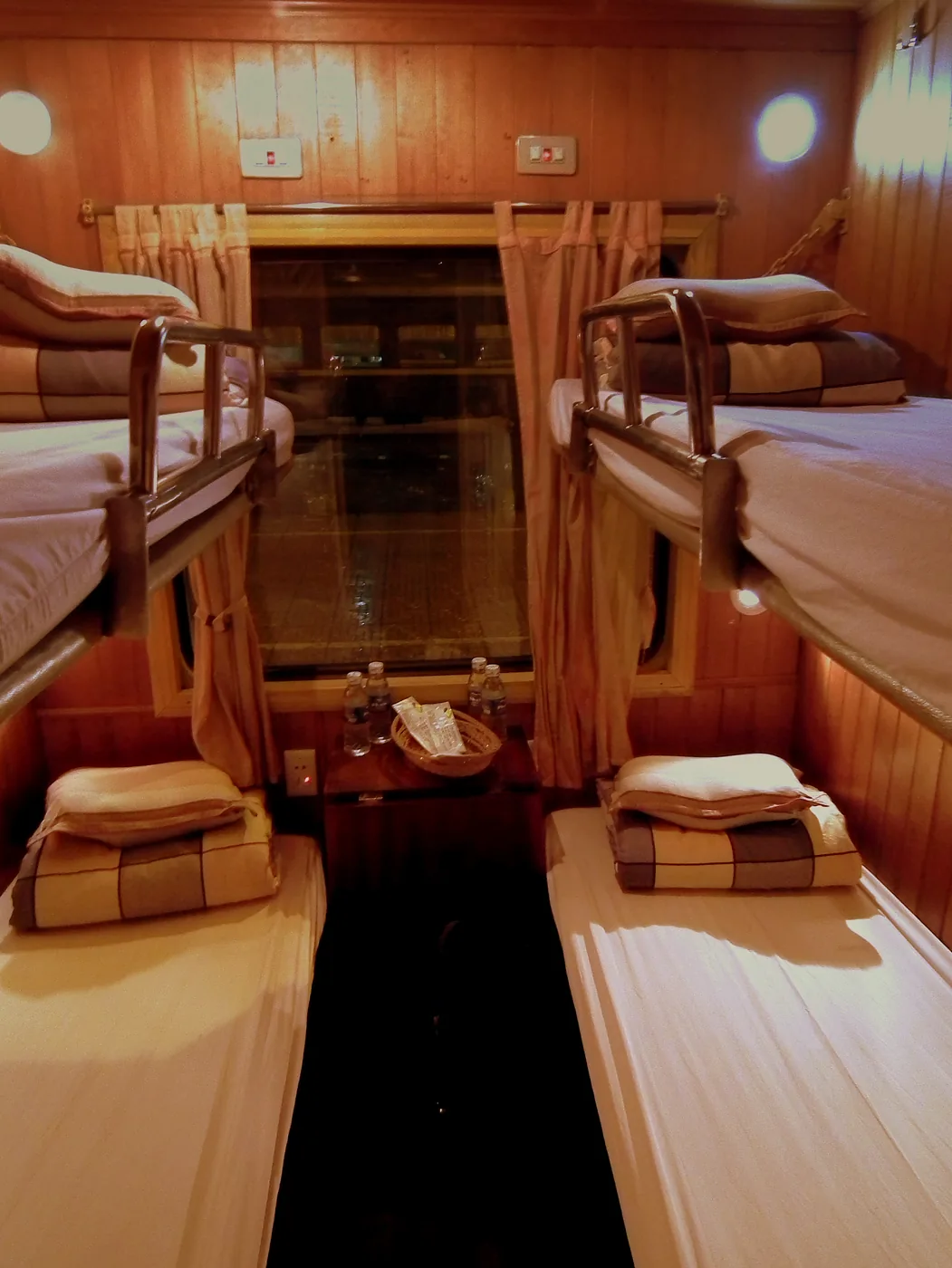
Vietnamese trains are slow, comfortable, safer than the roads and the best overnight option in the country, and the hardest part of using them is paying for the ticket. A four-berth soft sleeper with a latching door beats every bus berth in Vietnam. The trade-off is speed: the full Hanoi to Saigon run takes somewhere between 30 and 37 hours depending on the service. Use rail for the overnight legs and for the Hai Van coast, not as a general-purpose way of covering the country.
What runs, and how long it takes
The Reunification Express is the name usually given to the express services running the 1,726 km North-South line. Odd-numbered SE services run southbound from Hanoi; even numbers run north. Sources genuinely disagree about how many pairs currently run the full length end to end and how long they take, and it is worth saying so rather than picking a number. One well-regarded reference gives 30 to 33 hours; another gives 32 to 37; the timetable summary published after the 15 May 2026 nationwide schedule update gives 31 to 35 hours across six daily pairs in each direction. The honest range is 30 to 37 hours, and which specific train you take matters more than the average. SE3 southbound and SE4 northbound are commonly cited as the best pair, averaging around 33 hours and timed to pass the central coast in daylight.
The number of stations on the line is similarly contested, with published figures ranging from about 178 to roughly 190 counting every halt. What is not contested is that the fast SE services stop at only about 17 to 19 of them, including Hanoi, Ninh Binh, Thanh Hoa, Vinh, Dong Hoi, Dong Ha, Hue, Da Nang, Quang Ngai, Dieu Tri, Tuy Hoa, Nha Trang, Thap Cham, Binh Thuan, Bien Hoa and Saigon.
Alongside the end-to-end services, several regional pairs are more useful than the headline trains: SE21 and SE22 run Saigon to Da Nang in roughly 17.5 to 19.5 hours, SNT1 and SNT2 run the Saigon to Nha Trang overnight, SE41 and SE42 cover Da Nang to Nha Trang in about 11 to 11.5 hours, and the SPT pair runs Saigon to Phan Thiet once each way in 3 hours 48 minutes.
Classes and berths
| Class | What you get | Best for | Avoid if |
|---|---|---|---|
| Hard seat | Upright seating, cheapest available; air-conditioned on main SE trains, not always on older regional stock | Short daytime hops of two or three hours | You are travelling overnight, in which case do not |
| Soft seat | Air-conditioned reclining seat cars, the standard class on all SE trains | Daytime legs up to about six hours, and the Hue to Da Nang scenic run | Any journey where you need to sleep |
| Hard sleeper, 6 berths | Air-conditioned compartment with three bunks a side, thin padded mattresses | Budget overnight travel; the cheapest way to lie flat in Vietnam | You value quiet, or you drew a middle bunk |
| Soft sleeper, 4 berths | Two bunks a side, thicker mattress, door that latches | The default overnight choice, and the one this guide recommends | Nothing much. Book lower berths if you can, they cost more for a reason |
| VIP 2-berth | Private two-person compartment, available only on SE1 and SE2, roughly four such compartments per train | Couples who want privacy and can book early | You are booking late. There are almost none. |
Lower berths cost more than upper berths in every sleeper class, and are worth it. On a six-berth, the middle bunk is the one to avoid: you cannot sit up in it and it has no window. Compartments are shared with strangers unless you book all the berths.
Fares by leg
| Leg | Time | Soft seat | Hard sleeper, lower berth | Soft sleeper, lower berth |
|---|---|---|---|---|
| Hanoi to Lao Cai (for Sapa) | About 8 hours overnight, plus a 38 km transfer | Not the point on this route | State four-berth from roughly ₫400,000-460,000 (US$15-18) | Premium operators ₫800,000-900,000-plus (US$31-35) per berth |
| Hanoi to Hue | 13-15 hours | About ₫569,000 (US$22) | About ₫1,070,000 (US$41) | About ₫1,218,000 (US$47) |
| Hanoi to Da Nang | 15-18 hours, evening departures roughly 18:00-20:30 | Rarely worth it at this length | Lower end of the band | Roughly ₫900,000-1,400,000 (US$35-54) |
| Da Nang to Nha Trang | 9-11.5 hours | Lower end of the band | Roughly 20-30% below soft sleeper | Roughly ₫700,000-1,500,000 (US$27-58) |
| Nha Trang to Saigon | 7-9 hours, overnight departures 20:00-21:00 arriving 04:00-06:00 | From about ₫190,000 (US$7) | Up to about ₫635,000 (US$24) | Around ₫990,000 (US$38) on some booking platforms |
| Hanoi to Saigon, end to end | 30-37 hours | About ₫1,026,000 (US$39) | About ₫1,637,000 (US$63) | About ₫1,758,000 (US$68) |
Every figure above is indicative. Fares move with the specific train, berth position, advance purchase and holiday surcharges, and they rise sharply around Tet.
What the ride is actually like
Air conditioning is standard on everything above hard seat on modern rolling stock. Western-style toilets are standard on the main air-conditioned SE trains, though older regional stock can be more basic and cleanliness varies with the age of the carriage. Meal trolleys sell boxed rice-and-meat meals for around ₫50,000 (about US$2), the longer SE services carry a dining car selling coffee, beer, boiled eggs, fruit and hot noodle dishes, and vendors board briefly at intermediate stations with regional food. Most Vietnamese passengers bring their own.
Mobile data on the move is unreliable. Travellers consistently report signal dropping repeatedly during a single journey even on networks with the best national coverage. Some refurbished carriages have free wifi and individual power sockets at each berth; many do not, and the wifi rumour outruns the wifi. Bring a charged power bank and download anything you want to watch.
The one piece of seat advice worth acting on concerns the Hai Van coast between Hue and Da Nang, the finest stretch of railway in the country. Heading south from Hue, sit on the left for the sea. Heading north from Da Nang, sit on the right. This is direction-dependent, so a blanket “sit on the left” instruction will be wrong for half of readers. That single route has its own dedicated write-up in the Da Nang to Hue train guide, and the pass itself, including the road option over the summit, is covered in the Hai Van Pass guide.
Premium operators, and what they really change
Several private companies lease and refurbish carriages that are then attached to scheduled state trains. This is worth understanding precisely, because the marketing does not make it clear: you are buying a nicer room on the same train, moving at the same speed, arriving at the same minute.
| Operator | Where it runs | Rough price | What it changes |
|---|---|---|---|
| Livitrans | Hanoi to Lao Cai, and Hanoi to Hue and Da Nang | Shared four-berth from about ₫815,000 (US$31); private two-berth cabin around ₫3,250,000 (US$125) for the cabin | Among the newest and cleanest interiors; private VIP cabins and suites available |
| Violette | Hanoi to Ninh Binh, Dong Hoi, Hue, Da Nang, Nha Trang and Saigon, plus a Lao Cai leg | Hanoi to Hue around US$32; Hanoi to Da Nang around US$70; Hue to Da Nang around US$25 | Two-berth VIP and four-berth soft sleeper, with bedding, water, a snack and a face towel per passenger |
| Sapaly | Hanoi to Lao Cai only | Deluxe four-berth from around US$55 per person; VIP two-berth around US$198 per cabin | Two refurbished deluxe carriages, marketed as four-star |
| Chapa Express | Hanoi to Lao Cai | Four-berth from around US$45 per person; VIP two-berth around US$215 per cabin | Seven cabins, up to 28 passengers per carriage |
| King Express | Hanoi to Lao Cai | Comparable to Sapaly’s premium tier, around US$198 per cabin | Marketed on sound insulation and private double cabins |
One pricing caveat is worth flagging because it appears in circulation. The premium two-berth Sapa cabins are quoted per cabin by the operators themselves, at roughly ₫3,200,000 to ₫3,750,000, which works out around US$60 to US$85 per person for two sharing. At least one guide presents a figure in that band as a per-person price, which would roughly double the cost. Check whether a quote is per cabin or per person before you book, because the two readings differ by a factor of two.
The two tourist trains most guides do not have
The Hue to Da Nang heritage connection service is the most useful new thing on Vietnamese rails for a visitor. Numbered HĐ1 to HĐ4 and operated jointly by Vietnam Railways with the Hue and Da Nang authorities, it runs a scenic service across the Hai Van section with a scheduled stop of about ten minutes at Lang Co station so passengers can photograph the bay. HĐ1 leaves Hue at 07:45 and reaches Da Nang at 10:35; HĐ3 leaves Hue at 14:25 arriving 17:40; HĐ2 leaves Da Nang at 07:50 arriving Hue 11:05; HĐ4 leaves Da Nang at 15:00 arriving 17:45. The consist is seven carriages, five of them soft-seat cars with 56 seats each. The fare is flat: ₫207,000 on weekdays and ₫231,000 at weekends, roughly US$8 to US$9. A refreshed livery was unveiled on 26 March 2026, and Hue Railway Station was formally designated a tourist destination at the same time.
The Hanoi to Hai Phong premium carriage, branded Hoa Phuong Do or Red Flamboyant, entered service in May 2025 and had completed close to 3,000 trips carrying around 1.33 million passengers by mid-2026. The journey takes about 2.5 hours, with four round trips a day on weekdays and six at weekends and on holidays. The VIP carriage seats 34 in an Indochine style with swivelling seats and screens, and some runs carry onboard musicians. Separately, a Hanoi heritage service to Tu Son opened to the public on 6 September 2025, departing Hanoi at 08:00 and 13:30 with returns at 10:30 and 16:20, at ₫550,000-750,000 (about US$21-29).
Stations, and the plans hanging over them
The stations you will actually use are Hanoi Railway Station, Da Nang Railway Station, Nha Trang Railway Station, Lao Cai Railway Station, Dong Hoi Railway Station for Phong Nha, Phan Thiet Railway Station for Mui Ne, and Saigon Railway Station.
Two redevelopment stories are worth knowing but not worth planning around. A developer-led proposal would relocate the historic Hanoi station, opened in 1902, roughly 14 km south to Ngoc Hoi as part of a large urban renewal scheme; a Deputy Prime Minister has publicly called for a thorough impact assessment before it proceeds, so it is a proposal under review, not a confirmed move. Saigon station is the subject of a separate 2024 planning proposal to turn it into a multi-function transit hub, with no confirmed implementation timeline. Neither will affect a trip taken now.
Metro connections do not yet help rail passengers in either city. Hanoi’s Line 3 will eventually reach Hanoi Railway Station underground, but that section is targeted for late 2027. Ho Chi Minh City’s Line 1, open since 22 December 2024, runs from Ben Thanh to Suoi Tien and does not serve Saigon station, so you will still need a taxi or ride-hail between the two.
High-speed rail, honestly
The North-South high-speed railway was approved by the National Assembly in November 2024: 1,541 km from Hanoi to Ho Chi Minh City, a 350 km/h design speed, about US$67 billion of investment, 23 passenger stations, and a route through 20 of Vietnam’s 34 provinces and cities. Construction has not started. Government Resolution 106 sets a mandatory groundbreaking deadline of 31 December 2026, but the feasibility study behind it was still being tendered as of mid-2026, with consultant selection beginning around June 2026 and an interim feasibility report scheduled for June 2027. Reporting therefore puts a realistic construction start anywhere between the last quarter of 2026 and the last quarter of 2028, with land clearance named as the critical bottleneck and 2035 as the target for basic operation.
Write that down as: approved, not built, and not relevant to your trip. Anyone telling you Vietnam is building a bullet train that will cut Hanoi to Saigon to five or six hours is describing something real but distant. Plan around 30 to 37 hours, or a plane.
6. Sleeper buses and limousine vans: read this before booking a night bus
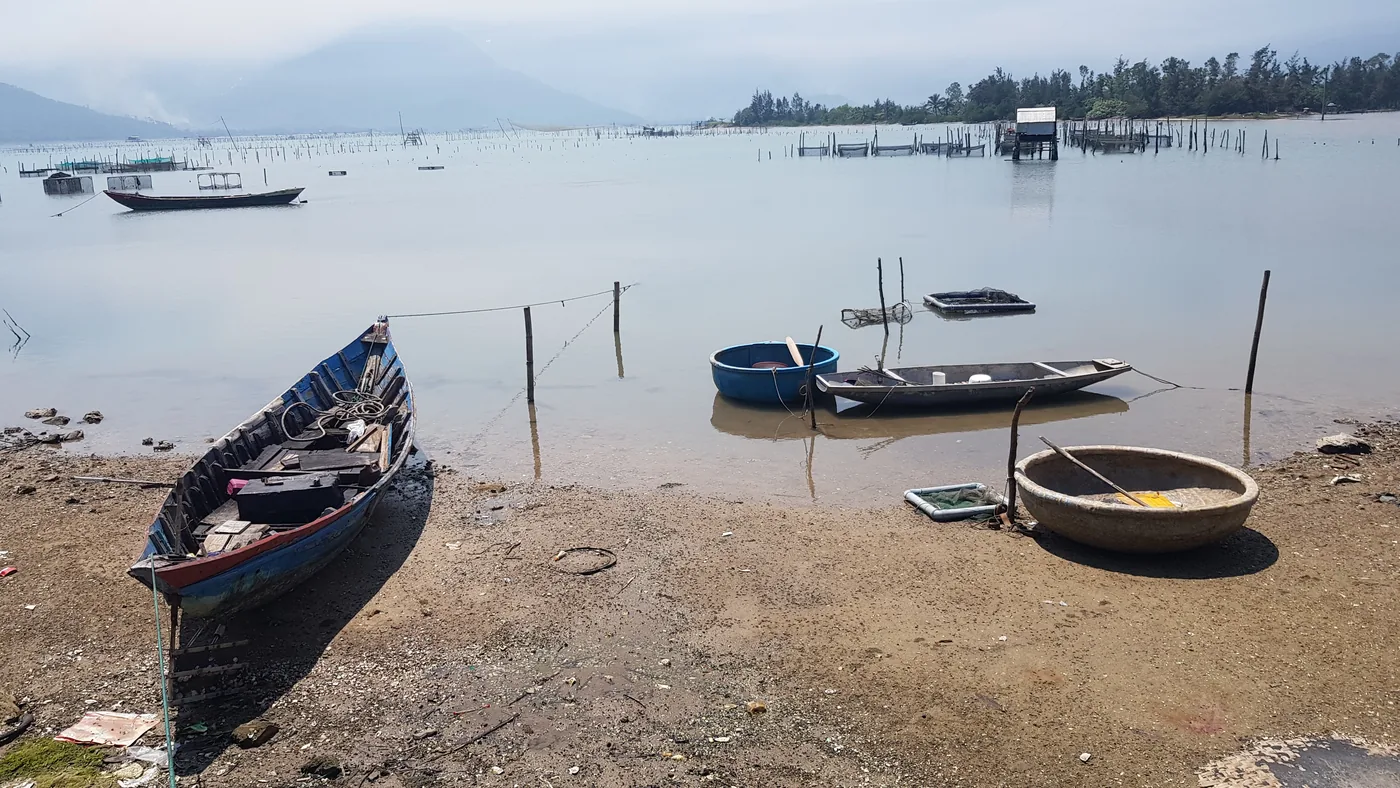
The sleeper bus is the cheapest way to cross Vietnam, the only way to reach several major destinations, and the mode most likely to leave you standing on a kerb at 05:00 in a town you do not know. None of that makes it wrong. It makes it a decision that should be taken deliberately, with the arrival time checked before the fare. Limousine vans, which are a different product entirely despite similar marketing, are quietly the best mode in the country for anything under about three hours.
The three vehicle types, described honestly
| Type | What it is | Space per passenger | Rough fare | Best for |
|---|---|---|---|---|
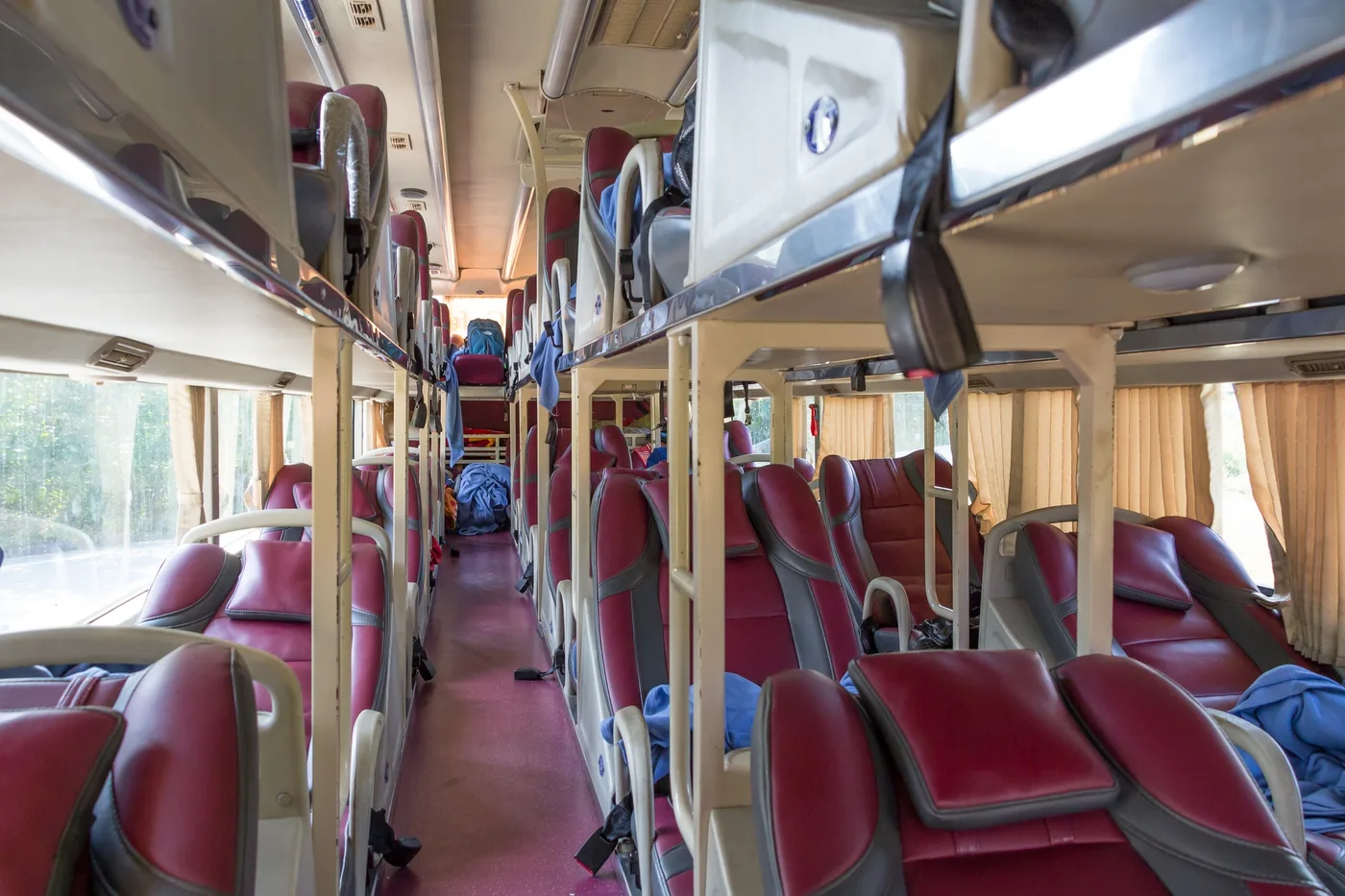
| Standard sleeper, xe giường nằm | 34 to 44 curtained berths in two or three rows across two decks. Open-plan, not pods | Roughly 1.6-1.8 m long and 50-60 cm wide. Semi-recline; you cannot sit fully upright or stand | Long overnight legs roughly ₫500,000-820,000 (US$19-32); shorter routes ₫170,000-450,000 | Budget overnight travel where no train runs |
| VIP cabin sleeper, often called a limousine bus | 20 to 24 individual curtained pods instead of 40-plus open berths; some configured as side-by-side doubles | Roughly 90 cm wide by 180 cm long, with a personal screen, light and USB panel on the better services | Roughly ₫500,000-1,300,000 (US$19-50) | Anyone tall, anyone travelling as a couple, and anyone who wants a door between themselves and the aisle |
| Limousine van | A 9, 11 or 16-seat van with individual reclining captain’s chairs. Not berths. Frequently door-to-door within the city | A proper seat with legroom, not a bunk | Roughly ₫150,000-650,000 (US$6-25) | Everything under three hours, plus Hanoi to Sapa, Hanoi to Ninh Binh, Nha Trang to Da Lat and Ho Chi Minh City to Vung Tau |
A standard sleeper berth is genuinely short. Passengers over roughly 175 cm consistently report being unable to stretch out, and the difference between a 50 cm open berth and a 90 cm pod is the difference between enduring the night and sleeping through it. If you are choosing between a cheap standard sleeper and a VIP cabin for perhaps ₫250,000 more, take the cabin.
Boarding rituals and small realities
- Shoes come off at the door. You are handed a plastic bag; shoes go at the foot of the berth or in a rack. This is universal and not negotiable.
- The air conditioning runs cold, particularly in the rows nearest the front. Bring a layer. Blankets and a small pillow are usually provided but thin.
- Onboard toilets exist on some buses and are best avoided. The operative bathroom mechanism is scheduled rest stops, commonly every two to three hours, though frequency is not standardised across the industry.
- Large bags go in the undercarriage hold, not the cabin, because the berth layout leaves no room. Keep phone, wallet and passport on your body while you sleep. Outright theft is rare but petty theft from sleeping passengers is a recognised risk, and back-row bunks are worth avoiding for several reasons at once.
- There is no legitimate luggage fee for standard bags. Staff loading the hold occasionally claim one because a bag looks large; decline politely and continue to your berth. This is a known trick rather than a policy.
Operators, and the difference between them
| Operator | Where it is strong | Reputation, honestly |
|---|---|---|
| Futa Bus Lines (Phuong Trang) | The largest network in the country, strongest in the south and centre, with its own depots and booking app | Mixed but broadly the safe default. Travellers praise reliability and service desks; complaints centre on cold air conditioning, occasional late departures and brusque staff |
| The Sinh Tourist | The classic backpacker corridor: Hanoi, Hue, Hoi An and Da Nang, Nha Trang, Da Lat, Mui Ne, Ho Chi Minh City | Long-established with offices in each stop city. Note that it publishes its own fraud-warning page listing imitator offices using similar names |
| Ha Son Hai Van and Interbus Lines | Hanoi to Lao Cai and Sapa | Described as the largest and most professional operator on that corridor, and one of only two that lets you pre-book a specific berth position |
| Sapa Express | Hanoi to Sapa | Three tiers: 28-seat limousine, 18-seat luxury limousine and VIP sleeper cabin |
| Kumho Samco | Southern routes out of Ho Chi Minh City | Established, formal operator with an organised network and a structured Tet pre-sale programme |
| Cuc Tung | Nha Trang-based, running eight routes on the Nha Trang to Da Nang and Nha Trang to Saigon corridors | Runs 9-seat limousines, 34-seat sleepers and 21-seat premium VIP limousines |
| Hoang Long | The northern coastal corridor, Hanoi to Hai Phong to Ha Long | One of the country’s pioneering road brands, over 20 years old |
| Camel Travel, Hanh Cafe | Open-tour corridors | Both appear repeatedly in poor-reputation round-ups among foreign travellers, with complaints of late departures, poor driving and unhelpful staff. Read recent reviews before booking either |
Thanh Buoi is a case worth knowing about because its status is genuinely unclear. The company suspended passenger operations in October 2023 after a fatal accident investigation and had its business licence revoked; it resumed the Ho Chi Minh City to Can Tho route around February 2025 after roughly five months out of service. Whether its Ho Chi Minh City to Da Lat route has resumed is not confirmed by any source we can point to, and at least one Vietnamese report from early 2025 states specifically that it had not. If you see it listed as the fastest operator to Da Lat, verify it is actually running before relying on it.
The open-tour ticket, and whether it still makes sense
The hop-on, hop-off open ticket along the Hanoi to Ho Chi Minh City backpacker corridor still exists in 2026, sold principally by The Sinh Tourist and by several rebranded resellers. Tickets are typically valid for about a month, letting you stop for a few days at each city. Aggregators cite an open ticket at around US$21 against individual legs that could total US$35 to US$70.
The catch is structural. An open ticket locks you to one operator for the whole route, each onward leg usually needs booking 24 to 48 hours ahead, and most open-ticket companies run only one bus a day per leg. Booking individual legs through a comparison platform often produces similar prices with far more flexibility. Take the open ticket only if you are certain of the corridor and indifferent to the operator.
Bus stations, and the Hanoi complication
In Ho Chi Minh City the picture is clear. Mien Dong Moi bus terminal has handled long-distance northern and central routes since October 2022 from a 16-hectare site in Long Binh, Thu Duc. The old Mien Dong station on Dinh Bo Linh has not fully closed and continues to run shorter-haul and city services at reduced capacity. Mien Tay bus terminal remains the departure point for the Mekong Delta. Da Nang’s central bus station operates around the clock at the northern edge of the city.
Hanoi is genuinely unresolved and it would be dishonest to present it otherwise. City planning documents from 2025 describe Giap Bat, My Dinh, Nuoc Ngam and Gia Lam as scheduled for conversion into parking and local transfer terminals, with long-distance services moving to new sites further out. Live operator directories still list all of them as operating terminals. The two sources disagree, and the practical instruction is the same either way: check the departure point on your specific ticket rather than assuming which station your route uses.
Night travel and risk, without the scare story
The durable facts are these. Vietnam recorded 21,880 road crashes and 11,498 deaths in 2024, a fall of roughly 14% year on year, and the first half of 2025 continued that improvement. Motorbikes are involved in over 90% of traffic deaths against a national fleet of around 77 million machines, so the road-risk picture is dominated by two-wheelers rather than coaches. Vietnam’s fatality rate of about 17.7 per 100,000 is nonetheless above both the Asia-Pacific average of 15.2 and the Southeast Asian average of 14.4.
What actually reduces your exposure on a bus is unglamorous and consistent across every source: choose a larger, established operator over the cheapest listing; take a middle berth rather than the front rows or the back; and prefer a daytime leg over an overnight one where the schedule allows, because driver fatigue and poor visibility are the recurring factors in the serious incidents that do occur. Where an overnight leg is unavoidable, a train berth on the same corridor is the safer swap.
Motion sickness deserves a mention because one route in particular produces it. The Nha Trang to Da Lat road climbs continuously through mountain curves for its final stretch and is widely reported as unpleasant for anyone prone to it. Take medication before boarding rather than after symptoms start, and choose a full-size bus over a minivan, since the smaller vehicle moves more abruptly.
The arrival problem, and what to do about it
Overnight sleeper buses commonly arrive between 05:00 and 07:00, sometimes before dawn, and sometimes at a terminal 15 minutes or more outside the centre rather than downtown. That is the real cost of the cheap ticket, and it compounds: you arrive tired, in the dark, at a place where the only people awake are drivers looking for disoriented arrivals.
Three things fix most of it. Book accommodation that confirms early check-in or at least luggage storage before you arrive, so you are not carrying a rucksack around a closed town. Use a ride-hailing app rather than a street-hailed taxi at the drop-off point, so the fare is fixed before you get in; the Grab and Green SM guide covers how the apps work in Vietnam. And where the option exists, prefer a departure that lands you at 07:00 or later over one that saves an hour but drops you at 04:30.
7. A car with a driver: not a luxury on some routes
On four or five specific Vietnamese routes, hiring a car with a driver is not an indulgence, it is the only way to get the thing you came for. A day rate of roughly ₫2,650,000 to ₫3,200,000 (about US$100 to US$125), split between four people, buys you the Hai Van summit that tunnel traffic skips, photo stops on a mountain road, and a boot large enough for real luggage. It is also the only mode that works reliably for travellers with limited mobility.
What it costs
| Vehicle | Capacity | Published day rate | Rough USD |
|---|---|---|---|
| Compact sedan | Up to 3 passengers with luggage | About ₫2,650,000 per day | About US$102 |
| Mid-size SUV | 2 to 4 passengers | About ₫2,850,000 per day | About US$110 |
| Seven-seat SUV | 2 to 5 passengers | About ₫2,950,000 per day | About US$113 |
| Large van | Up to 10 passengers | About ₫3,200,000 per day | About US$123 |
| City day hire | Any of the above, typically 8 hours and around 100 km | Commonly quoted at US$100-180 per day | US$100-180 |
| Multi-day with an English-speaking driver | Varies | One published seven-day quote, based in Hoi An and covering vehicle, fuel, tolls, parking and daily hours, came to ₫30,625,000 | About US$1,180 total, roughly US$168 a day |
Those are published rate cards from operators rather than a market survey, so treat them as a benchmark to negotiate against rather than a fixed price. What is normally included is the vehicle, the driver, fuel and standard tolls on the quoted route. What is customarily handled separately on multi-day trips is the driver’s meals and accommodation, though this varies and is exactly the sort of thing to confirm in writing before you set off.
Tipping is not mandatory. On a city day hire, ₫100,000-200,000 (about US$4-8) is considered generous. On a multi-day intercity route where the driver has done well, ₫200,000-500,000 a day (about US$8-19) is the normal range.
The routes where this is the right answer
- Hue to Da Nang or Hoi An over the Hai Van Pass. This is the strongest case in the country. The road tunnel bypasses the summit entirely, so bus passengers see nothing, and the tourist coaches that do take the old road mostly do not stop at the top. A private car turns a 2.5 to 3 hour transfer into a 4 to 5 hour trip with stops at the 496 m summit, which is free to visit, and at Lang Co lagoon. You are paying for the stops, not the transport.
- Hanoi to Sapa or Ha Giang. Mountain roads, terraced valleys and viewpoints that no scheduled service will pause at. On the Ha Giang run it also means you are not arriving at 04:00.
- Da Nang to Phong Nha. A private car covers this in 4 to 5 hours against 6 to 7 by bus, for roughly ₫4,000,000-4,500,000 (about US$154-173). Expensive for two, reasonable for four.
- Mekong Delta multi-town days. Can Tho, Ben Tre and Chau Doc are awkward to string together on scheduled buses and easy in a hired car.
- Any leg with a wheelchair user, an unsteady older passenger, or a family carrying a car seat. The section on travelling with reduced mobility explains why the alternatives largely do not work.
Airport and point-to-point transfers
A pre-booked private transfer is a different product from a day hire and is priced per journey rather than per day. It is worth paying for in exactly two situations: arriving on a long-haul flight at an unsocial hour with luggage and no local currency, and any transfer where the pickup is genuinely hard to find. Elsewhere, a ride-hailing app is cheaper and perfectly adequate. City-level movement, including which app works where and what a fair fare looks like, is covered in the ride-hailing guide and, for Da Nang specifically, in the getting around Da Nang guide.
Booking it without getting it wrong
Private cars are booked through hotel and hostel desks, through regional operators, and through the large activity platforms. Hotel desks are convenient and generally add a commission. Regional operators are usually cheaper and require more correspondence. Whichever route you take, pin down five things in writing before paying anything: the exact vehicle class, the total price and what it includes, whether tolls and parking are covered, whether the driver speaks English, and the specific stops you want made along the way. The last of those is the one people forget, and a driver who was not told about the Hai Van summit will simply take the tunnel because it is faster.
One structural note about pricing. Rates in the centre, around the short and well-trodden Hue, Da Nang and Hoi An triangle, are generally quoted lower per day than long-haul northern mountain runs or southern routes into the Delta and the highlands. That pattern is anecdotal rather than something we can source to a published survey, so treat it as a reason to get two quotes rather than a rule.
8. Ferries and boats: the crossings that get cancelled
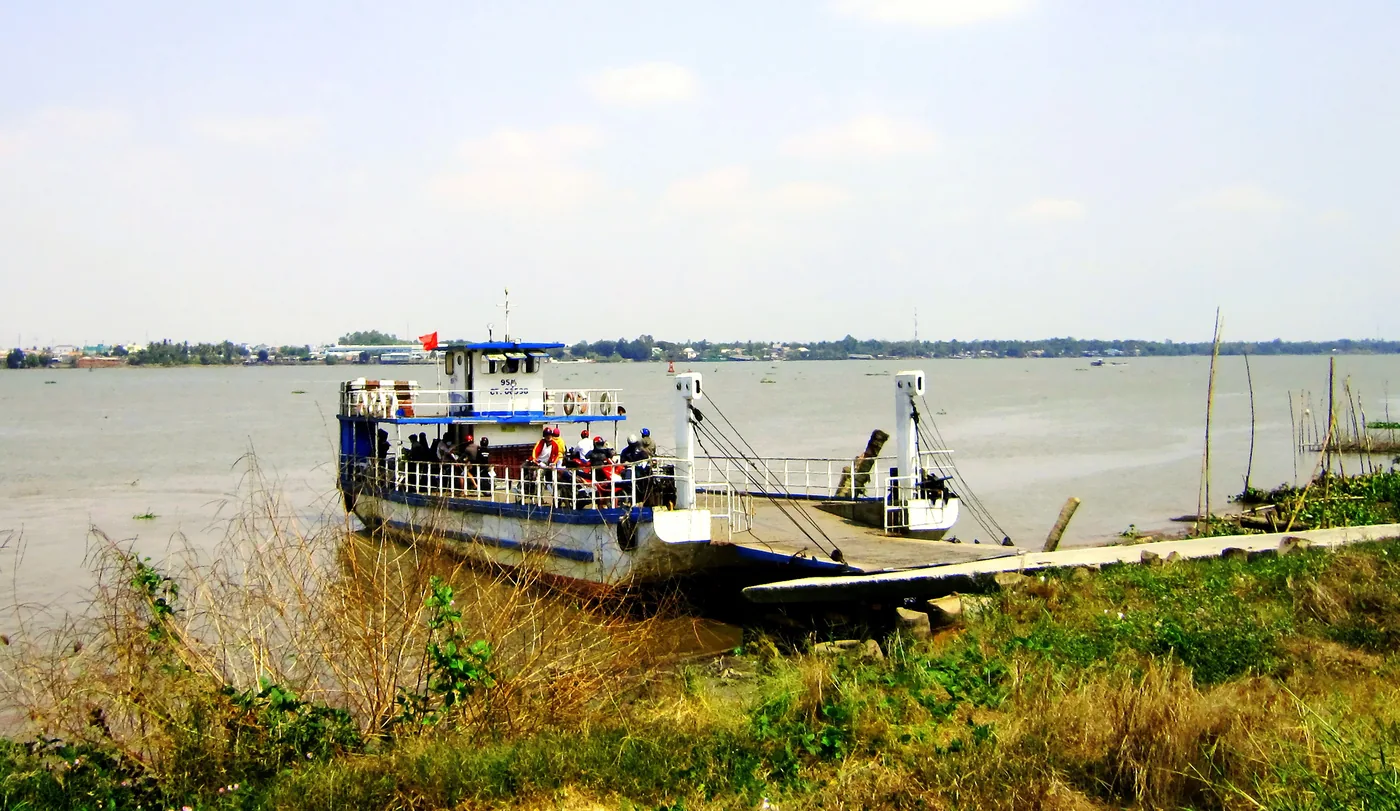
Boats in Vietnam are not a mode you choose, they are a mode you are assigned by geography, and the only real decision is whether to fly instead. Phu Quoc, Con Dao and Cat Ba account for almost all of it. Crossings run from 30 minutes to five hours, cost roughly ₫185,000 to ₫1,200,000 (about US$7 to US$46), and are the least reliable transport in the country, with entire route groups suspending for days when the wind gets up. Safety enforcement tightened visibly in July 2026.
Phu Quoc: the two mainland crossings
| Route | Crossing time | Fare | Frequency | Operators |
|---|---|---|---|---|
| Ha Tien to Phu Quoc | About 1h15 to 1h30, the shorter crossing | ₫185,000 on the slower boats to ₫250,000-350,000 on the fast and VIP services (about US$7-13) | Multiple departures, broadly 07:00 to 14:00 | Superdong, Phu Quoc Express, Thanh Thoi |
| Rach Gia to Phu Quoc | About 2h30 | ₫330,000-350,000 (about US$13) | Around six departures a day | Superdong |
The practical distinction between the two is not the boat, it is where you are coming from. Ha Tien ferry terminal is the shorter sea crossing and the better choice if you are already in the western Delta. Rach Gia ferry terminal is closer to Ho Chi Minh City by road but a full hour longer at sea. If you are coming from anywhere further than the Delta, fly: Phu Quoc has an international airport and the sums do not favour a long road transfer plus a boat.
Vehicles are a separate question. The larger Superdong roll-on ferries carry motorbikes and cars, typically only a handful of bikes per sailing, at roughly US$3 for a motorbike and around US$116 for a car. The fast passenger catamarans run by Phu Quoc Express and Thanh Thoi do not take vehicles at all. Which vessels carry vehicles varies by season and by maintenance schedule, so confirm directly with the operator rather than assuming.
There is no direct boat between Phu Quoc and the Nam Du or Hon Son island groups. Reaching them means returning to Rach Gia and taking a separate sailing, at around ₫250,000 (about US$10) for the onward leg, and because those departures leave early, it usually means a night in Rach Gia. The Superdong office there is at 14 To Do Street, open daily from 06:00 to 20:30.
Con Dao: treat every sea route as volatile
Con Dao’s boat services have suspended and resumed repeatedly, and sources disagree about what is running at any given moment. That is not a research failure, it is the actual state of the route. The instruction here is deliberately unhelpful-sounding and is the correct one: check directly with the operator for the specific dates you intend to travel, and do not rely on any article, including this one, telling you a Con Dao sailing is currently running.
| Route | Crossing | Fare | Status honesty |
|---|---|---|---|
| Tran De (Soc Trang) to Con Dao | About 2 to 2h40, the shortest and calmest crossing | From around US$21 per passenger | The practical boat choice in calm season. Tran De port is around 230 km from Ho Chi Minh City by road |
| Vung Tau to Con Dao | 4 to 6 hours depending on sea state; typically out at 08:30, back at 16:00 | Adult ₫790,000-1,200,000 (about US$30-46) across economy, deluxe and VIP classes | Resumed in February 2026 after a suspension. Departs Cau Da port, Vung Tau |
| Ho Chi Minh City to Con Dao | Around 5h45 in good weather | ₫720,000-1,370,000 (about US$28-53) by class | The most volatile of the three. Suspended for over six months at one point and reported as resuming in June 2026; other sources describe it as cancelled. Verify live |
| Flight from Ho Chi Minh City | 45 minutes | From around US$103 one way | The reliability play, and the right answer from November to February. Only one or two flights a day, so book early |
Two operational details are stable enough to print. Ben Dam port on Con Dao has charged an entrance fee of ₫18,000 per person per trip since November 2023. And Con Dao’s rough season is roughly November to February, when sailings can drop to as little as one a week and a fifth to a third of scheduled trips are cancelled in the worst weather. That is the window in which the flight stops being a preference and becomes the plan.
Cat Ba and Ha Long: the short crossings that work
Cat Ba is the one island group where the boats are genuinely dependable, because the crossings are short and sheltered. The main mainland crossing now runs from Dong Bai pier on the Hai Phong side to Cai Vieng on Cat Ba, a distance under two kilometres taking around 30 minutes, with departures roughly every half hour and 23 to 26 sailings a day. First departure from Dong Bai pier is 05:30 and the last is 18:30; from Cai Vieng the window is 05:00 to 18:00. Some booking sites still call this the Got to Cai Vieng ferry, using the previous mainland terminal name for the same corridor.
Most visitors never book any of that separately. A through ticket from Hanoi bundles a shuttle from the Old Quarter to the Hai Phong pier, roughly two hours on the expressway, the crossing itself, and a connecting shuttle into Cat Ba town, for about ₫250,000-350,000 (US$10-13) one way and around three to three and a half hours in total. The crossing element can be a speedboat of five to seven minutes, a ferry of 25 to 35 minutes, or the cable car.
The Cat Hai to Phu Long cable car crosses a 3,955 m span in 10 to 15 minutes and, as of April 2026, runs every day of the week rather than closing on Tuesdays, operating 09:00 to 15:45 with a midday break between 11:30 and 13:30 and six round trips a day. Between Ha Long and Cat Ba, the main route runs Gia Luan pier at the island’s northern tip to Tuan Chau International Marina: ferry ₫80,000-90,000 (about US$3-3.50) in 45 to 50 minutes, or speedboat ₫150,000-250,000 (about US$6-10) in 15 to 20 minutes. A 06:00 early departure was added in January 2026 for passengers connecting to morning flights.
Worth stating clearly: an overnight cruise on Ha Long Bay is accommodation and sightseeing, not transport. It starts and finishes at the same harbour, usually with a coach transfer from Hanoi of two and a half to three and a half hours bundled in. It does not move you between cities.
Southern coastal and river routes
The Ho Chi Minh City to Vung Tau hydrofoil is the clearest example of infrastructure making a boat obsolete. The service still runs, calling at Can Gio, and takes about two hours over roughly 90 km. Its Saigon pier moved with effect from 28 August 2025 to Pier No. 4 opposite Ham Nghi Street near the Bach Dang wharf area, replacing the old Pier No. 2 which closed in May 2025. The reason to take it now is that you want a boat or you are stopping at Can Gio, because the expressway bus does the same journey in about 1h45 for ₫80,000-90,000 (roughly US$3.50).
The Chau Doc to Phnom Penh river boat is a genuine international transport link rather than a novelty. It departs Chau Doc around 07:30, reaches Phnom Penh around 13:00, and takes roughly five to five and a half hours including two border stops where passengers disembark for stamping at the Vinh Xuong river checkpoint. Published 2026 pricing runs ₫1,580,000-1,640,000 (about US$60-63) depending on direction. Two document points matter: a Cambodia e-Arrival card is required of all visitors and should be completed online well before departure, and Vietnam does not issue visas on arrival at this river border, so anyone travelling in the Phnom Penh to Chau Doc direction must have Vietnamese entry sorted in advance.
What changed at the pier in July 2026
On 11 July 2026 a speedboat carrying 36 people capsized about 400 m off Phu Quoc while running from Hon May Rut Ngoai to An Thoi port, with 15 deaths. The Prime Minister issued an official dispatch the same day, and the effects are things a traveller will notice rather than abstractions.
- Port and terminal inspection and maintenance regimes tightened, with unlicensed piers and vessels failing technical standards liable to suspension.
- Vessels must be properly registered, inspected and compliant before entering service.
- Manifest, capacity and crew-certification checks before departure are being enforced more strictly, which can mean a slower boarding process.
- Passengers may be required to wear life jackets for the whole crossing rather than have them stowed under the seat.
Take that as a floor rather than a ceiling. Wear the jacket whether or not you are told to. Decline an obviously overloaded boat. Prefer operators who visibly check a manifest against passengers boarding, because that check is the one that determines whether anyone knows you were aboard. And on any island leg, note that An Thoi port on Phu Quoc is the hub for southern island day trips as well as some mainland arrivals, so the same tightened checks apply to excursions, not only to scheduled crossings.
Cancellations, refunds and the season you cannot argue with
Rough seas suspend sailings several times a year, and not one at a time. On 20 November 2025 every ferry and boat route to Phu Quoc, Nam Du and Hon Son was suspended simultaneously in southwest monsoon winds. Standard operator practice is to contact passengers who booked online and offer either a full refund or a seat on the next available sailing, though execution across smaller operators is inconsistent.
The seasonal pattern is the part you can plan around. Phu Quoc’s calm window runs roughly November to May, with the roughest water from May to October. Con Dao inverts that, with the calmest months from around March or April to September and the windiest, roughest conditions in the nominally dry November to February window. The consequence is worth repeating because it wrecks itineraries: combining Phu Quoc and Con Dao in a single trip guarantees rough water on one of the two crossings, whichever months you choose.
9. Driving yourself: your licence is probably not valid here
Vietnam recognises international driving permits issued under the 1968 Vienna Convention and does not recognise permits issued under the 1949 Geneva Convention, which means the answer to “can I drive here” depends entirely on which passport you hold. British permits are 1968-basis and are recognised. American, Canadian, Australian and New Zealand permits are 1949-basis and are not. There is no single sentence that covers English-speaking readers on this, and any guide that gives you one is wrong for most of its audience.
The rule, by country
| Where your permit was issued | Convention basis | Recognised in Vietnam? | What that means for you |
|---|---|---|---|
| United Kingdom | 1968 Vienna | Yes | Carry the IDP together with your original UK licence. Both, not one. Make sure the permit shows the correct vehicle categories |
| United States | 1949 Geneva | No | A US-issued IDP does not make you legal to drive or ride in Vietnam |
| Canada | 1949 Geneva | No | Same position as the United States |
| Australia | 1949 Geneva | No | Same position. This surprises Australian travellers more than any other group |
| New Zealand | 1949 Geneva | No | Same position |
| Elsewhere | Varies | Check before you travel | Vietnam acceded to the 1968 Vienna Convention in 2015, so the question is simply whether your issuing country is a party to it. Confirm against your own licensing authority, not against a rental shop |
Two mechanisms sit outside that table. Vietnam recognises licences from ASEAN member states under a regional arrangement. And Vietnam and South Korea concluded a mutual recognition agreement that took effect on 23 July 2023, which is why Korean travellers are in a different position from Japanese ones despite the geography. Neither helps a British, American, Canadian, Australian or New Zealand reader.
The consequence that actually matters
The fine is not the exposure. The exposure is insurance. Standard travel and health policies almost universally exclude claims arising while you were operating a motor vehicle without a licence valid in the country you were driving in. Ride a scooter on a permit Vietnam does not recognise and you are not underinsured, you are uninsured for that incident, regardless of who caused it. A serious motorbike injury in Vietnam can mean an air ambulance and a hospital bill in a country where you have no cover and no local liability protection.
Insurers are typically stricter than police on this point. Where a police officer at a roadside check may accept a document that looks official, an insurer assessing a claim will look for the specific combination of a valid home-country licence for that vehicle class plus a 1968-basis international permit. If you cannot produce both, the claim fails.
What is solidly true about the traffic law
Decree 168/2024 replaced the previous penalty framework and took effect on 1 January 2025. Three things about it are well established and worth knowing:
- There is zero tolerance on alcohol. Not a low limit, zero. Any measurable reading is an offence.
- Penalties apply to foreigners on the same basis as to Vietnamese citizens. There is no lighter foreign-visitor track.
- A twelve-point licence system operates alongside the fines, with points deducted per violation and the licence cancelled at zero.
Fine amounts for specific offences are circulating widely online, but the figures available in English come from tour-operator blogs rather than the official schedule, and they vary by an order of magnitude between sources. This guide will not print a number it cannot stand behind. Assume penalties are substantial, assume they increased sharply in 2025, and treat the insurance consequence as the real risk.
Helmets are legally mandatory for riders and pillion passengers, and that is not new.
Renting a car and driving it yourself
Self-drive rental exists and is more awkward here than in most countries, which is why almost every operator and guide steers visitors towards a car with a driver instead. Budget self-drive rates run from roughly US$45 to US$69 a day for small sedans. Deposits are heavy: commonly 50 to 100% of the total rental cost, or a flat figure often quoted around ₫15,000,000 to ₫20,000,000 (roughly US$580 to US$770). Insurance is an extra-cost add-on rather than bundled. Fuel is full-to-full and not included.
The friction that catches people out is tolls. Vehicles without an electronic toll tag must use manual lanes and pay cash in dong, which means carrying notes specifically for that purpose on any expressway run. Combine that with unfamiliar right-of-way conventions, mixed-speed traffic sharing lanes, and the licence question above, and the modest price gap against a driver-included package stops looking like a saving.
Bringing a foreign-plated vehicle into Vietnam is a different matter entirely: it requires a permit arranged through a licensed Vietnamese tour operator and travel in convoy behind a Vietnamese-plated guide vehicle. That is an expedition, not a rental.
Motorbikes, and the honest version of the long ride
Riding the length of Vietnam is a real thing that many people do well, and the legal position for most English-speaking readers is uncomfortable. To ride legally you need a motorcycle licence from home plus a 1968-basis international permit carrying the correct two-wheel category. American, Canadian, Australian and New Zealand riders cannot assemble that combination from their own documents. Police checkpoints on the popular tourist routes, the Ha Giang loop in particular, do check specifically for this.
The compliant workaround is the easy-rider model: a licensed local rider operates the bike and you travel pillion. It removes the licence problem entirely because you are a passenger, and on the Ha Giang loop it is the standard arrangement for a large share of visitors. It also removes the insurance exclusion, since you are not the operator.
For those who are properly licensed, practical points from operators: one-way rentals, picking up in one city and dropping in another, have largely displaced the old buy-a-bike-and-sell-it approach, which rarely saves money once repairs and the resale hassle are counted. Expect a repositioning charge of around US$100 per bike on a one-way rental, plus a refundable security deposit of US$500 to US$2,000 depending on the machine. You can also ship the bike ahead by train to skip the grim industrial crawl out of Hanoi or Ho Chi Minh City; rail cargo fees start around ₫150,000 for short distances and run roughly ₫600,000-1,300,000 (about US$23-50) for something like Da Nang to Saigon, with the tank emptied and registration papers required.
The one number that should govern the decision: motorbikes are involved in over 90% of Vietnam’s road deaths, against a registered fleet of roughly 77 million machines. The national trend is improving, with 2024 fatalities down about 14% year on year, but a visitor without local riding experience is not the average rider in that statistic. Scooter rental for short local use, which is a much smaller commitment than an intercity ride, is covered separately in the Da Nang scooter rental guide.
10. Routes out of Hanoi: Sapa, Ha Long, Ninh Binh, Ha Giang
Almost everything worth reaching from Hanoi is a road journey, and on the four headline routes the road is not a compromise, it is the fastest option available. Two of them have no railway and no airport at all. The one that does have a railway, Sapa, is the route where the train is slower and dearer than the van and still gets recommended out of habit. The long hauls south are a separate question and are settled by distance rather than preference.
| From Hanoi to | Distance | Best mode | Time | Fare | Second choice |
|---|---|---|---|---|---|
| Sapa | About 320 km by road | Limousine van via the CT05 expressway | 5.5 to 6.5 hours door to door | ₫320,000-450,000 standard, up to ₫650,000 VIP (US$12-25) | Overnight train to Lao Cai plus a 38 km transfer, 8 hours plus |
| Ninh Binh | About 95 km | Limousine van with hotel pickup | 1.5 to 2 hours | ₫150,000-350,000 (US$6-14) | Train from about ₫114,000, 2h15 to 3h, but only five or six departures a day |
| Ha Long and Cat Ba | 150 to 180 km to the Hai Phong crossing | Through bus plus ferry on a single ticket | 3 to 3.5 hours to Cat Ba town | ₫250,000-350,000 (US$10-13) | Bus to Ha Long city, then a bay crossing to Cat Ba |
| Ha Giang | About 300 km | Overnight sleeper bus. There is no alternative | 6 to 7 hours, departing 20:00-23:00 | Roughly ₫300,000-500,000 (US$12-19) | Private car by day, which avoids the 04:00 arrival |
| Hue | About 670 km | Overnight sleeper train | 13 to 15 hours | ₫569,000-1,218,000 (US$22-47) | Flight, about 1h15 airborne, US$40-120 |
| Da Nang | About 780 km | Flight | About 1h20 in the air, 4 to 5 hours door to door | Roughly US$25-100 one way | Overnight train, 15 to 18 hours |
| Hai Phong | About 105 km by expressway | Train, unusually | About 2.5 hours on the premium tourist carriage | Varies by carriage class | Expressway coach, just over an hour |
| Ho Chi Minh City | 1,726 km by rail | Flight | About 2h10 nonstop | From roughly US$37-66 one way | The full Reunification Express, 30 to 37 hours, as a deliberate experience |
Sapa: why the train keeps getting recommended and why the van usually wins
This is the clearest example in Vietnam of an old recommendation surviving the infrastructure that made it obsolete. The overnight train to Lao Cai is a genuinely pleasant thing to do, but it does not go to Sapa. It terminates at Lao Cai station, about 38 km and an hour short of the town, and that transfer is not included in the ticket. Rail plus transfer runs eight hours or more door to door and costs more than the road once you have paid for a decent cabin.
The Noi Bai to Lao Cai expressway, open since 2014, cut the road journey from roughly eight hours to about five and a half, and the door-to-door figure of 5.5 to 6.5 hours already includes the mountain climb up the QL4D from Lao Cai. One operator estimates that around 80% of international travellers now take the road. Travel times still swing by half an hour to an hour depending on Hanoi ring-road traffic and weather on the mountain section.
Take the train anyway if you specifically want the overnight-sleeper experience, or if the daytime hours are more valuable to you than the total elapsed time. The premium four-berth cabins run around ₫800,000-900,000 (US$31-35) per berth, and the private two-berth cabins from Sapaly, Chapa Express, King Express and Livitrans cluster around US$160 to US$215 per cabin. Take the road if you just want to be in Sapa.
One booking note specific to this corridor: the popular 22:00 and 23:00 bus departures sell out first at weekends and on Vietnamese holidays, and travellers have been left stranded in Hanoi after leaving it until the afternoon of travel. Sources disagree substantially on how far ahead to book, from two or three days up to four weeks, and the honest reconciliation is that two to three days is a workable minimum for an ordinary off-season weekend while four weeks or more is sensible if the dates fall in the November to January high season or on a national holiday.
Ninh Binh: the train that looks better than it is
Ninh Binh sits on the North-South line, which makes the train look like the obvious choice, and the fare from about ₫114,000 (roughly US$4.40) is genuinely cheap. Two things undercut it. There are only five or six departures a day, so the timetable rather than your plan decides your morning. And Ninh Binh’s attractions, Trang An, Tam Coc and Mua Cave, are spread outside the town, so you need onward transport at the far end regardless.
The limousine van with Old Quarter pickup solves both problems for ₫150,000-350,000 and arrives in 1.5 to 2 hours, having collected you from your hotel door. If you are doing Ninh Binh as a day trip rather than an overnight, a bundled day tour that includes transport, the Trang An boat and Hoa Lu is usually better value than assembling the pieces yourself.
Ha Long and Cat Ba: pick your destination before your transport
These are two different trips that share a road, and confusing them is the most common planning error in northern Vietnam.
If you want an overnight cruise on the bay, you are booking accommodation, and the coach transfer from Hanoi to the harbour is bundled into the cruise price. Do not book transport separately. The Ha Long Bay cruise guide handles that product properly.
If you want to stay on Cat Ba island and explore Lan Ha Bay independently, book the through bus and ferry combination: about two hours on the expressway to the Hai Phong side, the crossing, then a connecting shuttle into Cat Ba town, three to three and a half hours in total on one ticket for ₫250,000-350,000. Ben Beo terminal, about 2 km from Cat Ba town, is the departure point for Lan Ha Bay boat trips rather than for the mainland crossing, so do not confuse the two piers.
Van Don airport carries the Ha Long branding but sits about 50 km from Ha Long City, roughly 50 to 60 minutes and ₫300,000-400,000 by taxi. Cat Bi airport at Hai Phong is around 8 km from that city centre and about 53 km, roughly an hour, from Ha Long, with a private car in the ₫400,000-600,000 range. Neither is worth flying into from within Vietnam; both matter only if you are arriving from abroad.
Ha Giang: one mode, and it leaves at night
There is no railway to Ha Giang, no airport, and the Tuyen Quang to Ha Giang expressway is still under construction, so the 300 km journey still runs on an older mountain highway and still takes six to seven hours. The overnight sleeper bus departing Hanoi between 20:00 and 23:00 is effectively the only practical public transport, and it arrives between 04:00 and 07:00.
That arrival hour is the whole problem with this route, and it is worth planning around rather than absorbing. Most loop operators in Ha Giang city are set up for it and will let you use a bed, a shower or at minimum a common room until your ride starts, but only if you have booked with them and told them your arrival time. Do that before you get on the bus, not after.
The loop itself, roughly 300 km of mountain road beyond Ha Giang city, is not a public transport proposition at all. It is done by rented motorbike or, for the majority of visitors and for everyone without a recognised licence, riding pillion with a local driver. The licence section above explains why that distinction is not optional for most English-speaking readers.
The long hauls south
Hanoi to Hue is the single most balanced decision in the country, and worth working through properly. The flight is about 1h15 airborne but realistically 3.5 to 4.5 hours door to door once you have crossed Hanoi to Noi Bai, cleared check-in and travelled in from Phu Bai at the far end. The overnight train is 13 to 15 hours and costs US$15 to US$80 depending on class, against roughly US$40 to US$120 for the flight. The sleeper bus is 13 to 16 hours for US$13 to US$28 and is the cheapest way to do it, though it is no faster than the train and materially less comfortable.
The tiebreaker is what the night is worth to you. The train converts a travel day into a travel night and removes a hotel booking; the flight preserves a full day at the far end but costs you a hotel night at the near end unless you fly midday, which wastes the day anyway. For most readers arriving in Vietnam jet-lagged and wanting to be somewhere else by morning, the train is the better instrument.
Hanoi to Da Nang is not balanced at all. At 780 km, the train is 15 to 18 hours and the sleeper bus is somewhere between 12 and 20 hours depending on which source you believe, while the flight is 1h20 in the air into an airport 3 km from the beach. Fly, unless you are doing the overland route as a multi-stop journey with real stops in it, in which case see the chaining section at the end of this guide. Where to base yourself once you arrive is covered in the Da Nang accommodation guide and the Hanoi neighbourhood guide for the other end.
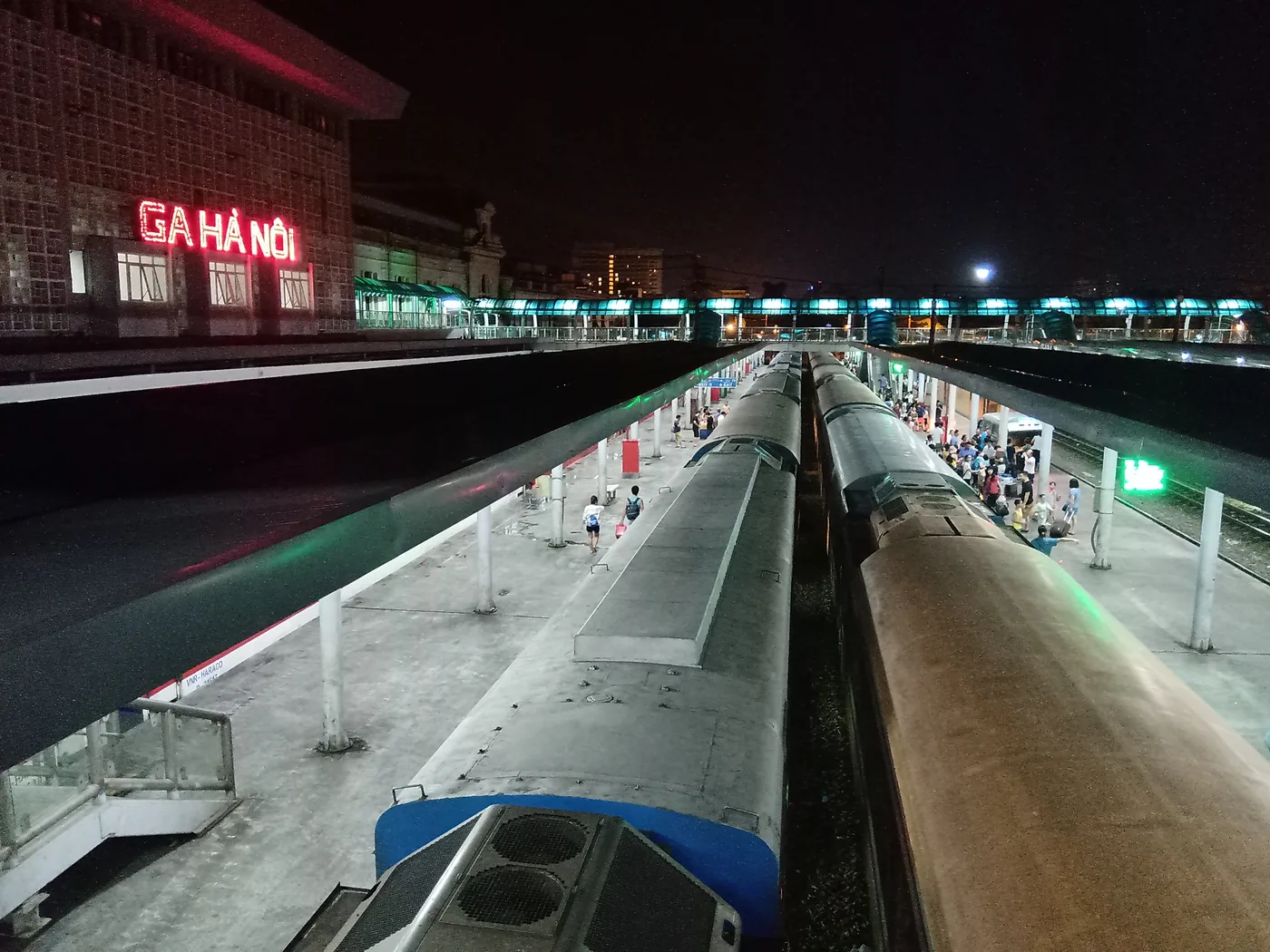
11. Routes through the centre: Hue, Da Nang, Hoi An, Phong Nha
Central Vietnam is where the distances finally get short and where the train becomes the mode you take for its own sake rather than to save money. The Hue to Da Nang segment over the Hai Van coast is the best three hours of railway in the country. Everything else here is a two to six hour road journey. One structural thing to know is administrative: since 1 July 2025 Hoi An and My Son are part of Da Nang city, which older guides get wrong.
| Leg | Distance | Best mode | Time | Fare | Note |
|---|---|---|---|---|---|
| Hue to Da Nang | About 103 km by rail | Train, specifically for the view | About 2.5 to 3 hours; sources differ slightly | Heritage service flat ₫207,000 weekday, ₫231,000 weekend (about US$8-9) | Road via the tunnel is faster at about 2h15 but sees nothing |
| Hue to Hoi An | Roughly 120 km | Limousine, or private car if you want the pass | Around 2.5 to 3.5 hours direct; 4 to 5 with stops over the summit | ₫150,000-280,000 limousine (US$6-11) | About 20 daily departures between 04:00 and 20:00 |
| Da Nang to Hoi An | About 30 km | Ride-hail or hotel shuttle | 40 minutes to an hour | Cheap, and now an intra-city hop | Covered fully in its own guide, not here |
| Da Nang to Phong Nha | Roughly 300 km up the coast | Depends on budget: private car for speed, train plus transfer for value | 4 to 5 hours by car; 6 to 8 hours by train plus transfer; 6 to 7 by bus | Car ₫4,000,000-4,500,000; bus ₫250,000-300,000 | No direct flight exists between Da Nang and Dong Hoi |
| Da Nang to Quy Nhon | Contested: one source gives 276.94 km by road, another 320-330 km | Bus, van or train | About 6 hours | From ₫352,000-370,000 (about US$14) | No direct flight. Connecting means backtracking through a hub |
| Da Nang to Nha Trang | Coastal corridor | Flight for time, train for the coast | About 1 hour flying; 9 to 11.5 hours by train; 10 to 12 by sleeper bus | Flight US$40-150; train ₫700,000-1,500,000; bus ₫320,000-450,000 | Overnight buses leave 19:00-23:00 and arrive 06:00-08:00 |
| Hue to Hanoi | About 670 km | Overnight train | 13 to 15 hours | US$15-80 by class | See the northern section for the full comparison |
The Hai Van question, answered three ways
Between Hue and Da Nang the road and the railway diverge, and which one you take determines whether you see the best scenery in central Vietnam or a tunnel wall. There are three genuinely different products here and they suit different people.
- The heritage connection train (HĐ1 to HĐ4). The scenic choice, at a flat ₫207,000 on weekdays and ₫231,000 at weekends. It runs the coastal cliffs, slows through the most photogenic sections, and stops for about ten minutes at Lang Co so passengers can get off and photograph the bay. Four services a day in total: HĐ1 leaves Hue 07:45 arriving Da Nang 10:35, HĐ3 leaves Hue 14:25 arriving 17:40, HĐ2 leaves Da Nang 07:50 arriving Hue 11:05, HĐ4 leaves Da Nang 15:00 arriving 17:45. Sit on the left travelling south, on the right travelling north.
- An ordinary SE service. Same track, same views, fits more flexibly around a longer journey if you are continuing north or south rather than doing Hue to Da Nang as a discrete leg.
- A private car over the old pass road. The only way to stand at the 496 m summit, which is free to visit, and to stop at Lang Co lagoon. Budget 4 to 5 hours instead of 2h15, and note that scheduled tourist buses generally do not stop at the top even when they take the pass road.
Standard buses and most limousines take the Hai Van tunnel, which is why bus passengers on this corridor consistently report seeing nothing memorable. That is not a complaint about the operators, it is the road they are on. The single route and the pass each have dedicated write-ups worth reading before you book: the Da Nang to Hue train guide and the Hai Van Pass guide.
Da Nang, Hoi An and the boundary that moved
Since 1 July 2025 the former Quang Nam province has been absorbed into an expanded Da Nang city, which puts Hoi An and My Son inside Da Nang’s boundaries. Railway station names on the line are unchanged, so Da Nang station, Tam Ky and Tra Kieu are all still called what they were called. What changed is how addresses and route descriptions should read: Hoi An is in Da Nang city, not in Quang Nam.
Practically this means the Da Nang to Hoi An hop is now local movement rather than intercity travel, and this guide deliberately does not cover it in detail. That 30 km run, and how to do it cheaply, sits in the Da Nang to Hoi An transport guide, while getting around once you arrive is in the Hoi An transport guide. If you are choosing a base rather than a route, the Hoi An accommodation guide is the place to start, and the day trips from Da Nang guide covers what is reachable and back in a day.
Phong Nha: the awkward one
Phong Nha is the central destination with the worst transport arithmetic, because the nearest station and the nearest airport are both about 40 km away and there is no direct flight from Da Nang.
| Approach | Total time | Rough cost | When it makes sense |
|---|---|---|---|
| Fly Da Nang to Dong Hoi, then taxi | 40 minutes airborne plus a 45 to 90 minute road transfer, plus airport overhead | Flight ₫800,000-1,500,000 (US$31-58) | It does not exist as a direct route. This means connecting, which usually removes the point |
| Train to Dong Hoi station, then road | 6 to 8 hours total; the transfer is 45 to 60 minutes by taxi or 60 to 90 by bus | Cheapest reliable option | The default for independent travellers. Most SE services stop at Dong Hoi |
| Direct bus from Da Nang | 6 to 7 hours | ₫250,000-300,000 (US$10-12) | Budget travel with no transfer to arrange at the far end |
| Private car from Da Nang | 4 to 5 hours | ₫4,000,000-4,500,000 (US$154-173) | Groups of four, or anyone wanting to stop along the coast |
One connectivity change worth flagging: a Nha Trang to Dong Hoi service three times a week was announced to begin in mid-August 2026, which would give Dong Hoi a second useful domestic link. Check whether it is running before building a plan on it.
Quy Nhon and the missing flight
Da Nang to Quy Nhon is the clearest example of a route where knowing what does not exist saves you an hour of searching. There are no direct flights. Connecting via Hanoi or Ho Chi Minh City means flying several hundred kilometres in the wrong direction to cover roughly 300. Overland, in about six hours for ₫352,000-370,000, is the answer, and it is not a hardship.
The distance itself is contested, with one booking platform giving 276.94 km for the road route and another source giving 320 to 330 km. That gap probably reflects different roads rather than a factual dispute, but it is worth knowing that a “three hundred kilometres” figure in either direction is approximate. Phu Cat airport, serving Quy Nhon, is about 35 km northwest of the city with a taxi around ₫250,000-400,000 or an airport shuttle at roughly ₫50,000, which is another reason flying in from a hub rarely pays.
The coastal run south, and when to stop taking it
Da Nang to Nha Trang is scenic in the way that long coastal railways are scenic, with extended stretches of central coastline that most travellers now skip because the flight takes an hour and the train takes nine to eleven and a half. The overnight sleeper bus, at 10 to 12 hours leaving between 19:00 and 23:00 and arriving 06:00 to 08:00, is the budget version of the same trade.
Our view is that this is the leg where slow travel stops paying. The Hai Van section further north gives you the best of the coastal scenery in three hours; grinding out another nine to reach Nha Trang buys diminishing returns. If you are weighing the two beach destinations against each other rather than just moving between them, the Da Nang versus Nha Trang comparison is the more useful read. And if the trip is central Vietnam only, the central region guide and the Da Nang itinerary cover how much time each stop actually deserves.
12. Routes out of Ho Chi Minh City: Da Lat, Mui Ne, the delta, the islands
The south is the region where expressways rewrote the answers most aggressively, and where two islands with opposite weather seasons make timing more important than mode. Ho Chi Minh City to Mui Ne fell from about five hours to about two and a half. Ho Chi Minh City to Nha Trang fell to roughly four or five. Vung Tau became a one hour forty-five minute bus ride for less than four dollars. Meanwhile Phu Quoc and Con Dao remain a flight-versus-boat decision that the calendar largely makes for you.
| From Ho Chi Minh City to | Best mode | Time | Fare | What changed |
|---|---|---|---|---|
| Mui Ne and Phan Thiet | Bus or car on the expressway | About 2.5 hours by car, around 4 by bus with stops | ₫170,000-500,000 (US$7-19) | The Dau Giay to Phan Thiet expressway, opened 29 April 2023, halved this journey |
| Vung Tau | Expressway bus | About 1h45 | ₫80,000-90,000 (about US$3.50); limousine ₫150,000-320,000 | The expressway made the hydrofoil a novelty rather than a competitor |
| Da Lat | Sleeper bus overnight, or a flight if the timing suits | 6 to 8 hours by road; about 50 minutes airborne | Bus ₫220,000-400,000 (US$8-15); flight ₫600,000-1,800,000 | New expressway segments cut the drive from 7-8 hours to 6-7 |
| Nha Trang | Flight for speed, overnight train for value | Roughly 4 to 5 hours by road; 7 to 9 hours by train | Train ₫190,000-990,000 (US$7-38) | Cam Lam to Vinh Hao (2024) and Van Phong to Nha Trang (2025) roughly halved the road time |
| Can Tho and the Mekong | Bus or limousine | 3 to 4 hours | ₫110,000-275,000 (US$4-11) | Around 57 departures a day, effectively turn-up-and-go |
| Chau Doc | Limousine bus | 5 to 6 hours | ₫210,000-257,000 (US$8-10) | The gateway for the river boat into Cambodia |
| Phu Quoc | Fly | Roughly an hour | Varies widely by season and booking window | Ferries only make sense if you are already in the western Delta |
| Con Dao | Fly, especially November to February | 45 minutes | From around US$103 one way | Only one or two flights a day. Boats suspend for weeks in rough season |
| Hanoi | Fly | About 2h10 nonstop | From roughly US$37-66 | 1,047 flights a week between the two cities as of July 2026 |
Da Lat: the flight that stopped being worth it
This route used to be a clear case for flying and is now genuinely marginal. The flight is about 50 minutes in the air, but Lien Khuong airport sits roughly 28 to 30 km south of Da Lat and adds 30 to 45 minutes plus the usual airport overhead at the Ho Chi Minh City end. Meanwhile the road has improved: the Dau Giay to Phan Thiet, Tan Phu to Bao Loc and Lien Khuong to Prenn segments have come online and pulled the drive down from seven or eight hours to six or seven.
The result is that the overnight sleeper bus has become the mainstream choice rather than the budget one, because it removes a hotel night and lands you in town rather than 30 km outside it. Phuong Trang runs the route heavily, with departures cited at half-hourly intervals across a very wide daily window. Fares run ₫220,000-400,000 (about US$8-15). Take the flight if the overnight timing does not suit you or if you strongly prefer daylight travel; otherwise the bus is now the better instrument, which is not something that was true five years ago.
A further expressway between Nha Trang and Da Lat is planned, with construction reportedly starting in 2026 and opening targeted for 2028. That would reshape the highland routes again, but it is a plan, not a road.
Mui Ne: the biggest single improvement in the country
Nothing else in the Vietnamese route matrix moved as far as this. Before the Dau Giay to Phan Thiet expressway opened on 29 April 2023, Ho Chi Minh City to Mui Ne was a five to six hour slog on National Highway 1. It is now about two and a half hours by private car and roughly four by bus once stops are counted, over 99 km of six-lane expressway with a 120 km/h limit connecting to the existing Long Thanh to Dau Giay road.
The train is now the slower option, which reverses the old advice. One service runs each way daily, the SPT pair, taking 3 hours 48 minutes between Saigon and Phan Thiet station, with morning departures from Saigon and afternoon returns. There is no station in Mui Ne itself, so add 24 km and 25 to 30 minutes by road at the far end. Take the train if you want a fixed, traffic-proof schedule and do not mind the extra hop. Take the road otherwise.
An administrative footnote that affects how you read older sources: Mui Ne and Phan Thiet are now in the merged Lam Dong province, the same province as Da Lat, following the 2025 reorganisation. Guides referring to Binh Thuan province are describing an entity that no longer exists.
Vung Tau: where the boat lost
At about ₫80,000-90,000 and one hour forty-five minutes on the expressway, the bus to Vung Tau is one of the best transport bargains in Vietnam. The Greenlines DP hydrofoil still runs the roughly 90 km sea route in about two hours, from Pier No. 4 near Ham Nghi Street, having relocated there on 28 August 2025 when its former berth closed for bridge construction. Take the boat because you want a boat, or because you are stopping at Can Gio; do not take it expecting to save time or money.
Note also that Vung Tau itself is administratively part of Ho Chi Minh City since the 2025 restructuring, which occasionally confuses booking sites that still list it as a separate provincial city.
The Mekong Delta
Delta travel is bus travel, and it is easy. Ho Chi Minh City to Can Tho takes three to four hours with something like 57 departures a day across operators, at ₫110,000-275,000, from Mien Tay bus terminal. Chau Doc is five to six hours for ₫210,000-257,000, with limousine departures typically at 07:00, 15:00 and 20:00. Ben Tre is normally reached via the My Tho corridor and is more commonly bundled into a day tour than booked as a standalone point-to-point leg.
One pricing warning. At least one aggregator surfaces a headline figure around US$100 for the Ho Chi Minh City to Chau Doc route, which is wildly out of line with every other Delta fare, all of which sit in the US$7 to US$23 band, and out of line with the same platform’s reverse-direction listing. Treat a three-figure quote on a Delta bus route as a premium private product or a listing error, not the market rate.
The river boat to Phnom Penh from Chau Doc is covered in the ferries section above. It is a real international link rather than a tourist novelty, and it needs Cambodian entry documents arranged in advance.
The two islands, and why you should not do both
Phu Quoc and Con Dao have opposite good-weather seasons. Phu Quoc is at its best from roughly November to May. Con Dao’s calm window runs approximately March or April to September, and its driest months, November to February, are also its windiest, with seas too rough for reliable boats. Combining both in one trip therefore guarantees rough water, cancelled sailings or both on one of the two legs.
For Phu Quoc, fly unless you are already in the western Delta, in which case the Ha Tien crossing at about 1h15 to 1h30 is the shorter of the two ferry routes. For Con Dao, fly, and understand that this means one or two VASCO turboprop services a day from Ho Chi Minh City or Can Tho, or VietJet’s regional jets which resumed on 25 November 2025 after a lapse in the aircraft lease. Con Dao’s runway, at roughly 1,830 m, cannot take a fully loaded A320 or A321, which is why the aircraft on this route are unusual and the capacity is thin. An upgrade project has been proposed but has no confirmed completion date.
Where to base yourself once you land is a separate question handled in the Phu Quoc accommodation guide and, for the mainland end, the Ho Chi Minh City neighbourhood guide. If you are still deciding between island destinations rather than routing to one, the Da Nang versus Phu Quoc comparison and the southern region guide are the better starting points.
13. Where to actually book each mode
There is no single platform that books everything well in Vietnam, and the biggest practical obstacle is that the official railway site frequently rejects foreign-issued cards. Book flights direct with the airline, trains through a reseller that takes your card, buses through a domestic comparison platform, and ferries with the operator. Expect a markup of a few percent for the convenience, and expect that a mistyped name on a train ticket cannot be edited, only cancelled and rebooked.
| What you are booking | Use | Why | Watch for |
|---|---|---|---|
| Domestic flights | The airline’s own site or app | Cheapest, and the only place where changing a booking is straightforward | Baggage sold separately on the lowest fares. Add it at booking, not at the airport |
| Trains | Baolau, Vexere or 12Go rather than the official site | All three take foreign cards reliably and sell the same official inventory | Service fees are not refundable even when the railway cancels |
| Buses and limousine vans | Vexere first, 12Go second | Vexere is the dominant domestic platform, shows per-operator reviews, and lets you see photographs of the actual vehicle | The pickup point listed may be a shuttle rendezvous rather than the departure terminal |
| Ferries | The operator’s own site, or a ticket counter at the pier | Weather cancellations are handled directly by the operator, so a direct booking shortens the chain | Aggregator bookings can slow a refund considerably |
| Private cars and transfers | Regional operators, hotel desks, or activity platforms | Hotel desks are convenient and add commission; direct operators are cheaper and slower to arrange | Confirm inclusions and stops in writing before paying |
| Curated sleeper cabins and tourist buses | Activity platforms | Simplest interface, bundles bedding and refreshments, and books three or more days ahead comfortably | A narrower route and departure selection than the transport-specific platforms |
The railway booking problem, in detail
Vietnam Railways operates its own booking site with the most authoritative timetables and fares in the country. An English toggle exists but not every page and instruction is translated, and some travellers report needing a Vietnamese phone number format to complete registration. The larger issue, reported consistently by travellers rather than stated as official policy, is that foreign-issued credit and debit cards frequently fail at checkout while Vietnamese bank cards work reliably. A pay-later option exists but requires settling within 24 hours in person inside Vietnam, which is useless if you are booking from home.
The practical consequence is straightforward: plan on a reseller or a station counter. Vexere describes itself as an official Vietnam Railways partner and accepts Visa, Mastercard, JCB and Amex without a Vietnamese bank account. Baolau is an official agent, delivers e-tickets within minutes, and offers support in English and French. 12Go covers trains, buses, ferries and some flights in one place and is the strongest option for cross-border and multi-modal itineraries, though it applies a card surcharge of around 4% and reviewers describe its fees as high relative to booking direct.
Paper tickets remain available at major station windows in Hanoi, Saigon, Da Nang and Hue, paid in cash. That is the fallback if online payment fails, and it works, but it means being in the country already.
Booking windows, and when tickets go on sale
- Trains: generally open 30 to 60 days before departure. Longer routes open earliest. For the Tet period, sales can open as early as the first week of November for a late January or early February travel window.
- Premium and private train cabins: typically bookable up to 60 days ahead.
- Flights: the standard advice is 30 to 45 days ahead for the best fares, flying midweek. For Tet, at least 60 days, and airlines open Tet-period sales more than five months in advance.
- Buses: the shortest lead time of the three, which is their real advantage. On an ordinary off-season weekday you can often book same-day. Popular overnight departures at weekends and holidays are the exception.
- Ordinary weekends: sources genuinely disagree here, from two or three days up to four weeks. The reconciliation that fits the evidence is two to three days as a workable minimum outside peak season, and several weeks if the weekend falls in the November to January high season or next to a national holiday.
What a booking mistake costs
Names matter more on trains than anywhere else. The passenger name on a rail ticket must match the passport exactly, the original passport is required to board and to obtain a refund, and Vietnam Railways does not support in-system name corrections. A misspelling means cancelling and rebooking at the applicable penalty, not editing.
| When you cancel a train ticket | Deduction |
|---|---|
| 15 or more days before departure | 10% of the fare |
| 3 to 14 days before departure | 50% of the fare |
| 1 to 2 days before departure | 100%, meaning no refund |
| Any time during the Tet period | A flat 30% deduction regardless of timing |
There is no simple date-swap function on Vietnamese trains. Changing date or class means cancel and rebook, so the deduction table above is also the change-fee table. Booking through Baolau adds its own layer: cancellation is allowed up to 12 hours before departure except on public holidays and promotional fares, with a fee of 10 to 20% of the fare plus about ₫35,000 per ticket, and the platform’s own service fee is never refunded, including when the operator cancels.
On flights, VietJet’s cheapest domestic fares are the least forgiving product in Vietnamese transport: no name change at all on the lowest tier, and a change fee of around ₫350,000 per person per leg plus the fare difference where changes are allowed. On a fare bought for the equivalent of US$30, a single change can cost more than the ticket. If your dates are genuinely uncertain, the price gap to a flexible fare or to Vietnam Airlines is often smaller than the change fee you are risking.
Paying on the ground
Cash remains the most reliable payment method at intercity bus counters, ferry piers and station windows. QR payment is visually everywhere in Vietnam, but the standard domestic QR system needs a Vietnamese bank account to fund it, so short-stay visitors generally cannot use it. A narrow cross-border interoperability scheme exists for travellers from a handful of neighbouring countries, which does not include any English-speaking market.
ATMs are present at bus terminals, airports and transport hubs in the major cities, with Vietcombank, BIDV, VietinBank, Techcombank, ACB and Sacombank machines commonly accepting international cards. Typical per-transaction withdrawal limits run ₫3,000,000 to ₫5,000,000 (roughly US$115 to US$190) and fees usually start around ₫50,000 or about 2% of the withdrawal, though some banks charge nothing. Prefer machines inside bank branches or shopping centres over standalone units, especially at night at a bus station. The money and currency guide covers denominations and card use in more depth.
Booking scams worth recognising
- Copycat operator names. This is the most organised problem in the sector. The Sinh Tourist publishes its own fraud-warning page listing at least ten imitator offices using similar names, and states that any office or website trading under its name at an address other than its official ones is bogus. The pattern is industry-wide, not specific to one company. Look up the operator’s official site and registered address independently rather than trusting a shopfront sign or the top search result.
- The hidden shuttle transfer. Many tickets advertise a convenient downtown pickup while the actual long-distance vehicle departs from an outlying depot, with a minibus collecting passengers first. That adds 20 to 60 minutes that is not obvious at booking. It is normal practice rather than fraud, but it is worth budgeting for.
- The luggage loading fee. There is no legitimate charge for standard luggage on a Vietnamese bus. If someone loading the hold asks for one, decline and continue to your seat.
- Taxi meters at arrival points. Rigged meters and vehicles imitating the paint schemes of reputable companies are a recognised problem, and drivers are more likely to try it on passengers stumbling off an overnight bus at dawn. Use a ride-hailing app with a fare shown before you get in, or an officially branded taxi. Check the notes you hand over, because several dong denominations look similar at a glance.
A fuller treatment of the common tricks, including the ones that have nothing to do with transport, is in the Vietnam scams guide.
14. Timing: Tet, typhoons, and what to do when a leg dies
Two things wreck Vietnamese travel plans: the Lunar New Year, which sells out the entire country’s transport at once, and the central storm season, which does not delay journeys so much as delete them. Tet 2027 falls on 6 February 2027. The storm risk peaks between mid-September and mid-November with October worst of all. Everything else, including the summer domestic peak and the two-day national holidays, is manageable with a fortnight’s notice.
Tet, and what is and is not known about 2027
Lunar New Year’s Day 2027 is 6 February 2027, the Year of the Horse. That date is astronomically fixed and reliable. The surrounding official public-holiday window, the bridge days that determine when the country actually stops moving, is set by government decree each year and had not been issued for 2027 at the time of writing. Holiday-calendar aggregators are circulating a window of roughly 3 to 11 February 2027, but that is not an official figure and should not be planned around as though it were.
What is reliable is the pattern of behaviour around the date, which repeats every year:
- Everything sells out weeks ahead on high-traffic domestic routes: flights, trains and buses alike. Airlines add capacity, in the millions of seats, and the peak window still sells out.
- Prices rise sharply in the run-up, with Tet surcharges commonly layered on top of base fares, and they stay high immediately afterwards as the entire country returns to the cities at the same time. The week after Tet is as difficult as the week before.
- Family businesses close, especially in the first one to three days: local restaurants, markets, cafes and tailors, most noticeably in residential districts and smaller towns. International restaurants, convenience stores and city malls generally stay open.
- Refund rules tighten. Train cancellations during Tet carry a flat 30% deduction regardless of how far ahead you cancel.
Scaling the lead-time pattern observed around Tet 2026 to the 2027 date suggests booking flights roughly three to four weeks before the holiday at the absolute latest, trains around two and a half weeks out, and buses about a fortnight out, with availability collapsing after those points. Book earlier if you can: rail sales for the Tet window can open as early as the first week of November.
Our honest recommendation is to avoid intercity travel in the ten days either side of 6 February 2027 entirely, and to sit still somewhere you want to be. Tet is a fascinating time to be in Vietnam and a miserable time to be moving around it.
The rest of the calendar
| Period | Dates | Effect on transport | Lead time |
|---|---|---|---|
| Tet | 6 February 2027; official bridge window not yet decreed | Total. Sells out nationwide in both directions | Weeks to months |
| Reunification and Labour Day | 30 April and 1 May 2027, always combined | Heavy domestic demand on beach and highland routes | At least three weeks |
| National Day | 2 September 2027, extended to include 3 September | Similar to the April and May bridge, slightly lighter | Two to three weeks |
| Summer school holidays | Roughly mid-June to mid-August | The peak domestic travel season. Beach and highland routes and prices both spike | Two weeks, more for coastal weekends |
| Mid-Autumn Festival | Lunar, falls in September or October | Local rather than national travel disruption, but crowded in the old towns | A week for accommodation; transport is usually fine |
| Ordinary weekends | Year-round | Friday evening departures and Sunday returns sell out first on Hanoi to Sapa, Ho Chi Minh City to Da Lat and Ho Chi Minh City to Vung Tau | Two to three days off-season; several weeks in high season |
The Mid-Autumn Festival is worth knowing about for atmosphere rather than logistics, and the Mid-Autumn Festival guide explains when it falls and where it is best experienced.
Storm season, region by region
Vietnam’s storm season technically spans July to December, with peak intensity from mid-September to mid-November. October carries the highest risk of all, with typically two to three typhoons and 550 to 700 mm of rainfall in the central region, and landfall most often occurring on the coast between the old Quang Binh and Quang Ngai provinces, which is exactly the Hue, Da Nang and Hoi An corridor.
What that looks like when it happens is worth spelling out, because the phrase “flights may be delayed” understates it considerably:
- Airports close outright. Da Nang shuts when sustained winds pass roughly 60 km/h. During one recent storm, four central airports suspended operations simultaneously, with Da Nang closed for around 22 hours. Other named storms have closed four and six airports respectively.
- The railway is not a backup. In November 2025, flooding across the central provinces produced a landslide nearly nine metres deep on the North-South line, forced 1,500 passengers off stranded trains, and suspended 44 services with more than 21,000 tickets refunded. The Nha Trang to Quy Nhon section was out for days.
- Roads go too. The Hai Van Pass is routinely closed for safety, the rail line through the Lang Co tunnel can suspend, and roads between Hue and Hoi An flood within hours. Hoi An’s old town sits in the Thu Bon floodplain and submerges by one to two metres with some regularity.
- The effect lasts 48 to 72 hours, not an afternoon, and there is frequently no overland alternative because the country is narrow and everything runs on the same corridor.
Bay cruises follow their own pattern. Northern storm risk concentrates from July to September, with September the single worst month for cancellation, and cancellation decisions typically announced by mid-afternoon on the day of departure. A cancelled cruise is normally fully refunded or moved. The warning cadence for a named storm is broadly a first advisory 48 to 72 hours out, a preliminary cancellation notice 24 to 36 hours out, and confirmation 12 to 24 hours out, sometimes with as little as six to twelve hours’ notice if a storm intensifies quickly.
Airlines start issuing cancellation and rebooking alerts roughly 24 to 36 hours before projected landfall, which is usually your first hard signal that a plan needs changing. Region-specific detail sits in the Da Nang rain and typhoon season guide and the Nha Trang rainy season guide, and if you are choosing dates rather than reacting to them, the best time to visit Da Nang is the more useful starting point.
What to actually do when a leg is cancelled
- Do not queue. Contact the airline or operator through their app or phone line rather than joining the desk queue at the airport or station. Everyone else is queuing, and the app is answering.
- Ask your accommodation for help. A hotel front desk with Vietnamese language and a relationship with local operators will rebook a bus or car faster than you will, and it costs nothing to ask.
- Take the fee-free rebooking window seriously. Airlines commonly allow free rebooking within a five to ten day window around a weather cancellation. That is generous but finite, and it disappears if you sit on it.
- Expect refunds to be slow. Fourteen to sixty business days is the normal range. Do not plan your onward budget around money coming back.
- Switch mode, not just service. If flights are grounded in the centre, the train may also be down, but a road leg south or north out of the affected band may still run. Check whether moving 200 km puts you outside the disruption before assuming the whole region is shut.
- Build one buffer night. A single spare night at the point where a delay would cost you most, usually immediately before an international departure, converts a trip-wrecking cancellation into an inconvenience.
This is the one place in the guide where travel insurance stops being an abstraction. Weather cancellation, missed connections caused by a domestic delay, and medical evacuation from islands where the alternative is a ferry timetable are the three realistic claims on a Vietnamese multi-city trip. Note that policies exclude claims arising while riding or driving without a licence Vietnam recognises, which is covered in the driving section above and is the most common way travellers accidentally void their own cover.
15. Travelling with kids, big bags, or limited mobility
Two of Vietnam’s five intercity modes are effectively unusable for a wheelchair user travelling without assistance, and the sleeper bus is poorly suited to anyone with stiff knees, a hip replacement or a large suitcase. This is not a reason to change destination, it is a reason to change mode. A private car with a driver solves almost all of it. What fails is assuming a mode that suits a fit solo traveller will suit a family with hold bags and a grandparent.
Mode by mode, honestly
| Mode | With young children | With large suitcases | With reduced mobility |
|---|---|---|---|
| Domestic flight | Good. Short sectors, and airlines offer priority boarding and assistance | Fine if you have paid for the allowance. On the cheapest fares you have not | The best of the five. Assistance including help boarding and deplaning is available and should be requested at booking |
| Sleeper train, soft sleeper | Very good. Children can move around, there is a door, and the fare discounts are real | Workable but cramped. Under-bunk and overhead space in a four or six-berth compartment is limited and shared | Poor without help. Wheelchairs generally cannot be rolled onto carriages, so boarding means transferring, and station ramps and lifts are inconsistent or absent |
| Sleeper bus | Difficult. Berths are narrow, shared and unsuitable for a restless child, and the arrival hour is punishing | Bags go in the hold and there is no cabin space at all | Poor. Boarding is by steps into a narrow aisle, berths are low, and there is no space to manoeuvre |
| Limousine van | Good on short legs. Real seats, hotel pickup, and no overnight component | Limited. A 9 or 16-seat van has finite boot space and four large cases will be a problem | Moderate. A single step up, a proper seat, and a driver who will usually help |
| Private car with driver | The easiest option by a distance. Stops when you need them | Choose the vehicle class by luggage, not only by passenger count | The workaround that makes almost any route and destination reachable |
| Ferry | Fine on short crossings; rough water makes small children miserable | Manageable; bags travel with you | Varies enormously by pier. Boarding ramps and gangways at smaller terminals are often improvised |
Children
Vietnam Railways fare policy is generous and clearly defined. Children aged four and under travel free. Ages five to nine get 25% off a berth and 50% off a seat. From ten years old, the full adult fare applies. That structure makes the overnight train the cheapest realistic way to move a family of four between cities, especially compared with four flight tickets plus baggage.
Beyond the fare, the practical case for the train with children is that it is the only intercity mode where a child can stand up, walk to the dining car, look out of a window and use a toilet without the vehicle stopping. On a night bus, a four-year-old is confined to a curtained berth for twelve hours. Choose accordingly.
Two things we cannot source and will not invent: child car-seat availability in private hire cars, and stroller handling on buses, are both undocumented in any reliable source we could find. Assume a car seat will not be provided unless you ask specifically and get a written confirmation, and assume a stroller will go in the hold rather than the cabin.
Big luggage
Vietnamese trains state a free allowance of around 32 kg per ticket with combined dimensions not exceeding 203 cm, plus roughly 20 kg of hand luggage into the cabin. Enforcement is loose and inconsistent, and travellers report that Vietnam Railways does not routinely weigh personal bags, though genuinely oversized items may need to go into the luggage van for a fee.
The real constraint is not the allowance, it is the geometry. A four-berth sleeper compartment has limited under-bunk and overhead space shared between four people. A large rigid suitcase fits awkwardly; a soft or semi-rigid bag of the same volume fits easily. If you are doing several rail legs, this is a genuine argument for a duffel over a hardshell.
On buses, large bags go into the undercarriage hold at boarding because the berth layout leaves no cabin space at all. Nominal limits around 20 kg exist on paper and are rarely enforced. Keep your day bag, phone, wallet and passport with you on the berth.
On flights, the arithmetic is simple and unforgiving: the cheapest VietJet fare includes no hold baggage whatsoever, excess bought at the airport runs around ₫40,000 per kilogram, and pre-booking online saves 30 to 50%. Vietnam Airlines includes a 23 kg piece on most domestic economy fares. On a two-bag family trip, the airline that looks more expensive at the fare stage is frequently cheaper once bags are added.
There is no equivalent of Japan’s door-to-door luggage forwarding network. Third-party services can move bags between an airport and a hotel in the same city, and there are ad hoc arrangements for longer moves, but there is no mainstream, bookable city-to-city luggage forwarding product in Vietnam. Plan to carry what you brought.
Left luggage does exist and is cheap. Hanoi Railway Station operates automatic lockers with a ₫50,000 deposit covering four hours and extra time charged on collection. Noi Bai airport storage sits in the T2 public area at around ₫100,000 (about US$4) per bag per day. Third-party storage networks operate dozens of partner locations across Hanoi and Ho Chi Minh City at roughly US$1.50 to US$6 a day, generally cheaper than the official lockers. For the central coast specifically, the Da Nang and Hoi An luggage storage guide lists where to leave bags between legs, which is the single most useful trick for a day between checkout and a night train.
Older travellers and reduced mobility
The honest headline is that Vietnam’s conventional intercity rail network is not set up for wheelchair users. Boarding usually requires transferring out of the chair because chairs generally cannot be wheeled directly onto carriages, and station-level accessibility in the form of ramps and lifts is inconsistent and frequently absent at older or smaller stations. Some operators offer assisted-booking services to arrange staff help, and that is worth using rather than arriving and hoping. The newer metro systems in Hanoi and Ho Chi Minh City are comparatively well designed with lifts and ramps, but neither currently reaches the main intercity railway station in its own city.
Older intercity and local buses do not accommodate wheelchairs. Newer buses and electric city services do. Open-tour tourist buses are best described as doable rather than accessible: affordable and manageable, but not comfortable for anyone with significant mobility limitations. Sleeper buses are poorly suited to older travellers generally, not only to wheelchair users, because boarding is by steps into a narrow aisle and the berths sit low.
The workaround that every source converges on is a private vehicle with a driver, which makes almost any route and destination reachable regardless of mobility level. On a per-day basis it is not cheap, but split across a family it is comparable to buying four seats on something that would not have worked anyway. Airlines are the second-best answer: Vietnam Airlines specifically offers disability assistance including priority boarding and help with boarding and deplaning, requested at booking rather than at the gate.
Health, evacuation and the island question
The emergency numbers are 113 for police, 114 for fire, 115 for ambulance and 112 for large-scale search and rescue. All are free from mobile and landline, there is no single 911-style number, and English-speaking operators are not guaranteed on any of them.
Evacuation is the consideration that should shape island planning for anyone travelling with a health condition. Phu Quoc has a private international hospital that operates the island’s first helicopter emergency transport service to the mainland, which has been used for serious cases. Absent a helicopter dispatch, evacuation depends on scheduled ferry or flight timing. Con Dao is materially harder: ferry service is less frequent and less reliable than Phu Quoc’s, running a few sailings a week and weather-dependent, and the airport handles only a modest number of daily flights. In the rough November to February window, a Con Dao medical evacuation is genuinely constrained.
None of that is a reason not to go. It is a reason to make sure the insurance policy covers medical evacuation rather than only treatment, and to prefer Phu Quoc over Con Dao if someone in the group has a condition that could deteriorate quickly. Practical packing considerations for the climate, including what to bring for long air-conditioned journeys, are in the packing list, and the etiquette and tipping guide covers the small social conventions that make asking for help easier.
16. Chaining legs into a trip that works
Most Vietnamese itineraries fail in the same three places: too many consecutive overnight legs, a domestic flight connecting to an international departure on the same day, and combining both southern islands in one trip. The individual legs in this guide are all fine. What breaks a trip is the sequence. Below are the four common multi-city shapes, where each one goes wrong, and how to fix it without changing your destinations.
The four sequences people actually book
| Shape | Typical length | Route | Where it breaks |
|---|---|---|---|
| The classic north to south | 2 to 4 weeks | Hanoi, Sapa or Ha Giang, Ninh Binh, Hue, Da Nang and Hoi An, Nha Trang or Da Lat, Ho Chi Minh City, Mekong | Three or four overnight legs in a fortnight. People arrive at Hoi An exhausted and blame Hoi An |
| The centre-only trip | 7 to 10 days | Da Nang, Hoi An, Hue, sometimes Phong Nha | Almost nothing. This is the best-engineered short trip in Vietnam |
| Two cities plus a beach | 10 to 14 days | Hanoi, Da Nang and Hoi An, Ho Chi Minh City, plus Phu Quoc | Domestic flight timing, and same-day connections to the long-haul departure |
| The northern loop | 8 to 12 days | Hanoi, Ha Giang, back to Hanoi, Sapa, Ninh Binh, Ha Long or Cat Ba | Two 04:00 to 07:00 bus arrivals bracketing a mountain loop. Recoverable if you plan the sleep, brutal if you do not |
Rule one: never stack two overnight legs
The single most common structural error is booking a night bus or night train on consecutive nights, or with only one night in a bed between them. It looks efficient on a spreadsheet because it saves two hotel nights. In practice you arrive at the third destination unable to enjoy it, and the money saved is dwarfed by the day of the trip you lost.
The rule that works: after any overnight leg, give yourself two nights in a bed before the next one. If your itinerary cannot accommodate that, you have too many stops for the time you have, and the fix is to remove a destination rather than to compress the sleep. Central Vietnam absorbs a removed stop better than anywhere else, because Da Nang, Hoi An and Hue are close enough that adding a day to one costs you almost no transit time.
Rule two: buffer the international departure
Domestic on-time performance across all Vietnamese carriers was 62.6% in the first half of 2025. That means roughly one flight in three ran late. A domestic flight arriving in Hanoi or Ho Chi Minh City three hours before an intercontinental departure is not a plan, it is a bet, and the odds are worse than most travellers assume.
Spend the night in your departure city. One hotel night is cheaper than a missed long-haul ticket, and it also gives you a rested start to a twelve-hour flight. If the budget genuinely will not stretch, take the earliest domestic flight of the day rather than the most convenient one, because delays accumulate through the day and the first departure has the least accumulated lateness ahead of it.
The same logic applies to booked ferries, paid tour starts and non-refundable cruise departures. Anything with a hard start time deserves a buffer on the leg before it.
Rule three: pick one island
Phu Quoc’s calm season runs roughly November to May. Con Dao’s runs roughly March or April to September. There is overlap in the shoulders, but a trip that includes both will meet rough water on at least one crossing, and in the wrong months it will meet cancelled sailings. If you want both, do them on separate trips or accept that one of them will be a flight in and a flight out with no boat activity at all.
Rule four: put the flights where the distances are
The most efficient Vietnamese itineraries are not all-overland or all-flying, they use flights for the two or three legs over 700 km and road or rail for everything else. A fourteen-day north-to-south trip works beautifully with exactly two flights: Hanoi to Da Nang or Hue at the top, and Da Nang or Nha Trang to Ho Chi Minh City further down, with everything else on the ground. Adding a third flight rarely buys much; removing both means spending 30-plus hours in transit that could have been spent in Hoi An.
Two worked sequences
Fourteen days, north to south, two flights. Hanoi for three nights, using the city as a base rather than a transit point. Overnight bus to Ha Giang, three nights on the loop, overnight bus back. Two nights in Hanoi to recover, which is the buffer that makes the loop survivable. Fly Hanoi to Hue, one hour twenty in the air. Two nights in Hue, then the heritage train over the Hai Van coast to Da Nang, which is the scenic leg of the trip and takes under three hours. Four nights split between Da Nang and Hoi An. Fly Da Nang to Ho Chi Minh City. Two nights in Ho Chi Minh City with a Mekong day trip. That itinerary has one overnight bus pair, two flights, one scenic train and no dead days.
Ten days, centre and south, one flight. Fly into Da Nang. Three nights in Hoi An, which is the single best base in the country for a short trip, using the Hoi An itinerary to shape the days and the Hue day trip guide if you want the imperial city without moving hotels. Two nights in Da Nang. Overnight train or a flight to Nha Trang or straight to Ho Chi Minh City. Three nights in the south with a Delta day. One buffer night in Ho Chi Minh City before flying home. One long domestic leg, no stacked overnights, and a spare night at the point where it matters.
Where to hand off from here
This guide covers movement between cities and deliberately stops at the city boundary. Once you arrive, city-level movement is a different problem with different answers: the getting around Da Nang guide, the Hoi An transport guide and the ride-hailing guide cover it properly. For choosing where to go rather than how to get there, the regional guides for the north, the centre and the south set out what each region is for, and the Mang Den guide is worth a look if you want somewhere the standard route does not go.
Two things to sort before the first leg
Book accommodation before you book the transport into a town, not after. This sounds backwards and is not. The arrival time of a night bus determines whether you need a property that confirms early check-in, and a property that does not confirm it will leave you sitting in a lobby from 05:30. Working the other way round means discovering the problem after both bookings are non-refundable.
Sort mobile data before you leave the airport, because almost every part of this guide assumes you can call a car, check a live departure or message an operator from the roadside. Signal is strong along the coastal and lowland corridors and patchier through mountain passes and remote highland roads, and connectivity aboard the Reunification Express is genuinely unreliable, so download offline maps and tickets rather than assuming you can pull them up mid-journey. The Vietnam eSIM guide compares the options.
🚫 What is illegal in Vietnam: vapes, fines and what customs takes →