
Nha Trang in January: Weather, Sea Conditions, New Year Crowds and Hotel Prices
January is when the rain drops away in Nha Trang and the sun comes back. The sea takes longer to settle, so there are still days when the lifeguards close the city beach to swimmers. Here is the weather, the state of the water, the busy stretch around New Year, what things cost and what to bring.
| Weather | The dry season starts. Rain drops sharply and there is more sun than in December. |
|---|---|
| The sea | Boats to the islands run well again. The city beach still closes on rough days. |
| Swimming | The water is at its coolest for the year, but still warm enough to swim. |
| Crowds | The New Year week is the busy stretch. The rest of the month is quiet. |
| Prices | Rooms and transport cost less than in summer or the run up to Tet. |
| Who is here | This is the peak season for Russian visitors, and the street signs show it. |
1. January in Nha Trang at a glance
2. How January differs from December and February
3. Less rain, longer days
4. The boats run, but the city beach can still close
5. Days out on the islands
6. The coolest water of the year, and where to find warm water instead
7. The New Year week is the busy one
8. What changes in years when Tet falls in January
9. The month with the most Russian visitors
10. What is worth doing in January
11. Windy days and wet ones
12. Heading inland
13. After the sun goes down
14. What to pack
15. Getting there and where to stay
16. So is January a good time to come
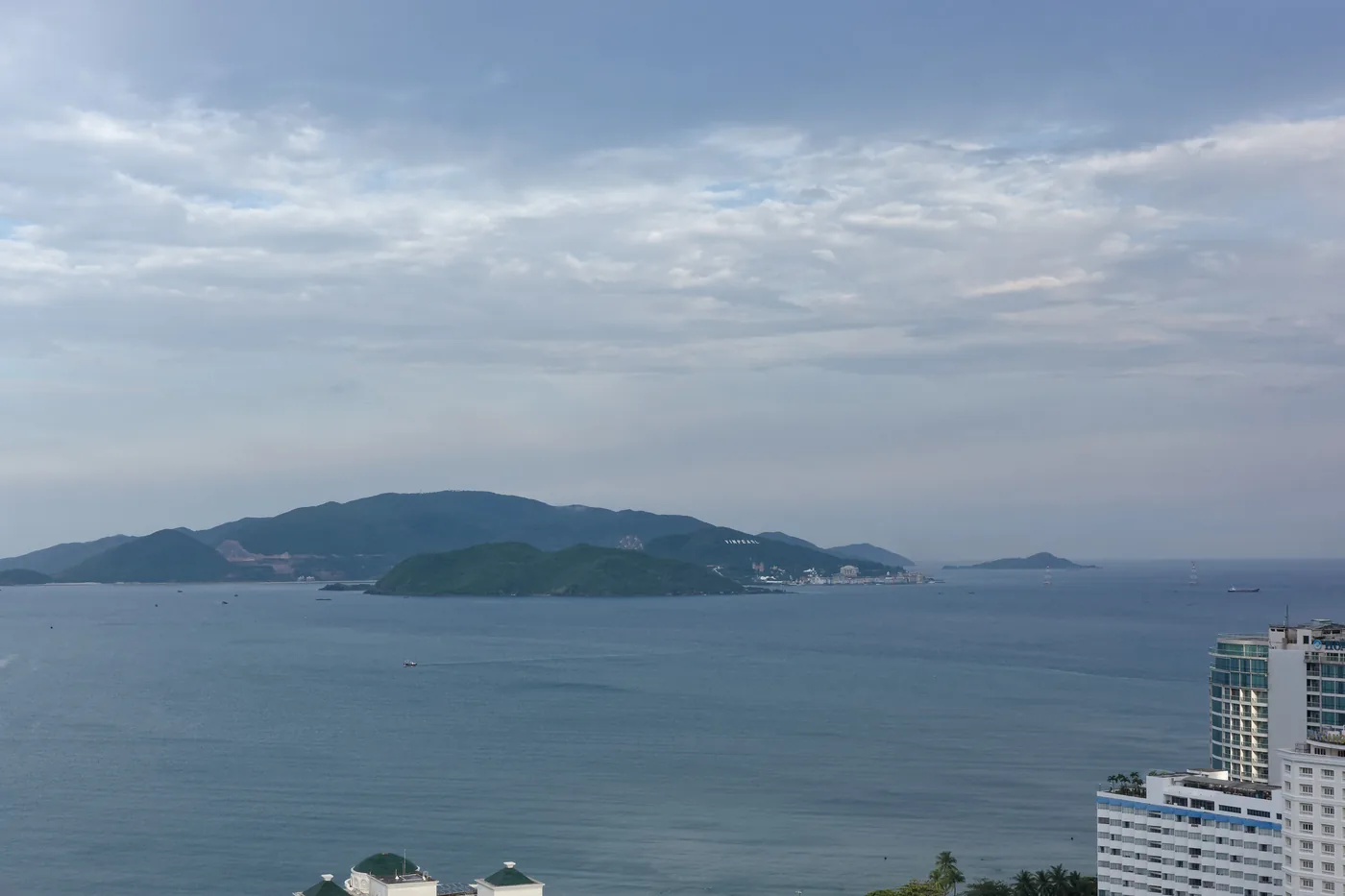
1. January in Nha Trang at a glance
January is the month the weather turns in Nha Trang. The rain that ran through autumn drops away, the sun comes back, and the mornings and evenings are cool enough that walking around the city stops being a chore. For most visitors this is one of the easier months to plan.
What surprises people is the water. A clear sky does not mean a calm sea. Swell left over from the last few months keeps rolling into the bay, and on those days the lifeguards put up no swimming signs along the city beach. You can have a bright, dry afternoon and still be told to stay out of the water.
What the month is like
Put simply: boats to the islands run reliably again, swimming off the city sand depends on the day, and the only crowded stretch is the week around New Year. After that the town empties out and stays quiet for the rest of the month.
Compared with the summer peak you have far more choice of rooms, and you pay less for them. Nobody is turned away in January for lack of beds.
How it compares with the months either side
December is the month when the wind cancels things. Boats sit in port, tours get moved, and you plan around the forecast rather than the calendar. That situation is set out in Nha Trang in December.
September through November is a different problem again, with heavy rain and the tail of the typhoon season to think about. If you are looking at those months, our Nha Trang rainy season and typhoon guide covers them properly.
January sits after both. The rain has largely gone and the sea is settling, which is why itineraries hold together better in this month than in the three before it.
2. How January differs from December and February
Line the three months up and the pattern is easy to read. December is wet and often grey. January is much drier. February is drier still, and ends up being the driest stretch of the whole year.
Sunshine moves the same way. December is the darkest month on the calendar here, with the fewest bright hours in the day. From January onwards that number climbs again, and you notice it most in the middle of the afternoon.
| What to look at | December | January | February |
|---|---|---|---|
| Rain | Frequent | Much less | Least of the year |
| Sun | Shortest of the year | Getting longer | Long |
| Sea | Boats often held in port | Boats run, beach depends on the day | Calmer again |
| Crowds | Busy at the end of the month | Busy only in the New Year week | Busy if Tet falls here |
| Prices | Up over the holidays | Low once the holiday passes | Up over Tet |
Temperature barely moves
All three months are warm. Daytime is short sleeve weather and the evenings ask for a light layer, nothing more. Nha Trang does not get cold in winter, so there is no reason to choose between these months on temperature alone.
Wind is the thing you actually feel. Mornings and evenings can be breezy along the seafront, and it is stronger again out on a boat. A thin windproof layer is worth the space in your bag.
Why January beats December
For the same money and the same itinerary, January gives you a better run than December. You are less likely to lose a whole day to rain, and much less likely to have a boat trip called off at short notice.
The gap is modest, and it shows up in the parts of a trip that are hard to reschedule. A cancelled island day in a five night trip is a real loss, and in January that call is rarer.
Why you might still prefer February
February is drier again, and by then the sea has settled further. The complication is Tet. In years when the lunar new year lands in February, prices climb, some places close for a few days, and the whole city changes rhythm for a week.
If you want the driest possible weather and do not mind the holiday, February works. If you want a quiet month with good weather and easy prices, January is the safer pick.
3. Less rain, longer days
Rain in Nha Trang is concentrated in autumn. The wet season runs from September into December, with October and November taking the worst of it. January is where that pattern breaks and the dry season begins.
One thing worth knowing early: this city is out of step with the south and the centre of the country. If you plan Nha Trang weather using what you know about Ho Chi Minh City or Da Nang, you will get it wrong. The calendars simply do not line up.
Rain that rarely takes a whole day
When it does rain in January it usually comes in a burst and then clears. A shower in the morning followed by a bright afternoon is a common shape for the day. An umbrella covers it, and you rarely have to abandon a plan outright.
The practical move is to keep one indoor option in reserve rather than to build a whole wet weather itinerary. The museums, pagodas and markets in town sit close together, so swapping plans mid morning is easy.
The northeast wind is still around
The wind that drove the autumn rain has not gone. It is weaker in January than in December, but it still comes through in spells of a day or two, and it is the reason the sea takes longer to calm down than the sky does.
That lag is the single most useful thing to understand about this month. It explains why a beautiful morning can still come with a closed beach, which is what the next section is about.
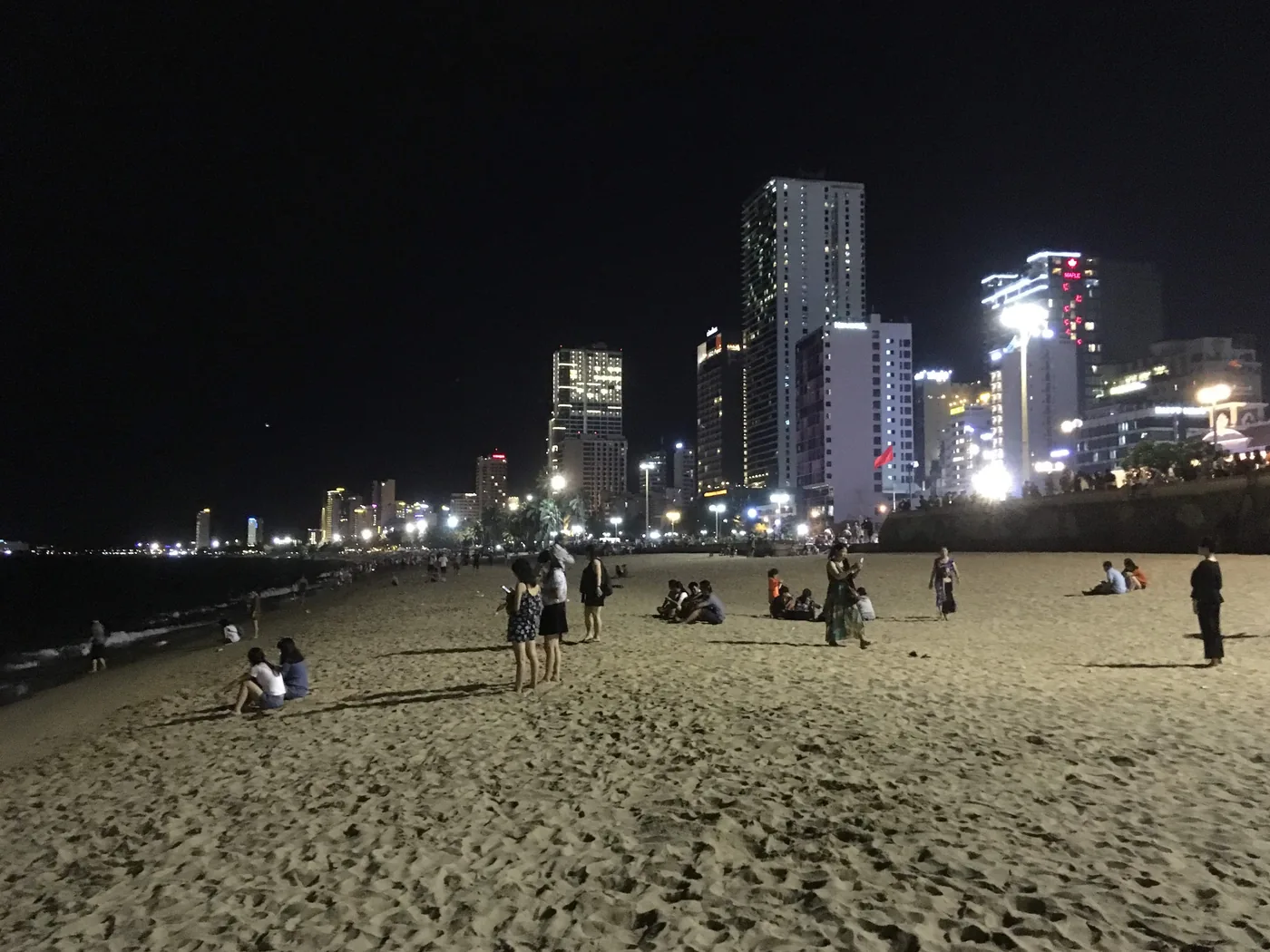
4. The boats run, but the city beach can still close
Here is the expectation that trips people up. The sky is clear, so surely the beach is open. Then you walk down to the sand and find a sign telling you not to go in.
What keeps you out of the water is not cold. The sea here stays warm enough to swim in all year. It is the surf, and the current that pulls away from the shore when the swell is up.
Who makes the call
The stretch in front of Tran Phu beachMap is managed by the Nha Trang Bay authority, which sits under the provincial agriculture and environment department. Lifeguards are on that beach from early morning until evening, and when the waves come up they put out signs reading no swimming and warning that high surf can injure you. The signs are posted in four languages, which tells you how often visitors ignore them.
The stretch they watch runs several kilometres along the seafront park from Tran Phu through to Pham Van Dong. It is the same sand that most hotels in the city centre look out onto.
Locally the rough season is described as running from the ninth lunar month through to around Tet. On the western calendar that lands somewhere between October and the end of January. This month sits at the tail of it, which is why it is mixed rather than uniformly bad. Some days are flat and open, others are closed.
Take the signs seriously
People have died on this beach ignoring them. One visitor went down to the waterline to take photographs during a high surf warning and was swept away. On another occasion lifeguards pulled ten people out of the water in a single holiday period.
A pull current is dangerous well before the water is deep. If the signs are up, treat that day as a beach walking day rather than a swimming day. It is not a judgement call worth making for yourself.
| On a closed beach day | Goes ahead | Wait for another day |
|---|---|---|
| City beach | Walking the sand, cafes across the road | Swimming |
| Islands | Fine if the boats are running | Only on the windiest days |
| In town | Temples, museums, markets | Nothing |
| Getting wet | Mud baths, hotel pool | Open water swimming |
Where you can still get in the water
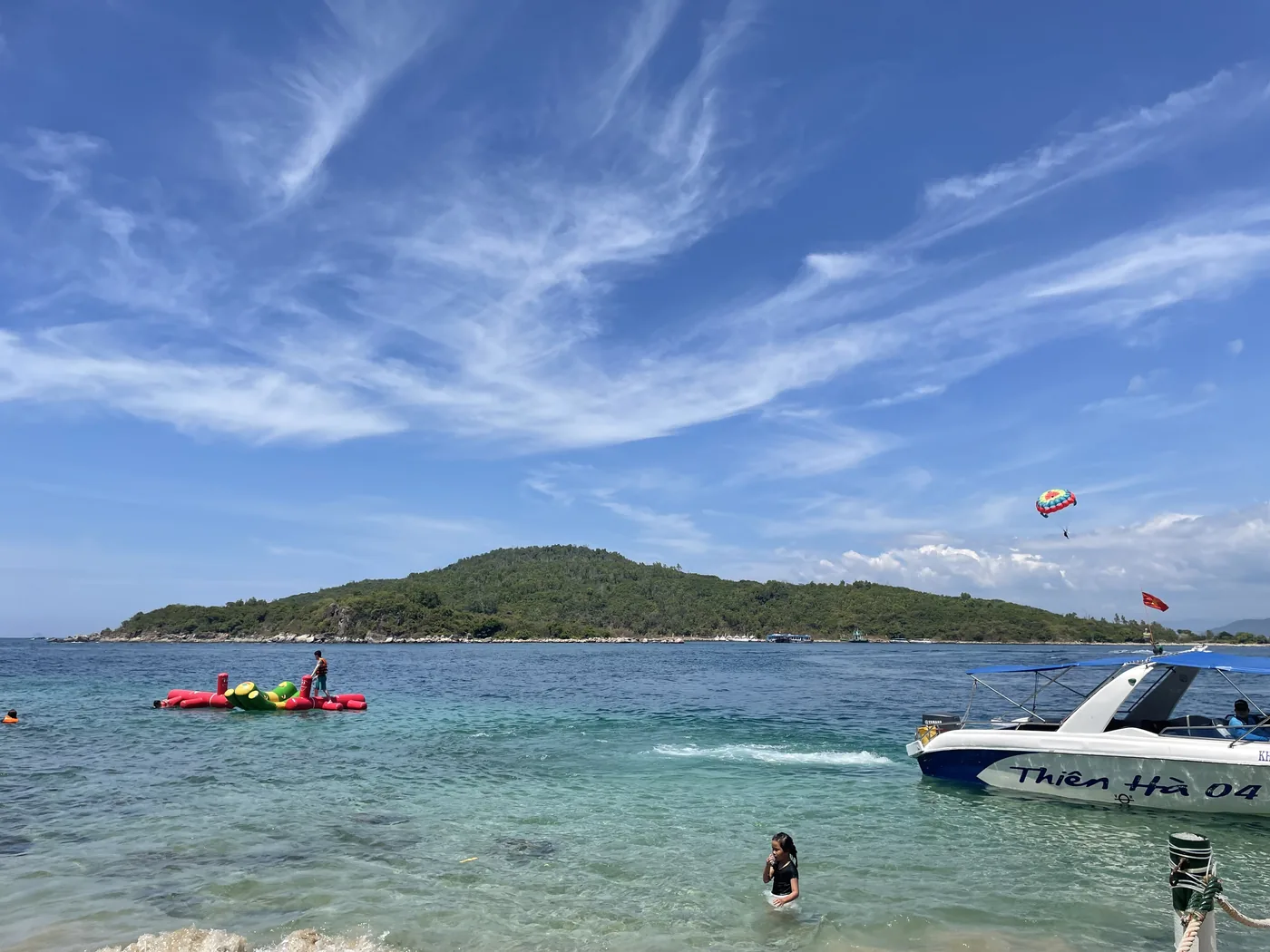
A closed city beach does not end your swimming. The islands out in the bay sit behind headlands and take the swell from a different angle, so conditions there can be completely different on the same day. Operators know this and work the sheltered side of the islands through the winter months.
Hotel pools and the mineral mud complexes are the other answer, and both get their own section below.
5. Days out on the islands
Boats leave far more reliably in January than in December. Local operators treat this month as the start of the good stretch that carries through to summer, and cancellations become the exception rather than something you plan around.
Windy days still happen, so there is one scheduling habit worth keeping. Put your island day somewhere in the middle of the trip rather than on the first morning. If it slips, you still have room to run it later.
Which island
Hon TamMap is a short hop from the mainland. It has a beach, water activities and food in one place, so half a day covers it comfortably. It is the easiest option with children.
Hon MunMap is where the snorkelling happens. Diving there has been suspended while the reef recovers, so the trips that run are surface trips. If you were hoping to dive, that is worth knowing before you book.
Trips that string several islands together in one day, with the routes and what they cost, are covered in our Nha Trang island hopping guide.
| Island | How you get there | What it is | Time needed |
|---|---|---|---|
| Hon Tam | Short boat crossing | Beach plus water activities | Half a day |
| Hon Mun | On a tour boat | Snorkelling; diving suspended | Part of a day trip |
| Hon Tre | Cable car or boat | Resort island with a park | A full day |
Hon Tre and the cable car
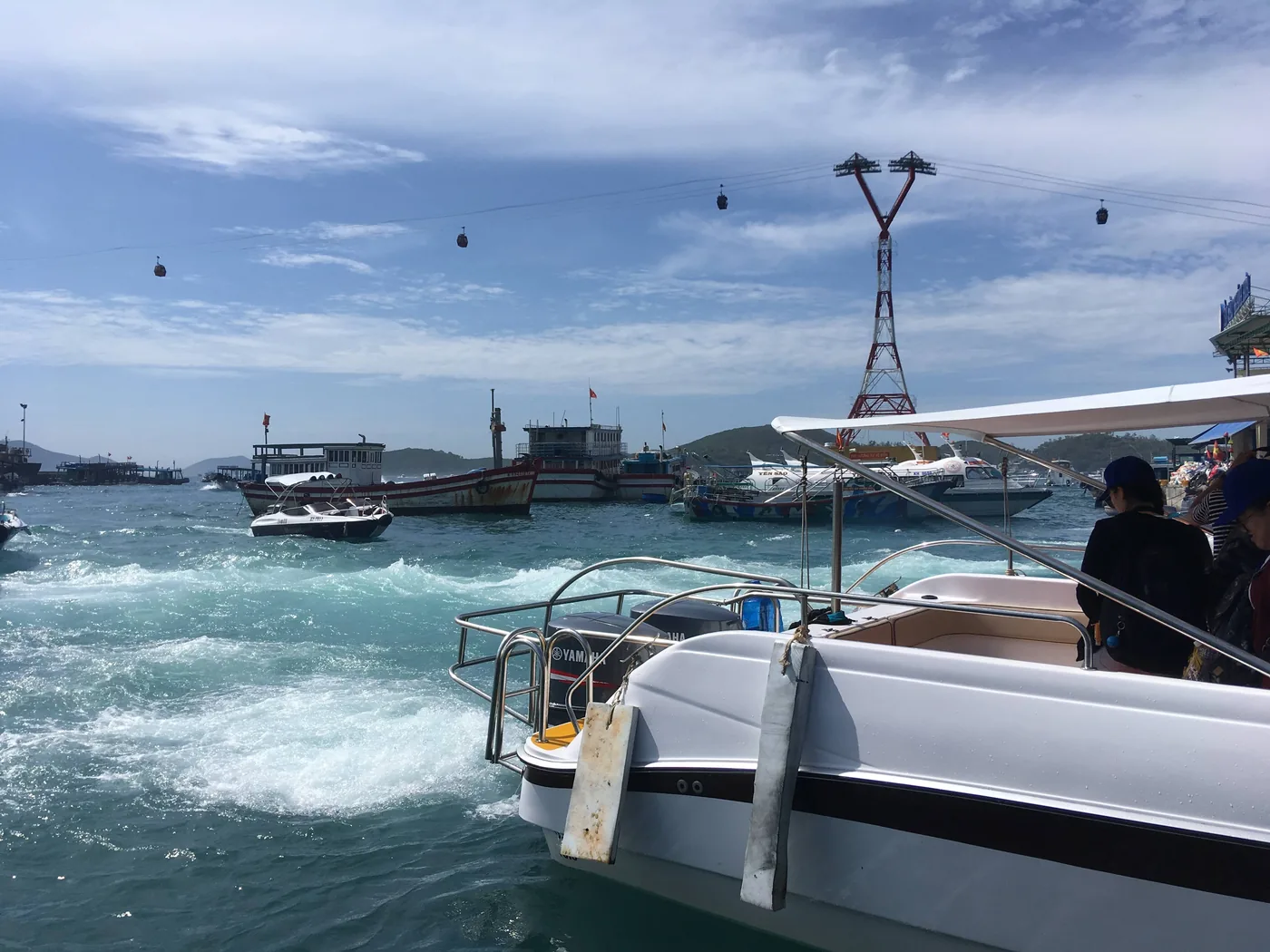
Hon TreMap is reached by a cable car that runs out over the water. The crossing is part of the appeal, and it is usually the thing children remember.
In a strong enough wind the cable car stops. It has been shut before with no reopening date announced, and while it was down passengers were moved by fast boat from the Vinpearl harbour terminalMap instead. So a stopped cable car does not mean the island is closed, only that you get there a different way.
What is on the island and how the tickets work is set out in our VinWonders Nha Trang guide.
The bay entry fee
Boats going out into Nha Trang bay pay an entry fee that is charged per route, with a combined ticket if you are visiting several islands in a day. Young children, older visitors and Khanh Hoa residents pay less or nothing at all.
Whether that fee sits inside your tour price varies by operator. Ask when you book. It is a small amount, but being asked for it at the pier when you thought you had already paid is an annoying way to start a day.
Boats leave from the Nha Trang tourist pierMap, and the ticket desks there will tell you what is running the following day.
6. The coolest water of the year, and where to find warm water instead
The sea off Nha Trang is at its coolest in January. It is still tropical water and still perfectly swimmable, but it is a noticeably brisker entry than in May, and with a breeze on you it feels cooler again when you come out.
That is why the mineral mud baths are more appealing in this month than at the height of summer. In August they are a novelty. In January they are the warmest water in town.
The mud baths
The format is much the same across the sites. You soak in a tub of warm mineral mud, rinse off, and then move into heated pools. Because the pools are hot, the wind stops mattering, which makes these a good call on a blustery afternoon.
Thap BaMap is the oldest of them and the cheapest. It is a short ride north of the centre and it gets busy at weekends.
GalinaMap sits in the middle of town and is indoors, which makes it the obvious pick on a wet day when you do not want to travel for it.
The five main sites, what each one includes and how the pricing works are compared in our Nha Trang mud bath guide.
A pool at the hotel earns its keep
If the city beach closes for a day or two of your trip, a hotel pool stops being a luxury and becomes the thing that saves the afternoon. January has enough spare rooms that you can hold out for one.
Where you stay also changes how exposed you are. Some parts of the coast take the wind head on and others sit behind a headland. Our Nha Trang accommodation guide goes through the areas one by one.
7. The New Year week is the busy one
Demand in January is not spread evenly. It piles into the first few days around New Year and then falls away sharply. Few months have that much variation inside them.
Those first days fill up. If your dates land on the holiday, book the room and the flights before you sort out anything else.
Fireworks on the first night
At midnight on the first, fireworks go up over 2/4 SquareMap on the seafront. It is a short display and it costs nothing to watch. Because the square is right on the beach road, most people in the city centre can simply walk down.
Roads around the square are closed from the evening before. Trying to arrive by car usually takes longer than walking. What happens on the night before, on the thirty first, is covered in more detail in Nha Trang in December.
After that it goes quiet
Once the holiday passes, visitor numbers settle back to something ordinary. You get a proper choice of rooms, and the restaurants people recommend stop having queues.
Costs follow. Accommodation and transport are cheaper than in the summer peak or in the run up to Tet. If your reason for coming in winter is to see the place without the crowds, avoid the first week and the rest of the month delivers.
8. What changes in years when Tet falls in January
The Vietnamese new year follows the lunar calendar, so the date moves. Some years it lands at the end of January, other years it slides into February. Check where your dates sit before you plan around it.
If you do overlap with Tet, the city runs differently for several days. That is not all bad. Some of what happens then you cannot see at any other time of year.
What closes
Small restaurants and shops often shut for the first day or two of the new year. The place you had in mind may simply not be open, so keep dinner plans loose for those evenings.
Attractions such as Po NagarMap and the oceanography instituteMap may change their hours or close for a day or two as well. Check on the morning rather than assuming.
What opens, and what fills up
Pagodas and temples are the opposite. They are busier than at any other time, because this is when people come to burn incense and ask for a good year. If you want to see the city at its most local, this is the week.
Resorts run their own programmes, putting up the new year bamboo pole, making the traditional sticky rice cakes and giving out calligraphy. Ask at your hotel and they will tell you what is on.
Prices, and the sea
Some hotels have publicly committed to holding their rates over Tet, but flights, restaurants and admission tickets all tend to rise. Everyone travels in the same week, which is what drives it.
The sea is often rough over the holiday too. Lifeguards stay on full strength through it, and there has been an occasion when ten people had to be pulled out of the water in a single holiday. If the signs are up, stay out.
9. The month with the most Russian visitors
Come in January and you will hear a lot of Russian on the street. The new year holiday in Russia is long, and Nha Trang has been one of the main winter destinations for that market for years.
Charter flights come into Cam Ranh directly from a long list of Russian cities. The list runs to roughly twenty of them, and the winter schedules have been planned at well over two hundred flights in a month.
The street changes
Signs and menus along the seafront carry Russian. Whole clusters of restaurants and shops are set up for that market, and you can spot them from the doorway.
Local reporting makes the same point from the other side: Russian visitors here mostly speak Russian and use very little English, and the province has openly said it does not have enough Russian speaking guides to go round.
What that means for your trip
First, rooms. Russian visitors tend to stay five nights or more, on packages, in three to five star properties. Resorts that work with those operators book out early in this season, and the Cam Ranh beach strip is where most of them are.
Second, restaurants. The places that fill with Korean visitors and the places that fill with Russian visitors are largely different, which actually makes it easy to pick the atmosphere you want. What to eat and where is set out in our Nha Trang food guide.
Getting here from elsewhere in Asia
Korea has direct flights into Cam Ranh from Seoul, Busan, Daegu and Cheongju, spread across a large number of airlines and running many times a day. That density is a large part of why Nha Trang shows up as a winter beach option across the region.
10. What is worth doing in January
This is a good month for walking. It is bright without being hot, so the sites that are punishing in June are comfortable now.
Temples and ruins in particular. Most of them have very little shade, and in the hot months you end up rushing through them.
New year incense
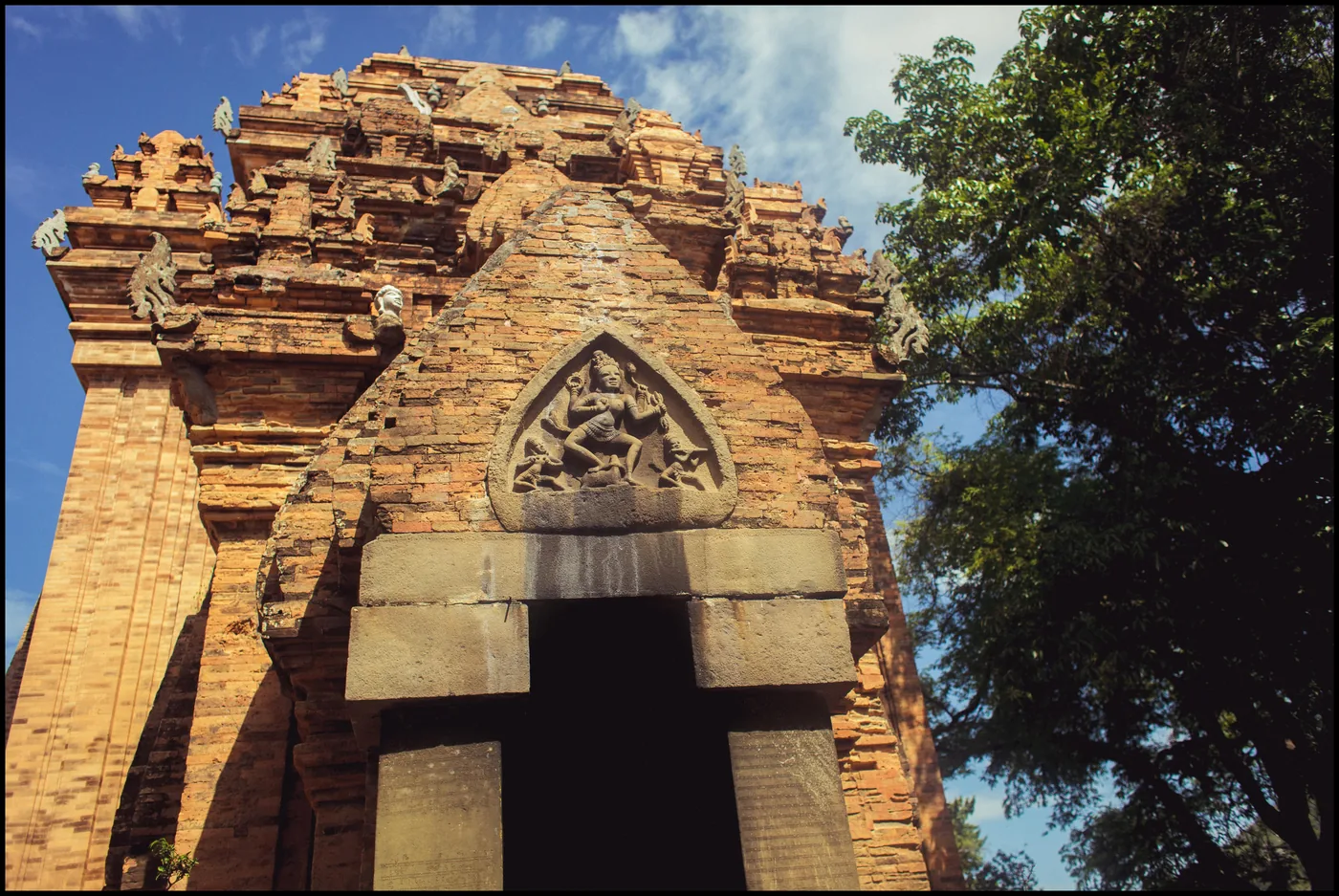
Po NagarMap is a group of brick towers on a hill across the river. Around the new year people come up with incense to ask for a good year ahead, and that crowd is part of what makes the visit feel different in this month.
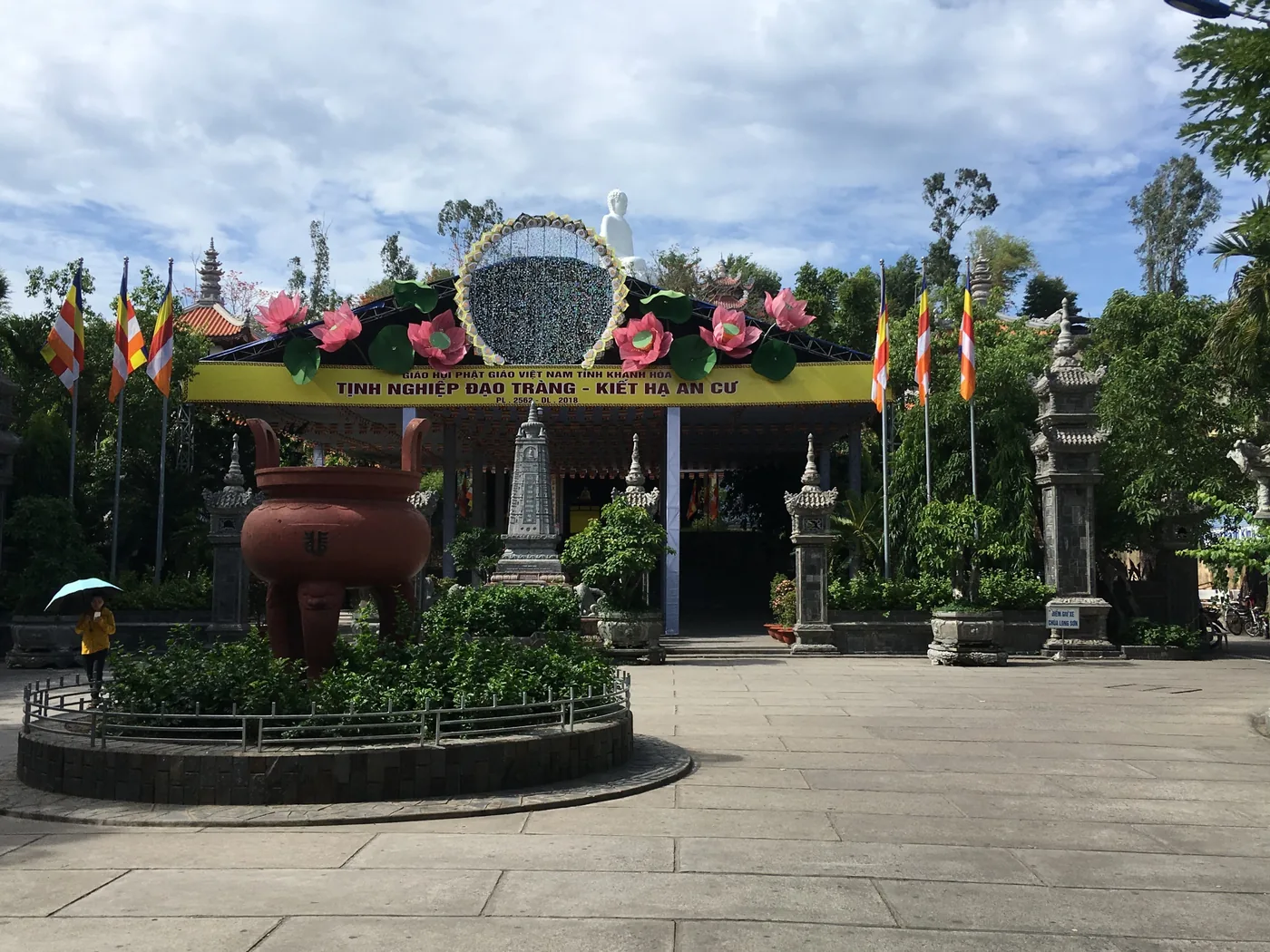
Long Son PagodaMap sees the same increase. There is a climb up to the white Buddha at the top, which is much better done when the air is cool. There is no admission charge.
Walking the seafront
Even on a day when you cannot swim, the beach is useful. The seafront park runs a long way from Tran Phu up to Pham Van Dong, and it is a good walk first thing in the morning or at the end of the day.
Hon ChongMap is a promontory of stacked boulders at the north end. Waves break right up against it, so a windy day is arguably the better day to see it.
Markets and food
Dam MarketMap works whatever the weather. Food to eat there and things to take home sit under the same roof, which makes it an easy hour when the sky is uncertain.
For the wider list of what to see and do across the city, our things to do in Nha Trang guide runs through it by half day and full day.
11. Windy days and wet ones
Wet days are few in January, though a handful still turn up, along with a few days when the wind is strong enough to keep boats in. Knowing two or three indoor options in advance is what stops those days being wasted.
Nha Trang is well set up for this. The museums, churches, pagodas and markets are all within about ten minutes of each other by car, so you can string three or four together without much travel.
Under a roof
The national oceanography museumMap is the reliable one with children. Tanks and specimens together, and it opens every day.
The Yersin MuseumMap is small. What it gives you is the story of how this city came to look the way it does. Note that it opens in two separate blocks, morning and afternoon, and closes for part of the weekend, so check before you go.
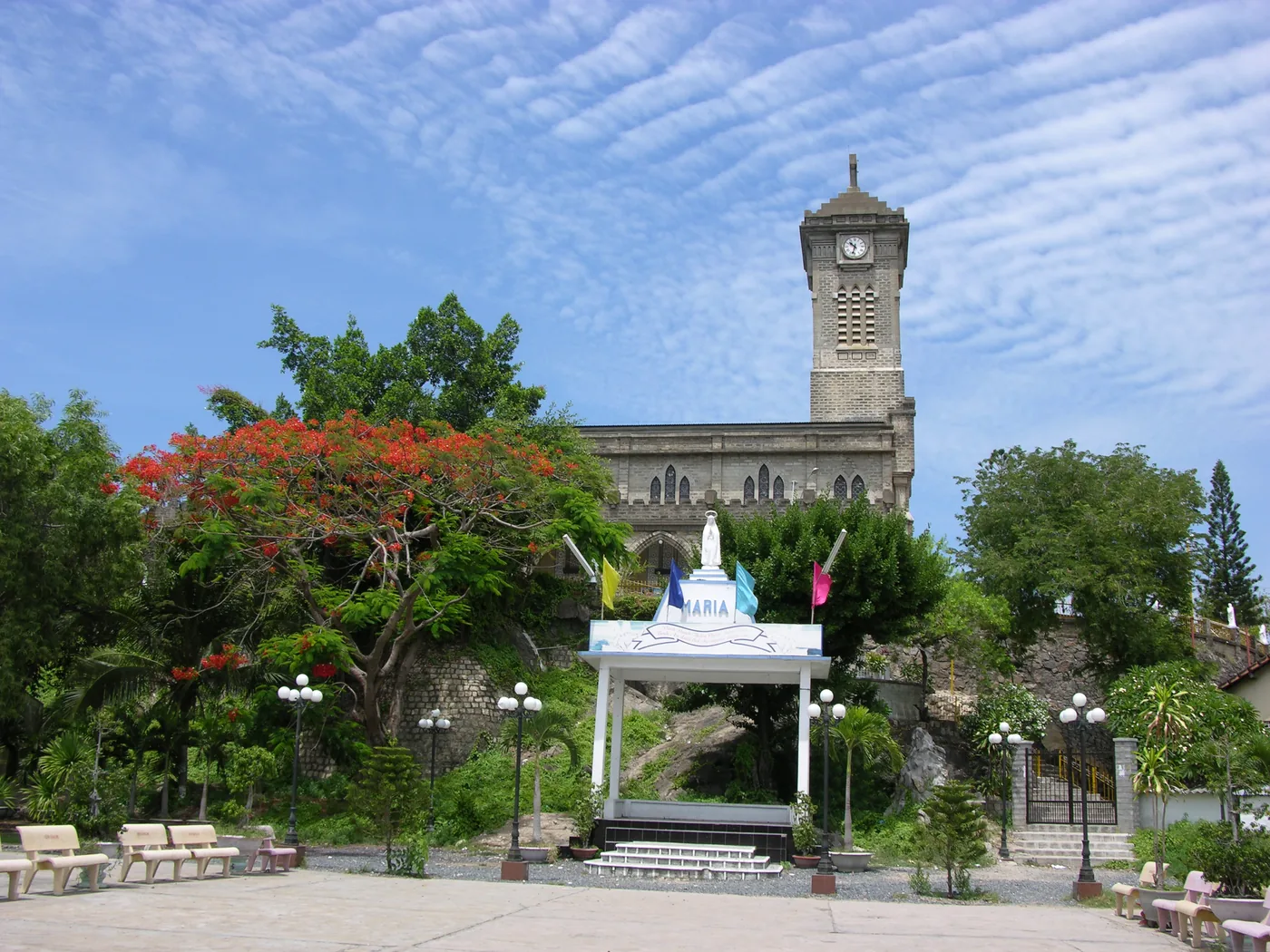
Nha Trang CathedralMap is a grey stone building that photographs well. Access is limited during services.
| Place | What it is | Worth knowing |
|---|---|---|
| Oceanography museum | Tanks and specimens | Open daily; the reliable one with children |
| Yersin Museum | How the city came to be | Opens in two blocks and closes for part of the weekend |
| Cathedral | Grey stone building | Access limited during services |
| Dam Market | Food and things to take home | Works whatever the weather |
If someone asks you for money at the gate
The cathedral and Long Son Pagoda are both free to enter. Even so, visitors have reported being asked for a per person fee at the entrance. Neither has a ticket office, so there is nothing legitimate to pay, and you can simply decline.
If that is unfamiliar territory, our guide to common tourist scams in Vietnam collects the situations that come up most often.
12. Heading inland
When the sea is closed, the other direction is inland. There are two waterfalls within about an hour of the city by road.
The difficulty in January is that the water is cold. If you go expecting to swim the way you would in July, you will be disappointed. Think of these as walking trips with a view.
Ba Ho
Ba HoMap is a series of pools running up a stream. The approach is a mountain road, so it takes longer than the distance suggests.
The rock is slippery. Shoes that hold your foot are much safer than sandals, and the last entry is well before closing, so a morning start is the right call.
Yang Bay
Yang BayMap is closer to a built up park. Waterfalls, hot springs and restaurants sit in one place, which makes it straightforward with a family.
One thing to flag. The standard entry includes scheduled shows that use animals, including cockfighting and pig racing. If you would rather not see that, plan your visit around those times.
13. After the sun goes down
The sun sets a little after half past five in January. That is among the earliest of the year here, which means evenings start sooner than most visitors expect.
The upside is a long evening. You finish dinner and still have time left, so it is worth having one thing in mind rather than drifting.
Where people go
The beach road has bars and clubs that run late. The quieter places are a street or two inland, so you can pick your volume.
The two night markets close somewhere between ten and eleven. Arrive much later than that and you will be watching stalls pack up, so go straight after dinner.
Closing times across the city are set out in our Nha Trang nightlife guide.
The sand shuts in the evening
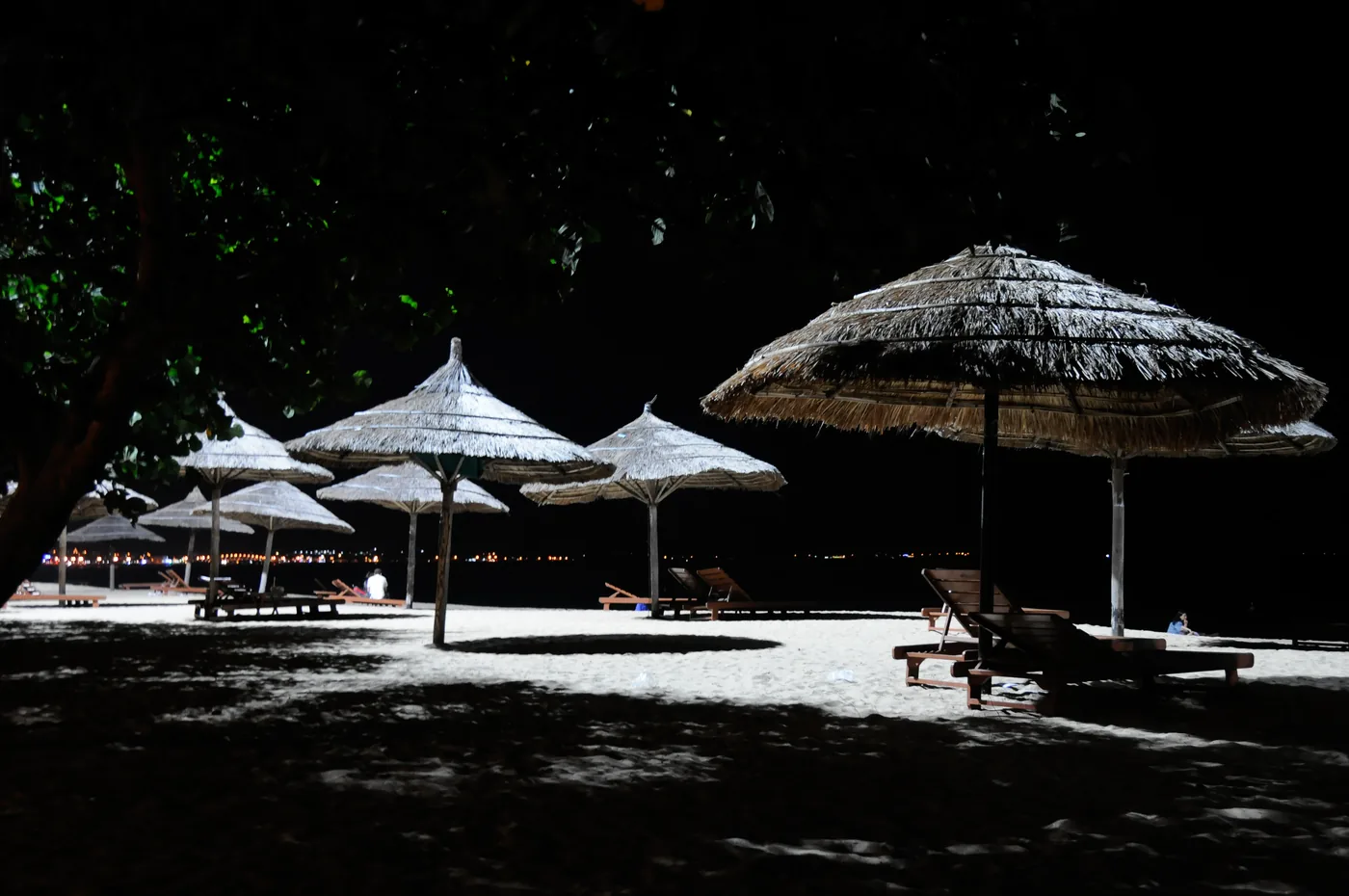
Trading on the Tran Phu sand stops in the evening, so an evening by the water means one of the places across the beach road rather than the beach itself.
The lifeguards go home at the same time. Swimming after dark is not an option here, whatever the sea is doing.
14. What to pack
Pack for summer and add one layer. You will be in short sleeves during the day and reaching for the extra layer only in the early morning, in the evening and on a boat.
It never gets cold. Nothing heavy is needed, just something that cuts the wind.
Worth the space
Bring an umbrella or a light rain shell. January rain arrives in short bursts, so you do not need anything serious.
Closed shoes are worth having. They make the waterfalls and the pagoda steps safer than sandals do.
Sun protection matters even with the shorter days. On a boat you get the sun off the water as well, which catches people out.
Money and connectivity
Carry some cash. Markets and smaller places do not all take cards. How the currency works and where to change money is in our Vietnam money and currency guide.
You will want data from the moment you land, because ride hailing and maps are how you get around. Sorting it before departure saves you time at the airport.
15. Getting there and where to stay
Flights come into Cam Ranh International AirportMap, which is around forty minutes from the city. A lot of the regional arrivals land late at night or early in the morning.
If your arrival is at an awkward hour, arranging the car in advance is worth it. The options into town, with what each costs, are in our guide to getting from Cam Ranh airport into Nha Trang.
Which area suits this month
The city beachfront is the simple choice for a first visit, because everything is walkable from there. Just accept that on rough days the water directly in front of you is closed.
The Cam Ranh resort strip is quieter with better facilities, but you need a car to reach the city. In winter this is where a lot of the Russian charter traffic stays.
Staying on Hon Tre island itself means moving by cable car or boat. It works well if you plan to spend most of your time on the island, and it is a nuisance if you want to be in town every evening.
The differences between the areas are set out properly in our Nha Trang accommodation guide.
Moving around town
Ride hailing is the simplest way to get about. The fare is fixed before you go and there is nothing to negotiate. How the apps work is covered in our guide to ride hailing in Vietnam.
There is also an open top bus along the seafront, sold as day and hourly passes, which suits a day when you plan several stops.
16. So is January a good time to come
On balance, yes. Rain is well down, the days are getting longer, and both crowds and prices are easier than in summer. For a first visit it is a sound choice.
It is not flawless. If swimming off the city beach is the centre of your trip, some of your days will not cooperate.
| If your trip is | Is January right |
|---|---|
| Temples and markets on foot | Yes, it suits it well |
| One or two days out on the islands | Yes |
| Wanting the city quiet | Yes, if you skip the New Year week |
| Swimming off the city beach every day | Spring is better |
| Wanting no rain at all | February is drier |
When January works well
It suits a trip built around temples, markets and a boat day or two. Nothing is too hot to walk, and the sites with no shade are comfortable.
It also suits anyone who wants the town quiet. Once the New Year holiday passes, the whole month is relaxed.
When another month is better
If you want long days in the sea, spring is the better bet. The swell drops off and the water warms up.
If you want the driest conditions available, February is drier. Just check whether Tet falls inside your dates, because that changes both the crowds and the prices.
Nha Trang or Da Nang
These two often come up together. Their wet seasons run at different times, so their January conditions are not alike, and the right answer depends on what you want to do. Our Da Nang and Nha Trang comparison sets the two side by side.
For the whole city in one place, start from our Nha Trang travel guide.
🎡Things to Do20
🍜Food2
🏨Where to Stay5
🚇Getting Around2
🧭Travel Tips4
🧭Vietnam-wide essentials112
Nha Trang in January: common questions
On most days yes, but not every day. The water is warm enough. The problem is the surf, and when it is up the lifeguards close the city beach and post no swimming signs.
On those days the islands and hotel pools still work.
Far less than in autumn. This is the month the wet season ends and the dry season begins, and the drop from December is sharp.
When it does rain it tends to be a short burst rather than a washout, so whole days are rarely lost.
January. There is less rain, more sun, and a much lower chance of losing a boat day to the wind.
What December is actually like is set out in Nha Trang in December.
It is the busiest stretch of the month. Rooms fill and prices rise for those few days only.
If you want the quiet version of the city, avoid that week. The rest of January is relaxed.
Summer clothes plus one light layer. You will wear the layer in the early morning, in the evening and on a boat.
Nothing warm is needed beyond that.
Small restaurants and shops close for a few days, and museums and heritage sites may change hours. Flights and restaurant prices go up.
In exchange you get the pagodas at their busiest and the new year programmes the resorts put on.
In January that is fine. Cancellations are much less common than in December.
Windy days do still happen, so put the island day in the middle of your trip rather than on the first morning.
Less than in the summer peak or in the days before Tet. Once the New Year holiday passes, rooms and transport come down.
It is a month where the same budget gets you a better room.