
Hoi An Travel Guide: Ancient Town, Lanterns & Tailoring
UNESCO old town, nightly lanterns, world-class tailoring, and the food you can only eat here.
| Where | Quảng Nam, central Vietnam — ~30 km / 45 min south of Da Nang |
|---|---|
| Getting there | No airport or train in Hoi An; arrive via Da Nang (DAD) |
| How long | Half-day for the old town, 2–3 days to do it justice |
| Best time | Feb–Apr (dry, mild); avoid Oct–Nov floods |
| Ancient Town ticket | 120,000 VND (~US$5) — covers 5 of 22 heritage sites, valid 24h |
| Signature sight | Silk lanterns light the riverfront every evening, year-round |
| Famous for | Lantern old town, custom tailoring, cao lầu noodles |
| Currency | ~26,000 VND ≈ US$1; carry small notes, many stalls are cash-only |
1. Is Hoi An worth it?
2. Getting to Hoi An from Da Nang & the airport
3. Best time to visit & the flood season
4. The Ancient Town ticket — how it really works
5. What to see inside the Ancient Town
6. Lanterns & the Full-Moon Festival
7. Hoi An’s food — dishes you can only eat here
8. Custom tailoring done right
9. Experiences & things to do beyond walking
10. Beaches: An Bàng & Cửa Đại
11. Day trips: My Son & Cham Islands
12. Where to stay
13. A perfect 2–3 day itinerary
14. Practical tips & avoiding scams
1. Is Hoi An worth it?
🌅 Da Nang with older parents: a day that starts on the beach before sunrise →
🌊 Hoi An flooding: which streets go under, what closes and how long it lasts →
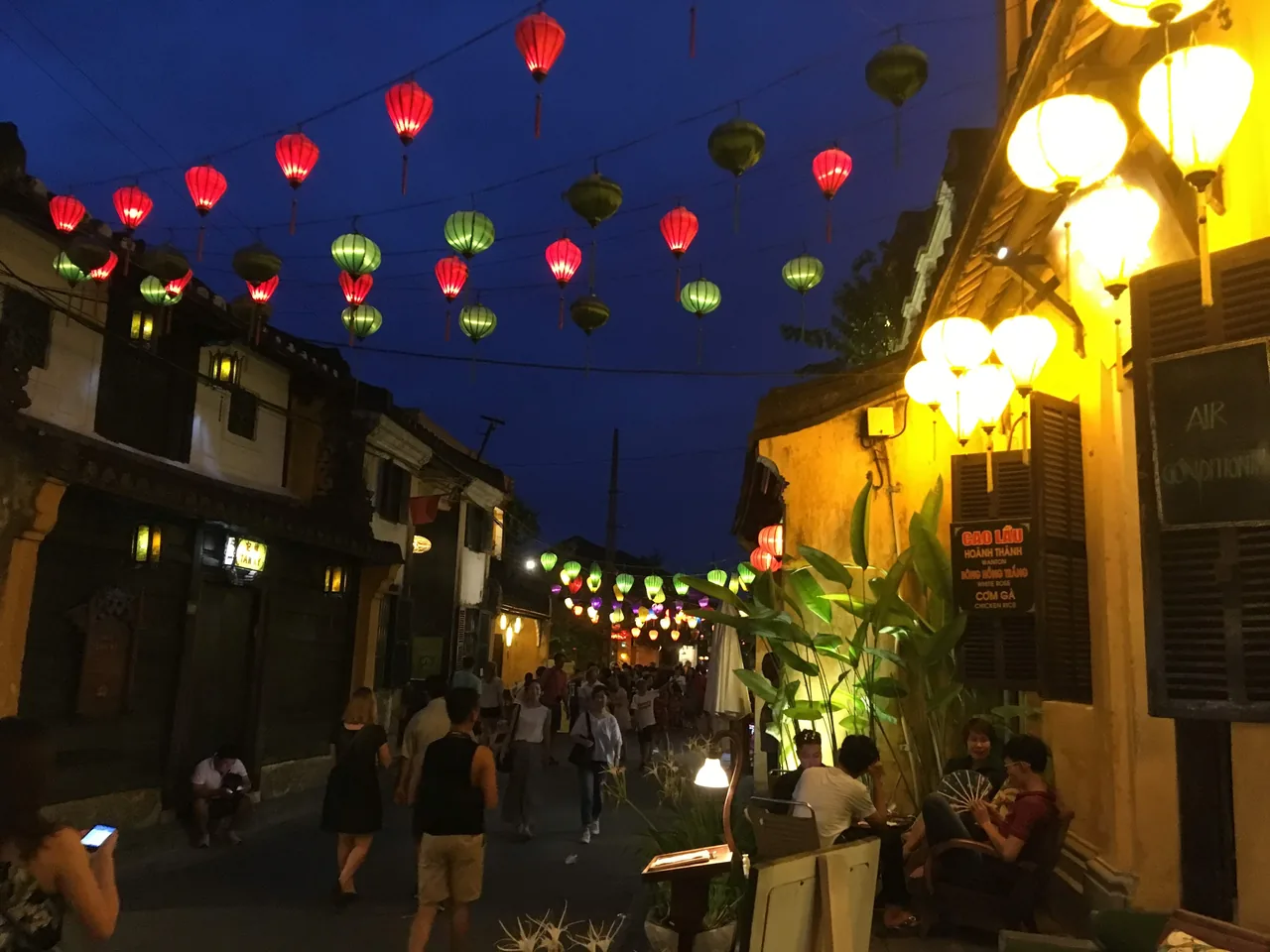
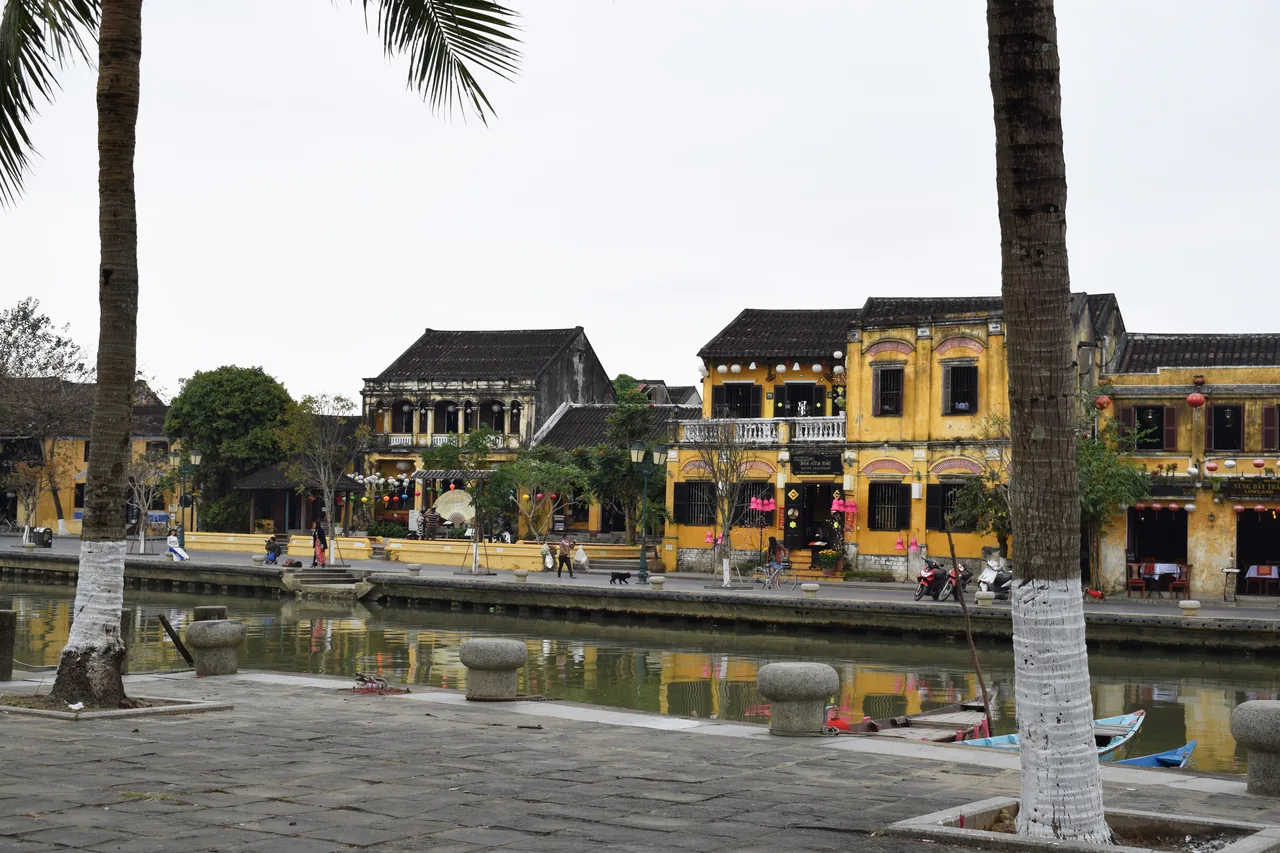
Yes — Hoi An is one of those rare places that lives up to every photo you’ve seen and then some. A 400-year-old trading port turned UNESCO World Heritage town, its mustard-yellow merchant houses and lantern-lit riverfront are unlike anywhere else in Vietnam. I’ve been a dozen times, and the moment the lanterns flick on at dusk still stops me every single visit.
Here’s the quick orientation. Hoi An (Hội An) sits in Quảng Nam province in central Vietnam, about 30 km — a flat 45-minute drive — south of Da Nang. There’s no airport and no train station in Hoi An itself, so almost everyone arrives via Da Nang (airport code DAD). If you’re planning the wider region, start from our Da Nang travel guide and treat Hoi An as its unmissable neighbour.
When to come: aim for February to April, when it’s dry and mild. Steer clear of October and November, when the Thu Bồn river regularly floods the streets, and expect real heat from June to August. And the signature experience? It happens nightly, all year — as the sun drops, thousands of silk lanterns switch on across the shops, boats and bridges. You don’t need to time your trip to the monthly festival to see it.
Pin it and go: Map.
2. Getting to Hoi An from Da Nang & the airport
The easy answer: book a Grab or Xanh SM car. It’s roughly 30 km of flat, coastal driving — 40 to 50 minutes door to door — and by far the least stressful way in. Everything else is a trade-off between price, comfort and hassle.
| Option | Price (one-way) | Time | Notes |
|---|---|---|---|
| Grab / Xanh SM (app car) | ~250,000–500,000 VND (≈ US$11–20), usually ~350,000 | 40–50 min | Cheapest reliable door-to-door; price shown upfront in the app |
| Private car with driver | ~US$13–20 one-way; ~US$35–50 return | 40–50 min | Worth it if you stop at Marble Mountains en route |
| Yellow public bus 01 | Locals ~18,000–20,000 VND; tourists often charged 30,000–50,000 | 60–75 min | Cheapest but slow, no A/C, overcharging common |
| Motorbike / scooter | ~US$7/day | ~45 min | Lovely coastal ride past An Bàng — only if you’re a confident rider |
The app cars — I lean toward Grab or the all-electric Xanh SM — are what I use nearly every time. The yellow bus 01 runs Da Nang to Hoi An roughly 5:30 AM to 5:50 PM, about every 20 minutes, and passes the Marble Mountains, but tourists are routinely charged double or triple the local fare, so hand over exact change and agree the price first. The scooter option is genuinely gorgeous along the beach road, but Vietnamese traffic is no joke — read up on the common taxi and rip-off traps before you go.
Coming straight from Da Nang Airport? Same options, about 45 minutes; see our Da Nang to Hoi An transfer guide for the full breakdown. Pins: Map, Map.
3. Best time to visit & the flood season
February to April is the sweet spot — dry, mild (about 24–30°C), low humidity, and perfect for wandering. That said, Hoi An has a distinct rhythm through the year, and one season you genuinely want to avoid.
| Season | Months | Weather | Verdict |
|---|---|---|---|
| Dry & cool | Feb–Apr | ~24–30°C, low humidity | Best overall — mild and festival-friendly |
| Hot & dry | May–Aug | 33–38°C, humid, fierce sun | Beach season; sightsee early morning or evening |
| Rain & flood | Sep–Nov | Heavy rain, typhoon risk | Streets can flood — atmospheric but tough for touring |
| Cooler wet | Dec–Jan | ~20–24°C, occasional rain | Quieter, cooler, lanterns still lovely |
The one to watch is September through November, heaviest in October and November. The Thu Bồn river regularly bursts its banks and floods the old-town streets — I’ve genuinely watched locals paddle sampans down lanes where I’d walked the day before. It’s stunning for photographers and miserable for sightseeing. For the full regional picture, see our best time to visit Da Nang and detailed Da Nang weather guide.
4. The Ancient Town ticket — how it really works
Officially, you need a 120,000 VND (~US$5) ticket to enter the protected old-town core. It comes as a booklet of five tear-off coupons, each admitting you to one of the town’s 22 designated heritage sites — you choose which five — and it’s valid for 24 hours.
- Children under 1.4 m pay about 50,000 VND; under 1 m are often free.
- Where to buy: several official ticket booths ring the old town, near the main entrances and bridges. Buy from a booth, never from a tout.
- Enforcement is loose. In practice you can usually walk the streets, shop and eat without ever showing it, especially in the evenings — but you do need it to enter the heritage houses, assembly halls and museums.
Here’s the honest debate: some travellers resent paying to “walk a public street,” and I get it. But the fee funds the preservation of an incredibly fragile UNESCO town, and the real value isn’t the streets — it’s stepping inside a 200-year-old merchant house or an ornate Chinese assembly hall. Buy it, use your five coupons well (more on that in the next section), and consider it money toward keeping this place standing.
Pin the main booth: Map. For more on how to spend your time here, see our things to do in Hoi An guide.
5. What to see inside the Ancient Town
This is the substance of Hoi An — the interiors your ticket coupons unlock. Here are the sites worth your five slots, with why they’re special and roughly how long to spend.
Japanese Covered Bridge (Chùa Cầu) Map
The 400-year-old icon of Hoi An, built by the Japanese community in the 17th century and pictured on the 20,000 VND banknote. It reopened on 3 August 2024 after a major 2022–24 restoration (around 20.2 billion VND, with Japanese assistance). A word of honesty: some regulars grumble it now looks “too new” and freshly painted — I’d say give it a few years of patina. Allow ~10 minutes.

Fujian Assembly Hall (Hội quán Phúc Kiến) Map
The grandest of the Chinese assembly halls — ornate carved gates, a dragon fountain, and an altar to Thiên Hậu, the goddess of the sea who protected sailors. My favourite of the halls. Allow ~20 minutes.

Cantonese Assembly Hall (Quảng Đông) Map
Quieter and less crowded, with beautiful tilework and a peaceful garden courtyard — a good breather from the main-street bustle.
Tan Ky Old House (Nhà cổ Tấn Ký) Map
A roughly 200-year-old merchant home that blends Vietnamese, Japanese and Chinese design in one dark-wood interior. Look for the flood-mark plaques on the columns, tracking how high the water has risen over the decades. Allow ~15 minutes.
Phung Hung Old House (Nhà cổ Phùng Hưng) Map
A two-storey wooden trading house complete with a trapdoor in the upper floor for hauling goods up during floods. A vivid reminder that this town has always lived with the river.
Museums & temples Map
The small Museum of Trade Ceramics and Folklore Museum trace the port’s Sa Huỳnh, Champa and international-trade history . At the market end, the 17th-century Quan Cong Temple (Chùa Ông) honours the general Quan Công Map, and the buzzing Hoi An Central Market is worth a wander for cloth, snacks and pure atmosphere Map.
6. Lanterns & the Full-Moon Festival
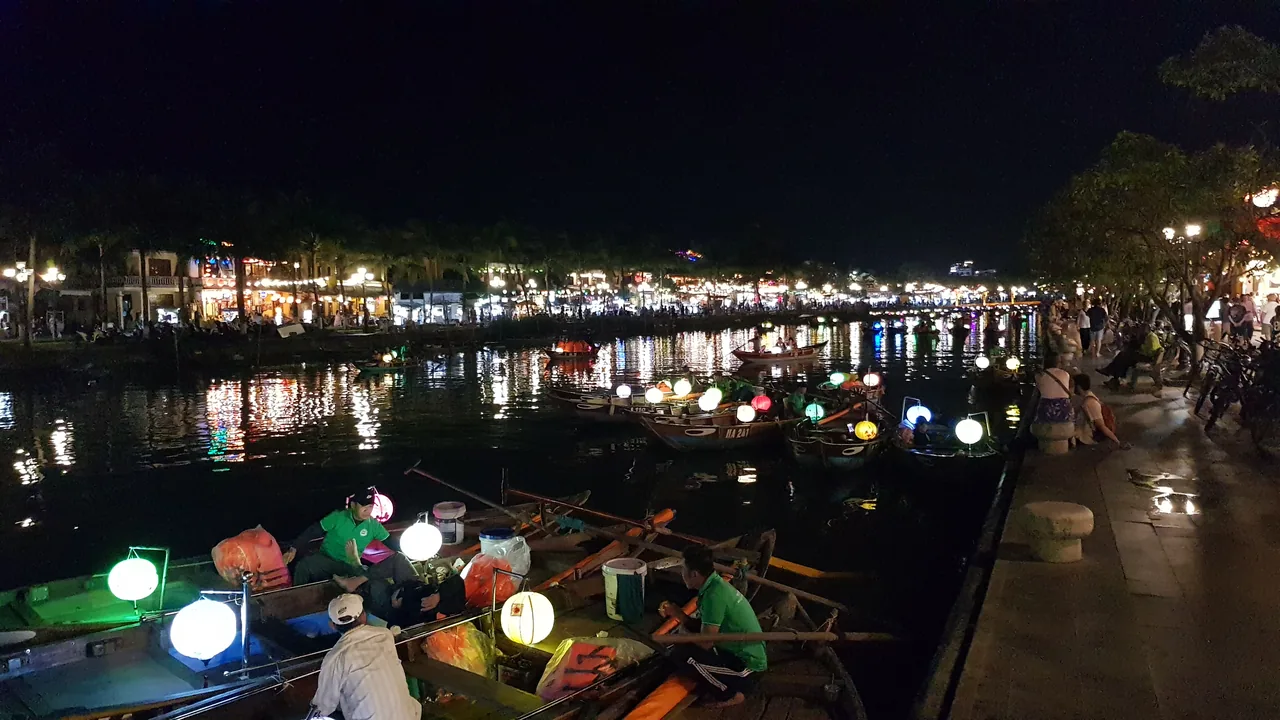
The lanterns glow every single evening, all year round — from around 6 PM the whole riverfront lights up. The monthly Lantern Full-Moon Festival is the extra-special night, when the town cuts its electric lights entirely and leaves only lanterns and candles.
On any normal night, silk lanterns hang from the shops, the boats and the An Hội bridge, while floating candle-lanterns drift down the Thu Bồn. On festival night it goes up a level: from about 6 to 10 PM the old-town core switches off electric light, motorbikes are cleared out around 5:30 PM, and the release of floating candle-lanterns peaks between 7 and 9 PM. It’s magical — and very crowded, so arrive early.
The festival falls on the 14th day of each lunar month. Upcoming dates:
| Date | Notes |
|---|---|
| 27 Jul 2026 | |
| 26 Aug 2026 | |
| 24 Sep 2026 | Eve of Mid-Autumn — the biggest and most atmospheric of the year |
| 23 Oct 2026 | |
| 22 Nov 2026 | |
| 22 Dec 2026 | |
| ~20 Jan 2027 | |
| 19 Feb 2027 | |
| 21 Mar 2027 |
To join in, buy a small paper wish-lantern from a riverside seller (~10,000–20,000 VND) and float it on the Thu Bồn Map. For a closer view, take a short sampan boat ride — expect about 150,000–200,000 VND per boat for a brief row, not per person.
More on the tradition and timing in our Hoi An lantern festival guide.
7. Hoi An’s food — dishes you can only eat here
Some of Hoi An’s most famous dishes exist nowhere else on earth. That’s not marketing — it’s literally down to a local well and imported ash. Here’s what to eat and where.
Cao lầu Map
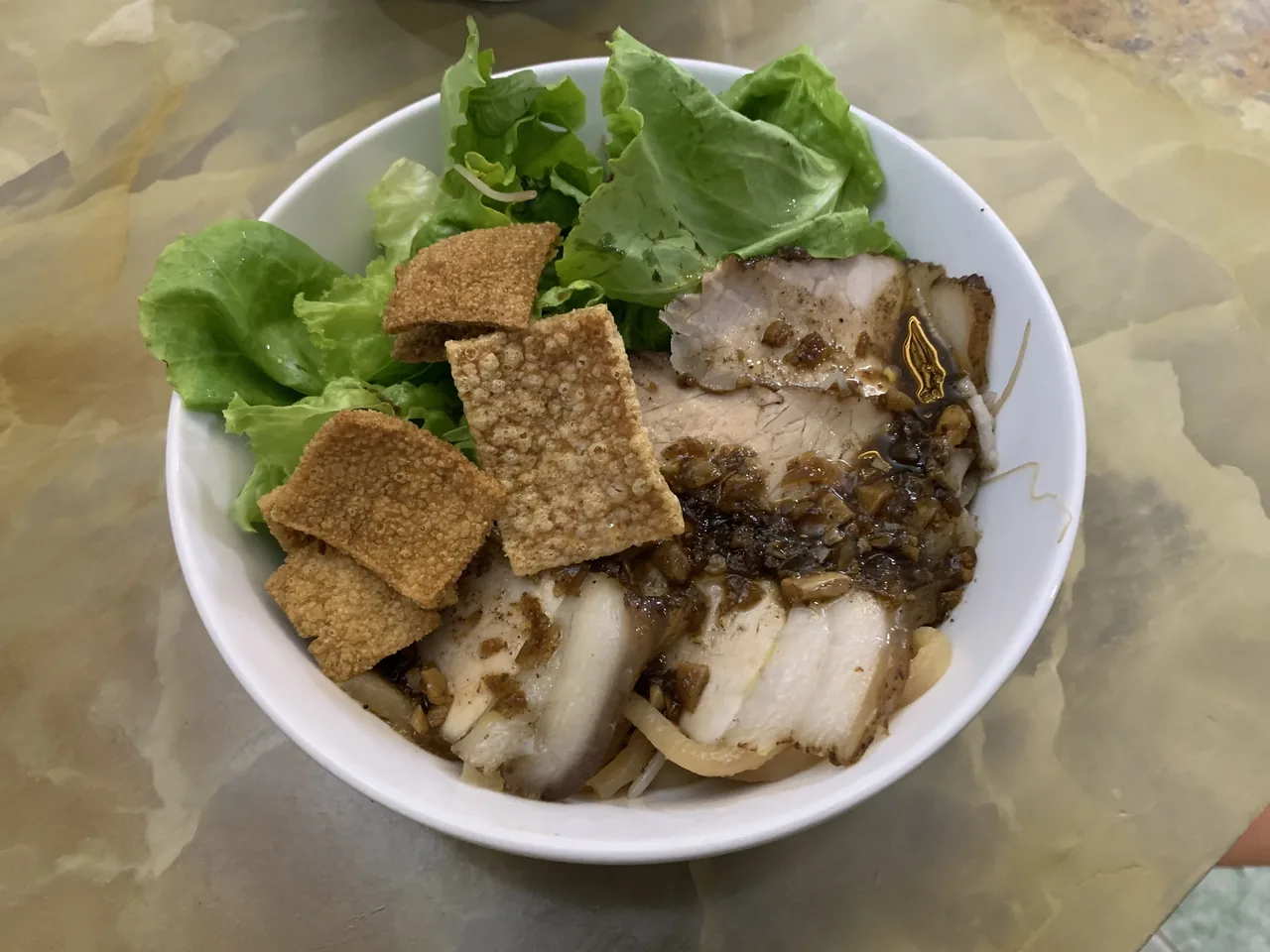
Hoi An’s signature dish: thick, chewy noodles traditionally made with water from the ancient Bá Lễ well and lye ash from Cù Lao Chàm, topped with char siu pork, fresh greens and crisp rice croutons. You genuinely cannot get the real thing anywhere else. Around 30,000–50,000 VND.
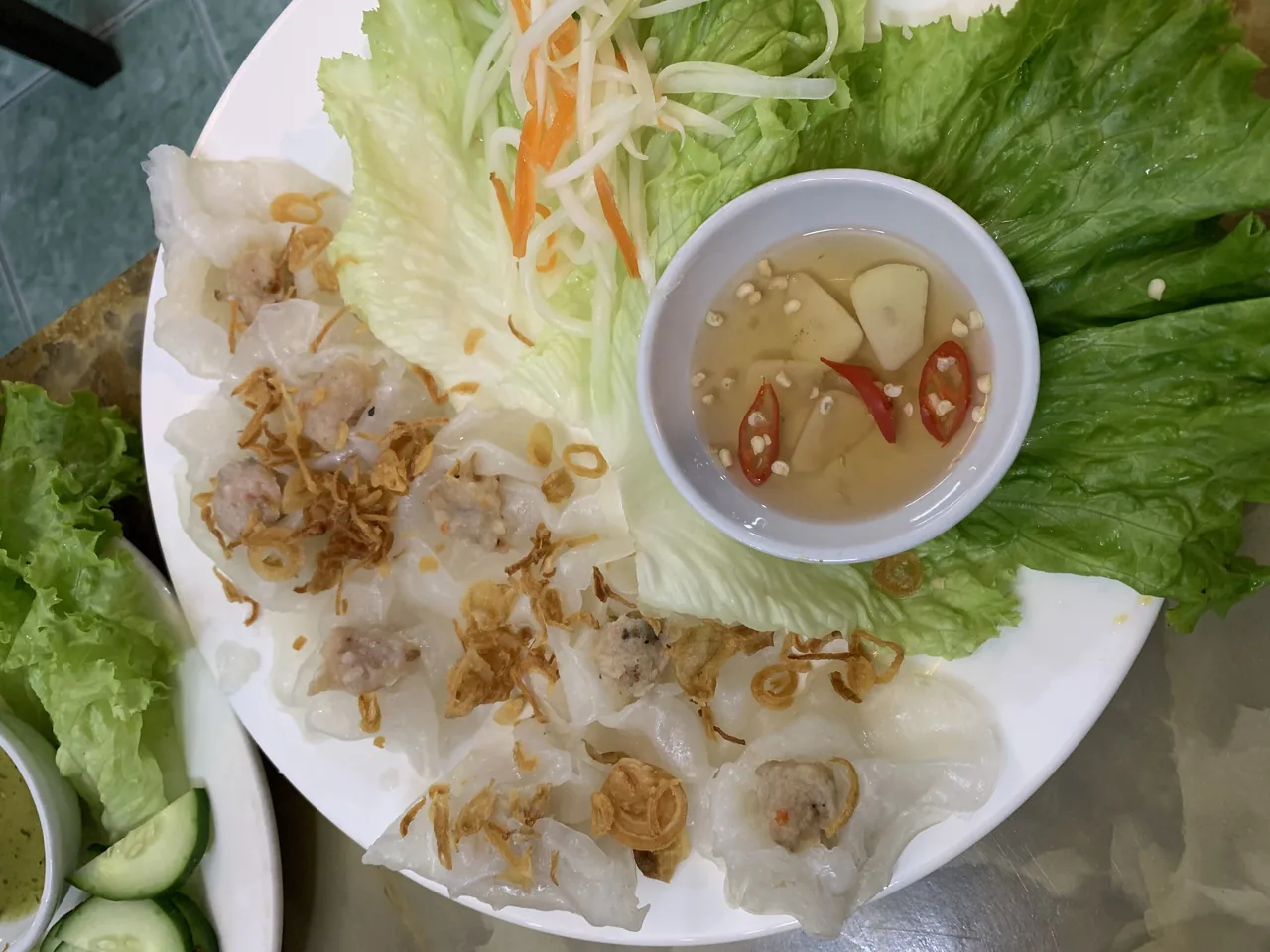
White Rose dumplings (bánh vạc) Map
Translucent shrimp dumplings pleated to look like little white roses, usually served alongside crispy fried wontons. Try them at the aptly named at 533 Hai Bà Trưng, which supplies much of the town.
Mì Quảng & cơm gà Map
Mì Quảng is the Quảng Nam classic — turmeric-yellow noodles with just a little broth, pork or shrimp, peanuts and a rice cracker to crumble on top. Cơm gà Hội An is fragrant turmeric rice with shredded chicken and herbs (~40,000–60,000 VND); the local institution is . For the wider regional lineup, see our Da Nang & Hoi An food guide.
The bánh mì legends Map
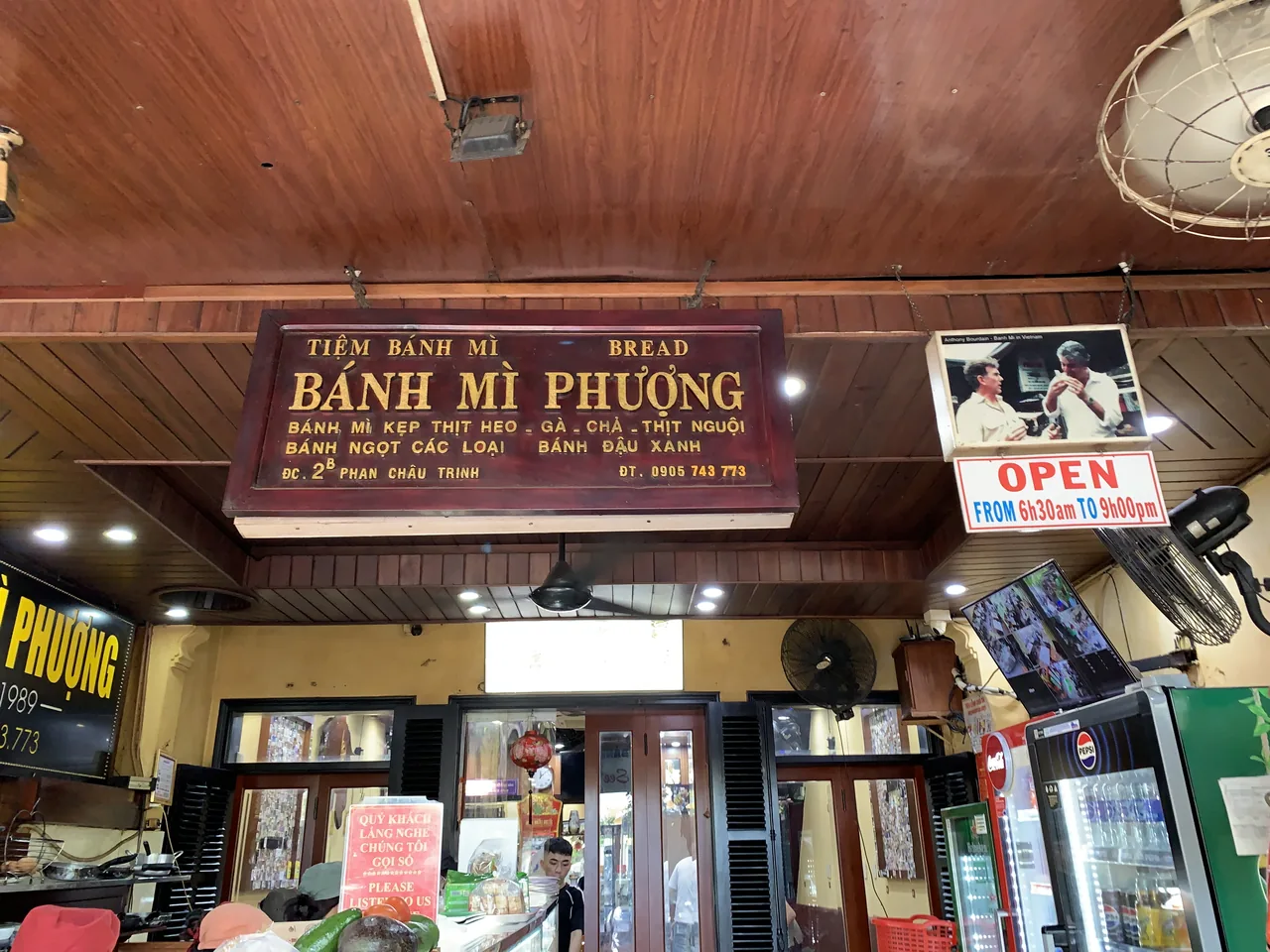
Bánh mì Phượng has been world-famous since Anthony Bourdain filmed there in 2012 — crackly baguette, house pâté and secret sauce, at 2B Phan Chu Trinh . Expect a queue; ~30,000–50,000 VND. Locals will point you instead to Madam Khánh, “The Bánh Mì Queen” at 49 Trần Cao Vân Map — ~25,000–30,000 VND and often sold out by noon.
Something sweet & cooling Map
Cool off with chè (Vietnamese sweet soup) or the famous Mót iced lemongrass-and-herbal drink served near the temple in a little cup, ~10,000–15,000 VND .
8. Custom tailoring done right
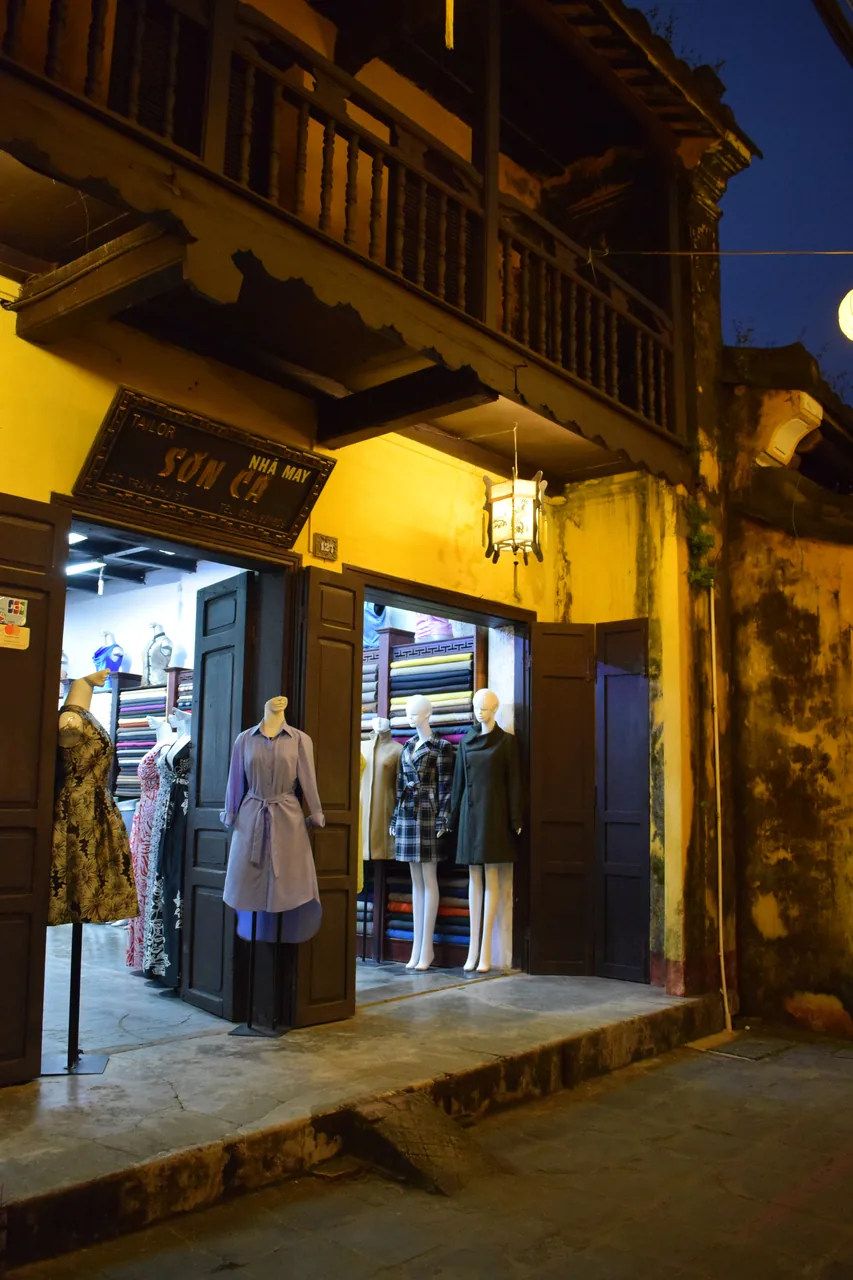
Hoi An is the tailoring capital of Vietnam — hundreds of shops will make you a custom suit or dress in roughly 48 to 72 hours (24 hours is possible with a rush fee). Done well, it’s genuinely magic; done carelessly, it’s money wasted. Here’s how to land on the right side of that line.
| Item | Rough price (custom) |
|---|---|
| Dress (short) | ~US$25–50 |
| Dress (long) | ~US$40–150 |
| Men’s 3-piece suit | ~US$90–200 |
| Shirts | ~US$15–45 |
Fabric is where the price really lives. The tiers run from budget synthetics, through mid-range cotton, linen and local silk, up to premium 100% Italian or English wool (names like VBC and Loro Piana) with full-canvas construction and hand-finished buttonholes. Those “$30 suit” touts by the market exist — and you get exactly what you pay for.
For quality and consistency, the long-established names include Map, Map, Map, and the higher-end, fixed-price Map. Any of these is a safe starting point.
How to get it right
- Order on day 1, do your first fitting on day 2, and collect on day 3 — build that timeline into your trip.
- Bring a clear photo or reference garment; it beats any description.
- Ask for alterations — that’s the entire point of custom. Don’t leave without a proper fitting.
- Confirm the exact fabric and total price in writing before they cut.
Prefer to source your own cloth? The Hoi An Cloth Market sells fabric by the metre for a DIY approach.
9. Experiences & things to do beyond walking
Once you’ve wandered the old town, this is where Hoi An opens up. Here’s what’s actually worth your time — with honest notes, because a couple of these are touristy.
Basket boat Map
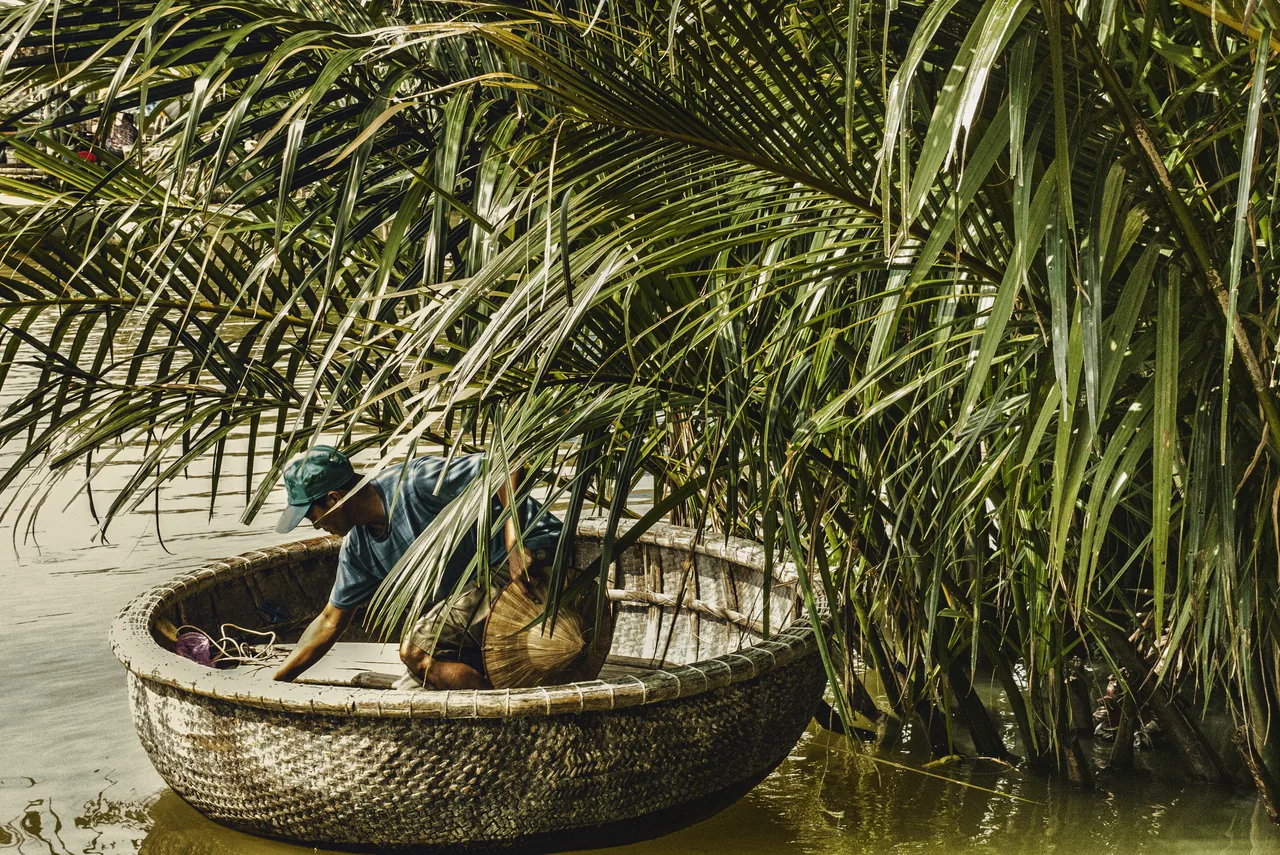
A round bamboo thúng chai through the water-coconut palms of the Bay Mau / Cẩm Thanh forest. Basic ride ~90,000–150,000 VND (US$4–7); packages with a cooking class or lunch run US$20–40. Fun, but touristy — expect a loud “spinning boat” show.
Cooking class
~US$15–25 (375,000–625,000 VND), or ~US$35 with a market visit and basket-boat ride. You’ll make bánh xèo, White Rose dumplings and fresh spring rolls. Superb value.
Tra Que Herb Village Map
Cycle out through the rice paddies to this organic herb village ; some farms run hands-on cooking sessions among the beds.
The basket-boat trip through Map genuinely is fun — the net-throwing and crab-catching are a good laugh — but it is touristy and can get loud and hawky, so go in with the right expectations. More on it in our basket boat guide, and the full lineup in our Hoi An activities guide. A cooking class and a ride out to Tra Que herb village both make lovely half-days.
A few more, with honesty
- Lantern-making workshop: make your own silk lantern to take home, ~US$8–15. A great rainy-afternoon activity.
- Hoi An Memories Show: a huge outdoor night show on Impression Island, tickets from ~300,000–800,000 VND by seat tier Map. It’s a big production and polarizing — some love the spectacle, others find it over-scaled.
- VinWonders Nam Hoi An: a theme and water park south of town Map, best if you’re travelling with kids and want a full family day out.
10. Beaches: An Bàng & Cửa Đại
An Bàng is now Hoi An’s main beach — relaxed, with driftwood beach bars and seafood shacks — while Cửa Đại has suffered severe erosion and is a shadow of what it was. If you want a beach afternoon, head to An Bàng.
An Bàng Beach is about 4 km / 15 minutes from the old town Map: soft sand, a laid-back beach-bar scene, sunbeds you can rent, and grilled-seafood shacks right on the sand. It’s made for a slow afternoon that rolls into sunset drinks.

Cửa Đại Beach, about 5 km out Map, is the cautionary tale. Severe coastal erosion has swallowed long stretches of sand. A major coastal-protection project (around VND 1,000 billion, AFD/EU-funded) broke ground on 20 March 2025, but erosion continued through the late-2025 storm season, and parts of the beach are still sandbagged or walled off. Manage your expectations here.
11. Day trips: My Son & Cham Islands
Two of central Vietnam’s best day trips sit within easy reach of Hoi An — one ancient and inland, one marine and offshore.
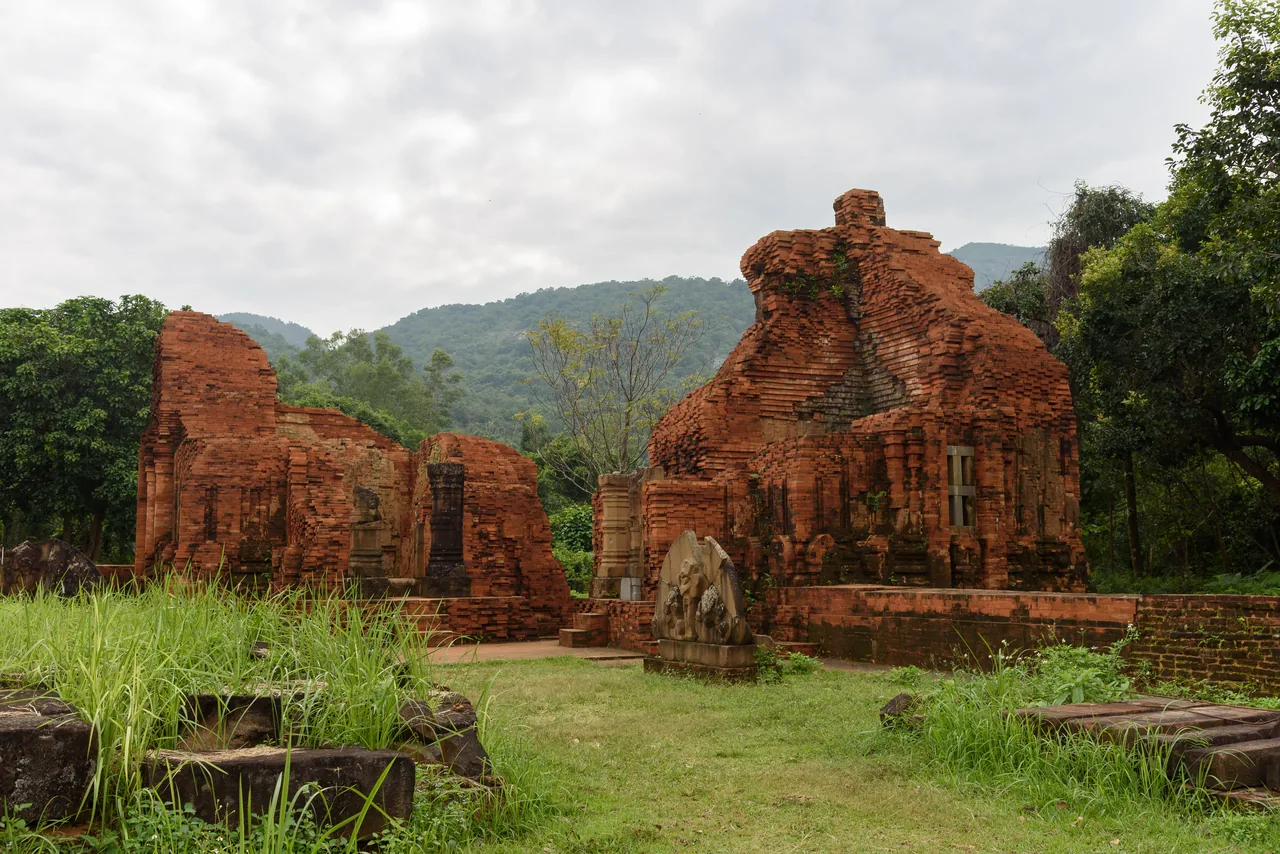
My Son Sanctuary (Mỹ Sơn) Map
A UNESCO-listed complex of Cham (Hindu) brick temple ruins, often billed as “Vietnam’s mini-Angkor” . Entrance is 150,000 VND (~US$6–7), kids ~30,000, and — this surprises people — the ticket includes the electric tram (a ~2 km ride to the ruins), the Cham museum, and the traditional Apsara dance shows (around 09:30, 10:45, 14:30 and 15:30). It’s open 06:30–17:30 and sits ~40–50 km / one hour from Hoi An.
Cù Lao Chàm (Cham Islands) Map
A marine-park archipelago about 15 km offshore , reached by speedboat in about 20–30 minutes from Cửa Đại (a wooden ferry takes 50–60). Expect clear water, snorkeling, superb seafood and the little fishing village of Bãi Làng. One big caveat: day trips mainly run March to September — from October to February the seas turn rough and boats are frequently cancelled. See our Cham Islands guide before you plan.
On the way back toward Da Nang you can also fold in the Marble Mountains (Ngũ Hành Sơn) — see the wider Da Nang guide for combining them.
12. Where to stay
Pick your base by vibe: the old-town edge for atmosphere, An Bàng for the beach, Cẩm Thanh for rice-field quiet, or Da Nang if you’d rather have city life and day-trip in. Here’s how the areas compare.
| Area | Vibe | Best for |
|---|---|---|
| Old Town edge / riverside | Walk-everywhere boutiques & homestays, most atmospheric | First-timers who want the lanterns on their doorstep |
| An Bàng Beach | Beach resorts and villas, ~15 min to town | Beach and town in one trip |
| Cẩm Thanh / countryside | Quiet rice-paddy resorts with pools | Peace and space (you’ll want a bike or taxi) |
| Da Nang base | City beach and nightlife, day-trip Hoi An | Travellers who want more urban energy |
As a rough guide to nightly rates: budget guesthouses and homestays run ~US$15–30, mid-range boutiques with a pool ~US$40–90, and luxury resorts ~US$150–500+. At the top end, the famous names are the Four Seasons The Nam Hai Map and Anantara Hoi An.
For a deeper breakdown of neighbourhoods and picks, see our where to stay in Hoi An guide, or the Da Nang hotels & resorts roundup if you’re basing in the city.
13. A perfect 2–3 day itinerary
Here’s how I’d spend a first visit — enough to hit the highlights without rushing.
Day 1 — Arrive & old town
Arrive around 4 PM. Walk the Ancient Town while it’s still light, cross the Japanese Bridge, and step into one assembly hall. As dusk falls, settle in for dinner among the lanterns, then float a wish-lantern or take a short sampan ride on the river.
Day 2 — Food, tailoring & beach
Start with a cao lầu or bánh mì breakfast, then place your tailoring order first thing (day-1 order → day-2 fitting → day-3 collect). Spend the afternoon at An Bàng Beach, and round out the day with a cooking class or a basket-boat trip.
Day 3 — Day trip
Head to My Son early in the morning, or take a Cham Islands boat if it’s March to September. Swing back to collect your finished tailoring, and enjoy one last lantern-lit night before you leave.
14. Practical tips & avoiding scams
A few things that’ll make your Hoi An days smoother — and keep you off the wrong end of the common tourist traps.
- Money: roughly 26,000 VND ≈ US$1 (2026). Carry small notes, use the ATMs around town, and don’t count on cards at street stalls.
- Getting around: the old-town core is pedestrian-priority, with motorbikes restricted in the evenings (roughly 5:30–9:30 PM). Walk or cycle; taxis and Grab cars wait at the edges. See our getting around Hoi An guide.
- Motorbike safety: helmet always, sort out an international permit, and remember those wet cobbles get slick after rain.
- Pack: comfy shoes for the cobbles, a hand fan or umbrella for midday sun (or rain), a light rain layer Sep–Nov, and cash.
- Respect: this is a living heritage town with active temples — dress modestly in the halls and don’t block doorways for photos.
Stay connected by grabbing a Vietnam eSIM before you land (Viettel and Vinaphone have solid coverage around Hoi An). It saves you hunting for a SIM shop on arrival.
That’s the whole town, top to bottom. When you’re ready to plan the wider trip, head back to our Da Nang travel guide — Hoi An’s big, buzzy neighbour and the gateway to everything here.
🏮 The Complete Hoi An Guide Library
- Things to Do in Hoi An: Beyond the Lanterns
- The Best Things to Book in Hoi An: Tours, Classes & Boat Rides
- Hoi An’s Lantern Festival: Dates, What Happens
- The Hoi An Basket Boat Ride: Worth It? Prices, Tips
- Tra Que Herb Village, Hoi An: A Calm Half-Day in the Gardens
- Hoi An Beaches: An Bang vs Cua Dai — Which One to Choose?
🗺️ Hội An is one corner of a compact region. Our Central Vietnam guide plans Da Nang, Hội An and Huế as a single trip.
🎡Things to Do52
🍜Food8
🏨Where to Stay6
🚇Getting Around9
🧭Travel Tips21
🧭Vietnam-wide essentials56
Hoi An FAQ
Absolutely. Its lantern-lit UNESCO old town, 400-year-old merchant houses and unique food make it one of Vietnam’s highlights, and it’s just a 45-minute drive from Da Nang. Give it 2–3 days to add tailoring, beaches and a day trip.
The old town itself is a half-day or one evening, but 2–3 days lets you add custom tailoring, An Bàng Beach, a food crawl, and a day trip to My Son or the Cham Islands. Two full days is the sweet spot for most visitors.
Officially yes — a 120,000 VND (~US$5) ticket gives five coupons for 5 of the 22 heritage sites, valid 24 hours. Enforcement on the streets is loose, but you need it to enter the houses, halls and museums, and it funds preservation.
It falls on the 14th day of each lunar month, when the town cuts electric light. Upcoming dates include 24 September 2026 (the biggest, on Mid-Autumn eve), plus 23 Oct and 22 Nov. Note the lanterns light up nightly all year — not only on festival nights.
February to April is best — dry, mild (24–30°C) and low-humidity. Avoid October and November, when the Thu Bồn river floods the old-town streets. May–August is hot beach season; December–January is cooler, quieter and still lovely.
The easiest way is a Grab or Xanh SM car — about 350,000 VND and 40–50 minutes. A private car costs ~US$13–20 one-way and can stop at Marble Mountains; the yellow bus 01 is cheapest but slow, with common tourist overcharging.
Its UNESCO-listed Ancient Town, the silk lanterns that light the riverfront every night, world-class custom tailoring, and unique dishes like cao lầu that you can’t get anywhere else. It was one of Asia’s great trading ports 400 years ago.
Yes. The 400-year-old Japanese Covered Bridge (Chùa Cầu) reopened on 3 August 2024 after a 2022–24 restoration. It’s the icon of Hoi An and appears on the 20,000 VND banknote. Some feel the restoration left it looking a bit too new.
Dresses run ~US$25–150 and a men’s 3-piece suit ~US$90–200, made in 48–72 hours. It’s well worth it if you choose a reputable shop, confirm fabric and price in writing, and insist on a proper fitting. Cheap “$30 suit” touts deliver poor fabric.
Cao lầu (chewy noodles made with local well water, found only here), White Rose shrimp dumplings, and a bánh mì from Phượng or Madam Khánh. Add mì Quảng and cơm gà for the full local lineup. Bring small cash — stalls rarely take cards.
They’re a pair, not rivals, and only 45 minutes apart. Da Nang offers a big city beach and nightlife; Hoi An offers heritage, lanterns and charm. If you have time, base in one and day-trip the other — most travellers do both.
Yes, most years in October and November, when the Thu Bồn river bursts its banks and water fills the old-town lanes — locals even paddle sampans down the streets. In late October 2025 it had its worst flooding since 1964. It’s atmospheric but poor for sightseeing, so plan your trip around it.
Yes. My Son is a UNESCO complex of Cham Hindu temple ruins, sometimes called Vietnam’s mini-Angkor. Entry is 150,000 VND and includes the tram, museum and Apsara dance shows. Go early (by 07:00–08:00) to beat the heat and tour buses.
An Bàng Beach is the one to head for — soft sand, beach bars and good swimming, about 15 minutes from town. Cửa Đại has suffered severe erosion and lost much of its sand; a protection project began in March 2025 but it’s still patchy.