
Hoi An Itinerary: One, Two and Three Days, Built Around the Hours Things Actually Open
Everything in Hoi An that has a fixed hour, laid out first, with the rest of the day filled in around it. Ticket prices, opening times and travel times are all attached.
| How many days | Two days covers the Old Town and the countryside. Three lets you give a whole day to My Son or Cu Lao Cham. |
|---|---|
| Old Town ticket | 20,000d per site. Since 10 August 2026 Vietnamese and foreign visitors pay the same. |
| Open in daylight only | The old houses and assembly halls run roughly 08:00 to 17:00. After that only the streets are left. |
| When the streets close | No cars or motorbikes inside the Old Town between 09:00 and 21:30. |
| Lanterns | Lit around sunset, 17:30 to 18:00. The riverfront peaks between 19:00 and 21:00. |
| Days out | My Son opens at 06:00 and costs 40,000d. The Cu Lao Cham boat leaves Cua Dai at 08:30. |
1. How many days Hoi An needs
2. The hours that are already fixed
3. Reading the map
4. The Old Town ticket, and what changed in 2026
5. What the ticket gets you into
6. The question everyone asks about the ticket
7. One day in Hoi An
8. Two days in Hoi An
9. Three days in Hoi An
10. Four days and longer
11. The Old Town after dark
12. The 14th night of the lunar month
13. Tra Que vegetable village
14. Basket boats at Cam Thanh
15. An Bang beach
16. Cooking classes
17. Having clothes made
18. My Son
19. Cu Lao Cham
20. Getting in and out from Da Nang
21. Pairing Hoi An with Da Nang
22. Where to stay
23. Getting around town
24. October and November
25. Where the meals go
26. What it costs
27. Where the price arguments happen
28. With children and with older parents
29. Before you go
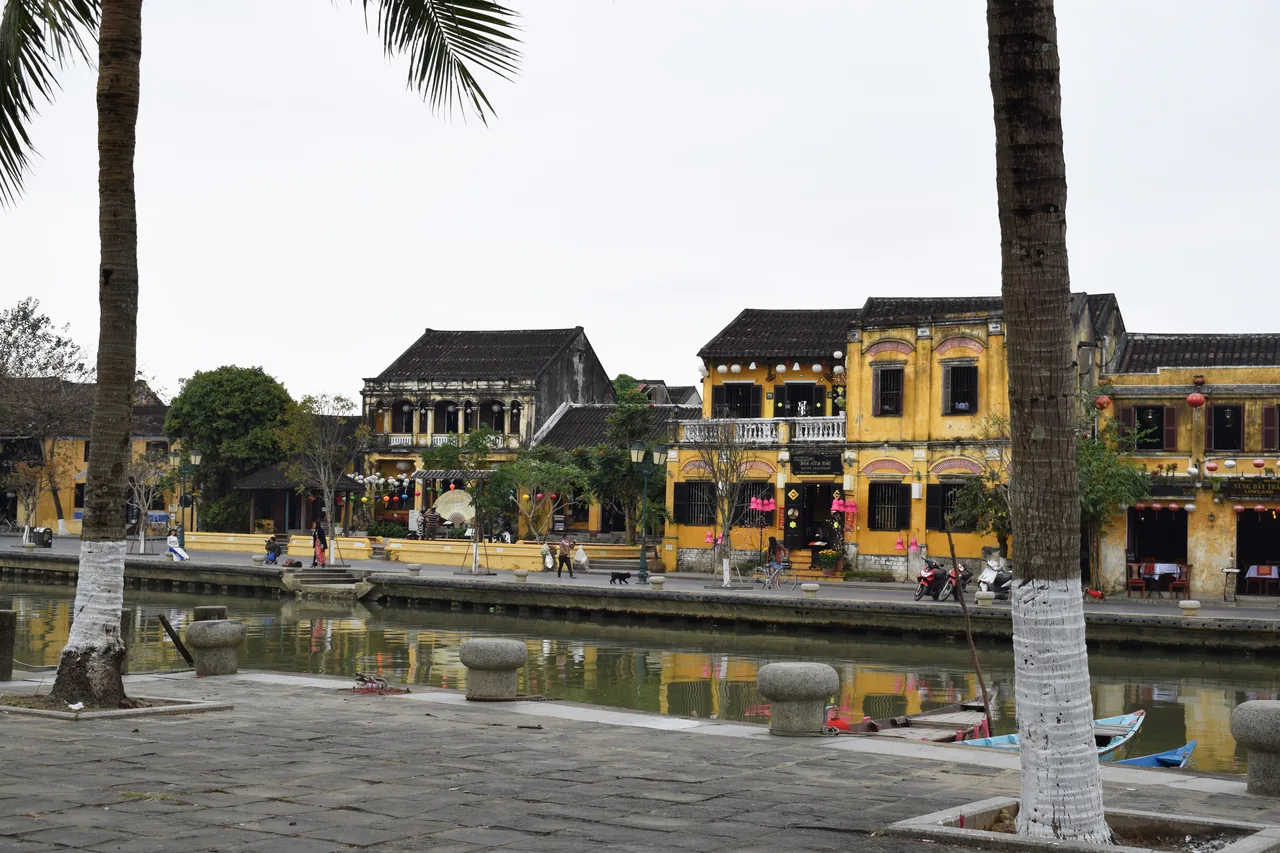
1. How many days Hoi An needs
Two days covers the Old Town and the countryside. Three days lets you give a whole day to either My Son or Cu Lao Cham. With only one day, keep everything inside the Old Town. The walkable part of Hoi An is small, and putting two districts into one day means spending the day in transit.
The distances explain the split. The Old Town fits everything worth seeing into 400 metres north to south. Tra Que, An Bang and Cam Thanh are scattered around it, all about fifteen minutes away by bicycle. My Son is an hour by car and Cu Lao Cham twenty minutes by boat. The first two groups fit into one day together. The last two each take a day of their own.
| Days | What fits | What drops out |
|---|---|---|
| Half a day | The Old Town at night, lanterns, the night market | Every ticketed building |
| One day | The Old Town by day and night, a tailoring order | Beach, countryside, days out |
| Two days | Old Town plus Tra Que, Cam Thanh and An Bang | My Son, Cu Lao Cham |
| Three days | All of the above plus one full day out | Whichever day out you did not pick |
| Four or more | A day in Da Nang, room for fittings, a cooking class | Nothing |
Hoi An comes in four pieces
| Group | What is there | From the Old Town | Time needed |
|---|---|---|---|
| Old Town | The bridge, assembly halls, old houses, night market | On foot | Half a day plus an evening |
| Fields north and east | Tra Que, An Bang beach | 15 min by bicycle | Half a day |
| Waterways to the south-east | Cam Thanh palms, Cua Dai | 15 to 20 min by bicycle | Two to three hours |
| Outside | My Son, Cu Lao Cham, Da Nang | 1 hr by car / 20 min by boat / 45 min by car | A day each |
The Old Town measures about 400 metres north to south and a little over a kilometre east to west. A slow lap takes an hour. The time you set aside for it is therefore not walking time. It is time spent inside buildings, at tables and sitting down out of the heat.
Why two days rather than one
The buildings you need a ticket for close at 17:00. The lanterns come on between 17:30 and 18:00. Daytime Hoi An and evening Hoi An are separated by the clock, so a single day always leaves one of them thin.
Going out to the countryside on the second day rescues the morning. Both the field work at Tra Que and the basket boats at Cam Thanh are best early, and at that hour the Old Town has not opened yet.
2. The hours that are already fixed
Write down the things with a fixed hour first, then fill the gaps, and a Hoi An day rarely goes wrong. Here is that list. Everything else can happen when you are hungry or when it gets too hot to stand outside.
| What | Hours | What it does to the day |
|---|---|---|
| Ticket booths | 07:30 to 21:30 | Buy in the morning or the evening, either works |
| Old houses and assembly halls | Roughly 08:00 to 17:00 | Your ticket is only usable in daylight |
| Japanese Covered Bridge | Until 21:30 | The one ticketed site that stays open at night |
| Car-free hours | Summer 09:00 to 21:30, winter 09:00 to 21:00 | No vehicles inside the Old Town |
| Phan Chau Trinh street | From 17:30 | The only street closed in the evening alone |
| Traditional arts performance | 10:15, 15:15, 16:15 | Song Hoai Square, included in the ticket |
| Japanese tea ceremony demonstration | 09:30, 16:30 | 6 Nguyen Thi Minh Khai |
| Nguyen Hoang night market | 17:00 to 23:00 | Across An Hoi bridge, about 300 m long |
| Lanterns lit | 17:30 to 18:00 | With sunset |
| Riverfront peak | 19:00 to 21:00 | Boats and photographs both |
The road shuts at nine
From 09:00 no car or motorbike enters the Old Town. If you are arriving with luggage that day, either get there before nine or plan to be dropped at the edge and walk in. Check-out works the same way.
Five in the afternoon comes early
The old houses and assembly halls shut at around 17:00. Buying a ticket at 16:30 and getting round three of them is not possible. If you intend to use a ticket, use it in the morning or the early afternoon.
The crowd changes by the hour
| Time | What the Old Town is like |
|---|---|
| 06:00 to 08:00 | Before the shops open. Almost empty and the cleanest light for photographs |
| 08:00 to 11:00 | Coach groups arrive. Still the best window for going inside buildings |
| 11:00 to 15:00 | The hottest part of the day. Go indoors or back to the hotel |
| 15:00 to 17:30 | Walkable again, but the buildings close at 17:00 |
| 17:30 to 21:00 | Lanterns on, and the busiest hours of the day |
| 21:00 to 23:00 | The crowd drains away. The night market is still going |
Summer and winter hours
The car-free hours are set separately for summer and winter. The difference is only thirty minutes, but if you are planning night photographs it is worth knowing that in winter things change at 21:00. In central Vietnam the dry stretch runs February to August and the wet one September to January.
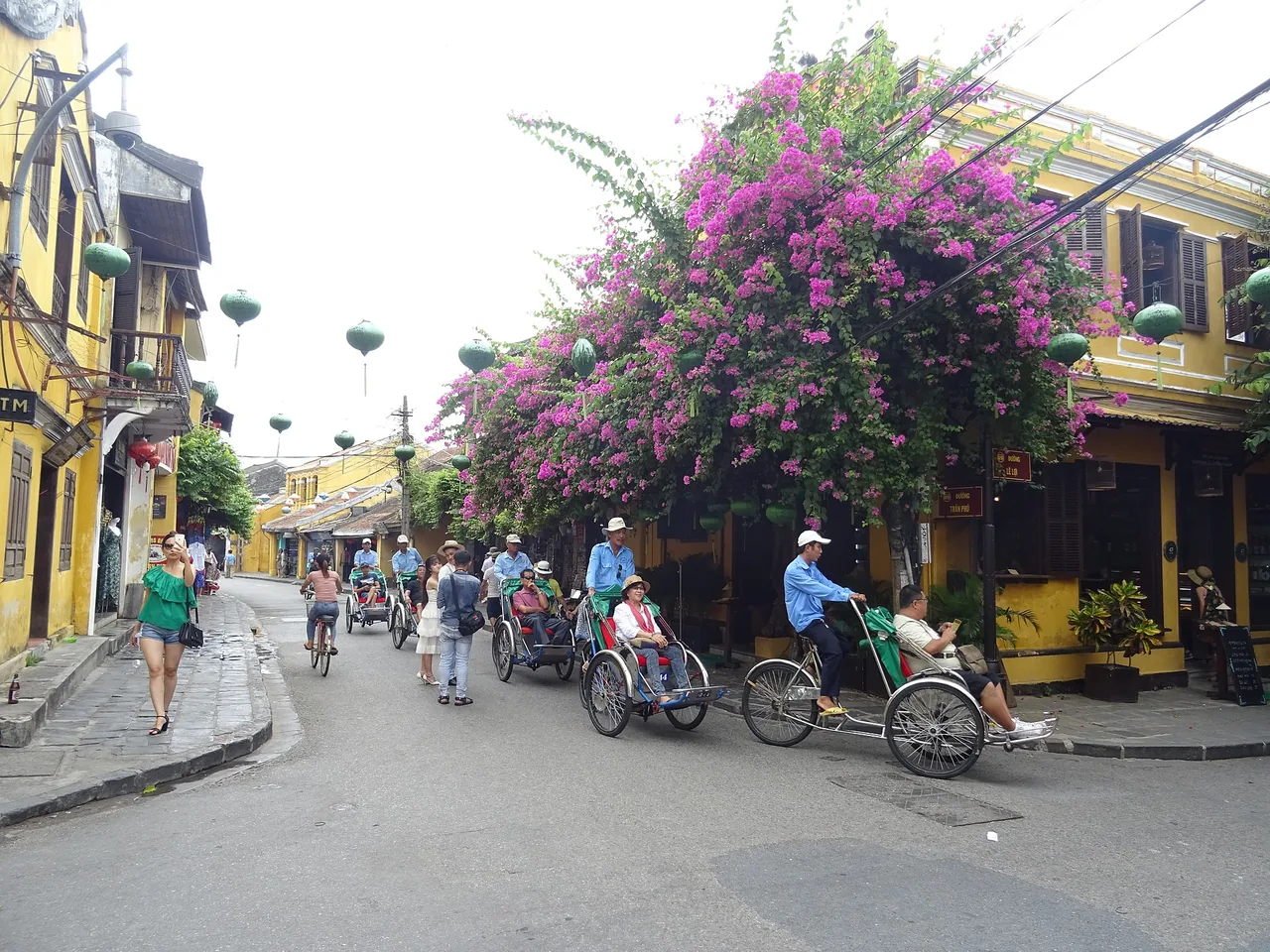
3. Reading the map
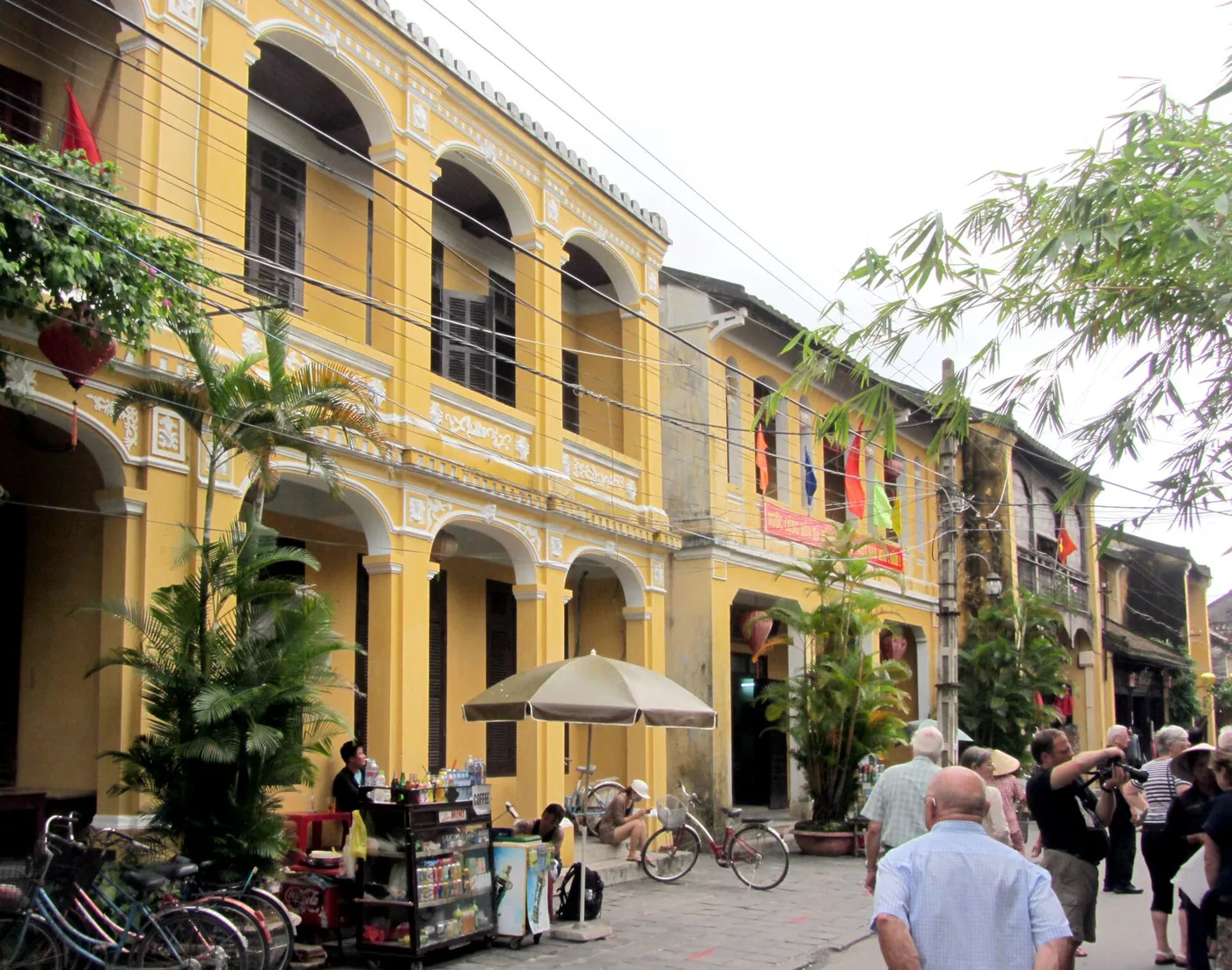
The Old Town is a long strip along the river, and three streets running parallel to the water carry almost everything worth seeing. Learn those three and you can stop looking at your phone.
| Street | Distance from the river | What is on it |
|---|---|---|
| Bach Dang | First row, on the water | Boat landings, lantern stalls, cafes |
| Nguyen Thai Hoc | Second row | Old houses, assembly halls, souvenir shops |
| Tran Phu | Third row | Where the assembly halls cluster, plus Quan Cong temple |
| Phan Chau Trinh | Fourth row | Closed to traffic in the evening only |
Two bridges
The Japanese Covered Bridge sits at the western end, a roofed bridge over a narrow canal that once linked the Japanese quarter to the Chinese one. The bridge across the river itself is An Hoi, and crossing it brings you to the night market.
So the shape of a day is this: buildings on this side of the water during daylight, across the bridge for the night market in the evening, and back again. The two bridges are ten minutes apart on foot.
The central market
At the eastern end, where Tran Phu runs out. Vegetables and fish in the morning, and a food court at the back where you can eat noodles and rice. Quan Cong temple faces it across the street.
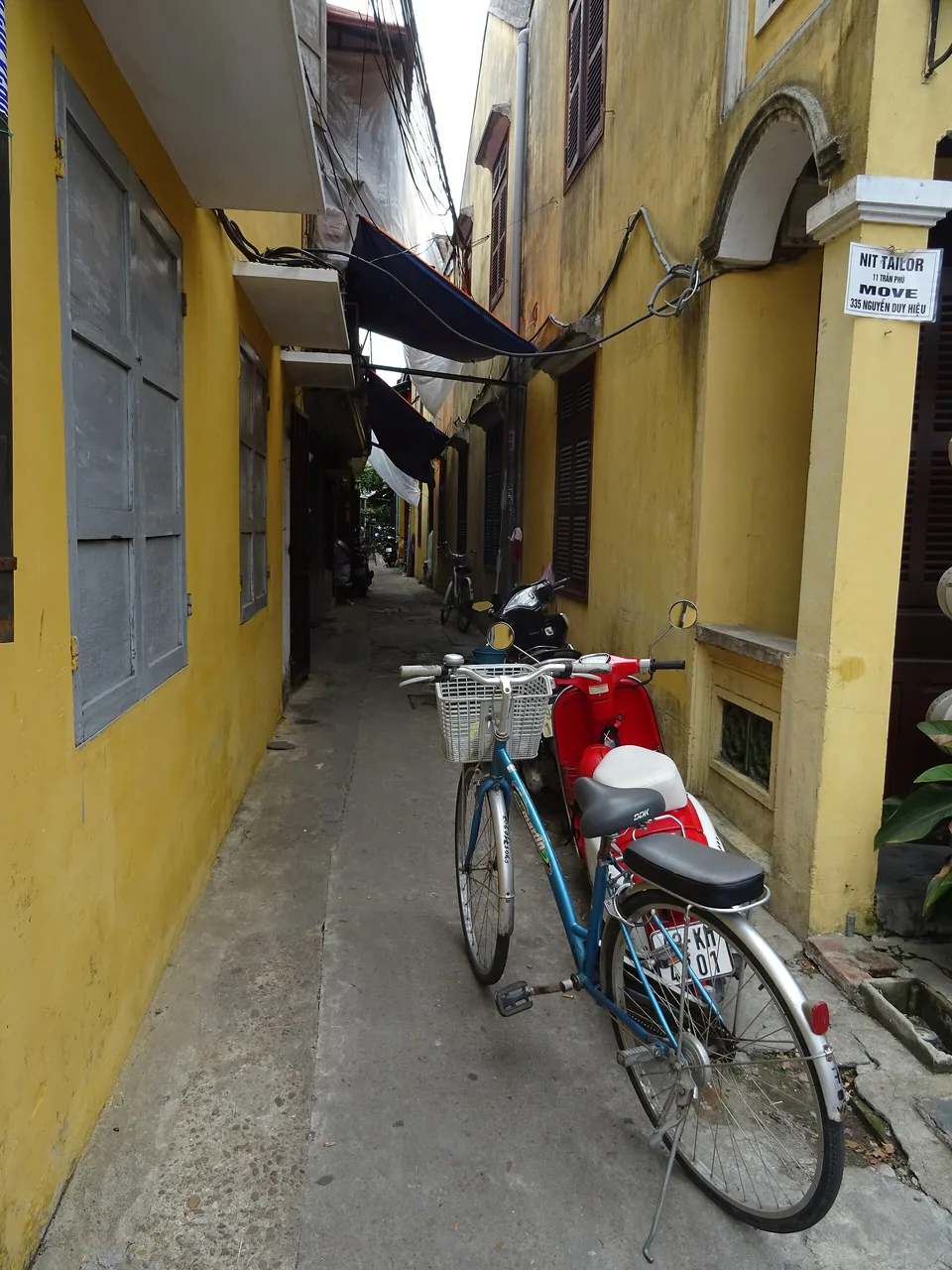
4. The Old Town ticket, and what changed in 2026
Hoi An changed how it charges in 2026. The rate the city now sets is 20,000d per site, and Vietnamese and foreign visitors pay the same. The old split by nationality is gone.
The booths sell bundles. There are two, and both of them include walking the streets of the Old Town.
| Ticket | What it covers | Price |
|---|---|---|
| Bundle A | The whole Old Town, plus either the Japanese Covered Bridge or Quan Cong temple, plus two cultural sites | 80,000d |
| Bundle B | The whole Old Town, plus the bridge or Quan Cong temple, plus the museums, plus three cultural sites | 120,000d |
| Single site | The rate set by the city from 10 August 2026 | 20,000d |
The ticket is not a day pass
It is valid for up to three days of your stay. See two places on your first day, keep the rest, and use them on day three. Just hang on to the stubs.
Who goes free
Under-16s and students are free. Over-60s, people with disabilities and cultural-policy beneficiaries go free if they are Vietnamese nationals. Diplomats are free. A family therefore buys tickets for the adults only.
The booths are on every approach
They open at 07:30 and close at 21:30, and there is one at each main entrance to the Old Town, so there is no hunting involved. Since 2026 tickets are checked by QR code, which has taken most of the queueing out of it.
Where the money goes
The resolution setting the fee says the revenue funds restoration and conservation work, cultural events and the running of the site. The old houses are still lived-in timber buildings that need work every year, and the clean-up after each flood comes out of the same pot.
5. What the ticket gets you into
There are around twenty-two ticketed sites, split between old houses, assembly halls, museums, temples and a grave. A bundle lets you pick three or five of them.
| Name | Type | What to look at |
|---|---|---|
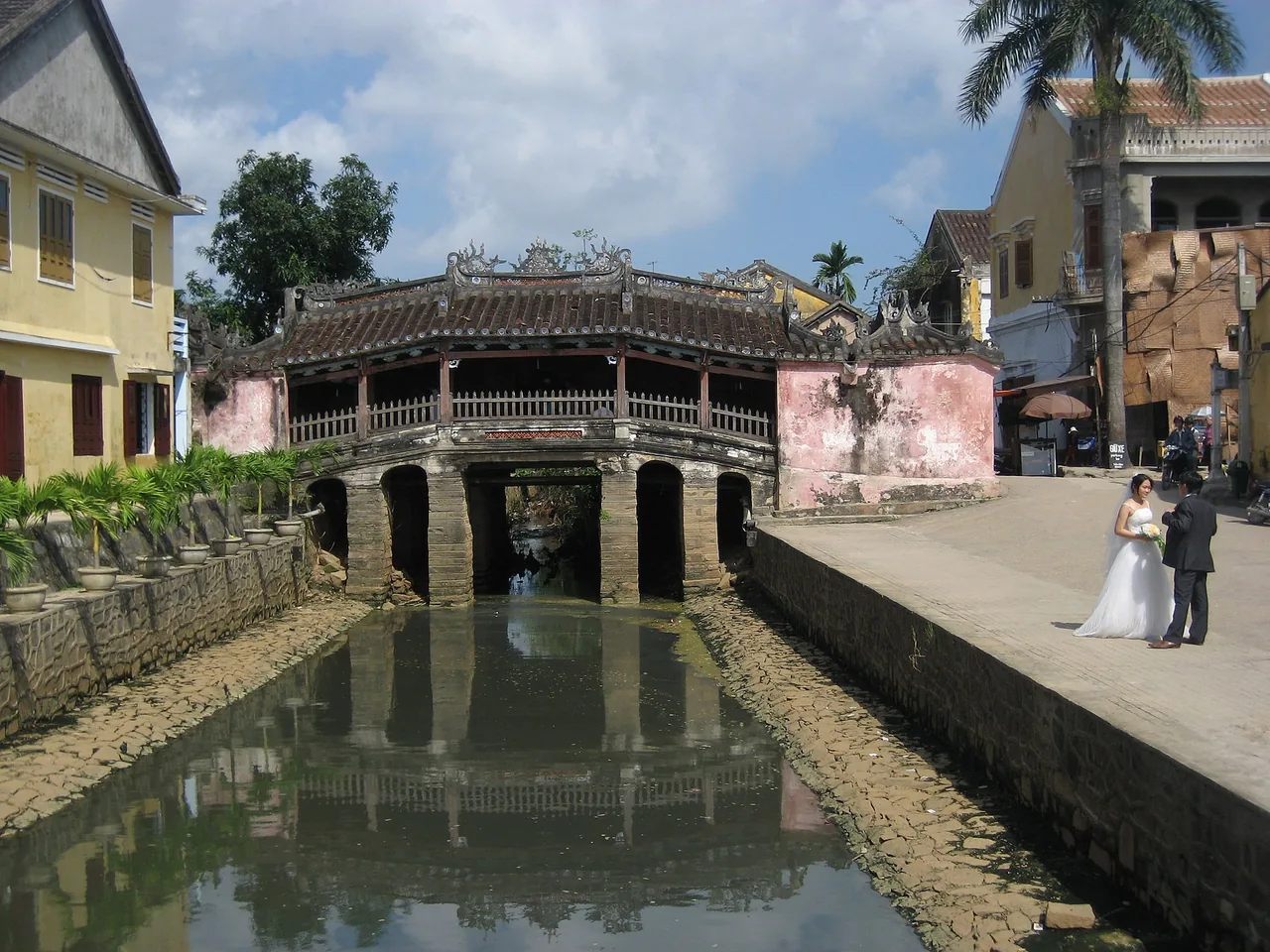
| Japanese Covered Bridge (Chua Cau) | Bridge | The bridge printed on the 20,000d note |
| Quan Cong temple (Chua Ong) | Temple | Eastern end, facing the central market |
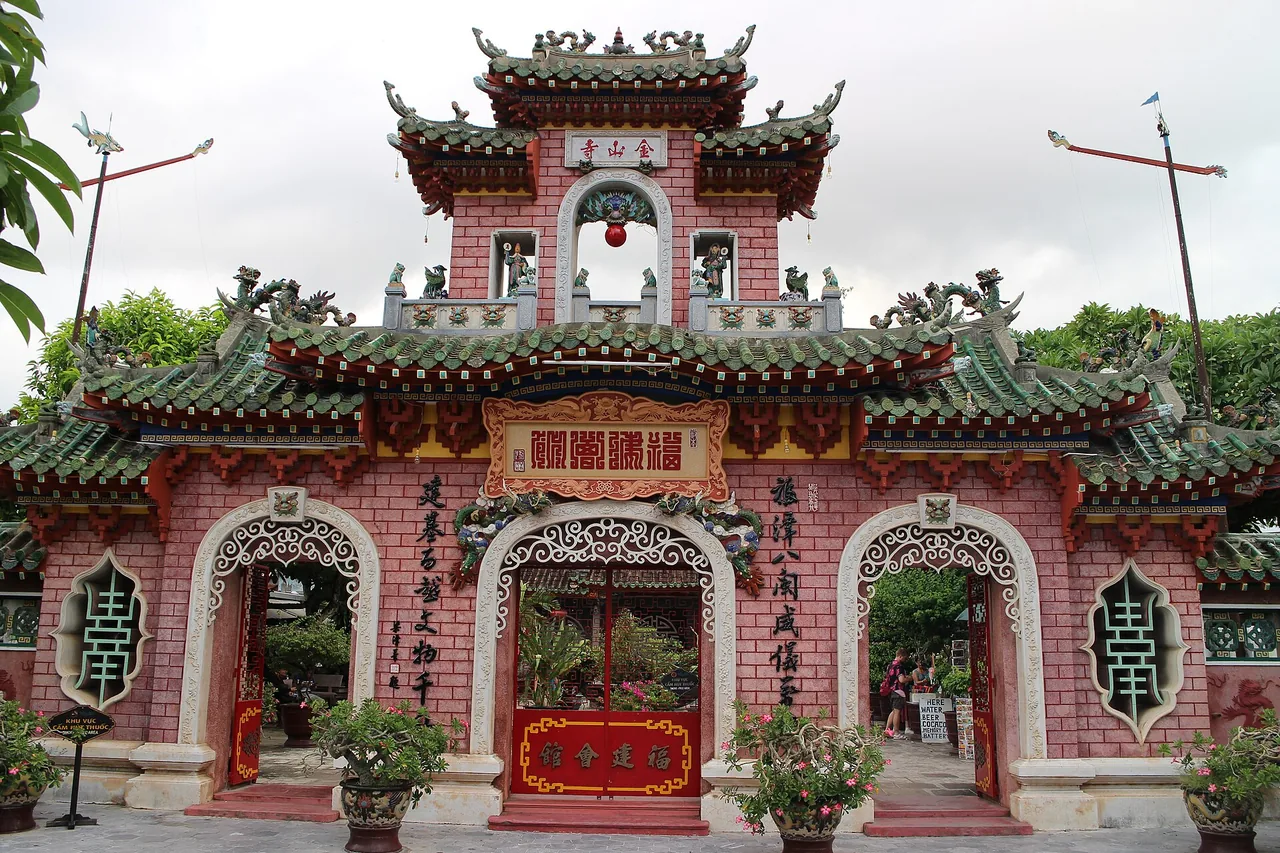
| Fujian Assembly Hall | Assembly hall | The largest, with the deepest courtyards |
| Cantonese Assembly Hall | Assembly hall | Built by merchants from Guangdong |
| Chaozhou Assembly Hall | Assembly hall | The densest woodcarving |
| Hainan Assembly Hall | Assembly hall | Hainanese, and the smallest |
| Tan Ky House | Old house | Closest to the river, with flood marks on the columns |
| Phung Hung House | Old house | Two storeys and a timber staircase |
| Duc An House | Old house | Holds material on the independence movement |
| Quan Thang House | Old house | The finest carving |
| Museum of History and Culture | Museum | The whole trading-port story in one pass |
| Museum of Trade Ceramics | Museum | Ceramics recovered from wrecks |
| Museum of Folk Culture | Museum | Household tools and crafts |
| Sa Huynh Culture Museum | Museum | The Sa Huynh culture that preceded the Cham |
| Japanese merchant grave | Grave | Outside the Old Town, out among the fields |
If you only pick three
Do not pick three of the same kind. One assembly hall, one old house and one museum means you do not see the same thing three times. Fujian is the biggest hall, Tan Ky is the house nearest the river, and the museums are the coolest place to be at midday.
What needs no ticket at all
Walking the streets, looking at lanterns and passing through the market cost nothing. Riverfront photographs are free and so is the night market. The stub only gets torn when you step inside a building.
People still live in the old houses
Descendants still live in houses like Tan Ky and Phung Hung and open the front rooms. The marks on the columns record which flood reached which height. It is closer to being let into somebody’s home than to visiting a museum, so it is worth not wandering into the living quarters at the back.
6. The question everyone asks about the ticket
English-language forums have argued for years about whether the Old Town ticket is compulsory, whether it is a tourist tax in disguise, and whether anyone actually checks. The 2026 rules make the answer clearer than it used to be.
What the ticket legally is
Since February 2026 the charge is a fee set by the city council, not a price set by an operator. That is why the amount is now identical for Vietnamese and foreign visitors, why the exemptions are written into the resolution, and why the revenue is earmarked for conservation. In August 2026 the per-site figure was fixed at 20,000d.
Do you get stopped
Checking happens at the doors of the ticketed buildings, reliably. Checking at the entrances to the streets themselves is inconsistent and always has been. The official notice asks visitors to keep their stubs so that moving in and out of the Old Town is easier, which tells you what the street-level checks are for.
When you genuinely do not need one
If your plan is to arrive at five, walk the lanes, watch the lanterns, take a boat and eat at the night market, no part of that requires a ticket, because the ticketed buildings have shut. Many people spend a very good half-day exactly that way.
When it is clearly worth buying
If you want to go inside anything. Three sites for 80,000d works out at less than a bowl of cao lau each. The Japanese Covered Bridge is the exception to the daylight rule and stays open until 21:30, so if you want to walk through the bridge rather than photograph it from outside, you need a ticket even in the evening.
7. One day in Hoi An
A one-day plan should stay inside the Old Town. Add a beach or My Son and two hours vanish into transit, and you end up somewhere else when the lanterns come on.
08:00 Arrive. Traffic is still moving but there are few people and the light is at its best.
08:30 Buy a ticket at a booth. See one assembly hall and one old house.
10:15 Traditional arts performance on Song Hoai Square.
11:00 Place a tailoring order. If you want it tomorrow afternoon, this is the last moment.
12:00 Cao lau or banh mi for lunch. This is an hour to be indoors.
13:30 One museum. Air conditioning, and you still have coupons left.
15:00 Back to the hotel or a cafe. Walking through the middle of the afternoon means running out of energy by evening.
17:00 Return to the Old Town and find a spot before the lanterns go on.
17:30 Lanterns lit. Shopfront lighting drops away and only the lanterns are left.
18:30 Thirty minutes on the river. Float a paper lantern.
19:30 Cross An Hoi bridge and eat at the night market.
21:00 The crowd starts to thin and the riverfront quietens.
What this day leaves out
An Bang, Tra Que, the Cam Thanh basket boats and any cooking class, all of it. My Son and Cu Lao Cham too, obviously. Trying to squeeze those in means losing the Old Town.
If you only have half a day
An evening needs no ticket at all. Arrive around four, walk the lanes while it is still light, watch the 17:30 lighting, take a boat at 18:30 and eat at the night market. The ticketed buildings have closed anyway, so nothing is lost.
Coming from Da Nang for the day
Leave Da Nang at eight and you are in the Old Town before nine. The return is the awkward part: around ten at night everybody orders a car at once, prices climb and the wait gets long. Leaving at 21:30, or staying until eleven, is easier than either.
The mistake people make on a one-day visit
Buying the ticket in the afternoon. At three you have two hours to see three sites, and each one takes twenty to thirty minutes, so you end up rushing. If you arrive in the afternoon, buy the ticket the following morning instead.
Getting between Da Nang and Hoi An is covered separately.
8. Two days in Hoi An
Two days is the length that asks least of you. The Old Town on day one, countryside and beach on day two, so nothing doubles back and both mornings get used.
Day one: the Old Town
Morning Buy the ticket, see an assembly hall and an old house. Order any tailoring now.
Lunch Two of cao lau, white rose dumplings and fried wontons.
Afternoon One museum and a coffee. The hottest hours are spent indoors.
Evening Lanterns, a river boat, the night market.
Day two: Tra Que, Cam Thanh, An Bang
07:30 Cycle to Tra Que vegetable village, fifteen minutes across the paddies.
08:00 Village ticket 35,000d, which includes the field work.
10:00 On to Cam Thanh for the basket boats, ahead of the coaches.
12:00 Lunch, then An Bang beach for the whole afternoon.
17:00 Back into town for a fitting.
Evening A second evening on the river, walking different lanes from the first.
What happens if you reverse the order
Starting day two in the afternoon puts the basket boats in the noisiest window there is. Cam Thanh fills with coach groups and sound systems between 11:00 and 15:00. Same money, entirely different hour on the water.
Swapping day two out in the rain
Day two is a cycling day, so rain breaks it. A cooking class is the substitute: you get wet at the morning market and everything after that is under a roof, and once lunch is done the whole afternoon is still free.
Two museums back to back also works. Coupons already bought cost nothing extra, and the Museum of Trade Ceramics and the Museum of Folk Culture are five minutes apart.
How far you actually cycle
| Leg | How | Time |
|---|---|---|
| Hotel to Old Town | Walk | 5 to 10 min |
| Old Town to Tra Que | Bicycle | 15 min |
| Tra Que to Cam Thanh | Bicycle | 20 min |
| Cam Thanh to An Bang | Bicycle | 20 min |
| An Bang to Old Town | Bicycle | 15 min |
That is about an hour and ten minutes in the saddle. Riding all of it through the middle of the day is punishing, so the version that works is a long stop at An Bang and a ride home once the sun drops.
9. Three days in Hoi An
Three days adds one day out on the end of the two-day plan. You are choosing between My Son and Cu Lao Cham, and they are nothing like each other, starting with what time you have to leave.
Day three at My Son
05:30 Leave. An hour by road.
06:30 Arrive. The gate opens at six, so this is the coolest and emptiest the site gets.
09:00 Performance at Group G.
09:45 Apsara dance at the performance hall.
10:30 Back to Hoi An.
Afternoon Collect tailoring and spend any coupons you still have.
Day three at Cu Lao Cham
07:30 Get to Cua Dai port.
08:30 The speedboat leaves. Twenty minutes to the island.
Morning Snorkelling and an island beach.
Afternoon Boat back, generally reaching the port mid-afternoon.
Evening A last night in the Old Town.
| My Son | Cu Lao Cham | |
|---|---|---|
| Journey | 1 hr by car | 20 min by boat |
| Departure | Whenever you like | One boat, 08:30 |
| Entry | 40,000d | 70,000d marine park fee |
| Season | All year | March to September |
| In the rain | Open | Cancelled |
| Coming back | Your choice | On the boat’s schedule |
If you want to choose your own return time, take My Son. If you want to be in the water, take Cu Lao Cham, bearing in mind that from October the sea stops the boats often.
Putting Hue on day three instead
Some people do. It is two and a half hours by car, further than My Son, and the Citadel plus a royal tomb is already a tight day before you add the Hai Van Pass. A Hue day trip from Hoi An means five hours in a vehicle, so it belongs on trips with two spare days rather than one.
Hue itself is in the Hue travel guide, and the day-trip mechanics are in the Hue day trip guide.
Leaving day three empty
Staying put is a real option. Two or more garments means two fittings, and there is a case for a massage and an afternoon sitting still. Three consecutive days of moving leaves you too tired for the last evening, which is the one you came for.
10. Four days and longer
People staying four days or more are usually having several things made, giving Da Nang a day, or travelling with children and doing exactly one thing per day. Here is what there is to add, in the order the clock allows.
| What | How long | When it fits |
|---|---|---|
| Cooking class | Half a day | Starts at the morning market |
| Lantern making | 1 to 2 hours | Afternoon |
| VinWonders Nam Hoi An | A day | Opens 09:00, until 19:00 at weekends |
| Hoi An Memories outdoor show | Evening | Park 17:00, main show 20:00 |
| A day in Da Nang | A day | Marble Mountains and the beach |
| Hue day trip | A day | 2 hr 30 min by car |
| Second fitting | 30 minutes | Any time |
VinWonders Nam Hoi An
Sixteen kilometres south of the Old Town, twenty-five minutes by car. Monday to Friday 09:00 to 18:00, Saturday and Sunday until 19:00. Admission is 650,000d for adults and 450,000d for children and over-65s, free under 100 cm tall. There is a cheaper ticket for entry after 14:00.
The Hoi An Memories show
An outdoor theatre at Cam Nam, dark on Tuesdays. The park opens at 17:00, smaller performances run from 17:30 to 19:00, and the main show starts at 20:00 and lasts a little over an hour. On a show night you give up the Old Town lanterns, so it is better to split them across two evenings.
Lantern making
Bending bamboo into a frame and stretching silk over it. One to two hours, roughly ten to twenty US dollars including materials. Most workshops will collapse the finished lantern flat so it travels. A good thing to have in reserve for a wet afternoon.
VinWonders Nam Hoi An on the mapMap11. The Old Town after dark
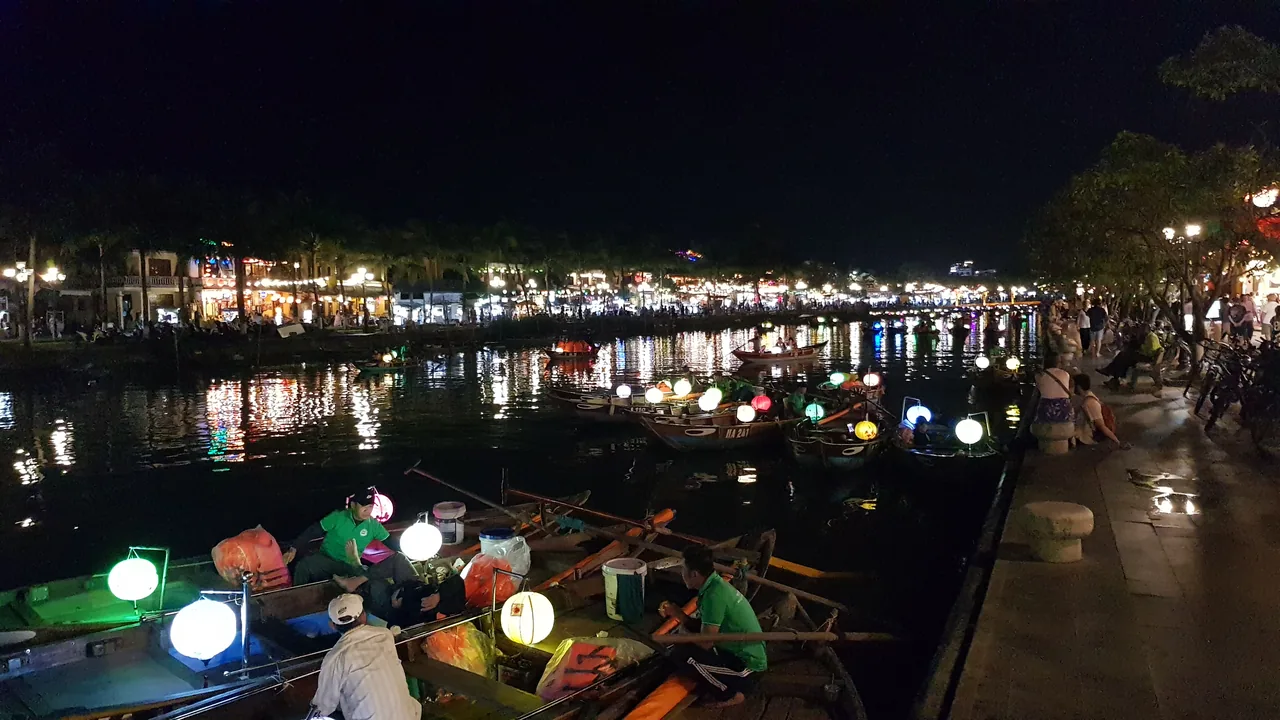
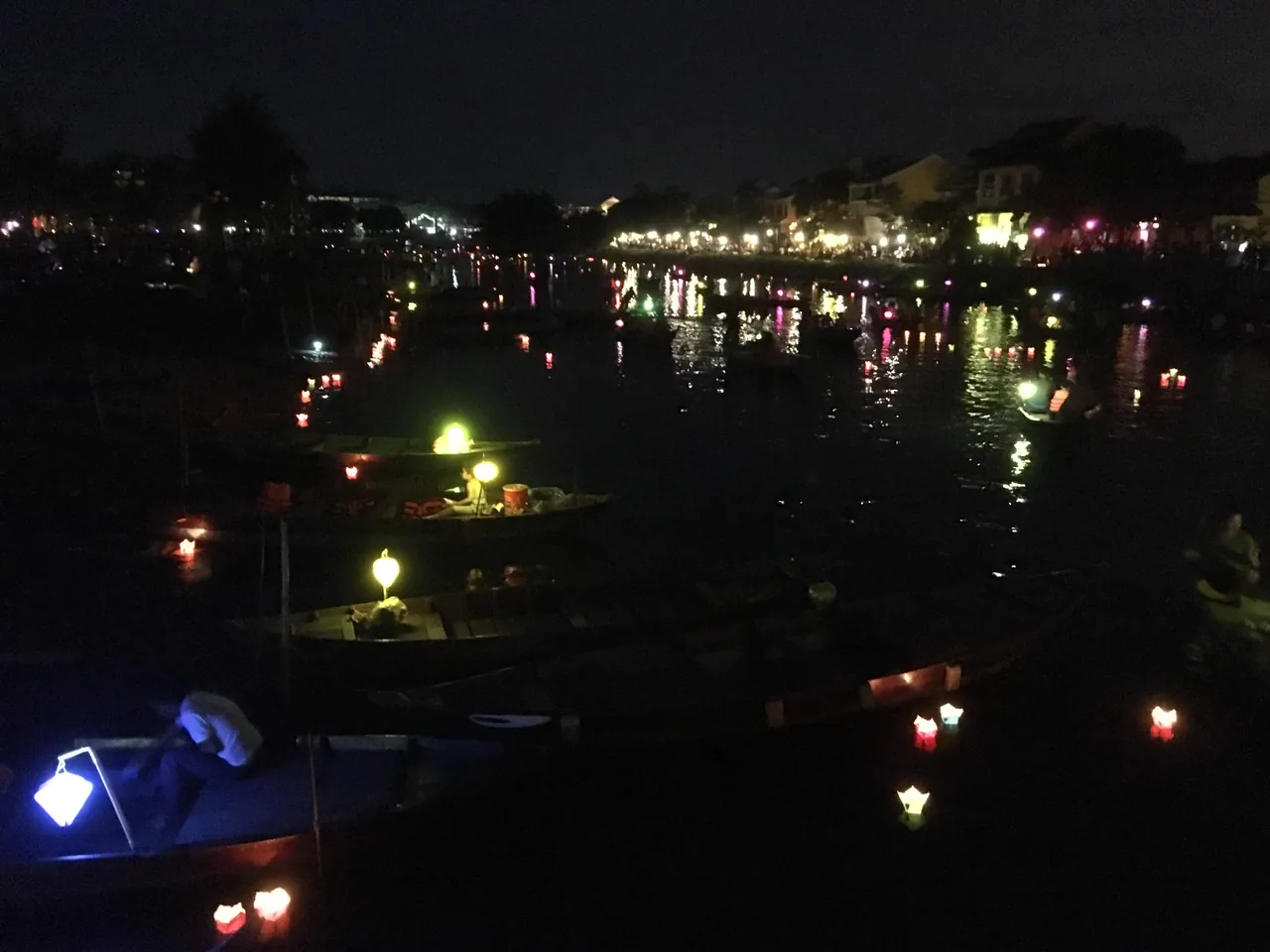
Evening is the busiest part of the Hoi An day, and the list of things to do in it is short: walk the lantern streets, take a boat, float a paper lantern, eat at the night market.
| What | When | Price |
|---|---|---|
| Lanterns lit | 17:30 to 18:00 | Free |
| Shared boat, 30 minutes | Peaks 18:30 to 20:00 | 100,000 to 150,000d per person |
| Small boat to yourselves | Same hours | 150,000 to 250,000d in total |
| Paper lantern | Riverside stalls | 5,000 to 10,000d each |
| Nguyen Hoang night market | 17:00 to 23:00 | Free to enter |
| Lantern making | 1 to 2 hours | 10 to 20 US dollars |
When to take the boat
Most boats are out between 18:30 and 20:00, which is also when the river is so full that every photograph has somebody else’s boat in it. For open water, go after 20:30.
Floating a lantern, step by step
1 Buy from a stall on Bach Dang or from the boat itself. Five to ten thousand dong each, a little less if you take several.
2 The boatman lights the candle.
3 Once you are out in the middle, set it on the water. Place it, do not throw it.
4 Watch it go. On a slack night it will simply sit beside the boat.
What the night market is for
Half food stalls, half lantern shops. Skewers, banh xeo and sweet che along one side, silk lanterns mixed in among them. Buy the collapsible lanterns if you want them to survive the flight home.
Many stalls have no prices displayed, so ask before you order. The same item gets quoted differently from stall to stall.
12. The 14th night of the lunar month
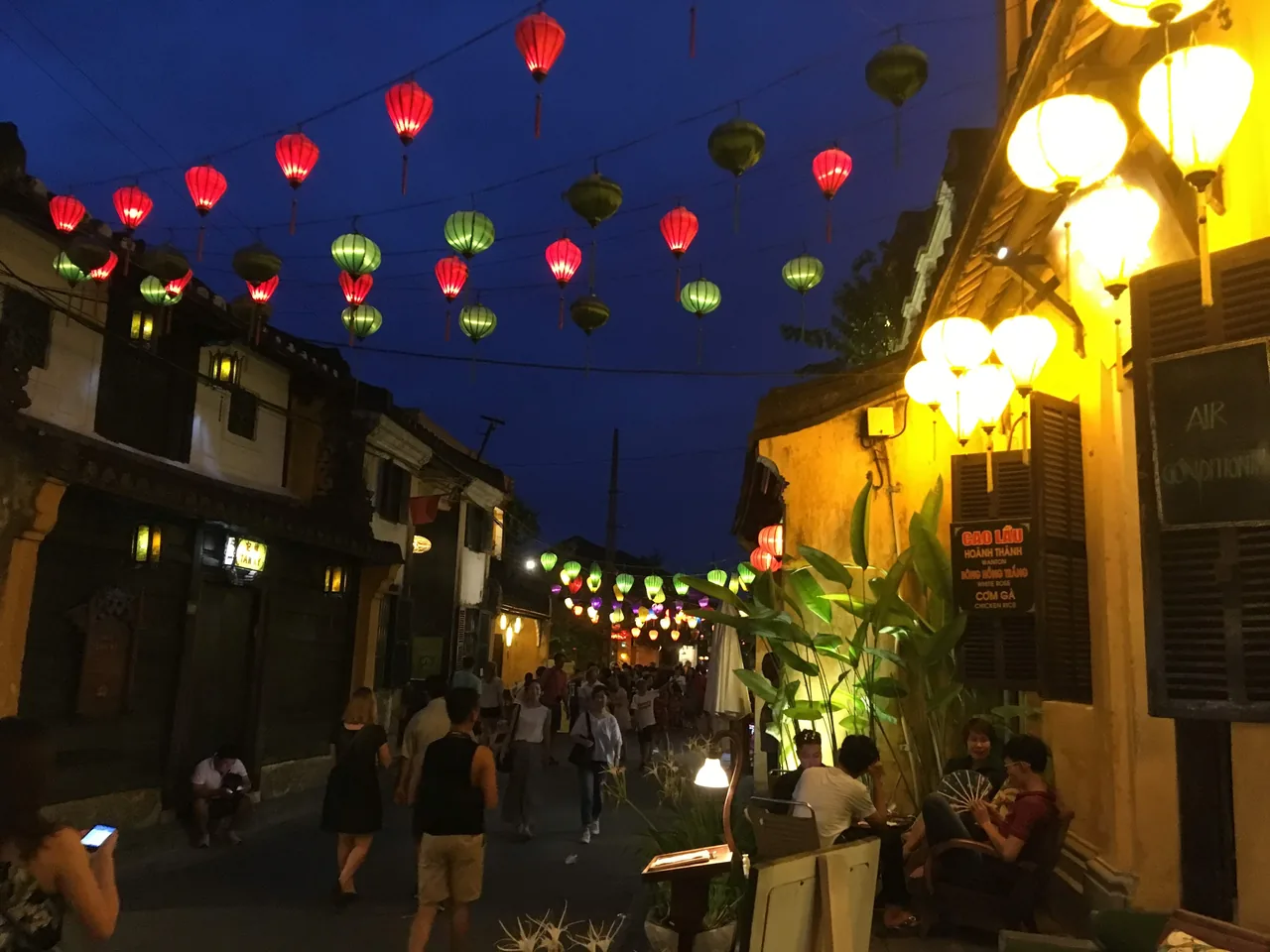
On the 14th of the lunar month, the night before the full moon, Hoi An switches off the electric lights and leaves only lanterns. The crowd is different from a normal evening and boat prices go up. Worth checking whether the date falls inside your trip.
The biggest night of 2026
Mid-Autumn in 2026 falls on Friday 25 September. That is the 15th of the eighth lunar month, so the lantern night is the evening before, 24 September. Lion dances and star-shaped children’s lanterns come out, and the atmosphere is not the usual one.
| A normal evening | The 14th night | |
|---|---|---|
| Street lighting | Shopfronts plus lanterns | Lanterns only |
| Crowd | Busy | Much busier |
| Boat | 100,000 to 150,000d per person | Higher again |
| Rooms | Available on the day | Book ahead |
| Photographs | Any lane will do | Claim a riverside spot early |
Working out the date
The full moon comes once a lunar month and the lantern night is the evening before it. In the Gregorian calendar the date moves every month, which makes it awkward to work out yourself. Start from Mid-Autumn 2026, which is 25 September: that is the 15th of the eighth lunar month, so 24 September is the lantern night for that month.
Other months land roughly 29 or 30 days either side. Confirm the exact date once your travel dates are fixed.
How the evening runs
The lanterns come on at dusk as they always do. What is different is that shops and street lights are switched off, so the lanes are darker than usual and only lantern light remains. Bai choi, a traditional call-and-response game, is set up on the riverbank, along with folk singing.
The dates and the running order are in the Hoi An lantern festival guide, and the festival itself in Mid-Autumn in Vietnam.
13. Tra Que vegetable village
Tra Que is three kilometres north of the Old Town, fifteen minutes by bicycle. It is a four-hundred-year-old organic market garden, and in 2024 UN Tourism named it one of its Best Tourism Villages. The village ticket is 35,000d per person and includes the field work.
Why it has to be a morning
The farming happens before the sun gets up. Leave the Old Town at 07:30 and you are standing in the beds by eight, which is when the watering and cutting actually happen. After ten it is too hot and the session shortens.
What you can attach to it
| What | Price | Time |
|---|---|---|
| Village ticket (entry plus field work) | 35,000d | 1 to 2 hours |
| Herbal foot soak | 5 to 10 US dollars | 30 minutes |
| Cooking class with harvest | 25 to 45 US dollars | Half a day |
| Bicycle hire | 25,000d a day | Often free from the hotel |
Getting there
North out of the Old Town, flat the whole way alongside paddies and the river, so a bicycle is no effort. Eight to ten minutes on a scooter, about ten in a car or a ride-hail.
The village runs to about forty hectares, with a hundred or so households growing more than forty herbs. They fertilise with weed dredged from the river, a method that has been going for over four centuries and is the reason for the 2024 listing.
What the field work involves
Hoeing the beds flat, sowing, carrying two watering cans on a shoulder pole, and cutting what is ready. The growers stand alongside and correct your grip. It runs thirty minutes to an hour, and if you have booked a cooking class the herbs you cut become the ingredients.
14. Basket boats at Cam Thanh
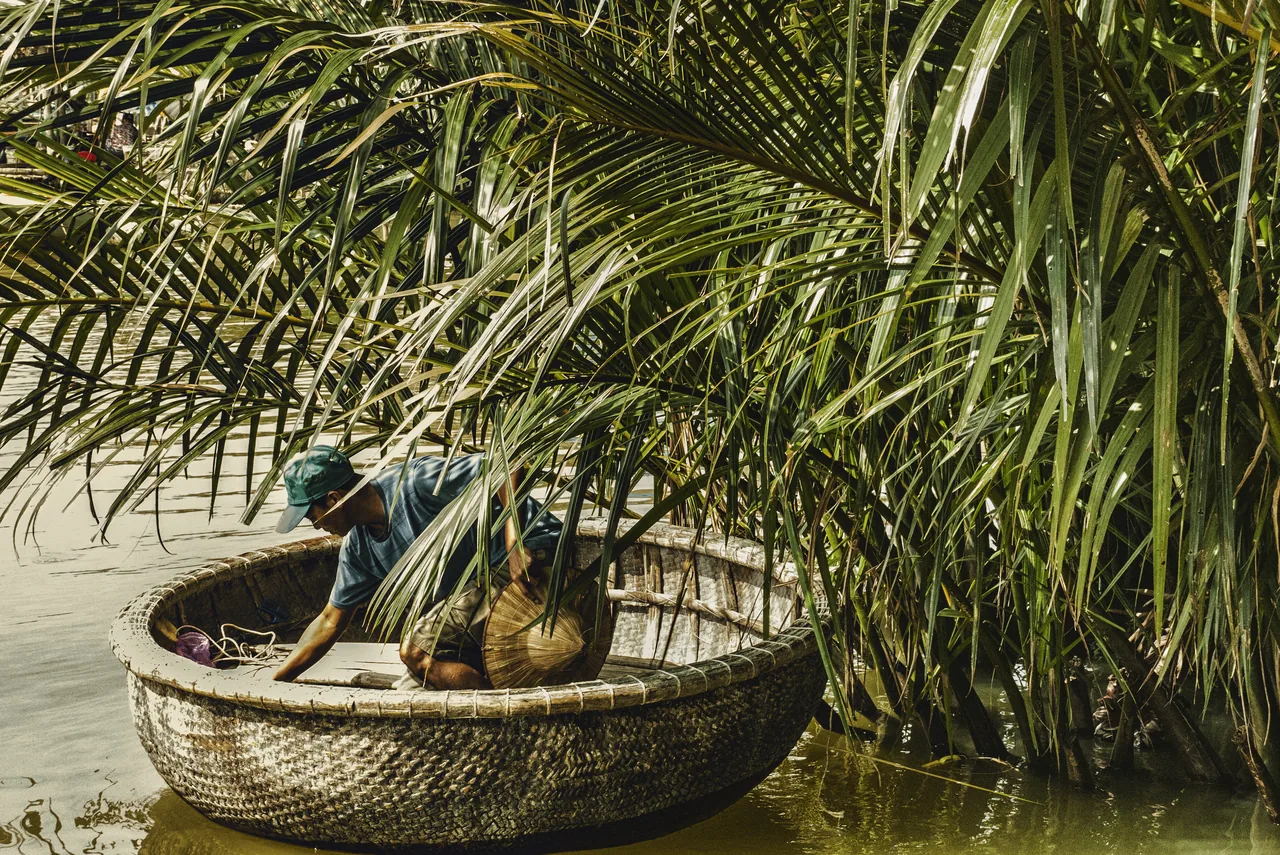
The Bay Mau water coconut palms at Cam Thanh sit three to five kilometres east of the Old Town, fifteen to twenty minutes by bicycle. You ride a round bamboo basket boat through narrow channels, and you are on the water for forty-five to sixty minutes.
Know the going rate before you arrive
At the jetty it is 80,000 to 100,000d per person, including entry to the palms. Touts on the road, and some hotels, will quote 150,000 to 400,000d. Same boat, same channels.
| Where you buy | Per person |
|---|---|
| Ticket window at the jetty | 80,000 to 100,000d |
| Booked online in advance | Around 90,000d |
| Street touts | 150,000 to 400,000d |
| Tip for the spinning act | 20,000 to 50,000d |
Choosing the hour matters more than the price
From 07:00 to 09:00 the water is still and no boat has a sound system running. Between 11:00 and 15:00 the coaches arrive and the channels fill with speakers. Late afternoon goes quiet again. Operating hours are 07:00 to 18:00 and the last boat is at 17:00.
What happens on the water
The boatman drives the boat with a single oar in a figure of eight. The practised ones can spin the boat on the spot, which is the act everyone photographs. The performer and the boatman both expect a tip, so have 20,000 to 50,000d ready.
Along the way they fold rings and grasshoppers from palm leaf, and let you try crab traps and cast nets. All of that only happens if you arrive before about 16:30.
15. An Bang beach
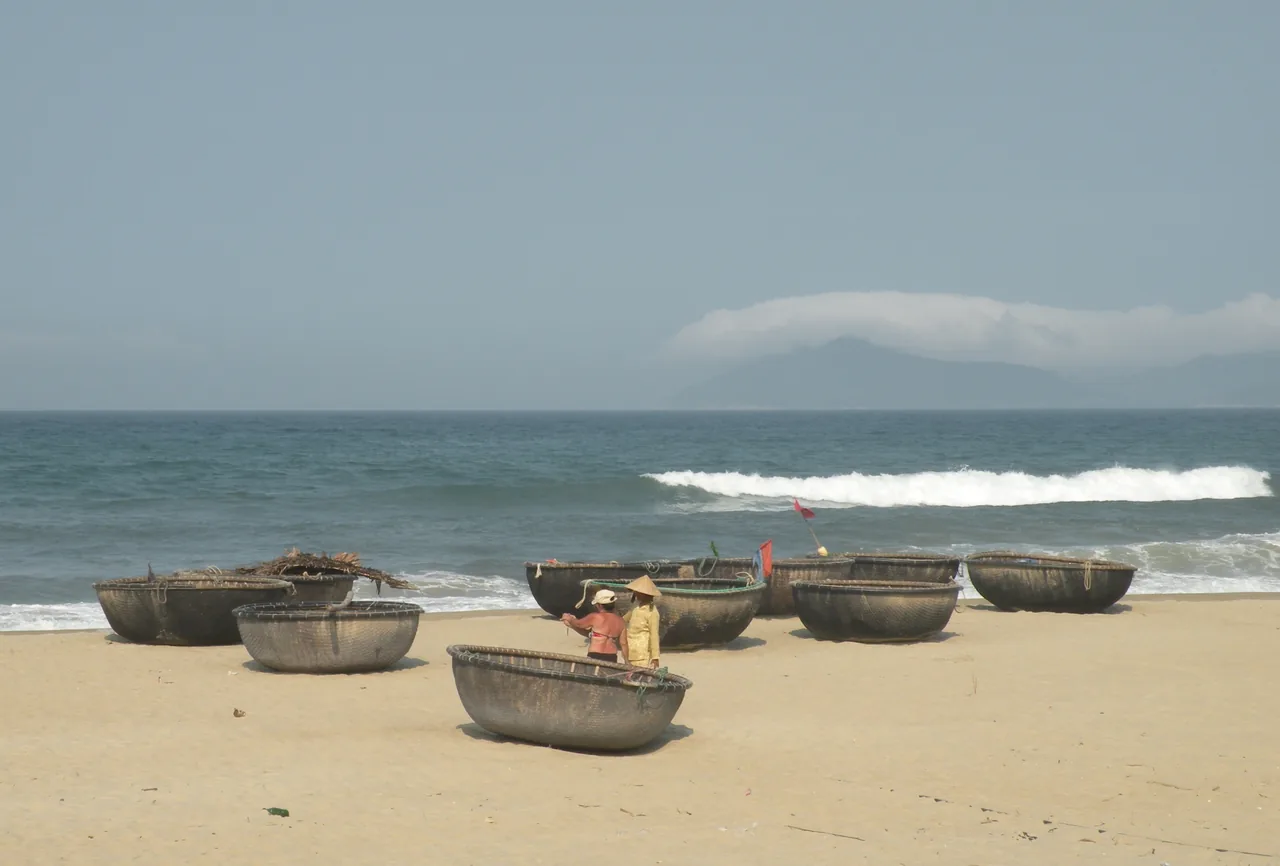
An Bang is four kilometres from the Old Town, fifteen minutes by bicycle, and in practice it is the only beach at Hoi An you would swim at. Cua Dai has been eroding since the 2010s and there is not much sand left.
What a sunbed costs
Order a drink or a meal at one of the beach cafes and most will let you use a bed for nothing. Otherwise it is around 50,000d, umbrella included.
When to go
| Season | The sea |
|---|---|
| February or March to August | Calm and good for swimming |
| September | Still warm but the swell picks up |
| October to November | Typhoons and heavy surf, and the beach bars lose their sand |
| December to January | Swimmable but windy |
Within the day, early morning is emptiest and after 16:00 is next. At midday there is not enough shade.
Why Cua Dai dropped off the list
Cua Dai lies five kilometres east of the Old Town and used to be the beach people went to. Erosion took most of the sand through the 2010s, and long stretches are now sea wall and sandbags. For swimming, go to An Bang.
Flags and currents
An Bang gets surf on plenty of days. Read the lifeguards’ flags before you go in. In October and November the swell strips sand from the beach bars, which are rebuilt before each season.
Eating on the beach
The beach cafes serve seafood and drinks. Since ordering there is what makes the sunbed free, the arrangement is really that you pay for your spot in food. Prices sit a little above the Old Town.
The differences between the beaches and the safety notes are in the Hoi An beach guide.
An Bang beach on the mapMap
16. Cooking classes
A Hoi An cooking class almost always starts at the morning market. You pick ingredients across the river, transfer by boat or road to Cam Thanh or Tra Que, cook, and eat what you made for lunch. Half a day, door to door.
08:00 to 08:30 Meet at the market and go through the ingredients and herbs.
09:00 Transfer. Plenty of classes include the basket boats in this leg.
10:00 Cooking starts, usually three or four dishes.
12:00 Lunch, which is what you cooked.
13:00 Finish. The whole afternoon is still yours.
What you cook
Fresh spring rolls, banh xeo and green papaya salad are the standards, and some classes add cao lau or white rose dumplings. White rose is fiddly enough that the dough is said to come from a single family in town, so a class where you fold them yourself takes some looking for.
How to choose one
| Check | Why |
|---|---|
| Does it include the market | Looking at ingredients is half the point |
| Does it include the basket boats | Saves booking them separately |
| How many dishes | Three or four is normal |
| Group size | Above ten you spend the class waiting your turn |
| Vegetarian options | Say so in advance and they swap ingredients |
Morning classes and afternoon classes
A morning class starts while the market is alive and finishes with lunch. An afternoon class finishes with dinner, which makes getting out for the lanterns that evening difficult. On a two-day trip, take the morning one.
More options are in the Hoi An cooking class guide and things worth booking in Hoi An.
17. Having clothes made
Having something made in Hoi An does not fit into one day. There are three visits, an order, a fitting and a collection, and there are usually one or two fittings.
Order on the day you arrive
On a two-day trip that means ordering on the first morning, fitting on the second afternoon and collecting that evening. Order on the first evening instead and day two disappears into trips back and forth to the shop.
| Trip length | Order | Fitting | Collection |
|---|---|---|---|
| One day | Morning | Same evening | Very tight |
| Two days | First morning | Second afternoon | Second evening |
| Three days | Day one | Day two | Day three, comfortably |
What to look at
The fabric decides the result far more than the name over the door. Within one shop the price can multiply several times over depending on the cloth. Try the finished garment, check the shoulders and the sleeve length, and pay after that.
| Decide | Detail |
|---|---|
| Fabric | The biggest single variable. Handle it before choosing |
| Lining | How a jacket feels comes largely from this |
| Trims | Usually chosen separately |
| Fitting time | Pin it down when you order |
| Alterations | Ask whether they will adjust after collection |
Most shops will copy from a photograph. The most reliable method of all is to bring a garment that already fits and ask them to take the pattern from it.
How to choose a shop and what commonly goes wrong is in the Hoi An tailoring guide.
18. My Son
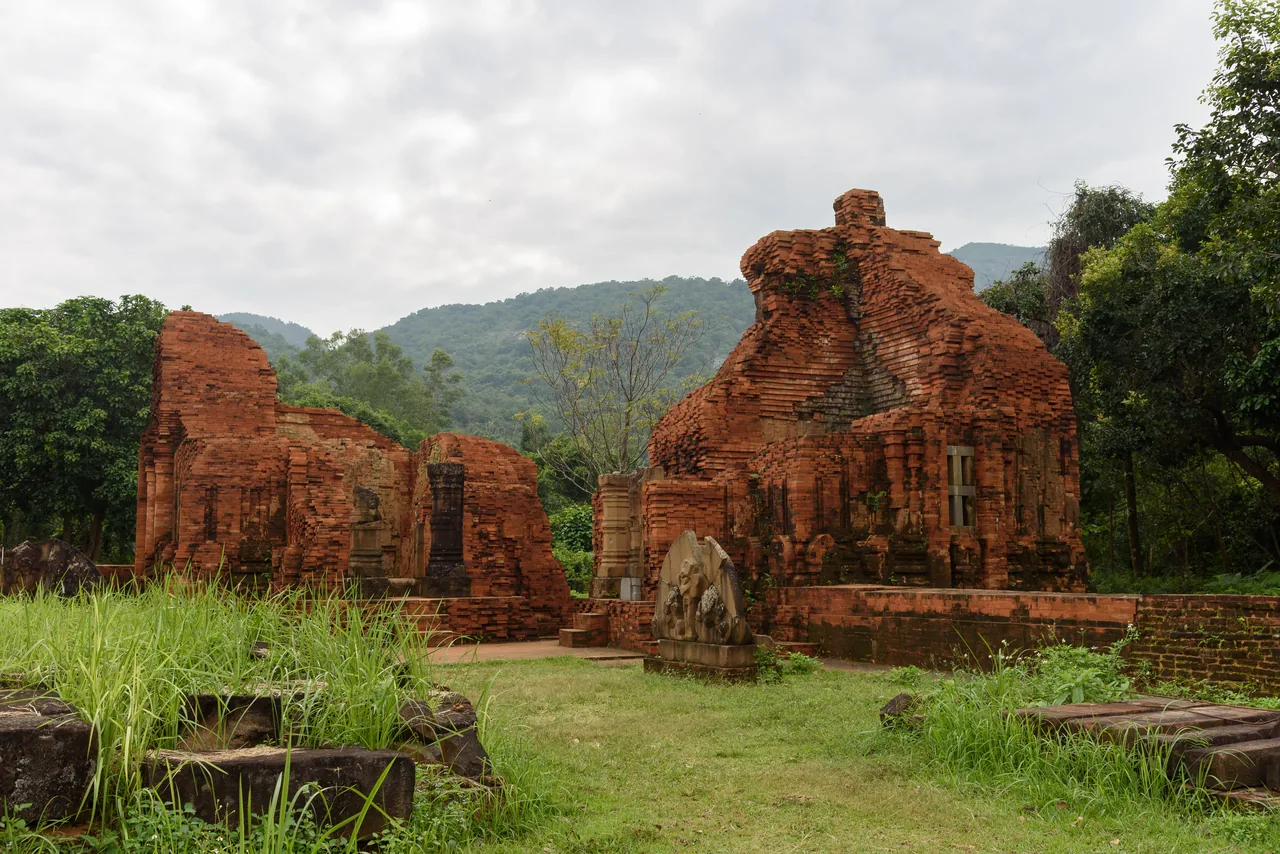
My Son is forty kilometres west of Hoi An, an hour by road. It is a complex of red brick Cham temples built between the fourth and thirteenth centuries, open from 06:00 to 17:00.
The entry fee changed in 2026
The rate now set is 40,000d per person, the same for Vietnamese and foreign visitors, in force since 21 February 2026. The management board’s own website still carries the 2019 schedule of 150,000d for foreigners and 100,000d for Vietnamese, so you may well see both figures.
Performance times
| What | When | Where |
|---|---|---|
| Apsara dance | 09:45, 10:30, 11:15, 14:00, 16:00 | Performance hall |
| Group G performance | 09:00, 14:45 | Group G towers |
| Cham folk singing | Mon, Wed, Fri 09:00 and 14:45 | Group H |
| “Echoes of My Son” | 15th of each month, 09:00 and 14:45 | Groups B, C and D |
Why the early start
There is almost no shade on the site and the coaches arrive after nine. The two kilometres from the gate to the temples is covered by electric shuttle. Arrive at 06:30 and you have two and a half hours with the towers to yourself before the first performance.
My Son received 431,538 visitors in 2025, of whom 392,461 were international. With foreign visitors outnumbering domestic ones roughly ten to one, the coach timetable is the crowd timetable.
The groups are lettered
A French survey team labelled the temple groups A to L in the early twentieth century and the labels stuck. Performances happen at Groups G and H. Groups B, C and D are the best preserved and the ones in most photographs. Group A was badly damaged during the Vietnam War.
How much walking
You walk between the groups once the shuttle drops you. The paths are part earth, part stone, with little shade. Covering the whole site takes an hour and a half to two hours, so bring water and a hat. In the wet season the ground turns to mud, so consider your shoes.
There is more in the My Son guide.
19. Cu Lao Cham
Cu Lao Cham is a group of eight islands fifteen kilometres off Hoi An, a UNESCO biosphere reserve, twenty minutes by speedboat from Cua Dai port.
One boat, in the morning
The speedboat generally leaves at 08:30 and returns in the afternoon. Miss it and you are not going that day. This is not an itinerary that survives a lie-in.
| Item | Detail |
|---|---|
| Marine park fee | 70,000d per person, from 10 June 2026 |
| Departure | Cua Dai port, 08:30 |
| Crossing | 20 minutes by speedboat |
| Season | March to September |
| From October | Cancellations become frequent |
| What you do | Snorkelling over coral, island beaches, a seafood lunch |
Rules on the island
As a biosphere reserve it bans plastic bags, and they are sometimes checked at the port, so take them out of your day bag first. Standing on coral or taking any is also prohibited.
Day trip or overnight
Almost everybody goes for the day. There are guesthouses on the island, but with one boat a day an overnight locks two days of your trip together. On a three-day trip the day version is the one that fits.
What there is to do out there is in the Cu Lao Cham day trip guide.

20. Getting in and out from Da Nang
Hoi An has neither an airport nor a railway station. It is thirty kilometres from Da Nang, forty-five minutes by road. Quang Nam province was merged into Da Nang city on 1 July 2025, so Hoi An is now administratively part of Da Nang, but the distance has not moved.
| How | Time | Cost |
|---|---|---|
| City bus route 1 | 1 to 1.5 hours, every 20 minutes | 18,000d end to end |
| Ride-hail or taxi | 45 minutes | 300,000 to 400,000d |
| Pre-booked private car | 45 minutes | 350,000 to 450,000d |
| Shared shuttle | About an hour | 100,000 to 150,000d |
| Motorbike | 50 to 60 minutes | 120,000 to 150,000d a day |
The number 1 bus
It runs from 05:30 to 17:50 at twenty-minute intervals and costs 18,000d for the full route. The Hoi An bus station is on Nguyen Tat Thanh in Cam Pho, a kilometre short of the Old Town. There is no bus after 18:00, so an evening of lanterns followed by a bus home is not a plan that exists.
Coast road or inland road
Drivers sometimes ask which you want. The coastal route runs Vo Nguyen Giap into Lac Long Quan, takes forty-five to fifty minutes and passes the Marble Mountains and the beach resorts. The inland route takes Highway 1 through Dien Ban in forty to forty-five minutes. On a first visit the coast road is worth the extra few minutes.
Coming straight from the airport
Da Nang International is about the same thirty kilometres and forty-five minutes away. On a late arrival, book the car in advance. Arrive very early and vehicles can still drive into the Old Town, so you get dropped at the door.
If you have a lot of luggage
Arriving during car-free hours at a hotel inside the Old Town means dragging cases from the main road, over paving that catches wheels. If you land at midday, leaving bags at the hotel and walking in later is an option.
Leaving day
If checkout leaves a gap before your flight, store the bags and do one more lap of the Old Town. Allow forty-five minutes to the airport and leave Hoi An three hours before departure.
The options are compared in the Da Nang to Hoi An guide, and what happens on arrival is in the Da Nang airport guide. Hiring a car with a driver for a day is covered in private car charter in Da Nang.
21. Pairing Hoi An with Da Nang
Very few people see only Hoi An. The airport is in Da Nang, so the two normally get combined, and where you sleep changes the shape of each day.
| Arrangement | What works | What does not |
|---|---|---|
| Base in Hoi An, day trip to Da Nang | Lanterns every evening | You never see Da Nang at night |
| Base in Da Nang, day trip to Hoi An | Close to the airport | No cars to be had at ten at night |
| Split the nights | Both places after dark | You move luggage once |
A day in Da Nang
The Marble Mountains are twenty minutes from Hoi An and My Khe beach is thirty. Climbing the Marble Mountains in the morning, the beach in the afternoon and the Dragon Bridge fire show in the evening before heading back fits comfortably. The fire show runs on Friday, Saturday, Sunday and public holidays at 21:00.
Splitting four days
| Day | Hoi An first | Da Nang first |
|---|---|---|
| 1 | Hoi An Old Town | Arrive Da Nang, My Khe beach |
| 2 | Tra Que, Cam Thanh, An Bang | Marble Mountains and the Dragon Bridge |
| 3 | Move to Da Nang, Marble Mountains | Move to Hoi An, Old Town |
| 4 | Da Nang beach, fly out | Tra Que and An Bang, fly out |
With the airport in Da Nang, spending the last night there makes the final morning easier. The reverse means a forty-five minute drive at dawn.
Adding Ba Na Hills
Ba Na Hills is west of Da Nang, so from Hoi An it is over ninety minutes each way. Basing yourself in Hoi An and going there loses a full day to the road. If it is on your list, attach it to a Da Nang night instead.
Prices and cable car times are in the Ba Na Hills and Golden Bridge guide.
The city as a whole is in the Da Nang travel guide, what to do there is in things to do in Da Nang, a longer stay is in the Da Nang three-night itinerary, and the caves are in the Marble Mountains guide.
22. Where to stay
Hoi An accommodation divides into three areas, and which one you pick changes whether you make an extra return trip every evening.
| Area | To the Old Town | Suits |
|---|---|---|
| In and around the Old Town | 5 to 10 minutes on foot | Anyone who wants the lanterns every night |
| An Bang beach | 15 minutes by bicycle | Anyone spending days in the sea |
| Cam Thanh and the paddies | 10 to 15 minutes by bicycle | Anyone who wants a quiet morning |
Staying inside the Old Town has one restriction
No vehicles between 09:00 and 21:30. Check in or out during those hours and you are walking your luggage from the main road. If your case is large, check this before booking.
Staying at the beach
From An Bang you come into town and back every evening. It is fifteen minutes by bicycle, but some stretches have very little street lighting after dark. Most hotels run an evening shuttle, so ask for the times before you book.
When to book
Normally a few days ahead is enough. The 14th night of the lunar month, Mid-Autumn and the Tet holiday need booking early. February to April is the most settled weather of the year and fills up quickly too.
What hotels lend you
Free bicycles, in a lot of cases. If you are at An Bang, whether there is an evening shuttle and what time it runs will shape your evenings more than anything else about the room.
The areas are compared in the Hoi An accommodation guide, and luggage storage is in storing bags in Hoi An and Da Nang.
23. Getting around town
Inside the Old Town you walk. The lanes are one bicycle wide, taxis cannot get in, and during car-free hours motorbikes cannot either.
Bicycles
Many hotels lend them free and hire is about 25,000d a day. Tra Que, Cam Thanh and An Bang are all within cycling distance, so on a two-day trip one bicycle solves most of the transport question.
Ride-hail and taxis
They come to the edge of the Old Town and no further. Set a destination inside it and the driver will drop you on the main road. Around ten at night everybody leaves at once, cars get scarce and prices rise.
Parking a motorbike
Motorbikes go in paid parking outside the Old Town, 5,000 to 10,000d. Park and walk in; there is no other arrangement.
Cycling at night
Some of the paddy lanes are narrow with no barrier, and street lighting is sparse, so getting back before dark is the sensible version. Lock the bicycle when you leave it.
Renting a scooter
Some people ride down from Da Nang. Since you have to park it anyway, a bicycle covers everything if you are staying inside Hoi An. Rental and licence rules are in the scooter rental guide.
More is in getting around Hoi An and ride-hailing apps in Vietnam.
An Hoi bridge on the mapMap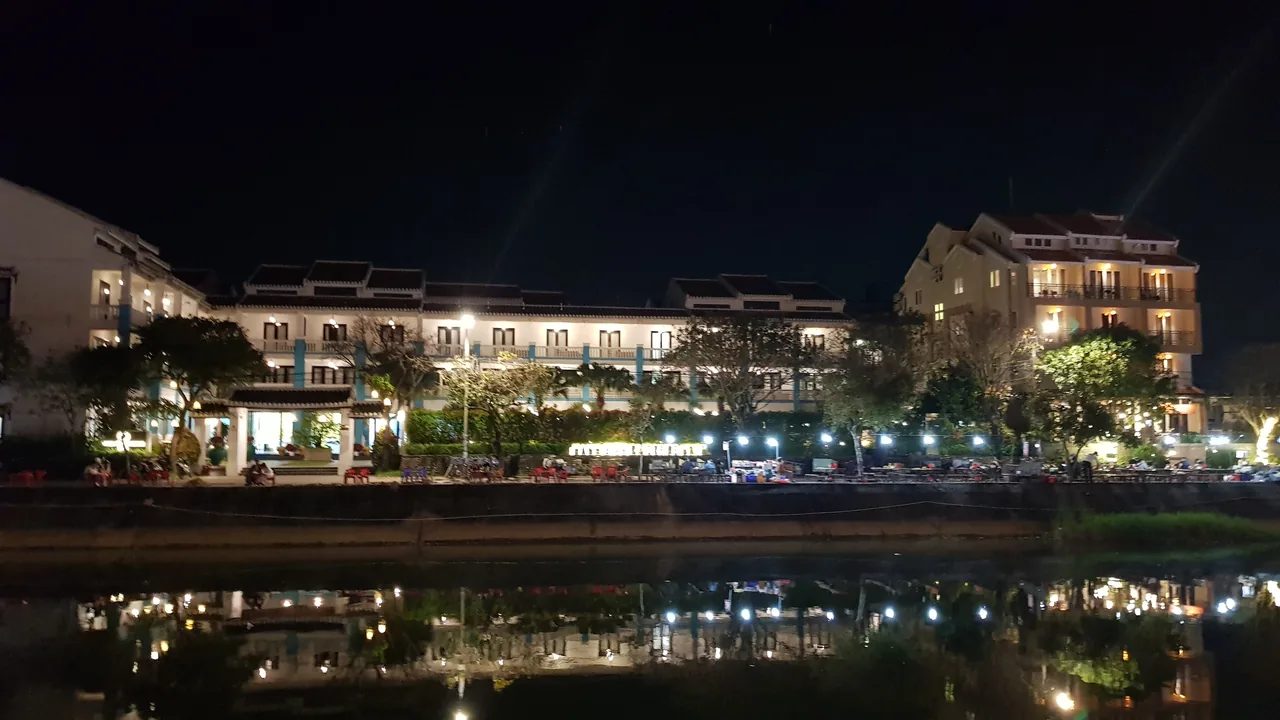
24. October and November
The Thu Bon river floods Hoi An in October and November. It happens every year, and in a bad one the riverside streets of the Old Town go under. Visiting then means ordering the trip differently.
The order the water arrives in
Bach Dang on the riverbank goes first, then Nguyen Thai Hoc, working inward one row at a time. Some old houses have the height of past floods marked on the columns, so you can see which year reached where.
| Affected | What happens |
|---|---|
| River boats | Stop running once the water rises |
| Cu Lao Cham | Cancellations from October |
| Lantern festival | May be scaled back or called off |
| Old houses and halls | Flooded blocks close temporarily |
| An Bang beach | Sand and beach bars are washed away |
| My Son | Generally open in the rain |
When the water is up
Riverside shops shut and boats ferry people along the streets. It looks like a spectacle, but the water is dirty and you cannot see the bottom, so wading in is a bad idea. A hotel two rows back from the river is usually unaffected.
The water normally drains within one to three days, after which shops clean out and reopen. Watching the forecast and shifting a day or two often saves the whole itinerary.
What is good about this season
Fewer people and lower room rates. On an evening after the rain stops, lantern light on wet paving photographs better than it ever does in the dry. Go expecting rain and you get a quiet Hoi An.
How the water rises and how long it takes to drain is in the Hoi An flooding guide. The Da Nang typhoon season is in Da Nang’s rainy and typhoon season, and wet weather alternatives are in what to do in Da Nang when it rains.
25. Where the meals go
A handful of dishes exist only here. Two meals a day across two days covers most of them.
| Dish | When | Where |
|---|---|---|
| Cao lau | Lunch | Noodle shops in the Old Town |
| White rose dumplings (banh vac) | Lunch or dinner | Old Town |
| Fried wontons | Dinner | Old Town |
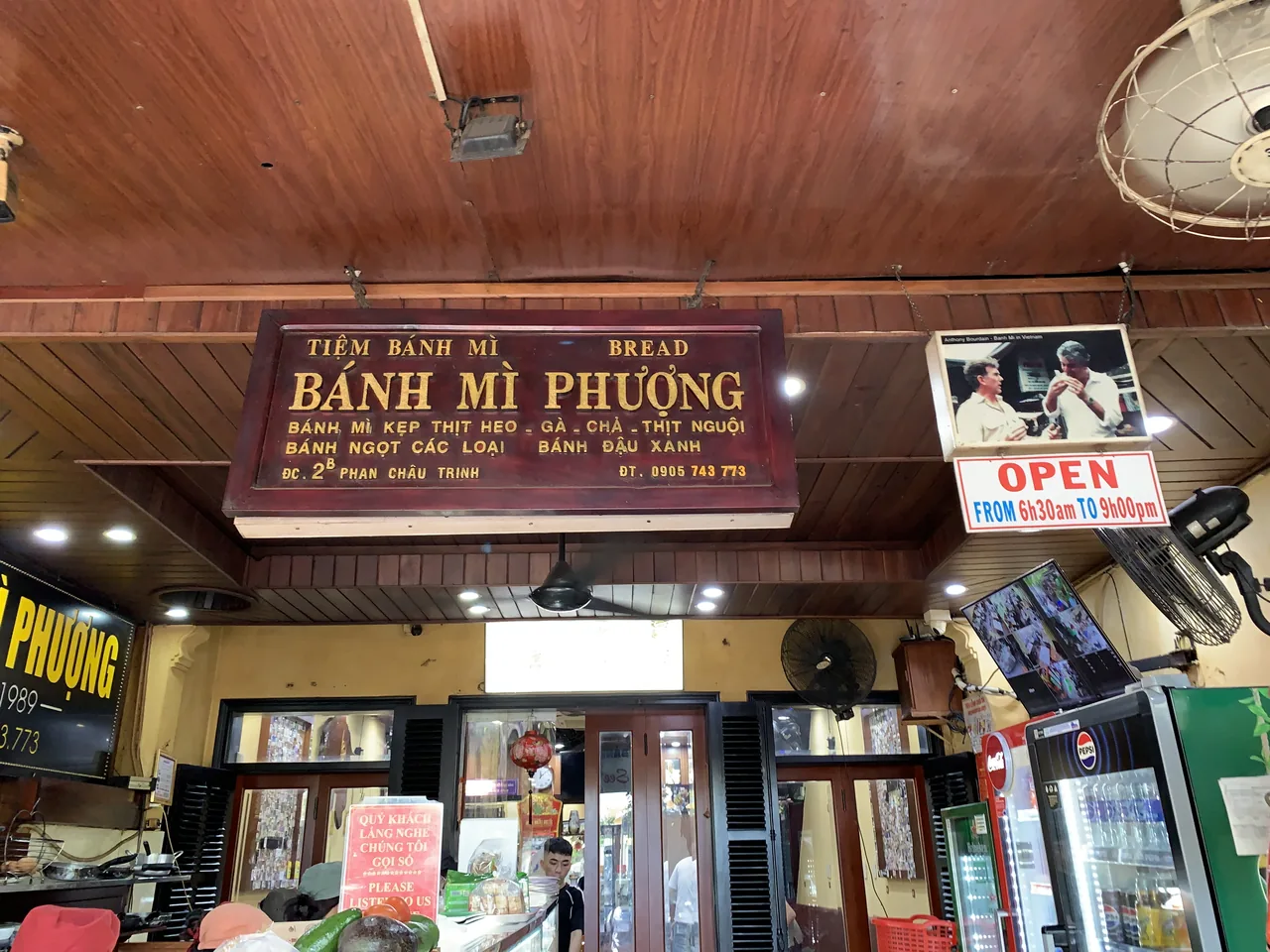
| Banh mi | Breakfast or lunch | Banh Mi Phuong and others |
| Com ga (chicken rice) | Lunch | Old Town lanes |
| Che bap (sweet corn pudding) | Afternoon | Street stalls |
Take lunch indoors
Midday to three is the hottest stretch. Spending it in a noodle shop or an air-conditioned museum makes the rest of the afternoon workable. Pushing your outdoor hours into the morning and the evening is simply how Hoi An works.
Breakfast
Even with breakfast included at the hotel, eat out once. The noodles and banh mi at the morning market are the freshest thing going. Seven to eight is when the market is alive, and at that hour the Old Town lanes are still quiet.
Why cao lau exists only here
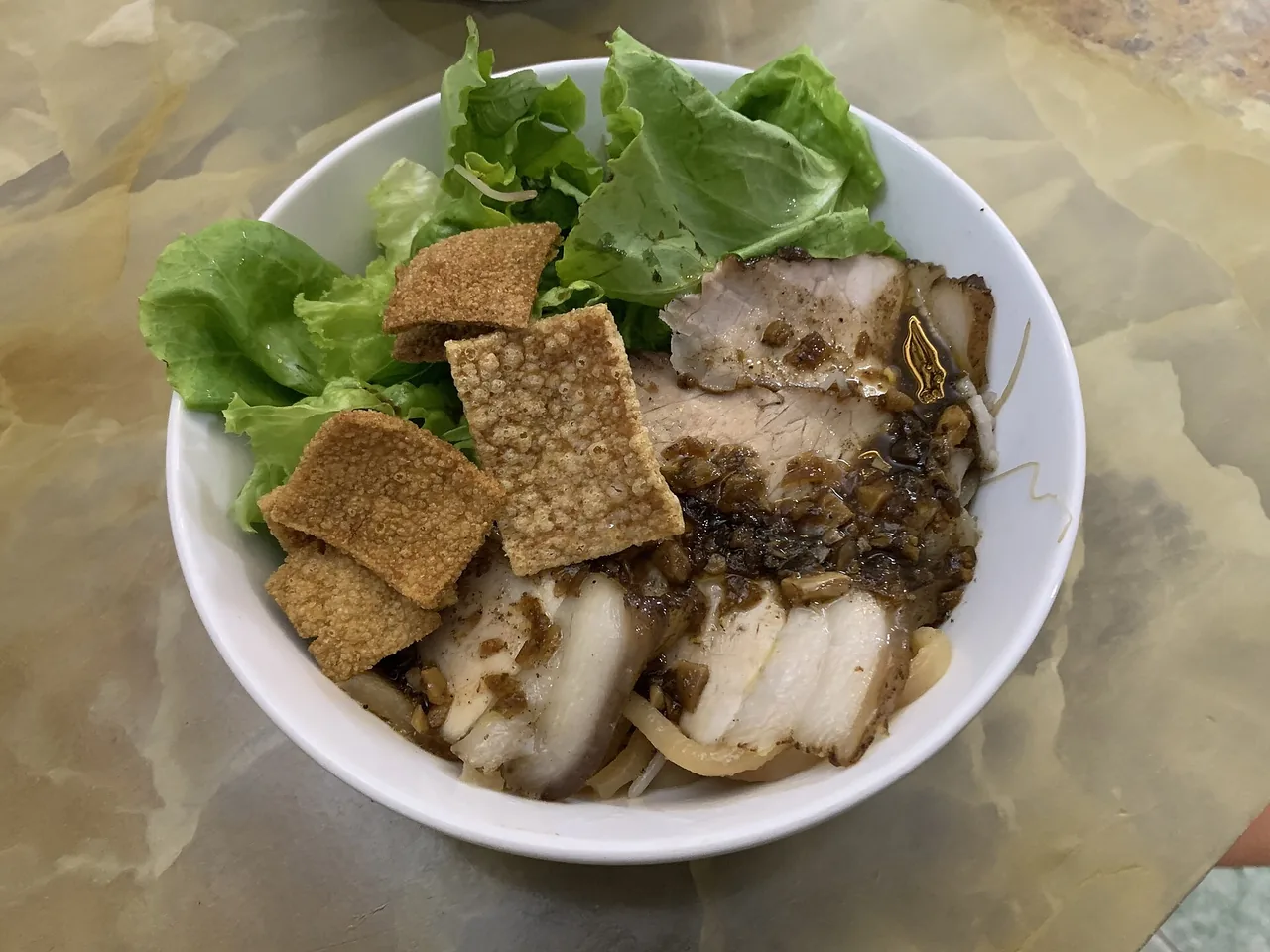
The noodles are said to require water from particular wells and lye from wood ash, which is why places elsewhere sell the name but not the texture. Thick, chewy noodles under pork, greens and crisp squares of fried dough.
Food tours
If you would rather not spend the evening choosing between shops, an evening food tour handles it. Three or four stops with a little at each avoids the problem of filling up at the first one.
What to eat and where is in the Hoi An food guide.
26. What it costs
Take accommodation out and Hoi An is inexpensive. Tickets, transport and meals make up most of it, and only the day-trip days move the total.
| Item | Per person |
|---|---|
| Old Town bundle ticket | 80,000 to 120,000d, valid three days |
| Bicycle for a day | 25,000d, or free |
| Tra Que village ticket | 35,000d |
| Basket boat | 80,000 to 100,000d |
| River boat, 30 minutes | 100,000 to 150,000d |
| Paper lantern | 5,000 to 10,000d |
| Sunbed at An Bang | 50,000d, or order at the cafe |
| A bowl of noodles | 40,000 to 70,000d |
| My Son entry | 40,000d |
| Cu Lao Cham marine park | 70,000d |
Totals by trip length
| Trip | Per person, no accommodation | The big items |
|---|---|---|
| One day | 400,000 to 600,000d | Ticket, boat, three meals |
| Two days | 700,000 to 1,100,000d | Plus bicycle, basket boat, Tra Que |
| Three days with My Son | 1,100,000 to 1,700,000d | Plus tour transport and entry |
| Three days with Cu Lao Cham | 1,300,000 to 2,000,000d | Plus boat, gear and lunch |
Booking a tour bundles the transport, entry and lunch, which makes the arithmetic simple. Arranging your own car comes out a little cheaper and takes more of your time.
Budgets covering Da Nang as well are in Da Nang and Hoi An trip costs, and money and payment in changing money and paying in Vietnam.
27. Where the price arguments happen
Disagreements about money in Hoi An happen in a small number of predictable places. Knowing them in advance removes most of the problem.
| Where | What happens | What to do |
|---|---|---|
| Basket boat touts | Two or three times the jetty price | Buy at the jetty window |
| River boats | Unclear whether the price is per person or per boat | Agree headcount and total before boarding |
| Night market | No prices displayed | Ask before you pick anything up |
| Cyclos | Neither duration nor route is fixed | Settle minutes and price first |
| Tailors | Fabric grade changes the total | Choose the cloth, then have the total written down |
| Old Town tickets | The old nationality price gets quoted | Read the board at the booth |
Cash and change
Stalls and the boat jetty mostly take cash only. Handing over a 500,000d note often produces no change, so keep a mix of 100,000 and below. The notes are similar in colour and 20,000 and 500,000 are easy to confuse.
Tipping
Tipping is not expected in Vietnam. The exceptions in practice are the basket boat spinning act and massages, where 20,000 to 50,000d has become customary. Restaurants do not need it.
Common schemes and how to handle them are in what to watch for in Vietnam, and tipping and etiquette in Vietnamese etiquette and tipping.
28. With children and with older parents
Hoi An is small enough that neither is difficult. Plan around the midday heat and the surface of the lanes.
With children
Under-16s are free in the Old Town. The basket boats and An Bang get the best reactions, and some cooking schools run a version for children. Going out before 19:00 keeps you out of the worst of the evening crush.
With older parents
The lanes are uneven and have thresholds and steps. With a pushchair or a wheelchair, the wider riverside streets are the ones to use. The over-60 exemption applies to Vietnamese nationals only, so buy tickets for everyone.
| Time of day | What to change |
|---|---|
| Morning | One site, not two |
| Midday to 15:00 | Back at the hotel |
| Afternoon | A museum or a cafe, somewhere to sit |
| Evening | Out before 19:00 and back before 21:00 |
Pushchairs and wheelchairs
The lanes are broadly flat but the pavements are narrow and shops put stock outside. Bach Dang along the river and Nguyen Thai Hoc are the easier ones. The old houses and assembly halls have high thresholds and steps, so getting inside is often not practical.
What children actually enjoy
Basket boats first, then An Bang, then floating a paper lantern. Keep assembly halls and museums to one, and keep it short. The night market is crowded enough that going before 19:00 makes keeping hold of a small hand much easier.
More on travelling with children is in Da Nang and Hoi An with kids, and on travelling with parents in Da Nang with elderly parents.
29. Before you go
Very little about a Hoi An trip needs deciding in advance. Most of it can wait until the morning.
Book ahead A My Son or Cu Lao Cham trip, a cooking class, and the car from Da Nang airport.
Do on arrival day Place any tailoring order, and buy the Old Town ticket.
Decide on the day Which halls and houses to see, whether to take a boat, whether to go to the beach.
Just check Whether the 14th of the lunar month falls in your dates, and the rain forecast if you are travelling in October or November.
Cash and cards
Old Town tickets, the night market and the basket boat jetty are easiest in cash. Tailors and restaurants generally take cards.
Data
You will have a map open constantly in the lanes, so mobile data is worth having. An eSIM installed before you fly means no queue at the airport counter.
Entry and packing
Entry paperwork is in Vietnam visas and e-visas. The sun is strong, so a hat and sunscreen earn their space, and a light rain layer in the wet season. You will be walking on uneven paving, so bring shoes you have already broken in.
When to come is in the best time to visit Da Nang and Hoi An, the wider picture is in the Hoi An travel guide, and the sights themselves are in things to do in Hoi An.