
Where to Stay in Mui Ne: Beachfront, Across the Road, and What Each Stretch Is Like
Mui Ne hotels are strung along one coastal road, but plot them by coordinate and only 35 of 231 sit between the road and the sea. The rest are across the road, and that same beachfront stretch is where erosion has put sea walls in front of the sand. This is what each section is like, what actually moves the price, and what to check on the map before you book.
| Beachfront is rare | Of 231 properties plotted by coordinate, 35 sit within 80m of the shoreline. |
|---|---|
| Most are across the road | 141 sit 80 to 250m back, and 55 are further inland again. |
| The walled stretch | The eroding 10km of coast contains 149 of those properties. |
| Where the density is | Ham Tien holds 142; the fishing village and Hon Rom together hold 34. |
| High season | November to April, with three- to five-star occupancy running 85 to 95 percent. |
| Town is not the beach | Phan Thiet hotels sit 24km from the strip, about 24 minutes by car. |
1. Only 35 properties are actually on the sea
2. That beachfront stretch is the walled one
3. Ham Tien: the eight kilometres where the rooms are
4. Phu Hai and Sea Links: quieter, larger, further out
5. The fishing village and north of Hon Rom: quiet, and far from everything
6. Phan Thiet town is a different proposition
7. The big complexes south-west of town
8. What actually moves the price
9. If you are coming to kitesurf
10. With children
11. Three things to check on the map before booking
12. How far everything is from your room
13. Arrival time changes the plan
14. Matching nights to stretches
15. Common mistakes
16. 🌊 More Vietnam guides
1. Only 35 properties are actually on the sea
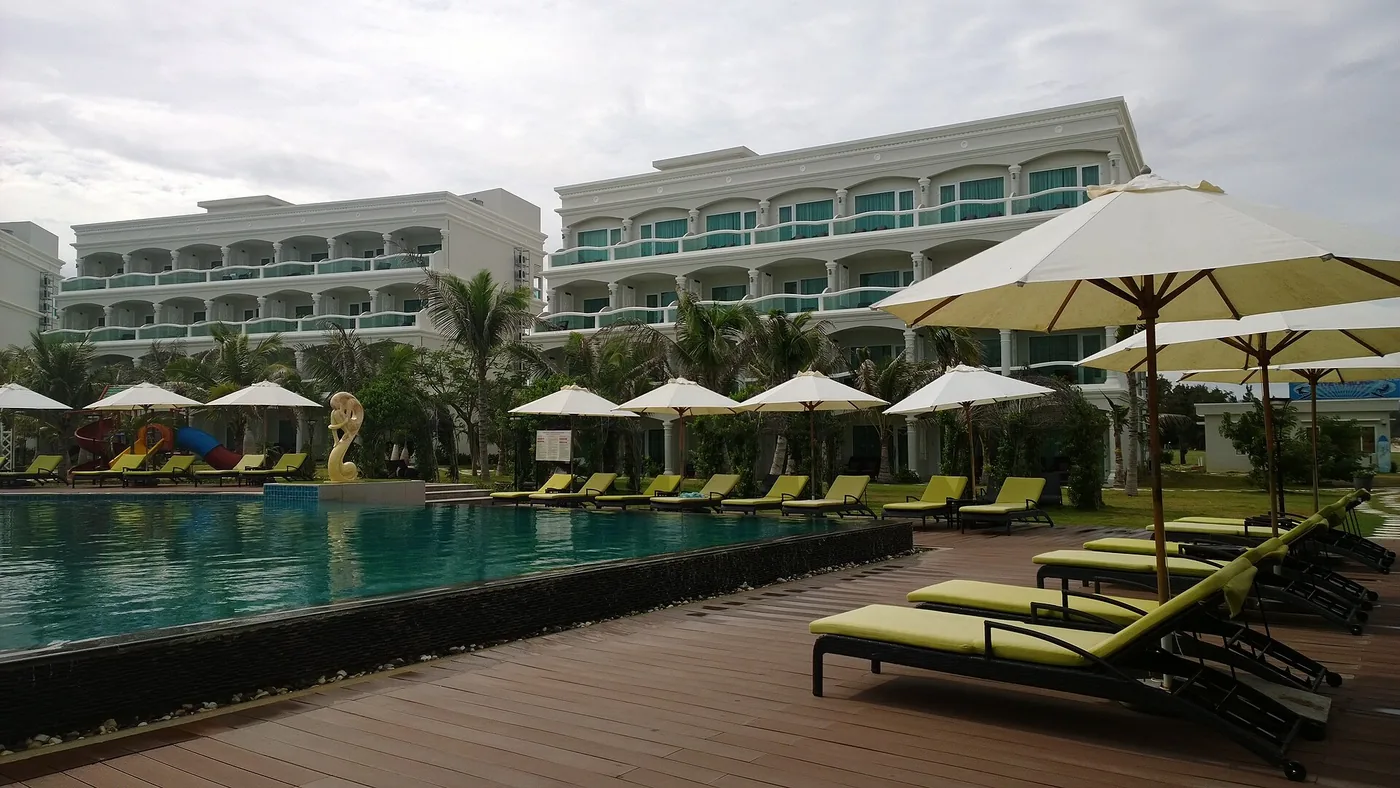
Mui Ne accommodation runs along one coastal road. Plot it by coordinate and measure the distance to the shoreline, and of 231 properties only 35 sit within 80 metres of the water. A further 141 are across the road, and 55 are further back again. Photographs do not show you which one you are booking.
By distance to the shoreline
| Band | Properties | What that means on the ground |
|---|---|---|
| Sea side, within 80m | 35 | You step from the grounds onto the sand |
| Across the road, 80–250m | 141 | You cross the road and pass through someone else’s beach |
| Inland, beyond 250m | 55 | Five minutes or more on foot to the water |
The split matters here more than in most beach towns, because almost every route to the sand runs through a property. Public access points are few, so from across the road you end up checking the route each time.
Price follows the same line. At the same star rating, sea-side rooms sit noticeably higher and the ones over the road drop a band. Over three nights for two people the difference can be the price of a flight.
Within the same eight kilometres the feel still varies. Where the road hugs the shoreline you see water from the room; where it curves inland, the same distance puts buildings in the way.
Here is how the count was made: take the coordinates of every mapped property, compute the shortest distance to the coastline, and drop entries whose name is only a plot number. Of 514 entries, 283 were plot numbers, which leaves 231.
One more thing the count shows: the sea-side properties are not spread evenly. Thirty-three of the thirty-five are in a single stretch, which is also the stretch with the sea walls, so the two questions collapse into one.
The town is bigger than that number suggests. Official figures for the tourism area give more than 600 properties and around 18,000 rooms. The 231 are the ones whose position is unambiguous; the rest are small guest rooms and rentals.
2. That beachfront stretch is the walled one
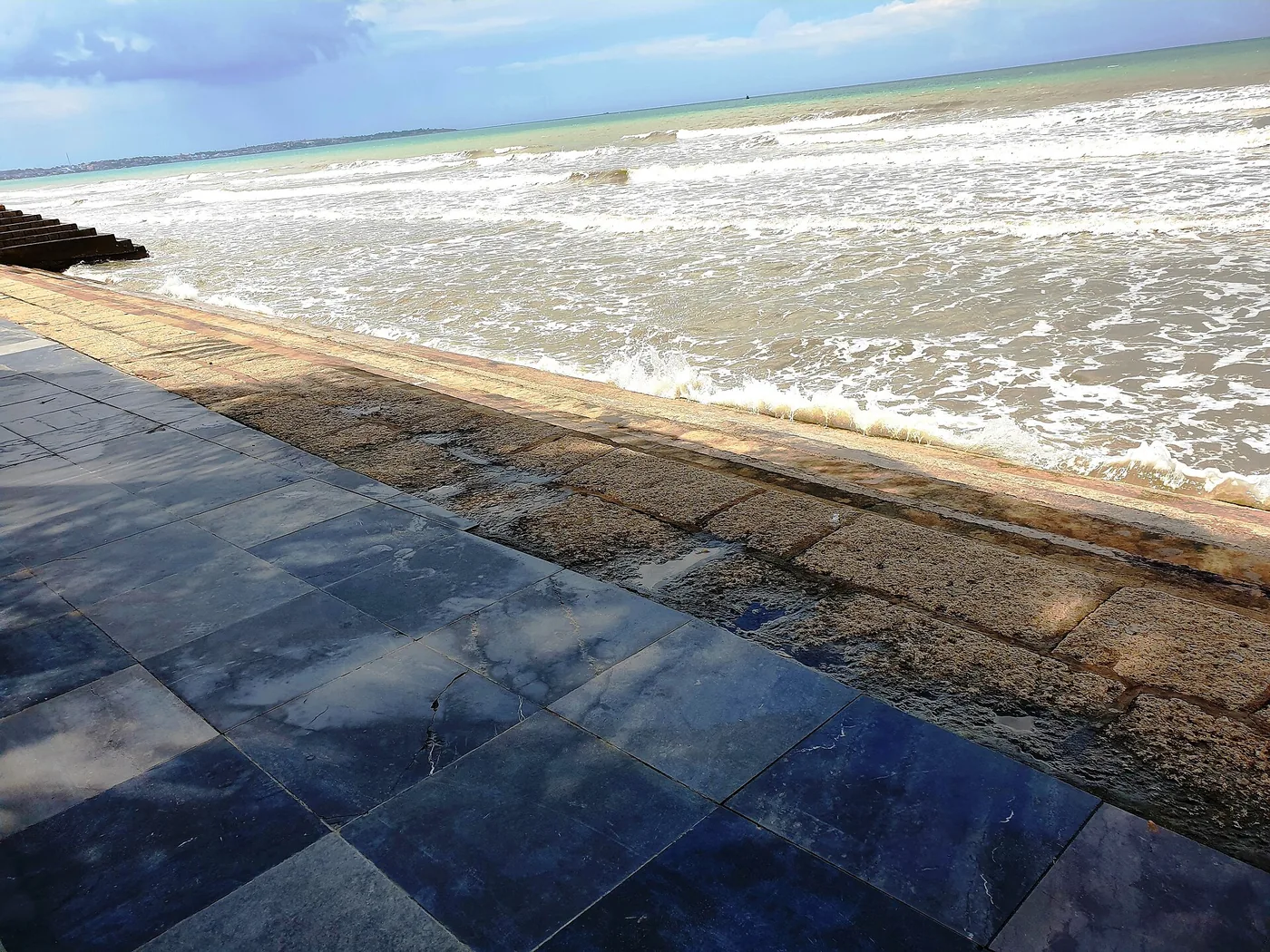
Mui Ne beach is eroding. The affected coast runs about 10km, from the Ong Dia rock beach to the Bo De fishing port, and 149 of the properties we mapped sit inside it. Thirty-three of those are on the sea side.
As the water reached the buildings, operators put in their own defences. Some laid sand-filled geotextile tubes more than 20 metres long and over 1.5 metres high; others used concrete or rock gabions. The head of the Binh Thuan tourism association said each property built to its own design, uncoordinated, at its own expense. The result is a beach that changes character every few hundred metres.
The numbers
| Item | Detail |
|---|---|
| Eroding stretch | About 10km, Ong Dia rock beach to Bo De fishing port |
| Properties inside it | 149, of which 33 are sea-side |
| Temporary barriers | Sand tubes over 20m long, more than 1.5m high |
| Provincial guidance | Lam Dong issued technical rules for temporary sand-tube walls from July 2025 |
| Study | A causes-and-restoration study is due to finish at the end of 2026 |
What happened in November 2025
A storm surge on 27 and 28 November damaged the wall. On the 28th the Mui Ne ward authority suspended trading between numbers 165 and 177 on Nguyen Dinh Chieu and ordered structures standing on the wall to be dismantled by 30 November. The section at risk of collapse ran about 500 metres, and the wall that failed had been built in 2003.
None of this is a reason to stay away. It is a reason to treat “beachfront” as a claim to check. On the same street some properties still have wide sand and others have waves breaking against concrete.
The type of barrier matters too. A sand tube is low enough to sit on; concrete and rock gabions are hard to walk over. What sits in front of a property changes how you actually get into the water.
Access has changed with it. Where a wall runs along the front, some properties now reach the water by a set of steps rather than a slope, which matters if you are carrying a board or a small child.
Satellite imagery usually settles it before you book. A pale band of sand running in front of the grounds means beach; a dark line hard against the water means a wall. Recent guest photographs say the same thing.
3. Ham Tien: the eight kilometres where the rooms are
More than half of Mui Ne’s accommodation is in Ham Tien: 142 of our 231, and 33 of the 35 sea-side properties. The official count puts 53 resorts along the eight kilometres of Nguyen Dinh Chieu.
The reason this stretch works is simple. Restaurants, shops and kite schools are on the same road, so you can walk to dinner. For a first visit it is usually the right answer.
What still varies inside Ham Tien
| Band | Properties | Notes |
|---|---|---|
| Sea side | 33 | Beach or wall, depending on the stretch |
| Across the road | 89 | A price band lower; you walk to the sand |
| Inland | 20 | Quiet and cheap, but the walk back is dark |
The graded properties give you fixed points: Anantara Mui Ne at five stars, Terracotta Resort, Sailing Club Resort and Swiss Village at four, Four Oceans at three. All of them sit on Nguyen Dinh Chieu at different house numbers.
Those numbers are a rough map in themselves. Nguyen Dinh Chieu starts at the Phan Thiet end and counts up towards Mui Ne, so number 12 and number 147 are kilometres apart on the same street.
Day and evening are different here. During the day the road is quiet; after dark the restaurants and bars open and traffic picks up. A room facing the road will hear that.
Parking is worth a thought if you rent a motorbike. Sea-side properties on this stretch are narrow, and several put the bikes on the road frontage rather than inside the grounds.
Choosing across the road is not automatically a loss. Most such places use a partner resort’s beach or a public access lane, and if your mornings are spent at the dunes you are barely on the sand anyway. With luggage or small children, though, the road crossing repeats every day.
4. Phu Hai and Sea Links: quieter, larger, further out
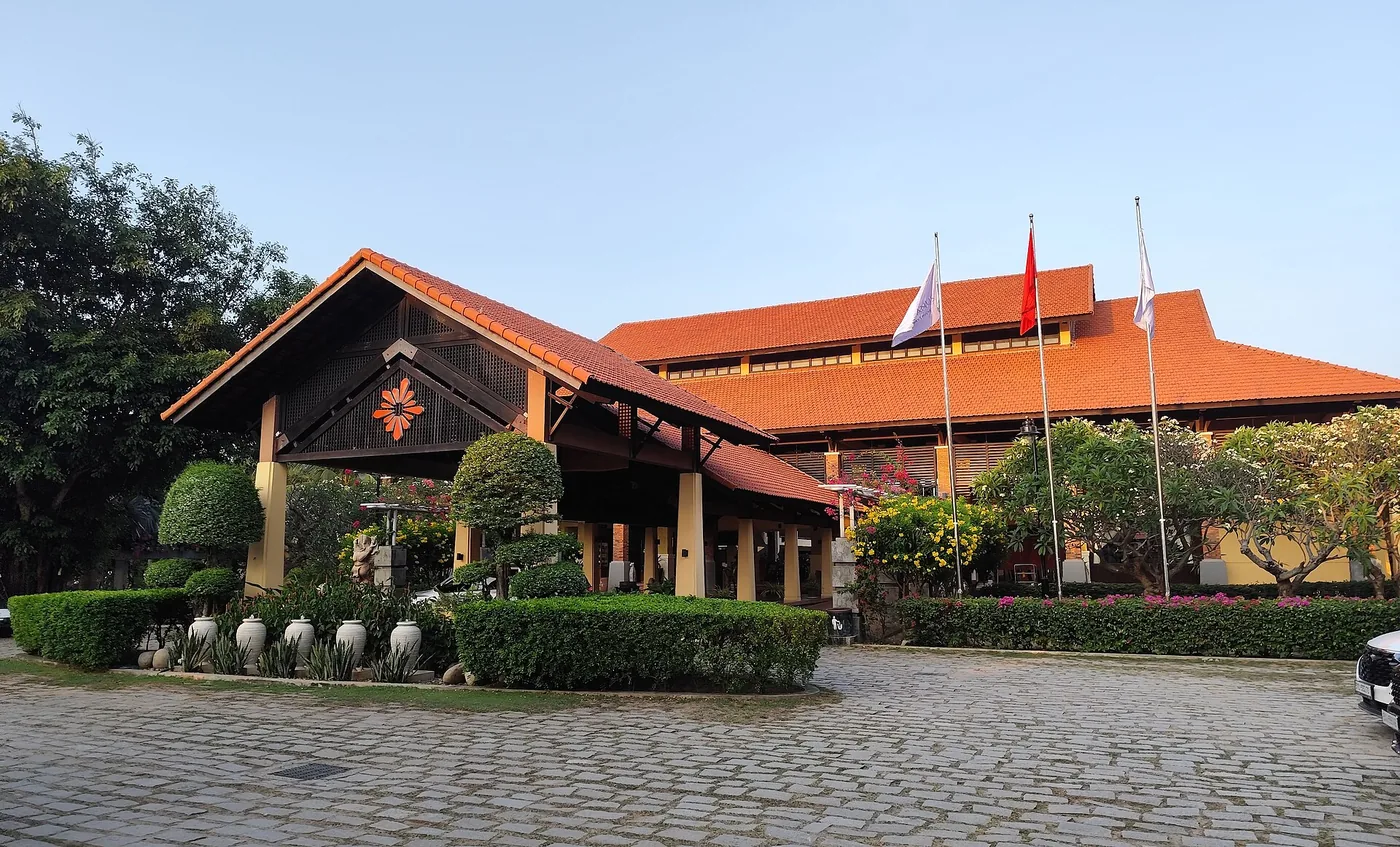
West of Ham Tien, between the strip and Phan Thiet town, sit 55 properties, the golf course and several of the bigger resorts. Sea Links is 14.6km from the middle of the strip, fifteen minutes by car.
The character is different. There is no restaurant row within walking distance, so evenings mean either the resort or a car. In exchange there are fewer people and more space. If the trip is built around golf, or around not leaving the property, this is the stretch.
Who this suits
| Suits | Does not suit |
|---|---|
| Trips built around golf | Daily runs to the dunes and the harbour |
| Staying inside the resort all day | Wanting a different restaurant each evening |
| Families using the pool | Keeping the budget down |
Some of the larger properties here run a shuttle to town or to the beach. It is a fixed number of departures a day, so ask for the timetable before booking if your evenings depend on it.
The Sea Links area is also where hundreds of villa plots are registered on the map. Search and you get what look like accommodation entries, but they are individual plot numbers. When booking, stick to entries with an actual property name.
5. The fishing village and north of Hon Rom: quiet, and far from everything
The fishing village end has 21 properties and the stretch north of Hon Rom has 13. Together they are under a quarter of Ham Tien. Quieter, and further from shops and restaurants.
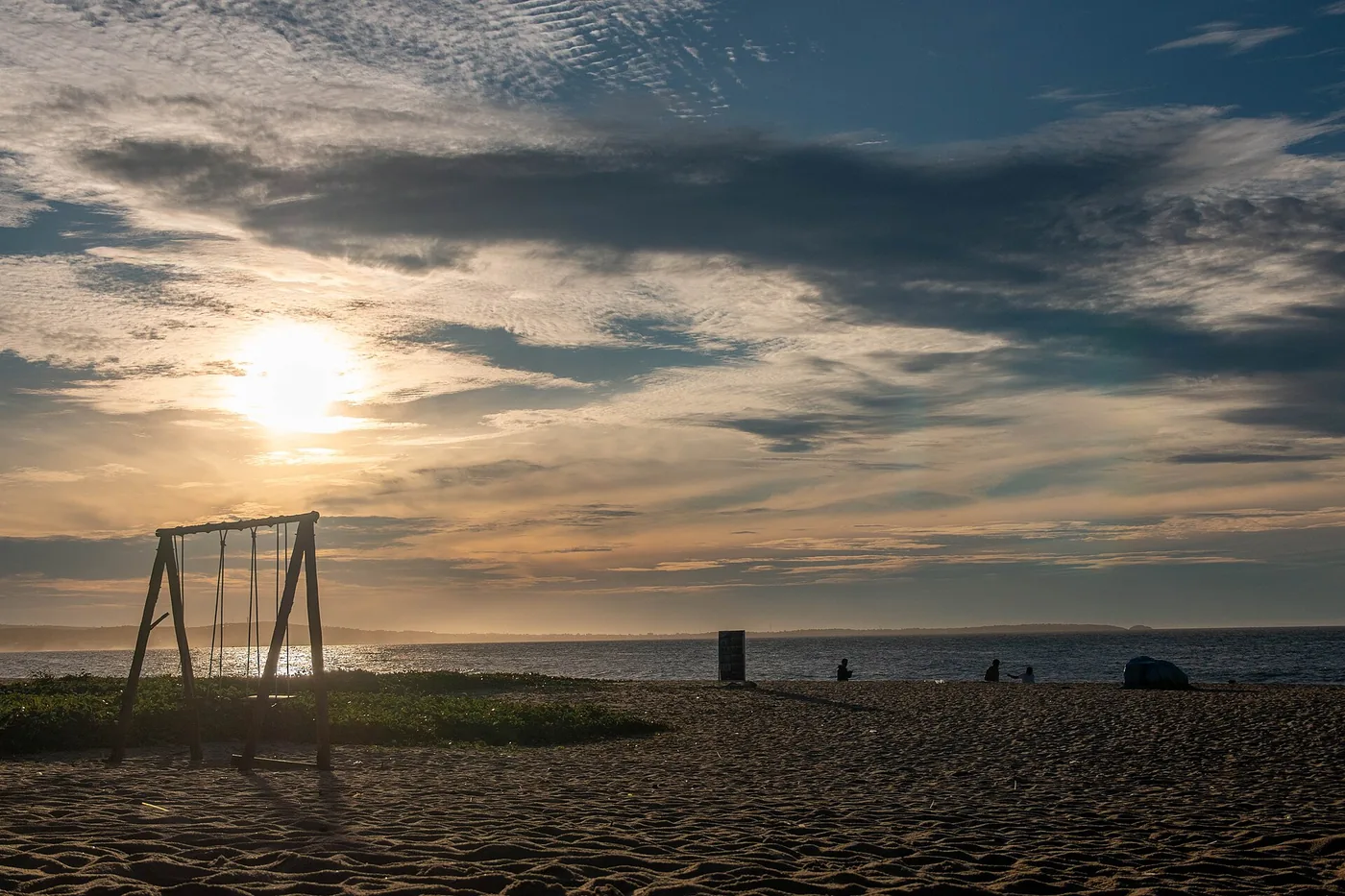
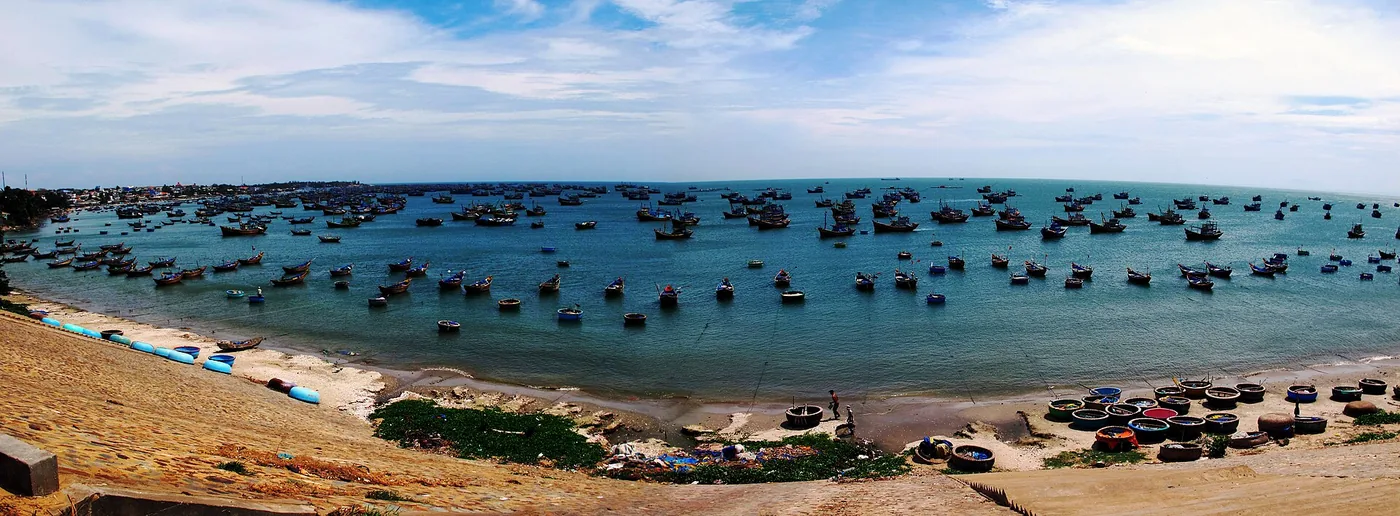
The village starts early. Boats come in before dawn and the market runs at the same hour. For some visitors that is the point; for anyone hoping to sleep in, it is not. It is also a working harbour, so the waterfront carries gear rather than sunbeds.
North of Hon Rom the beach is wide, with fewer people and, in places, sand that has survived. You do need a vehicle out here: a five-kilometre round trip for a bottle of water is normal.
If you stay out here, carry water and snacks. Shops are sparse and close early. A rented motorbike solves the distance, but the road is dark at night.
Both stretches also have thin listings. Small properties often have only a handful of photographs, so guest photos are worth more than the official gallery.
The two compared
| Item | Fishing village | North of Hon Rom |
|---|---|---|
| Properties | 21 | 13 |
| Sea side | 0 (it is a harbour) | 1 |
| Upside | Market and harbour on the doorstep | Wide, empty beach |
| Downside | Noise before dawn | Shops and restaurants are far |
6. Phan Thiet town is a different proposition
Town hotels sit 24km from the strip, about 24 minutes by car. They are cheaper than the resorts and closer to the markets and the local food. The trade is that every trip to the sea starts with a car.
Town hotels are also built differently: city blocks with dozens of rooms rather than grounds you walk through. Pools are on the roof or absent, so check the photographs.
Town makes sense in specific cases: a single night, arriving and leaving by train, or coming for the food. The banh canh cha ca shops are in town, not on the beach road.
If you are travelling by train, town wins on arithmetic. Phan Thiet station is 26.8km and 26 minutes from Mui Ne, and the town hotels are near the station. The service runs on set days, so check before you book either.
If the dunes and the sea are the point, though, you will drive that 24km twice a day. Over three days that is six crossings, and it comes out of the itinerary.
Which side to pick
| Town works for | Mui Ne works for |
|---|---|
| A one-night stop | Two nights or more |
| Arriving and leaving by train | Dunes and beach days |
| Eating your way through local food | Kitesurfing or swimming |
How the two places divide up is set out in the Mui Ne and Phan Thiet guide.

7. The big complexes south-west of town
South-west of Phan Thiet, hotels, golf and water parks are grouped into single developments. From Mui Ne that is 40.5km and 41 minutes; from town, 18.
If the plan is to spend days inside the complex, it works. If you intend to visit the dunes, the harbour and Fairy Stream, you are driving 40 minutes each way, so those trips are better bundled into one day.
Development is still under way, so zones differ in how finished they are. What you booked may have a building site next door; recent reviews are the way to check.
Restaurants inside these complexes are priced accordingly. Over several nights it is worth planning at least one meal out in town or on the strip.
The grounds are large enough that you move by buggy, so confirm which zone your room sits in or the daily walk changes.
8. What actually moves the price
In Mui Ne, position and timing move the rate more than the star rating does. The same four-star costs differently on the sea side and across the road, and differently in December and June.
What the rate responds to
| Factor | Effect |
|---|---|
| Sea side or not | The largest single difference at a given rating |
| Season | November to April is high season |
| Public holidays | Tet and the 30 April break fill on domestic demand |
| Length of stay | Three nights or more brings the nightly rate down at some properties |
| Breakfast | Without it, the daily food bill goes up |
Cancellation terms move with the season too. In high season the default is often a non-refundable rate, so if the dates are not fixed it is worth paying a little more for a flexible one.
The spread is wide. The Phan Thiet listings start under 30 US dollars a night at the low end, and sea-side resorts run several times that. Guest houses and hostels sit below the bottom of that range. List prices shown without dates are not what you will pay.
Check how you can pay, as well. Resorts and larger hotels take cards; smaller places may want cash, and some ask for a cash deposit at check-in. Asking in advance makes the exchange plan easier.
Occupancy averages 80 to 85 percent, and 85 to 95 percent at three stars and above. Between December and March, the stretch you want goes first at weekends.
9. If you are coming to kitesurf
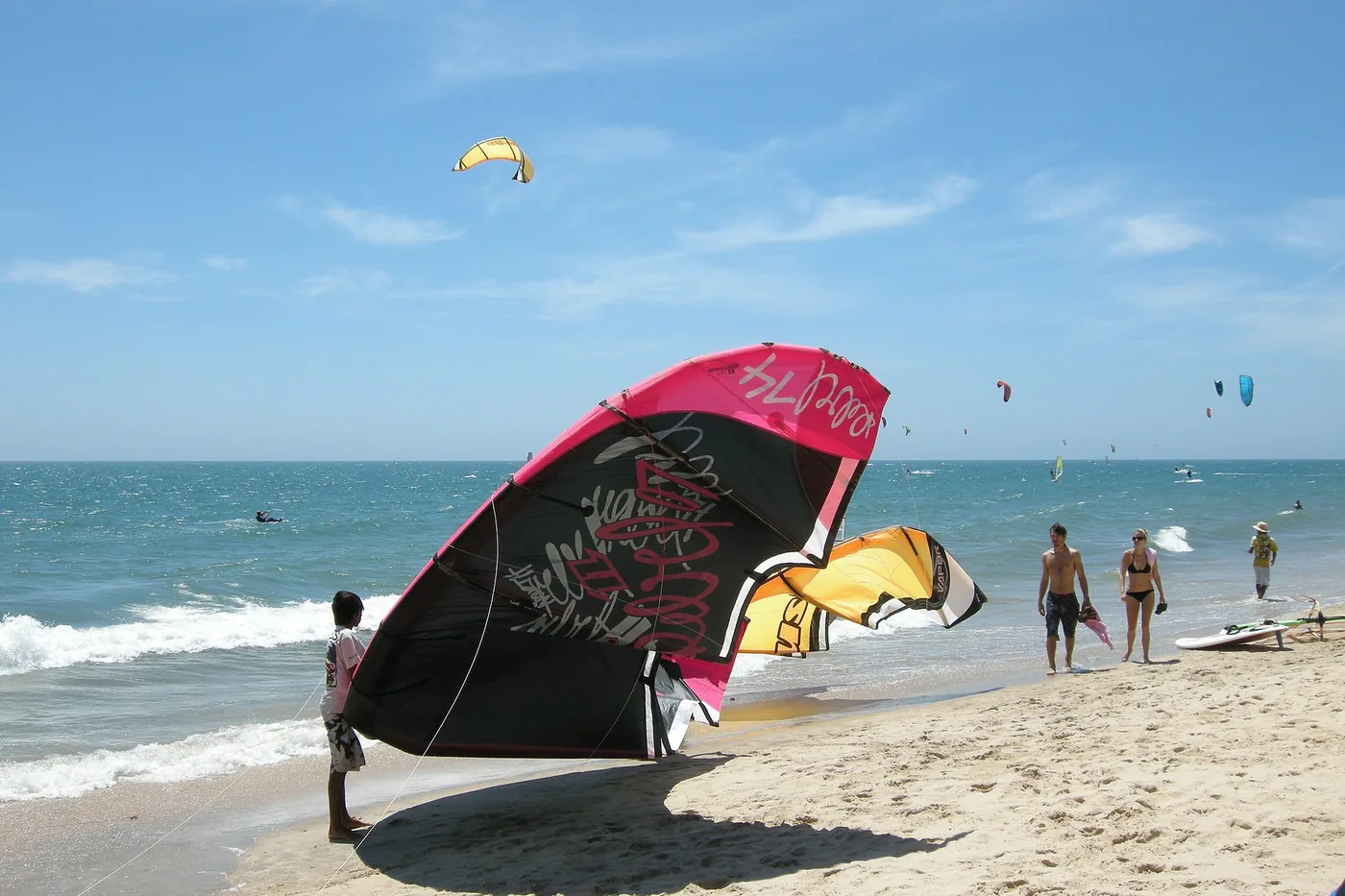
For kiting, the criterion changes: can you carry the gear to the water on foot? The schools cluster on Ham Tien beach, which makes that stretch the practical choice.
The wind runs November to April. December to March is strongest and suits experienced riders; November, March and April are easier to learn in. That is also high season, so rooms go first.
Timing the booking matters. Instructor slots fill before hotel rooms do, so in high season it is easier to book the lessons first and choose a room near that school.
On windy nights a sea-facing room is loud. It is surf noise plus rattling windows, so if you sleep lightly, ask for a block set back from the water.
What to check
| Item | Why |
|---|---|
| Gear storage | Some properties will not take boards into rooms |
| Beach access | From across the road you carry gear over the road |
| Distance to the school | You will do that walk twice a day |
| Rinse area | Sand and salt have to come off somewhere |
Some schools run rooms of their own, which puts storage, rinsing and lessons in one place. The month-by-month wind is in the Mui Ne and Phan Thiet guide.
10. With children
With children, avoid the stretches where the wall meets the water. Concrete and rock gabions throw spray and leave uneven footing.
Sand is the other thing. You come back from the dunes with it in shoes and clothes, so somewhere to rinse off outside the room matters more than it sounds.
A resort with a pool removes most of the problem. In the windy months the sea is rough anyway, so the pool is where the hours go. Whether there is a shallow section and shade matters more than the star rating.
Check pool hours as well. Coming back from a sunrise dune trip to find the pool opens at nine is a real scenario.
What to look at
| Item | Notes |
|---|---|
| Pool depth | Look for a separate shallow section |
| Beach condition | Sand or wall in front of the property |
| Room position | Road-facing rooms hear scooters at night |
| On-site food | Saves an evening drive |
11. Three things to check on the map before booking
Photographs and descriptions do not tell you where a property is. Three checks on the map filter most of it.
1. Which side of the road
Look at the coastal road and the property together. Sea side means you walk out onto the sand. The other side means crossing the road, which with bags or children repeats daily.
2. Is there sand in front of it
Zoom the satellite view. A pale band running along the front means beach; a dark line hard against the water means a wall. Recent guest photographs confirm it.
3. Is there a building site next door
Road and resort works are under way in several places. Stripped ground on the imagery, or noise complaints in recent reviews, is a reason to change rooms or properties.
Where street-level imagery exists, it is also worth seeing how the entrance looks from the road. A property with a large sign is a different proposition after dark from one down an unlit lane.
| Check | How to read it |
|---|---|
| Side of the road | Compare the coastal road with the property outline |
| Beach or wall | Pale sand band against a dark hard line |
| Construction | Stripped ground and material yards nearby |
| Access | Whether the path to the sand is private or public |
12. How far everything is from your room
Stay in Mui Ne and the red dune and the harbour are inside ten minutes. Phan Thiet town and Bau Trang are not. Reading this table alongside the room choice keeps the days from unravelling.
A pickup booked through the hotel usually costs more than one arranged in town. It also delivers you to the door, which at night or with luggage is worth the difference.
There is no airport, so arrival is by road. Tan Son Nhat is 197km and about two and a half hours, and from Phan Thiet stationMap there are still 26.8km and 26 minutes to the beach. The train runs on set days, so check before booking.
13. Arrival time changes the plan
Check-in is usually around two in the afternoon. Leaving Ho Chi Minh City in the morning puts you here in the early afternoon, so the pattern is to drop bags, go to the beach and come back.
Tell the property if you are arriving late. Smaller places do not staff the desk overnight. The beach road is unlit in stretches and the pavement gives out, so at night it is worth taking a car that goes to the door.
Leaving works the same way. Sunday afternoons back towards Ho Chi Minh City are slow; for an evening flight, add an hour.
If you are checking out before a late departure, ask whether there is a shower available afterwards. Coming back from the dunes with sand everywhere is not how you want to sit in a car for three hours.
14. Matching nights to stretches
One night means Ham Tien. Two or more opens the option of splitting stretches. Most itineraries do the dunes at dawn and rest in the afternoon, so where you sleep sets the order of the day.
By length of stay
| Trip | Where to stay | Why |
|---|---|---|
| One night | Ham Tien | The red dune and Fairy Stream are inside ten minutes |
| Two nights | Ham Tien | Still short journeys with a Bau Trang half-day added |
| Three or more | Ham Tien plus a quiet stretch | Sights first, then a couple of slower days |
| Golf trip | Phu Hai and Sea Links | Fifteen minutes to the course |
| Train both ways | One night in town | Saves the 26-minute transfer twice |
If you do split, put Ham Tien first. The evening you arrive is the one where having restaurants nearby helps, and the quiet stretch suits the end of a trip.
Moving is not always worth it. Packing and transferring costs half a day, so over three nights one base usually wins.
Ask about luggage storage as well if you check out with hours to spare. Small properties may not have anywhere to put bags.
15. Common mistakes
Booking from the beach photograph
The beach in the gallery may not be the one in front of the property. Where there is a wall, the photograph often comes from the next stretch along. Read the satellite view and recent guest photos together.
Not noticing it is across the road
A name with “beach” in it does not put you on the sand. Of 231 properties, 141 are across the road.
Ignoring review dates
Beach condition changes. A photograph from two years ago may not match what is there now, so start with the last few months.
Booking late in high season
From December to March, occupancy at three stars and above runs 85 to 95 percent. The stretch you want goes first.
Mistaking plot numbers for hotels
Map searches turn up hundreds of numbered entries around Sea Links. They are plots, not bookable properties.
Treating town as the beach
Phan Thiet hotels are 24km from the sand. That is why they are cheaper.
16. 🌊 More Vietnam guides
Mui Ne and Phan Thiet guide · Southern Vietnam guide · Vietnam travel guide · Da Lat travel guide · Where to stay in Da Lat · Nha Trang travel guide · Ho Chi Minh City guide · Where to stay in Ho Chi Minh City · Getting around Vietnam · Vietnam entry requirements · Vietnam eSIM guide · Money in Vietnam · Tourist scams
🎡Things to Do24
🍜Food3
🏨Where to Stay8
🚇Getting Around4
🧭Travel Tips11
🧭Vietnam-wide essentials116
Where to stay in Mui Ne: frequently asked questions
Of the 231 properties we plotted by coordinate, 35 sit within 80 metres of the shoreline. Another 141 are across the road and 55 are further inland. Thirty-three of the 35 are in Ham Tien.
Erosion is under way along about 10km, from the Ong Dia rock beach to the Bo De fishing port, and operators have put in sand tubes, concrete and rock gabions in front of their properties. In November 2025 a storm surge damaged the wall and trading was suspended between numbers 165 and 177 on Nguyen Dinh Chieu. Some stretches still have wide sand; others do not.
Ham Tien. It holds 142 of the properties, and restaurants, shops and kite schools are on the same road, so you can walk to dinner. The official count is 53 resorts along its eight kilometres.
It depends on the trip. If your mornings are at the dunes you spend little time on the sand anyway, and the rate is a band lower. With luggage or small children, the crossing repeats every day.
For one night, or if you are arriving and leaving by train, yes. Town is cheaper and closer to the local food. But it is 24km and 24 minutes from the strip, so a beach-focused trip means driving that twice a day.
November to April. Occupancy averages 80 to 85 percent and runs 85 to 95 percent at three stars and above. For weekends between December and March, book well ahead or the stretch you want will be gone.
On the Ham Tien beachfront, where the schools are, so you can carry gear out on foot. Check gear storage and a rinse area before booking. Some schools run their own rooms.
Avoid stretches where a wall meets the water, since it throws spray and the footing is uneven. Choose a pool, and check for a shallow section and shade. In the windy months you will use the pool more than the sea.
The spread is wide. Phan Thiet listings start under 30 US dollars a night at the low end and sea-side resorts run several times that. At the same star rating, sea side and across the road are different prices, as are high and low season.
Three things: which side of the coastal road the property is on, whether a pale band of sand runs in front of it or a dark line hard against the water, and whether there is stripped ground nearby that means construction.
Thin on rooms: 21 and 13 properties. Quiet and, north of Hon Rom, wide beach, but shops and restaurants are far enough that you want a vehicle. The village is noisy before dawn when the boats come in.
Individual villa plots are registered on the map with numbers instead of names. Of 514 entries we pulled, 283 were plots like that. Filter to entries with a real property name.