
Vietnam in November: Weather, Where to Go and Where to Avoid, Region by Region
In November the north of Vietnam is dry and clear, the south is drying out, and the central coast is in the middle of its rainy season. This guide goes through all eighteen places we cover, says which ones suit November and which are better left for another month, and explains what to pack and how to plan a trip around the rain.
| Best bets | Hanoi, Ha Long Bay, Ninh Binh, Cat Ba, Ha Giang, Da Lat and Mui Ne all have little rain and many clear days in November. |
|---|---|
| Go with care | Sapa is cold and often foggy, and Ho Chi Minh City, the Mekong, Phu Quoc and Con Dao are still drying out, with the end of the month better than the start. |
| Better another month | Hue, Da Nang and Hoi An are still in heavy rain after their October peak, Phong Nha is in its flood season, and November is the single rainiest month in Nha Trang. |
| Flowers | Buckwheat flowers in Ha Giang and wild sunflowers around Hanoi, Da Lat and Mang Den are the main reasons locals travel this month. |
| Holidays | Vietnam Culture Day on the twenty-fourth is a new paid day off, so domestic travel can pick up around that date. |
| Prices | November sits just before the Christmas, New Year and Tet peaks, so rooms are reasonable in most places, but the best Ha Long cruises book up early and Phu Quoc prices rise from the end of the month. |
| Packing | A north-to-south trip in November needs clothes for two seasons: a warm jacket for the mountains and summer clothes for the south. |
1. The short answer: where to go in November and where to skip
2. Why the north is dry while the centre is wet
3. All the places in this guide at a glance
4. Hanoi: cool days, white daisies and wild sunflowers
5. Ha Long Bay, Cat Ba and Ninh Binh: the main season
6. Sapa: dry enough to trek, but cold
7. Ha Giang: the buckwheat flower season
8. Hue, Da Nang and Hoi An: why most people wait, and how to go anyway
9. Islands and caves in the centre: Cu Lao Cham, Ly Son and Phong Nha
10. Nha Trang: its wettest month of the year
11. Da Lat and Mang Den: the rains end and the wild sunflowers bloom
12. Mui Ne: dry, windy, and the start of kitesurf season
13. Ho Chi Minh City and the Mekong Delta: the last of the rainy season
14. Phu Quoc: the dry season arrives during the month
15. Con Dao: check the boats before you plan
16. The November calendar: flowers and festivals
17. Vietnam Culture Day: a new holiday in late November
18. Crowds and prices in November
19. What to pack, and entry rules
20. Sample November itineraries
21. November compared with October and December
22. Who November suits, and who should pick another month
1. The short answer: where to go in November and where to skip
In November, Vietnam’s weather goes in opposite directions at the same time. The north has some of its driest and clearest weeks of the year. The central coast, from Hue down to Nha Trang, is still in its rainy season, which peaks in October in most places and in November in Nha Trang. The far south is coming out of its rainy season and gets drier week by week.
Where November works well
Go north. Hanoi, Ha Long Bay, Cat Ba and Ninh Binh are dry, cool and mostly clear, which is why this is the main cruise season in Ha Long. Ha Giang has its buckwheat flowers. In the southern highlands, Da Lat is at the end of its rainy season and the wild sunflowers are out. On the south coast, Mui Ne has turned dry and the kitesurfing season is starting.
Where it depends
Sapa is dry enough for trekking but cold and often foggy. Ho Chi Minh City, the Mekong Delta, Phu Quoc and Con Dao are in a changeover month: showers still happen, especially early on, and the second half of November is usually better than the first. Mang Den is starting its dry season.
Where another month is better
Hue, Da Nang and Hoi An get their second-heaviest rain of the year after October, Phong Nha is in its flood season, and Nha Trang has its single wettest month. If your trip is about beaches, or you cannot afford to lose a day to weather, plan these places for another season. If you are flexible and do not mind rain, they are cheaper and quieter now, and we explain how to handle them further down.
| Region | Places | November verdict |
|---|---|---|
| North | Hanoi, Ha Long Bay, Cat Ba, Ninh Binh, Ha Giang | Good: dry and cool, main season |
| Northern mountains | Sapa | Depends: dry enough but cold and foggy |
| Highlands | Da Lat, Mang Den | Da Lat good, Mang Den depends: rains ending, wild sunflowers |
| South coast | Mui Ne | Good: dry, windy, kitesurf season opens |
| South and islands | Ho Chi Minh City, Mekong Delta, Phu Quoc, Con Dao | Depends: last showers of the rainy season, better late in the month |
| Central coast | Hue, Da Nang, Hoi An, Phong Nha, Nha Trang | Better another month: heavy rain, floods and rough sea |
For the bigger picture, start with our Vietnam travel guide, then the regional guides to the north of Vietnam, the central region and the south of Vietnam.
2. Why the north is dry while the centre is wet
One idea explains most of this. From November, cold air from the north comes down over Vietnam more often and more strongly. Forecasters call this the northeast monsoon. It is the same wind for the whole country, but it behaves differently depending on where it lands.
The same wind, two results
Over the north, this cold air brings dry weather. Hanoi and the coast around Ha Long get few rainy days and a lot of clear sky. The fine, misty drizzle that northern Vietnam is known for barely shows up in November. It comes later, mostly from January to March.
Further south, the same wind crosses the sea and runs into the Truong Son mountains, which run along the central coast. The air is pushed upward and drops its water on the coastal side. That is why Hue, Da Nang, Hoi An and Nha Trang have their rainy season in autumn and early winter, while the north and the south get their rain in summer.
Storms and the end of the southern rains
Typhoons and tropical depressions that reach Vietnam in October and November tend to come ashore in the centre. Late in the season the south cannot be ruled out either. In the south, the summer rains brought by the southwest monsoon usually end in the middle or second half of November. So November there is the month the dry season arrives, not a month that is dry from start to finish.
In practice: enjoy the north, pass through the centre quickly or skip it, and reach the south as late in the month as you can.
A few days before you travel to the centre or the islands, check the forecasts and storm warnings from the National Centre for Hydro-Meteorological Forecasting. If a tropical depression is on its way, move the beach days to the end of your trip.
3. All the places in this guide at a glance
The table below puts every place in this guide side by side, with the long-term November averages. These are normal values over many years, not a forecast. A single November can be wetter or drier than the average.
November weather, place by place
| Place | Verdict | Average temp (°C) | Rain (mm) | Rainy days | Weather station |
|---|---|---|---|---|---|
| Hanoi | Good | 21.9 | 67 | 7 | Lang |
| Ninh Binh (Trang An, Tam Coc) | Good | 21.8 | 67 | 8 | Ninh Binh |
| Ha Long Bay | Good | 21.5 | 39 | 6 | Bai Chay |
| Cat Ba and Hai Phong | Good | 21.5 | 43 | 6 | Phu Lien, Hai Phong (no station on Cat Ba) |
| Ha Giang | Good | 20.3 (town) | 84 | 10 | Ha Giang town, low valley; the Dong Van plateau is much colder |
| Da Lat | Good | 17.5 | 94 | 12 | Da Lat |
| Mui Ne and Phan Thiet | Good | 26.7 | 55 | 7 | Phan Thiet |
| Sapa | Depends | 12.5 | 106 | 14 | Sa Pa |
| Mang Den | Depends | — | — | — | No station; cooler than nearby Kon Tum |
| Ho Chi Minh City | Depends | 26.7 | 135 | 12 | Tan Son Nhat |
| Mekong Delta (Can Tho) | Depends | 26.9 | 137 | 14 | Can Tho |
| Phu Quoc | Depends | 26.9 | 164 | 14 | Phu Quoc |
| Con Dao | Depends | 26.9 | 175 | 12 | Con Dao |
| Hue | Better another month | 23.2 | 642 | 21 | Hue |
| Da Nang | Better another month | 24.4 | 448 | 20 | Da Nang |
| Hoi An | Better another month | 24.1 | 623 | 22 | Tam Ky (no station in Hoi An) |
| Phong Nha | Better another month | 22.6 | 319 | 17 | Dong Hoi |
| Nha Trang | Better another month | 25.8 | 382 | 18 | Nha Trang |
Source: the climate tables in Vietnam’s national building standard, QCVN 02 on natural conditions for construction. The Ho Chi Minh City row comes from the older edition of the same standard.
How to read the table
The difference between the rows is large. The wettest places on the central coast get many times more November rain than Ha Long or Hanoi, and they get it on most days of the month rather than in a few storms. That is the main reason for the verdicts in this guide.
The temperature column matters too: Sapa and Ha Giang need a proper jacket, while the south stays warm. Two rows need a note. Mang Den has no weather station, so we give no figures. And the Ha Giang station sits in a low valley in town. Up on the plateau, where people actually go to see the flowers, it is far colder.
4. Hanoi: cool days, white daisies and wild sunflowers
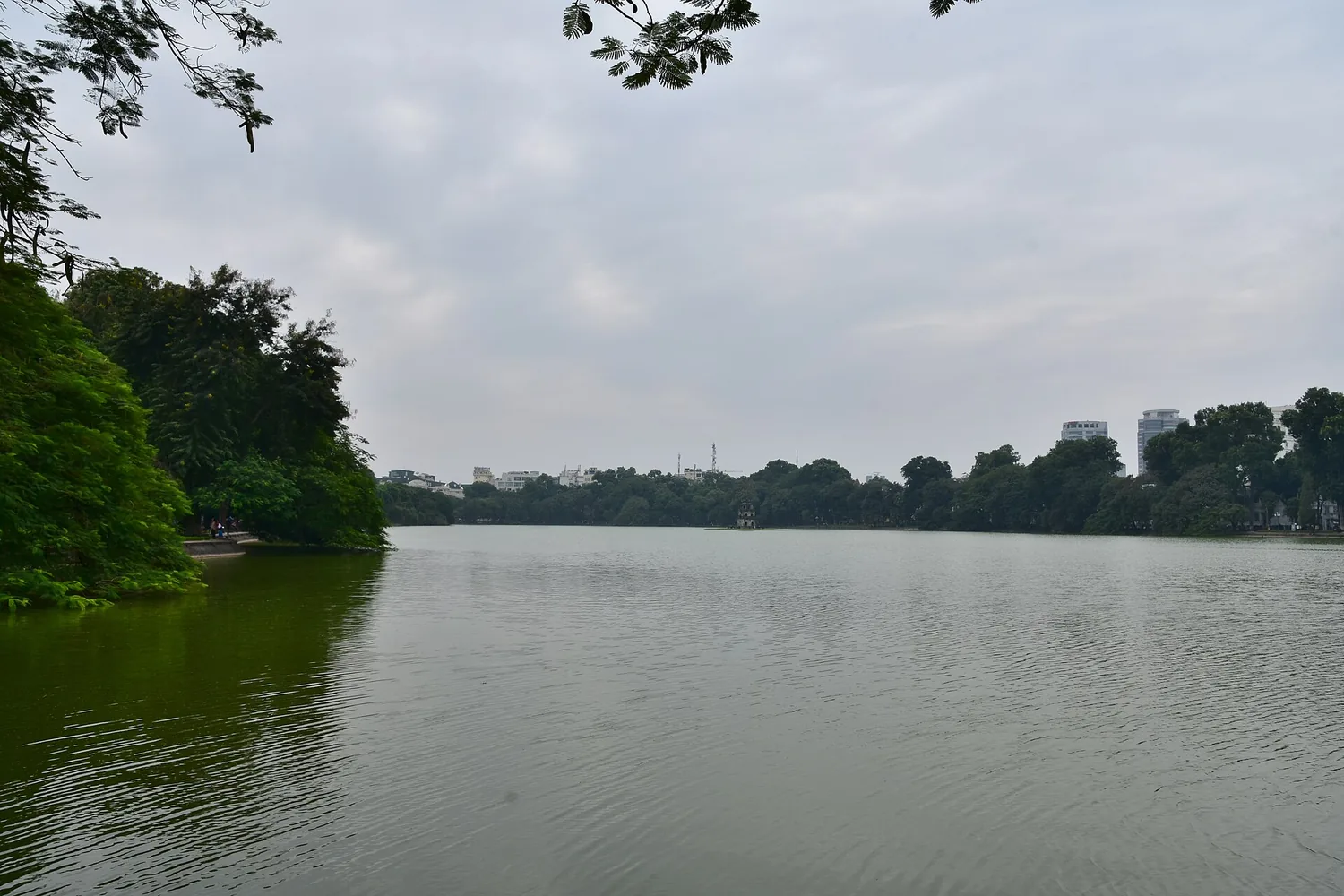
November is the end of autumn in Hanoi and the first hint of winter. Days are mild and comfortable for walking around the Old Quarter and Hoan Kiem LakeMap. Mornings and evenings are cool enough for long sleeves. Rain is light, and the grey drizzle that Hanoi gets in late winter is still weeks away.
| Hanoi in November | Value |
|---|---|
| Average high | 25.7 °C |
| Average low | 19.3 °C |
| Wild sunflower season at Ba Vi | Late October to early December, fullest bloom early to late November |
| Ba Vi entry, student / child / over sixty | 20,000 / 10,000 / 30,000 VND |
White daisies on the streets
The flower of the season in Hanoi is the small white daisy that Vietnamese call cúc họa mi. It blooms in November and December. Vendors carry big bunches on bicycles and motorbikes and sell them at the roadside, and people buy them to take photos with or to put at home. The flowers are grown in the farming villages of Tay Tuu and Nhat Tan, and Au Co Street in the Tay Ho district is a good place to find sellers.
You may read that November is the time for hoa sữa, the milk flower with a strong scent. Its peak is actually from mid-September to early October, so by November only a few trees are still flowering.
Wild sunflowers at Ba Vi National Park
West of the city, the slopes of Ba Vi National ParkMap turn yellow with wild sunflowers. According to the national park’s visitor guide, the season runs from late October to early December, and the flowers are fullest through most of November. Adult entry is 60,000 VND, with lower prices for students, children and visitors over sixty.
On peak weekends there are queues at Ba Vi from early morning. Go on a weekday if you can, and leave Hanoi early.
Teachers’ Day
Vietnam marks Teachers’ Day on the twentieth of November. It is not a public holiday. Students bring flowers to their teachers, so flower prices go up in the days before, and that is about the only effect on visitors. For how Hanoi compares with the south as a base, see Hanoi or Ho Chi Minh City, and for the city itself, our Hanoi travel guide.
5. Ha Long Bay, Cat Ba and Ninh Binh: the main season
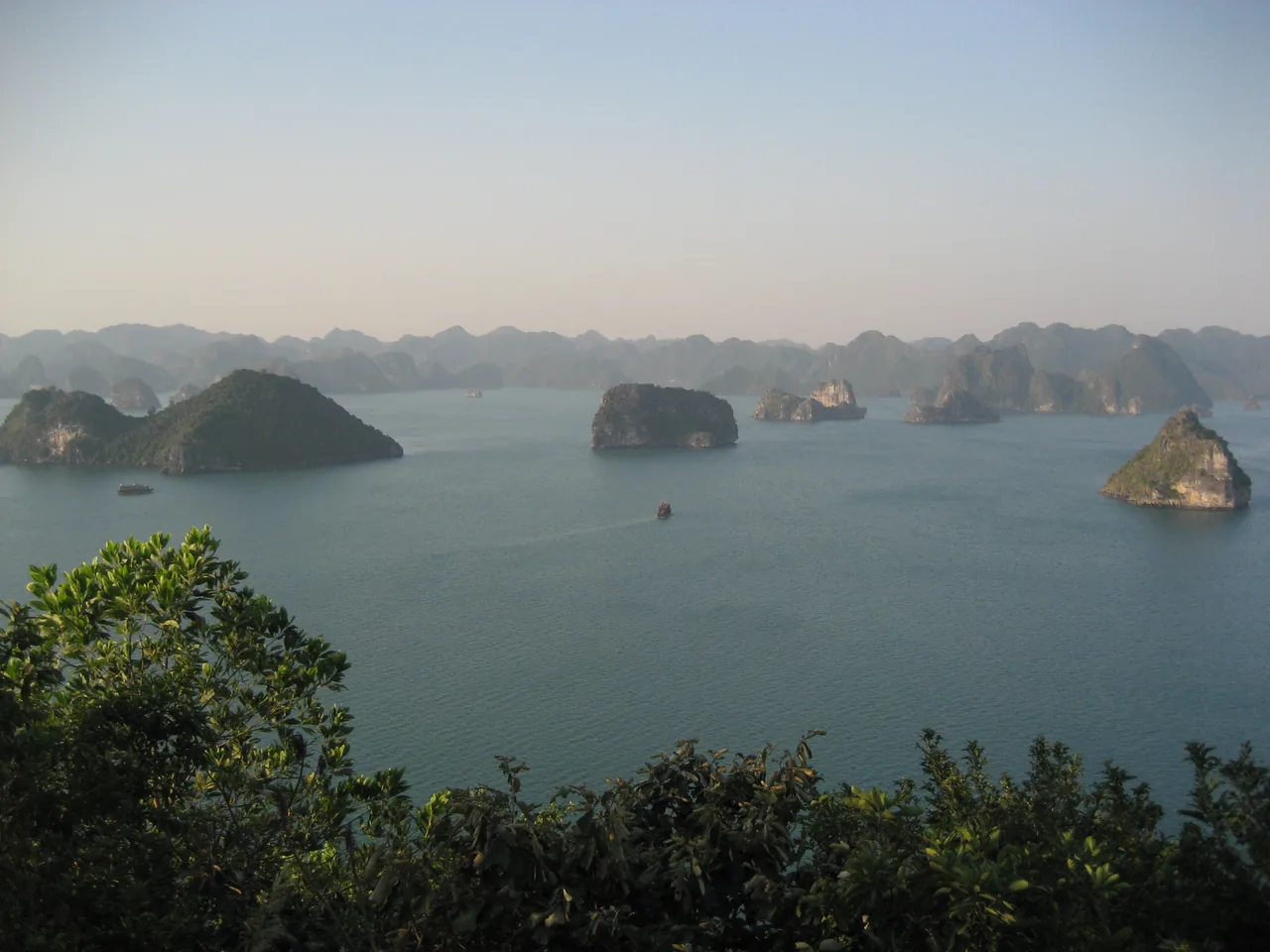
November is one of the best months for Ha Long Bay. It is among the driest times of the year in the bay, and the sea fog that can hide the islands is rare. The fog season is late winter and early spring, roughly February to April. This is why November is the start of the busy cruise season.
Cruising Ha Long Bay in November
Days on deck are pleasant. Nights on the water get cool, so bring a light jacket for dinner outside. Swimming is possible but many people find the water cold. Many boats leave from Ha Long International Cruise PortMap.
There is no rule that stops cruises for the whole of November. What does happen is that when a tropical storm or depression is near, the port authority stops giving boats permission to sail, day by day. Check the cancellation terms when you book, so you know what happens if your sailing day is stopped.
Good cruise boats fill up early in November. Book a few weeks ahead, and read our guide on how to choose a Ha Long Bay cruise before you pay.
Cat Ba and Lan Ha Bay
Cat Ba Island and Lan Ha BayMap share Ha Long’s weather. There is no weather station on Cat Ba itself, but the nearest station, in Hai Phong, also records very little rain in November. Cat Ba townMap is quieter than Ha Long and a good base for kayaking in Lan Ha Bay. See our Cat Ba Island guide, and the Hai Phong guide if you are passing through the city.
Ninh Binh
In Ninh Binh the rice has already been harvested, so the fields around Trang AnMap and Tam Coc are not the golden colour you see in photos from earlier in the year. What November does offer is cool, mostly dry weather for walking, cycling and the boat trips through the limestone caves. It is an easy day trip, as our guide to Ninh Binh from Hanoi explains.
6. Sapa: dry enough to trek, but cold
Sapa sits high in the mountains, and in November it is cold. Rain is not heavy, which makes it a reasonable month for trekking, but fog and fine drizzle are common and the nights are close to what many readers would call winter.
| Sapa in November | Value |
|---|---|
| Average temperature | 12.5 °C |
| Average low | 10.2 °C |
| Days with fog | 11 |
| Days with drizzle | 8 |
| Lowest November temperature on record | 1.5 °C |
What the terraces look like
The rice terraces around Sapa ripen and are cut in September. In November the fields are bare stubble, not gold. If the golden terraces are the reason you are going, go in September instead. If you want to walk between villages in cool weather, November is fine.
Fansipan and the cold
The summit of FansipanMap is much colder than the town. In some years there has been frost on the peak by late November, but that varies a lot from year to year, so treat it as a possibility rather than something to plan around. On foggy days the view from the top may be nothing but white.
Sapa is much colder than Hanoi. Hotels in town are not always well heated, so bring a warm fleece or down jacket, a waterproof layer and warm socks, even if the rest of your trip is in summer weather.
The town centre around Sapa LakeMap is where most hotels and trekking guides are. Our Sapa travel guide covers the trekking routes, and how to get from Hanoi to Sapa compares the train and the buses.

7. Ha Giang: the buckwheat flower season
Ha Giang, in the far north on the Chinese border, is one of the best places in Vietnam to be in November. Administratively it is now part of Tuyen Quang province, but travellers and most signs still call the area Ha Giang. The draw this month is the buckwheat flower, known in Vietnamese as tam giác mạch.
When the flowers bloom
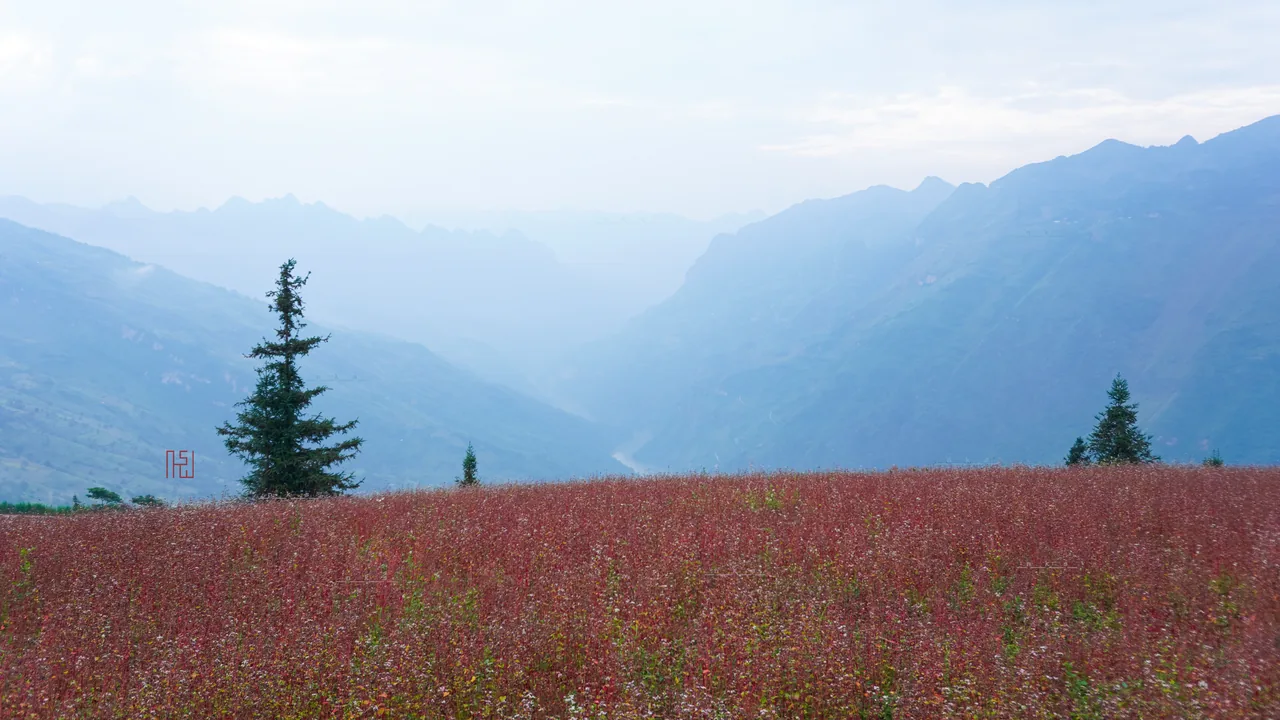
The province plants buckwheat fields in several rounds, so there are flowers somewhere from October to December. According to the Tuyen Quang provincial newspaper, the fields look their best in early November. Depending on the field, the flowers range from white to pink and red.
A buckwheat flower festival is held in Dong Van town around late October or early November. Reports on the exact dates differ, so check local news closer to the time rather than planning around a fixed day. The Dong Van old quarterMap and the Lung Cu flag towerMap at the northern tip of the country are the usual stops on the loop.
Cold on the plateau
The Dong Van plateau is well over a thousand metres up, so it is much colder than the town of Ha Giang, where the weather station is. Most people see the area by motorbike, either riding themselves or on the back of a local driver’s bike, and the wind on the bike makes it feel colder again.
If you do the loop by motorbike, bring gloves, a warm jacket that blocks wind and a rain layer. Mornings on the high passes can be much colder than the town.
Our Ha Giang Loop guide explains the route, how many days to allow and how to choose between riding and a driver. Rooms in Dong Van and Meo Vac can fill up during the flower weeks.
8. Hue, Da Nang and Hoi An: why most people wait, and how to go anyway
For the central coast, November is the second-wettest month of the year after October. Da Nang has more rainy days in November than in any other month. In both Hue and Da Nang, the heaviest single day of rain on record fell in November. Most of the time hotels, restaurants and sights work as usual, though shops in flooded streets close until the water goes down. What you cannot count on are dry beach days.
Hue and Da Nang
In Hue it rains on most days of the month. The Imperial CityMap is fine with an umbrella, but the royal tombs outside town are muddy and much less pleasant. In Da Nang, My Khe BeachMap has high waves and rip currents in November, and swimming is often unsafe. The city itself keeps working, and there are plenty of indoor things to do. See our Hue guide, the Da Nang travel guide and our month guide to Da Nang in November.
Hoi An and the floods
Hoi An sits on the Thu Bon River, and in the rainy season the river overflows into the old town, starting with the streets along the water near the Japanese Covered BridgeMap. When that happens, the water usually goes down within a day or two and the shops open again. In recent years the old town has flooded several times between late October and November.
If Hoi An floods while you are there, the riverside streets of the old town can be under water for a day or two. Read our guide to the Hoi An flood season before you book, and keep a spare day in your plans.
The full moon night in Hoi An
On the fourteenth night of each lunar month, the old town turns off its electric lights and uses lanterns instead. This still happens in November. Because it follows the lunar calendar, the date moves every year. The Hoi An Centre for Cultural Heritage Management has details on the full moon nights, and our guide to the Hoi An lantern festival explains what to expect. In the rain the evening feels different, with fewer people outside.
If you still want to go
The centre in November can work if your dates are flexible, you have a plan for rainy days, and you like lower prices and fewer people. It does not work if the beach is the point of the trip or your schedule cannot slip. Our guide to Da Nang and Hoi An in the rainy and typhoon season has more detail, and the best time to visit Da Nang shows which months are drier. The Hoi An travel guide covers the old town in any season.
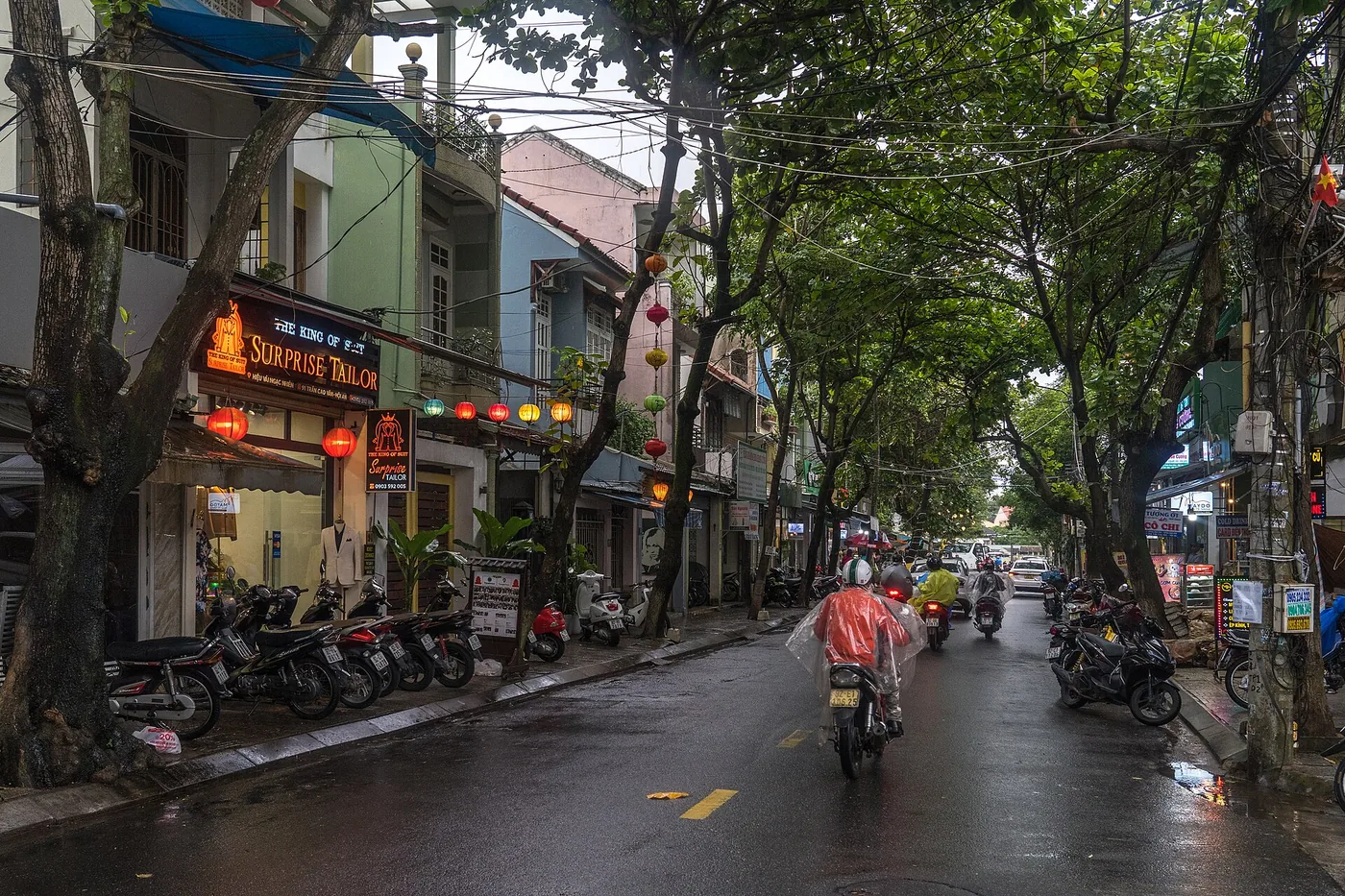
9. Islands and caves in the centre: Cu Lao Cham, Ly Son and Phong Nha
The small islands and the cave country of central Vietnam depend on calm water and dry weather even more than the cities do. In November most of them are hard to reach or partly closed.
Cu Lao Cham
The good season for Cu Lao ChamMap, the island group off Hoi An, is roughly March to August. For the rest of the year the sea is rough and most tour boats do not run. There is no official notice closing the island for the season. Instead, on most days the boats simply do not get permission to sail. In practice, a day trip in November is unlikely.
Do not pay in advance for a Cu Lao Cham trip in November unless the operator will refund you when boats are not allowed out. Our Cu Lao Cham day trip guide explains how the trips work in the good months.
Ly Son
Ly Son IslandMap, off Quang Ngai, has its windiest months in November and December. When the cold northeast wind is strong, ferries can stop for several days in a row. If you go, leave spare days at the end so you are not stuck on the island before a flight.
Phong Nha
Phong Nha has its flood season from roughly September to November. Wet caves and multi-day expeditions may close in that period, and the Hang En expedition usually closes from mid-September to November. Before you go, ask which tours are running from the Phong Nha Cave entranceMap area in the week of your visit.
If caving is the reason for your trip, wait until the dry months. If Phong Nha is one stop on a longer journey, check with your tour operator a few days ahead. Our Phong Nha caves guide lists which tours run in which months.
10. Nha Trang: its wettest month of the year
A lot of people ask about Nha Trang in November, so here is the plain answer: November is the rainiest month of the year in Nha Trang, wetter even than October. Nearby Cam Ranh, where the airport is, also has its wettest month now.
Nha Trang gets more rain in November than in any other month. If you want sun and calm sea, choose Mui Ne or Phu Quoc instead, or come to Nha Trang from late winter onwards.
The sea and the island tours
The Nha Trang Bay management board says the rough-sea season usually runs from the ninth lunar month until around Tet. On days with high waves it advises people to stay out of the water. Swimming is not formally banned on those days, and the advice is worth following. According to a report from the Vietnam News Agency, warning signs on the beach are written in Vietnamese, English, Russian and Korean, and lifeguards patrol every day from early morning into the evening. Stay near the lifeguard posts on Tran Phu BeachMap.
When the weather is bad, island tour boats do not get permission to leave the harbour, so book island and snorkelling trips with a free cancellation option.
The mountain road to Da Lat
The Khanh Le Pass, the direct road between Nha Trang and Da Lat, was closed for a long time after a major landslide. It now opens only in daylight, from early morning until early evening. In November, check that it is open before you set off, and do not plan to drive it after dark.
| Nha Trang in November | Detail |
|---|---|
| Swimming advice | Stay out of the water when waves reach 1 to 2 m |
| Lifeguard hours | Every day, 5:00 to 18:30 |
| Khanh Le Pass (road to Da Lat) | Open in daylight only, 5:00 to 18:00; check before you go |
| Island boat tours | Cancelled on days without sailing permission |
If you are going anyway
Plan around things that do not need the sun: the mud baths and hot springs, VinWonders, the Po Nagar towers and the food. Our guide to Nha Trang in the rainy season has a list. The Nha Trang travel guide covers the city, and Nha Trang in December explains how things improve the following month.
11. Da Lat and Mang Den: the rains end and the wild sunflowers bloom
In the southern highlands, November is the month the rainy season ends. In Da Lat, the rain drops to less than half of October’s and falls again in December, and there are more hours of sun than the month before. The air is fresh during the day and cold at night and first thing in the morning.
| Da Lat in November | Value |
|---|---|
| Average low | 14.6 °C |
| Rain in October, November, December | 245 / 94 / 36 mm |
| Wild sunflowers | Start in late October, fullest in November, fade late November into December |
| Da Lat Flower Festival | December, not November |
Wild sunflowers around Da Lat
The yellow wild sunflower, dã quỳ in Vietnamese, starts to bloom in Lam Dong in late October, is at its fullest in November, and fades from late November into December. It flowers in two or three rounds and each round is short. VnExpress reported the best roadsides in recent seasons: the Prenn area, the roads towards Don Duong, Duc Trong and Lien Khuong, and Highway 20 near Di Linh. A motorbike or taxi from Xuan Huong LakeMap out along those roads is enough; you do not need a tour.
One thing to get straight: the Da Lat Flower Festival is held in December, and there is no official festival in Da Lat in November. The Da Lat city information portal publishes the festival programme.
Roads into Da Lat
The passes into Da Lat, including Mimosa, Prenn and Khanh Le, have been cut by landslides after heavy rain in the past. After a big storm in November, check the road you plan to use before leaving. Our Da Lat travel guide covers where to stay and what to see.
Mang Den and Chu Dang Ya
Mang Den, in the former Kon Tum province (now administratively part of Quang Ngai), is a high pine plateau well over a thousand metres up, so it is cooler than the lowland town of Kon Tum. Its dry season runs from November to April, and wild sunflowers line the roads in November and December. Dak Ke LakeMap is the usual centre of a visit. Read our Mang Den guide for how to get there.
In neighbouring Gia Lai, the slopes of Chu Dang Ya volcanoMap are also covered in wild sunflowers, and a sunflower festival is held there around the middle of the month.
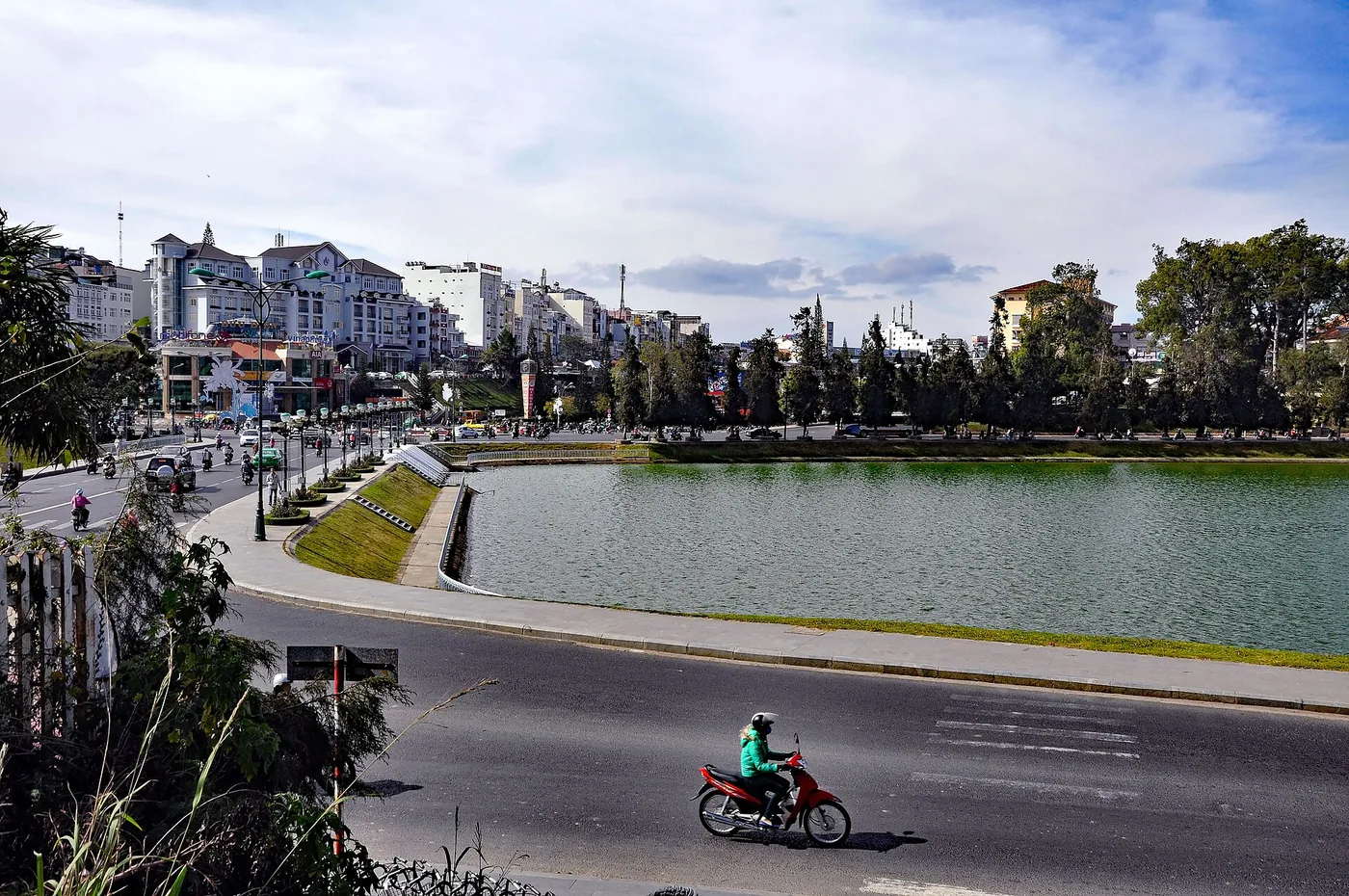
12. Mui Ne: dry, windy, and the start of kitesurf season
Mui Ne and Phan Thiet change a lot between October and November. November gets only about a third of October’s rain, and most days are sunny. It is a good beach option reachable from Ho Chi Minh City, and a sensible swap if you were thinking of Nha Trang.
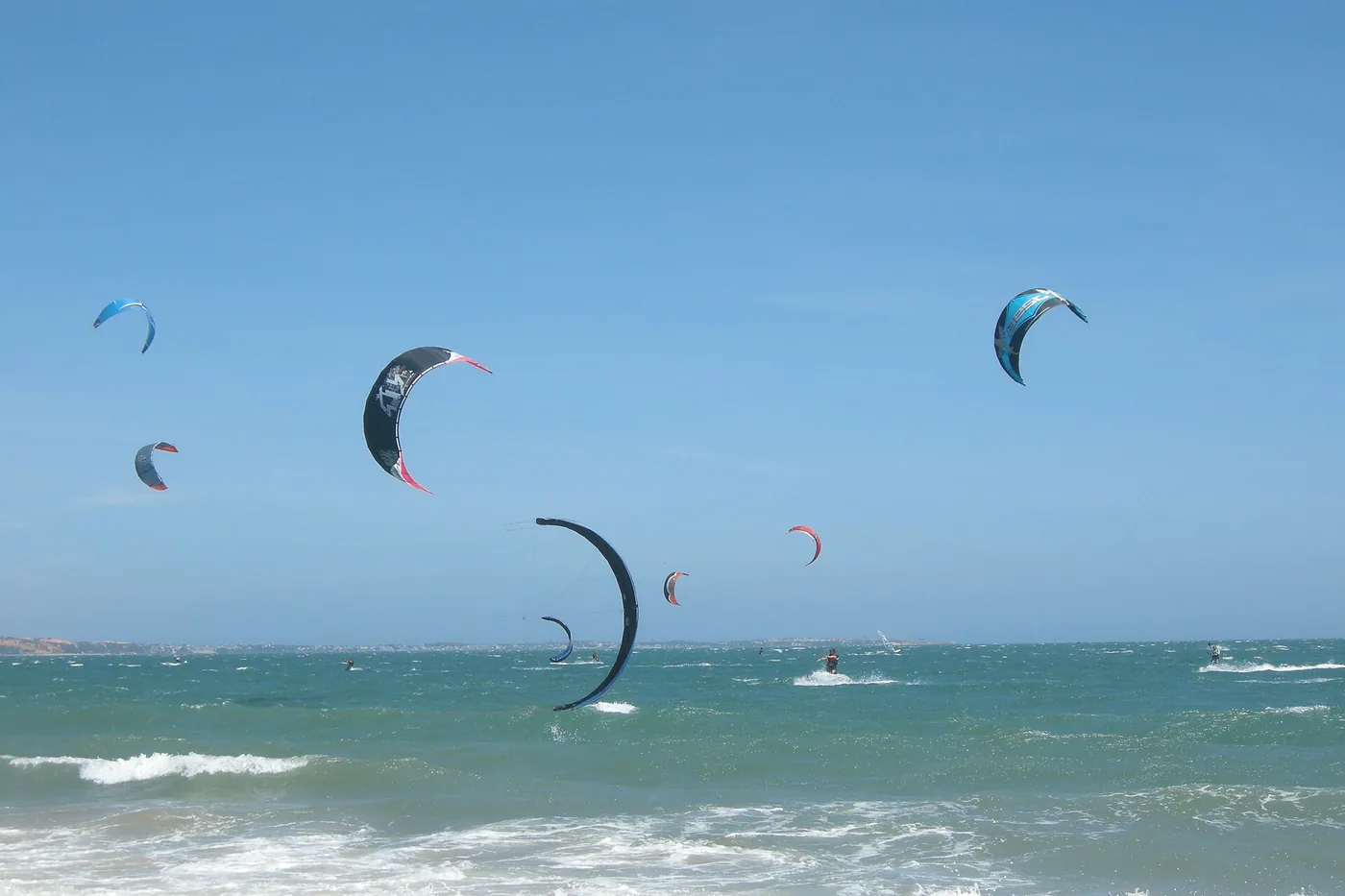
Kitesurfing starts
The northeast wind starts to pick up in November, and that opens the kitesurfing season. The strongest winds come in January and February. November, when the wind is only starting to build, is a good time to learn, and so are March and April. Kite schools line the beach road, and lessons run most days.
Swimming and the beach
The same wind brings waves. If you want calm water for swimming, Mui Ne is at its calmest from May to August. In November, expect wind and some surf, especially in the afternoon. Families with small children may prefer the more sheltered spots or the hotel pool.
Away from the water, the red sand dunesMap and the white dunes further north are easy half-day trips by jeep, and the dry weather makes this a good month for them. Go at sunrise or late afternoon, when the sand is cooler.
Our Mui Ne and Phan Thiet guide covers the beaches, the dunes and the kite schools.
13. Ho Chi Minh City and the Mekong Delta: the last of the rainy season
In Ho Chi Minh City, November is the tail end of the rainy season. Afternoon downpours become less frequent as the month goes on, and by the end of November most days are dry. Bring an umbrella for the first half, but the rain rarely lasts long. Walking around Ben Thanh MarketMap and District 1 is comfortable, if warm.
Flights into Ho Chi Minh City
International flights to Ho Chi Minh City have long used Tan Son Nhat Airport, close to the city centre. Some flights may move to the new Long Thanh International Airport, which is much further out, so check which airport is printed on your ticket before you plan the transfer. Our guide to Long Thanh Airport explains the differences, and the Ho Chi Minh City travel guide covers the city itself.
The Mekong as the water goes down
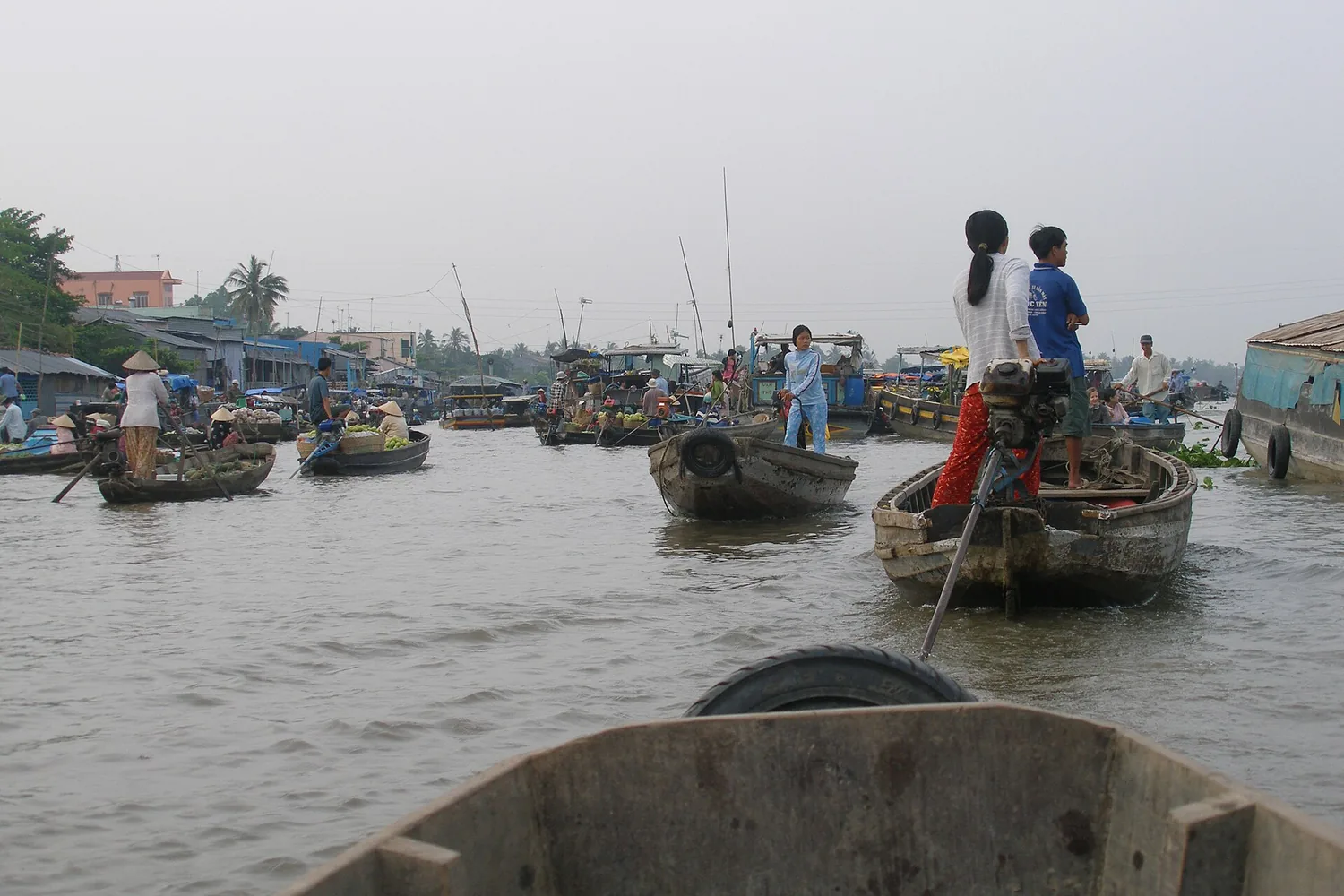
In the Mekong Delta the high-water season, which peaks from late September into October, is ending, and the water starts to fall. Around the high spring tides in early November, some low streets in Can Tho can still flood for a few hours. The Cai Rang floating marketMap runs as usual, and the rivers are full, which makes boat trips pleasant.
Ooc Om Boc and the Khmer boat races
The biggest event in the delta this month is the Ooc Om Boc festival of the Khmer community, with its Ngo boat races. It is held at the full moon of the tenth lunar month in the former Soc Trang province, which is now part of Can Tho city. Long wooden boats, each paddled by dozens of rowers, race on the water near Nuoc Ngot LakeMap. Because it follows the lunar calendar, the date moves within November from year to year. Can Tho newspaper publishes the programme each year.
For more on the region, see our guide to the south of Vietnam and the Mekong Delta.
14. Phu Quoc: the dry season arrives during the month
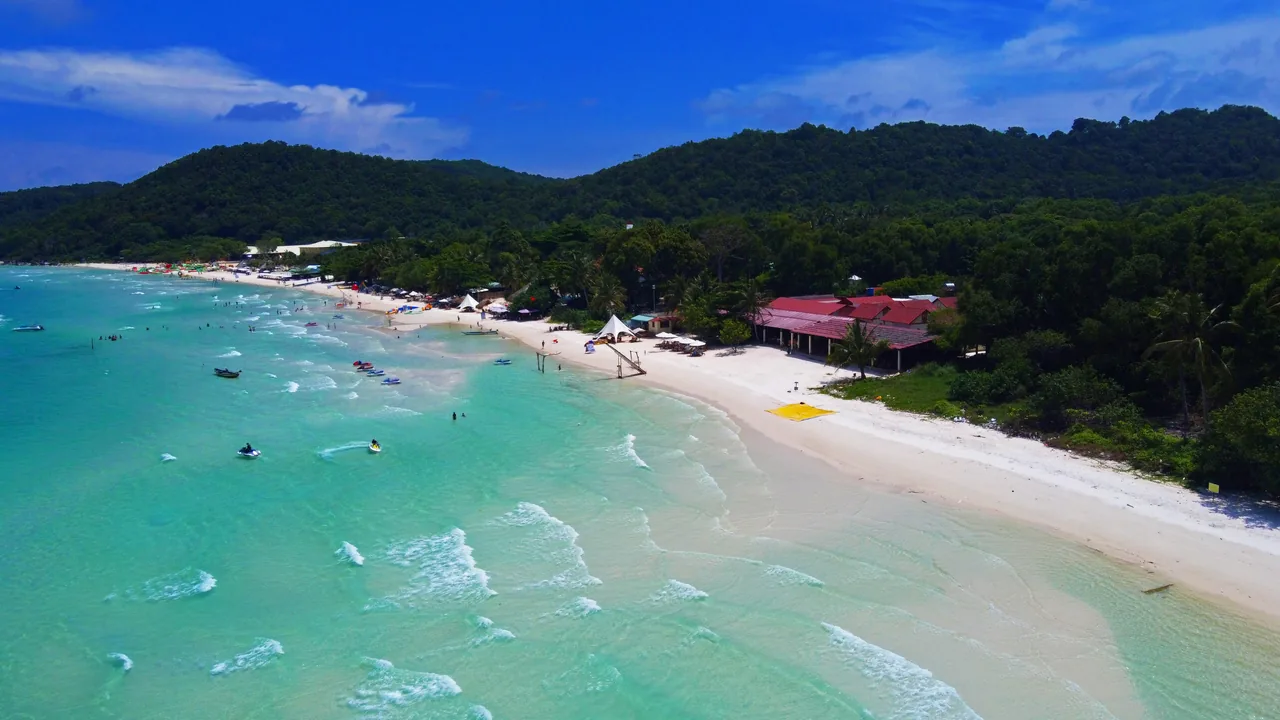
Phu Quoc is the place where people most often get November wrong. It is not yet the full dry season. It is the month the rainy season ends. Rain drops to less than half of October’s, and December is much drier again. Humidity falls too. The end of November is usually better than the start.
| Phu Quoc | October | November | December |
|---|---|---|---|
| Rain (mm) | 354 | 164 | 59 |
| Rainy days | 22 | 14 | 6 |
Which coast to stay on
As the monsoon changes direction, the west coast, with Duong DongMap, Bai Truong and Ong Lang, often becomes calmer. The east coast, including Bai Sao BeachMap and Bai Khem, can get more wind and waves at this time. This comes from local operators rather than official data, so treat it as a tendency, not a rule. If you are choosing a hotel for November, the west coast is the safer bet. Our Phu Quoc hotel guide compares the areas.
Island hopping and jellyfish
Boat trips to the An Thoi islands in the south of Phu Quoc are steadiest in the dry season, so late November is a better time for them than early November. Our Phu Quoc island hopping guide explains the routes. Jellyfish become more common from late November to mid-December, with the most around early December. Ask the boat crew before you jump in.
Prices and roadworks
Room prices start to climb towards high season from the end of November, and are highest over Christmas, New Year and Tet. There are large roadworks on stretches of road between the airport and the south of the island. No closures have been announced, but allow extra time when you head to the airport.
For the full picture, see the Phu Quoc travel guide and the best time to visit Phu Quoc. If you are choosing between the islands and the centre, Da Nang or Phu Quoc compares them.
15. Con Dao: check the boats before you plan
Con Dao, the island group off the south coast, has the same changeover weather as the rest of the south in November. Rain is easing, but the wind grows stronger through the month and is close to twice as strong as in October. That affects the sea crossing more than the beaches.
Getting there
The fast boat between Vung Tau and Con Dao has stopped running because of a breakdown, and the operator says it is suspended until a new announcement. VietnamPlus reported the suspension. Boats still run from Tran De portMap, in the former Soc Trang province, now part of Can Tho city. Flights to Con Dao leave from Ho Chi Minh City.
Do not assume the Vung Tau fast boat is running. Before you book anything on Con Dao, check the ferry schedule, and in windy weather be ready for sailings from Tran De to be cancelled too.
On the island
Once there, most of what people come for, the prison history sites in Con Dao townMap, the national park and the beaches, works in November. Choose sheltered beaches on windy days. When the sea is rough, flying is the more reliable way in and out.
Our Con Dao travel guide covers the sites and the ways to get there. Whatever you decide, check how the boats are running before you go.
16. The November calendar: flowers and festivals
November does not have a single big national festival for tourists, but there is a lot happening, most of it outdoors and tied to the season. Many events follow the lunar calendar, so they move from year to year. We give the rough time of month rather than exact dates.
What is on and where
| What | Where | When |
|---|---|---|
| Buckwheat flowers at their best | Dong Van plateau, Ha Giang | Early November |
| Wild sunflowers | Ba Vi National Park, near Hanoi | Early to late November |
| Wild sunflowers | Around Da Lat, Mang Den, Chu Dang Ya | Through November |
| White daisies sold on the streets | Hanoi | November and December |
| Teachers’ Day (not a holiday) | Everywhere | 20 November |
| Ooc Om Boc festival and Ngo boat races | Former Soc Trang, now Can Tho city | Full moon of the tenth lunar month |
| Full moon night with lanterns | Hoi An old town | Fourteenth night of the lunar month |
| Vietnam Culture Day (paid holiday) | Everywhere | 24 November |
| Kitesurfing season opens | Mui Ne | From November |
Events that belong to other months
Two events often get placed in November by mistake. The Da Lat Flower Festival is in December. The Kate festival of the Cham people is in October. Neither is a reason to travel in November.
Flower seasons shift a little with the weather each year, so if one field is the reason for your trip, look for recent photos in the week before you go.
For the lunar events, look up the full moon for your month and you will know roughly when the Ooc Om Boc races and the Hoi An full moon night fall.
17. Vietnam Culture Day: a new holiday in late November
Vietnam now has a new day off in November. The National Assembly passed a resolution making the twenty-fourth of November Vietnam Culture Day, and workers get the day off with full pay. The resolution has legal force, so this is a permanent holiday, not a one-off. The Vietnamese government newspaper announced it.
What changes for visitors
The same resolution allows public cultural and sports venues to waive or reduce their entry fees on the day. Which places do this is decided by the authorities that run them, so check with a museum before assuming it is free.
The bigger effect is on crowds. It is a single day, but when it falls next to a weekend, many Vietnamese families will take a short trip. Whether the government joins it to a weekend to make a longer break is decided each year, so we cannot say in advance how long it will be.
How to plan around it
If your trip includes the days around the twenty-fourth, book trains, buses and popular hotels a little earlier than usual, especially in places close to Hanoi and Ho Chi Minh City such as Ninh Binh, Ha Long, Da Lat and Mui Ne. Everywhere else, it will not change much.
18. Crowds and prices in November
November comes just before the busiest stretch of the Vietnamese travel year: Christmas, New Year and then Tet. That makes it a good month for prices in most of the country, with a few exceptions.
Where it is cheap and quiet
The central coast is in its low season. Hotels in Da Nang, Hoi An and Hue cut their prices, and the old towns are much less crowded.
Where to book early
The north is in season. The better Ha Long Bay cruise boats fill up early, and hotels in Hanoi’s Old Quarter are busy. On Phu Quoc, prices start to move up to high-season levels from the end of the month, so a stay in the second half of November costs more than one at the start. Our guide to where to stay on Phu Quoc compares the areas.
Winter visitors from Russia
Winter charter flights and regular routes from Russia and other CIS countries start in the autumn and run until spring. November is when Nha Trang and Phu Quoc begin to see more Russian visitors, and some hotels and restaurants there cater to them in particular.
If you are going to Phu Quoc in late November, book the room as soon as your dates are fixed. Prices on the island move up from the end of the month.
19. What to pack, and entry rules
Packing is the trickiest part of a November trip that covers both ends of the country. In the mountains of the north you need a warm jacket. In the south you want shorts and sun cream. If you are doing both, bring clothes for two seasons.
Clothes by region
| Where | What to bring |
|---|---|
| Hanoi, Ha Long, Ninh Binh | Long sleeves and a light jacket for cool mornings and evenings |
| Sapa, Ha Giang | Down jacket or fleece, waterproof layer, gloves if riding a motorbike |
| Da Lat, Mang Den | One warm layer for early mornings and nights |
| Hue, Da Nang, Hoi An, Nha Trang | Raincoat, waterproof shoes or sandals, clothes that dry fast |
| Ho Chi Minh City, Mekong, Phu Quoc, Mui Ne, Con Dao | Summer clothes, sun cream, a small umbrella for early-month showers |
Entry rules in short
Entry rules depend on your passport, so we will not give one rule for everyone. Citizens of a list of twelve countries, including South Korea, Japan, Russia and several European countries, can stay up to forty-five days without a visa under government resolution 44/NQ-CP. Other countries have their own visa-free arrangements.
Everyone else can apply for an e-visa, which is open to all nationalities and allows stays of up to ninety days, single or multiple entry. Apply only through the official e-visa portal, not through lookalike sites that charge extra. Phu Quoc also has its own visa-free entry for foreigners who fly straight to the island and stay there.
Our guides to Vietnam entry requirements and the Vietnam e-visa go through each case step by step. For data on the road, see our Vietnam eSIM guide.
20. Sample November itineraries
The simplest way to plan a November trip is to spend most of it in the north, then fly south for the beach, and pass over the central coast. Here are three routes that fit the weather.
One week in the north
- Days one and two Hanoi: the Old Quarter, the lake, and a morning at Ba Vi if the sunflowers are out.
- Days three and four Ha Long Bay or Lan Ha Bay on an overnight cruise.
- Days five and six Ninh Binh for boat trips through Trang An and cycling around Tam Coc.
- Day seven Back to Hanoi. To add Sapa or Ha Giang, allow three or four more days.
Two weeks, north and south
- First week Hanoi, Ha Long, and then either Ha Giang for the buckwheat flowers or Sapa for trekking.
- Flight south Fly straight from Hanoi to Phu Quoc or to Ho Chi Minh City for Mui Ne, and skip the central coast.
- Second week Beach days, placed as late in the month as your dates allow.
Highlands and the south
If you are starting in the south, go from Ho Chi Minh City up to Da Lat for the sunflowers and cool air, down to Mui Ne for the beach and the dunes, then back to Ho Chi Minh City, with a day in the Mekong Delta at the end.
If you really want the central coast in your November route, add one spare day and have a rainy-day plan for each stop: museums in Hue, cooking classes in Hoi An, the mud baths in Nha Trang. Put the central stop in the middle of the trip, not right before your flight home.
On a route like this you will use mobile data for maps, ride-hailing apps and weather warnings, so it is worth sorting out before you land.
21. November compared with October and December
If your dates are flexible by a few weeks, it helps to see how November sits between the months on either side of it. Each region changes in a different direction.
Region by region
| Region | October | November | December |
|---|---|---|---|
| North | Already good | Main season, dry and clear | Colder, more grey days start |
| Central coast | Wettest month, highest storm risk | Still very wet; Nha Trang at its peak | Rain starts to ease but is still heavy |
| South and Phu Quoc | Middle of the rainy season | Changeover month | Dry season proper, high-season prices |
| Da Lat | Heavy rain | Rains ending, wild sunflowers | Dry, Flower Festival |
Rain month by month
| Place | October rain (mm) | November rain (mm) | December rain (mm) |
|---|---|---|---|
| Hue | 773 | 642 | — |
| Da Nang | 628 | 448 | — |
| Nha Trang | 312 | 382 | — |
| Da Lat | 245 | 94 | 36 |
| Mui Ne (Phan Thiet) | 159 | 55 | — |
| Can Tho | 301 | 137 | 42 |
| Phu Quoc | 354 | 164 | 59 |
The pattern is clear. The south and Da Lat get much drier from October to December. The centre is wettest in October and still very wet in November, except Nha Trang, where November is the worst. The north is good in all three months but gets colder and greyer from December, and the drizzle season follows early in the new year.
So if you can choose, late November or early December suits a trip that mixes the north and the south. For the centre, it is better to wait until spring. Our month guides to Nha Trang in December and the best months for Da Nang go into more detail, and the best time to visit Phu Quoc does the same for the island.
22. Who November suits, and who should pick another month
November is a good month for Vietnam as long as you choose the right part of the country. Here is how it works out for different kinds of trips.
November is a good choice if
You want the north in its best weeks, with the buckwheat flowers and wild sunflowers, cool weather for walking, and a beach in Mui Ne or Phu Quoc late in the month. See our Ha Giang Loop guide and the Ha Long Bay cruise guide to start planning.
Pick another month if
Your trip is built around the beaches of Da Nang, Hoi An or Nha Trang, around caving in Phong Nha, or around island trips to Cu Lao Cham. November is one of the worst months for all of these. Spring and early summer are much more reliable for the central coast.
In between
If you want Phu Quoc or Con Dao, November works, but the second half of the month is better than the first, and on Con Dao the boats decide a lot. If you want Sapa, November is dry enough to walk but cold, and the terraces are already harvested.
Whatever you choose, keep a day free somewhere in the plan, check the forecast before each move, and pack for two seasons. Start with the Vietnam travel guide for the rest of the planning.
🎡Things to Do79
🍜Food10
🏨Where to Stay16
🚇Getting Around16
🧭Travel Tips30
🧭Vietnam-wide essentials10
Vietnam in November: common questions
Yes, for the north, the highlands and Mui Ne, where there is little rain and many clear days. The south, including Ho Chi Minh City, the Mekong, Phu Quoc and Con Dao, is drying out through the month, so later is better. The central coast, from Hue to Nha Trang, is in its rainy season, so plan beach time there for another month.
It depends on the region. The north is dry and cool, with chilly mornings and cold nights in the mountains. The central coast is wet, with heavy rain on most days and a risk of floods. The south is warm and drying out, with fewer showers as the month goes on.
Yes. November is one of the driest months in the bay, fog is rare, and it is the main cruise season. Nights on board are cool and the water feels cold to many swimmers. Book good boats early.
Only if you are flexible. November is the wettest month of the year in Nha Trang, the sea is often too rough to swim, and island tours are often cancelled. For a beach, Mui Ne or Phu Quoc are better choices this month.
Less than in October, but it is not fully dry yet. November is the month the rainy season ends, and the second half is usually much better than the first. The west coast is often calmer than the east at this time.
It can. The Thu Bon River often overflows into the old town in late October and November. The water usually goes down within a day or two. If you go, keep a spare day and read up on the flood season first.
Cold enough for a warm jacket. Average temperatures are low, nights are colder, fog is common and the summit of Fansipan can have frost in some years. Hotels are not always well heated.
Fields are planted in several rounds, so there are flowers from October to December, but they usually look their best in early November. A buckwheat festival is held in Dong Van around late October or early November.
It depends on your passport. Some countries can visit without a visa for up to forty-five days, and anyone can apply for an e-visa of up to ninety days on the official portal. Check our entry and e-visa guides for your nationality.
Vietnam Culture Day on the twenty-fourth is a new paid public holiday, and domestic travel can increase if it falls next to a weekend. Teachers’ Day on the twentieth is not a holiday.