
Is Vietnam Safe? Every Tourist Scam in 2026 & the 4 Rules That Stop Them
Vietnam is friendly and genuinely safe — but a familiar set of tourist scams keeps catching visitors. Here’s every common one, city by city, and the simple habit that beats it.
- Agree the price first. Every ride, coconut, shoeshine or photo should have a number before you say yes.
- Use ride apps (Grab / Xanh SM) instead of street taxis, so the fare is fixed and there are no meter or route tricks.
- Know the notes and count your change. The 10,000-vs-100,000₫ mix-up and the 500k→20k swap are the #1 ways tourists lose money.
- Almost every “scam” is overcharging, not crime. Vietnam is very safe; a calm “no, thank you” handles 90% of it. The one real risk is bag-snatching in big cities.
1. How Scams Really Work in Vietnam (& the Golden Rules)
2. Taxi, Grab & Transport Scams
3. Money & Change Scams
4. Market & Shopping Scams
5. Street & “Friendliness” Scams
6. Food, Drink & Bar-Bill Scams
7. Tour, Bus & Sapa Scams
8. The One Real Risk: Theft & Bag-Snatching
9. City-by-City Scam Hotspots
10. What to Do If You’re Scammed
1. How Scams Really Work in Vietnam (& the Golden Rules)
🚫 What is illegal in Vietnam: vapes, fines and what customs takes →
Almost every Vietnam “scam” is really overcharging — paying tourist prices because you didn’t know the local rate or didn’t agree a number up front. Violent crime against visitors is rare and Vietnam rates as low-risk on government travel advisories (UK FCDO); the real threat to your wallet is small, repeated mark-ups. Four golden rules stop nearly all of them:
- Agree the price before you accept anything — a ride, a coconut, a shoeshine, a photo with a fruit pole. “How much?” first, always.
- Use apps for transport so the fare is fixed and tracked (more below).
- Know the notes and count your change — several Vietnamese banknotes look alike, especially in poor light.
- It’s fine to say no. A smile and a firm “no, thank you” ends most hustles instantly.
| The scam | Where it happens | The fix |
|---|---|---|
| Taxi meter & route tricks | Airports, tourist areas | Use Grab / Xanh SM — fixed app price |
| 10k-vs-100k note swap | Change, anywhere | Know the notes, count out loud |
| “Free” photo / bracelet / shoeshine | Hanoi Old Quarter, HCMC District 1 | Don’t accept anything pressed on you |
| No-price-menu over-billing | Tourist restaurants & markets | Only eat where prices are shown |
| Bag-snatch from a motorbike | HCMC, Hanoi, Nha Trang | Bag on your front, phone away from the road |
2. Taxi, Grab & Transport Scams
Transport is the classic trouble spot — and the easiest to solve. The usual tricks:
- The “broken” or fast meter, or a scenic detour to push up the fare.
- Fake taxis with logos copied from trusted firms (look-alikes of Mai Linh / Vinasun).
- Airport touts who approach you inside the terminal with a “fixed” (inflated) price.
- The xe om (motorbike-taxi) extra zero — you agree 30,000₫, somehow it becomes 300,000₫. Agree and repeat the number first.
- The “your hotel is closed/full” detour — a driver insists your booking fell through and takes you to a place that pays him commission. Call your hotel; don’t be re-routed.
The fix is simple: use a ride app. With Grab or Xanh SM the price is set in the app before you get in, the route is tracked, and there’s nothing to argue about. If you must take a street taxi, use only clearly branded Mai Linh or Vinasun cars and insist on the meter.
3. Money & Change Scams
Vietnam’s currency has lots of zeros and similar-looking notes — exactly what these tricks exploit:
| Look-alike notes | The trick | Beat it |
|---|---|---|
| 10,000₫ & 100,000₫ (one zero apart) | Change given in 10ks instead of 100ks | Count change out loud before you leave |
| 20,000₫ & 500,000₫ (both teal/blue) | The palm-swap: “you gave me a 20k, not a 500k” | Hand over notes one at a time, say the amount |
| A torn or old note | Refused as “no good” so you pay again | Old polymer notes are fine; don’t be rushed |
Get familiar with the banknotes on day one. The 10,000₫ is yellow-brown and the 100,000₫ is green, so this swap relies on the missing zero and quick hands, not colour — the only pair that genuinely looks alike is the teal 20,000₫ and 500,000₫. And every note from 10,000₫ up is polymer (paper is only 5,000₫ and below), so feeling for plastic won’t tell big from small. At ATMs, use machines inside bank branches, cover the keypad, and if the screen offers to “charge in your home currency” (dynamic currency conversion), always choose VND.
4. Market & Shopping Scams
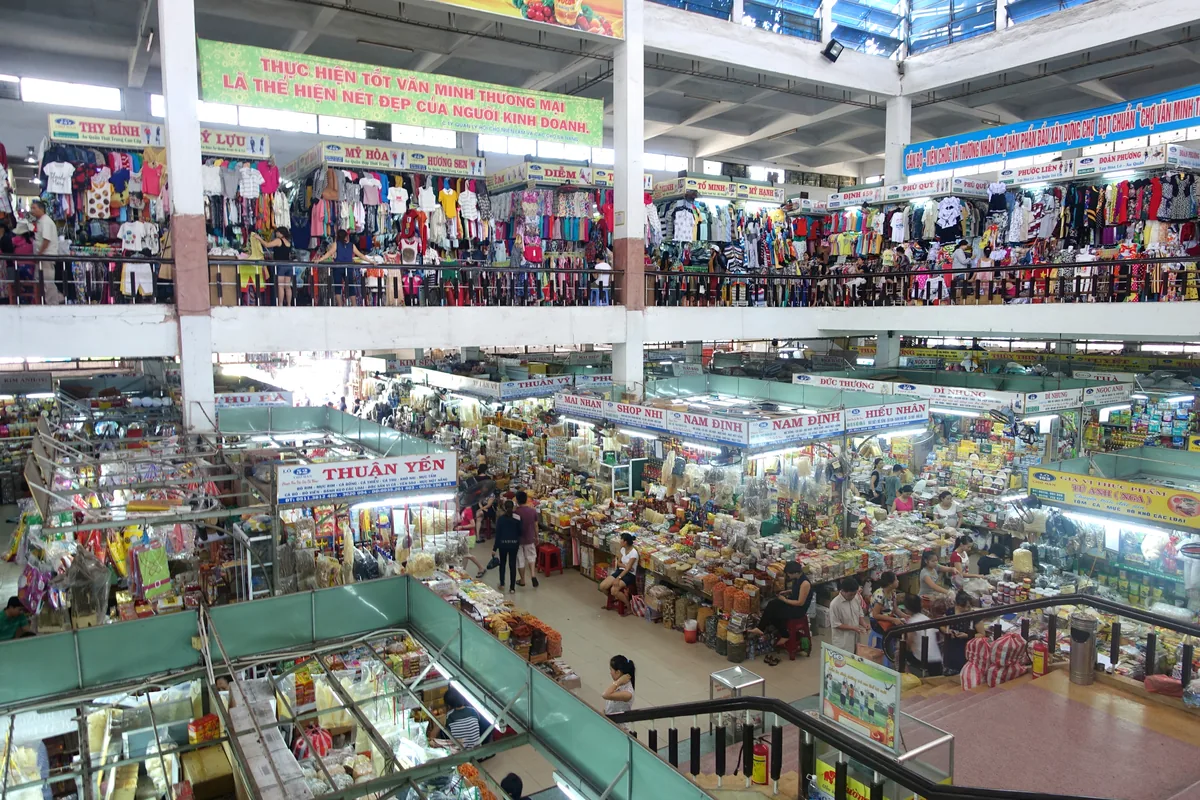
Markets are fun, but the opening price for a foreigner can be several times the real one — typically 15–25% above local price in touristy markets, and much more for souvenirs. It’s not malice, it’s expected haggling, but know the game:
- The opening price is a test. Counter at roughly 40–50% and settle in the middle; walking away usually drops it fast.
- Bait & switch / heavy scales: you agree a price, then the item is swapped for a lesser one or the fruit is “weighed” heavier. Watch the transaction.
- Fake brands & “real” gems or silk — assume branded goods are copies and pay accordingly. In Hoi An, pin down the exact fabric, scope and price in writing before a tailor starts, and treat “genuine gemstone” offers with deep suspicion.
- “Free” gifts — a bracelet slipped onto your wrist, a sample pressed into your hand — that then demand payment. Don’t accept things pushed at you.
5. Street & “Friendliness” Scams
These rely on a warm approach and a sudden bill. The classics, mostly in Hanoi’s Old Quarter and HCMC’s District 1:
- The forced shoeshine / repair: someone points at a “problem”, grabs your shoe and does a quick fix, then demands a steep fee.
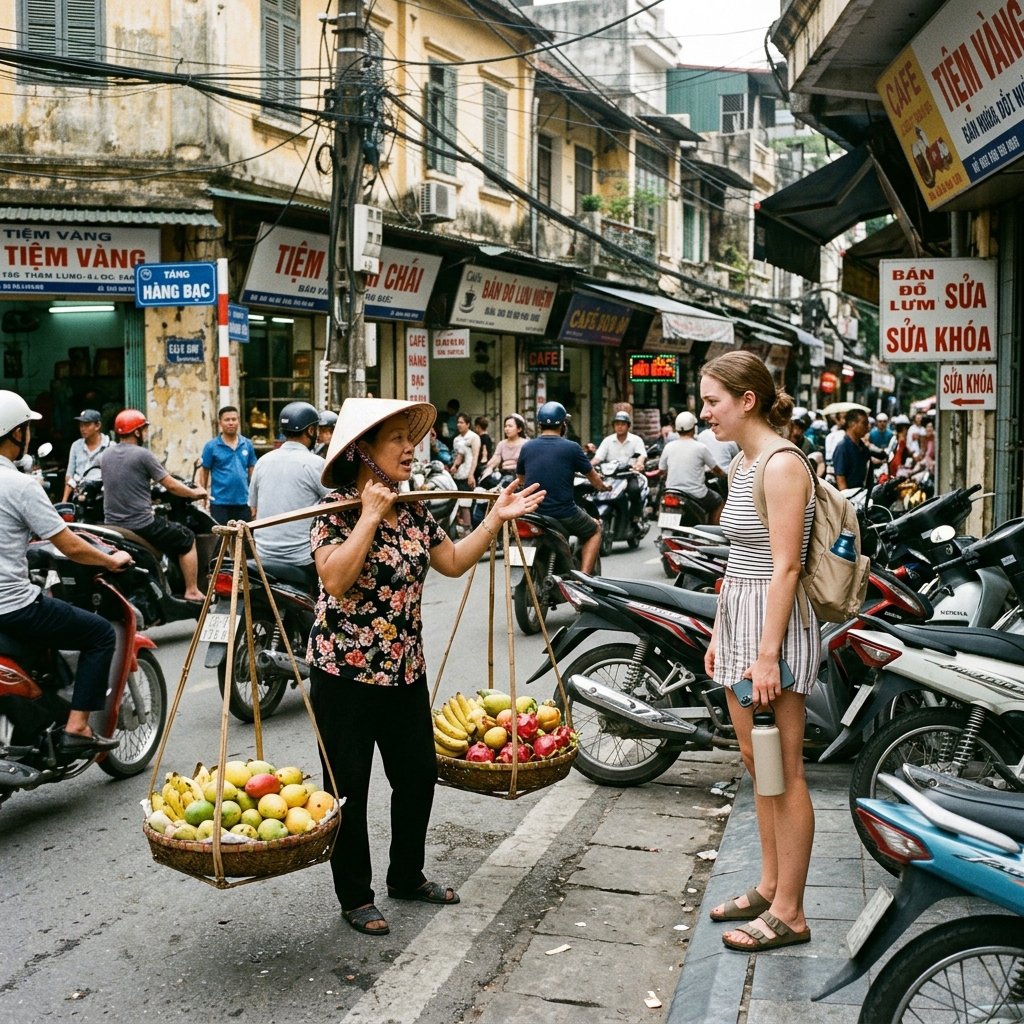
- The fruit-pole photo: a vendor drops their yoke and fruit baskets on your shoulder for a “free” photo, then charges 200,000–500,000₫ for it (and the fruit).
- The “free” donut / snack (mainly Hanoi): a taste becomes a bag you’re pressured to buy.
- The “monk” with a lucky bracelet who then asks for a big donation — real monks in Vietnam don’t solicit cash this way.
- The friendly local / “student” who walks you to a café or bar where the bill is wildly inflated.
- Motorbike-rental “damage”: on return you’re blamed for old scratches. Photograph the whole bike before you ride off.
6. Food, Drink & Bar-Bill Scams
The good news: Vietnamese food is cheap and overwhelmingly honest — see our Da Nang food guide. A few traps at tourist spots:
- No-price menus: if a menu has no prices, ask before ordering. The restaurants around Ben Thanh Market (HCMC) are notorious for adding items you never ordered.
- Seafood “by weight”: confirm the price per kilo and watch it weighed.
- Unordered extras: wet towels, peanuts or tissues placed on the table can appear on the bill — you can decline them.
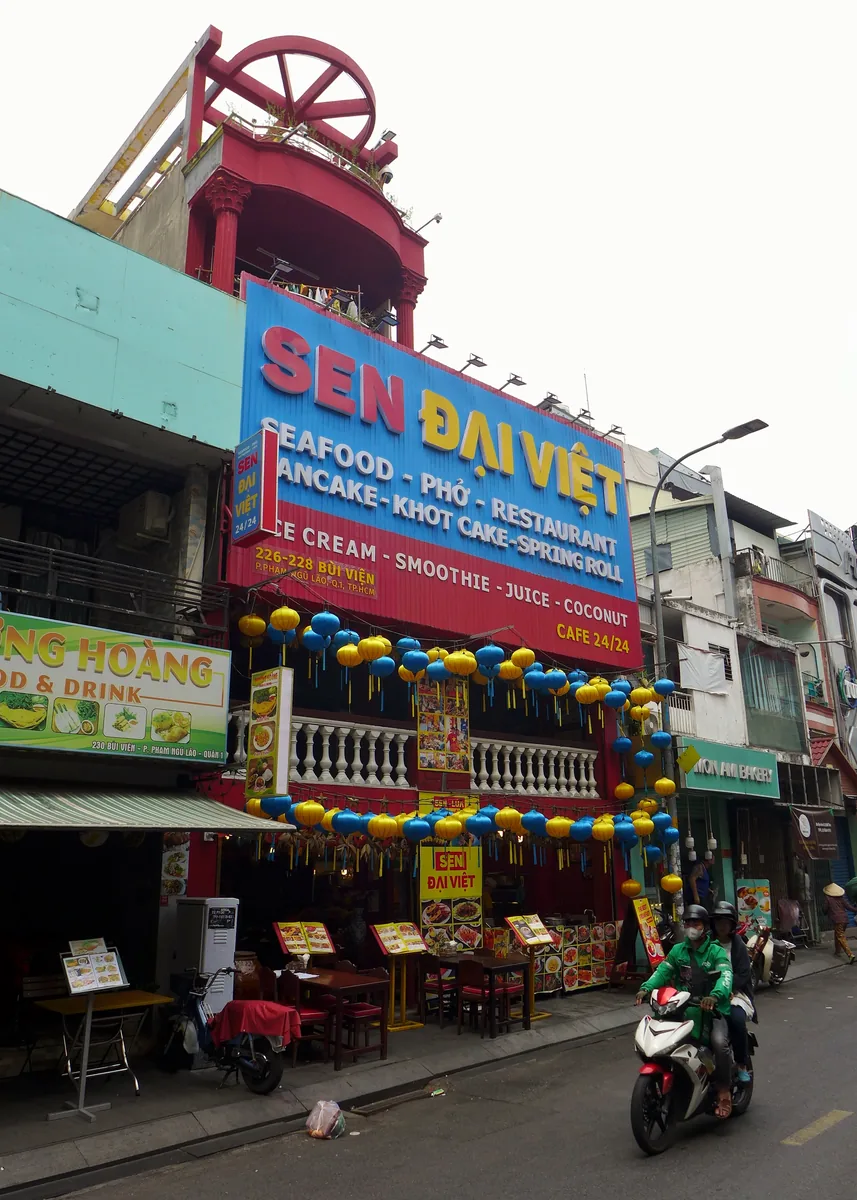
- Bar & club bills in nightlife streets like Bui Vien (HCMC) can balloon, and “come have one drink” invitations from someone on the street usually end in a shock bill. Check drink prices first; check the bill before paying.
7. Tour, Bus & Sapa Scams
Most operators are fine, but a few patterns cost travellers money and time:
- Too-cheap tours with no online reviews, cash-only demands or last-minute itinerary changes — book through a reputable agency with real reviews.
- Sleeper-bus surprises: overbooked seats, a “VIP” bus that isn’t, or being dropped far from the centre so you need their taxi. Book with a known company and confirm the drop-off point.
- Sapa trekking: H’mong sellers who walk with you for hours then press you hard to buy, plus “porter” and photo tips. It’s fine to enjoy the company, but be clear from the start that you’re not buying, and book treks through a proper agency.
8. The One Real Risk: Theft & Bag-Snatching
Unlike the overcharging above, this is actual crime — still uncommon, but the thing genuinely worth guarding against. Drive-by bag- and phone-snatching from motorbikes happens mostly in Ho Chi Minh City, Hanoi and Nha Trang, and pickpocketing in crowds (US State Dept advisory):
- Wear your bag on your front, on the building side of the pavement, not dangling toward the road.
- Don’t use your phone at the kerb or hold it loosely while walking near traffic — that’s the classic snatch.
- Keep little on you after dark; leave spare cash and your passport in the hotel safe.
- In a cyclo or on a bike taxi, keep bags zipped and in front of you.
9. City-by-City Scam Hotspots
The same few tricks cluster in predictable places. Where to keep your guard up:
| City / area | Watch out for | Good to know |
|---|---|---|
| Hanoi (Old Quarter) | Forced shoeshine, fruit-pole photo, “free” donut, cyclo “waiting” fees | The friendliest hustles; a firm “no” works |
| Ho Chi Minh City (D1 / Bui Vien) | Inflated bar bills, bag-snatching, Ben Thanh restaurant over-billing | Keep your phone off the road; check bar prices first |
| Hoi An | Tailor & “gem” upsells, boat/lantern overcharge | Agree tailoring scope & price in writing |
| Nha Trang | Bag-snatching, seafood-by-weight bills | Confirm the per-kilo price and watch it weighed |
| Sapa | Trek/homestay pressure-selling, “porter” & photo tips | Book trekking through a reputable agency |
| Da Nang & airports | Airport taxi touts, fake-Grab approaches | Book a ride app from the official pickup area |
10. What to Do If You’re Scammed
First, keep perspective: most of these cost a few dollars, not a holiday. If something does go wrong:
- Stay calm and walk away from a hostile vendor — it’s rarely worth escalating over a small sum.
- For real theft or a serious dispute, go to the local police (tourist-police points exist in big cities); for anything major involving documents or money, contact your embassy.
- Report dodgy rides in the app — another reason to use Grab or Xanh SM.
- Stop card fraud fast: note your bank’s number before you travel and freeze the card in your banking app if needed.
- Keep receipts and a police report for anything stolen — you’ll need them for an insurance claim.
None of this should put you off: Vietnam is welcoming and overwhelmingly safe. Learn the patterns above and you’ll travel relaxed and rarely, if ever, pay the “tourist tax.”