
Grab vs Xanh SM vs Be in Vietnam (2026): Which Ride App Is Cheapest & How to Use Them
The complete national guide to Vietnam’s ride-hailing apps — what each does, real fares city by city, airport pickups, and how to book and pay in Hanoi, Da Nang, Ho Chi Minh City and beyond.
- Grab: the original super-app — cars, motorbikes, food and payments in one English app, working nationwide right down to small towns. The easiest pick for visitors.
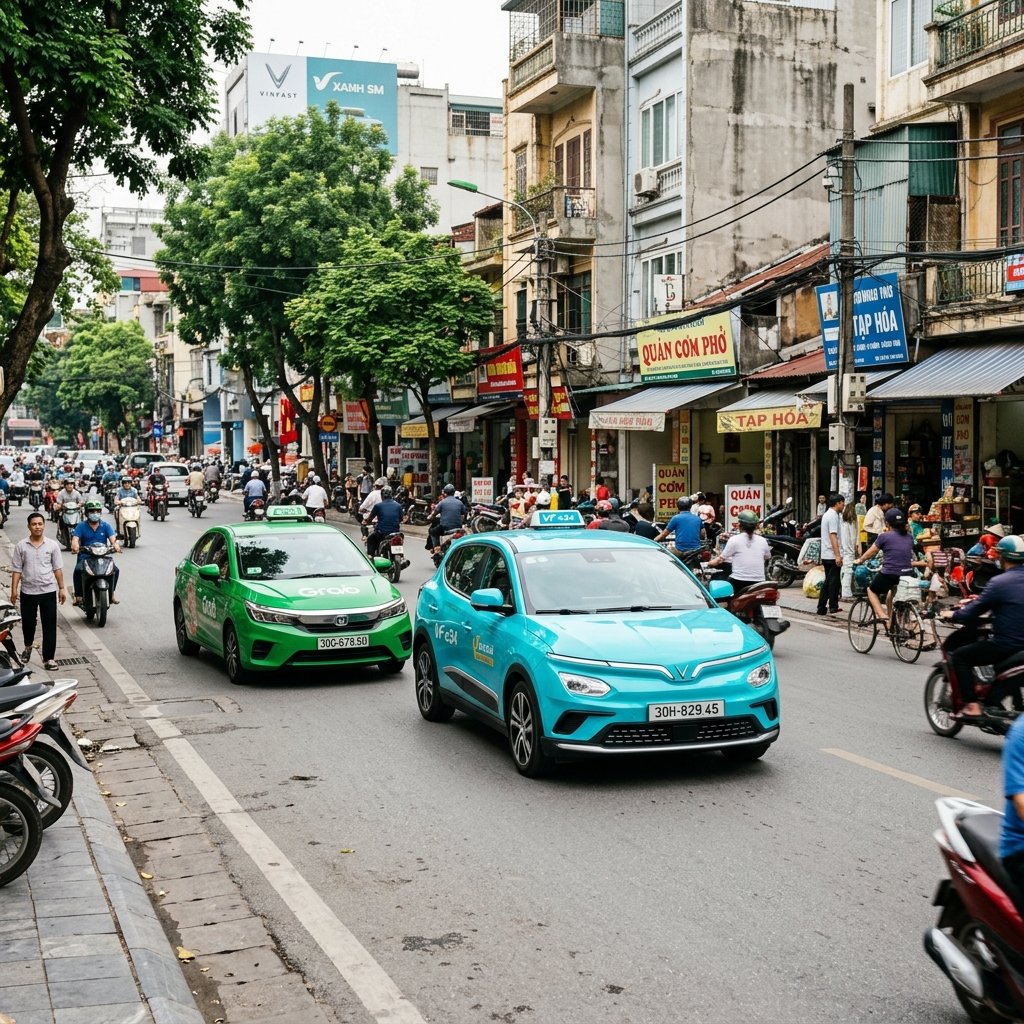
- Xanh SM: Vingroup’s all-electric service (since 2023) on a fixed meter with no surge. In 2025 it overtook Grab to become Vietnam’s most-used ride app, now operating nationwide across all 34 provinces and cities.
- Be: the homegrown app with the most drivers and the cheapest promos — a great backup, though the app is Vietnamese-first and works best with a local number.
- The move: install at least two, and compare — the cheapest one flips by city, time and traffic. You’ll need mobile data (an eSIM) to run any of them.
1. The Three Apps at a Glance
2. Grab: The All-Rounder
3. Xanh SM: The All-Electric Leader
4. Be: The Local Budget Pick
5. Which App Wins in Each City
6. Bike, Car or 7-Seater?
7. What Rides Really Cost Across Vietnam
8. Airport Pickups: The Bit That Trips People Up
9. How to Book, Step by Step
10. Paying: Cash, Cards & Wallets
11. Safety, Scams & Good Manners
🚆 Getting between Vietnamese cities: trains, buses, flights and ferries compared →
1. The Three Apps at a Glance
🚗 Hiring a car and driver in Da Nang: how it is priced and when it beats Grab →
🌙 Landing in Da Nang at 1am: which night to book and what the airport cannot do →
Vietnam runs on ride-hailing apps. You open one, see the fixed price before you book, and a car or motorbike comes to you — no flagging taxis, no arguing over fares. Three names matter nationwide:
| Grab | Xanh SM | Be | |
|---|---|---|---|
| Type | Super-app: cars, bikes, food, pay | All-electric cars & bikes | Local app: cars, bikes & more |
| Coverage | Nationwide, incl. small towns | Nationwide — all 34 provinces & cities | ~28 cities, big-city focus |
| Drivers | ~300,000 | ~90,000, rising fast | The most (~400,000) |
| English | Best — in-app chat auto-translates | Limited, improving | Vietnamese-first |
| Pricing | Shown up front, can surge at peak | Fixed meter, no surge | Cheapest promos |
| Payment | Card, cash, GrabPay | Card, cash | Card, cash |
| Best for | Visitors & convenience | Clean, predictable fares | Budget, with a local SIM |
Quick verdict: for most travellers, Grab is the safe default — it’s everywhere and the most foreigner-friendly. Add Xanh SM and you’ll often beat Grab’s price with a cleaner, quieter electric car. Be is the budget wildcard, best once you have a Vietnamese number. Install two and compare each trip.
2. Grab: The All-Rounder
Grab is Southeast Asia’s ride-hailing super-app and the one most travellers already have. In Vietnam a single English-language app covers everything:
🚗 GrabCar
Private air-conditioned cars in 4- and 7-seat sizes — best for groups, luggage, the airport or rain.
🏍️ GrabBike
Ride pillion on a motorbike — the cheapest, fastest way through traffic for one. A helmet is provided.
🍜 GrabFood & Express
Food delivery from thousands of restaurants, plus same-day parcel delivery — handy on a rainy night.
The price is fixed and shown before you confirm, so it never changes mid-trip. Pay cash or link a card, and the in-app chat auto-translates messages between you and the driver — which is why Grab stays the most foreigner-friendly choice from big cities to small beach towns.
3. Xanh SM: The All-Electric Leader
Xanh SM (listed on app stores as “Green SM”) launched in 2023 and has already changed the game. It’s run by Vingroup — the company behind VinFast electric cars — so the whole fleet is electric:
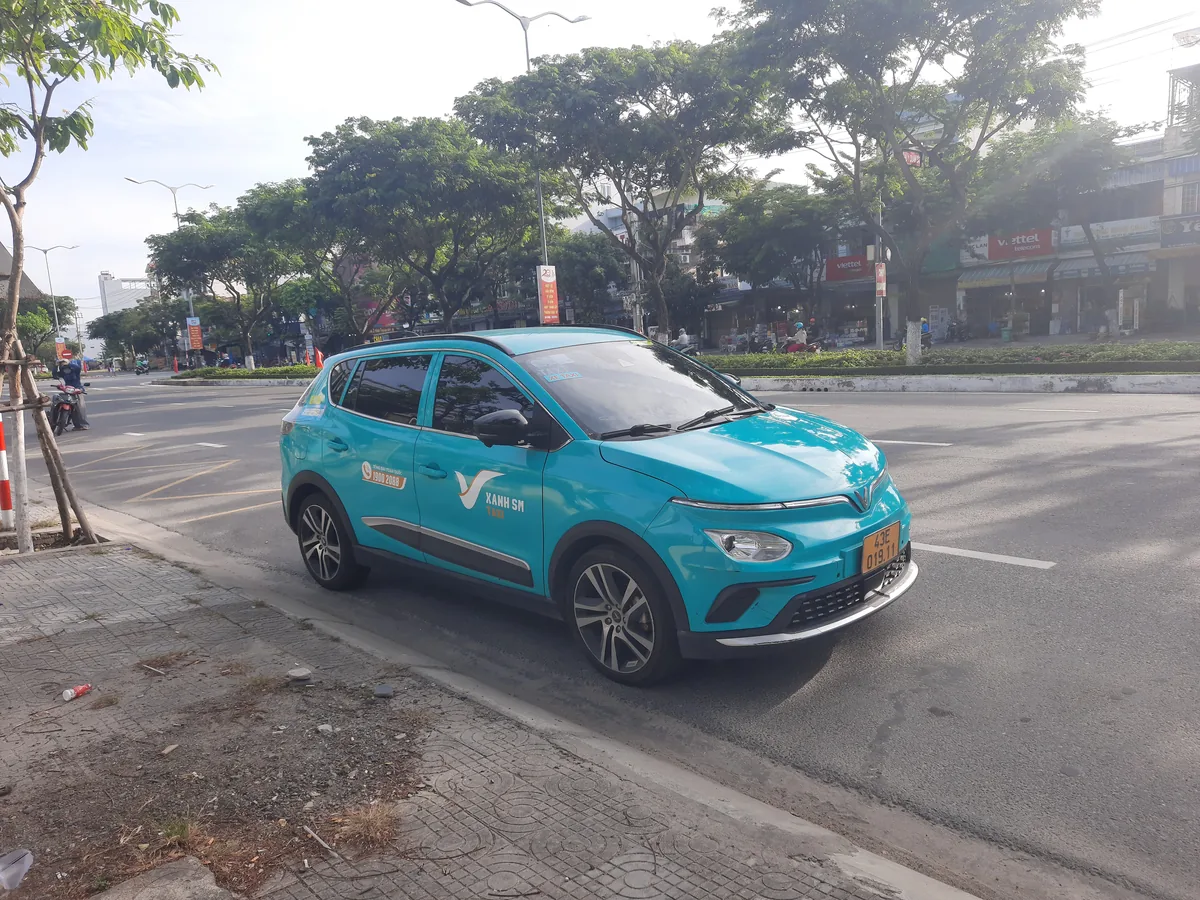
- Xanh SM Taxi: clean, silent VinFast cars with uniformed, professional drivers, on a fixed meter that never surges. Hail one in the app, or flag the bright cyan cars on the street.
- Xanh SM Bike: electric motorbike rides — the EV answer to GrabBike.
- Premium tiers: in big cities you can also book larger VinFast SUVs and “Luxury” cars for a little more.
Riders love the new cars, the calm electric ride and the transparent meter. It caught on so fast that by 2025 it had carried over 50 million passengers, reached all 34 of Vietnam’s provinces and cities, and overtaken Grab in ride-hailing market share (market data). Coverage is strongest in the big cities and still expanding into smaller towns.
4. Be: The Local Budget Pick
Be is Vietnam’s homegrown app, and a local favourite — it actually has more drivers than anyone (around 400,000). It runs beBike motorbikes and beCar cars (4- and 7-seat), plus food and intercity rides, and it’s famous for aggressive promos that often make it the cheapest option of all.
The catch for visitors: the app is Vietnamese-first and smoothest with a local phone number and a local payment method, so it’s best as a money-saving backup once you’re set up — not your first install on day one.
5. Which App Wins in Each City
All three are strongest in the big cities and thin out in the mountains. Here’s the lay of the land:
| City / area | Best apps | Good to know |
|---|---|---|
| Hanoi | Grab · Xanh SM · Be | All three are strong; Xanh SM is big here. Noi Bai airport pickup is past pillar 14 (see below). |
| Ho Chi Minh City | Grab · Xanh SM · Be | All three; traffic is heavy, so bikes are often fastest. Tan Son Nhat pickup is lanes D1–D2. |
| Da Nang & Hoi An | Grab · Xanh SM | Both excellent. In Hoi An’s car-free Old Town you’ll be dropped at the edge and walk in. |
| Nha Trang | Grab · Xanh SM | Both reliable; Xanh SM strong. Cam Ranh airport is ~35 km from town, so factor the longer fare. |
| Phu Quoc | Grab · Xanh SM | Work in town and at resorts; fares run a little higher and cars thin out late at night. |
| Da Lat · Hue | Grab (Xanh SM growing) | Grab is the safe bet; supply is thinner, so expect a short wait at peak times. |
| Sapa · Ha Giang | Limited | Mountain towns: apps are patchy. Use your hotel, a booked car or a local xe om instead. |
6. Bike, Car or 7-Seater?
Every app lets you pick a motorbike or a car; cars come in 4- and 7-seat sizes. How to choose:
| 🏍️ Bike | 🚗 Car (4-seat) | 🚐 Car (7-seat) | |
|---|---|---|---|
| Best for | 1 person, light bag, beating traffic | Couples, small bags, rain | Families, groups, big luggage |
| Price | Cheapest (~half a car) | Mid — still cheap globally | Highest, but still good value |
| Comfort | Open air, fast, a bit thrilling | Air-con, private, relaxed | Air-con, roomy, relaxed |
| Weather | Poor in rain or heat | All-weather | All-weather |
7. What Rides Really Cost Across Vietnam
Fares are worked out by distance and time and shown up front. Grab’s price can rise a little at peak hours and in the rain (surge); Xanh SM and Be run a meter with no surge multiplier. Either way there are no hidden extras. Rough 2026 guide (1 USD ≈ 26,000₫):
| Trip | Bike | Car |
|---|---|---|
| Short hop (1–3 km) | ~15,000–30,000₫ | ~30,000–55,000₫ |
| Across town (5–8 km) | ~35,000–60,000₫ | ~60,000–120,000₫ |
| Da Nang airport ↔ centre | ~50,000–80,000₫ | ~90,000–160,000₫ |
| Noi Bai ↔ central Hanoi (~27 km) | not advised | ~250,000–350,000₫ (+ toll) |
| Tan Son Nhat ↔ District 1 (~8 km) | ~40,000–70,000₫ | ~120,000–250,000₫ |
That’s roughly $0.60–$3 for a bike and a few dollars for most car rides — a fraction of taxi prices back home. Tipping isn’t expected, though rounding up is a kind gesture.
8. Airport Pickups: The Bit That Trips People Up
Apps are allowed at every major Vietnamese airport, but the pickup point is often a short walk from arrivals — and that’s exactly where the touts wait. Book after you have your bags, then walk to the right spot:
| Airport | Where to meet your driver | Car to the city (approx.) |
|---|---|---|
| Noi Bai, Hanoi (HAN) | Cross to the median and walk past pillar 14 (numbers rise as you go) | ~250,000–350,000₫, ~40 min |
| Tan Son Nhat, HCMC (SGN) | Ground floor, lanes D1–D2, opposite the international arrivals exit | ~120,000–250,000₫, 20–40 min |
| Da Nang (DAD) | The signed ride-app pickup area just outside arrivals | ~90,000–160,000₫, 10–20 min |
| Cam Ranh, Nha Trang (CXR) | App pickup outside arrivals; the airport is ~35 km from town | ~300,000–400,000₫, ~45 min |
| Phu Quoc (PQC) | Just outside the terminal — confirm the plate before you get in | ~120,000–250,000₫, 15–30 min |
9. How to Book, Step by Step
It takes about a minute:
- Download Grab and/or Xanh SM and sign up with your phone number (you’ll need mobile data — see paying & safety below).
- Set your pickup — drag the pin to exactly where you’re standing, or pick a landmark. Accuracy here saves confused phone calls.
- Set your destination and choose Bike or Car. The fixed price appears.
- Confirm, then watch the driver approach on the map. Check the name and plate match before you get in.
- Pay by cash (small notes) or linked card. Done.
10. Paying: Cash, Cards & Wallets
All three apps take cash or a linked card, and Grab adds its own GrabPay wallet. A few things that actually trip travellers up:
- Carry small notes for cash rides. Drivers rarely have change for a 500,000₫ bill — keep 20,000₫ and 50,000₫ notes handy. (And mind that the 500,000₫ and 20,000₫ notes look alike — see our Vietnam scams guide.)
- Add a card before you fly if you want cashless rides: once you swap in a local SIM, the bank verification SMS (OTP) can fail to reach your home number.
- Airport and bridge tolls are added to your digital fare automatically — don’t pay them again in cash.
11. Safety, Scams & Good Manners
App rides are already among the safest ways to get around — every trip is GPS-tracked and the price is locked in, which removes the classic overcharging tricks. A few habits keep it smooth:
- You need mobile data. The apps won’t work without it, so sort an eSIM or local SIM on arrival (our Vietnam eSIM guide covers the easiest options).
- Match the plate and driver shown in the app before getting in — especially for cars, and especially at airports.
- Wear the helmet on bike rides; the driver carries a spare for you (it’s the law).
- Pin your pickup precisely and stand where the car can actually stop.
- Ignore anyone who solicits you on foot at the airport or asks you to cancel the app and pay cash off-meter — a genuine driver never does this.