Tết Trung Thu: A Traveller’s Guide to Vietnam’s Mid-Autumn Festival
Star lanterns, lion dances and a moon made of mooncakes — Vietnam’s Mid-Autumn Festival is the country’s most charming night of the year. Here’s what really happens, when it falls in 2026, where to be for it, and how to join in as a visitor.
Updated June 2026
At a glance
What
Tết Trung Thu — Vietnam’s Mid-Autumn Festival, now mainly a children’s festival
When (2026)
Friday 25 September 2026 (15th day of the 8th lunar month); celebrations build for ~2 weeks before
The symbols
Mooncakes (bánh trung thu) · star lanterns (đèn ông sao) · lion dances (múa lân) · the full moon
Best places
Hanoi Old Quarter (Hàng Mã) · Hoi An · HCMC’s Chợ Lớn · Tuyên Quang (giant lanterns)
Public holiday?
No — shops, sights and transport all run as normal; it’s a cultural/family night
For travellers
Buy a lantern, try a mooncake, catch a lion dance — easy to enjoy without planning
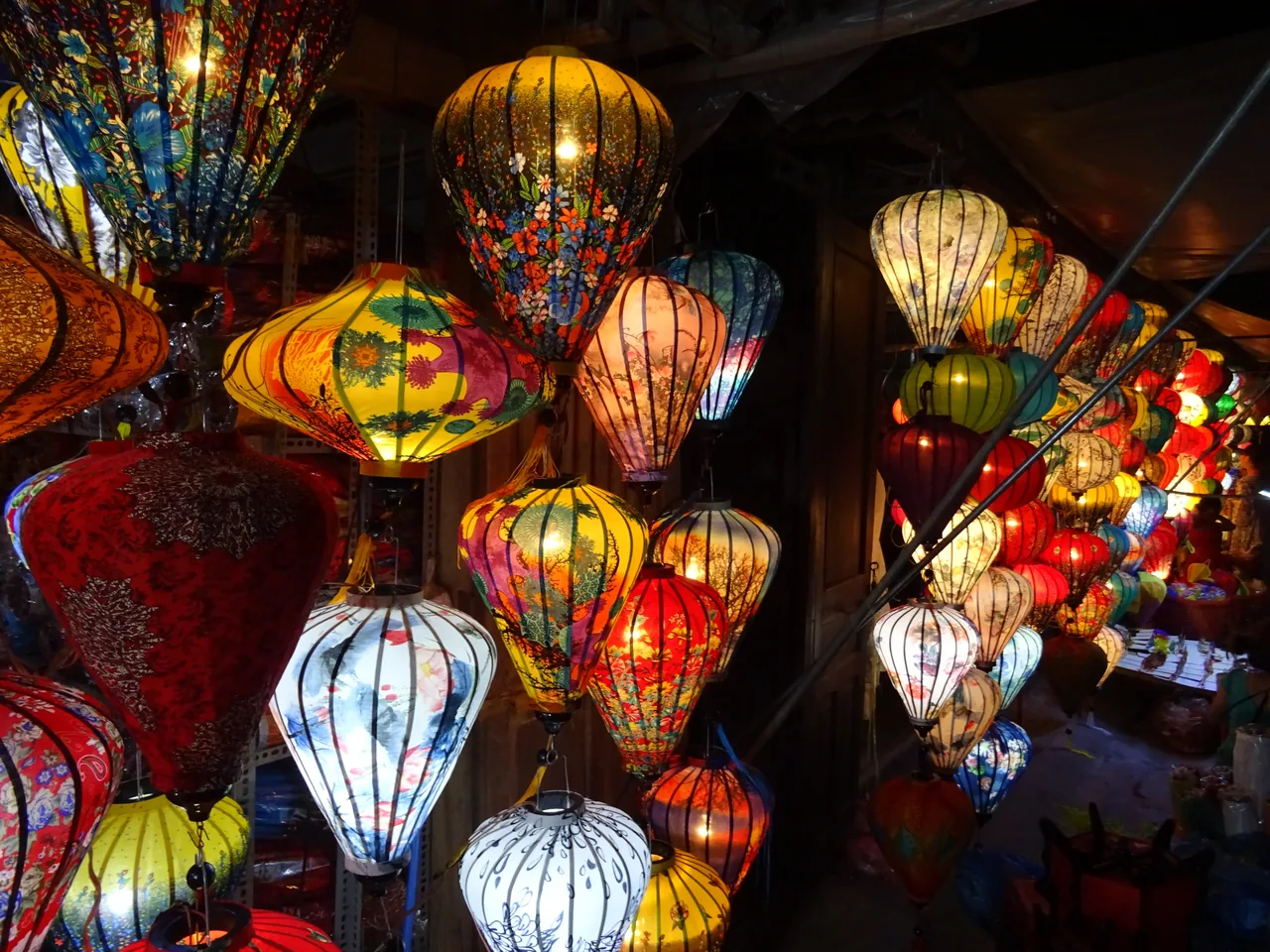
Silk lanterns light up Hoi An for Tết Trung Thu — Vietnam’s Mid-Autumn Festival, the most beautiful night of the lunar year.
1. Tết Trung Thu in one answer
Tết Trung Thu is Vietnam’s Mid-Autumn Festival — a full-moon celebration of family, children and the harvest, held on the 15th night of the 8th lunar month. For a few weeks each autumn the whole country fills with mooncakes, star-shaped lanterns and the drums of lion dances, building to one luminous night when families gather, children parade with lanterns, and everyone eats mooncakes under the brightest full moon of the year.
Though it shares roots with the wider East Asian Mid-Autumn, Vietnam’s version has become above all a children’s festival (Tết Thiếu Nhi) — think lanterns, masks, toys, sweets and lion dances rather than anything solemn. For a visitor it’s wonderfully easy to enjoy: you don’t need tickets or a plan, just be in the right neighbourhood on the right night with an appetite for mooncake.
💡 It’s not a public holiday. Shops, museums, restaurants and transport all run normally, so the festival adds magic to a trip without disrupting it. The celebrating happens in the evenings, especially the two nights before and the night itself.
2. When is the Mid-Autumn Festival in 2026?
In 2026, Tết Trung Thu falls on Friday 25 September. The date moves every year because it follows the lunar calendar — always the 15th day of the 8th lunar month, the night of the autumn full moon. (For reference: it lands on 6 October in 2025 and 25 September in 2026.)
But the festival is really a season, not a single day. From late August, mooncake stalls appear on pavements, shops fill with lanterns, and companies send mooncake boxes as gifts. Lion-dance troupes start touring the streets a week or two ahead, and the busiest, most atmospheric evenings are the 13th, 14th and 15th nights of the lunar month — the days right before and on the festival. If your trip is anywhere near late September, you’ll catch the build-up even if you miss the exact night.
When
What’s happening
Late Aug – mid Sep
Mooncakes everywhere; lantern stalls open; gift-giving season
~1–2 weeks before
Lion-dance troupes tour neighbourhoods in the evenings
23–25 Sep 2026
The peak: lantern parades, lion dances, family feasts, the full moon
3. What actually happens on the night
Come the festival evening, neighbourhoods, old quarters and riverfronts come alive. The core of it is simple and joyful:
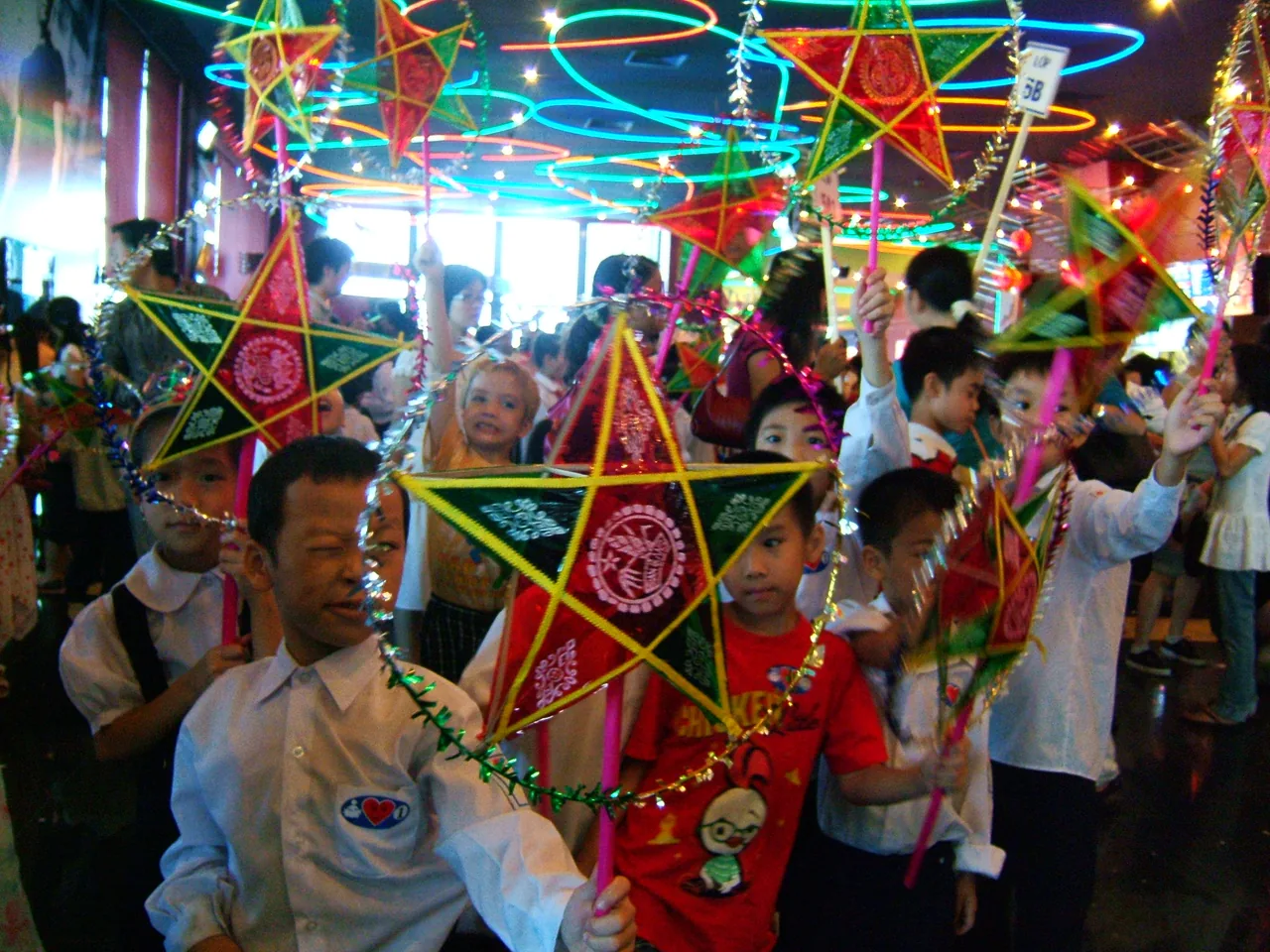
The lantern parade (rước đèn) — children walk the streets carrying lit lanterns, singing festival songs. It’s the heart of the night and the reason the lanterns matter.
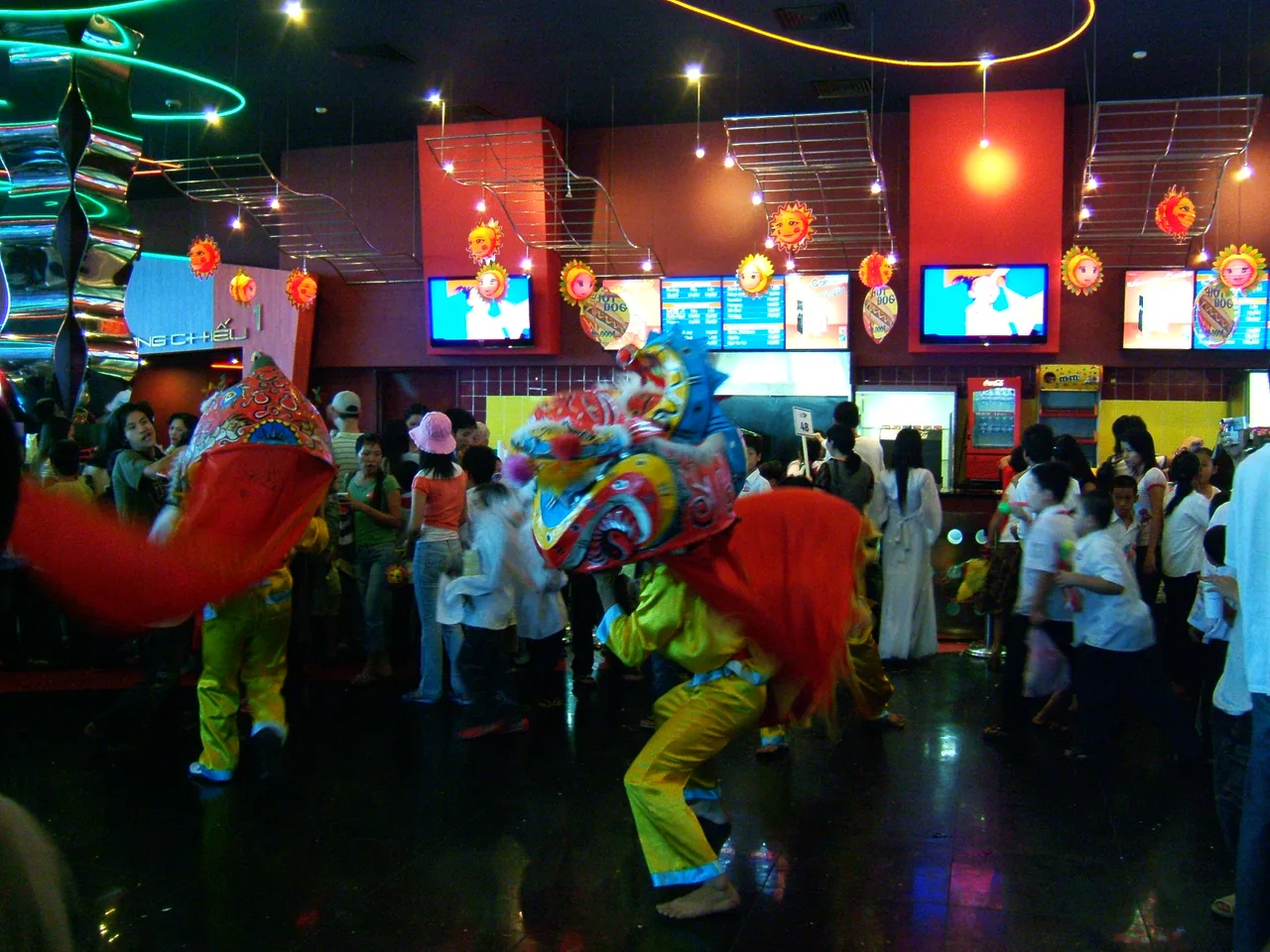
The lion dance (múa lân) — troupes of drummers and dancers in lion costumes perform outside homes and shops for luck, led by the round, grinning Ông Địa (Earth God) mask.
The offering tray (mâm cỗ) — families lay out a tray of mooncakes, seasonal fruit (pomelo, persimmon, banana), and sweets, often shaped into animals, to admire the moon. Later they “phá cỗ” — break it open and share it.
Moon-watching — the whole point. Families gather outside, the children eat too many sweets, and everyone looks up at the year’s roundest moon, a symbol of reunion and completeness.
It’s intimate and domestic at its core, but in the lantern streets and old towns it spills into a public, switched-on celebration anyone can wander into.
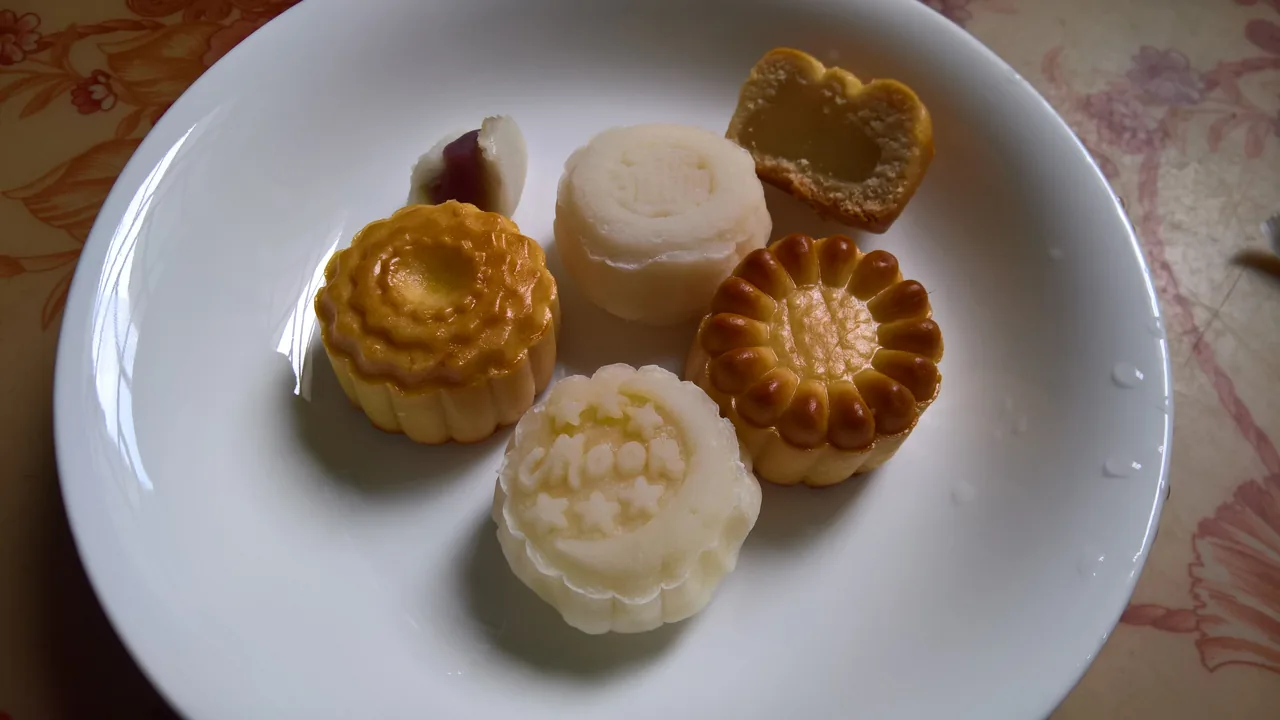
Bánh trung thu — Vietnamese mooncakes, both the baked (bánh nướng) and the soft snow-skin (bánh dẻo) kinds. Boxes of them are given and shared for weeks beforehand.
4. Mooncakes (bánh trung thu)
If the festival has a flavour, it’s the mooncake. Bánh trung thu are dense, round cakes — the round shape standing for the full moon and family reunion — and they come in two great families:
Type
What it’s like
Bánh nướng (baked)
A golden, baked pastry skin around a dense filling. The classic.
Bánh dẻo (snow-skin)
A soft, chewy, white glutinous-rice skin, not baked — milder and sweeter, eaten cool.
Fillings range from sweet lotus-seed or red-bean paste to the much-loved savoury-sweet thập cẩm (mixed nuts, candied peel, sausage and seeds), usually wrapped around one or more salted egg yolks that stand in for the moon. They’re rich — a single cake is shared between several people with strong tea.
Mooncakes are as much about giving as eating: ornate boxes are exchanged among family, friends and businesses for weeks beforehand. You’ll see everything from humble street-stall cakes to luxury hotel boxes. Buy a box or a couple of cakes from a bakery (Kinh Đô and Bảo Ngọc are common brands; hotel bakeries do beautiful ones) — they make a great edible souvenir, and trying one is the easiest way into the festival. Pair it with Vietnamese food more widely in our Hoi An food guide.
5. The lanterns — đèn ông sao and friends
Lanterns are the festival’s signature image. The icon is the đèn ông sao — a five-pointed star lantern framed in bamboo and covered in coloured cellophane, carried on a stick by children in the parade. Tradition says the lanterns help Chú Cuội (the man on the moon, see below) see his way back to earth.
Beyond the star you’ll find lanterns in every form: carp and animal shapes, paper “pull lanterns” (đèn kéo quân) whose warm air spins a parade of shadow figures inside, modern battery-lit cartoon characters, and — in Hoi An — the famous silk lanterns in every colour. Buying a simple lantern for a few dollars from a street stall and joining the evening stroll is one of the loveliest, cheapest things you can do as a visitor.
The đèn ông sao, the five-pointed star lantern, is the symbol of the festival — children carry them through the streets on the big night.
6. The lion dance (múa lân)
Few sights capture the energy of Tết Trung Thu like the múa lân. In the days around the festival, troupes of young performers — one working the big-eyed lion (lân) head, another the tail, backed by a thundering drum and cymbals — dance outside homes and shops, where owners hang up “lucky money” for the lion to “eat” in exchange for blessings and a prosperous season.
Leading the dance is the comic figure of Ông Địa, the round-bellied Earth God in a smiling mask, fanning the lion and clowning with the crowd. It’s loud, acrobatic and joyful, and you don’t need to seek it out in the lantern districts — it usually finds you. Tip the troupe a small note if you stop to watch and film.
7. The legends behind the festival
Two folk tales give the night its meaning, and both are about the moon.
Chú Cuội and the banyan tree. Cuội was a woodcutter who found a magical banyan with the power to heal. Warned never to water it with anything unclean, he one day returned to find his wife had broken the rule; the tree tore loose from the earth and rose into the sky, with Cuội clinging to it, all the way to the moon. On a clear Mid-Autumn night, Vietnamese say you can see Chú Cuội sitting under his banyan tree up there — and children’s lanterns are lit to help him find his way home.
Chị Hằng, the Moon Lady. Hằng Nga, an immortal fairy, is said to live on the moon; in modern celebrations a “Chị Hằng” and “Chú Cuội” often host children’s events, hand out gifts and lead the songs. Together they make the moon — and the festival — a story children grow up inside.
8. Where to experience Tết Trung Thu
The festival happens everywhere, but a few places do it spectacularly. If you can choose where to be on the night, choose one of these.
Hanoi — the Old Quarter & Hàng Mã street
Hàng Mã street📍Map in the Hanoi Old Quarter is the country’s most famous Mid-Autumn scene: a tunnel of lanterns, star masks, drums and toys, packed with families for weeks beforehand. Nearby Lương Văn Can street and the Phùng Hưng mural arches add to it. It’s free, photogenic and full of lion dances after dark.
Hoi An — lanterns on the full moon
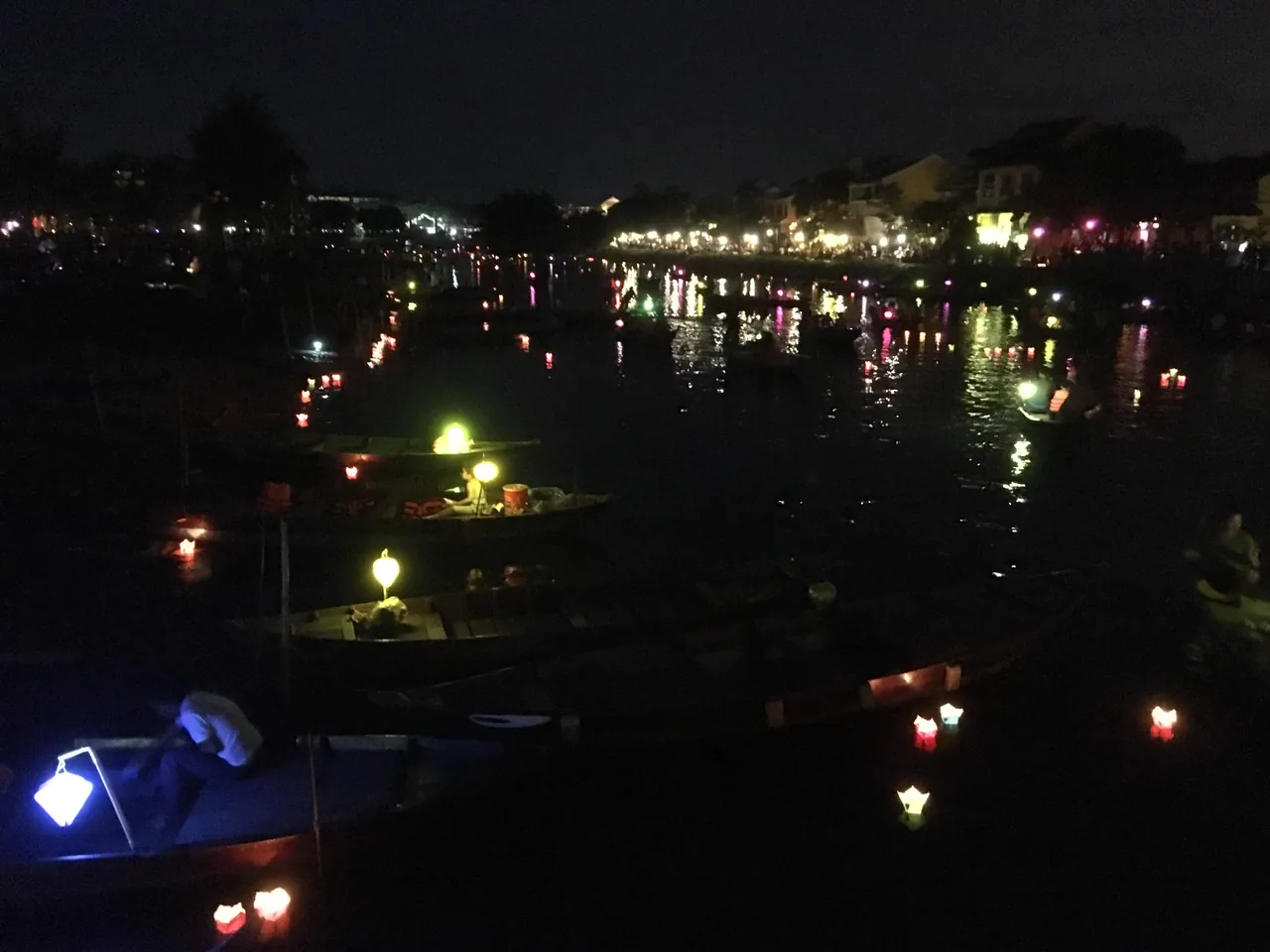
Because the festival falls on a full moon, Hoi An📍Map is at its most magical: the old town dims its electric lights, thousands of silk lanterns glow, and visitors set floating candle lanterns adrift on the Hoai River. It overlaps with Hoi An’s monthly Lantern Festival, so the Mid-Autumn full moon is the biggest lantern night of the year. A short Da Nang or Hoi An trip times beautifully around it.
In the Chợ Lớn (Chinatown) district, Lương Nhữ Học street📍Map overflows with lanterns, masks and lion heads, and the lion-dance scene here is among the liveliest in the country.
Tuyên Quang — the giant-lantern parade
For something unique, the small northern city of Tuyên Quang📍Map throws Vietnam’s biggest Mid-Autumn parade, with enormous handmade model lanterns — some as big as a bus — wheeled through the streets. Locals call it the “City of Festivals” for good reason.
Hue, Da Nang and most towns hold their own celebrations too — wherever you are, head for the old quarter or riverfront after dark.
Múa lân, the lion dance, drums its way through neighbourhoods in the run-up to the festival, led by the grinning Ông Địa mask.
9. Is it a good time to travel to Vietnam?
Yes — with eyes open. Because Tết Trung Thu is not a public holiday, it doesn’t bring the closures or the travel chaos of Tết (Lunar New Year). Shops, sights, restaurants, trains and flights all run as normal, prices don’t spike, and you simply gain a beautiful cultural layer on top of your trip.
Late September weather is mixed: the north (Hanoi) is pleasant and cooling, while central Vietnam (Hoi An, Da Nang, Hue) is in its wetter season with a real chance of rain or storms — check the forecast and keep the Hoi An lantern evening flexible. For the seasonal picture, see our best-time-to-visit guide, and to plan the wider route, our Vietnam travel guide and Northern Vietnam guide.
⚠️ Don’t confuse Tết Trung Thu (Mid-Autumn, September) with Tết Nguyên Đán — the Lunar New Year in late January/February, which is a major public holiday when much of the country closes. Mid-Autumn is the easy one to travel through.
10. How to join in as a visitor
You don’t need a ticket or a tour — the festival is open and street-level. A few easy ways in:
Buy a lantern. Pick up a star lantern or a silk one from a street stall for a dollar or two and carry it on the evening stroll. Instant participation.
Try a mooncake. Buy a single cake or a small box from a bakery and share it with tea — the taste is the festival. Savoury thập cẩm and lotus-seed are the classics to start with.
Find a lion dance. Follow the drums in the lantern districts after dark; tip the troupe if you film them.
Be on a riverfront or in an old quarter. Hoi An’s river, Hanoi’s Hàng Mã, HCMC’s Chợ Lớn — the magic is concentrated in these spots on the 14th and 15th nights.
Set a floating lantern in Hoi An, making a wish as it drifts off — touristy, yes, but lovely.
Be a gracious guest: ask before photographing children up close, tip lion-dance troupes, and don’t block family processions for a photo. A smile and a “chúc Trung Thu vui vẻ” (happy Mid-Autumn) go a long way. See our Vietnam etiquette guide for more.
In Hoi An, the festival falls on the full moon — paper lanterns are set adrift on the Hoai River carrying wishes downstream.
11. Mid-Autumn vs the Hoi An Lantern Festival
Travellers often mix these up, so to be clear: Hoi An holds a Lantern Festival every month, on the night of the full moon (the 14th day of each lunar month), when the old town switches off its lights for the lanterns. That’s a year-round monthly event — see our dedicated Hoi An Lantern Festival guide.
Tết Trung Thu is the national, once-a-year Mid-Autumn Festival in the 8th lunar month. In Hoi An the two coincide — the Mid-Autumn full moon is one of the monthly lantern nights, and the biggest — so visiting Hoi An on 25 September 2026 gives you both at once. Elsewhere in Vietnam, only Tết Trung Thu applies.
12. Practical tips for Tết Trung Thu
Go in the evening, on the 14th or 15th. The festival is nocturnal; the two nights before the full moon and the night itself are the busiest and best.
Buy mooncakes early. The best bakery boxes sell out in the final days; from early September choice is widest.
Expect crowds in the lantern streets. Hàng Mã and Lương Nhữ Học get shoulder-to-shoulder — go a little earlier in the evening, and mind your belongings.
Bring small cash. Lanterns, mooncakes, street snacks and lion-dance tips are all cash; see our Vietnam money guide.
It’s great for kids. This is literally a children’s festival — lanterns, sweets and lion dances are a hit with families.
Mind the central-Vietnam weather. If you’re banking on Hoi An’s river lanterns, keep a flexible evening in case of late-September rain.
Time a Hoi An itinerary or a Hanoi trip around late September and you’ll catch Vietnam at its most enchanting — lantern-lit, mooncake-scented and full of drums.
Q. When is the Mid-Autumn Festival in Vietnam in 2026?
It falls on Friday 25 September 2026 — the 15th day of the 8th lunar month. The date changes yearly with the lunar calendar, and celebrations build for about two weeks beforehand, peaking on the 14th and 15th nights.
Q. What is Tết Trung Thu?
It’s Vietnam’s Mid-Autumn Festival, a full-moon celebration of family, the harvest and especially children. The main elements are mooncakes, star-shaped lanterns, lion dances, moon-watching and a family offering tray of cakes and fruit.
Q. Is the Mid-Autumn Festival a public holiday in Vietnam?
No. Unlike Tết (Lunar New Year), Tết Trung Thu is not a public holiday — shops, sights, restaurants and transport all run as normal. It’s a cultural and family festival celebrated mainly in the evenings.
Q. What are Vietnamese mooncakes?
Bánh trung thu are dense round cakes eaten at Mid-Autumn. There are two kinds: baked bánh nướng and soft snow-skin bánh dẻo. Fillings range from sweet lotus-seed or red-bean paste to savoury-sweet thập cẩm with mixed nuts and a salted egg yolk for the moon.
Q. Where is the best place to experience Mid-Autumn in Vietnam?
Hanoi’s Old Quarter (Hàng Mã street) for the classic lantern-street scene, Hoi An for lanterns under the full moon, Ho Chi Minh City’s Chợ Lớn (Lương Nhữ Học street) for lively lion dances, and Tuyên Quang for Vietnam’s biggest giant-lantern parade.
Q. What is the đèn ông sao?
It’s the five-pointed star lantern, the symbol of Tết Trung Thu — a bamboo frame covered in coloured cellophane, carried on a stick by children in the lantern parade (rước đèn) on the festival night.
Q. What is the lion dance at Mid-Autumn?
Múa lân is a performance where dancers in a lion costume, backed by drums and led by the smiling Ông Địa (Earth God) mask, dance outside homes and shops for luck. Owners hang up ‘lucky money’ for the lion to collect.
Q. Is Mid-Autumn the same as the Hoi An Lantern Festival?
Not quite. Hoi An holds a lantern festival every month on the full moon. Tết Trung Thu is the national once-a-year Mid-Autumn Festival; in Hoi An they coincide, so the Mid-Autumn full moon is the year’s biggest lantern night there.
Q. Can tourists join the Mid-Autumn Festival?
Easily — it’s a free, street-level celebration. Buy a lantern, try a mooncake, follow a lion dance, and head to a lantern street or riverfront on the 14th or 15th night. No ticket or tour is needed.
Q. What is the legend of the Mid-Autumn Festival?
Two tales: Chú Cuội, a woodcutter carried to the moon clinging to a magical banyan tree (children’s lanterns help him find his way home), and Chị Hằng (Hằng Nga), the Moon Lady. Both make the full moon the focus of the night.
Q. Is late September a good time to visit Vietnam?
Yes — Mid-Autumn adds a lovely cultural layer and isn’t a disruptive public holiday. Note that central Vietnam (Hoi An, Da Nang) is in its wetter season then, so keep outdoor lantern evenings flexible; the north is pleasant.
Q. Is the Mid-Autumn Festival good for families with kids?
Very — it’s essentially a children’s festival. Lanterns, mooncakes, masks, toys and lion dances are all aimed at children, and the lantern streets and parades are a delight for young travellers.