
Southern Vietnam Itinerary 2026: Ho Chi Minh City & the Whole South, Planned Right
Saigon is your gateway. Here’s how to build a 6, 10 or 14-day route through the south — beaches, the Mekong, the highlands and the dunes — without wasting a single day.
| What it is | Vietnam’s tropical, commercial south — Ho Chi Minh City (Saigon) as the gateway, fanning out to the Mekong Delta, beaches and the cool highlands |
|---|---|
| Main city / gateway | Ho Chi Minh City, a.k.a. Saigon — the country’s busiest airport (SGN) and the hub for everything south |
| Best season | Dry season December–April (Nha Trang is the odd one out: best March–September) |
| How long to stay | 2 days for Saigon itself plus day trips; 10–14 days to loop the whole south |
| Daily budget (mid-range, one person) | About $57–95 (roughly 1.5M–2.5M VND) a day, flights and big tours on top |
| Visa | Depends on your nationality — many travellers need an e-visa (about $25); check before you book |
1. Southern Vietnam in one look: the gateway and the three route clusters
2. Ho Chi Minh City (Saigon): the city, where to stay, and the new metro
3. The best things to do in Ho Chi Minh City
4. Eating in Saigon: street food and coffee culture
5. Saigon after dark: nightlife, shopping and souvenirs
6. Getting around Ho Chi Minh City
7. Day trips from Saigon: Cu Chi, the Mekong, Vung Tau and Can Gio
8. The Mekong Delta: rivers, floating markets and slow days
9. Vung Tau: the closest beach and the giant Christ
10. Nha Trang: the beach city with islands and Cham towers
11. Da Lat: cool highlands, flowers, lakes and waterfalls
12. Mui Ne / Phan Thiet: red dunes and kitesurfing
13. Con Dao: wild beaches, dark history and sea turtles
14. Phu Quoc: the big resort island (in brief)
15. Getting between southern cities: the transport matrix
16. When to go: southern Vietnam’s seasons, Tet and festivals
17. Recommended itineraries: 5, 7, 10 and 14 days
18. Costs and budget by travel style
19. Visa and entry: what most travellers need
20. Safety, scams and etiquette
21. SIM, money and practical tips
🏨 Where to stay in Ho Chi Minh City — the 6 best areas, by traveller →
🏨 Where to stay in Nha Trang — the 5 zones compared, hotel by hotel →
🦐 District 4 seafood street: what to order on Vĩnh Khánh, and the price rule →
1. Southern Vietnam in one look: the gateway and the three route clusters
Southern Vietnam is the country’s warm, fast-moving, tropical half, and almost every trip starts in Ho Chi Minh City — the city most people still call Saigon. You fly into Saigon, spend a couple of days getting the measure of it, then push out to whatever kind of south you’re after: river life in the Mekong Delta, beach towns down the coast, or the cool, flowery highlands a few hours inland. The south is year-round warm, easy to get around, and packed with day trips, which is exactly why it makes such a good base.
The thing to understand before you plan a single day is that “southern Vietnam” is big and varied, so it helps to picture it as three clusters radiating out from Saigon:
1. Saigon & its day trips
Ho Chi Minh City itself, plus the Cu Chi Tunnels, a Mekong Delta day tour, Vung Tau beach and the Can Gio mangroves. All doable as nights-in-Saigon round trips.
2. The river south (Mekong Delta)
My Tho and Ben Tre for a day, or Can Tho and the Cai Rang floating market for an overnight. Flat, green, water everywhere.
3. The coast & highlands
Mui Ne dunes, the spring-cool town of Da Lat, the beach city of Nha Trang, and the quiet islands of Con Dao and Phu Quoc.
You don’t need all three on one trip. A short visit is Saigon plus a day trip or two. A proper loop — the classic backpacker run is Saigon to Mui Ne to Da Lat and on to Nha Trang — takes ten days to two weeks. We lay out exact routes by length further down. Here’s a quick decision table for who should head where:
| If you want… | Go to | How many days |
|---|---|---|
| City buzz, food, history | Ho Chi Minh City (Saigon) | 2–3 |
| River life, floating markets | Mekong Delta (Can Tho) | 1–3 |
| A quick easy beach | Vung Tau | 1–2 |
| Dunes & kitesurfing | Mui Ne / Phan Thiet | 2–3 |
| Cool air, flowers, pine forest | Da Lat highlands | 2–3 |
| A lively beach city + islands | Nha Trang | 2–3 |
| Wild, quiet, untouched | Con Dao | 2–4 |
| Resort-and-pool beach holiday | Phu Quoc | 3–5 |
The north, with its old-world Hanoi and mountain scenery, is a different trip entirely; if you’re weighing the two, see our northern Vietnam route planner and the central Vietnam hub for the Hoi An and Da Nang middle.
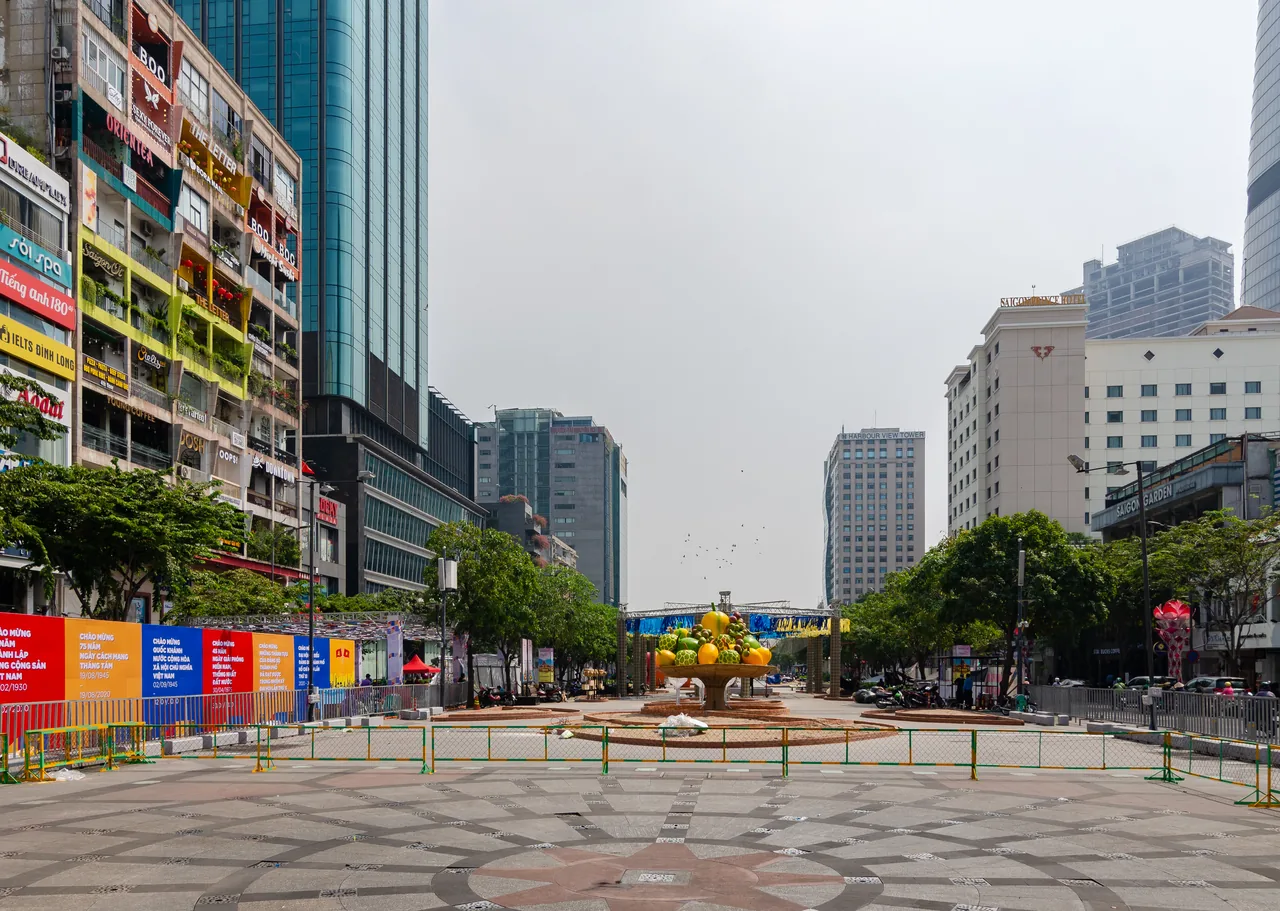
For Da Lat on its own, our Da Lat travel guide covers the flights, the measured drive times, the official ticket prices and the weather month by month.
For Mui Ne and Phan Thiet on their own, our Mui Ne and Phan Thiet guide covers both dunes with their prices, the measured drive times, the train days and where along the strip to stay.
For the accommodation on its own, where to stay in Mui Ne goes through the 35 sea-side properties, the 141 across the road and what the sea walls changed.
2. Ho Chi Minh City (Saigon): the city, where to stay, and the new metro
Ho Chi Minh City and Saigon are the same place. “Ho Chi Minh City” is the official name; “Saigon” is the old name and the affectionate nickname everyone — locals included — still uses. You’ll see both on signs, tickets and t-shirts, and the airport code (SGN) keeps the old name alive. It’s Vietnam’s biggest, richest, most energetic city: skyscrapers, motorbike rivers, rooftop bars and street stalls all on the same block.
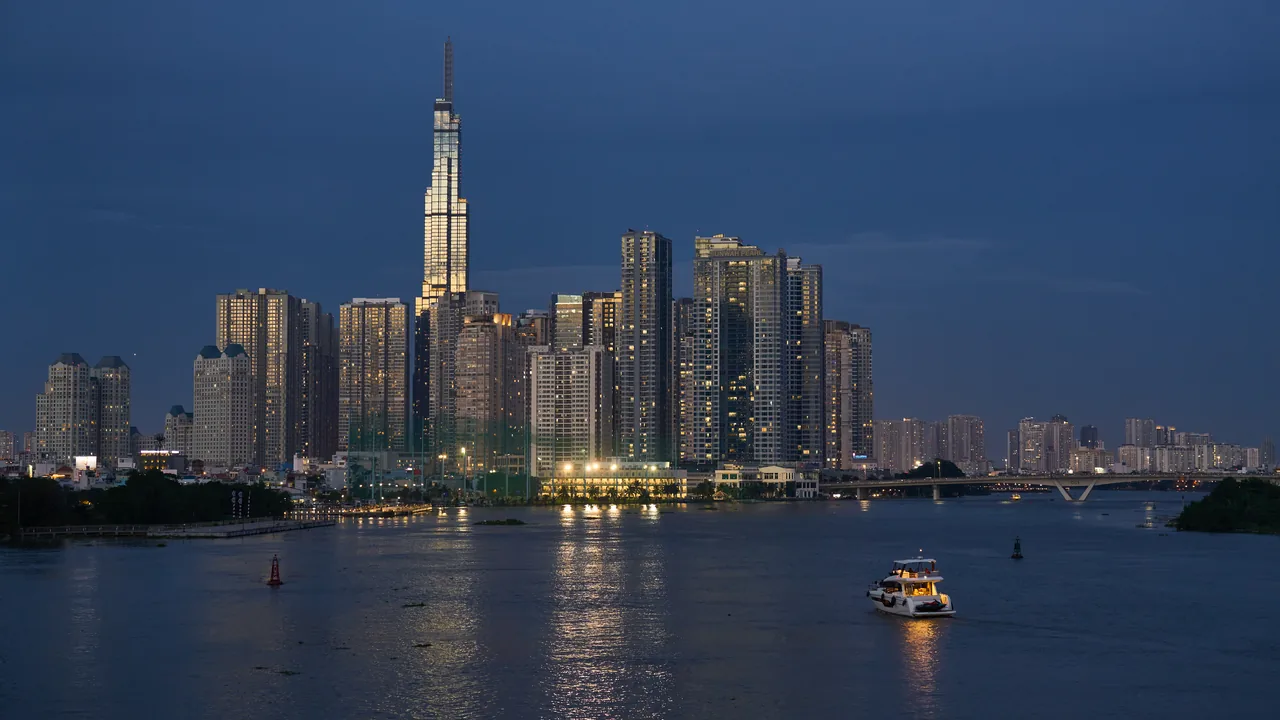
Two days is enough to see the centre well. The city is for energy and food more than for must-see monuments, so don’t over-schedule it — give it two days, then use it as a launchpad. Where you sleep makes a big difference, so here’s the neighbourhood rundown:
District 1 (Dong Khoi / Ben Thanh)
The downtown core — sights, hotels and transport all here. First-timers should stay here, full stop.
District 3
Central but calmer, with colonial architecture and great street food. A good quieter alternative within walking-ish distance of D1.
Pham Ngu Lao / Bui Vien (D1)
The backpacker strip — hostels, bars and the sleeper-bus hub. Cheap and loud; perfect if nightlife and budget are the point.
Thao Dien (old D2)
Riverside expat neighbourhood with international dining and cafes. Good for families and long stays, but not central — skip it for a short trip.
Cho Lon (D5)
The Chinatown, 5–6 km from D1, full of temples, markets and local food. A great half-day out rather than a base.
The new Metro Line 1
Saigon finally has a metro. Line 1 (Ben Thanh–Suoi Tien) opened commercially on 22 December 2024 and has been running on paid tickets since 21 January 2025 — it’s fully up and running in 2026. It covers 19.7 km and 14 stations (3 underground, 11 elevated), runs 05:00–22:00, and trains come every 8–12 minutes.
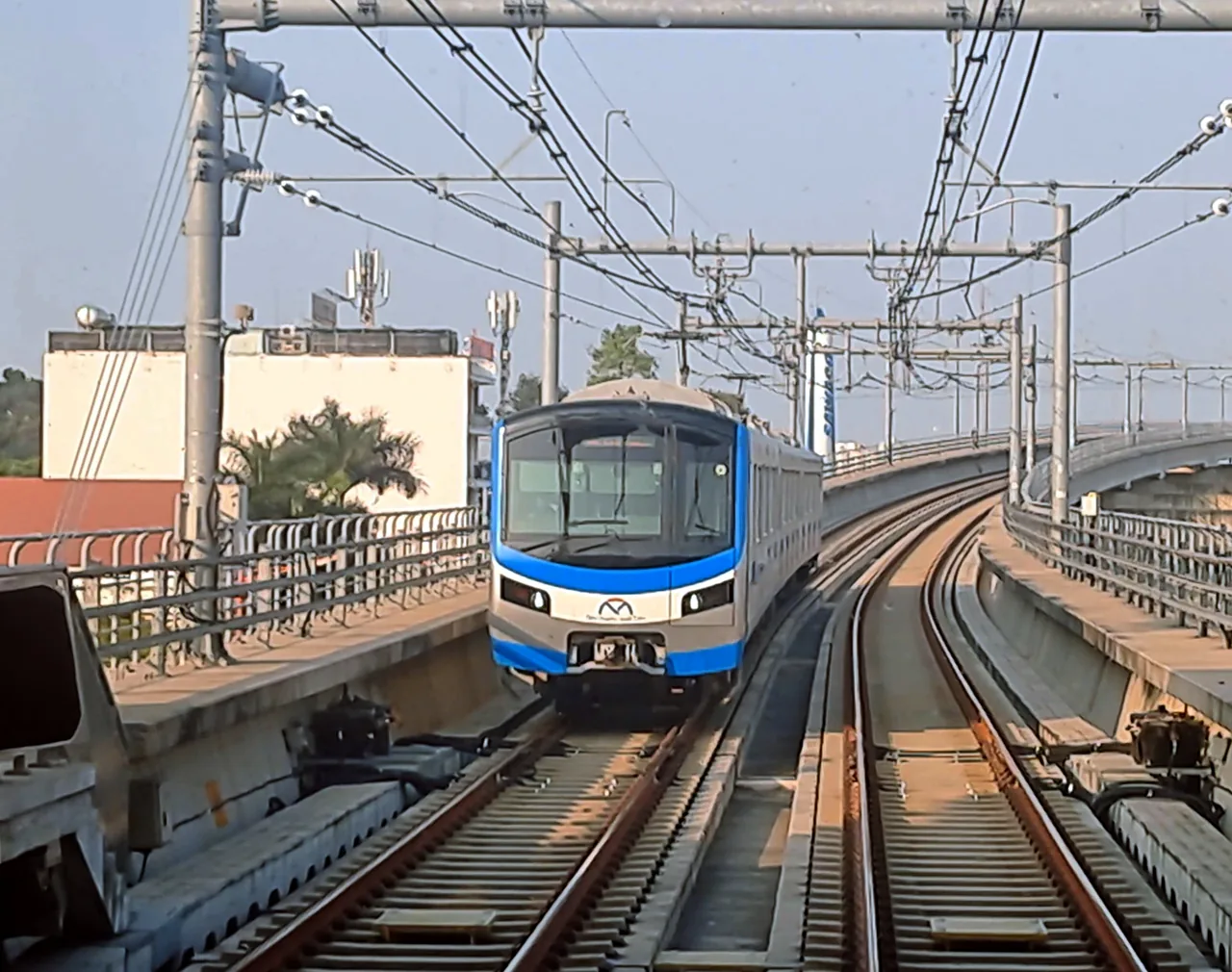
For visitors the handy stops are Ben Thanh (the central market), Opera House, Ba Son, and out east Thao Dien and An Phu, ending at Suoi Tien (a theme park and university area). Single fares run 7,000–20,000 VND in cash (about $0.30–0.80), or a touch less contactless; a day pass is 40,000 VND (about $1.50) and a 3-day pass 90,000 VND (about $3.40). You can pay cash at the counter, tap a Visa/Mastercard/JCB/UnionPay card, or use the HURC app, MoMo, ZaloPay or VNPay.
3. The best things to do in Ho Chi Minh City
Saigon’s sights cluster tightly in and around District 1, so you can hit most of them on foot or with one short Grab. The heavy hitter is the War Remnants Museum — sobering, essential, and worth a slow couple of hours. After that it’s colonial landmarks, markets, temples and a view or two from up high.
It’s easiest to plan by interest. Here’s how the sights break down:
- History & the war: the War Remnants Museum and the Reunification (Independence) Palace — book a half-day for the pair.
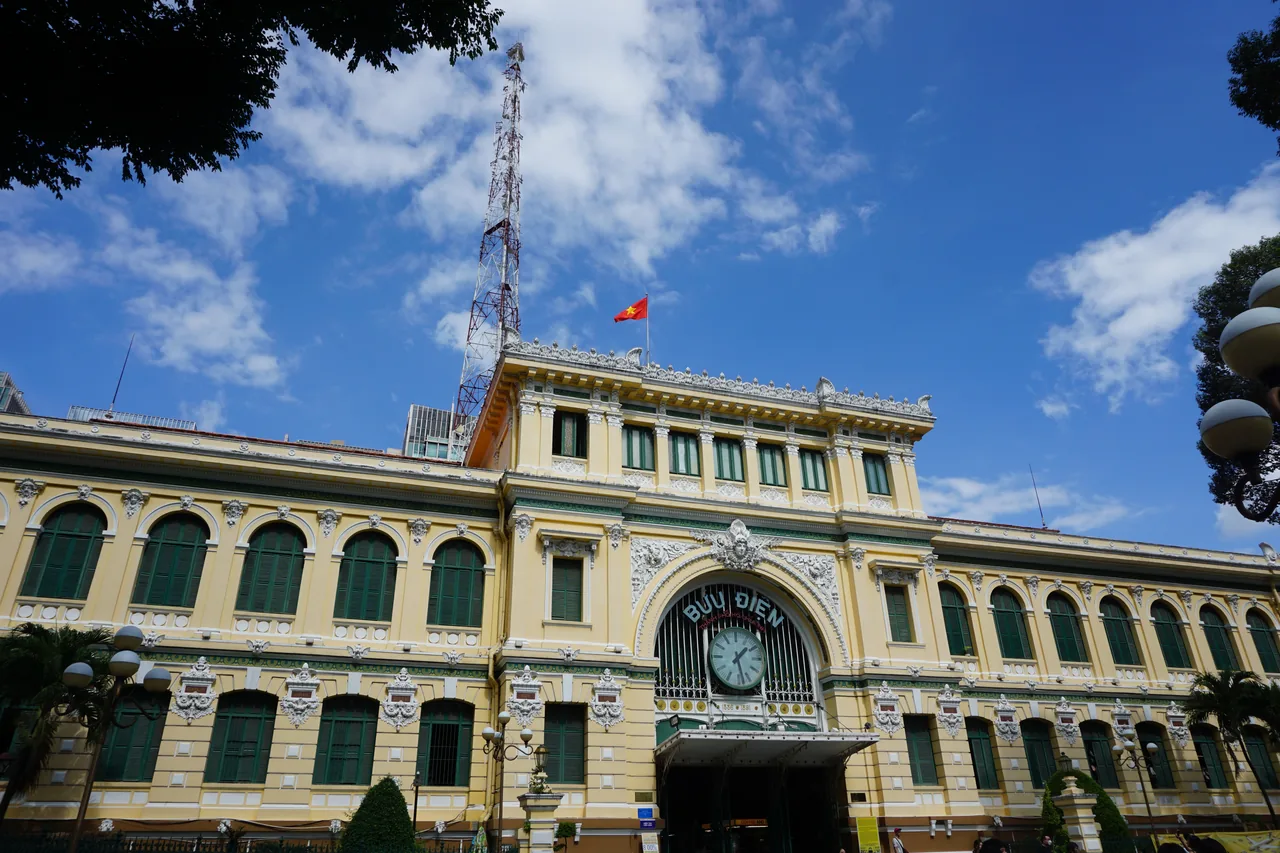
- Colonial architecture: the grand French-era Central Post Office, the Opera House, and the Notre-Dame Cathedral exterior.
- Views from up high: Landmark 81 SkyView or the Bitexco Skydeck.
- Temples & markets: the Jade Emperor Pagoda in D1, plus Thien Hau Temple and the markets over in Cho Lon.
Two timing notes before you go. The Notre-Dame Cathedral is under restoration through 2026 — the interior is closed and you can only admire the outside (reopening is expected around 2027). And for the view, Landmark 81 (461 m, Vietnam’s tallest) sits about 199 m higher than the older Bitexco Skydeck (262.5 m), so it’s the better splurge if you only do one.
| Sight | Hours | Entry (VND / approx $) |
|---|---|---|
| War Remnants Museum (D3) | 07:30–17:30 | 40,000 (~$1.50); kids 20,000 |
| Reunification (Independence) Palace | last entry ~15:30 | 40,000 (~$1.50); students 20,000 |
| Notre-Dame Cathedral | exterior only (interior closed, 2026) | Free (outside) |
| Central Post Office | ~07:00–18:00 | Free |
| Ben Thanh Market | 06:00–18:00 (night market ~18:00–23:00) | Free entry |
| Bui Vien Walking Street | busiest weekend nights ~19:00–02:00 | Free |
| Nguyen Hue pedestrian plaza | open square, 720 m | Free |
| Landmark 81 SkyView (floors 79–81) | daytime & evening | ~420,000 (~$16) |
| Bitexco Saigon Skydeck (floor 49) | daytime & evening | 240,000 (~$9); kids 160,000 |
| Thien Hau Temple (Cho Lon, D5) | daytime | Free |
| Jade Emperor Pagoda (D1) | 07:00–18:00 | Free |
A natural first day: Reunification Palace and the War Remnants Museum in the morning, the Central Post Office and cathedral exterior at midday, Ben Thanh Market in the afternoon, then a rooftop or Bui Vien after dark. Cho Lon and the Jade Emperor Pagoda make a good slower half-day on day two.
4. Eating in Saigon: street food and coffee culture
Saigon is, hands down, one of the best street-food cities in Asia, and you’ll eat better at a plastic stool than in most restaurants. The southern style leans sweeter and herbier than the north. Order broken-rice com tam, a southern banh mi, a bowl of pho or hu tieu, and at least one iced condensed-milk coffee a day. Almost nothing here will dent your budget.
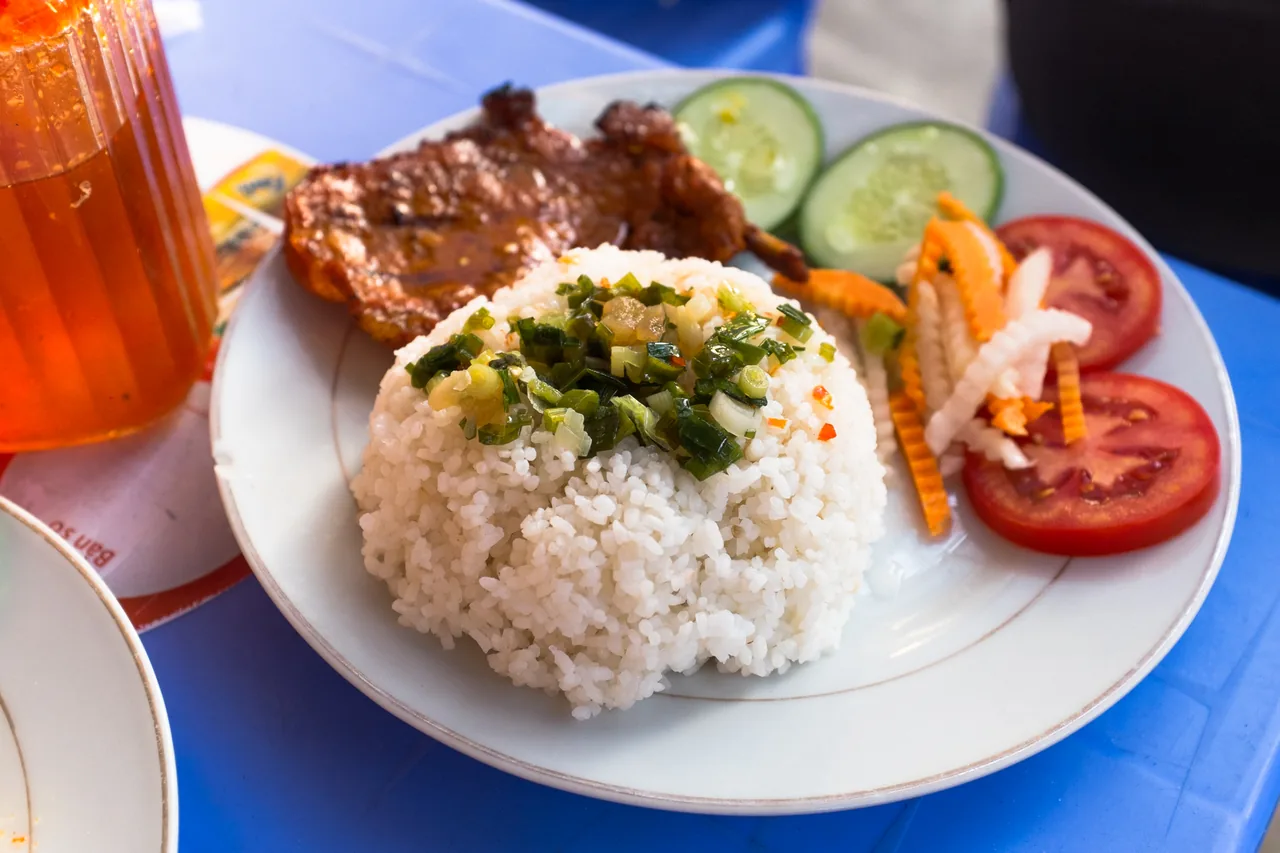
Com tam
Broken-rice plate with grilled pork — the quintessential Saigon breakfast and lunch. Try Com Tam Ba Ghien.
Banh mi
The southern baguette sandwich. Huynh Hoa is the famous loaded one; Bay Ho is the cheap classic.
Hu tieu
A clear, slightly sweet noodle soup — the southern signature. Hu tieu Nam Vang is the loaded Phnom Penh style.
Banh xeo
A sizzling crispy pancake you wrap in herbs and lettuce. Banh Xeo 46A is the landmark spot.
| Dish | Typical price (VND) | Approx ($) |
|---|---|---|
| Com tam (broken rice) | 25,000–50,000 | ~$1–2 |
| Banh mi (regular) | 20,000–35,000 (Huynh Hoa 60,000–75,000) | ~$0.80–3 |
| Pho | 35,000–40,000 (up to ~100,000) | ~$1.50–4 |
| Hu tieu / hu tieu Nam Vang | 22,000–62,000 | ~$0.80–2.40 |
| Bun thit nuong | 40,000–60,000 | ~$1.50–2.30 |
| Bot chien | ~25,000 | ~$1 |
| Ca phe sua da | street 15,000–40,000; chains 40,000–65,000 | ~$0.60–2.50 |
| Ca phe trung (egg coffee) | 40,000–55,000 | ~$1.50–2 |
| Banh xeo | 34,000–120,000 (Banh Xeo 46A ~110,000) | ~$1.30–4.60 |
Coffee culture — and the honest origins
Vietnam runs on coffee, and Saigon takes it seriously. The local default is ca phe sua da, strong drip coffee over ice with condensed milk — a genuine Saigon street invention. The milkier, gentler version is bac xiu, which came from the Chinese community in Cho Lon. Beyond those, you’ll see a few trendy drinks that are not originally from here, and it’s worth knowing the real story:
- Salt coffee (ca phe muoi) — this one’s from Hue, where it took off around 2010, then spread nationwide. Tasty, but not a Saigon original.
- Egg coffee (ca phe trung) — invented in Hanoi back in 1946. You can drink it in Saigon, but the homeland is the north.
- Coconut coffee — popularised by the Cong Ca Phe chain; a modern crowd-pleaser rather than a regional classic.
Where to eat, food tours and going vegetarian
The densest eating is in Districts 1, 3, 4, 5 (Cho Lon) and 10. A guided street-food tour — often on the back of a scooter at night — is a great first-evening move. Vegetarians are well looked after: look for the word “chay” on a sign, which means fully vegetarian (usually vegan). And save room for dessert — che (sweet soups) and sinh to (fruit smoothies) run about 20,000–40,000 VND ($0.80–1.50).
5. Saigon after dark: nightlife, shopping and souvenirs
Saigon’s nights are some of the liveliest in the country — rooftop cocktail bars with skyline views, the chaotic backpacker energy of Bui Vien, and cheap draft beer poured on every corner. Days off your feet, meanwhile, are for markets and malls. Here’s how to spend both.
Rooftop bars and Bui Vien
For a glamorous night, the rooftop bars deliver. Chill Skybar (26th floor of the AB Tower, D1) is the classic — cocktails around 525,000 VND ($20), a 50%-off happy hour roughly 17:30–20:00, and a dress code after 9 p.m. (no shorts, flip-flops or vests). EON Heli Bar / Bar 52 up on floors 50–52 of the Bitexco tower is the highest in the centre — no cover but a minimum spend, cocktails 210,000–300,000 VND. The Social Club at Hôtel des Arts (D3) has an infinity pool and a DJ.
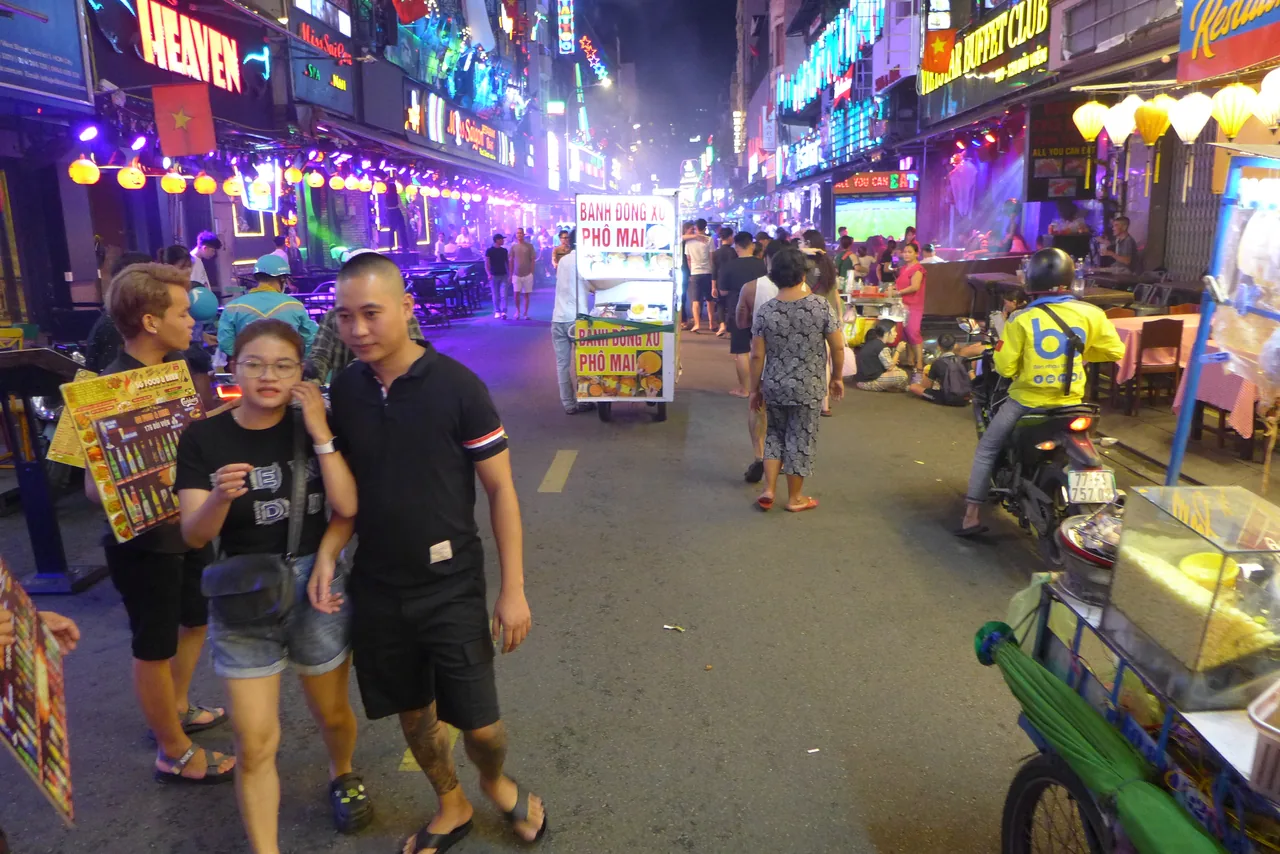
At the other end of the scale sits Bui Vien Walking Street in the Pham Ngu Lao backpacker quarter — a car-free strip on weekend nights (roughly 19:00–02:00) packed with 200-plus bars, live bands and street vendors. It’s loud, touristy and a riot of fun, with draft bia hoi from around 15,000 VND a glass. Tip: the food in the surrounding alleys is cheaper and better than on the strip itself. If you’d rather drink craft, Pasteur Street Brewing (founded 2015, D1) pours local craft beer from about 66,000 VND a glass.
Shopping, markets and souvenirs
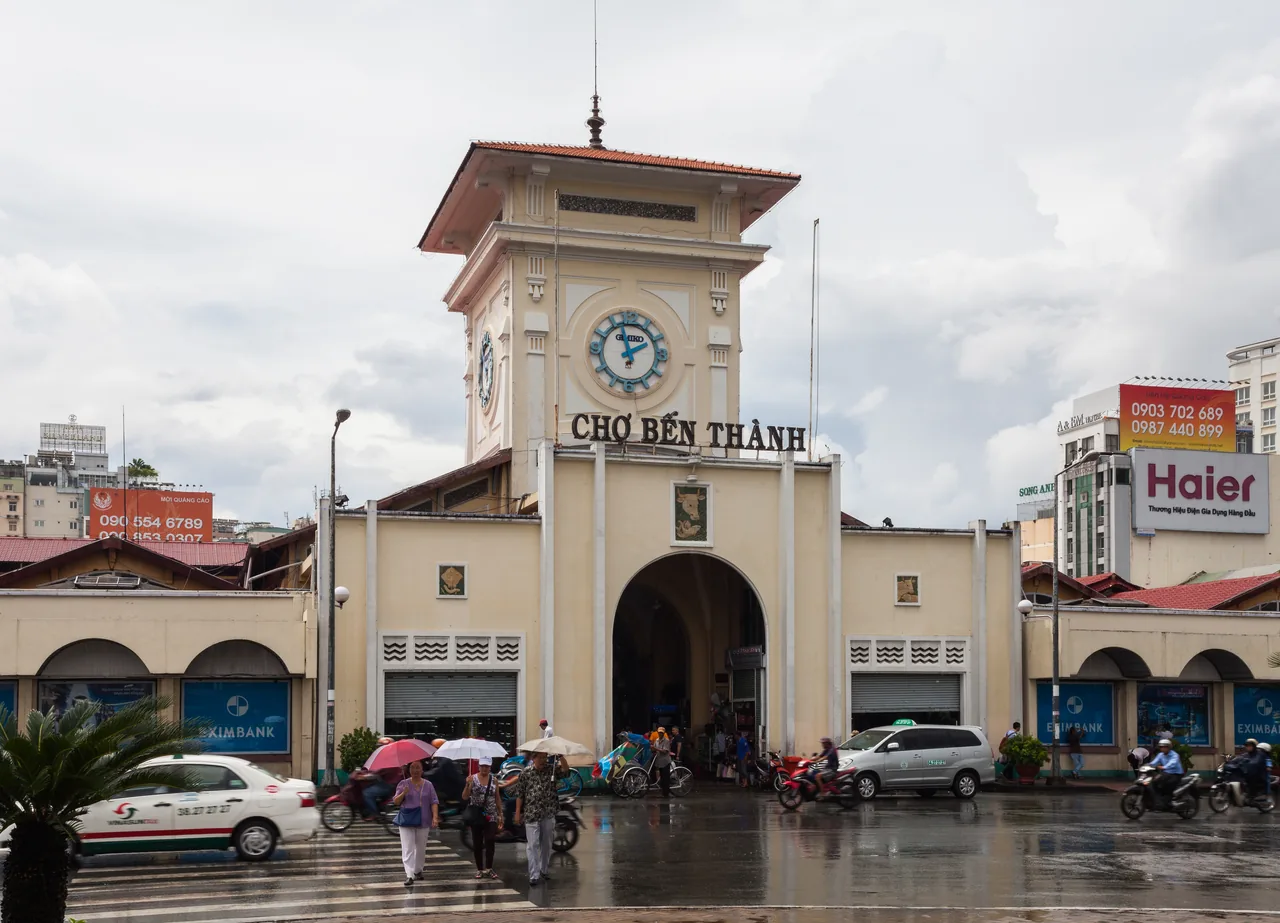
For air-con and brands, head to Saigon Centre / Takashimaya on Le Loi (a Japanese department store) or Vincom Center Dong Khoi (Zara, H&M and the like). For cheap fashion and a haggling workout, Saigon Square is the go-to; An Dong Market in D5 is the wholesale option; and Ben Thanh Market is more for atmosphere and souvenirs than bargains.
| Souvenir | Rough price (VND) | Notes |
|---|---|---|
| G7 instant coffee | 50,000–80,000 / box | The easy crowd-pleaser gift. |
| Trung Nguyen ground coffee | 100,000–150,000 / 250 g | Solid mid-range beans. |
| Weasel (legendee) premium coffee | from ~1,050,000 / 250 g | Pricey — watch for fakes. |
| Ao dai (ready-made) | 500,000–2,500,000 | Tailored runs about $70–450. |
| Lacquerware | 180,000–1,500,000+ | Bowls, boxes, art panels. |
| Silk scarf | 150,000–500,000 | Light, packable, classic. |
| Cashews / dried fruit | ~200,000 / 500 g cashews | Vietnamese cashews are excellent. |
| Conical hat (non la) / lotus tea | 30,000–50,000 / 50,000–250,000 | Cheap, characterful gifts. |
6. Getting around Ho Chi Minh City
Saigon looks like motorbike chaos, but it’s surprisingly easy to navigate once you’ve got the Grab app and know which taxis to trust. The new metro covers a couple of useful lines of travel, the centre is walkable, and everything else is a tap away. Here’s the toolkit.
- Grab — your everyday workhorse. Book a motorbike (GrabBike) for quick solo hops or a car for longer trips and luggage. A short bike ride is roughly half the price of a car. Set it up through the Grab app and it shows the price up front, so there’s no haggling.
- Metro Line 1 — handy for the Ben Thanh–Opera House–Ba Son stretch and out to Thao Dien and Suoi Tien. A day pass is 40,000 VND (about $1.50). Remember: it does not reach the airport.
- Taxis — stick to Vinasun (white) and Mai Linh (green), the two honest metered firms (about 12,000 VND to start, +15,000/km). Avoid copycat cabs with rigged meters — when in doubt, just Grab.
- Cyclo (xich lo) — the old pedal rickshaw, now a tourist ride at roughly 150,000–200,000 VND an hour. Agree the price AND the currency in writing first.
- Saigon Waterbus — a scenic river hop from the Bach Dang pier in D1, just 15,000 VND one way / 30,000 return.
- On foot — District 1 is genuinely walkable: Ben Thanh to Nguyen Hue is about 5 minutes, to the Opera House 10, to Reunification Palace 7.
To and from the airport
Tan Son Nhat (SGN) is just 6–8 km from District 1. A Grab into the centre runs about 110,000–250,000 VND ($5–11); the city bus is dirt cheap (route 109 is 12,000 VND, route 152 just 6,000). The new domestic terminal (T3) opened in April 2025.
7. Day trips from Saigon: Cu Chi, the Mekong, Vung Tau and Can Gio
Four classic day trips hang off Saigon, and any of them works as a “back by dinner” round trip. The Cu Chi Tunnels are the most popular — an underground war network you can crawl through, about 60–70 km northwest. A Mekong Delta day tour gives you a taste of river life. Vung Tau is the closest proper beach, reachable by fast ferry from the city centre. And the Can Gio mangroves are a wilder, greener escape with monkeys and a biosphere reserve.
| Day trip | Distance / time | Cost & notes |
|---|---|---|
| Cu Chi Tunnels | 60–70 km NW; half day (4–5 hrs) | ₫135,000 at both (₫35,000 entry + ₫100,000 guide). Shooting range ₫20,000–40,000 a round. Ticket and access details |
| Mekong day tour (My Tho ~70 km / Ben Tre ~85 km) | ~90 min each way; group tour 8–10 hrs | Boats, coconut candy, sampans — see the next section. |
| Vung Tau | ~95–105 km; fast ferry ~90–120 min | Greenlines DP ferry ~260,000–450,000 VND (fares vary, confirm). Bus ~2–3 hrs. |
| Can Gio mangroves | ~60 km SE; ferry + boat ~20 min | Group day tour ~$36/person incl. transport, lunch, guide. |
If you only have one spare day, pick by mood: Cu Chi for history (the tunnels are tight and claustrophobic — a real experience), the Mekong for scenery and slow boats, Vung Tau for sand, and Can Gio for nature. Can Gio is a UNESCO mangrove biosphere reserve; the highlight is Monkey Island (Dao Khi), home to over 1,000 wild macaques — keep a tight grip on phones, sunglasses and snacks, because they snatch. The Vam Sat area adds a bat swamp, a crocodile farm and an observation tower.
The Vung Tau ferry leaves from the Bach Dang terminal in District 1, near Nguyen Hue, so it’s an easy morning getaway. To book any of these the simple way, you’ll likely use a ride-hailing or tour app to sort transfers.
8. The Mekong Delta: rivers, floating markets and slow days
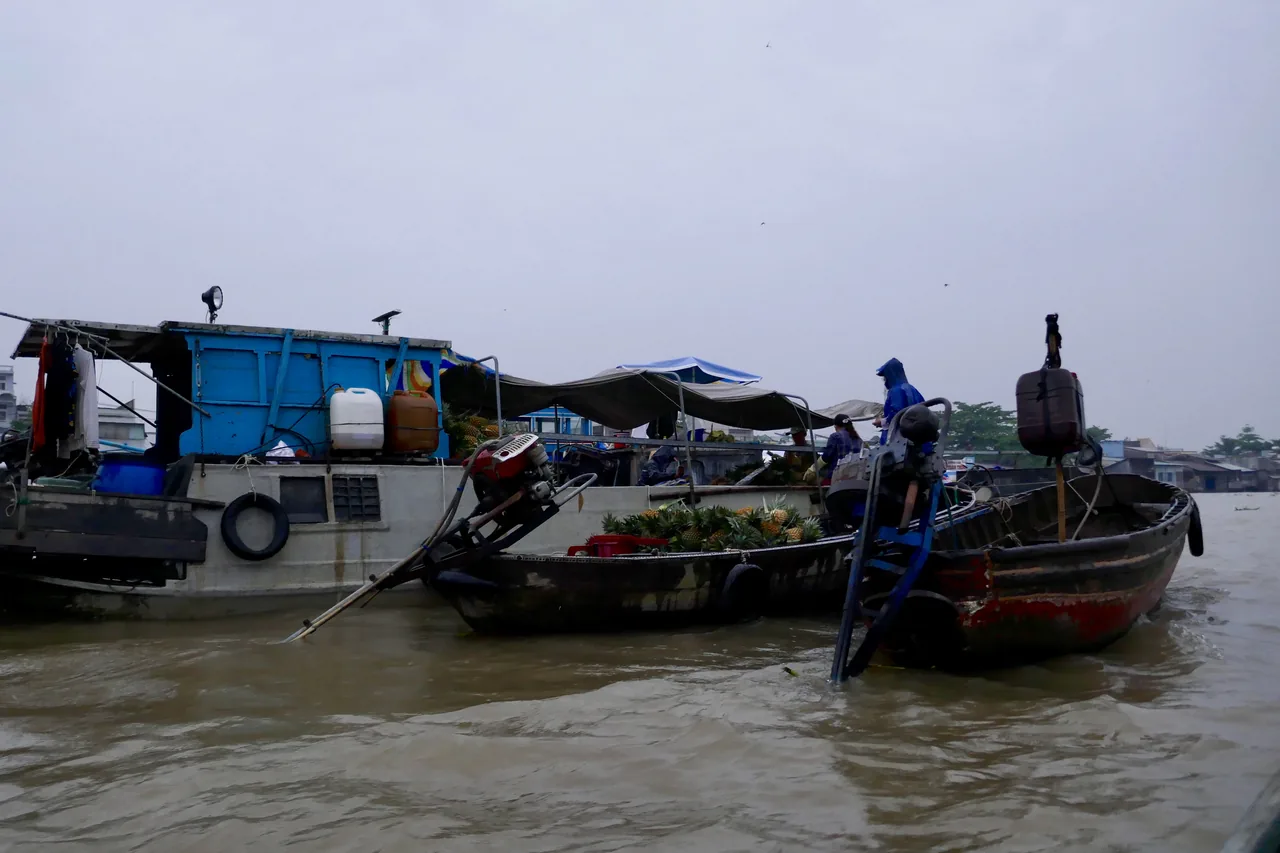
The Mekong Delta is Vietnam’s flat, green, water-laced rice bowl — a maze of rivers, canals, fruit orchards and floating markets southwest of Saigon. You can sample it on a day tour to My Tho or Ben Tre, but to really feel it you want an overnight in Can Tho and an early-morning boat to the Cai Rang floating market. The dry season (November–April) is the comfortable time to go.
| Base | From Saigon | What you do |
|---|---|---|
| My Tho | ~70 km, 2–2.5 hrs | Vinh Trang Pagoda, Unicorn (Thoi Son) Island — easy day trip. |
| Ben Tre | ~85 km | Coconut-candy workshops, sampan canals, orchard cycling. Day trip. |
| Can Tho | ~155–170 km, 3–4 hrs | Cai Rang floating market — stay overnight (2–4 days total). |
| Chau Doc / Sa Dec | further out | Sam Mountain shrines, Tra Su cajuput forest; Sa Dec flower village and the 1895 Huynh Thuy Le house (30,000 VND). |
The headline experience is the Cai Rang floating market near Can Tho. Take a boat from Ninh Kieu pier — it’s about 45 minutes out, there’s no entry fee, and a boat runs roughly 100,000–150,000 VND per person (about $4–6). Go at dawn.
Getting around the delta keeps getting easier: the Can Tho–Ca Mau expressway (110.85 km) opened fully on 19 January 2026, creating a roughly 270 km fast corridor from Saigon to Ca Mau, and the new Rach Mieu 2 bridge opened in September 2025. If you want the deep-delta experience — Chau Doc’s floating villages and the Tra Su bird forest — give the region 3–4 days rather than a single rushed day.
9. Vung Tau: the closest beach and the giant Christ
Vung Tau is Saigon’s nearest seaside escape — a breezy peninsula town about 95–105 km away, an easy 2-hour drive on the expressway or a 90-minute fast ferry from the city centre. It’s not Vietnam’s prettiest beach, but it’s quick, cheap and a genuine break from the city, with a clifftop statue of Christ you can climb inside.
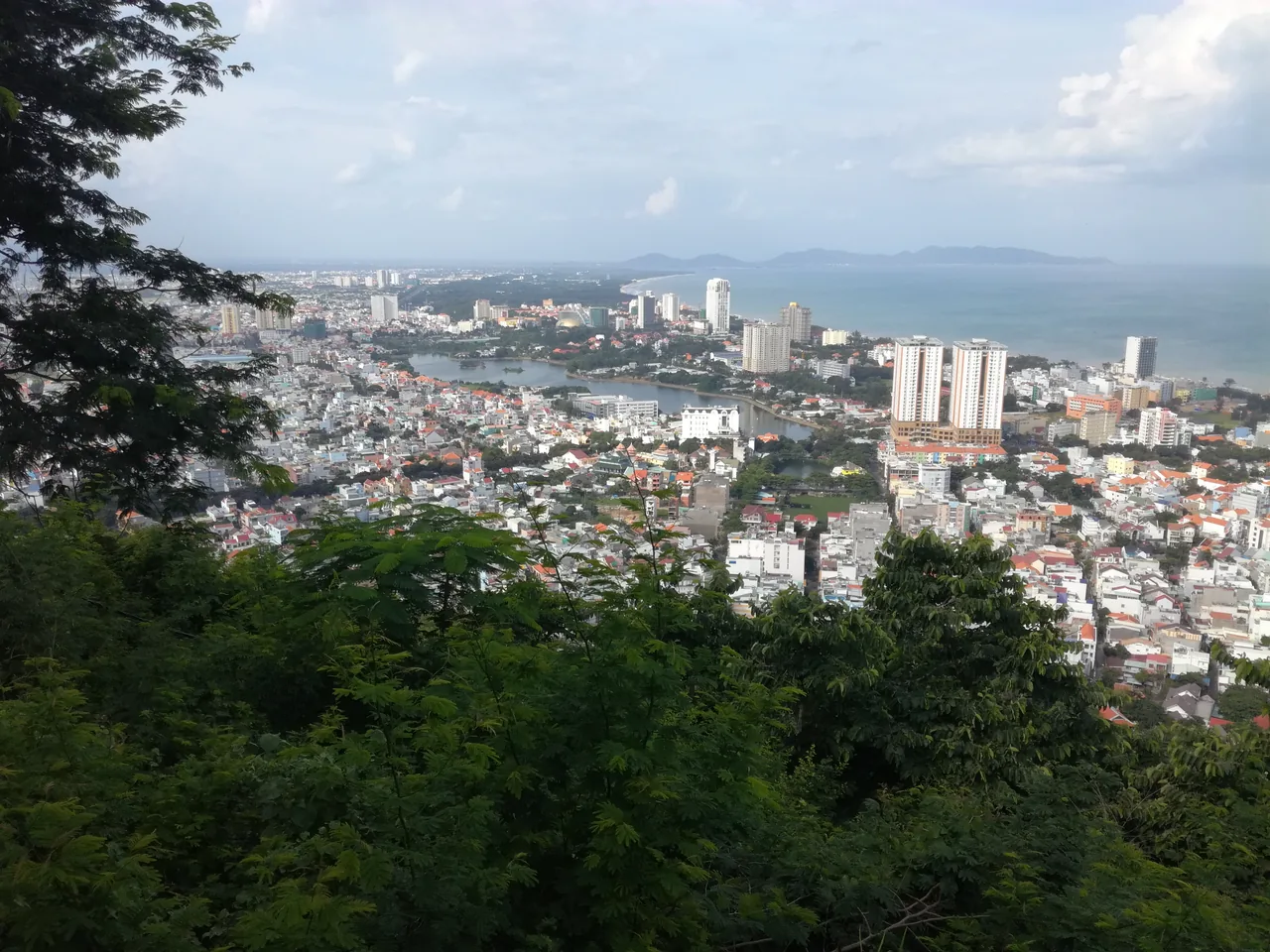
The signature sight is the Christ of Vung Tau: a 32 m statue (36 m including the base), arms 18.3 m across, finished in 1994. You climb roughly 800-odd steps up the hill, then a spiral staircase inside takes you out onto viewing platforms on the shoulders. Bring water — it’s a sweaty haul, but the bay view pays off.
- Beaches: Back Beach (Bai Sau) is the long swimming strand; Front Beach (Bai Truoc) is the town-side promenade.
- Lighthouse (1862) — Vietnam’s oldest, with a great hilltop panorama.
- Ho May Park cable car up Big Mountain (Nui Lon).
- White Palace (Bach Dinh), an 1898 colonial villa.
Best months are November–April, and it works as a day trip or an easy overnight. The fast ferry uses the Greenlines DP service from a terminal near Nguyen Hue in District 1 (it moved there in August 2025).
10. Nha Trang: the beach city with islands and Cham towers
Nha Trang is southern Vietnam’s big beach resort city — a long curving bay, offshore islands you reach by boat or cable car, mud spas, and ancient Cham towers right in town. It’s lively and developed, popular with both Vietnamese and international beachgoers, and it has its own quirk: its best weather runs opposite to the rest of the south.
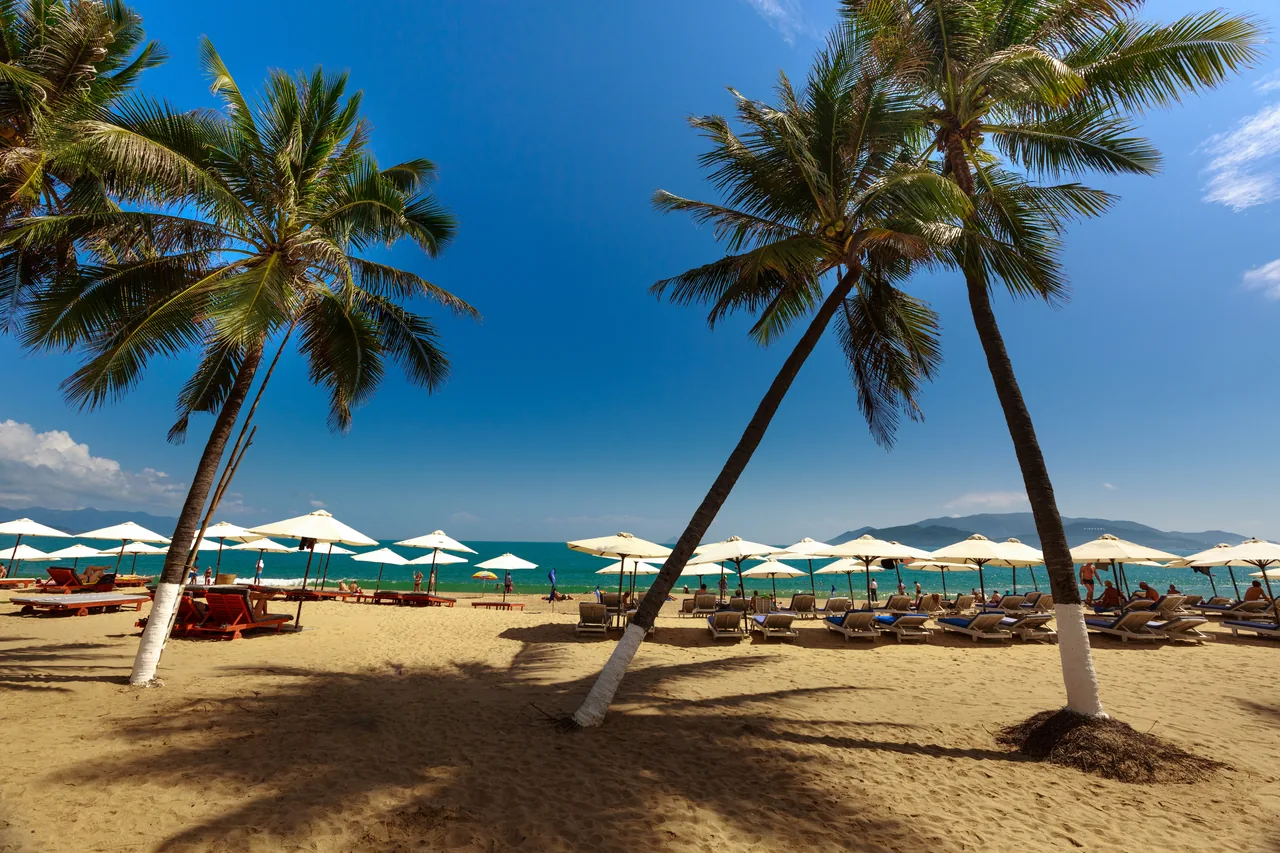
From Saigon it’s a 1-hour-5-minute flight to Cam Ranh airport (CXR), about 35 km from town (45–60 min transfer); or roughly 8 hours by train or sleeper bus. Things to do:
- VinWonders / Vinpearl on Hon Tre island — a theme park on an island reached across the bay. (The cable-car status, length and fares vary by source, so confirm locally; VinWonders entry is around 1,050,000 VND for adults, or 700,000 after 16:00.)
- Po Nagar Cham Towers — 8th–13th-century Cham Hindu temples, about 25,000–30,000 VND.
- Thap Ba mud baths (from ~120,000 VND), diving at the Hon Mun marine reserve, and the long, quiet Bai Dai beach south of town.
Two nights (about 3 days) is plenty to swim, do an island-hop and soak in a mud bath. Since the 2025 merger, Nha Trang stays the capital of an enlarged Khanh Hoa province.
11. Da Lat: cool highlands, flowers, lakes and waterfalls
Da Lat is the south’s cool-climate escape — a French-built hill town on the Lang Bian plateau, around 1,500 m up, where the air is 14–23°C and you’ll actually want a jacket at night. They call it the “city of eternal spring,” and it trades in flowers, coffee, temperate vegetables, pine forests, pastel villas, lakes and waterfalls. It’s the antidote to lowland heat.
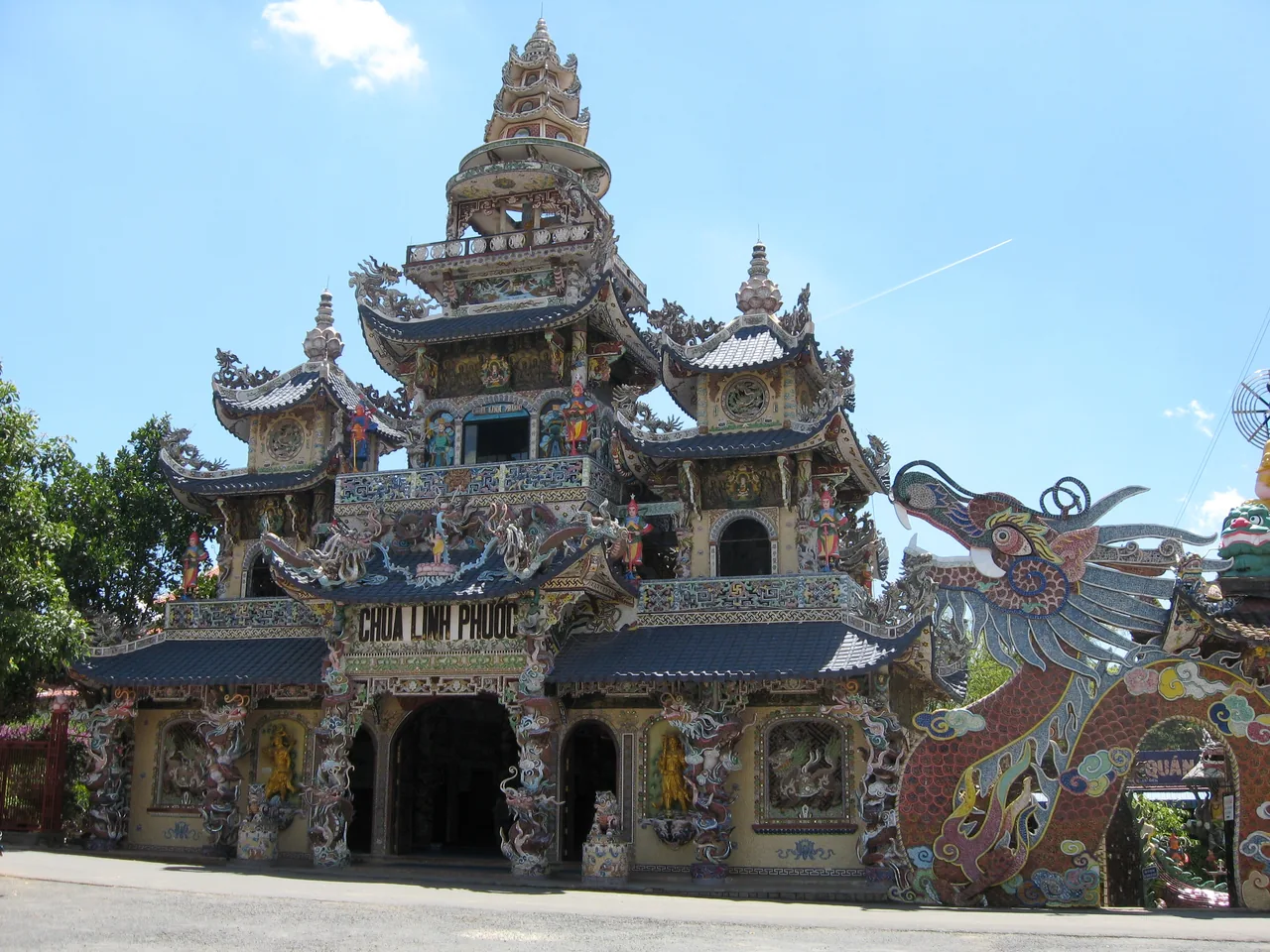
The main sights are walkable or a short ride apart:
- Xuan Huong Lake — the heart of town, about 5 km around, lovely for a stroll or a pedal boat.
- Datanla Falls — reached by a fun alpine coaster.
- Crazy House (Hang Nga) — a wildly surreal Gaudí-esque guesthouse you can wander.
- Linh Phuoc Pagoda — a glass-mosaic temple with a 49 m dragon.
- Tuyen Lam Lake and Lang Biang mountain (~2,167 m) for the views.
Flower gardens are half the reason people come — the town is built around them, and the biennial Da Lat Flower Festival turns it into one big bloom.

From Saigon it’s a 50–60 minute flight to Lien Khuong airport (IATA code DLI), 28–30 km from town, or 6–8 hours by bus or car (there’s no through expressway yet). Best in the dry season, December–March; give it 2–3 days.
12. Mui Ne / Phan Thiet: red dunes and kitesurfing
Mui Ne is a string of beach resorts famous for two things: sand dunes that look like a pocket desert, and some of the best kitesurfing in Asia. It’s an easy run from Saigon now — about 203–220 km, but the Dau Giay–Phan Thiet expressway (99 km, opened April 2023) cut the drive to roughly 2–2.5 hours, down from the old 5–6.
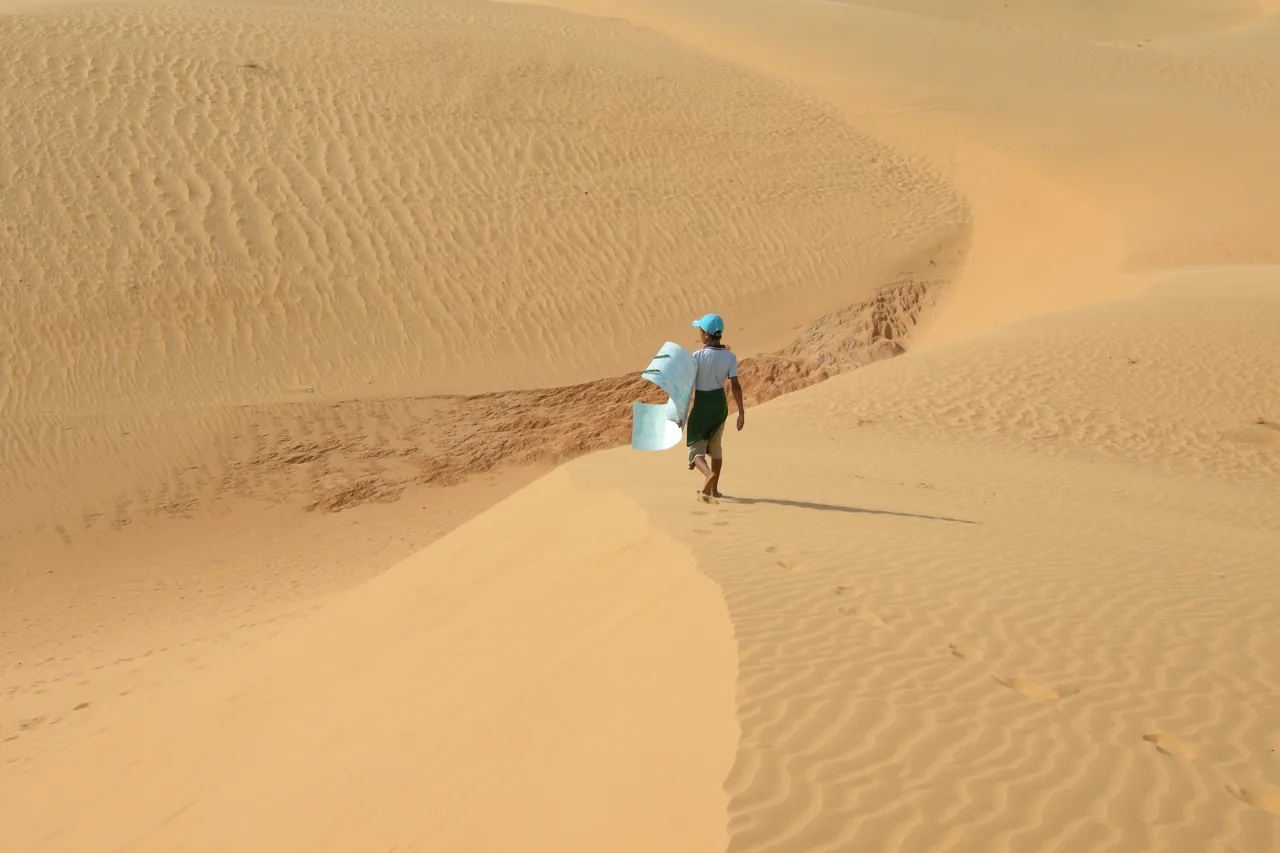
The dunes are the draw. The Red Sand Dunes are about 25 km from Phan Thiet (10 minutes from Mui Ne), and the bigger White Sand Dunes (Bau Trang) are about 30 km out. Rent a sandboard for 10,000–40,000 VND (under $2) or take a jeep tour, ideally at sunrise or sunset.
- Fairy Stream (Suoi Tien) — a shallow, ankle-deep walk through red-and-white rock, about 15,000 VND.
- Mui Ne fishing village — busiest and most photogenic at dawn, 5–7 a.m.
- Po Shanu Cham Towers — small Cham ruins with a sea view.
13. Con Dao: wild beaches, dark history and sea turtles
Con Dao is a quiet archipelago of 16 islands off the southern coast — clean, uncrowded, great for diving, and layered with one of Vietnam’s most haunting histories. The main island, Con Son, holds a former prison complex, while the surrounding national park protects nesting sea turtles and some of the country’s clearest water. It’s the antidote to busy beach towns.
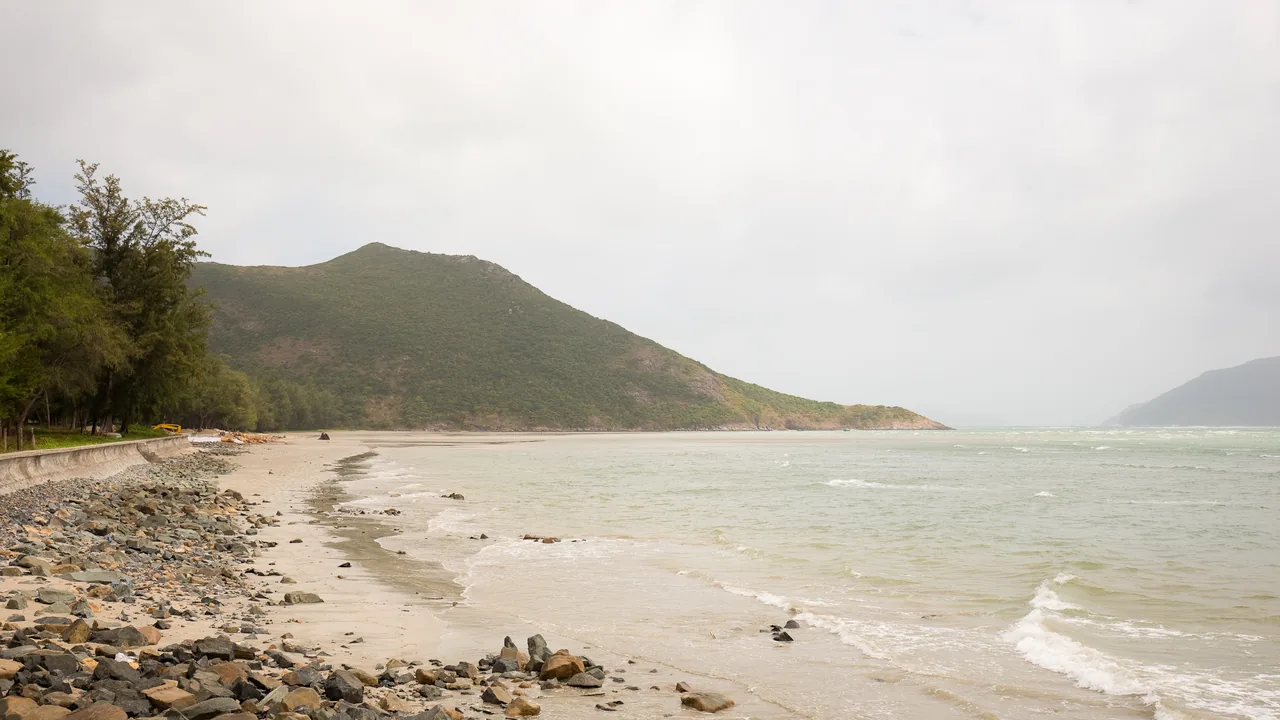
Getting there takes a little effort, which is exactly why it stays peaceful. You can fly Saigon (SGN) to Con Dao (VCS) in about 45 minutes, with several departures a day. By sea there is one route, from Tran De, and the crossing takes two and a quarter to two and a half hours. The boat from Vung Tau is out of service after a technical failure, and the operator is pointing at the Lunar New Year period for its return. Our Con Dao guide sets out the sailing times and the prison entry slots.
- History: Con Dao Prison (1862) and its notorious “tiger cages”; Hang Duong Cemetery (~1,900 graves) and the night vigil at the tomb of the heroine Vo Thi Sau (executed here in 1952).
- Beaches: Dam Trau (near the airport) and An Hai.
- Sea turtles: nesting runs April–October (peak June–September) on Bay Canh island.
Best months are roughly March–September; give it 2–4 days. Since 2025 Con Dao is administered as a special zone of Ho Chi Minh City — but, again, nothing changes on the ground.
14. Phu Quoc: the big resort island (in brief)
🏨 Where to stay in Phu Quoc — the 5 best areas, by traveller →
Phu Quoc is Vietnam’s largest island — about 575 km² out in the Gulf of Thailand — and the south’s flagship resort destination. Think Bai Sao and Long Beach, big resorts, the Grand World and Sunset Town complexes, and the record-setting Hon Thom cable car (7,899.9 m, the world’s longest sea-crossing cable car, per Guinness). It’s a different pace from the mainland: pure beach-and-resort.
A few things make it newsy right now: it’s been chosen to host APEC 2027, a new airline (Sun PhuQuoc Airways) launched in November 2025, and since the 2025 merger it’s a special zone of the new An Giang province.
Phu Quoc deserves far more than a paragraph, so rather than cram it in here, see our full Phu Quoc island planner for beaches, costs, the best time to go and how the flights and ferries work.
15. Getting between southern cities: the transport matrix
You’ll almost certainly arrive at Tan Son Nhat (SGN), then move around with a mix of sleeper buses, expressway cars, trains, ferries and short domestic flights. The south is well connected and cheap — the trick is matching the mode to the distance. Below is the at-a-glance matrix (1 USD ≈ 26,300 VND).
| Route | Mode | Time | Fare (VND) |
|---|---|---|---|
| Saigon → Mui Ne / Phan Thiet | Open/sleeper bus | ~4–5 hrs (expressway 3–3.5) | 180,000–550,000 |
| Saigon → Phan Thiet | Train | ~3 hr 48 | 130,000–400,000 |
| Mui Ne → Da Lat | Bus | ~4 hrs (~190 km) | 185,000–250,000 |
| Da Lat → Nha Trang | Bus | ~3.5–4 hrs (~135 km) | ~170,000 |
| Nha Trang → Saigon | Flight (CXR→SGN) | ~1 hr 7 | 680,000–2,600,000 |
| Nha Trang → Saigon | Train / sleeper bus | ~7–9 hrs | 315,000–480,000 |
| Saigon → Da Lat | Bus / flight (DLI) | Bus 6–8 hrs / flight 50 min | Bus 200,000–500,000 / flight 700,000–1,400,000 |
| Saigon → Can Tho | Bus (expressway) | ~2.5–3.5 hrs (~121 km) | 150,000–240,000 |
| Saigon → Vung Tau | Bus / Greenlines DP ferry | Bus 2–2.5 hrs / ferry ~2 hrs | Bus 135,000–350,000 / ferry 260,000–450,000 |
A few operators to know: Futa (Phuong Trang) runs the biggest sleeper-bus network in the south; The Sinh Tourist sells a hop-on/hop-off open-bus pass (Hanoi–Saigon, valid a month); Hanh Cafe is another reliable line; and Greenlines DP handles the fast ferries. For flights, SGN connects to Nha Trang (CXR), Da Lat (DLI), Phu Quoc (PQC) and Con Dao (VCS) on Vietnam Airlines, Vietjet and Bamboo.
16. When to go: southern Vietnam’s seasons, Tet and festivals
The simple rule: southern Vietnam has a dry season (December–April) and a wet season (May–November), and the dry months are the comfortable time to come. It’s warm all year, 27–30.5°C, with no real winter. April is the hottest stretch (35–40°C), and September is the wettest month (around 320 mm of rain). The wet season isn’t a washout — rain often comes as a heavy afternoon burst and clears — but the dry season is easier.
| Month | Season | What to expect |
|---|---|---|
| Dec–Feb | Dry, peak | Best weather — warm, sunny, low humidity. Busiest and priciest. |
| Mar–Apr | Dry, hot | Dry but building heat; April is scorching (35–40°C). |
| May–Aug | Wet | Hot and humid with afternoon downpours; greener and cheaper. |
| Sep | Wet, peak rain | Wettest month (~320 mm). Pack a poncho. |
| Oct–Nov | Wet, easing | Rain tapering off toward the dry season. |
It’s also worth knowing the festival and holiday calendar, because the big domestic-travel dates fill hotels and roads:
| Event | When (2026) | Travel impact |
|---|---|---|
| Tet (Lunar New Year) | 6 Feb 2027 (multi-day holiday) | Major — transport sold out, closures, big price jumps. |
| Hung Kings’ Festival | 26–27 Apr | Domestic travel peak. |
| Reunification + Labour Day | 30 Apr + 1 May (4-day weekend) | Beaches (Vung Tau, Mui Ne) packed. |
| Ba Chua Xu Festival (Chau Doc) | 6–12 Jun | Big Mekong pilgrimage crowds. |
| Nha Trang Sea Festival (biennial) | 17–19 Jul | Hotels full in Nha Trang. |
| Mid-Autumn Festival | 25 Sep | Streets and markets busy (not a day off). |
| Da Lat Flower Festival (biennial) | ~Dec (TBC) | Da Lat hotels sell out — book ahead. |
| Christmas / New Year | 24–25 Dec, 31 Dec | Downtown Saigon crowds and road closures. |
17. Recommended itineraries: 5, 7, 10 and 14 days
Build your trip from the three clusters — Saigon & day trips, the Mekong, and the coast/highlands — and add nights as you have time. Saigon needs about two days; everything else is a module you slot in. Below are tried-and-tested routes by length, followed by a day-by-day for the most popular one.
| Length | Route | Best for |
|---|---|---|
| 5 days | Saigon (2) + Cu Chi day trip + Mekong day trip + Vung Tau day trip | First-timers short on time; city + a taste of everything. |
| 6 days | Saigon (2) + Can Tho/Mekong overnight (2) + Mui Ne (2) | City, river and dunes without rushing. |
| 7 days | Saigon (2) + Mui Ne (2) + Da Lat (3) | The classic city–dunes–highlands run. |
| 10 days | Saigon (2) + Mekong overnight (2) + Mui Ne (2) + Da Lat (2) + Nha Trang (2) | The full southern loop — the backpacker classic. |
| 14 days | Saigon (2) + Mekong (2) + Mui Ne (2) + Da Lat (2) + Nha Trang (3) + fly to Phu Quoc or Con Dao (3) | The whole south, beaches included, at a relaxed pace. |
The 10-day loop, day by day
- Days 1–2 — Saigon: War Remnants Museum, Reunification Palace, Central Post Office, Ben Thanh Market, a rooftop bar and Bui Vien. Maybe a Cu Chi half-day.
- Days 3–4 — Mekong (Can Tho): drive down, sunset on Ninh Kieu pier, then a dawn boat to the Cai Rang floating market and the canals.
- Days 5–6 — Mui Ne: bus or car over, sunrise on the Red Sand Dunes, the Fairy Stream and the fishing village; an afternoon of kitesurfing or just the beach.
- Days 7–8 — Da Lat: wind up into the highlands — Xuan Huong Lake, the Crazy House, Datanla Falls, flower gardens and a cool-air night.
- Days 9–10 — Nha Trang: down to the coast for the beach, an island-hop and a Thap Ba mud bath before flying back to Saigon.
A few planning notes: the Saigon–Mui Ne–Da Lat–Nha Trang stretch links neatly by road and sleeper bus, so it flows well as an overland loop. Tack the islands (Phu Quoc or Con Dao) on at the end and fly in and out to save days. And if you’re combining south and centre/north in one big trip, fly between regions rather than grinding it overland — see our central Vietnam guide to plan the middle, and use the country-wide Vietnam master planner to stitch it all together.
18. Costs and budget by travel style
Southern Vietnam is cheap by any standard — you can travel well for under $30 a day, or live comfortably for $57–95. Street food, local transport and beer cost almost nothing; your big variables are hotels, intercity flights and tours. Here’s the lay of the land (1 USD ≈ 26,300 VND in mid-2026).
| Style | Per day (VND) | Approx ($) | What it buys |
|---|---|---|---|
| Shoestring | 600,000–800,000 | $23–30 | Hostel dorm, street food, buses and walking. |
| Mid-range | 1,500,000–2,500,000 | $57–95 | Nice hotel room, restaurant meals, Grabs, a ticket or two. |
| Comfort / splurge | 3,000,000+ | $115+ | Four-star or resort, private tours, rooftop bars, spa. |
And the line items that make up those numbers:
| Item | Price (VND) | Approx ($) |
|---|---|---|
| Street meal | 25,000–75,000 | $1–3 |
| Mid-range restaurant meal | 210,000–525,000 | $8–20 |
| Beer (shop / bar / draft bia hoi) | 15,000 / 30,000–50,000 / ~10,000 | $0.60 / $1–2 / $0.40 |
| Grab car (base + per km) | ~25,000–30,000 + 9,000–11,500/km | $1+ then ~$0.40/km |
| Hostel dorm bed | 150,000–300,000 | $6–11 |
| Mid-range hotel (room) | 700,000–1,500,000 | $27–57 |
So a typical mid-range day — a nice hotel room, a couple of restaurant meals, Grabs and a ticket or two — lands comfortably in that $57–95 band per person. Add domestic flights (often $30–80 a hop) and big-ticket tours separately. Carry some cash for street stalls and small towns, but cards and Grab cover most of the rest. For how to actually carry your money, see the practical section below and our cash-and-cards guide.
19. Visa and entry: what most travellers need
Whether you need a visa for Vietnam depends entirely on your nationality, so don’t assume you’re visa-free — check before you book. A good number of passports get a visa-free stay, but many nationalities need a Vietnam e-visa, which costs around $25 and is applied for online before you travel.
The e-visa is straightforward: apply on the official government portal, upload a passport photo and your passport’s bio page, pay the fee, and you usually get an approval letter in a few working days. It’s typically valid for stays of up to 90 days and can be single- or multiple-entry. Print it out and carry a copy.
On arrival, expect the usual: an immigration queue, a passport stamp, and customs. Keep your accommodation address handy for the entry form. Once you’re through, grab a SIM or activate an eSIM and you’re ready to roll.
20. Safety, scams and etiquette
Southern Vietnam is one of the safer corners of Southeast Asia, and Saigon is easy and pleasant to wander, including at night. Violent crime against tourists is rare. The real risk is petty theft, and a handful of well-worn scams — none of them scary once you know the playbook.
The classic scams to sidestep:
- Rigged-meter taxis — copycat cabs that run the meter at 2–3× speed. Use Vinasun, Mai Linh or just Grab (the price is fixed in-app).
- Money switcheroo — Vietnam’s notes confuse newcomers (the 20,000 and 500,000 are both blue-ish). Count change yourself, slowly.
- Cyclo overcharging — a “per person/per minute” rate or a VND-to-USD swap. Agree the total and currency before you ride.
For the full rundown on avoiding rip-offs, see our Vietnam scams and safety guide.
Etiquette quick hits
- Dress modestly at temples and pagodas — cover shoulders and knees, and take your shoes off where asked.
- A small two-handed gesture or a slight bow goes a long way; loud confrontation loses face for everyone.
- Tipping isn’t expected but is appreciated for guides and good service.
A bit more on local customs in our Vietnam etiquette notes — worth a skim before you go.
21. SIM, money and practical tips
A few practical bits make the whole trip smoother: get connected, sort your cash, and know the small stuff (plugs, water, tipping). Vietnam is cheap and easy on all of these once you know how it works.
SIM and eSIM
Mobile data is cheap and fast. Viettel has the widest network (best in the countryside) at around 150,000 VND for a tourist plan; Vinaphone and Mobifone have tourist packages too. The easiest route, though, is a travel eSIM you activate before you land — no queues, online the moment you turn your phone on. Grab one through our Vietnam eSIM guide.
Money, ATMs and exchange
- Vietnam is still very cash-friendly for street food and small towns, though Grab and cards cover most else.
- ATMs are everywhere; many charge around 50,000 VND per withdrawal with a per-transaction cap (roughly 5,000,000 VND). Vietcombank is a reliable network.
- The best exchange rates are at gold shops (around Le Thanh Ton in D1 and by Ben Thanh Market). Count large amounts at the counter.
The small but useful stuff
- Tipping: not obligatory; about 100,000–200,000 VND/day for a guide, 5–10% in restaurants, in VND.
- Power: 220V/50Hz, with type A and C plugs (type A is common in the south). Bring a transformer for 110V gear.
- Water: don’t drink the tap water — stick to bottled, and be a little wary of ice and washed salad in cheap spots.
- Insurance: get travel insurance that covers medical, cancellation and theft.
- Packing: light layers, a poncho in the wet season, a jacket for Da Lat, and modest clothes for temples.
🏖️ Things to do in Nha Trang: how a day divides, with fares and travel times →
🍜 What to eat in Nha Trang: the dishes, the prices and where the shops are →
🎡 VinWonders Phu Quoc: zone hours, show times and what the 950,000d ticket covers →
🛥️ An Thoi island hopping: which port your boat leaves from, and what the fare leaves out →
🏨 Where to stay in Da Lat: which places you can actually walk from →
🏞️ Datanla Falls and the alpine coasters: which ticket and when the counters close →
🌃 Nha Trang after dark: when the night market, rooftops and beach clubs close →