
Cam Ranh Airport to Nha Trang: What Each Option Costs, and Why Your Landing Time Decides It
The paid options all sit between 200,000d and 400,000d. What actually changes is whether you land in daylight or after midnight.
| Distance | About 35km, and 45 to 60 minutes in normal traffic |
|---|---|
| Fixed-price taxi | 300,000d for a four-seater, 360,000d for a seven-seater, posted at the airport |
| Grab | Usually 200,000-300,000d, from the ride-hailing pickup area |
| Bus 18 | 50,000d a head, 50 to 60 minutes, last departure around 21:00 |
| Booked in advance | 350,000-500,000d, and the driver is holding a name board |
| The real question | Not which is cheapest, but what still runs at the hour you land |
| After midnight | The bus has stopped and Grab drivers thin out. The taxi counter and a pre-booked car are what is left |
| Terminals | T1 domestic and T2 international are separate buildings |
1. What to take, by the time on your boarding pass
2. The paid options on one page
3. The fixed-price taxi counter
4. Grab and Xanh SM
5. Booking a car before you fly
6. Landing after midnight
7. Bus 18, and who it is actually for
8. The official sources do not agree on the bus
9. T1, T2 and the walk out
10. Where you are staying changes the answer
11. Paying, and what to carry
12. Luggage, group size and car seats
13. Going back: the airport run
14. Once you are in Nha Trang
1. What to take, by the time on your boarding pass
🏖️ Things to do in Nha Trang: how a day divides, with fares and travel times →
🌙 Landing in Da Nang at 1am: which night to book and what the airport cannot do →
✈ Da Nang airport fast track: what it costs and when the queues form →
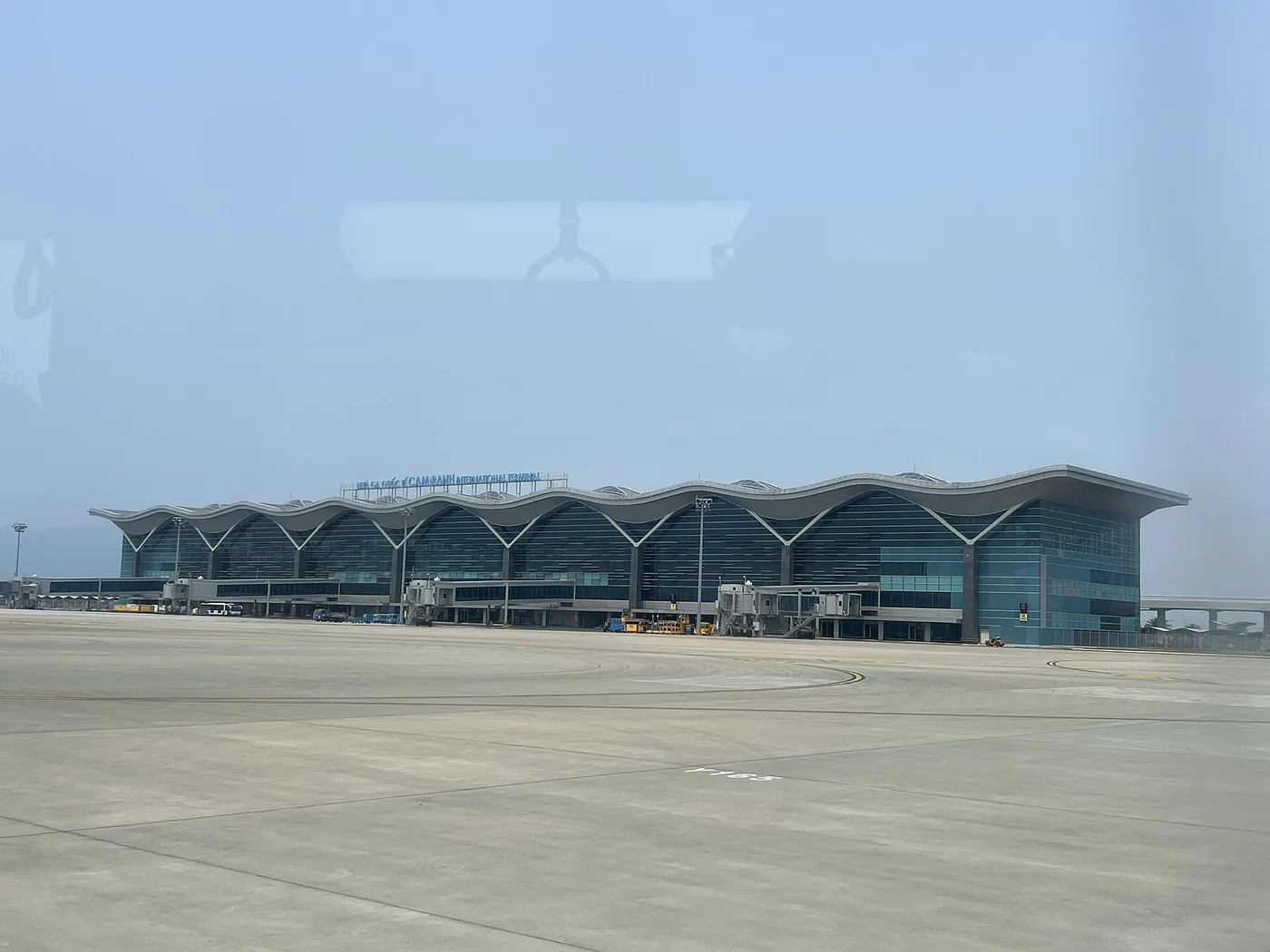
Every paid way into Nha Trang costs between about 200,000d and 400,000d, so price is not the decision. The decision is what time you land. Cam Ranh airportMap sits about 35km from the city, a 45 to 60 minute drive, and the options thin out sharply late at night.
| You land | Take | Why |
|---|---|---|
| Daytime, travelling light | Grab | Cheapest of the door-to-door options, usually 200,000-300,000d |
| Daytime, family or lots of luggage | Fixed-price taxi, seven-seater | 360,000d posted, no app, no negotiation |
| Daytime, on a budget and unhurried | Bus 18 | 50,000d, but it drops you on a city street, not at your hotel |
| After about 22:00 | Fixed-price taxi or a car booked ahead | The bus has finished and Grab supply drops |
| After midnight, first time in Vietnam | Booked ahead | Someone is waiting with your name, at the hour when improvising is worst |
If the rest of the trip is still open, the Nha Trang travel guide covers the beaches, the islands and the day trips in one place.
Vietnam eSIM cost calculator
Enter how long you stay and how much data you expect to use. The table shows what each provider actually charges for that trip, what you get, and how many days you end up paying for but not using.
Rows are in a fixed order by provider. That order is not a ranking.
They price on different axes. Airalo sells a fixed ladder of trip lengths alongside a grid of data caps. Yesim sells unlimited by the exact day, so a 12-day trip costs 12 days rather than a 15-day package. Saily sells a small set of data bundles with a fixed validity.
- Airalo · Network: VNPT 5G
- Airalo · Speed limit on unlimited packages: Unlimited means unlimited until 3 GB in one day. After that the speed drops to 1 Mbps for the rest of that day, then resets.
- Yesim ·
- Every option here is data only. None of them gives you a local phone number, so if you need one for calls, deliveries or SMS codes, an eSIM of this kind is not the answer.
Working out what data will cost before you land: the eSIM cost calculator
2. The paid options on one page
Three of these are posted prices and one is a market rate. The airport publishes its taxi tariff and its bus fare; Grab is whatever the app says at that moment.
| Option | Price | Time | Book ahead | Works late |
|---|---|---|---|---|
| Fixed-price taxi, 4 seats | 300,000d | 45-60 min | No | Yes |
| Fixed-price taxi, 7 seats | 360,000d | 45-60 min | No | Yes |
| GSM electric taxi, 4 seats | 350,000d | 45-60 min | No | Yes |
| Grab | About 200,000-300,000d | 45-60 min | No | Thins out |
| Private car booked ahead | 350,000-500,000d | 45-60 min | Yes | Yes |
| Bus 18 | 50,000d a head | 50-60 min | No | No, last run about 21:00 |
The gap between the cheapest and the dearest door-to-door option is roughly 150,000d. For two people that is the price of one dinner. It is worth knowing, and it is not worth optimising at one in the morning.
3. The fixed-price taxi counter
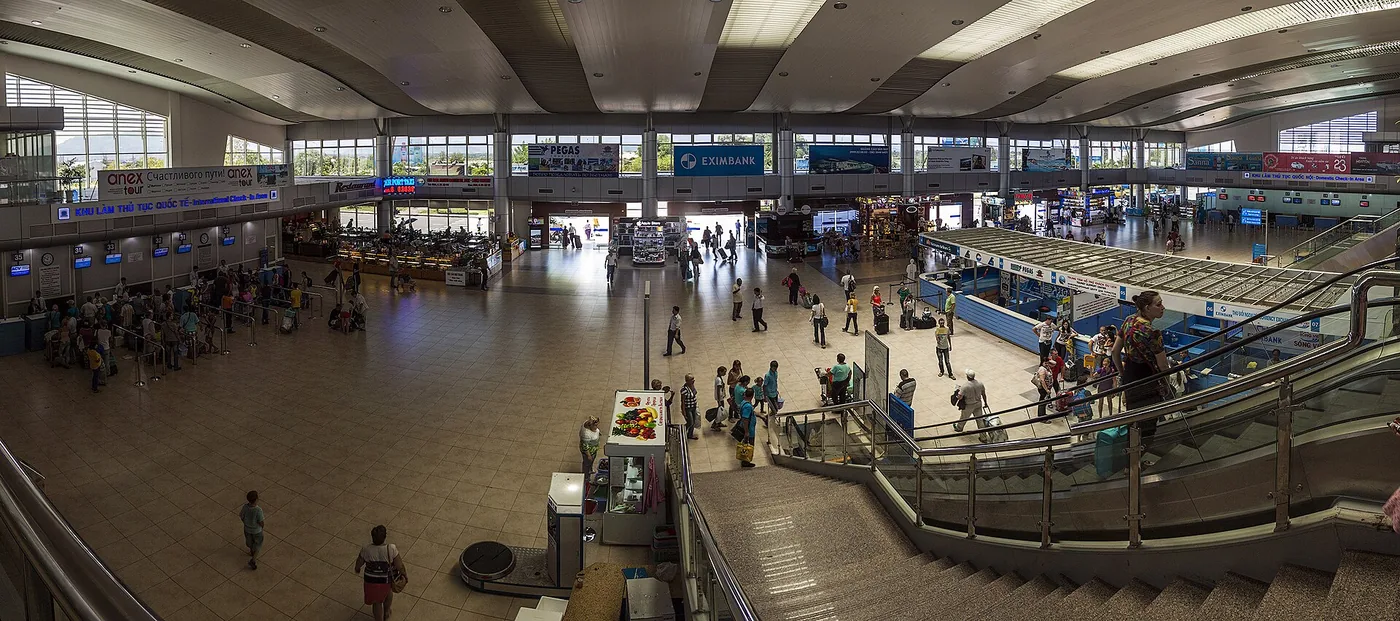
The airport posts a flat fare to Nha Trang by company and car size, so there is nothing to agree and nothing to watch on a meter. The desks are in the international terminal arrivals area.
| Company | Car | Fare to Nha Trang |
|---|---|---|
| Cong Ty Quoc Te | 4 seats | 300,000d |
| Cong Ty Quoc Te | 7 seats | 360,000d |
| GSM (Green and Smart Mobility) | 4 seats | 350,000d |
| GSM Premium | 4 seats | 400,000d |
GSM is the electric fleet, the same operation that runs Xanh SM on the street. If you have a preference between a petrol taxi and an electric one, that is the choice on offer here.
What the counter really sells is certainty. The fare is posted, it does not move with demand, and there is a company name attached to the ride if something goes wrong. That matters least on a sunny afternoon and most at 01:30.
4. Grab and Xanh SM
Grab is normally the cheapest door-to-door option, at roughly 200,000-300,000d, and the airport has a marked pickup area for it. The app shows the walk when you book.
The saving over the taxi counter is real but modest, usually somewhere around 50,000 to 100,000d. Against that, you are agreeing to whatever the app quotes at that moment, and quotes rise when a wave of flights lands together.
The guide to Grab and Xanh SM in Vietnam covers setting the app up, paying, and what the different car classes mean. Two things specific to arriving at Cam Ranh:
- Get a connection working before you leave the terminal. Booking a car needs data, and the queue at the counter is the fallback if you cannot. The Vietnam eSIM comparison is the fastest way to sort that before you fly.
- Look for the ride-hailing pickup area rather than following the taxi touts at the door. The app will point you at it.
5. Booking a car before you fly
A pre-booked transfer costs more than Grab and buys a different thing: a driver already holding your name when the doors open. The airport lists private hire at 350,000-500,000d, which is roughly a taxi fare plus a premium for the certainty.
It is worth the premium in a narrow set of cases, and not much else:
| Worth booking ahead | Not worth it |
|---|---|
| Landing after midnight | A daytime arrival travelling light |
| First trip to Vietnam, no local payment set up | You already use Grab and have data |
| Small children, car seats, a lot of bags | One or two people with cabin bags |
| Your card or phone may not work on arrival |
6. Landing after midnight
This is the part worth planning, because a large share of the international flights into Cam Ranh arrive in the small hours. At that time the picture is not the same one you read about in daytime guides.
| What changes after about 22:00 | Consequence |
|---|---|
| Bus 18 has finished for the day | The 50,000d option is gone |
| Fewer Grab drivers are willing to run to Nha Trang | Longer waits, and sometimes no car at all |
| The taxi desks stay staffed for arrivals | The posted fare is your reliable floor |
| You are 35km from your hotel | There is no walking or waiting it out |
The practical rule is short. If you land after midnight, decide before you fly, not in the arrivals hall. Either accept the posted taxi fare as the plan, or book a car and let someone meet you. Trying to save 80,000d at two in the morning with a phone that has not connected to a network yet is how people end up standing outside for forty minutes.
One more thing that only matters at that hour: have some Vietnamese cash. Card acceptance varies by driver and the airport’s exchange desks keep their own hours. How to handle money in Vietnam covers where to get dong and what to carry.
7. Bus 18, and who it is actually for
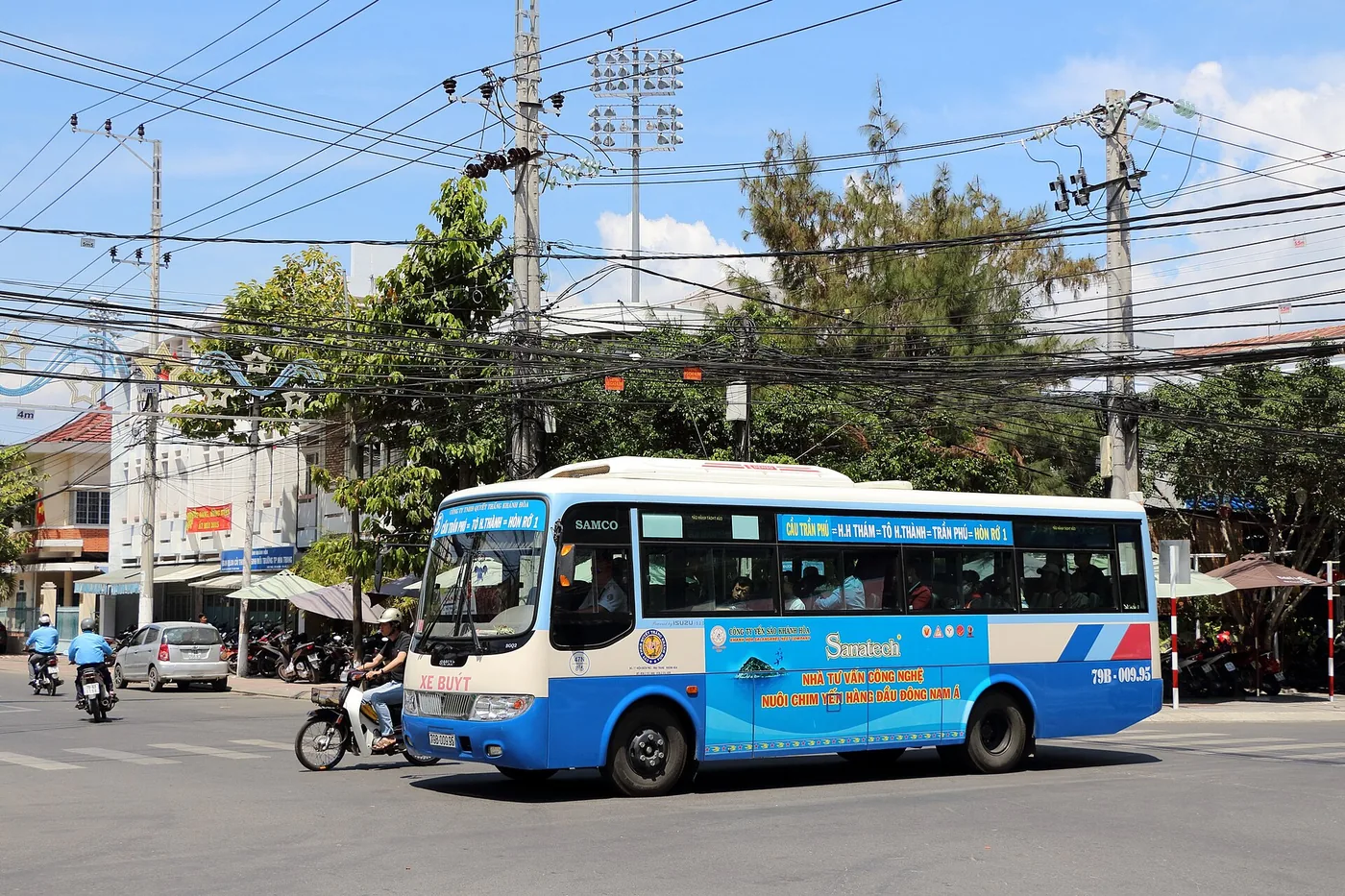
Bus 18 costs 50,000d a head and takes 50 to 60 minutes, which makes it the cheapest way in by a wide margin. It is also the option most travellers skip, and the reasons are worth stating plainly rather than pretending otherwise.
The route the airport publishes runs through the city rather than to a terminal:
19/8 StadiumMap → 10 Tran Hung Dao, by the provincial library → Nguyen Thien Thuat → 1 Tran Quang Khai → Phuoc Loc junction → Cam Lam roundabout → Cong Ty 71 (Công ty 71) → the airport.
That is genuinely useful if your hotel is near Nguyen Thien Thuat or Tran Quang Khai, which covers a good part of the tourist centre. It is much less useful if you are staying north of the river or out at a resort, because you will finish with a taxi anyway.
| Bus 18 suits | It does not suit |
|---|---|
| One or two people with light bags | Families with suitcases |
| Hotels near the main tourist streets | Resorts and anything north of the river |
| Daytime arrivals with time to spare | Anything after about 21:00 |
| Travellers who like the local option | A first arrival with no data and no dong |
Where you are staying decides this more than budget does, and the guide to where to stay in Nha Trang sets out how far each area sits from the centre.
8. The official sources do not agree on the bus
The airport’s own website publishes two different bus fares and two different journey times. Neither block is dated, so there is no way to tell which one was updated last.
| Where on the official site | Bus fare | Bus time | Taxi |
|---|---|---|---|
| The “other transport” table | 50,000d a head | 50-60 min | Listed separately, 300,000-400,000d by company |
| The transport summary block | 20,000-30,000d | 60-90 min | 300,000-500,000d |
Both are on camranh.aero, checked on 8 August 2026. We have quoted the detailed table above because it names the operator and lists the stops, but you should treat any bus figure as approximate and carry small notes. The taxi tariff, by contrast, is consistent: a per-company table with a flat fare to the city.
This is worth a section because the same pattern shows up on Vietnamese attraction sites generally. When two official pages disagree and neither carries a date, the one with more specifics is usually the newer one, but that is a guess rather than a fact.
9. T1, T2 and the walk out
Cam Ranh has two separate terminal buildings: T1 for domestic flights and T2 for international ones. They are not one building with two wings, so where you land changes where you meet your ride.
The taxi desks and the fixed-price tariff are posted at the international terminal, which is where most late arrivals land. If you come in on a domestic flight from Hanoi or Saigon you arrive at T1, and it is worth telling a pre-booked driver which terminal you are on rather than assuming.
Allow more time than you expect between wheels down and standing outside. Immigration on an international arrival can absorb a long time when several flights land together, and if you have booked a car, that is exactly the wait a driver holding a name board is paid to absorb.
If you are still working out entry paperwork, Vietnam’s entry requirements covers the visa and the arrival card.
10. Where you are staying changes the answer
The 35km figure is to the city centre. Your hotel may be considerably closer or considerably further, and that is what decides whether the bus is even a candidate.
| Staying | What it means for the ride in |
|---|---|
| Tran Phu beachfront, city centre | The standard 35km run. Every option on this page works |
| Nguyen Thien Thuat, Tran Quang Khai | The bus route passes your street. This is where bus 18 makes sense |
| North of the river | Add time and expect the fixed fare to be the practical floor |
| Bai Dai and the resorts near the airport | Much closer than the city. Do not pay a Nha Trang fare to go 10km |
That last row catches people out. Several resorts sit on the coast between the airport and the city, and a driver quoting the standard city fare for a much shorter trip is a routine thing to check rather than an outrage. The where to stay in Nha Trang guide has the geography.

11. Paying, and what to carry
Have Vietnamese dong for the ride even if you plan to pay by app. The taxi counter, the bus and some drivers are cash-first, and an arrival is the worst moment to discover a card does not work.
| Option | How you pay |
|---|---|
| Fixed-price taxi | Cash is always accepted; card varies by company |
| Grab | Card in the app, or cash to the driver |
| Bus 18 | Cash, small notes |
| Pre-booked transfer | Usually paid online before you travel |
The general rules on cash, cards and ATMs are in the Vietnam money guide, and the common tourist scams piece covers the arrivals-hall version: someone approaching you before you reach the marked taxi desks, quoting in dollars, or offering a “special price” for a ride the airport already prices publicly.
12. Luggage, group size and car seats
The jump from a four-seater to a seven-seater is 60,000d at the counter, which is the cheapest upgrade in this whole article. Four adults with four suitcases do not fit comfortably in a four-seater, and the price difference is small enough that it is rarely worth the squeeze.
| Party | Sensible choice |
|---|---|
| 1-2 people, cabin bags | Grab, or the 300,000d four-seater |
| 3-4 people with checked bags | The 360,000d seven-seater |
| Family with small children | Book ahead and ask about car seats, which are not standard |
| Group of five or more | Pre-booked van, priced per vehicle |
Car seats are the one request that genuinely needs arranging in advance. They are not standard in Vietnamese taxis and asking at the counter at midnight will not produce one.
13. Going back: the airport run
Leaving is the easier direction, because you choose the departure time. The same options run in reverse, and the fixed-price tariff is posted for the inbound leg rather than the outbound, so a metered or app fare going out may come to slightly less.
| Flight departs | Leave the city by |
|---|---|
| Morning international | Three and a half hours before, which usually means before dawn |
| Midday | Three hours before |
| Domestic | Two and a half hours before is usually comfortable |
Those allow an hour on the road plus the check-in and security time. If you are catching an early flight, book the car the night before rather than opening the app at 04:30, for the same reason late arrivals are worth planning: supply is thin at both ends of the night.
Comparing this with the other end of your trip, the Da Nang airport transfer is a much shorter run, and travelling between Vietnamese cities covers the trains and flights that connect them.
14. Once you are in Nha Trang
The city is compact enough that the transfer in is the longest single journey most visitors make. Once you are there, most of what people come for is within a short ride or a boat trip.
The island hopping trips leave from the piers south of the centre, the mud bath complexes are spread around the edge of town, and VinWonders sits across the bay on Hon Tre with its own cable car. If you are travelling in the wet months, Nha Trang in the rainy season is worth reading before you commit to the boat days.
Still deciding between coastal cities? Da Nang compared with Nha Trang sets the two side by side, and the Nha Trang travel guide is the place to start planning the days themselves.
🚕 Noi Bai airport to Hanoi — the fares, and where each vehicle now picks up →
🗓️ Going in February? The Russian winter charter season starts tailing off in February. See Nha Trang in February.
🗓️ Going in March? The Russian winter charter programme runs into spring, and March is its tail end. See Nha Trang in March.