
Da Nang Food Guide: What to Eat, Where to Find It & What It Costs
Turmeric noodles, fish-cake soup, roll-your-own pork, beachfront seafood and salted-caramel coffee, the definitive local eater’s map to Da Nang.
| Must-try dish | Mì Quảng, turmeric rice noodles with a shallow, intense broth (~40,000–65,000₫ / $1.6–2.7). Try Mì Quảng 1A. |
|---|---|
| Signature dessert | Kem bơ, whipped avocado over coconut ice cream (~15,000–45,000₫ / $0.6–1.8). The original is Kem Bơ Cô Vân. |
| Best coffee | Cà phê muối (salt coffee), salted-caramel foam over robusta drip (~35,000–39,000₫ / $1.4–1.55). |
| Cheap eats | Bánh mì from ~20,000₫ ($0.8) and Chợ Cồn market dishes from ~15,000₫; a full street meal is a few dollars. |
| Seafood | Beachfront halls on Võ Nguyên Giáp, sold by weight; ~200,000–350,000₫ ($8–14) per person. Bé Mặn, Mỹ Hạnh. |
| Food tour | Scooter or walking street-food tours ~$29–49; cooking class + market trip ~$39 (you ride pillion, you don’t drive). |
| Daily food budget | All street food under ~200,000₫ ($8)/day; mid-range ~$15–25; with a seafood dinner ~$30–50. |
1. What to eat in Da Nang (the quick answer)
2. The signature noodle & rice dishes
3. Da Nang specialities you won’t find done the same elsewhere
4. Seafood, the Da Nang way
5. Vietnamese coffee & café culture
6. Sweet Da Nang: kem bơ & chè
7. Markets & street-food scenes
8. Food tours & cooking classes
9. What it costs & how to order
10. Vegetarian & special diets
11. Eat safe: water, ice & hygiene
12. A one-day Da Nang food crawl
13. Bottom line
1. What to eat in Da Nang (the quick answer)
🍜 What to eat in Nha Trang: the dishes, the prices and where the shops are →
Eat mì Quảng, bún chả cá and bánh xèo with nem lụi for the local classics, a beachfront seafood dinner picked live from the tank, a cà phê muối (salt coffee) mid-morning and a kem bơ (avocado ice cream) to finish, and you’ve eaten the essential Da Nang. This is a working fishing city with its own turmeric-noodle tradition, a fierce street-food culture and famously cheap prices, most of the best food comes on plastic stools for a few dollars a bowl, and several of those humble shops are MICHELIN-listed. Below is the whole map: the signature dishes, the local specialities you won’t find done the same elsewhere, seafood, coffee, sweets, markets, tours, costs and a one-day crawl that ties it together.
| Dish | What it is | Price (approx) | Where to start |
|---|---|---|---|
| Mì Quảng | Turmeric noodles, shallow broth, pork/shrimp, peanuts, rice cracker | 40,000–65,000₫ ($1.6–2.7) | Mì Quảng 1A · Bà Mua |
| Bún chả cá | Fish-cake noodle soup, light sweet-sour broth | 30,000–50,000₫ ($1.2–2.0) | Bún Chả Cá 109 |
| Bánh xèo + nem lụi | Crispy pancake + lemongrass pork skewers you roll yourself | 50,000–90,000₫/pp ($2–3.7) | Bánh Xèo Bà Dưỡng |
| Bánh mì | Baguette, house pâté, cold cuts, chilli, herbs | 20,000–40,000₫ ($0.8–1.6) | Bánh Mì Bà Lan |
| Seafood | Prawns, crab, squid, snails, sold by weight | ~200,000–350,000₫/pp ($8–14) | Võ Nguyên Giáp beach strip |
| Cà phê muối | Salt coffee, salted-caramel foam over robusta | 35,000–39,000₫ ($1.4–1.55) | Cafés citywide |
| Kem bơ | Avocado ice cream over coconut ice cream | 15,000–45,000₫ ($0.6–1.8) | Kem Bơ Cô Vân · markets |
Planning the wider trip around the eating? Start with our Da Nang travel hub and the broader Vietnam travel planner.
2. The signature noodle & rice dishes
The four dishes to eat first are mì Quảng, bún chả cá, bánh xèo with nem lụi, and a proper Da Nang bánh mì, then bún thịt nướng and bún mắm nêm if you’re staying long enough to eat like a local. These are the everyday bowls Da Nang runs on, and the best versions are humble, crowded, plastic-stool institutions.
| Dish | What it is | Price (approx) | Best-known spot |
|---|---|---|---|
| Mì Quảng | Turmeric rice noodles, shallow intense broth, pork/shrimp/chicken, peanuts, cracker | 40,000–65,000₫ ($1.6–2.7) | Mì Quảng 1A · Mì Quảng Bà Mua |
| Bún chả cá | Vermicelli in light sweet-sour broth with house-made fried & steamed fish cakes | 30,000–50,000₫ ($1.2–2.0) | Bún Chả Cá 109 · Bà Lữ |
| Bánh xèo + nem lụi | Crispy turmeric pancake + lemongrass pork skewers, rolled with herbs | 50,000–90,000₫/pp ($2–3.7) | Bánh Xèo Bà Dưỡng |
| Bánh mì | Baguette with thick house pâté, cold cuts, chilli, pickles, herbs | 20,000–40,000₫ ($0.8–1.6) | Bánh Mì Bà Lan |
| Bún thịt nướng | Room-temp vermicelli bowl, charcoal-grilled pork, herbs, light fish-sauce dressing | 30,000–45,000₫ ($1.2–1.8) | Bún Thịt Nướng Kim Anh |
| Bún mắm nêm | Dry vermicelli tossed with pork, papaya, herbs and pungent fermented-anchovy sauce | 25,000–40,000₫ ($1–1.6) | Bún Mắm Vân · Chợ Cồn |
Mì Quảng, the dish that defines the city
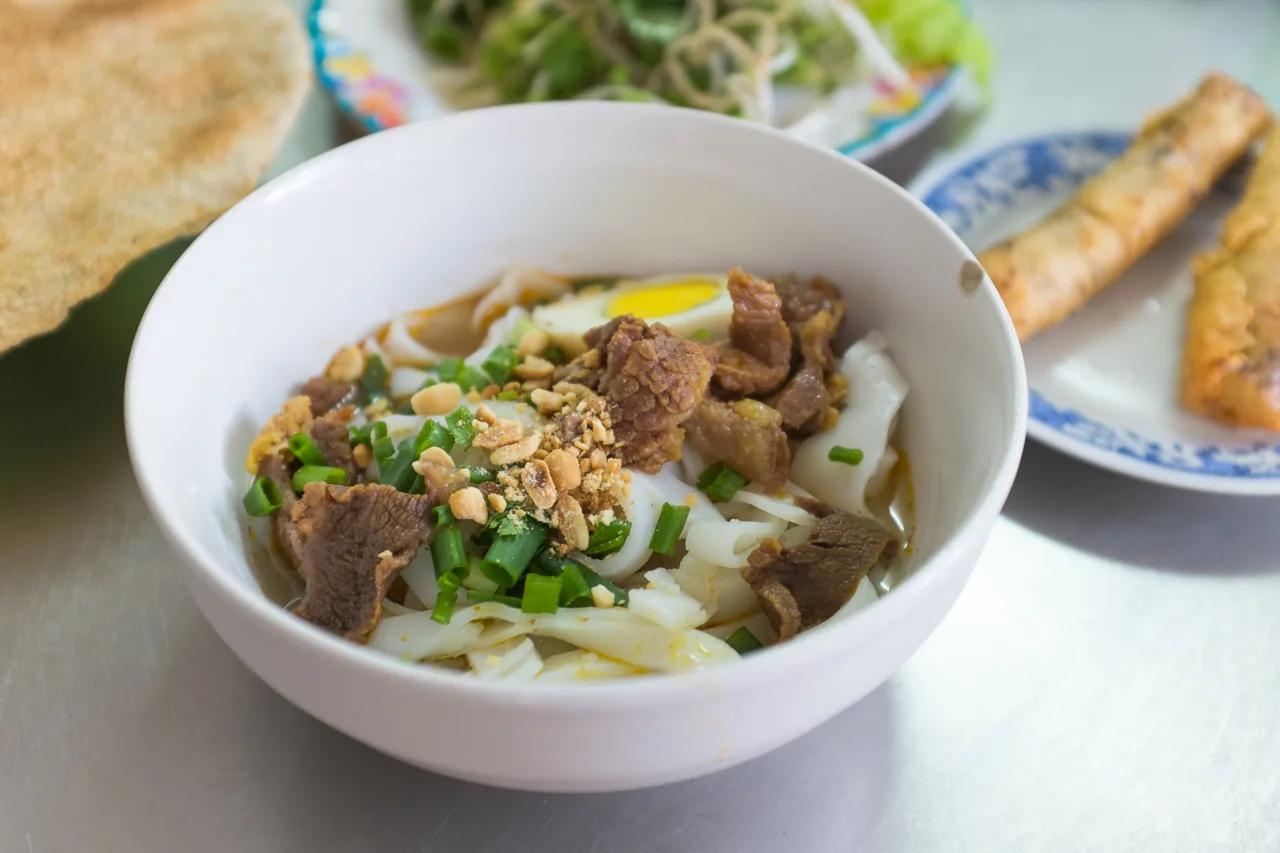
If you eat one thing in Da Nang, make it mì Quảng. Wide rice noodles are tinted yellow with turmeric and served with only a shallow, intensely-flavoured broth that coats the noodles rather than drowning them, topped with pork and shrimp (or chicken, or frog), peanuts, herbs and a toasted sesame rice cracker. You crush the cracker in, pile on herbs and a squeeze of lime, and mix everything before your first bite. It’s the defining dish of Da Nang and old Quảng Nam, and every family has its own version. Our full mì Quảng guide goes deeper. The local institution is Map on Hải Phòng St, going since the mid-1970s, MICHELIN-listed and about five minutes from the airport, order the “đặc biệt” (special) for all the toppings. The 40-year brand
Map has several branches and richer broth with frog and rib variations.
Bún chả cá, the everyday fish-cake soup
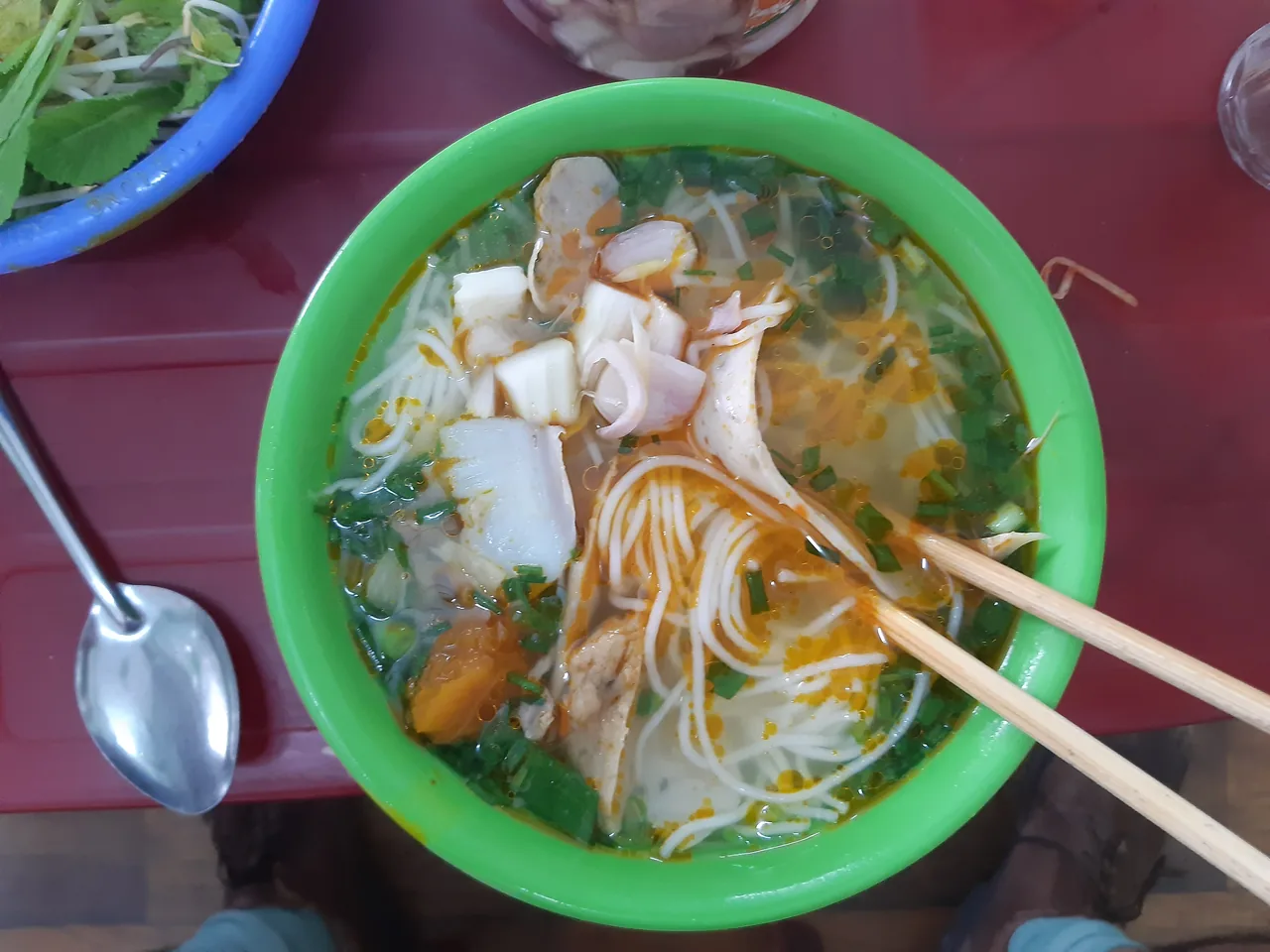
Bún chả cá is Da Nang’s true everyday staple: vermicelli in a light, clear broth turned faintly sweet-sour with pineapple and tomato, with springy fish cakes (both fried and steamed) made in-house. See our bún chả cá guide for the detail. The classic address is Map, a 40-year, third-generation, MICHELIN-listed plastic-stool favourite; Bà Lữ is a reliable local mini-chain. Add the shop’s chilli-garlic and shrimp-paste condiments to taste.
Bánh xèo + nem lụi, the roll-your-own feast
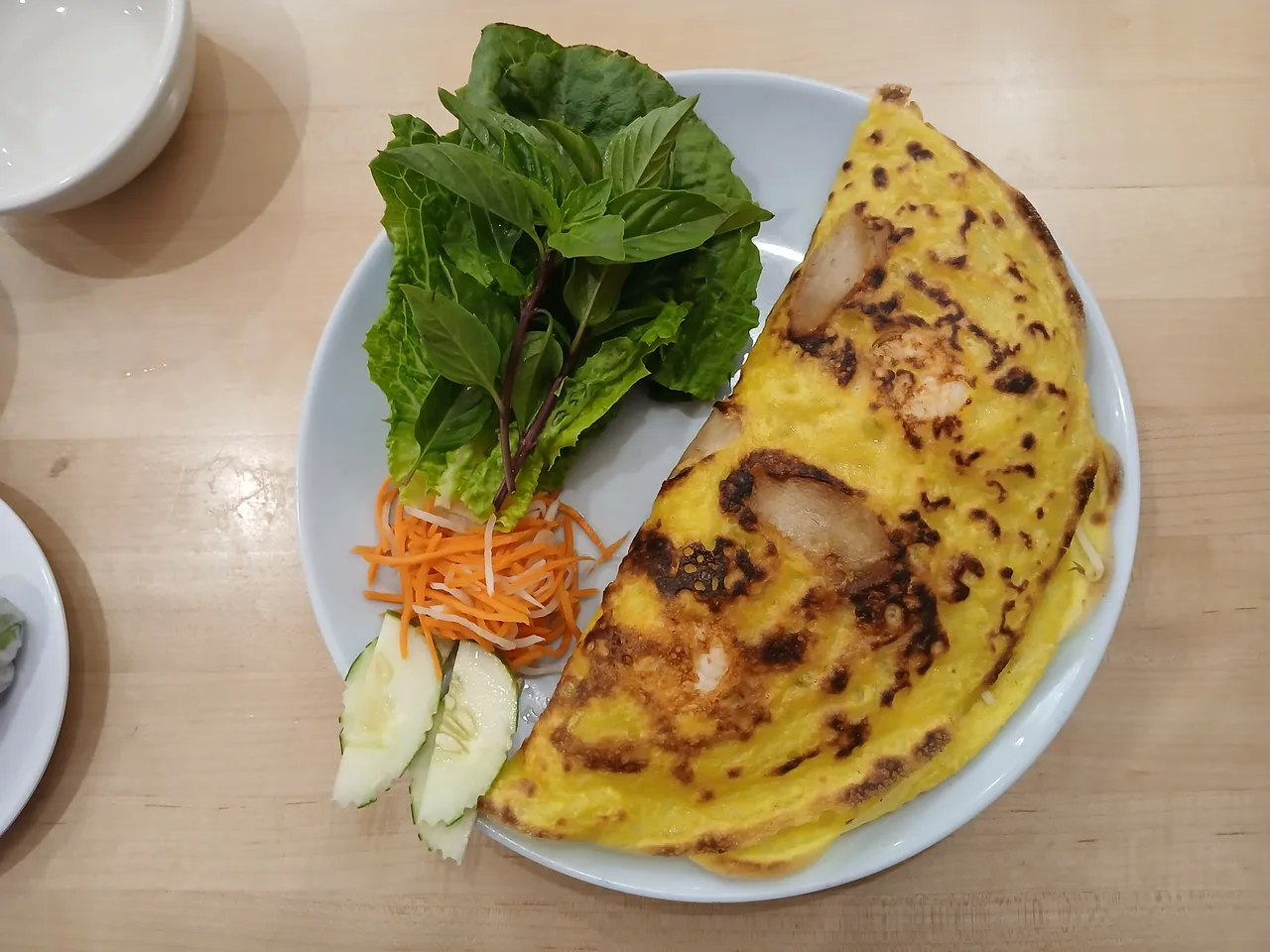
Bánh xèo is a crispy turmeric-rice pancake folded over pork, shrimp and bean sprouts, eaten with grilled lemongrass pork skewers (nem lụi), both wrapped by hand in soft rice paper with heaps of herbs, green banana and star-fruit. The star is the thick, savoury peanut-liver dipping sauce, not plain fish sauce. Read the bánh xèo & nem lụi guide for how to roll it. The famous address is Map, hidden deep in an alley off Hoàng Diệu, 30-plus years old and MICHELIN-listed; go before ~20:00 as it can sell out.
Bánh mì, the perfect cheap bite
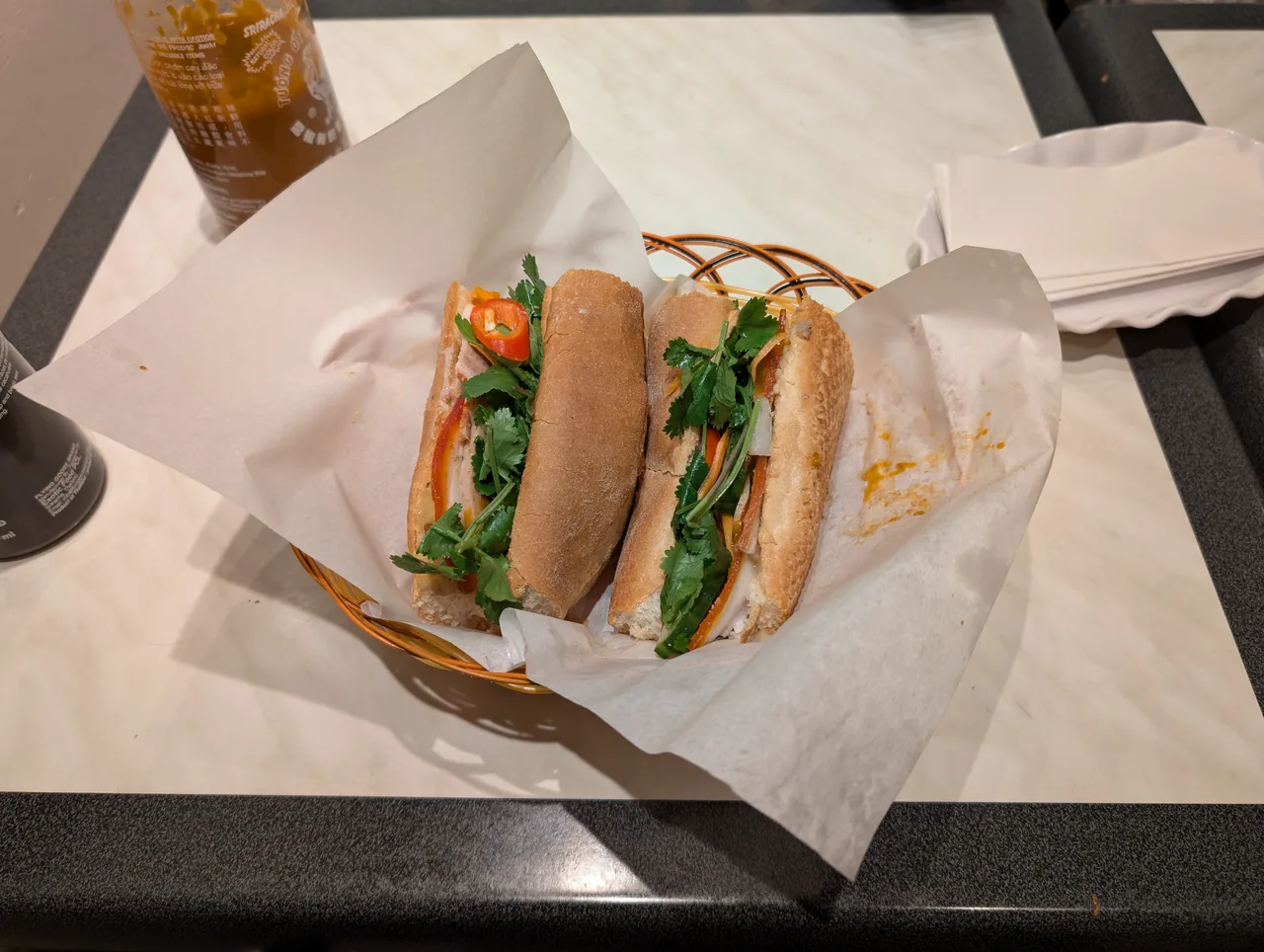
Da Nang bánh mì leans on a generous homemade pâté and egg-based mayo, local Sa Huỳnh salt-pepper and punchy fresh green chilli. Our Da Nang bánh mì guide has the best of them; the benchmark brand is Map, where the owner personally preps the meat and pâté (the original stall runs afternoon to late, roughly 16:00–23:00; branches keep broader hours). A great cheap breakfast or late-night snack.
Two more for regulars: bún thịt nướng, a lighter salad-like bowl of cold vermicelli under smoky charcoal-grilled pork (try Bún Thịt Nướng Kim Anh, 125 Hoàng Diệu), and bún mắm nêm, a dry bowl tossed with the region’s beloved, pungent fermented-anchovy sauce. Da Nang is the heartland of mắm nêm; the funk is the whole point.
3. Da Nang specialities you won’t find done the same elsewhere
Four dishes are worth going out of your way for: gỏi cá Nam Ô (raw-fish salad), bê thui Cầu Mống (seared young veal), bánh tráng cuốn thịt heo (two-skin pork rolls) and mì Quảng ếch (frog mì Quảng), and for the first two especially, it pays to go to the source. These are the heritage dishes locals send visitors to eat.
| Speciality | What it is | Price (approx) | Go to |
|---|---|---|---|
| Gỏi cá Nam Ô | Raw thin-sliced local fish with roasted-rice crumb, herbs, nutty dip | 60,000–120,000₫ ($2.4–5) | Nam Ô village, Nguyễn Lương Bằng St |
| Bê thui Cầu Mống | Seared young veal, rare-pink inside, sliced with mắm nêm & herbs | ~150,000–250,000₫/plate ($6–10) | Ngọc Lan · Bê Thui Mười |
| Bánh tráng cuốn thịt heo | Two-skin boiled pork belly you roll in rice paper with herbs, mắm nêm | 80,000–150,000₫/pp ($3.3–6) | Quán Trần |
| Mì Quảng ếch | Mì Quảng topped with lemongrass-braised frog | 60,000–90,000₫ ($2.4–3.7) | Mì Quảng Ếch Bếp Trang |
Gỏi cá Nam Ô is a genuine Da Nang heritage dish: raw, thin-sliced small fish (cá trích/cá ve) “cooked” in lime and spices, served with a roasted-rice-and-peanut crumb, herbs and a thick nutty sauce, wrapped in rice paper. It was born in Map fishing village (Liên Chiểu, ~15 km out), and it tastes most authentic there, at the cluster of village shops on Nguyễn Lương Bằng St.
Bê thui Cầu Mống is a whole young calf seared over fire so the outside cooks while the inside stays rare-pink, sliced thin and served with rice paper, herbs and a special mắm nêm, a celebratory, shareable spread. One of the most renowned houses is Map on Ngô Quyền; Bê Thui Mười (138 Nguyễn Tri Phương) is another local name.
Bánh tráng cuốn thịt heo is quintessentially Da Nang: slices of “two-skin” (hai đầu da) boiled pork belly, each with skin at both edges, that you roll yourself in rice paper with a big pile of herbs, cucumber and green banana, dipped in mắm nêm. The most famous name is Map (4 Lê Duẩn plus branches), a weekend meeting spot; staff will show first-timers how to roll, and herbs are unlimited.
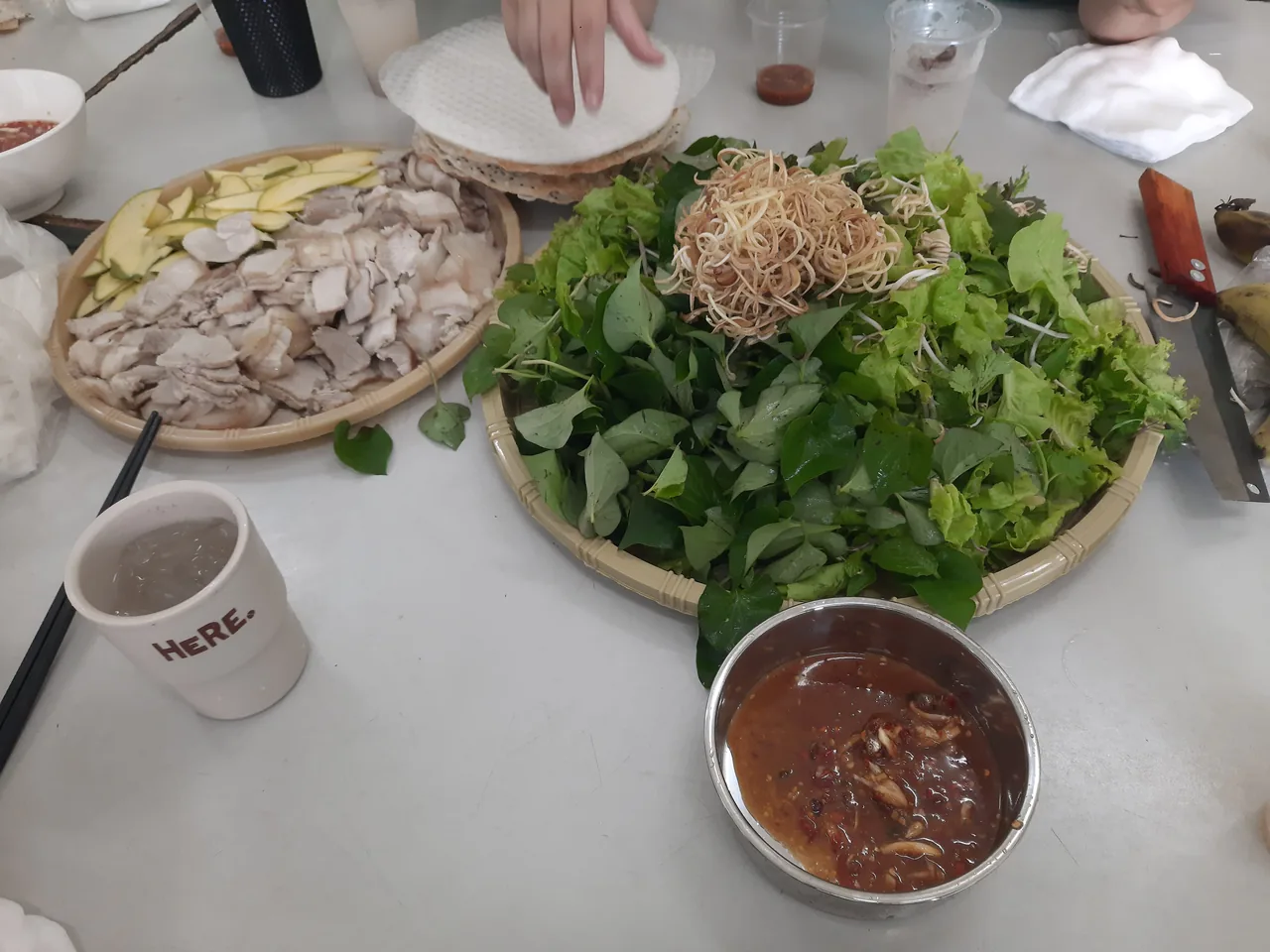
And for something specific, mì Quảng ếch, the standard bowl topped with tender lemongrass-braised frog (mild, like delicate chicken), built the reputation of Map on Ông Ích Khiêm; they also serve the usual shrimp-pork version if frog isn’t your thing.
4. Seafood, the Da Nang way
Da Nang seafood works one way: you pick live prawns, crab, squid or snails from a tank, it’s weighed in front of you, and it’s cooked to order, so the golden rule is to lock the per-kilo price and confirm the weight before anything goes to the kitchen. This is a working fishing city, and a beachfront seafood dinner is the signature evening out. Our full Da Nang seafood guide covers it in depth.
Where to go
The main row runs along Võ Nguyên Giáp and Hoàng Sa, the My Khe / Mỹ Khê beachfront, a continuous run of big open-air tank-front halls directly across from the sand. Two are MICHELIN-listed and safe, verified picks: Map (Lot 09, ~34 years old, MICHELIN Guide Selected, known for tamarind crab and cheese-grilled oysters) and
Map (03–05 Võ Nguyên Giáp, 30-plus years, MICHELIN Selected, 50-plus daily-fresh species). Helio’s seafood street is another lively option.
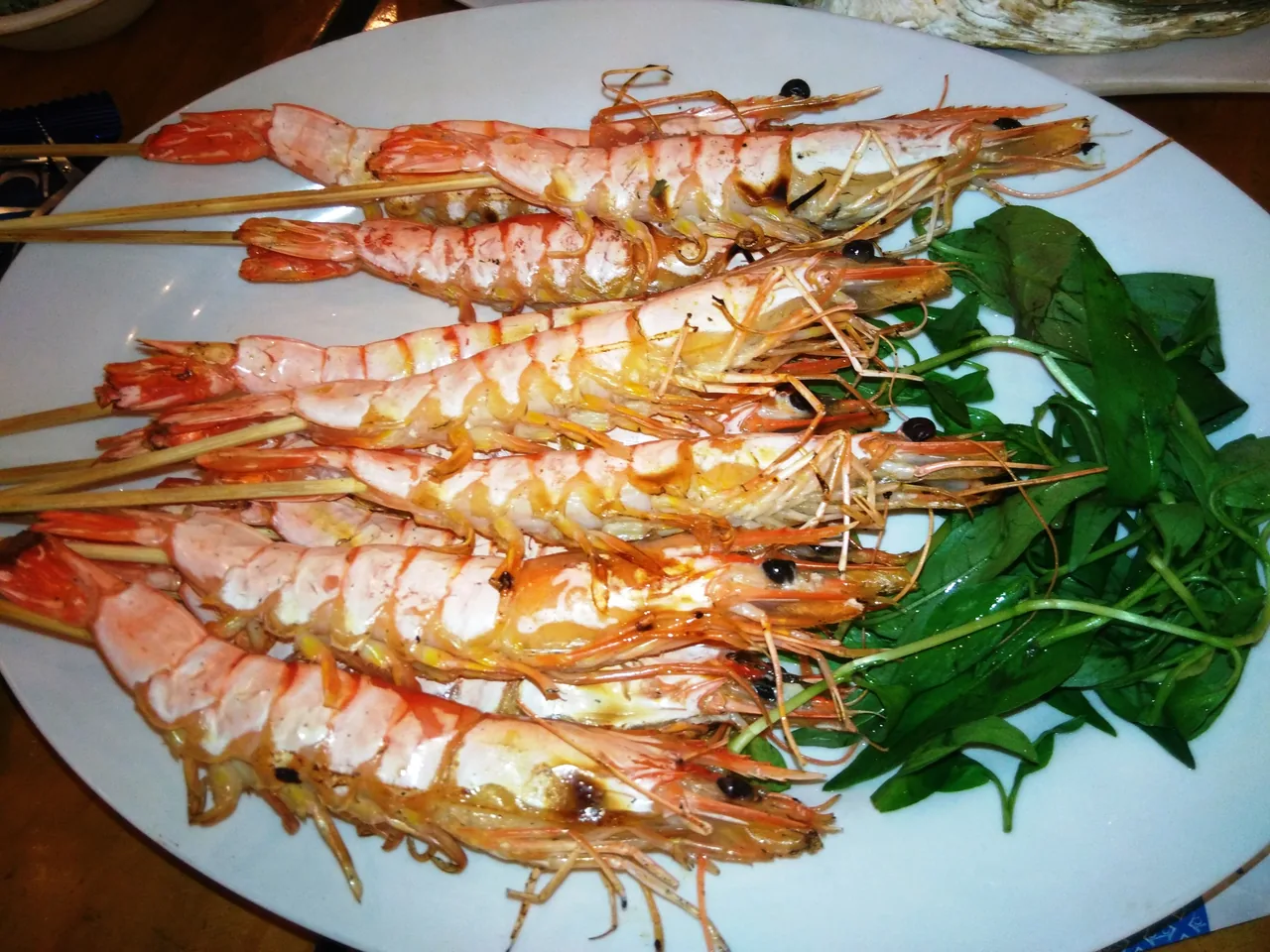
What it costs by weight
Prices are per kilo of the live animal, so premium species (lobster, mud crab) cost far more than snails or small squid. A proper spread runs roughly 200,000–350,000₫ per person ($8–14), more if you order lobster or large crab.
| Item | Typical price (VND/kg) | USD/kg (approx) |
|---|---|---|
| Ghẹ / cua (blue swimmer / mud crab) | ~500,000–1,200,000 (mud crab higher) | ~$20–47 |
| Tôm (prawns / tiger prawns) | ~500,000–1,000,000 | ~$20–39 |
| Tôm hùm (spiny lobster) | ~900,000–2,000,000+ | ~$35–80+ |
| Mực (squid / cuttlefish) | ~180,000–400,000 | ~$8–16 |
| Ốc (sea snails, assorted) | from ~150,000–200,000 | ~$6–8 |
| Hàu (oysters) | sold per piece/kg, often cheap | low |
At named Michelin spots like Mỹ Hạnh the by-kg menu can span roughly 250,000 to 3,950,000₫/kg across 50-plus species, but the top end is premium lobster and large crab, not the everyday order.
5. Vietnamese coffee & café culture
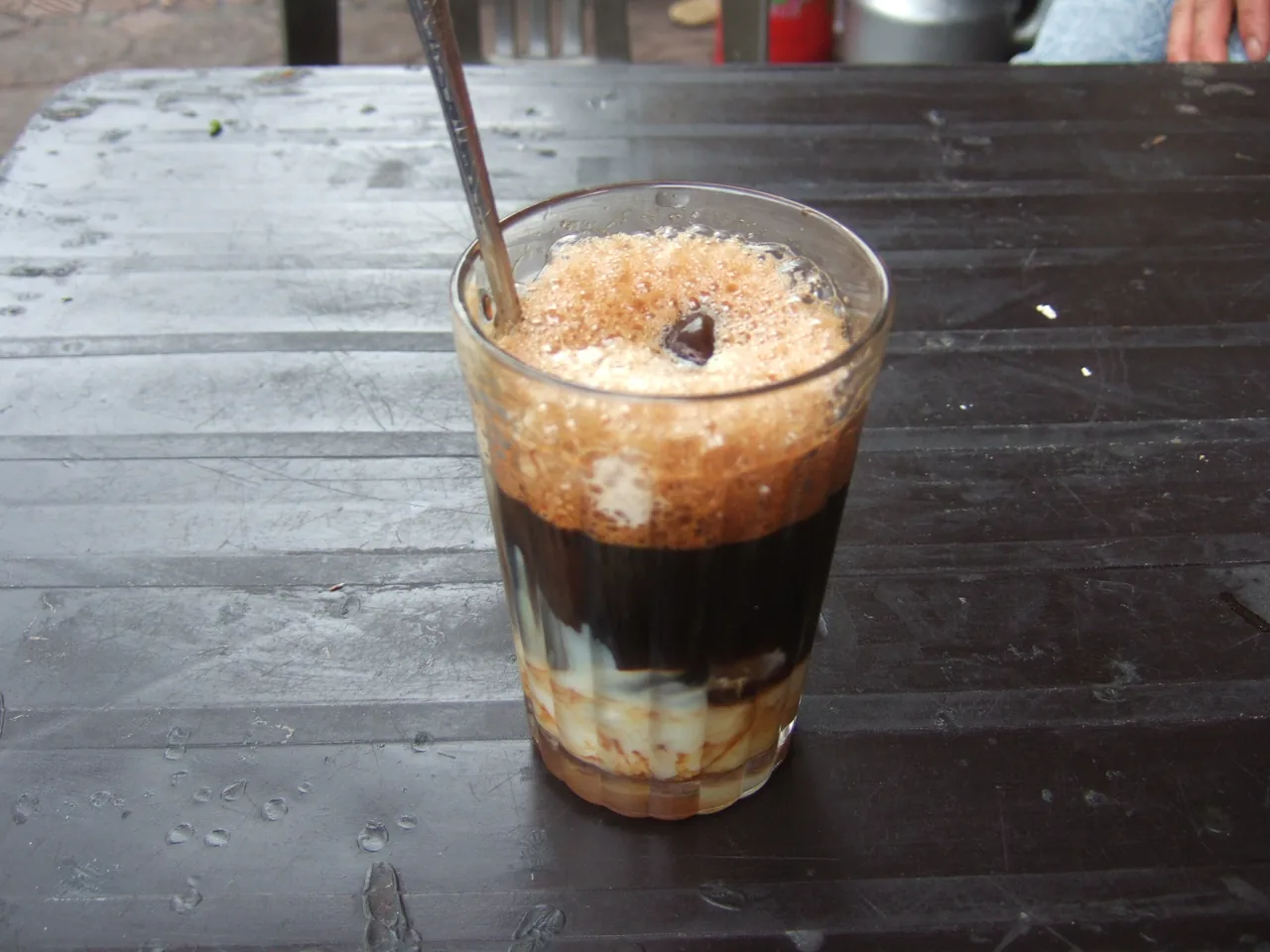
Order a cà phê sữa đá (iced milk coffee) for the classic, and above all a cà phê muối (salt coffee), whose salted-cream foam tastes like salted caramel and cuts the strong robusta, it’s the region’s must-try. Central Vietnamese coffee leans on dark, bitter, high-caffeine robusta, traditionally slow-dripped through a metal phin and cut with sweetened condensed milk. Da Nang has everything from midnight street carts to glass-walled specialty roasteries. Our Da Nang coffee guide goes drink by drink.
| Drink | What it is | Price (approx) |
|---|---|---|
| Cà phê sữa đá | Iced robusta drip over sweetened condensed milk, the national default | 17,000–35,000₫ ($0.7–1.4) |
| ⭐ Cà phê muối | Salt coffee, salted whipped-cream foam over drip, iced, salted-caramel taste | 35,000–39,000₫ ($1.4–1.55) |
| Cà phê đen | Black phin coffee, hot or iced, for purists | 15,000–30,000₫ ($0.6–1.2) |
| Bạc xỉu | Mostly fresh + condensed milk with a little coffee, sweet and mild | 20,000–40,000₫ ($0.8–1.6) |
| Cà phê dừa | Coconut-milk coffee slush, almost a dessert | 45,000–70,000₫ ($1.8–2.75) |
| Cà phê trứng | Egg-yolk custard foam over coffee, like liquid tiramisu | 40,000–70,000₫ ($1.6–2.75) |
| Sinh tố | Fresh-fruit smoothie (avocado, mango, soursop) with condensed milk | 25,000–50,000₫ ($1–2) |
Salt coffee (cà phê muối) was actually born in Hue, at a small café near the Perfume River in the 2010s, but it’s now everywhere in Da Nang, order it iced. For third-wave, single-origin coffee, Map (villa-and-pond design on the An Thuong beach side) is widely called the best coffee in the city, with bean-to-cup single origins at roughly 45,000–90,000₫; The Local Beans on Phan Châu Trinh is a laptop-friendly hand-drip favourite. For the classic photo and a retro riverside vibe,
Map on Bạch Đằng is famous for its coconut-milk coffee.
6. Sweet Da Nang: kem bơ & chè
Da Nang’s signature dessert is kem bơ, silky whipped avocado mousse over coconut ice cream with toasted coconut on top, don’t leave without one, backed up by cheap, endlessly-varied chè sweet soups and cool bánh flan. These are the hot-weather treats locals reach for all afternoon.
Kem bơ is cold whipped fresh-avocado mousse (avocado from Dak Lak) over a scoop of coconut ice cream, topped with shredded toasted coconut and sometimes condensed milk, silky, faintly nutty and not too sweet. Street cups run ~15,000–25,000₫, larger sizes ~30,000 (200ml) / 40,000 (300ml) / 45,000 (400ml)₫. The benchmark is Map, the original since 1992, at Bắc Mỹ An Market, the “grandmother” of Da Nang kem bơ, though carts and markets sell it citywide.
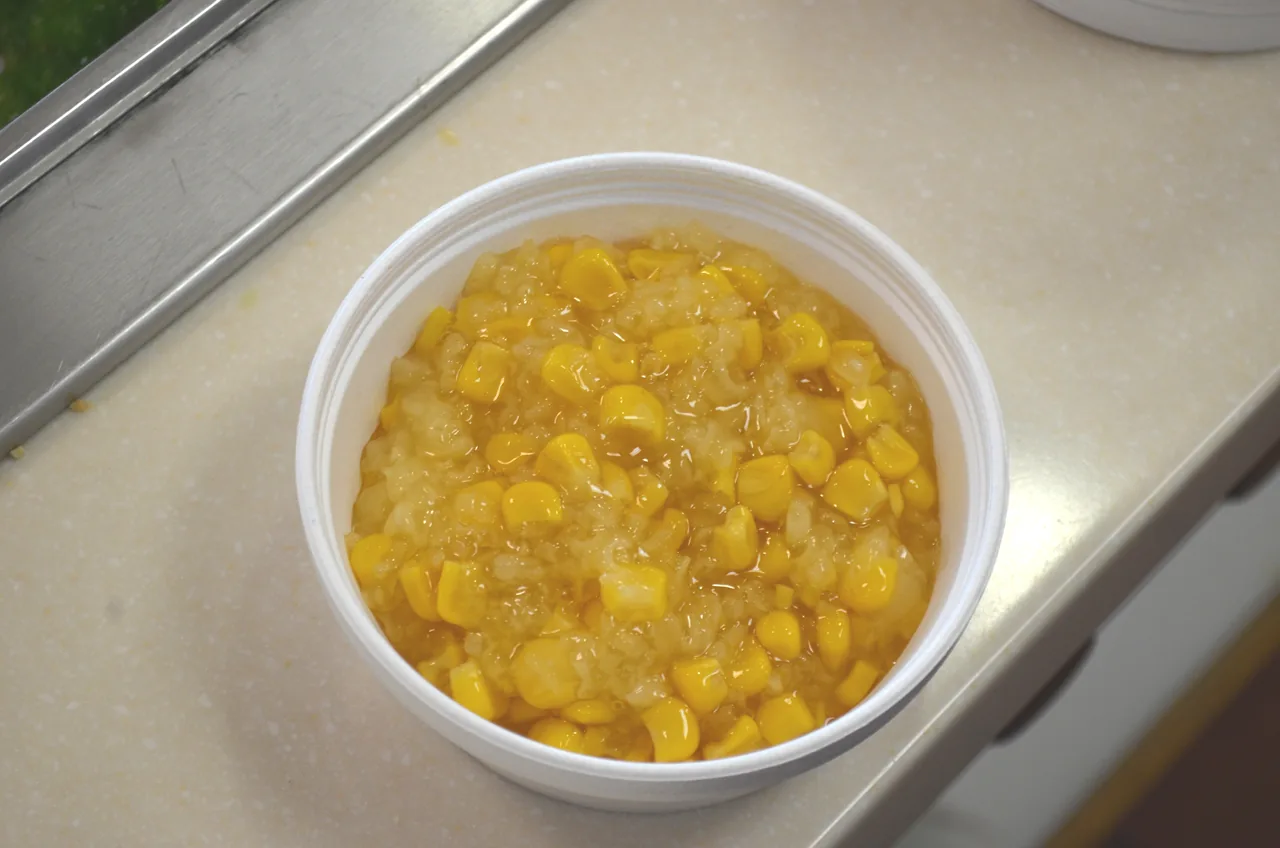
Chè is Vietnamese sweet “soup”, layered beans, jellies, tapioca and fruit in coconut milk, served warm or over ice, from ~10,000–25,000₫ a glass. The mixed (thập cẩm) bowl lets you try several at once; regional favourites include chè bắp (sweet-corn), chè chuối (banana) and Thai-style chè thái. Chè Xuân Trang on Lê Duẩn is long-running, central and very cheap. And bánh flan, the French-legacy steamed egg custard with caramel, is served chilled over crushed ice, sometimes with a shot of coffee poured over (flan cà phê), for ~10,000–20,000₫.
7. Markets & street-food scenes
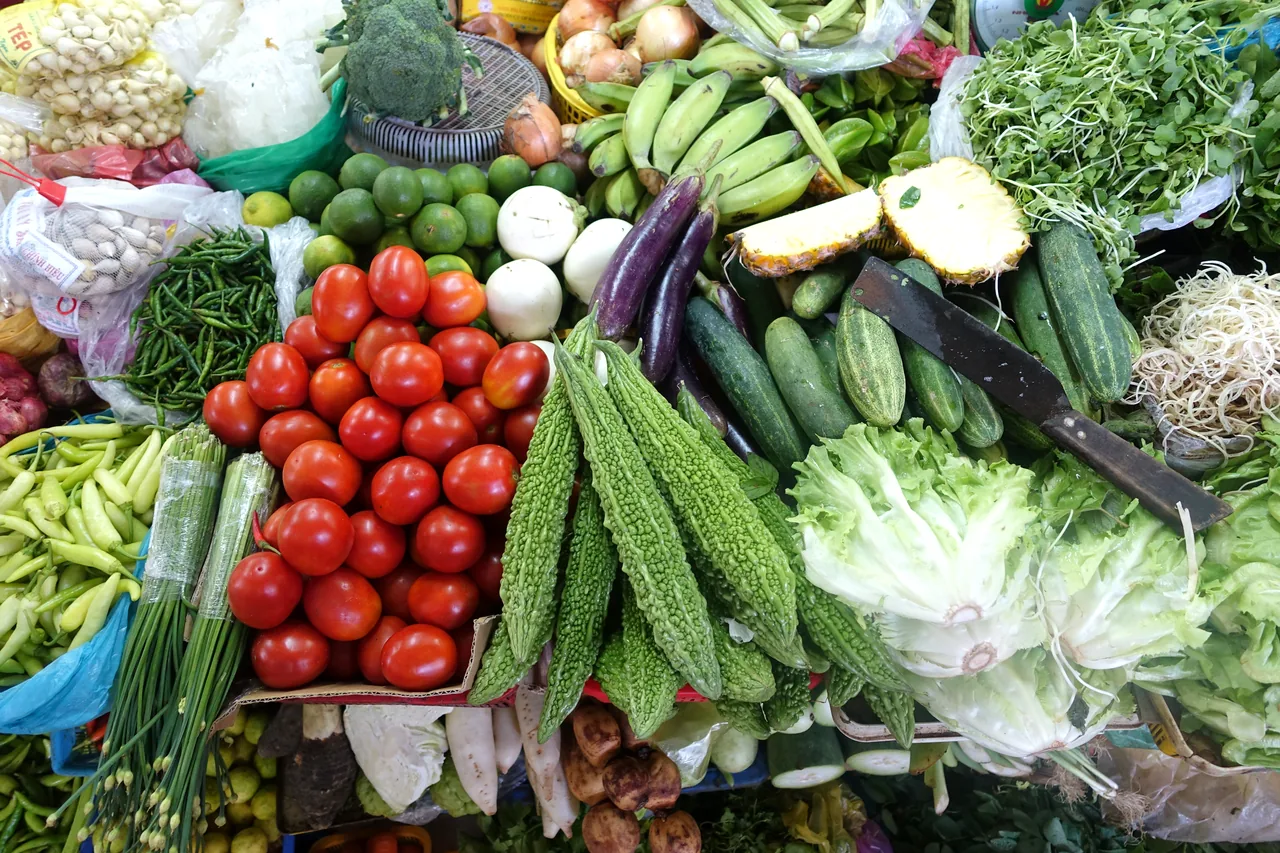
For the cheapest, most authentic eating, head to Chợ Cồn from mid-afternoon; Chợ Hàn is the tourist-friendly central market, Helio is the biggest food-focused night market, and An Thượng is the late, beach-side international strip. Da Nang’s market stalls are where you get local, budget and honest for a few dollars.
| Market | What to eat | Hours | Price level |
|---|---|---|---|
| ⭐ Chợ Cồn | Bánh xèo, bánh canh, nem lụi, ốc, chè, sinh tố, hundreds of stalls | Market ~7:00–19:30; street-food outdoors from ~15:00 | Cheapest, ~15,000–50,000₫/dish |
| Chợ Hàn | Quick bites: bún, mì Quảng, chè, dried-seafood snacks (more souvenirs/fabric) | Daily ~6:00–19:00 | Very cheap, many dishes under 20,000₫ |
| Helio Night Market | Grilled skewers, hotpot, milk tea, desserts, live-seafood street | ~15:00/17:00–22:30/23:00 (busiest 18:00–21:00) | Budget–mid, food-court style |
| An Thượng Night Market | Grilled seafood plus Korean/Japanese and Vietnamese street food | Near My Khe beach, open late (some to ~2:00) | Budget–mid, beach-tourist crowd |
Chợ Cồn (Con Market) at 290 Hùng Vương is the big local street-food market; the indoor eateries run mornings, but the outdoor street-food section fires up from about 3pm, which is when to come for bánh xèo (a set of 5–7 for ~50,000₫), bánh canh, nem lụi, snails and chè. Pin it: Map. Nearby
Map on Trần Phú is more central and tourist-friendly, better known for souvenirs, dried goods and tailoring than deep street food, but fine for a quick cheap bún or chè. For a night out,
Map near the Asia Park / Sun World area is the biggest food-focused market, with a large live-seafood street where you pick prawns, squid and fish from tanks and choose how they’re cooked.
8. Food tours & cooking classes
A guided street-food tour (scooter or walking, ~$29–49) is the fastest way to hit the hidden spots, and a cooking class with market trip (~$39) sends you home with recipes, on the scooter tours a local rider drives and you ride pillion, you don’t drive yourself. Both are established, popular and easy to book ahead online.
Street-food tours
The signature format is the scooter tour: a local guide/rider (often the well-known “áo dài” female riders) drives while you ride pillion, weaving to hidden food spots and past sights like the Dragon Bridge. Walking tours also exist (roughly 2.5 hours, ~6 stops and 8 dishes plus dessert). Tours run about 3–4 hours, day or night, at roughly US$29 (group) to US$49 (premium/private) per person, sold as 3-, 5- or 8-dish menus. Price usually covers an English-speaking guide and rider, all tastings, hotel pick-up and drop-off, motorbike insurance, helmet and raincoat, and any admissions.
Cooking classes
The standard format is a market tour plus hands-on class, about 4 hours for ~US$39 per person. You shop ingredients at a local market (often Bắc Mỹ An), cook around five central-Vietnam dishes (commonly bún bò Huế, bánh xèo, fresh rolls, young-jackfruit salad and avocado ice cream), sit down to eat what you made, and go home with a cookbook and certificate.
9. What it costs & how to order
Da Nang is famously cheap to eat: street bowls run 40,000–70,000₫ ($1.6–2.8), a bánh mì is around a dollar, and you can eat well on all street food for under 200,000₫ ($8) a day, only a seafood dinner really moves the needle. A few Vietnamese phrases and one seafood habit will save you money and hassle. See our Vietnam money & budget guide for the wider picture.
| Meal | Typical cost |
|---|---|
| Bánh mì | 25,000–40,000₫ (~$1–1.6) |
| Street noodle bowl (mì Quảng, phở, bún) | 40,000–70,000₫ (~$1.6–2.8) |
| Market-stall dish | 20,000–30,000₫ (~$0.8–1.2) |
| Vietnamese coffee | 20,000–45,000₫ (~$0.8–1.8) |
| Local beer (bia) | 15,000–30,000₫ (~$0.6–1.2) |
| Sit-down local restaurant (per person) | ~100,000–200,000₫ (~$4–8) |
| Beachfront seafood dinner (per person) | 200,000–350,000₫ (~$8–14), more for lobster/large crab |
Daily food budget: all street food under ~200,000₫ ($8)/day is easy (bánh mì + mì Quảng + phở and a beer); mid-range is ~$15–25; add a seafood dinner or two and you’re at ~$30–50/day. Carry small cash, the best shops don’t take cards.
Ordering phrases that help
| Vietnamese | Meaning |
|---|---|
| Cho tôi… | I’d like… / Give me… |
| Bao nhiêu tiền? | How much? |
| Một cân / một ký bao nhiêu? | How much per kilo? (for seafood) |
| Cân cho tôi xem | Weigh it so I can see |
| Tính tiền (ơi) | The bill, please |
| Ăn chay | Vegetarian |
| Không cay | Not spicy |
| Ngon quá! / Cảm ơn | Delicious! / Thank you |
The one money habit worth building: at seafood halls, use “một ký bao nhiêu?” and “cân cho tôi xem” to lock the per-kilo price and see the weight before anything is cooked.
10. Vegetarian & special diets
Da Nang is genuinely easy for vegetarians: look for the word “chay”, which means vegetarian (and in around 95% of cases fully vegan), and expect cheap turmeric noodle bowls from ~36,000₫ ($1) up to garden-villa organic hotpots. Meat-free eating is abundant and inexpensive here.
“Chay” spots range from humble buffet-style com chay counters to sit-down restaurants, and many classic dishes have vegetarian versions (mì Quảng chay, bánh xèo chay). See our Da Nang vegetarian & vegan guide for named spots. Muslim travellers should plan ahead: halal options exist but are limited and concentrated, our Da Nang halal food guide covers where to find them.
11. Eat safe: water, ice & hygiene
Never drink the tap water, always buy bottled, but the ice is fine, city restaurants and cafés use factory tube-ice (the uniform cylinders with a hole), so you can enjoy your iced coffee without worry. Beyond that, Da Nang street food is very safe if you follow simple common sense.
Tap water is not safe to drink; stick to trusted bottled brands (Aquafina, La Vie). It’s fine for showering, and most people brush teeth with it without issue (just don’t swallow). Untreated ice is rare in tourist and urban areas. For food, the golden rule is busy stalls = fresh: high turnover means ingredients don’t linger, so follow the crowds (especially locals), eat things freshly cooked and hot, and skip empty stalls with food sitting out. For seafood, choose halls with active tanks and visible turnover.
Da Nang is a relaxed, low-hassle food city, but a quick read of our Vietnam scams & safety guide and Vietnam etiquette guide never hurts, especially the seafood price-lock habit above.
12. A one-day Da Nang food crawl
The perfect eating day: mì Quảng for breakfast, a salt coffee mid-morning, bún chả cá or bánh xèo for lunch, a kem bơ in the afternoon heat, beachfront seafood at sunset and a night-market wander to finish. Here’s how to string the day together.
- Breakfast (~7:30am): a bowl of mì Quảng at Mì Quảng 1A, or bún chả cá at Bún Chả Cá 109, mix in the cracker, herbs and lime.
- Mid-morning (~10am): a cà phê muối (salt coffee), or a cà phê sữa đá if you want the classic; take it slow and people-watch.
- Lunch (~12:30pm): bánh xèo + nem lụi at Bà Dưỡng (roll your own), or a bánh mì on the go from Bà Lan if you’re moving fast.
- Afternoon (~3pm): a kem bơ to beat the heat, then drift through Chợ Cồn as the street-food stalls open, grabbing chè or nem lụi.
- Sunset (~6pm): a beachfront seafood dinner on Võ Nguyên Giáp, Bé Mặn or Mỹ Hạnh, pick live, lock the price, share crab, prawns and grilled oysters.
- Night (~8:30pm): a wander through Helio night market for skewers, milk tea and dessert, or An Thượng for a late beach-side bite.
13. Bottom line
Eat mì Quảng, one beachfront seafood dinner, a cà phê muối and a kem bơ, and you’ve hit the four unmissables; add bún chả cá and a roll-your-own bánh xèo or bánh tráng cuốn thịt heo and you’ve eaten Da Nang properly. This is a cheap, generous, honest food city where the best bowls come on plastic stools and several of them wear a MICHELIN listing. Follow the locals, eat early, carry small cash, lock the seafood price before it’s cooked, and don’t overthink it, that’s how you eat like a local here.
Ready to build the trip around the food? Start with the Da Nang hub, zoom out with the Vietnam planner, and time it right using our best time to visit Da Nang guide.
🎡Things to Do53
🍜Food7
🏨Where to Stay6
🚇Getting Around9
🧭Travel Tips21
🧭Vietnam-wide essentials59
Da Nang food: your questions answered
🧍 Da Nang solo: bike taxi fares, meals for one and a three-day timetable →
🍜 Which night markets have shut by 22:30, and what still serves at 01:00 →