Grab vs Xanh SM vs Be in Vietnam (2026): Which Ride App Is Cheapest & How to Use Them

The complete national guide to Vietnam’s ride-hailing apps — what each does, real fares city by city, airport pickups, and how to book and pay in Hanoi, Da Nang, Ho Chi Minh City and beyond.

Last updated: June 2026
The three apps, in 30 seconds

  • Grab: the original super-app — cars, motorbikes, food and payments in one English app, working nationwide right down to small towns. The easiest pick for visitors.
  • Xanh SM: Vingroup’s all-electric service (since 2023) on a fixed meter with no surge. In 2025 it overtook Grab to become Vietnam’s most-used ride app, now operating nationwide across all 34 provinces and cities.
  • Be: the homegrown app with the most drivers and the cheapest promos — a great backup, though the app is Vietnamese-first and works best with a local number.
  • The move: install at least two, and compare — the cheapest one flips by city, time and traffic. You’ll need mobile data (an eSIM) to run any of them.
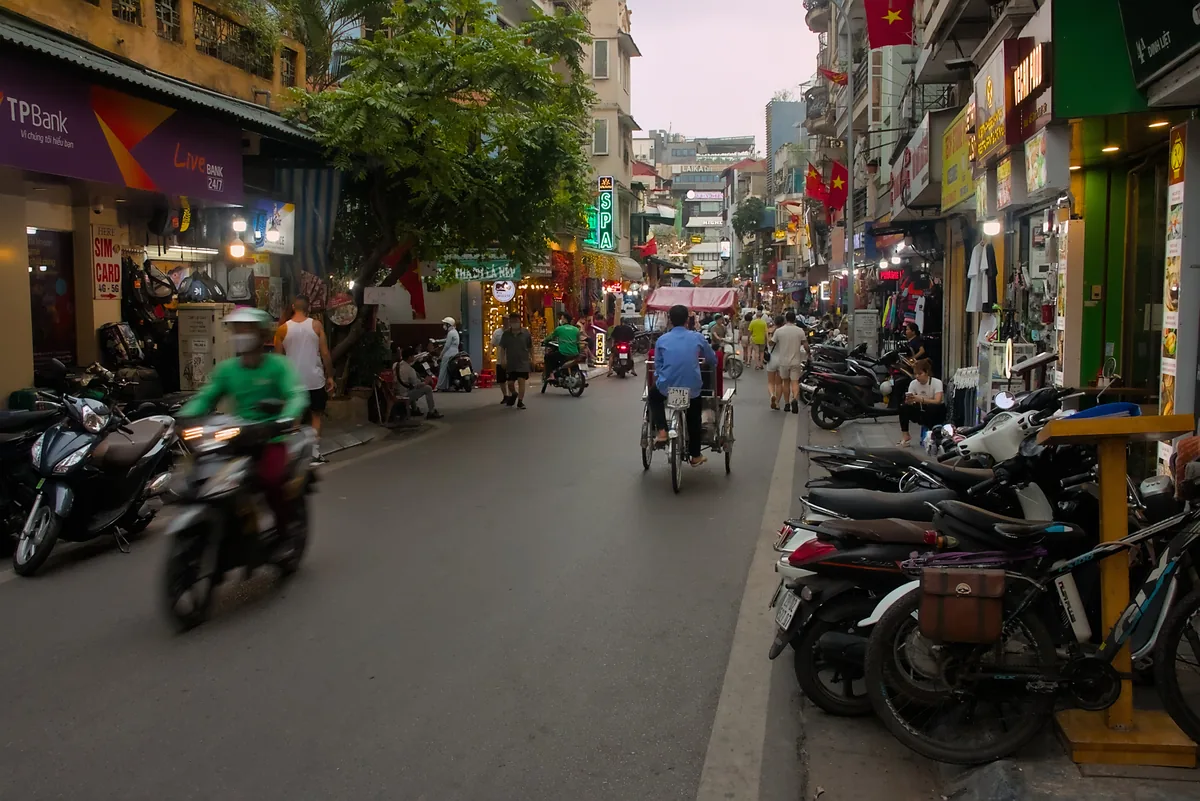
Ride-hailing motorbikes and cars on a busy Vietnamese street
Book a bike or car in the app and the price is fixed before you get in — no haggling, anywhere in Vietnam. (© Benjamin Smith / CC BY-SA 4.0)

🚆 Getting between Vietnamese cities: trains, buses, flights and ferries compared →

1. The Three Apps at a Glance

Vietnam runs on ride-hailing apps. You open one, see the fixed price before you book, and a car or motorbike comes to you — no flagging taxis, no arguing over fares. Three names matter nationwide:

GrabXanh SMBe
TypeSuper-app: cars, bikes, food, payAll-electric cars & bikesLocal app: cars, bikes & more
CoverageNationwide, incl. small townsNationwide — all 34 provinces & cities~28 cities, big-city focus
Drivers~300,000~90,000, rising fastThe most (~400,000)
EnglishBest — in-app chat auto-translatesLimited, improvingVietnamese-first
PricingShown up front, can surge at peakFixed meter, no surgeCheapest promos
PaymentCard, cash, GrabPayCard, cashCard, cash
Best forVisitors & convenienceClean, predictable faresBudget, with a local SIM

Quick verdict: for most travellers, Grab is the safe default — it’s everywhere and the most foreigner-friendly. Add Xanh SM and you’ll often beat Grab’s price with a cleaner, quieter electric car. Be is the budget wildcard, best once you have a Vietnamese number. Install two and compare each trip.

💡 You may also see old-school metered taxis Mai Linh and Vinasun (fine if you stick to the meter) and the minor budget app maxim. Gojek left Vietnam in 2024, so ignore any guide that still recommends it.

2. Grab: The All-Rounder

Grab is Southeast Asia’s ride-hailing super-app and the one most travellers already have. In Vietnam a single English-language app covers everything:

🚗 GrabCar

Private air-conditioned cars in 4- and 7-seat sizes — best for groups, luggage, the airport or rain.

🏍️ GrabBike

Ride pillion on a motorbike — the cheapest, fastest way through traffic for one. A helmet is provided.

🍜 GrabFood & Express

Food delivery from thousands of restaurants, plus same-day parcel delivery — handy on a rainy night.

The price is fixed and shown before you confirm, so it never changes mid-trip. Pay cash or link a card, and the in-app chat auto-translates messages between you and the driver — which is why Grab stays the most foreigner-friendly choice from big cities to small beach towns.

3. Xanh SM: The All-Electric Leader

Xanh SM (listed on app stores as “Green SM”) launched in 2023 and has already changed the game. It’s run by Vingroup — the company behind VinFast electric cars — so the whole fleet is electric:

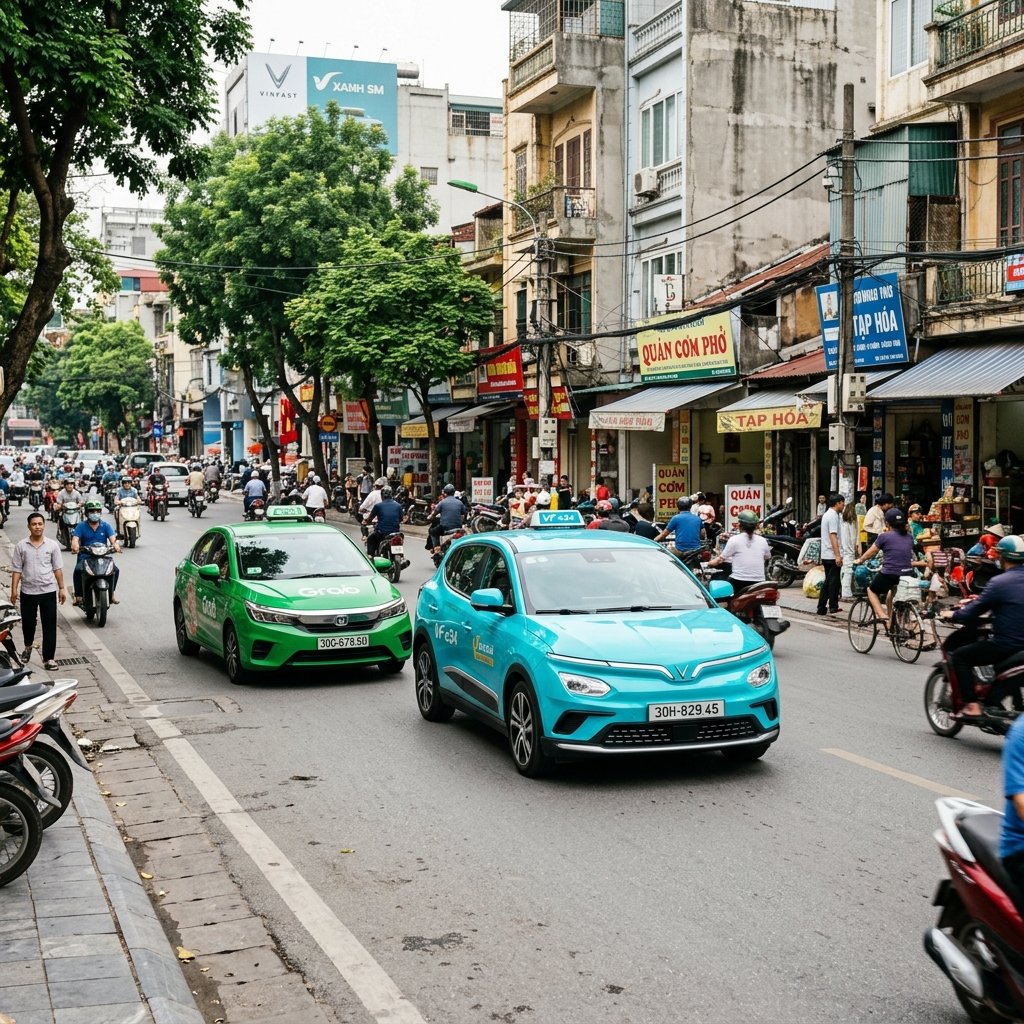
  • Xanh SM Taxi: clean, silent VinFast cars with uniformed, professional drivers, on a fixed meter that never surges. Hail one in the app, or flag the bright cyan cars on the street.
  • Xanh SM Bike: electric motorbike rides — the EV answer to GrabBike.
  • Premium tiers: in big cities you can also book larger VinFast SUVs and “Luxury” cars for a little more.

Riders love the new cars, the calm electric ride and the transparent meter. It caught on so fast that by 2025 it had carried over 50 million passengers, reached all 34 of Vietnam’s provinces and cities, and overtaken Grab in ride-hailing market share (market data). Coverage is strongest in the big cities and still expanding into smaller towns.
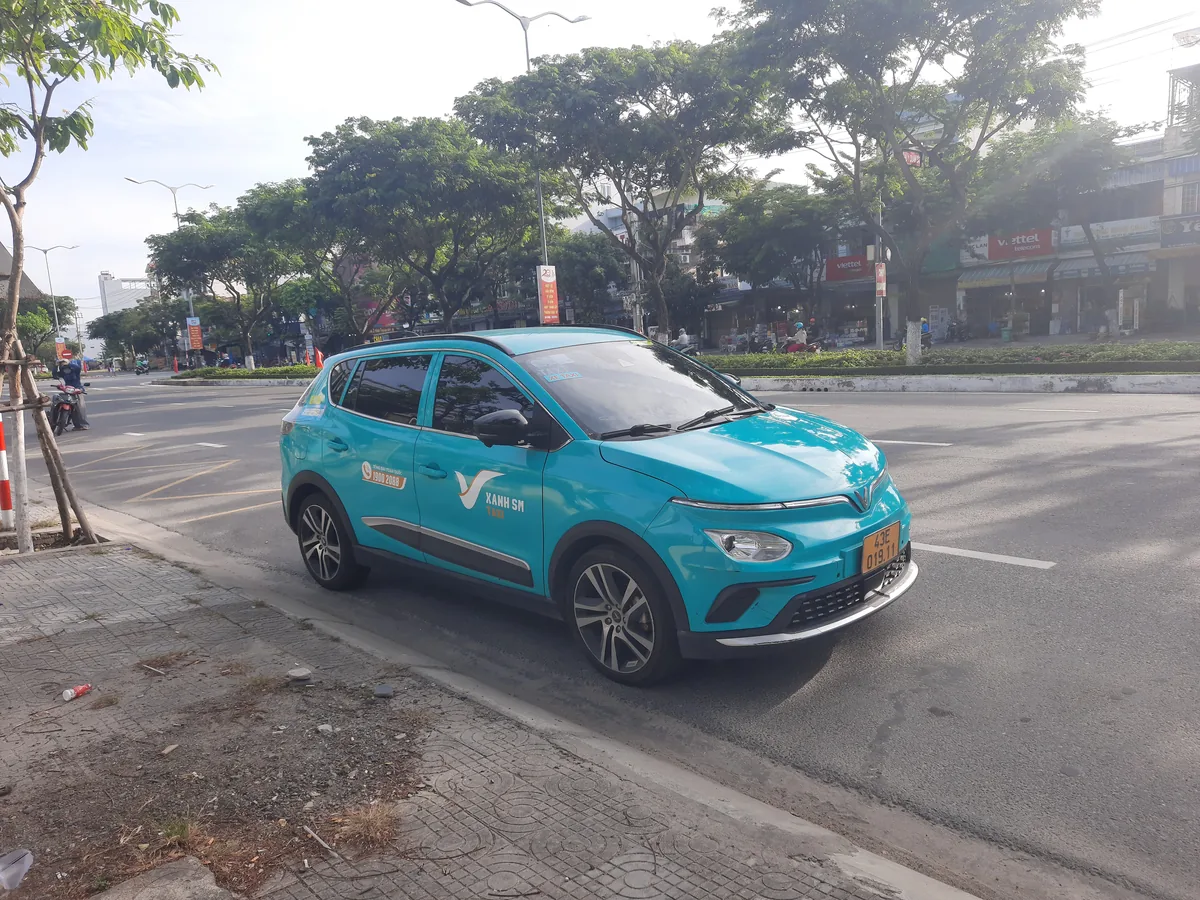
💡 Xanh SM cars are an unmistakable bright cyan-green. Seeing lots of them around means short app waits in that area.
Xanh SM cyan electric VinFast taxi in Vietnam
Xanh SM’s all-electric VinFast taxis in their unmistakable cyan. (© Lê Huỳnh Bộ / CC BY-SA 4.0)

4. Be: The Local Budget Pick

Be is Vietnam’s homegrown app, and a local favourite — it actually has more drivers than anyone (around 400,000). It runs beBike motorbikes and beCar cars (4- and 7-seat), plus food and intercity rides, and it’s famous for aggressive promos that often make it the cheapest option of all.

The catch for visitors: the app is Vietnamese-first and smoothest with a local phone number and a local payment method, so it’s best as a money-saving backup once you’re set up — not your first install on day one.

💡 Stuck with no car free on any app? The metered taxi firms Mai Linh (green/white) and Vinasun (white) are the trustworthy fallback — just insist on the meter (“đồng hồ”).

5. Which App Wins in Each City

All three are strongest in the big cities and thin out in the mountains. Here’s the lay of the land:

City / areaBest appsGood to know
HanoiGrab · Xanh SM · BeAll three are strong; Xanh SM is big here. Noi Bai airport pickup is past pillar 14 (see below).
Ho Chi Minh CityGrab · Xanh SM · BeAll three; traffic is heavy, so bikes are often fastest. Tan Son Nhat pickup is lanes D1–D2.
Da Nang & Hoi AnGrab · Xanh SMBoth excellent. In Hoi An’s car-free Old Town you’ll be dropped at the edge and walk in.
Nha TrangGrab · Xanh SMBoth reliable; Xanh SM strong. Cam Ranh airport is ~35 km from town, so factor the longer fare.
Phu QuocGrab · Xanh SMWork in town and at resorts; fares run a little higher and cars thin out late at night.
Da Lat · HueGrab (Xanh SM growing)Grab is the safe bet; supply is thinner, so expect a short wait at peak times.
Sapa · Ha GiangLimitedMountain towns: apps are patchy. Use your hotel, a booked car or a local xe om instead.
💡 Rule of thumb: in the six big tourist cities, open both Grab and Xanh SM and take the cheaper quote. Off the beaten track, default to Grab — and have a backup plan where neither shows cars.

6. Bike, Car or 7-Seater?

Every app lets you pick a motorbike or a car; cars come in 4- and 7-seat sizes. How to choose:

🏍️ Bike🚗 Car (4-seat)🚐 Car (7-seat)
Best for1 person, light bag, beating trafficCouples, small bags, rainFamilies, groups, big luggage
PriceCheapest (~half a car)Mid — still cheap globallyHighest, but still good value
ComfortOpen air, fast, a bit thrillingAir-con, private, relaxedAir-con, roomy, relaxed
WeatherPoor in rain or heatAll-weatherAll-weather
💡 Solo and travelling light on a dry day? The bike is cheaper, faster and more fun. With bags, kids, a group or rain, take the car — and pick the 7-seater the moment you have three big suitcases.
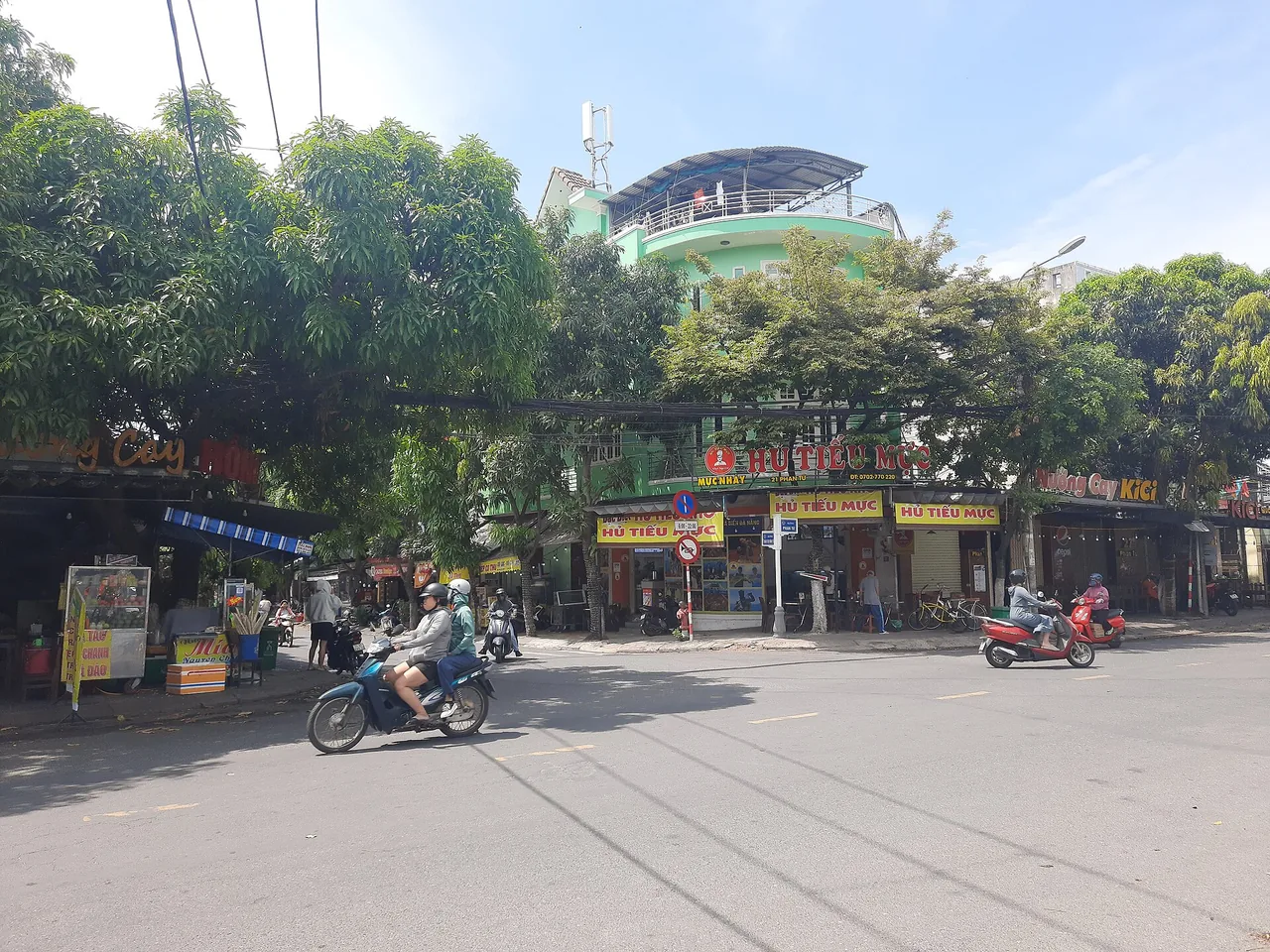
Motorbikes at a busy Da Nang street corner
For short hops across town, a Grab or Xanh SM motorbike is the quickest way through the traffic. (© Lê Huỳnh Bộ / CC BY-SA 4.0)

7. What Rides Really Cost Across Vietnam

Fares are worked out by distance and time and shown up front. Grab’s price can rise a little at peak hours and in the rain (surge); Xanh SM and Be run a meter with no surge multiplier. Either way there are no hidden extras. Rough 2026 guide (1 USD ≈ 26,000₫):

TripBikeCar
Short hop (1–3 km)~15,000–30,000₫~30,000–55,000₫
Across town (5–8 km)~35,000–60,000₫~60,000–120,000₫
Da Nang airport ↔ centre~50,000–80,000₫~90,000–160,000₫
Noi Bai ↔ central Hanoi (~27 km)not advised~250,000–350,000₫ (+ toll)
Tan Son Nhat ↔ District 1 (~8 km)~40,000–70,000₫~120,000–250,000₫

That’s roughly $0.60–$3 for a bike and a few dollars for most car rides — a fraction of taxi prices back home. Tipping isn’t expected, though rounding up is a kind gesture.

💡 Check both Grab and Xanh SM before you book: promos and surge mean the cheaper option genuinely flips from day to day, and city to city.
📲 Recommended eSIM for Vietnam

Get online the moment you land — instant install, no physical SIM, and you keep your own number.

📲 Check Airalo plans & prices

Affiliate link — we may earn a commission at no extra cost to you.

8. Airport Pickups: The Bit That Trips People Up

Apps are allowed at every major Vietnamese airport, but the pickup point is often a short walk from arrivals — and that’s exactly where the touts wait. Book after you have your bags, then walk to the right spot:

AirportWhere to meet your driverCar to the city (approx.)
Noi Bai, Hanoi (HAN)Cross to the median and walk past pillar 14 (numbers rise as you go)~250,000–350,000₫, ~40 min
Tan Son Nhat, HCMC (SGN)Ground floor, lanes D1–D2, opposite the international arrivals exit~120,000–250,000₫, 20–40 min
Da Nang (DAD)The signed ride-app pickup area just outside arrivals~90,000–160,000₫, 10–20 min
Cam Ranh, Nha Trang (CXR)App pickup outside arrivals; the airport is ~35 km from town~300,000–400,000₫, ~45 min
Phu Quoc (PQC)Just outside the terminal — confirm the plate before you get in~120,000–250,000₫, 15–30 min
⚠️ Anyone who walks up inside the terminal asking “Grab? Taxi?” is a tout, not your driver. A real app driver waits at the pickup zone and matches the exact plate on your screen. Airport tolls are added to your in-app fare automatically — never pay them again in cash.

Heading to Da Nang and would rather have a driver waiting at arrivals than open an app? You can pre-book a private car with a driver for the airport run — and keep it for the day to reach Hoi An, Ba Na Hills or My Son.🚗 See Da Nang car charter on KlookAffiliate link — we may earn a commission at no extra cost to you.

9. How to Book, Step by Step

It takes about a minute:

  1. Download Grab and/or Xanh SM and sign up with your phone number (you’ll need mobile data — see paying & safety below).
  2. Set your pickup — drag the pin to exactly where you’re standing, or pick a landmark. Accuracy here saves confused phone calls.
  3. Set your destination and choose Bike or Car. The fixed price appears.
  4. Confirm, then watch the driver approach on the map. Check the name and plate match before you get in.
  5. Pay by cash (small notes) or linked card. Done.
💡 Use the in-app chat instead of a phone call — it auto-translates between you and the driver, which dodges the language barrier completely.

10. Paying: Cash, Cards & Wallets

All three apps take cash or a linked card, and Grab adds its own GrabPay wallet. A few things that actually trip travellers up:

  • Carry small notes for cash rides. Drivers rarely have change for a 500,000₫ bill — keep 20,000₫ and 50,000₫ notes handy. (And mind that the 500,000₫ and 20,000₫ notes look alike — see our Vietnam scams guide.)
  • Add a card before you fly if you want cashless rides: once you swap in a local SIM, the bank verification SMS (OTP) can fail to reach your home number.
  • Airport and bridge tolls are added to your digital fare automatically — don’t pay them again in cash.
💡 No card working? Just choose “Cash” at booking — every app supports it, and a quick stop at a convenience store will break a big note for you.

11. Safety, Scams & Good Manners

App rides are already among the safest ways to get around — every trip is GPS-tracked and the price is locked in, which removes the classic overcharging tricks. A few habits keep it smooth:

  • You need mobile data. The apps won’t work without it, so sort an eSIM or local SIM on arrival (our Vietnam eSIM guide covers the easiest options).
  • Match the plate and driver shown in the app before getting in — especially for cars, and especially at airports.
  • Wear the helmet on bike rides; the driver carries a spare for you (it’s the law).
  • Pin your pickup precisely and stand where the car can actually stop.
  • Ignore anyone who solicits you on foot at the airport or asks you to cancel the app and pay cash off-meter — a genuine driver never does this.
⚠️ The number-one trap is the “fake Grab” at the airport. Real Grab and Xanh SM drivers don’t roam arrivals touting for fares — they wait at the pickup zone with a matching plate. If it doesn’t match, cancel and re-book.
📚 Vietnam-wide essentials
★ Start here Vietnam Travel Guide: Regions, Best Time, Itineraries, Costs & Visas
🧭Vietnam-wide essentials116
A Day Trip to Hue from Da Nang: Citadel, TombsA Hoi An Cooking Class: Which to Pick & What You’ll MakeBa Na Hills & the Golden Bridge: The Complete Guide (Tickets, Cable Cars, One-Day Plan)Bánh Xèo & Nem Lụi: How to Eat Da Nang’s Sizzling PancakesBest Da Nang Resorts & Hotels: Honest Picks by BudgetBún Chả Cá: The Fish-Cake Noodle Soup Da Nang Does BestCentral Vietnam Travel Guide: Da Nang, Hoi An, Hue, My SonCu Lao Cham Day Trip from Hoi An: Fares, Rules, What’s OpenDa Nang & Hoi An in Typhoon Season (Sept–Nov): Should You Still Go?Da Nang Activities: The Tours & Experiences Worth BookingDa Nang Airport to the City & Hoi An (2026): Grab, Taxi & Transfer GuideDa Nang Coffee: What to Order and Where to Drink ItDa Nang Dolphinarium: The ‘Dance of the Ocean’ Dolphin ShowDa Nang for Couples & Honeymooners: Five-Star Romance for Half the PriceDa Nang in April: Sunshine, Calm Seas & Fewer CrowdsDa Nang in August: Heat, the First Rains & What to DoDa Nang in December: Cool Days, ChristmasDa Nang in February: Tết Festivities & Spring in the AirDa Nang in January: Mild Weather, Tết & the Best Things to DoDa Nang in July: Peak Summer, Calm Seas & Long Beach DaysDa Nang in June: Hot, Sunny & the Start of Fireworks SeasonDa Nang in March: Warm, Dry & the Start of Beach SeasonDa Nang in May: Hot Beach Days Before the Summer RushDa Nang in November: Cooler, Wetter & Quieter — What to ExpectDa Nang in October: Floods, Typhoons & How to Plan Around ThemDa Nang in September: The Rain Returns — Is It Still Worth It?Da Nang Itinerary: 3, 4 and 5 Day Plans That WorkDa Nang Nightlife: What Costs Money, What Shuts WhenDa Nang Seafood: What to Order, Where to GoDa Nang to Hoi An: Taxi, Grab, Bus or Bike — What’s Best?Da Nang Travel Guide 2026: The Complete Plan (Flights, Weather, Hotels, Food & More)Da Nang vs Nha Trang: Which Beach City Fits Your Trip?Da Nang vs Phu Quoc: City-and-Culture or Island-and-Resort?Da Nang Weather: The Dry & Rainy Seasons, Month by MonthDa Nang with Kids: The Family Trip That Actually WorksDa Nang’s Best Beaches: Which One Is Right for You?DIFF 2026: Da Nang’s Fireworks Festival — Dates, Tickets & Where to WatchDistrict 4 Seafood Street: Vĩnh Khánh Ốc GuideDragon Bridge, Da Nang: Fire-Show Times & Where to StandGetting Around Da Nang: Grab, Taxis, Scooters & WalkingGetting Around Hoi An: The Car-Free Old Town, Grab & ParkingGolf in Da Nang: The Best Courses, Green Fees & Tee TimesHa Long Bay Cruise: The Complete Guide to Choosing the Right OneHalal Da Nang: Muslim-Friendly Food, Mosques & Prayer SpotsHanoi to Ninh Binh Day Trip: Trang An, Mua Cave & How to Do It RightHanoi Travel Guide 2026: The Old Quarter, Hoan Kiem Lake & Everything First-Timers NeedHo Chi Minh City (Saigon) Travel GuideHoi An Beaches: An Bang vs Cua Dai — Which One to Choose?Hoi An in 1, 2 or 3 Days: A Day-by-Day ItineraryHoi An Tailors: How to Get a Suit Made (and Not Overpay)Hoi An Travel Guide: Ancient Town, Lanterns & TailoringHoi An’s Lantern Festival: Dates, What HappensHow Much Does a Da Nang Trip Really Cost? A Real Budget BreakdownHue Travel Guide: Vietnam’s Imperial Capital, Done ProperlyHyatt Regency Danang Resort and Spa: An Honest, Booking-Ready ReviewInterContinental Danang Sun Peninsula Resort: An Honest, Booking-Ready ReviewIs Vietnam Safe? Every Tourist Scam in 2026 & the 4 Rules That Stop ThemLap An Lagoon: Da Nang’s Mirror-Water SunriseLiving in Da Nang as a Digital Nomad: Costs, Wi-FiLong Thanh International Airport: What Travelers Need to Know Before It OpensLuggage Storage in Da Nang & Hoi An: Where to Drop Your BagsMang Den: Vietnam’s ‘Second Da Lat’ and the Central Highlands SecretMarble Mountains Da Nang: Tickets, the Elevator, and the Am Phu Cave Ticket TrapMassage & Spa in Da Nang: What to Book and What to PayMì Quảng: How to Order Da Nang’s Signature Noodle BowlMikazuki Water Park, Da Nang: Indoor Slides, OnsenMoney in Vietnam: Cash or Card, ATMs, and How Much to BringMy Khe Beach, Da Nang: The Sand, the SurfMy Son Sanctuary: Visiting Vietnam’s Ancient Cham RuinsNha Trang in the Rainy Season (Sep-Nov): Is It Still Worth It? An Honest GuideNha Trang Travel Guide: Islands, Diving, Mud Baths & the Dry-Season Beach CityNorthern Vietnam: Hanoi, Ha Long, Sapa & Ha Giang, in One PlanNui Than Tai Hot Springs Park: The Complete Day-Trip GuidePhong Nha Caves: A Complete Guide to Vietnam’s Greatest Cave CountryPhu Quoc Travel Guide: Everything You Need to Know Before You GoPhu Quoc: When to Go, Month by MonthRainy Day in Da Nang? 15 Things to Do When the Weather TurnsRenting a Scooter in Da Nang: Costs, Rules & the Honest RisksSapa, Vietnam: A Complete Guide to the Rice Terraces, the Trekking & FansipanShopping in Da Nang: What to Buy at Han MarketSon Tra & the Lady Buddha: Da Nang’s Best Sunset ViewpointSouthern Vietnam Itinerary 2026: Ho Chi Minh City & the Whole South, Planned RightSymphony of the Sea or Kiss of the Sea: Which Should You See?Tết Trung Thu: A Traveller’s Guide to Vietnam’s Mid-Autumn FestivalThe Best Bánh Mì in Da Nang: Where the Locals Actually QueueThe Best Day Trips from Da Nang: Where to Go Beyond the CityThe Best eSIM for Vietnam: An Honest ComparisonThe Best Things to Book in Hoi An: Tours, Classes & Boat RidesThe Best Time to Visit Da Nang: A Month-by-Month BreakdownThe Cham Sculpture Museum, Da Nang: Is It Worth a Visit?The Da Nang to Hue Train: Vietnam’s Best Coastal Ride, Seat by SeatThe Golden Bridge, Da Nang: Vietnam’s Giant Hands BridgeThe Ha Giang Loop: The Complete Guide to Vietnam’s Greatest RideThe Hai Van Pass: Da Nang to Hue by Bike, Car or Easy RiderThe Hoi An Basket Boat Ride: Worth It? Prices, TipsThe Lady Buddha & Linh Ung Pagoda: Da Nang’s Tallest StatueThings to Do in Da Nang: The Attractions Actually Worth Your TimeThings to Do in Hoi An: Beyond the LanternsThings to Do in Phu Quoc: The Complete Activities GuideTra Que Herb Village, Hoi An: A Calm Half-Day in the GardensVegan & Vegetarian Da Nang: Where to Eat, and How to OrderVietnam City-to-City Travel: Trains, Buses, FlightsVietnam Entry Requirements 2026: Health Declaration + Digital Arrival Card for Da Nang, Ho Chi Minh City & HanoiVietnam eSIM & SIM Card (2026): Best Plans, Prices & How to Set It UpVietnam Etiquette & Tipping: How Much, and WhenVietnam Travel Guide: Regions, Best Time, Itineraries, Costs & VisasVietnam Visa & E-Visa: Who Needs One, and How to ApplyWhat to Eat in Da Nang: 10 Dishes Worth Travelling ForWhat to Eat in Hoi An: Cao Lầu, White RoseWhat to Pack for Da Nang: A Season-by-Season ChecklistWhere to Stay in Da Nang: The 5 Best Areas for Every Kind of TravellerWhere to Stay in Hanoi: Best Areas and HotelsWhere to Stay in Ho Chi Minh City (Saigon): Best AreasWhere to Stay in Hoi An: Old Town, Beach or Rice Fields?Where to Stay in Nha Trang: Zones & HotelsWhere to Stay in Phu Quoc: The 5 Best Areas, Decoded Honestly
Browse all our Vietnam guides →

Frequently asked questions

Q. Which ride app is cheapest in Vietnam — Grab, Xanh SM or Be?
It changes by trip, city and time. Be often has the cheapest promos but is hardest for visitors; between the two big ones, Grab’s price can surge at peak while Xanh SM runs a fixed meter. Install both Grab and Xanh SM and compare the quote each time — one is often clearly cheaper.
Q. Has Xanh SM really overtaken Grab?
Yes — in 2025 Xanh SM passed Grab in ride-hailing market share in Vietnam, helped by its all-electric fleet and transparent no-surge meter. Grab still has the bigger all-round ecosystem (rides, food, payments) and wider small-town coverage, so most travellers keep both.
Q. Do I need a Vietnamese SIM to use Grab or Xanh SM?
You need mobile data, so an eSIM or local SIM is essential. You sign up with a phone number, but the app itself just needs an internet connection to book and track rides. Be is the one app that really wants a local number to work fully.
Q. Which app should I use in Hanoi vs Ho Chi Minh City?
Both cities have all three apps. Grab and Xanh SM are the easy picks for visitors in either; in heavy traffic a bike is often faster than a car. Be is a great budget backup once you have a local SIM.
Q. Can I pay with cash, or do I need a card?
Cash works on all three apps — just carry small notes, as drivers rarely have change for big bills. You can also link a card or use in-app wallets if you’d rather go cashless.
Q. Is it safe for tourists — and for solo female travellers — to use ride apps?
Very. Fares are fixed in the app and every trip is GPS-tracked, which removes the haggling and meter tricks of street taxis. Share your trip in the app, sit in the back of cars, confirm the driver and plate, and wear the helmet on bikes.
Q. How do I get a Grab from Noi Bai (Hanoi) or Tan Son Nhat (HCMC) airport?
At Noi Bai, book after collecting your bags and walk to the median past pillar 14. At Tan Son Nhat, head to ground-floor lanes D1–D2 opposite international arrivals. Both Grab and Xanh SM serve every major airport — just match the plate and ignore anyone touting inside the terminal.
Q. Do the apps work everywhere in Vietnam?
In the big cities — Hanoi, HCMC, Da Nang, Hoi An, Nha Trang, Phu Quoc — yes, easily. Supply thins in smaller places like Da Lat and Hue (Grab is the safest bet), and in mountain towns like Sapa or Ha Giang apps are patchy, so arrange a car through your hotel.
Q. Can I take a Grab between cities?
For short hops yes — Da Nang to Hoi An, or an airport run to a nearby town, are common. For long intercity routes a booked private car, Be’s intercity service or a bus/train is usually better value than an app car.
Q. Bike or car — which should I choose?
Take the bike if you’re solo with a light bag on a dry day: it’s cheaper and faster. Take a car for groups, luggage, the airport or rain — and a 7-seater once you have three big suitcases.
Q. Is Xanh SM safe and legit?
Yes — it’s run by Vingroup (the VinFast carmaker), uses an all-electric fleet and professional uniformed drivers, with every trip tracked in the app. It’s a mainstream, trusted service that’s now the most-used in the country.
Q. Is Gojek still available in Vietnam?
No — Gojek shut down its Vietnam operations in 2024. If an older guide tells you to download it, skip that and use Grab, Xanh SM or the local Be app instead.
Q. Do I need to tip Grab or Xanh SM drivers?
No, tipping isn’t expected in Vietnam. Rounding the fare up or leaving small change is a nice gesture but entirely optional.
Q. Are airport tolls and extra fees added to the fare?
Airport and bridge tolls are added to your in-app fare automatically and shown on the receipt — so never pay them a second time in cash. The price you confirm is the price you pay.

🧭 The complete Vietnam travel guide →

Browse all our guides →