Mì Quảng: How to Order Da Nang’s Signature Noodle Bowl

Turmeric-yellow noodles, a splash of intense broth, peanuts and a sesame cracker — what Mì Quảng is, which version to order and where to eat it in Da Nang.

Last updated: June 2026
Mì Quảng, in 30 seconds

  • The dish: wide, turmeric-tinted rice noodles with only a splash of deeply savoury broth — not a soup. The signature dish of Quảng Nam and Da Nang.
  • Order this: mì quảng tôm thịt (shrimp & pork) to start; then try chicken (), snakehead fish (cá lóc) or the local frog version (ếch).
  • How to eat it: toss everything together, crush the toasted rice cracker on top, add chilli and a squeeze of lime.
  • Price: ~25,000–50,000 VND a bowl. It’s a breakfast-to-lunch dish — many spots sell out by early afternoon.

If Da Nang had one dish to its name, it would be Mì Quảng. Born in the surrounding Quảng Nam countryside, it’s the bowl locals grew up on — wide rice noodles stained gold with turmeric, dressed with just a ladle of intense, concentrated broth (not drowned like phở), then piled with a protein, roasted peanuts, fresh herbs and a shard of toasted sesame rice cracker. It’s earthy, herby, crunchy and savoury all at once, and every family and eatery makes it a little differently. This guide explains what Mì Quảng actually is, what’s in the bowl, the versions worth ordering, how to eat it like a local, where to find the good stuff in Da Nang — with real, named places — and how it differs from the city’s other noodles. (Want the bigger picture? Pair it with our Da Nang food guide, or plan the whole trip with our complete Da Nang guide.)
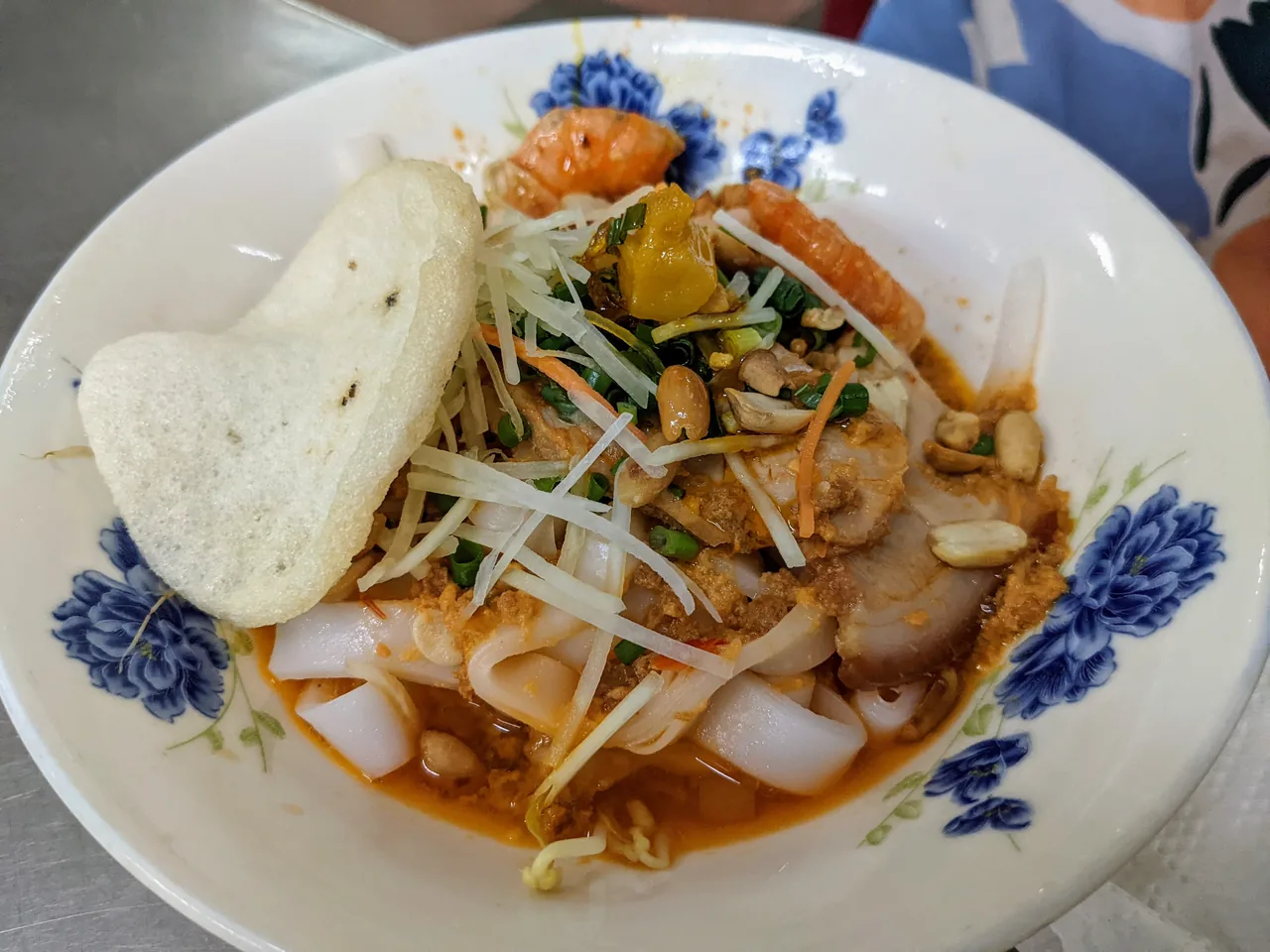
A bowl of Mì Quảng with pork and shrimp at Mì Quảng 1A in Da Nang
Mì Quảng tôm thịt (shrimp & pork) — the classic version, here at the famous Mì Quảng 1A in Da Nang. (© Jpatokal / CC BY-SA 4.0)

1. What Is Mì Quảng?

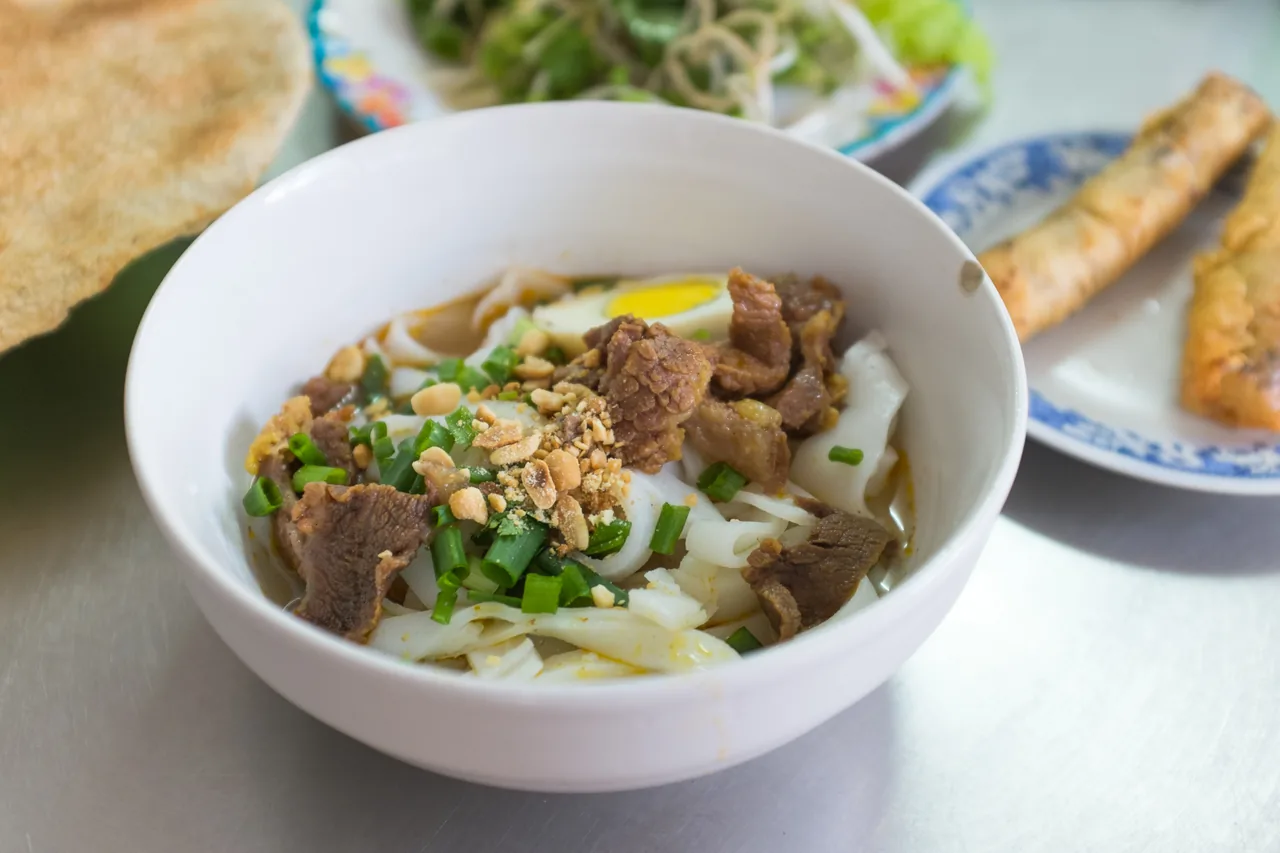
Mì Quảng (pronounced mee kwang) literally means “Quảng noodles” — it comes from Quảng Nam, the province that wraps around Da Nang and Hoi An. It’s not a soup and not a stir-fry; it sits somewhere in between. Wide, flat rice noodles — usually tinted yellow with turmeric — are topped with a protein and just a shallow pool of intensely flavoured broth (called nước nhưn), barely covering the bottom of the bowl. You toss it all together so every noodle gets coated, rather than slurping it like phở.

It’s the everyday comfort food of central Vietnam — sold at breakfast stalls, market counters and dedicated mì quảng shops — and it’s the single dish most associated with Da Nang.

💡 The name is a clue: anything “Quảng” points to Quảng Nam province. Mì Quảng is to Da Nang what phở is to Hanoi — the local pride dish.
🎟️ Mì Quảng is tossed, not slurped, and that shallow pool of nước nhưn is a concentrated sauce rather than a soup — a Da Nang cooking class has you build it yourself, which is the part no menu explains.See on Klook See on Viator See on KKday See on Trip.com Affiliate link — we may earn a commission at no extra cost to you.

2. What’s in the Bowl

A proper bowl of Mì Quảng is a layered, build-it-yourself affair. Here’s what you’ll find:

  • The noodles: wide, flat rice noodles (), often dyed sunny yellow with turmeric, sometimes left white. Chewier and thicker than phở noodles.
  • The broth: just a splash — a rich, concentrated stock simmered from pork, shrimp or chicken and seasoned hard. It’s meant to dress the noodles, not submerge them.
  • The protein: shrimp and pork, chicken, snakehead fish, frog or eel depending on the version (see the table below).
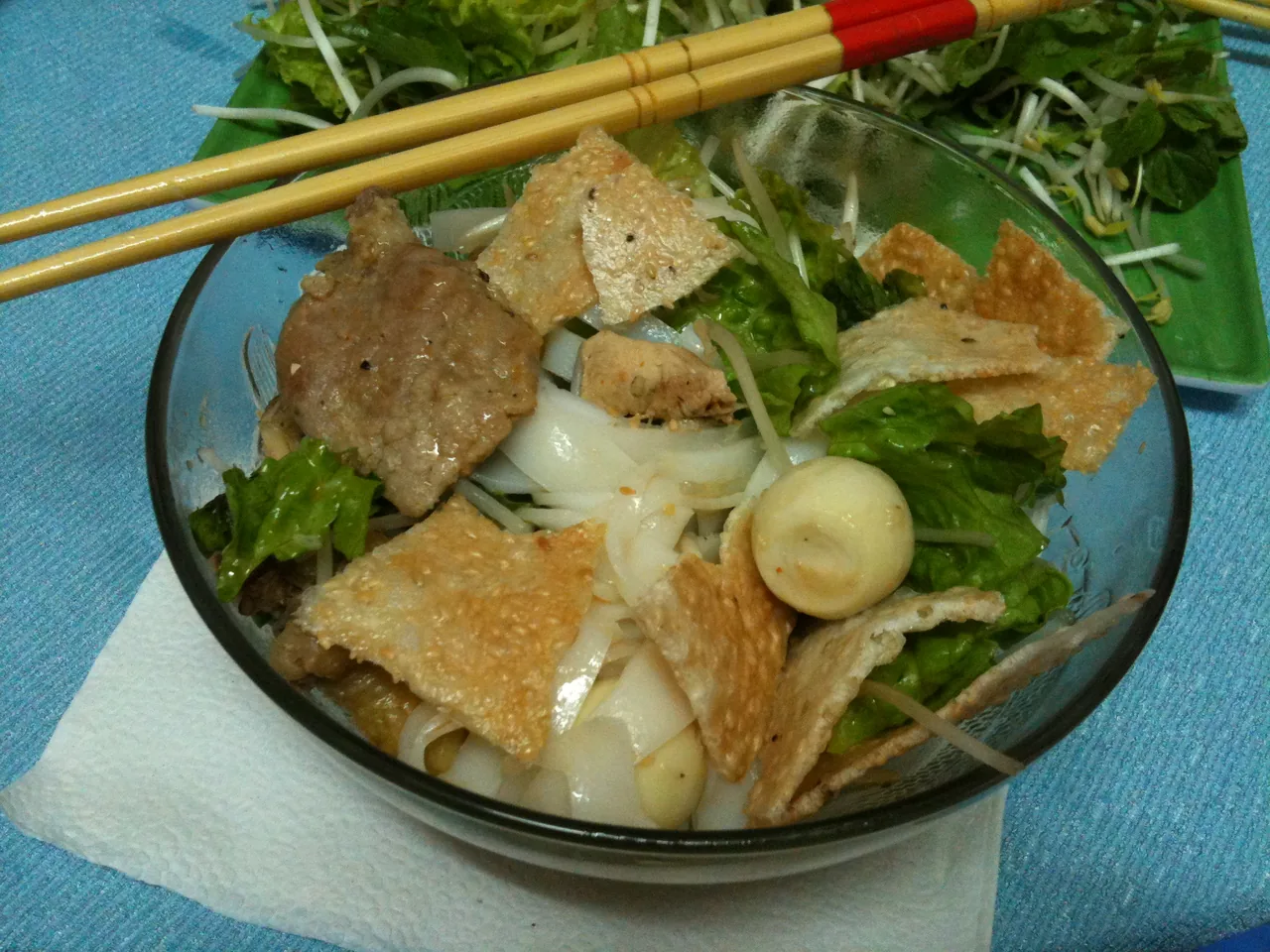
  • The crunch: roasted peanuts scattered on top, plus a toasted sesame rice cracker (bánh tráng mè) you crumble in by hand.
  • The greens: a generous pile of fresh herbs and leaves — lettuce, Vietnamese mint, basil, banana blossom and bean sprouts — added to taste.
  • The finishers: a wedge of lime, fresh chilli or chilli paste, and sometimes a dab of shrimp paste.
💡 The toasted rice cracker isn’t a side — it’s part of the dish. Snap it into shards and stir them through so they soak up the broth and add crunch.

3. The Versions Worth Ordering

Mì Quảng is named after its protein. These are the ones you’ll see most:

VersionVietnameseWhat it is
Shrimp & porkmì quảng tôm thịtThe classic and most common — sliced pork and a couple of prawns. Start here.
Chickenmì quảng gàFree-range chicken, often on the bone — hugely popular and very Da Nang.
Snakehead fishmì quảng cá lócDe-boned river fish in a sweeter, lighter broth — a local favourite.
Frogmì quảng ếchA Da Nang specialty — tender frog meat, richer flavour. More adventurous, very tasty.
Eelmì quảng lươnCountryside-style with eel — deep and savoury.
Mixed / specialmì quảng đặc biệtA bit of everything (usually shrimp, pork and a quail egg). Good for first-timers.
💡 New to it? Order tôm thịt or đặc biệt first. If you like adventurous food, the frog version (ếch) is a genuine Da Nang signature worth seeking out.
A bowl of Mì Quảng showing wide flat noodles, herbs and a sesame rice cracker
The anatomy of the bowl: wide turmeric noodles, fresh herbs and a toasted bánh tráng (sesame rice cracker) to crumble on top. (© Dragfyre / CC BY-SA 3.0)

4. How to Eat It Like a Local

Mì Quảng arrives looking a little dry and unmixed — that’s intentional. The ritual:

  1. Add your greens. Tear the herbs and leaves and pile them in.
  2. Crumble the cracker. Snap the toasted sesame rice cracker into the bowl.
  3. Season. Squeeze the lime, add chilli to taste, maybe a little shrimp paste.
  4. Toss, don’t slurp. Mix everything from the bottom up so the noodles get coated in that concentrated broth. Eat it like a tossed noodle, not a soup.
⚠️ Don’t ask for “more soup” — Mì Quảng is supposed to have very little broth. A bowl swimming in liquid is a sign it’s not being made the traditional way.

5. Where to Eat Mì Quảng in Da Nang

Mì Quảng is everywhere in Da Nang, from market stalls to dedicated shops. A few established, well-known spots locals and visitors both rate:

EateryKnown forNote
Mì Quảng 1A
Map
The tourist classicOn Hải Phòng St in the centre — the most famous name, reliable tôm thịt & gà. Busy and easy to find.
Mì Quảng Bà Mua
Map
Clean & consistentA popular local chain with several branches — a safe, tasty introduction.
Mì Quảng Bà Vị
Map
Old-school localA long-running neighbourhood favourite known for a traditional bowl.
Mì Quảng Ếch Bến Ngự
Map
The frog versionThe place to try mì quảng ếch (frog) if you’re feeling adventurous.
⚠️ Opening hours, addresses and branches change, and many shops sell out by early afternoon. Search the name in Google Maps for the current nearest branch, its hours and recent reviews before you go.
💡 Staying near My Khe beach? There are good local mì quảng spots a short Grab ride into Hải Châu — see our Da Nang hotels & areas guide for where to base yourself.

6. Price, Timing & What to Expect

A few practical things:

  • Price: a bowl runs about 25,000–50,000 VND (roughly US$1–2) at local shops; tourist-facing spots and special versions cost a little more. It’s cheap, filling and excellent value.
  • When to eat it: Mì Quảng is a breakfast-to-lunch dish. Many of the best places open early and sell out by mid-afternoon, so go earlier rather than later.
  • Portion: one bowl is a light-to-medium meal. Order the special (đặc biệt) or add a side of bánh tráng if you’re hungry.
  • Hygiene: busy stalls with high turnover are your friend — fresh herbs and a steady stream of locals are good signs. See our transport & getting-around guide for getting to them by Grab.
💡 Pair a bowl with a cà phê sữa đá afterwards for the full local breakfast — our Da Nang coffee guide covers where to get a good one.
A close-up bowl of Mì Quảng noodles in Da Nang
Note how little broth there is — Mì Quảng is barely soupy, so every strand stays coated and flavourful. (© Christopher Crouzet / CC BY-SA 4.0)

7. Mì Quảng vs Da Nang’s Other Noodles

Central Vietnam is noodle country, and it’s easy to mix them up. Here’s how Mì Quảng stands apart:

  • vs Phở: phở is a clear, brothy soup you slurp. Mì Quảng has barely any broth and is tossed — completely different texture and eating style.
  • vs Cao Lầu: Cao Lầu is Hoi An’s signature — thick, chewy noodles with even less liquid, crispy croutons and char siu pork. Related idea, but a distinct Hoi An dish (more in our Hoi An guide).
  • vs Bún chả cá: Da Nang’s other famous bowl — a hot, soupy fish-cake noodle soup. Brothy where Mì Quảng is dry.
💡 Trying to eat your way through central Vietnam? Mì Quảng (Da Nang), Cao Lầu (Hoi An) and Bún chả cá (Da Nang) are the three central-coast noodles to tick off.

8. Vegetarian Mì Quảng & Ordering Tips

A few last things to make ordering easier:

  • Vegetarian version: mì quảng chay exists and is common around Buddhist holidays and at vegetarian (chay) eateries — tofu, mushrooms and vegetables instead of meat. Ask for “mì quảng chay“.
  • Say it right:cho tôi một tô mì quảng” — “one bowl of mì quảng, please.” Add the version: tôm thịt, , cá lóc.
  • Spice: chilli usually comes on the side, so you control the heat. “không cay” means “not spicy.”
  • The cracker: if it doesn’t arrive, ask for bánh tráng — it really does complete the dish.
⚠️ Eateries, hours and prices change. Treat the names here as starting points and confirm the current details on Google Maps before you go.
🎟️ The best mì quảng shops open early and sell out by mid-afternoon, so a morning food tour is the low-risk way to get a bowl somewhere that is still cooking, usually with two or three other dishes attached.See on Klook See on Viator See on KKday See on Trip.com Affiliate link — we may earn a commission at no extra cost to you.
📚 More Da Nang guides
★ Start here Vietnam Travel Guide: Regions, Best Time, Itineraries, Costs & Visas
🎡Things to Do53
Start with the hubThings to Do in Da Nang: What to Book Ahead, What to Walk Up To, and What Everything CostsA Day Trip to Hue from Da Nang: Citadel, TombsA Hoi An Cooking Class: Which to Pick & What You’ll MakeBa Na Hills & the Golden Bridge: The Complete Guide (Tickets, Cable Cars, One-Day Plan)Ba Na Hills Overnight Stay: Mercure Rates, Cable Car Tickets, Golden Bridge at DawnCu Lao Cham Day Trip from Hoi An: Fares, Rules, What’s OpenDa Nang Activities: The Tours & Experiences Worth BookingDa Nang Dolphinarium: The ‘Dance of the Ocean’ Dolphin ShowDa Nang for Couples & Honeymooners: Five-Star Romance for Half the PriceDa Nang Itinerary: 3, 4 and 5 Day Plans That WorkDa Nang Nightlife: What Costs Money, What Shuts WhenDa Nang Solo: Bike Taxi Fares, Where One Person Can Eat, Which Area to Sleep In and a Three-Day TimetableDa Nang Travel Guide 2026: The Complete Plan (Flights, Weather, Hotels, Food & More)Da Nang vs Nha Trang: Which Beach City Fits Your Trip?Da Nang vs Phu Quoc: City-and-Culture or Island-and-Resort?Da Nang with Kids: The Family Trip That Actually WorksDa Nang With Older Parents: How to Build a Day Around the Early MorningDa Nang’s Best Beaches: Which One Is Right for You?DIFF 2026: Da Nang’s Fireworks Festival — Dates, Tickets & Where to WatchDragon Bridge, Da Nang: Fire-Show Times & Where to StandGolf in Da Nang: The Best Courses, Green Fees & Tee TimesHalal Da Nang: Muslim-Friendly Food, Mosques & Prayer SpotsHiring a Car and Driver in Da Nang: How It Is Priced and When It Beats GrabHoi An Beaches: An Bang vs Cua Dai — Which One to Choose?Hoi An Itinerary: One, Two and Three Days, Built Around the Hours Things Actually OpenHoi An Travel Guide: Ancient Town, Lanterns & TailoringHoi An’s Lantern Festival: Dates, What HappensHue Travel Guide: Vietnam’s Imperial Capital, Done ProperlyLap An Lagoon: Da Nang’s Mirror-Water SunriseLiving in Da Nang as a Digital Nomad: Costs, Wi-FiMang Den: Vietnam’s ‘Second Da Lat’ and the Central Highlands SecretMarble Mountains Da Nang: Tickets, the Elevator, and the Am Phu Cave Ticket TrapMassage & Spa in Da Nang: What to Book and What to PayMikazuki Water Park, Da Nang: Indoor Slides, OnsenMy Khe Beach, Da Nang: The Sand, the SurfMy Son Sanctuary: Visiting Vietnam’s Ancient Cham RuinsNui Than Tai Hot Springs Park: The Complete Day-Trip GuidePhong Nha Caves: A Complete Guide to Vietnam’s Greatest Cave CountryRainy Day in Da Nang? 15 Things to Do When the Weather TurnsShopping in Da Nang: What to Buy at Han MarketSon Tra & the Lady Buddha: Da Nang’s Best Sunset ViewpointThe Best Day Trips from Da Nang: Where to Go Beyond the CityThe Best Things to Book in Hoi An: Tours, Classes & Boat RidesThe Best Time to Visit Da Nang: A Month-by-Month BreakdownThe Cham Sculpture Museum, Da Nang: Is It Worth a Visit?The Golden Bridge, Da Nang: Vietnam’s Giant Hands BridgeThe Hai Van Pass: Da Nang to Hue by Bike, Car or Easy RiderThe Han River Night Cruise in Da Nang: Which Sailing Actually Sees the Fire ShowThe Hoi An Basket Boat Ride: Worth It? Prices, TipsThe Lady Buddha & Linh Ung Pagoda: Da Nang’s Tallest StatueThings to Do in Hoi An: Beyond the LanternsTra Que Herb Village, Hoi An: A Calm Half-Day in the GardensVegan & Vegetarian Da Nang: Where to Eat, and How to Order
🍜Food7
🏨Where to Stay6
🚇Getting Around9
🧭Travel Tips21
🧭Vietnam-wide essentials56
Cam Ranh Airport to Nha Trang: What Each Option Costs, and Why Your Landing Time Decides ItCat Ba Island Travel Guide: Getting There from Hanoi, Ferries, Weather and Where to StayCon Dao Travel Guide: Getting There, the Prison Museums, Beaches and Where to StayCu Chi Tunnels: You Buy Two Tickets, and Two Sites to Choose FromDa Lat Travel Guide: What to See, How Many Days, Weather, Prices and Where to StayDatanla Falls and the Alpine Coasters, Da Lat: Which Ticket to Buy and When Each Counter ClosesDistrict 4 Seafood Street: Vĩnh Khánh Ốc GuideGrab vs Xanh SM vs Be in Vietnam (2026): Which Ride App Is Cheapest & How to Use ThemHa Long Bay Cruise: The Complete Guide to Choosing the Right OneHanoi to Ninh Binh Day Trip: Trang An, Mua Cave & How to Do It RightHanoi to Sapa: Buses, the Night Train, and What Time You Actually ArriveHanoi Travel Guide 2026: The Old Quarter, Hoan Kiem Lake & Everything First-Timers NeedHo Chi Minh City (Saigon) Travel GuideHon Thom Cable Car, Phu Quoc: What 850,000d Buys and Why the Morning Crossing Is Worth Twice the Afternoon OneIs Vietnam Safe? Every Tourist Scam in 2026 & the 4 Rules That Stop ThemLong Thanh International Airport: What Travelers Need to Know Before It OpensMoney in Vietnam: Cash or Card, ATMs, and How Much to BringMui Ne and Phan Thiet Travel Guide: Two Sand Dunes, Prices, Getting There, Where to StayNha Trang in December: when boats do not sail, what to do in the city, and how prices moveNha Trang in February: the Driest Month, Calmer Seas, and What Tet Does to PricesNha Trang in January: Weather, Sea Conditions, New Year Crowds and Hotel PricesNha Trang in March: Calmer Seas, Warmer Water and Low-Season PricesNha Trang in the Rainy Season (Sep-Nov): Is It Still Worth It? An Honest GuideNha Trang Island Hopping: Party Boat vs Speedboat, the Four Islands, Costs and the Bay Fee Nobody MentionsNha Trang Mud Bath Guide: Thap Ba, I-Resort, 100 Egg, Galina and Hon Tam ComparedNha Trang Nightlife: Closing Times for Night Markets, Rooftops and Beach ClubsNha Trang to Da Lat: buses, limousine vans, fares and how long it takesNha Trang Travel Guide: Islands, Diving, Mud Baths & the Dry-Season Beach CityNoi Bai Airport to Hanoi: fares, pickup points and what changed in August 2026Northern Vietnam Travel Guide: Hanoi, Ha Long Bay, Sapa, Ninh Binh and Ha GiangPhu Quoc Island Hopping in the An Thoi Archipelago: Ports, Hours, Prices and What Is Charged On TopPhu Quoc Travel Guide: Arrival Times, Drive Times and What a Day Actually CostsPhu Quoc: When to Go, Month by MonthSapa, Vietnam: A Complete Guide to the Rice Terraces, the Trekking & FansipanSouthern Vietnam Itinerary 2026: Ho Chi Minh City & the Whole South, Planned RightSymphony of the Sea or Kiss of the Sea: Which Should You See?Tết Trung Thu: A Traveller’s Guide to Vietnam’s Mid-Autumn FestivalThe Ha Giang Loop: The Complete Guide to Vietnam’s Greatest RideThings to Do in Nha Trang: The Full List, from Po Nagar and the Museum to Hon Tam and Yang BayThings to Do in Phu Quoc: The Complete Activities GuideVietnam City-to-City Travel: Trains, Buses, FlightsVietnam Entry Requirements 2026: Health Declaration + Digital Arrival Card for Da Nang, Ho Chi Minh City & HanoiVietnam eSIM & SIM Card: Best Plans, Prices & How to Set It UpVietnam Travel Guide: Regions, Best Time, Itineraries, Costs & VisasVinpearl Safari Phu Quoc: Feeding Times, Safari Bus Cut-Off and Which Ticket to BuyVinWonders Nha Trang: Ticket Prices, Full-Day vs After-4PM, the Cable Car and Every Zone in the ParkVinWonders Phu Quoc: Zone Opening Hours, Show Times, Ticket Prices and the Safari ComboWhat Is Illegal in Vietnam: Vapes, Fines and What Customs TakesWhat to Eat in Nha Trang: Bun Sua, Nem Nuong Ninh Hoa, Banh Can and the Bo Ke Seafood StripWhere to Stay in Da Lat: Which Areas You Can Walk and Which Need a CarWhere to Stay in Hanoi: Best Areas and HotelsWhere to Stay in Ho Chi Minh City (Saigon): Best AreasWhere to Stay in Mui Ne: Beachfront, Across the Road, and What Each Stretch Is LikeWhere to Stay in Nha Trang: Zones & HotelsWhere to Stay in Phu Quoc: The 5 Best Areas, Decoded HonestlyWhere to Stay on Con Dao: The Four Resorts and the Town Hotels
Browse all our Vietnam guides →

Frequently asked questions

Q. What is Mì Quảng?
Mì Quảng is a noodle dish from Quảng Nam province, the signature dish of Da Nang. It’s wide, turmeric-tinted rice noodles served with only a splash of intense broth (not a soup), plus a protein, roasted peanuts, fresh herbs and a toasted sesame rice cracker you crumble on top.
Q. Why does Mì Quảng have so little broth?
That’s how it’s meant to be — Mì Quảng is dressed with just a shallow pool of concentrated, heavily seasoned broth rather than submerged like phở. You toss everything together so the noodles get coated. A bowl swimming in liquid isn’t traditional.
Q. What version should I order?
Start with mì quảng tôm thịt (shrimp and pork), the classic, or mì quảng đặc biệt (mixed) if you want a bit of everything. Chicken (gà) and snakehead fish (cá lóc) are also very popular, and the Da Nang frog version (ếch) is worth trying if you’re adventurous.
Q. How much does Mì Quảng cost in Da Nang?
About 25,000–50,000 VND a bowl (roughly US$1–2) at local shops. Tourist spots and special versions cost a little more. It’s cheap, filling and great value.
Q. Is Mì Quảng spicy?
Not by default — chilli and chilli paste usually come on the side so you control the heat. Say ‘không cay’ for no spice. The base flavour is savoury and herby rather than fiery.
Q. Is there a vegetarian Mì Quảng?
Yes. Mì quảng chay uses tofu, mushrooms and vegetables instead of meat. It’s common at vegetarian (chay) eateries and around Buddhist holidays — just ask for ‘mì quảng chay’.
Q. What’s the difference between Mì Quảng and Cao Lầu?
Mì Quảng (from Quảng Nam / Da Nang) has soft wide turmeric noodles and a splash of broth. Cao Lầu (from Hoi An) has thick, chewy noodles, crispy croutons and char siu pork with almost no broth. They look similar but are distinct dishes from different towns.
Q. Where is the best Mì Quảng in Da Nang?
Established names include Mì Quảng 1A (the tourist classic, central), Mì Quảng Bà Mua (clean and consistent, several branches) and Mì Quảng Bà Vị (old-school local). For the frog version, try Mì Quảng Ếch Bến Ngự. Check current hours and reviews on Google Maps, and go before mid-afternoon as they often sell out.

🧭 Complete Da Nang travel guide →