
Hai Phong Travel Guide: Getting There From Hanoi, What to See, Where to Stay and What to Eat
Hai Phong is the port city east of Hanoi. Trains take two and a half hours, and Cat Bi airport has international flights of its own. This guide covers how to get there, what there is to see, what the city eats, and how to cross to Cat Ba island.
| Where it is | A port city on the coast east of Hanoi, the third largest in Vietnam. |
|---|---|
| Getting there | Trains from Hanoi take 2h25m to 2h45m. By road it is 1h30m to 2h. |
| Flying in | Cat Bi airport has international flights and sits much closer to Cat Ba than Hanoi does. |
| What to see | The French-era streets downtown, Do Son beach, VinWonders, and two temples now on the World Heritage list. |
| What to eat | Banh da cua, a crab broth with wide brown noodles, started in this city. |
| How long | A day covers the city. Two days if you add Do Son or the island crossing. |
1. Hai Phong: what to know first
2. When to go
3. Getting there from Hanoi by train
4. Getting there from Hanoi by road
5. Flying in
6. From the airport into the city
7. Getting around the city
8. Where to stay
9. The French-era streets and the opera house
10. The museum and the riverside
11. A pagoda and two markets
12. VinWonders Vu Yen
13. Do Son beach
14. Hon Dau: two places with one name
15. Crossing to Cat Ba island
16. Boats into Lan Ha Bay and Ha Long Bay
17. Con Son and Kiep Bac, the World Heritage sites Hai Phong gained
18. Bach Dang Giang
19. Banh da cua, the dish of the city
20. Banh mi cay and everything else
21. One day or two: how to plan it
22. Practical notes
1. Hai Phong: what to know first
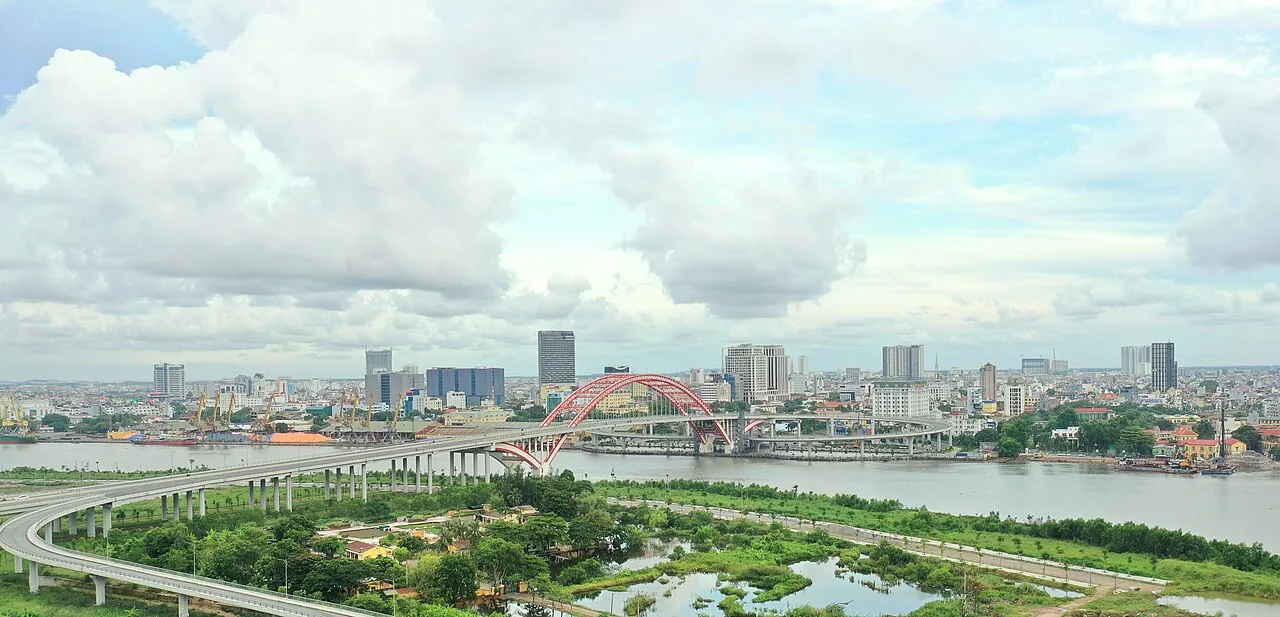
Hai Phong is the port city on the coast east of Hanoi. It is the third largest city in Vietnam, and most of the freight moving in and out of the north passes through its docks.
As a destination it is not well known. Plenty of people pass through on the way to Ha Long Bay or Cat Ba without stopping. There is no street built for visitors here, and no row of souvenir shops.
That is also why it is quiet. The buildings the French put up when they ran the port are still standing downtown, and the people walking past them are mostly on their way to work. Prices are not marked up for foreigners.
The city got bigger in 2025
In 2025 the province of Hai Duong was merged into Hai Phong. The city is now far larger than it used to be, and places that older articles call Hai Duong are inside Hai Phong today.
Two things follow from that for a visitor. Temples that are now on the UNESCO World Heritage list fall inside the city. And the old district level of administration is gone, so addresses printed on older signs and in older guides do not match what is used now.
Map apps still find most old addresses. Where a search fails, try the street name on its own, or the newer form of the address.
Cat Ba island is Hai Phong too
Administratively Cat Ba belongs to Hai Phong. That matters when you book a room, because searching for Hai Phong on a booking site returns island properties in the same list.
People book what they think is a city hotel and find it is somewhere they need a boat to reach. There is more on this in the accommodation section below.
What there is to do on the island is covered in the Cat Ba island guide. This guide goes as far as the crossing.
How long to stay
Half a day to a day covers the centre. Two days if you want Do Son beach or VinWonders as well.
Adding Cat Ba makes it three to four days in total, because the island needs two days of its own.
How far things are from the centre
🏛️ The centre
With the opera house square as the middle point, it is all on foot.
✈️ Cat Bi airport
8km, 20–30 minutes by road. The Seoul flights land here.
🎡 VinWonders Vu Yen
Over the bridge, 20 minutes by car. Allow a full day.
🏖️ Do Son beach
20km, 30 minutes by car. Busy all summer.
⛴️ Cat Ba island
30 minutes by ferry or 15 by cable car, plus the run to the pier.
🛕 Con Son & Kiep Bac
90 minutes by car. World Heritage, but a long way out.
2. When to go
Autumn and spring are the easy seasons. Summer is hot, wet and in the path of typhoons. Winter is cold and often grey.
| Season | Weather | What it means |
|---|---|---|
| Spring | Warming up, often overcast | Good for walking, few visitors |
| Early summer | Hot, flame trees in flower | Festival season, the centre fills up |
| High summer | Hot, heavy rain, typhoons | Busiest time on the beach |
| Autumn | Drier and cooler | Best for combining the city and trips out |
| Winter | Cold, windy | Beaches empty, walking downtown is pleasant |
Allow for typhoons in summer
Hai Phong sits directly on the coast, so storms arrive without anything in the way. The city says three to five typhoons and tropical depressions affect it in a year, and one or two come ashore here.
Boats stop first. Crossings to Cat Ba and the boat out to Hon Dau from Do Son are both suspended. Even after the wind drops, a swell can keep them tied up for another day.
If your summer plan includes an island, leave a spare day in it. One cancelled crossing pushes everything after it.
The rain comes in summer too. It tends to fall hard for an hour in the afternoon rather than all day. Thunderstorms run from spring through to late autumn.
Winter is genuinely cold
This is northern Vietnam, and temperatures drop. With wind off the sea it feels colder still. Packing for a southern Vietnamese winter will leave you short.
The beaches are empty in this season. Swimming is out, and some of the places at Do Son close for the winter.
Walking around town, though, is better in winter than at any other time. It is not hot and not humid, so you can stay out for hours.
When the flame trees flower
The flame tree is the symbol of Hai Phong. In early summer the red flowers come out all at once, and there are enough of these trees along the streets that the city is sometimes named after them.
The city holds a large festival while they are in flower, with performances and fireworks, and roads downtown are closed for it.
Rooms fill early and prices rise during the festival. Book well ahead if you are coming for it, and avoid those dates if you want the city quiet.
3. Getting there from Hanoi by train
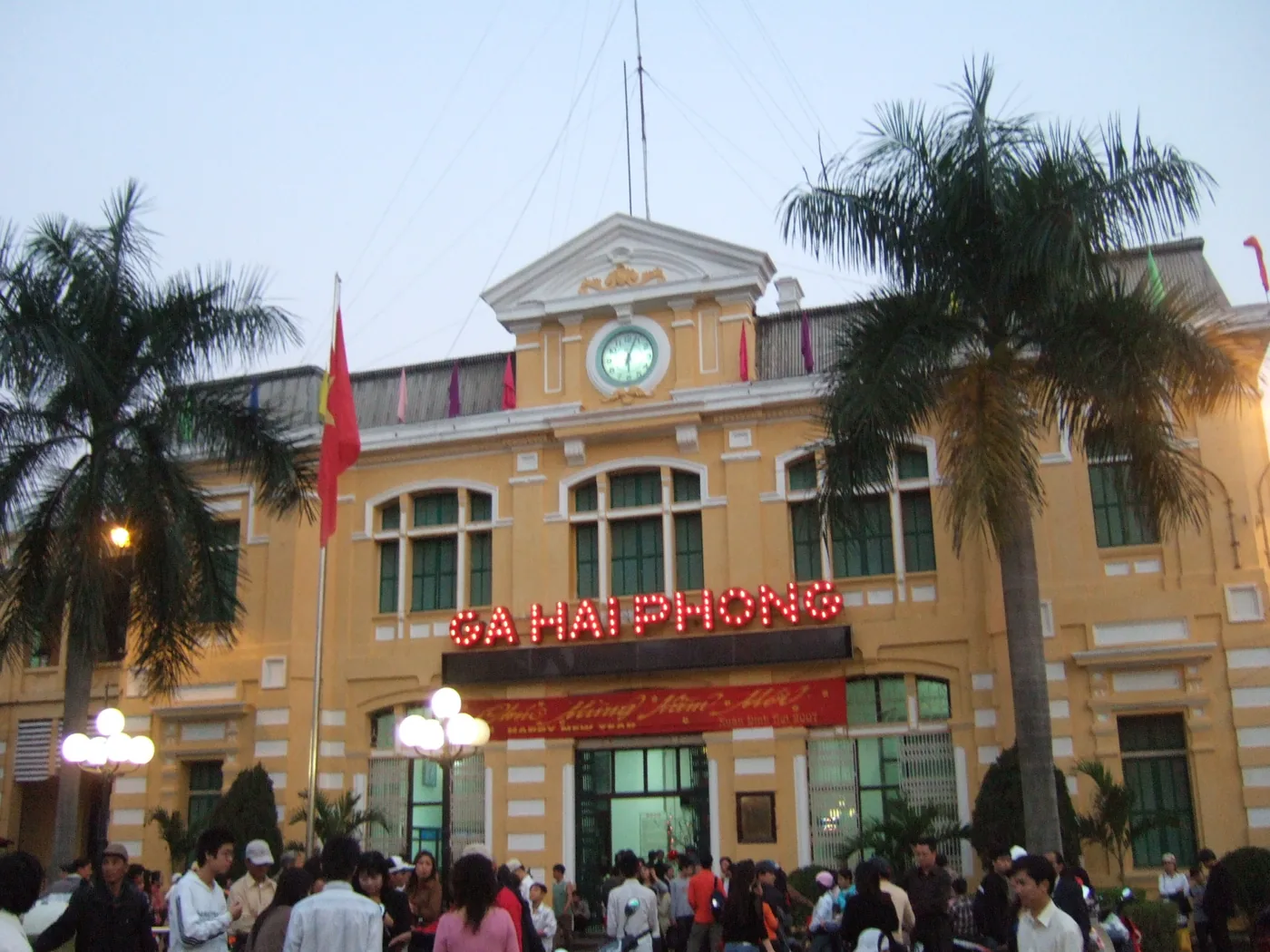
Four trains a day run each way between Hanoi and Hai Phong. The trip takes 2h25m to 2h45m over a line of 102km.
Timetable
| Hanoi dep. | Hai Phong arr. | Hai Phong dep. | Hanoi arr. |
|---|---|---|---|
| 06:00 (HP1) | 08:25 | 06:05 (LP2) | 08:49 |
| 09:25 (LP3) | 12:00 | 09:10 (LP6) | 11:52 |
| 15:15 (LP5) | 18:00 | 15:00 (LP8) | 17:40 |
| 18:10 (LP7) | 20:55 | 18:40 (HP2) | 21:15 |
The first train gets you in during the morning with a full day ahead. The 15:15 out and an evening train back also works as a day trip. The late arrival is only useful if you are staying the night.
Two trains skip Long Bien
If you are staying in Hanoi Old Quarter, Long Bien station is the closer place to board a train to Hai Phong stationMap. It saves the trip out to Hanoi station.
The first train of the day and the last one back do not call at Long Bien. Those two run from Hanoi station only. People go to Long Bien for the early train and watch it go past.
The other six do stop there, about ten minutes after leaving Hanoi station.
Fares and seats
The fare is the same whichever train you take. A standard soft seat is 154,000 dong, better seats cost a little more, and the top class is a 360,000 dong carriage.
This line runs a smart carriage named after the flame tree. The seats are wider and turn to face either direction. If you would rather be comfortable for two and a half hours, that is the one to book.
The standard seats are fine as well. This is a daytime run with no sleeper cars, and the seats are padded.
Tickets are sold on the national railway site and at station counters. Weekends and holidays sell out, so book ahead for those.
What you see on the way
Rice fields and villages for most of it. The city thins out quickly, and warehouses appear again as Hai Phong gets close.
The train calls at Gia Lam, Hai DuongMap, Phu Thai and Thuong Ly. Hai Duong is inside the same city now after the merger, and the World Heritage temples are close to that station.
Trains here are rarely late. The same trip by road can be held up; the timetable generally holds.
4. Getting there from Hanoi by road
The expressway takes 1h30m to 2h. It is faster than the train and it can drop you anywhere you like.
Limousine vans are the usual choice
A limousine in Vietnam means a van with nine to eleven seats. The seats are wide and the van is not packed.
Many operators collect you at your hotel and drop you at your destination, so there is no hauling luggage to a bus station at either end. That is the practical difference from the train.
Several companies work this route, among them Son Hai, Anh Huy Dat Cang, Trung Thanh and Thuy Nguyen. Seats start around 220,000 dong.
Departures are frequent enough that you do not need to plan around them, though weekends and holidays are worth booking.
Buses and taxis
Ordinary buses from the terminals cost less. You have to get to the terminal, and you arrive at a terminal as well; the one in Hai Phong is out from the centre, so you end up in a taxi anyway.
With three or four people, hiring a car outright is worth pricing. Several limousine seats add up to something similar. With luggage or children it is easier.
Ride-hailing apps also handle intercity trips, with the fare fixed before you set off.
Tolls if you drive
Driving yourself means tolls. For a car they run from 44,000 to 221,000 dong depending on how much of the road you use.
Every toll gate is electronic. A vehicle without a tag cannot use the road, so check that when you hire a car.
There is an expressway straight through and an older national road alongside it. The old road passes through towns and takes much longer.
Train or road
Road is faster on paper. But Hai Phong station is in the middle of town, so if the centre is where you are going, the train often works out easier.
For Do Son or VinWonders, which are outside the centre, a car makes more sense because you choose where you get out.
5. Flying in
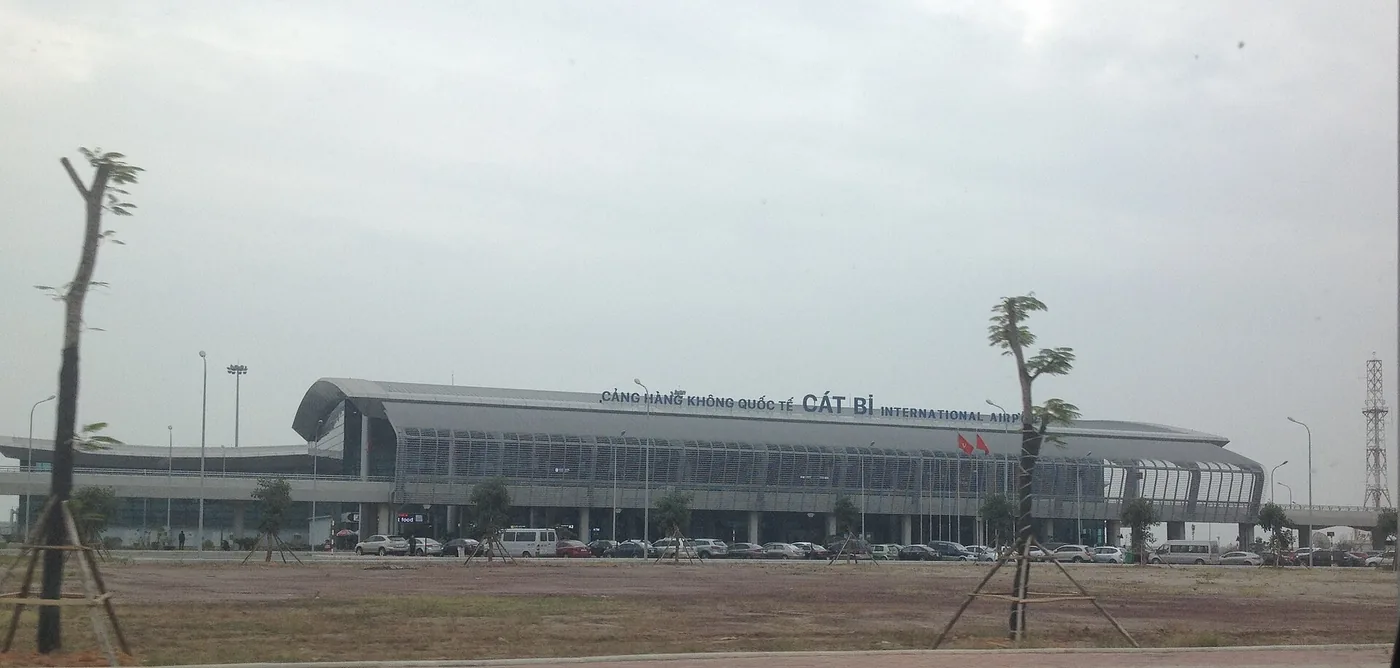
Hai Phong has its own international airport at Cat Bi, with flights from Seoul among others. The Seoul run takes about four hours and twenty minutes.
How it compares with flying into Hanoi
Landing at Noi Bai in Hanoi and then travelling on to Hai Phong or Cat Ba means more than three hours on the road. Flying into Cat Bi removes that leg entirely.
For anyone heading to Cat Ba the difference is large. The ferry piers are close to the airport, so you can land and be on the island the same day. Arriving at Noi Bai usually means a night in Hanoi first.
The Seoul route runs close to daily, at around 30 flights a month, so dates are not hard to line up.
What does limit you is the map. The only international flights into Hai Phong are from South Korea and China. Coming from anywhere else means changing in Hanoi or Ho Chi Minh City.
The same applies coming home. If the return day does not line up, you end up travelling to Hanoi to fly out.
Domestic connections
There are domestic flights from Ho Chi Minh City and Da Nang as well. If you are working your way through several Vietnamese cities, Hai Phong slots in without much trouble.
Coming north, flying into Hai Phong instead of Hanoi shortens the run to Ha Long Bay and Cat Ba considerably.
What the airport is like
Cat Bi is small. There is one terminal and it does not take long to get through.
Bags come out quickly and immigration queues are shorter than at Hanoi. From landing to standing outside is usually a matter of minutes.
There is not much inside, though. Few shops and few places to eat, so it is not somewhere to arrive early and wait. Time your arrival rather than allowing a long buffer.
6. From the airport into the city
Cat Bi airportMap is about 8km from the centre, which is twenty to thirty minutes by road.
| Option | Cost | Time |
|---|---|---|
| Taxi or ride-hailing | 180,000–250,000 dong | 20–30 minutes |
| City bus | Under 10,000 dong | 30 minutes or more, infrequent |
| Booked car | Varies by operator | Waiting at arrivals |
Taxis and ride-hailing
A taxi into town runs 180,000 to 250,000 dong depending on where you are going.
Ride-hailing works here. Both Grab and Green SM operate in the city. Green SM runs electric cars, which are quiet, and the fare is set in the app before you get in.
Drivers do approach arriving passengers at the door. Either book in the app or take a car from the official rank.
Buses
There is a city bus from outside the terminal. The fare is under 10,000 dong. With light luggage and time to spare it is a reasonable option.
One of these routes carries on past the centre to Thuy Nguyen in the north. That is the direction of the Bach Dang Giang site, so it is useful if you want to skip the centre and go there first.
Services are not frequent, though. Depending on when you land you may wait a while.
Going straight to Cat Ba
To go directly to the island, head for a ferry pier or the cable car station. Either is under an hour by taxi.
That route does not pass through the centre. If you want to see the city, set aside a separate day for it.
Some operators sell a combined airport-to-island transfer timed around the boats. For a first visit that is the simplest way to do it.
7. Getting around the city
Central Hai Phong is compact. The part with things to see can be covered on foot.
What is walkable
With the opera house square as the middle point, the museum, Cho Sat and the riverside are all within walking distance of each other. Half a day is enough to make the loop at an easy pace.
The streets are wide and lined with trees. There is none of the narrow-lane navigation of the Hanoi Old Quarter, so it is hard to get lost.
Summer afternoons are hot even in the shade. Walk in the morning or towards evening and spend the middle of the day indoors.
Taxis and ride-hailing
For anywhere outside the centre, such as Do Son or the airport, you will want a car. Grab and Green SM both work, and metered taxis are easy to find.
Motorbike taxis are common too. For short hops they are quicker and cheaper, and the app fixes the fare.
Renting a motorbike
Hotels rent them by the day, and some people ride out to Do Son themselves.
Bear in mind that this is a freight city. Large trucks run in and out of the port along the roads outside the centre all day.
If you are not a confident rider, keep to the centre. Inside town the roads are wide and traffic is not fast.
8. Where to stay
The centre is the default. Hotels cluster between the opera house and the railway station.
Check this before you book
Searching for Hai Phong on a booking site brings up Cat Ba island properties in the same list, because the island is part of the city.
The area filter separates them out: Hai Phong downtown, Cat Ba island and Lan Ha Bay are listed as different areas. Set that filter before you browse.
Skip that step and you can end up with a room that needs a boat. The cheaper-looking rooms are often the island ones, which makes it easier to be caught out.
City hotels
There are several large chain hotels here. Sheraton, Pullman, Nikko and Melia all have properties in the centre.
This is a city that receives a lot of business travel through the port, so there are more hotels of that standard than a place this size would otherwise have. The result is that the same class of room costs less here than in a tourist town. What buys a room in Ha Long or Sapa buys a better one in Hai Phong.
Smaller hotels and guesthouses concentrate near the station. If you are arriving by train and moving on the next day, that area is convenient.
The opera house end is quiet at night and has more places to eat within walking distance.
Staying at Do Son
There are resorts at Do Son if you want to be on the beach, about thirty minutes from the centre by car.
Do Son is busy in summer and empty in winter. Some places close out of season, so confirm the property is open when you book for the colder months.
If you want both the city and the beach, stay in the centre and go out to the coast for the day. There is little to do at Do Son in the evening.
9. The French-era streets and the opera house
The buildings are the reason to walk around the centre. What the French put up while they ran the port is still standing and still in use.
The opera house
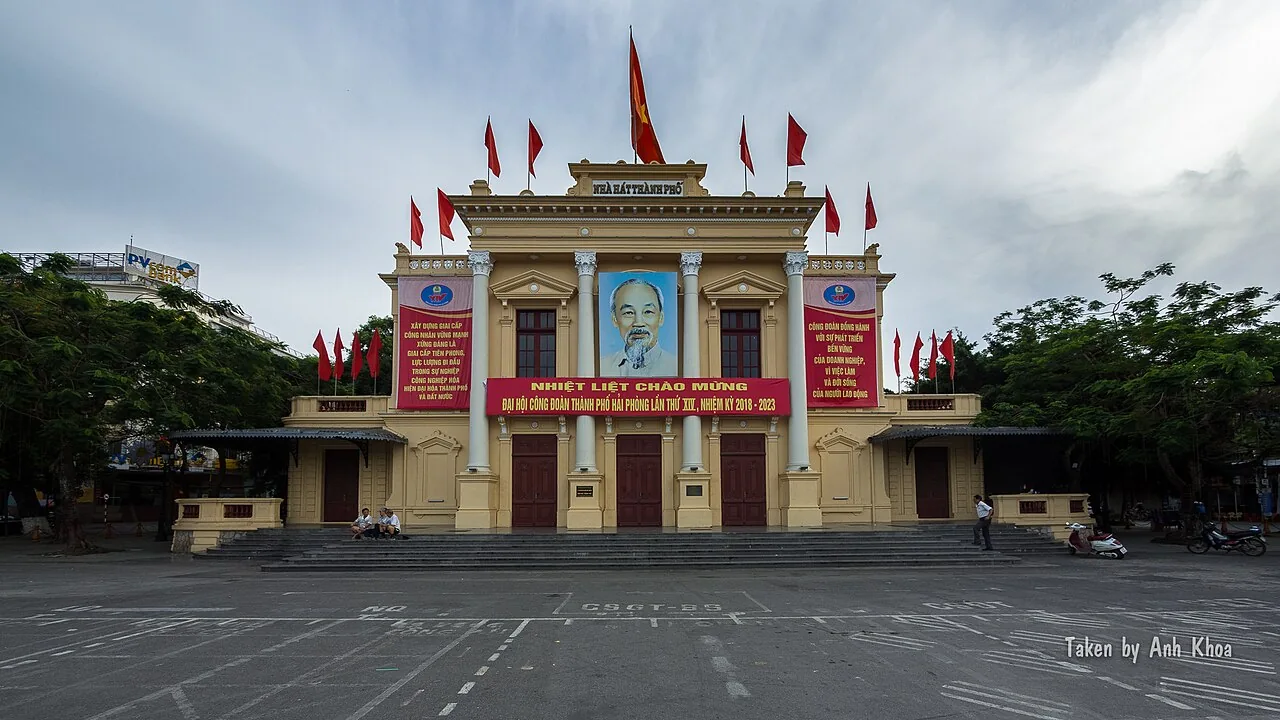
Hai Phong Opera HouseMap is one of three theatres the French built in Vietnam. The others are in Hanoi and Ho Chi Minh City.
Work started in 1904 and finished in 1912. The materials were shipped out from France.
It is a yellow building with a colonnade across the front, facing a large open square. Unless there is a performance you cannot usually go inside, so most people look at it from outside.
The square fills up in the evening. Children run about, adults sit and talk, and this is when the city is at its liveliest.
Along one side of the square is a row of flower stalls that has been there a long time. Locals use it as a landmark when giving directions.
The streets around it
The roads leading off the square are lined with buildings from the same period. The post office, the banks and several government buildings have kept their original look.
None of it is dressed up for visitors the way the Hanoi Old Quarter is. These are working streets where people live, which is why they are quiet and why there are few shops aimed at tourists.
There are not many information boards either. It is less a set route than a matter of walking and noticing.
You will pass a lot of cafes. Hai Phong drinks coffee, and there are long-established places on most blocks. When it gets hot, go into one.
10. The museum and the riverside
Two more stops fit into the same walk: the city museum and the river.
Hai Phong Museum
Hai Phong MuseumMap occupies a red-brick building from the French period. The building is worth a look in itself, and some people photograph it without going in.
Inside are the history of the region and the story of how the port came to be, mostly old maps, photographs and everyday objects.
The opening days matter here. It closes on Mondays, and at weekends it opens in the morning only. On weekdays it also shuts over the middle of the day.
| Day | Morning | Afternoon |
|---|---|---|
| Monday | Closed | Closed |
| Tuesday to Friday | Open | Open |
| Saturday and Sunday | Open | Closed |
Most listings say entry is free; a few give a small adult fee. Either way it is not an amount that changes a plan.
It is not a large museum. An hour is enough, and it is a cool place to sit out the heat.
The Tam Bac riverside
The Tam Bac riverMap runs through the middle of town. There is a made-up walkway along it, lit at night.
Older buildings line the far bank. People walk here in the evening and sit along the water.
A short walk brings you to Cho SatMap, the oldest market in Hai Phong. The building has aged and it is not as busy as it once was.
The lanes around it are more interesting than the inside, with food stalls set up along the pavement.
11. A pagoda and two markets
A short way south of the centre are an old pagoda and a market. They are close enough to see together.
Du Hang Pagoda
Du Hang PagodaMap is the oldest in the city. It sits inside a residential district, so getting there means turning off into the lanes.
There is a large statue in the courtyard, along with a pond and a stupa. Trees keep it shaded and quiet.
It is a working neighbourhood pagoda rather than a sight. It is busy on the first and fifteenth of the lunar month and almost empty on ordinary weekdays.
Entry is free. Keep quiet during services, and cover shoulders and knees.
The market that only runs on Sundays
Cho HangMap is a market that only properly opens once a week, on Sunday.
What it sells is unusual: plants and trees, birds and fish, garden and farm tools. Few cities still have a market like this in the middle of town.
It is not a market for visitors. You are not going to buy souvenirs; you are going to see what the city buys and sells.
Sunday morning is when it is at its fullest. On other days only a small everyday market is open.
12. VinWonders Vu Yen
The busiest attraction in Hai Phong is not in the centre at all. It is on Vu Yen island across the river, where a very large leisure complex has been built.
What is there
VinWonders Vu YenMap puts a water park, a zoo and a rides area on one site. The grounds are big enough that seeing all of it takes a day.
Part of the zoo is a drive-through where animals are kept in open enclosures, so you see them from a vehicle rather than on foot.
The water park is separate, with slides and a wave pool. In summer this is where the crowd goes.
There is also a food and shopping area, so you can spend the whole day inside without going out for lunch.
Tickets and opening hours
Tickets are sold by zone. There is a water-park-only ticket and a combined ticket covering three zones, and the combination costs less than buying the parts separately.
Weekday and weekend prices differ. Weekends and public holidays are dearer and busier, so a weekday is much easier with children.
Children under 100cm tall get in free. Vietnamese attractions often set admission by height rather than age, so measure rather than count birthdays.
Opening hours also differ between weekdays and weekends, and individual zones close at different times. The zoo section shuts earliest, so do that part first.
Getting there
It is about twenty minutes from the centre, across a bridge onto the island.
Public transport is not really an option. Take a taxi or use a ride-hailing app, which will also pick you up for the return.
13. Do Son beach
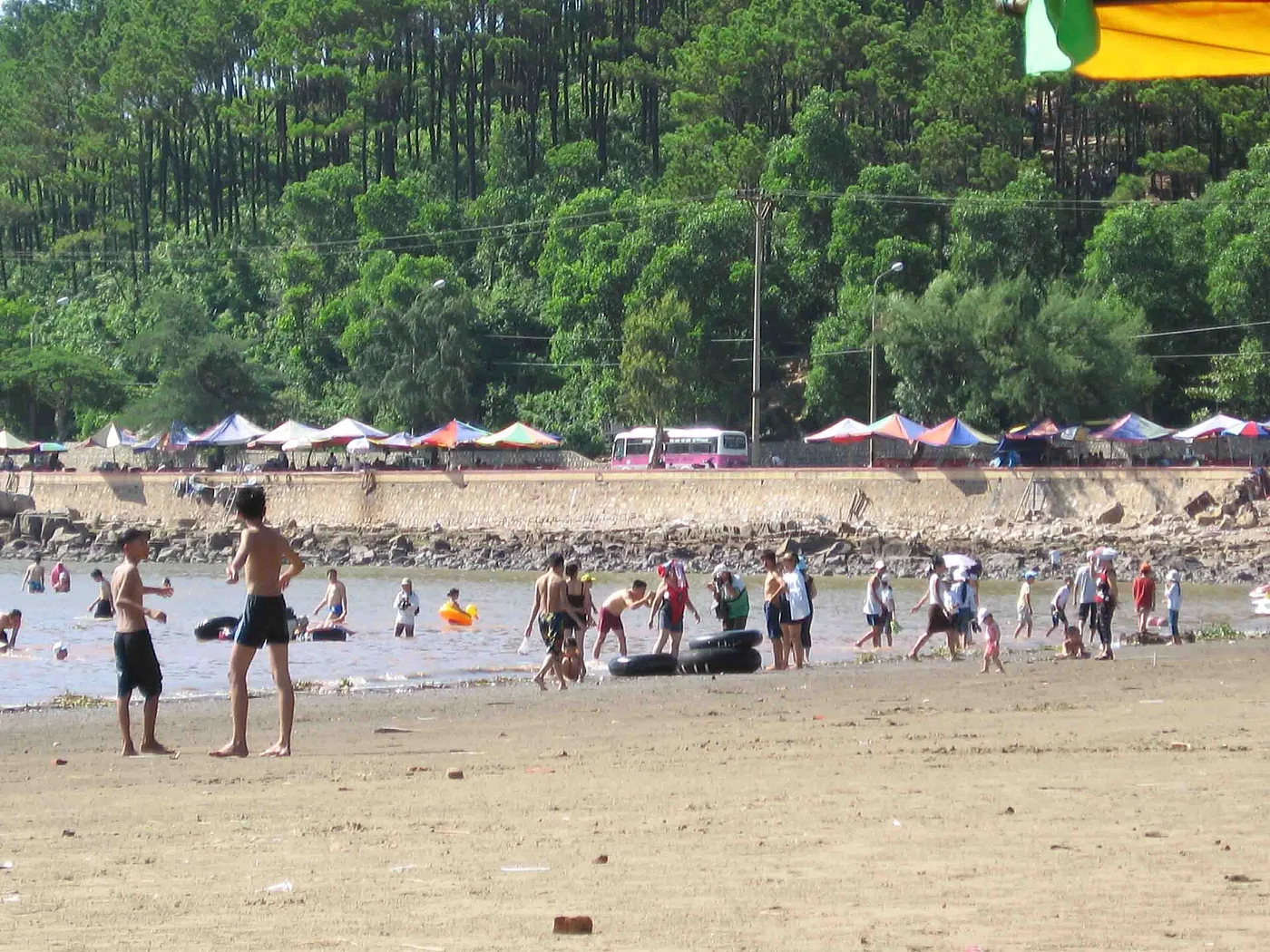
Do Son is where Hai Phong goes to the sea in summer. It is about 20km southeast of the centre, thirty minutes by car.
What the beach is like
Do Son beachMap runs along a headland that juts into the sea, and it is split into several sections, each with its own feel.
The water is not clear. Rivers empty into the sea here and carry silt, so it runs brown. If you arrive expecting southern Vietnamese water you will be disappointed.
What it is good for is the scene. On summer weekends people come out from Hanoi as well. Parasols go up in rows and the seafood places are packed.
Evenings are the busiest. People go into the water after the sun drops, and families sit out on the sand to eat.
Beyond the beach itself
Out at the end of the headland are hills and pine woods, with a road along the coast that people walk or drive.
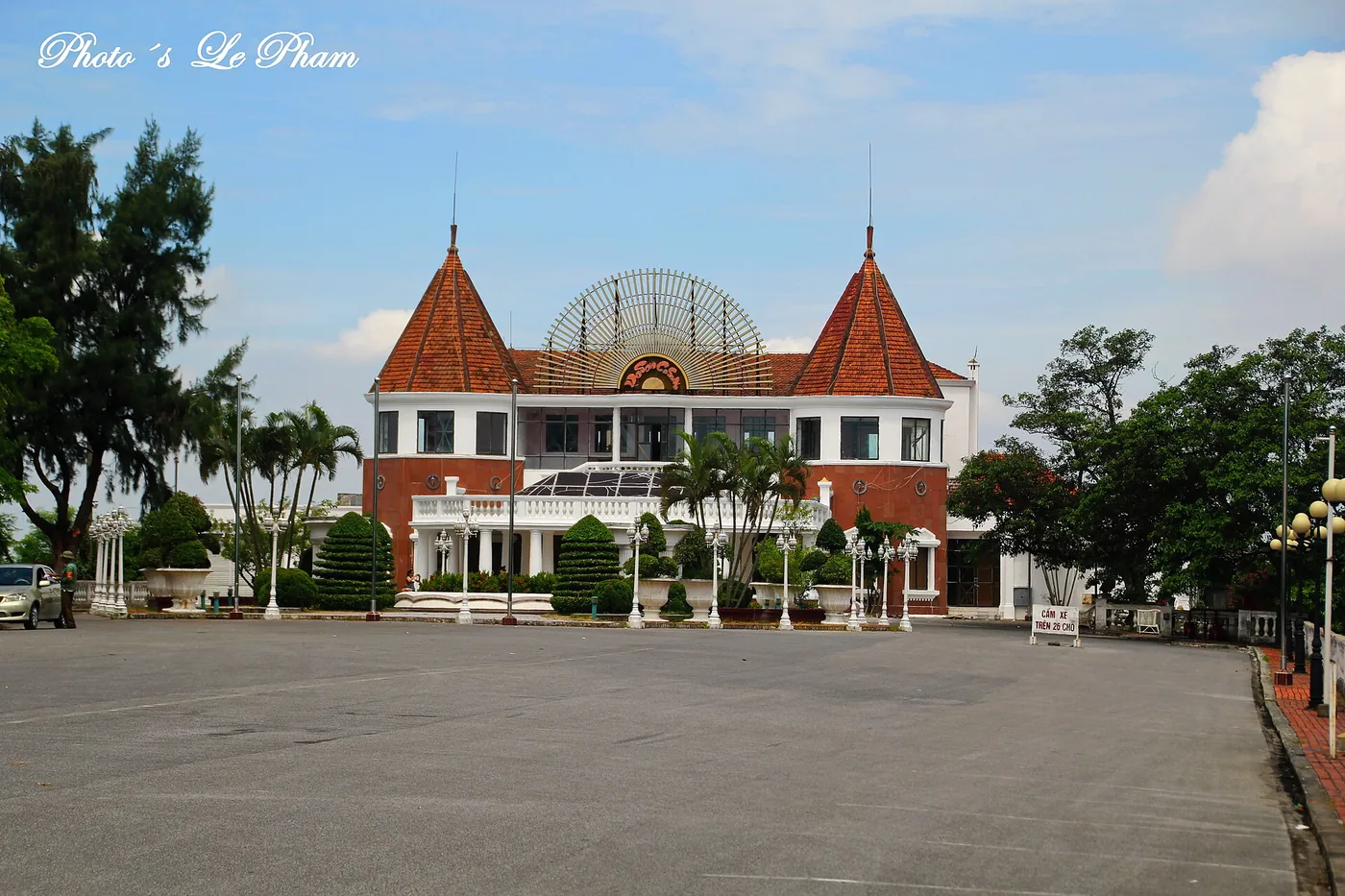
There is a casino in this neighbourhood. The first casino in Vietnam opened at Do Son; that original building now stands empty, and the one operating today is on a different site.
A villa used by Emperor Bao Dai also survives here. There is a villa of the same name in Nha Trang, which causes some confusion; they are different places.
A large modern development has gone up at one end of the beach as well, with a made beach and a water park.
Getting out and back
Take a taxi or ride-hailing car from the centre. There is a bus, but it takes longer.
Getting back can be the harder half. Late at night cars are not always available at the beach, so it is safer to agree a time with a driver and have them wait.
14. Hon Dau: two places with one name
At Do Son the name Hon Dau turns up twice. One is an actual island and the other is a resort. They are entirely different and travel articles mix them up constantly.
The island
This is a small island reached by boat. The forest on it has been left alone and there is a lighthouseMap that has stood for close to 100 years.
Nobody lives there. The trees are thick because they have never been cut, and the path around the island takes about an hour at a walk.
The return fare and the island entry are sold together for around 90,000 dong, and boats run from morning to early evening.
The departure pier has moved. Boats used to leave from Ben NghiengMap; newer notices put them at a pier inside the Hon Dau resort complex instead. Older articles still name the old pier, so check where you board when you buy the ticket.
There are almost no shops on the island. Take water and something to eat with you.
The resort
The resort is on the Do Son side, with a made beach, a water park and accommodation. You drive in; there is no boat.
With children it is the easier option. The water is managed and the facilities are all there.
If what you wanted was the island as it is, this is not it. The name is the only thing the two have in common.
Telling them apart when you book
Lighthouse and forest means the boat. Water park and facilities means the resort.
The one thing to check when booking is whether a boat is involved. If it is, you are going to the island.
15. Crossing to Cat Ba island
There are two ways across from Hai Phong: the ferry or the cable car.
| Ferry | Cable car | |
|---|---|---|
| Crossing time | About 30 minutes | Under 15 minutes |
| Running hours | Early morning to evening | Daytime only, six runs |
| Closed | No closing day | Tuesdays |
| Vehicles | Cars and motorbikes carried | Foot passengers only |
The ferry
You travel out to the pier from the city and change to the boat there. It runs all day and often enough that you do not need to time your arrival.
Cars and motorbikes go on board. If you intend to ride around the island, this is the way.
There is also a fast boat from a pier in the city itself. It runs less often, but it saves the change.
Crossing by ferry, step by step
- Travel out from the city to the pier. It is under an hour.
- Buy a ticket and board. Cars and motorbikes go on with you.
- The crossing itself takes about 30 minutes.
- From the far pier, carry on by road to Cat Ba town.
The cable car
The Cat Hai cable carMap crosses the water to Phu Long at the north end of the island. It takes under 15 minutes and the view over the sea is the reason to take it.
It runs to a fixed schedule: three times in the morning and three in the afternoon, with the first at 09:00 and the last at 15:30.
It does not run on Tuesdays. Turn up on a Tuesday and you will be taking the ferry instead. Tour listings frequently leave this out, so check the operator directly.
A one-way ticket is 70,000 dong. Children under 1m travel free.
Which to take
Heavy luggage or a vehicle means the ferry. The view and a schedule that happens to fit means the cable car.
The cable car lands at the north of the island, and Cat Ba town is a further drive from there. Build that into the timing.
What to do once you are on the island is in the Cat Ba island guide.
16. Boats into Lan Ha Bay and Ha Long Bay
Several boats run out to sea from Hai Phong. People assume the karst scenery means Ha Long Bay, but the water on this side looks the same.
Lan Ha Bay
Lan Ha Bay is the water south of Cat Ba island. It adjoins Ha Long Bay and the limestone islands run straight through from one to the other.
The difference is how many boats there are. Ha Long is busy with tour boats; Lan Ha is far quieter. If you want the same scenery with fewer people, this is where to go.
Day boats leave from Hai Phong in the morning and return in the evening. Lunch is served on board and there is usually time to kayak or swim.
Overnight boats run as well. They go further out and moor somewhere quieter for the night.
Boats to Ha Long Bay
Ha Long Bay is in the neighbouring province. From Hai Phong that means a road transfer to the pier.
If you are thinking about an overnight cruise, read how to pick a Ha Long Bay cruise first. Boats differ in where they go and where they moor.
What it costs beyond the boat
There is a bay entry charge on top of the boat fare, set by the city, and it applies whichever boat you take.
Day boats normally include it in the ticket. Check whether it is included when you book so there are no surprises at the pier.
Kayaking and cave entry are sometimes charged separately as well. It varies by operator, so look at what the ticket actually covers.
17. Con Son and Kiep Bac, the World Heritage sites Hai Phong gained
The merger brought a World Heritage site inside the city. The temples stood in Hai Duong province, and that province is now part of Hai Phong.
What the listing covers
UNESCO inscribed Yen Tu, Vinh Nghiem, Con Son and Kiep Bac together as a single property. It is the ninth World Heritage site in Vietnam.
It is also the first Vietnamese listing that strings together places in different provinces. The property spans Hai Phong, Quang Ninh and Bac Ninh.
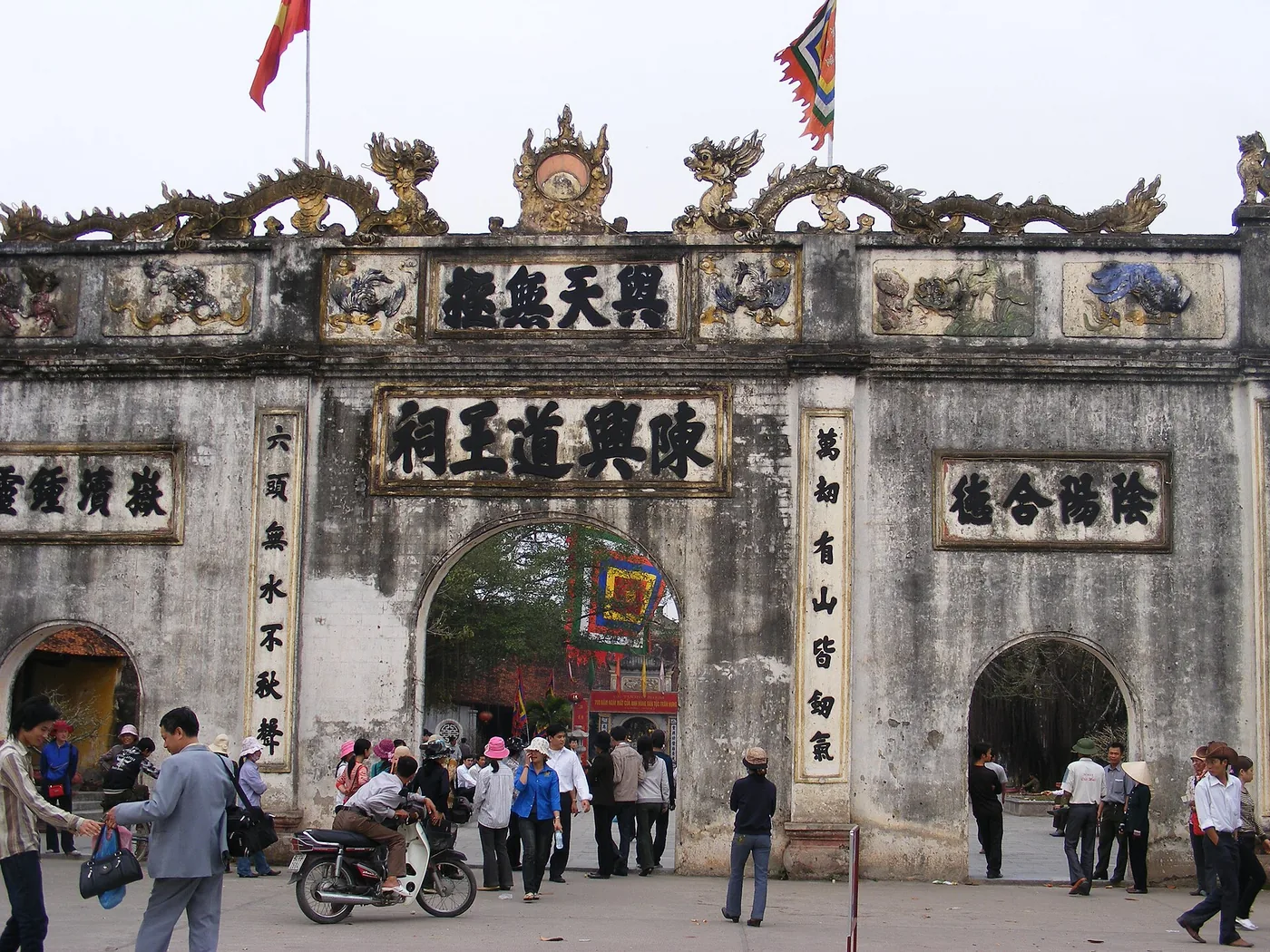
Con SonMap and Kiep BacMap are the parts now in Hai Phong. Both relate to a school of Buddhism founded in the Tran dynasty, and to a king who gave up the throne and went to the mountains to practise.
They are two different places
Con Son is a pagoda on a hillside, with pine woods around it and steps up to the buildings above.
Kiep Bac is a temple dedicated to the general who defeated the Mongol invasions. A large stone gate stands in front of it.
The two are some distance apart. To see both in one day it is easier to hire a car.
Getting there
They are well west of central Hai Phong, about an hour and a half by car.
You can also take the train to Hai Duong station and switch to a car there. Stopping on the way between Hanoi and Hai Phong makes the most sense geographically.
When to go
Festivals fixed by the lunar calendar fall in spring and autumn, and the crowds then are considerable.
Unless the festival is what you came for, go outside those dates. The buildings are open all year and the grounds are large enough for a long walk.
18. Bach Dang Giang
North of the centre in Thuy Nguyen is a riverside site marking battles that come up repeatedly in Vietnamese history.
What it is
Bach Dang GiangMap commemorates the battles in which stakes were driven into the riverbed to trap enemy ships. The same stretch of water saw fighting in three different eras.
Temples and stone figures line the bank, and there are sculptures standing out in the water, which is what most people photograph.
The site is laid out generously and is pleasant to walk. There is little shade, so avoid the middle of the day.
Entry is free, and parking is generally free as well, though that may differ when it is busy.
Getting there
About forty minutes by car from the centre. One of the airport bus routes passes nearby, so with light luggage the bus is possible.
It is not far off the road to Cat Ba, and many people stop here on the way to the island.
There is not much in the way of restaurants nearby. If you plan to eat here, check what is open first.
19. Banh da cua, the dish of the city
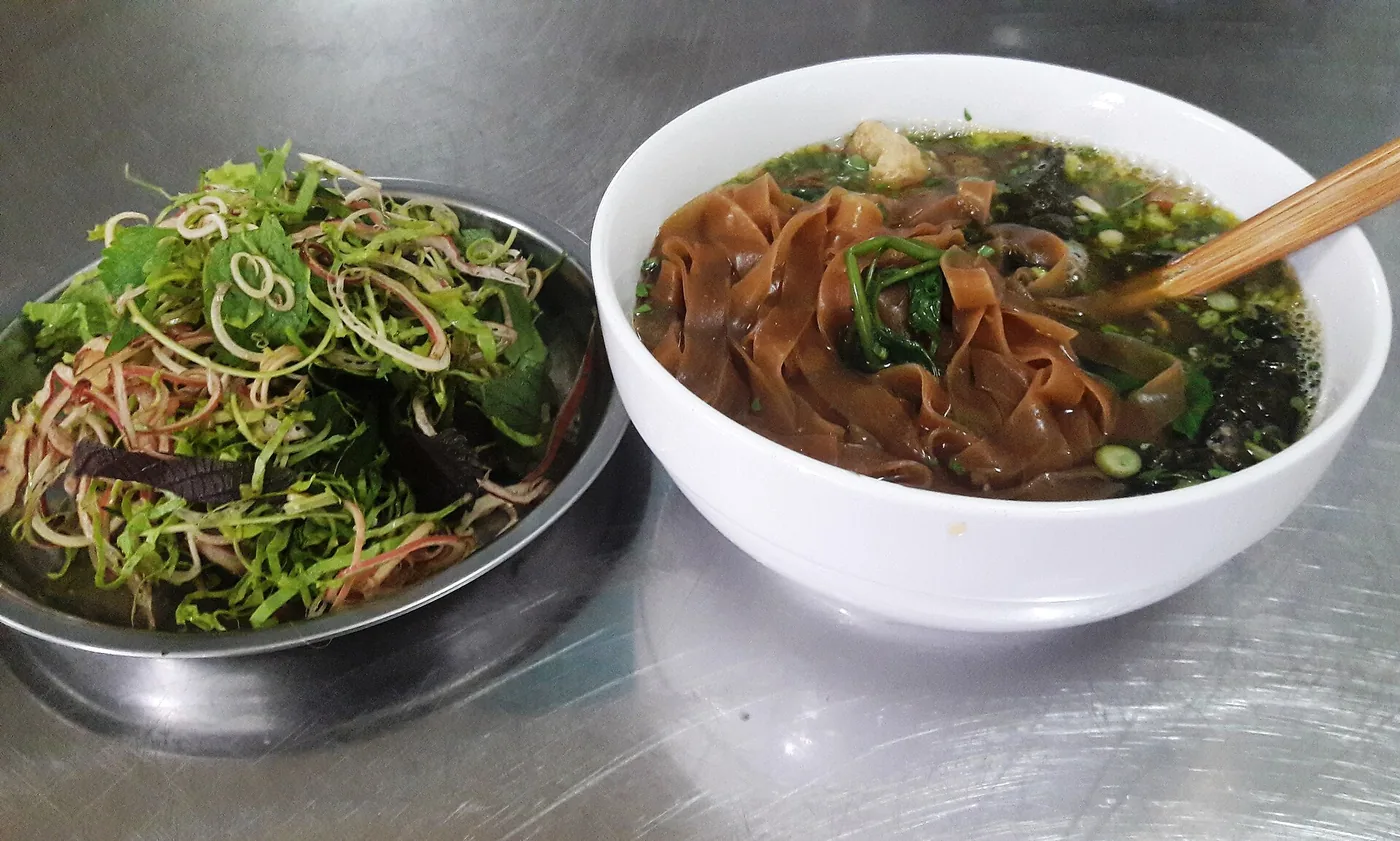
If you eat one thing in Hai Phong it is banh da cua: crab broth with wide brown noodles. The dish started here.
What it is
The noodle is the unusual part. It is made from rice but it is flat, broad and brown, with more chew than a pho noodle.
The broth is made from freshwater crab, pounded and strained. Pieces of crab float in it and tomato gives it a red colour. It is not salty; it is mild.
People worry about a crab broth tasting fishy. Freshwater crab does not carry a sea smell, and the result is light enough that this is a breakfast dish here.
What goes on top varies by shop. Some serve it with crab alone, others add beef or fried pieces. Herbs come on a separate plate for you to add.
Where to eat it
The long-established place is Ba CuMap, with the original shop on Cau Dat street and a branch on Lach Tray.
It has been run by the same family across generations and is known throughout the city. It opens from morning until night, so there is no need to time your visit.
Small places down the lanes are good too. Many have no sign at all; joining whichever queue exists usually works out.
It is cheap. A bowl costs a few tens of thousands of dong, and adding a side does not change that much.
What to order alongside
Nem cua be, a square crab spring roll, is the usual companion. Most places that sell banh da cua sell it too.
It is shaped differently from the rolls in Hanoi. The Hai Phong version is square and substantial.
20. Banh mi cay and everything else
Hai Phong has several things you will not find elsewhere. They are cheap and sold on the street.
Banh mi cay
A finger-sized baguette spread with spicy pate. Each one costs very little, so people eat several at a sitting.
The name says spicy, but the heat varies from shop to shop. Some hand you chilli sauce separately.
The long-standing shop is Ong CuongMap on Hang Kenh street, in the same spot for more than 60 years. Ba Gia on Le Loi street is also well known.
Pate is what separates one shop from another. Buy one first and order more if it suits you.
Shellfish
In the evening, shellfish places open along the lanes. You pick what you want and say whether you want it grilled or stir-fried.
This is a coastal city, so prices are low. It is not what seafood costs at a resort.
Beer goes with it, and that is what evenings look like here: low stools out on the pavement.
Coffee
Hai Phong drinks a lot of coffee. There are old cafes throughout the centre and they fill up early in the morning.
Strong coffee with condensed milk is the standard. On a hot day order it over ice.
The riverside and the streets around the opera house have the best places to sit. When it gets hot, go in and stop for a while.
21. One day or two: how to plan it
What you see depends on how long you stay. Here are three ways to arrange it.
| Length of stay | What fits |
|---|---|
| One day | The centre only, in on the morning train and out in the evening |
| Two days | The centre, then Do Son or VinWonders |
| Three to four days | A night in Hai Phong, then across to Cat Ba island |
One day
In on the morning train and out on an evening one is the simplest version. The first train from Hanoi arrives at 08:25.
Walk the centre in the morning, eat banh da cua at lunch, and spend the afternoon on the museum and the riverside. That fills the day, and an evening train has you back in Hanoi at night.
Adding Do Son means cutting the centre short. Both in one day is tight.
Two days
The centre on the first day and Do Son or VinWonders on the second works well. Staying downtown puts both within half an hour by car.
With children, make the second day VinWonders. It is large enough to fill one.
Without children, Do Son and the boat out to Hon Dau island make a fuller day. The crossing and the walk take half of it.
Adding Cat Ba
Stay a night in Hai Phong and cross in the morning. The island needs two days of its own, which makes three to four in total.
Flying into Cat Bi makes this easy: the airport is close to the city and the city is close to the pier.
Take a direct van from Hanoi to the island instead and you bypass Hai Phong entirely. To see the city, come by train or limousine first.
Adding the World Heritage temples
Con Son and Kiep Bac are a long way from the centre. Rather than a day trip out of Hai Phong, they work better as a stop on the way to or from Hanoi.
Hiring a car for the day and taking in both before continuing into Hai Phong is the tidiest way to do it.
22. Practical notes
A few small things that are worth knowing before you go.
Addresses have changed
The merger removed the district level of administration. Addresses on older signs and in older articles will not match what is used now.
Map apps still find most of them. Just be aware that old and new forms are both in circulation.
If a business address returns nothing, search the street name on its own; that usually finds it.
Money and connectivity
You will use cash more than in the south. Markets and small restaurants are often cash only.
Cards work at hotels and larger restaurants. There are plenty of banks and cash machines downtown.
A SIM or eSIM can be bought at the airport or arranged before you travel. How to pick a Vietnamese eSIM covers the options.
How much English is spoken
This is not a tourist city, so English is limited outside hotels. Expect to use gestures and a translation app.
Many places have menus without pictures. Writing down the dish names in advance helps.
On the other hand, being charged a foreigner price is rare here. That is the upside of a city with few visitors.
Where to go next
Getting back to Hanoi and onward routes are covered in how to travel around Vietnam.
If you are spending time in the capital, where to stay in Hanoi will help, and the whole region is laid out in the Northern Vietnam guide.
Flying home out of Hanoi? See Noi Bai airport to the city for that leg.