
Cat Ba Island Travel Guide: Getting There from Hanoi, Ferries, Weather and Where to Stay
Cat Ba sits right beside Ha Long Bay, and you have to cross water to reach it. From Hanoi it takes about half a day. You get the same limestone seascape with far fewer boats on it. Here is how to get there, what it costs, what there is to see, and how many days you need.
| Where it is | An island belonging to Hai Phong, immediately south of Ha Long Bay. |
|---|---|
| Getting there | A minibus and boat ticket from Hanoi drops you at your hotel. Around four hours. |
| Ferry or cable car | Both cross to the island. Ferries run all day, the cable car only in daylight. |
| What to do | Boat or kayak on Lan Ha Bay. There is also a national park and an old fort. |
| What costs money | The park and the bay each charge admission, separately from your boat fare. |
| How long | Two nights is comfortable. One day is swallowed by the journey in and out. |
1. Cat Ba Island: what to know first
2. Getting to Cat Ba from Hanoi
3. Coming from Hai Phong or Ha Long
4. Crossing to the island: ferry or cable car
5. Getting around the island
6. Where to stay
7. Lan Ha Bay, the reason to come
8. What the bay costs
9. Cat Ba National Park
10. The five marked routes in the park
11. Caves
12. Cannon Fort and what the war left
13. The beaches
14. Viet Hai village and Cai Beo
15. Phu Long and the mangroves
16. The Long Chau lighthouse
17. The monkey that lives only here
18. Climbing the cliffs
19. What to eat
20. Cat Ba after dark
21. When to go
22. How many days
23. Two nights on Cat Ba, in order
24. What it costs
25. Cat Ba or Ha Long Bay
26. Before you go
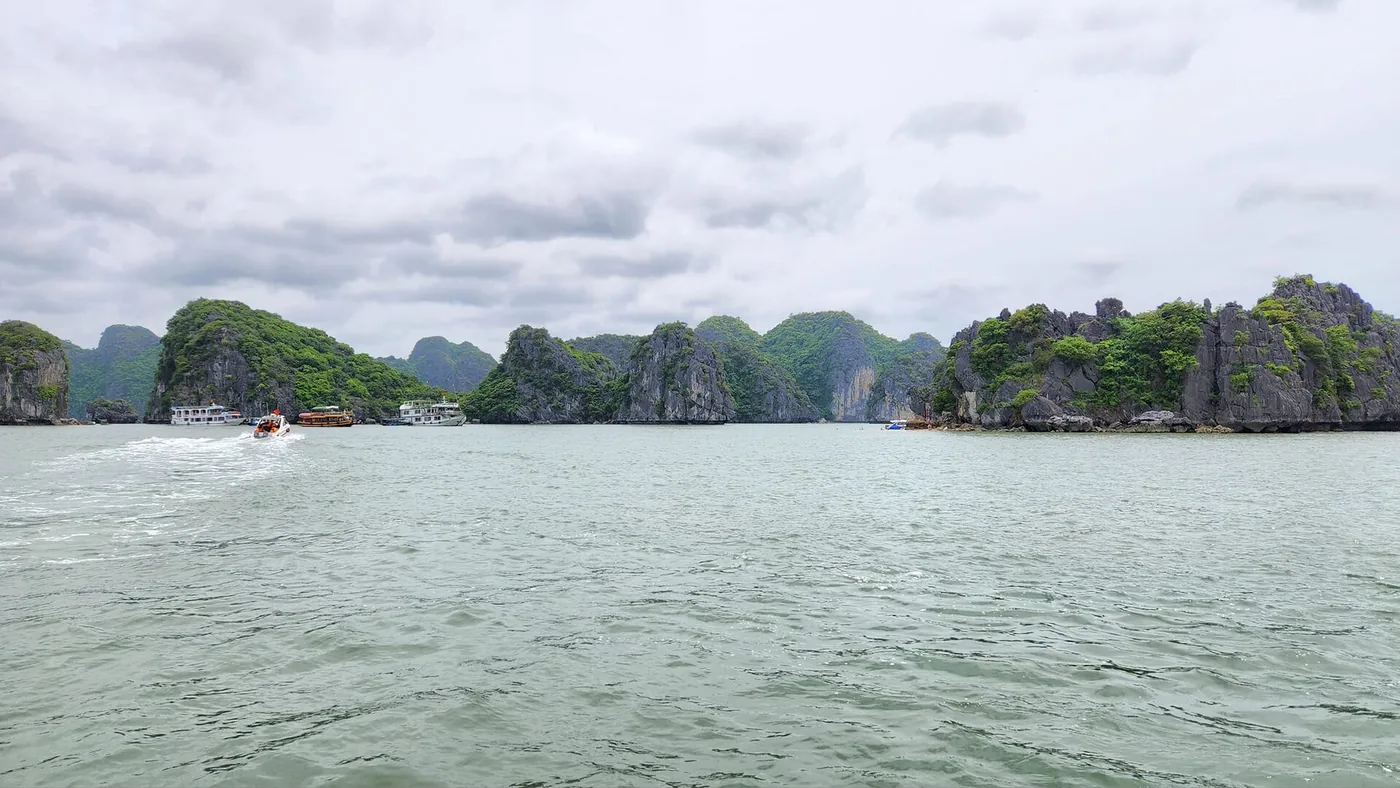
1. Cat Ba Island: what to know first
Cat Ba is the big island right next to Ha Long Bay. It belongs to Hai Phong, and from Hanoi you can be there in half a day by road and boat.
The seascape is the same one. Limestone towers standing out of the water, running on and on, and they carry right down past the south side of the island. UNESCO lists the two places together as one World Heritage site.
What differs is how many boats are on the water. The Ha Long side is busy with tour boats. Lan Ha BayMap, the water south of Cat Ba, has far fewer. Same view, much quieter, and that is the main reason people choose this side.
There is more here than the water
About half the island is national park. You can walk forest paths, and there are caves. On the hill above town an old gun battery looks out over the whole bay.
Climbers come here too. There is a kind of climbing where you go up a sea cliff without ropes and drop into the water when your arms give out, and people travel a long way to do it.
There is also a monkey that lives here and nowhere else on earth. Fewer than a hundred of them are left.
A day trip is not really worth it
Getting in and out eats the time. Leave Hanoi in the morning and you arrive around lunch; coming back takes about the same. Give it one day and you spend the day travelling.
With two nights you can get out on the water, walk in the park and still have beach time. With one night you will manage the bay and the fort, and that is about it.
The name, and where it sits
Search for Cat Ba and you will find it. The district it belongs to is called Cat Hai, and the administrative name for that has recently changed.
None of that affects a visit. All you need to know is that it is an island under Hai Phong.
2. Getting to Cat Ba from Hanoi
Most people buy one ticket that covers the minibus and the boat. You are picked up in the Old Quarter, you change onto a boat partway, and the same operator drops you at your hotel in Cat Ba Town.
Allow about four hours. If traffic is slow or you wait for a boat it can stretch to five. Everything is in the one ticket, so there is nothing to buy along the way.
| Leg | How | Roughly |
|---|---|---|
| Hanoi to Dong Bai pier | Minibus or coach | Two and a half hours |
| Dong Bai to Cai Vieng pierMap | Boat | Half an hour |
| Cai Vieng to Cat Ba Town | Same vehicle continues | Half an hour |
Departures run from early morning to mid afternoon
The first one leaves early and the last around the middle of the afternoon. Later departures are rare, because you would land on the island too late in the day.
Take an early one and you are in town by lunchtime, which leaves you an afternoon for the fort or the beach. That is the difference between losing your first day and keeping it.
Who runs them
Cat Ba Express and Good Morning Cat Ba are the best known. Cat Ba Luxury Trans and Daiichi run the same route.
They all take the same road and change at the same place. What varies is the departure times and the state of the vehicle.
They call it a limousine, but it is a nine seat minibus. The seats are wide and you get one to yourself. It costs more than a full size coach, though not much more.
Pickups have limits
Hotels inside the Old Quarter are normally covered. If you are staying further out you may have to meet the vehicle at a set point, so check when you book.
Pickup starts well before the stated departure, because the driver works round several hotels. If you are first on board you can sit for the best part of an hour.
The return works the same way, collecting you in Cat Ba Town and dropping you in the Old Quarter.
Book ahead
Weekends and public holidays fill up. In summer, when Vietnamese families travel, asking the day before is too late.
Booking online lets you pick the time and the seat. Front seats are easier if you get carsick.
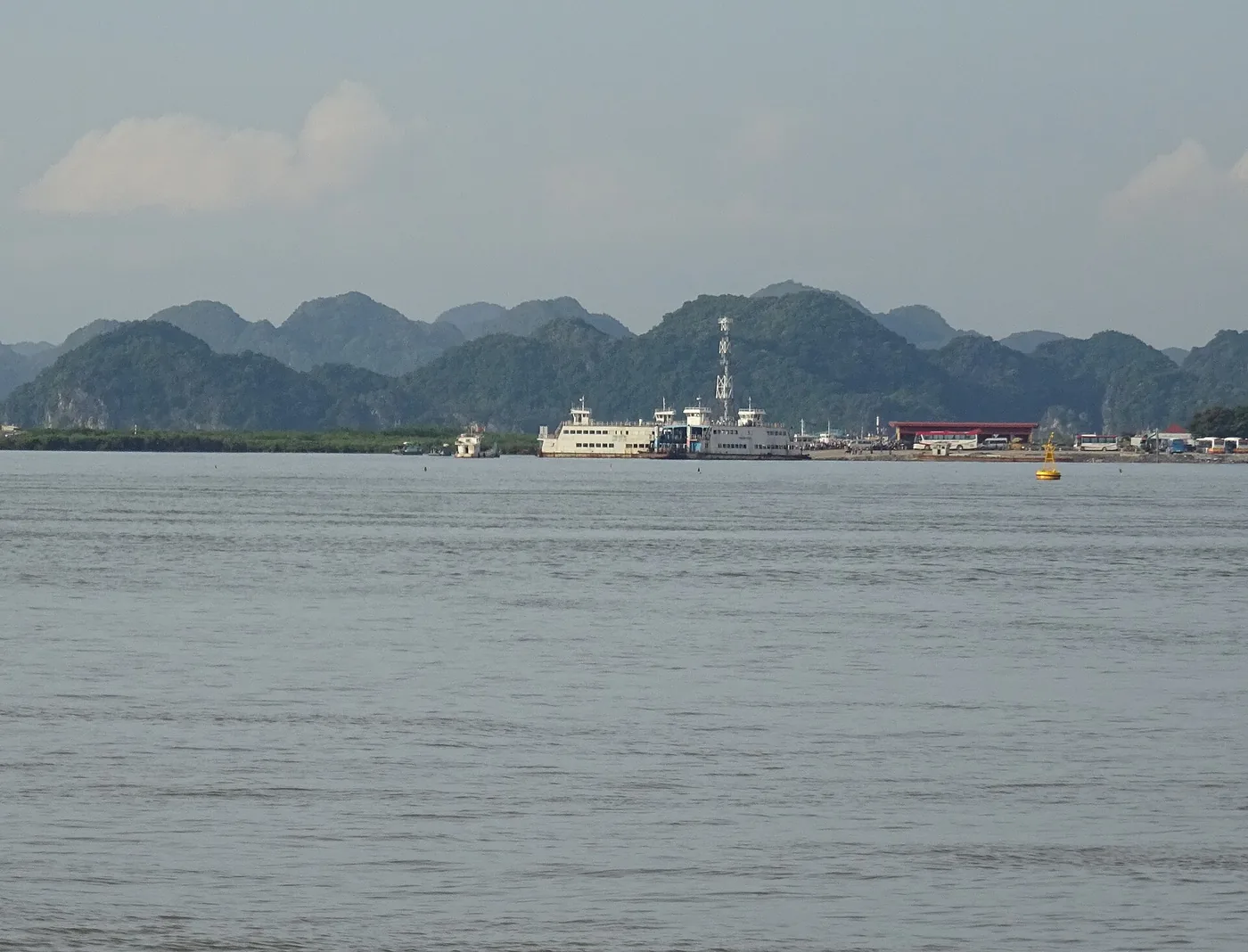
3. Coming from Hai Phong or Ha Long
You do not have to start in Hanoi. Where you come from decides which pier you land at, and that matters more than it sounds.
From Ha Long
Boats leave from Tuan Chau and land at Gia LuanMap on the north end of the island. The crossing takes about fifty minutes.
One thing to watch. Gia Luan is nowhere near Cat Ba Town. You still have to cross the island, another thirty to forty minutes. Plan as though the boat is the last leg and you will run short.
Taxis and shuttles wait at the pier. On your own it is cheaper to share.
There are only a handful of sailings a day, more in the busy months and fewer when it is quiet. They start around eight in the morning and finish by late afternoon, so a late start can leave you stuck on the mainland.
From Hai Phong
From the city you can take a fast boat, or a bus to the pier and a ferry across. The last leg is the same as the Hanoi route.
Hai Phong has an airport. Some people fly in and go straight to the island, which is far closer than coming from Hanoi.
Which way is better
If Cat Ba is your destination, come from Hanoi. One ticket covers the whole thing and there is nothing to arrange in between.
Coming via Ha Long lets you see both, but it takes longer. Remember the extra half hour on the far side of the crossing.
4. Crossing to the island: ferry or cable car
There are two ways across. A ferry, or a cable car. They cross the same stretch of water but they run on very different schedules.
| Ferry | Cable car | |
|---|---|---|
| Crossing time | About half an hour | Under fifteen minutes |
| When it runs | Early morning to evening | Daytime only, six departures |
| Frequency | Every half hour | Set times only |
| Vehicles | Cars and motorbikes go on | Passengers only |
The ferry is the default
Buy a through ticket and you will almost certainly go by ferry. The vehicle drives on with you in it, so there is no getting off and on.
It runs from early until evening, and later still in the busy months. With a sailing every half hour there is not much timing to worry about.
Taking a motorbike across costs very little. A car costs a lot more than a foot passenger, but if you want your own wheels on the island it is worth it.
There are seats inside and you can stand out on deck. Half an hour passes easily.
The cable car needs planning
The cable carMap links Cat Hai with Phu Long, and it crosses open water, so the view is good.
It only runs six times a day, three in the morning and three in the afternoon, with the last one mid afternoon. Miss it and you are taking the ferry.
Plenty of travel sites publish times that do not match the official ones. Several list an earlier first departure than the operator does, and the operator says nine in the morning. Check the official notice before you rely on it.
Small children ride free below a set height, so check that if you have children with you.
About that record
The middle pylon on this line is the tallest cable car tower in the world. It holds a Guinness World Record for it.
A lot of pages say UNESCO recognised it, which is wrong. UNESCO listed the bay as World Heritage and the island as a biosphere reserve. Neither has anything to do with the cable car.
The cabins are big and carry a lot of people at once, with glass down to the floor. If heights bother you, stand in the middle.
5. Getting around the island
Once you land, everything starts in Cat Ba TownMap. Hotels, restaurants and the boat quay are all clustered around the harbour.
In town you walk
The town is small. One road along the harbour and a few lanes behind it, so you walk everywhere.
The beaches are walkable too. There is a hill in the way, but the path is made up and it takes about a quarter of an hour.
Going further out
For the national park or the northern pier you need transport. Renting a motorbike is the usual answer, and there are taxis and ride hailing cars.
The road layout is simple. One road runs north out of town to the park entrance and on to the pier. It is hard to get lost.
If you rent a motorbike
Most hotels rent them by the day and it is cheap.
The road is narrow and twisty, and over the hill there are blind corners. If you are not a confident rider, do not start here.
You need an international permit. Without one your insurance will not pay out if something happens.
There is fuel near town and much less of it further north, so fill up before you set off.
Taxis and cars
There are taxis but not many. Outside town they can be hard to find, so if you head to the park or a pier, arrange your way back before you go.
Your hotel will call one for you. You can also hire a car with a driver for the day and see the island that way.

6. Where to stay
It comes down to two areas: the harbour front and the beaches. They are close enough to walk between, but they feel different.
| Area | What it is like | Suits you if |
|---|---|---|
| Harbour road and the lanes behind | Most of the hotels and restaurants. The boat quay is right there | You are coming and going a lot and want to eat out |
| Cat Co beaches | Sand on the doorstep, and quiet | You came to rest, or you have children |
| Resorts | Private beach and pools | You plan to spend most of your time on site |
Staying by the harbour
Most town hotels sit along the harbour road or on the slope behind it. Many rooms look out over the water, and you can walk to the boats.
The places that open in the evening are on this road too. If you want to be out late, stay here.
It can be noisy. A room facing the harbour gets the view and the sound together.
Staying by the beach
Cat Co is walkable from town, over one hill on a made up path.
These places face the sea and they are quiet. In return you walk back into town to eat.
The larger resorts are around here. Some have a stretch of sand to themselves, so they stay calm even when the island is busy.
There are not many rooms
It is an island and the supply is limited. On summer weekends and holidays prices jump and the good places go first.
Out of season the same rooms go for a fraction of that. The swing is large.
7. Lan Ha Bay, the reason to come
If you only do one thing here, get out on the water. The bay south of the island is called Lan Ha, and it joins onto Ha Long Bay with a fraction of the boat traffic.
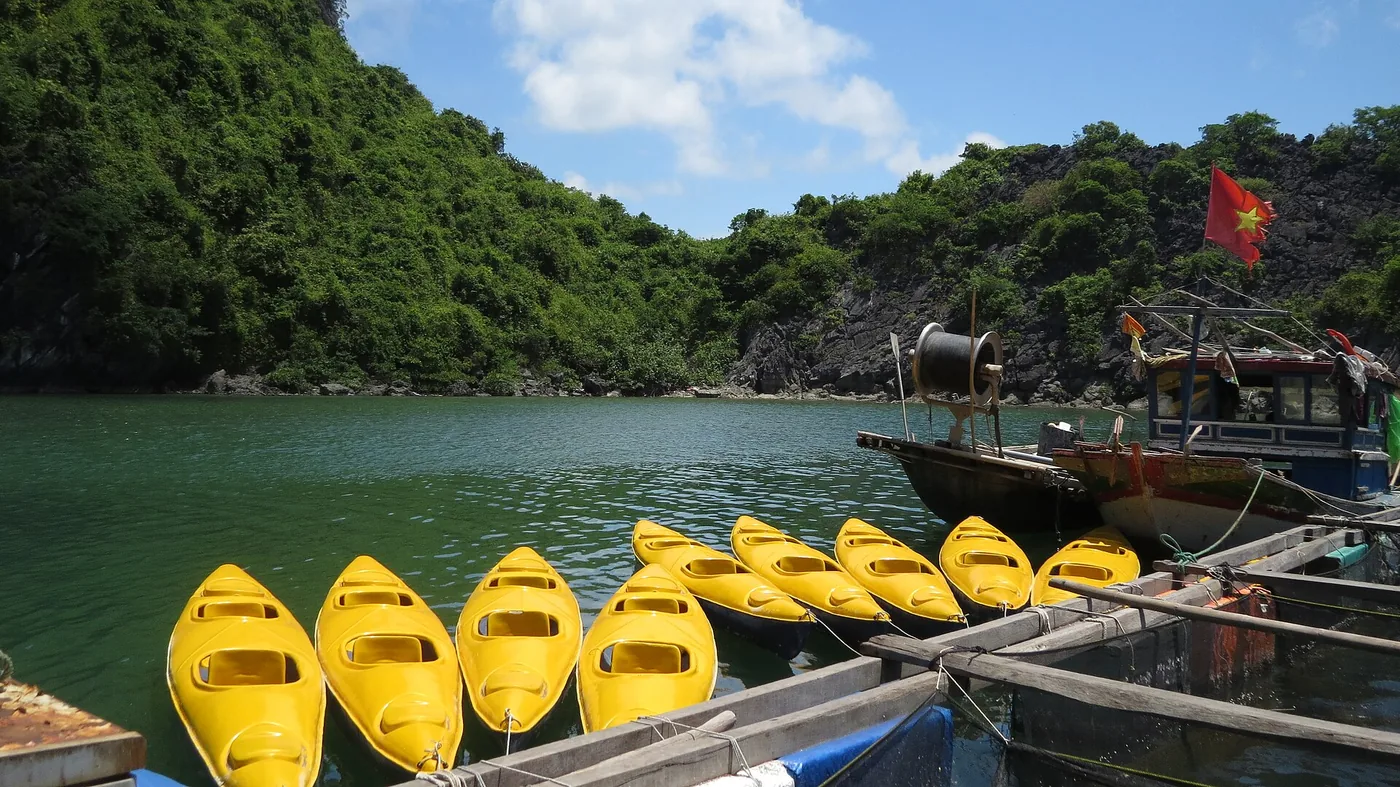
Hundreds of limestone islands stand out of the sea. Boats thread between them and stop so you can swim or take a kayak out. The water is flat, so a first time kayaker manages fine.
Boats go out for the day
Most leave the harbour in the morning and are back in the afternoon. Lunch is included, and so is time in a kayak and in the water.
Where they go varies. Some just weave through the islands; others call at Monkey IslandMap or a floating village. Check the stops when you book.
Boat size varies too. Some carry twenty or more, some fewer than ten. The small ones cost more and are much quieter.
There are a lot of islands
Lan Ha has more than four hundred of them, with well over a hundred little beaches tucked between them.
Most of those beaches have no name and nobody on them. When a boat pulls into one, it is more or less yours for the afternoon.
Monkey Island
It is what it sounds like. You land, walk the sand, and can scramble up the rocky headland behind.
Its older name is Cat Dua, after the wild pineapple that grows there. The monkeys took over the naming.
There are two beaches on it and you can walk between them.
Only about twenty monkeys live there. They are used to people, so they will come over if you are holding food. Keep your bag shut, and do not try to touch them, because they bite.
You can see under the water too
Sheltered spots between the islands have no current, and there is coral in some of them, shallow enough for a mask.
There are dive outfits in town. Visibility is not reliably good here though, so if the underwater part is your main reason for travelling, go elsewhere.
Renting a kayak on your own
You can skip the boat and rent a kayak by the hour from a set launch point.
Going out on the water still means paying the bay admission. People are caught out by this.
Do not paddle far. Between the islands it is calm, but it changes once you are past them.
Sleeping out on the bay
Some boats stay out overnight. You eat on deck and wake up in the middle of the bay.
There are far more of these on the Ha Long side, but Lan Ha has them, and the lack of other boats is the point.
8. What the bay costs
This is the part people get wrong. The boat fare and the bay admission are two separate things.
What you paid the boat operator covers the boat. Admission to the water itself is set by the city, and you pay it whether you are on a cruise or in a kayak.
| What | Adult | Child |
|---|---|---|
| Bay admission, day visit | 120,000 dong | 60,000 dong |
| Bay admission, one night | 400,000 dong | 300,000 dong |
| Cat Ba National Park | 160,000 dong | 80,000 dong |
Some bookings include it and some do not. Read the inclusions on the booking page. If it is not listed, you are paying on the day.
Older visitors and students pay half. Bring something that shows it.
Overnight trips pay more, and a little more again for a second and third night.
Bring cash
Anything collected on the spot is almost always cash only. Sort it out before you cross.
There are cash machines in town but not many, and they run dry when the island is busy.
9. Cat Ba National Park
Cat Ba National ParkMap takes up roughly half the island. The entrance is on the road north out of town, about twenty minutes by motorbike.
It opens at seven in the morning and closes at five. Given how long the walks take, go in the morning.
This forest is old
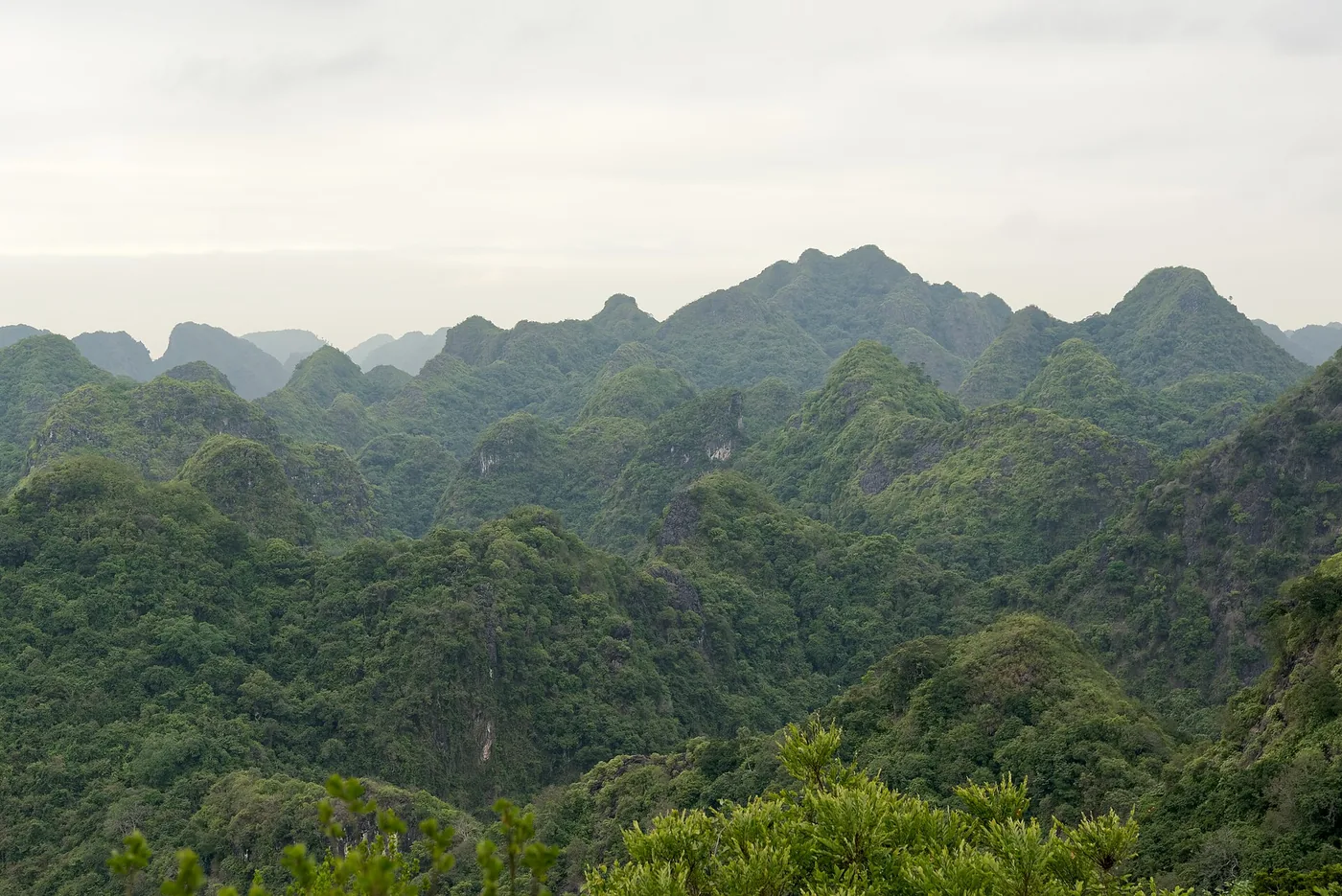
Nobody planted it. It is limestone country, so bare rock shows through in a lot of places with trees growing out of the gaps.
A great many plants and animals live here and some of them exist nowhere else. That is why UNESCO made the island a biosphere reserve.
Down at the shore there is mangrove, which grows where the tide comes in and looks nothing like the forest inland.
You pay at the gate
There is a ticket for the whole park and cheaper ones for single marked routes. If you only plan a short walk, take the cheaper one.
You say which route you are doing when you buy, because the price follows the route.
Guides
You can pick one up at the entrance. For the longer routes, or if you want to know what you are looking at, it is worth it.
The short walks are fine alone. They are signed well enough.
What to bring
Plenty of water. There is nowhere inside to buy any.
Decent shoes matter. Parts of the climb are over bare rock, and smooth soles are dangerous, especially after rain.
There are a lot of mosquitoes. Cover up or bring repellent.
10. The five marked routes in the park
The park publishes five routes. They differ in length and effort, so pick by the time you have.
| Route | What it is | Distance |
|---|---|---|
| Kim Giao forest, Ngu Lam peak, Trung Trang cave | The easiest and by far the most walked | 1.5km |
| Environmental education trail | A short loop through the forest | 2.5km |
| Frog Pond to Viet Hai village | The long crossing to the village | 12km |
| Ninh Tiep field to Hai Quan peak | A climb to a summit | Not published |
| Mangrove forest and Thien Long cave | Coastal forest and a cave | Not published |
Most people take the first one
Through Kim Giao forest and up Ngu Lam peakMap is the standard walk. It is short, and the top opens out over the interior of the island.
There is a steel viewing tower at the summit. Climb it and you get above the canopy.
Short does not mean easy. There is a stretch of bare rock to scramble, and it is slick after rain.
Allow around two hours there and back, most of it on the way up.
Kim Giao forest
Kim Giao is a tree. It grows in a stand here and the route is named after it.
The path to it is level, and some people stop there rather than carrying on up the peak.
Walking to Viet Hai
Crossing the park to the village takes most of a morning. Carry water and food, and a guide is the safer choice.
You take a boat back to town from the village, so you do not repeat the route.
Do not do this one in summer. Even in shade it is hot and close, and it drains you.
The mangrove and the peak
The mangrove route is on the coast, and it looks completely unlike the inland forest, so it is worth doing separately.
The Hai Quan peak route sees few people. Take it if you want quiet.
11. Caves
There are caves all over the island. It is limestone, so water has hollowed out a great many of them.
Trung Trang cave
The one most people see. It is inside the park and sits on the main walking route, so you do not go out of your way for it.
It is wide and easy to walk through, with columns running floor to ceiling, and it is lit.
Quan Y cave
This one was a hospital during the war. Rooms were built inside it and the layout is still there.
You go for the history rather than the rock. You can still make out where the operating room and the wards were.
It is cold inside, which is a shock in summer.
Thien Long cave
Up on the north end, on the route through the Phu Long mangroves. You land from a boat and walk up for about ten minutes.
It was found fairly recently, so it gets few visitors. It is packed with formations.
Hien Hao cave
This one turned up while the road across the island was being cut. Very little has been done to it, so it is close to how it was found.
The formations are sharp and glassy. It is near the road, so you can stop off.
Caves you reach by boat
Some are inside the islands out in Lan Ha Bay. Qua Vang is one of them, reached by boat from the northern pier.
You have to arrange a boat, which is awkward on your own. Tours covering that part of the bay sometimes include it.
There are about twenty of them
Counting from the north end of the island down to town, and the ones out in the bay, there are roughly twenty.
Hoa Cuong is up at the northern end and admission is very cheap. Others, like Cay Thi, have a name and little else.
You do not need to see them all. Trung Trang and Quan Y give you one of each kind.
Admission varies
Some are covered by the park ticket and some are not. If you plan on several, check which is which first.
Bring a torch. Even the lit ones have dark stretches.
12. Cannon Fort and what the war left
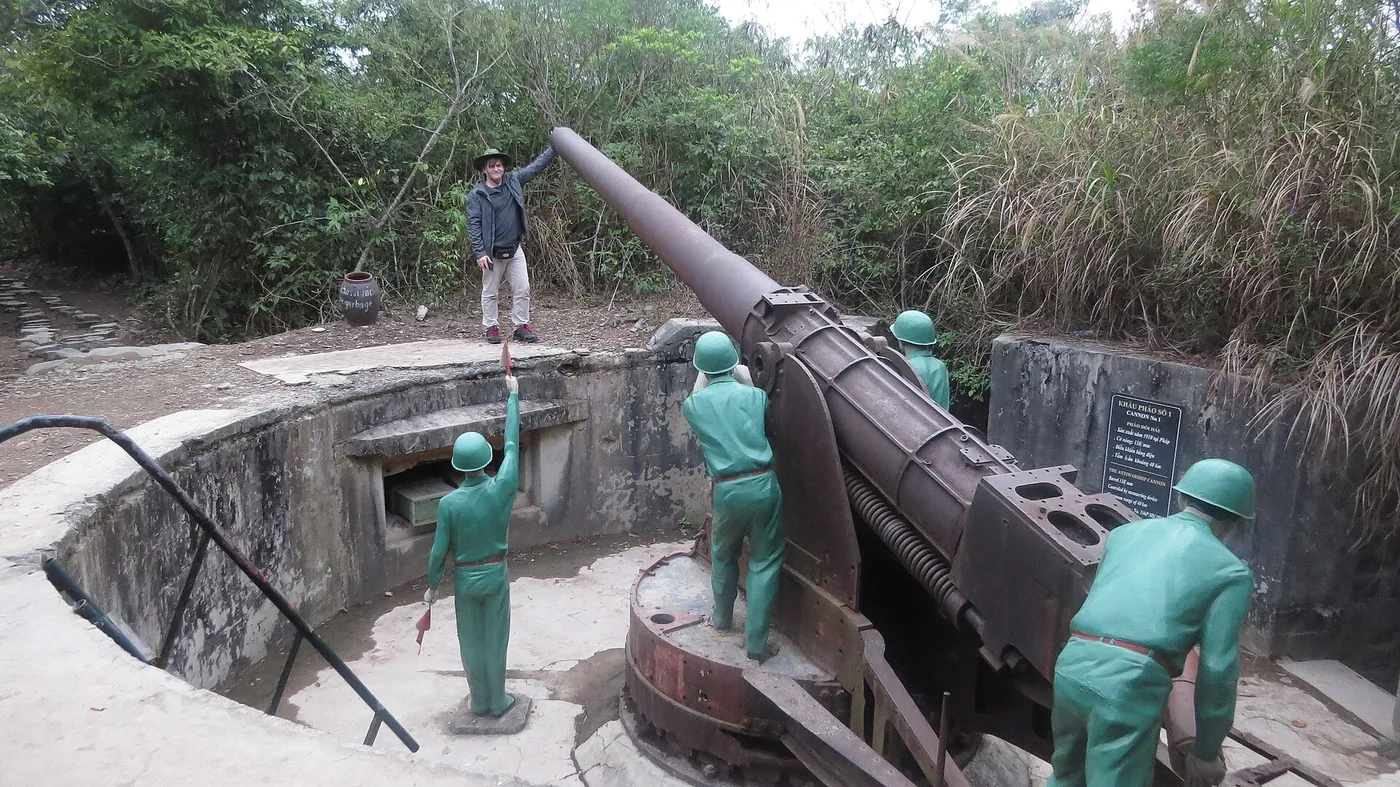
Cannon FortMap sits on the hill behind town. You can walk up, or ride it in about ten minutes.
It is the best view of the water on the island. Walk the loop and you see the harbour and the islands beyond it. Late afternoon is the busy time.
The guns are still there
It is named for them. The emplacements and the tunnels from the war are still in place and you can go inside.
The tunnels are dark and tight. A torch helps.
Stand where a gun sits and the sea is straight in front of you. It explains itself.
Getting up
On foot it is about twenty minutes, with some steep sections that are hard work in the middle of the day.
A motorbike is much easier, though the lane is narrow. A taxi will take you.
There is an entry fee, paid at the gate. It is small.
Why people go at sunset
The view opens to the west, so the sun goes down across the water. That is when it fills up.
It gets dark on the way down. If you walked up, bring a light.
Other traces on the island
Quan Y cave belongs to the same period. Why a hospital had to be inside a mountain follows from what the fort was for.
Small positions are dotted around the island. Nothing has been made of them, so you come across them by chance.
13. The beaches
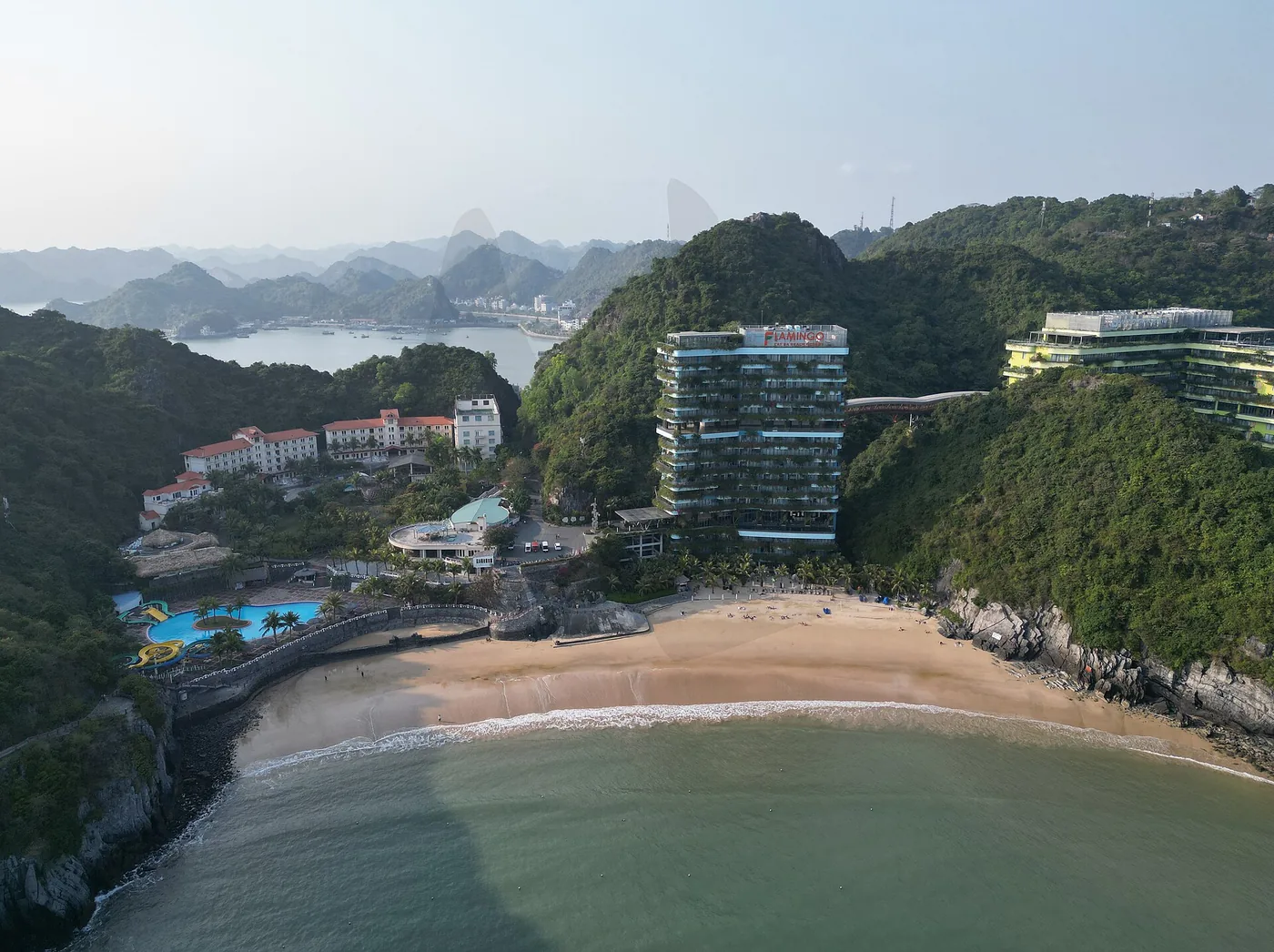
Next to town there are three Cat Co beachesMap in a row, numbered one, two and three, and you can walk between them.
All three sit in a notch in the cliffs, so none of them is large. What you get instead is flat water that is easy to swim in.
How they differ
One and two have resorts along the back, so access depends on the hotel. Some charge if you are not a guest.
Three is closest to town and open to everyone, which is why it is the busiest.
A cliff path links all three. Walking between them is pleasant in itself.
When the water is good
Summer is warmest, but it is also the wet, crowded part of the year.
In spring and autumn the sea feels cold. If you are not here to swim, those months are better for everything else.
Worth knowing
Parasols and loungers are rented. Some places do not display a price, so ask before you sit down.
Jellyfish turn up at certain times. If a notice is out, stay out of the water.
There are showers, usually for a small charge.
14. Viet Hai village and Cai Beo
There are two old settlements here. One is ringed by hills, the other floats.
Viet Hai
Viet HaiMap is inside the national park, walled in by hills, and for most of its life it was reachable only by boat.
The usual way now is to arrive by boat and rent a bicycle to ride round it. The paddy fields and dirt lanes are still there.
You can also walk in across the park, which takes most of a morning and some fitness.
A few houses take guests. There is almost no light at night, so it is very quiet.
Cai Beo floating village
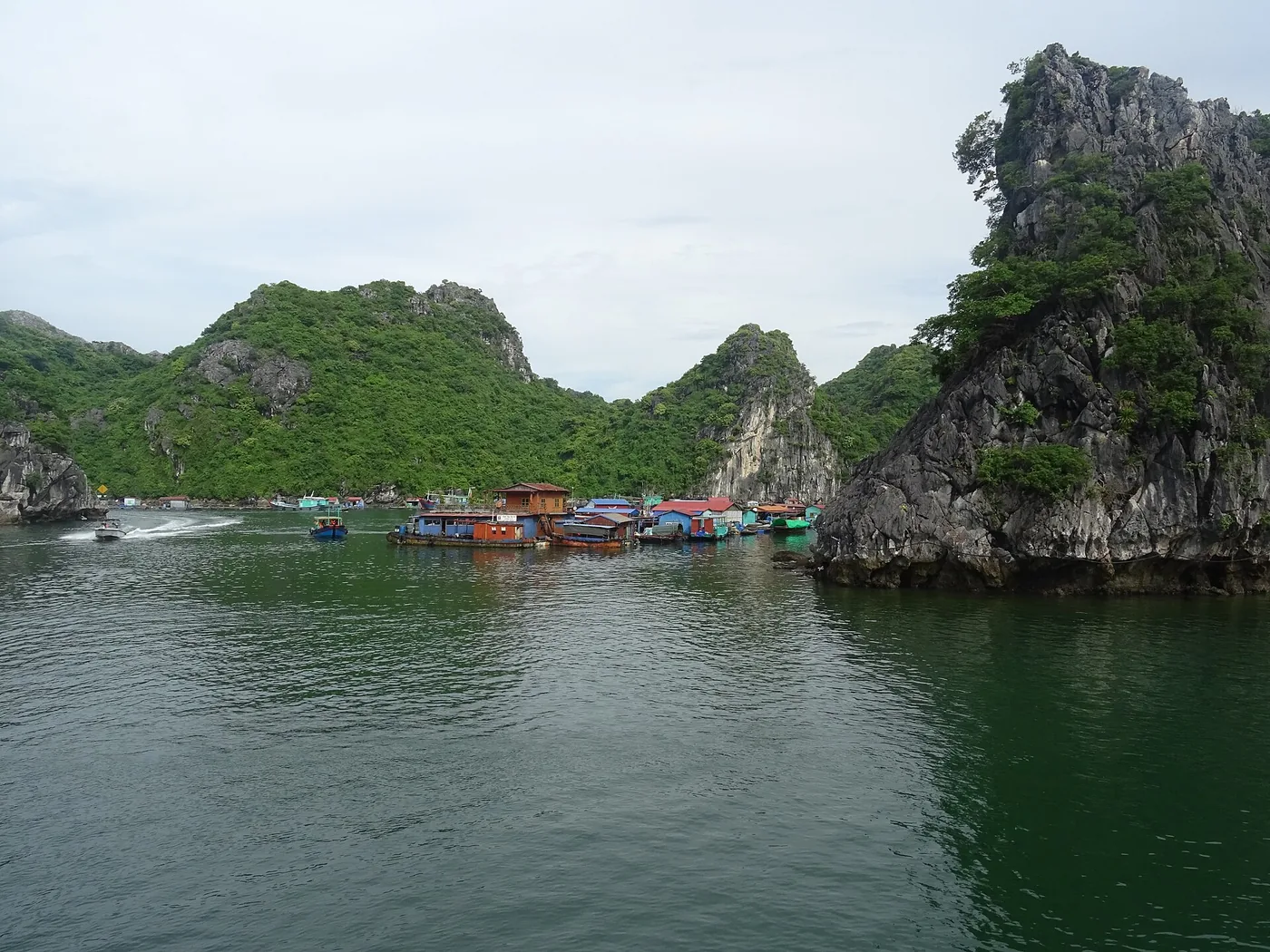
Cai BeoMap is on the water just around from Cat Ba Town, houses and fish pens floating together.
People have lived on this spot for a very long time. Excavation turned up traces going back thousands of years.
You go through it in a small boat. Bay trips often call in.
People still live and farm fish here. It is a working place rather than an exhibit, so be considerate with a camera.
People have been here a long time
Cai Beo is not the only old site. Digging has turned up tools and pottery in several places on the island.
None of it is presented as a museum. But knowing the island was lived on long before anyone came to look at it changes what you see.
15. Phu Long and the mangroves
Head to the far north and you reach Phu LongMap. Boats from Hanoi land on this side, so it is easy to pass straight through, and it looks nothing like the south of the island.
Mangrove grows in a wide band where the tide comes in and out. The roots stand clear of the water and the whole thing looks unlike any forest inland.
You paddle through it
Channels run between the trees. You go along them in a kayak or on a board.
The water is flat and there is no wind. It is a completely different experience from kayaking on the bay, and you hear a lot of birds.
Digging for clams
At low tide the mud flats come out, and you can go out with local families to dig clams.
You will be in the mud to your knees, so bring a change of clothes.
Thien Long cave
The route ends with a short walk up to the cave, about ten minutes from where the boat drops you. It is quiet because so few people come.
It is dense with formations, and the lighting is dim, so bring a torch.
When to go
Calm water suits it best, so spring, autumn and winter are all good here.
In summer rain muddies the channels, and standing in the mud flats is hot work.
Half a day is enough. Go in the morning and you still have the afternoon.
16. The Long Chau lighthouse
Out beyond the bay to the south east lies Long ChauMap, a scatter of about thirty small rocky islands.
There is a very old lighthouse on it, put up by the French, so it is well over a century old.
Built out of stone
It is stone from the base up, and it is one of the oldest lighthouses in the country.
It is still lit. Ships crossing this stretch of water take their bearing from it.
Keepers live out there. Supplies come by boat.
It is not easy to reach
There is no scheduled service. You charter a fishing boat or find one going out.
You need good weather. A bit of wind and nothing sails.
Done in a day, most of the day is spent on the boat. Only worth it if that appeals.
Most people just see it
Bay boats often point it out. On a clear day you can pick it out towards the horizon.
Even without going, knowing there are more islands out past the ones you are among changes how the bay looks.
17. The monkey that lives only here
There is a monkey on Cat Ba that lives nowhere else on earth. It is called the Cat Ba langur.
It has a yellow head and a dark body. It lives on the sea cliffs, and unusually for a monkey it drinks salt water.
Very few are left
Fewer than a hundred remain. At the low point there were under forty, and the number has been creeping up since.
Hunting is what took them down. Hunting has been stopped, and the problem now is that as more people come, the cliffs they live on get squeezed.
A conservation project works on the island, watching the cliffs and counting them, and has done for a long time.
Will you see one
Probably not. They live on cliffs people do not go to, and there are not many of them. At best you might catch one at a distance from a boat.
Do not go looking by approaching the cliffs. People getting close is itself part of the problem.
The monkeys on Monkey Island are a different species altogether. The names confuse people.
You can learn about them at the park
There is a display at the national park entrance. Since you are unlikely to see one, this is where you find out about them.
It covers why they survived only here and how the numbers have been brought back up.
18. Climbing the cliffs
There is one more reason people come. Climbing the sea cliffs. For this, Cat Ba is among the best places in South East Asia.
There are a great many climbable walls on the island and on the islands offshore. The limestone gives you plenty to hold, and underneath you is the sea.
No ropes, and you drop into the water
A boat takes you out to a cliff in the middle of the bay. You climb without a rope until your arms go, then you let go and fall into the water.
It is deep underneath, so you are not hurt. There are dozens of walls around Lan Ha you can do this on.
Beginners can do it. You start low and work up.
There is roped climbing too
Inland there is a place called Butterfly Valley, about half an hour out of town on a motorbike.
The walls around it hold a lot of routes, from easy up to very hard, so there is something at most levels.
You climb these on a rope, which means you need a partner. Turning up alone is difficult.
Gear and guiding
There are outfits in town that guide, lend gear and run the boat out to the cliffs.
Rental gear is not plentiful. Many people bring their own, so if you are planning to borrow, ask well ahead.
Do not go out to the sea cliffs on your own. Without knowing the depth and the tide it is dangerous.
When
The into the water version needs warm weather. Nobody does much of it in winter.
Roped climbing is better when it is cool. In summer the rock is hot and humid and your hands slip.
19. What to eat
It is an island, so seafood is everywhere. Restaurants along the harbour keep tanks out front.
You pick it and it is weighed
Choose from the tank and they weigh it and price it from there, then grill it, steam it or put it in a soup.
Ask the price per weight before you choose. It varies between places on the same stretch.
The price sometimes moves after you have chosen. Watch it go on the scales.
What comes from here
Tu hai is the local one, a long shelled clam, usually grilled with spring onion oil poured over it.
There is also sam bien, the horseshoe crab, which is caught around here. It looks alarming and tastes mild.
Cha muc is squid ground up and fried into cakes. It is a Hai Phong speciality and it is sold here too.
Otherwise the tanks hold crab, mantis shrimp, cuttlefish and grouper.
Eating on the water
Out towards Cai Beo there are restaurants that float. The fish comes straight out of the pens, so it is as fresh as it gets.
Most of them run a boat out to collect you. In the evening you eat looking back at the harbour lights.
It costs more than town. You are paying for where you are sitting.
Other than seafood
Banh da cua is a crab noodle soup with a red broth and thick noodles, eaten all over this part of the country.
Nem cua be, crab spring rolls cut into squares, is from here as well. With rice it makes a meal.
There is plenty of pho and banh mi in town. A lot of people eat those in the morning and save seafood for the evening.
Enough foreign visitors come that there are western places too.
20. Cat Ba after dark
Once the light goes, a night market sets up beside the harbour. Stalls fill a space that was empty all day.
Mostly grilled
Charcoal comes out and they grill prawns, crab, squid and shellfish. You take it and eat standing up.
Some stalls have seats. It is cheaper than a restaurant and the portions are small, which is ideal for trying several things.
There are noodles and rice dishes too, if seafood is not what you want.
They sell things as well
Dried seafood and souvenirs share the same rows. Dried squid and prawns are what most people take home.
Prices are often not displayed. Ask, and check a couple of stalls.
The harbour road in the evening
Beyond the market, the places along the harbour stay open late, and a lot of them are there for a beer.
People who were out on the water during the day end up along this road. It is not a loud place.
When it runs
In the busy months it is on every night. When things are quiet there are fewer stalls and they pack up earlier.
In winter not much of it opens at all, and you are better off in a restaurant.
21. When to go
This is the north of the country, so the year splits clearly. The right time depends on what you came to do.
| Season | Weather | What it means |
|---|---|---|
| Spring | Cool, with more clear days | The best walking weather |
| Summer | Hot and often wet | Good for swimming, but crowded |
| Autumn | Rain eases, skies clear | The best time to be on the water |
| Winter | Cold and often grey | Quiet, but swimming is out |
For walking and boats
Spring and autumn win. It is not hot, there is little rain, the park walks are comfortable and the bay is calm.
There are fewer people about than in summer, so rooms and boats are easier to get.
Autumn skies are clear, which brings the colour out of the water. Worth knowing if you are taking photographs.
For swimming
It has to be summer. That is also when Vietnamese families travel, so weekends and holidays fill boats and hotels fast.
Prices peak then as well, and rooms can go for several times the quiet season rate.
Storms
Typhoons come in summer and early autumn. A direct hit on the island is rare, but while one passes the boats stop.
If the boats stop you cannot leave. Build a spare day into the plan if you travel then.
Do not arrange a flight for the day you come back off the island.
Winter
Cold and grey more often than not. Swimming is out, but the island is empty and calm.
Sailings thin out as well, so check times both ways before you go.
Some restaurants and hotels close. It is also the cheapest time by a distance.
22. How many days
Getting in takes half a day and so does getting out. Take those off and the time you actually have on the island is short.
| Length | What fits |
|---|---|
| One night | A day on the water and the fort, and that is it |
| Two nights | The bay, the park, and time on the beach |
| Three or more | The walk to Viet Hai, or several caves, or learning to climb |
Two nights is the answer
Arrive, look around town, go up to the fort. Spend the second day out on the water. Walk in the park on the third morning and leave after lunch.
That way, if the boats do not sail one day, you can swap things around.
Keeping the boat day in the middle is what makes this work. Bad weather and you move it either way.
Do not day trip it
There and back from Hanoi is eight hours of vehicles and boats. You would have a few hours on the island.
If a single day is all you have, take a Ha Long Bay day boat instead. The round trip is much shorter.
If you have longer
Three or four days lets you walk to Viet Hai, or learn to climb. Either fills a day.
Riding round the north of the island is another one.
Longer stays get cheaper. Many hotels discount by the night once you book several.
23. Two nights on Cat Ba, in order
Working out what to do first is the hard part. Here is the order that works.
Day one
Leave Hanoi early and you are in town by lunch. Drop your bags and eat near the harbour.
Do not go far in the afternoon. Walk over to Cat Co beach, or go round the town.
Go up to the fort before the sun drops. Seeing the whole island once on the first day makes the rest of it easier to place.
Eat at the night market. Small portions mean you can try several things.
Day two
This is the boat day. Out from the harbour in the morning, back in the afternoon.
Kayaking and swimming are built into the trip. Pick a boat that calls at Monkey Island or a floating village and you get more out of it.
Then wash and rest. A full day in the sun on the water takes more out of you than you expect.
Day three
Walk in the park in the morning. Take the short route and you are down before lunch.
Eat, then take an afternoon departure and you are in Hanoi by evening.
If the weather turns
This is why the boat day sits in the middle. If day two is rough, move it to day three and bring the park walk forward.
If nothing sails at all, everything else is on land. The park, the fort, the caves and the northern mangroves are all still open.
With an extra day
Walk over to Viet Hai, or spend a day learning to climb. Either one fills it.
Riding north across the island is a day as well.
24. What it costs
Cat Ba is not an expensive place by Vietnamese standards. What changes things is when you go.
| What | Roughly |
|---|---|
| Bus and boat from Hanoi | Low |
| Hotels | Low when quiet, high on summer weekends |
| A day boat on the bay | Middling |
| Admissions | Low |
| Seafood restaurants | Entirely up to what you order |
Rooms move the most
Out of season they are very cheap. On a summer weekend or a holiday the same room goes for several times that.
If your dates are flexible, midweek alone saves a lot.
Ask before you order seafood
Picking from the tank means the bill depends entirely on what you point at. Expensive things get suggested, so hear the price first.
The grilled stalls at the night market are far cheaper. If you want to try several things, go there.
The costs that add up
Admission comes round repeatedly, for the park, the bay, the caves and the fort.
None of them is much on its own, but together they are not nothing. Carry enough cash and it is one less thing to think about.
25. Cat Ba or Ha Long Bay
People ask this a lot. It is the same water, and UNESCO lists the two together. What differs is how you stay.
| Ha Long Bay | Cat Ba | |
|---|---|---|
| The usual way | Sleep on a boat and tour the bay | Base on the island and go out daily |
| Boat traffic | Heavy | Light |
| Besides the water | You are on the boat | Forest, a fort, beaches, villages |
| Journey | Closer to Hanoi | One more boat |
Sleeping aboard means Ha Long
Ha Long is built around the overnight boat. Dinner on deck and waking up in the middle of the bay is the whole point of it.
There is far more choice of boat, from cheap up to very expensive.
There is more on that in the Ha Long Bay cruise guide.
Staying put means Cat Ba
Here you keep a room and do something different each day. Water one day, forest the next, beach after that.
On the water alone Ha Long is the famous one, but the quiet comes from having fewer boats, and that is Cat Ba.
It is generally cheaper too, for rooms and for eating.
Doing both
You can take the boat from Ha Long across to Cat Ba. Just remember the pier is a long way from town.
The other way round, day boats out of Cat Ba often run up into the Ha Long side anyway, so you see both waters in one go.
How to string the north together is in the Northern Vietnam travel guide, and connections to other cities are in the guide to getting around Vietnam.
26. Before you go
A few things that catch people out.
Carry cash
Boat tickets and small shops are often cash only. Sort it before you cross.
There are machines in town but not many, and they empty out when the island is busy.
Boats stop in bad weather
Strong wind or a storm and nothing sails. You can be stuck, so do not book a flight for the day you leave the island.
The same goes for bay trips. High swell and the day is cancelled.
Admission comes round more than once
The park, the bay and the caves each charge separately. People assume the boat fare covers everything and then pay again on the day.
Phones and data
Signal in town is fine. Inland and out in the middle of the bay there are gaps.
On a boat day the operator may ring to give you a pickup time, so you need a number that works.
Three things to remember
One, book two nights. A single day goes on travel.
Two, put the boat day in the middle so you can move it if the weather turns.
Three, bring cash and a layer. It is windier on the water than on land.
Getting to and from Hanoi is covered in the Hanoi travel guide and the Noi Bai airport transfer guide, and the obvious thing to pair this with is in the Ninh Binh day trip guide.
🎡Things to Do3
🏨Where to Stay1
🚇Getting Around3
🧭Travel Tips2
🧭Vietnam-wide essentials140
Cat Ba Island: your questions answered
About four hours. Roughly two and a half by road to the pier, half an hour on the boat, then another half hour across the island. Traffic or a wait for the boat can push it to five. A combined bus and boat ticket takes you all the way to your hotel.
The crossing to the island runs every half hour from early morning until evening, and later in the busy months. The boat from Ha Long is different: only a few sailings a day, starting around eight in the morning and finishing by late afternoon. In winter there are fewer.
Most people take the ferry. It runs all day and carries vehicles. The cable car only goes six times a day with the last one mid afternoon, so you have to plan around it, but it crosses above open water and takes under fifteen minutes. Travel sites often list times that do not match the operator, so check before you count on it.
160,000 dong for adults and 80,000 for children. Tickets for a single marked route cost less than the full park ticket. Older visitors and students pay half. It opens at seven in the morning and closes at five.
Sometimes. Admission to the bay is set by the city and is separate from the boat fare. A day visit is 120,000 dong for adults, and overnight trips pay more. If the booking page does not list it in the inclusions, expect to pay on the day, in cash.
Two nights. Getting in and out takes half a day each way, so with one night you will fit the bay and the fort and nothing else. Two nights covers the park and beach time as well, and gives you room to move things if the boats do not sail.
The water is the same and UNESCO lists them together. The difference is how you stay: Ha Long is built around sleeping on a boat, while on Cat Ba you keep a room and go out each day. Choose Ha Long for the overnight cruise, Cat Ba if you also want forest, beaches and a quieter bay.
Either the harbour road or the Cat Co beaches. The harbour has most of the hotels and restaurants and puts you next to the boats. The beach side is quieter with sand on the doorstep, which suits a restful trip. They are close enough to walk between.
Yes, and it is one of the best places in South East Asia for it. The well known version is climbing sea cliffs without ropes and dropping into the water, and there is roped climbing inland at Butterfly Valley. Outfits in town will guide beginners. Rental gear is limited, so ask ahead.
Spring and autumn. It is not hot, there is little rain, the park walks are comfortable and the bay is calm. Swimming needs summer, which is also the crowded and expensive part of the year. Winter is cold and grey but quiet and cheap.