
Vegan & Vegetarian Da Nang: Where to Eat, and How to Order
Good news for plant-based travellers: Da Nang is one of the easiest cities in Asia to eat vegan. Vietnam has a deep, centuries-old vegetarian (“chay”) tradition, the food is cheap and delicious, and there are dedicated vegan spots all over. Here’s everything: how chay culture works, the best restaurants, the dishes you can eat, and the one phrase that keeps fish sauce off your plate.
- Is it easy? Yes — Da Nang is very vegan-friendly. Vietnam’s Buddhist “chay” (vegetarian) tradition means dedicated meat-free eateries are everywhere, and most classic dishes have a chay version.
- The magic word: “chay” means vegetarian — and Buddhist chay is usually fully vegan (no meat, seafood, fish sauce, often no egg or dairy). Look for a “Chay” sign with a yellow lotus — that’s a safe, all-veg restaurant.
- The one trap: fish sauce (nước mắm). It’s in marinades, broths and dipping sauces everywhere. At non-veg places, say “Tôi ăn chay” (I eat vegetarian) or “không nước mắm” (no fish sauce).
- Where to eat: dedicated vegan spots (Kurumi, Loving Vegan, Ngọc Chi) plus countless cheap local “Cơm Chay” buffets. The An Thượng area has Western vegan cafés too.
- Best days & value: a local cơm chay buffet plate can cost just 30,000–50,000 VND (about US$1.50). On the 1st & 15th of the lunar month, locals eat veg, so chay places get busy.
1. Is Da Nang Good for Vegans & Vegetarians?
2. “Chay” — Vietnam’s Vegetarian Culture Explained
3. The Fish Sauce Trap (& Other Hidden Animal Ingredients)
4. How to Order Vegan & Vegetarian (Key Phrases)
5. The Best Vegan & Vegetarian Restaurants in Da Nang
6. Vietnamese Dishes You Can Eat (Chay Versions)
7. Vegan-Friendly Cafés & Western Options
8. Buddhist “Cơm Chay” Buffets & the Lunar Days
9. Markets, Shopping & Self-Catering
10. Beyond Da Nang: Hội An for Vegans
11. Tips & Is It Easy to Be Vegan in Da Nang?
If you’re vegan or vegetarian and worried about eating in Vietnam, relax — you’ve picked one of the best countries in Asia for it, and Da Nang is a brilliant base. Da Nang is very easy for vegans and vegetarians, because Vietnam has a deep Buddhist vegetarian tradition known as “chay,” which means dedicated meat-free restaurants are everywhere, most beloved Vietnamese dishes come in a plant-based version, and the food is cheap, fresh and genuinely delicious. Unlike places where being vegan means salads and frustration, here you’ll eat varied, satisfying, properly local food — chay versions of the famous regional noodles, fresh herb-packed spring rolls, tofu cooked a dozen ways, and crisp savoury pancakes. There’s just one thing to understand (fish sauce) and one phrase to learn, and you’re set. This guide covers it all: how the “chay” system works and how to spot a safe restaurant, the fish-sauce trap and other hidden animal ingredients, exactly how to order, the best dedicated vegan and vegetarian restaurants, the Vietnamese dishes you can eat, vegan-friendly cafés, the cheap Buddhist buffets, and self-catering. To put it in the wider food context, pair this with our complete Da Nang food guide, and for the whole trip, our Da Nang travel guide.
1. Is Da Nang Good for Vegans & Vegetarians?
Yes — Da Nang is one of the most vegan-friendly cities in Southeast Asia, thanks to Vietnam’s strong Buddhist vegetarian culture. You won’t be scraping by on plain rice and side salads. Instead you’ll find whole restaurants devoted to meat-free food, plant-based versions of the dishes everyone raves about, and prices so low that eating out three times a day barely dents your budget.
Why it’s so easy here:
- A real tradition, not a trend — “chay” (vegetarian) eating is centuries old and tied to Buddhism, so it’s understood and respected everywhere.
- Dedicated restaurants are common — look for the word “Chay” and you’ve found a fully meat-free kitchen.
- Most classics have a chay version — the region’s famous mì quảng noodles, bánh xèo pancakes and more all come plant-based.
- It’s cheap — a generous buffet plate can cost a dollar or two.
- Western vegan options too — Da Nang’s café and expat scene means smoothie bowls, vegan burgers and plant-based coffee are easy to find.
2. “Chay” — Vietnam’s Vegetarian Culture Explained
The single most useful thing to understand is the word “chay” (pronounced like “chai”), which means vegetarian in Vietnamese — and crucially, traditional Buddhist chay is usually fully vegan. A proper chay kitchen uses no meat, poultry, seafood or fish sauce, and very often no egg, dairy or honey either. Some strict Buddhist chay also leaves out the “five pungent” aromatics (garlic, onion, etc.), though many modern places use them.
This tradition is woven into daily life. Many Vietnamese eat chay on certain days for Buddhist merit — especially the 1st and 15th of the lunar month (mùng 1 and rằm), when a large share of locals go vegetarian for the day. On those days, chay restaurants are busy and even regular eateries offer veg dishes.
| Sign / word | What it means |
|---|---|
| “Chay” (+ yellow lotus 🪷) | A fully vegetarian/vegan restaurant — your safe haven |
| “Cơm Chay” | Vegetarian rice — usually a cheap point-and-pick buffet |
| “Thuần chay” | Pure vegan (no egg/dairy) — useful if you’re strict |
| “Mặn” | The opposite — “savoury”/non-veg food (good to recognise) |
The takeaway: a restaurant displaying “Chay,” especially with a yellow lotus symbol, is a guaranteed all-vegetarian kitchen where you can order anything on the menu without worrying.
3. The Fish Sauce Trap (& Other Hidden Animal Ingredients)
Here’s the one real challenge, and it’s not the lack of vegetables. It’s fish sauce — nước mắm — the fermented backbone of Vietnamese cooking, which hides in marinades, broths, dipping sauces and is even sprinkled over plain vegetables. A dish that looks vegan can easily contain it. At dedicated chay restaurants this is a non-issue (they use vegan fish sauce, nước mắm chay), but at regular eateries you need to ask.
Other animal ingredients to watch for at non-veg places:
- Shrimp paste (mắm tôm) and oyster sauce — common flavourings.
- Broth — many noodle soups (including some “vegetable” ones) use pork or bone stock.
- Egg — in some pancakes, noodles and baked goods.
- Pork bits — sneaked into otherwise veg dishes as “flavour.”
4. How to Order Vegan & Vegetarian (Key Phrases)
A few Vietnamese phrases will keep your food plant-based anywhere. Even at a meat-heavy local spot, these get the message across (a translation app or a screenshot helps too):
| Vietnamese | Meaning |
|---|---|
| Tôi ăn chay | I eat vegetarian (the essential one) |
| Tôi ăn thuần chay | I’m vegan (no egg, milk, honey) |
| Không nước mắm | No fish sauce |
| Không thịt, không cá, không trứng | No meat, no fish, no egg |
| Có món chay không? | Do you have vegetarian dishes? |
| Nhà hàng chay ở đâu? | Where is a vegetarian restaurant? |
Pronounce “chay” like “chai” and most people will instantly understand. If in doubt, head for a dedicated chay place where the whole menu is safe. Vietnamese people are generally warm and accommodating about this — a smile and “tôi ăn chay” goes a long way (our etiquette guide has more on dining politely).
5. The Best Vegan & Vegetarian Restaurants in Da Nang
🌅 Da Nang with older parents: a day that starts on the beach before sunrise →
Da Nang has both modern all-vegan restaurants and traditional Buddhist chay eateries. Names, addresses and opening hours change, so treat this as a starting list and check current reviews (HappyCow and Google are your friends), but these are long-standing favourites:
| Restaurant | Style |
|---|---|
| Kurumi | 100% vegan near My Khe; healthy international + vegan versions of mì quảng & cao lầu |
| Loving Vegan | International vegan — gyros, pizza, burritos, sandwiches |
| Ngọc Chi Vegan | Local favourite; vegan banh mi, cơm tấm & Vietnamese classics |
| Local “Cơm Chay” spots | Cheap Buddhist buffets all over the city — point and pick |
For something familiar, the all-vegan international places do excellent Western comfort food. For the real local experience (and the lowest prices), the neighbourhood Cơm Chay buffets are unbeatable — you point at trays of plant-based dishes and pay a few dollars. The An Thượng / My An area near the beach also has a cluster of vegan-friendly cafés popular with travellers.
6. Vietnamese Dishes You Can Eat (Chay Versions)
One of the joys of being vegan here is that you don’t miss out on the famous food — nearly every Da Nang and central-Vietnam classic has a “chay” version. Look for these on chay menus:
| Dish | What it is (chay version) |
|---|---|
| Mì Quảng chay | The region’s signature turmeric noodles, with tofu & veg instead of meat |
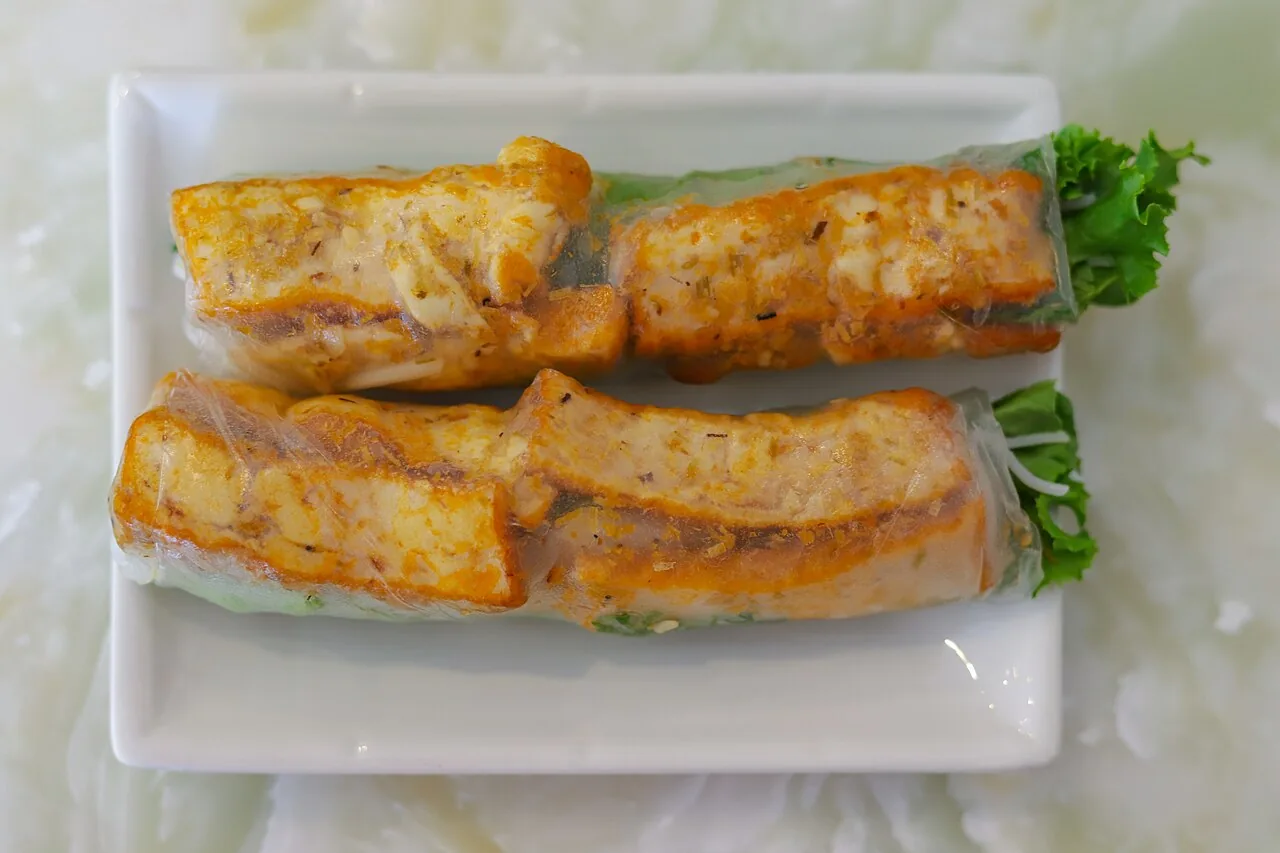
| Gỏi cuốn | Fresh (un-fried) rice-paper rolls with herbs, tofu & noodles |
| Bánh xèo chay | Crispy savoury pancake filled with beansprouts, mushroom & tofu |
| Cao lầu chay | Hội An’s famous noodles, plant-based |
| Phở chay / Bún chay | Vegetarian versions of the classic noodle soups |
| Cơm chay | A rice plate with assorted tofu & vegetable dishes |
Tofu (đậu hũ) is everywhere and cooked beautifully, mushrooms are used with real skill, and the fresh-herb culture means lots of bright, satisfying flavours. To know the originals you’re “chay-ifying,” see our guides to mì quảng and bánh xèo, and the full Da Nang food guide. Even bánh mì has popular vegan versions (tofu, pâté-style spreads and pickles).
7. Vegan-Friendly Cafés & Western Options
Sometimes you just want a smoothie bowl and a flat white, and Da Nang delivers. The city’s big café culture and traveller scene mean vegan-friendly cafés are easy to find, especially around the beach and the An Thượng district — think açaí and smoothie bowls, vegan cakes, plant-based burgers and oat-milk coffee.
Vietnamese coffee itself is a small trap and an easy fix: the traditional version is made with sweetened condensed milk (not vegan). Order it black (cà phê đen) or ask for coconut, oat or soy milk, which trendier cafés stock. Our Da Nang coffee & café guide rounds up the best spots — many are very plant-friendly and double as laptop-friendly hangouts.
8. Buddhist “Cơm Chay” Buffets & the Lunar Days
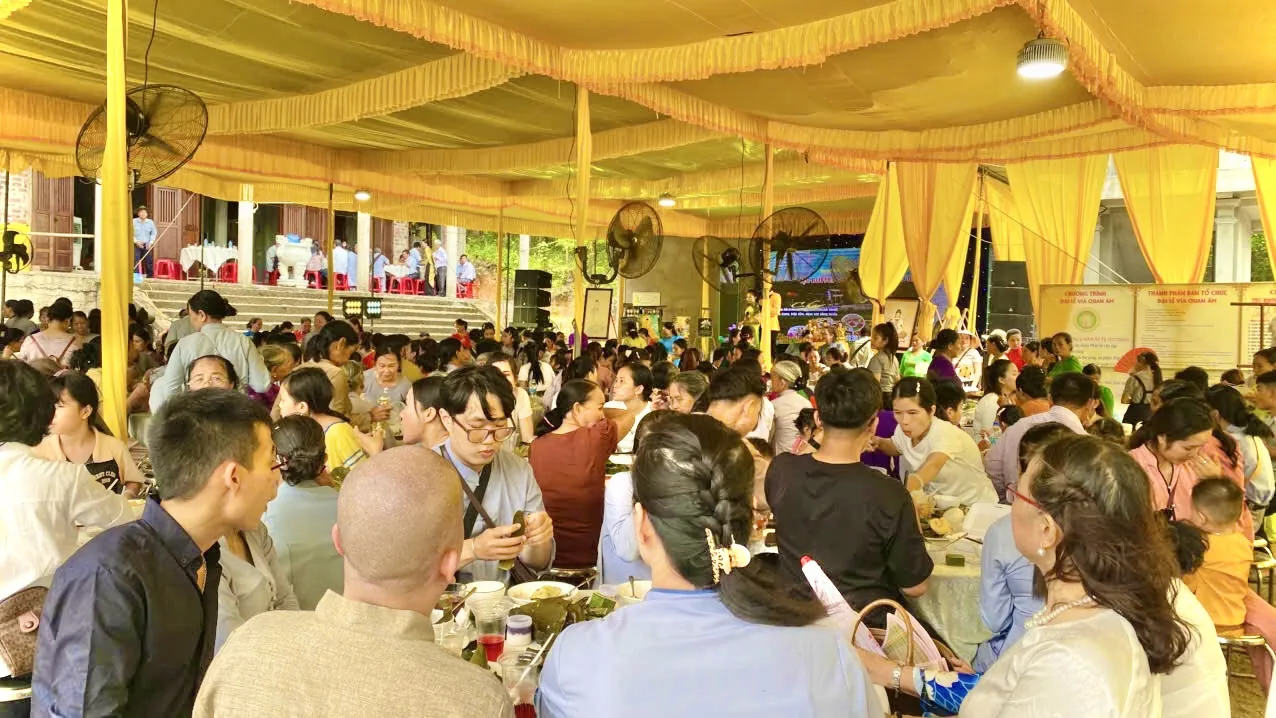
For the most authentic — and cheapest — vegan meal in Da Nang, find a “Cơm Chay” buffet. These simple Buddhist eateries lay out trays of plant-based dishes (tofu, mock meats, braised vegetables, soups, rice) and you point at what you want, paying by the plate. A full, satisfying plate often costs just 30,000–50,000 VND (around US$1.50). They cluster near pagodas and in local neighbourhoods.
Timing tip: on the 1st and 15th of the lunar month (mùng 1 and rằm), a big share of locals eat vegetarian, so chay restaurants get packed around lunch (11:30–13:00) and dinner (18:00–20:00). It’s a lovely time to experience the culture — just go a little early or late to beat the rush. The food is also often fresher and more varied on those days, as kitchens prepare extra.
9. Markets, Shopping & Self-Catering
🧍 Da Nang solo: bike taxi fares, meals for one and a three-day timetable →
If you have a kitchen — or just want snacks — self-catering as a vegan is easy and cheap. Da Nang’s markets and supermarkets are full of fresh produce, tofu, mushrooms, rice, noodles, nuts and tropical fruit at very low prices. Local markets (like Hàn Market or Cồn Market) are great for produce and tofu; supermarkets and mini-marts carry plant milks, vegan snacks and more Western products.
- Tofu (đậu hũ) — fresh, cheap and sold everywhere.
- Vegan fish sauce (nước mắm chay) — look for it in supermarkets to season your own cooking.
- Tropical fruit — mango, dragon fruit, jackfruit, passion fruit; incredible and cheap.
- Plant milks & tofu products — soy milk is traditional and widely sold; oat/almond in bigger supermarkets.
Markets can involve a little friendly bargaining; our guide to prices & avoiding tourist traps helps you pay fair local rates.
10. Beyond Da Nang: Hội An for Vegans
If you love plant-based food, save an appetite for Hội An, 40 minutes south, which is arguably even more vegan-friendly than Da Nang. The lantern-lit old town has a celebrated vegetarian scene, with elegant chay restaurants, vegan cooking classes, and plant-based takes on Hội An’s own specialities — above all cao lầu chay (the town’s signature noodles) and white-rose-style dumplings.
Many travellers base in Da Nang and make a day or evening trip to Hội An specifically to eat. It’s an easy, rewarding outing — combine the food with the old town’s lanterns and tailors. See our Hội An guide for how to get there and what else to do, and slot it into your wider plan with the Da Nang travel guide.
11. Tips & Is It Easy to Be Vegan in Da Nang?
A few final pointers to make plant-based eating effortless:
- Learn “chay” — it’s the one word that unlocks everything.
- Use HappyCow and Google Maps to find dedicated vegan spots and read recent reviews.
- Default to “Chay” restaurants when you want zero worry; venture to local eateries with your phrases ready.
- Watch the coffee — order it black or with plant milk.
- Carry a translation note (“Tôi ăn thuần chay — không thịt, cá, trứng, sữa, nước mắm”) for tricky spots.
- Travelling with non-vegans? No problem — many places do both; pair this with our seafood and food guides so everyone’s happy.
So is it easy? Genuinely yes — Da Nang is one of the most rewarding places in Asia to eat vegan. Between the centuries-old chay tradition, the dedicated restaurants, the plant-based versions of every classic, the cheap Buddhist buffets and the modern vegan cafés, you’ll eat varied, delicious, properly local food without compromise. Learn one word, dodge the fish sauce, and enjoy. Plan the rest of your eating with our complete Da Nang food guide and your whole trip with the Da Nang travel guide.
🎡Things to Do52
🍜Food8
🏨Where to Stay6
🚇Getting Around9
🧭Travel Tips21
🧭Vietnam-wide essentials57
Frequently Asked Questions