
Con Dao Travel Guide: Getting There, the Prison Museums, Beaches and Where to Stay
Con Dao sits well out to sea south of Ho Chi Minh City. The flight takes 45 minutes; the ferry leaves from a port down in the Mekong. A former prison complex still stands in the middle of town, and the water around the island is some of the clearest in Vietnam. Here is how to get there, what it costs, what there is to see, and how long to stay.
| Where it is | A cluster of islands far off the southern coast. Only the largest one is inhabited; the rest is national park. |
|---|---|
| Getting there | Flying is the practical option. Forty-five minutes from Ho Chi Minh City, several departures a day. |
| The ferry | One route runs, from Tran De in the Mekong. The Vung Tau boat is out of service. |
| What to see | The prison sites and the cemetery, plus the beaches. Boats run out to turtle nesting islands. |
| What you pay for | One ticket covers five prison sites. National park routes are charged separately, one by one. |
| How long | Two nights covers the sites and the beaches. Add a day if you want to get out on the water. |
1. What Con Dao actually is
2. Flying to Con Dao
3. The ferries, and the one that stopped
4. Getting around the island
5. Why there was a prison here
6. The prison sites: one ticket, fixed entry slots
7. Walking the camps in order
8. Hang Duong cemetery and the memorial temple
9. Other traces around town
10. The temples islanders use
11. The beaches
12. Walking in the national park
13. The islands you take a boat to
14. The sea turtles
15. Snorkelling and diving
16. When to go
17. Where to stay
18. Eating
19. How many days
20. What it costs
21. Practical things worth knowing
22. Con Dao compared with the other islands
1. What Con Dao actually is
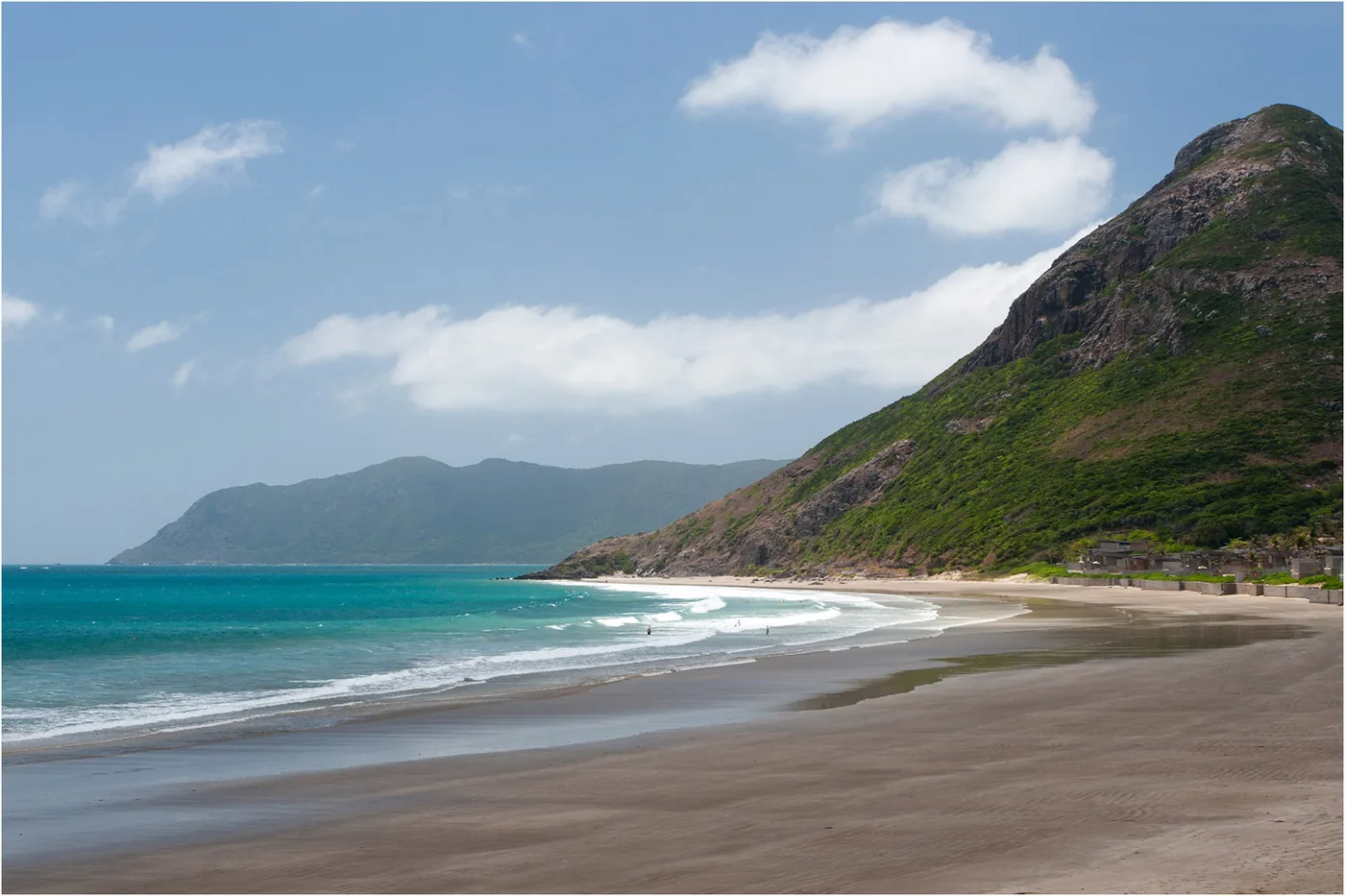
Con Dao is a group of islands a long way off the southern coast of Vietnam. There are more than a dozen of them. People live on only one, Con SonMap, and almost everything else is national park.
The island holds two very different things at once. The coast is quiet, with clear water and few people on the sand. A few minutes inland from that coast, in the middle of the small town, stand the camps where France and later the southern government held prisoners for over a century.
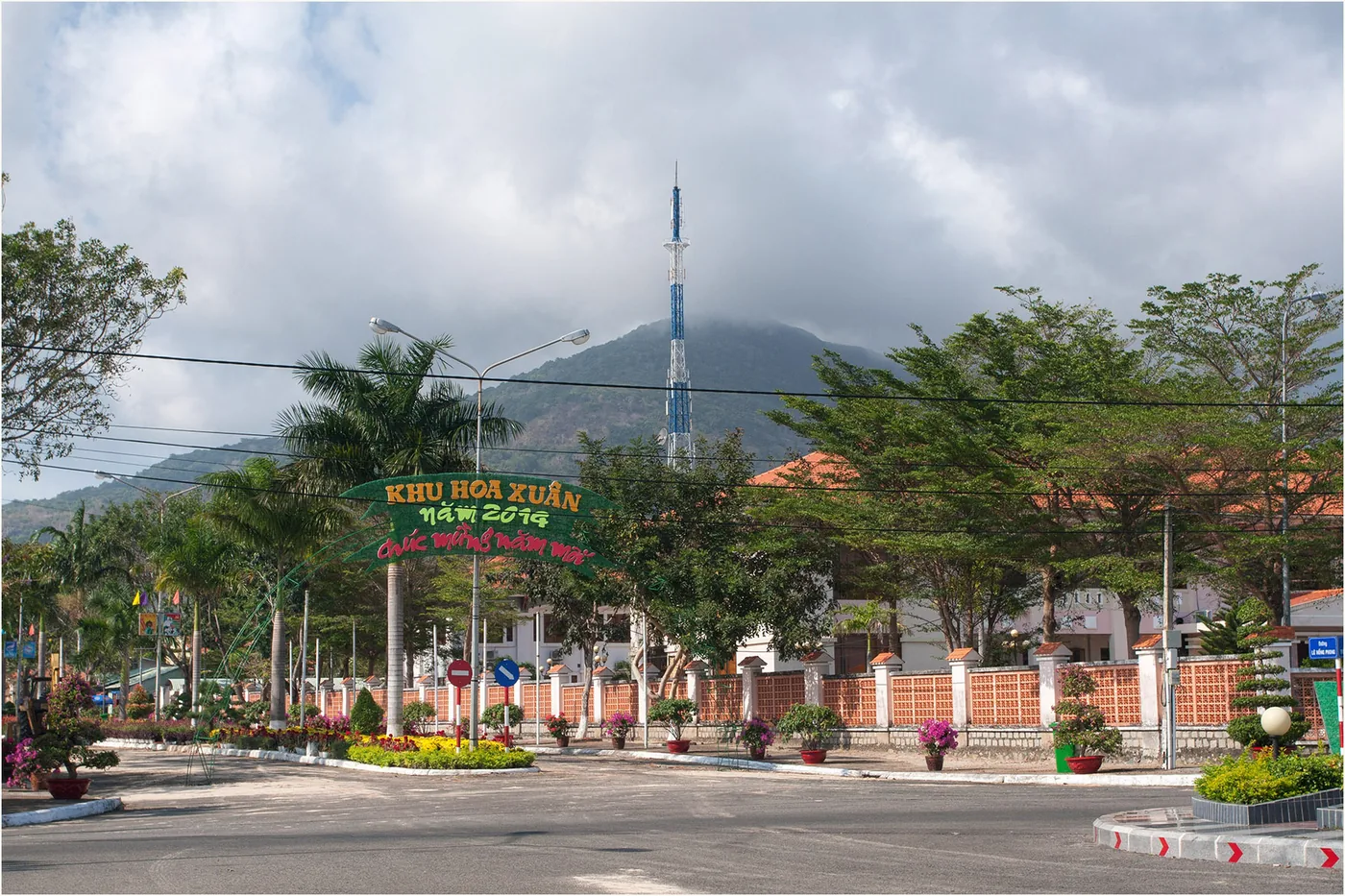
The town is small and the population is tiny
Very few people live here. The hotels, restaurants, market and post office all sit within a few streets of each other, and beyond that there is sea or forest.
Nights are quiet as a result. Almost nothing stays open late and there is no nightlife to speak of. After dinner people walk along the seafront or go up to the cemetery, and that is the evening.
The administrative name has changed
Con Dao used to be a district of Ba Ria–Vung Tau province. It is now a special zone of Ho Chi Minh City. If you need to write an address, that is the city to put.
Plenty of official pages and booking screens still carry the old provincial name. If your ferry ticket lists the destination under the old province, it is the same place — carry on.
Why people choose this island
Phu Quoc is the other well-known Vietnamese island, and it is the opposite kind of place: resorts, cable cars, theme parks. Con Dao has almost none of that. People come here to rest and to see the prison sites.
For swimming and eating out, Phu Quoc is easier. Con Dao has fewer people and clearer water. Which matters more to you decides the choice.
2. Flying to Con Dao
Flying is the fast way in. Tan Son Nhat in Ho Chi Minh City to Con Dao airportMap takes about 45 minutes, and there are several departures a day. There is also one flight a day from Can Tho.
Nothing flies direct from Hanoi or Da Nang. You connect through Ho Chi Minh City or Can Tho, and with the transfer that becomes most of a day.
It is a small turboprop
Vietnam Airlines runs this route through its regional arm, using turboprops. The runway is short, and a full jet cannot use it.
Cabin baggage allowance is lower than on the mainline routes. Check the allowance when you book, and put anything heavy in the hold.
There has been talk for years of lengthening the runway so larger aircraft can land. The plan exists on paper. Construction has not started.
Book early
The aircraft are small, so seats disappear quickly. Around Tet, through the summer, and on any weekend, fares climb sharply as well.
If your dates are flexible, flying in and out midweek costs noticeably less.
From the airport into town
The airport is at the north end of the island and the town is at the south. It is a drive of just under twenty minutes.
A taxi runs 250,000 to 300,000 dong. Many hotels send a car, so ask when you book. If you are travelling light you can rent a motorbike at the airport and ride straight in.
If you want to see the sea the moment you land, Dam Trau beachMap is within walking distance of the terminal. Aircraft come in low over it, which is why people go there with cameras.
Flights get cancelled
Strong wind grounds these aircraft. It is not an everyday occurrence. It does happen.
Do not book a long-haul departure from Ho Chi Minh City on the same day you fly back from the island. Leave a night in the city as a buffer.

3. The ferries, and the one that stopped
One ferry route to Con Dao is running. It leaves from Tran De, down in the Mekong. The boat from Vung Tau, which many older guides still describe, is not operating.
The Vung Tau boat is out of service
The large fast catamaran that linked Vung Tau and Con Dao suffered a technical failure during a sailing and was taken out of service. The operator said it would stay out until further notice, and is currently pointing at the Lunar New Year period next year for a return.
That matters if you were planning to travel down to Vung Tau and catch a boat there. At the moment there is no sailing from that port to the island.
The Tran De route
Boats leave from Tran De portMap. The port used to sit in Soc Trang province; after the provincial mergers it belongs to Can Tho.
| Leg | Departures | Crossing |
|---|---|---|
| Tran De to Con Dao | 08:00 and 13:15 | 2 hours 15 to 2 hours 30 |
| Con Dao to Tran De | 08:00 and 13:00 | 2 hours 15 to 2 hours 30 |
These are fast craft carrying over three hundred passengers. The operator’s own notice says departure times can shift with the tide and the weather, so check again the day before you travel.
An adult fare is around 360,000 dong, with a small port charge on top. Children under six travel free but share a seat with an adult. Over-sixties get a discount and need to show ID for it.
The boat lands at Ben Dam
Ben DamMap is some way from town — about fifteen minutes by road. Hotel cars and taxis meet the arrivals.
One thing to plan around: Ben Dam and the airport are at opposite ends of the island. If you arrive by sea and leave by air, or the other way round, you cross the whole island once, and that is a half-hour drive.
Which to take
On time alone the plane wins easily. Forty-five minutes from Ho Chi Minh City and you are down.
The ferry is far cheaper. Against that, getting to Tran De from Ho Chi Minh City is a long drive in itself, and rough water cancels sailings. On a tight schedule, fly.
Buying ferry tickets
The operator sells online and has ticket offices at the port, in Soc Trang town and on Con Dao itself. There is a shuttle bus between Soc Trang town and the port for passengers.
Book ahead for weekends and holidays. The boats fill, and a missed sailing means waiting for the next departure, which may be the following day.
4. Getting around the island
Most visitors ride a motorbike. The town itself is walkable, but several beaches and one or two of the sites sit outside it.
Motorbikes
Expect around 140,000 dong a day, a little more over holidays. Some places ask for a deposit or want to hold your phone. Photograph the existing scratches before you ride off, so the handback is straightforward.
You fill the tank yourself. The fuel stations are in town and near Ben Dam. If you are heading up the north end of the island, fill up before you go.
The roads are quiet and the surface is good. There are sharp bends on the coast road, and it gets slippery after rain.
Taxis and electric carts
Taxis exist but there are not many. Rather than flagging one down, ask your hotel to call.
Electric carts run between the prison sites. If walking is hard going, or you have children with you, that is the easier way round.
What you can walk to
Staying in town puts the prison sites, the museum, Hang Duong cemeteryMap, the market and Lo Voi beachMap all within walking distance. The sites are scattered through the town itself, so a morning on foot covers them.
Distances
From town, the airport is just under twenty minutes north and Ben Dam about fifteen minutes west. Dam Trau beach is next to the airport, so getting there takes about as long as going to catch a flight.
The road south to Shark CapeMap runs along the coast, and it is a good ride.
Driving licences
The rules that apply on the mainland apply here. If you are riding, carry whatever licence and permit Vietnam requires of you, and wear the helmet.
Our guide to getting around Vietnam sets out the licence question in full.
5. Why there was a prison here
Because it is far from anywhere. When France took control of Vietnam it needed somewhere to hold political prisoners, and it chose an island reachable only by boat.
Once you were here there was no way off. The distance is far beyond swimming, and the boats were controlled by the people running the place.
It was in use for over a century
The prison opened in 1862. It outlasted French rule and kept operating afterwards, and only closed when the war ended in 1975.
Tens of thousands of people passed through the island over those years. On the day it closed there were still several thousand people held here, more than half of them political prisoners.
How the tiger cages became known
The cells with bars instead of a roof were not on any map given to visitors, and delegations were not taken to them.
During the war a group of Americans found their way into that section and took photographs out with them. Once those pictures were published the place became an international story.
It is managed as a heritage site now
The site was recognised nationally soon after the war ended and was later raised to the highest grade. The camps, the cemetery, the pier and the bridge are all managed together as one protected complex.
That is why signboards keep appearing as you walk through town. The town and the heritage site occupy the same ground.
6. The prison sites: one ticket, fixed entry slots
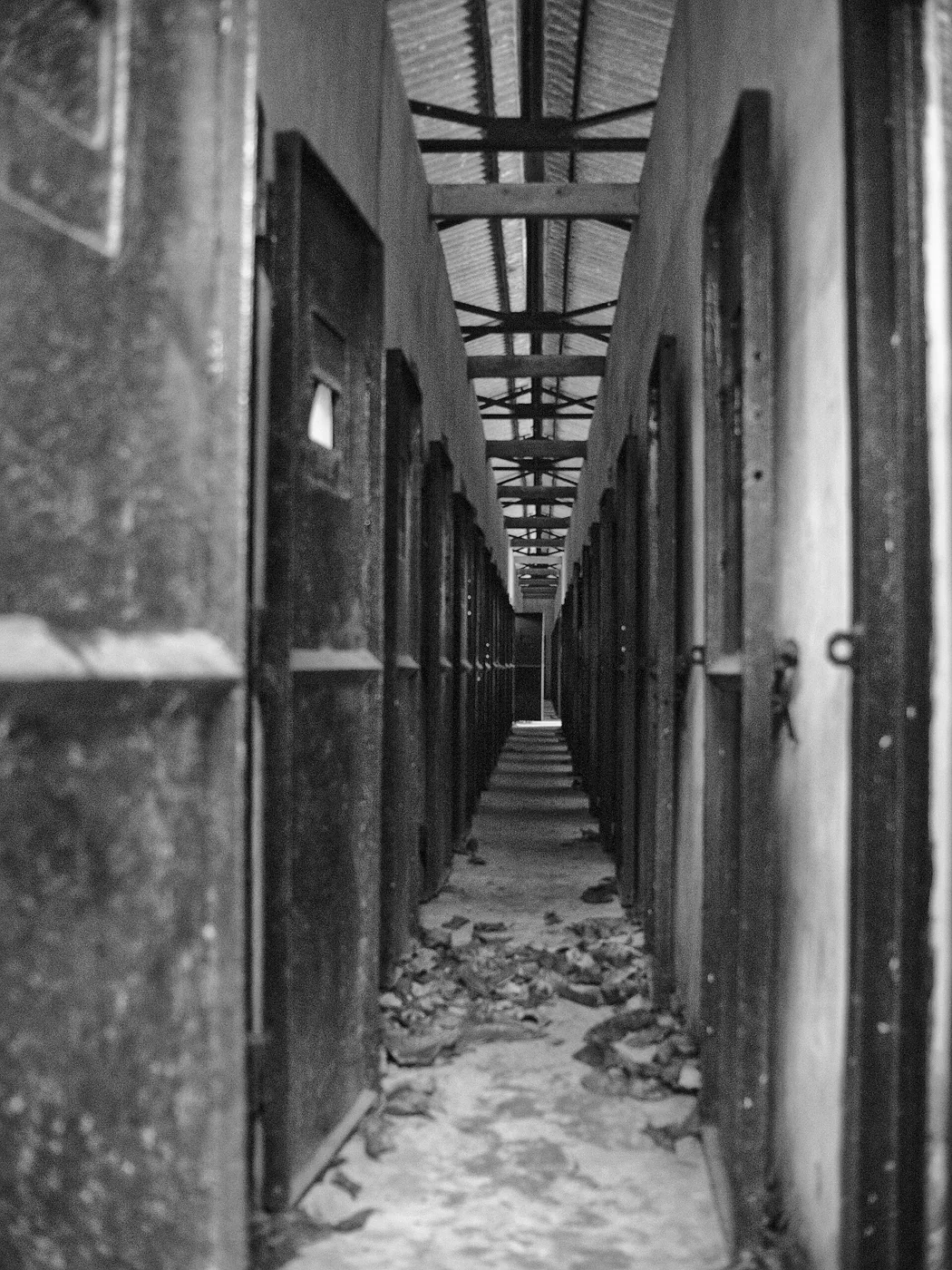
One ticket covers five places — the museum, the French tiger cages at Phu Tuong, Phu Hai camp, the American-built cages at Phu Binh, and the governor’s residence.
An adult ticket is 50,000 dong; concessions are half that. You need to show the document that entitles you to the discount, and if you cannot, you buy a full ticket.
You cannot just turn up whenever
Visits run in guided slots at set times. There are four in the morning starting at 07:30, and three in the afternoon starting at 14:00.
| Open | Slots | |
|---|---|---|
| Morning | 07:30–11:30 | 07:30 · 08:00 · 08:30 · 09:00 |
| Afternoon | 14:00–17:00 | 14:00 · 14:30 · 15:00 |
Nothing starts over the middle of the day. The last morning slot is at 09:00 and the last afternoon slot at 15:00, which means if you have a long lunch and turn up at three, you have missed the day. Build the rest of your plans around these times.
Groups planning a formal visit should call ahead. The management centre asks for half a day’s notice.
The ticket price may rise
Now that Con Dao sits under Ho Chi Minh City, the city is working on a single fee schedule covering its museums and heritage sites. Under the draft, the price here goes up slightly.
Nothing is settled yet, so check at the ticket desk when you arrive.
How long it takes
Allow half a morning for the five sites at slot pace. Moving briskly it is a little over two hours; listening to the full commentary takes most of the morning.
7. Walking the camps in order
The sites sit close together in town, so you walk between them. The order the management centre uses starts at the museum.
Start at the museum
The Con Dao museumMap lays out the history of the island. Go to the camps first and you are looking at buildings; go here first and you know what those buildings were.
There are a lot of photographs and personal objects. Half an hour to an hour is normal.
Phu Hai camp
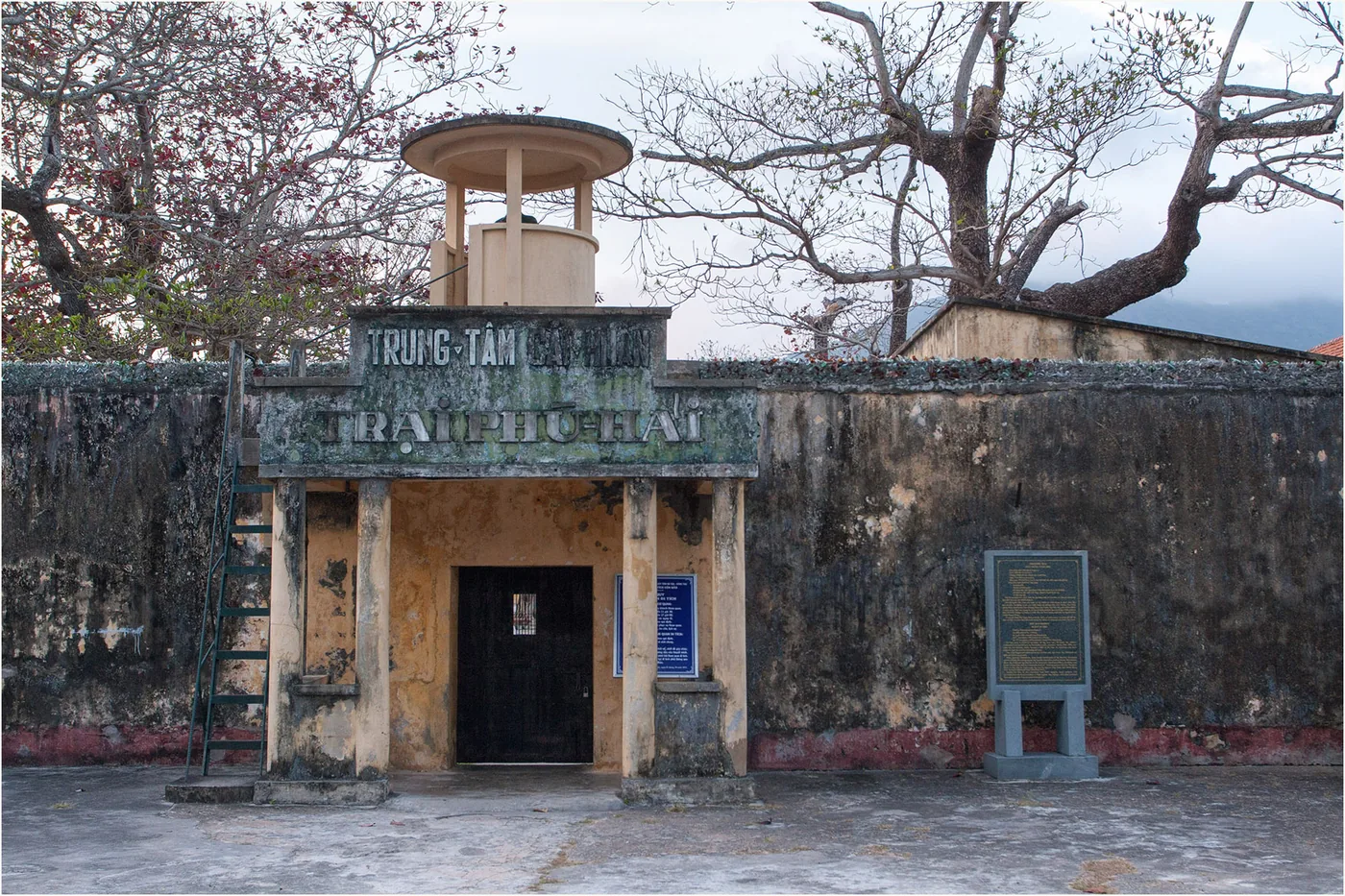
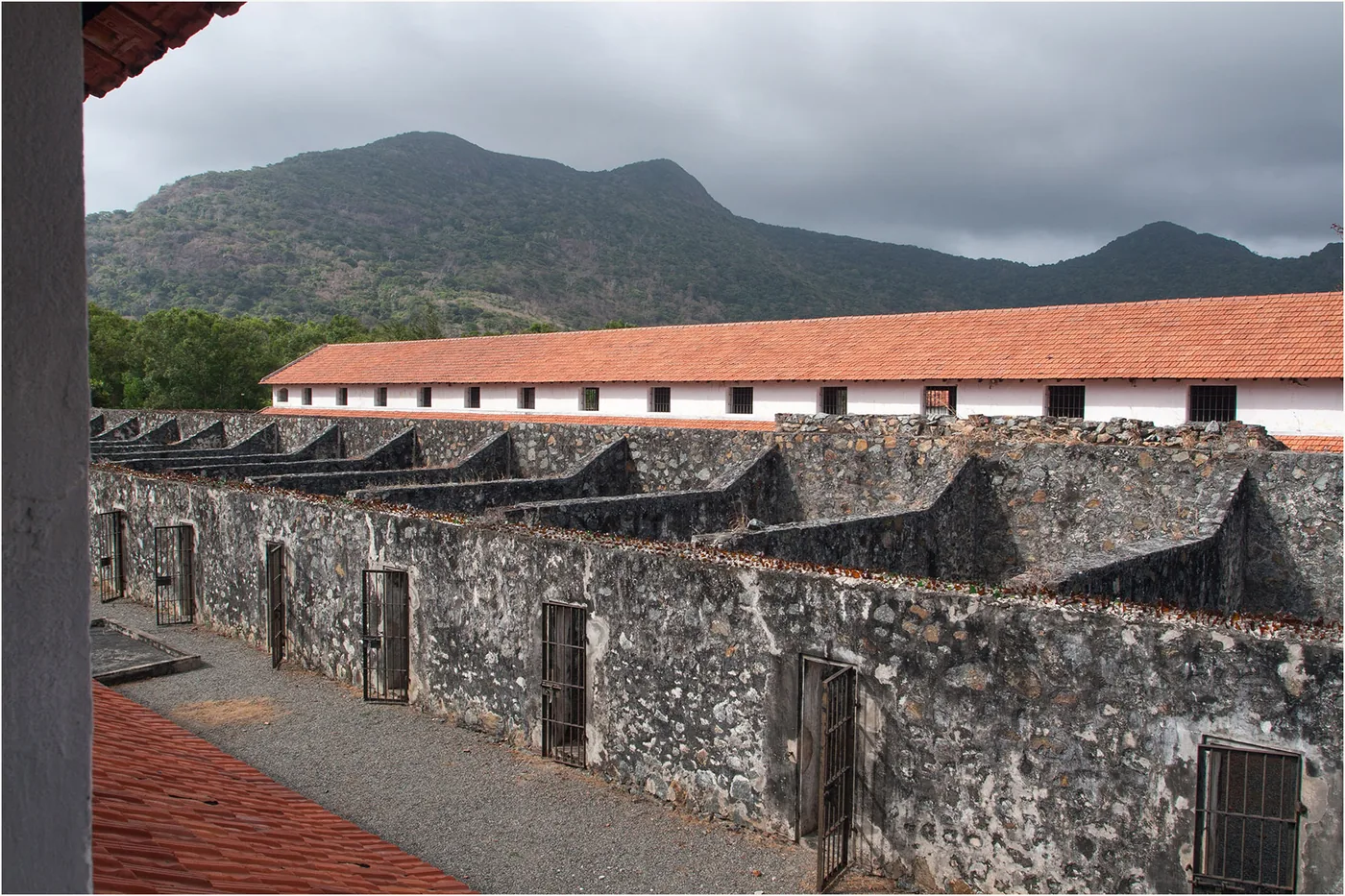
Phu HaiMap is the oldest camp on the island, the one France built when it first set up the prison. Large halls run around an open yard.
The leg irons are still fixed along the floors of the halls. The signs explain how many people were held in each room, and the number is hard to picture until you stand in one.
The French tiger cages
These are inside Phu Tuong campMap. The name comes from the design: instead of a roof the cells have bars, with a walkway above so that guards looked down into them.
Things were dropped and poured through those bars. The section stayed hidden from outside view for a long time.
Phu Binh camp
Phu BinhMap was built later, during the American period. The cells here look nothing like the French ones — low, tightly packed units with almost no opening.
Both get called tiger cages. Seeing the two in one morning makes the difference obvious.
The governor’s residence
The residenceMap is a few minutes’ walk away, and the contrast is the point. Lawns, shutters, a colonial villa kept in good order, with the camps a short walk down the road.
The camps not on the ticket
There were nine numbered camps in all, and walls and buildings from most of them are still standing. Only the ones on the ticket can be entered; the rest you see from outside.
There are also the interrogation rooms and a separate holding area known as Chuong Bo, originally a cattle pen. Signs mark them, but the explanations are brief — another reason to do the museum first.
8. Hang Duong cemetery and the memorial temple
Hang Duong cemeteryMap is a walk from the centre of town. The people who died in the prison are buried here, and for Vietnamese visitors this is the main reason to come to the island at all.
Four sections
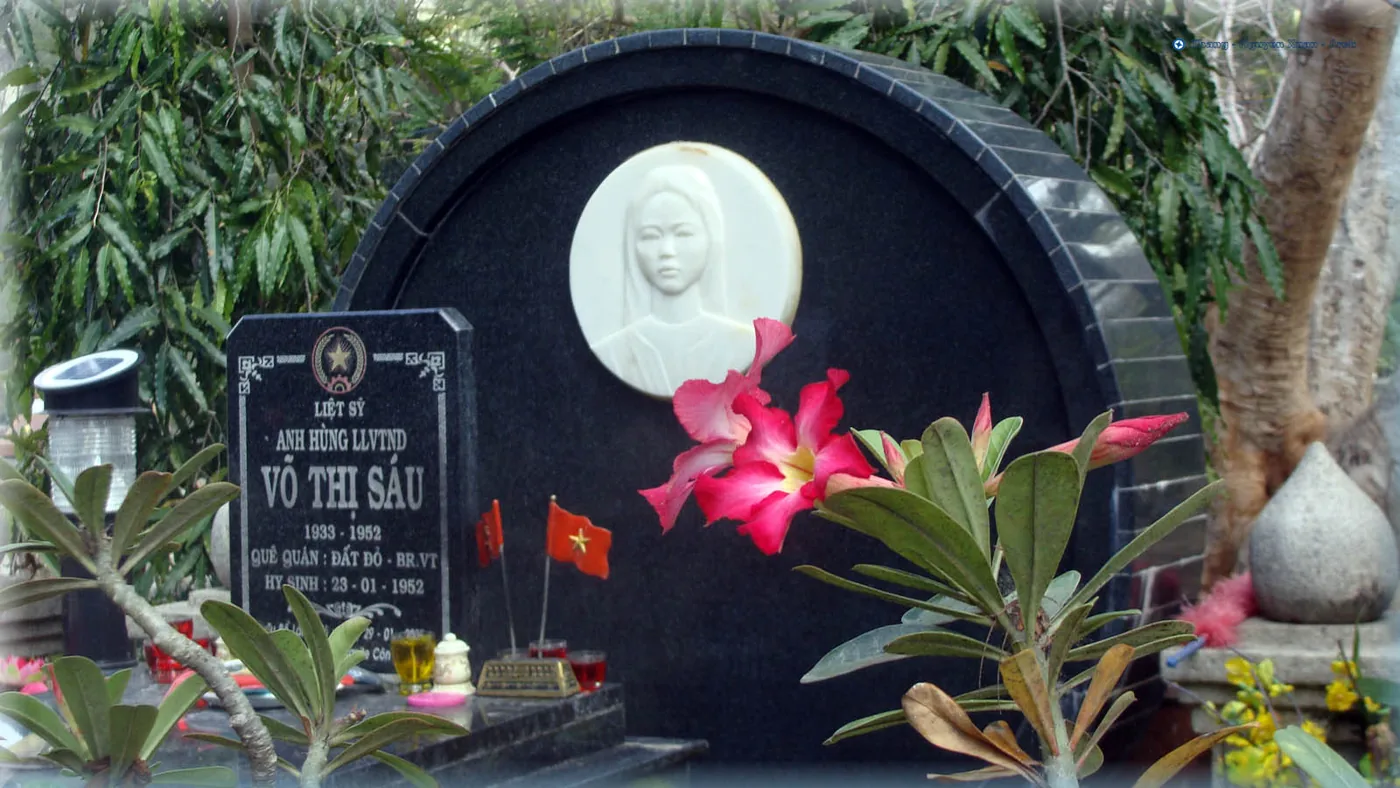
Section A holds the earliest graves, including Le Hong Phong. Section B holds the grave of Vo Thi Sau, which draws more visitors than anywhere else on the island. Sections C and D came later, D gathering remains moved here from elsewhere.
Far more graves are unidentified than identified. Long rows carry numbers rather than names.
Evening is the busy time
More people come after dark than during the day. The paths stay lit and busy well into the evening, with incense, flowers and fruit carried up from town.
There used to be a custom of arriving at midnight. The cemetery no longer stays open that late, so check the closing time if you are planning a late visit.
Foreign visitors are welcome to walk through. Be careful with cameras around people who are here to pay respects.
The temple next door
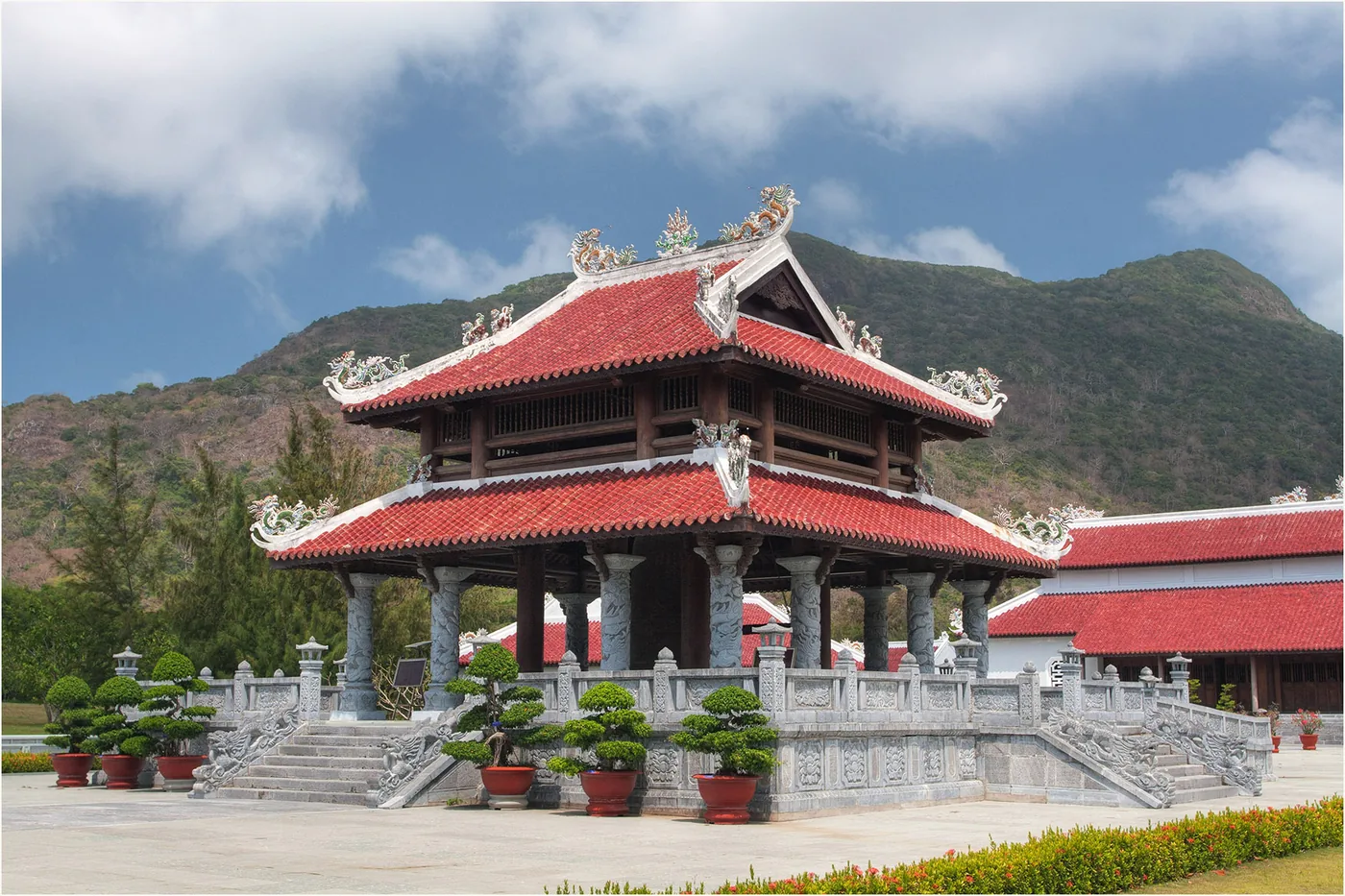
A memorial temple stands beside the cemetery, built much later than the graves. Organised groups hold a short ceremony there before moving on to the graves themselves.
The management centre allows about forty-five minutes for the cemetery and half an hour for the temple.
Who Vo Thi Sau was
She was executed on this island while still very young, and she is a household name in Vietnam. That is why there is always a crowd at her grave.
Most people bring flowers and incense. There is no required offering; the stalls by the gate sell everything you need.
Hang Keo
There is a second, older cemetery called Hang Keo. Many of the remains buried there were later moved across to Hang Duong.
What is left is close to forest now. Vietnamese visitors often take in both.
9. Other traces around town
Beyond the five ticketed sites, pieces of the prison period are scattered through the town. Most are a wall and a signboard, easy to walk past.
Pier 914
Pier 914Map runs out from the seafront in town. Prisoners built it by carrying stone down to the water, and the number in its name refers to those who died doing it.
No boats use it now. People walk out along it in the late afternoon.
Ma Thien Lanh bridge
The bridgeMap sits where the road heads inland toward the forest. It was never finished; the piers are what remain.
Several national park trails start from this point, so you can walk straight on from the site into the forest.
The colonial buildings and the lime kilns
A handful of French-era buildings survive in town, including the old guesthouse used by officials, along with the kilns where lime was burned. Most of these you look at from the street.
The market
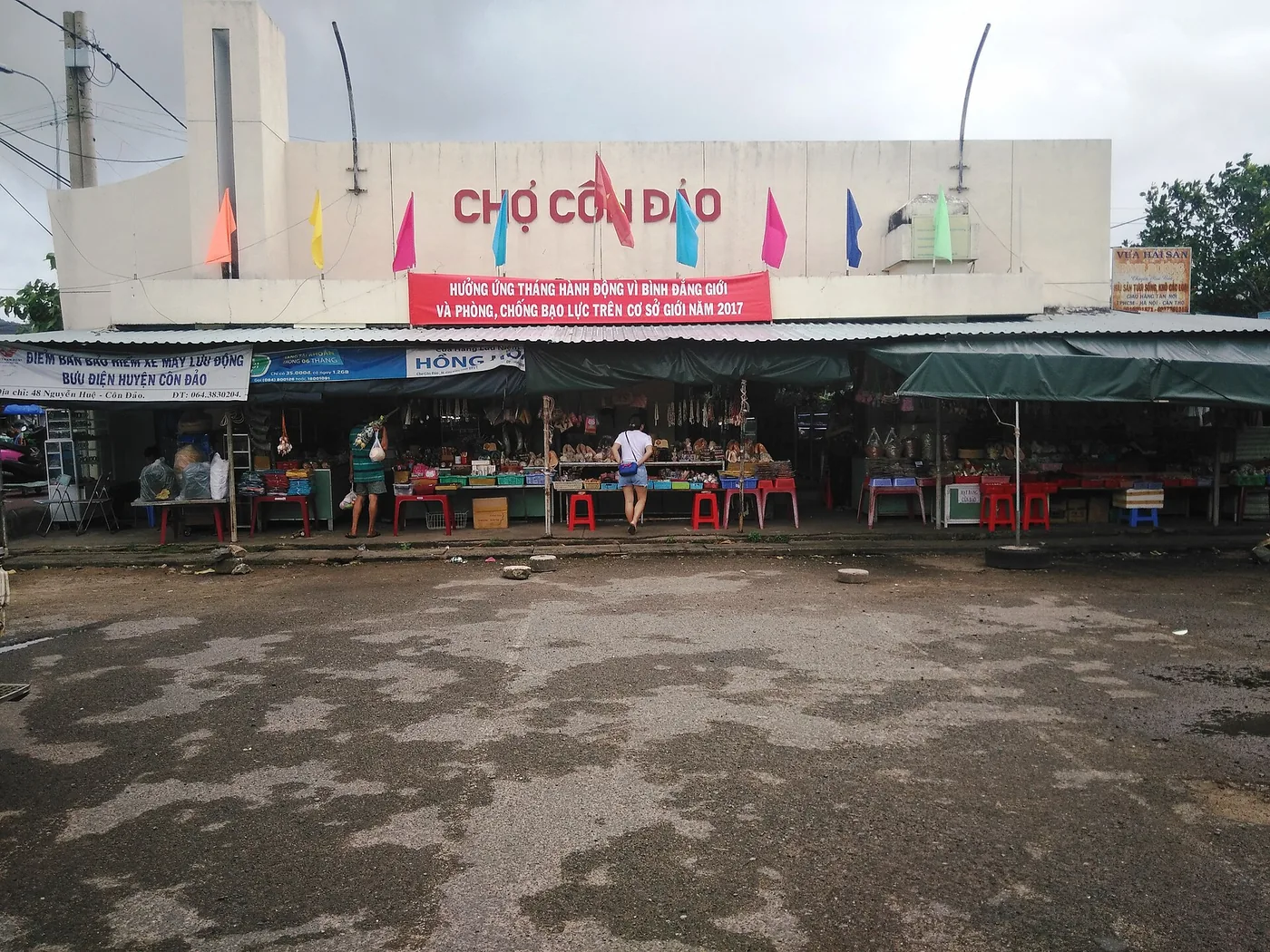
Con Dao marketMap sits in the middle of town, so you will pass it. It is not one of the heritage sites. Fish and vegetables in the morning, food stalls in the evening.
Very little is imported here, so the market is small. For fruit or something to take to the beach, it is the best option.
10. The temples islanders use
Alongside the heritage sites there are places the islanders themselves go. These are not dressed up for visitors, and they are quiet.
An Son shrine
A shrine near town is dedicated to Lady Phi Yen, a figure from the island’s older stories. Islanders come here regularly.
The building is small. If the doors are open you can go in; shoes come off at the threshold.
Van Son pagoda
A pagoda sits part way up the hillside, and the climb gives you a view over the town and the bay. People go up for the view as much as anything.
The steps are steep. Early morning or late afternoon is far more comfortable.
Paying respects is ordinary here
For Vietnamese travellers this island is a place of pilgrimage before it is a beach holiday. That is why the cemetery and the shrines are never empty.
It can feel unfamiliar at first. A cemetery bright and busy at ten at night is simply normal here.
If you go in
People are praying. Look before you raise a camera.
Shorts and bare shoulders sit awkwardly in these places, so carry something light to put on. Slip-on shoes help where you have to take them off.
11. The beaches
The beaches are all different from each other. Some you walk to; others need a motorbike and most of a morning.
Dam Trau
Dam TrauMap is the best known beach on the island, right beside the airport, with aircraft passing low overhead on approach. That is what most of the photographs are of.
The sand is fine and the water clear. It is a long way from town, though — close to forty minutes each way — so give it half a day.
Lo Voi
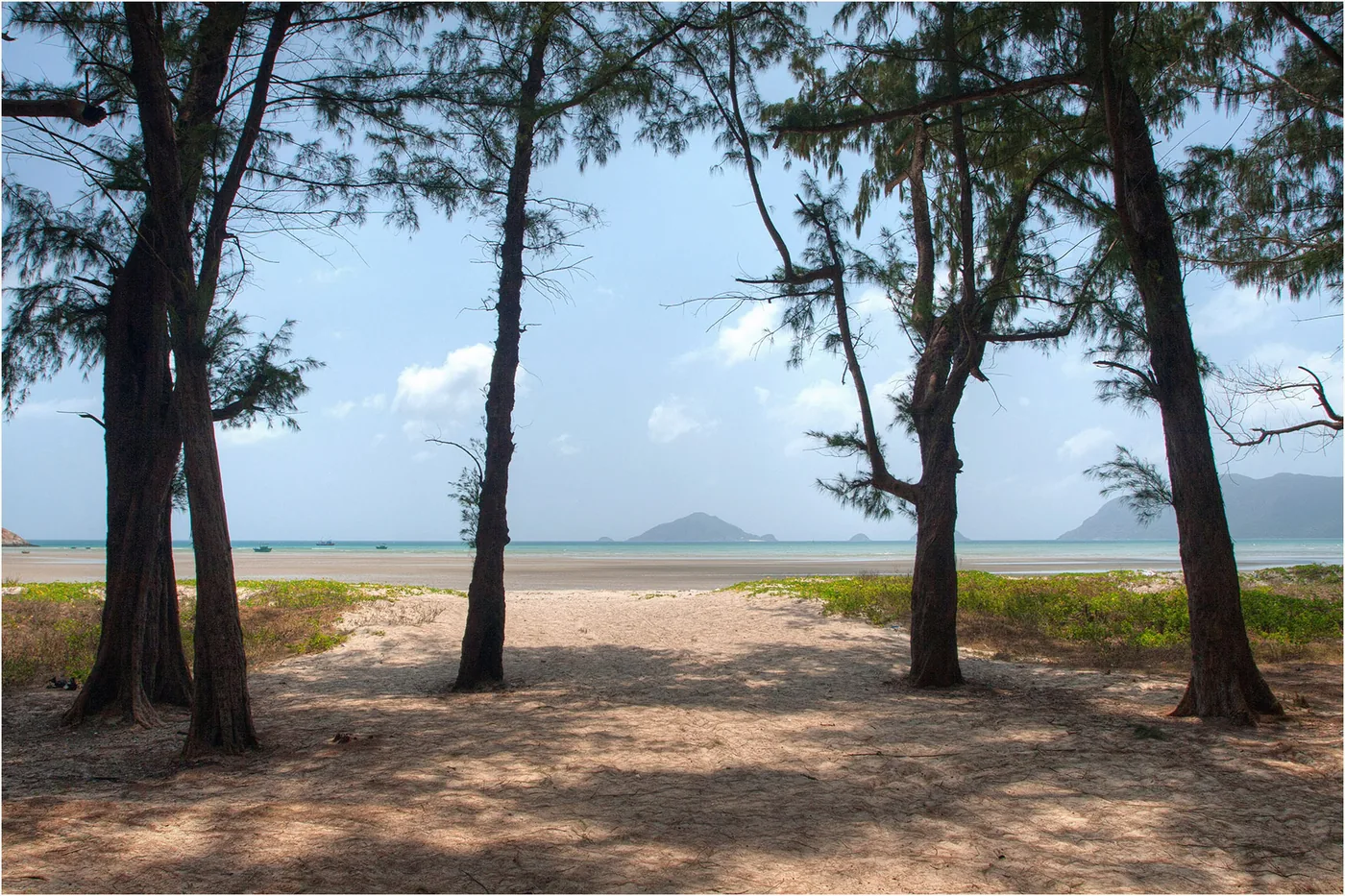
Lo VoiMap is walkable from town, lined with casuarina trees that give proper shade. Good for a morning walk.
It is more a sitting beach than a swimming one.
Dat Doc
Dat DocMap is on the north-east coast. A resort fronts it, but the beach itself is open.
Ong Dung
Ong DungMap is on the west side. You drive as far as the road goes, then walk down through the forest.
There are more stones than sand, so it is awkward for swimming. Almost nobody is there.
Bai Nho
Bai NhoMap is the small beach below the hill on the way to Dam Trau. The viewpoint above it is the photograph people stop for.
Dat Tham and Bai Bang
These are further round to the north-west, reached by walking in from where the road ends. They work better as the end of a forest walk than as a beach trip in themselves — one of the park’s marked routes links the two.
The empty ones
Da Cuoi and Ong Cau are names on the map with nothing built at them. No shade, nowhere to buy water.
If you go alone, fix a time to turn back. The roads are very dark once the sun goes.
Swimming
None of these beaches is patrolled. On a day with surf, stay in close.
Ask your hotel about wind and swell — they usually know before anyone else whether the boats are going out.
The sea is calm for part of the year and rough for the rest, and the difference is sharp. There is a section on that below.
12. Walking in the national park
Most of the island is national park. Marked routes run through it, some half a day and some a full day.
You pay per route
Park fees do not work as a single entry ticket. Each marked route is charged separately. For an adult that is 50,000 or 60,000 dong depending on the route, and much less for students and children.
Under-sixes go free. Older visitors and people with disabilities pay a reduced rate.
Tickets come from the park office in town. Some routes require a guide, so ask the day before.
The short walks
The climb up to So Ray is the easiest — half a day, on a clear path. Macaques appear along part of it, so keep food out of sight.
The forest path down to Ong Dung beachMap is also short, starting near the Ma Thien Lanh bridge and coming out on the far coast.
The full-day walks
The climb to the summit of Nui Chua, the route out to Dam Tre bay, and the coastal forest walk linking Bai Bang and Dat Tham all take a full day.
There is nowhere to buy water along any of them. Carry enough, and start early.
The heritage trees
The park has marked out a number of very old trees, and there is a short route that goes to them. The canopy is thick enough to stay cool in the middle of the day.
What the routes cover
The marked routes fall into two groups: ones that take a boat out to a smaller island, and ones you walk on Con Son itself.
| Type | Where they go |
|---|---|
| By boat | Bay Canh · Hon Cau · Hon Tai · Hon Tre Lon · Hon Ba · Hon Trung · Dam Tre bay |
| On foot | So Ray · Ong Dung · Bai Bang and Dat Tham · An Hai lake · Nui Chua · the coast toward Dam Trau |
The boat routes cost slightly more. Either way you pay once per route.
Guides
Some sections cannot be walked alone. Guide fees differ for a half day and a full day, and an English-speaking guide costs more than a Vietnamese-speaking one.
Ask in advance if you want commentary in English. There are not many English-speaking guides on the island.
What you see in the forest
Macaques and squirrels are common. Do not open a bag of food in front of them.
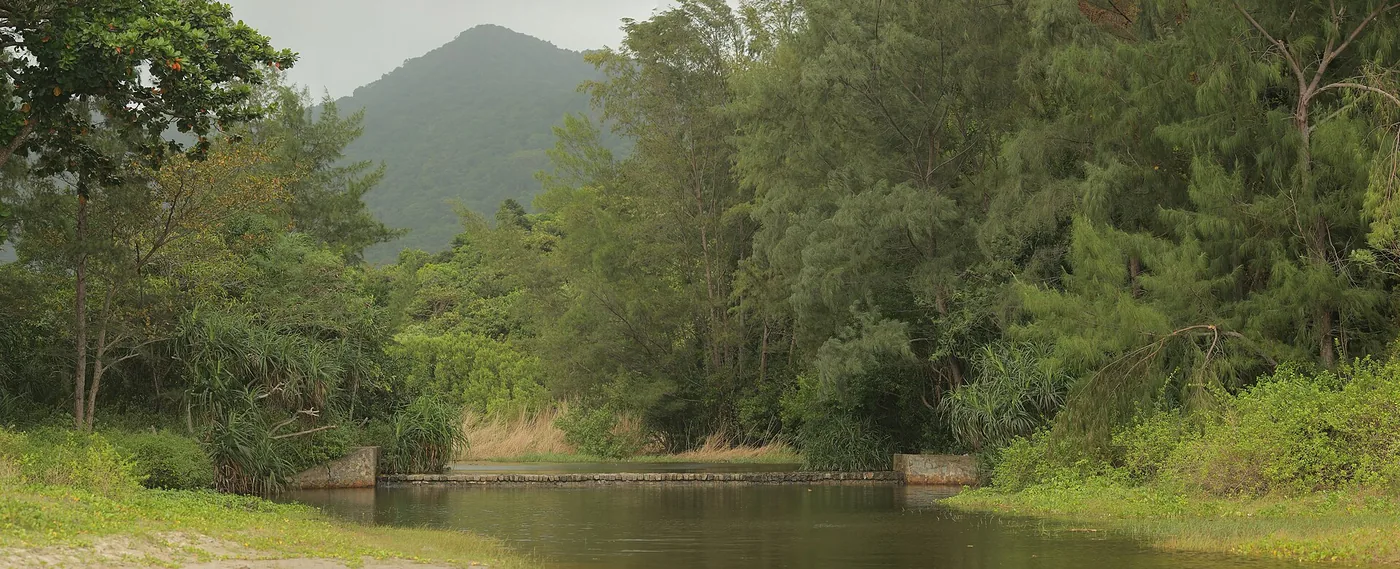
There is a reservoir inside the park, which is where the island’s water comes from. One of the trails passes along the edge of it, and it is a good place to stop.
13. The islands you take a boat to
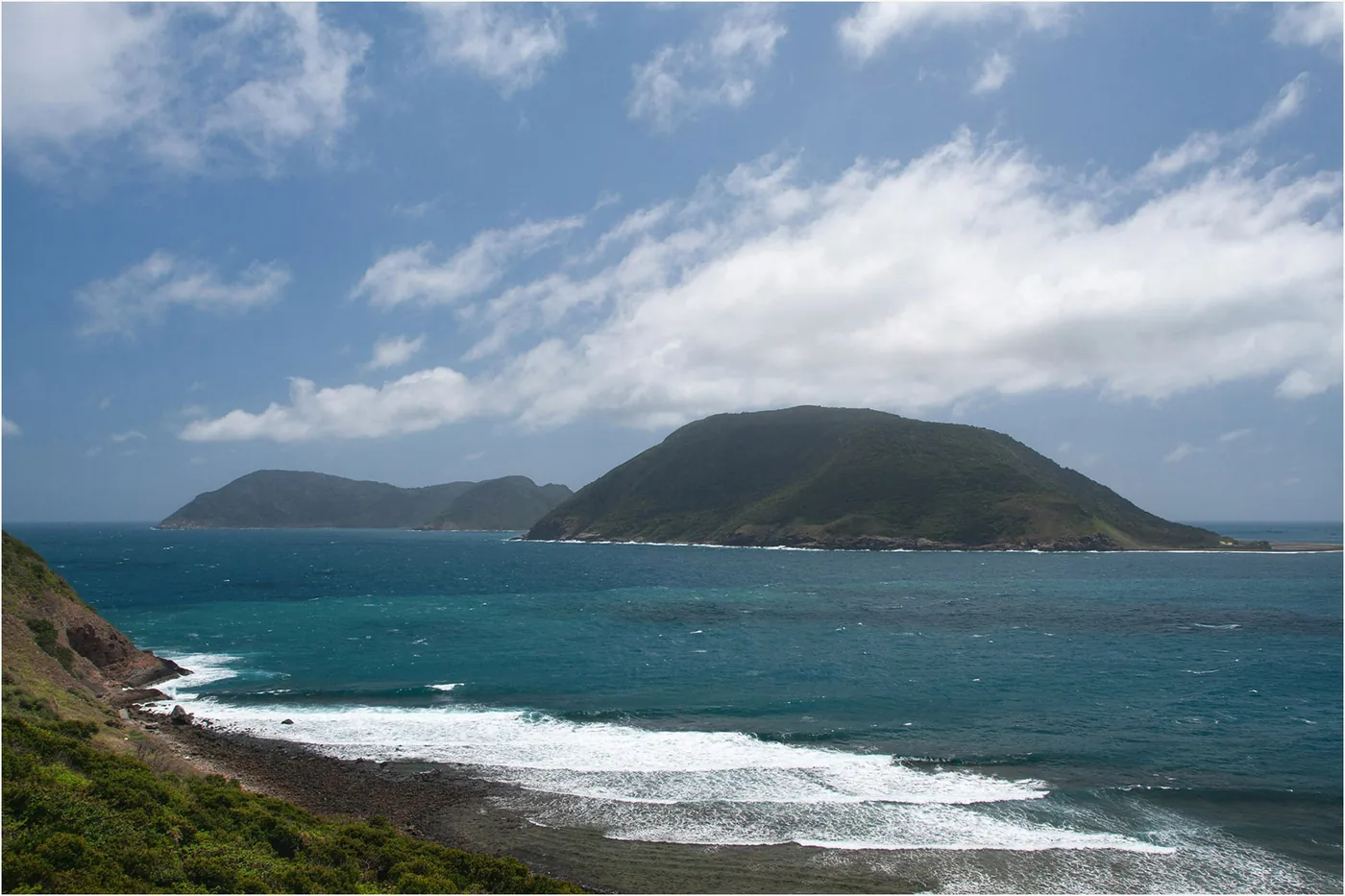
Beyond Con Son there are a dozen smaller islands. Boats go out to snorkel the reefs and to see where the turtles nest.
Bay Canh
Bay CanhMap is the one most trips go to. It is the main turtle nesting beach, and it also has mangrove and reef.
Boats leave from Con Son. There are day trips for the reef and overnight trips for the turtles.
Hon Cau
Hon CauMap lies further out. Turtles nest here too and the water is very clear.
One of the park routes runs to it from the airport side of the island, so the departure point depends on the trip.
Hon Tre Lon and Hon Tai
Hon Tre LonMap and Hon TaiMap are close in and work as half-day trips. These are the usual snorkelling runs.
Hon Trung and Hon Ba
Hon Trung is a seabird island, the rock covered with nesting birds. Access is restricted during the nesting season.
Hon Ba is the large island visible to the south — the one you look across at from Shark CapeMap. There is a route out to it as well.
Dam Tre bay
A bay on the north-east side, reached by boat, with mangrove to walk through. It takes a full day.
It is sheltered, so it sometimes runs on days when the open water is too rough for anything else.
Check the season before you plan around this
These boats only go out when the sea is calm. Through the rough months, cancellations are frequent.
If getting out to the islands is the point of your trip, choose your dates around the sea first.
Booking
The park office sells the trips. Hotels and local agents can arrange them too, but either way decide the day before.
Departure times follow the tide, and many trips leave early in the morning.
14. The sea turtles
More sea turtles nest at Con Dao than anywhere else in Vietnam. You can watch them come ashore to lay, and watch hatchlings released at dawn.
The hours are fixed
Nesting watches run from six in the evening until six the following morning. You sleep on the island and wait, so it cannot be done as a day trip.
Hatchling releases happen early in the morning, between 05:30 and 07:30, in two groups.
Numbers are capped
You cannot simply turn up. There is a limit on how many people stay overnight for the nesting watch, and they are split into small groups. The morning release is capped as well.
So you book in advance, through the national park office. In the busy months it fills.
What it costs
There is a guide fee, and the per-person price drops as the group grows. Alone it is expensive; with five or six people it is roughly half that. If you are travelling solo, ask whether you can join another group.
Park entry is separate and not included.
Some nights no turtle comes ashore. The park’s own schedule halves the guide fee when that happens.
Which island
The nesting beaches are known: Bay CanhMap takes the most, with Hon CauMap and the Cat Lon sands also in use.
The park decides which one on the night. You can state a preference when booking, but it is not a guarantee.
The rules
Turtles react to light and noise. You sit where the guide puts you, and flash photography is not allowed.
Single-use plastic is banned on these trips and rubbish comes back to the main island with you.
What the night is like
There is no accommodation out there. You wait at a park station.
There are mosquitoes and the sleeping arrangements are basic. Bring long sleeves, repellent and a change of clothes, and do not count on a shower.
15. Snorkelling and diving
The reefs here are in better condition than most in Vietnam, largely because there are so few people and so little boat traffic.
Snorkelling
Most boat trips include snorkelling. Masks and snorkels rent from the national park at a low fixed rate, and life jackets rent separately.
If you are not a confident swimmer, take the jacket. The water is clear enough that you can float on the surface and still see the bottom.
Diving
Proper dives go through one of the few operators on the island. There are not many, so contact them before you arrive.
Diving only works properly in the calm season. When there is swell, visibility disappears.
Visibility varies
It changes a lot day to day. The day after heavy rain is murky.
If your schedule allows, wait for a clear day rather than fixing the date in advance.
On the reef
Do not stand on the coral or touch it. This is a managed park area and the guides will say so.
Think about your sunscreen as well — many of them contain compounds that damage reefs.
16. When to go
The sea is calm for part of the year and rough for the rest, and that split shapes what you can do here.
The calm months
From spring through early autumn the water settles. Boats run reliably out to the smaller islands, visibility is good enough for the reefs, and this is also when the turtles come ashore.
There are showers, but they pass in an hour or two.
The rough months
From late autumn into early spring the wind gets up and the swell builds. Island trips are cancelled often and the ferry misses sailings.
On the other hand it is not hot and there is little rain, which makes walking round the prison sites considerably more pleasant. If you were not planning to swim, it is a perfectly good time to come.
It runs opposite to Phu Quoc
Phu Quoc’s dry season runs from late autumn through spring, which is the reverse of this. Put both islands in one trip and one of the two crossings will be rough.
If you want both, split them between trips, or keep one of them short.
When it is busy
Tet and the Vietnamese public holidays fill the island. Flights and rooms go first and prices rise.
Certain memorial dates also bring large numbers of pilgrims, and on those the cemetery and the sites are packed.
17. Where to stay
Almost all the accommodation is in town. A few resorts sit out on the beaches.
In town
Small hotels and guesthouses cluster through the centre. The sites, the cemetery, the market and the restaurants are all walkable, so you manage perfectly well without transport.
Prices run higher than the mainland. Everything on the island arrives by boat, which is why.
Beach resorts
A short drive from town, five to ten minutes, there are resorts on the coast. Six SensesMap is the best known, with individual villas and private pools.
If the point of the trip is to rest, that is the right choice. If you plan to go back and forth into town for the sites, you will be calling for a car each time.
Choosing
| If your trip is about | Stay |
|---|---|
| The prison sites and the cemetery | In town — everything is walkable |
| Resting by the sea | A beach resort |
| Riding round the island | Either works |
| An early-morning ferry out | In town — fifteen minutes to the port |
Book ahead
There are not many rooms. Weekends and holidays fill, and the price gap against a weekday is wide.
Many places include an airport or port pickup, so ask when you book.
Four resorts, the hotels in town and what each location does to your day are laid out in where to stay on Con Dao.
18. Eating
The restaurants are concentrated in town. The choice is limited. The seafood is good.
Seafood
Several places in town and near the port serve what came in that morning. It costs a little more than on the mainland.
Some places do not post prices. Confirm the weight and the price before you order.
The market
Stalls around the marketMap sell noodles and rice dishes — pho in the morning, grilled food in the evening.
This is the cheap option. It does not run late, so eat early.
Breakfast
Most hotels include it. If yours does not, head for the market — the noodle and banh mi stalls open early.
If you want the first prison slot at 07:30, you are eating breakfast in a hurry.
Coffee
There are a few cafes in town. For a seat with a sea view, go late in the afternoon.
Opening hours are unpredictable, and in the quiet season some stay shut during the day.
Closing time is early
Most kitchens start clearing up around nine in the evening. Come back late from the cemetery and you may find nothing open.
Some hotels will do dinner if you tell them in advance.
Water and snacks
Buy them before you go out for the day. There is nothing for sale along the trails or at the far beaches.
There are no convenience stores the way there are on the mainland — the market and a few shops in town, and that is it.
19. How many days
Two nights covers the sites and the beaches. Add a day if you want to get out on the water.
One night
That is the prison sites and nothing else. Arrive in the afternoon, walk the town, go up to the cemetery in the evening, catch a morning slot at the camps and leave.
You will barely see a beach. It works if the schedule is tight.
Two nights
This is the comfortable minimum.
| Day | What fits |
|---|---|
| One | Arrive. Walk the town and Lo Voi beach. Cemetery in the evening |
| Two | Morning slot at the camps. Dam Trau beach in the afternoon |
| Three | A short forest walk, then out |
Three nights
That adds a boat day — the reef at Bay Canh or Hon Tre Lon, or an overnight turtle watch.
If the turtles are why you are coming, you need this, because the watch takes a whole day and night.
Four nights or more
With longer you can walk the forest properly. Several routes take a full day, so two days in the park is reasonable.
The same applies if you want several dives. And with a day lost to weather now and then, the extra room helps.
What constrains the plan
Two things: the camps stop admitting at 09:00 and 15:00, and the airport and the ferry port are at opposite ends of the island.
If your flight times are awkward, put the prison day in the middle of the trip.
Arrival and departure days
Count the arrival day as a half day. Getting from the airport to your hotel takes time, and the slots have usually finished.
The same on the way out. With a morning flight you get a look at the sea and that is all.
20. What it costs
Spending on the island itself is modest. The money goes on getting here.
Getting in and out
The flight is the big item, and the gap between low and high season is wide enough to double it.
The ferry is far cheaper. Against that, add the cost and the time of reaching Tran De.
On the island
| Item | Roughly |
|---|---|
| Prison ticket, five sites | 50,000 dong, adult |
| National park, per route | 50,000–60,000 dong |
| Motorbike, per day | around 140,000 dong |
| Airport taxi | 250,000–300,000 dong |
| Turtle watch guide | depends on group size |
Rooms and meals make up the rest, both a little above mainland prices.
Where the money actually goes
A boat day out to the islands is the most expensive single day. A turtle night costs more again because of the guide fee.
A day spent on the sites, the cemetery and the beaches costs almost nothing beyond the ticket and fuel.
Where you can save
Anything priced per group gets much cheaper with numbers. Ask your hotel whether another party is going the same night.
Coming by sea instead of by air cuts the transport cost substantially, at the price of a day.
Bring cash
There are very few ATMs and plenty of places that do not take cards.
Change money before you come. Tickets, park fees and bike rental are all easier in cash.
21. Practical things worth knowing
A few things work differently here because it is a small island.
Phone signal
Coverage is fine in town and along the main roads. It drops in the forest and out on the water.
Sort out a SIM or an eSIM before you arrive. There is nowhere convenient to buy one here.
Medical care
There is a small hospital, but anything serious means flying out.
Bring the medication you need. There are only a couple of pharmacies and they close early.
Weather can strand you
Wind cancels flights. It stops the ferry more often still.
Do not connect straight onto an international flight the day you leave the island. Spend a night in Ho Chi Minh City — our guide to where to stay in the city covers the districts.
At the prison sites
People died here and many visitors come to pay respects. Dress and speak accordingly.
The interiors are dark and the floors uneven. Watch your footing.
Insects and sun
There are mosquitoes on the forest trails and very little shade on the beaches. Repellent and a hat both earn their place.
Entry rules
Con Dao is domestic travel within Vietnam, so nothing extra applies beyond the national entry rules. Our entry requirements guide has the current position on visas and the arrival card.
22. Con Dao compared with the other islands
If you are deciding between Vietnamese islands, they are not alike.
| Island | What it is |
|---|---|
| Con Dao | Quiet. Heritage sites and clear water together. Very little to do in the evening |
| Phu Quoc | Resorts, theme parks, plenty of restaurants. Easier with children |
| Cat Ba | Up north. Limestone scenery, climbing and kayaking |
Against Phu Quoc
Phu Quoc has the facilities and the choice of places to eat. With children it is usually the easier trip.
Con Dao is quieter and less crowded. It can also be dull if you want things to do.
Against Cat Ba
Cat Ba is in the north and you reach it from Hanoi. On a southern itinerary the two do not combine.
Fitting it into a southern trip
You fly to Con Dao from Ho Chi Minh City, so three days slot into a southern Vietnam itinerary without much trouble.
It sits alongside the Cu Chi tunnels or a Mekong leg well enough. Just leave room either side, because getting on and off the island eats time.
If you are coming by sea, the Mekong pairs naturally: a night in Can Tho, then the morning boat from Tran De.
Passing through Ho Chi Minh City
Flying means a stop in the city at both ends. Our Ho Chi Minh City guide covers what to do with the time.
Domestic and international departures use different terminals at Tan Son Nhat, so allow enough time between flights.
🎡Things to Do20
🍜Food2
🏨Where to Stay6
🚇Getting Around3
🧭Travel Tips6
🧭Vietnam-wide essentials114
Con Dao: common questions
Fly from Tan Son Nhat in Ho Chi Minh City — about 45 minutes, with several departures a day, plus one flight a day from Can Tho. By sea, the ferry runs from Tran De port in the Mekong and takes around two and a half hours. The boat from Vung Tau is not currently running.
Not at the moment. The fast catamaran on that route was taken out of service after a technical failure and the operator has suspended sailings until further notice, currently indicating a return around Lunar New Year next year. Use Tran De instead.
No. Visits run in guided slots — four in the morning from 07:30 at half-hour intervals, and three in the afternoon from 14:00. The last one starts at 15:00, so arriving later than that means missing the day. One ticket covers the museum and four camp sites.
Two nights covers the prison sites and the beaches. Make it three if you want a boat trip to the smaller islands or an overnight turtle watch, because the watch uses a full day and night.
During the calm months. Nesting watches run from six in the evening to six the next morning, and hatchling releases happen early in the morning. Places are capped, so book through the national park office in advance.
Spring through early autumn, when the sea is calm, is best for swimming and island trips. Late autumn to early spring brings wind and cancelled boats, but it is cooler and drier, which suits walking the heritage sites. The season runs opposite to Phu Quoc.
Most people rent a motorbike, around 140,000 dong a day, and fill the tank themselves. Taxis are scarce, so have your hotel call one. Staying in town puts the prison sites, the cemetery and the market within walking distance.
Bring plenty. There are very few ATMs and many places do not take cards. Prison tickets, park fees, bike rental and street food are all cash transactions.