
Da Nang Itinerary: 3, 4 and 5 Day Plans That Work
A day-by-day Da Nang plan built on real opening hours, drive times and fares, with the honest cuts to make if you only have three days.
| How many days | Four, five if you can. The number that decides it is not how much there is to see – it is that Ba Na, Hoi An and My Son each want a whole day and each want it early. |
|---|---|
| Day 1 | Land, sleep on the beach side, swim at 16:30, walk the riverfront, and take the Dragon Bridge at 21:00 if it is a Friday, Saturday or Sunday. |
| Day 2 | Ba Na Hills and the Golden Bridge, at the base station by 07:30 – but move it to whichever of your mornings has the clearest forecast. |
| Day 3 | Hoi An, either from 07:00 or from 15:30 into the lantern hours. Never the middle of the day. |
| Day 4 | Marble Mountains at 07:00, Son Tra by car, the middle of the day off, seafood at Tho Quang. |
| Day 5 | My Son through the gate at 06:30, or the Hai Van Pass and Lap An lagoon, or a Hue day on the train. |
| Best base | My Khe beach strip for the sea and the sunrise swim; Bach Dang riverfront for the bridges, the markets and the cheaper eating. |
| Budget | Roughly 830,000-1,150,000 VND a day backpacking, 2,180,000-3,720,000 mid-range and 4,270,000-11,970,000 comfortable, per person, with Ba Na’s 1,000,000 already inside those figures. |
1. How many days Da Nang actually needs
2. Read this before you plan the days
3. The itinerary at a glance
4. Day 1 – arrival, the beach at 16:30, and the riverfront
5. Day 2 – Ba Na Hills and the Golden Bridge, done properly
6. Day 3 – Hoi An, and the two hours everyone misses
7. Day 4 – Marble Mountains, Son Tra, and the scooter ban nobody has absorbed
8. Day 5 and beyond – My Son, Hai Van, Lap An, Cu Lao Cham and Hue
9. Only have 3 days? Here is what to cut
10. Different trips, different plans
11. Where to eat, by where the itinerary has already put you
12. Getting between everything: fares, minutes and the licence reality
13. What the four days actually cost
14. When to come, and what the weather does to this plan
15. After Da Nang: where this trip goes next
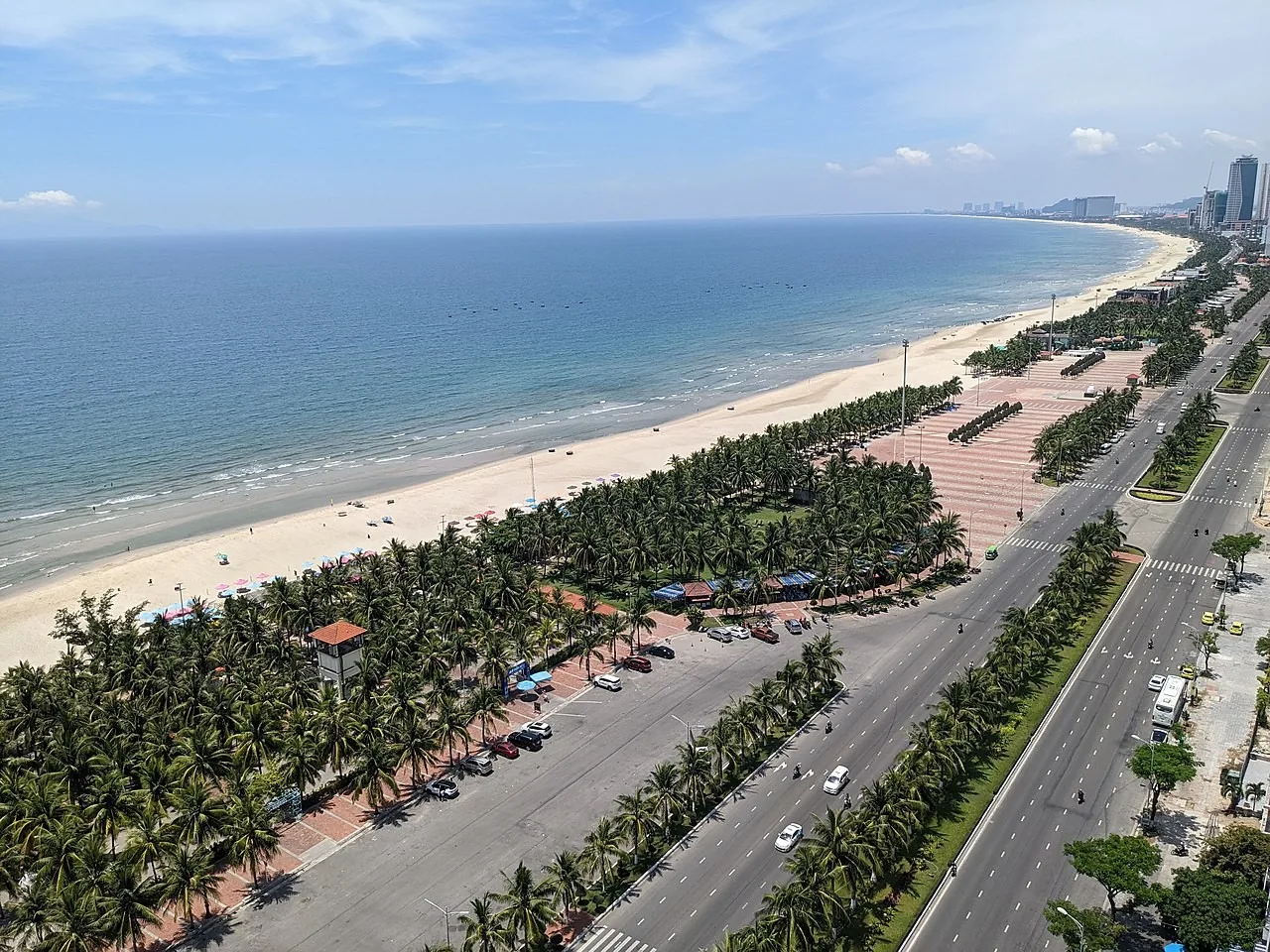
1. How many days Da Nang actually needs
🌙 Landing in Da Nang at 1am: which night to book and what the airport cannot do →
Four full days is the honest minimum, and five is the number that stops the plan feeling like a forced march. Da Nang itself is a two-day city. What turns it into a four-day trip is the ring of things within 70 km: Ba Na Hills to the west, Hoi An and My Son to the south, the Son Tra peninsula on its own doorstep and the Hai Van Pass to the north. Three days works, but only if you subtract properly rather than compress.
This is the point most Da Nang itineraries miss. They treat the city as a checklist of sights and then wonder why the days feel thin. Da Nang has a handful of genuinely good hours of its own – the beach at dawn, the river after dark, a fish-cake noodle counter at 07:00 – and it is otherwise a very comfortable, very well-connected base from which to reach better things. Plan it as a base and the trip works. Plan it as a destination with a list and you will spend day three wondering what you are supposed to be looking at.
What each extra day actually buys you
| Days on the ground | What genuinely fits | What you are giving up |
|---|---|---|
| One long layover | Marble Mountains at 07:00, a swim, the Cham Museum, dinner on the river | Everything outside the city. Do not attempt Ba Na or Hoi An on a layover. |
| Two days | The city properly, plus one big thing: either Ba Na or Hoi An | The other one. This is the version most people regret. |
| Three days | City, Ba Na, Hoi An – with the Marble Mountains folded into the Hoi An transfer | My Son, Son Tra above the pagoda, Hai Van, any slack for weather |
| Four days | All of the above plus Son Tra at sunrise and a real afternoon off | My Son, or the Hai Van and Lap An day. You pick one, not both. |
| Five days | Everything above plus My Son at dawn, or Hai Van and Lap An, or a Hue day by train | Almost nothing. This is the comfortable length. |
| Six or seven | Add Cu Lao Cham in the calm season, a cooking class, a second Ba Na morning, or two nights in Hoi An | Nothing, but you are now on a holiday rather than a trip |
The plan, in one paragraph
Sleep on the beach side. Day one is a soft landing: the sea at 16:30, the riverfront after dark. Day two is Ba Na, reaching the cable-car base by 07:30 – except that since 1 January 2026 the ticket is valid across three consecutive days, so you should actually go on whichever of your first three mornings has the clearest forecast. Day three is Hoi An, timed to either the empty streets before 08:30 or the lanterns after 17:30, and not to the hot, crowded middle. Day four is the Marble Mountains at opening, the Son Tra peninsula by car, and an afternoon deliberately left empty. Day five, if you have it, starts just after 05:00 for My Son.
Everything else in this guide is the detail underneath that: what opens when, how long each stop really takes, what each hop costs in dong and minutes, and what to drop when it rains or you overslept. If you want the wider picture first – where to stay, what the city is like, the neighbourhood-by-neighbourhood version – start with our Da Nang master guide, then come back here for the clock.
Where to sleep, because it changes every leg time in this plan
Da Nang has two centres about 3 km apart across the Han River, and the choice quietly rewrites the itinerary. The beach strip along Vo Nguyen Giap puts you within walking distance of a sunrise swim and the An Thuong restaurant grid, and adds a ₫45,000-80,000 car hop to anything on the west bank. The Bach Dang riverfront puts you inside the market district, the Cham Museum and the Dragon Bridge crowd, and adds the same hop in reverse to the sea.
| Base | Best for | The cost of choosing it |
|---|---|---|
| My Khe / An Thuong beach strip | Sunrise swims, families, resorts, walkable dinner and bars | Every market, museum and the Dragon Bridge is a short paid ride away; breakfast options here are carts, not counters |
| Bach Dang / Han riverfront | Bridges, Han and Con markets, the best-value eating, the 21:00 show on foot | No sea. A 8-12 minute ride to the sand, longer at rush hour |
| Non Nuoc / south end | Big resorts, quiet sand, Marble Mountains on the doorstep | You are 8 km from the city and will use a car for everything |
| Hoi An instead | Anyone whose trip is really about the old town, My Son and tailoring | Ba Na and Son Tra become long days; Da Nang’s evenings become a 40-55 minute drive |
Our full breakdown of the areas and what they cost sits in the Da Nang accommodation guide, and the beachfront five-star inventory is covered separately in the Da Nang resorts guide. If your trip is mostly Hoi An with a Da Nang airport arrival, read the Hoi An itinerary instead and treat this page as the day-trip supplement.
2. Read this before you plan the days
Six clock facts shape every good Da Nang itinerary, and getting any one of them wrong costs you half a day. The sun sets absurdly early here all year. Breakfast counters are shut by 10:00 and lunch service by 13:30. Ba Na’s ticket is now a three-day pass. The Dragon Bridge show is Friday to Sunday and lasts five minutes. The Marble Mountains close at 17:00 or 17:30 by the optimistic source, last entry 16:30. And from April to September the middle of the day is not usable outdoors.
Da Nang’s sunset is early, and it barely moves
This is the single most common structural error in itineraries written by northern-hemisphere visitors. Vietnam runs one time zone at UTC+7 while Da Nang sits at 108.2 degrees east, so the solar day is shifted early: solar noon falls around 11:56 and the light is gone by 18:45 even at the July peak. The whole year fits inside a band of about 70 minutes of sunset. There is no long summer evening here, and a plan that assumes one will put your viewpoint stop in the dark.
| Month (15th) | Sunrise | Sunset | Usable light ends | Day length |
|---|---|---|---|---|
| January | 06:17 | 17:35 | 17:57 | 11h 19m |
| February | 06:11 | 17:51 | 18:12 | 11h 40m |
| March | 05:54 | 17:58 | 18:18 | 12h 04m |
| April | 05:31 | 18:03 | 18:24 | 12h 32m |
| May | 05:16 | 18:10 | 18:32 | 12h 55m |
| June | 05:14 | 18:21 | 18:43 | 13h 07m |
| July | 05:22 | 18:24 | 18:46 | 13h 02m |
| August | 05:30 | 18:12 | 18:34 | 12h 43m |
| September | 05:34 | 17:50 | 18:11 | 12h 16m |
| October | 05:38 | 17:27 | 17:48 | 11h 50m |
| November | 05:48 | 17:14 | 17:35 | 11h 26m |
| December | 06:05 | 17:18 | 17:40 | 11h 13m |
Read the November and December rows again. A 16:00 arrival at the Marble Mountains in December is not a late-afternoon visit; the site closes at 17:00 and the sun is down at 17:18. The same table also settles the Lap An lagoon question that Vietnamese photo guides fudge: arriving at 17:00 for sunset is right in December and an hour too early in June.
Breakfast is over by 10:00, and lunch by 13:30
Da Nang eats early and takes it seriously, and the food you came for is morning trade. Bun bo Hue, bun cha ca, banh canh and most mi Quang counters open at or just before dawn and are winding down by 09:30. One well-known Bib Gourmand bun bo address, Bun Bo Hue Ba Thuong on Tran Quoc Toan, is reported to trade 06:00-11:00 only, with the local advice being to arrive by 07:00. That report is single-sourced, but the pattern behind it is not: a reader who leaves the hotel at 09:45 to find the bowl they read about will find a shutter.
Con Market opens between 05:00 and 06:00 with cooked-food stalls from about 05:30; Han Market opens at 06:00; banh mi carts are out from about 06:00; pavement cafes open around 06:30-07:00. What is not open at that hour: the specialty coffee roasters in An Thuong and My An, most of the An Thuong restaurant strip, and every sit-down tourist-facing restaurant on the beach road. Starting the day at 07:00 in Da Nang is not heroic. It is normal.
| Hour | What is trading | What is not |
|---|---|---|
| 05:30-07:00 | Con Market food stalls, dawn noodle counters, banh mi carts, beach-lane carts | Cafes with air conditioning, anything with an English menu except one or two river addresses |
| 07:00-09:30 | The full breakfast city; Han Market at its best; pavement coffee | Specialty roasters (mostly), An Thuong kitchens |
| 09:30-10:00 | Counters closing one by one | The dish you were planning on |
| 10:00-13:30 | Sit-down restaurants, the all-day Michelin addresses, market food floors | Dawn-trade specialists, all of them |
| 13:30-17:00 | Banh beo, banh dap and the steamed rice-cake family; cafes; markets | Local lunch service, which is finished |
| 17:00 onwards | An Thuong, the riverfront, seafood houses, Con Market street stalls | Both big markets, which shut in the early evening |
The small steamed rice cakes – banh beo, banh nam, banh loc, banh dap – are the answer to the 14:00-19:00 dead zone, and almost no English-language guide says so. If your afternoon has a hole in it, that is what it is for.
Ba Na is now a three-day pass, so stop pinning it to a date
From 1 January 2026 the Sun World Ba Na Hills cable-car ticket is valid for up to 72 hours across three consecutive days, with unlimited rides in that window. The adult fare rose to 1,000,000 VND at the same time – a great many pages still print the pre-2026 figure of 900,000, so treat that number as stale wherever you see it.
The scheduling consequence is bigger than the price. The summit sits at roughly 1,487 m and is in cloud often enough that a fixed Ba Na day is a gamble. With a three-day pass, it stops being one: buy the ticket, watch the forecast, and go up on whichever of your three mornings looks clearest. If the first attempt gives you nothing but wet cloud, you can go back the next day for free. That single change is the most useful scheduling trick in this guide, and no itinerary written before 2026 contains it.
The Dragon Bridge is Friday, Saturday and Sunday – and it is five minutes long
The fire-and-water show runs at 21:00 on Friday, Saturday and Sunday plus major public holidays. Friday was added by written agreement of the Da Nang People’s Committee effective the evening of 29 July 2022, and four years on a large share of English-language guides – and the city’s own legacy tourism page from 2020 – still say weekends only. A reader who plans around the old schedule loses a Friday evening in one direction or the other.
The second correction matters more. The show is about five minutes: roughly two minutes of fire, then three of water. TripAdvisor reviewers independently time the whole thing at five to seven minutes. The widely republished figure of ten to fifteen minutes is wrong, and it is precisely why so many visitors describe the experience as an anticlimax. One 2026 reviewer records arriving two hours early and paying the bill at 21:02, by which point the show was already over.
So the honest instruction inverts the usual advice. Do not book a riverside table at 19:00 to hold a view. Have dinner wherever you actually want to eat, be in position on the promenade by 20:30 – 20:40 to 20:45 is the latest that works, because the banks fill from about 20:15 and are dense by 20:45 – watch it, then walk two blocks away from the river before you order a car – the fifteen minutes after 21:05 are the worst ride-hail window of the Da Nang evening, because the bridge reopens to traffic and several thousand people call a car simultaneously.
What closes at 17:00
| Stop | Hours | Practical last arrival |
|---|---|---|
| Marble Mountains (Thuy Son) | 07:00-17:00, some sources 17:30; last entry reported 16:30 | 15:30 to do it properly, 16:00 absolute |
| Marble Mountains glass lift | Runs on the site’s hours – it does not outlast the gate | Same as above |
| Am Phu Cave (separate gate) | Reported 07:00-17:00 | 16:15, and budget 20-30 minutes |
| Museum of Cham Sculpture | 07:00-17:00 or 17:30 depending on source; gate booth only | 16:00 |
| My Son Sanctuary | Opens 06:00 (one source 05:00); closes 17:30 summer, 17:00 winter | Through the gate by 16:00 at the very latest |
| Da Nang Cathedral | Visiting windows reported 08:00-11:00 and 13:30-16:30 | 16:00, and not on a Sunday |
| Han Market | 06:00 to 18:00-19:00 | Useful entry ends about 19:00; stalls shutter before the doors do |
| Hoi An heritage houses | Track the ticket-booth hours, roughly 07:30-21:30 summer | Be inside your last house by 16:30 |
From April to September, the middle of the day is not yours
Mean daily maxima run from 31.1C in April to 35.0C in June, with July at 34.5C and August at 34.1C, and peak sunshine of eight hours a day falls in May and June. On exposed sites – the marble stairs at Ngu Hanh Son, the shadeless brick groups at My Son, the white stone terrace at Linh Ung, any beach – 11:00 to 15:00 is genuinely punishing rather than merely warm. June and July also bring the gio Lao foehn wind at its strongest, hot dry descending air that drops humidity to 30-35% and makes inland midday sightseeing worse, not better.
The structural answer is to plan two half-days rather than one day: an outdoor block that ends by 10:00, an indoor or in-water middle (the Cham Museum, Han Market, a long lunch, a spa, the hotel pool), and a second outdoor block from about 16:00. From October to March the heat problem disappears and is replaced by a light problem – sunshine collapses to 3.5-4.5 hours a day in October, November and December – so you plan one continuous day instead, and start it earlier than you would at home, because it ends at five.
Da Nang no longer has districts
The 2025 administrative reorganisation replaced the district layer with wards, and merged the old Quang Nam province – Hoi An, My Son and Cu Lao Cham included – into Da Nang city. Almost every address still in circulation says Hai Chau District, Son Tra District, Ngu Hanh Son District. Drivers still understand those names perfectly well as navigational shorthand, so they are useful, but they are no longer administrative units. Navigate by street name and by map pin, which is why there is a pin at every stop in this guide.
What we could not pin down, and are not going to pretend we did
An itinerary is only as good as its worst number. These are the items where the sources genuinely disagree, and where we have published the disagreement rather than picking a side quietly.
| Item | The conflict | How to plan around it |
|---|---|---|
| Ba Na Hills opening hours | Three different published spreads: 07:00-17:00, 08:00-22:00, 07:30-21:30. The operator publishes none of them. | The base station starts loading between 07:00 and 08:00; the mountain then runs into the evening for the night programme. Aim for 07:15-07:45 and do not plan around the last car. |
| Marble Mountains and Cham Museum closing | 17:00 versus 17:30, both 2026-dated | Plan to 17:00 and treat 17:30 as a bonus |
| Hoi An vehicle-free hours | Three incompatible Vietnamese versions in circulation | Assume a short mid-morning closure and a long evening one; plan the drop-off point, not the exact minute |
| Sun World Da Nang Downtown hours | Four versions; all agree it does not open on a weekday morning | Treat it as an evening venue only |
| Da Nang Cathedral access | Split-shift visiting hours versus an all-day open courtyard versus a nave open only at Mass | Go 09:00-10:30 on a weekday and treat interior access as not guaranteed |
| Han River swing bridge rotation | Reported around 23:00 at weekends; no 2026 source confirms a time | Ask your hotel on the day. Do not build an evening around it. |
| Intra-city Grab fares | Only the airport hop and the Hoi An run are verified; the rest are interpolated | Every city fare in this guide is a range, and the app quotes before you book anyway |
3. The itinerary at a glance
Here is the whole plan on one screen: five days, each split into a morning block, a middle, and an evening, with the day’s ticket cost. Days one to four are the core. Day five is the flexible one, and there are three good versions of it. Ba Na sits on day two by default but should move to whichever morning has the best forecast – that is what the three-day pass is for.
The four-day core, plus the fifth
| Day | Morning | Middle | Evening | Tickets, per adult |
|---|---|---|---|---|
| 1 – land and acclimatise | Airport to hotel (10-15 min, ₫60,000-120,000); sleep or a slow breakfast | Cham Museum or Han Market; hotel pool | Swim 16:30-18:00, riverfront walk, Dragon Bridge 21:00 on Fri/Sat/Sun | ₫60,000 |
| 2 – Ba Na Hills | Leave 06:45, base station 07:30, first cars up | Golden Bridge, French Village, gardens; cable car down 12:30-13:00, in the city by 13:45 | Early dinner near the hotel; do not plan anything demanding | ₫1,000,000 |
| 3 – Hoi An | Option C, the full-day version: leave 06:15, old town empty by 07:00 | An Bang beach or a long lunch out of the heat, 11:00-15:30 | Lanterns from 17:30; pre-booked car back at 21:00-21:30. Option A instead comes home at noon and Option B does not leave until 14:00. | ₫120,000 if you enter heritage houses |
| 4 – Marble Mountains and Son Tra | Marble Mountains at 07:00; Non Nuoc beach after | Deliberately empty: massage, pool, banh beo at 15:00 | Linh Ung and the peninsula 16:00-17:30, seafood at Tho Quang | ₫75,000-90,000 |
| 5A – My Son | Leave 04:50-05:15, through the gate 06:30 | Back by 11:00-12:15; lunch and a rest | An Thuong or the river; Sun Wheel at dusk if the family wants it | ₫150,000 |
| 5B – Hai Van and Lap An | Leave 07:30, summit by 08:45, either version | Short version: oysters at Lang Co, home by about 13:00. Long version: Lang Co beach or Elephant Springs. | Long version only: the lagoon 16:30-17:45, back through the tunnel in the dark | No tickets; the car is the cost |
| 5C – Hue | Train north 07:50, in Hue 11:05 | Imperial Citadel 2.5-3 hours, then one tomb | A late-afternoon southbound back, or stay the night. The 14:25 heritage train is too early. | ₫200,000 Citadel, ₫150,000 per tomb |
The same plan when it rains
From September to December you should assume at least one of your days is unusable outdoors, and it is far easier to have decided in advance what replaces it. October is the wettest month on the central coast at 650mm across 20 rainy days with only 4.5 hours of sun a day; November is 430mm across 20 days. That is not a reason to cancel a trip – a direct typhoon hit in October 2024 cost the region roughly 36 hours, and by the following day Hue, Da Nang and Hoi An were dry and trading – but it is a reason to hold the plan loosely.
| Planned day | If it is raining hard | Why this works |
|---|---|---|
| Ba Na | Postpone it. That is what the 72-hour ticket is for. | The cable car suspends in high wind anyway, and the summit view is the product |
| Hoi An | Go anyway, later. Upper-floor riverside cafes stay open and the town is used to water. | Only the heritage houses close; the streets, the food and the lanterns mostly do not |
| Marble Mountains | Swap to the Cham Museum and Han Market, both indoors and 1.2 km apart | Wet marble stairs and unlit cave floors are genuinely treacherous |
| Son Tra | Drop it. The peninsula makes its own cloud and the routes suspend on weather warnings. | You would be looking at the inside of a cloud from a wet white terrace |
| My Son | Drop it, or take the Cham Museum instead as the indoor version of the same story | Access roads flood in the October-November peak |
| Beach day | Cooking class, spa, Con Market, an unhurried lunch, the Dragon Bridge if it is the right night | The sea in October-November is warm, rough and frequently red-flagged |
Two things that decide the order
First, do not pair Ba Na Hills with anything. It eats a whole day – five to seven hours door to door, of which four to five are on the mountain – and both it and the Marble Mountains want the cool part of the day, from opposite sides of the city. Pairing them is the classic first-timer mistake.
Second, see the Museum of Cham Sculpture before My Son, not after. The museum holds the sculpture that was physically removed from the sanctuary, so visiting it first turns the empty plinths at My Son into something you can read. Doing it the other way round is the difference between a UNESCO site and a pile of old brick. It is the strongest sequencing tip in central Vietnam and it costs 60,000 VND and ninety minutes.
If you want the individual guides rather than the day-by-day, the Da Nang things to do hub lists the sights in isolation, and the Da Nang day trips page covers everything outside the city in more depth than a five-day plan can carry.
4. Day 1 – arrival, the beach at 16:30, and the riverfront
Day one is deliberately soft, because long-haul arrivals into Da Nang land at awkward hours and the city rewards an early second morning far more than a heroic first afternoon. The shape is the same whenever you land: get to the hotel, lose the middle of the day on purpose, be in the sea at 16:30 when the locals are, then walk the river after dark. If it is a Friday, Saturday or Sunday, the Dragon Bridge fills the 21:00 slot.
Before you go: which passport needs what
Vietnam’s 45-day visa exemption covers the United Kingdom, Germany, France, Italy, Spain, the Nordic countries, Japan, South Korea, Russia and Belarus, among others. It does not cover the United States, Canada or Australia, whose passport holders need the e-visa – which is straightforward, cheap and done online, but is not something to discover at check-in. The full current position, including the entry card and what the exemption actually counts as a day, is in our Vietnam entry requirements guide. Sort your data before you fly as well; the Vietnam eSIM guide explains why an airport SIM counter is the slowest possible way to solve that problem.
Getting out of Da Nang airport
Da Nang International Airport is about 3 km from the city centre, which is unusually close – it is effectively an in-city airport, and that changes what a transfer is worth. Any hotel offering a special airport transfer rate for that distance is selling you something you do not need. Ride-hailing pickup is at a designated bay rather than the terminal kerb, so follow the pin in the app rather than the man who approaches you in arrivals.
| Leg | Distance | Time | Cost |
|---|---|---|---|
| Airport to city centre / riverfront, Grab or Xanh SM car | 3 km | 10-15 min; 20 min in the 07:30-08:30 or 17:00-18:30 rush | ₫60,000-120,000 |
| Airport to city centre, metered taxi | 3 km | 10-15 min | ₫80,000-150,000 |
| Airport to city centre, GrabBike | 3 km | 10 min | ₫30,000-60,000, hand luggage only |
| Airport to My Khe beach strip | 5-6 km, interpolated | 12-18 min | ₫70,000-130,000, interpolated between the two verified fares above |
| Airport to Hoi An, Grab or Xanh SM car | 30 km | 30-45 min | ₫250,000-350,000 |
| Airport to Hoi An, pre-booked private transfer | 30 km | 30-45 min | ₫390,000-650,000 |
| Airport to Hoi An, shared shuttle | 30 km | 60-90 min with stops | ₫115,000-250,000 per person |
Two practical notes. Terminal 2, the international side, went into a large expansion that broke ground on 19 May 2026 with roughly a twelve-month build, so expect works, temporary layouts and longer walks into 2027. And if you land after 22:00 – which a lot of the Northeast Asian inbound does – pre-book. Grab supply at the airport after midnight is thin, drivers know it, and negotiating a fare at 01:00 with luggage is the single most common bad first impression of Vietnam.
If you land before 11:00
You have a real day, but not the one you think. Drop the bags – most hotels will hold them before check-in – and eat properly, because you are inside the breakfast window and will not be again until tomorrow. Then take the indoor middle of the day rather than fighting it.
- 08:30-09:30 – breakfast on the west bank. Madame Lan at 4 Bach Dang opens at 06:30 daily and is the one verified sit-down address in the city with an English menu at that hour; the alternative is the food floor of a market, which is better and harder.
- 09:30-11:00 – Museum of Cham Sculpture at 02 Duong 2/9, 60,000 VND, gate booth only, cash or a domestic QR code. Sixty to ninety minutes for an interested visitor, two hours with the audio guide. Do this now and My Son later in the week becomes a different site.
- 11:00-12:00 – walk 1.2 km north along the west bank to Han Market at 119 Tran Phu. Indoors, covered, and one of the very few Da Nang stops that works in the middle of the day or in rain.
- 12:00-16:00 – check in, eat, sleep. This is not laziness; from April to September it is the only sensible use of those hours.
If you land between 11:00 and 17:00
Do nothing until 16:30 except get to the hotel and eat. Every outdoor stop in this guide is worse in that window and the sea is at its least pleasant. The one exception is the Da Nang Cathedral at 156 Tran Phu, whose afternoon visiting window is reported as 13:30-16:30 and which is a fifteen to twenty-five minute stop rather than a visit – a pink facade, a rooster weathervane that gives it its local nickname, and a courtyard. Anyone budgeting an hour for it is budgeting for a building that does not need one. Avoid it on a Sunday, when the Mass schedule runs from 05:15 to 18:30 and a sightseer is genuinely intrusive.
If you land after 21:00
Pre-book the car, go straight to the hotel, and move day two’s Ba Na attempt to day three. This is the single most common way a four-day Da Nang trip becomes a three-day one: a 23:40 landing followed by a 06:45 departure for the cable car produces a miserable day on a mountain you paid a million dong to stand on. Da Nang after 22:00 is thinner than its reputation – An Thuong runs to midnight for food and to 02:00-03:00 for bars at weekends, Lang Chai Seafood on Vo Van Kiet is verified to midnight, and Nam Danh out at Tho Quang runs to 23:00. Beyond that, the honest Vietnamese answer is a com dem shop – night rice – in a residential street, or a convenience store.
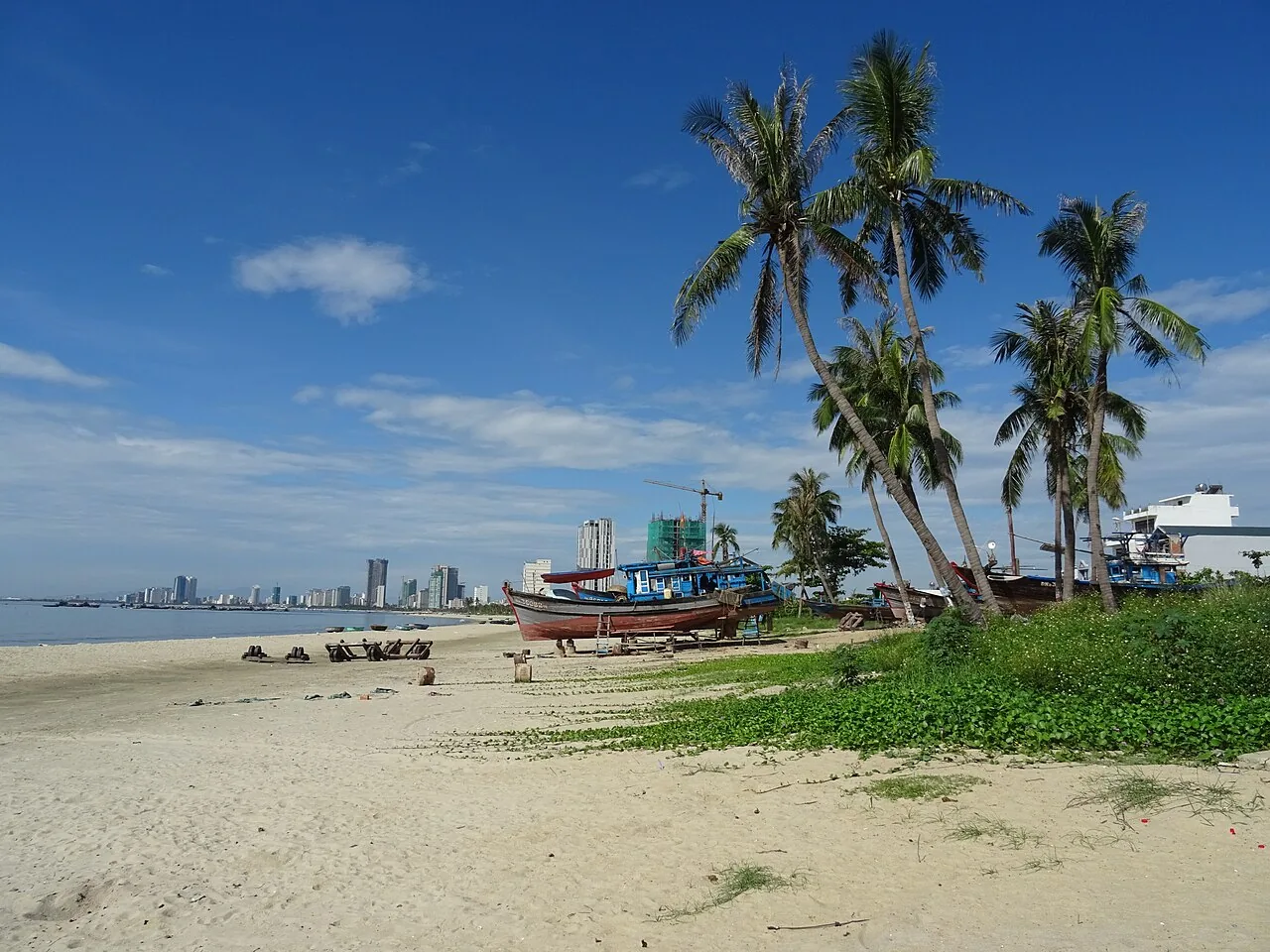
16:30 – the beach, at the hour the city actually uses it
My Khe Beach is bimodal and this is the single most useful clock fact about Da Nang. Residents swim from about 05:00 to 07:30 and again from 16:30 to 18:30, and the beach is largely empty in between. The evening session ends with the lifeguards rather than with the light: cover runs from roughly 04:30 and typically ends between 18:30 and 19:00. Two designated night-swimming beaches operate 19:00-21:30 with lighting and lifeguards. Outside those hours you are swimming unsupervised on a beach with real rip currents.
Take the flag system seriously. The autumn sea here is the dangerous one precisely because it does not feel dangerous – 28C in October, warm enough to be inviting, with building surf and rip currents underneath. Red flag means out, and it is not a suggestion. Sea temperatures run from 23.5C in February to 29.5-30C in August; the reliable swimming window is roughly April to September.
| Month | Sea temp | Sea state | Verdict |
|---|---|---|---|
| Jan-Mar | 23.5-24.5C | Calmer, often murky | Swimmable for the hardy; the beach is for walking |
| Apr | 26C | Settling | First genuinely pleasant swimming month |
| May-Aug | 28.5-30C | Warm, calm, clear | The beach season. June and July are the peak. |
| Sep | 29.5C | Warm but building surf | Still good; watch the flags |
| Oct-Dec | 25-28C | Rough, murky, frequently red-flagged | Warm water, hazardous sea. Assume restrictions. |
If you would rather have the quieter version, Bac My An Beach sits between the resorts and the An Thuong strip, 10-12 minutes from the centre and ₫50,000-90,000 by car – close enough to the food and bars, far enough from the busy sections of My Khe. The full comparison of the city’s sand is in the Da Nang beaches guide, and the sunrise-versus-sunset question is covered in the My Khe beach guide.
19:00 – the riverfront, which is one walk and not four sights
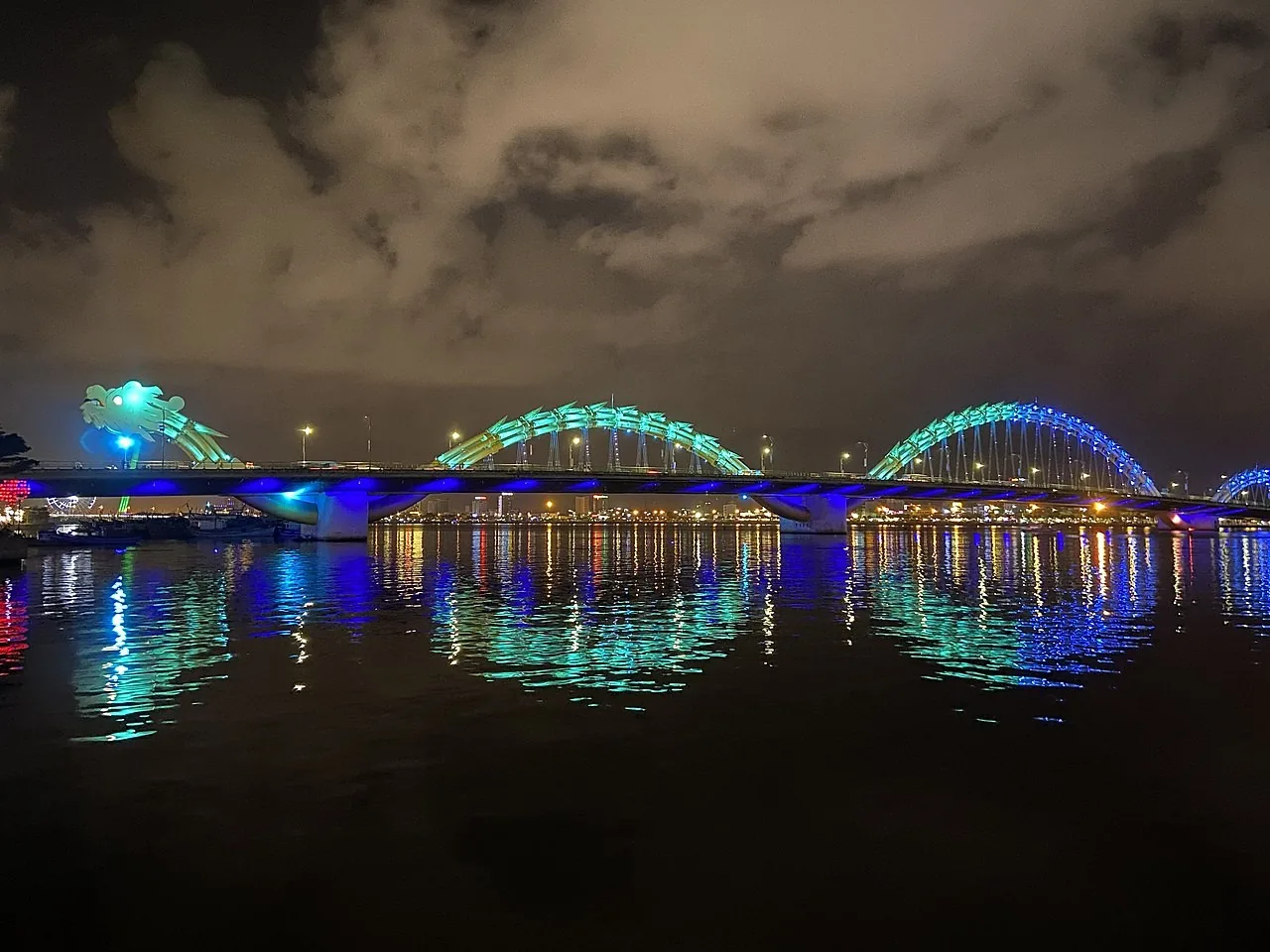
The Han riverfront gets written up as a list of separate attractions and then scheduled across separate days, which is how people end up standing on an unremarkable concrete pier at two in the afternoon wondering what the fuss is. It is one continuous evening walk of about 30-45 minutes, and it only exists after dark.
- 18:30-19:30 – dinner on the east bank on Tran Hung Dao, or the west bank on Bach Dang if you want the view. Riverfront restaurants run about ₫150,000-250,000 per person with drinks.
- 19:30-20:15 – the Love Bridge and the Carp-Dragon statue, both lit, both 400 m from the Dragon Bridge. Thirty to forty-five minutes covers the bridge, the statue and the walk along Tran Hung Dao, and there is nothing here in daylight. The padlocks are a photo prop, not a local tradition.
- 20:30-21:10 – the Dragon Bridge show, if it is a Friday, Saturday or Sunday. Be in position by 20:30; 20:40 to 20:45 is the latest that works, and on a Saturday, Sunday or public holiday the banks are dense by 20:45. Stand on the opposite bank on Bach Dang, or high up in a riverside bar. Getting from the Love Bridge to Bach Dang is the step nobody explains: the Dragon Bridge stops taking vehicles at about 20:30 and pedestrians take it over, so you walk across the bridge itself, which is also the reason the road shuts. Directly under the dragon’s head on Tran Hung Dao you get heat and noise and no view of the animal, and standing on the bridge itself means you cannot see the bridge.
- 21:15 onwards – walk two blocks inland before ordering a car. Traffic on both riverside roads seizes from about 20:30 to 21:30.
If it is not a show night
Do not manufacture one. The honest ranking of Da Nang evenings puts dinner first, the riverfront walk second, and the night markets a distant fourth. Son Tra Night Market, the one every itinerary sends people to beside the Dragon Bridge, carries a 3.6 out of 5 rating across 141 TripAdvisor reviews – a weak score for something recommended this heavily – and its own trade coverage describes it as built for tourists rather than locals, with counterfeit clothing alongside the food. It is a reasonable twenty minutes before or after the show and a poor destination in its own right. The An Thuong night market on Tran Bach Dang is small and, in its own coverage, still developing; worth a stroll if you are already sleeping at the beach, not worth a taxi.
Two better answers. If you want souvenirs at 21:00 without the negotiation, Dragon Market on the Son Tra side is air-conditioned, fixed-price and open 10:00-22:00, and reviewers who have done both prefer it. If you want the local evening, it is not a market at all: it is the Con Market street stalls – reported to trade from 17:00 to about midnight and busiest 18:00-21:00, though that evening-stall claim is single-sourced and the indoor market itself shuts in the early evening – the An Thuong strip, and a table of oc – sea snails stir-fried with chilli and lemongrass, eaten with a toothpick and a great deal of beer – from about 19:00. The Da Nang nightlife guide has the four drinking scenes and what they cost.
What to skip on day one
Sun World Da Nang Downtown, the park most guides still call Asia Park. The rebrand is complete on the operator’s own domains, so that is the name a driver will recognise fastest, and the 115 m Sun Wheel does photograph beautifully at dusk. But 2026 reviewers report the wheel closed for unannounced maintenance, most other rides idle and the park close to empty, and its published hours come in four incompatible versions – all of which agree it does not open on a weekday morning. Entry with the wheel is reported at ₫180,000-210,000, about US$7-8, and cheaper booked online. It is a cheap, pretty hour with a stated risk attached, not a highlight, and a tight itinerary can drop it without loss. If you do go, arrive around 18:00-18:30 so the wheel turns at sunset, and note that you cannot do it and the 21:00 bridge show on the same evening; they are 2 km apart with the worst riverside traffic of the week in between. Details are in our Sun World Da Nang Downtown guide.
5. Day 2 – Ba Na Hills and the Golden Bridge, done properly
🧍 Da Nang solo: bike taxi fares, meals for one and a three-day timetable →
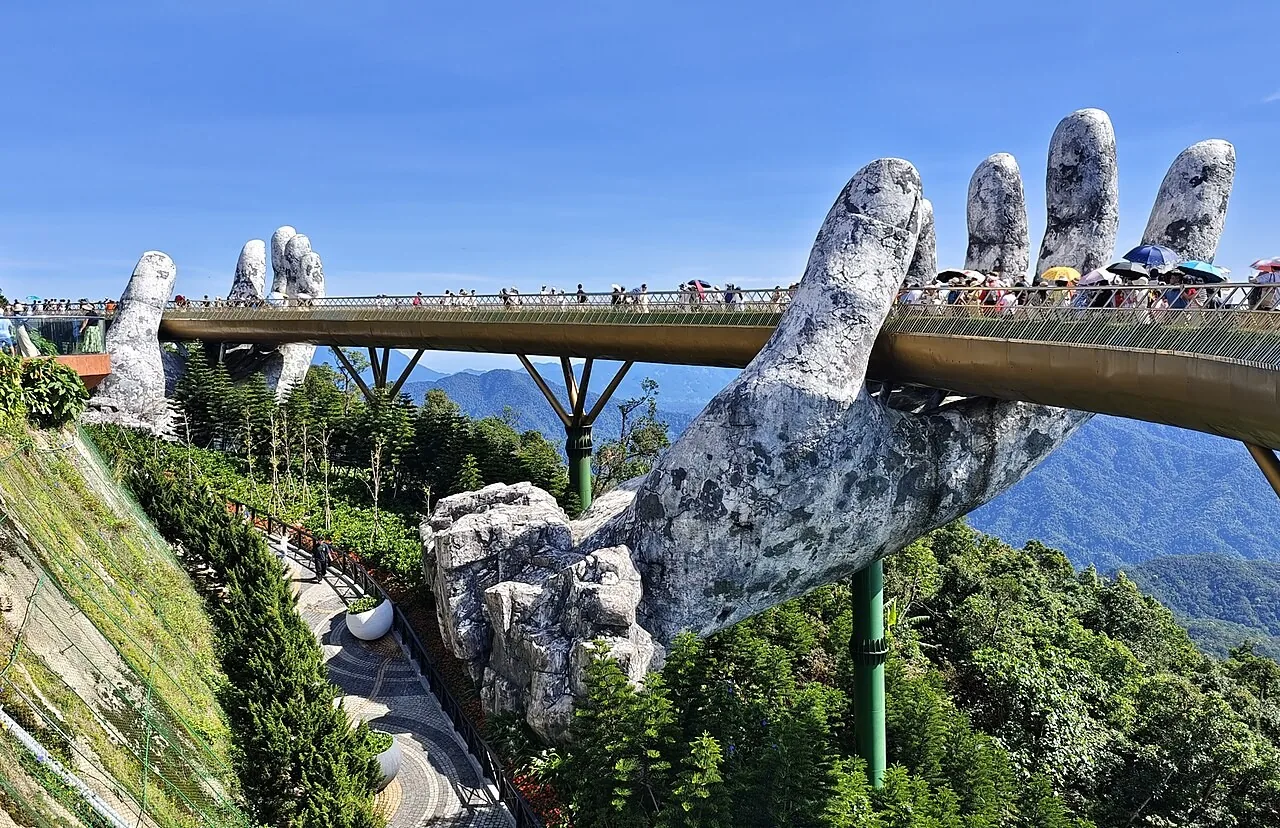
Be at the cable-car base station between 07:15 and 07:45, and expect the whole thing to take five to seven hours door to door. Three separate reasons stack up behind that start time: the base queue has not formed, the Golden Bridge photographs cleanly before the coach groups land, and the mountain sits at about 1,487 m where orographic cloud thickens through the day. Since 1 January 2026 the ticket covers three consecutive days, so go on the clearest morning rather than the scheduled one.
The 72-hour pass changes the plan, not just the price
The adult cable-car ticket is 1,000,000 VND and is valid for up to 72 hours across three consecutive days with unlimited rides. Children between 1.00 m and 1.39 m and seniors over 70 pay 800,000; under 1.00 m is free; anyone over 1.40 m pays the adult fare regardless of age. Da Nang residents with ID pay 650,000, and since the 2025 merger that category now includes Hoi An.
What this means in practice is that Ba Na should be the loosest item in your itinerary rather than the most fixed. Buy the pass on the day you arrive, then look at the forecast each evening and go up on the best morning of the three. If the first attempt puts you inside wet cloud, go back the next day at no extra cost. Nothing written before 2026 tells you this, and it is the difference between paying a million dong for a view and paying a million dong for a white wall.
| Ticket | 2026 price | Notes |
|---|---|---|
| Adult, standard | ₫1,000,000 | Valid 72 hours / 3 consecutive days, unlimited cable-car rides |
| Child 1.00-1.39 m | ₫800,000 | Height, not age. Over 1.40 m pays adult. |
| Senior 70+ | ₫800,000 | ID required |
| Under 1.00 m | Free | |
| Da Nang resident, adult | ₫650,000 | Now includes Hoi An residents after the 2025 merger |
| What it includes | Round-trip cable car, Golden Bridge, French Village, Fantasy Park indoor games, the funicular, Moon Castle, the Sun God waterfall, the gardens, and at time of checking a voucher for a draft beer or a fast-food item | |
| What it does not | Meals, the wax museum, some coin-operated attractions, the wine cellar | |
A note on the numbers you will see elsewhere: a large number of 2026-dated English pages still quote 900,000 adult and 600,000 child. That is the pre-2026 fare. Promotions also rotate constantly – Sun World ran a 100,000 VND spending coupon through June 2026 for anyone riding the cable car before 08:00, which is the operator telling you exactly where its own peak is – so check the current offer rather than trusting a printed one.
The hour-by-hour
| Time | What | Detail |
|---|---|---|
| 06:15-06:45 | Coffee and something from a cart | Nothing sit-down is open. A banh mi cart is the reliable answer to an early start. |
| 06:45 | Leave the city | 27 km, 40-50 min, plus 10-15 min if you are leaving between 07:00 and 08:30 |
| 07:30 | Ba Na Hills base stationMap | Queue is minutes on a weekday morning at this hour |
| 07:45-08:10 | Cable car up | 20-25 minutes each way |
| 08:15-09:15 | Golden BridgeMap | The clear window. Vietnamese photo guides converge on 06:30-08:00 and 07:00-09:00. |
| 09:15-11:00 | French Village, Moon Castle, the gardens, the funicular | This is where the day actually goes. Fantasy Park is indoors and the answer to rain. |
| 11:00-11:45 | Lunch on the mountain | Not included in the ticket. Prices are captive-audience prices. |
| 11:45-12:30 | Second pass at whatever you rushed | Or leave. The bridge is unusable for photographs by now. |
| 12:30-13:00 | Cable car down | 20-25 minutes plus the descent queue. Do not aim for the last car. |
| 13:45 | Back in the city | Which leaves the whole afternoon and evening intact |
That is the arithmetic behind the headline figure, and it is worth watching it add up: leave at 06:45, back at 13:45, seven hours door to door. That is the top of the five-to-seven-hour band, because this version does the whole mountain rather than the bridge alone. Of it, 08:10 to 12:30 is four hours twenty actually up there, inside the four to five hours that is realistic for a first visit. The short version, if you only want the Golden Bridge and the ride: up at 08:10, on the bridge until 09:00, down by 09:25 and back in the city about 10:15 – three and a half hours, and the least good value on this page.
The queue is the thing nobody warns you about
The bottleneck at Ba Na is the base cable-car station, and it runs one to two hours on weekends and Vietnamese public holidays. Crucially, it is not visible from the car park, so people who arrive at 10:00 have no idea what they are walking into until they are already inside it. There is a second, smaller queue for the Golden Bridge photo position in the middle of the day, and a third for the descent in the late afternoon when everybody leaves at once.
The worst possible slot is 10:00 to 14:00 on a Saturday, Sunday or Vietnamese public holiday: the intersection of the coach wave, the queue peak and the day’s flattest light. The second-best slot after the early morning is 15:30-17:00, which gives good light and thinner crowds in exchange for a higher chance of cloud.
Getting there, and why not to use two one-way Grabs
| Option | Cost | Verdict |
|---|---|---|
| Half-day car with driver and waiting time | Roughly two one-way fares, so budget ₫800,000-1,400,000 for the vehicle | The default. Return supply at the base station is thin and worst exactly at closing time. |
| Grab or Xanh SM one way | ₫400,000-700,000, though secondary sources quote from about ₫300,000 | Fine going up. Do not plan on hailing one back down. |
| Metered taxi one way | ₫350,000-500,000 for a four-seater, from secondary sources only | Quoted below the verified car band, which is a reason to treat it as a floor rather than a price |
| Included shuttle with a ticket package | Bundled | Runs from fixed central pickup points; convenient, inflexible on timing |
Distances quoted for this run range from 25 to 42 km depending on which route the source measures; the recommended tourist road is the Ba Na to Suoi Mo route, which is wide, scenic and carries fewer heavy trucks. Whatever you book, book it as a vehicle for the day rather than as two separate rides.
Honest cons, because this is the most oversold day in Da Nang
- Cloud. The summit is frequently inside it, especially through the September-to-December wet window. March to May is the best visibility period of the year. This is the risk the three-day ticket exists to absorb.
- Wind. Cable cars suspend in high wind and electrical storms, which is a real possibility in the wet season and around typhoon passage.
- It is a theme park attached to a viewpoint. Not a nature excursion, and readers should know that before they spend a day and a million dong. The French Village is a constructed set, extremely well done, and entirely artificial.
- The ticket is not everything. Meals, the wax museum and several coin-op attractions are extra.
- Dress for the mountain, not the coast. The summit runs several degrees cooler than the beach and is often in wet cloud. People arrive in beachwear and are miserable by 10:00.
- Book through the operator or a major platform. Cloned Facebook and Instagram pages selling Ba Na and Golden Bridge packages are the most consistently reported Da Nang fraud, and victims typically discover it standing at the cable-car station.
What to do with the rest of the day
Nothing demanding. You will be back in the city by about 13:45 having been awake since six and having walked a great deal at altitude, and the correct use of that afternoon is a swim, a massage – a decent hour-long full-body massage runs ₫450,000-700,000, with foot massages at ₫350,000-450,000 – and an early dinner. Do not pair Ba Na with the Marble Mountains, do not pair it with Hoi An, and do not pair it with a 21:00 bridge show if you have an early start the next morning. The one thing it does pair with cleanly is itself: under the three-day ticket, going back up on a clearer morning is free.
Our standalone Ba Na Hills guide goes deeper on the mountain itself, and the Golden Bridge guide covers the photography timing in detail. If you would rather not give a whole day to it, the Da Nang activities page has the alternatives.
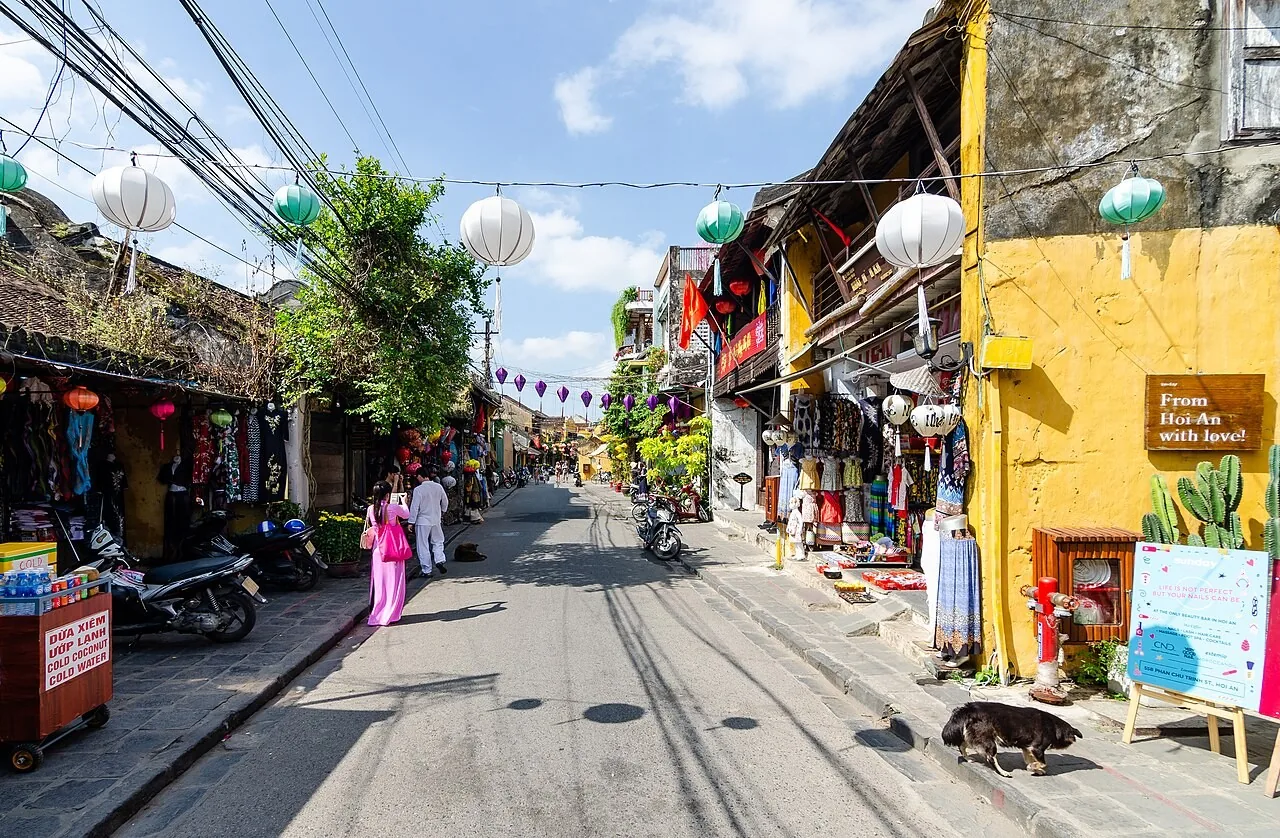
6. Day 3 – Hoi An, and the two hours everyone misses
Hoi An has two good windows, 06:30 to 08:30 and 17:30 to about 21:00, and they are eleven hours apart. Most people who day-trip it from Da Nang arrive around 15:00, see the town at its hottest and most crowded, and leave at 21:00 having caught the tail of one window and none of the other. Pick a window deliberately. If you can only do one, do the evening; if you can face a 06:15 departure, the dawn version is the better town.
Why the afternoon version fails
From 11:00 to 15:00 the old town is hot, the narrow streets offer almost no shade, the coach day-trippers are all present simultaneously, and the tailors and cafes are at their most persistent. In summer this is genuinely unpleasant. It is also exactly when most Da Nang-based visitors turn up, because a 30 km drive feels like an after-lunch errand. It is not. As a day trip done properly, Hoi An is eight to ten hours door to door, and the honest recommendation is that it does not fit into an afternoon.
| Window | What you get | What it costs you |
|---|---|---|
| 06:30-08:30 | Empty streets, cool air, yellow walls in low light, locals going about their business, the Japanese Bridge without a crowd | A 06:15 departure from Da Nang, and nothing ticketed is open before about 07:30 |
| 11:00-15:00 | Tailors, museums, air-conditioned lunch | Heat, crowds, no shade, and the worst version of the town |
| 17:30-21:00 | Lanterns lit, boats on the Hoai, streets closed to vehicles, the reason the place is famous | The return leg. Public buses have stopped; Grab out of Hoi An after 21:00 surges. |
Option A – the dawn version
- 06:15 – leave Da Nang. 30 km, 40-55 minutes by car.
- 07:00-08:30 – Hoi An Ancient Town with almost nobody in it. Walk Tran Phu, Nguyen Thai Hoc and Bach Dang, and photograph the Japanese Covered Bridge from the outside without queueing for the position.
- 08:30-09:30 – breakfast, which in Hoi An means cao lau or a banh mi that is genuinely better than Da Nang’s. This is one of the few places where the honest answer is that the neighbouring town does the sandwich better.
- 09:30-11:00 – two or three ticketed heritage houses while they are quiet, or Tra Que herb village 3 km out.
- 11:00-12:00 – back to Da Nang, arriving before the worst of the heat, with the whole afternoon and evening free.
This version costs you a lie-in and gives you the town nobody photographs. It also pairs perfectly with a My Son morning if you swap the order: sanctuary at 06:30, back in Hoi An by 11:30, old town in the afternoon and evening.
Option B – the evening version
- 14:00 – leave Da Nang. The afternoon has room for the Marble Mountains or for the beach, and not for both: work the clock and you will see why.
- With the mountains: 14:20-16:20 at Ngu Hanh Son, which is 9 km and 15-20 minutes out of the city and sits directly on the road. Then 21 km and 25-35 minutes on to Hoi An, which puts you at the edge of the old town at about 17:00, as the vehicle exclusion starts.
- With the beach instead: leave at 15:00, drive the 30 km straight through in 40-55 minutes, and have An Bang Beach or Cua Dai from 16:00 to 17:15. It is 4-5 km from the old town, so you are walking into the lanterns at 17:30.
- 17:30-18:30 – into the old town on foot, with the lanterns coming on. Eat early; the good places fill.
- 18:30-20:30 – the lantern boats board near the An Hoi bridge from about 18:30. The posted rate is ₫170,000 per boat for one to three people and ₫220,000 for four to five – per boat, not per person, which is the number touts blur. Paper lanterns to float are ₫5,000-10,000. From 2026 a holiday surcharge of ₫100,000 applies on designated dates, and that one is per guest rather than per boat, payable on the spot. The prices are on bilingual signs at the counter; point at them.
- 20:30-21:30 – walk, eat again, then leave. Pre-book the car.
Option C – the whole day, done in two halves
If you have five days, give Hoi An one of them properly: dawn, then a beach or a long lunch out of the sun from 11:00 to 15:30, then the lanterns. That is a fourteen-hour day and it is the only way to see both faces of the town without staying overnight. If you would rather stay overnight – which is the honest better answer – our Hoi An itinerary plans it as its own trip and Hoi An beaches covers An Bang and Cua Dai in detail.
Getting there and, more importantly, back
| Mode | Time | Cost | The catch |
|---|---|---|---|
| Grab or Xanh SM car | 40-55 min | ₫250,000-400,000, typically ₫250,000-350,000 | Surge out of Hoi An after 21:00 on a Saturday or a lantern night is real |
| Metered taxi | 40-55 min | ₫300,000-450,000 | Usually dearer than the app; stick to Mai Linh or Vinasun liveries |
| Private car with driver | 30-60 min direct | ₫300,000-600,000 one way for the vehicle | Only worth it if you build in the Marble Mountains stop, at which point it is the best value on this page |
| Shared shuttle | 60-90 min | ₫115,000-250,000 per person | Only makes sense solo; two people are better off in a Grab |
| Public bus route 1 | 60-80 min | ₫20,000-35,000 | Runs roughly 05:30-18:00 only. It cannot bring you home from the lantern evening. |
| Rented scooter | 45-60 min | ₫110,000-180,000 a day plus fuel | Flat, wide and busy road with routine police checkpoints. Read the licence section. |
The return leg is the planning trap and it catches people every week. The bus service ends around 18:00, which is before the part of the evening you came for. Either pre-book the car for a fixed time or accept the surge, and if it is a lantern night, pre-book. The full mode-by-mode comparison is in our Da Nang to Hoi An transport guide.
The ticket, honestly
The 120,000 VND Hoi An ticket is not a turnstile fee for walking into the old town. In April 2023 the town announced that every visitor would have to buy at the gates; the plan drew heavy backlash and was scrapped. The policy that still stands is that organised tour groups must hold tickets while individuals and families are encouraged but not compelled. What is genuinely enforced is the door of each heritage building, where staff tear a coupon.
| Detail | Position |
|---|---|
| Price | ₫120,000 adult, ₫50,000 for children 1.0-1.4 m, free under 1.0 m |
| What it buys | Five tear-off coupons for a choice of five sites from a roster of about 22: merchant houses, Chinese assembly halls, small museums, the Japanese Covered Bridge, a handicraft workshop or Bai Choi performance |
| Validity | Nominally 24 hours; the working convention is one ticket per visitor per stay |
| Booths | About 11 yellow booths at the walking-street entrances, roughly 07:30-21:30 in summer and to 21:00 in winter |
| Should you buy it | If you intend two or more heritage houses, yes – it is good value and the money funds conservation of 1,360 listed relics. If you only want lanterns, the river and the food, you can honestly skip it. |
| Electric buggy | ₫10,000 per ride, separate |
The Japanese Covered Bridge is open again
Chua Cau was hoarded off for a nineteen-month restoration and was re-inaugurated on 3 August 2024. Because the closure spanned two full high seasons, an unusually large number of guidebooks and blogs describe a construction screen where the bridge now is. It is walkable from the outside at any hour, and it is one of the sites your heritage coupon covers.
Lantern nights, and how to time one
The lantern night is the 14th day of each lunar month, the eve of the full moon, so it happens twelve or thirteen times a Gregorian year and drifts about eleven days earlier each year. From around 17:30 motorbike traffic is blocked from the core; from roughly 18:00 to 22:00 the electric street lighting is deliberately switched off and the streets are lit by silk lanterns alone, with candle floats released onto the Thu Bon, live music and street bai choi. It is a municipal practice rather than a tourist re-enactment, though it is now heavily commercialised.
| Lantern night | Character |
|---|---|
| 27 July, 26 August 2026 | Dry season; the reliable ones. The next two on the calendar as this page stands. |
| 24 September 2026 | Mid-Autumn. The other major night of the year, and the wet season has just begun. |
| 23 October, 22 November 2026 | Inside flood season. Cancelled or curtailed during high water. |
| 22 December 2026 | Quiet |
| Already gone in 2026 | 2 January, 1 February, 2 March (the biggest of the year, the first full moon of the lunar new year), 1 April, 30 April, 30 May, 28 June |
| 2027 and after | Not published yet. Work it out from the rule rather than from a list: the 14th day of each lunar month, which drifts about eleven days earlier each Gregorian year, so a 2026 date minus roughly eleven days is your first guess for 2027. |
Two caveats worth carrying. Dates can shift by a day between sources depending on whether they count the 14th lunar day or the full moon itself, and local authorities occasionally move the celebration – confirm with your hotel in the week you arrive. And on a lantern night the vehicle exclusion begins earlier, around 17:30, which means your driver cannot reach a hotel inside the zone. Plan the drop-off point. Full detail is in the Hoi An lantern festival guide.
Vehicle-free hours: contested, and the conflict is the answer
Three incompatible versions circulate in Vietnamese sources alone. One gives a morning window of 09:00-11:00 and an afternoon-evening window of 15:00-21:30 in the rainy season, extended to 22:00 in the dry. A second gives the same morning window but an evening block starting at 18:00. A third ties the long evening window specifically to Sundays and full-moon days. What is not in dispute: there is a short mid-morning closure, there is a long evening closure ending between 21:30 and 22:00, the end time is later in the dry season, and vehicles parked inside the zone during restricted hours can be moved. The operational consequence is the only thing you need: a driver cannot drop you at a hotel inside the core during those windows, so agree a drop-off point in advance and think about your luggage.
What to actually do there
Hoi An rewards doing one thing properly rather than five things partially. A cooking class with a market visit and a basket-boat ride through the Cam Thanh water-coconut palms is the most-booked half-day for a reason, and it fills exactly the 09:00-15:00 hole in the town’s own timetable. Tailoring needs two to three days and two fittings to produce a garment you will actually wear, so a 24-hour turnaround on a day trip is a false economy – a genuine custom two-piece runs US$150-400, with US$350-600 buying something that stands against Western bespoke.
Our deeper guides: Hoi An for the town itself, things to do in Hoi An, Hoi An cooking classes, the basket boat tour, Hoi An tailors, Tra Que village, what to eat in Hoi An and Hoi An activities.
7. Day 4 – Marble Mountains, Son Tra, and the scooter ban nobody has absorbed
Start at the Marble Mountains at 07:00, take the middle of the day off entirely, and do Son Tra from about 16:00, or 15:00 from October to February – by car, because a rented automatic scooter is now specifically banned on the Ban Co routes. This is the day where the old advice is most obviously out of date. The peninsula’s tourist routes reopened on 16 September 2025 after three years closed by landslides, and the reopening came with restrictions that almost no English-language guide has caught up with.
07:00 – the Marble Mountains
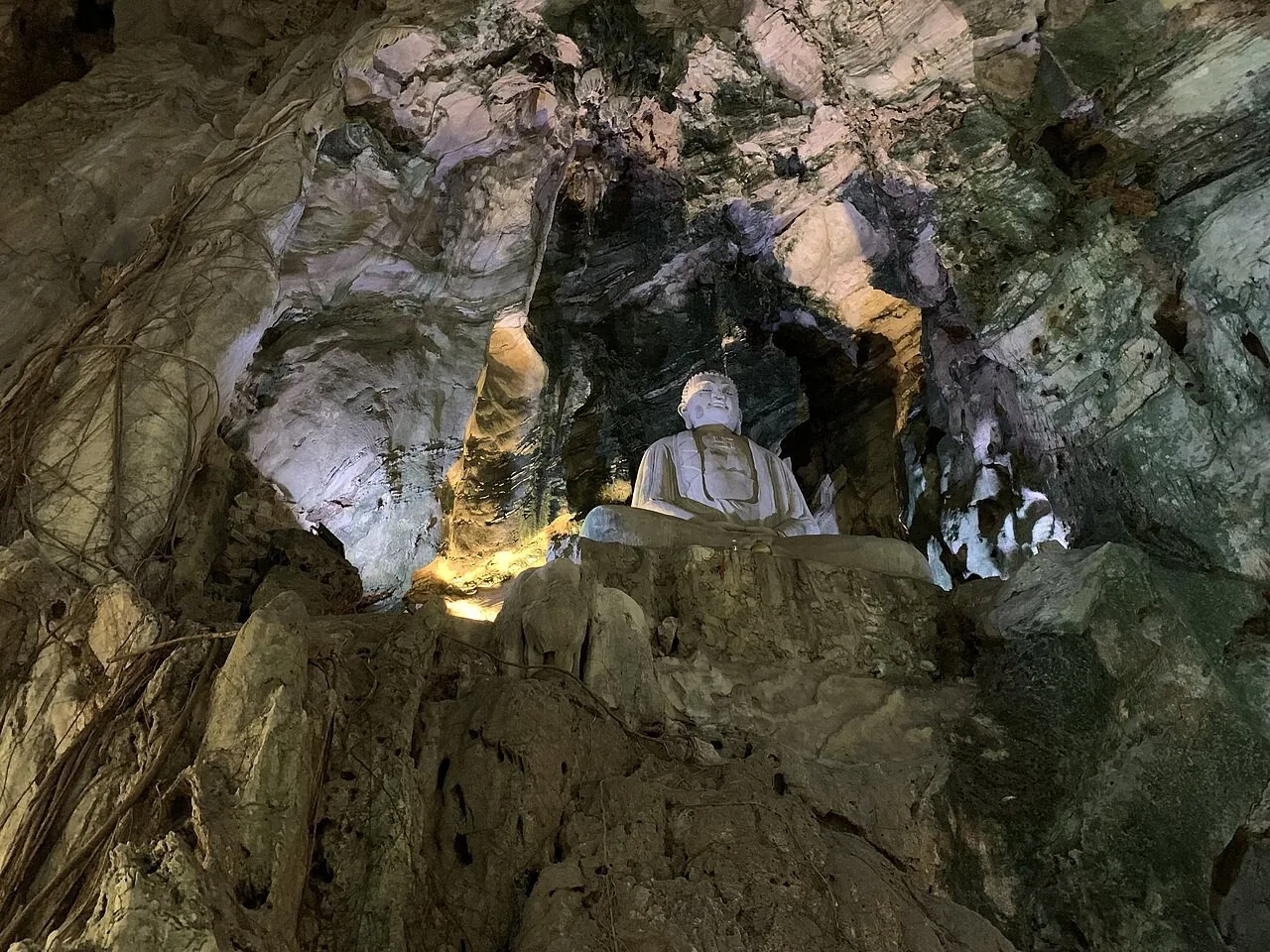
Ngu Hanh Son is 9 km from the centre, 15-20 minutes by car and ₫90,000-150,000, or 25-30 minutes in the 07:30-08:30 rush. It sits directly on the Da Nang-to-Hoi An road, which is why building it into that transfer is the highest-value pairing in the region. Done on its own, be at the ticket booth at opening.
The single most common budgeting error here is thinking the 40,000 VND entry is the price. It is three separate tickets, all cash in dong, no cards and no international e-wallets.
| Ticket | Price | What it covers |
|---|---|---|
| Thuy Son main entry | ₫40,000 (students with ID ₫10,000) | The summit complex: pagodas, Huyen Khong and Tang Chon caves, both viewpoints |
| Glass lift | ₫15,000 one way / ₫30,000 return | Replaces the first climb only. There are still stairs, ladders and uneven cave floors above it. |
| Am Phu Cave | ₫20,000 (students ₫7,000) | A completely separate gate at the mountain base. Its ticket buys nothing on Thuy Son. |
| Realistic all-in | ₫75,000-90,000 | One adult, everything, one-way lift |
Budget two to three hours for the main Thuy Son circuit, three to four to explore properly, and four to five if you also do Am Phu and walk into the stone-carving village. The one-hour stop that appears in packaged Da Nang-Hoi An transfers buys you the lift, one viewpoint and nothing else.
The lift, the stairs, and the light shaft
There is no real ticket queue here. The bottleneck is the single glass lift, which backs up fifteen to thirty minutes when a coach unloads at midday. It is entirely avoidable: the free eastern staircase of roughly 150 steps replaces exactly what the lift does. The efficient pattern, and the one locals use, is lift up and walk down.
The reason to be here between 09:00 and 11:00 rather than at any other time is Huyen Khong Cave. That is when the sun angle puts the famous light shaft through the hole in the cave ceiling onto the Buddha below. It is solar geometry, not a preference, and it is the photograph everyone comes for. The trade-off is that 07:00-08:30 is cooler, emptier and better outside, and the resolution is a routing one rather than a start-time one: arrive at 07:00, walk the summit, the viewpoints, the pagodas and Tang Chon in the cool first two hours, and save Huyen Khong for 09:00. You get both windows out of one visit.
Three more honest notes. The lift does not remove the climbing, only the first climb, which matters for anyone with a knee or a pushchair. Cave floors are uneven, unlit in places and slippery in the wet season, and the summit stairs in heavy rain are genuinely treacherous. And the marble showrooms clustered at the base are aggressive, with stone that is now largely imported – local quarrying was banned to protect the mountains themselves. Detail on the site is in the Marble Mountains guide.
10:00 – Non Nuoc beach, which is right there
Non Nuoc Beach is 1-2 km from the mountain base, effectively the same stop. A 07:00 start, two hours on the summit and the cave at 09:00 puts you on the sand at about 10:00, which is the last comfortable hour of the morning from April to September. It is quieter than My Khe because it is fronted by resorts, which also makes public access and facilities patchier, and the water there is deeper with larger waves – the wrong beach to be casual on when the swell is up in October and November.
11:00-16:00 – the part of the plan that is empty on purpose
This is not padding. From April to September the outdoor day is over by 10:00 and does not restart until 16:00, and an itinerary that pretends otherwise produces a miserable afternoon. Fill it deliberately: the hotel pool, an hour-long massage at ₫450,000-700,000, a long lunch that finishes before local kitchens shut at 13:30, and a plate of banh beo or banh dap around 15:00 when nothing else is serving. If it is raining, this is where the Cham Museum and Han Market go.
16:00 – Son Tra, and what you are actually allowed to drive
From October to February, bring this block forward to 15:00 and do Linh Ung only. Sunset in those months runs from 17:14 in November to 17:51 in February and the usable light goes about twenty minutes later, while the Ban Co road is unlit, steep and hairpinned. The rule behind it fits in one line: do not pair the Marble Mountains in the morning with a late-afternoon Son Tra run in winter, because the two together outlast the daylight. The arithmetic from a 15:00 departure: 20-30 minutes to the pagoda, 45-60 minutes on the terrace, 20-30 minutes back, so you are off the peninsula by about 17:00 in the worst month of the year. From March to September a 16:00 start does the same job and returns by 17:50.
The universal Da Nang blog tip – rent a scooter and ride up to Ban Co Peak for sunrise – now describes a prohibited vehicle. Under the 16 September 2025 reopening of the peninsula’s three tourist routes:
| Route | Allowed | Banned |
|---|---|---|
| Tien Sa – Suoi Om – Dinh Ban Co | Mountain bikes, dirt bikes, manual motorcycles, walking | Automatic scooters (xe tay ga) and cars outright |
| Dinh Ban Co – Bai Bac | One-way downhill only | Automatic scooters and vehicles over 24 seats |
| Bai Bac to the heritage banyan | Walking only | Everything else |
| All three | Suspend on adverse-weather warnings, which in practice means during and after heavy rain from September to December | |
A tourist rental in Da Nang is almost always an automatic scooter, which is precisely the banned category. One report also lists bicycles as banned on the Ban Co route, which conflicts with the first route’s allowance – the reporting is not consistent, and we are recording both rather than resolving it for you. Whether the ban is actively enforced against tourists in mid-2026, and whether any route has since been closed again by weather, we could not verify.
The safe framings are therefore: go by car as far as cars are allowed, book a driver, or take a tour that already holds the permissions. That is a duller sentence than the one every other guide prints, and it is the accurate one.
Linh Ung and the Lady Buddha
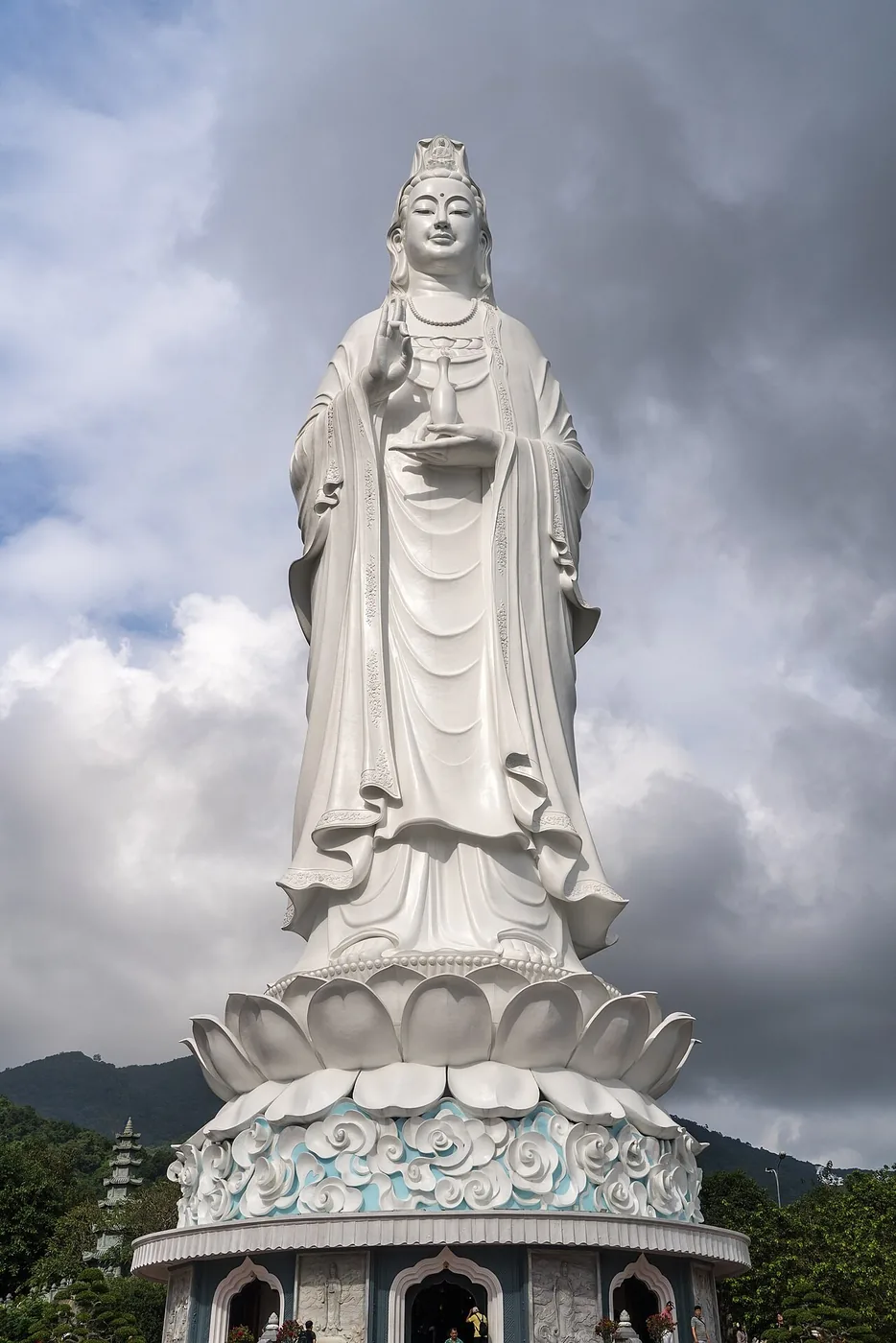
Linh Ung Pagoda is 10 km from the centre, 20-30 minutes by car and ₫100,000-160,000, open 06:00-21:00 daily, free, with parking by voluntary donation. Allow 45-60 minutes for the terrace, the Lady Buddha and the view back over My Khe. The evening hours exist for worshippers coming to offer incense rather than for sightseeing; it is not floodlit for tourists.
The peninsula faces roughly east and northeast, so the honest best time is sunrise to 08:30 – the light is on the statue and the bay, the road is empty, and the marine layer usually burns off by mid-morning. In July that means a 05:22 sunrise and a genuinely early start. The second window, 16:00 to sunset from March to September and 15:00 to sunset from October to February, gives you the west-facing view back over the city, and you must be off the mountain roads before it is fully dark: the Ban Co road is unlit, steep and hairpinned. Midday is the worst option, because the terrace is white stone with almost no shade and it reflects heat brutally from May to August.
It is an active place of worship with a dress code – covered shoulders and knees – and not a viewpoint with a statue on it. The Lady Buddha guide covers the pagoda itself, and the Son Tra peninsula guide covers the routes and the wildlife.
Ban Co Peak, which belongs to the morning and not to this afternoon
Ban Co Peak is a further 7 steep kilometres and 20-25 minutes of hairpins above Linh Ung. Grabs are hard to summon from the upper peninsula, so if you go past the pagoda, keep the car. Linh Ung plus Ban Co plus a stop or two on the coast road is three to four hours; a full loop with the banyan area and the Bai Rang and Bai But viewpoints is half a day. Now put that against the clock: three to four hours from a 16:00 start finishes between 19:00 and 20:00, and the latest the usable light lasts anywhere in the year is 18:46 in July. Ban Co is therefore a sunrise item on a different day – the peninsula faces east, the light is on the statue and the bay early, and a run that starts at first light is finished by 09:30 with the whole day still ahead of you. In the wet season the peninsula generates its own cloud and the viewpoints show you the inside of it.
19:00 – seafood at Tho Quang, and the one sentence that keeps the bill sane
Tho Quang, at the northern end of the peninsula side around Tran Quang Khai and the lanes off Phan Vinh, is where the city’s own wholesale fish market is and where seafood costs less per kilo than on the beach. It is concrete-floored, fluorescent-lit, tanks along the wall, no view, and a deliberate 15-20 minute taxi from My Khe at ₫105,000-180,000 – not a walk. Restaurants here run late; Nam Danh is verified 10:00-23:00 daily, which makes this one of the few reliable answers to a 21:00 dinner.
Seafood is sold by weight, and that is where bills go wrong. Multiple 2026 reviewers at both the beach-strip and Tho Quang ends report menu prices raised since printing, or dishes with no price listed at all. This is less a scam than simply how weight-based ordering works when nobody asks first. The instruction to follow, which reviewers repeat independently: choose from the tank, ask the per-kilo rate and the weight of the specific animal before it leaves the water, and get the number said out loud.
| Where | Typical spend | Character |
|---|---|---|
| Tho Quang market grills | ₫300,000-600,000 for two | The working-port version. Cheapest per kilo. |
| My Khe beach strip | ₫150,000-300,000 per person with beer | You pay the beach premium and you get the beach |
| Upper-end seafood restaurants | ₫300,000-830,000 per person | Air conditioning, cards, English menus |
| Lobster | Reported anywhere from ₫400,000 per kg at the Son Tra market stalls to ₫1,600,000 at a Tho Quang restaurant. The two figures are not describing the same animal, which is the whole problem. | The one item that will double your bill without warning. Ask which kind, and what it weighs. |
One more timing fact that runs against the usual advice: a 2026 source states the freshest fish is gone by 20:30, which argues for an early sitting rather than a late one. More on the city’s fish in the Da Nang seafood guide.
8. Day 5 and beyond – My Son, Hai Van, Lap An, Cu Lao Cham and Hue
A fifth day has three good uses and they do not combine: My Son at dawn, the Hai Van Pass and Lap An lagoon, or a Hue day on the train. Each is a full day out of the city. My Son has the strongest claim if you did the Cham Museum earlier in the week; Hai Van is the one to pick if the forecast is clear and you like a road; Hue is the one for anyone who wants a second city rather than a second view.
5A – My Son, and why 06:30 is the entire strategy
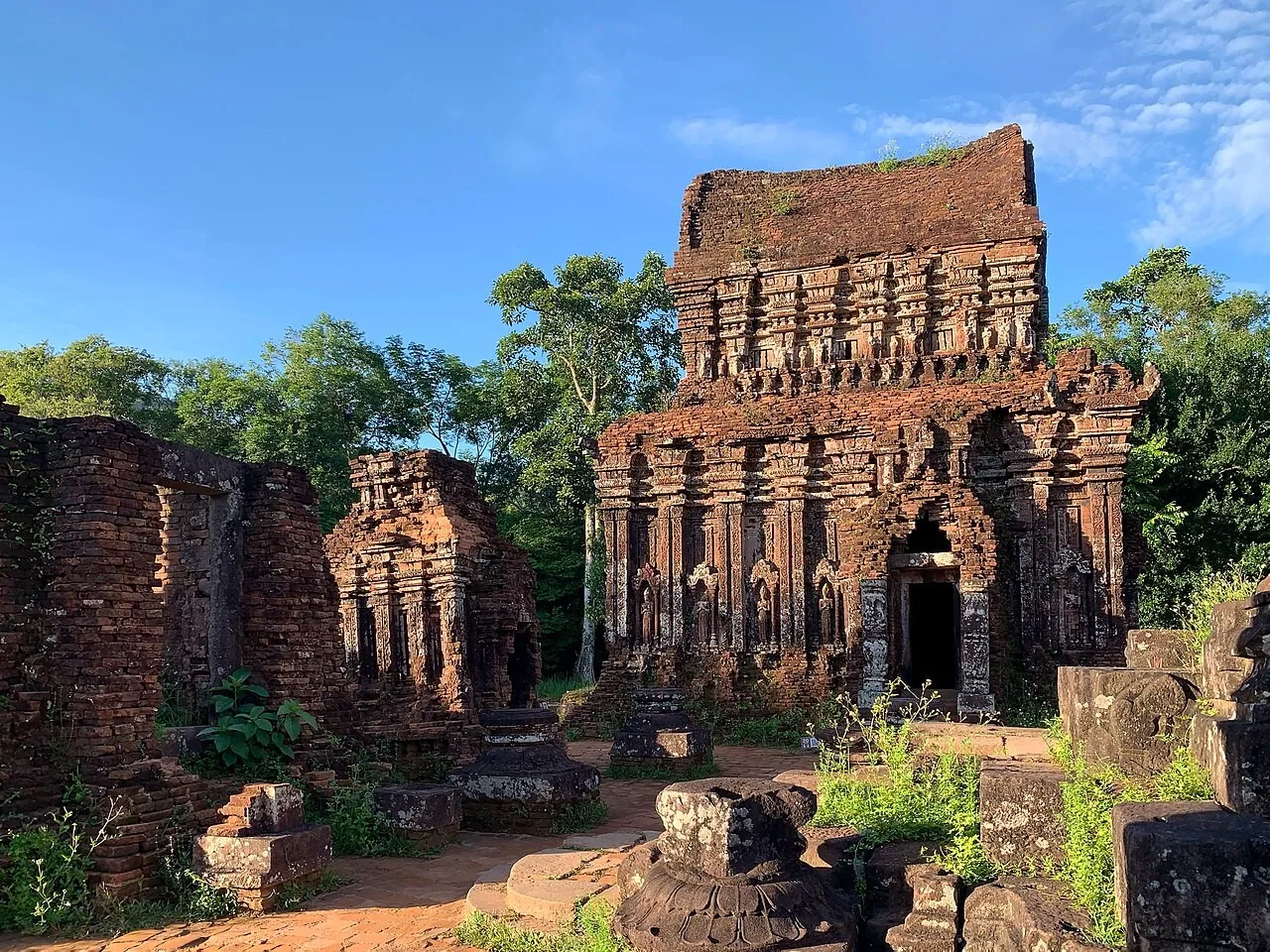
My Son Sanctuary is about 70 km from Da Nang, which is one hour fifteen to one hour forty each way – not the forty minutes some Vietnamese tour pages claim over that distance, which would require an unachievable average speed. It is about 40 km and an hour from Hoi An. The widely repeated line that My Son is 20 km from Hoi An is simply wrong and it breaks itineraries.
Aim to be through the gate at 06:00-06:30. Vietnamese guides converge on 06:00-08:30 for two stated reasons: long stretches of the site have effectively no shade in a hot, humid valley, and the coach convoys from Hoi An and Da Nang start landing mid-morning. You also get the low side-light on the brickwork, which is the only time the carving reads properly. The worst window is 10:00 to 14:00, which is unfortunately when the standard half-day tour from Hoi An delivers you: full sun, no shade, maximum coach density.
| Detail | Figure |
|---|---|
| Entry | ₫150,000 foreign visitors, ₫100,000 Vietnamese nationals, ₫30,000 children 5-15, free under 5 |
| What it includes | Site entry, the electric shuttle buggy from the gate to the temple groups (the walk is about 2 km each way), the on-site exhibition house, and the scheduled Cham apsara dance |
| Opening | 06:00 by the safe planning figure; one source says 05:00. Closes 17:30 summer, 17:00 winter. |
| Time on site | 3-4 hours to do the temple groups, the exhibition and a performance properly. 2 hours is the minimum worth the drive. |
| Door to door from Da Nang | 6-7 hours |
| Door to door from Hoi An | 4-5 hours |
| Tour prices | Roughly ₫500,000-800,000 per person from Vietnamese operators – and many exclude the ₫150,000 gate entry, collected separately. Check. |
Dance performances run to a daily schedule reported as the Tower G area at 09:00-09:15 and 14:15, and the performance hall at 10:00, 10:45, 14:00 and 15:30, with Cham folk singing on Mondays, Wednesdays and Fridays. Treat the exact slots as indicative and reconfirm on the day; they are reported inconsistently. Note the tension this creates with the dawn plan: the first slot is 09:00 at Tower G, so a 06:30 arrival means either waiting two and a half hours for it or skipping it. Skipping it is the right call, because by 09:00 the coach convoys are landing and the reason you came at dawn has gone.
The two mistakes first-timers make here are worth stating plainly. The first is going in the middle of the day, on a tour, and coming away thinking it is a small pile of bricks – because at 11:00 in June it is a small pile of bricks in 34C with no shade. The second is going before the Cham Museum rather than after it, and never understanding why the pedestals are empty. Do the museum on your arrival day; it costs 60,000 VND and it is the difference between a ruin and a story. Our My Son guide and Cham Museum guide go further on both.
5B – Hai Van Pass and Lap An lagoon
Hai Van Pass is 40 km out: 30-40 minutes to the foot of the pass, then 30-45 minutes for the 20-21 km of switchbacks to the summit, so about an hour to an hour twenty in total. As an out-and-back it is two and a half to three hours. Continuing over the top to Lang Co and Lap An lagoon and returning makes it five to six hours, and that is the version worth doing. There are two shapes of that day and they are not the same day, which is where most write-ups quietly go wrong. As a five-to-six-hour outing: leave at 07:30, summit at about 08:45 in the clear morning air, drop the 12 km down to the lagoon in 20-25 minutes, eat oysters at Lang Co, and come home through the tunnel in 45-55 minutes to be back by about 13:00. You trade the lagoon’s reflection for the summit’s visibility. As a full day: leave at 07:30 anyway for the summit, spend the middle at Lang Co beach or Elephant Springs, and be back on the lagoon shore for the sunset window, which is 16:30-17:45 in winter and roughly an hour later in June. Add 45-55 minutes home through the tunnel and you are in Da Nang by about 18:30 in December and about 19:40 in June, in the dark either way. What does not work is leaving at 07:30 and then sitting by the water for seven hours waiting for 16:30.
Three separate crossings get confused here and it is the root of most bad advice about this stretch of coast. There is the road pass over the summit at around 496-500 m, with the Hai Van Gate fort at the top. There is the 6.28 km road tunnel, opened in 2005, which almost all through traffic now uses and from which you see nothing. And there is the railway, which runs on a completely different alignment far below the road summit through six tunnels, and which shows you the coastline rather than the pass. Take the train over the Hai Van Pass is wrong as a sentence. Both views are worth having; they are not the same view.
If you book a car, say deo Hai Van, khong di ham – the pass, not the tunnel. Some drivers default to the tunnel because it is faster and they are paid the same.
| Way of doing it | Cost | Verdict |
|---|---|---|
| Private car with driver, round trip | ₫1,000,000-1,900,000 for the vehicle | Summit, stops, luggage and zero risk. Split three or four ways it undercuts an easy rider. |
| Easy rider, pillion | ₫1,170,000-1,700,000 per person including driver, fuel, helmet and rain gear | The motorbike experience without the motorbike risk. Book one with a visible review history. |
| Self-ride scooter | ₫110,000-320,000 a day | The best version of the day if – and only if – you already ride. See the licence section. |
| Train to Hue | ₫95,000-280,000 by class | Different journey entirely. Coast, not summit. You cannot stop. |
Leave Da Nang between 07:00 and 08:00. The summit is a cloud magnet – it is the physical weather boundary between the Da Nang and Hue climate regimes, and travellers crossing in winter routinely ride out of rain into sunshine within twenty minutes – and the odds of a clear view are best in the morning before convective cloud builds. The reliable window is roughly March to September, with April to July giving the clearest skies. From October to December assume a real chance of seeing nothing from the top.
Lap An itself is a 45 to 90 minute stop rather than a destination: pull over, walk out onto the flats, eat oysters at a shoreline stall. Vietnamese photo guides give two windows, 05:30-07:00 and 16:30-17:45, and the afternoon one is the famous one because the lagoon faces west against the Bach Ma range. Cross-check that against the sunset table before you commit – 17:00 is right in December and an hour early in June. And be honest with yourself about the photograph: the mirror-flat, sandbank-exposed lagoon in every image is a tide-and-wind condition, not a permanent state. No usable tide table for it could be sourced. Treat it as a stop on a route worth driving anyway. The Hai Van Pass guide and Lap An lagoon guide have the full versions.
5C – Hue for a day
Hue is 100 km north: two to two and a half hours by limousine minivan through the tunnel at ₫140,000-250,000 per person, two and a half to three and a quarter hours by train at ₫95,000-280,000, or four to five hours by car over the pass with stops at ₫1,000,000-1,500,000 for the vehicle. The train is the civilised version and it leaves from Da Nang railway station, in the city. Sit on the right going north and the left coming south; the sea is east of the line, and a surprising number of large travel blogs get this backwards.
There is also a dedicated tourist service, the Central Heritage Connection, running as HD1 to HD4 with a purpose-built ten-minute sightseeing stop at Lang Co and a carriage with live Hue court music and central Vietnamese food. Northbound departures from Da Nang are reported at 07:50 and 15:00, with a headline fare of 150,000 VND. Timetables shift seasonally, so verify at the station. It does not run faster or see different scenery than an ordinary SE train on the same track – it buys atmosphere and the Lang Co stop.
Plan the return before you go. The heritage service’s afternoon southbound, HD3, leaves Hue at 14:25 and reaches Da Nang at 17:40, which is too early for a day that includes the Citadel at two and a half to three hours plus a tomb 7-16 km out of town. For a full day you want one of the ordinary SE services: there are roughly five or six usable daylight departures a day in each direction on this leg, their exact times shift seasonally, and no 2026 timetable could be verified for this page. Book the return leg at the same time as the outbound, at the station or on dsvn.vn.
| Hue ticket | Price | Note |
|---|---|---|
| Imperial CitadelMap | ₫200,000 adult, ₫40,000 children 7-12 | Same price for all nationalities. Budget 2.5-3 hours; very little shade. |
| Minh Mang, Tu Duc or Khai Dinh tomb | ₫150,000 each | 7-16 km out of the city in three directions, so transport is a real added cost |
| Citadel plus Khai Dinh | ₫350,000 | The honest minimum for a one-day visitor. No combo beats it. |
| Four-site combo | ₫530,000 adult, ₫100,000 child | Only pays off if you genuinely intend four sites, and three tombs in Hue’s heat is more than most people want |
One honest caution: Hue has more rain, more rainy days and less sunshine than Da Nang in every month of the wet season – 755mm across 21 days in October against Da Nang’s 650mm, and only 2.5 hours of sun a day in December. A Hue day is the one most likely to be rained out. See the Hue guide and the Da Nang to Hue train guide.
5D – Cu Lao Cham, but only in the calm season
Cu Lao Cham is a 15-30 minute speedboat from Cua Dai port at Hoi An, with departures typically at 08:00, 09:00, 10:00, 13:30 and 14:00, and a round trip of ₫500,000-600,000 per person, usually quoted inclusive of the marine conservation fee of ₫100,000. It is a genuinely good day – snorkelling, a seafood lunch at Bai Lang or Bai Chong, an island scooter loop.
The caveat matters more than the price, and it is not the one usually printed. Crossings are suspended by the Da Nang Maritime Port Authority whenever the wind and wave forecast crosses a safety threshold. That happens most often and for the longest stretches from October to February, when multi-day suspensions are normal and December is effectively shut. But it is a forecast-triggered decision, not a calendar closure: on 16 July 2026, in peak dry season, services were suspended on a forecast of force 4-5 winds gusting force 6, and nearly 300 mostly foreign tourists were stranded until the 19th. So the honest advice is not avoid October to February. It is: the crossing can be cancelled at short notice in any month, never put Cu Lao Cham on the day before an international flight, and if you overnight, carry a buffer day and enough medication. Bring your passport – details are taken for the boat manifest – and note the island’s long-standing plastic-bag ban. Our Cu Lao Cham guide has the seasonal detail.
The ones we would not send you to
Not everything within reach of Da Nang earns a day. Mikazuki Water Park and Nui Than Tai hot springs are perfectly good if you are travelling with children who have run out of patience, and are covered in their own guides, but neither belongs in a four-day first visit. The same goes for the dolphin and Han River cruise boats, which are a pleasant hour and not a highlight. And Helio Night Market, which appears on a great many older lists, could not be confirmed as still trading by any source we could read – including the city’s own tourism portal – so we are not sending anyone there.
9. Only have 3 days? Here is what to cut
With three days you keep Ba Na, Hoi An and one early morning, and you cut My Son, Son Tra above the pagoda, Hai Van and every piece of slack in the plan. The mistake is trying to reshuffle four days into three by shortening each one. That does not work here, because the constraint is not how long each stop takes – it is that the good hours are at the two ends of the day and there are only so many of them.
The three-day plan
| Day | Morning | Middle | Evening |
|---|---|---|---|
| 1 | Land; Cham Museum and Han Market if you are in before 11:00 | Check in, eat, sleep | Swim 16:30, riverfront walk, Dragon Bridge at 21:00 if the day allows |
| 2 | Ba Na base station 07:30, first cars up | Cable car down 12:30-13:00, in the city by 13:45; swim or massage | An Thuong or the beach strip; early night |
| 3 | Marble Mountains 07:00, ₫75,000-90,000, two hours | Straight on to Hoi An – the mountains are on the road – with a long shaded lunch and a rest at An Bang, not a swim | Hoi An lanterns from 17:30, pre-booked car back at 21:00 |
Day three is the whole trick. The Marble Mountains sit directly on the Da Nang-to-Hoi An road, 21 km and 25-35 minutes short of the town, so hiring a private car as a half-day rather than a point-to-point transfer folds a two-hour stop and a beach hour into a leg you were paying for anyway. At ₫300,000-600,000 for the vehicle one way it stops looking expensive the moment you count what it replaces.
Be honest with yourself about what the middle of that day is, though. Leaving the mountains around 10:00 puts you at An Bang from roughly 10:30 to 17:00, and that window is both the 11:00-15:00 stretch this guide calls the worst version of Hoi An and, from April to September, the 10:00-15:30 stretch it calls the worst time to be on sand. It is a shade-and-lunch strategy: a beach restaurant with a roof, a long meal, a book, a swim only at the ends of it. Treat it as a day at the beach in June and you will arrive at the lanterns burnt and finished.
What you are giving up, and why each cut is the right one
| Cut | Why it goes first | The consolation |
|---|---|---|
| My Son | 6-7 hours door to door from Da Nang for a site that needs a 06:30 start you cannot afford on a three-day trip | The Cham Museum, 90 minutes and ₫60,000, holds the sculpture that came out of it |
| Son Tra above Linh Ung | Ban Co is a further 7 km of hairpins and the vehicle you can legally use is restricted | Linh Ung alone is 45-60 minutes and can be bolted onto a late afternoon |
| Hai Van and Lap An | A full day pointing the wrong way out of the city | Take the train to Hue on a future trip and see the coast version instead |
| Cu Lao Cham | Weather-dependent and unforgiving of a tight schedule | Swim at My Khe or An Bang, which is what most people actually want from it |
| A second Ba Na morning | The three-day pass needs three days to be useful | Buy the ticket for day two and accept the forecast you get |
| The empty afternoon | You no longer have one | Take the middle of day two off instead – Ba Na is the day that earns the rest |
What not to cut
- The 07:00 starts. They are what makes a three-day trip work. Two early mornings buy back most of the fourth day.
- Hoi An’s evening. If you only see the town once, see it lit. The afternoon version is the one that disappoints.
- The middle of the day, April to September. Cutting the rest to fight the heat is the classic error and it produces three exhausted days instead of three good ones.
- The buffer on arrival. A red-eye landing followed by a 06:45 Ba Na departure is how a three-day trip becomes a two-day one.
The two-day emergency version
If you genuinely have only two days, pick one big thing and do the city properly around it. Day one: Marble Mountains at 07:00, beach, Cham Museum, riverfront in the evening. Day two: either Ba Na from 07:30 and back for a beach evening, or Hoi An from 06:30 with a long lunch and the lanterns. Do not attempt both Ba Na and Hoi An in two days. People do, and the result is two travel days with sightseeing attached.
And if it is a single long layover
Da Nang airport is 3 km from the centre and ten to fifteen minutes by car, which makes it unusually generous to a layover. With six usable hours: Marble Mountains at 07:00 (₫75,000-90,000, two hours, ₫90,000-150,000 each way), a swim at Non Nuoc or My Khe, mi Quang, and back. With four hours: the Cham Museum, Han Market and the cathedral, which are a 3-4 km walking triangle on the west bank with no vehicle needed. With three hours after dark on a Friday, Saturday or Sunday: dinner on Bach Dang and the 21:00 bridge show, which is five minutes long and forty-five minutes of your time all in. Do not attempt Ba Na or Hoi An on a layover under any circumstances.
10. Different trips, different plans
The four-day skeleton holds for most people, but six kinds of traveller should bend it, and one should ignore it. A second-time visitor should invert the whole thing. Families should move the beach earlier and drop a day trip. Couples should trade a sight for an evening. Wet-season travellers should build a plan that survives losing a day. And anyone who cannot or will not ride a scooter should know that this itinerary was written for them anyway.
First visit, four or five days
Follow the plan as written. The only decision worth making early is Ba Na’s day, and the three-day pass means you can defer it to the forecast. Sleep on the beach side for the sunrise swim, do the Cham Museum on arrival day so My Son later has context, and accept that the middle of every day from April to September belongs to the hotel rather than to you.
Second visit
Invert it. You have already stood on the Golden Bridge; skip Ba Na entirely and spend the money on two nights in Hoi An instead, which converts the town from a day trip into a place you actually stay. Then use Da Nang for the things a first visit never gets to: Son Tra at sunrise with a car, the Tho Quang seafood alleys rather than the beach-strip restaurants, Con Market at 06:00, the Hai Van and Lap An day, a cooking class, and the small steamed rice cakes at 15:00. Add Cu Lao Cham if you are here between March and August and can afford a buffer day. Our Da Nang activities and Hoi An activities pages are where the second-visit ideas live.
With children
| Change | Why |
|---|---|
| Move the beach to first thing, 06:00-08:00 | Children wake early on a jet-lagged first morning anyway, and the sand is empty and cool |
| Cut one day trip, not one sight from each day | Two long car days in four is the limit for most families |
| Ba Na works, but budget the full day | Fantasy Park is indoors and genuinely aimed at children. Under 1.00 m is free, 1.00-1.39 m is ₫800,000, and it is height not age. |
| The Marble Mountains lift does not remove the climbing | Above it there are still stairs, ladders and uneven cave floors. Not a pushchair site. |
| Sun Wheel at dusk instead of a night market | Better hour, fewer people pulling at you – but see the maintenance caveat |
| Hoi An in the evening, not the afternoon | Lanterns, boats and candle floats are the version that works at eight years old |
Two practical notes. Dinner at 18:30 rather than 20:00 fits both the local rhythm and the children, and the freshest seafood is reported gone by 20:30 anyway. And the family-facing detail – which resorts have kids’ clubs, where the shallow water is – is in our Da Nang with kids guide.
Couples
Trade one sight for one evening. The Hai Van and Lap An day ending at the lagoon at sunset is the single best-value swap in this guide, and it replaces a morning of queueing with an afternoon of driving. On the food side, the city has one Michelin-starred kitchen – La Maison 1888 at the InterContinental on the far side of Son Tra, dinner only, 18:30-21:30, tasting menus reported from around ₫3,100,000 per person, with a complimentary transfer for dinner guests and reservations that fill weeks ahead in peak season. That is an evening in itself rather than an add-on, given the resort is forty minutes from the city.
Below that, the Michelin Selected list gives you Le Comptoir and Olivia’s Prime Steakhouse at the top end, Si Dining and The Temptation in the middle. Sunset drinks split by geography: A La Carte’s rooftop is on the beach side and is therefore a sunset option, while Sky36 on the 36th floor of the Novotel on Bach Dang is the river-and-bridges option and is, on most accounts, more nightclub than viewpoint after about 22:00.
Travelling in the wet season, September to December
Build a plan that can lose a day without losing the trip. Concretely: book refundable rates, put Ba Na on a three-day pass rather than a fixed date, keep the Cham Museum and Han Market in reserve as the indoor day, and do not plan two nights in Hoi An and call it done – four nights makes usable weather near-certain where two is a coin flip.
What stays open during a flood is worth knowing in advance. Da Nang city and its beach strip are essentially unaffected by Hoi An and Hue river flooding. Da Nang airport stayed operational through the entire October-November 2025 sequence and closed for hours rather than days during a direct typhoon landfall in 2024. Highway 1A and the Hai Van tunnel stayed open. Upper-floor riverside cafes in Hoi An stay open and the view is the point. What closes first: the ticketed heritage houses, basket-boat tours, My Son day trips, cooking classes with market visits, lantern-boat releases, and the monthly lantern night if it falls during high water. Rail is the fragile link – several SE services were cancelled from 30 October to 9 November 2025 – so if a schedule must hold, fly or drive rather than take the train.
Our Vietnam typhoon season guide covers the forecasting and the insurance timing, and the Da Nang rainy day guide covers the indoor alternatives properly.
No scooter, and no intention of getting one
Good. This itinerary has been costed on cars and taxis throughout, because that is what most visitors should be using, and because the legal position is less forgiving than rental shops imply. Every stop in this plan is reachable by Grab, Xanh SM or a hired car; the only place where a two-wheeler is genuinely useful is the Hai Van Pass, and the pillion option on an easy rider solves that at ₫1,170,000-1,700,000 per person including everything. Son Tra’s upper routes actively ban the kind of scooter you would rent. See the transport section for the licence reality.
A golf or resort trip
If the point of the trip is a resort, the correct plan is not a compressed version of this one. Take two of the four days out of the itinerary entirely and give them to the property. Then use the remaining days for one early morning each: Marble Mountains at 07:00 on one, and either Ba Na or a Hoi An evening on the other. Resorts at the Non Nuoc end put you 1-2 km from the mountains and 8 km from the city, which suits this shape. The Da Nang resorts guide covers what each end of the beach is like.
Solo
Two adjustments. The shared shuttle to Hoi An at ₫115,000-250,000 only makes financial sense for one person, so use it; two people are better off in a Grab for a similar total. And the eating is where solo travel in Da Nang is genuinely easier than elsewhere – the noodle counters, the market food floors and the banh xeo alley are all built around single diners on plastic stools, whereas the communal dishes like banh trang cuon thit heo and be thui Cau Mong arrive as platters designed for a table.
11. Where to eat, by where the itinerary has already put you
In Da Nang the question is not what to eat but when, because the city’s best food is morning trade and it is gone by 10:00. Breakfast counters wind down from 09:30. Local lunch service ends by about 13:30. From 14:00 to 19:00 the answer is the small steamed rice cakes, which almost no English guide mentions. Dinner starts at 18:30 and the freshest fish is reported gone by 20:30. Plan the eating to the clock and the itinerary falls into place around it.
A necessary disclosure: we have not eaten in these kitchens. Everything below is drawn from the restaurants’ own sites, the official Da Nang city tourism portal, live listings read this July, and the Michelin Guide Vietnam 2026 selection announced on 4 June 2026. Where hours could not be confirmed, we say so rather than printing a guess.
The hour, and what is actually open in it
| Hour | Where the itinerary has you | What to eat, and where |
|---|---|---|
| 05:30-07:00 | The beach, or leaving for Ba Na or My Son | Banh mi from a cart (₫15,000-25,000) – the only thing reliably open on a residential street at 06:30. Con Market cooked-food stalls from about 05:30. |
| 07:00-09:30 | West bank, or back from a sunrise swim | Bun cha ca, bun bo Hue, mi Quang, banh canh at a neighbourhood counter, ₫30,000-50,000. This is the meal to get right. |
| 09:30-10:00 | Anywhere | The counters are closing. If you have not eaten, move to an all-day address now. |
| 10:00-13:30 | Mid-morning stop or heading back from a morning trip | Banh xeo and nem lui at Ba Duong (09:30-21:30 daily, the one verified all-day address here); Que Xua, reported 06:00-22:30 on a single source; a market food floor. Mi Quang 1A is described by our sources as an all-day shop but its posted hours could not be verified, and one circulating claim has it sold out by 09:00, so do not build a 13:00 lunch around it. |
| 13:30-17:00 | The empty middle of the day | Banh beo, banh nam, banh loc, banh dap – the afternoon family. Cheap, ordered by the set, filling for under ₫100,000. Coffee. |
| 17:00-18:30 | Back from the beach or a late stop | Con Market street stalls, reported 17:00 to midnight on a single source; An Thuong opening up; the seafood houses filling |
| 18:30-20:30 | Dinner, wherever the day ended | Seafood at Tho Quang or the beach strip; riverfront before a bridge show; An Thuong if you want a break from noodles |
| 20:30-23:00 | After the show, or a late arrival | Oc and che from about 19:00; verified late kitchens are thin – Nam Danh to 23:00, Lang Chai to midnight |
| After midnight | Getting home | Bars, or com dem – night rice – in residential streets, plus 24-hour convenience stores. No individual address could be verified. |
The five dishes that are actually local
| Dish | What it is | Price | When |
|---|---|---|---|
| Mi Quang | Wide turmeric-yellow rice noodles under only a few spoonfuls of very concentrated broth, with pork and shrimp, peanuts, raw herbs and a sesame rice cracker to snap into the bowl. Not soup. | ₫35,000-50,000 local; ₫80,000-120,000 tourist-facing | Breakfast first, lunch second |
| Bun cha ca | Clear fish-and-vegetable broth over rice vermicelli with steamed and fried fish cake. The bowl most locals would name before mi Quang. | ₫30,000-45,000 at a specialist; ₫40,000-70,000 at Con Market | Primarily a daytime bowl |
| Banh trang cuon thit heo | Two-ended boiled pork rolled at the table in rice paper with noodles, herbs, cucumber, green banana and banana blossom, dipped in mam nem | Sit-down band, ₫80,000-150,000 per head | Lunch and dinner, and a group order |
| Banh xeo and nem lui | Palm-sized crisp rice-flour pancakes with pork, shrimp and bean sprouts, plus lemongrass pork skewers, wrapped together with a thick peanut-and-pork dipping sauce | From about ₫78,000 a plate at Ba Duong; street level ₫30,000-60,000 | Traditionally late afternoon; the famous addresses run all day |
| Be thui Cau Mong | Straw-roasted young veal sliced so the edge is smoky and the centre nearly raw, wrapped in rice paper with mam nem | ₫80,000-150,000 per head | Lunch and dinner, shared platter |
Two pieces of expectation-setting prevent most first-timer disappointment. Mi Quang’s shallow broth is correct – readers expecting pho routinely conclude the kitchen made a mistake – and the rice cracker is meant to be broken into the bowl rather than eaten separately. And with be thui, the near-raw centre is the dish, not an undercooking accident. Deeper on all of it in the Da Nang food guide, with dedicated pages for mi Quang, bun cha ca, banh xeo and banh mi.
By area, tied to where you already are
Four eating districts, and the useful thing about them is that they do not compete – each one owns a different part of the day, and the itinerary above has already put you in the right one at the right hour. The west bank is breakfast and lunch. The riverfront is dinner before a bridge show. The beach strip is fish at a premium. An Thuong is the night you cannot face another bowl of noodles.
Han Market and the city centre – the breakfast and lunch district
The west bank around Tran Phu, Hung Vuong and Ong Ich Khiem is the old working city: two big markets, dense small streets, and the highest concentration of Michelin Bib Gourmand addresses in Da Nang. Prices drop sharply the moment you cross the river from the beach – Con Market runs 20-40% below Han Market for equivalent items, because Han is the tourist-facing one.
Han Market at 119 Tran Phu opens at 06:00 and closes somewhere between 18:00 and 19:00 depending on which source you believe. Its ground-floor food area is genuinely good and genuinely local, and almost every visitor walks straight past it to reach the souvenir floor. Con Market on Ong Ich Khiem opens between 05:00 and 06:00 with cooked-food stalls from about 05:30; minimal English signage, and that is the point. Both are cash only, both shut in the early evening, and neither is a dinner plan.
Banh xeo Ba Duong is the address people cannot find, because K280/23 Hoang Dieu means it is down a lane off the street rather than on it, and the alley is lined with copycat shops using variations of the name. The original is at the end. Daily 09:30-21:30, cash only, over thirty years trading, and a Michelin good cooking recommendation – which makes it one of very few Da Nang classics that survives a midday slot.
The Han riverfront – dinner before the bridge
Madame Lan at 4 Bach Dang is the single most useful verified address for anyone running this itinerary: 06:30 to 21:30 daily, confirmed on the restaurant’s own website, Michelin Selected 2026, and a real sit-down breakfast with an English menu at an hour when the alternative is a plastic stool. Note the correction while you are here – a widely scraped 2026 trade page places it in An Thuong near the beach. It is not there; it is on the river, about three kilometres and one river away from where that page puts it.
Riverfront restaurants run ₫150,000-250,000 per person with drinks; cocktails ₫80,000-380,000 depending on how high up you are; craft pints ₫55,000-160,000 at places like the 7 Bridges taproom. The jump from a ₫15,000 street beer to a ₫300,000 rooftop cocktail is a factor of twenty, and it is the fastest way a cheap day stops being cheap.
The beach strip – the expensive way to eat fish
Vo Nguyen Giap and the lanes behind it are a wall of brightly lit seafood houses with live tanks and pavement tables. You pay the beach premium and you get the beach; that is the honest trade. My Hanh Seafood, daily 08:00-22:00 and Michelin Selected in the 2026 list, is the illustration in one listing: reviews are genuinely split between fresh and flavourful and extremely overpriced compared with its neighbours. Lang Chai Seafood at 10 Vo Van Kiet, one street back, is verified 11:00 to midnight, air-conditioned, and ranked first of the 21 restaurants in its immediate area – useful mostly because a verified late kitchen near the beach is rare.
An Thuong – the block for the night you cannot face another noodle
An Thuong is Korean barbecue next to Indian next to craft beer next to a specialty roaster next to a massage shop. It is the least Vietnamese eating in Da Nang and the most convenient, and both of those things are true at once. It is an evening answer, not a morning one: the strip runs from about 17:00 to midnight with bars to 02:00-03:00 at weekends, while many kitchens here do not open for breakfast at all and the specialty cafes open later than neighbourhood ones.
Thia Go, daily 10:00-22:00 and a Michelin Bib Gourmand, is the most useful listing in the block: elevated Vietnamese home cooking, no reservations, and a listing that explicitly flags both vegetarian and Muslim-friendly options. Note a source conflict – the city portal’s Michelin table places it in the old Son Tra district while its own listing gives My An, so there may be more than one branch.
The Michelin Guide Vietnam 2026 selection in Da Nang
| Distinction | Da Nang addresses |
|---|---|
| One Star | La Maison 1888, at the InterContinental on Son Tra. Daily 18:30-21:30, tasting menus reported from around ₫3,100,000. The only starred restaurant in the city. |
| Green Star | Nen Danang, for sustainable sourcing – the only one in Da Nang. Evenings, booking reported 48 hours ahead, weekends selling out. |
| Bib Gourmand | Bun Bo Hue Ba Thuong, Bun Bo Ba Roi, Bun Cha Ca 109, Bun Cha Ca Hon, Banh Beo – Banh Dap, An Thoi, Ba Dong, Ba Vui, My Quang Sua Hong Van, Quan Nhan, Que Xua, Thia Go, Shamballa, Rang, Indian Aroma, Be Ni 2 |
| Selected | Mi Quang 1A, Banh Canh Yen, Bun Bo Ba Dieu, Bun Rieu Cua 39, Com Ga Lan, Mi Quang Co Sau, Bep Hen, Nu Do Kitchen, Luk Lak, Madame Lan, Le Comptoir, Di Hoa, My Hanh Seafood, Nam Danh, Moc Quan, Olivia’s Prime Steakhouse, Si Dining, The Temptation |
One caution we are going to state rather than bury. We are not printing an address for Nen Danang. The official Da Nang tourism portal gives one address and a 2026 trade page gives another on the opposite side of the river; either the restaurant has moved or one source is describing a second outlet. Book directly and confirm the location when you do. Similarly, sources place The Temptation on two different sides of the river, so confirm before you set out.
Vegetarian, halal and allergies
Vegetarian eating in Da Nang is genuinely easy, but the mechanism is Buddhist rather than Western. Look for the word chay: a quan chay or nha hang chay is a vegetarian kitchen, and there are clusters near the pagodas, including around the Marble Mountains. The rhythm worth knowing, and which no English itinerary mentions: on the 1st and the 15th of each lunar month many Vietnamese eat chay, chay stalls multiply and ordinary restaurants put on meat-free dishes, so those two days a month are the easiest days of the month to be vegetarian here. Shamballa at 277 Tran Hung Dao holds Bib Gourmand status, which makes it the strongest vegetarian recommendation available for this city.
The trap is broths and sauces. Bun cha ca is fish-based, mam nem is fermented anchovy, nuoc mam is fish sauce and mam ruoc sits on the table by default. A dish with no visible meat is routinely not vegetarian. The phrase is toi an chay, and the thing to check is the broth and the dip, not the toppings.
On halal we are going to be thin rather than confident: every dedicated halal-travel source we tried returned an error, so nothing certified could be verified. What can be said is that two Indian restaurants hold Bib Gourmand status and are therefore confirmed trading – Indian Aroma and Rang at 384 Vo Nguyen Giap – and that Indian restaurants are the practical fallback across the city. No mosque or prayer-room location could be verified, so we are not inventing one, and certification should be confirmed with the restaurant directly.
Allergies, specific to here rather than generic. Peanut is the hardest: crushed peanut is standard on mi Quang and banh xeo, and the entire point of the Ba Duong dipping sauce is peanut, so a peanut allergy rules out several of the city’s signature dishes outright. Fish sauce and shrimp paste are structural rather than optional, and dried shrimp tops banh beo. Rice noodles and rice paper are naturally gluten-free; soy sauce and banh mi are not. Cross-contamination at a market stall with a single wok is not manageable, and a phrase card does not solve it – severe allergies point toward hotel restaurants and larger sit-down places, which is a real constraint on the itinerary rather than a footnote to it.
Coffee, and one timing trap
Ca phe sua da and coconut coffee run ₫25,000-45,000; specialty third-wave cups run from about ₫52,000 to ₫130,000. Ca phe muoi, the salted-cream central Vietnamese version, started in Hue and is now everywhere. The trap that matters for an early itinerary: neighbourhood pavement cafes open around 06:30-07:00, but the photogenic specialty roasters in An Thuong and My An generally do not open that early. Per-shop times could not be verified, so check the individual place. Named 2026 roasters include XLIII on Ngo Thi Si, Puna on Le Quang Dao, Ala off Nguyen Chi Thanh, O2o First Roast on Phan Tu and Indigo on Tran Phu. More in the Da Nang coffee guide.
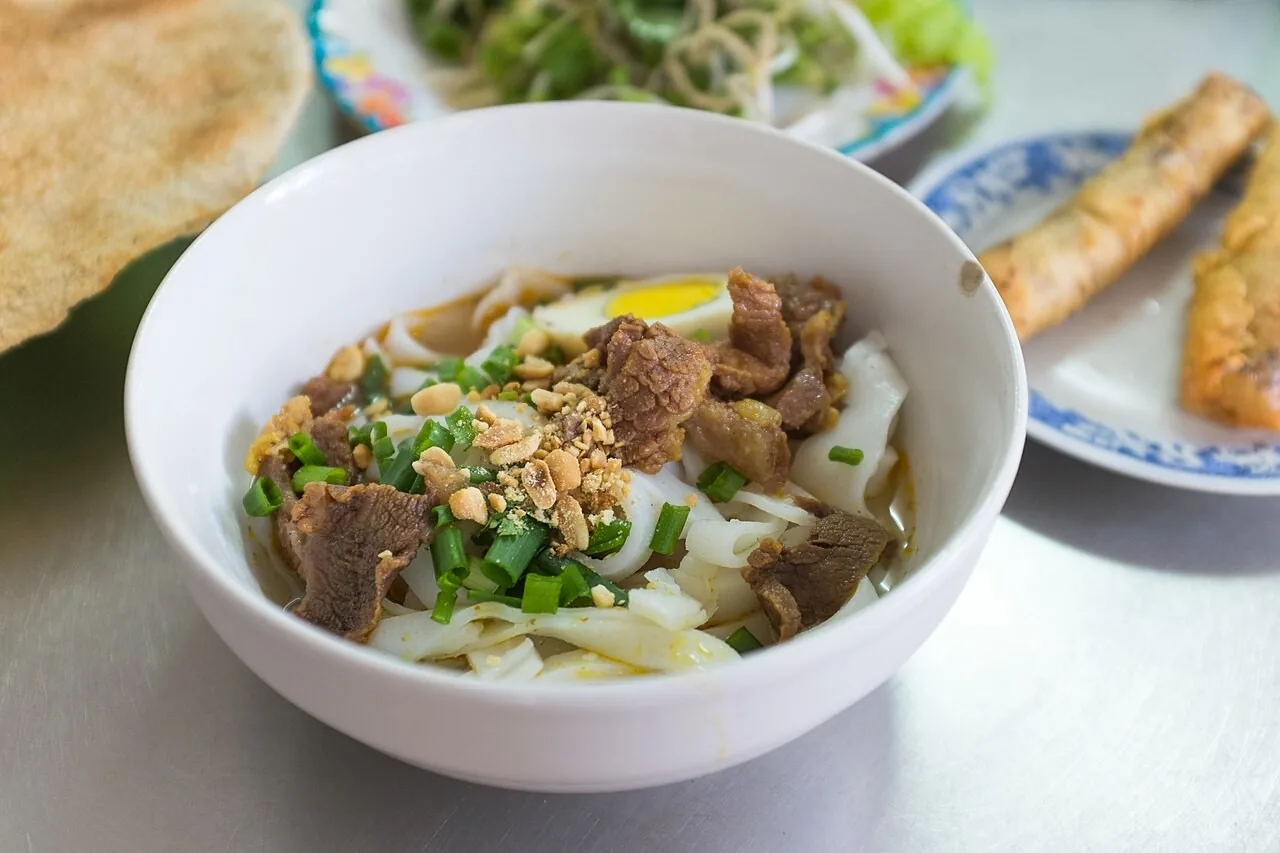
12. Getting between everything: fares, minutes and the licence reality
Every leg in this itinerary is priced and timed below, and the honest default is a car you did not drive. Grab and Xanh SM cover the city reliably with an upfront price; a hired car with a driver is the right answer for Ba Na, My Son and Hai Van; and the scooter, which every blog recommends, is the one decision on a central Vietnam trip where the downside is financially unlimited. Note that only two of these fares are verified – the rest are ranges interpolated between them.
Every leg in this guide
| From | To | km | Time | Fare |
|---|---|---|---|---|
| Da Nang airport | City centre / riverfront | 3 | 10-15 min; 20 in rush | ₫60,000-120,000 car; ₫30,000-60,000 bike (verified) |
| Da Nang airport | Hoi An | 30 | 30-45 min | ₫250,000-350,000 car; taxi ₫300,000-450,000 (verified) |
| City centre | My Khe beach strip | 3 | 8-12 min; 15-20 at rush hour | ₫45,000-80,000 car; ₫25,000-45,000 bike |
| City centre | Marble Mountains | 9 | 15-20 min; 25-30 in rush | ₫90,000-150,000 car; ₫40,000-70,000 bike |
| Marble Mountains | Hoi An | 21 | 25-35 min | ₫180,000-280,000 car |
| City centre | Hoi An | 30 | 40-55 min car; 60-80 min bus; 45-60 min scooter | ₫250,000-400,000 car; bus ₫20,000-35,000 (verified) |
| City centre | Ba Na base station | 27 | 40-50 min, plus 10-15 leaving 07:00-08:30 | Private car or Grab ₫400,000-700,000 each way (verified); secondary sources quote Grab from ₫300,000 and taxi ₫350,000-500,000 |
| City centre | Linh Ung Pagoda, Son Tra | 10 | 20-30 min | ₫100,000-160,000 car |
| Linh Ung | Ban Co Peak | 7 | 20-25 min of hairpins | Not a ride-hail route. Keep your car. |
| City centre | My Son Sanctuary | 70 | 1h15-1h40 each way | Private car or tour; tours roughly ₫500,000-800,000 pp, often excluding entry |
| Hoi An | My Son Sanctuary | 40 | About 1 hour | Tour or private car. Saves 45-70 min of round-trip driving versus Da Nang. |
| City centre | Hai Van summit | 40 | 1h-1h20 | Private car ₫1,000,000-1,900,000 for a round trip |
| Hai Van summit | Lap An / Lang Co | 12 | 20-25 min on the descent | Part of the same excursion |
| City centre | Lang Co direct | 60 | 45-55 min via the tunnel; about 1h30 over the pass with stops | Not a Grab run |
| City centre | Non Nuoc beach | 8 | 15-20 min | ₫70,000-130,000 car |
| City centre | Sun World Da Nang Downtown | 3 | 8-12 min | ₫45,000-80,000 car |
| My Khe | Tho Quang seafood | Not published | 15-20 min | ₫105,000-180,000 car |
| City centre | Hue | 100 | 2-2.5h minivan; 2h30-3h15 train; 4-5h by car over the pass | Train ₫95,000-280,000; minivan ₫140,000-250,000 pp; car ₫1,000,000-1,500,000 (verified) |
Only the airport hops and the Da Nang-Hoi An and Da Nang-Hue fares are independently verified. Everything else is interpolated between them and published as a range on purpose. The apps quote before you book, so use them as the arbiter rather than this table.
Grab, Xanh SM, and which one to open first
Have both installed and compare before every ride. Grab is reliable across Da Nang, Hoi An and Hue with both cars and bikes, takes foreign cards and accepts cash. Xanh SM runs VinFast electric taxis, has strong Da Nang coverage, and its cars are consistently newer and cleaner than the Grab average while its fares move less in surge – which makes it the better pick when demand spikes, such as the fifteen minutes after the bridge show or a Saturday evening out of Hoi An. On a Da Nang-Hoi An run the difference between the two apps can be ₫100,000. Uber does not operate in Vietnam. The Grab in Vietnam guide covers the account setup, and getting around Da Nang covers the buses and the rest.
Three timing notes specific to this itinerary. Do not schedule a pickup on Bach Dang or Tran Hung Dao between 20:30 and 21:30 on a show night; the bridge is closed and the riverside roads seize. Do not plan on hailing a car back down from the Ba Na base station at closing time; supply there is thin and worst exactly when everyone leaves. And Grabs are difficult to summon above Linh Ung on the Son Tra peninsula, so if you go higher, keep the vehicle you arrived in.
The scooter, and the paperwork most rental blogs get wrong
An automatic scooter is ₫110,000-180,000 a day; semi-automatic or manual is ₫160,000-320,000. Most shops deliver to your hotel and hold a photocopy of your passport – never hand over the actual document. That is the easy part. The paperwork is where the received wisdom is out of date in both directions.
| Question | The 2026 position |
|---|---|
| What does Vietnam recognise? | International Driving Permits issued under the 1968 Vienna Convention, carried with your original home licence, and the IDP must carry the category A motorcycle endorsement. Bilateral agreements are the exception to the convention rule: South Korea’s, in force since 23 July 2023, makes a Korean permit valid even though it is a Geneva-format one |
| Is a British IDP valid? | Yes. The UK is a contracting party to the 1968 Convention and issues 1968-format permits. Several 2026 rental blogs wrongly lump the UK in with the non-recognised countries. |
| American, Canadian, Irish, Australian? | Not parties to the 1968 Convention; their 1949 Geneva IDPs are not recognised here. There is no 1968-format permit available to those licence holders, and the remaining legal route is a Vietnamese conversion requiring residency paperwork most visitors do not have. |
| What engine size does A1 cover? | Up to 125cc, not 175cc, since the Road Traffic Order and Safety Law came into force on 1 January 2025. The 150cc touring bikes commonly rented for Hai Van now need full category A. |
| Do rental shops check? | No. They do not check and they do not care. |
| Do police? | Checkpoints on the Hai Van approaches and the Da Nang-Hoi An road are routine. Decree 168/2024, in force from 1 January 2025, sharply raised penalties – reported at roughly ₫2,000,000-4,000,000 for a motorcycle under 125cc and ₫6,000,000-8,000,000 above it. |
The part that actually matters is not the fine. Travel and medical policies almost universally exclude injury sustained while operating a vehicle you were not licensed to operate. If you ride without a licence Vietnam recognises and you are hurt, the realistic outcome is that you pay your own hospital costs and your own medical repatriation – and repatriation from Vietnam to Europe or North America is a five-figure dollar expense. Third-party liability, the damage you cause to someone else, is uninsured too. Riders holding a valid 1968 IDP with category A can buy cover that will actually pay out.
Riding without the right paperwork here is common, easy and normalised. It is also the one decision on this trip whose downside has no ceiling. That is the trade, and you can make it yourself. Our Vietnam scooter rental guide has the fuller version, including the insurance wording to look for.
Cash, cards and the QR code you cannot use
Carry cash. Hotels, tour operators, mid-to-upper restaurants and the tailors take cards. The Marble Mountains booths, the Cham Museum, market stalls, street food, boat fares, buggies and parking do not. VietQR is the universal domestic QR standard and is accepted from street stalls to five-star hotels – but foreign travellers generally cannot use it, because standard VietQR does not work from foreign banking apps or cards. Visitors watch everyone around them paying by phone and reasonably assume they can too.
| Money question | Answer |
|---|---|
| Fee-free ATMs for foreign cards | VPBank (also the highest single-withdrawal ceiling, up to ₫10,000,000) and Techcombank |
| The one that changed | TPBank was the standard fee-free recommendation until June 2025, when it moved to roughly a 3.3% charge. Almost every travel blog still lists it as free. |
| With fees | Vietcombank around ₫50,000 per withdrawal; Agribank, Vietinbank and Vietcombank often cap withdrawals at ₫3,000,000, which multiplies the per-transaction cost |
| At the machine | Always decline the machine’s own currency conversion. Choose to be charged in VND. |
| Tipping | Not traditionally expected and genuinely unnecessary at street stalls. Normal in tourist-facing hotels, spas and on guided tours. Tip in cash, in dong, handed to the person – card tips frequently never reach them. POS terminals in tourist restaurants have started prompting for 10-15%, a practice essentially unknown here before 2024, and declining is not rude. |
| Small notes | Keep ₫10,000, ₫20,000 and ₫50,000 for boat fares, buggies, parking and lanterns |
More in the Vietnam money guide.
What actually goes wrong here
Central Vietnam has its own list, and it is not the generic one. The most consistently reported Da Nang fraud is cloned Facebook and Instagram pages impersonating real tour operators, selling Ba Na and Golden Bridge packages inside expat and travel groups; victims typically find out standing at the cable-car station. Book through the operator’s own site or a major platform. At the airport, freelance drivers in arrivals quote inflated flat fares – the legitimate fleets are Vinasun in white with a green stripe and Mai Linh in green, with a company logo on the door, and if the meter does not start, get out. Grab removes the argument entirely by quoting upfront. In Hoi An, the lantern boat has a spurious ₫30,000 ticket sold at the counter that buys nothing, and the posted rates are on bilingual signs you can point at. And with seafood, the per-kilo mechanism described earlier is the whole story. Classic metered-taxi scamming is now rare in Da Nang because the apps and the two big fleets dominate. Full list in the Vietnam scams guide, and the social ground rules in the Vietnam etiquette guide.
13. What the four days actually cost
Four days in Da Nang costs roughly ₫3,300,000-4,600,000 per person backpacking, ₫8,700,000-14,900,000 mid-range and ₫17,100,000-47,900,000 comfortable, excluding international flights and excluding My Son, which is a fifth-day cost. The spread is driven less by travel style than by three specific things: whether you sleep on the beachfront or one block inland, whether you live on ride-hailing or a rented bike, and whether Ba Na Hills is in the plan at 1,000,000 VND a head. At 26,000 VND to the US dollar that is US$127-177, US$335-573 and US$657-1,842.
The four days, itemised
| Item | Backpacker | Mid-range | Comfortable |
|---|---|---|---|
| Bed, per night | ₫210,000-370,000 dorm or cheap guesthouse | ₫910,000-1,700,000 3-star or good boutique | ₫1,700,000-7,300,000 4-star to beachfront resort |
| Beds, four nights | ₫840,000-1,480,000 | ₫3,640,000-6,800,000 | ₫6,800,000-29,000,000 |
| Breakfast x4 | ₫120,000-200,000 street counters | ₫200,000-400,000 | Usually included |
| Lunch x4 | ₫160,000-240,000 | ₫320,000-600,000 | ₫800,000-1,600,000 |
| Dinner x4 | ₫240,000-400,000 | ₫800,000-1,600,000 | ₫2,000,000-4,000,000, more with a seafood night |
| Drinks and coffee, four days | ₫160,000-300,000, a street coffee at ₫25,000-45,000 and a local beer at ₫15,000-30,000 a day | ₫320,000-600,000, twice that a day | ₫700,000-2,000,000, because a rooftop cocktail is ₫120,000-200,000 and up |
| Ba Na Hills | ₫1,000,000 | ₫1,000,000 | ₫1,000,000 |
| Marble Mountains all-in | ₫75,000 | ₫90,000 | ₫90,000 |
| Cham Museum | ₫60,000 | ₫60,000 plus ₫20,000 audio guide | ₫80,000 |
| Hoi An ticket | Skip it if you are not entering houses | ₫120,000 | ₫120,000 |
| Local transport, four days | ₫450,000 rented bike plus fuel | ₫1,500,000-2,500,000 on Grab and Xanh SM | ₫4,000,000-7,000,000 with hired cars for Ba Na and Hoi An |
| Extras: laundry, an eSIM, a massage | ₫200,000-400,000, a budget massage is ₫200,000-280,000 | ₫650,000-1,100,000, including one massage at ₫450,000-700,000 | ₫1,500,000-3,000,000, spa and a cooking class |
| Four-day total, per person | ₫3,305,000-4,605,000 | ₫8,720,000-14,890,000 | ₫17,090,000-47,890,000 |
| Add My Son only if you take a fifth day | ₫150,000 plus shared transport | ₫150,000 plus a ₫500,000-800,000 tour | ₫150,000 plus a private car |
Every total there is the arithmetic sum of the rows above it, so you can strike out the lines that do not apply to you and the number still holds. Two things the table is deliberately blunt about. Beds are the whole story at the top end: the ₫29,000,000 ceiling on four comfortable nights is a five-star beachfront room, and it is that one line, not the dinners, that triples the column. And My Son sits below the total on purpose, because this is a four-day page and My Son is a fifth-day cost.
As a daily figure that is roughly ₫830,000-1,150,000 backpacking, ₫2,180,000-3,720,000 mid-range and ₫4,270,000-11,970,000 comfortable, which at 26,000 to the dollar is US$32-44, US$84-143 and US$164-460. The first two sit squarely inside the central Vietnam bands our cost data gives – ₫780,000-1,300,000 and ₫2,080,000-3,900,000. The third straddles two of them: ₫5,200,000-9,100,000 a day is what that data calls comfortable and anything over ₫10,400,000 it calls luxury, and the beachfront room is the single line that moves you across. Da Nang sits at the top of the regional range – Hue is US$55-100 a day at mid-range, Hoi An US$85-150, Da Nang US$95-165 – and it is climbing fastest of the three.
The four things that actually move the number
- Which city, not which travel style. Da Nang, Hoi An and Hue vary by a factor of 1.5 to 2.5 against each other at the same comfort level, which is a bigger swing than moving one tier up or down within a city.
- One block inland. Da Nang has the widest accommodation spread of any Vietnamese city. A four-star two streets back from the beachfront can be half the price of the identical standard on Vo Nguyen Giap. That single decision is the biggest lever on this page.
- Transport mode. A rented bike is ₫110,000-180,000 a day; living on ride-hailing is US$8-20 a day. Over four days that choice is worth more than a hotel upgrade – although see the licence section before you take it.
- Ba Na. At 1,000,000 VND it is an entire mid-range day in one purchase. It is also, under the 72-hour ticket, the only big-ticket item you can use twice.
The two-price city, in one dish
A bowl of mi Quang is ₫35,000-50,000 at a neighbourhood shop and ₫80,000-120,000 in a tourist-facing restaurant. That is the same dish at two to three times the price, and it is the clearest single illustration of how Da Nang works. The same multiplier applies to beer – ₫15,000-30,000 at a local eatery, ₫60,000-90,000 at a beach bar, ₫200,000-380,000 for a rooftop cocktail – and to markets, where Con Market runs 20-40% below Han Market for equivalent goods. None of this is a scam; it is two economies operating in the same streets, and knowing which one you are standing in is most of the skill.
Where the daily creep comes from
Budget guides consistently underestimate the same items: second and third coffees, beers, laundry, an eSIM, spa visits and ride-hails. That is typically US$10-25 a day on top of whatever you planned, which over four days is a Ba Na ticket. The other predictable inflation is seasonal – Tet, the 30 April to 1 May block and Christmas push accommodation up 15-30%, and the Da Nang fireworks festival roughly doubles riverside rates against the same room in May. Our Vietnam budget guide has the full national picture, and the Da Nang shopping guide covers what haggling actually achieves in the markets – expect to settle at 50-70% of an opening ask on souvenirs and fabric.
Two spends that are worth it, and one that is not
Worth it: a private car booked as a half-day rather than a point-to-point for the Hoi An leg, because it turns a ₫300,000 transfer into the Marble Mountains plus a beach stop for very little extra. Also worth it: an hour-long massage at ₫450,000-700,000 in the dead middle of an afternoon, which is the cheapest way to make an April-to-September itinerary survivable – see the Da Nang massage and spa guide. Not worth it: a pre-booked airport transfer for the 3 km hop into the city, which is a ₫60,000-120,000 ride that some hotels sell as a service. The exception is a post-22:00 landing, where a fixed price and a name board are worth the premium purely to avoid a 01:00 negotiation with luggage. The Da Nang airport guide covers arrivals in detail.
14. When to come, and what the weather does to this plan
February to May is the season this itinerary was designed for, and September to December is the season it has to survive. Central Vietnam runs the inverse calendar to the rest of the country: it is driest and sunniest from February to May, exactly when southern beaches are entering their rains, and it takes 74.5% of its annual rainfall in the four months from September to December. March is the single best all-round month at 20mm of rain across four days.
Month by month, for this specific plan
| Month | Max temp | Rain / rain days | Sun hrs | Sea | What it does to the itinerary |
|---|---|---|---|---|---|
| January | 25.2C | 85mm / 12 | 4.5 | 24.0C | Cool, grey, cheap. Flood risk has passed. Beach is for walking. |
| February | 26.4C | 25mm / 6 | 5.0 | 23.5C | Second-driest month and one of the two cheapest. Excellent for everything except swimming. |
| March | 28.5C | 20mm / 4 | 6.0 | 24.5C | The best month. Zero flood risk, near-zero rain, tolerable heat, best Ba Na visibility. One continuous day works. |
| April | 31.1C | 35mm / 5 | 7.0 | 26.0C | Arguably the peak: dry, hot but not brutal, first pleasant swimming. The two-half-days structure starts here. |
| May | 33.6C | 85mm / 10 | 8.0 | 28.5C | Short convective afternoon showers, not the autumn deluge. Best beach conditions begin. |
| June | 35.0C | 90mm / 9 | 8.0 | 29.5C | Hottest month. Gio Lao foehn at its strongest. Midday is genuinely lost. Domestic school holidays fill the beach. |
| July | 34.5C | 85mm / 9 | 8.0 | 29.5C | Peak domestic season: busiest and dearest on the beach strip. Good for swimming, poor for all-day walking. |
| August | 34.1C | 115mm / 11 | 7.0 | 29.5-30C | Last reliably good beach month. Typhoon risk becomes non-trivial from late August. |
| September | 32.1C | 310mm / 14 | 6.0 | 29.5C | The pivot month and the most misjudged. Can be beautiful, cheap and empty. Can be a typhoon. Refundable rates only. |
| October | 29.6C | 650mm / 20 | 4.5 | 28C, rough | The wettest month, roughly 30% of the year’s rain. Peak typhoon landfall and river flooding. Also the cheapest. |
| November | 27.7C | 430mm / 20 | 4.0 | 26.5C, rough | Still wet and flood-capable, but typhoon risk tails off. Earliest sunset of the year at 17:14. |
| December | 25.3C | 215mm / 18 | 3.5 | 25C | Rain volume halves but the grey persists. Least sunshine of the year. Flooding possible into early December. |
Rain days and rain volume are not the same thing
May has ten rainy days and eight hours of sunshine a day. October has twenty rainy days and four and a half. Same word, completely different holiday: May’s rain is a short convective afternoon burst, October’s is a monsoon front parked over the coast. Any month-by-month table that gives you only rain days is telling you half the story, which is why the sunshine column above matters more than it looks.
Best time by what you are actually here for
| If the trip is about | Go | Why |
|---|---|---|
| The beach | May to August | Sea 28.5-30C, seven to eight sun-hours, rain in short bursts. April is the shoulder. |
| Walking, ruins, food, Hoi An | February to April, March optimal | 20mm over four days, six sun-hours, 28.5C, no flood risk |
| Ba Na and the Golden Bridge | March to May | Best visibility window of the year on the summit |
| The Hai Van Pass | February to May, March-April best | Clear air, dry tarmac, manageable heat. Avoid September to December outright – fog forms fast at the summit. |
| Cu Lao Cham | March to August | When calm seas are most likely, not when they are guaranteed |
| Low crowds and low prices | February and March | The genuine arbitrage: lowest rates coinciding with the driest, most reliable weather. Most guides default to November instead. |
The rain-day substitution table
Decide these in advance, not at 08:00 on a wet morning.
| You had planned | Substitute | Where and how long |
|---|---|---|
| Ba Na Hills | Postpone under the 72-hour ticket | Free. Try again tomorrow. |
| The beach | Museum of Cham Sculpture, then Han Market on foot | 1.2 km apart on the west bank; ₫60,000; three to four hours together |
| Son Tra and Linh Ung | Cooking class, or a long lunch and a spa | Half a day; ₫450,000-700,000 for a massage |
| Marble Mountains | Han Market plus the cathedral plus the museum – the west-bank walking half-day | 3-4 hours, no vehicle needed, mostly indoors or covered |
| My Son | Cham Museum with the audio guide, properly | Two hours; the indoor version of the same story |
| Hoi An | Go anyway, later, and sit upstairs | Upper-floor riverside cafes stay open; only the heritage houses close |
| Hai Van | The train to Hue and back, or a Hue night | 2h30-3h15 each way; you see the coast rather than the summit |
| An evening out | Dragon Bridge if it is Friday to Sunday; it runs in rain | Five minutes, plus 45 for position and dispersal |
Flooding, honestly
Hoi An’s old town floods on average three to four times a year according to residents quoted in the Vietnamese press, and the overwhelming majority of those events are shallow, confined to the riverside streets and gone within a day. Roughly once every several years there is a big one. October 2025 was a once-in-a-generation event – the Thu Bon at the Hoi An gauge peaked at 3.39m against the 1964 record of 3.40m, and the town flooded three times in three weeks.
Two things follow from that. First, it is a reason to book differently rather than to cancel: refundable rates, a hotel away from the river, a loose itinerary and the assumption that any single day is expendable. An Bang and Cua Dai beach hotels and the whole Da Nang beach strip operated normally through the entire 2025 sequence. Second, calibrate against 2024: a direct typhoon landfall on 27 October cost the region roughly thirty-six hours, and by the following day Hue, Da Nang and Hoi An were dry and back to normal. Cancellation is a 48 to 72 hour decision on a named storm, not a months-ahead one.
If you want to watch it yourself, the number that matters is the Thu Bon river stage at the Hoi An station against its 2.00m alarm level – not the headline figure in the news, which is usually the upstream Cau Lau gauge and is always bigger. River flooding follows the rain by roughly twelve to thirty-six hours, which is exactly the warning window you need to move hotels or reshuffle a day.
Dates to avoid, and one to aim at
| Date | What happens |
|---|---|
| Tet, late January to mid-February | Tet 2027 falls on 6 February, with the practical break running roughly 5 to 13 February. Hotels and major attractions stay open; family-run breakfast counters – the ones you came for – close for a week. Arriving three to five days after the first day captures the atmosphere with most of the town reopened. |
| 30 April to 1 May | The biggest domestic travel surge after Tet. Flights and homestay rates rise 50-200%. |
| June and July | Domestic school holidays. Da Nang’s beaches fill with Vietnamese families and beachfront parking is gone by 08:00 on peak weekends. |
| The fireworks festival | Runs roughly end of May to early July. Riverside rates roughly double against May, and riverside rooms with bridge views sell out two to three months ahead. Stay on the beach side if you do not care about fireworks. |
| 2 September, National Day | Full domestic crowds combined with the first serious rain of the year |
| Quan The Am festival, Marble Mountains | The 17th to 19th day of the second lunar month, typically March. One of Vietnam’s largest Buddhist festivals; very large domestic crowds fill the site for three days. A genuine reason to time a March trip, and a reason the mountain will be packed that week. |
| Aim at: a lantern night in a dry month | The 14th lunar day. In a February or March trip this is the one date worth planning around. |
The month-by-month detail, including how the centre inverts against Hanoi and Phu Quoc, is in our best time to visit Da Nang guide.
15. After Da Nang: where this trip goes next
Da Nang is the middle of the country and the natural pivot in a longer Vietnam trip, so the question is usually north or south rather than what next. North gives you Hue in two and a half hours by train and Phong Nha’s caves beyond it. South gives you Quy Nhon by rail and eventually Nha Trang. And the honest answer for a lot of people is neither – it is two more nights in Hoi An, thirty kilometres away and a different country in temperament.
The obvious next moves
| Where | How long from Da Nang | Cost | Worth it if |
|---|---|---|---|
| Hoi An | 40-55 min | ₫250,000-400,000 car | You day-tripped it and realised it needed a night |
| Hue | 2h30-3h15 by train | ₫95,000-280,000 | You want a second city with imperial architecture and the cheapest UNESCO prices in the country |
| Phong Nha | Bus 6-7 hours by road; private car 4-5 hours; or train to Dong Hoi, 4-5 hours, then 40 km by road | Private 4-seat car ₫1,500,000-2,200,000 for the 4-5 hour version | You want the caves, and you have at least two nights – it is an extension, not a day trip |
| Quy Nhon | 5h10-6h by train to Dieu Tri, then 12-15 km in | From ₫238,000 seat, up to ₫640,000 berth | You want the quiet alternative to Da Nang. Anyone selling a day trip is selling twelve hours in a vehicle. |
| Hanoi or Ho Chi Minh City | About 80 minutes by air | ₫700,000-1,800,000 booked ahead | You are continuing a national trip rather than extending a regional one |
Hue is the one that fits
Hue is 100 km north and the train there is the only leg of the whole Hanoi-Saigon line that people ride for its own sake rather than to get somewhere. It is slow for the distance because the track contours the seaward flank of the Hai Van massif through six tunnels instead of taking the road’s tunnelled shortcut, and on this stretch the slowness is the product rather than the cost. Roughly five or six usable daylight departures a day each way, plus the dedicated heritage service with its Lang Co stop.
What Hue buys you: the Imperial Citadel at ₫200,000, the royal tombs at ₫150,000 apiece, a river, and prices structurally below Da Nang’s because the city is largely a one-night stop and its hotels compete for a transient market. What it costs you: weather. Hue sits on the far side of a genuine climatic divide – it has more rain, more rainy days and less sunshine than Da Nang in every month of the wet season, and travellers crossing the pass in winter routinely ride out of drizzle into sunshine within twenty minutes. See the Hue guide and the Da Nang to Hue train guide.
Before you leave, one practical thing
If you have been living off hotel wifi for four days, sort your data before the onward leg rather than after it. Coverage is good across the centre and an eSIM installed before you fly removes the single most annoying twenty minutes of any arrival. It also makes the ride-hailing apps, the map pins in this guide and the river-gauge pages usable when you are standing in the street rather than sitting in a lobby.
How this page fits together with the rest
This is the day-by-day. The wider picture lives elsewhere: our Da Nang master guide covers the city as a whole, central Vietnam covers the region from Hue to Quang Ngai, and the Vietnam travel guide is the national overview if this is one leg of something longer. For the individual stops on this itinerary, the deep versions are in the Dragon Bridge guide, the Marble Mountains guide, the Ba Na Hills guide, the Son Tra guide and the My Son guide. And if you are still deciding whether Da Nang is the right base at all, Da Nang day trips sets out what is genuinely reachable from here and what is not.
The version of this plan we would actually book
Five nights, in February or March. Sleep on the beach side. Cham Museum on the arrival afternoon. Ba Na on whichever of the first three mornings the forecast likes, at the base station by 07:30. Marble Mountains at 07:00 on another, then Non Nuoc, then an afternoon doing nothing. One day given entirely to Hoi An, dawn and lanterns, with the middle spent at An Bang. My Son through the gate at 06:30 on the last full day, back for a swim. Dinner at 18:30 every night because that is when the city eats and the fish is freshest. And the Dragon Bridge on whichever of Friday, Saturday or Sunday you happen to be here – at 20:40, for five minutes, without a reservation.