
District 4 Seafood Street: Vĩnh Khánh Ốc Guide
Plastic stools, charcoal smoke and cold beer on Saigon’s one-kilometre snail-and-shellfish strip, and a straight guide to eating there without overpaying.
| What it is | A street of roughly 90 open-air ốc shops (snails, clams, oysters, shellfish), cooked to order and shared as small plates. |
|---|---|
| Where | Vĩnh Khánh street, Khánh Hội ward, across the canal from District 1. Everyone still calls the area District 4. |
| When | An evening scene. Filling from 5pm, peak 7–10pm, many shops past midnight. Weekends busiest. Fully open-air. |
| How to order | Point at a Vietnamese paper menu, order 4–6 shared plates for 2–4 people, pay cash. English is weak. |
| Cost for two | Roughly 300,000–800,000₫ ($11–30) sticking to ốc; far more if you add market-price crab or lobster. |
| The one rule | For anything sold thời giá (market price) — crab, oysters, lobster — ask the price per kilo and weigh it before it is cooked. |
| Michelin | Both Ốc Oanh and Ốc Đào are in the Michelin Guide at ‘Selected’ level. Not stars, not Bib Gourmand. |
1. The short answer: what Vĩnh Khánh is, and the one price rule
2. What ‘ốc’ eating actually is (and why you order like a local)
3. What to order: the dishes by name, with price bands
4. The shops, named: Ốc Oanh, Ốc Đào, Ốc Phát and the rest
5. How ordering works, and the market-price trap
6. What a night really costs (with the ranges)
7. Getting there from District 1
8. District 4: from Saigon’s roughest quarter to its seafood street
9. When to go: evenings, weekends and the rain
10. Hygiene and freshness, honestly (the plastic-stool reality)
11. Who it suits, and who should skip it
12. Pairing it with the rest of a Saigon night
13. Before you go: the essentials checklist
1. The short answer: what Vĩnh Khánh is, and the one price rule
🍜 What to eat in Nha Trang: the dishes, the prices and where the shops are →
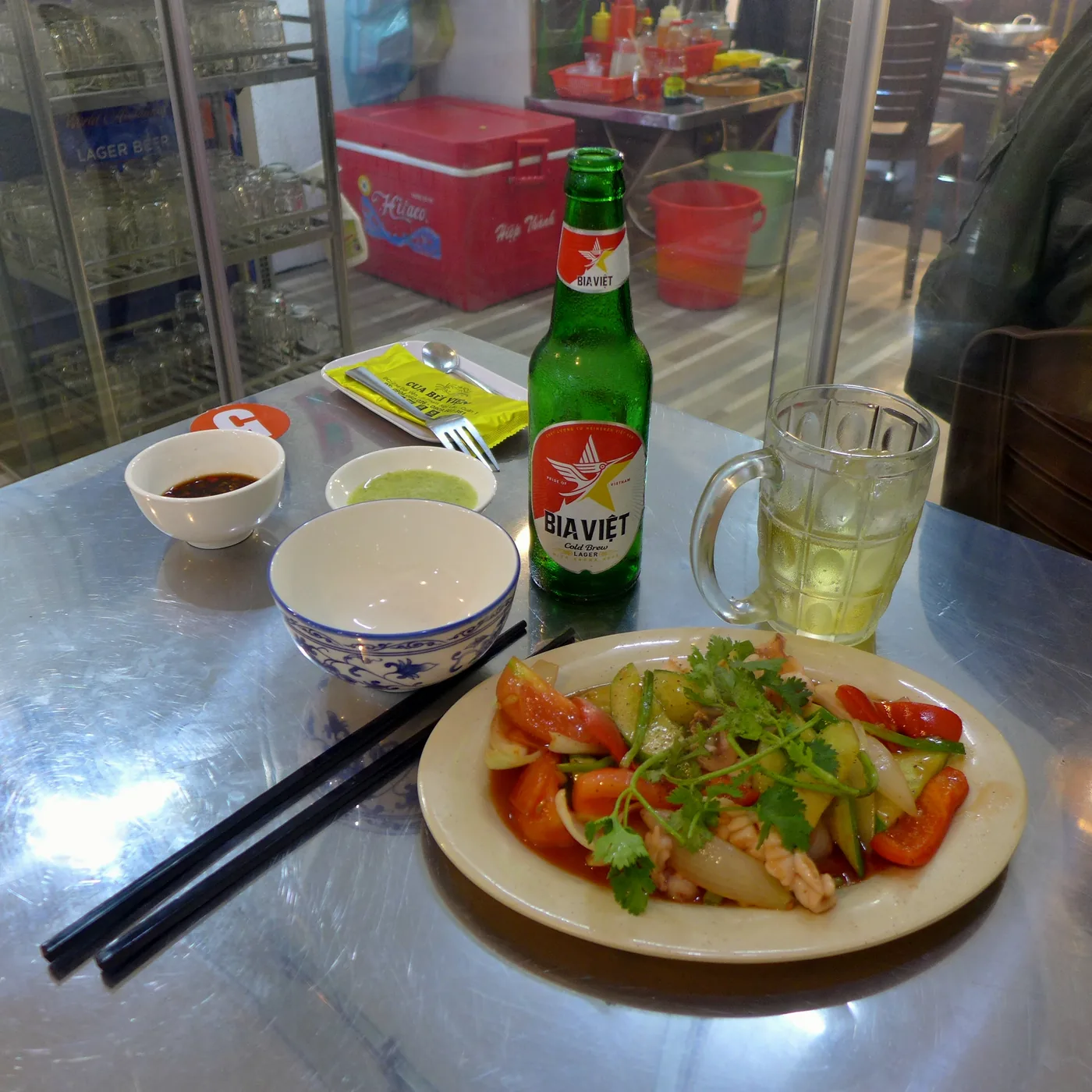
Vĩnh Khánh is a street of roughly ninety open-air seafood shops, a little under a kilometre long, in the part of Saigon everyone still calls District 4. The food is ốc: snails, clams, cockles, oysters and other shellfish, cooked to order in a dozen sauces and eaten as small plates shared around the table. You come in the evening, sit on a low plastic stool, order four to six plates between two to four people, and drink beer. One rule keeps the bill honest: anything sold at market price (live crab, oysters by the piece, lobster) must be priced per kilo and weighed in front of you before it goes to the kitchen.
This is Breeze’s first stand-alone Ho Chi Minh City food guide, and it does one thing thoroughly: it takes a single street and tells you what to order, at which shop, what a night costs, and where the money actually leaks.
Vĩnh Khánh earned its reputation the slow way. It grew from a scatter of sidewalk snail stalls into a dense strip over about five years, was designated an official “food street” (phố ẩm thực) by the local authorities in March 2018, and in November 2025 landed at number ten on Time Out’s Coolest Streets in the World list. In practice, “official food street” status brought a lit neon entrance, some parking and noise management, and a nominal hygiene-and-price oversight from the ward. It did not end the billing complaints at the famous shops, which is the whole reason the price rule above matters.
The street runs from Bến Vân Đồn at the canal end through to Tôn Đản. Both sides are lined with quán ốc, the casual snail-and-shellfish shops that are the genre here, plus a handful of grills, a hotpot place or two, and even a well-liked cheap sushi counter. The eating style is the point: nobody orders a single main course for themselves. A table shares many small plates, each one a different shellfish cooked a different way, and the bill grows one 80,000₫ plate at a time.
Two Michelin names, and what that does and doesn’t mean
Two shops here carry a Michelin listing, and both are routinely misdescribed online. Ốc Oanh, at 534 Vĩnh Khánh, and Ốc Đào are both in the Michelin Guide Vietnam at the “Selected” level. Selected is the Guide’s baseline “inspectors ate here and think it’s worth knowing” tier. It is not a star, and it is not a Bib Gourmand (the good-value award). Anyone who tells you Ốc Oanh is “Michelin-starred” is wrong. The listing is a fair signal that these are established, notable shops. It is not a guarantee of the best food or the best value on the street, and the reviews bear that out.
Prices split into two worlds.
| Price world | What’s in it | Rough price |
|---|---|---|
| Individual ốc plates (priced) | Snails, clams, oysters and other shellfish plates | 30,000–55,000₫ ($1.10–2.10) budget; 80,000–150,000₫ ($3–5.70) mainstream; up to 150,000–400,000₫ at the pricier, famous end |
| Market-price seafood (by weight) | Whole crab, lobster, oysters by the piece | Crab ~400,000₫/kg; lobster 700,000₫ to over 1,000,000₫ a portion, no fixed menu price |
Stay in the first world and two people eat well for well under a couple of hundred thousand đồng each. Wander into the second without asking prices and the bill can reach seven figures fast.
| Shop | Best for | Watch for |
|---|---|---|
| Ốc Oanh (534 Vĩnh Khánh) | The famous one, atmosphere, Michelin Selected | Menu often carries no prices; confirm every market-price item |
| Ốc Đào | Rich tamarind and salted-egg sauces, the local rival, Michelin Selected | Freshness can be inconsistent; oysters have been billed at ~40,000₫ each |
| Ốc Phát | Anyone nervous about pricing: a clear, printed menu, budget | House number varies across listings; confirm you’re at the right one |
One honest note before you go, because it trips up visitors: the “District 4” in the name is now a memory, administratively. Vietnam abolished the district tier nationwide on 1 July 2025, and Vĩnh Khánh now sits in Khánh Hội ward. But Grab, the street signs, the neighbours and even Vietnamese newspapers still say “quận 4” (they write “quận 4 cũ”, the former District 4). So this guide does what everyone does: it navigates by the street name, Vĩnh Khánh, and uses “District 4” as the name the scene is known by. There is a full explanation in the history section below.
Want to slot this into a bigger trip? Start with our Ho Chi Minh City travel guide for the city as a whole, and where to stay in Ho Chi Minh City if you’re picking a base within a short hop of the street.
The rest of this guide walks the street in order:
- what ốc eating actually is
- the dishes by name and price
- the shops one by one
- how ordering works and how the market-price trap is sprung
- what a night really costs
- how to get across the canal
- the district’s real history
- when to go
- the hygiene reality
- who it suits
- how to pair it with a Saigon night
- and a final checklist
2. What ‘ốc’ eating actually is (and why you order like a local)
“Ốc” is the Vietnamese umbrella word for snails and small shellfish, and it names a whole genre of eating, not one dish. At a quán ốc you order many small plates, each one a single shellfish cooked a single way, and share them across the table with beer. A table of two to four picks four to six plates spread across different species and different sauces. Nobody gets their own main course. The cheapness of each plate and the number of plates is the entire model, which is why a night that feels casual can still add up.
It helps to know the two categories you’re choosing between in Saigon. A quán ốc is the casual, low-table, plastic-stool, sidewalk-or-open-shophouse kind of place, with a menu dominated by snails and shellfish in the 20,000–200,000₫ per-plate band, quick turnover and a beer-and-friends atmosphere. A nhà hàng hải sản (seafood restaurant) is the formal, built-out, air-conditioned kind with a bigger and pricier menu, whole fish, and market-priced crab and lobster as centrepieces. Vĩnh Khánh is overwhelmingly the quán ốc model. The catch is that a few of its bigger, more famous shops (Ốc Oanh above all) blur toward the seafood-restaurant end by pushing market-priced crab and lobster, which is exactly where the pricing gets slippery.
The sauces are the whole vocabulary
The same snail can arrive eight different ways, and the cooking style matters as much as the shellfish. A typical menu is really one column of species crossed with one column of styles, which is why picking across both is how you eat well here. These are the styles you’ll see most often.
| Vietnamese | What it is | Tastes like |
|---|---|---|
| rang me | Wok-tossed in tamarind sauce | Sweet, sour and savoury at once; the crowd-pleaser |
| rang muối / rang muối ớt | Wok-tossed in salt, or salt and chilli | Dry, salty, punchy; the chilli version brings the heat |
| xào bơ | Stir-fried in butter, usually with garlic | Rich and garlicky; good on scallops and squid |
| hấp / hấp sả / hấp Thái | Steamed plain, with lemongrass, or “Thai-style” | Clean; herbal; or spicy-sour with herbs (best on clams) |
| nướng mỡ hành | Grilled with scallion oil | Smoky and savoury, often with crushed peanuts on top |
| sốt trứng muối | Tossed in a salted-egg-yolk sauce | Rich, grainy, deeply savoury; a modern favourite |
| xào dừa | Stir-fried in coconut milk | Mildly sweet and creamy; the classic for mud-creeper snails |
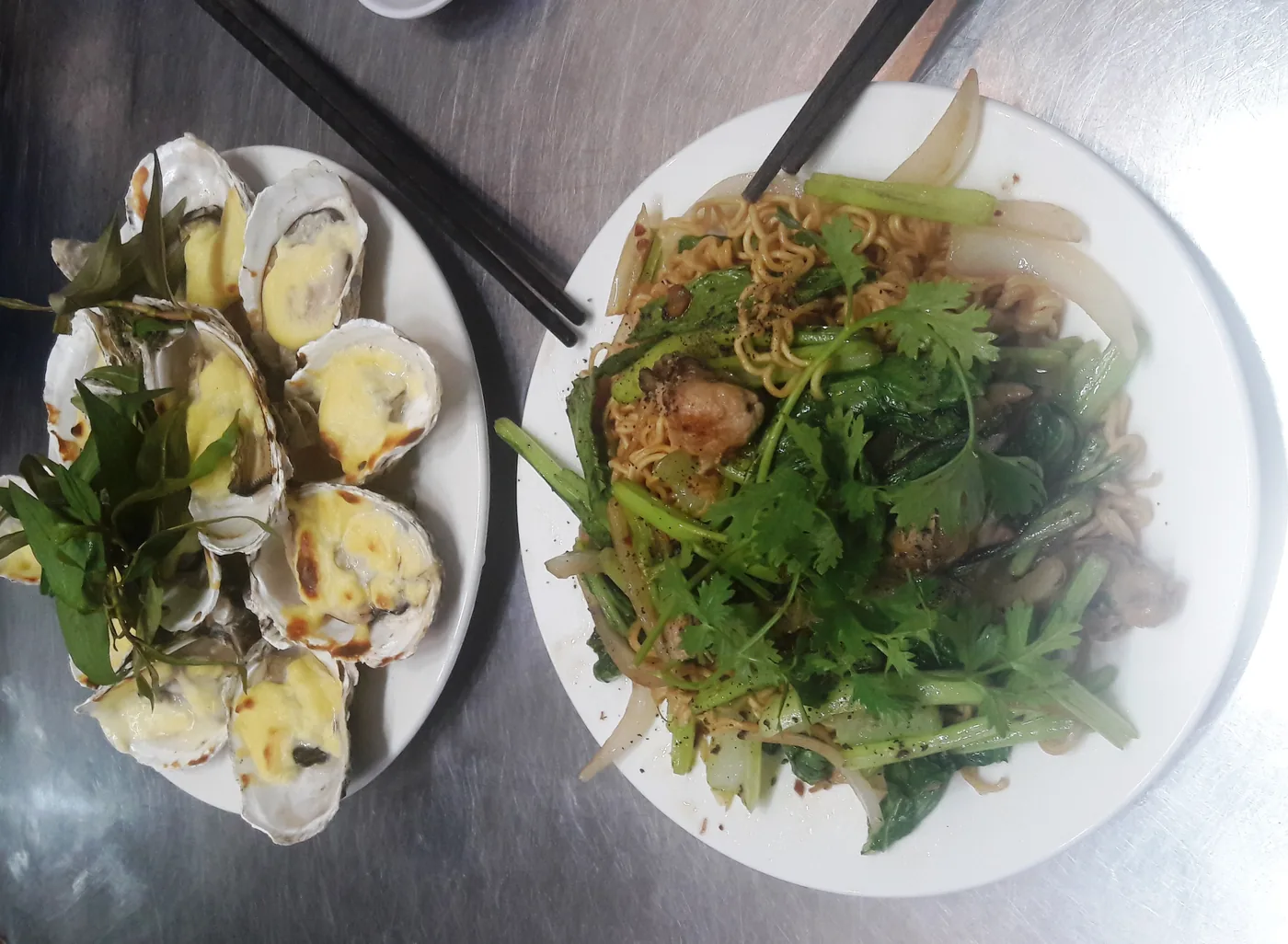
| nướng phô mai | Grilled or baked with cheese | Melted and indulgent; common on oysters and scallops |
How to actually build an order
The move is to spread your four to six plates across both species and styles so no two plates taste the same. A workable order for two people might be:
- one plate of babylon snails salt-and-chilli fried (rang muối ớt)
- one plate of clams steamed Thai-style (nghêu hấp Thái)
- one plate of scallops grilled with scallion oil and peanuts (sò điệp nướng mỡ hành)
- one plate of oysters grilled with cheese (hàu nướng phô mai)
- a plate of greens or some rice, and beer
That’s variety in one pass, and it lands roughly in the 400,000–600,000₫ range for two before any market-price splurge.
A standard menu runs about 20 to 30 items on this species-times-style logic, which is why “one dish per person” makes no sense here. Beer is the default drink (bottled, or draft bia hơi), and a first-hand two-person account logged three beers each as part of a modest bill. Fresh coconut is usually around as a non-alcoholic option, as it is at Vietnamese street food generally. Most shops are cash-first, and English is inconsistent and often absent, especially at the smaller places. When in doubt, point: it’s completely normal here, and the staff expect it.
How you actually eat a snail
The mechanics matter, because a plate of ốc is more of a project than a bite. Each shop hands you a small pin (often just a toothpick or a bent safety pin) to hook the meat out of the shell; you spear the operculum, the little “trapdoor” at the opening, twist, and pull. Some snails, especially the larger babylon (ốc hương) and the mud-creepers (ốc len), take a bit of practice, and the mud-creepers you simply suck the meat and coconut sauce straight out of the shell, which is half the fun and completely acceptable table manners here. Nobody expects tidiness. The shell dishes fill up, the beers keep coming, and the pace is deliberately slow.
Alongside the plates you’ll get the standard Vietnamese snail accompaniments: a saucer of muối tiêu chanh (salt, pepper and lime you mix yourself into a dip), fresh herbs, and usually rau răm (Vietnamese coriander), whose sharp, slightly soapy bite is the traditional partner to snails and cuts their richness. Squeeze the lime into the salt-pepper, dip the meat, add a herb leaf, and chase it with cold beer. That combination, sweet-sour-salt-heat plus a bitter herb, is why ốc is a drinking food first and a meal second.
Quán ốc versus a seafood restaurant, in practice
It’s worth understanding what you are and aren’t getting.
| Quán ốc (what Vĩnh Khánh is) | Nhà hàng hải sản (the formal kind) |
|---|---|
| 20 to 30 menu items, quick fire from the wok, turnover fast enough that stock stays fresh | A bigger menu of whole fish and centrepiece crab and lobster |
| A bill made of many small numbers, low unit prices | A much higher per-head spend |
| No white tablecloths, reliable English, air conditioning or printed guarantee on the by-weight items | Those comforts included |
Vĩnh Khánh is the former, with the important asterisk that its most famous shops have grown big enough, and market-priced enough, to behave a little like the latter, which is exactly where the pricing gets slippery. Knowing which kind of place you’ve sat down in tells you how carefully to watch the by-weight items.
Beer, coconut and the social rhythm
The default drink is beer, and it’s part of the format rather than an add-on. Locals nurse bottles or draft over a long, unhurried evening, ordering plates in rounds as the mood moves, so a “meal” here can easily stretch two hours. Ice in a glass of beer is normal in Saigon and not a sign of anything wrong. If you don’t drink, fresh coconut is the usual non-alcoholic order at Vietnamese street-food tables, along with soft drinks. The rhythm rewards patience: this is not a place to eat fast and leave, it’s a place to settle in, share, and let the street fill up around you.
3. What to order: the dishes by name, with price bands
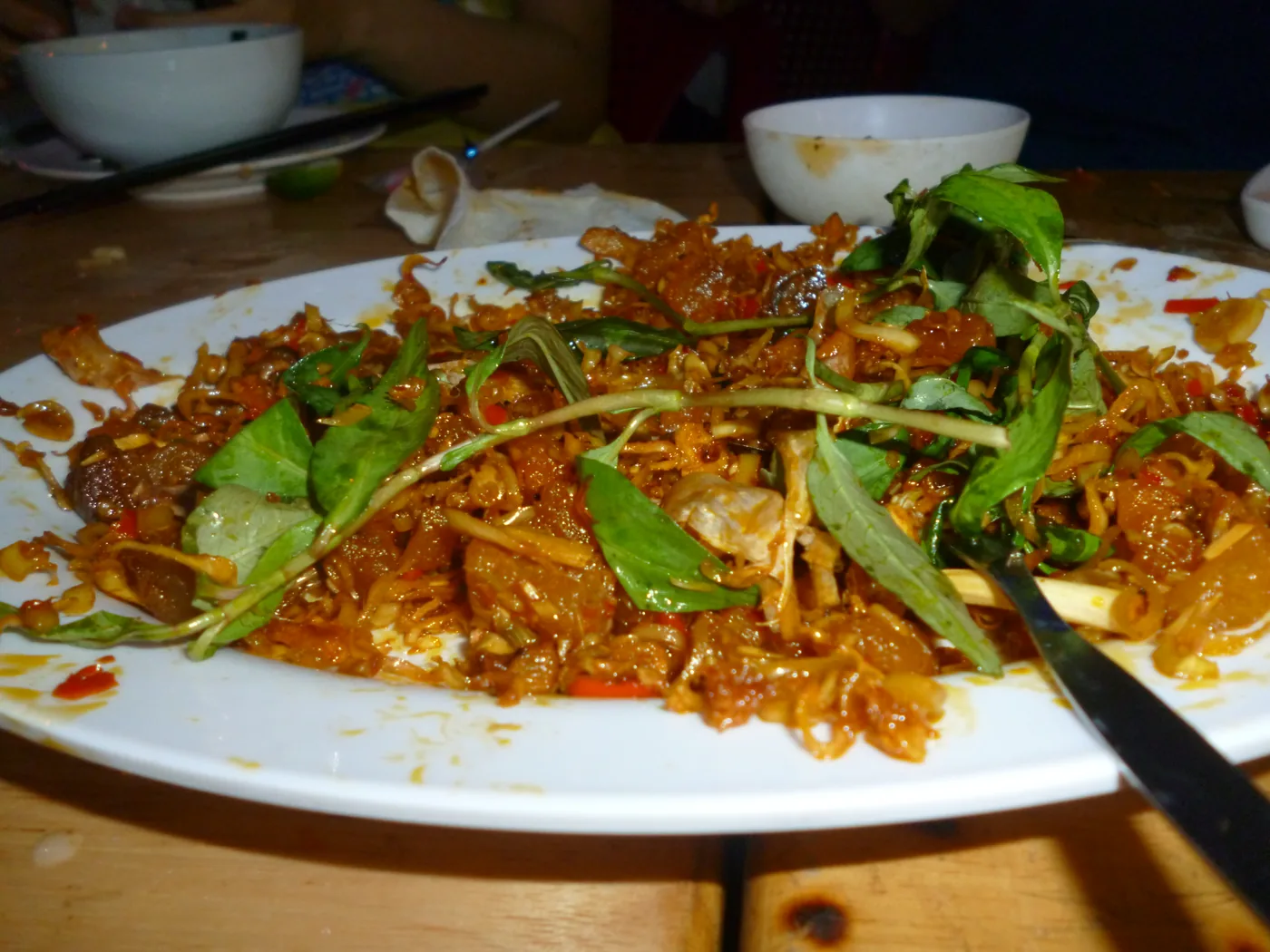
Order across the menu: a premium snail like ốc hương (babylon snail), the Mekong classic ốc len xào dừa (mud-creeper snails in coconut), sò điệp (scallops), sò huyết (blood cockles), nghêu (clams) and hàu (oysters), plus crab claws and grilled squid if you want more. Most plates land between 60,000 and 200,000₫ ($2.30–7.50), with premium snails and larger shellfish at the top and clams at the bottom. Whole crab and lobster are separate, sold at market price by weight. Pick different species in different sauces and you cover the whole street in one meal.
Here is the working order card. Treat the bands as ranges, not fixed prices: ốc prices move with the market and the shop, and several of the pricier items (prawns, squid, razor clams) weren’t independently priced in reporting, so those show as a general band rather than a confident figure.
| Dish (Vietnamese) | What it is / usual style | Price band | Note |
|---|---|---|---|
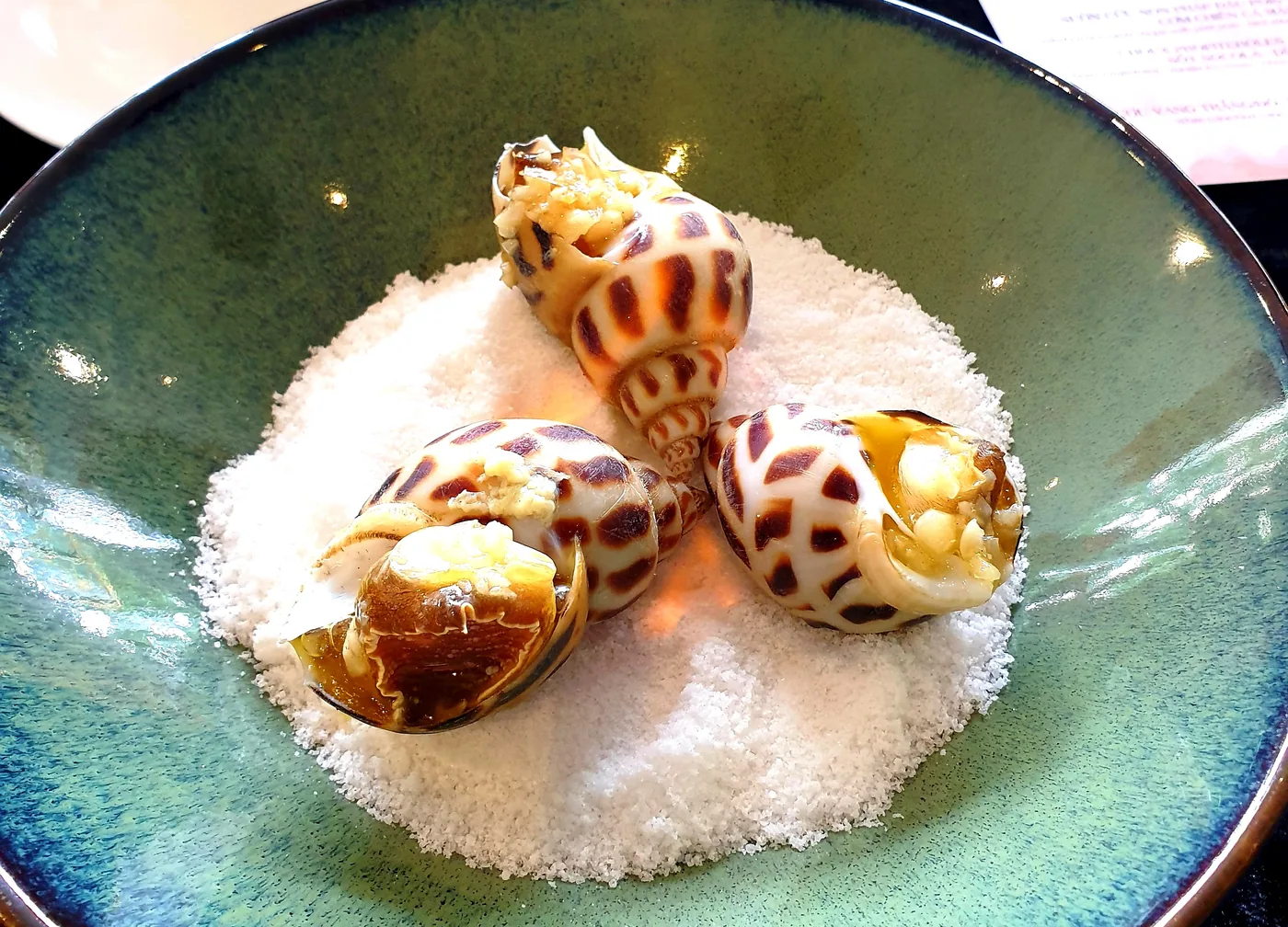
| ốc hương | Babylon (spotted) sea snail; salt-roasted, tamarind, or salted-egg | 80,000–150,000₫ ($3–5.70) | The prized, premium snail |
| ốc len xào dừa | Mud-creeper snails in coconut milk; suck the meat out | 80,000–150,000₫ ($3–5.70) | Mekong classic; a specialty at Ốc Thảo |
| nghêu | Clams, steamed Thai-style or with lemongrass | 60,000–120,000₫ ($2.30–4.50) | Cheap, clean, a good opener |
| sò huyết | Blood cockles, garlic-fried or grilled with scallion oil | 100,000–200,000₫ ($3.80–7.50) | Iron-rich, cooked lightly on purpose |
| sò điệp | Scallops, grilled with scallion oil and peanuts, or garlic butter | 100,000–200,000₫ ($3.80–7.50) | The single most-recommended dish here |
| hàu | Oysters, grilled with cheese, scallion oil or garlic butter | ~40,000₫ each at some shops; 24-flavour set 50,000–100,000₫ | Priced per piece; confirm the count |
| càng ghẹ | Crab claws, salt-and-chilli roasted | 200,000–500,000₫ ($7.50–19) | A headline dish; size drives the price |
| ghẹ / cua (whole crab) | Whole crab, market price by weight | ~400,000₫/kg (thời giá) | Weigh it and confirm per-kilo price first |
| tôm | Prawns, grilled or salt-and-chilli | ~80,000–200,000₫ band | Exact plate price varies by size |
| mực | Squid, grilled; răng mực (mantle) butter-fried | ~80,000–200,000₫ band | Răng mực singled out as good at Ốc Đào |
| ốc móng tay | Razor clams, garlic-fried or with water spinach | General plate band | Price not independently confirmed |
| ốc bươu | Apple / field snail, salt-roasted or garlic-fried | 60,000–120,000₫ ($2.30–4.50) | Cheap freshwater snail; Ốc Phát specialty |
| tôm hùm | Lobster, whole, a market-price splurge | 700,000–1,000,000₫ ($26–38) a portion | Only at the pricier shops; weigh first |
Start cheap, splurge last (on purpose)
The smart order goes bottom-up. Open with clams (nghêu) and an inexpensive snail like ốc bươu to see how the kitchen handles the basics, then move up to scallops and babylon snails, and only add crab claws or a whole crab once you’ve clocked how the shop prices and how full you are. Doing it this way, rather than ordering a lobster first out of enthusiasm, is the single biggest lever on your final bill. Blood cockles (sò huyết) are cooked deliberately on the rare side so they stay tender and iron-rich; if that’s not for you, ask for them “chín” (well done), though purists say it toughens them.
The 24-flavour oyster set, explained
The street’s signature party trick is the “hàu 24 vị”, the 24-flavour grilled oyster set, and the shop known for it is Quán Chilli. It’s exactly what it sounds like: 24 small bowls, one oyster in each, every one dressed in a different sauce (fermented turnip, lime-chilli, cheese, cream, satay, salt-and-lime, scallion oil, cinnamon-lime, Sichuan pepper, oyster sauce, peanut, and on) and grilled tableside on a charcoal stove. Some outlets count 26 sauces; the number isn’t the point. It runs roughly 50,000–100,000₫ and is more of a shared novelty than a value meal, but it’s a genuinely fun way to taste the whole sauce vocabulary in one sitting.
Managing expectations
Two honest caveats. First, ốc is a texture-forward food; some snails are chewy and fiddly to extract with the little pin they give you, and that’s normal, not a fault. Second, the famous shops draw complaints about freshness and value that their fame doesn’t advertise, so a plate that’s merely fine rather than transcendent is a real possibility, especially at the tourist-heaviest tables. That’s not a reason to skip the street. It’s a reason to spread your order, favour busy stalls, and not over-invest in a single expensive plate. For a sense of how Vietnamese seafood is done elsewhere, our Da Nang seafood guide and Da Nang food guide make useful comparisons.
4. The shops, named: Ốc Oanh, Ốc Đào, Ốc Phát and the rest
The two famous names are Ốc Oanh (534 Vĩnh Khánh), the most touristed, priciest and most polarising shop, in the Michelin Guide at Selected level, and Ốc Đào, the local rival known for rich tamarind and salted-egg sauces, also Michelin Selected but with uneven freshness reviews. If pricing makes you nervous, Ốc Phát is the honest pick for its printed menu; Ốc Vũ and Ốc Loan are the cheapest; and Bé Ốc, Ốc Thảo, Ốc 35k, Quán Chilli and Ốc Ty round out the strip. Because nearly every shop is “Ốc” plus a short name, always confirm the house number, not just the name.
| Shop | Address on Vĩnh Khánh | Known for | Rough spend |
|---|---|---|---|
| Ốc Oanh | 534 | Salt-chilli snails, grilled scallops, crab claws; the famous one | ~100,000–165,000₫/person, more with crab/lobster |
| Ốc Đào (Ốc Đào II) | 232/123 | Thick tamarind and salted-egg sauces; butter squid | ~50,000–121,000₫/person |
| Ốc Phát | On the street (number varies in listings) | Salt-roasted apple snail; a clear priced menu | 60,000–120,000₫/plate |
| Ốc Loan | 129 | No-frills roadside seating; general snail menu | ~30,000–50,000₫/person |
| Ốc Vũ | 37 | Cheese-grilled oysters, salted-egg snails; “student prices” | 30,000–55,000₫/plate |
| Bé Ốc | 58/44 | Salt-garlic babylon snail, grilled scallops; two floors | 100,000–200,000₫/plate |
| Ốc Thảo | 383 | Coconut snails, chilli-satay grilled octopus | 100,000–250,000₫/plate |
| Ốc 35k | 6 | Tamarind fatty snail, lemongrass clams; low entry price | 60,000–150,000₫/plate |
| Quán Chilli | 232/105 | The 24-flavour grilled oyster set | 50,000–100,000₫ |
| Ốc Ty | 122/34/4/9 | Live seafood, grill and hotpot; family-friendly, parking | Varies |
Ốc Oanh (534 Vĩnh Khánh): the famous one, honestly
Ốc Oanh is the shop every blog and travel list leads with. It’s about twenty years old, it’s in the Michelin Guide at Selected level (added in 2023), and a reported near-half of its customers are foreign tourists, Korean, Chinese, Japanese and Western. When it lands well, the praise is real: fast service (dishes described as arriving within about five minutes even when packed), big portions, and genuinely good salt-and-chilli fried snails, grilled scallops with scallion oil and peanuts, and salt-roasted crab claws. The shop says its stock comes daily from the Bình Điền wholesale market and is hand-picked before cooking.
The complaint reviewers keep making is about the bill. Independent Foody reviewers repeatedly report a menu with no printed prices, which leads to disputed and inflated totals, plus scattered reports of cold food, quality that doesn’t match the price, and in one case an accusation of serving spoiled crab. Its Foody aggregate is a middling 5.0 out of 10 across 344 reviews (138 rated “Poor”), and its Tripadvisor standing is unremarkable. In other words, its fame runs ahead of its consensus quality. Go for the atmosphere and the history, order carefully, and treat every market-price item as something to price and weigh before it’s cooked. This is the shop the whole “one rule” of this guide was written for. It’s the landmark pin most people navigate to: Ốc Oanh (534 Vĩnh Khánh) Map.
Ốc Đào: the local rival with the better sauces
Ốc Đào (you’ll often see it signed “Ốc Đào II”, a numbered branch and relocation, which is a real source of address confusion) is the name Vietnamese round-ups cite as often as Ốc Oanh, with far less English-language tourist coverage. It’s the one to go to for sauces: thick tamarind and salted-egg stir-fries, and beyond snails, salt-and-chilli shrimp, green-peppercorn crab and garlic-charred clams. Butter-fried scallops, lemongrass-steamed clams and the butter squid “răng mực” are the dishes reviewers single out. It’s also in the Michelin Guide at Selected level. Price positioning is mid-range, around 50,000–121,000₫ a head.
The complaint reviewers keep making here is freshness inconsistency: reports of gritty or sandy seafood and, occasionally, an off smell. Oysters billed at around 40,000₫ each have been flagged as steep for what arrives, and there are billing-accuracy complaints plus a sense among some regulars that service slipped after a move. Its Foody score sits at 6.4 out of 10 from 149 reviews, higher than Ốc Oanh’s but hardly a rave. The read on both famous names is the same: their reputation is partly brand inertia, not a promise of the best plate on the street.
Ốc Phát: the honest pick if pricing worries you
If the market-price game makes you tense, Ốc Phát is the answer. Its selling point, called out specifically in coverage, is a clear, transparent menu with the prices actually printed on it, which is the direct antidote to the Ốc Oanh complaint pattern. It’s a budget-to-mid shop at 60,000–120,000₫ a plate, known for salt-roasted apple snail (ốc bươu), garlic-fried rice-paddy snail (ốc gạo) and grilled sea snail (sò lông) with scallion oil, and it keeps early hours (roughly 13:00–22:00). The one caveat is that its exact house number isn’t consistent across directories, so confirm you’re at the right Ốc Phát on the street rather than a similarly named neighbour.
The budget end: Ốc Vũ and Ốc Loan
For the cheapest honest feed, two names come up. Ốc Vũ (37 Vĩnh Khánh) is the lowest-priced shop in this research at 30,000–55,000₫ a dish, described as “student pricing”, with cheese-grilled oysters and salted-egg snails as the draws and a comfortable enough setting; it’s cited as one of two shops near the corner that are always busy, which is a good freshness sign. Ốc Loan (129 Vĩnh Khánh) is a no-frills, roadside-facing shop with open seating right on the pavement over the street’s bustle, running an unusually early 09:00–22:00, with per-person spend around 30,000–50,000₫ and reviews praising fresh, well-prepared snails and quick, attentive service. No specific negative pattern surfaced for either, which is worth reading as thin data rather than a spotless record.
Roomier and mid-range: Bé Ốc, Ốc Thảo, Ốc 35k
Bé Ốc (58/44 Vĩnh Khánh) is a two-storey place, more room than the sidewalk-only shops, doing salt-and-garlic roasted babylon snail and grilled scallops with scallion oil at 100,000–200,000₫ a dish (about 3.7 out of 5 from 479 ratings). Ốc Thảo (383 Vĩnh Khánh) has fifteen years behind it and a name for a fast kitchen, with coconut stir-fried snails (ốc len xào dừa) and chilli-satay grilled octopus its calling cards, at 100,000–250,000₫ a dish (about 3.9 from 601 ratings). Ốc 35k (6 Vĩnh Khánh) trades on a low entry price, with tamarind-fried fatty snail (ốc mỡ xào me) and lemongrass-steamed clams at 60,000–150,000₫ (about 3.6 out of 5).
Specialists and the family option
Quán Chilli (232/105 Vĩnh Khánh) is the address for the 24-flavour grilled oyster set described earlier, roughly 16:00–22:00, 50,000–100,000₫. Ốc Ty (122/34/4/9 Vĩnh Khánh) breaks the mould: it’s a casual live-seafood, hotpot and grill shop rather than a snail specialist, and it’s the one place that reads as family-and-group friendly, with free motorbike parking, delivery and even a small kids’ play area (its ratings are too thin to lean on). And to show the street isn’t only shellfish, Sushi Ko is a well-regarded, affordable sushi counter mixed in among the ốc shops, singled out by English-language coverage as a surprisingly good value.
Because every shop is “Ốc” plus a short first name (Oanh, Đào, Loan, Vũ, Thảo, Cúc, Phát), it’s genuinely easy to walk into a similarly named copycat trading on a famous name, especially if you’re going by memory or a screenshot. Save a map pin to the exact house number, and verify the number on the sign when you arrive.
5. How ordering works, and the market-price trap
You order by pointing at a multi-page Vietnamese paper menu (English is weak and sometimes absent), a table settles on four to six shared plates, and you pay cash at the end. The trap is thời giá, market price: live crab, oysters sold by the piece and lobster often carry no printed price and are billed by weight, and that is exactly where the overcharging complaints cluster. The defence is simple and non-negotiable: before anything is cooked, ask the price per kilo and have the seafood weighed in front of you. If that makes you tense, choose a shop with a printed menu, like Ốc Phát.
The dominant setup is a printed or laminated menu listing 20 to 30 items as species-times-style combinations, which you circle or point at. At the pricier, more seafood-restaurant-like shops (Ốc Oanh) there are live tanks so you can pick your own crab or lobster before it’s weighed, but that isn’t the default across the whole street the way it is at a formal seafood restaurant. English service is the exception, not the rule: one first-hand account at Ốc Oanh flatly reports that no one spoke any English and the diners ended up pointing, while a travel-guide summary claims many vendors know basic English for popular items but still advises pointing when unsure. Assume you’ll point, especially at the smaller and cheaper shops.
Why the market-price items are where bills blow up
A plate of snails is cheap and usually priced. The problems come from the by-weight items. The pattern, documented in reviews of Ốc Oanh in particular, is a menu with no visible prices, verbal-only quotes, and a total that arrives far higher than expected; Ốc Đào’s 40,000₫-per-oyster complaint is the same mechanism on a smaller scale. This isn’t unique to Vĩnh Khánh, it’s Vietnam’s live-seafood-by-weight model generally, and it’s common enough nationally that a 2023 Price Law (in force from 1 July 2024) explicitly bans changing price, quality or quantity at the time of service without prior notice. That’s useful context, but the law is a remedy for after it’s gone wrong. Your job is to prevent it, not litigate it.
| Do this | Not this |
|---|---|
| Ask the price per kilo out loud before the item is cooked | Assume a “market price” item is cheap because the snails were |
| Watch it weighed on a visible scale, then confirm the total | Let it go to the kitchen and settle the price after eating |
| Prefer shops with prices printed on the menu (Ốc Phát) | Order from a menu with no prices at all without asking |
| Order in waves and keep a rough running total in your head | Order a lobster or big crab first, before you’ve clocked the shop |
| Glance at what nearby local tables seem to be paying | Follow a tout promising “fresh seafood, good price” to a no-price menu |
Two smaller frictions worth naming so they don’t surprise you. Motorbike parking fees are a real thing: Ốc Oanh has been called out for a 5,000₫ bike-parking charge some customers felt was an add-on. Treat a few thousand đồng for parking as normal and not worth arguing over, but check for a posted or QR-code fee (the city has been rolling out QR parking payment specifically to curb inflated charges) rather than handing over an open-ended amount. And payment is cash-first: a few established shops (Ốc Oanh among them) appear on delivery apps like ShopeeFood, so digital payment exists at the top end, but don’t assume it street-wide.
For the wider picture on money and the common tourist traps in Vietnam, see our Vietnam money and currency guide and guide to common Vietnam tourist scams.
6. What a night really costs (with the ranges)
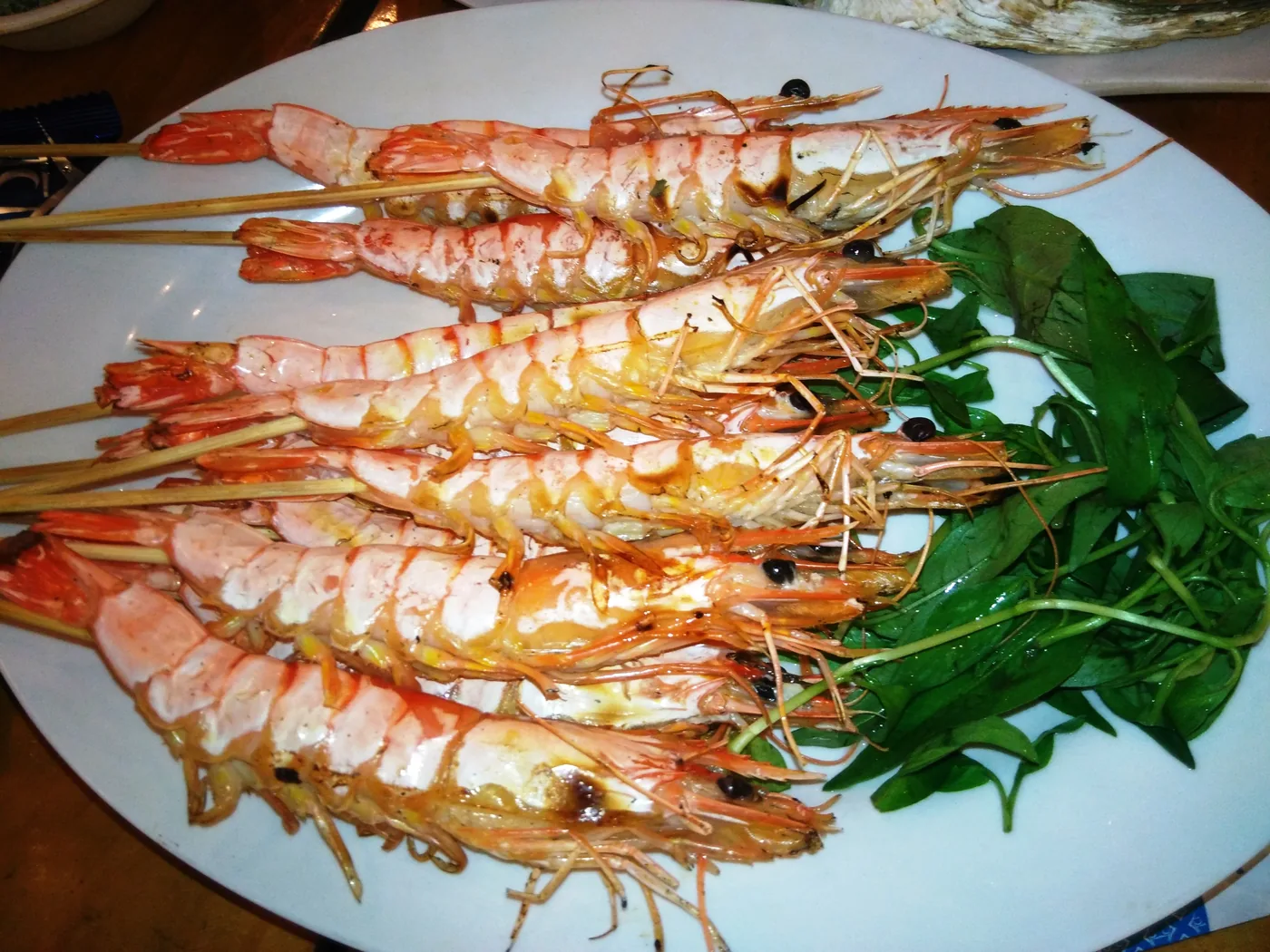
A two-person night that sticks to ốc, greens and a few beers runs roughly 300,000–800,000₫ ($11–30) all in. At the budget shops a simple order is about 30,000–55,000₫ a head; at mainstream shops a satisfying multi-plate meal for two with beer sits in the mid-hundreds of thousands. One sourced two-person night with beer came to about 400,000₫ by avoiding market-price items. Add crab claws, whole crab (~400,000₫/kg) or lobster (700,000₫ to over 1,000,000₫) and the total can jump into the millions. Every figure here is a range, because ốc prices move and the by-weight items swing hard.
There is no single honest “per couple” number for this street, so treat the baskets below as illustrations built from component prices, not a quote. What they show clearly is that your total is decided by one choice: whether or not you order market-price seafood.
| Order style (two people) | Roughly what’s on the table | Ballpark total |
|---|---|---|
| Budget | 3 plates of cheaper snails/clams at a shop like Ốc Vũ or Ốc Loan, 2–3 beers | ~150,000–300,000₫ ($6–11) |
| Mainstream | 4–5 mixed plates (scallops, babylon snail, clams, oysters), greens, several beers | ~350,000–800,000₫ ($13–30) |
| Splurge | The above plus salt-chilli crab claws and/or a market-price whole crab or lobster | 1,200,000₫+ ($45+), no fixed ceiling |
Per person, the shape is: 30,000–55,000₫ at the cheap end, roughly 130,000–165,000₫ for a comfortable beer-inclusive meal at the mainstream shops, and effectively open-ended once lobster enters the picture, since Ốc Oanh’s own listing puts per-person spend at 100,000–165,000₫ before any market-price item. That last clause is the whole game: the printed part of your bill is predictable and cheap; the by-weight part is where a table’s total can reach seven figures.
Cash, and how to carry it
Bring đồng. This is a cash economy at street level, and guides are explicit that not every vendor takes cards. No specific ATM on or immediately beside Vĩnh Khánh could be confirmed in research, so the safe move is to draw your cash in District 1 before you cross the canal rather than hunting for a machine mid-meal. Carry enough for the meal plus a comfortable buffer if you think you might be tempted by a crab, and keep it somewhere secure in the evening crowd. For denominations, exchange rates and ATM basics, our Vietnam money guide has the detail.
7. Getting there from District 1
Vĩnh Khánh is across the Bến Nghé canal from District 1, roughly 1.5–3 km depending on where you start (sources genuinely differ). A Grab bike is about 20,000–30,000₫, a Grab car or taxi about 35,000–60,000₫, both usually under ten minutes in normal traffic. Walking from Bến Thành Market is realistic at about 15–20 minutes, crossing one of the canal bridges. There is no single “the” bridge: which one you cross depends on where in District 1 you set off from.
| Mode | Rough fare | Time | Notes |
|---|---|---|---|
| Grab bike (GrabBike) | ~20,000–30,000₫ | Under 10 min | Cheapest and fastest; a derived estimate from the standard fare formula |
| Grab car / taxi | ~35,000–60,000₫ | Under 10 min | One blogger paid ~40,000₫ one-way from District 1 |
| Walk from Bến Thành | Free | ~15–20 min | ~10–15 min to a bridge, then 5–10 min to the shops |
| Local bus | A few thousand đồng | Varies | Routes 31, 44, 139, 102, 38 reportedly serve the area (blog-sourced) |
The distance genuinely varies by source: one Vietnamese report calls the street “right next to District 1” with no figure, a travel guide estimates 2–3 km from the Bùi Viện area, and a walking route from Bến Thành Market to the first bridge is only about 1 km. Take the real point-to-point as roughly 1.5–3 km depending on your start point and route. The upshot is the same either way: this is a short hop, not a trip.
Which bridge? Any of several
At least four bridges cross the Bến Nghé canal between the old District 1 and District 4, and you’ll use whichever suits your start. The most cited crossings are Cầu Ông Lãnh (the steel bridge on Đinh Tiên Hoàng), Ông Lãnh Bridge Map, and Cầu Calmette (a wide, rebuilt six-lane bridge), Calmette Bridge Map. There is also Cầu Mống, the slender French-built 1893–94 steel heritage bridge, a landmark in its own right and a pleasant walking crossing, and Cầu Khánh Hội on Nguyễn Tất Thành. If you’re letting Grab drive, ignore all of this and let the app pick. If you’re walking, aim for the bridge nearest your hotel and follow the canal on the far side toward the street: Vĩnh Khánh food street Map.
Surge, rain and getting back
Grab surge pricing kicks in during rush hour (roughly 7–9am and 5–7pm) and, importantly for an evening seafood street, during sudden rain, when fares can climb to around 2.5 times normal. Since you’ll likely arrive and leave by Grab, factor that in on a wet night: it may be cheaper to wait out a downpour over another beer than to book a car in the thick of it. Xanh SM’s electric taxis and bikes are an alternative to Grab via their own app. Getting back late is rarely a problem, cars and bikes are plentiful around the street until the small hours, but confirm your pickup pin, because the address confusion that plagues the shops can also confuse a driver. For the full picture on ride-hailing, see our Grab and Xanh SM guide, and for moving around the country more broadly, how to get around Vietnam.
8. District 4: from Saigon’s roughest quarter to its seafood street
District 4 genuinely was Saigon’s toughest quarter. After 1975 it was a dense, poor dockworker area wedged between canals, and it produced the city’s most notorious gangsters and the saying “Nhất Quận 4, nhì Quận 8” (District 4 first, District 8 second, for roughness). That era has faded. Guides from 2025–26 describe the district as gentrified and generally safe, and an evening on Vĩnh Khánh needs only the normal big-city, dense-crowd care: keep your phone and wallet secure and don’t wander into unlit alleys very late. No current source flags the street itself as dangerous.
| Then | Now |
|---|---|
| After 1975, a dense, poor dockworker area wedged between canals; cradle of Saigon’s underworld (“Nhất Quận 4, nhì Quận 8”) | Gentrified and generally safe (2025–26 guides); families, cafés and tourists eating comfortably on Vĩnh Khánh |
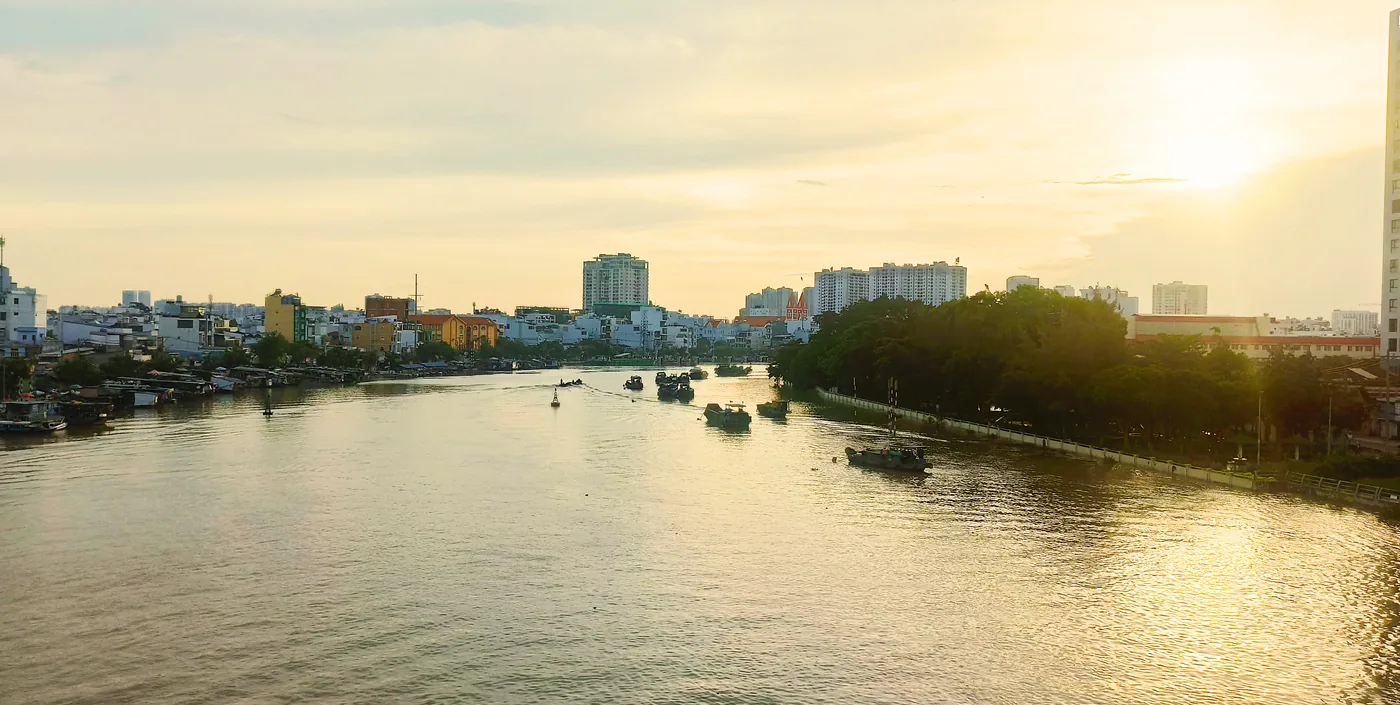
The geography explains a lot. The former District 4 is a near-island, a triangular wedge boxed in by the Saigon River and the Bến Nghé and Tẻ canals, physically cut off from District 1 and the centre.
That isolation, plus the docks, made it a landing place for migrants from many regions living in ramshackle housing along the water, and through the post-war decades it became the cradle of Saigon’s underworld: the crime boss Năm Cam most famously, alongside earlier figures like Đại Cathay and a string of others. For a stretch it was, by local reckoning, the roughest address in the city.
What changed, and what to actually expect tonight
Roughly thirty years of gentrification and tighter local management changed the character. Today the evening picture is families strolling the canal-side on Bến Vân Đồn, young people in cafés, and tourists eating comfortably on Vĩnh Khánh. The honest current-safety read is “busy and touristed, not risky.” The one caveat that does apply is petty theft in dense crowds: pickpocketing and bag-snatching near traffic are the flagged risks on a packed evening, so keep your phone off the table edge and your bag on your lap rather than hung on a chair. That’s ordinary street-food-crowd sense, not District 4 exceptionalism. The point of telling the history is that the arc, rough past to cheap-seafood present, is the real story of the place, not a warning.
The “District 4” that isn’t a district any more
Here’s the naming honestly. On 1 July 2025 Vietnam abolished the district (quận/huyện) tier nationwide under Resolution 203/2025/QH15, moving to a two-level model of city and ward. The former District 4’s wards were merged into three new ones directly under Ho Chi Minh City:
- Vĩnh Hội
- Khánh Hội ward, where Vĩnh Khánh street now sits (the most populous of the three)
- Xóm Chiếu
So “Quận 4 / District 4” is no longer an official administrative unit.
And yet everyone still says it. Grab still routes to “quận 4”, the signage still says it, and Vietnamese newspapers writing about the street after the reform use the workaround “quận 4 cũ”, the former District 4. That’s why this guide navigates by the street name, Vĩnh Khánh, and uses “District 4” as the colloquial name the whole scene is known by. It also means you should treat any old numbered-ward address you see in a directory (Phường 8, Phường 9, Phường 10 and the like) as stale: those ward numbers predate the merger and are no longer valid. Navigate by the street and the house number, not by a ward number. For everything else about the city, our Ho Chi Minh City guide is the hub.
9. When to go: evenings, weekends and the rain
This is a night street. Shops start opening from early-to-mid afternoon, but the scene only fills from around 5pm, peaks 7–10pm, and runs past midnight, with a few places going to 2–3am. Weekends, especially Friday and Saturday, are the busiest. For an easy seat, arrive before 6pm; for the full noise, crowd and buskers, come after 7pm. It’s entirely open-air, so a rainy-season downpour (the wet months are May to November) can cut an evening short or send a table scrambling under a canopy.
Individual shop hours vary but cluster in an afternoon-start, late-close pattern. Here’s the spread from the shops with confirmed hours.
| Shop | Rough hours |
|---|---|
| Ốc Loan | 09:00–22:00 (unusually early for the street) |
| Ốc Phát | 13:00–22:00 |
| Ốc Oanh | From early-to-mid afternoon to late; sources vary between ~23:00 and 2–3am |
| Quán Chilli | 16:00–22:00 |
| Ốc Sáu Nở | 16:00–02:30 |
If your priority is a comfortable table and the pick of the shops, one guide’s advice is to arrive before the 7–10pm peak, when seating gets tight. If your priority is atmosphere, that peak window is exactly when the street is at its best: packed tables, charcoal smoke, buskers and the occasional karaoke. There’s no reliable reason to avoid any particular weeknight; the only dependable pattern is that weekends are busier than weekdays. (A claim that one specific weekday should be avoided circulates online but couldn’t be corroborated, so it’s not something to plan around.)
Rainy season, and why open-air matters here
Ho Chi Minh City’s rainy season runs May through November. The rains are typically short but heavy, and they usually come in the afternoon or evening, which is precisely when you’d be eating; mornings in the wet season are often clear. Because Vĩnh Khánh is 100% sidewalk and canopy seating, a sudden downpour genuinely disrupts a meal, and it also triggers Grab surge pricing, so a wet evening can cost you twice. By November, at the tail of the season, the rains tend to be short, dramatic bursts rather than all-day drizzle. None of this is a reason to avoid the street in the wet months, just a reason to keep an eye on the sky, pick a shop with decent cover, and have a plan for waiting out a squall.
10. Hygiene and freshness, honestly (the plastic-stool reality)
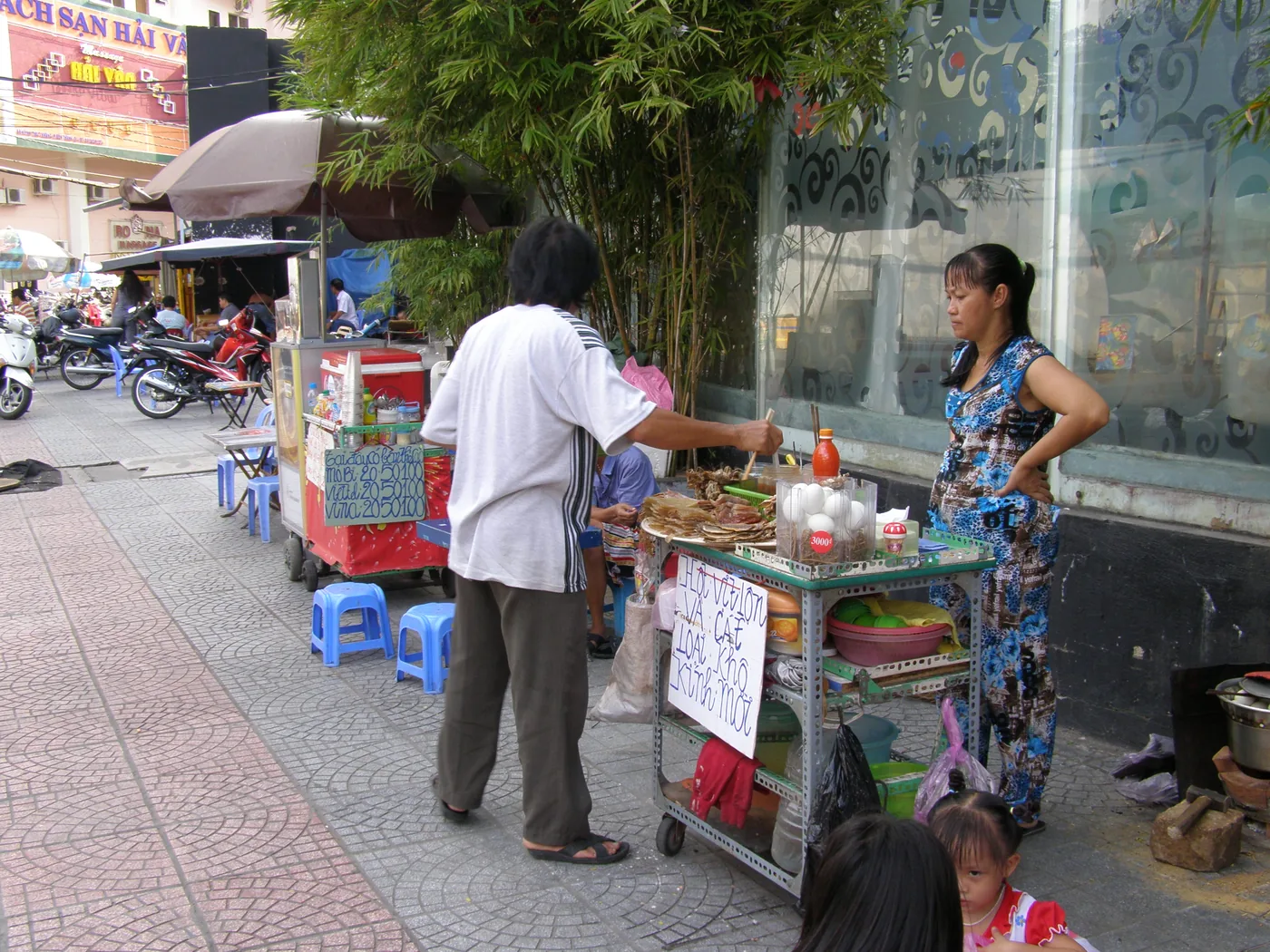
This is genuine sidewalk street food: low plastic stools and tables, open-air or canopy seating, shared and quick-rinsed dishware, and motorbikes passing close by. That’s the appeal, not a hidden flaw, but shellfish is a genuinely higher-risk food category, so the usual street-food caveats apply with a bit more weight.
The sensible moves:
- favour busy, high-turnover shops over empty ones
- insist that food arrives hot and fully cooked rather than lukewarm
- keep raw-adjacent shellfish portions moderate
- act promptly if you feel unwell afterwards
Take the setup at face value. You’re eating on the pavement, dishware is washed fast between customers, handwashing facilities vary, and at the busiest hours food can sit at ambient temperature between the kitchen and your table. Millions of meals pass through this street without incident, and the open-air, plastic-stool character is exactly what people come for. But snails and shellfish are not the same risk profile as, say, a bowl of phở. They commonly carry Vibrio parahaemolyticus and other bacteria and parasites, and if they aren’t cleaned and fully cooked they can cause abdominal pain, bloating, diarrhoea and food poisoning. Vietnamese health coverage specifically warns that some vendors don’t cook snails immediately after sourcing them, so a snail can already be dead and spoiling by the time it hits the wok, which is a concrete reason to be a little choosy rather than a generic “street food is scary” line.
| The risk | Why | What to do |
|---|---|---|
| Bacteria/parasites in shellfish | Shellfish carries Vibrio and others; harmful if undercooked | Eat it hot and fully cooked; send back anything lukewarm |
| Dead/spoiling snails | Vendors don’t always cook stock immediately after buying it | Choose busy shops with fast turnover and fresh-looking stock |
| Shared dishware / ambient food | Quick rinsing, food waiting at the peak hours | Go at busy times, but don’t let plates sit before you eat |
| Ice and tap water | General Vietnam caution, not street-specific | Stick to bottled/filtered water and factory tube ice |
Watch your own body afterwards. Health guidance flags numbness of the lips or tongue, vomiting, or abdominal pain after eating shellfish as signals to seek care promptly rather than wait it out. That’s rare, but it’s the reason to moderate how much raw-adjacent shellfish you put away in one sitting rather than treating it as an all-you-can-eat category. On ice and tap water there’s no Vĩnh-Khánh-specific reporting, so the general rule carries over: bottled or filtered water, and factory-made tube ice rather than uncertain-source ice.
One last honest point about oversight. Since the 2018 “official food street” designation, the area is meant to get municipal attention on hygiene and price fairness. The sheer volume of billing and quality complaints at the famous shops in recent reviews suggests that oversight hasn’t erased those problems in practice. So the practical takeaway is the same one that runs through this whole guide: your own choices (busy shop, hot food, confirmed prices) protect you better than any street-level programme does.
11. Who it suits, and who should skip it
Vĩnh Khánh suits adventurous, omnivorous eaters happy to point at unfamiliar shellfish, groups and friend circles who like to share plates and drink beer, budget travellers (dishes from ~25,000–100,000₫), and anyone already staying near Bùi Viện, since the crossing is short. It suits less well families with small children (plastic stools beside live traffic, no child-specific setup), mobility-limited visitors (low stools, uneven pavement, no ramps or step-free access), and picky or non-adventurous eaters who won’t enjoy ordering unfamiliar seafood by pointing through a language barrier.
| Great fit if you’re… | Think twice if you’re… |
|---|---|
| An adventurous eater happy to point and try | A picky eater who wants a familiar, described menu |
| A group or couple who like to share and drink beer | Travelling with small children (traffic-side plastic stools) |
| Budget-minded and want a cheap, lively feed | Mobility-limited (low stools, uneven pavement, no ramps) |
| Already near Bùi Viện / District 1 for the night | After a quiet, air-conditioned, sit-down dinner |
The honest fit, spelled out
The people who have the best night here are the ones who lean into the format: order across species and styles, share everything, pace it with beer, and treat the language gap as part of the fun rather than a barrier. Groups do especially well because the small-plate model is built for sharing, and the cost per head stays low as long as you skip the market-price items. If you’re staying in the Phạm Ngũ Lão / Bùi Viện backpacker area, the short hop across the canal makes this an easy seafood detour in an evening that’s already about being out.
Be honest with yourself if you’re in one of the “think twice” groups. Families with young children face plastic tables and stools spilling onto a pavement next to live traffic, with nothing child-specific on offer, so Ốc Ty (the family-oriented shop with a small play area and off-street parking) is the exception to aim for if you do bring kids. Mobility-limited visitors face low stools, uneven sidewalk seating and no step-free access; no source describes any accommodation. And if you’re a nervous or fussy eater, the combination of pointing to order, unfamiliar Vietnamese seafood names and documented weak English means this probably won’t be a relaxing meal. None of that makes the street bad. It makes it a specific kind of experience that rewards a specific kind of visitor.
12. Pairing it with the rest of a Saigon night
Vĩnh Khánh slots naturally into a District 1 evening. Bùi Viện walking street, the backpacker nightlife strip in the Phạm Ngũ Lão area, is a short Grab hop (well under ten minutes) or a 20–30 minute walk away, so the common pattern is a seafood dinner on Vĩnh Khánh followed by bars on Bùi Viện. On the District 4 side itself, the Bến Vân Đồn canal promenade is a calmer stroll before or after eating, with no need to cross back to District 1. Both bookends work because the whole area is a short walk or ride apart.
The most natural pairing is Bùi Viện, District 1’s loud, neon-lit backpacker nightlife strip. Estimates put it roughly 2–3 km from Vĩnh Khánh, realistically a Grab ride of well under ten minutes or a longer walk. Since both are seafood-and-street-food-forward evening scenes, a lot of people do grilled snacks and bar-hopping on Bùi Viện and cross to Vĩnh Khánh for the actual seafood dinner, or the reverse. If you want a view with your first drink, The View Rooftop Bar on the 8th and 9th floors at 195 Bùi Viện (open 10am–1am) is the standard sunset-to-nightlife bookend.
For a quieter counterpoint, stay on the District 4 side and walk Bến Vân Đồn along the canal, where families stroll in the evening. It’s a gentle pre- or post-dinner wander that keeps you out of the crowds and doesn’t require crossing back over the water. A simple, satisfying evening is: a canal walk on Bến Vân Đồn, dinner on Vĩnh Khánh, then either a nightcap back across in District 1 or an early night if you’ve eaten your fill.
| Time | Do this |
|---|---|
| ~5:30–6:30pm | Cross the canal; stroll Bến Vân Đồn while the street fills up |
| ~6:30–8:30pm | Dinner on Vĩnh Khánh: 4–6 shared plates and beer |
| ~8:30pm on | Grab to Bùi Viện for bars, or a rooftop drink on Bùi Viện |
| Late | Grab home; expect surge if it’s raining |
If you’re still building the trip around where to sleep, our where to stay in Ho Chi Minh City guide covers the neighbourhoods, and the city guide ties the food, nightlife and day trips together. Heading elsewhere in the country afterwards? The South Vietnam guide and the countrywide Vietnam travel planner pick up from here.
13. Before you go: the essentials checklist
Bring cash in đồng and draw it in District 1 first, since no ATM on the street is confirmed. Come hungry and, ideally, in a small group. Arrive before 6pm for a seat or after 7pm for the atmosphere. Learn the one rule (weigh and price any market-price crab, oyster or lobster before it’s cooked). Save a map pin to the exact shop by house number so you don’t land at a copycat. And keep some mobile data live for Grab and for pointing your phone camera at a Vietnamese-only menu.
| Before you go | Why it matters |
|---|---|
| Cash in đồng, drawn in District 1 | Cash-first street; no confirmed ATM on Vĩnh Khánh |
| A map pin to the exact house number | Every shop is “Ốc” + a name; copycats and address confusion are real |
| The market-price rule in your head | By-weight crab/oyster/lobster is where bills blow up |
| Arrive ~before 6pm or ~after 7pm | Beat the seating crunch, or get the full evening buzz |
| Mobile data (eSIM) | For Grab, maps and translating the menu on the spot |
| Casual clothes, closed shoes | Pavement seating next to traffic and charcoal smoke |
A few of these are worth a sentence more.
- Language: the practical tool is your phone. Google Translate’s camera mode over a Vietnamese menu, plus a willingness to point, gets you through anywhere on the street.
- The map pin: saving the exact address (Ốc Oanh at 534, for instance) rather than just the shop name is what protects you from the naming-collision problem, and it also gives your Grab driver a precise destination.
- Timing: remember the rain window overlaps the dinner window in the wet season, so a slightly earlier arrival hedges both the crowd and the weather.
On data, an eSIM you install before you land means you step off the plane with working Grab and maps, no queuing for a SIM counter, which matters for a place you’ll navigate to by pin and pay for by app-summoned ride. Our guide covers the best options.
That’s the street. For the paperwork side of the trip, see our Vietnam entry requirements guide and, for tipping and table manners, Vietnam etiquette and tipping. Still hungry after Saigon? The what to eat in Hội An guide and the Da Nang seafood guide are the natural next reads, and the Ho Chi Minh City guide holds the rest of the city together.