
Ho Chi Minh City (Saigon) Travel Guide
Everything a first-timer needs for Saigon — the new metro, the food, the district maze, and the honest trade-offs.
| City | Ho Chi Minh City (everyone calls it Saigon) — Vietnam’s biggest city, >14 million people |
|---|---|
| Best time | Dec–Feb (dry, coolest ~22–31°C); May–Nov is the rainy season with short afternoon downpours |
| Days needed | 2–3 days for the city; add 1 day for Củ Chi or the Mekong Delta |
| Money | ~₫26,300 ≈ US$1 (mid-2026). Cards + contactless widely accepted; carry small VND cash for markets and buses |
| Metro | Line 1 (Bến Thành ⇄ Suối Tiên) open since Dec 2024 — fares ₫6,000–20,000, tap a contactless card |
| Airport | Tân Sơn Nhất (SGN), ~7 km / 25–45 min to District 1. Long Thành is NOT open yet — arrive at SGN |
| Getting around | Grab or Green SM apps for cars and bikes; the metro for the D1–Thảo Điền spine |
| Safety | Very safe for tourists; the #1 risk is motorbike snatch theft — bag cross-body, phone gripped |
| Killer tip | Don’t stress over the 2025 district→ward rename — use a street address or a map pin and you’re fine |
1. Saigon at a glance: is it worth it, and what’s this ‘new’ HCMC?
2. Getting your bearings: the districts (neighbourhoods)
3. Where to stay in Saigon: the right area, then a hotel for every budget
4. Must-see: the District 1 heritage core
5. Chợ Lớn / Chinatown (District 5) and the temple trail
6. Saigon’s museums beyond the War Remnants: the deeper cut
7. Temples, pagodas and a mosque: Saigon’s spiritual side
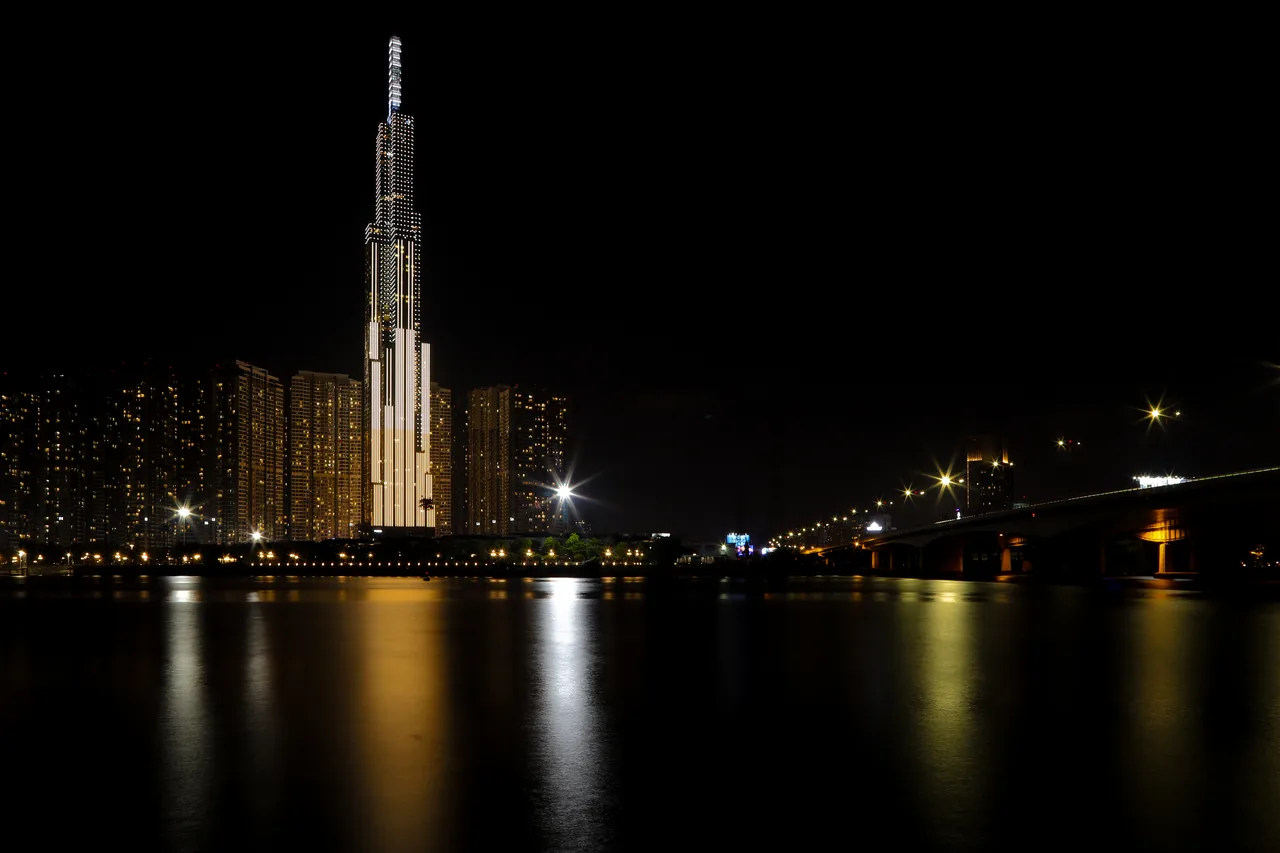
8. Skyline & modern Saigon
9. Green Saigon: parks, the river and a sunset cruise
10. What to eat: the Saigon food bible
11. Coffee culture
12. Nightlife
13. Shopping & souvenirs
14. Saigon with kids: a family playbook
15. Getting around the city
16. Getting there & away: airports, trains, buses
17. Day trips from Saigon
18. When to visit: weather, seasons & Tết
19. The perfect Saigon itinerary: 1 to 4 days (plus a foodie and a history day)
20. Money, budget & staying safe
21. Saigon practical A–Z: money, health, apps, phrases and etiquette
22. 9 rookie Saigon mistakes (and how to skip them)
1. Saigon at a glance: is it worth it, and what’s this ‘new’ HCMC?
Yes — Saigon is worth it, but go in knowing it’s an experience, not a postcard. This is Vietnam’s biggest, fastest, most caffeinated city: French-colonial villas, brutal war history, some of the best street food on earth, and a skyline shooting upward — all swarmed by motorbikes. It’s not “pretty” like Hội An. It’s raw, loud and completely addictive.
Most first-timers give it 2–3 days, often as the gateway to the Mekong Delta and southern Vietnam. That’s about right — Saigon is a city you feel more than one you tick off.
Saigon or Ho Chi Minh City?
Both. “Ho Chi Minh City” (Thành phố Hồ Chí Minh, or TP.HCM) has been the official name since 1976. But locals, taxi drivers and travelers still say Sài Gòn / Saigon far more often — it’s on beer cans, café signs and everyone’s lips. Use Saigon warmly; nobody will blink.
The “new” Ho Chi Minh City — the 2025 shake-up nobody warns you about
On 1 July 2025 Vietnam merged its provinces (63 down to 34) and Saigon absorbed two neighbours — Bình Dương and Bà Rịa–Vũng Tàu. The result is a much bigger HCMC: roughly 6,720 km² and over 14 million people. The same reform scrapped the “district” (quận) tier nationwide, so Saigon’s famous numbered districts are technically gone as official units — old District 1 is now wards like Sài Gòn, Bến Thành, Tân Định and Cầu Ông Lãnh, and Chinatown’s Chợ Lớn came back as a ward name.
One quirk: Vũng Tàu beach is now “part of HCMC” on paper, but it’s still a ~95 km, two-hour trip in reality. Don’t expect a beach outside your hotel.
The other headline is the transport upgrade — Saigon finally has a metro (more in §15). First, though, the thing you’ll notice within thirty seconds of stepping outside: the traffic. Over 9 million motorbikes move through this city, and crossing the street is a genuine rite of passage. New to the country entirely? Start with our Vietnam trip planner.
2. Getting your bearings: the districts (neighbourhoods)
Base yourself in District 1 for a first trip — you can walk to almost every headline sight. Saigon sprawls, but the bits travelers care about cluster tightly. Here’s the cheat sheet everyone still uses (district numbers), even though the government now files them under ward names.
| Area | Vibe | Good for |
|---|---|---|
| District 1 (Bến Thành / Đồng Khởi) | The tourist core — colonial spine, Bến Thành Market, City Hall, walking street | First-timers who want everything on foot |
| District 1 (Phạm Ngũ Lão / Bùi Viện) | Backpacker land — hostels, cheap beer, loud nightlife | Budget travelers, party people |
| District 3 | Leafy French-villa streets, café culture, quieter | Boutique hotels, slower pace |
| District 5 (Chợ Lớn / Chinatown) | Temples, wholesale markets, Chinese-Vietnamese food; 15–20 min from D1 | A half-day cultural deep dive |
| District 4 | Small, dense, across the canal; the Vĩnh Khánh seafood-and-snail strip | Local eating and drinking |
| Thảo Điền (Thủ Đức, old D2) | Expat enclave over the river; international food, riverside cafés; on the metro | Long stays, digital nomads |
| Bình Thạnh | Landmark 81 and riverfront high-rises | Modern apartment/hotel stays with views |
Where to sleep, in one line: first-timer → District 1 (Bến Thành/Đồng Khởi for walkable mid-range, Phạm Ngũ Lão for budget and nightlife). Want calm and cafés → District 3. Staying a while → Thảo Điền. Full breakdown with rates is in §3.
3. Where to stay in Saigon: the right area, then a hotel for every budget
For a first trip, base yourself in District 1 — either Đồng Khởi/Nguyễn Huệ or right by Bến Thành — so you can walk to the sights and reach the two metro stops you’ll actually use. Saigon is huge, but the traveller’s Saigon is small and tight. Get the area right and everything else gets easier. Here’s the honest breakdown, then named picks with live rates.
Pick your area first
| Area | Vibe | Best for | Nightly band | Nearest metro |
|---|---|---|---|---|
| D1 — Đồng Khởi / Nguyễn Huệ | Polished, central, by the Opera House | First-timers & splurgers | $90–360 | Opera House |
| D1 — Bến Thành | Walk to the market and the metro terminus | Metro-first, mid-range | $60–130 | Bến Thành |
| D1 — Phạm Ngũ Lão / Bùi Viện | Backpacker, cheap, LOUD at night | Budget & nightlife | $7–40 | Bến Thành (10-min walk) |
| District 3 | Leafy, boutique, local, quieter | Calm but still central-ish | $45–190 | None (10-min Grab) |
| Thảo Điền (Thủ Đức) | Expat, riverside, long-stay | Nomads, families, a month+ | $40–160 | Thảo Điền |
| Bình Thạnh / Landmark 81 | Modern high-rise, river views | Skyline lovers | $50–300 | Văn Thánh / Tân Cảng |
District 1 — the splurge and heritage picks
This is where Saigon does grand hotels, several of them with genuine history.
- Park Hyatt Saigon 📅 rates → — the best-located true luxury in the city, steps from the Opera House. Colonial-modern calm, a great pool, faultless service (~$260–360).
- The Reverie Saigon 📅 rates → — opulent, maximalist Italian design on Nguyễn Huệ; marble, gold and a river view (~$220–320).
- Caravelle Saigon 📅 rates → — a 1959 landmark where the war correspondents drank on the Saigon Saigon rooftop; still a solid five-star (~$155–210).
- Hôtel des Arts Saigon MGallery 📅 rates → — a design-led boutique on the D1/D3 border with a chic rooftop pool and the Social Club bar (~$150–230).
- Sheraton Saigon Grand Opera 📅 rates → — reliable, big-brand comfort on Đồng Khởi, freshly renovated (~$180–260).
- Rex Hotel 📅 rates → — the war-era icon with the Rooftop Garden bar, facing City Hall (~$110–170).
- Hotel Grand Saigon 📅 rates → — a restored 1930s heritage building; the best value of the grand old names (~$90–140).
- Hotel Continental Saigon 📅 rates → — the city’s oldest hotel (1880), the setting for Graham Greene’s The Quiet American (~$85–130).
- Hotel Majestic Saigon — 1925 riverfront heritage with the M Bar rooftop over the water (~$100–150).
District 1 mid-range — around Bến Thành
- Fusion Suites Saigon 📅 rates → — all-suite, with breakfast served any time and a daily spa treatment included; unusually good value (~$85–130).
- Silverland Ben Thanh 📅 rates → — a 4★ boutique about 50 m from the market, with a rooftop jacuzzi (~$70–110).
- The Myst Đồng Khởi 📅 rates → — an Indochine-styled boutique with a rooftop pool and river views (~$110–180).
Budget & hostels — Phạm Ngũ Lão
- Saigon Chill Hostel — spotless, rated around 9.6/10, one minute from Bùi Viện (dorm ~$8–15).
- Bui Vien Street Hostel — a rooftop backpacker favourite (dorm ~$7–20).
- Meander Saigon — a design hostel with coworking, good for solo nomads (dorm ~$12–20 / private ~$40–60).
- Vien Dong Hotel / Duc Vuong — clean budget hotels with rooftops (~$20–50).
District 3 — leafy and boutique
- Mai House Saigon — a colonial-style five-star boutique with a resort-scale pool and garden, a real escape 10 minutes from the core (~$130–190).
- Bach Suites Saigon — an affordable 4★ boutique on a quiet street (~$90–110).
Thảo Điền — for long, slow stays
- Villa Song Saigon — a riverside villa boutique with a shuttle boat into District 1 (~$79–150).
- Somerset Vista — serviced apartments with full kitchens, the pick for a month or more (~$90–160/night, cheaper monthly).
Bình Thạnh — sleep in the skyline
- Vinpearl Landmark 81, Autograph Collection 📅 rates → — rooms high in Vietnam’s tallest tower, with the river and city at your feet (~$180–300).
- Vinhomes Central Park serviced apartments — river-view flats in the same complex, but the host varies, so read recent reviews before you book (~$50–120).
Booking facts that actually change your bill
- VAT is a reduced 8% through 31 December 2026 (it returns to 10% in 2027), so 2026 is a slightly cheaper year to stay.
- Watch for “++”. Four- and five-star hotels and direct rates often quote prices as “++” — that’s VAT plus a 5% service charge, roughly +15% on top of the headline number. A price marked “net” is all-in. OTAs like Trip.com usually show a tax-inclusive figure, which makes comparison easier.
- There is no separate tourist, city or occupancy tax in Vietnam. What you see (plus any ++) is what you pay.
Adding a beach at the end? Pair Saigon with the coast and islands via the southern Vietnam hub, or fly straight to Phú Quốc for the sand.
4. Must-see: the District 1 heritage core
The colonial-and-war heart of Saigon fits into one very walkable day. These sights sit within a ~2 km circle around Notre-Dame, so you can string them together on foot. Here’s what each one costs and how long it eats.
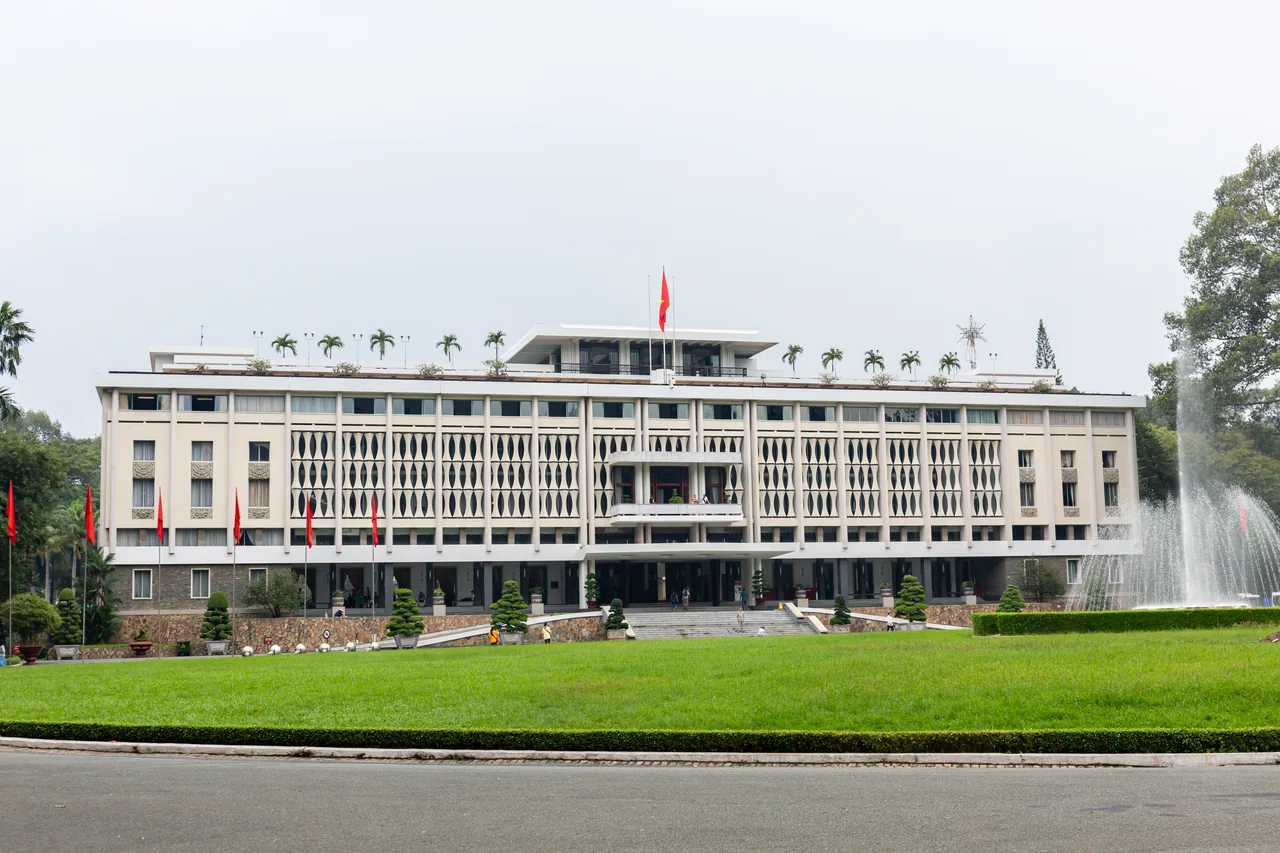
Reunification (Independence) Palace — Dinh Độc Lập Map
A perfectly preserved 1960s presidential palace, frozen the day the war ended: on 30 April 1975 a North Vietnamese tank crashed through the gate. You get war rooms, a creepy basement bunker, and retro 60s interiors.
- Ticket: ₫40,000 palace-only (child ₫10,000); combo with the Norodom exhibit ~₫65,000–80,000; full combo up to ~₫105,000 (since Aug 2025).
- Hours: ticketing roughly 07:30–11:00 and 13:00–16:00 — go in the morning to be safe. Allow 1–1.5 hours.
War Remnants Museum — Bảo tàng Chứng tích Chiến tranh Map
The single most affecting sight in the city, and the one everyone remembers. Unflinching war photojournalism, Agent Orange exhibits, and a yard of captured US aircraft and tanks. It’s powerful and deliberately hard to look at.
- Ticket: ₫40,000 adult / ₫20,000 child 6–16 / under 6 free.
- Hours: ~07:30–18:00. Allow 1.5–2.5 hours.
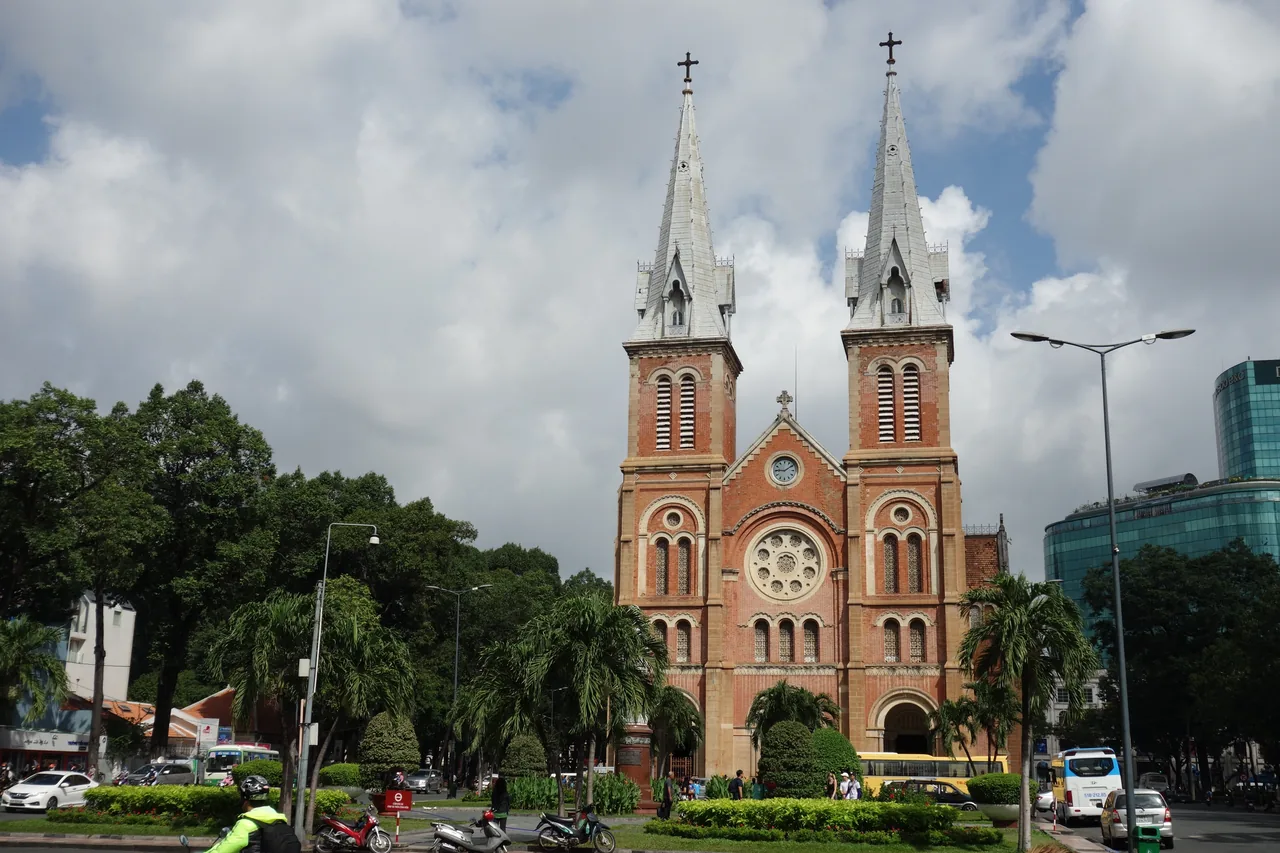
Notre-Dame Cathedral — Nhà thờ Đức Bà Sài Gòn Map
The 1880 red-brick, twin-spire cathedral (bricks shipped from Marseille, ~58 m towers) is Saigon’s signature photo. Two gold crosses were reinstalled in March 2026.
Saigon Central Post Office — Bưu điện Trung tâm Sài Gòn Map
A working post office from 1886–91 with a gorgeous vaulted iron hall, hand-painted old maps and a giant Hồ Chí Minh portrait. It’s directly across from the cathedral.
Right beside it, duck into the shaded Book Street (Đường sách Nguyễn Văn Bình) for coffee and browsing.
Saigon Opera House (Municipal Theatre) — Nhà hát Thành phố Map
An 1897 French theatre that’s still the prettiest façade on Đồng Khởi. It hosts the A O Show, a ~60-minute bamboo-and-acrobatics production by Lune (tickets ~₫700,000–1,600,000). The metro’s Opera House station is right outside.
Nguyễn Huệ Walking Street Map
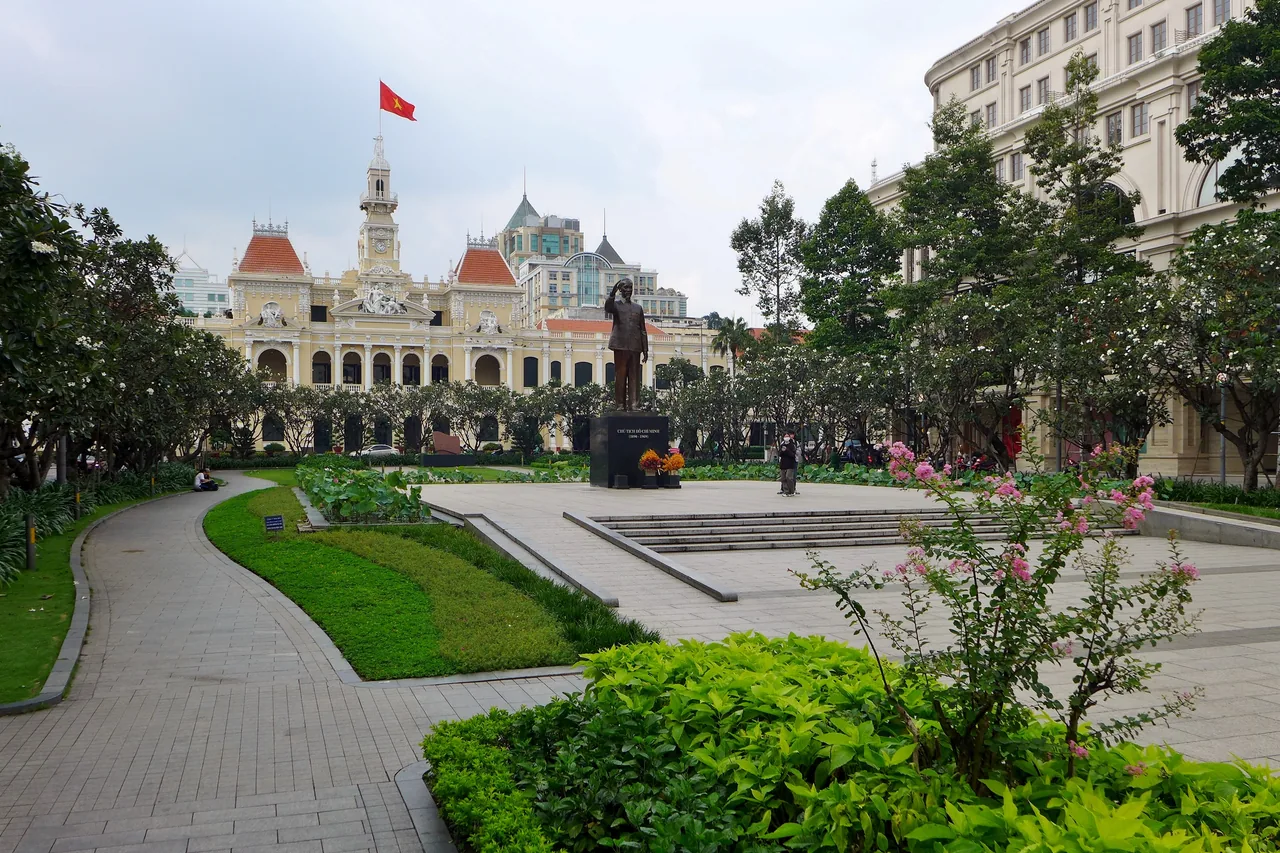
A pedestrian plaza running from the colonial City Hall down toward the river, with fountains, a Hồ Chí Minh statue, and the famous Cafe Apartment at №42. Best after dark when families and skaters take over.
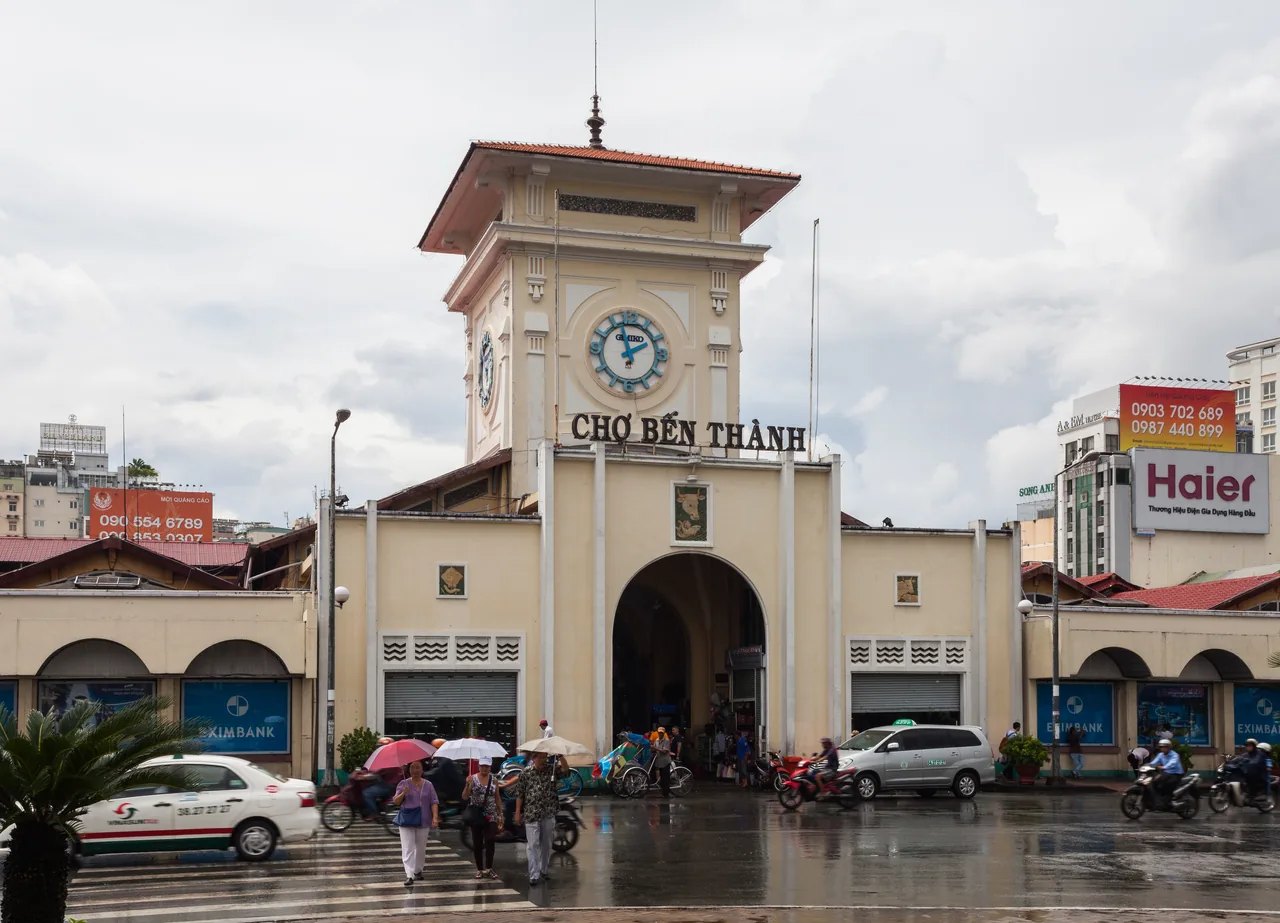
Bến Thành Market — Chợ Bến Thành Map
The 1914 clock-tower market is the tourist icon: souvenirs, textiles, dried fruit and food stalls. Day market ~06:00–18:00; the street stalls around it become a night market ~18:00–23:00.

5. Chợ Lớn / Chinatown (District 5) and the temple trail
Chợ Lớn is Saigon’s Chinatown — older, slower and far more local than the D1 core. It’s a 15–20 minute Grab from District 1 and rewards an unhurried half-day of temples and wholesale markets. You can also pair the two “must-do” temples below into one atmospheric loop.
Thiên Hậu Temple — Chùa Bà Thiên Hậu Map
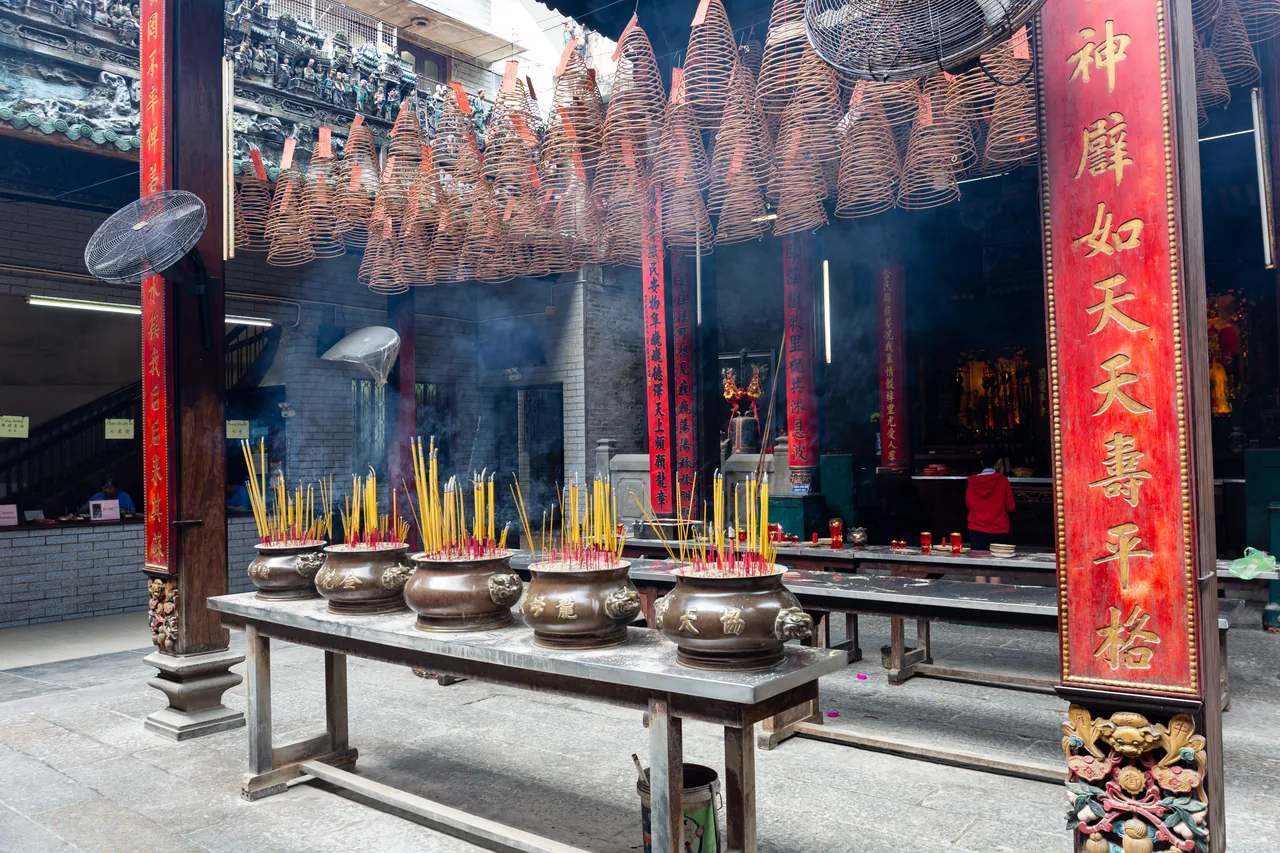
A 19th-century Cantonese temple to the sea goddess Mazu, famous for the giant hanging spiral incense coils that smoke overhead. It’s the most photogenic temple in Chinatown. Free, ~08:00–17:00.
Bình Tây Market — Chợ Bình Tây Map
A grand yellow colonial-Chinese wholesale market (~25,000 m²) built around a central courtyard shrine. It’s the working, local counterpoint to touristy Bến Thành.
Cha Tam Church — Nhà thờ Cha Tam Map
A quiet 1900–02 church with a heavy history: President Ngô Đình Diệm and his brother were seized here on 2 November 1963 during the coup that ended his rule. Free.
An Đông Market
A big wholesale fashion and textile market — cheaper than the tourist markets and good for fabric, clothes and bags if you can handle the scrum.
Jade Emperor Pagoda — Chùa Ngọc Hoàng Map
Technically on the District 1/3 border, but it fits the temple mood perfectly. This atmospheric 1909 Taoist temple is thick with incense and carved wooden deities, including a lurid “Hall of Ten Hells” and a turtle pond. President Obama visited on 25 May 2016. Free, ~08:00–17:00 (05:00–19:00 on the 1st and 15th of the lunar month).
Tân Định Church (the pink church) Map
A vivid bubblegum-pink Gothic-revival church from 1876 (pink since a 1957 makeover). It’s an Instagram magnet and an easy stop in District 3. Exterior free, ~05:00–19:00.
6. Saigon’s museums beyond the War Remnants: the deeper cut
The War Remnants Museum and Reunification Palace are the essential two (they’re in the must-see section) — but Saigon has a handful of quieter museums that are as much about the buildings as the collections. Most cost just 30,000₫, so they’re easy to fold into a slow afternoon.
Ho Chi Minh City Museum (Gia Long Palace) Map
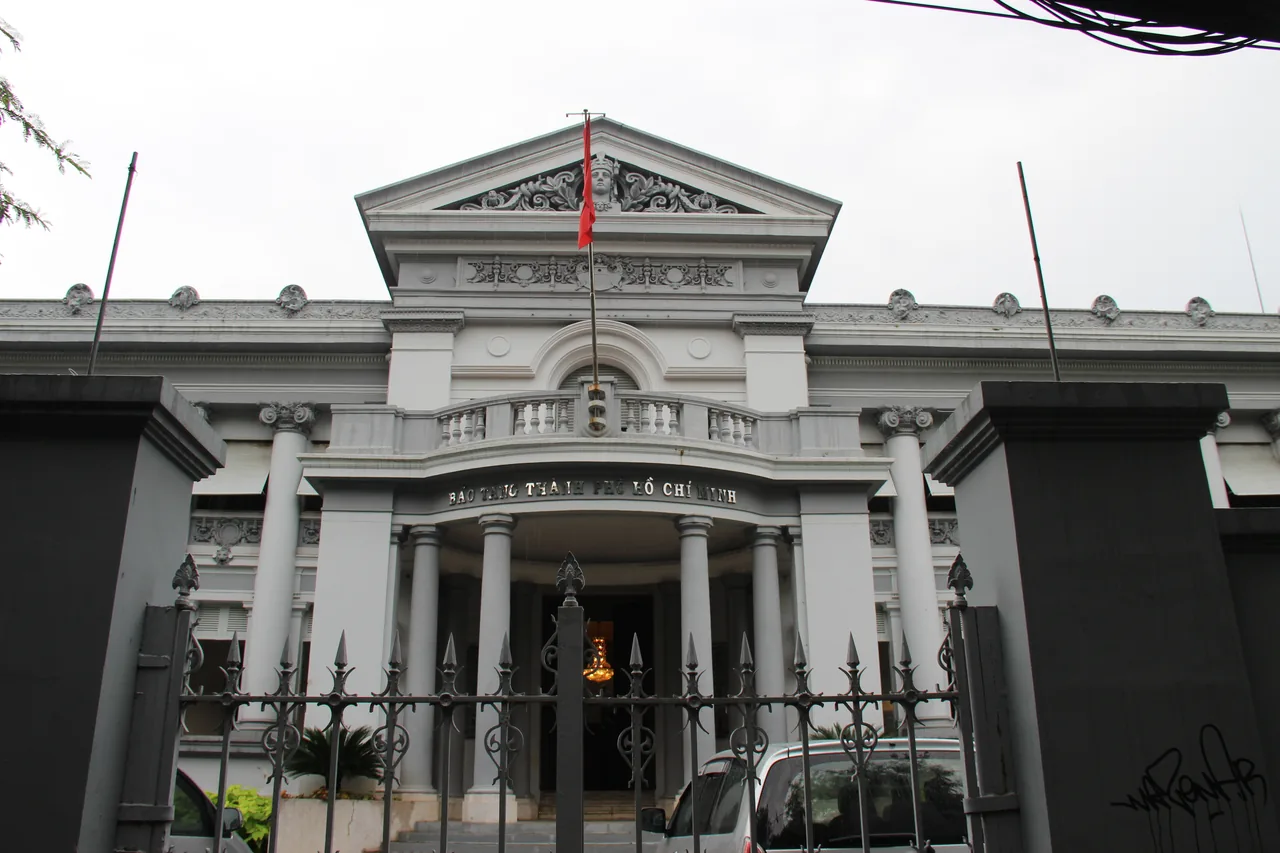
An 1890 neoclassical palace that’s arguably prettier than anything inside it — grand staircases, a garden, and secret bunker tunnels beneath, all a favourite backdrop for wedding photographers. The galleries trace the city’s history from Saigon’s founding through the war. At 65 Lý Tự Trọng, D1.
- Ticket: 30,000₫ (+20,000₫ camera fee). Hours: ~08:00–17:00. Allow ~1 hour.
- Note: two galleries have been closed for renovation since July 2024, so it’s a slightly lighter visit than the guidebooks describe.
Museum of Vietnamese History Map
The south’s national collection: prehistory to the dynasties, a strong room of Champa stone sculpture, a genuinely startling preserved mummy, and a small water-puppet theatre (separate ticket, short shows through the day). It sits right by the zoo and Botanical Gardens at 2 Nguyễn Bỉnh Khiêm, so pair the two.
- Ticket: 30,000₫. Hours: Tue–Sun 08:00–11:30 & 13:00–17:00 (closed Monday). Allow 1–1.5 hours.
Fine Arts Museum (Bảo tàng Mỹ thuật) Map
Here the building is the star: a 1929 Sino-French mansion built for the tycoon Hứa Bổn Hòa, with stained glass, tiled courtyards and one of the city’s oldest working lifts. The art runs from lacquer and silk to war-era propaganda and modern Vietnamese painting. At 97A Phó Đức Chính, D1.
- Ticket: 30,000₫. Hours: ~08:00–17:00. Allow ~1 hour.
FITO Museum of Traditional Vietnamese Medicine Map
A specialist gem: six floors and around 3,000 artifacts on centuries of herbal medicine, in a hand-carved wooden building, ending with a cup of herbal tea. It’s out in District 10, so treat it as a destination rather than a drop-in. At 41 Hoàng Dư Khương.
- Ticket: 180,000₫ (student/child 90,000₫). Hours: 08:30–17:00. Allow ~1 hour.
Two more, briefly
- Southern Women’s Museum (D3) — free, telling the story of Vietnamese women in war and society; parts are mid-expansion in 2026.
- Áo Dài Museum — a lovely garden setting devoted to Vietnam’s national dress (50,000₫), but remote out in Thủ Đức, so only worth it if you’re genuinely keen.
7. Temples, pagodas and a mosque: Saigon’s spiritual side
Saigon’s most atmospheric temples cost nothing to enter — the price of admission is dressing respectfully. The famous Jade Emperor Pagoda, Thiên Hậu, Cha Tam and the pink Tân Định Church are covered earlier in this guide; here are the deeper picks, each one free and each worth the detour.
Vĩnh Nghiêm Pagoda Map
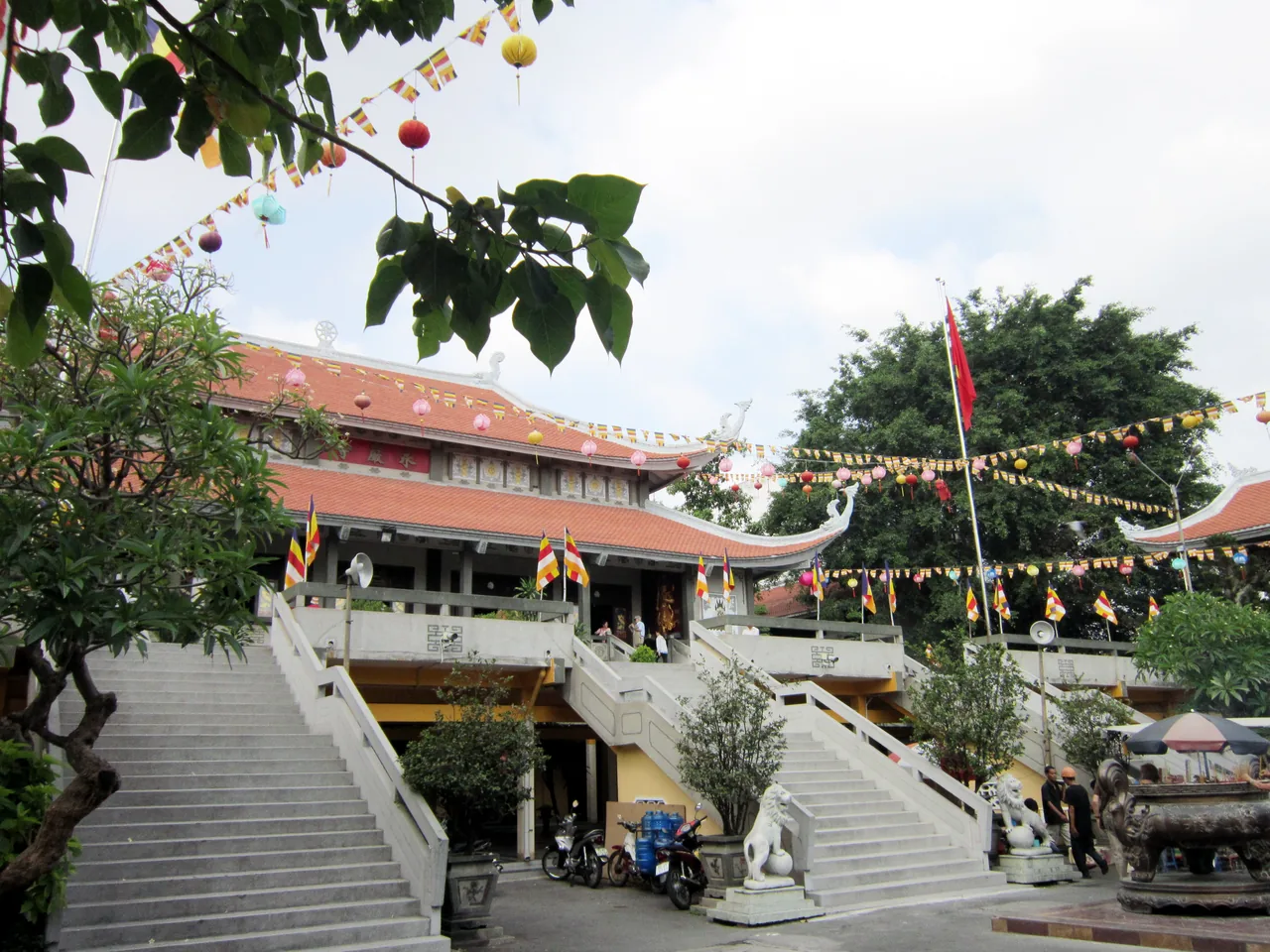
Saigon’s largest pagoda and the first Vietnamese-style temple built in reinforced concrete (1964–71). The headline is a 40 m, seven-storey tower and a Japanese-donated Peace Bell; the grounds are calm despite sitting on a busy road at 339 Nam Kỳ Khởi Nghĩa, D3. Opens around 06:00.
Xá Lợi Pagoda Map
The largest by area (~5,000 m²), with a slender 32 m bell tower. It carries heavy history: this was the site of a notorious 1963 government raid on Buddhist monks. At 89 Bà Huyện Thanh Quan, D3. Open 07:00–11:00 & 14:00–17:00 (closed over midday).
Giác Lâm Pagoda Map
The oldest temple in the city (1744), with a 32 m hexagonal stupa and a Bodhi tree grown from a Sri Lankan cutting. It feels a world away from D1 — worn wood, old funerary tablets, incense — out in Tân Bình at 565 Lạc Long Quân. Open roughly 05:00–21:00.
Mariamman Hindu Temple Map
A little pocket of South India in the middle of District 1: a Dravidian temple built by Tamil Chettiar traders in the late 1800s, with a colourful 12 m gopuram tower over the entrance. At 45 Trương Định, a short walk from Bến Thành. Open ~07:00–19:00 (shoes off).
Saigon Central Mosque Map
A serene white-and-blue Tamil-Muslim mosque from 1935, with an ablution pool and a courtyard that feels miles from the traffic just outside; halal food stalls cluster nearby. At 66 Đông Du, steps off Đồng Khởi. Open ~08:00–20:00, but the prayer hall closes around 12:30 for midday prayer and Fridays are busiest — visit outside prayer times and dress modestly.
8. Skyline & modern Saigon
For the big view, skip the pricey observation deck and buy a drink instead. Saigon’s vertical boom is best seen from up high, and there’s a clever hack for each tower. Here’s how the options stack up.
| Spot | What you get | Cost (2026) |
|---|---|---|
| Landmark 81 SkyView (F79–81) | 461 m tower — tallest in Vietnam; open-air terrace ~383 m | ~₫300,000–500,000 adult (weekday base vs weekend/premium) |
| Blank Lounge (Landmark 81, F75–76) | Near-identical view, no ticket — just order a drink | One-drink minimum ~₫150,000–250,000 |
| Bitexco Skydeck (F49) | The lotus-bud tower with the helipad; classic river-bend view | ~₫200,000–240,000 (cheaper booked online) |
Landmark 81 — Bình Thạnh Map
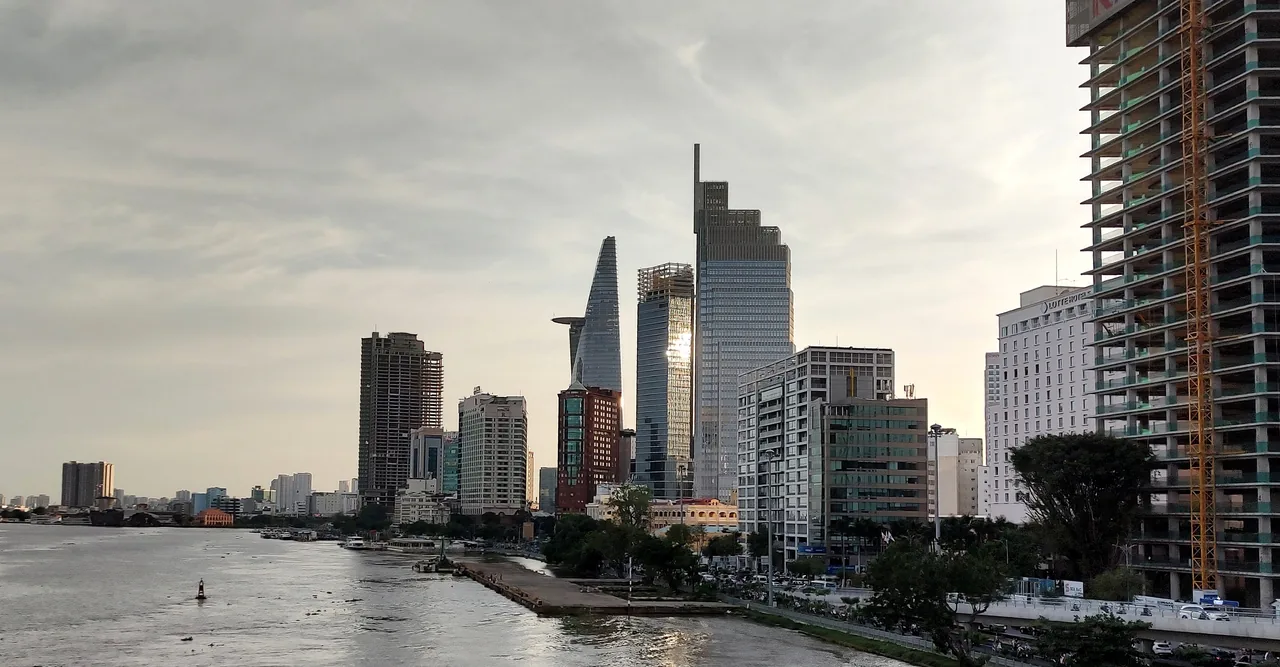
At 461 m and 81 floors it’s the tallest building in Vietnam and second-tallest in Southeast Asia. The SkyView deck spans floors 79–81, with an open-air terrace on F81.
Bitexco Financial Tower — Saigon Skydeck Map
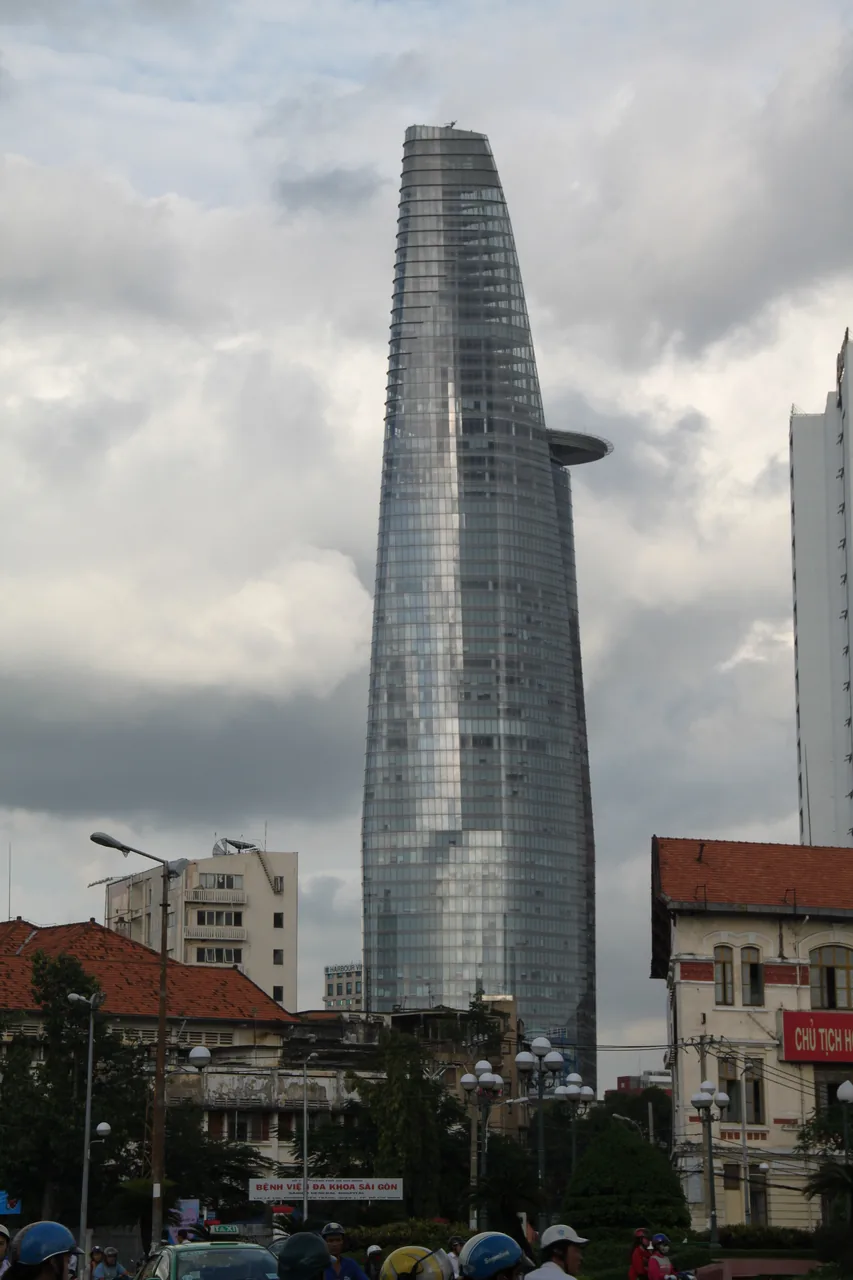
The 68-floor lotus-bud tower with the cantilevered helipad has been a skyline landmark since 2010. Skydeck is on floor 49, open ~09:30–21:30.
The Cafe Apartment — 42 Nguyễn Huệ Map
A 1960s residential block colonised by 50-plus indie cafés and boutiques, its exterior elevator making a wall of glowing balconies at night. Grab a window seat with a coffee (~₫50,000; some floors add a small lift or minimum charge).
The contrast is the whole point of modern Saigon: French heritage at street level, a glass boomtown overhead, and the new Thủ Thiêm district rising across the river bend.
9. Green Saigon: parks, the river and a sunset cruise
Saigon is dense and grey, but it hides real green pockets — and a river that’s worth getting out on, from a 15,000₫ ferry to a lavish dinner boat. Here’s where to breathe.
Tao Đàn Park Map
About 10 hectares of mature trees in the middle of D1, with a Hùng Kings temple and — the local secret — a morning bird-song café where hobbyists hang their songbird cages in the trees from around 6am, loudest at weekends. Open ~07:00–22:00, free.
30/4 Park & 23/9 Park
Two handy lawns: 30/4 Park sits behind Notre-Dame (grab a coffee and people-watch), and 23/9 Park stretches by Bến Thành. Both free. ⚠️ Heads up — 23/9 Park is partly a construction site in 2026, so it’s less pleasant than the maps suggest.
Vinhomes Central Park Map
A riverfront park over a kilometre long under Landmark 81, with a Japanese garden, big lawns and a children’s playground — the nicest green space in the city and a great spot to watch the tower light up at dusk. In Bình Thạnh, free, open ~05:00–21:30.
Saigon Zoo & Botanical Gardens
An 1865 zoo and gardens right by the History Museum — great with kids, so the details are in the family section below.
Getting out on the Saigon River Map
The river runs right past downtown, and there’s a cruise for every budget.
| Option | What it is | Price (2026) |
|---|---|---|
| Saigon Waterbus | The local’s scenic bargain — Bạch Đằng ⇄ Thủ Đức, ~11 km, superb Landmark 81 views | 15,000₫/trip (30,000₫ return) |
| Dinner cruise (Saigon Princess) | Buffet-or-set-menu boat with live music, ~2 hours | Set menu ~980,000₫/adult |
| Dinner cruise (Bonsai) | Similar; note it departs Bến Nhà Rồng / Saigon Port, not Bạch Đằng | ~970,000₫/adult |
| Les Rives luxury sunset | Small speedboat cocktail cruise | ~1,699,000₫ |
10. What to eat: the Saigon food bible
🦐 District 4 seafood street: what to order on Vĩnh Khánh, and the price rule →
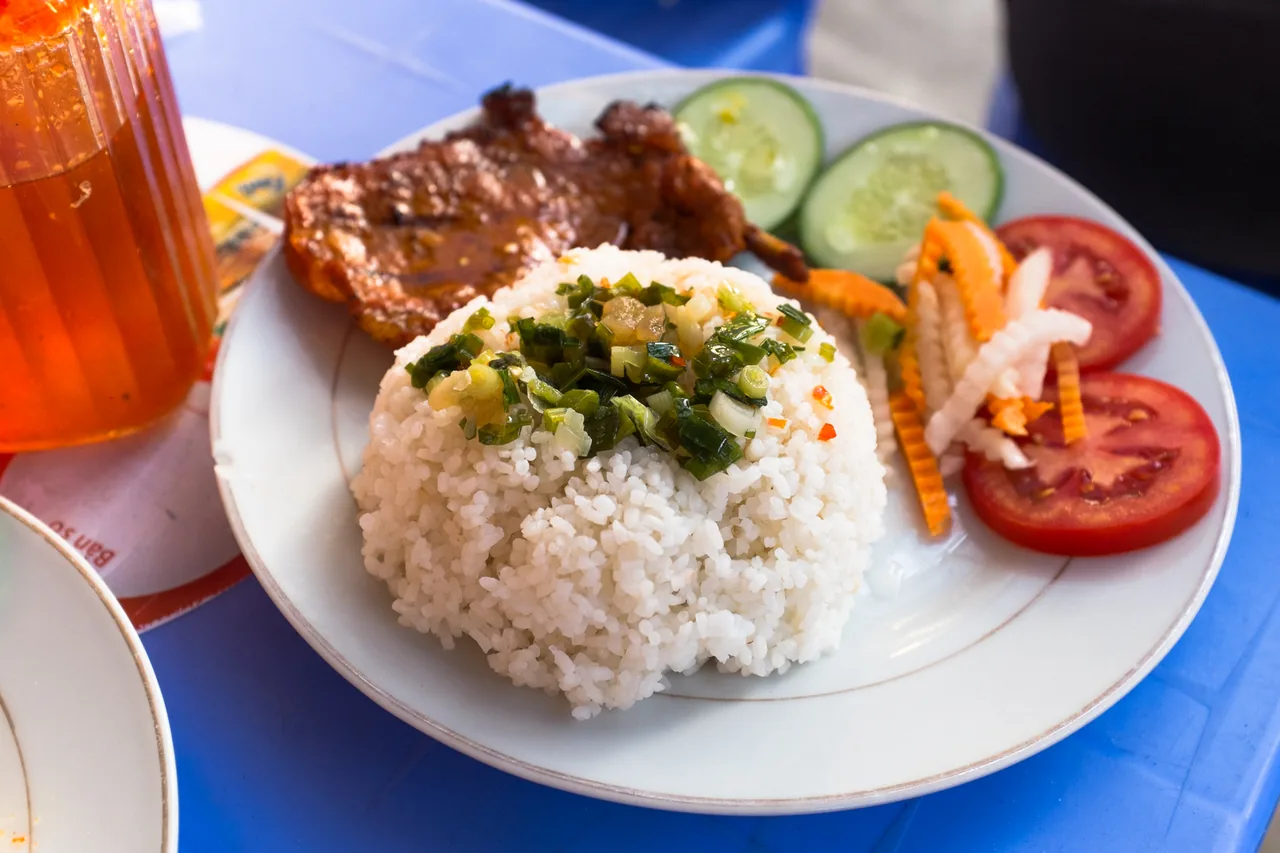
If you eat one thing in Saigon, make it cơm tấm — but honestly, eating is the reason to come. Southern food is sweeter and more herb-piled than the north, with Chinese and Cambodian threads running through it. Here’s the hit list, with a trusted spot (and its price) for each. Several are Michelin Bib Gourmand picks.
| Dish | What it is | Price | Where |
|---|---|---|---|
| Cơm tấm | Broken rice + grilled pork chop, shredded skin, steamed egg loaf — THE Saigon plate | ₫35,000–80,000 | Cơm Tấm Ba Ghiền (Bib Gourmand) |
| Bánh mì | Crisp light baguette, pâté, cold cuts, pickled veg, herbs | ₫20,000–35,000 (loaded ~₫70,000) | Bánh Mì Huỳnh Hoa |
| Phở | Southern-style: sweeter broth, big herb plate, hoisin + sriracha | ₫35,000–105,000 | Phở Hòa Pasteur (Bib Gourmand) |
| Hủ tiếu Nam Vang | Phnom Penh-style clear sweet pork broth, shrimp, quail egg (dry or soup) | ₫30,000–60,000 | Chợ Lớn stalls |
| Bánh xèo | Big crispy turmeric crepe you wrap in mustard leaf and herbs | ₫110,000–180,000 | Bánh Xèo 46A (Bib 2025) |
| Bún thịt nướng | Cold vermicelli, grilled pork, herbs, peanuts, nước chấm | ₫40,000–70,000 | District 1 stalls |
| Gỏi cuốn | Fresh rice-paper rolls, shrimp/pork, peanut-hoisin dip | ₫10,000–20,000/roll | Everywhere |
| Ốc (snails/shellfish) | The snail-and-beer ritual on the D4 seafood strip | ₫80,000–150,000/plate | Ốc Oanh, Vĩnh Khánh |
The signature spots Map
- Cơm Tấm Ba Ghiền — 84 Đặng Dung; Michelin Bib Gourmand, famous for enormous pork chops, ₫60,000–80,000.
- Bánh Mì Huỳnh Hoa — 26 Lê Thị Riêng; a legendarily overstuffed banh mi, ~₫70,000. Map
- Phở Hòa Pasteur — 260C Pasteur; Michelin Bib, ₫90,000–105,000. Local alternative: Phở Lệ in Chợ Lớn. Map
- Bánh Xèo 46A — 46A Đinh Công Tráng; Michelin Bib 2025 — and yes, this is where Anthony Bourdain filmed his bánh xèo. Map
- Ốc Oanh — 534 Vĩnh Khánh, District 4; the snail strip, Michelin-listed, best with cold beer. Map
Vegetarian (chay) — Saigon does it brilliantly
HCMC is one of Southeast Asia’s best cities for plant-based eating; any sign reading “Chay” means vegetarian. Vị Quê Kitchen holds a Michelin Bib for its Vietnamese vegan cooking. Chay food is everywhere on the 1st and 15th of the lunar month, when many locals eat vegetarian.
11. Coffee culture
Order a bạc xỉu, not just a latte — it’s the drink that says you know Saigon. Vietnamese coffee is strong dark robusta, usually cut with sweetened condensed milk, and it’s a genuine daily ritual here. Here’s what to ask for.
| Drink | What it is | Price |
|---|---|---|
| Cà phê sữa đá | Strong robusta + condensed milk over ice — the classic | ₫15,000–35,000 |
| Bạc xỉu | Milkier, more condensed milk, less coffee — a true Saigon drink | ₫30,000–55,000 |
| Cà phê trứng | Egg coffee — Hanoi-born but widely available | ₫30,000–95,000 |
Where to drink it
- The Cafe Apartment (42 Nguyễn Huệ) — coffee with a balcony view over the walking street.
- Chains: Highlands Coffee (the market leader), Trung Nguyên Legend, The Coffee House, Phúc Long, Cộng, Katinat — drinks ₫30,000–100,000.
- Third-wave / specialty: The Workshop, Okkio, Shin, RuNam and Là Việt for single-origin, cold brew and phin-forward coffee, ₫55,000–95,000.
12. Nightlife
Saigon nights split three ways: sky-high rooftop bars, chaotic Bùi Viện, and Southeast Asia’s best craft-beer scene. Pick your speed.
Rooftop bars
- Social Club (Hôtel des Arts, D3) — chic pool-deck bar; happy hour 15:00–19:00 is 50% off.
- Saigon Saigon Bar (Caravelle) — the historic war-correspondents’ bar, with live music and skyline views.
- Chill Skybar (AB Tower) — glossy and see-and-be-seen; there’s a dress code.
- Broma (41 Nguyễn Huệ) — relaxed rooftop over the walking street.
Cocktails run ~US$8–15 (₫210,000–390,000).
Bùi Viện Walking Street Map
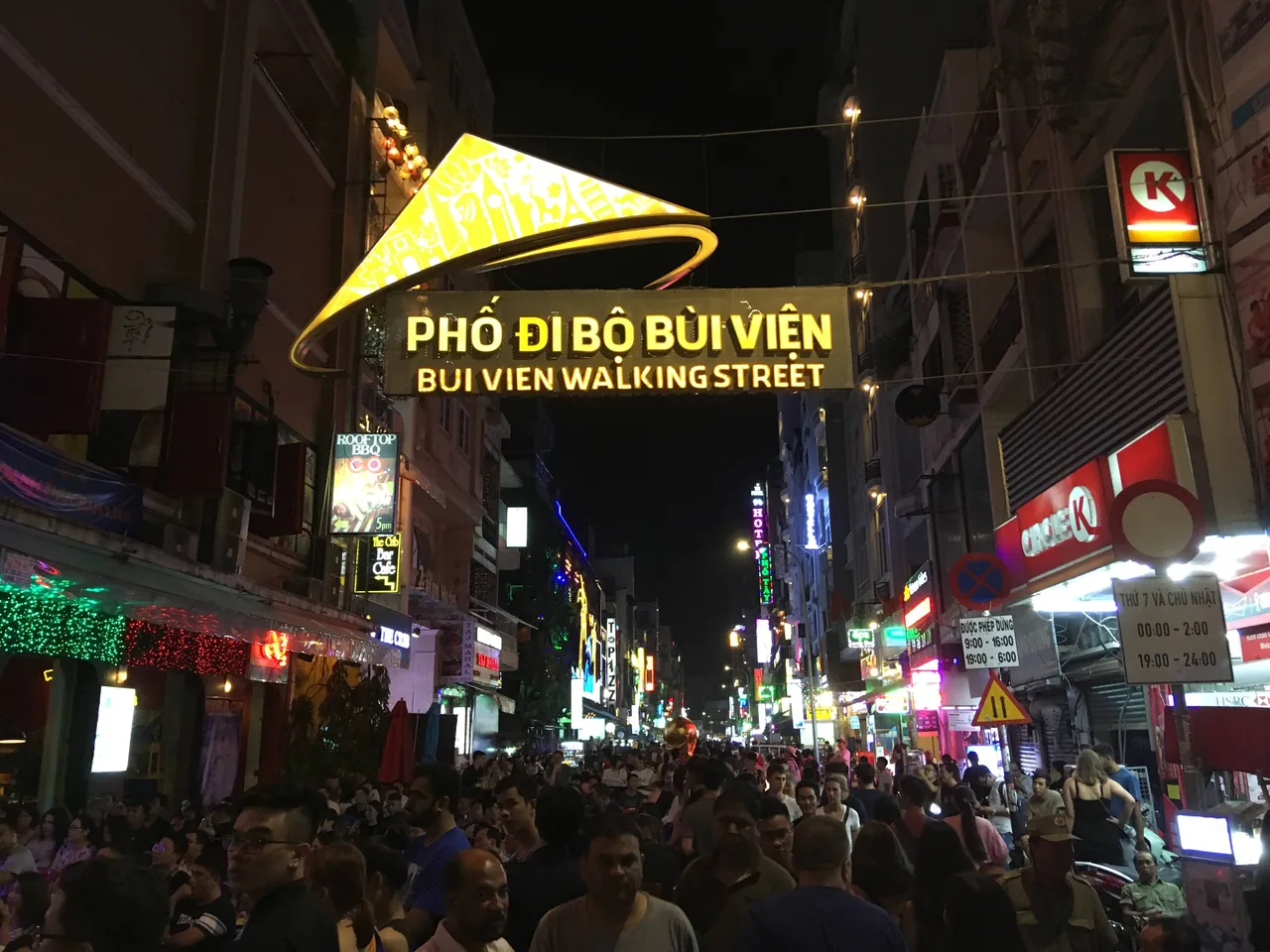
The pedestrianised “beer street” in Phạm Ngũ Lão goes full neon nightly ~19:00–02:00 — plastic stools, thumping EDM, and bia hơi (fresh draft) at ~₫10,000–15,000 a glass. It’s pure sensory overload and worth seeing once.
Craft beer — Saigon really is the regional capital
For actual good beer, leave Bùi Viện. Pints run ~₫80,000–150,000.
- Pasteur Street Brewing — the pioneer; try the Jasmine IPA.
- Heart of Darkness, East West Brewing (181 Lý Tự Trọng), BiaCraft and Rooster.
For a more local late night, the Bến Thành night market and the Hồ Thị Kỷ food market both keep going after dark.
13. Shopping & souvenirs
Haggle at the markets, pay fixed prices at the malls — and get an áo dài tailored if you have two days. Here’s where to go for what.
| Place | Best for | Bargain? |
|---|---|---|
| Bến Thành Market | Souvenirs, textiles, coffee, snacks | Yes — hard |
| Saigon Square (near Bến Thành) | Fashion replicas and knock-offs, cheaper | Yes |
| An Đông Market (D5) | Wholesale fashion and fabric | Yes |
| Takashimaya / Vincom / Diamond Plaza | Brands, A/C, fixed prices | No |
| Đồng Khởi Street | Luxury boutiques on the heritage spine | No |
| Đường sách Nguyễn Văn Bình | Book Street beside Notre-Dame | No |
What’s actually worth buying
- Vietnamese coffee + a phin filter (the cheapest, best souvenir)
- Lacquerware (sơn mài), silk, and embroidery
- A custom áo dài — tailored sets run ~₫1,000,000–3,000,000; allow a day or two for fittings
- Lotus tea, conical hats, and propaganda-art prints
14. Saigon with kids: a family playbook
Saigon is hectic for little kids, but it delivers real wins — a metro ride they’ll love, folklore theme parks, a historic zoo, and solid rainy-day indoor spots. One quirk to file away: Vietnamese parks price by a child’s height, not their age.
Suối Tiên Cultural Theme Park Map
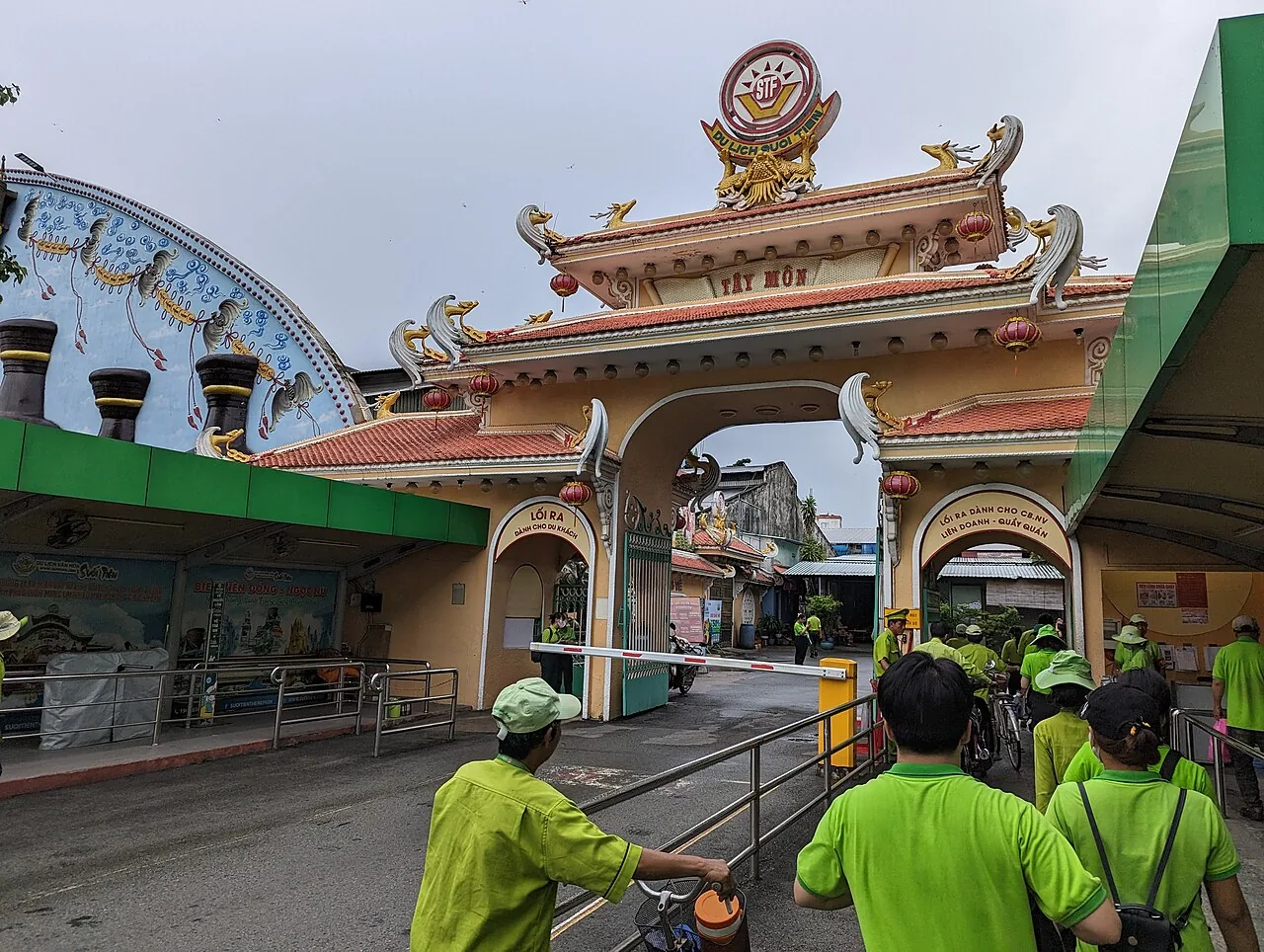
A wonderfully surreal folklore-themed park at the eastern end of Metro Line 1 — dragons, giant statues, water rides and a Buddhist-mythology bent. The metro trip out is half the fun.
- Ticket: base + train combo adult 180,000₫ / child 100,000₫; the water park is a separate add-on. Hours: 08:00–17:00 (mostly outdoor — bring sun cover).
Đầm Sen Park (District 11) Map
A big, well-kept dry culture park with rides and gardens, plus a separate water park next door. All-in dry-park tickets run ~300,000₫ adult / 220,000₫ child; the water park is ~220,000₫ for anyone over 1.4 m.
Saigon Zoo & Botanical Gardens Map
One of the oldest zoos in the world (1865), leafy and shaded, and it pairs neatly with the History Museum right next door. Priced by height: under 1 m free / 1–1.3 m 40,000₫ / adults 60,000₫. Open ~07:00–18:30.
Rainy-day and indoor
- Landmark 81 (Bình Thạnh) — SkyView deck, Vietnam’s biggest ice rink, and a CGV/IMAX cinema all under one roof.
- Vietopia (D7) — an indoor “role-play city” (KidZania-style) where kids try out jobs; a whole rainy afternoon.
- Artinus 3D Art Museum (D7) — trick-art backdrops built for selfies.
- tiNiWorld — indoor soft-play zones inside many shopping malls, handy anywhere in the city.
15. Getting around the city
For a first trip, live on the Grab app — but Saigon finally has a metro, and it’s genuinely useful now. Here’s every way to move.
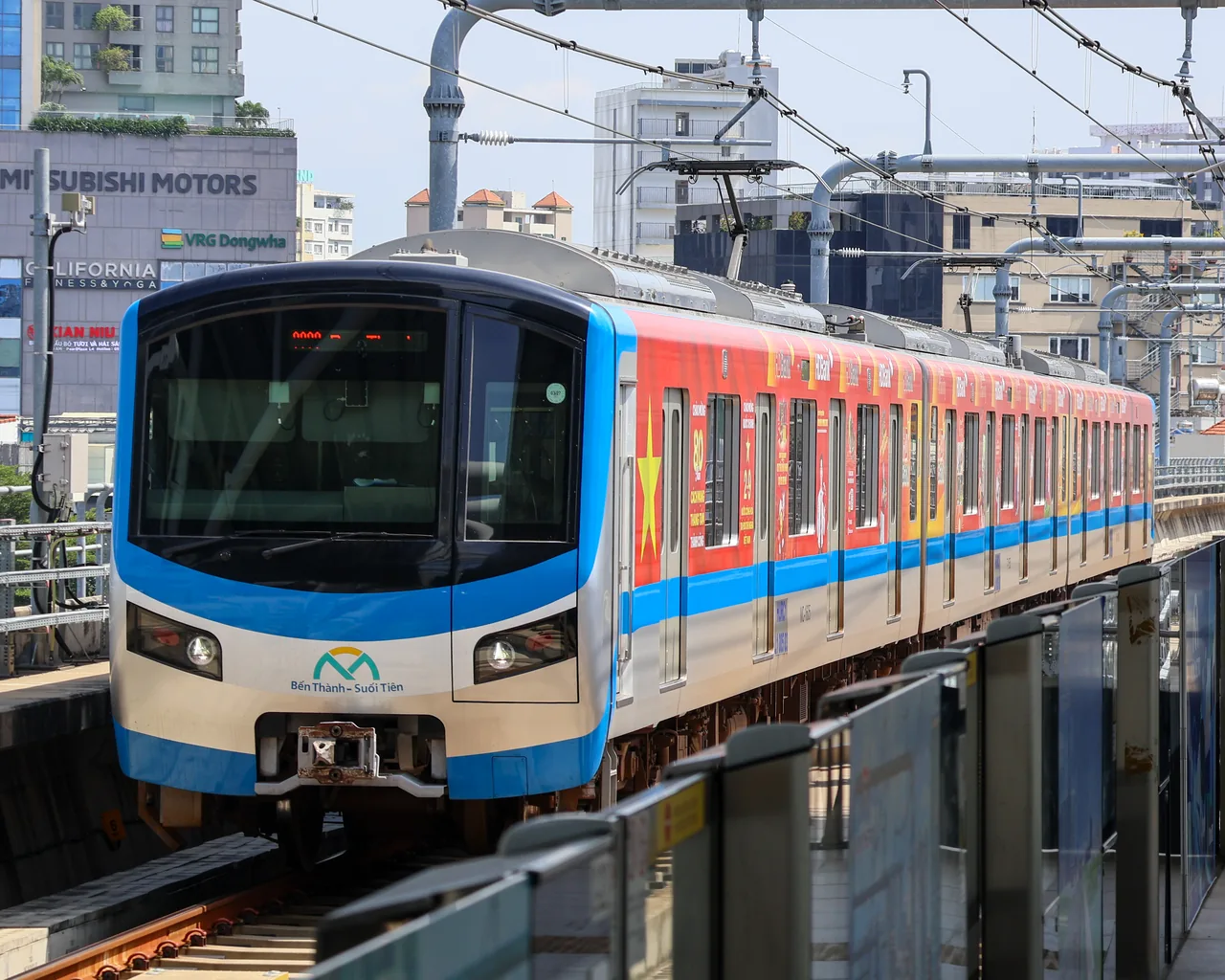
Metro Line 1 (Bến Thành ⇄ Suối Tiên) — the new one Map
Saigon’s first-ever metro opened on 22 December 2024 (fares started 21 January 2025). It’s clean, air-conditioned, cheap, and it cuts straight through the tourist spine.
- 14 stations, 19.7 km — 3 underground (Bến Thành, Opera House, Ba Son) and 11 elevated, including Thảo Điền and Suối Tiên.
- Fares ₫6,000–20,000 by distance; a 1-day pass is ₫40,000, 3-day ₫90,000. Runs ~05:00–22:00, trains every ~8–12 min.
- Pay by tapping a contactless Visa/Mastercard/JCB/NAPAS card (slightly cheaper than cash), or use MoMo/ZaloPay, Apple/Google/Samsung Pay, the HURC app, or cash at the machines.
- Useful for: hopping between Bến Thành, Opera House (walk to Đồng Khởi/Nguyễn Huệ/Notre-Dame), Ba Son (near Landmark 81), Thảo Điền and Suối Tiên park.
Grab & Green SM — your default
Grab (cars and motorbikes) is the tourist workhorse: fixed upfront price, cashless or cash, English app — it kills bargaining and taxi scams outright. GrabBike is the cheapest way to zip around (~₫10,000–12,000 base + ~₫4,000/km); a short GrabCar ride is ₫50,000–100,000.
Green SM is Vingroup’s all-electric fleet (VinFast taxis and bikes) — spotless and metered, and it’s grown fast enough to rival Grab. Compare the apps in our Grab vs Green SM ride guide.
Taxis, if you must
Only two branded fleets are reliably honest: Vinasun (white, red-and-green stripe, ☎ 028 38 27 27 27) and Mai Linh (green, ☎ 1055), around ₫11,000–16,000/km.
Crossing the street (yes, it’s a skill)
Motorbikes rarely stop dead — instead the flow parts around you. Walk slowly, steadily and predictably; don’t freeze and don’t run. Use crossings with lights where you can. It’s the most genuine culture shock in the city.
City buses are dirt cheap (₫5,000–7,000) but rarely useful for tourists except the airport routes below.
16. Getting there & away: airports, trains, buses
You fly into Tân Sơn Nhất (SGN) — it’s only ~7 km from the centre, so getting downtown is quick and cheap. Ignore anything you read about Long Thành for now (see below).
Tân Sơn Nhất International (SGN)
Unusually central for a major airport — ~7 km / 25–45 minutes to District 1 depending on traffic. The new Terminal 3 (domestic) opened in April 2025, and Vietnam Airlines and Vietjet largely moved their domestic flights there; T1 handles other domestic flights, T2 is international. Double-check your terminal before a domestic connection.
Airport → city, ranked
| Option | Price | Notes |
|---|---|---|
| Grab / Green SM | ~₫110,000–250,000 ($4–10) | Fixed price, no haggling — the easiest choice |
| Branded taxi (Vinasun/Mai Linh) | ~₫130,000–200,000 + ~₫10,000 airport surcharge | Metered; use the official rank only |
| Bus 109 | ₫15,000 | Tourist-friendly, luggage space, runs to Bến Thành |
| Bus 152 | ~₫5,000 | Cheapest, more local |
Prefer a driver waiting with your name at arrivals? Book a private airport transfer in advance:
Long Thành International (LTIA) — not yet
Onward travel
Saigon station anchors the scenic (slow) north–south railway to Nha Trang, Đà Nẵng and Hanoi. Sleeper and limousine buses run to the Mekong, Đà Lạt, Mũi Né and Nha Trang. Plan the next leg with our southern Vietnam and central Vietnam hubs.
For Da Lat on its own, our Da Lat travel guide covers the flights, the measured drive times, the official ticket prices and the weather month by month.
For Mui Ne and Phan Thiet on their own, our Mui Ne and Phan Thiet guide covers both dunes with their prices, the measured drive times, the train days and where along the strip to stay.
17. Day trips from Saigon
If you have one spare day, choose Củ Chi for war history or the Mekong for river life — they’re the two classics. Here’s the full menu with distances and 2026 prices.
| Trip | Distance / time | Cost | Notes |
|---|---|---|---|
| Củ Chi Tunnels | ~40–70 km / half-day | ₫135,000 (₫35,000 entry + ₫100,000 guide) | Bến Đình = closer, wider tunnels; Bến Dược = more authentic, fewer crowds |
| Mekong Delta (My Tho / Ben Tre) | 70–85 km / 1.5–2 h | Tour from ~$20–33 | Boat + sampan through palm canals, coconut candy, honey, fruit & music |
| Vũng Tàu | ~95 km / ~2 h | Hydrofoil ~₫270,000–320,000 | Beach town; the 36 m Christ statue with ~800 steps up |
| Cần Giờ | ~50 km / ~2 h | Entry ~₫35,000 | UNESCO mangrove + Monkey Island; less touristy |
| Cao Đài Holy See (Tây Ninh) | ~90–100 km NW | Free entry | Rainbow temple, noon prayer ceremony; often paired with Củ Chi |
Củ Chi Tunnels Map
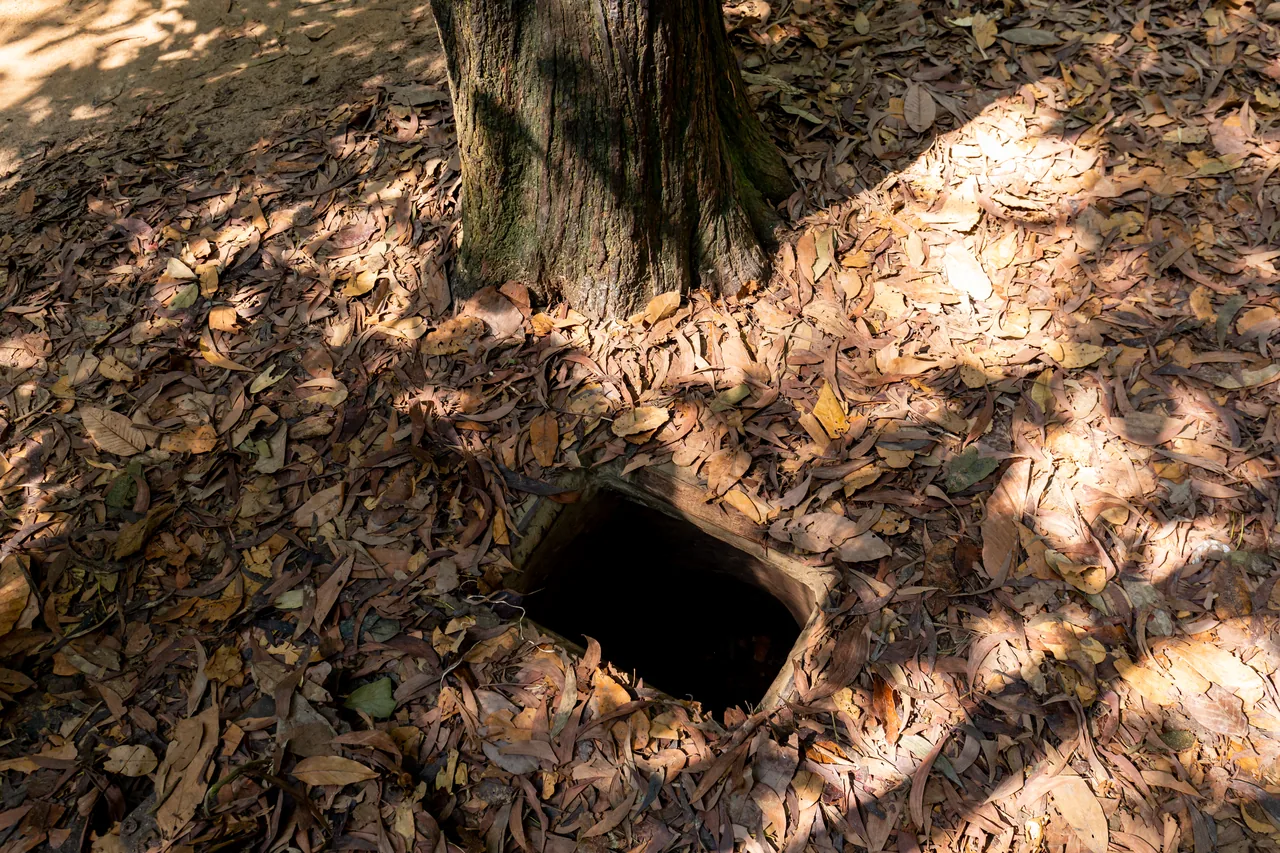
The Viet Cong’s underground guerrilla network. Bến Đình (~40 km) is closer, more touristy, with tunnels widened for visitors; Bến Dược (~70 km) is more authentic and quieter, with a war memorial. Both sites charge the same: ₫35,000 entry plus ₫100,000 for the guide service, ₫135,000 in all for foreign visitors (₫35,000 for Vietnamese). Open 07:00–17:00. There’s a shooting range, priced by the round and by the weapon (₫20,000-40,000). Full ticket and access details for Cu Chi. A fun alternative is the Les Rives speedboat up the river (~1h15 from Bạch Đằng pier, ~$92 all-in).
Mekong Delta Map
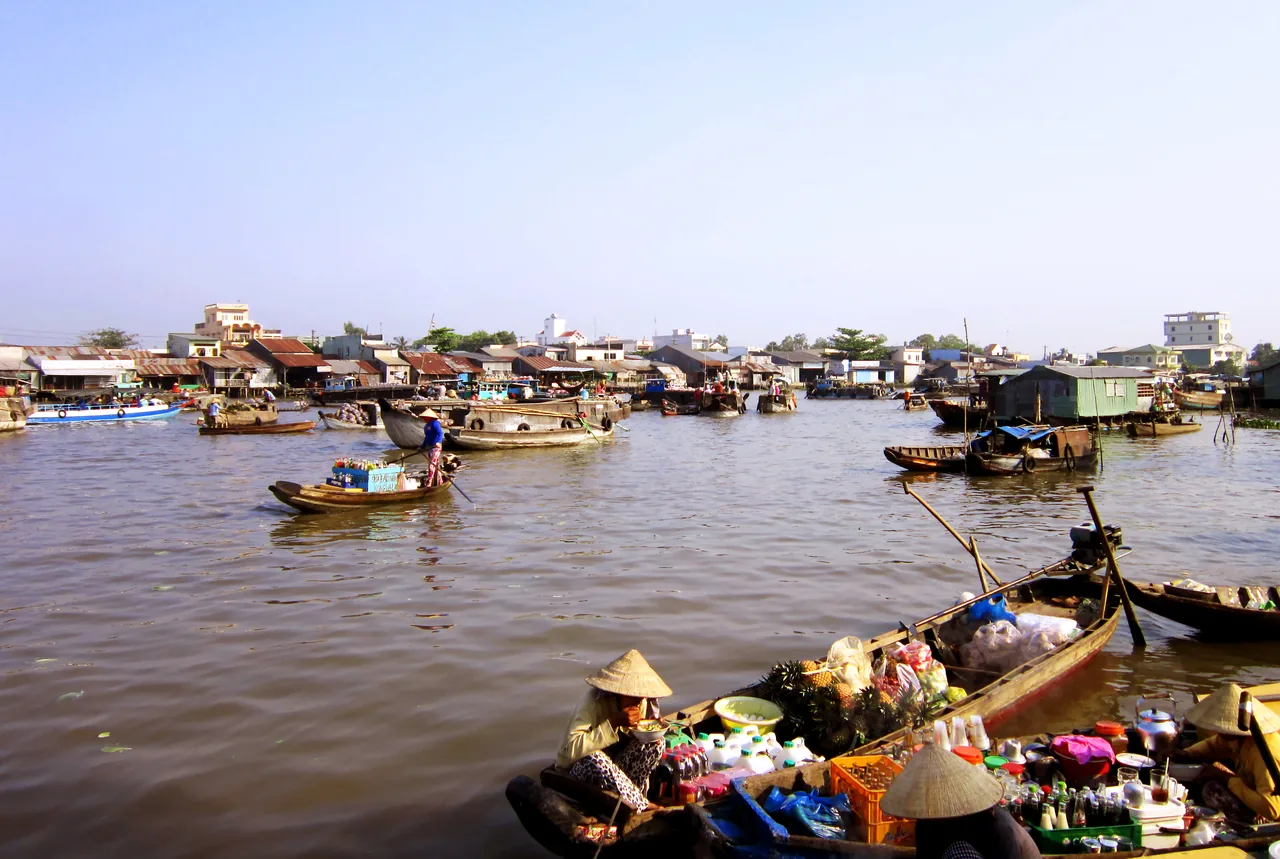
The easy day-trip version is My Tho / Ben Tre: a boat out to a palm-fringed island, a sampan glide through narrow canals, and stops for coconut candy, honey tea and fruit with live folk music. Want the famous Cái Răng floating market near Cần Thơ? That’s ~3.5–4 hours away and best as an overnight, since the market peaks at sunrise. More in the Mekong & southern Vietnam guide.
Vũng Tàu, Cần Giờ & Cao Đài Map
- Vũng Tàu — the closest real beach; take the Greenlines DP hydrofoil from Bạch Đằng terminal (~2 h). Climb the 36 m Christ statue (~800 steps up, 133 inside; free, 07:00–17:00, modest dress).
- Cần Giờ — mangrove biosphere and Monkey Island, where the macaques will absolutely snatch anything loose. Around ~2 h including the car ferry. Map
- Cao Đài Holy See — the technicolour temple of Vietnam’s home-grown syncretic religion, with its “Divine Eye” and a hypnotic noon prayer ceremony (~12:00). Modest dress; often combined with Củ Chi, or with the Bà Đen Mountain cable car (combo ~₫600,000). Map
18. When to visit: weather, seasons & Tết
December to February is the sweet spot — dry, sunny and (relatively) cool. Saigon is tropical and hot all year, with just two seasons. Here’s how to time it.
| Season | Months | What to expect |
|---|---|---|
| Dry (best) | Dec–Apr | Sunny; Dec–Feb coolest (~22–31°C, low humidity); Mar–Apr hottest (~33–35°C) |
| Wet | May–Nov | Short heavy afternoon downpours (~1 h) then clears; Sep–Oct wettest, with street flooding |
Month by month
- Jan — dry, peak season. Feb — dry, and Tết. Mar — hot and dry.
- Apr — hot, first showers, Reunification Day. May — rains begin. Jun–Aug — wet and humid.
- Sep–Oct — wettest, storm risk. Nov — shoulder, drying out. Dec — the best.
Tết — the one date that changes everything
Other dates worth knowing: Reunification Day (30 Apr) plus Labour Day (1 May) make a fireworks-filled long weekend; National Day (2 Sep); and Mid-Autumn (Tết Trung Thu), 25 September 2026, with lanterns and mooncakes. See the nationwide best-time guide and mind local temple etiquette.
19. The perfect Saigon itinerary: 1 to 4 days (plus a foodie and a history day)
One day is District 1 on foot; two to three days add a big day trip and Chinatown; four days add a themed day or the beach. Saigon rewards a slower pace than most people give it. Here are plans that flow without backtracking, then two themed days for repeat visitors and food obsessives.
1 day — the District 1 core, all walkable
- Reunification Palace (go in the morning, before the ticket desk closes for lunch)
- War Remnants Museum
- Notre-Dame exterior + Central Post Office + a browse on Book Street
- Coffee at the Cafe Apartment (42 Nguyễn Huệ)
- Nguyễn Huệ walking street + City Hall
- Bến Thành Market
- Evening: Bùi Viện chaos or a rooftop bar
2 days
Day 1 as above. On Day 2, pick a day trip: Củ Chi (half-day) then an afternoon at the Jade Emperor Pagoda or eating in Thảo Điền, or the Mekong Delta (My Tho/Ben Tre, a full day).
3 days
Add Day 3: either the other big day trip (whichever of Củ Chi or the Mekong you skipped), or a slow Chợ Lớn / Chinatown day — Thiên Hậu, Bình Tây and An Đông markets, a coffee-and-food crawl, and a Saigon River dinner cruise to close it out.
4 days
Add Day 4: a Vũng Tàu beach day, or a Cao Đài Holy See + Củ Chi combo, or a museums-and-temples slow day (the HCMC Museum, Vĩnh Nghiêm Pagoda and the Fine Arts Museum all pair well). Beach lovers can also fly out to Phú Quốc instead of coming back.
Themed day — the foodie crawl
Come hungry and pace yourself; this is a graze, not three big meals.
- Breakfast: cơm tấm (broken rice + grilled pork chop) at a busy local counter
- Mid-morning: a loaded bánh mì from Huỳnh Hoa, then a bạc xỉu to wash it down
- Late morning: market snacks — Bến Thành or the Bà Chiểu market in Bình Thạnh
- Lunch: hủ tiếu Nam Vang (Phnom Penh-style pork-and-shrimp noodles)
- Afternoon coffee: a specialty phin or cold brew to reset
- Dinner: the Vĩnh Khánh seafood-and-snail strip in District 4, with cold beer
- Nightcap: craft beer at Pasteur Street or East West, or a rooftop
Themed day — the history day
- War Remnants Museum (open early; go before the tour buses)
- Reunification Palace
- HCMC Museum (Gia Long Palace)
- Lunch near the palace
- Cha Tam Church in Chợ Lớn (where President Diệm was seized in 1963)
- Coffee, then a Saigon River sunset — the Waterbus or a short cruise
20. Money, budget & staying safe
Saigon is very safe for tourists — the real risk isn’t violence, it’s motorbike snatch theft. Here’s everything practical in one place.
Money
The rate is roughly ~₫26,300 ≈ US$1 (mid-2026). The city is going cashless fast (MoMo, ZaloPay, cards, contactless on the metro), but keep small VND notes for buses, markets, small taxis and cyclos. ATMs are everywhere. Full detail in our Vietnam money & currency guide.
| Style | Per person / day (excl. flights) |
|---|---|
| Backpacker | ~$15–25 |
| Mid-range | ~$50–80 |
| Comfort | ~$100–150+ |
Safety & scams
One more: tap water isn’t potable — drink bottled or filtered water and be a little careful with street ice.
Connectivity
Get a Vietnam eSIM and you’re online the moment you land — no SIM queue at the airport.
Compare providers in our best eSIM for Vietnam guide.
Entry — visa & the new arrival card
Most visitors use one of two routes:
- 45-day visa exemption — the UK, most of the EU, plus Korea, Japan and Russia enter visa-free for up to 45 days.
- 90-day e-visa ($25 single entry) — the standard route for US, Canadian and Australian travelers; apply online before you fly.
21. Saigon practical A–Z: money, health, apps, phrases and etiquette
This is the deeper practical layer — the numbers to save, the ATMs to use, the apps to install and the phrases that make you a friendlier tourist. The money-and-safety basics are earlier in this guide; below is the detail that saves you money and hassle on the ground.
Emergency numbers
The three main lines are Vietnamese-only, so save the tourist hotline for anything in English.
- Police 113 · Fire 114 · Ambulance 115 (Vietnamese-speaking).
- HCMC tourist hotline 1022, press 8 — English-speaking, ~7:30am–8:30pm, for scams, complaints and tourist info. This is the number to reach for first.
Hospitals for foreigners
- FV Hospital (D7) — JCI-accredited, the flagship for international patients.
- Family Medical Practice (D1) — 24/7 expat GP and emergency care with its own English emergency line and the widest direct-billing insurer network.
- Vinmec Central Park (Bình Thạnh) — modern, JCI-accredited.
- Chợ Rẫy (D5) — the major public hospital; capable but limited English and busy.
Pharmacies
Chains like Long Châu, Pharmacity and Guardian are on nearly every block, open roughly 7am–10pm. Bring the generic drug name (not just a brand), since brands differ locally.
Money, ATMs and exchange
The rate is about ~₫26,300 ≈ US$1 (mid-2026). A few things that genuinely save money:
- ATM fees: most local banks charge ~50,000₫ per foreign-card withdrawal. VPBank and ACB are fee-free for foreign cards (VPBank lets you take up to 10 million ₫ at once). Avoid TPBank (~3.3% fee since June 2025) and the airport ATMs.
- Always choose to be charged in VND — decline the machine’s “convert to your home currency” offer, which bakes in a bad rate.
- Best exchange: the gold shops on Nguyễn An Ninh, the little street beside Bến Thành. Bring clean, unmarked USD notes.
- QR wallets (MoMo, ZaloPay) dominate locally but need a Vietnamese bank account or ID to fund, so most tourists live on card + cash + Grab’s in-app pay.
Full detail is in our Vietnam money guide.
Staying connected
Viettel has the best coverage. A tourist SIM runs ~150,000–250,000₫; an eSIM is ~$6–11 and lets you skip the airport queue entirely (you’ll need your passport to register either). Free wifi is everywhere — cafés, hotels, malls.
Compare providers in our best eSIM for Vietnam guide.
Electricity
Vietnam runs on 220V/50Hz. Sockets take Type A (flat US pins) and Type C (round EU pins), so US and EU plugs usually fit; UK plugs need an adapter. Phone and laptop chargers are dual-voltage, so no converter is needed.
Tipping
Tipping isn’t mandatory or deeply expected, but it’s welcomed. Four- and five-star places already add ~5% service. Tip in VND: spa or massage 50,000–100,000₫, a tour guide ~100,000–200,000₫ per day, and round up at restaurants if you liked the service. Grab drivers don’t expect a tip.
The apps you actually need
| App | What for |
|---|---|
| Grab | Rides, food delivery, in-app pay — your everyday workhorse |
| Be & Green SM | Ride backups; Green SM is the all-electric fleet |
| HURC (HCMC Metro) | Metro tickets and top-ups for Line 1 |
| Google Maps + Translate | Navigation and camera-translate for menus and signs |
| ShopeeFood / GrabFood | Food delivery to your hotel |
| MoMo | QR pay — useful, but funding it needs a VN bank/ID |
Note: Baemin left Vietnam in 2023, so ignore any old guide that still recommends it.
Water, dress and phrases
Tap water isn’t potable — stick to bottled or filtered water. Machine-made ice in cafés and restaurants (the cylindrical kind with a hole) is fine. For temples and the mosque, cover shoulders and knees and take your shoes off in prayer halls; otherwise casual dress is fine.
A few words go a long way. These are the southern forms you’ll actually hear in Saigon:
| English | Vietnamese | Rough sound |
|---|---|---|
| Hello | Xin chào | sin chow |
| Thank you | Cảm ơn | gam un |
| Yes (polite) | Dạ | ya |
| No | Không | khome |
| How much? | Bao nhiêu tiền? | bao nyew tien |
| Too expensive! | Mắc quá! | mack wah |
| Delicious! | Ngon quá! | ngon wah |
| The bill, please | Tính tiền | ting tien |
| No MSG | Không bột ngọt | khome bawt ngawt |
| No coriander | Không ngò | khome ngaw |
| Help! | Giúp với! | yup vuh-y |
| Cheers! (1-2-3, drink) | Một hai ba, dzô! | mote hai ba yo |
Public holidays 2026
- Tết (Lunar New Year) ~16–20 Feb — by far the biggest; many places close for days and the city empties, so book well ahead.
- Hùng Kings ~26–27 Apr.
- Reunification Day 30 Apr + Labour Day 1 May — a fireworks-filled long weekend with citywide events.
- National Day 2 Sep.
More context in our etiquette, visa and 2026 entry rules guides.
LGBTQ+ and solo travellers
Vietnam is among Asia’s more LGBTQ+-friendly countries, and Saigon has a visible, relaxed scene — travellers rarely face hostility (keep public affection modest, as anyone would). Solo travel, including solo female travel, is generally safe; the real risk isn’t people, it’s moto bag- and phone-snatching, so wear your bag cross-body on the wall side and don’t stand at the kerb texting. See our scams guide.
22. 9 rookie Saigon mistakes (and how to skip them)
Almost every first-timer trips over the same handful of things. Here’s the shortlist, with the fix for each.
- Trying to “do” Saigon on a half-day layover. The city reveals itself slowly — give it 2–3 days or you’ll leave thinking it’s just traffic and noise.
- Expecting to go inside Notre-Dame. The interior is closed for restoration until around 2027 — it’s an exterior photo stop in 2026, not a visit.
- Flagging a random “taxi” off the street. Copycat cabs mimic the real liveries. Use Grab, or the genuine Vinasun (white) and Mai Linh (green) fleets — see ride apps.
- Hopping in a cyclo without fixing the price and currency first. The classic sting is “15” that becomes 150,000₫ or “that was dollars.” Agree the full number, in VND, before you sit.
- Waiting for the traffic to stop before you cross. It won’t. Walk slowly and steadily and let the motorbikes flow around you — don’t freeze and don’t sprint.
- Renting a motorbike on a 1949 (Geneva) IDP. Vietnam only recognises the 1968 Vienna Convention permit, so the US/Canada/Australia/Japan-issued Geneva IDP is not valid — expect fines and voided insurance. Use GrabBike instead.
- Booking a room fronting Bùi Viện and expecting to sleep. The beer street roars until ~2am. Take a side street or a back-facing room.
- Assuming everywhere takes cards or MoMo. Markets, street food and small taxis are cash-first — always carry small VND notes.
- Only eating in District 1. The best cơm tấm, snails and hủ tiếu are in D3, D4 and Chợ Lớn. Follow the locals across the canal.