
Cu Lao Cham Day Trip from Hoi An: Fares, Rules, What’s Open
Twenty minutes of open water separate Hội An from an island where several of the advertised attractions are currently shut.
| Boat | 350,000 VND per adult for a same-day return, 15 to 20 minutes each way. |
|---|---|
| Island fee | 70,000 VND per person, already inside that boat ticket. |
| Time ashore | Four to five hours, on boats that leave 08:00 to 09:00 and return 13:00 to 14:30. |
| Sailing rule | Nothing leaves once the wind passes Beaufort force 5, in any month. |
| Best window | March to September; from September most day boats stop running. |
| Cash | There is no ATM on the island, so carry around 800,000 VND a head. |
1. What a Cù Lao Chàm day trip costs, and what decides whether it happens
2. Getting to Cù Lao Chàm: Cửa Đại harbour, the fare and the crossing
3. Force 5 stops the boats: how the sea decides the day
4. The 70,000 VND island fee, and what the ticket does not buy
5. What a day on the island actually looks like, hour by hour
6. Snorkelling, the reef, and the water you may not enter
7. The beaches: Bãi Chồng, Bãi Ông and the ones the day boats skip
8. Bãi Làng: the market, the 1758 pagoda and the old well
9. What the tours advertise that is not running
10. Eating on the island, and the rock crab you cannot order
11. Staying the night: homestays, the different-day ticket and the ID check
12. The plastic-free island: what it actually means at the gate
13. Tour or on your own, and how the island compares with the other day trips
14. Money, seasickness, packing, and who should leave the island off the list
1. What a Cù Lao Chàm day trip costs, and what decides whether it happens
A booked day trip runs 500,000 to 700,000 VND a head (about US$19 to US$27) with the boat, the island fee and lunch inside the price, and assembling the same day yourself lands at roughly 700,000 VND. Money is the predictable part. What decides a Cù Lao Chàm day is wind: boats are barred from sailing once it passes Beaufort force 5, and that happens in July as readily as in December.
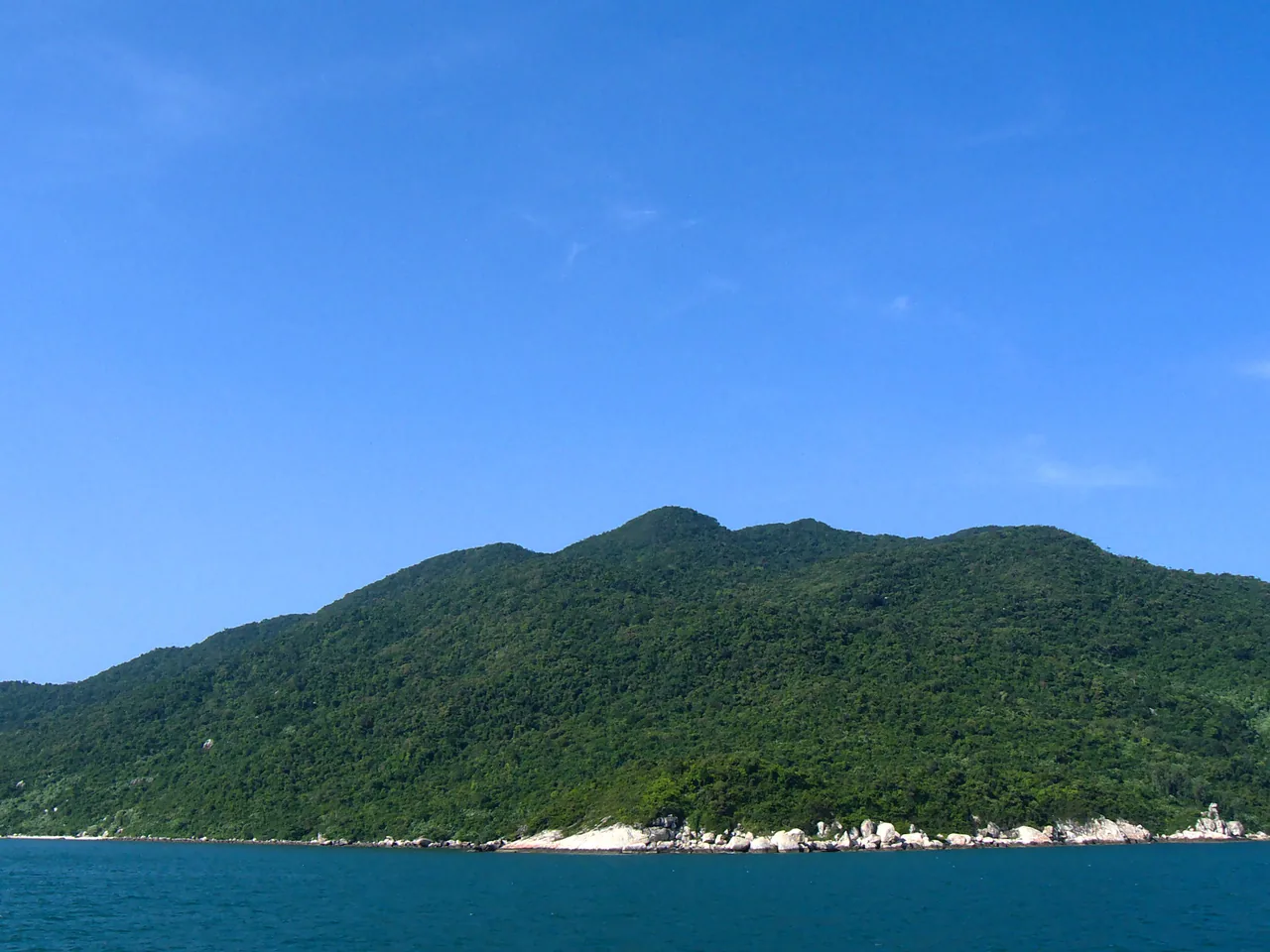
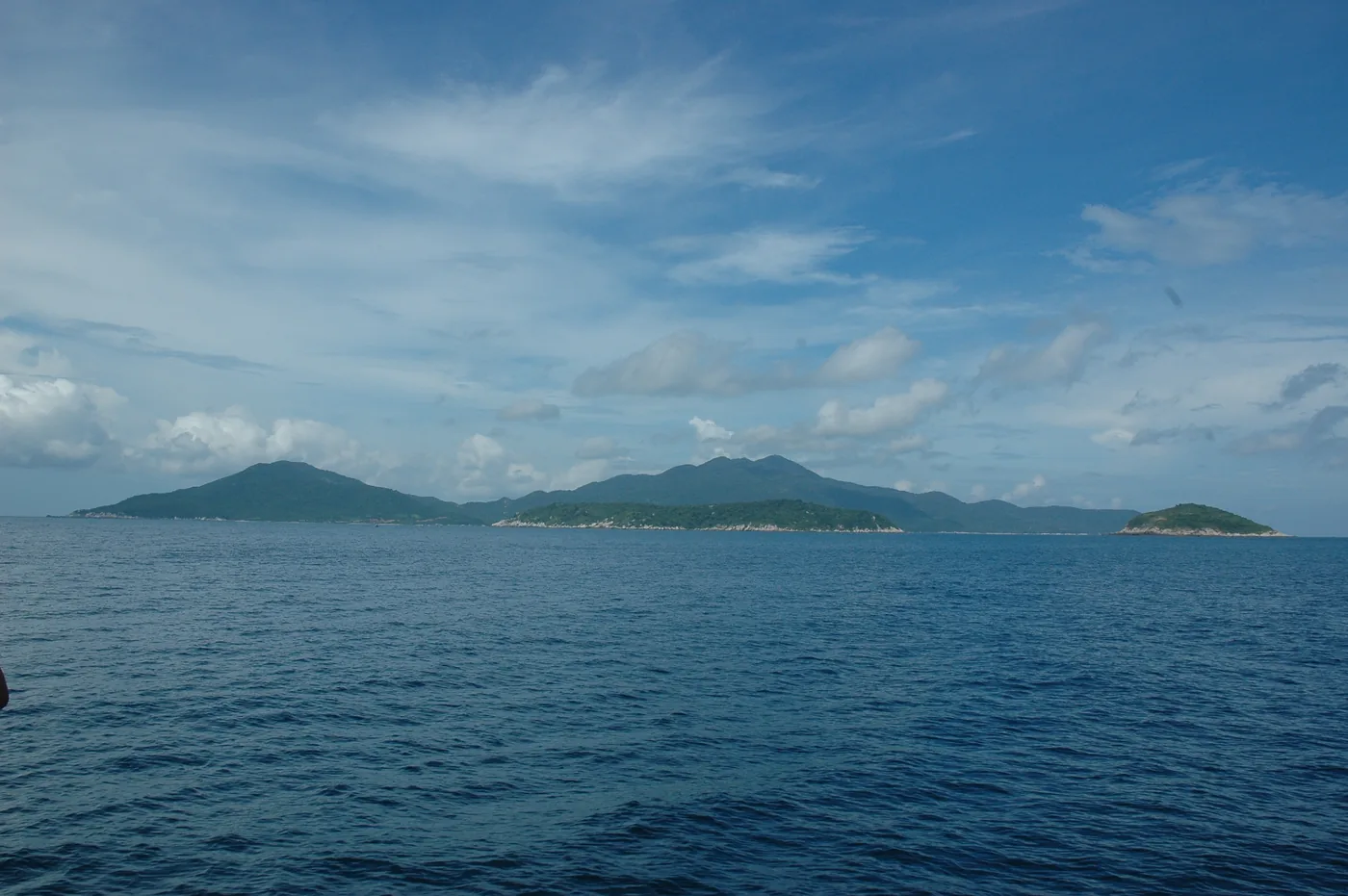
Cù Lao Chàm is a group of eight islands about 15 km off the coast, straight out from Hội An. One of them, Hòn Lao, is inhabited, by roughly 3,000 people living in three places along the sheltered west side: Bãi Làng, Bãi Ông and Bãi Hương. The islands and the water around them have been a UNESCO World Biosphere Reserve since 26 May 2009, a designation covering 33,475 hectares, and since 2025 the same waters have carried a second layer of protection as a 23,530-hectare nature reserve with its own rulebook.
Two numbers do most of the confusing, so fix them now. 70,000 VND is the island visitor fee, charged per person per visit. 350,000 VND is the walk-up speedboat ticket from the mainland for a same-day return, and the 70,000 VND is already inside it. You do not pay the fee twice, and nobody at the pier collects it a second time.
What the day is, in practice
A speedboat crosses in 15 to 20 minutes. Departures cluster between 08:00 and 09:00, returns between 13:00 and 14:30, which leaves four to five hours ashore. The standard shape of those hours is a walk through the village, one snorkel stop from the boat, one beach with a restaurant on it, and a seafood lunch. That is the whole product, and it is worth knowing before you book, because a fair slice of what island listings still advertise, the road route around the island, basket-boat rides, fishing trips and every beach water sport, is suspended.
The protection is worth understanding before you go, because it shapes what you are allowed to do once you are there. The biosphere listing has two core areas rather than one, and the old town of Hội An is the other half of it. The nature reserve laid over the top of it has its own management board, its own patrols and its own closed seasons, and the water is divided into zones that decide where a boat may stop and where it may not. The stated plan is to reach 350,000 to 400,000 visitors a year by 2030 without loosening any of that.
The island is also markedly quieter than its reputation. It drew 73,116 visitors in the first five months of 2026, up 1.04% on the same period a year before. The year 2019 brought 440,000 and 2024 about 220,000, so the overtourism story that older guides tell is a decade out of date. Busy days in summer average a little over 2,000 arrivals against a licensing ceiling of 4,025 boat seats a day. The constraint on your trip is not a queue. It is the sea.
Go, or leave it out
- Go if you want a short sea crossing, warm water over living coral, and a fishing village that still works as one rather than as a set.
- Go if your dates fall between March and September and you can keep a spare day in reserve.
- Leave it out if you fly home that evening, if your only free day falls between October and February, or if you came for jet skis, parasailing or a ride around the island.
If you are still choosing between this and the temples, the mountain or the imperial city, the comparison is in the last third of this guide, and the wider shortlist sits in our guide to day trips from Đà Nẵng. For everything on the mainland side, from the old town to the tailors, start with the Hội An travel guide.
2. Getting to Cù Lao Chàm: Cửa Đại harbour, the fare and the crossing
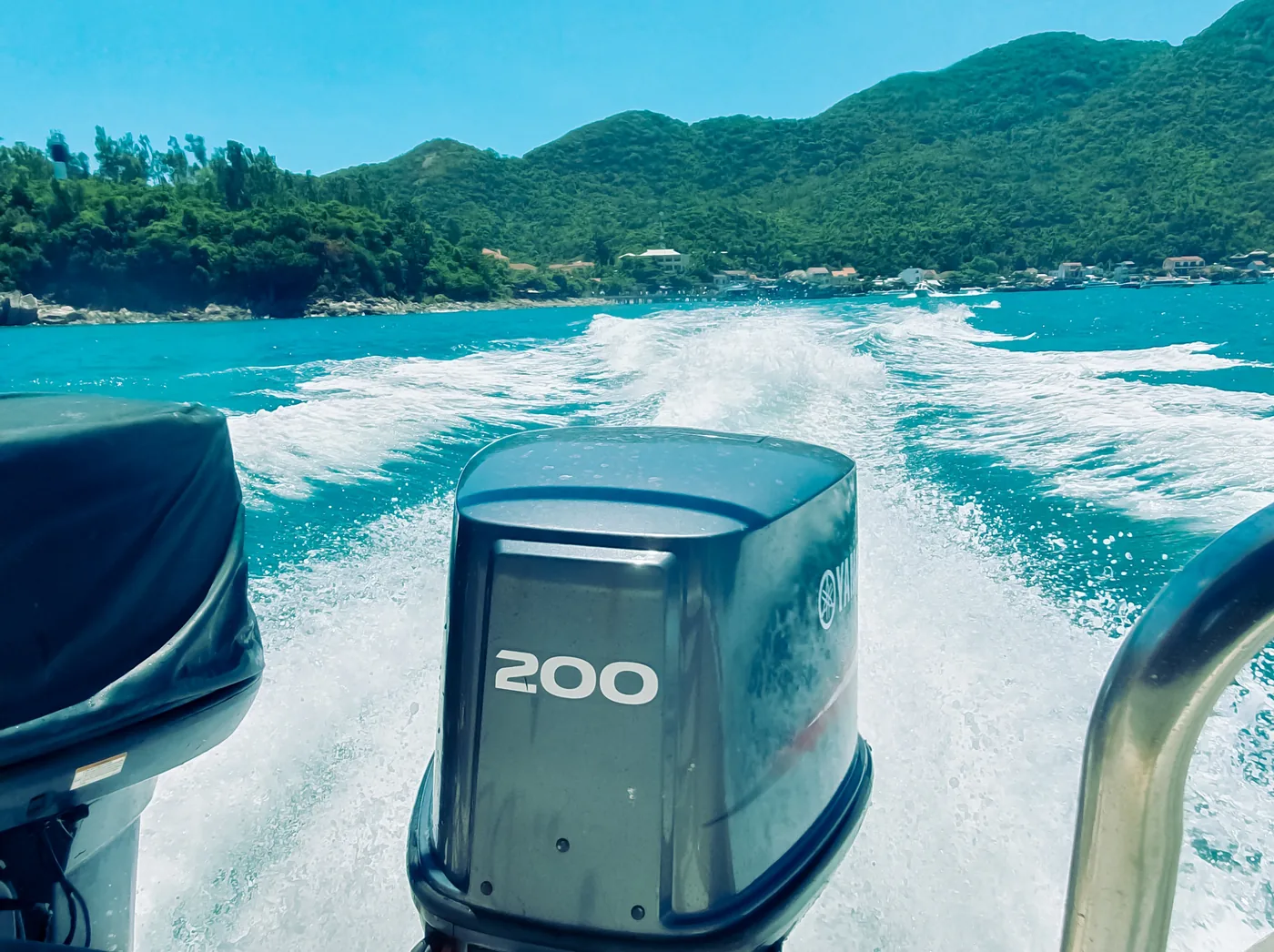
Every scheduled passenger boat leaves from bến du lịch Cửa Đại Map, about 5 km east of Hội An old town, and a walk-up speedboat ticket is 350,000 VND per adult (about US$13) for a same-day return. The crossing takes 15 to 20 minutes. There is no passenger boat from Đà Nẵng: trips sold as departing from there are a 30 km road transfer to this same pier.
The harbour sits at the seaward end of the coastal road, past the last of the Cửa Đại beachfront and opposite the big resort development at Nam Hội An. It is the only harbour on this coast with scheduled passenger sailings to the island, so if a seller offers you a boat from anywhere else, they are selling you a car ride first.
Reaching the pier
| From | Distance and time | What it costs |
|---|---|---|
| Hội An old town | About 5 km, 15 minutes | Taxi from around 100,000 VND one way; parking at the pier 10,000 to 20,000 VND |
| An Bàng and the Cửa Đại beach hotels | 2 to 4 km, under 10 minutes | Short taxi or hotel shuttle |
| Đà Nẵng city | About 30 km, 40 to 45 minutes | Metered taxi 350,000 to 500,000 VND |
| Đà Nẵng airport | About 35 km, allow 1 to 1.5 hours | Booked transfer 250,000 to 350,000 VND for a four-seater, 500,000 to 600,000 VND for a seven-seater |
Leave more room than the map suggests. Boarding formalities close before the advertised departure, and the road east out of Hội An runs through the market district, which is slow at 07:30. Aim to be at the gate 30 minutes before your boat.
What you pay on the water
| Ticket or charge | Amount | Notes |
|---|---|---|
| Speedboat, same-day return | 350,000 VND (about US$13) | The standard walk-up adult fare. Out in the morning, back the same afternoon |
| Speedboat, return on a different day | 400,000 to 550,000 VND | The only way to stay the night. Price varies by seller |
| Island visitor fee | 70,000 VND | Per person, per visit. Already inside the 350,000 VND ticket |
| Pier and environment surcharge | 20,000 to 30,000 VND | Added by the operator, not fixed by any rule, and it differs between sellers |
| Children | Free under 12 months; half fare from one to eight years | The boat fare and the island fee are separate charges |
| Full day tour | 500,000 to 700,000 VND | Boat, fee, lunch and activities. Budget packages from Đà Nẵng advertise 440,000 to 560,000 VND |
The boarding routine
Bring your passport, or a Vietnamese ID card if you have one. Passengers are registered with the border post at the pier before sailing, which checks names against the boat, the operator and the departure time, and the work is still done on paper by a handful of officers. A photograph of your passport on your phone is not what they are checking. Carry the document.
The route is worked by roughly 70 to 97 boats belonging to 35 to 40-odd companies, against a licensing ceiling of 4,025 seats a day, and on a busy summer day the pier turns around some 150 sailings. Operators set their own departure times rather than running to one published timetable, so the return time you are given when you buy is the one that matters. Confirm it, and confirm which beach the boat comes back from.
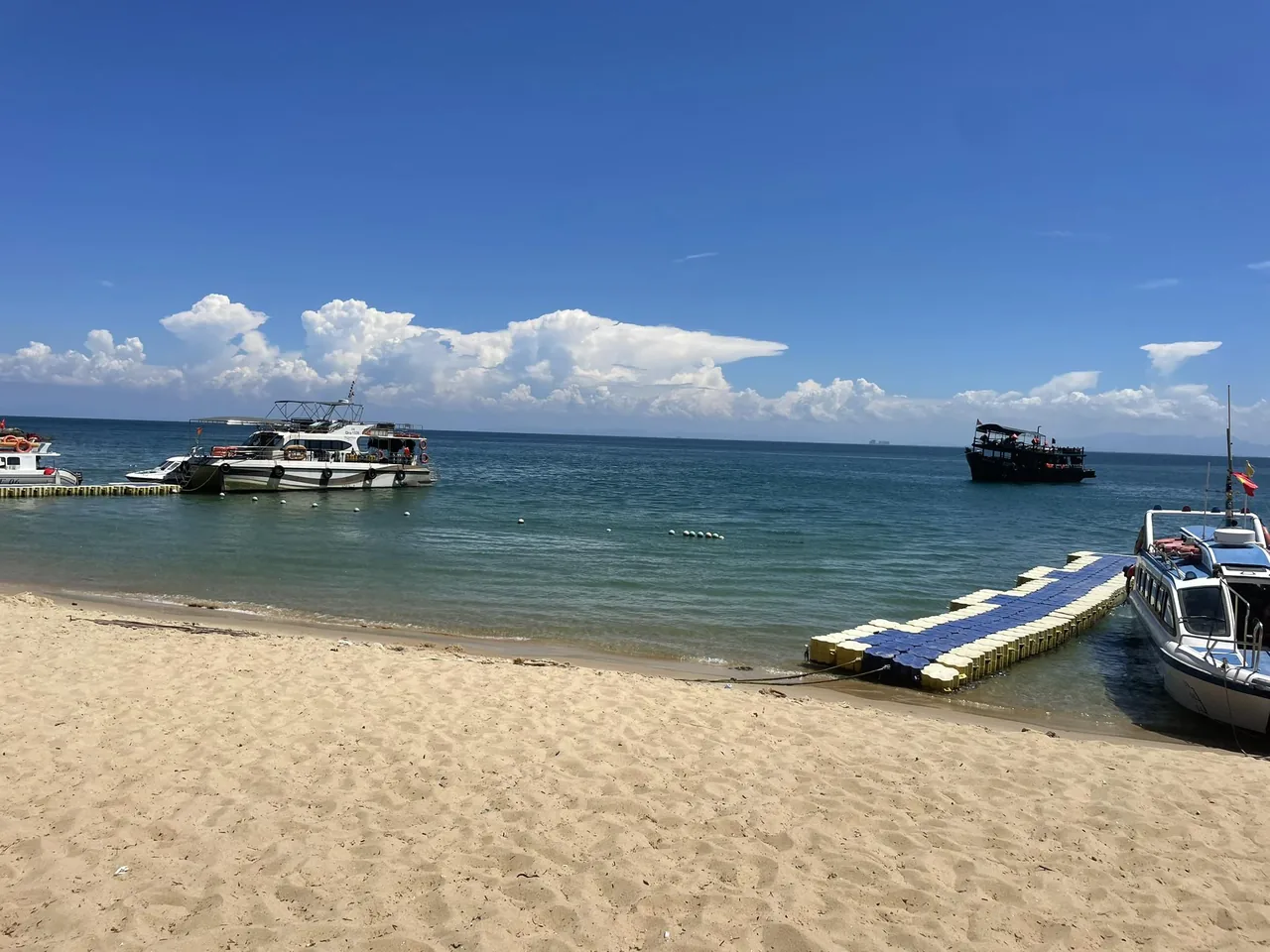
Two pieces of infrastructure are worth knowing about because you will feel both. The channel out of Cửa Đại silts up and is shallow enough that sailings work around the tide, and the landing on the island is in poor condition and cannot take vessels over 250 CV, with repairs being prepared for 2026 and 2027. That is why your boat is a small fast one rather than a ferry, and why the ride is bouncy rather than stately.
None of this is under your operator’s control on the day. If the port authority stops sailings that morning, you are moved to another day or refunded, and a paid ticket does not change the decision one way or the other. Book the island for the middle of your trip, never for the last morning.
Coming from the city rather than the old town, work backwards from the boat: the road takes 40 to 45 minutes and the formalities take another 30, which is a 07:00 start. Our Đà Nẵng to Hội An transport guide compares the ways of covering that road, and the Đà Nẵng master guide has the rest of the city end.
3. Force 5 stops the boats: how the sea decides the day
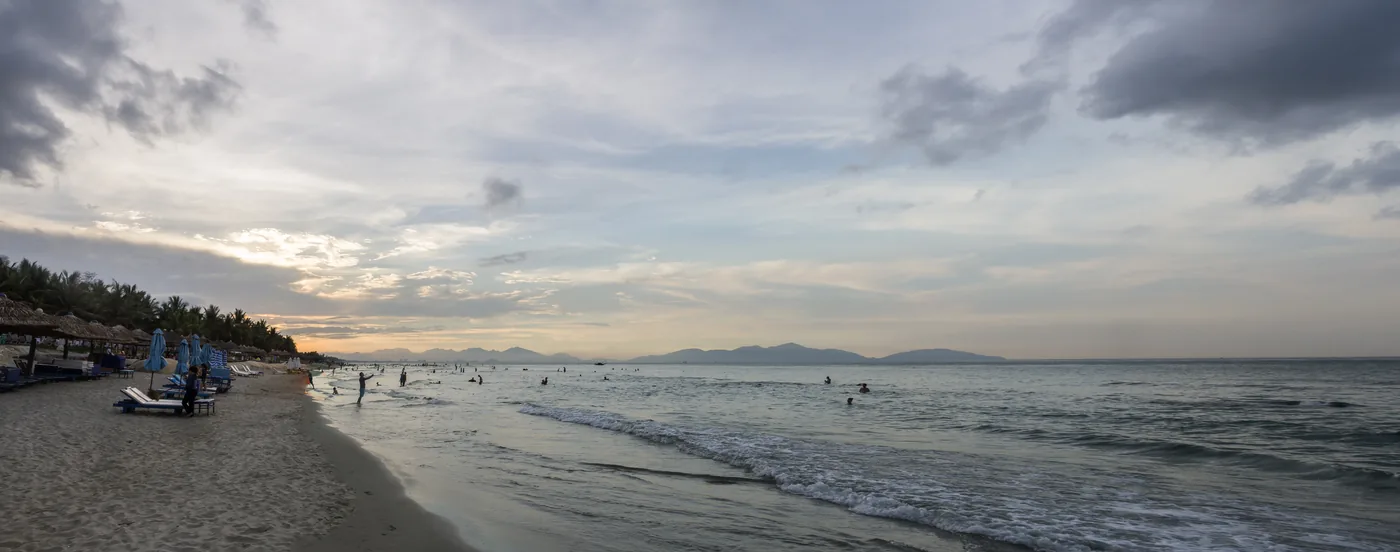
Vessels are forbidden to leave once the wind passes Beaufort force 5, and the order comes from the maritime port authority in Đà Nẵng rather than from your operator. Force 5 is a fresh breeze, roughly 29 to 38 km/h, which is why a trip can be called off under a blue sky. On 16 and 17 July 2026, in a southwest wind of force 4 to 5 gusting 6, about 300 visitors spent an unplanned night on the island.
The threshold is not folklore. It appears in the port authority’s own instruction, which also suspends the coastal-class vessels the route depends on, and again in the city’s agriculture and environment paperwork, which puts it plainly: at force 5 or 6 the boats do not operate. There is no discretion at the pier for a captain who fancies his chances.
What a ban looks like from where you stand
The port authority issues the order on maritime safety grounds and the island authority stops passenger movement in both directions. Border posts at Cửa Đại and at the island landing enforce it at the dock, notices go up at the harbour, and the news travels by phone. Your operator knows before any website does, which is why the practical routine is a message the evening before and another at 07:00.
Forecasting for this stretch of water is general rather than route-specific, so a marine app that looks confident about the Hội An coast is not describing the channel you are crossing. Treat the operator’s call as the forecast that counts.
The July 2026 stranding is the case that matters, because it was mid-season, mid-summer and mid-heatwave. Around 300 people, most of them international visitors, were held on the island when the ban came down on 16 July, and all of them were brought back by speedboat on the afternoon of 17 July once conditions eased. Nobody was hurt. But nobody made a 19:00 flight either.
The island is not closed in winter
There is no seasonal closure order for Cù Lao Chàm. People live there year-round and supply boats run when the sea allows. What happens between September and February is that rough water suspends sailings often enough that most tourist boats stop operating, and the tour sellers pack up until spring. The distinction matters if you are travelling in November: the island has not shut, it simply may not be reachable on your particular Tuesday.
| Month | Rain (mm) | Sea and sailings |
|---|---|---|
| January | 96 | Rough spells under the northeast monsoon |
| February | 34 | Driest month of the year, sea still unsettled |
| March | 25 | The season opens; dive centres reopen around 1 March |
| April | 27 | Reliable |
| May | 63 | Reliable; free island entry on 26 May |
| June | 89 | Reliable and hot, with the clearest water for snorkelling |
| July | 90 | Reliable in general, and the month of the 16 to 17 July 2026 stranding |
| August | 118 | Still reliable; the rock crab season closes on 1 August |
| September | 350 | The end of the dependable run, and the start of storm season |
| October | 613 | The wettest stretch of the year begins |
| November | 373.6 | Rough |
| December | 209 | Rough |
Read the right-hand column, not the middle one. Rainfall tells you about the mainland; sailings depend on wind and swell, which is why a dry, bright, windy day in January is worse for this trip than a showery one in June. Storms and tropical depressions run from September to November and peak in October and November, and the coast is directly affected by two or three of them in a typical year. Sailings to the island were stopped for a tropical depression on 18 September 2024 and again ahead of a storm on 24 August 2025.
Three rules that follow from all this
- Never schedule the island for the day before you fly. A ban can hold you overnight, and there is no alternative route back.
- Book it early in your stay so there is somewhere to move it to.
- Have a mainland day ready to swap in. Our guides to the best time to visit the coast and the rainy and typhoon season set out what the weather does month by month, and what still works when the sea does not.
4. The 70,000 VND island fee, and what the ticket does not buy
The island fee is 70,000 VND per person per visit, about US$3, and on a standard 350,000 VND boat ticket you have already paid it. It has stood at 70,000 VND since 2017, and a resolution in force from 10 June 2026 kept it exactly there. The reserve management board collects it, either at its own ticket point at the harbour or bundled into the price a tour operator quotes you.
The fee is not a park entrance in the sense of a gate you walk through. It funds the body that runs the nature reserve: the patrols, the coral monitoring stations, the restoration nurseries and the enforcement of the closed seasons. From 2026 that board keeps 85% of what it collects, up from half, because salaries and coordination payments were swallowing nearly all of the smaller share. On a forecast of 248,000 visitors, the fee was expected to raise about 17.36 billion VND across the year, which the first five months of 2026 and their 73,116 arrivals suggest was optimistic.
What the fee has been
| From | Fee | What changed |
|---|---|---|
| 2007 | 10,000 VND adult, 5,000 VND child | The first visitor charge |
| 2014 | 40,000 VND, or 60,000 VND with scuba gear | Priced by activity for the only time |
| 2017 | 70,000 VND flat | The rate you pay today |
| 10 June 2026 | 70,000 VND, unchanged | Re-enacted at the same level, with a wider exemption list |
The decision to hold the price was deliberate rather than administrative tidiness: the island’s tourism product is thinner than it was, and the operators on the route have not recovered their pre-2020 volumes. Whatever else that says about the destination, it means the number in your budget has not moved in nine years.
Who does not pay, and the four free days
The resolution exempts children under 16 and students, anyone aged 60 or over, holders of a disability certificate, members of poor and near-poor households, guests on official external-relations programmes, and people who live on the island. Entry is free for everyone on four dates a year: Tết Nguyên đán, 29 March, 26 May, which is the anniversary of the UNESCO listing, and 2 September. Those four are the busiest days on the water, for obvious reasons.
One trap worth naming. An exemption removes the 70,000 VND, not the boat fare. The two are different charges collected by different people, and a child who pays nothing to the reserve still pays half fare to the boat operator from the age of one.
What the 350,000 VND does and does not cover
| Inside the ticket | Not inside the ticket |
|---|---|
| The return crossing, out and back the same day | Lunch, about 150,000 VND for a set seafood meal |
| The 70,000 VND island visitor fee | Snorkelling, 150,000 to 250,000 VND depending on how you buy it |
| Your registration with the border post at the pier | Diving, from around US$80 for an introductory dive |
| Nothing else | Drinks, showers, a guide, and anything at the market |
| The pier surcharge of 20,000 to 30,000 VND that most sellers add | |
| A different-day return, which is a separate 400,000 to 550,000 VND ticket |
Add it up before you leave the mainland, because you cannot top up out there. A realistic independent day is the 350,000 VND ticket, the surcharge, lunch and one activity, which is comfortably over 650,000 VND before you have bought a coconut. The wider picture of what a week on this coast costs sits in our Đà Nẵng travel cost and budget guide.
5. What a day on the island actually looks like, hour by hour
You get four to five hours ashore, and that is the entire negotiation. Boats leave Cửa Đại between about 08:00 and 09:00 and start back between about 13:00 and 14:30, which is enough for a village walk, one snorkel stop, one beach and lunch. Anyone planning to see the whole island in that window is planning the wrong day.
| Time | What is happening |
|---|---|
| 07:00 | Leave Đà Nẵng by road, or 07:30 from Hội An old town |
| 08:00 to 08:30 | At the harbour: border post registration, ticket gate, life jackets, and the free swap if you are carrying a plastic bag |
| 08:30 to 09:00 | Board and cross. Fifteen to twenty minutes, spray over the bow if there is any chop |
| 09:00 to 09:30 | Ashore at Bãi Làng, the village landing |
| 09:30 to 10:30 | The village on foot: the market, the old well, the 1758 pagoda |
| 10:30 to 11:30 | Back on the boat to the snorkel stop, then 45 minutes or so in the water |
| 11:30 to 13:00 | Bãi Chồng or Bãi Ông: lunch, around 150,000 VND for a set seafood meal |
| 13:00 to 14:00 | Swimming, a hammock, a freshwater shower at Bãi Ông |
| 14:00 to 14:30 | The return boat leaves |
| By 15:00 | Back at Cửa Đại, and about 15 minutes from Hội An |
Treat that as the shape of the day rather than a timetable. Operators run to their own clocks, the order of the village walk and the snorkel stop swaps around depending on the tide and where your boat is allowed to tie up, and lunch can be at Bãi Ông, Bãi Chồng, Bãi Làng or Bãi Hương depending on who booked what.
Two things can push the morning back without anything going wrong. Boats sail when they are full rather than when the clock says so, which on a quiet morning means a wait of half an hour or a place on the next departure, and boarding checks at the gate take as long as they take. Neither is worth an argument, and neither eats into the return time, which is fixed at the other end.
The two places you will actually spend the day
Bãi Chồng is the main swimming beach and takes most of the day-trip lunches. The restaurants along it hand out hammocks and hammock chairs at no charge if you are eating, and there is somewhere to change. Bãi Ông is the one with freshwater showers, tent hire, drinks and its own row of restaurants, which makes it the better half of the day if you have come to swim rather than to walk.
Going independently changes the clock, not the map
With a walk-up ticket you can skip the snorkel stop entirely, walk from the landing to the village and spend three unhurried hours between the market, the pagoda and one beach. What you cannot do is stretch the day: the boat that brought you is the boat that leaves, and the early-afternoon departure is not negotiable unless you have bought a different-day return. Set an alarm for 20 minutes before the boat and keep it.
Getting to the pier for an 08:00 boat is the part most people underestimate. A car or a ride-hail booking at 07:30 from the old town gets you to the gate with time in hand; the same booking at 08:00 is a gamble on the market traffic. Our guide to Grab and Xanh SM in Vietnam covers how the apps behave early in the morning, and the Hội An itinerary shows where a full island day fits without wrecking the rest of the week.
A booked car solves the road and nothing else. Border registration closes when the boat is ready to leave, so schedule the pickup an hour before departure rather than half an hour, and tell the driver you are catching a boat rather than going to a beach.
6. Snorkelling, the reef, and the water you may not enter
Snorkelling costs 150,000 VND as a tour add-on and 150,000 to 250,000 VND bought on its own, with mask, snorkel and life jacket included. Day boats use Bãi Xếp Map, where the coral sits in 2 to 5 metres of water, and the sheltered side of Hòn Dài, an uninhabited islet west of the main island with more than a hundred coral species recorded around it. Both lie outside the reserve’s strict protection zone, which is closed to tourism altogether.
The reserve is not one blanket rule. A regulation issued on 28 May 2026 divides the water into zones, and what is permitted changes at the boundary. You will never see the boundary, which is the point of knowing it exists.
| Zone | Size | What happens there |
|---|---|---|
| Strict protection | 566.81 ha | Research, patrols, monitoring and education only. No tourism, no fishing, no anchoring |
| Ecological restoration | 1,120.41 ha | Low-impact eco-tourism where it does no harm; fishing and diving restricted |
| Service and administration | 10,119.08 ha at sea, 150.65 ha on land | Where licensed tourism diving belongs |
| Seasonal harvest | 13.01 ha | At Bãi Ông and Bãi Xếp, closed to fishing from 1 April to 31 August |
| Buffer | 11,290 ha outer, 270.04 ha inner | The water around the reserve, and the three settlements themselves |
One prohibition reaches every tour boat and is worth watching for: anchoring on coral or on seagrass is banned outright, and boats may only tie up at designated points. Operators sign environmental commitments to work here and guides are required to complete biodiversity training. If your boat drops an anchor onto a reef, that is not a grey area or a local custom.
Who is allowed to fish here
Almost nobody, by design. Fishing in the reserve is restricted to people who live on the island, in boats under 12 metres, or under 9 metres inside the service and administration zone, using traditional gear only: nets, hand lines and traps. There is no charter fishing and no line dropped off the back of a tour boat. At Bãi Hương the community runs a marine sub-zone of its own under a village covenant, with its own boundaries and its own limits on how many boats work them, which is the sort of arrangement usually written about in academic papers rather than practised in front of you.
The coral is getting better, not worse
This is the rare reef story that runs the right way. The reef around the islands has grown to 356.4 hectares from roughly 300 two decades ago, and coral cover at Bãi Bắc and Bãi Hương has climbed from 8% to 40%. Nearly 300 coral species and 1,309 marine species have been recorded. There are about 40 nurseries covering some 4,000 square metres, 5,200 square metres of hard coral has been transplanted, and ten fixed stations monitor the results. A restoration programme worth 2 billion VND runs from 2026 to 2030, planting between March and July and pulling crown-of-thorns starfish the rest of the year.
All of which is the argument for the sunscreen you choose, where you put your fins, and whether you stand on anything. June gives the clearest water of the year, and the snorkelling stop is the reason most people book the boat rather than the beach.
Diving
| What | Price | Detail |
|---|---|---|
| Introductory dive | From around US$80 | No certification needed, run from Hội An |
| Two-dive day with a PADI centre | About 1,800,000 to 2,400,000 VND | Lunch, all island fees and the Hội An hotel transfer inside the price; typically one instructor to four divers |
| Scuba from a local boat | 800,000 to 850,000 VND | Instructor, tank and boat included |
| Dive computer hire | 30,000 VND a day | Worth it if you are doing two tanks |
Both of the five-star centres are on Trần Hưng Đạo in Hội An, at numbers 41 and 33, and both open their season around 1 March. Book on the mainland: there is no dive shop on the island to walk into, and the boat, the gear and the guide all come across with you. Typical depths run to about 18 metres, deeper for certified divers. If you want the shortlist of everything else the town sells on the water, our Hội An activities guide has it.
7. The beaches: Bãi Chồng, Bãi Ông and the ones the day boats skip
Two beaches take almost every day trip: Bãi Chồng Map and Bãi Ông Map, both on the sheltered west side, both with restaurants, hammocks and somewhere to change. Bãi Ông adds freshwater showers and tent hire. The other named beaches are either the village itself, a working fishing bay, or sand with nothing at all on it.
| Beach | What is there | What it is for |
|---|---|---|
| Bãi Chồng | Restaurants, hammocks and hammock chairs free with a meal, changing rooms | The main swimming beach and the usual day-tour lunch stop |
| Bãi Ông | Restaurants, freshwater showers, tent hire, hammocks, drinks | The best-equipped beach; the choice if you are here to swim |
| Bãi Làng | The landing, the market, restaurants, homestays | The village. A place to walk, not a place to swim |
| Bãi Hương | Homestays, fishing boats, a working harbour front | A fishing settlement; swimming is restricted |
| Bãi Xếp | Nothing | The snorkelling stop, reached by boat |
| Bãi Bìm | Nothing | Undeveloped sand, and it stays that way |
| Bãi Bắc | Nothing on shore | The best soft coral and visibility, so it is dive and snorkel water rather than a beach day |
Choose on facilities, because that is the only axis that differs on a four-hour day. If your tour lands at Bãi Chồng you will eat there; if it lands at Bãi Ông you can rinse the salt off before the boat back, which matters more than it sounds when you have a 45-minute drive after that.
What the shoreline is actually like
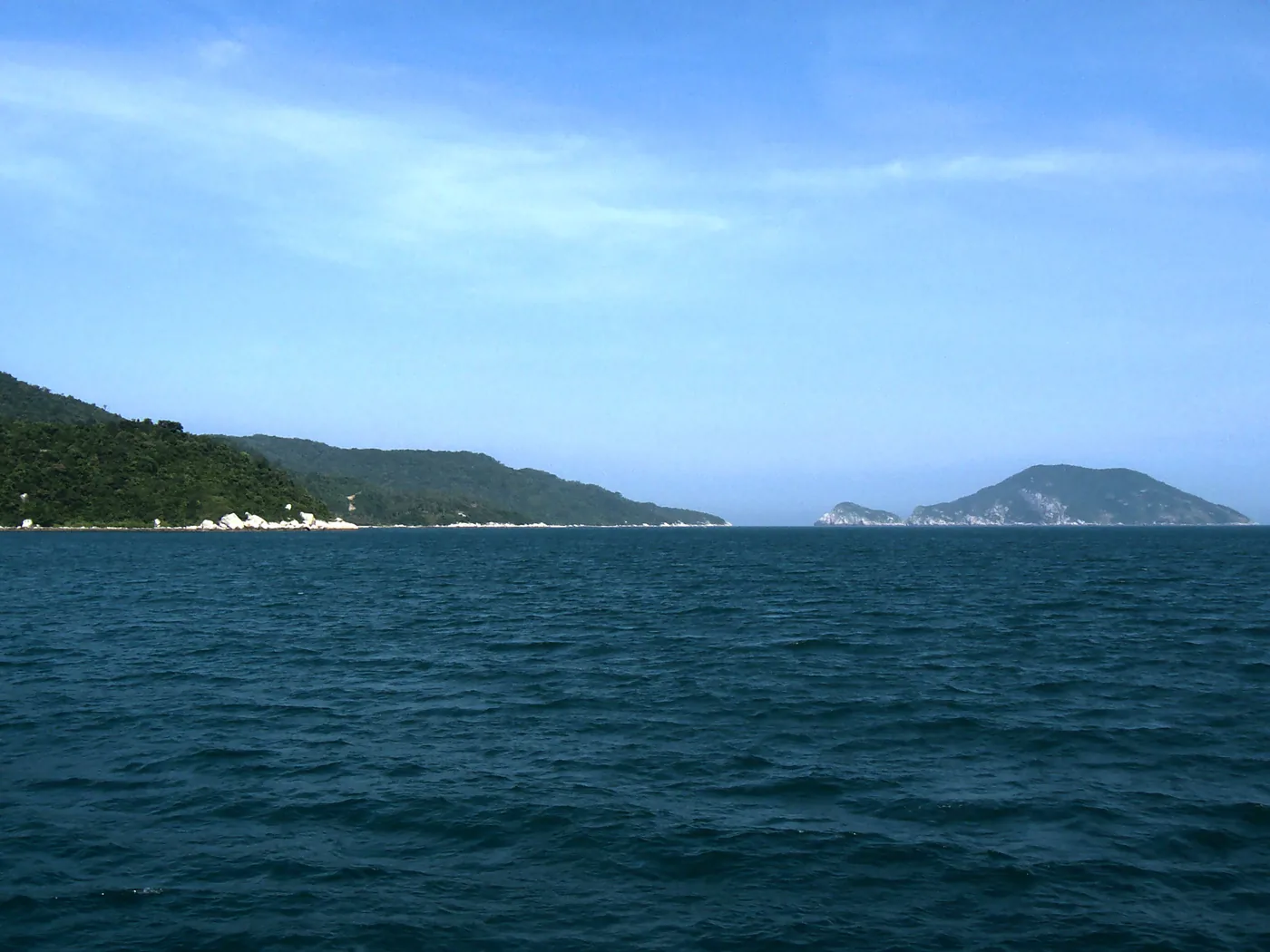
The beaches the boats use are sand. Much of the coast between them is not: the seaward faces of the island are white boulder running down into deep water, with the forest coming almost to the waterline. That is what you look at during the crossing, and it is why swimming happens at the handful of places with names rather than anywhere you fancy.
There is no water-sports concession on any of these beaches. Jet skis, parasailing and anything else with an engine are not operating, for reasons set out in the section on suspended activities, so a beach day here is swimming, a hammock, a book and lunch. The seasonal harvest zone at Bãi Ông and Bãi Xếp is also closed to fishing between 1 April and 31 August, which is why the water in front of you in July is empty of nets.
If beaches are the point of the trip
Be honest about what you are buying. You are paying 350,000 VND and giving up a whole day for water that is clearer and quieter than the mainland, but the mainland beaches are ten minutes from your hotel and free. Our guide to An Bàng and Cửa Đại covers the Hội An sand, and the best beaches in Đà Nẵng covers the long city strand to the north. Cù Lao Chàm earns the day out on the coral and the village, not on the sand alone.
8. Bãi Làng: the market, the 1758 pagoda and the old well
Chùa Hải Tạng Map was founded in 1758, in the nineteenth year of the Cảnh Hưng reign, and stands at the foot of the western ridge facing the island’s only rice field. It is a walk of ten to fifteen minutes from the landing at Bãi Làng, past the market and the old Chăm well that still supplies fresh water. The village hour is the part of the day the weather cannot take away.
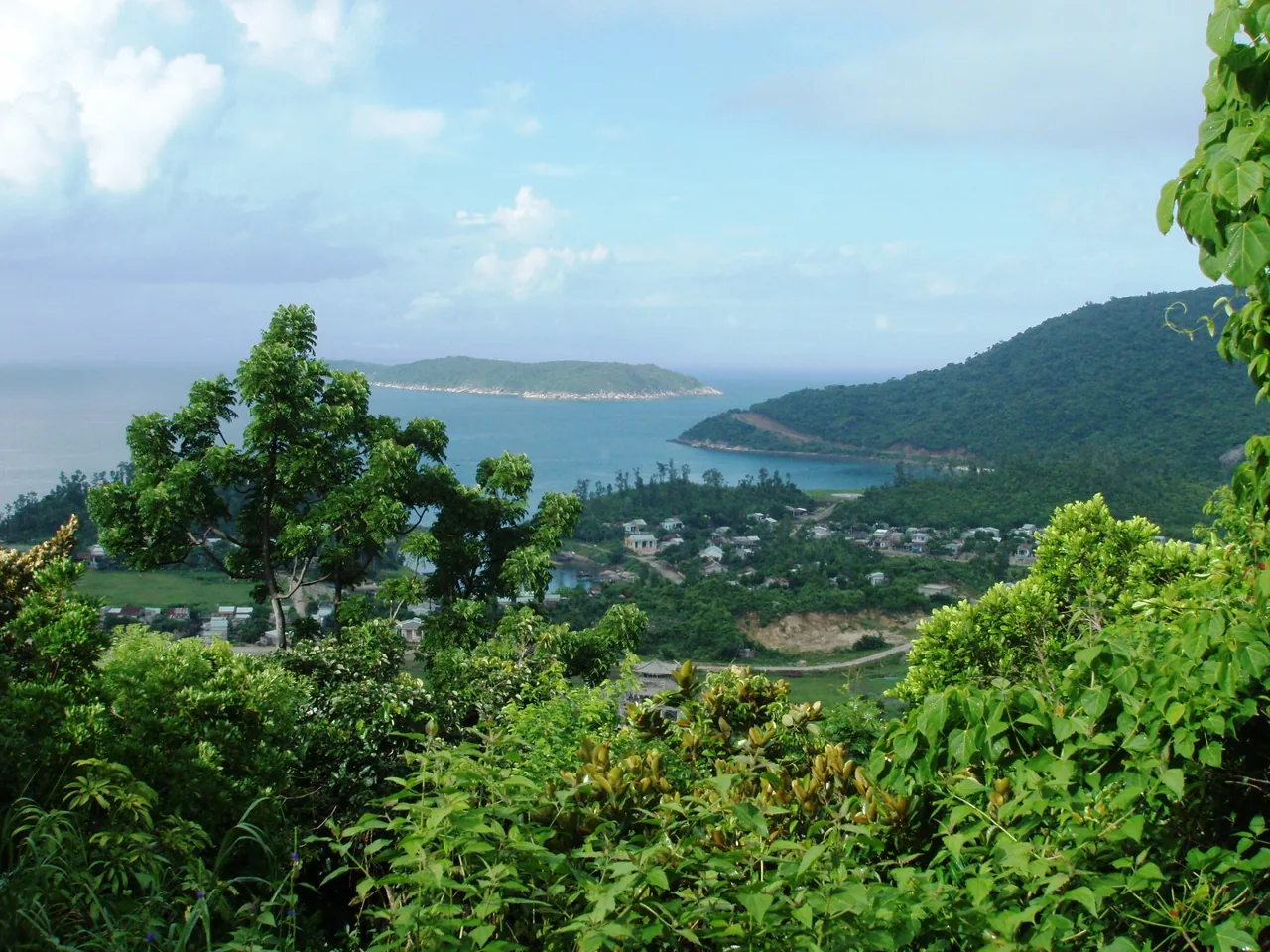
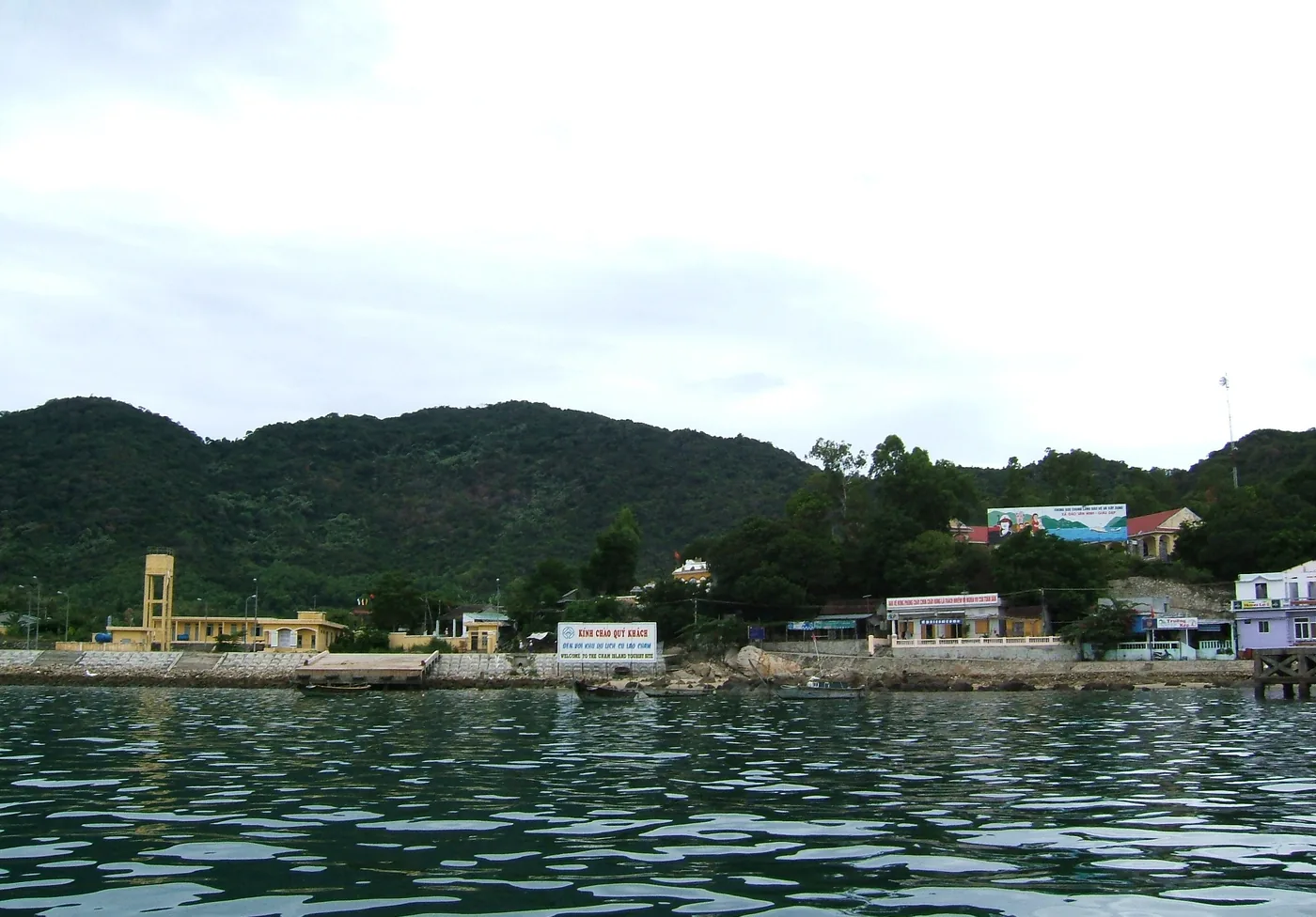
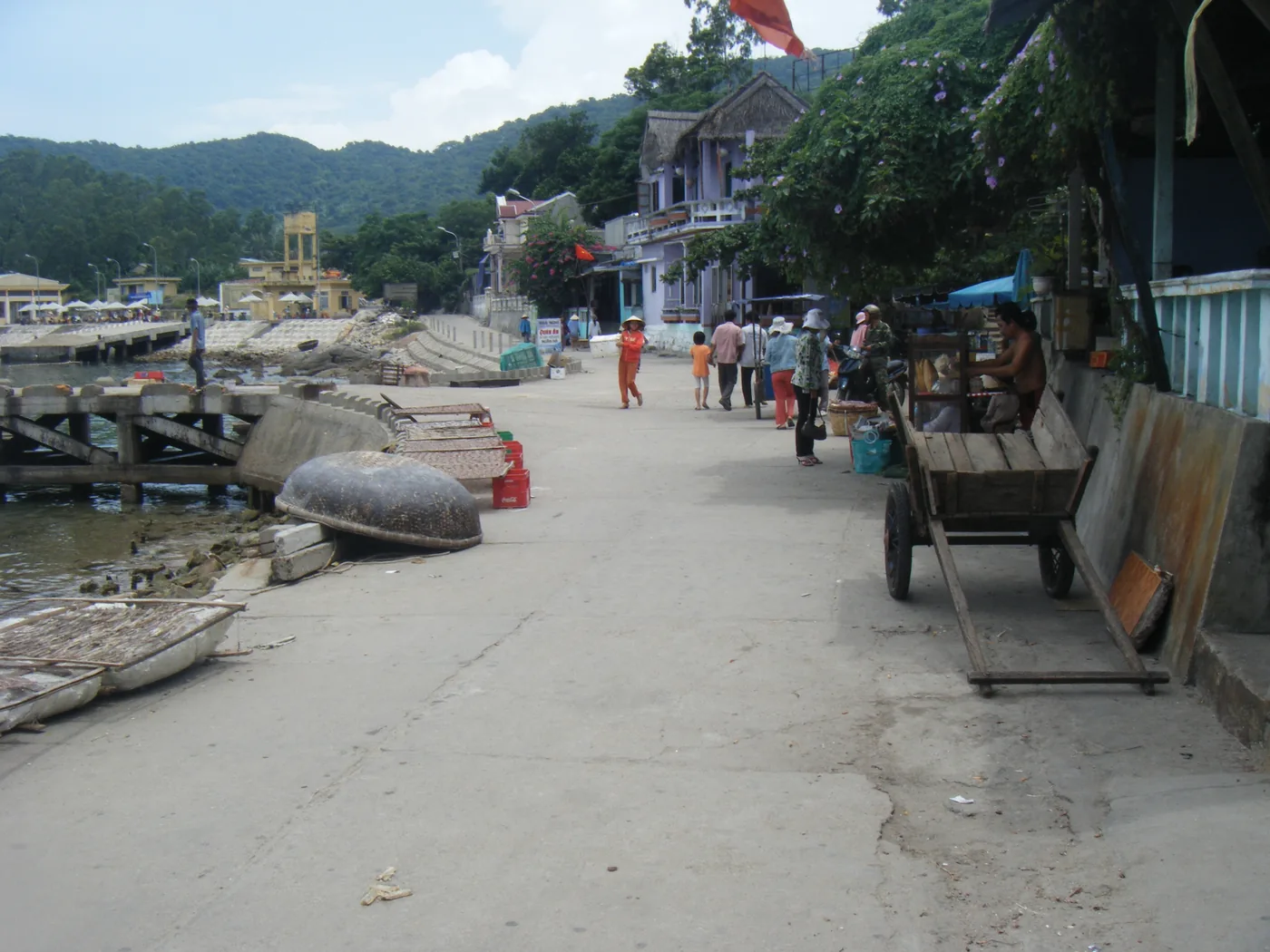
Bãi Làng is where the island lives. A wide concrete promenade runs along the water with houses and shopfronts behind it, a stepped seawall in front, and round basket boats turned upside down along the edge waiting for their owners. About 3,000 people live on the island in three places, and this is the largest of them.
The market
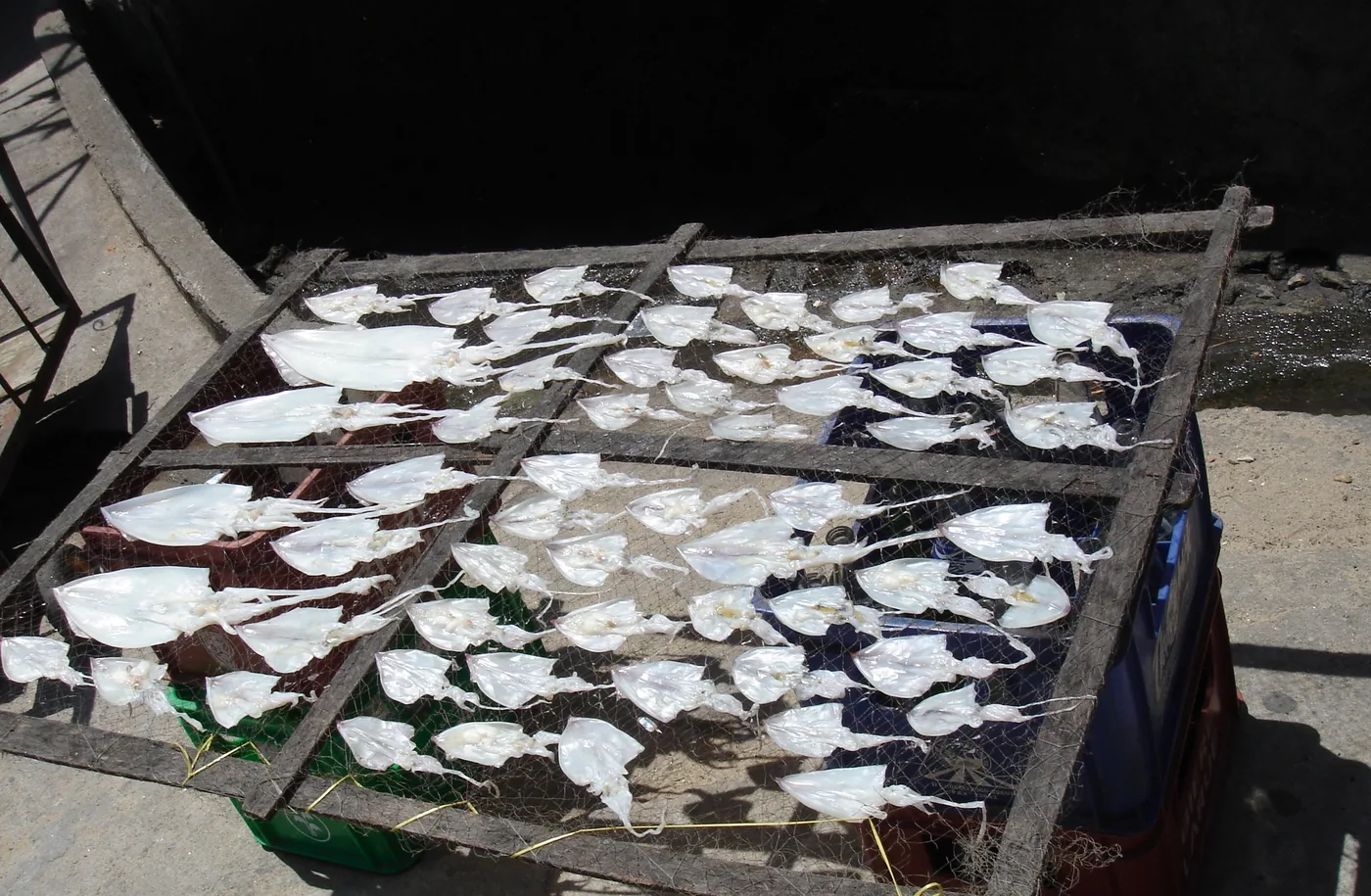
Chợ Tân Hiệp sits a few steps back from the water. It sells what the boats bring in and what the sun dries: fresh fish, squid, shellfish, sun-dried squid in bundles, and shell souvenirs for the people off the morning boats. It is a genuine working market at 07:00 and a half-tourist one by 10:00, which is when you will see it. Prices are cash, small notes, no cards.
The pagoda
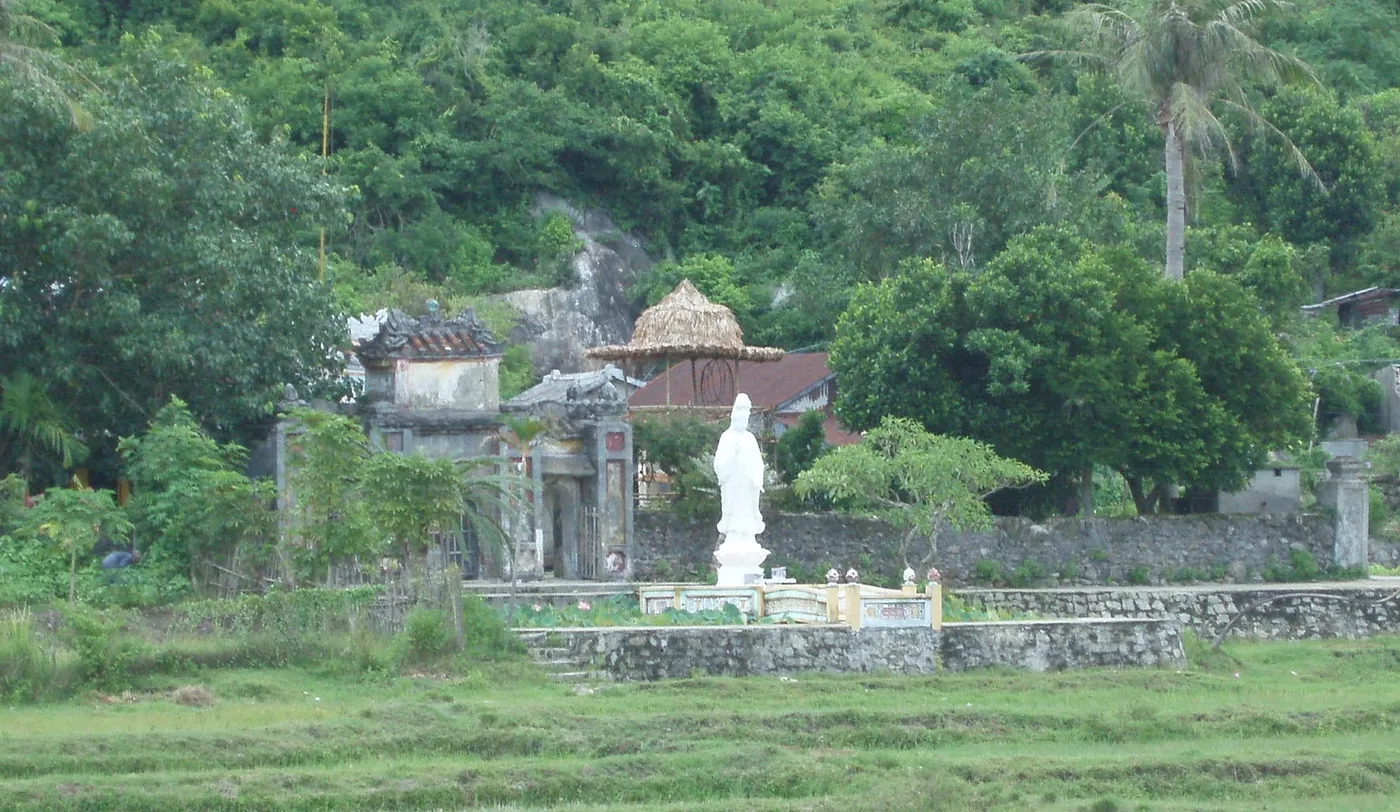
Hải Tạng is nearly 270 years old and was founded by the monk Hương Hải. Its position tells you why the island was settled where it was: it faces the one patch of flat ground on Hòn Lao that could be farmed, with the ridge at its back and the sea in front. The grounds are quiet, the gateway is weathered stone, and there is a standing Buddha on a plinth beside a small thatched pavilion. Cover your shoulders and knees, take your shoes off where the threshold tells you to, and keep the flash off.
The well
Giếng cổ Xóm Cấm Map, the old well, sits at a three-way junction of concrete lanes in the Xóm Cấm quarter, roughly two centuries old and still drawn from as a freshwater source. It is not a monument behind a rail. It is a well, in use, next to somebody’s house, which is the whole reason to walk up and look at it. The Chăm built wells like this along the coast wherever a fresh spring reached the sea, and the villages that grew around them lasted.
How to spend the hour
- Landing to market: five minutes on the flat.
- Market to the well: another five, uphill on lanes barely wide enough for a motorbike.
- Well to the pagoda: ten to fifteen minutes, and the last stretch is exposed.
- Back to the boat: allow twenty minutes and do not cut it fine.
Go early in the morning rather than after lunch, when there is no shade on the walk and the heat off the concrete is serious. If your operator offers the village stop as optional, take it. It is the one part of the day that is different from every other island in Vietnam, and it costs nothing. For what the rest of the mainland offers in the same vein, see things to do in Hội An, and read our etiquette and tipping guide before you photograph anyone at work.

9. What the tours advertise that is not running
Four things that appear in Cù Lao Chàm listings and photo galleries are currently suspended: the road route around the island with its viewpoints and the heritage banyan tree, basket-boat rides, boat trips and fishing runs offered by residents, and every beach water sport. These are not rumours from the pier. They are recorded as suspended in the city’s own 2026 paperwork on the island.
| What the listing shows | Status |
|---|---|
| The road route around the island, the check-in viewpoints and the heritage banyan tree | Suspended. The route has been out of use since a storm-triggered rockslide, and the remediation ordered afterwards had still not been carried out as of mid-2026 |
| Basket-boat rides and small-boat trips run by residents | Suspended |
| Fishing trips with resident boat owners | Suspended |
| Jet skis, parasailing and other beach water sports | Suspended. The underwater recreation zone that would license them has never been declared, and a deadline of 30 June 2026 to declare it was not met |
What that leaves
Plenty, but a narrower plenty than the photographs promise: the crossing, the beaches, swimming, snorkelling and diving, the village with its market, well and pagoda, lunch, and a homestay if you stay over. Officials list sightseeing, sea bathing and reef diving as the services operating, and those are exactly the four to five hours you have.
The gap matters most for the round-island route, because that is the thing English-language guides list first. It is the road with the sea views, the photo platforms and the old banyan tree, and it is the reason the island still appears in listings as a place you tour rather than a place you land on. Scooter hire is still offered at 120,000 to 150,000 VND a day, and the circuit it existed for is the one that is shut. If a two-wheeler is what you were after, our scooter rental guide covers the mainland, where the roads are open and the rental market is competitive.
The basket boats are worth a paragraph of their own, because the disappointment is predictable. You will see dozens of them upturned along the village front, and they photograph beautifully. They are working boats belonging to people who fish from them, and rides in them are not being sold here. The spinning basket-boat ride that fills the internet is a mainland product, in the water coconut palms outside Hội An, and it is covered in our guide to the Hội An basket boat rides.
Three questions to ask before you pay
- Which beach does the boat land at, and how long are you on it? The honest answer is one beach, ninety minutes to two hours.
- Is snorkelling included, and where does the boat stop? If the answer is vague, it is an add-on at 150,000 VND.
- What happens if the sea is closed that morning? Reschedule or refund, in writing, before you hand over cash.
None of this changes the price you are quoted, which is the part that stings. The 500,000 to 700,000 VND day tour costs the same as it did when the road route and the boat rides were part of it, because the boat, the fee and the lunch are what the number was mostly made of all along. The way to get value back is to spend the freed-up hour in the village instead, or to buy the snorkel stop and stay in the water, rather than to look for a substitute for the thing that has closed.
A listing that still advertises the banyan tree, a round-island ride or a jet ski is a listing that has not been rewritten in two years. That tells you something about the rest of it.
10. Eating on the island, and the rock crab you cannot order
Lunch is the fixed point of the day: a set seafood meal is about 150,000 VND a head, roughly US$6, and single dishes run 50,000 to 100,000 VND. The restaurants are concentrated at Bãi Làng and Bãi Ông, with 26 counted along the route. Cua đá, the rock crab the island is known for, is closed to harvest, sale, transport and the table from 1 August to 28 February.
| What | Price | Where |
|---|---|---|
| Set seafood lunch | About 150,000 VND for roughly a dozen dishes | Bãi Ông, Bãi Chồng, Bãi Làng or Bãi Hương, usually inside a tour price |
| Single dishes | 50,000 to 100,000 VND | The restaurants at Bãi Làng and Bãi Ông |
| Mực một nắng, one-sun squid | Market price, sold by weight | Chợ Tân Hiệp, and the racks you will see it drying on |
| Live seafood to be cooked for you | By weight, agreed before it goes on the fire | The market, the pier and Bãi Hương |
| Sea snails, sea cucumber, whole fish | Inside the set meal or by the dish | Anywhere with a kitchen |
Three restaurants come up again and again, and all three are the sort of place with plastic chairs and a tank: Dân Trí and Trần Khuê at Bãi Làng, Trường Kép at Bãi Ông. Nobody takes cards. If you are travelling independently, tell the kitchen what time your boat leaves before you order, because a whole steamed fish is not a fast dish and the boat does not wait.
The rock crab, and why it is not on your plate
Cua đá is a land crab that lives in the forest and comes down to the sea to breed, and it is the island’s most famous thing to eat. It is also under a legal closed season that has real teeth. Between 1 August and 28 February, harvesting, buying, transporting and eating them are all suspended. Harvest is permitted only from 1 March to 31 July, only for crabs with a carapace of 7 cm or more, and never inside the strict protection or ecological restoration zones. The rule lives in article 13 of the reserve regulation issued in May 2026 and is enforced by the reserve management board.
The reason is arithmetic. The population fell by 33% between 2021 and 2023, and around Hòn Dài by 72.4%. A crab-harvesting group formed in 2013 works to a labelling system: every crab caught is identified, measured, weighed and tagged the following morning, and anything undersized goes back to the forest. If somebody offers you one in September, you are being offered a broken rule rather than a local speciality, and the honest answer is no.
Wild lobster has its own closed window, 1 April to 30 May, on the same terms. And the small seasonal harvest zone in front of Bãi Ông and Bãi Xếp is closed to fishing from 1 April to 31 August, which is why the water off the beach looks so empty in high summer.
What you can eat freely is squid, fish, shellfish and sea snails, all of it landed that morning or the night before, and all of it better here than the same dish on the mainland for the simple reason that it has not travelled. For the town’s own repertoire, see what to eat in Hội An, and for the coast’s seafood culture in general, our Đà Nẵng seafood guide explains how ordering by weight works.
11. Staying the night: homestays, the different-day ticket and the ID check
Foreign visitors can stay over: no tourist permit is issued or required, and a homestay costs 200,000 to 500,000 VND a night, about US$8 to US$19. The mechanism is the boat ticket. You buy a different-day return, 400,000 to 550,000 VND instead of 350,000, and the homestay files your residence declaration once you have checked in.
Older English-language pages still claim the island is closed to foreigners overnight. It is not. What exists in Vietnamese law is a permit for maritime border areas that carves out designated tourism areas, which is what this is, so no individual paperwork is issued for a visitor here.
| Item | Number or rule |
|---|---|
| Boat ticket | 400,000 to 550,000 VND for a different-day return, in place of the 350,000 VND same-day fare |
| Homestay | 200,000 to 500,000 VND a night, from about 180,000 VND out of season and up to 800,000 VND for the larger rooms |
| Where they are | Bãi Làng and Bãi Hương Map |
| Identity | Passport or ID registered with the border post at the pier before boarding |
| Declaration | Filed electronically by the accommodation as soon as a foreign guest arrives, a requirement since 24 July 2026 |
| Food | Dinner and breakfast at the same 50,000 to 100,000 VND a dish |
| Camping | Needs clearance from the reserve management board. Do not turn up with a tent and assume |
| Money | Cash. There is no ATM and no bank |
What the night is actually like
Quiet to the point of being the reason you came, or the reason you should not. The last day boats leave in the early afternoon, and after that the beaches belong to about 3,000 residents and whoever booked a room. There is no bar strip, no night market and no evening economy to speak of. Dinner is at a homestay or a village restaurant, and then it is dark.
Bring the passport itself rather than a photograph of it, because two separate checks want the document: the border post at the pier on the way out, and the homestay on arrival. Bring cash for the full stay, including the boat back, because there is nowhere on the island to draw more.
One risk that comes with the room. If a sea ban lands while you are out there, you stay until it lifts, and that is not theoretical: about 300 people learned it on 16 and 17 July 2026. An overnight stay in September or October is a bet with real odds attached.
Island homestays are not the kind of stock the booking platforms carry well, and the handful that are listed fill on summer weekends. What you can lock in from home is the mainland end, which is also what you want on the night before an 08:00 boat.
If you would rather sleep in town and treat the island as a day out, which is what most people do, our guide to where to stay in Hội An breaks the town down by area, including how far each one is from this pier.
12. The plastic-free island: what it actually means at the gate
Cù Lao Chàm stopped plastic bags in May 2009, the first place in Vietnam to do it, and the practical effect on a visitor is that there is nowhere out there to buy one. At the harbour you swipe a card at the ticket gate, staff ask about bags before boarding, and a plastic bag is exchanged for a paper one free of charge. Luggage is not searched.
The campaign began on 23 May 2009 and it began in the market, not at the pier. More than 600 households signed up, each was given two plastic shopping baskets to carry produce in, and anyone arriving at the market with a plastic bag was turned away at the entrance. That is an unusually blunt piece of behaviour change, and seventeen years later it has held on the island itself, where residents of Bãi Hương and Bãi Ông still do their shopping without them.
| Year | What was added |
|---|---|
| 2009 | Plastic bags. Baskets handed out to households, and the market as the enforcement point |
| 2018 | Plastic straws, launched on 26 May at the ninth anniversary of the UNESCO listing, with 18 local businesses signing up |
| 2019 | Single-use plastics in general, including food and drink containers |
| 2026 | Carry your waste back to shore. Launched on 2 June after a pilot from May to December 2025, running to 2030 |
What happens to you at Cửa Đại
Less than the internet suggests. There is a card swipe at the ticket gate, announcements over the loudspeaker asking passengers to leave plastic bottles and bags on the mainland, staff standing at the bow of the boat with the same message, and a free swap for anything non-biodegradable you are carrying. There is no bag inspection and no penalty for a visitor. The rules that carry consequences have always been pointed at island shops and market traders, not at somebody stepping off a boat with a supermarket bag, and the current programme is run by persuasion.
Cửa Đại is the strictest plastic-control point anywhere in Hội An, and it works by signage, habit and a free swap rather than by searches.
The problem the island actually has
Not bags. Volume. Cù Lao Chàm generates three to four tonnes of waste a day and its landfill is overloaded with nowhere good for the material to go, and a share of that waste arrives from the mainland by boat with the visitors. That is the reason the 2026 phase of the campaign is not another ban but a request: take what you brought back with you. Collection teams now operate in all three settlements and each fishing boat doubles as a collection point, with a target of cutting waste, damaged fishing gear and floating plastic in the tourism and fishing zones by 70 to 80%.
Nationally the ground is moving the same way, with a rule from 1 January 2026 ending production and import of thin non-biodegradable bags and film, so the island is early rather than eccentric.
What to bring, and what to take home
- A cloth bag. Not because you will be fined without one, but because there is genuinely nowhere to buy a bag on the island.
- A refillable bottle. Bottles are not banned; the ask is that they leave with you.
- Room in your daypack for the rubbish you generate, including anything the boat hands you.
Our Đà Nẵng and Hội An packing list covers the rest of the day bag, and the two items above are the ones people forget on the morning they most need them.
13. Tour or on your own, and how the island compares with the other day trips
A booked tour at 500,000 to 700,000 VND, about US$19 to US$27, is not the expensive option. Buying the same day yourself comes to roughly 670,000 to 780,000 VND once the boat, the pier surcharge, lunch and snorkelling are in. What independence buys here is control of the clock, not a saving.
| Line | On a tour | On your own |
|---|---|---|
| Return crossing | Included | 350,000 VND |
| Pier and environment surcharge | Included | 20,000 to 30,000 VND |
| Island fee | Included | Inside the boat ticket |
| Lunch | Included | About 150,000 VND |
| Snorkelling | Usually included | 150,000 to 250,000 VND |
| A guide, and someone to argue with the timetable | Yes | No |
| Day total | 500,000 to 700,000 VND | About 670,000 to 780,000 VND |
Go independent if you want the village rather than the snorkel stop, if you are staying the night, or if you would rather not be moved around in a group. Take the tour if you want the reef, because the stop needs a boat you will not otherwise have, and because someone else then owns the problem when the sea closes. If you are based in the city rather than the town, budget packages from Đà Nẵng at 440,000 to 560,000 VND undercut everything, road transfer included.
How it stacks up against the other day trips
| Day trip | Can the weather cancel it | What the day is | Suits |
|---|---|---|---|
| Cù Lao Chàm | Yes, outright. Force 5 wind stops every boat | A 20-minute crossing, one beach, a reef stop and a village | Anyone who wants sea and coral, with a spare day in reserve |
| Mỹ Sơn | No. Rain makes it uncomfortable rather than impossible | Brick Chăm temple towers in a valley, best at opening time | History, and an early start followed by a free afternoon |
| Huế | No, but the mountain pass on the way is slow in bad weather | A long road day for the citadel and the royal tombs | People who want the imperial half of central Vietnam |
| Bà Nà Hills | Partly. Cloud can swallow the view without closing anything | A cable car, the Golden Bridge and a hilltop resort complex | Families, and anyone travelling with teenagers |
| Marble Mountains | Barely. Caves and steps work wet | A half day of caves, shrines and a viewpoint over the coast | A short trip that pairs with a beach afternoon |
| Sơn Trà peninsula | Partly. Rain shuts the views and the roads are exposed | A coastal drive to the Lady Buddha and the headland | Half a day on two wheels or in a car |
The honest ranking depends on one thing: whether you have a spare day. Cù Lao Chàm is the only trip on that list a wind reading can cancel outright, so it goes first in the week and the others fill the gap if it falls through. Where it wins is that nothing else on the coast puts you over living coral twenty minutes from a UNESCO old town. Where it loses is on wet days, on tight schedules and for anyone who gets sick on small boats. Our three and four-day itineraries show which combinations actually fit.
Whichever way you decide, a tour listing cannot overrule a sea ban, and the island is the one trip here that a morning phone call can cancel. Keep a dry-land day on the shelf.
14. Money, seasickness, packing, and who should leave the island off the list
Carry cash. There is no ATM and no bank on Cù Lao Chàm, and cards are effectively useless out there. Around 800,000 VND a head, about US$31, covers lunch, drinks, a snorkel session and something from the market on top of whatever you paid for the boat. Bring it in 50,000 and 100,000 notes: nobody at a beach restaurant wants to break a 500,000.
| What you pay for on the island | Typical amount |
|---|---|
| Set seafood lunch | About 150,000 VND |
| Single dishes and drinks | 50,000 to 100,000 VND each |
| Snorkelling bought on the spot | 150,000 to 250,000 VND |
| Market squid and souvenirs | By weight, cash |
| A homestay if you stay over | 200,000 to 500,000 VND |
| Cards and ATMs | Neither. Bank transfer or cash only |
The crossing, if you are a bad sailor
Fifteen to twenty minutes sounds like nothing, and on a flat morning it is. In a chop, a small fast boat slams rather than rolls, and the motion is sharp and repetitive. Take a tablet 30 to 60 minutes before boarding, which means before you leave your hotel rather than at the gate. Sit amidships and low, keep your eyes on the horizon or on the island ahead, and stay outside the cabin if there is a choice. Spray comes over the bow on the way out, so put phones, passports and cash in something waterproof.
What to bring
- Passport or ID card. The border post registers every passenger. A photo on your phone does not do it.
- Cash in small notes, enough for the whole day plus a margin.
- A cloth bag and a refillable bottle. There is nothing to buy a plastic one from.
- A dry bag or a sealable pouch for the crossing.
- Sun cover. There is no shade on the boat, none on the village walk and none in the water.
- Something on your feet you can swim in, because a good deal of this coast is boulder rather than sand.
- A towel and a change of clothes, since only Bãi Ông has freshwater showers.
- Motion-sickness tablets, taken early rather than hopefully.
Who should skip it
- Anyone flying out that evening or early the next morning. A sea ban can hold you overnight and there is no second route home.
- Anyone travelling between October and February who cannot move the date. The island is not closed, but most day boats are not running.
- Anyone who came for jet skis, parasailing or a ride around the island, all of which are suspended.
- Anyone who cannot pay cash, or who needs an ATM inside four hours.
- Anyone who is genuinely miserable on small boats. There is no slow, stable alternative for a day trip.
With children the maths is gentler than you would think: under-12-months travel free, ages one to eight pay half fare, and under-16s are exempt from the island fee. The day is still long, hot and short on shade, so the beach restaurants at Bãi Ông with showers and hammocks are the version that works. Our family guide to the coast has the rest.
A data connection is what tells you at 07:00 whether the boat is going. It will not solve the cash problem, and it will not be reliable in the middle of the channel or behind the ridge on the far side of the island.
Two more reads before you go: our Vietnam money and currency guide on notes, transfers and what to do when nowhere takes cards, and the eSIM comparison if you have not sorted data yet. If you are buying anything at the pier from someone who approached you first, our guide to the usual tourist scams is worth five minutes.