
Vietnam eSIM & SIM Card: Best Plans, Prices & How to Set It Up
eSIM or a local SIM? Which network, what it really costs, and how to be online the second you land — a no-nonsense 2026 guide.
| Easiest | Buy an eSIM before you fly (Airalo, Holafly, Klook, Trip.com). Scan a QR, land, done — no queue, no passport. |
|---|---|
| Cheapest | A local Viettel SIM from a city store: ~150,000 VND (US$6) for 5 GB/day for a month. Airport counters cost 2–3×. |
| Best network | Viettel — widest coverage, best in the countryside, mountains and islands. Vinaphone and Mobifone are fine in cities. |
| 5G? | Yes — live in every province since 2024–25 and included free on tourist plans. Vietnam ranks top-3 worldwide for 5G speed. |
| Don’t | Buy pre-activated SIMs from street sellers (they get switched off), and keep your home number active for bank OTP. |
1. eSIM or SIM card? The quick answer
2. Best network in Vietnam: Viettel, Vinaphone or Mobifone?
3. Is there 5G in Vietnam? Coverage & speed in 2026
4. Vietnam eSIM brands compared: Airalo, Yesim, Klook, Saily, Holafly
5. Local SIM at the airport: real 2026 packages & where to buy
6. eSIM vs local SIM: the real price picture
7. How much mobile data do you actually need?
8. Does your phone support eSIM?
9. How to set up an eSIM (iPhone & Android)
10. Buying a physical SIM & the passport law
11. Keep your home number: dual-SIM & bank OTP
12. Coverage where you’re headed: cities, coast & mountains
13. Stay connected for less — and avoid the common traps
14. Before you fly: your 2-minute connectivity checklist

1. eSIM or SIM card? The quick answer
🌙 Landing in Da Nang at 1am: which night to book and what the airport cannot do →
Get an eSIM if you want zero hassle; get a local physical SIM if you want the lowest price. Both give you fast, cheap data in Vietnam — the only real question is convenience versus a few dollars saved.
An eSIM is a digital SIM you buy online before you fly. You scan a QR code, and you’re connected the instant the plane lands — no airport queue, no passport, no fiddling with a tiny card. A local physical SIM is a plastic card you buy at an airport counter or phone shop; it’s the cheapest way to get a mountain of data, but you spend ten minutes at a counter and swap out your home SIM.
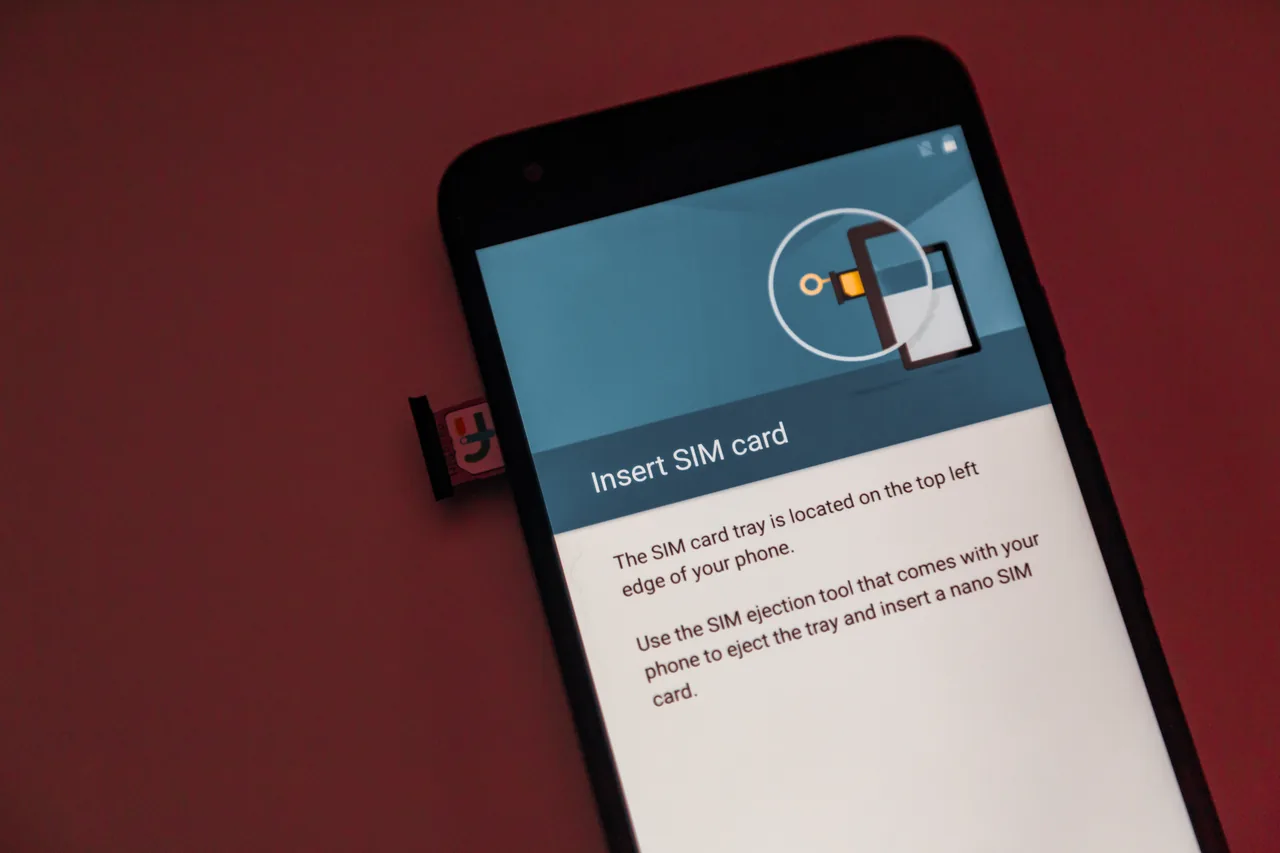
Here’s who should pick what:
| You are… | Best choice | Why |
|---|---|---|
| On a short trip (3–10 days), hate hassle | eSIM | Online before you land; nothing to swap |
| Budget or long-stay traveler | Local Viettel SIM | Most data per dollar, easy top-ups |
| Heading to Sapa, Ha Giang, remote islands | Viettel (SIM or eSIM) | Only Viettel reliably reaches the far corners |
| Heavy user / working online / streaming | Holafly / big-data eSIM or local SIM | Truly generous data, no mid-trip top-ups |
| Phone has no eSIM or is carrier-locked | Local physical SIM | Works in any unlocked phone |
2. Best network in Vietnam: Viettel, Vinaphone or Mobifone?
For travelers, Viettel is the safe default. Vietnam has three big carriers, and while all three are good in the cities, their coverage diverges the moment you leave town. The eSIM that names Viettel is the one on Klook.
| Carrier | Coverage | 5G | Best for |
|---|---|---|---|
| Viettel | Widest by far — cities, coast, mountains, islands | Launched first (Oct 2024) | Everyone, especially rural & island trips |
| Vinaphone (VNPT) | Excellent in cities, weaker rural | Often the fastest peak speeds | City-focused trips; good tourist SIM |
| Mobifone | Solid in cities, weakest outside them | Live since Mar 2025 | City breaks; big in-app data bundles |
Viettel is the country’s largest network (just over half of all subscribers) and was built out nationwide during its state-owned history, which is exactly why it wins in places other networks don’t reach. Smaller budget operators — Vietnamobile, iTel, Wintel, Local — are cheaper but patchy outside big cities, so skip them if you plan to travel around.
3. Is there 5G in Vietnam? Coverage & speed in 2026
Yes — 5G is live nationwide and it’s fast. Viettel switched on Vietnam’s first commercial 5G in October 2024, Vinaphone followed in December 2024, and Mobifone in March 2025. By 2026 the networks reach every province and roughly 90% of the population with tens of thousands of 5G sites.
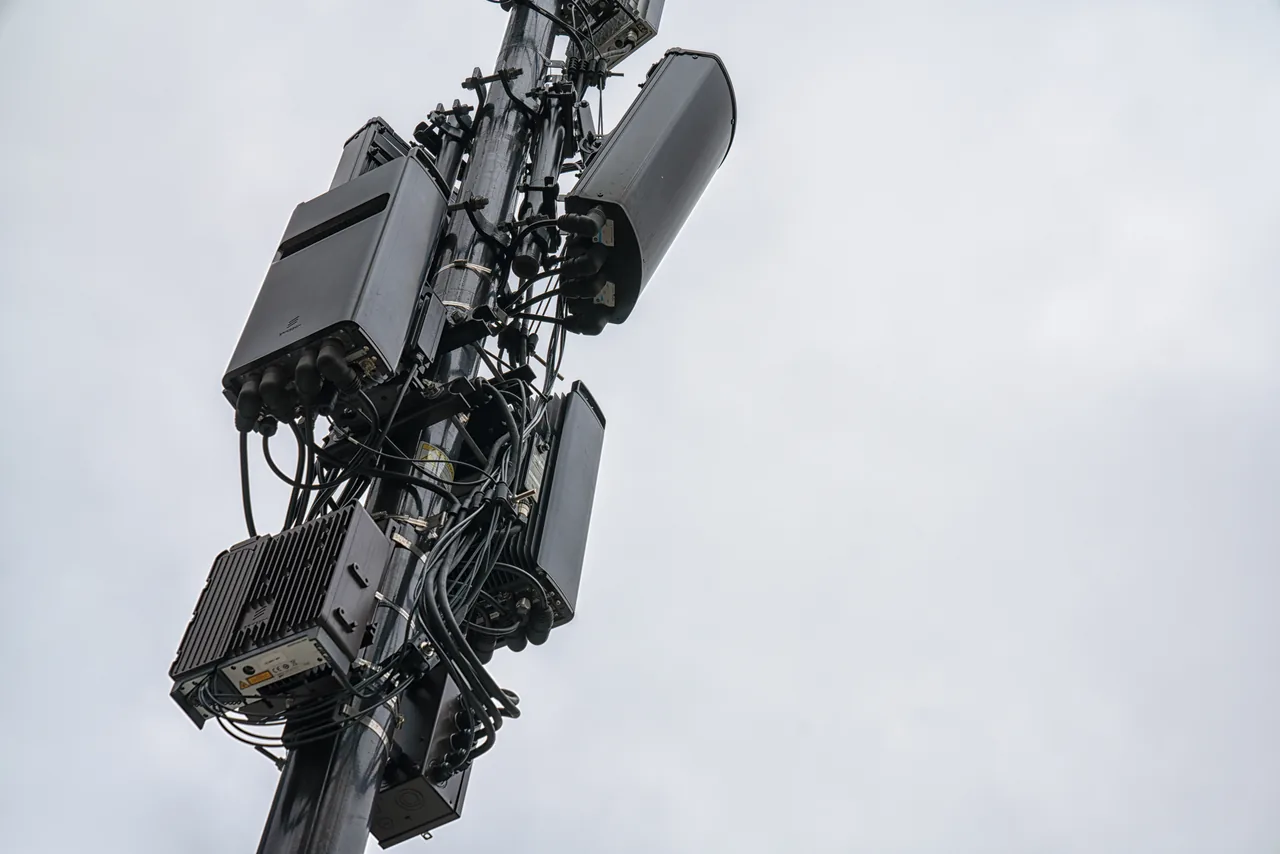
And it’s not just wide — it’s genuinely quick. In 2025 speed tests (Ookla), Vinaphone ranked #2 in the world for 5G speed and Viettel #3 for overall mobile speed, with peaks around 1 Gbps in the cities. For maps, video calls, uploads and streaming you’ll rarely want for speed.
- 5G is free on tourist plans — there’s no surcharge; you just need a 5G phone and a plan with data left.
- Reliable 5G today: Hanoi, Ho Chi Minh City, Da Nang, Hai Phong, Hue, Nha Trang, plus airports, tourist sites and industrial zones.
- 4G is everywhere else and plenty fast for everything a traveler does.
4. Vietnam eSIM brands compared: Airalo, Yesim, Klook, Saily, Holafly
The brands split into two groups: the ones that tell you which Vietnamese network you will be riding on, and the ones that sell a global data pack without saying. Around Hanoi and Ho Chi Minh City it hardly matters. On the Ha Giang loop, in Sapa or out on Con Dao, it is the difference between a working phone and a dead one.
| Brand | Network the brand states | Validity | Worth knowing |
|---|---|---|---|
| Klook eSIM | Viettel, named in the product | by the day | Tethering allowed. Dual-SIM, so your home number stays reachable. QR arrives by email within 24 hours and must be activated within 30 days |
| Airalo | Viettel / Vinaphone (5G) | 3–30 days | Top up inside the app instead of buying a second eSIM |
| Yesim | Not named — switches to whichever signal is strongest | 1–365 days | Data only. Whether tethering works depends on the network it lands on |
| Saily | Not disclosed | by the day | Ad and malware blocking is built in. An independent audit found the ad blocker cuts data use by up to 28.6% |
| Holafly | Vinaphone | by the day | Data only, no phone number. Unlimited-style plans, priced accordingly |
| Nomad | Not verified | by the day | A fixed-allowance alternative |
The table carries only what each brand states itself. Carrier deals change quietly and prices move with promotions, which is why there are no figures here. Check the live price on each brand’s link.
If you want a specific network, Klook is the one that names it. Viettel reaches furthest into the mountains and out to the islands, and Klook puts that in the product title. Airalo publishes Viettel and Vinaphone and lets you top up in the app, which suits a multi-country route. Yesim runs from one day to a full year, so it fits long stays. Saily is the odd one out in a useful way: the ad blocker exists to make your data last.
📲 See the Viettel eSIM on Klook →
Where a brand stays quiet about the network, you find out on arrival. For a city trip that is fine. For an itinerary with real dead zones, pick one that says it out loud.

Affiliate links: buying through them costs you nothing extra and may earn us a small commission.
Airalo — Best Overall (Value & Coverage)
Airalo is the eSIM we recommend for most Vietnam travellers. It’s the world’s biggest travel-eSIM brand, and its Vietnam plans run on Viettel + Vinaphone — the country’s strongest networks — so you get reliable data in the cities and out in the countryside, where cheaper eSIMs often drop out.
- Plans (typical): 1GB/7 days ≈ $4.50; 5GB/30 days ≈ $11.50; 10GB/30 days ≈ $20; 20GB/30 days ≈ $30.50 (about $1.45/GB at the 20GB tier — excellent value); bigger 50GB and regional Asia plans too.
- Why it wins: best-in-class coverage (Viettel), cheap per-GB pricing, a polished app, instant delivery, and the most reviews/track record of any provider.
- Watch-outs: data-only (no number), and it’s fixed-GB rather than unlimited — pick a slightly bigger plan if you stream.
Best for: almost everyone — first-timers, value-seekers, and anyone heading beyond the cities.
📲 Check Airalo plans & prices →
Holafly — Best for Unlimited Data
If you’d rather never think about data again — streaming, video calls, hotspotting your laptop — Holafly’s unlimited plan is the comfortable choice. You pay more, but you get genuinely unlimited data on your phone.
- Plans (typical): unlimited data from about $29.90 for 7 days, with options from 1 to 90 days.
- Why pick it: true unlimited data (no counting GB), simple, and a strong brand — especially popular with Spanish-speaking and heavy-use travellers.
- Watch-outs: noticeably pricier than Airalo, data-only (no number), and hotspot/tethering is capped at about 1GB/day on standard plans (Holafly’s newer monthly plans remove that cap but cost more).
Best for: heavy data users, streamers, and anyone who hates running out — if budget is secondary to convenience.
Saily & Nomad — Security and a Free Trial
Two strong alternatives worth knowing:
Saily — built by the team behind NordVPN, so it comes with ad and malware blocking baked in. Plans are cheap (from about $3.99 for 1GB/7 days, up to an unlimited month around $71.99). Best for: privacy-minded travellers who’d like an ad blocker that stretches their data.
📲 Check Saily plans & prices →
Nomad — a polished, user-friendly app with local, regional and global plans you can size to your needs. Its standout feature is a free trial in Vietnam, so you can test the connection before paying. Best for: anyone who wants to try an eSIM risk-free first, or who likes flexible plan sizes.
Yesim & Other Options
Yesim is a flexible global eSIM with both pay-as-you-go and fixed packages, handy if Vietnam is one stop on a multi-country trip — you can reuse it elsewhere. It’s also a popular pick with Russian-speaking travellers.
📲 Check Yesim plans & prices →
Other names you’ll see — aloSIM, Ubigi, GigSky — are fine but generally don’t beat the providers above on price or Vietnam coverage. When in doubt, the safe choice is Airalo.
5. Local SIM at the airport: real 2026 packages & where to buy
Prefer a physical card? You’ll get the most data for your money — just know the prices before you walk up, because airport counters mark them up.
Viettel (the network to get) sells data packages like these — the counter loads one onto a fresh SIM (there’s a small SIM fee on top):
| Package | Data | Validity | Price |
|---|---|---|---|
| 5G80T | 5 GB/day | 15 days | ≈ 80,000 VND (US$3) |
| 5G150T | 5 GB/day | 30 days | ≈ 150,000 VND (US$6) |
| 5G180H (with calls) | 5 GB/day + minutes | 30 days | ≈ 180,000 VND (US$7) |
Vinaphone’s airport “Tourist SIM” (199,000 VND / ~US$8) bundles a local number and international minutes but only 1 GB/day for 15 days. Mobifone’s “Hi Vietnam” app packs advertise huge data (50–250 GB) and a free first 24 hours.
Where the counters are: Noi Bai (Hanoi) T2 arrivals after customs; Tan Son Nhat (HCMC) T2 (desks before and after immigration); Da Nang ground floor after customs; Cam Ranh (Nha Trang) near international arrivals. Landing in Da Nang, Ho Chi Minh City or Hanoi? Our city guides cover the airport walk-through too.
6. eSIM vs local SIM: the real price picture
Put side by side, the trade-off is small — a few dollars for a lot of convenience:
| eSIM (Airalo/Klook) | Local Viettel SIM | |
|---|---|---|
| Typical cost | ~$11 for 5 GB/30d, ~$18 for 10 GB | ~$6 for 5 GB/day/30d (city price) |
| Data amount | Fixed bucket (or capped “unlimited”) | Huge — 5 GB per day |
| Setup | QR scan at home, on before you land | 10 min at a counter, passport, SIM swap |
| Passport needed? | No | Yes (by law) |
| Keeps your number? | Yes (home SIM stays in) | Only if your phone is dual-SIM |
In plain terms: the local SIM wins on raw value (far more data for slightly less), while the eSIM wins on convenience (connected on landing, number kept, nothing to swap). Neither is “wrong” — pick the one that matches how you travel.
7. How much mobile data do you actually need?
Most travelers massively overbuy. Here’s what everyday use really costs:
| Activity | Rough data use |
|---|---|
| Google Maps navigation | ~3–5 MB per hour |
| Grab ride / food order | a few MB each |
| Messaging (text) | ~1–5 MB a day |
| Social scrolling | ~100–150 MB per hour |
| Video / Reels / streaming | ~1–3 GB per hour (the big one) |
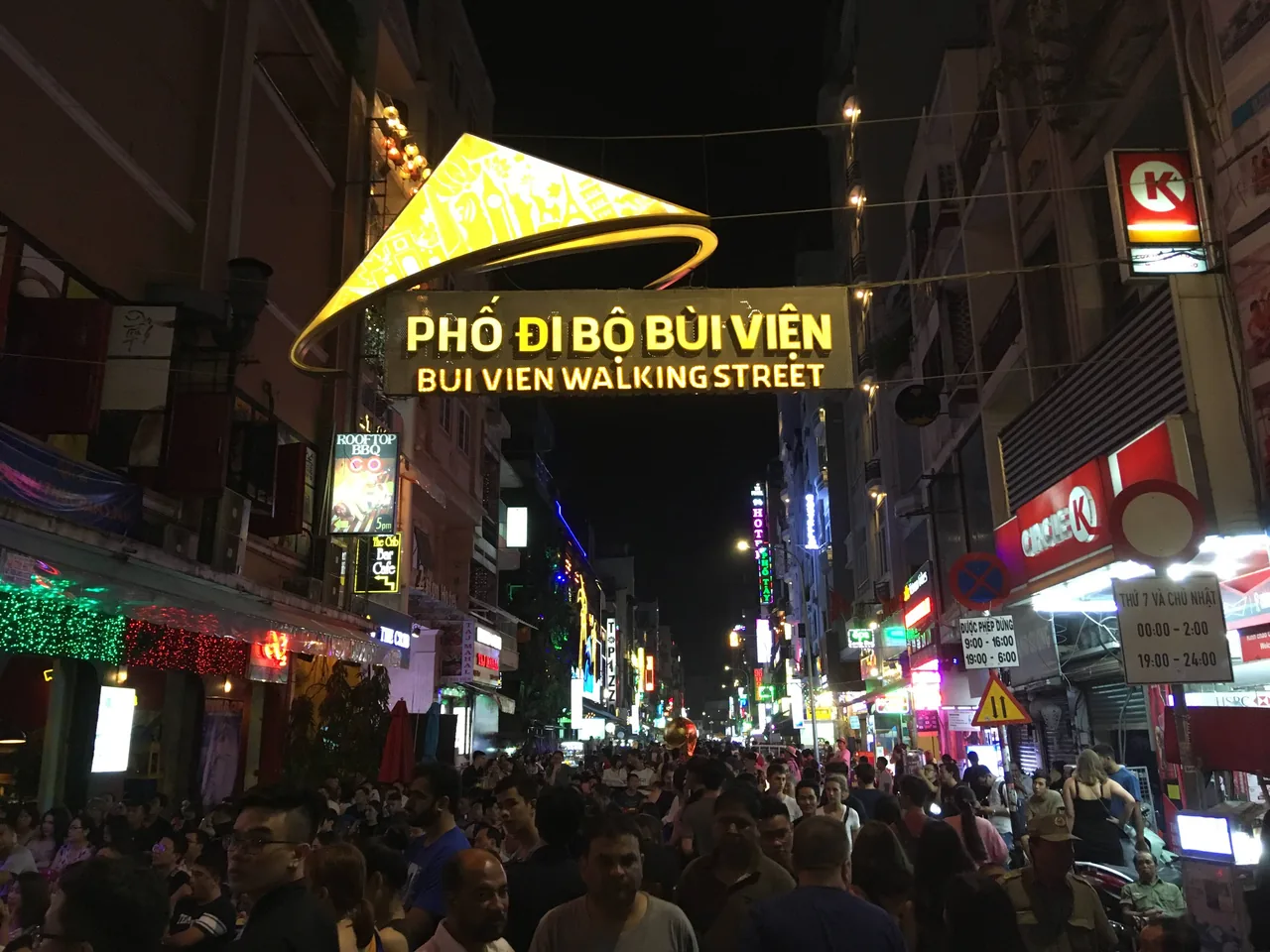
Put together, a light user burns ~0.5 GB a day and a whole week trip often lands around 3.5–7 GB total. That’s why a “5 GB/day” plan is overkill for most people — but a bargain if you stream. Watch video and do backups on your hotel’s free Wi-Fi (it’s excellent across Vietnam) and even a modest plan lasts.
8. Does your phone support eSIM?
An eSIM needs an eSIM-capable, carrier-unlocked phone. Model names are a good guide, but the only sure test is to dial *#06# — if a 32-digit EID appears, your phone has eSIM hardware.
🍎 iPhone
iPhone XS, XR, SE (2020) and everything newer. Note: US iPhone 14 and later are eSIM-only (no card tray), and iPhones bought in mainland China/Hong Kong usually have no eSIM.
🤖 Google Pixel
Pixel 3 and newer. A few Hong Kong / early-Asia Pixel units are the exception — check with *#06#.
📱 Samsung Galaxy
Galaxy S20 and newer, Note 20, all Z Fold/Flip. Most budget A-series don’t have eSIM, so check with *#06# if you’re unsure.
9. How to set up an eSIM (iPhone & Android)
The golden rule: install it on Wi-Fi before you fly, and it activates automatically when it sees a Vietnamese network on arrival.
On iPhone:
- Buy in the provider’s app (Airalo, Holafly…) and get your QR code.
- Settings → Cellular → Add eSIM → Use QR Code → scan it.
- Label the new line “Vietnam”; keep your home line as primary for calls/texts.
- Set Cellular Data to the Vietnam eSIM, and turn Data Roaming ON for that line.
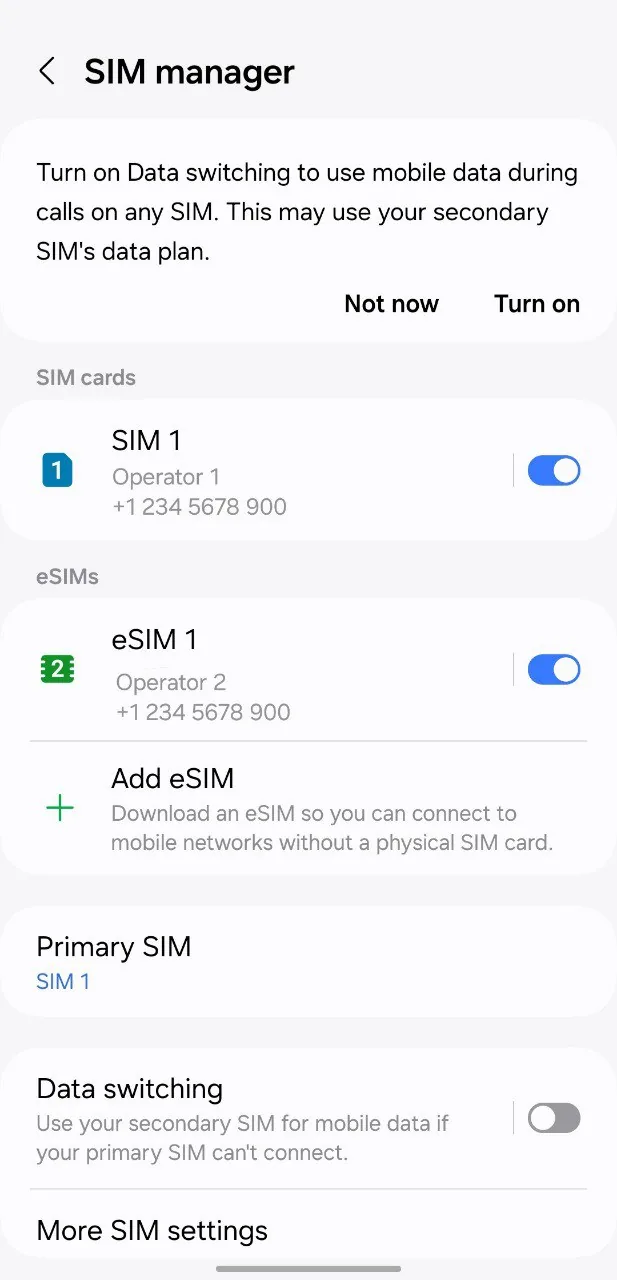
On Android (Samsung/Pixel):
- Settings → Connections / Network → SIM manager → Add eSIM → scan the QR.
- Set Mobile data to the Vietnam eSIM; keep calls/SMS on your home SIM.
- Turn Data Roaming ON for the eSIM line (leave it OFF for your home SIM).
10. Buying a physical SIM & the passport law
Getting a local SIM is quick, but Vietnam registers every SIM by law, so there’s one requirement: your passport.
- Bring your original passport (not a photocopy). Staff scan it and register the SIM to you on the national database — a legal requirement since 2018. It takes a few minutes.
- The counter staff insert the SIM, install your data plan and test it before you leave — nothing to configure yourself.
- Keep your home SIM safe in the little card holder so you don’t lose it.
- You can hold up to 3 prepaid SIMs per carrier — a non-issue for a normal trip.
11. Keep your home number: dual-SIM & bank OTP
The classic traveler mistake is losing access to bank one-time-passwords (OTPs) because they text your home number. You don’t have to choose between your number and cheap data — use both.
- With an eSIM: your physical home SIM stays in the phone. Leave it active for calls and SMS, but turn its data roaming OFF so you’re never charged — the eSIM does all the data.
- With a physical local SIM: if your phone is dual-SIM (two slots or SIM + eSIM), keep your home SIM in the second slot for OTPs. If it’s single-SIM, put your home SIM somewhere safe and check important messages on hotel Wi-Fi.
- Before you travel, make sure your bank’s app works over data (not just SMS), or set up an authenticator app so you’re not locked out.
12. Coverage where you’re headed: cities, coast & mountains
In the cities you’ll have flawless 4G/5G on any network. It’s the trips beyond town where the carrier choice matters — and where Viettel pulls ahead. For the Ha Giang loop, Sapa or Con Dao, the Klook eSIM that names Viettel is the safer buy.

- Cities & resorts (Ho Chi Minh City, Hanoi, Da Nang, Hoi An, Nha Trang, Hue): excellent on all carriers, 5G widespread.
- Islands & beaches (Phu Quoc, Con Dao, Cat Ba): main towns and resorts are well covered; Viettel reaches the quieter roads best.
- Mountains & the far north (Sapa, the Ha Giang Loop, Phong Nha): Viettel is essentially non-negotiable — it’s the only network you can count on, and even then expect gaps in deep valleys and tunnels.
New to getting around here? Pair your data with our Grab & ride-app guide, and plan the trip with the complete Vietnam travel guide or the best time to visit.
13. Stay connected for less — and avoid the common traps
A few habits keep costs down and headaches away:
- Lean on free Wi-Fi. Nearly every hotel, café and restaurant in Vietnam has good free Wi-Fi — do your streaming, backups and app updates there and a modest data plan lasts the whole trip.
- Buy trip-sized upfront. It’s cheaper and calmer than topping up mid-trip. Local SIMs top up via the carrier app, e-wallets (MoMo/ZaloPay) or shop scratch cards; eSIMs top up in the provider app.
- Tethering is usually fine on local SIMs and major eSIMs, but some “unlimited” plans limit hotspot — check before you rely on it for a laptop.
- Don’t overbuy. Unless you stream, ~1 GB/day is plenty (see the usage table above).
- Live data is a safety tool. Working maps and Grab make you far less of a target for the classic taxi and street tourist scams.
Sorting the rest of the trip? Line up your visa / e-visa and money & payments next — those two plus connectivity are the whole “arrival admin” list.
14. Before you fly: your 2-minute connectivity checklist
Run through this and you’ll land online, on budget, and with your bank still reachable:
- ✅ Decide: eSIM (easy) or local SIM (cheapest)?
- ✅ Check your phone: dial
*#06#— got an EID? eSIM works. Phone unlocked? Physical SIM works. - ✅ Pick Viettel if you’ll travel beyond the cities.
- ✅ eSIM: buy it, install on home Wi-Fi, set data line + roaming ON for that line. Don’t delete it.
- ✅ Local SIM: pack your passport; buy at an official arrivals-hall counter or a city store.
- ✅ Keep your home number active for bank OTP (data roaming OFF on it).
- ✅ Download offline maps + translation for remote areas.