
Da Nang vs Phu Quoc: How to Pick the Right One
A city beach with the best day trips in Vietnam, or a switch-off resort island. Let the calendar decide.
| Best for | Da Nang: city + culture + food + day trips. Phu Quoc: clear water, island-hopping, resort downtime. |
|---|---|
| Best months | Da Nang ~Mar–Aug (peak swim May–Aug). Phu Quoc ~Nov–Apr (peak Dec–Mar). Roughly opposite. |
| Getting there | Da Nang (DAD): airport in the city, plus train and expressway. Phu Quoc (PQC): plane or boat only. |
| Beaches | Da Nang: long walkable city beach (My Khe), open-sea green water. Phu Quoc: clearer turquoise, several distinct beaches. |
| Visa | Phu Quoc has 30-day visa-free for everyone (conditions apply). Mainland = 45-day exemption for many, e-visa otherwise. |
| Cost (mid-range couple/day) | Da Nang ~$70–120 (approx. 1.7M–2.9M VND). Phu Quoc ~$90–150 (approx. 2.2M–3.6M VND). |
| Do both? | Yes, a ~1h30 direct flight links them. Treat it as a two-centre trip, ideally in the Mar–Apr overlap. |
1. The verdict, fast
2. Where they are and getting there
3. Visa: who actually needs one
4. The weather showdown: the real decider
5. Beaches, head to head
6. Things to do and attractions
7. When the weather turns: rainy-day plans
8. Food
9. Real Vietnam vs resort island
10. Cost, accommodation and getting around
11. Who each one is for
12. Can you do both?
13. Sample plans
14. Bottom line
🏝️ Read our complete Phu Quoc island guide →
🏨 Where to stay in Phu Quoc — the 5 best areas, by traveller →
1. The verdict, fast
🛥️ An Thoi island hopping: which port your boat leaves from, and what the fare leaves out →
🎡 VinWonders Phu Quoc: zone hours, show times and what the 950,000d ticket covers →
Neither Da Nang nor Phu Quoc is the “better” choice outright; they peak in opposite seasons, so the month you’re travelling usually decides for you. Da Nang is a real coastal city with a long beach and the best cluster of day trips and street food in Vietnam, at its best roughly March through August. Phu Quoc is a tropical resort island with clearer water, island-hopping and big theme parks, at its best roughly November through April. Pick the one whose good season lines up with your dates and you can’t really go wrong.
If you want the shortcut, ask yourself two questions. First, when are you going? The calendar is the headline decider here, because when one is sunny the other is often wet or choppy. Second, what kind of trip do you want? A city-culture-and-food trip with heritage day trips, or a fly-in, stay-put, switch-off beach holiday. Answer those two and the rest of this guide just confirms it.
| Choose Da Nang if… | Choose Phu Quoc if… |
|---|---|
| You’re travelling roughly Mar–Aug | You’re travelling roughly Nov–Apr (esp. Dec–Feb) |
| You love street food and Vietnamese coffee | You want turquoise water and snorkelling |
| You want culture and heritage day trips (Hoi An, Hue) | You want to fly in and not move much |
| It’s your first time in Vietnam and you want variety | It’s a honeymoon or a pure beach-resort reset |
| You’re on a budget and want cheap food everywhere | You want theme parks and a self-contained island |
Read on for the weather table that settles most of these arguments, plus honest takes on beaches, food, cost and who each place really suits. For the bigger picture, see our Vietnam travel planner and the Da Nang travel hub.
2. Where they are and getting there
Da Nang sits on the central mainland coast and Phu Quoc is a far-southwest island, about 1,100 km apart in completely different regions. They’re not interchangeable, and they’re definitely not a day trip from each other.
Da Nang: a working coastal city
Da Nang is a genuine city of around 1.2 million people on Vietnam’s central coast. The big convenience is the airport: Da Nang International Airport (DAD) is right in town, 5–10 minutes from the beach hotels, so you can land and be on a sun-lounger before lunch. You can also arrive by train on the scenic Reunification line or drive the North–South expressway. Crucially, Da Nang is the base for central Vietnam: Hoi An, Hue, Ba Na Hills and My Son are all within easy reach.
Phu Quoc: a self-contained island
Phu Quoc is Vietnam’s largest island, roughly 574 km² (about the size of Singapore), sitting in the Gulf of Thailand off the far southwest, only about 10 km from the coast of Cambodia. Phu Quoc International Airport (PQC) is in the south of the island, and you can only get there by plane or boat; there’s no train and no bridge. Everything you’ll do is on the island, and distances are real: it’s about 50 km north to south, so where you stay matters.
Flying between them is easy: direct Da Nang–Phu Quoc flights run about 1h30–1h45 (VietJet, Vietnam Airlines and Sun PhuQuoc Airways), though frequency shifts with the season, so book ahead in peak months.
3. Visa: who actually needs one
Phu Quoc offers 30-day visa-free entry to every nationality, the only place in Vietnam where that’s true; but whether it matters to you depends entirely on your passport. Here’s the honest version for a global audience.
The Phu Quoc rule comes with conditions. You must arrive into Phu Quoc directly from abroad by international flight or cruise. An international connection through a Vietnamese airport (Ho Chi Minh City or Hanoi) can still count, but only if you stay airside in the international transit zone and your bags are checked through to Phu Quoc. The moment you clear immigration onto the mainland, collect your bags, or fly on a separate domestic ticket, the exemption is void. You also need a passport valid for 6+ months and an onward ticket out of Vietnam, and the stay must be 30 days or less.
Now the part that decides whether any of this matters: mainland Vietnam has a separate 45-day visa exemption for many nationalities. That list includes the UK, France, Germany, Italy, Spain, the Nordics, South Korea, Japan, Russia, Belarus and a set of other EU states. If your country is on it, you already get longer, freer access to the whole country (including a domestic Da Nang→Phu Quoc hop), so the Phu Quoc 30-day rule barely matters to you.
The Phu Quoc perk is genuinely useful for travellers not on the 45-day list: the United States, Canada, Australia, India, Taiwan and Hong Kong, among others. For them, a direct trip to Phu Quoc can mean no visa paperwork at all, whereas a mainland trip would normally need an e-visa (up to 90 days; single entry $25 / multiple $50, approx. 600,000 / 1,200,000 VND). If you want longer than 45 days even as an exempt national, you’ll also use the e-visa. Full breakdown in our Vietnam visa guide.
4. The weather showdown: the real decider
Da Nang and Phu Quoc have roughly opposite seasons, which is why your travel month should pick the destination more than anything else. When Phu Quoc is at its sunny, glassy best in December and January, Da Nang’s beach is cool and choppy. When Da Nang is hot and flat-calm in June and July, Phu Quoc is sitting in its wet season.
Da Nang is dry and hot from March to August, with the best swimming May to August (calm clear sea, highs of 33–38°C in deep summer). September to December turns wet, with October and November the heaviest and a real risk of flooding, storms and rough seas. January and February are cooler and drier (around 20–24°C) but the sea is often too choppy for comfortable swimming.
Phu Quoc is dry November to April, with the sweet spot December to March (calm, clear, around 25–30°C). May to October is the wet season, wettest July to September, with heavy afternoon downpours (roughly 400 mm a month) and a rougher west-coast sea, though it’s also quieter and noticeably cheaper. April and October are decent shoulder months.
| Month | Da Nang | Phu Quoc | Better bet |
|---|---|---|---|
| Jan | Cool, drier, choppy sea | Dry, calm, clear: peak | Phu Quoc |
| Feb | Cool, drier, choppy sea | Dry, calm, clear: peak | Phu Quoc |
| Mar | Warming up, sea calming | Dry, calm, clear: peak | Either (overlap) |
| Apr | Hot, dry, good swimming | Dry but warming, good shoulder | Either (overlap) |
| May | Hot, dry, great swimming | Wet season begins | Da Nang |
| Jun | Hot, dry, flat sea: peak | Wet, humid, rain | Da Nang |
| Jul | Hot, dry, flat sea: peak | Wettest, rough west coast | Da Nang |
| Aug | Hot, dry, flat sea: peak | Wettest, rough west coast | Da Nang |
| Sep | Turning wet | Wet, heavy downpours | Neither great |
| Oct | Wettest, storm/flood risk | Shoulder, easing rain | Phu Quoc |
| Nov | Wet, storm risk, rough sea | Dry season begins | Phu Quoc |
| Dec | Cooler, choppy sea | Dry, calm, clear: peak | Phu Quoc |
The takeaway: March and April are the overlap where either works. Outside that window, let the calendar choose. For a deeper month-by-month read, see our best time to visit Da Nang.
5. Beaches, head to head
For sheer water looks, swimming and snorkelling, Phu Quoc wins in its dry season; for a beach you can stroll to from a real city with full infrastructure, Da Nang wins. Both are good. They’re just good at different things.
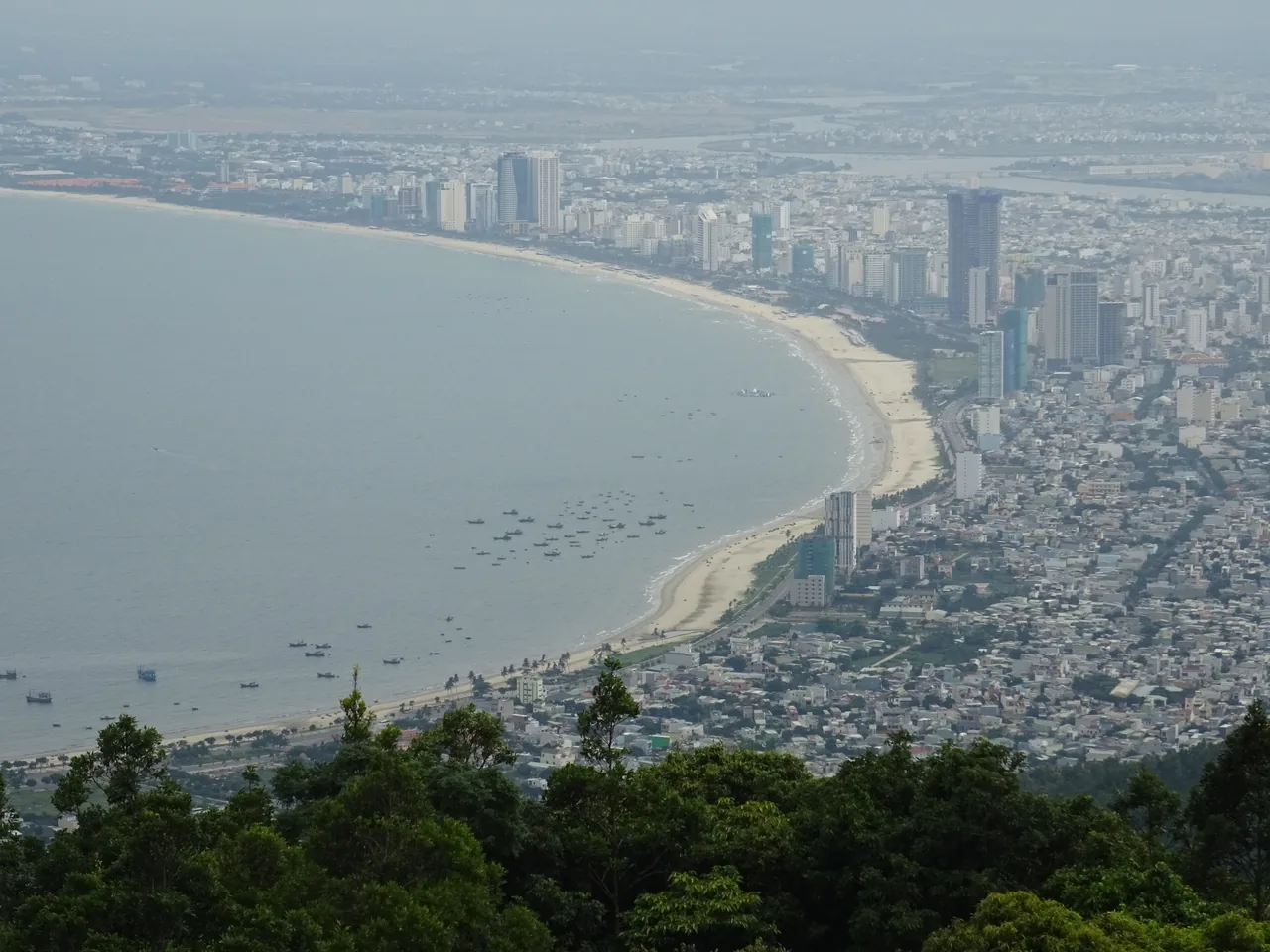
Da Nang’s headline beach is My Khe (Map), a long, wide city beach running roughly 10 km, with soft pale sand, lifeguards, a flag system, sun-loungers and full facilities, all walkable from the hotels. South of it you’ve got Non Nuoc by the Marble Mountains and My An. Be honest with yourself, though: this is open-sea water, so it’s greener and greyer than a postcard, and it can be rough from November to February. As a usable urban beach it’s excellent; as a turquoise fantasy it isn’t. More detail in our Da Nang beaches roundup.
Phu Quoc spreads its beaches around the island, each with its own character:
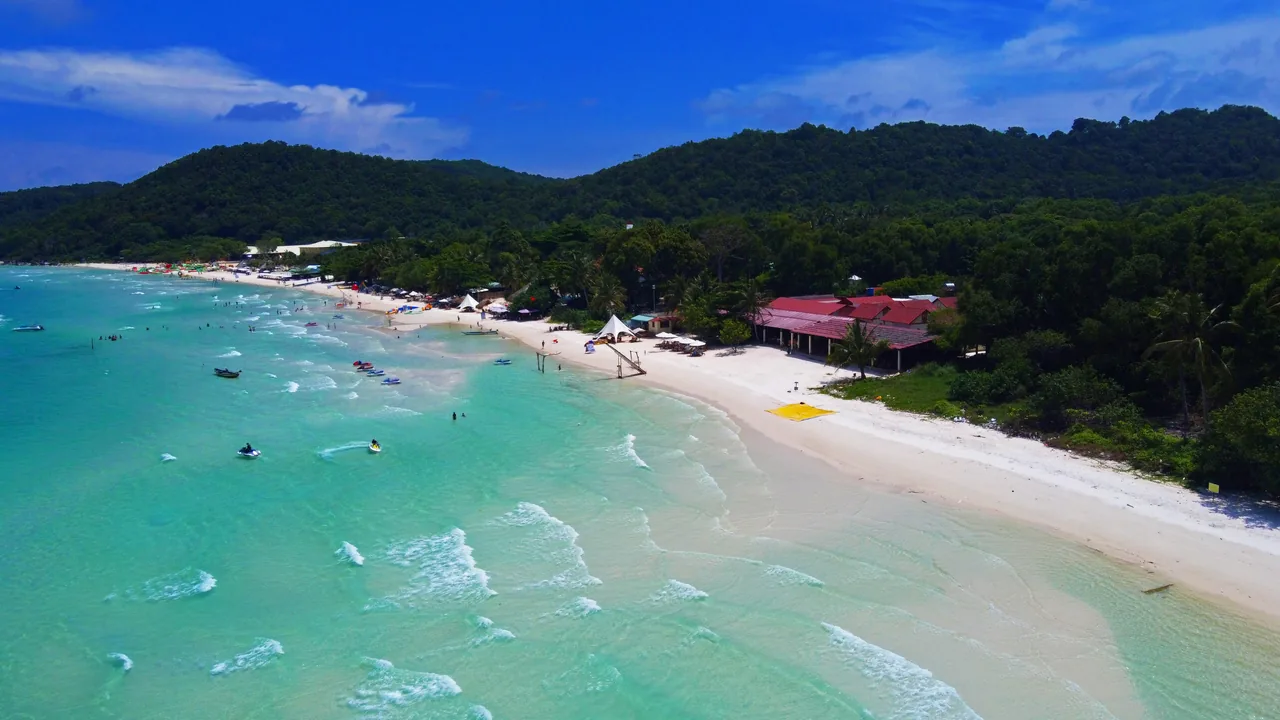
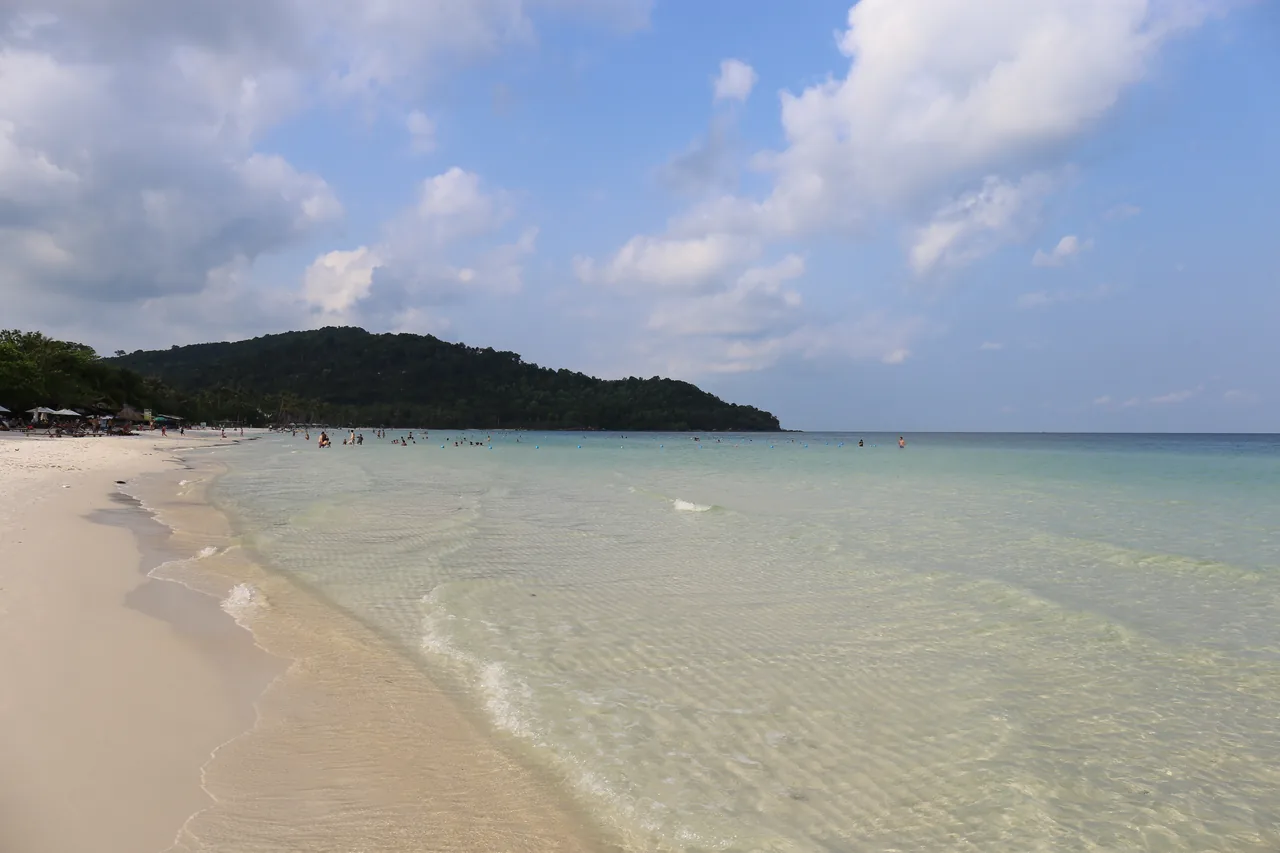
- Sao Beach (Bai Sao): the famous one in the southeast, with white sand, clear blue water and leaning palms.
- Khem Beach (Bai Khem): also southeast, turquoise and gorgeous, partly fronted by the JW Marriott.
- Long Beach (Bai Truong): a roughly 20 km west-coast sunset strip where most resorts and the Sunset Town end sit.
- Ong Lang: quieter and more local, on the northwest.
- Rach Vem (Starfish Beach): far north, shallow, dotted with real starfish, beside a floating fishing village.
- An Thoi archipelago: 18 islets off the south with the clearest water, coral and the best snorkelling and diving (visibility up to about 20 m in dry season).
| Da Nang (My Khe) | Phu Quoc (Sao / An Thoi) | |
|---|---|---|
| Water colour | Open-sea green/grey | Clear turquoise (dry season) |
| Walk from hotels | Yes, right there | Usually a drive away |
| Facilities | Full city infrastructure | Resort or beach-club based |
| Snorkelling | Limited | Excellent at An Thoi |
| Best season | May–Aug | Nov–Apr |
6. Things to do and attractions
This is the biggest difference between them: Da Nang hands you culture, heritage and nature from one base, while Phu Quoc gives you beaches, theme parks and island tours without ever leaving the island.
Da Nang: the day-trip superpower
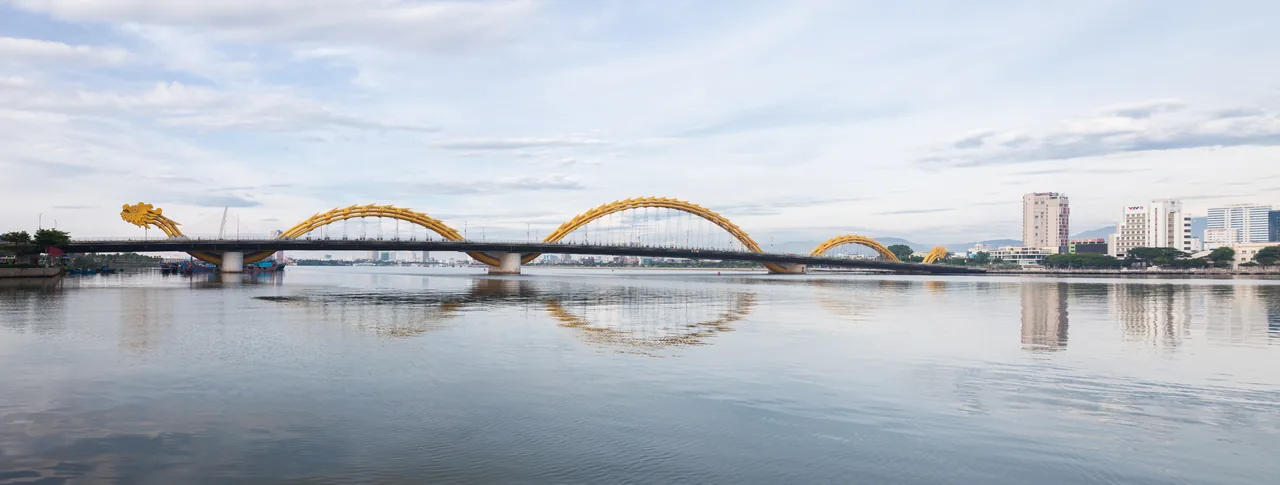
In and around the city you’ve got the Dragon Bridge (it breathes fire and sprays water on Saturday and Sunday around 9 pm), the Marble Mountains with their caves, pagodas and viewpoints (around 30,000–40,000 VND, roughly $1.20–1.60), the Son Tra peninsula and the 67 m seated Lady Buddha at Linh Ung Pagoda (free), plus Han Market, the Museum of Cham Sculpture and the My Khe beachfront. Want it organised?
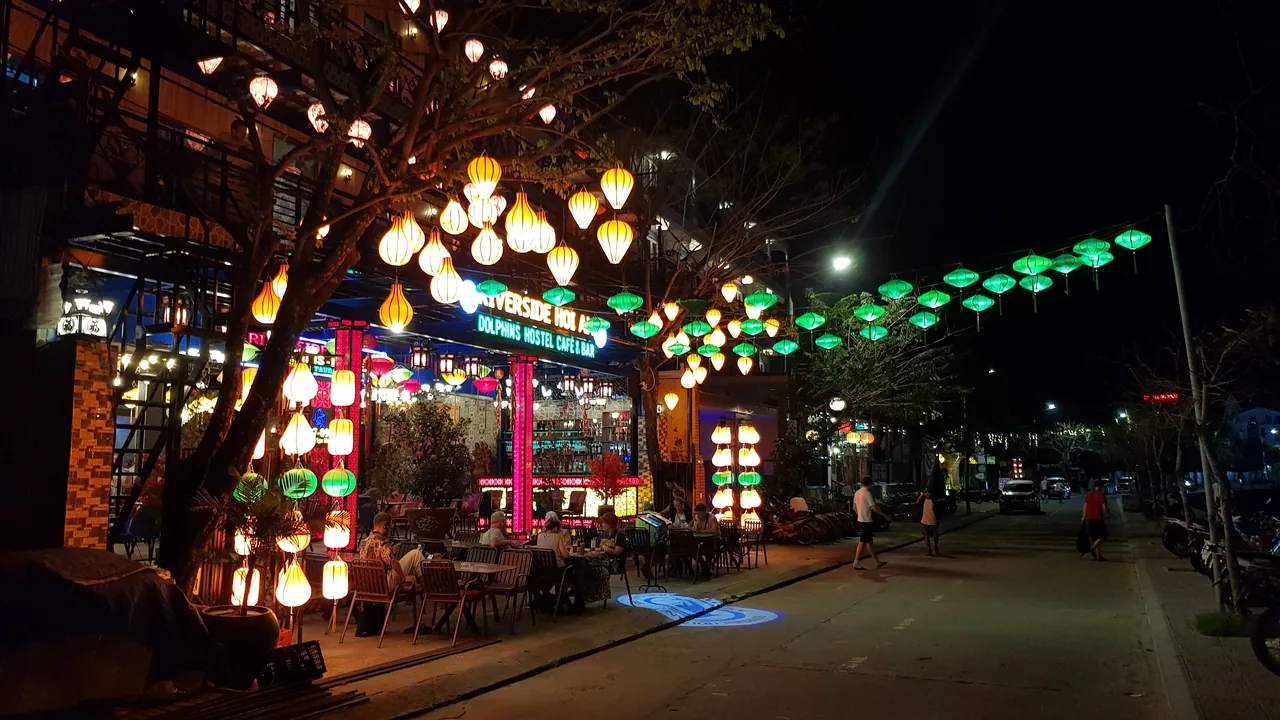
The day trips are the real draw. Hoi An (Map), the UNESCO ancient town with its lantern-lit old quarter, is about 30 minutes away; see our Hoi An guide. Ba Na Hills and the Golden Bridge (Map), with those giant stone hands and a faux French village, make a full day; details in our Ba Na Hills guide. Add the Cham ruins at My Son (UNESCO, about an hour) and Hue’s Imperial City (2–2.5 hours by car or train). Browse more in our Da Nang things to do hub and our Da Nang tours and activities.
Phu Quoc: self-contained island fun, by zone
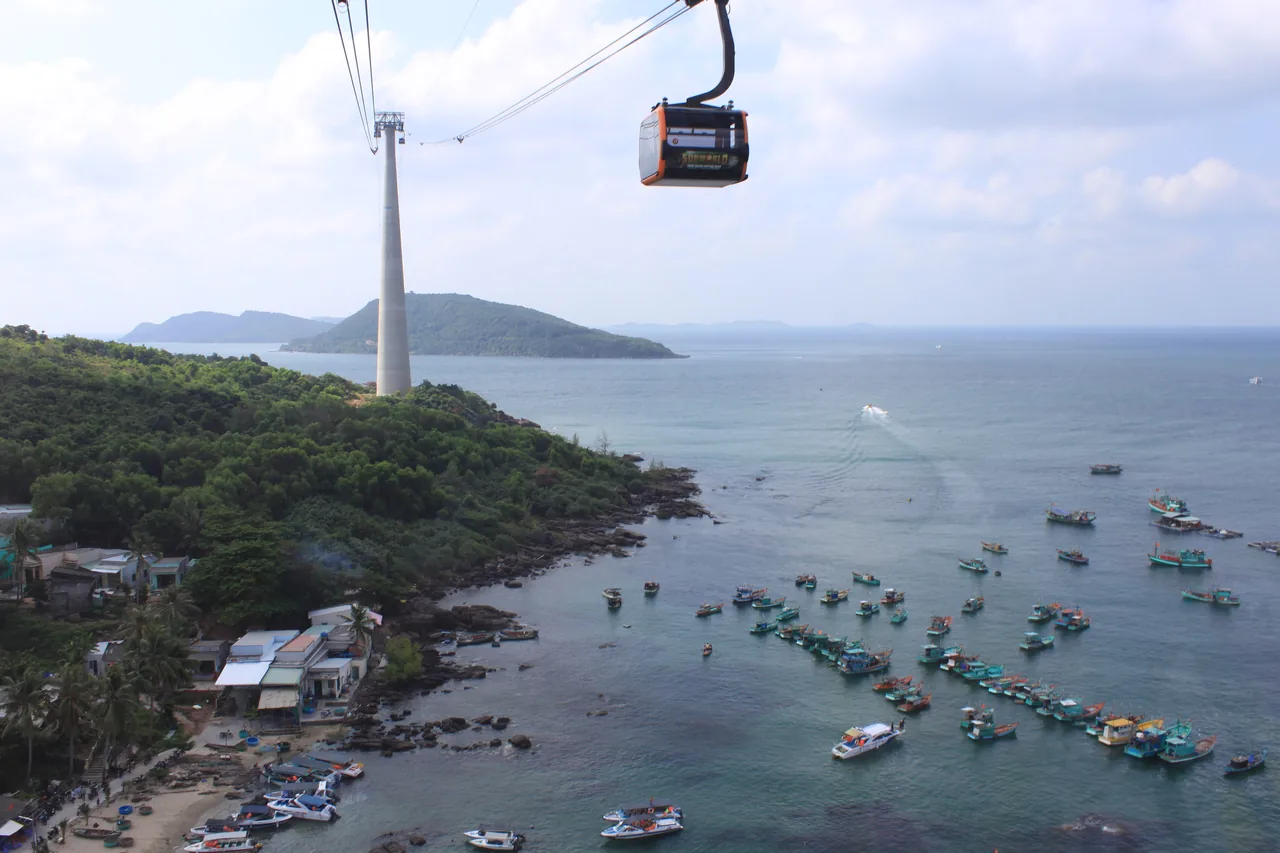
Phu Quoc’s geography matters, so think in zones. In the southwest (An Thoi and Sunset Town) you’ll find the Hon Thom cable car (Map), the world’s longest three-wire sea-crossing cable car at 7,899 m and a Guinness record, running to Sun World Hon Thom with its water park and beaches
The northwest is the Vinpearl and Grand World complex: VinWonders (Map), Vietnam’s largest theme park; Vinpearl Safari, an open zoo with 150+ species; and Grand World, a free-entry entertainment “city” with a Venice-style canal, gondolas, shows and the Teddy Bear Museum. In the centre, Duong Dong town has its lively night market, the working harbour, the Dinh Cau temple and fish-sauce factories. All over the island you’ll find Phu Quoc National Park (jungle covering roughly half the island), the Rach Vem floating fishing village, pepper farms, sim-wine houses, the clifftop Ho Quoc Pagoda and the sobering Phu Quoc Prison museum. Book any of it here:
7. When the weather turns: rainy-day plans
Both places stay fun in the rain, you just move indoors; and on Phu Quoc the wet season has the silver lining of much cheaper resorts.
Da Nang in the rain: the Museum of Cham Sculpture and the city’s other museums, a long spa or massage, café-hopping (Da Nang’s coffee scene is excellent), the indoor markets, or a hands-on Vietnamese cooking class. None of it depends on sunshine.
Phu Quoc in the rain: the indoor zones of VinWonders, the covered streets and shows of Grand World, a spa afternoon, the aquarium, or simply a full resort day making use of the pool, gym and restaurants you’re already paying for. If you’re travelling in the May–October wet season, you’ll often pay a fraction of peak prices for the same room.

8. Food
If food is high on your list, Da Nang is the clear pick; it’s one of Vietnam’s great street-food cities, while Phu Quoc is more of a seafood-and-resort-dining island.
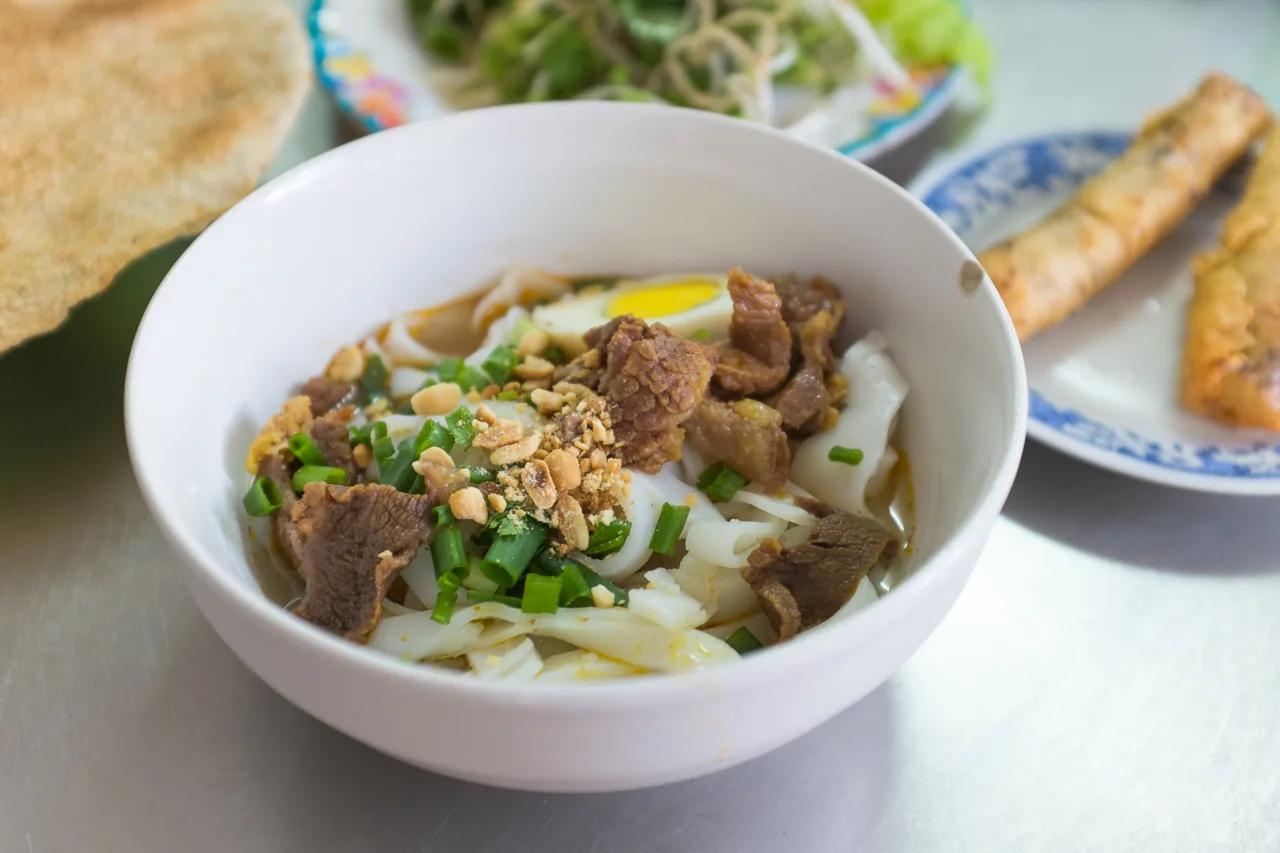
Da Nang’s signature is mi Quang, turmeric-broth noodles with pork or shrimp, peanuts and a sesame rice cracker. Beyond that you’ve got bun cha ca (fish-cake noodle soup), the city’s famous banh mi, banh xeo and nem lui (sizzling pancakes with lemongrass skewers), cao lau over in nearby Hoi An, mountains of fresh seafood, and a serious coffee culture (ca phe sua da, coconut coffee). It’s deep, cheap, everyday street food on practically every corner.
Phu Quoc leans seafood. Grilled crab, sea urchin, squid and the day’s catch fill the Duong Dong night market; there’s the local herring salad goi ca trich and fresh seafood at the Ham Ninh fishing village. The island is also famous for its products: premium nuoc mam (Phu Quoc is Vietnam’s most celebrated source of fish sauce), sim wine and Phu Quoc pepper. What it doesn’t have is Da Nang’s wall-to-wall street-food scene; here it’s more seafood and resort dining.
9. Real Vietnam vs resort island
Da Nang feels like a genuine working Vietnamese city in a heritage-rich region; Phu Quoc feels like a younger, tourism-built resort island.
In Da Nang it’s easy to brush up against everyday local life, busy markets and centuries of history, with Hoi An, Hue and My Son all close by. Phu Quoc has far less old culture; it’s been built up for tourism, so it’s lighter on cultural immersion but brilliant for switching off, with sunsets, theme parks and entertainment doing the heavy lifting. One isn’t more “authentic” in a way that should win the argument; they’re simply different moods. Pick the mood you’re after.
10. Cost, accommodation and getting around
Both are far cheaper than Phuket, Bali or the Maldives, but Phu Quoc runs roughly 15–30% pricier than the mainland, mostly on accommodation and seafood, while Da Nang is cheaper overall with a huge spread from hostels to five-star.
As a rough mid-range, per-couple day, budget around $70–120 (approx. 1.7M–2.9M VND) in Da Nang and $90–150 (approx. 2.2M–3.6M VND) on Phu Quoc. Backpackers can do Da Nang on about $25/day (approx. 600,000 VND) and Phu Quoc on about $30/day (approx. 720,000 VND). Beachfront-resort travellers should expect Da Nang around $200–350 and Phu Quoc around $250–400. On hotels specifically, Phu Quoc homestays start near $14 (approx. 340,000 VND), four-star runs roughly $27–135, and five-star resorts go from about $130 to $440+.
| Item | Da Nang | Phu Quoc |
|---|---|---|
| Budget hotel / homestay | ~$15–25 (approx. 360k–600k VND) | ~$14–30 (approx. 340k–720k VND) |
| Mid-range hotel | ~$35–70 (approx. 840k–1.7M VND) | ~$45–90 (approx. 1.1M–2.2M VND) |
| Beach resort (5-star) | ~$130–300 (approx. 3.1M–7.2M VND) | ~$130–440+ (approx. 3.1M–10.6M VND) |
| Casual meal | ~$2–5 (approx. 50k–120k VND) | ~$4–10 (approx. 100k–240k VND) |
| Local transport (cross-town) | ~$1.5–3 Grab (approx. 35k–70k VND) | Taxi/scooter; pricier, patchy Grab |
| Mid-range couple / day | ~$70–120 (approx. 1.7M–2.9M VND) | ~$90–150 (approx. 2.2M–3.6M VND) |
More on budgeting in our money and budget guide. On getting around, the gap is real: Da Nang has Grab everywhere, cheap and easy, with a cross-town ride a couple of dollars (see our Da Nang transport guide). Phu Quoc’s ride-hailing is patchy, so you’ll lean on taxis (Xanh SM electric or Mai Linh), a rented scooter, or resort shuttles. Remember the island is big: the airport to Sunset Town is about 10 minutes, but the airport to the far north can be an hour. Either way, sort a local eSIM before you fly so maps and ride apps work the moment you land
11. Who each one is for
Match the place to the traveller and the choice gets obvious fast. Here’s the cheat sheet.
| You are… | Pick | Why |
|---|---|---|
| First-timer to Vietnam | Da Nang | Most variety, day trips, food and easy logistics |
| Couple / honeymoon | Phu Quoc | Resorts, sunsets, quiet beaches, romance |
| Family with young kids | Either | Phu Quoc for theme parks; Da Nang for variety |
| Beach purist / snorkeller | Phu Quoc (Nov–Apr) | Clear water, An Thoi reefs, island-hopping |
| Digital nomad / long stay | Da Nang | Cheaper, walkable, cafés, Grab, fast services |
| Backpacker / budget | Da Nang | Cheap food and transport, hostels, easy hops |
| Culture and food lover | Da Nang | Street food capital plus Hoi An, Hue, My Son |
| Short on time | Da Nang | Airport in town, lots packed close together |
The one overriding caveat: if your dates clash with a place’s good season, bump it down the list regardless of the persona. A beach purist in July belongs in Da Nang, not Phu Quoc.
12. Can you do both?
Yes, and it makes a great trip, because a roughly 1h30 direct flight links them; just treat it as a two-centre holiday, not a day trip.
They’re about 1,100 km apart in different regions, so the natural shape is central-Vietnam culture and food around Da Nang and Hoi An first, then a beach finish on Phu Quoc. A common split is 3–4 nights in each. Because their best months differ, the combo works best in the March–April overlap, when both are reliably good.
One visa note if you’re combining them: travellers on the 45-day mainland exemption (UK, much of Europe, Korea, Japan, Russia and others) are fine, since that exemption covers the domestic Da Nang→Phu Quoc hop. But if you’re relying on the Phu Quoc 30-day rule (US, Canada, Australia, India, Taiwan and others), remember it does not apply once you’ve entered via the mainland, so you’d use an e-visa for a two-centre trip.
13. Sample plans
Three ready-made shapes depending on how much time you have and which way you’ve leaned.
5 nights, Da Nang only
- Day 1: arrive, settle in, evening on My Khe beach
- Day 2: Hoi An old town (best in the late afternoon and evening for lanterns)
- Day 3: Ba Na Hills and the Golden Bridge (a clear-weather day)
- Day 4: Marble Mountains and the Son Tra peninsula with the Lady Buddha
- Day 5: a food crawl (mi Quang, banh mi, coffee) and the Dragon Bridge show if it’s a weekend
5 nights, Phu Quoc only
- Day 1: arrive, sunset at Sunset Town and the Kiss Bridge
- Day 2: Hon Thom cable car and Sun World water park
- Day 3: An Thoi island-hopping and snorkelling boat trip
- Day 4: VinWonders or Vinpearl Safari
- Day 5: a slow beach-and-resort day, then the Duong Dong night market
8–10 days, both (two-centre)
- Nights 1–4: Da Nang and Hoi An for culture, day trips and food
- Travel day: a direct ~1h30 flight to Phu Quoc
- Nights 5–8: Phu Quoc for beaches, islands and downtime
- Best booked in the Mar–Apr overlap so both legs land in good weather
14. Bottom line
Decide on two axes: the month you’re travelling, and the kind of trip you want. Get those two right and the answer falls out of the table below.
| If you… | Go to |
|---|---|
| Travel Dec–Feb and want clear water | Phu Quoc |
| Travel Jun–Aug and want a beach city | Da Nang |
| Travel Mar–Apr (either works) | Da Nang for culture/food, Phu Quoc for pure beach |
| Want street food, culture and day trips | Da Nang |
| Want resorts, snorkelling and switch-off | Phu Quoc |
| Have 8+ days and flexibility | Both, two-centre, ideally Mar–Apr |
If you remember one thing, make it this: let the calendar lead. Da Nang and Phu Quoc peak in opposite seasons, so the place that’s right for January is the wrong call for July, and vice versa. Pick the one whose good season matches your dates, then use the persona and food notes above to settle any tie. For everything else, start with our Da Nang travel hub and the Vietnam planner, and double-check the basics in our common scams and safety guide.