
The Ha Giang Loop: The Complete Guide to Vietnam’s Greatest Ride
Cliffside passes, the emerald Nho Que River, and a Geopark full of mountain villages — how to do the loop, easy-rider or self-drive, and do it right.
| Where | Vietnam’s far north, on the China border (start/end: Ha Giang city) |
|---|---|
| Famous for | Cliffside mountain passes, the emerald Nho Que River, karst scenery & hill-tribe villages |
| Get there | No airport or train — ~300 km / 6–7 hr by night bus from Hanoi, then ride the loop |
| The big decision | Easy-rider (ride pillion behind a local), self-drive a motorbike, or hire a car/jeep |
| Highlight | The Ma Pi Leng Pass and a boat trip on the Nho Que River through the Tu San canyon |
| Best time | September–October (golden rice & clear skies); early November for buckwheat flowers |
| Days | 3 days minimum, 4 days ideal (~350 km of riding, ~5–7 hours a day) |
1. What the Ha Giang Loop actually is (and why everyone raves about it)
2. The big decision: easy-rider, self-drive, or car?
3. Licence, law and insurance — read this before you rent a bike
4. Renting a bike: fuel, luggage and what to look for
5. The route, stop by stop — the heart of the loop
6. When to go: a month-by-month guide
7. The people, the markets and the homestays
8. What to eat on the loop
9. The honest safety talk
10. Getting to Ha Giang from Hanoi
11. Costs, tours and the permit you can’t skip
12. Itineraries: how to plan your days
13. Staying connected, getting cash, and getting around
14. Final word: is the Ha Giang Loop worth it?
1. What the Ha Giang Loop actually is (and why everyone raves about it)
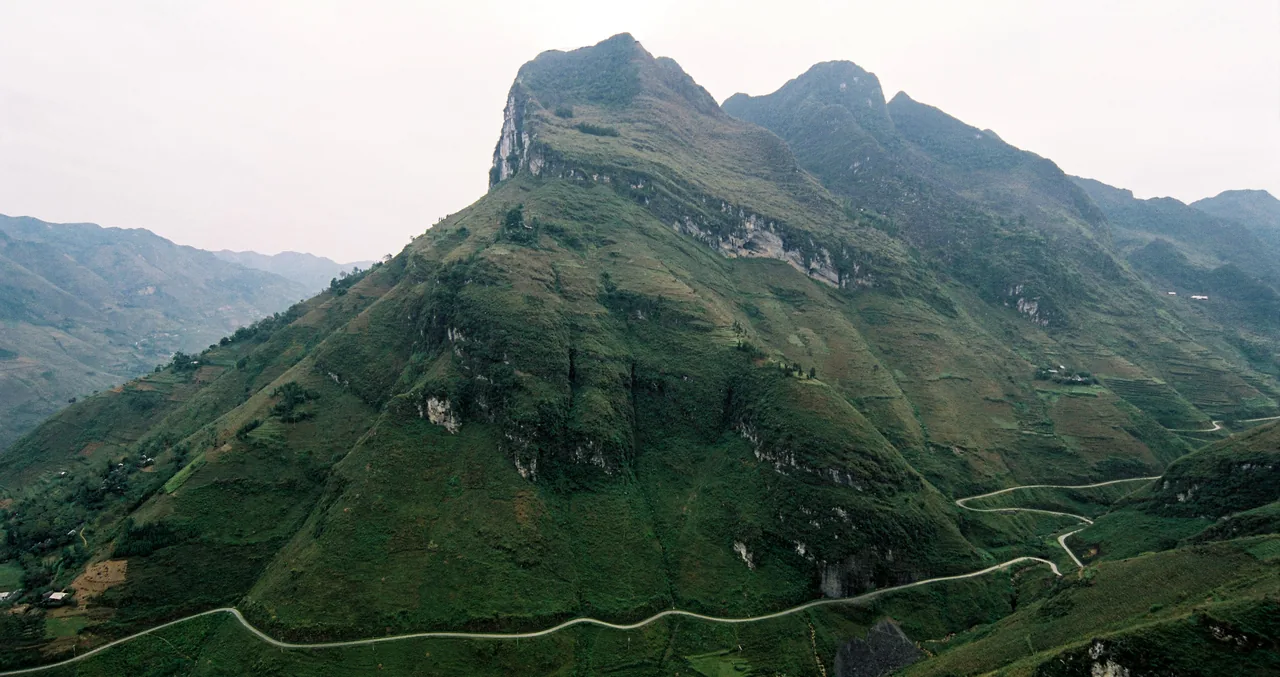
The Ha Giang Loop is a roughly 350 km circular motorbike route through the limestone mountains of Vietnam’s far north, looping out from Ha Giang city through Quan Ba, Yen Minh, Dong Van and Meo Vac before coming back — usually ridden over 3 to 4 days. It is, by a wide margin, the most spectacular road trip in Vietnam, and a lot of travellers will tell you it was the single best thing they did in the whole country.
The loop runs across the Dong Van Karst Plateau UNESCO Global Geopark — Vietnam’s first, designated in 2010 — a craggy expanse of about 2,356 km² that’s roughly 80% limestone. What you get is a relentless sequence of grey karst peaks, deep gorges, terraced rice valleys and roads carved into sheer cliff faces. Around 17 ethnic-minority groups live up here, so on top of the scenery you’re riding through a part of Vietnam that feels culturally a world away from Hanoi.
Here’s the honest verdict up front. For dramatic landscapes plus living mountain culture, almost nothing in Southeast Asia beats it. It’s a near-perfect trip for adventurous travellers — and, crucially, you don’t have to be a rider, because you can sit pillion behind a local driver. Think twice only if you’re chasing luxury and comfort, you’re very short on time, or you’re a complete beginner who’s set on self-driving these roads. By far the most common regret people have is simply not booking enough days.
One quick admin note that confuses a lot of recent visitors: as of 1 July 2025, the old Ha Giang province was merged into an enlarged Tuyen Quang province in a nationwide reshuffle. Don’t let that throw you — every sign, map, hostel and search result still says “Ha Giang,” and that’s what the destination is called. It’s just now, on paper, part of Tuyen Quang.
If you’re stitching together a bigger trip, the loop slots neatly into a northern Vietnam route, and it pairs naturally with Hanoi, Sapa, Ha Long Bay and Ninh Binh. New to the country entirely? Start with our Vietnam travel planner.
2. The big decision: easy-rider, self-drive, or car?
Before you book anything, settle the one question that shapes your whole trip: how are you going to actually ride the loop? There are three ways to do it, and they suit very different people.
The three options
| Option | What it is | Best for |
|---|---|---|
| Easy-rider | You ride pillion (as a passenger) behind an experienced local driver | Non-riders, novices, anyone who wants to actually look at the scenery — the most popular choice |
| Self-drive | You rent and ride your own motorbike | Confident, experienced riders only |
| Car / private jeep | A vehicle with a driver | Families, bad weather, anyone who doesn’t want to be on a bike |
The easy-rider is the safest and most popular option for the simple reason that someone who has ridden these roads a thousand times handles the dangerous bits while you just sit, hold on and stare at the view. You need no licence as a passenger, there’s no stress, and you can actually take photos instead of white-knuckling a clutch on a cliff edge. For most people reading this, especially if you’ve never ridden a manual bike, this is the answer.
Self-driving is genuinely brilliant if — and only if — you’re an experienced rider. These are real mountain roads with real consequences, and they are not the place to learn. Car or jeep with a driver is the comfortable middle ground for families or for anyone travelling when the weather turns.
Big convoy or small group?
If you do go guided, you’ll also choose between two very different vibes. The big party hostels run convoys of 20 to 40 bikes built around nightly corn-wine parties and karaoke — huge fun, instant friends, but it can feel like a moving festival. Smaller operators cap groups at around 8 to 10 for a calmer, more scenic ride. Neither is “better” — it’s camaraderie and chaos versus quiet and space. Pick the one that matches the trip you actually want.
3. Licence, law and insurance — read this before you rent a bike
🚫 What is illegal in Vietnam: vapes, fines and what customs takes →
This is the section most blogs gloss over, and it’s the one that can cost you thousands or void your insurance — so here it is straight.
To ride a motorbike legally in Vietnam you need two things at once: a valid motorcycle licence from home and a 1968 Vienna Convention International Driving Permit (IDP). One without the other is not enough.
There is one legal loophole: bikes 50cc and under need no licence at all. Some shops rent these to foreigners as a workaround, but they’re underpowered for the steep climbs and long descents up here, so most riders skip them.
Don’t assume nobody checks. Police checkpoints are frequent on the loop — roughly one every 50 km — so being stopped at some point is close to a certainty. In a 2025 crackdown the fines jumped about tenfold: a no-licence fine now runs roughly 2,000,000–8,000,000 VND (about $80–320), with possible confiscation of the bike on top.
Some flexible policies popular with loop travellers (SafetyWing is one) are easy to set up on the road, but you must confirm motorbike cover directly with the insurer before you ride — don’t take a forum’s word for it. Either way, the moral is the same: if you can’t ride legally, don’t ride yourself.
4. Renting a bike: fuel, luggage and what to look for
If you are an experienced rider going the self-drive route, here are the practical numbers.
| Bike type | Rough price/day | Notes |
|---|---|---|
| Semi-automatic | ~180,000–200,000 VND ($7–8) | The popular, balanced choice |
| Manual 125–150cc | ~230,000–650,000 VND ($9–26) | Best for the steep terrain |
| Automatic scooter | ~250,000 VND ($10) | Discouraged — brakes fade on descents |
Expect a deposit of around 90,000–450,000 VND, and a helmet, basic tools and bungee cords thrown in. Always test the brakes, lights and horn before you leave the shop, and take a photo of any existing scratches.
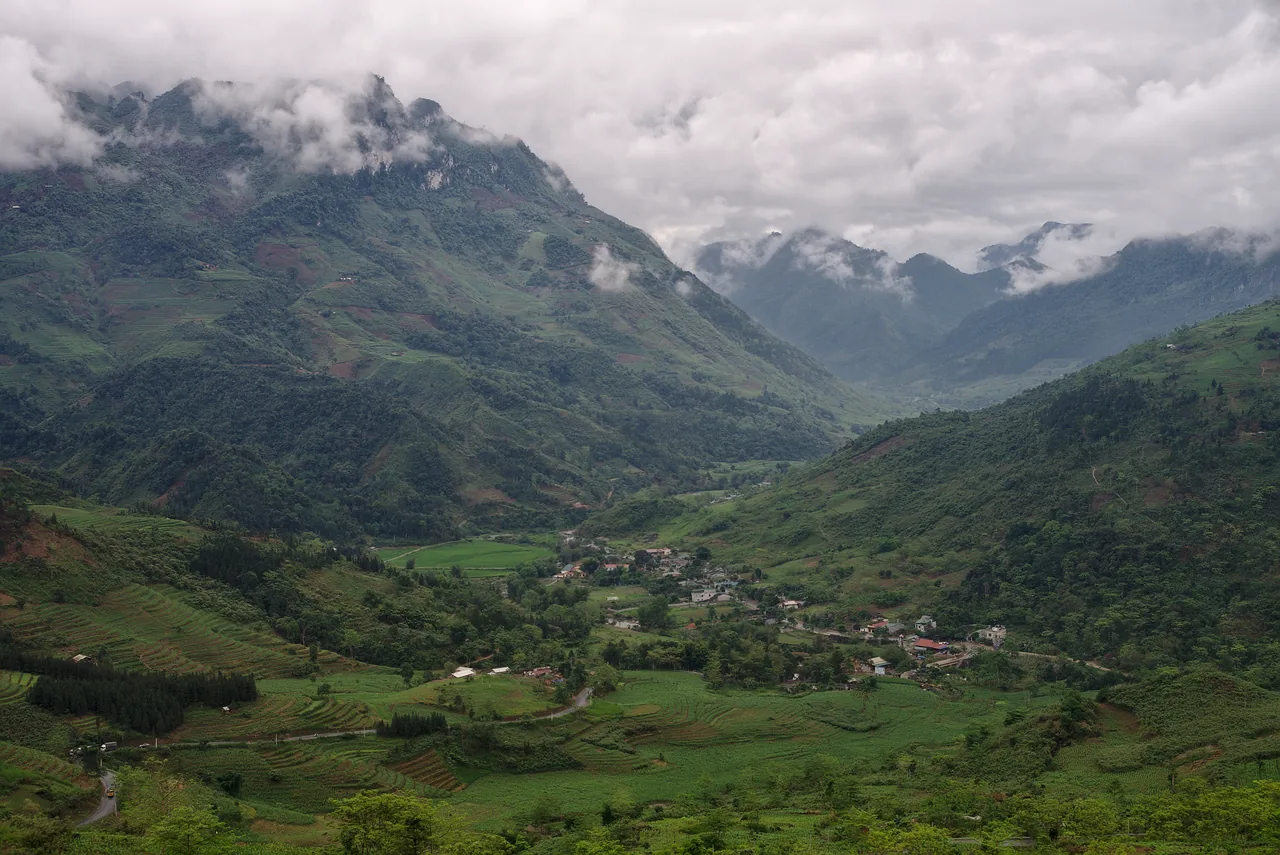
Fuel runs about 21,000 VND per litre, and the whole loop costs roughly 250,000–350,000 VND (about $10–14) in petrol. There are Petrolimex stations in the main towns, but out in the remote villages you’ll only find fuel sold from roadside bottles — so fill the tank whenever you’re in a town like Ha Giang City or Dong Van and never let it run low.
You don’t have to lug everything with you, either: hostels and tour operators will transfer your main bag by van to the next homestay, and there’s free luggage storage in Ha Giang City for anything you don’t need on the bike.
5. The route, stop by stop — the heart of the loop
This is the loop itself, in riding order from Ha Giang city. Distances are short between stops, but the roads are slow and you’ll want to pull over constantly, so don’t try to cram it all into too few days.
1. Quan Ba Heaven’s Gate & the Twin Mountains
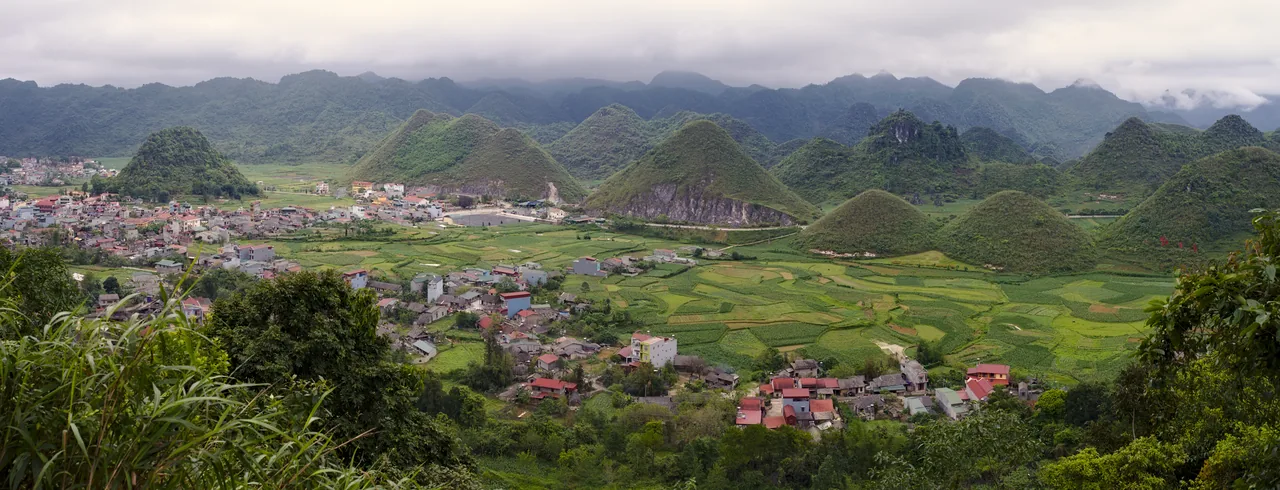
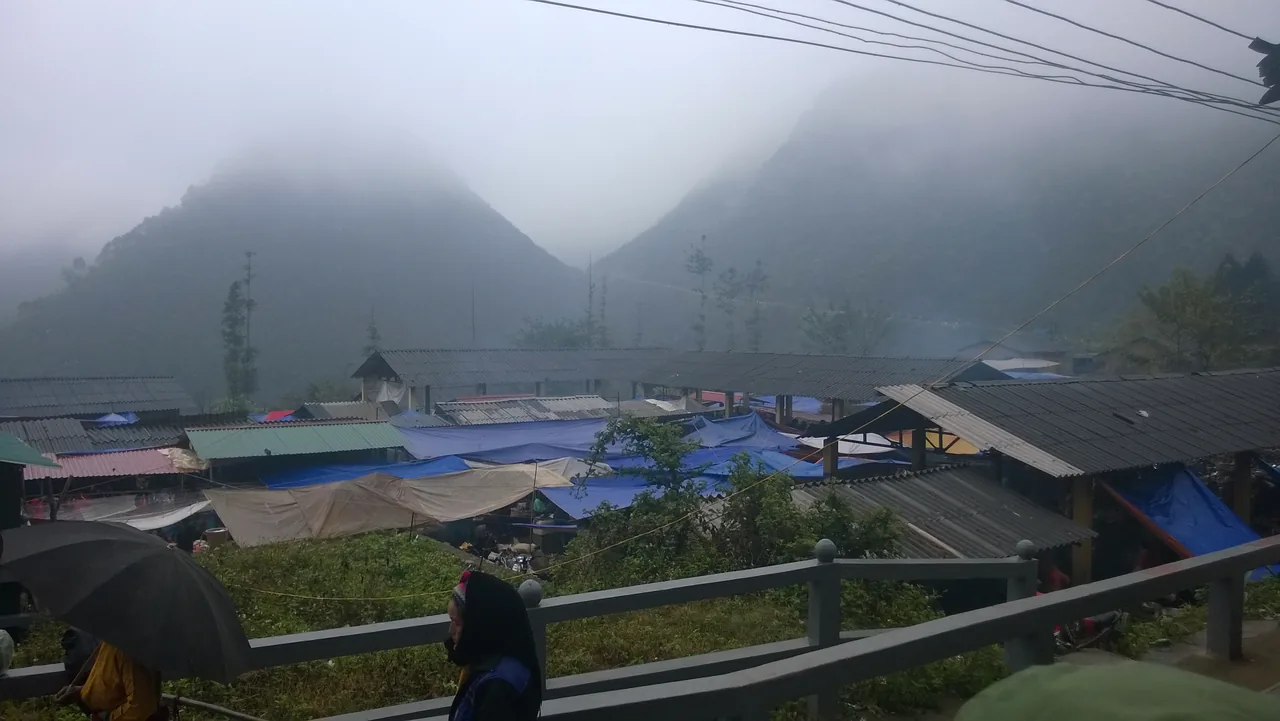
Your first big payoff. The Heaven’s Gate pass Map sits at around 1,500 m and opens onto the plateau, while just below you’ll spot the famous Twin Mountains Map — two strikingly symmetrical conical hills locals call the “Fairy Twins.” The viewpoint is free.
2. Yen Minh
A relaxed town set among pine forest, and a common overnight stop at the end of Day 1.
3. Sung La valley & Pao’s House
One of the prettiest Hmong valleys on the loop. The old house here Map was the set for the 2006 Vietnamese film “Chuyện của Pao,” and it’s a lovely, low-key stop. Entry is about 10,000 VND.
4. The Hmong King’s Palace
An early-1900s mansion Map built by the Vuong family who once ruled the Hmong in this region — 64 rooms of Chinese-influenced architecture, set among ancient trees. Entry around 20,000 VND.
5. Dong Van Old Quarter
A cluster of houses Map up to a century old, with weathered yin-yang tiled roofs. It’s the most atmospheric town on the loop — good coffee, a Sunday market, and a popular Day-2 base.
6. Lung Cu Flag Tower
The tower Map marking Vietnam’s symbolic northernmost point, where a giant flag snaps in the wind over the China border. It’s 839 steps to the top, though an electric buggy spares you most of them. Entry about 25,000–40,000 VND, plus roughly 15,000 for the buggy.
7. The Ma Pi Leng Pass — the highlight
This is what you came for. The Ma Pi Leng Pass Map is a roughly 20 km stretch of cliff-hugging road on the “Happiness Road” (QL4C) between Dong Van and Meo Vac. The crest sits around 1,500 m, with the gorge plunging about 800 m to the river below — it’s rightly counted among Vietnam’s “four great passes.” Stop at the viewpoints and, if you’ve a head for heights, walk out onto the Ma Pi Leng Skywalk.
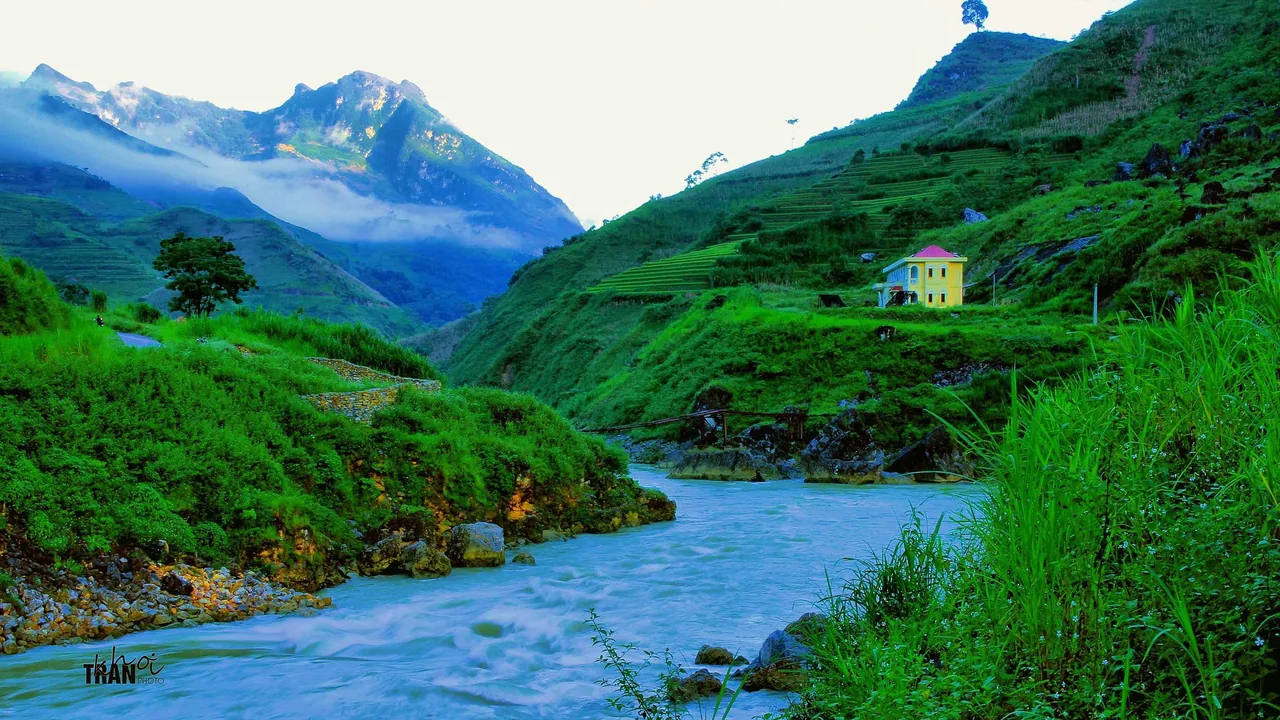
8. The Nho Que River & Tu San canyon
Far below the pass winds the impossibly emerald-green Nho Que River Map, threading through the Tu San canyon — Vietnam’s deepest. The boat trip through the gorge is unmissable: a shared boat is about 100,000–130,000 VND a person (a private boat 500,000–700,000; kayaks from around 50,000). Getting down means a steep access road off the pass — ride it, take a jeep, or grab a xe-om, then a short walk to the pier. Book at the pier itself or through your homestay or tour.
9. Meo Vac
The town at the loop’s far edge Map, right up against the border districts, best known for its big and colourful Sunday market.
Worth adding if you have time
- Lung Khuy Cave (near Quan Ba) — a lit show cave, entry about 30,000–50,000 VND.
- Du Gia village & waterfall (near Yen Minh) — a swimming spot and laid-back village, free, and a favourite on 4-day loops.
- The Tham Ma slope — a dramatic set of hairpin switchbacks that’s a classic photo stop.
6. When to go: a month-by-month guide
There’s no truly bad time to ride the loop, but the landscape changes completely through the year. Here’s the rundown so you can match your trip to what you most want to see.
| Season | What you get | Verdict |
|---|---|---|
| May–Jun | Flooded “mirror” rice terraces; warm weather | Beautiful reflections; good |
| Jul–Aug | Lush green rice, but the rainy season — downpours, landslide risk, fog on the passes | Green and dramatic, but ride with real caution |
| Sep–Oct | Golden rice harvest plus clear, cool skies | The best window — October especially |
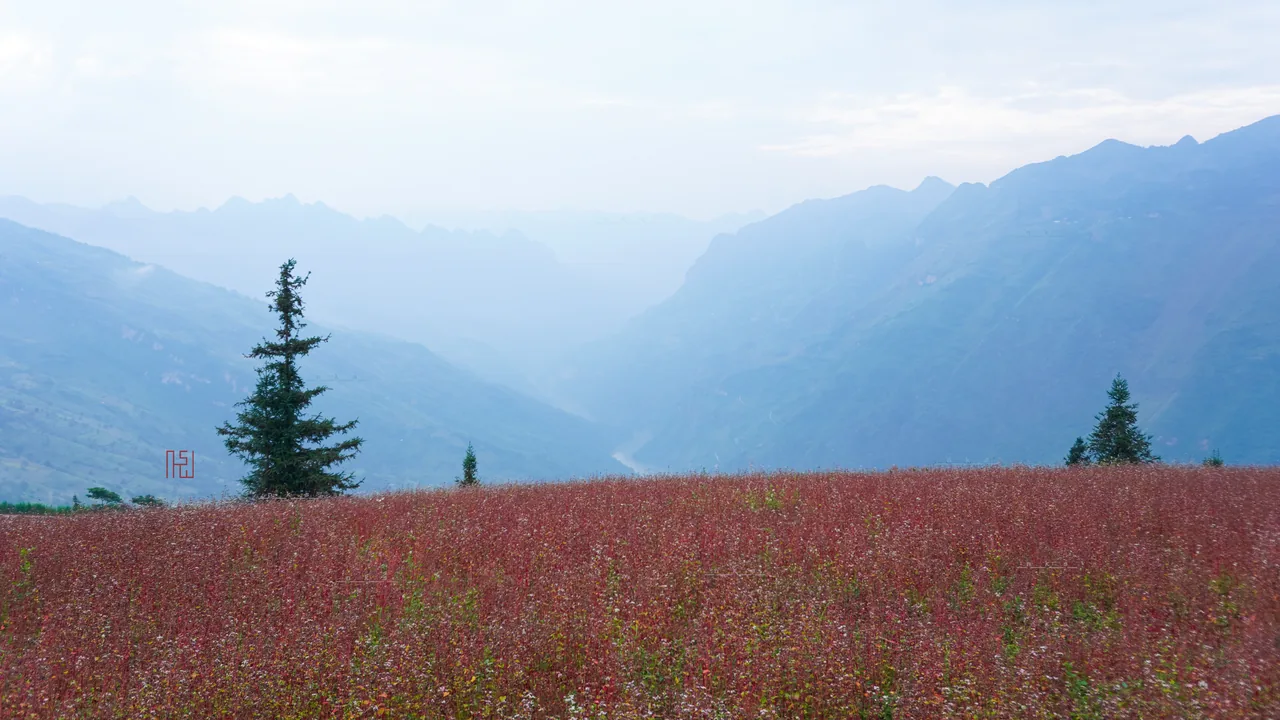
| Late Oct–early Nov | Buckwheat flowers (hoa tam giác mạch) carpeting the highlands pink and purple | Peak photogenic; festival time |
| Dec–Feb | Cold and foggy — days ~15°C, nights below 10°C, frost on high passes | Quiet and atmospheric; dress warm |
| Jan–Mar | Plum and peach blossom in the valleys; mild, dry roads | Lovely and underrated |
If you can only pick one window, go in September or October, when the rice terraces turn gold and the skies clear after the rains — it’s the combination most riders rate the best. For sheer colour, time it for the buckwheat flower season in late October and early November, when the Dong Van highlands flush pink. The Buckwheat Flower Festival is held in Dong Van each November, though the dates shift year to year, so check the current year’s schedule before you lock in.
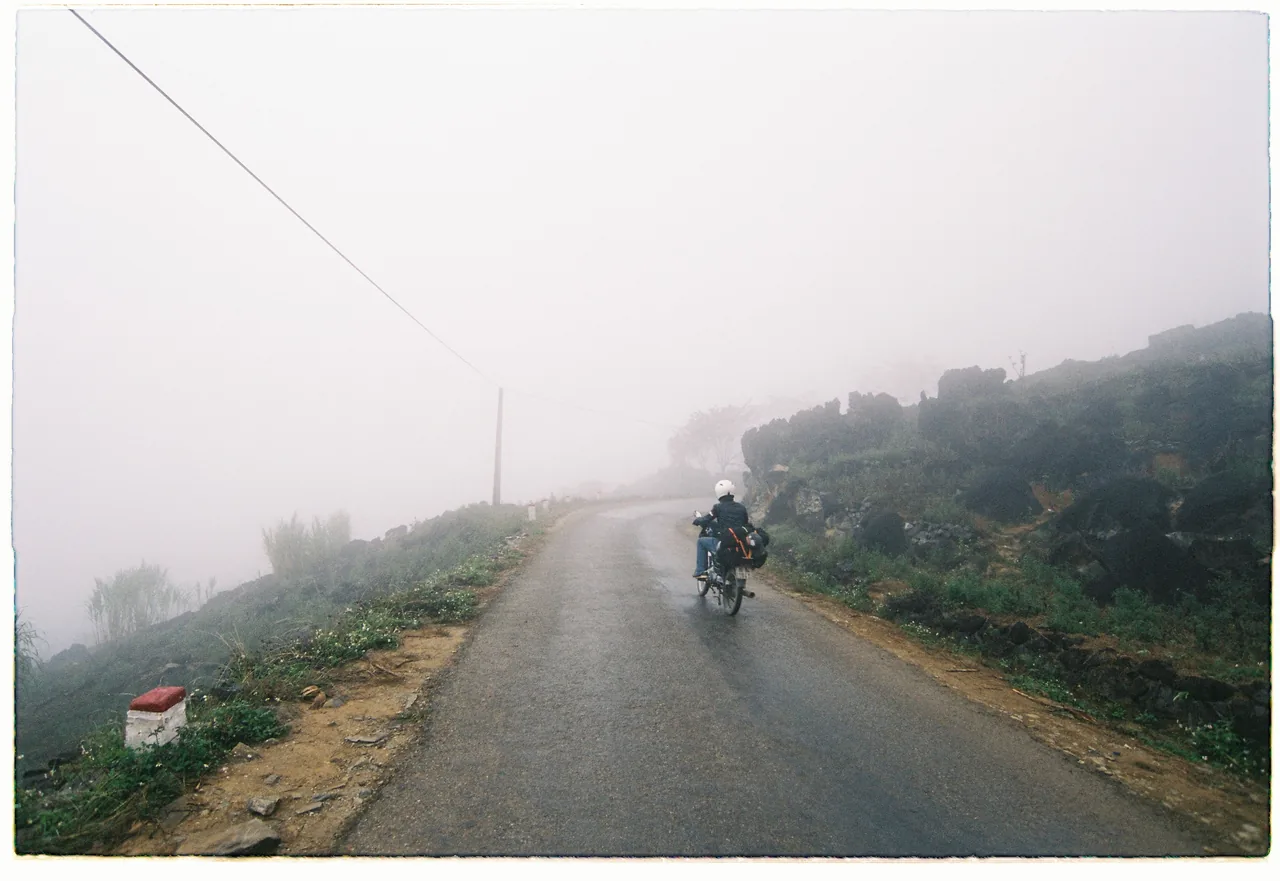
The flip side is the rainy season in July and August: the rice is at its greenest, but heavy rain brings landslides, slick roads and fog that can wipe out the views on the high passes. It’s still doable, but it’s the strongest argument for going guided. For a wider look at timing your trip, see our guide to the best time to visit Vietnam.
7. The people, the markets and the homestays
Half of what makes Ha Giang special isn’t the scenery at all — it’s the culture you ride through. Around 88% of the population here belongs to ethnic-minority groups, some 17 in all. The largest is the Hmong (about 34%), alongside the Tay, Dao and Nung, plus smaller communities like the Lo Lo around Dong Van and Meo Vac.
The Sunday markets are the cultural high point of the whole loop. Both the Dong Van market and the Meo Vac market run on Sunday mornings, and they’re as much social gathering as trade — families come down from the hills in their finest clothes to buy, sell, eat and catch up. If your dates land on a Sunday, build your route around being in one of these towns; it’s the loop at its most colourful.
There’s one event worth knowing about even if you can’t make it: the Khau Vai “Love Market” near Meo Vac, held just once a year on the 27th day of the 3rd lunar month (roughly late April to early May). It’s where former sweethearts traditionally reunite for a night without jealousy — a genuinely unique custom. The date shifts each year with the lunar calendar.
Most nights on the loop you’ll sleep in a homestay: family-run, with communal dinners and plenty of corn wine (locals call it “happy water”). Many now have hot water and Wi-Fi, but the appeal is the shared table, not the amenities.
For more on doing this right across the country, see our Vietnam etiquette notes.
8. What to eat on the loop
Highland food is hearty, smoky and built for the cold — and trying it is half the fun. Here’s what to look for.
| Dish | What it is |
|---|---|
| Thắng cố | The Hmong communal stew, traditionally horse meat and offal simmered with mountain spices (modern versions often use buffalo or beef). The “soul” of highland cooking, eaten at markets with corn wine. |
| Thắng dền | Warm glutinous rice balls in ginger syrup, filled with mung bean or peanut — a Dong Van and Yen Minh night snack. |
| Mèn mén | Steamed ground-corn “rice,” the everyday Hmong staple. |
| Cháo ấu tẩu | A porridge made with the aconite tuber — toxic raw, so it’s simmered for hours until safe. Warming and slightly bitter, a cold-season specialty. |
| Thịt trâu gác bếp | Smoked buffalo, dried above the kitchen fire until chewy and smoky, like a local jerky. |
| Xôi ngũ sắc | Five-colour sticky rice, dyed with forest leaves — festival food. |
| Bánh tam giác mạch | Buckwheat cake, ground then steamed and grilled — soft and nutty, sold during flower season. |
| Rượu ngô | Corn wine, the highland spirit at the centre of every market and ritual. Strong stuff. |
If you only try one thing, make it the thắng cố at a Sunday market, washed down with a small cup of corn wine — it’s the most authentic meal you’ll have up here. And don’t worry about the aconite in cháo ấu tẩu: it’s been cooked for hours and is perfectly safe by the time it reaches your bowl.
9. The honest safety talk
Let’s not sugar-coat it: the roads on the Ha Giang Loop are genuinely dangerous. You’re dealing with steep, narrow cliffside passes that often have no guardrails, loose gravel and the odd rockslide, livestock wandering across the tarmac, trucks coming the other way, and very limited medical care once you’re remote.
That said, keep it in perspective. Deaths are rare relative to how many thousands ride the loop every year, and when they do happen the cause is almost always the same handful of things: speeding, alcohol, or simple inexperience. None of those are bad luck — they’re choices.
What to pack
- Layers — mornings and high passes are cold even in summer.
- Long trousers and sturdy closed shoes (no flip-flops on a bike).
- A waterproof layer, every season, no exceptions.
- Sunscreen — you burn fast at altitude.
- Cash, more than you think you’ll need.
For broader country-wide safety, including the usual tourist scams to sidestep, read our dedicated guide before you travel.
10. Getting to Ha Giang from Hanoi
Here’s the thing a lot of first-timers don’t realise: there is no airport and no train to Ha Giang. You get there by road from Hanoi — about 300 km, taking 6 to 7 hours. (Don’t confuse that 300 km transfer with the ~350 km loop itself; they’re two separate legs.)
| Option | Price | Notes |
|---|---|---|
| Sleeper bus | ~250,000–400,000 VND ($10–16) | The standard, budget choice |
| Limousine / VIP van | ~350,000–500,000 VND ($14–20) | More comfortable; cabin sleeper ~470,000 |
Night buses leave Hanoi around 21:00–23:00 and reach Ha Giang at roughly 04:00–05:00; there are day buses too. Pickups run from the Hanoi Old Quarter, My Dinh and even Noi Bai airport, and you’ll usually arrive at the bus office with hostel pickups waiting.
The classic plan is to ride the night bus up, do the loop, and ride the night bus back — it saves you two days and a hotel night. That said, Hanoi is well worth a day on either side; our Hanoi city guide will help you fill it.
11. Costs, tours and the permit you can’t skip
The loop is one of Vietnam’s better-value experiences, but the price swings a lot depending on whether you go guided or independent. Here’s roughly what to budget.
| Way of doing it | Rough cost |
|---|---|
| Guided easy-rider, 3 days / 2 nights | ~3,800,000–4,500,000 VND (about $150–180) |
| Guided easy-rider, 4 days | ~$250–379 (budget to premium operators) |
| Self-drive group, 3 days / 2 nights | ~3,400,000 VND (about $135) |
| Fully independent | ~$45–70 per day |
A good guided tour usually bundles in most of the headaches: your pillion seat (or a bike plus driver), fuel, homestays, most meals, gear, the round-trip Hanoi sleeper bus, luggage storage — and the permit. Going independent, you’ll pay roughly 100,000–330,000 VND a night for homestays (dorm versus private) and 35,000–100,000 VND a meal.
The takeaway: for a non-rider or a beginner, a 3- or 4-day guided easy-rider tour is outstanding value once you tally up bus, bike, fuel, beds, food and permit separately. It also takes the legal and insurance risk off your plate entirely.
12. Itineraries: how to plan your days
You can ride the loop in three days, but most people who do come home saying they wish they’d taken four. Here are the two itineraries that actually work.
3 days / 2 nights — the essential loop
- Day 1: Ha Giang → Quan Ba (Heaven’s Gate & Twin Mountains) → Yen Minh → Dong Van, taking in Pao’s House and the Hmong King’s Palace en route. Overnight in Dong Van.
- Day 2: Dong Van → Lung Cu Flag Tower → the Ma Pi Leng Pass → down to the Nho Que River for the boat → Meo Vac. Overnight in Meo Vac.
- Day 3: Meo Vac → Mau Due / Du Gia → back to Ha Giang, then the night bus to Hanoi.
4 days / 3 nights — the sweet spot
The same route, but unhurried — with an extra night you can add Du Gia village and its waterfall, linger longer at markets and viewpoints, and actually spend time in the villages instead of just riding past them. Four days is what most riders say they’d do if they had the trip again.
13. Staying connected, getting cash, and getting around
A few practical odds and ends that make the trip run smoothly.
Cash is king. Withdraw what you’ll need in Ha Giang City before you set off — ATMs on the loop are unreliable and some reject foreign cards outright, and the villages are cash-only. Don’t get caught short three passes from the nearest working machine. For wider payment tips, see our Vietnam money guide.
Phone signal is patchy up on the high passes — that’s part of the appeal, but it’s worth planning for. Viettel has the best mountain coverage by a clear margin, so set up an eSIM on a Viettel-compatible plan before you arrive rather than scrambling for a SIM in town. Our Vietnam eSIM guide walks through it.
Finally, don’t count on apps to get around: there’s no Grab or ride-hailing up on the loop. It’s self-drive, hired car or local xe-om (motorbike taxi) only. Grab works fine in Hanoi at either end of your trip — our Grab in Vietnam guide explains where it does and doesn’t reach.
14. Final word: is the Ha Giang Loop worth it?
Almost certainly, yes. The Ha Giang Loop is regularly ranked among the very best things to do in Vietnam, and for the combination of jaw-dropping scenery and living mountain culture, there’s really nothing in the country quite like it. The Ma Pi Leng Pass and the Nho Que River alone justify the trip.
It’s at its best for adventurous travellers — and remember, that absolutely includes non-riders, because the easy-rider seat means anyone can do it. Think twice only if you’re after luxury and comfort, you’re genuinely pushed for time, or you’re a zero-experience rider determined to self-drive (please, take a driver).
If there’s one piece of advice to take from this whole guide, it’s this: give yourself enough days. The single most common regret is squeezing the loop into too little time and missing Lung Cu, the Nho Que boat or Du Gia. Go for four days if you possibly can, ride it safely, eat the thắng cố, and you’ll come home understanding exactly why people won’t stop talking about this place.
Ready to plan the rest? Pair the loop with Sapa and Ha Long Bay for a complete northern Vietnam trip, and make sure your Vietnam visa is sorted before you fly.