The complete guide to Hoi An’s monthly full-moon Lantern Festival — the 2026 dates, what happens on the night, floating a lantern on the Thu Bồn, boats, photo spots and everything you need to plan it.
Last updated & checked: June 2026
The Hoi An Lantern Festival in 30 seconds
When: the 14th day of every lunar month — the evening before each full moon. In 2026, roughly once a month (see the dates table below).
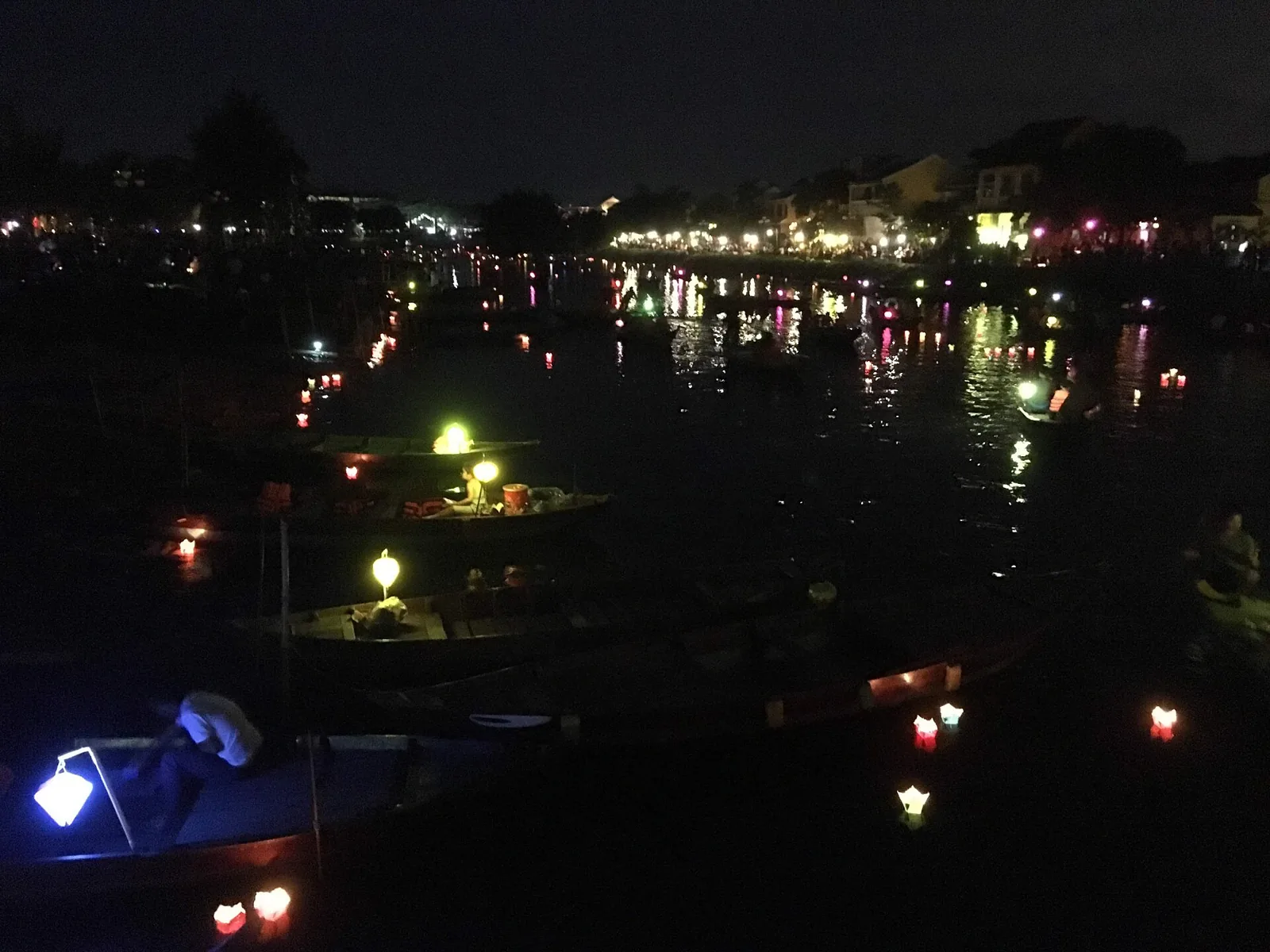
What happens: at dusk the Old Town goes car-free and switches off its electric lights; thousands of silk lanterns glow and paper lanterns float on the river.
The ritual: light a small paper lantern (hoa đăng, ≈5,000–10,000₫), make a wish, and set it on the Thu Bồn River.
Best view: from a small boat on the river (≈100,000–150,000₫) or the An Hội bridge.
Biggest nights: Nguyên Tiêu (≈2–3 March 2026, the first full moon) and around Mid-Autumn (≈24 Sep).
The Hoi An Lantern Festival is one of the most magical things you can do in Vietnam — and unlike a once-a-year event, it happens every full moon, so most visitors can catch it. On the 14th night of each lunar month the 400-year-old Ancient Town turns off its electric lights, fills with silk lanterns and floats hundreds of candle-lit paper lanterns down the Thu Bồn River. This is our complete, up-to-date guide: the 2026 dates, what actually happens, how to float your own lantern, where to get the best photos, the two biggest nights of the year, and all the practical planning — getting there, where to stay, what to eat and how to dodge the crowds. (New to the town? Start with our complete Hoi An travel guide and things-to-do guide.)
The festival falls on the 14th day of every lunar month — the evening before the full moon — when the moon is at its brightest. Because the lunar calendar drifts against the Western one, the Gregorian dates move each year. Here are the 2026 festival nights (treat them as ≈ and confirm locally close to your trip, as they can shift by a day):
2026 night
Notes
Jan 2
Jan 31
Mar 2
★ Nguyên Tiêu — the first full moon of the lunar year & the biggest, busiest night
Apr 1
Apr 30
May 29
Jun 28
Jul 27
Aug 25
Sep 24
☾ Around the Mid-Autumn Festival (Tết Trung Thu) — extra lanterns & crowds
Oct 23
Nov 22
Dec 22
💡 No full moon on your dates? You don’t have to miss out: the Old Town hangs lanterns and runs boat trips every evening, and you can float a paper lantern on any night. The festival nights are simply the biggest, with the lights-off ritual and the largest crowds.
⚠️ Dates are approximate. The lunar calendar means these can move ±1 day, and the “official” festival is sometimes held on the 14th and sometimes the 15th (the true full moon). Double-check the exact night with your hotel when you arrive.
2. What the Hoi An Lantern Festival Actually Is
It’s easy to think of it as a photo opportunity, but the festival has deep roots. Hoi An was one of Asia’s great trading ports in the 16th and 17th centuries, and merchants from China and Japan settled here, bringing their crafts, architecture and customs — including the silk lantern. Over centuries those influences fused with Vietnamese culture into something uniquely Hoi An.
The monthly full-moon celebration (Lễ hội đèn lồng, or the “Full Moon Festival”) is, at heart, a spiritual occasion. Lighting and floating a lantern is an act of gratitude — honouring ancestors, praying for health, luck and harmony, and quietly letting go of worries. The full moon, in Vietnamese tradition, is a time of family, reunion and good fortune.
So while it photographs like a fairy tale, it means more than that to the people who live here. Joining in respectfully — floating a lantern, making a wish — is part of the experience, not just watching it.
Around sunset (~17:30–18:00): the lanterns come on and the riverside fills up. Vendors line Bạch Đằng Street selling floating lanterns.
The lights go off: the Old Town cuts most of its electric lighting, so the streets and river are lit almost entirely by silk and candle light — this is the heart of the festival.
Car-free streets: the centre is fully pedestrianised (it’s a daytime pedestrian zone too, but stricter on festival nights), so you can wander freely.
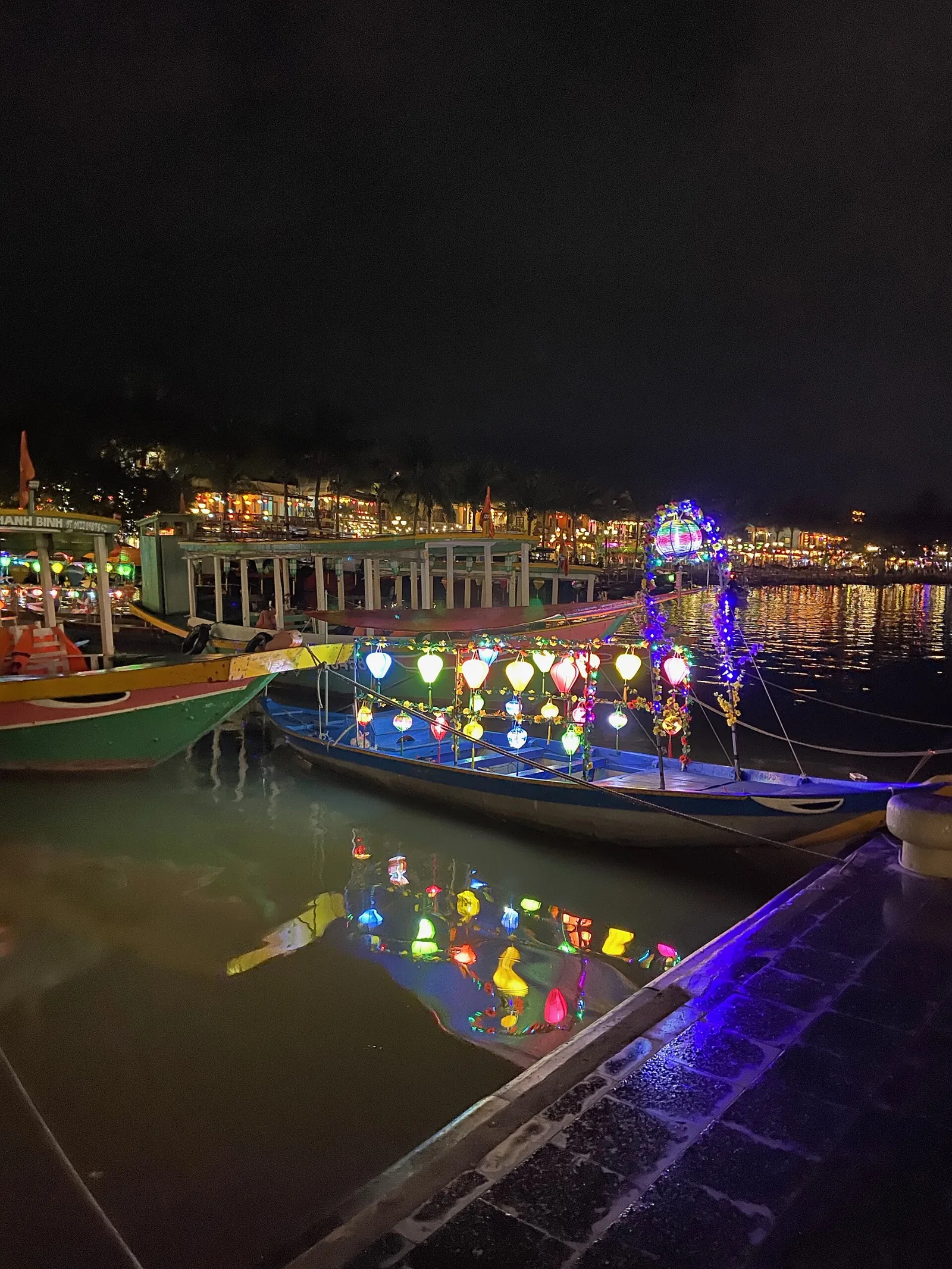
The river glows: hundreds of paper lanterns drift on the Thu Bồn while boats criss-cross with their own lights.
Folk culture: look for bài chòi (a UNESCO-listed sung bingo game), traditional music, calligraphy and lantern stalls around the An Hội islet.
Winding down (~21:30–22:00): the crowds thin and the riverside grows peaceful — a lovely, quieter window.
💡 Arrive before dark (around 17:00) to see the town in daylight, claim a good riverside spot, and watch the magic switch on as night falls.
4. Floating a Lantern on the Thu Bồn (Hoa Đăng)
This is the ritual — and it’s simple, cheap and meaningful. A floating paper lantern is called a hoa đăng. Here’s how:
Buy one from a vendor along the riverbank (Bạch Đằng Street) or from your boat — usually 5,000–10,000₫ (≈$0.20–0.40) each, often cheaper if you buy a few.
Light the candle inside the folded paper lantern.
Make a silent wish — for health, love, luck or letting something go.
Set it on the water gently, from the riverside steps or from a boat, and watch it drift away.
Releasing it represents sending your wishes out into the world and leaving worries behind. Doing it from a boat, mid-river, is the most atmospheric — you’re surrounded by floating light.
🌱 Be kind to the river. The lanterns are lovely but they’re litter once the candle burns out. Buy a sensible number (not a dozen), choose vendors using biodegradable paper where you can, and never leave plastic behind. The magic only lasts if the river stays clean.
5. Taking a Boat on the River
For the best view, get onto the water. From a boat you see the floating lanterns at eye level, spreading across the surface — a perspective you simply can’t get from the bank.
Price: roughly 100,000–150,000₫ per person for about 30 minutes (boats hold several people; a small private boat may be ~150,000–250,000₫ total). Agree the price and length before you step in.
Where: boatwomen wait all along Bạch Đằng Street and by the An Hội bridge.
When: board between about 18:30 and 20:00 for the fullest river. It gets busy on festival nights, so go a little earlier.
Floating lanterns are usually sold from the boat, so you can release yours mid-river.
💡 Travelling as a couple or family? A short private boat is worth the small extra — you control the timing, get better photos, and don’t share the moment with strangers. Compare organised lantern-and-boat experiences below.
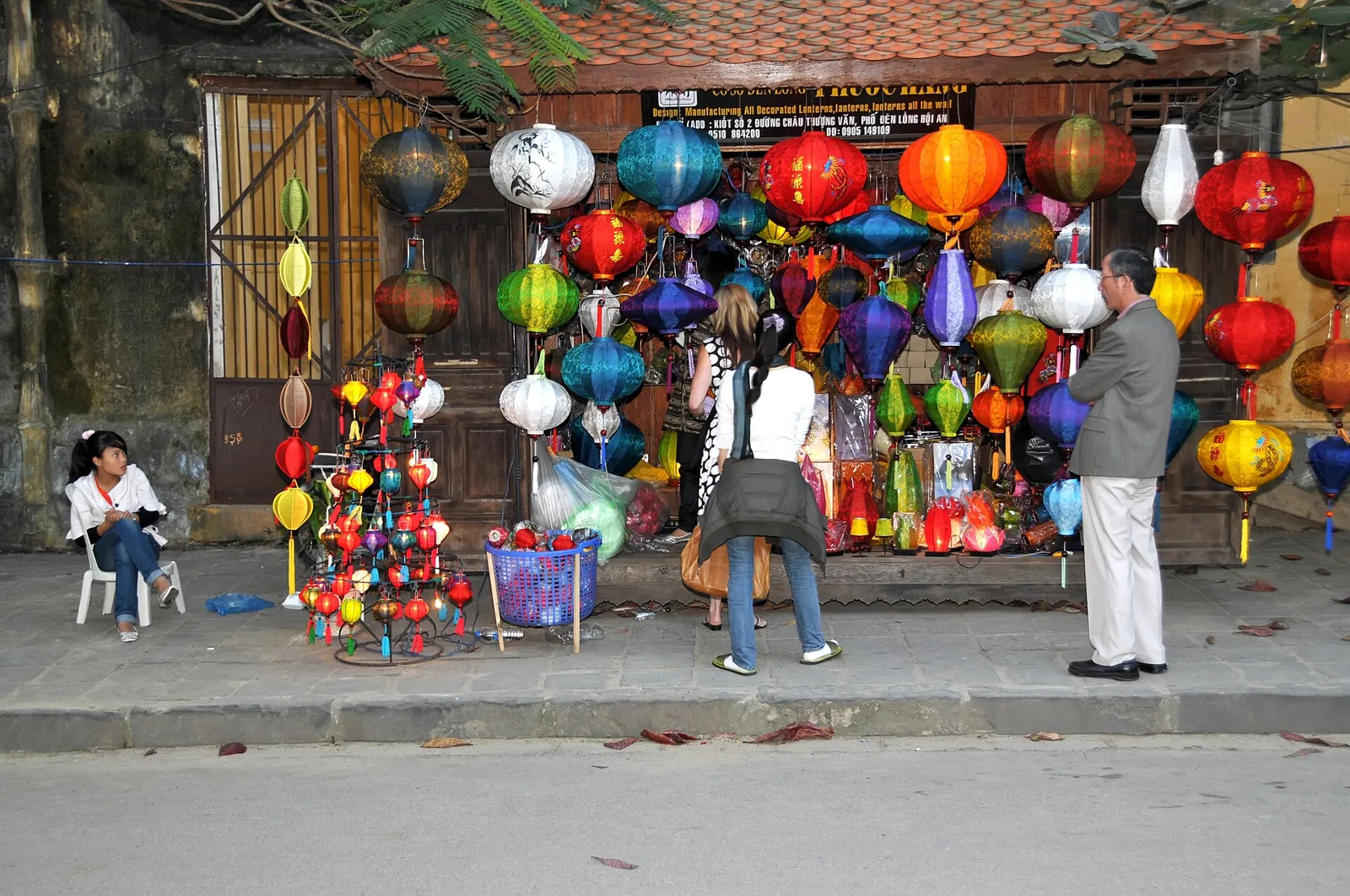
Want a souvenir with a story? In a lantern-making workshop you build your own collapsible silk lantern from the bamboo frame up — and take it home (it folds flat for your suitcase). Classes run about 1–2 hours and typically cost $10–20, often including the materials.
It’s a brilliant rainy-afternoon or pre-festival activity, and great with kids. You’ll also understand the craft far better when you see the lanterns lit that night. Many classes can be booked online — see all the hands-on options in our Hoi An activities guide.
7. The Ancient Town Ticket — Do You Need It?
Hoi An’s Old Town charges a 120,000₫ ticket that covers entry to five of the heritage sites — the Japanese Covered Bridge, old merchant houses, assembly halls and museums. Here’s the honest version:
To simply walk the streets, see the lanterns and float one — in practice you can usually wander the Old Town in the evening without being asked for a ticket, especially during the festival crush.
To go inside the heritage buildings (or visit by day) — you do need the ticket, and it’s good value for the history.
The ticket is technically required to enter the Old Town at all; enforcement is inconsistent at night but you may be asked at a checkpoint.
Our advice: buy the ticket if you want the daytime culture too (the bridge and old houses are worth it), and treat the evening lanterns as the free, magical bonus.
8. The Two Biggest Nights: Nguyên Tiêu & Mid-Autumn
Every full moon is special, but two nights a year are on another level:
Nguyên Tiêu — the first full moon (≈2–3 March 2026)
The first full moon of the lunar year, just after Tết, is the year’s most important and most crowded lantern night. Expect ceremonies at the temples and assembly halls, the fullest river of lanterns, and big crowds — come early and book accommodation well ahead.
Mid-Autumn Festival — Tết Trung Thu (around 24–25 Sep 2026)
The Mid-Autumn (or “Children’s”) Festival fills the town with lion dances, mooncakes, star-shaped children’s lanterns and a joyful, family atmosphere. It overlaps with a full-moon night, so the lanterns and crowds are huge.
💡 Want the spectacle at its absolute biggest? Aim for one of these. Want the same beauty with room to breathe? Pick an ordinary full-moon night in the dry season instead.
9. Best Photo Spots & Photography Tips
This is one of Vietnam’s most photogenic nights. To get the shot:
Where to shoot
The An Hội bridge: the classic wide view of the lantern-lit river and Old Town skyline — but it’s crowded; arrive early.
The Japanese Covered Bridge: the icon of Hoi An, beautifully lit.
The riverbanks (Bạch Đằng & Nguyễn Phúc Chu): for reflections and the floating lanterns up close.
From a boat: the only way to shoot the lanterns spread across the water at eye level.
How to shoot it
Go at blue hour (just after sunset): the deep-blue sky still holds light and balances the glowing lanterns — far better than full dark.
Steady your camera: low light means slow shutter speeds; brace on a railing or use a small tripod/gorillapod.
Lower your shutter, raise ISO carefully, and shoot the reflections in the water.
For portraits, position your subject beside a lantern cluster as the soft warm light source.
The sweet spot — warm, dry evenings and clear skies. Includes Nguyên Tiêu (biggest night). Busy but the best conditions.
May–Aug (hot, dry)
Hot and humid by day but dry, balmy festival nights. Peak summer crowds in Jul–Aug.
Sep (shoulder)
Still warm; includes Mid-Autumn. Rain risk rising late in the month.
Oct–Nov (wet)
The rainy season — the festival can be washed out or even cancelled if the river floods, but a clear night is atmospheric and far less crowded.
Dec–Jan (cool, drier)
Cooler evenings (bring a layer), generally drier than Oct–Nov, fewer crowds.
⚠️ In October and November the Thu Bồn can flood and the Old Town’s riverside streets sometimes go underwater — the festival may be scaled back or postponed. Keep your plans flexible if you visit then.
Hoi An has no airport or train station, so almost everyone arrives via Da Nang, about 45 minutes north:
From Da Nang: a Grab or private car runs ~30–45 minutes; many hotels and tours offer transfers. See our full Da Nang–Hoi An transport guide.
For a festival night, arrange your return ride in advance — Grabs get scarce and pricey when everyone leaves at once (~22:00).
In town: the centre is a pedestrian zone, so you’ll walk. Drivers drop you at the edge; park bikes at guarded lots (~5,000–10,000₫).
Staying over in Hoi An itself is the relaxed way to do the festival — no late dash back to Da Nang.
12. Where to Stay for the Festival
Sleeping in Hoi An lets you enjoy the lanterns into the quiet late evening and skip the transport scramble. Quick orientation (full detail in our where-to-stay in Hoi An guide):
In or beside the Old Town: walk to the lanterns in minutes — the most convenient, but book early for festival nights.
An Bang / Cửa Đại beach: 10–15 minutes out; combine the festival with beach days.
Rice-paddy/riverside stays: quiet, scenic and great value, a short ride from the centre.
⚠️ Rooms near the Old Town sell out and jump in price around Nguyên Tiêu, Mid-Autumn and Tết. If you’re targeting a big night, book weeks ahead.
🏨 Staying inside the Old Town means you walk home after the lanterns, not queue for a rideSee on Trip.com →See on Agoda →See on Expedia →Affiliate link — we may earn a commission at no extra cost to you.
13. What to Eat on Festival Night
The festival is also a feast. Graze your way along the river and through the An Hội night market:
Cao lầu — Hoi An’s signature pork-and-noodle dish, found nowhere else.
White rose dumplings and fried wontons — local specialities.
Bánh mì from the town’s famous stalls, and grilled street snacks at the night market.
Chè (sweet dessert soups) and Vietnamese coffee to round it off.
It’s Hoi An’s monthly full-moon celebration, held on the 14th day of each lunar month. At dusk the Ancient Town turns off its electric lights, thousands of silk lanterns glow, and people float candle-lit paper lanterns (hoa đăng) on the Thu Bồn River as offerings and wishes. It dates back to Hoi An’s days as a 16th–17th-century trading port and blends Chinese, Japanese and Vietnamese traditions.
Q. When is the Hoi An Lantern Festival in 2026?
It falls on the 14th day of every lunar month — the eve of the full moon. In 2026 the festival nights are roughly: 2 Jan, 31 Jan, 2 Mar, 1 Apr, 30 Apr, 29 May, 28 Jun, 27 Jul, 25 Aug, 24 Sep, 23 Oct, 22 Nov and 22 Dec. These are approximate (the lunar calendar can shift them ±1 day), so confirm the exact night locally. The biggest is Nguyên Tiêu, around 2–3 March.
Q. Does the lantern festival happen every night?
The full lights-off festival happens only on full-moon nights (about once a month). But Hoi An hangs silk lanterns, runs river boats and sells floating lanterns every evening of the year — so even if you miss the official night, you’ll still see a beautifully lit Old Town and can float your own lantern.
Q. How much does the Hoi An Lantern Festival cost?
Walking the lantern-lit streets is free. A floating paper lantern is about 5,000–10,000₫, a boat ride roughly 100,000–150,000₫ per person for 30 minutes, and the Ancient Town heritage ticket (needed to enter the old houses) is 120,000₫. A lantern-making class is about $10–20. Bring small cash for everything.
Q. What time does the Hoi An Lantern Festival start and end?
Lanterns come on around sunset (~17:30–18:00), the electric lights go down soon after, and the festival peaks between about 19:00 and 21:00. It winds down by around 22:00. Arrive by 17:00 to enjoy the town in daylight first and grab a good riverside spot.
Q. Do I need the Ancient Town ticket to see the lanterns?
To simply walk the streets and float a lantern at night, you usually won’t be stopped for a ticket — especially during the festival crowds. The 120,000₫ ticket is required to go inside the heritage buildings (the Japanese Bridge, old houses, assembly halls) and to visit by day, and it’s good value if you want the culture too.
Q. Can you float a lantern on a non-festival night?
Yes. Vendors sell floating paper lanterns (hoa đăng) along the river every evening, and boats run nightly, so you can do the ritual any night of the year. The full-moon festival nights are simply the biggest, with the lights-off atmosphere and the most lanterns on the water.
Q. How do I get to Hoi An for the festival from Da Nang?
Hoi An is about 45 minutes south of Da Nang by Grab, taxi or private car (no airport or train in Hoi An itself). Many hotels and tours offer transfers. On festival nights, arrange your return ride in advance — cars get scarce and pricey when the crowds leave together around 22:00. See our Da Nang–Hoi An transport guide.
Q. Which is the best month for the Hoi An Lantern Festival?
February to April is the sweet spot — warm, dry evenings, clear skies and the year’s biggest night (Nguyên Tiêu, early March). May to August is hot but dry at night. October–November is the rainy season, when the festival can be smaller or disrupted by flooding, but a clear night then is far less crowded.
Q. Is the Hoi An Lantern Festival worth it?
Yes — it’s one of the most memorable evenings in Vietnam, and because it runs monthly, most trips can include it. The lantern-lit Old Town and the floating candles on the river are genuinely magical. To enjoy it at its best, come on a dry-season full moon, arrive before dark, and take a short boat onto the water.
Q. Can I take a boat on the river, and how much is it?
Yes — boatwomen wait along Bạch Đằng Street and the An Hội bridge. A shared boat is roughly 100,000–150,000₫ per person for about 30 minutes; a small private boat may be ~150,000–250,000₫ total. Agree the price and duration before boarding. From the water you get the best view of the floating lanterns and the lit Old Town.
Q. What is Nguyên Tiêu, the biggest lantern night?
Nguyên Tiêu is the first full moon of the lunar year (around 2–3 March 2026, just after Tết). It’s the most important and most crowded lantern night, with ceremonies at the temples and assembly halls and the fullest river of lanterns. Book accommodation well ahead and arrive early if you target this night.
Q. Where are the best photo spots at the festival?
The An Hội bridge for the classic wide river view, the Japanese Covered Bridge, the riverbanks for reflections and close-ups of floating lanterns, and a boat for eye-level shots across the water. Shoot at blue hour (just after sunset) when the sky still has colour, and steady your camera for the low light.
Q. Is the Hoi An Lantern Festival crowded — how do I avoid the crush?
Full-moon nights are busy, and Nguyên Tiêu, Mid-Autumn and Tết are very busy. To dodge the worst, arrive around 17:00 before the peak, or stay out past 21:30 when crowds thin and the river quiets — also the best window for photos. Picking an ordinary full moon over a major festival night helps too.