
What to Eat in Hoi An: Cao Lầu, White Rose
The dishes you can only eat here, the Bourdain-famous banh mi, the secret-recipe dumplings, and exactly where to find them — a local-style food guide to Vietnam’s tastiest old town.
- Cao lầu is the one dish you truly can’t get anywhere else — chewy noodles made with ancient Ba Le well water. Eat it in Hoi An or not at all.
- White rose dumplings (bánh bao bánh vạc) come from a single family who supply almost every restaurant in the Old Town.
- Bánh mì here is world-famous: Bánh Mì Phượng was put on the map by Anthony Bourdain, with Madam Khánh ‘The Bánh Mì Queen’ close behind.
- Also unmissable: cơm gà (chicken rice), hoành thánh (fried wontons), mì quảng and a row of sweet snacks.
- Most dishes cost 20,000–50,000 VND (≈$1–2) — Hoi An is a place where the cheapest food is often the best.
1. Hoi An’s Must-Try Dishes at a Glance
2. Cao Lầu: The Dish You Can Only Eat in Hoi An
3. White Rose Dumplings (Bánh Bao Bánh Vạc)
4. Bánh Mì: Hoi An’s World-Famous Sandwich
5. Cơm Gà: Hoi An Chicken Rice
6. Hoành Thánh: Fried Wontons & More
7. Mì Quảng & the Region’s Other Noodles
8. Sweets, Snacks & Street Bites
9. Where to Eat: Markets, the Old Town & the Beach
10. Food Tours & Cooking Classes
11. Vegetarian, Dietary Needs & Practical Tips
If you came to Hoi An for the lanterns, you’ll remember it for the food. This little town punches astonishingly above its weight: it has dishes that exist nowhere else on earth, a bánh mì that drew Anthony Bourdain across the world, and a secret-recipe dumpling guarded by one family for generations. Better still, the best of it is street-stall cheap. This guide walks you through every must-try dish — what it is, what it should taste like, and exactly where to eat it — plus food tours, cooking classes, vegetarian options and the practical tips that keep your stomach happy. (New here? Pair it with our complete Hoi An travel guide and things to do in Hoi An.)
1. Hoi An’s Must-Try Dishes at a Glance
🍜 What to eat in Nha Trang: the dishes, the prices and where the shops are →
Start here. These are the dishes that define Hoi An — what they are, the rough price, and where to find the best version:
| Dish | What it is | Price | Famous for |
|---|---|---|---|
| Cao lầu | Chewy noodles, char siu pork, greens, croutons | 25,000–40,000₫ | Only authentic in Hoi An |
| White rose (bánh bao bánh vạc) | Steamed shrimp dumplings shaped like flowers | 70,000–100,000₫ | One family’s secret recipe |
| Bánh mì | Crisp baguette, pâté, cold cuts, herbs | 25,000–40,000₫ | Bánh Mì Phượng & Madam Khánh |
| Cơm gà | Turmeric chicken rice with herbs | 35,000–50,000₫ | Cơm Gà Bà Buội |
| Hoành thánh chiên | Crispy fried wontons with salsa topping | 60,000–90,000₫ | Hoi An’s Chinese-Vietnamese twist |
| Mì quảng | Turmeric noodles with a little rich broth | 30,000–45,000₫ | The regional Quảng Nam classic |
2. Cao Lầu: The Dish You Can Only Eat in Hoi An
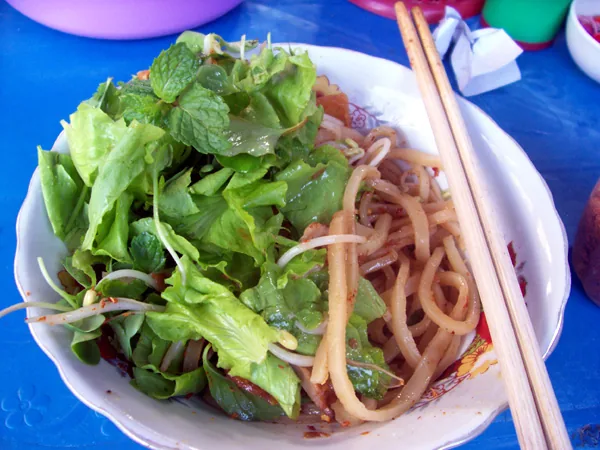
If you eat one thing in Hoi An, make it cao lầu — a dish so tied to this town that it genuinely can’t be made authentically anywhere else.
- What it is: thick, chewy, slightly smoky noodles topped with slices of char siu-style pork, fresh herbs and greens, and crunchy square croutons (made from the same dough, deep-fried). It’s tossed, not soupy — just a little savoury sauce at the bottom.
- Why only here: the noodles are traditionally made with water from the ancient Bá Lễ well and ash from trees on the Cham Islands, giving a texture you can’t replicate. That’s why “cao lầu” on a menu outside Hoi An is never quite the real thing.
- Where: the Old Town stalls, the central market, and long-running spots around Trần Phú. A bowl runs about 25,000–40,000₫.
3. White Rose Dumplings (Bánh Bao Bánh Vạc)
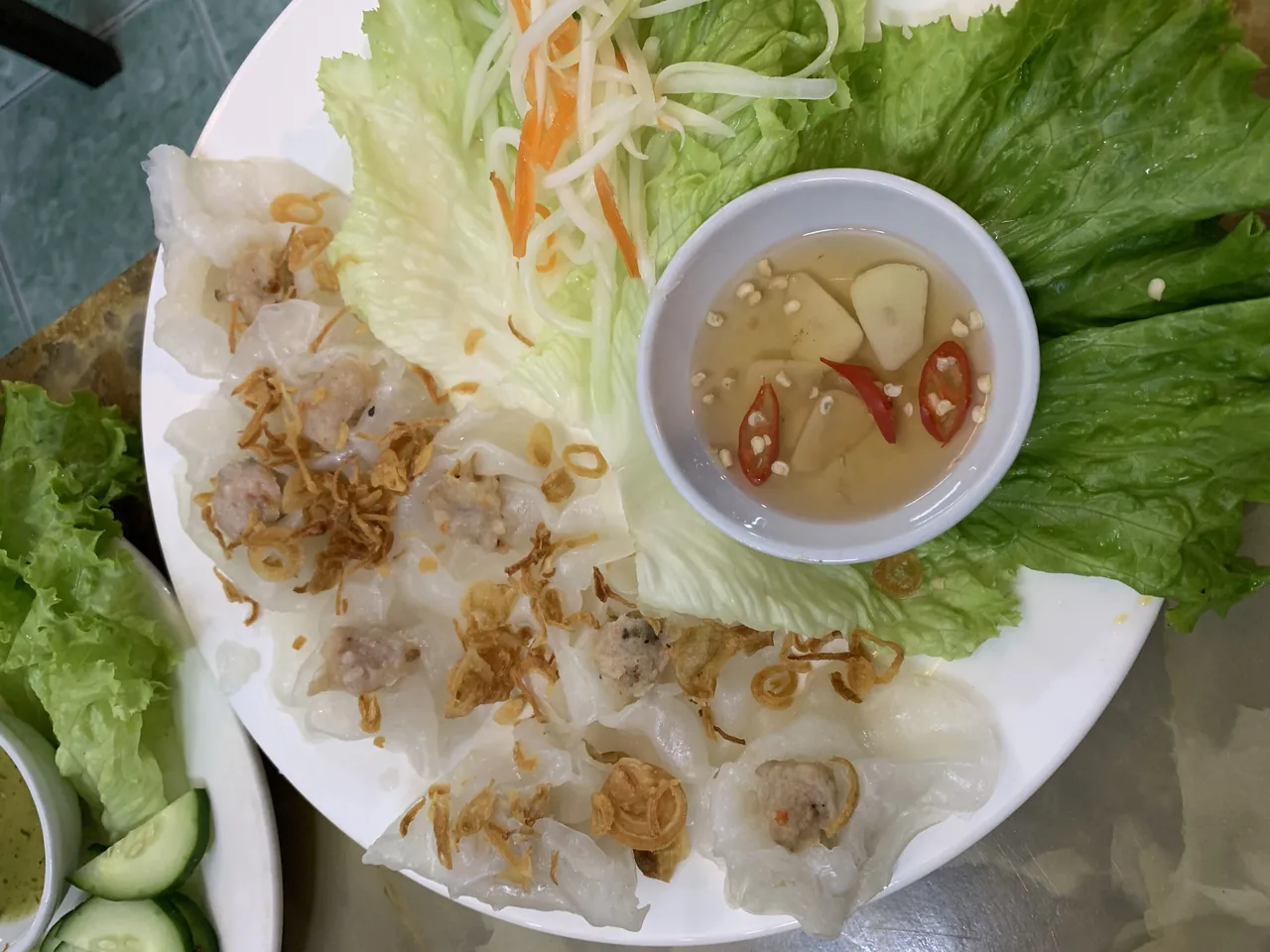
The prettiest thing you’ll eat in Hoi An, white rose dumplings are translucent rice-flour parcels filled with seasoned minced shrimp, pinched into the shape of a blooming flower and showered with crispy fried shallots.
- The secret: the recipe belongs to one family, who for generations have made the dumplings at the White Rose Restaurant (533 Hai Bà Trưng) and supply nearly every other restaurant in the Old Town. Order them anywhere and they likely came from that one kitchen.
- How they’re served: a dozen to a plate, with a sweet-savoury dipping sauce; often alongside hoành thánh chiên (fried wontons) from the same family.
- Price: about 70,000–100,000₫ a plate — pricier than cao lầu because every one is folded by hand.
4. Bánh Mì: Hoi An’s World-Famous Sandwich
Vietnam’s best bánh mì is a fierce debate, but Hoi An has the two most famous names in the country:
- Bánh Mì Phượng (2B Phan Châu Trinh) — the one Anthony Bourdain called a “symphony in a sandwich” on No Reservations in 2012. Expect a queue at peak (11am–2pm, ~15–25 min); it drops to nothing after about 8:30pm.
- Madam Khánh – The Bánh Mì Queen (115 Trần Cao Vân) — a tiny shop many locals and travellers rate even higher, run by the much-loved “queen” herself.
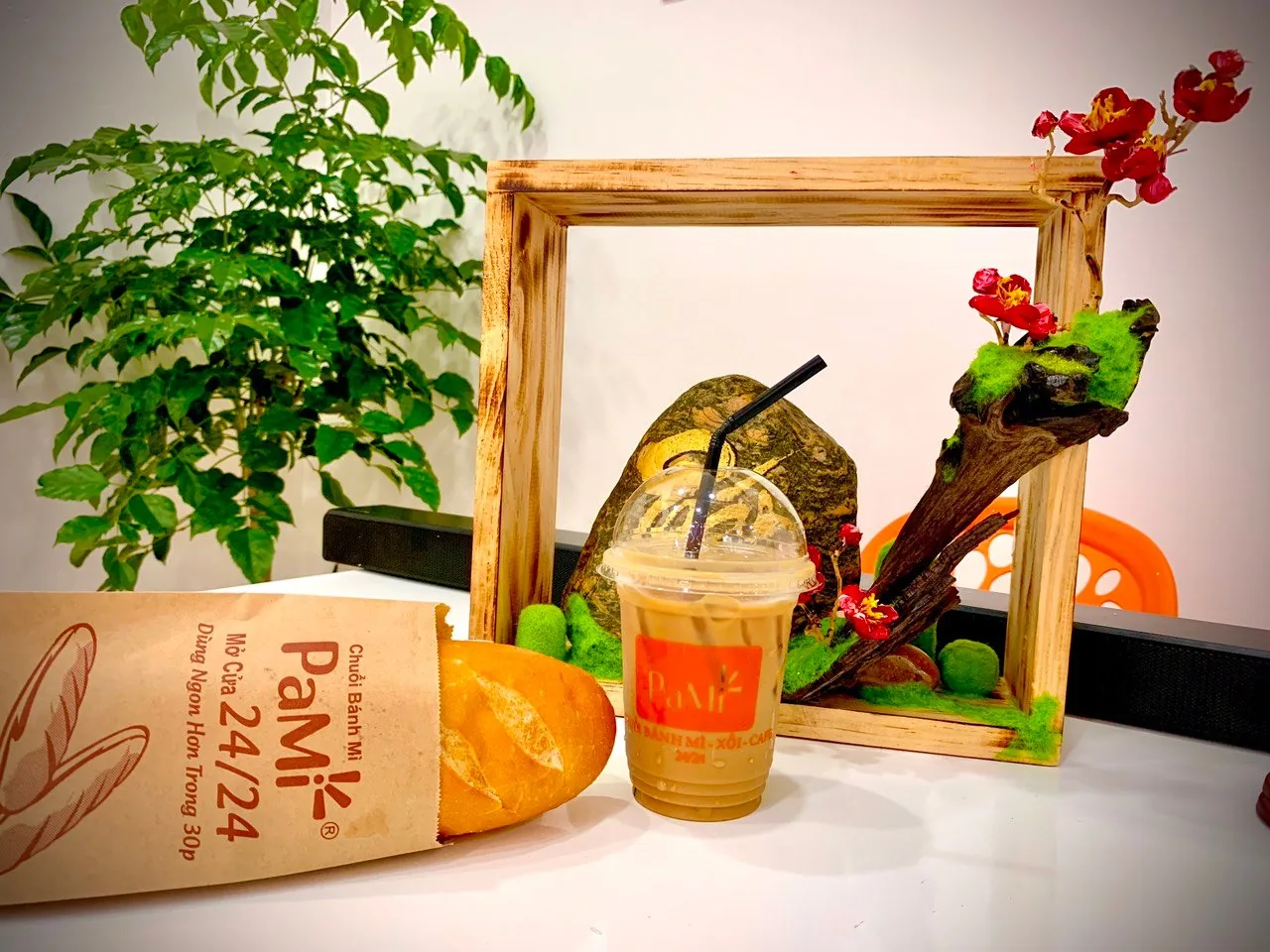
- What’s inside: a crisp, airy baguette with pâté, cold cuts or grilled meat, pickled veg, cucumber, fresh herbs, chilli and a house sauce. Around 25,000–40,000₫.
Want the wider picture? See our Da Nang bánh mì guide for how the region does it.
5. Cơm Gà: Hoi An Chicken Rice
Cơm gà is Hoi An comfort food: rice cooked in chicken stock and turmeric until golden and fragrant, topped with shredded poached chicken, fresh herbs, raw onion and a tangle of pickles, with a bowl of broth on the side.
- The famous name: Cơm Gà Bà Buội, now run by the founder’s children, prized for quality rice, free-range “garden” chicken and herbs from nearby Trà Quế village.
- Also great: Cơm Gà Bà Nga and the stalls in the central market.
- Price: about 35,000–50,000₫.
6. Hoành Thánh: Fried Wontons & More
Hoi An’s centuries as a Chinese trading port left it with hoành thánh (wontons), served three ways — in soup, as noodles, and the local favourite, hoành thánh chiên (fried).
- Fried wontons: crisp golden squares topped with a colourful salsa of shrimp or pork, tomato, onion and herbs — crunchy, sweet, savoury and a little messy in the best way.
- Where: the White Rose Restaurant and Old Town eateries serve them alongside the dumplings; many cao lầu stalls do too.
- Price: about 60,000–90,000₫ a plate.
7. Mì Quảng & the Region’s Other Noodles
Hoi An sits in Quảng Nam province, home of mì quảng — turmeric-yellow noodles with just a splash of intense broth (not a soup), topped with shrimp, pork or chicken, peanuts, fresh herbs and a shard of sesame rice cracker you crumble on top.
- How to eat it: toss it all together; it should be barely wet, rich and herby.
- Also try: bánh xèo (crispy turmeric pancakes — the Bá Lễ Well restaurant does a famous set) and the soups at the market.
For the deep dive, see our mì quảng guide.
8. Sweets, Snacks & Street Bites
Leave room for Hoi An’s sweet and snacky side, much of it sold from baskets and tiny carts:
- Chè — sweet bean, jelly and coconut-milk “dessert soups”, hot or iced.
- Bánh đập — a “smashed” rice cracker pressed onto soft rice paper, eaten with a savoury dip; the classic pairing is with hến (baby clams).
- Xí mà — a warm black-sesame sweet soup sold by roaming vendors, a Hoi An institution.
- Bánh bao & grilled corn, sesame brittle, fresh fruit from the night market.
9. Where to Eat: Markets, the Old Town & the Beach
Hoi An’s food is everywhere — but here’s where to point yourself:
- Hoi An Central Market (Chợ Hội An): the cheapest, most authentic bowls — cao lầu, mì quảng, chè — in a buzzing morning-to-afternoon market on the riverfront.
- The Old Town lanes: the famous named spots (Phượng, Bà Buội, White Rose) plus countless small eateries — see our getting around Hoi An guide for the pedestrian-zone hours.
- An Bang Beach: seafood shacks and relaxed cafés a short ride away — pair with our Vietnamese seafood guide.
- The night market (An Hội): grilled skewers, sweets and snacks under the lanterns.
10. Food Tours & Cooking Classes
To go deeper than a single meal, two experiences are worth your time:
- A street-food tour — a local guide walks you between stalls you’d never find alone, explaining each dish (and ordering for you). The easiest way to taste a lot, fast.
- A cooking class — most start with a market tour and many include a boat trip to Trà Quế herb village before you cook cao lầu, white rose or fresh spring rolls. A Hoi An highlight in its own right (see our things to do in Hoi An).
11. Vegetarian, Dietary Needs & Practical Tips
A few things to know before you dig in:
- Vegetarian/vegan: Hoi An is easy — look for “chay” (vegetarian) eateries, and note many dishes can be made meat-free. Our Vietnam vegan & vegetarian guide has the phrases and pitfalls (watch for fish sauce).
- Hygiene: busy stalls with high turnover are your friend; freshly cooked and piping hot is safest. See our Vietnam scams & safety guide for street-food peace of mind.
- Timing: the famous spots sell out — go early for white rose and cơm gà; bánh mì is easiest late evening.
- Cash: small notes for stalls; most don’t take cards.
🎡Things to Do53
🍜Food7
🏨Where to Stay6
🚇Getting Around9
🧭Travel Tips21
🧭Vietnam-wide essentials58
Frequently Asked Questions