The Cham Sculpture Museum, Da Nang: Is It Worth a Visit?
The world’s largest collection of Cham art — what to see, the kingdom behind it, and how to plan a visit to Da Nang’s most rewarding museum.
Last updated & verified: June 2026
Cham Museum, in 30 seconds
One of a kind: the Museum of Cham Sculpture holds the largest collection of Cham art in the world — around 2,000 sandstone gods, dancers and mythical beasts from the lost kingdom of Champa.
Cheap & central: the adult ticket is roughly 60,000₫ (about US$2.50), it’s open daily, and it sits right by the Dragon Bridge in central Da Nang.
Quick but deep: allow 1–1.5 hours. The galleries are arranged by the great Cham sites — My Son, Tra Kieu, Dong Duong and Thap Mam.
Perfect pairing: see the sculptures here first, then visit the temple ruins of My Son to put them in context.
Most visitors come to Da Nang for the beaches and the bridges — but tucked beside the Han River is something far older and quietly extraordinary. The Museum of Cham Sculpture (Bảo tàng Điêu khắc Chăm) holds the world’s finest collection of art from Champa, a Hindu-Buddhist kingdom that ruled central Vietnam for more than a thousand years. Inside its airy colonial halls stand around 2,000 sandstone masterpieces — serene gods, swirling dancers and fierce mythical beasts — that you simply won’t see anywhere else. It’s compact, affordable and central, which makes it one of Da Nang’s best rainy-day or culture stops. This guide covers what to see, the history behind it, and how to plan your visit — hours, tickets and how to get there. Note: opening hours and ticket prices change; treat the figures here as a 2026 guide and confirm the latest before you go. (Planning the rest? See our complete Da Nang guide.)
Because there is nothing else like it. The Museum of Cham Sculpture holds the largest and most important collection of Cham art on Earth — the artistic legacy of a sophisticated civilisation most travellers have never heard of. Where else can you stand before a thousand-year-old goddess carved in golden sandstone, her expression still impossibly calm?
It’s also one of the most practical stops in Da Nang. It’s right in the city centre by the Dragon Bridge, the ticket costs about the price of a coffee, and you only need an hour or so. That makes it ideal as a rainy-day plan, a culture break between beach days, or a primer before a trip to the My Son ruins.
Best of both. See the sculptures here first, then visit My Son. The statues here were taken from temples like those at My Son — seeing them together makes both far more meaningful.
🎟️ An hour indoors and air-conditioned for about $2.50 (60,000 VND) makes this the easy half of a Da Nang day — pair it with a booked Ba Na Hills or Marble Mountains ticket and the other half is done.See on Klook →See on Viator →See on KKday →See on Trip.com →Affiliate link — we may earn a commission at no extra cost to you.
2. Who Were the Cham? A Quick History
To appreciate the art, it helps to know the people. Champa was a kingdom — really a network of trading states — that flourished along the coast of central Vietnam from roughly the 2nd to the 15th century. The Cham were master seafarers and traders, and through contact with India they adopted Hinduism (especially the worship of Shiva) and, later, Buddhism.
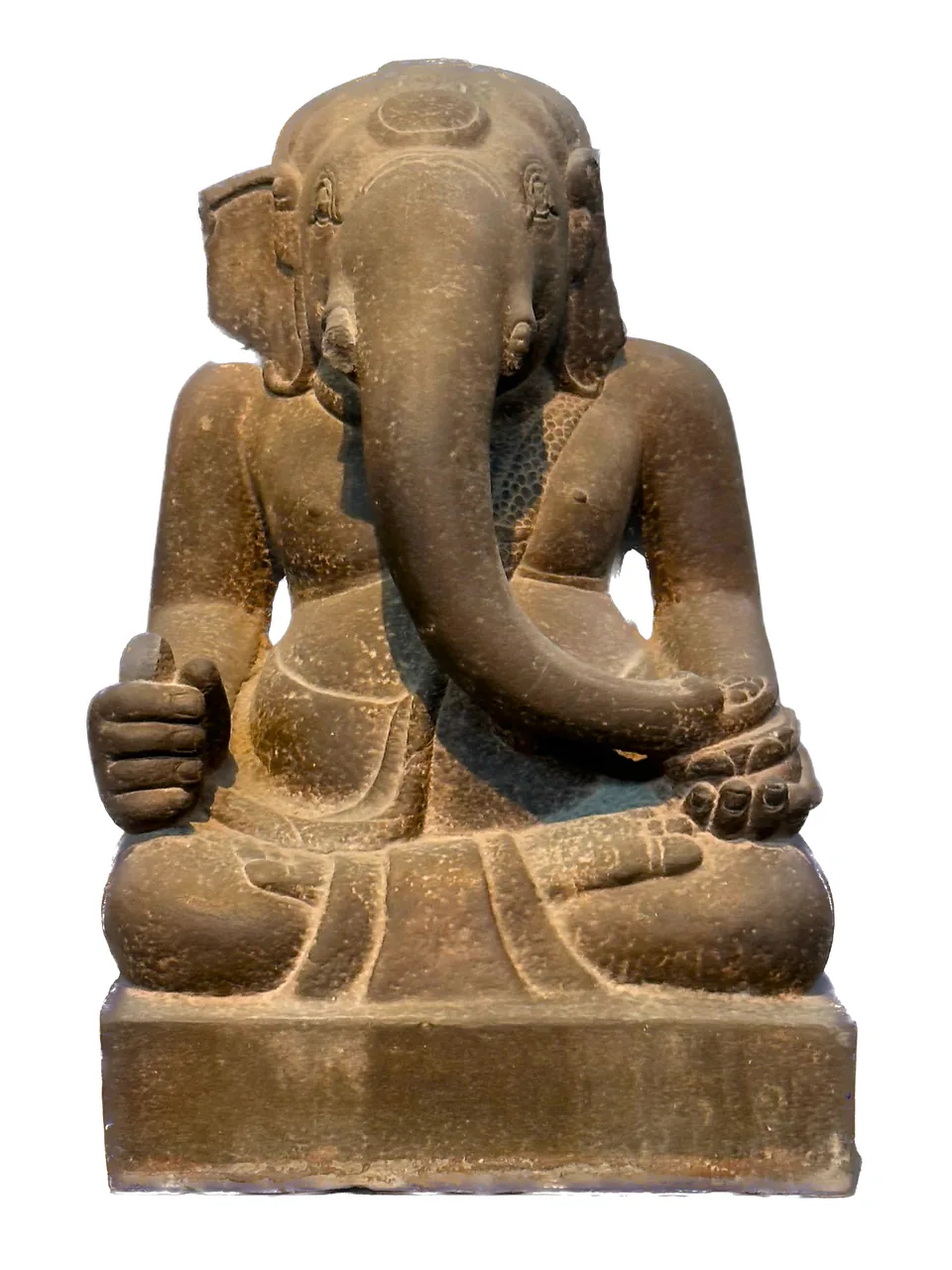
That faith is what you see carved in stone here: Shiva and Vishnu, the elephant-headed Ganesha, celestial dancers (apsaras), and mythical guardians like the bird-god Garuda and the sea-monster makara. Over the centuries Champa was gradually absorbed by the expanding Vietnamese state, and its temples fell quiet — but the sculpture survived, and the Cham people remain part of Vietnam today.
Their greatest religious centre was the temple complex of My Son, now a UNESCO World Heritage Site, a day trip from Da Nang. Many of the finest works in this museum came from there.
3. The Building & Its Story
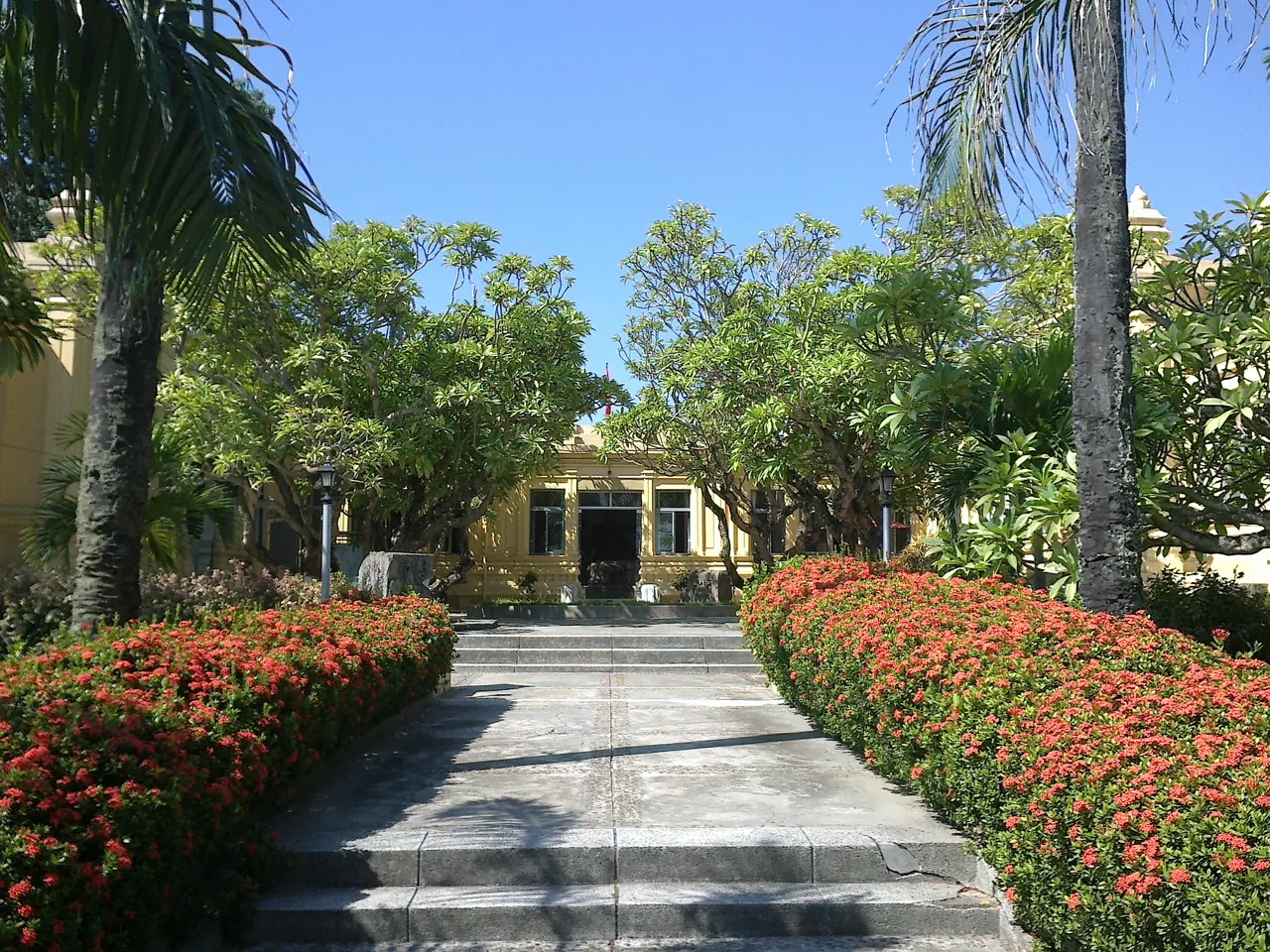
The museum is a piece of history in itself. It was built between 1915 and 1919 by the French École française d’Extrême-Orient (EFEO), the institution that pioneered the study and rescue of Cham antiquities, inspired by the archaeologist Henri Parmentier.
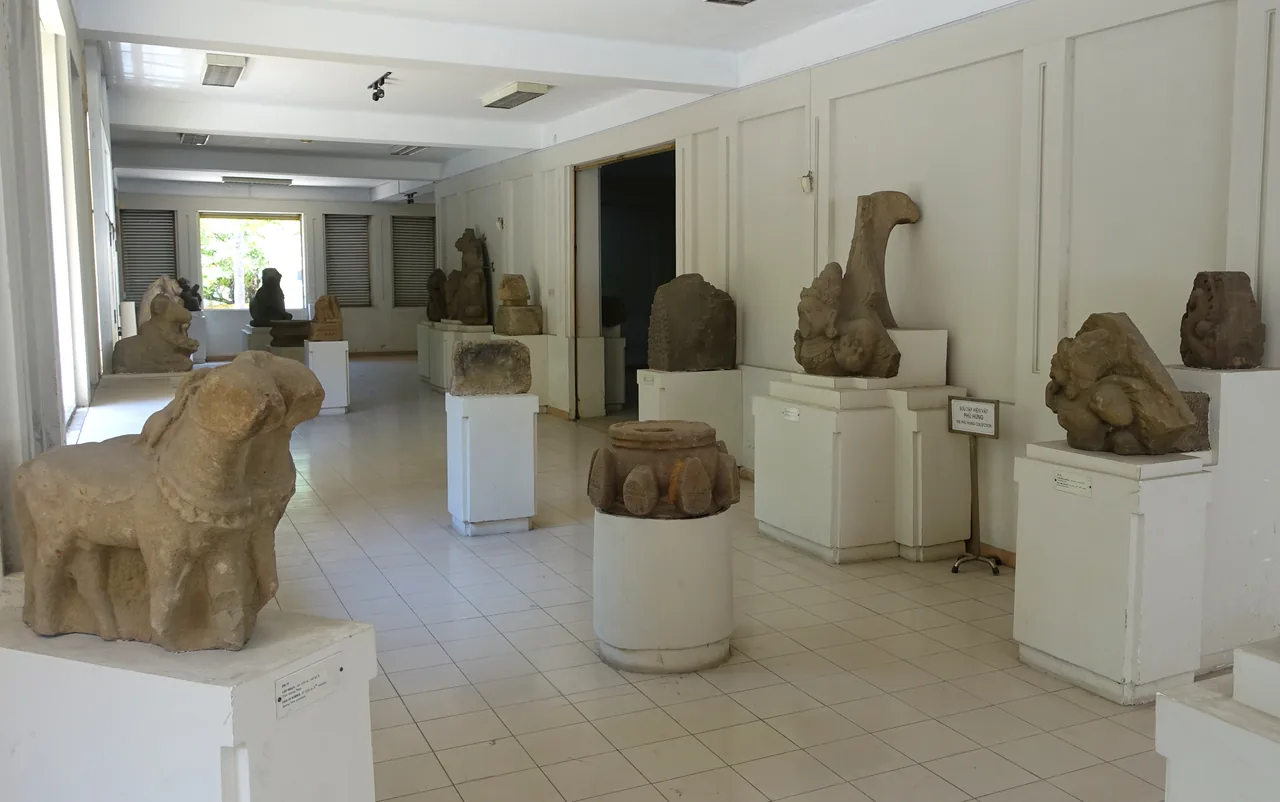
The graceful, low-slung building — pale yellow, open to the breeze — was designed by French architects who wove Cham architectural motifs into the colonial design, so the setting echoes the art it holds. It has been expanded several times since, but it keeps its original calm, garden-like feel, with sculptures displayed in naturally lit halls rather than crammed behind glass.
It started with about 160 artifacts; today it cares for close to 2,000, gathered from Cham sites across central Vietnam.
The collection is organised by the archaeological sites the works came from, so a visit is like travelling across the old Cham heartland. The main galleries:
Gallery
Origin
What you’ll see
My Son
Vietnam’s holiest Cham site
Temple altars, deities and the famous My Son E1 pedestal
Tra Kieu
The old capital Simhapura
The graceful Tra Kieu altar with its band of dancers
Dong Duong
A great Buddhist monastery
Buddhist art, including the celebrated bronze Tara
Thap Mam / Binh Dinh
A later southern style
Bold, powerful mythical beasts & guardians
You’ll also find rooms grouped by region (Quang Tri, Quang Nam, Quang Ngai, Kon Tum and more). Don’t rush — the joy is in the details: the curve of a dancer’s hip, the patient smile of a Buddha, the snarl of a stone makara.
5. Masterpieces You Shouldn’t Miss
Several works here are recognised National Treasures of Vietnam. Even if you only have an hour, seek these out:
The Tara of Dong Duong — a magnificent bronze Buddhist goddess, one of the museum’s most prized pieces.
The My Son E1 pedestal — a large carved altar base showing scenes of hermits and daily life, a high point of early Cham art.
The Tra Kieu altar — famous for its frieze of apsara dancers, full of movement and grace.
Shiva, Ganesha & the dancers — the Hindu gods that show the unmistakable, sensual Cham sculptural style.
Use the audio guide. The museum offers an electronic audio guide (in Vietnamese, English and French) that brings these pieces to life — well worth it for the masterpieces above.
6. Plan Your Visit: Hours, Tickets & Getting There
The essentials at a glance (a 2026 guide — please confirm the latest):
Detail
Information
Opening hours
Daily, roughly 7:00 AM – 5:00 PM
Ticket (adult)
Around 60,000₫ (about US$2.50)
Children
Under 16 usually free
Location
No. 2, 2 Thang 9 Street, Hai Chau — by the Dragon Bridge
Audio guide
Available in Vietnamese, English & French
Time needed
About 1–1.5 hours
Getting there: the museum is in the city centre at the western foot of the Dragon Bridge, on the river side. From most hotels it’s a short, cheap Grab ride (car or bike) — see our Da Nang guide for transport tips. It’s also an easy walk from many central and riverside hotels.
Please double-check. Opening hours, the ticket price and audio-guide hours can change. Confirm the current details (and any temporary closures) before you set out. (As of June 2026.)
The museum’s elegant 1915–1919 building blends French colonial design with Cham architectural motifs. (public domain)
7. Tips for Making the Most of It
A few things that make the visit better:
Go in the morning when it’s cooler and quieter, and the natural light on the sandstone is at its best.
Take the audio guide or read the labels — the context turns “old statues” into a story you’ll remember.
Dress respectfully as you would for a temple; it’s a calm, cultural space.
Photography is generally allowed — the soft natural light is lovely, no flash needed.
Pair it with My Son (the temples the sculptures came from) for the full story, or with the Dragon Bridge and Han River right outside.
It’s a small museum, so don’t over-plan — an hour of slow looking is more rewarding than a rushed sprint.
8. What to Combine Nearby
The museum sits in the heart of riverside Da Nang, so it slots easily into a half-day:
The Dragon Bridge — right outside; come back after dark for the fire-and-water show on weekend nights.
The Han River & Han Market — a riverside stroll and a classic local market a few minutes away.
My Son Sanctuary — the UNESCO temple ruins the sculptures came from; a popular day trip from Da Nang.
Hoi An — combine a culture day with the nearby old town; see our Hoi An guide.
However you build your day, the Cham Museum rewards a little curiosity — and once you’ve met the art of Champa, the whole region reads differently. Plan the rest of your trip with our complete Da Nang guide.
🎟️ See the sculptures first and the temples second: My Son, the UNESCO site most of these pieces were lifted from, is a half-day run from Da Nang and the pair makes far more sense than either alone.See on Klook →See on Viator →See on KKday →See on Trip.com →Affiliate link — we may earn a commission at no extra cost to you.
Yes — especially if you enjoy history, art or culture. It holds the world’s largest collection of Cham sculpture, it’s cheap and central, and it needs only about an hour. It’s also one of Da Nang’s best rainy-day options. Pair it with the My Son ruins for the full story.
Q. How much is the ticket?
The adult ticket is roughly 60,000₫ (about US$2.50), and children under 16 usually enter free. Prices can change, so confirm the latest at the entrance. (As of 2026.)
Q. What are the opening hours?
The museum is generally open daily from about 7:00 AM to 5:00 PM, including weekends. Hours can change, so double-check before you go, especially around holidays.
Q. Where is it and how do I get there?
It’s at No. 2, 2 Thang 9 Street, Hai Chau District, by the western foot of the Dragon Bridge on the riverside. A short Grab car or bike ride from most hotels, or an easy walk from central and riverside areas.
Q. How long do I need?
Allow about 1 to 1.5 hours. It’s a compact museum, so you can see the highlights comfortably in an hour; art lovers may want a little longer with the audio guide.
Q. Is there an English audio guide?
Yes — the museum offers an electronic audio guide in Vietnamese, English and French, which really helps bring the masterpieces and their history to life.
Q. Can I combine it with My Son?
Absolutely, and we recommend it. The sculptures here came from temples like those at My Son. Seeing the museum first, then the ruins (a day trip from Da Nang), makes both far richer.
Q. Is it suitable for children?
It can be, in small doses — it’s calm, cool and full of dramatic stone gods and beasts. It’s compact enough not to tire little ones, and under-16s usually enter free. For an active family day, pair it with the riverfront afterwards.