The mirror-still lagoon at the foot of the Hai Van Pass — when to go, how to get there from Da Nang, the famous low-tide path and the best photo spots.
Last updated: June 2026
Lap An Lagoon, in 30 seconds
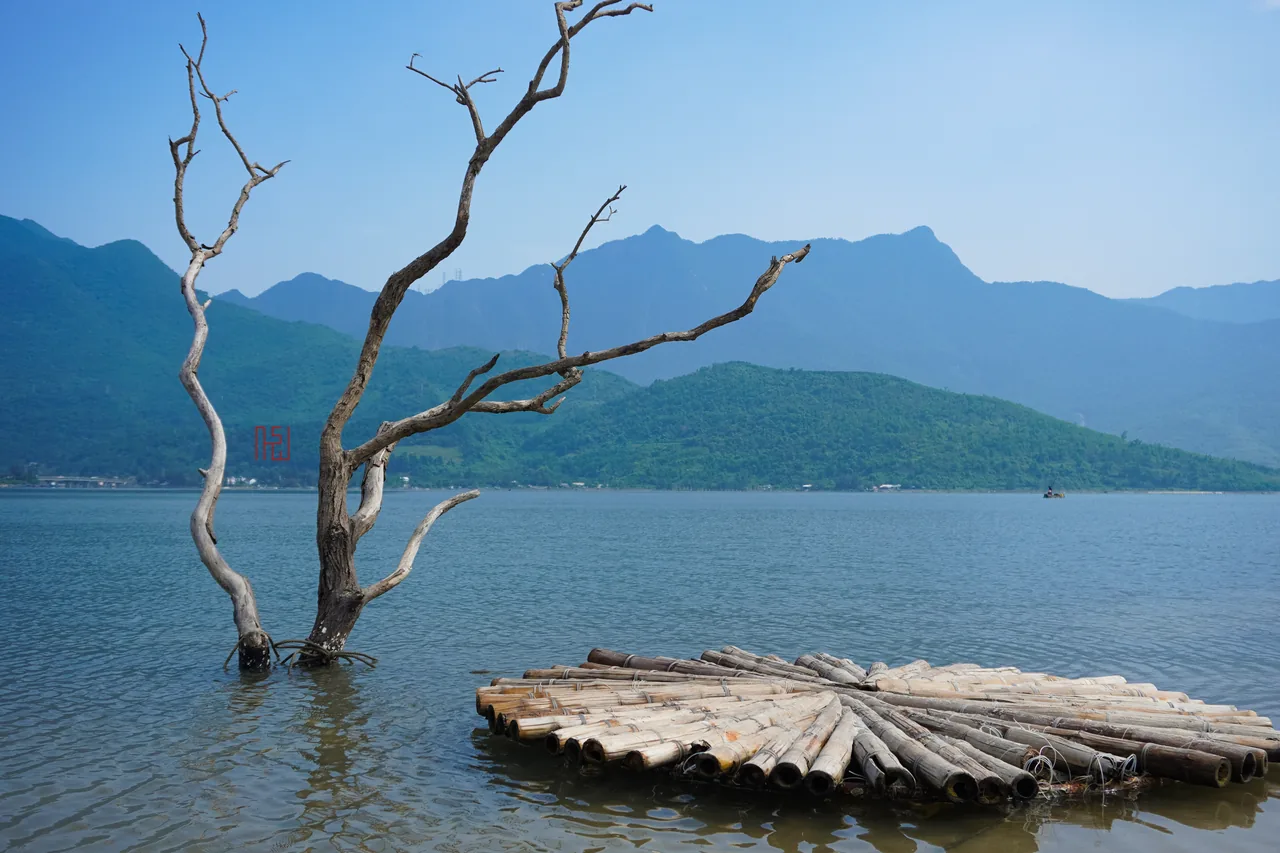
What: a calm tidal lagoon at the northern foot of the Hai Van Pass, by Lang Co — famous for mirror reflections of the Bach Mã mountains, oyster rafts and a lone dead tree.
Why go: one of central Vietnam’s most photographed spots — glassy water at sunrise/sunset and, at low tide, a sandy path you can walk out into the lagoon.
Getting there: ~25–35 km / 40–60 min north of Da Nang, via the Hai Van tunnel or the scenic pass; free to visit.
When: dry season (roughly Mar–Sep), at sunrise or sunset, ideally on a low, calm tide for the best mirror and the walkable sandbar.
Lap An Lagoon (Đầm Lập An) is the dreamy, mirror-still lagoon that sits at the northern foot of the Hai Van Pass, wrapped around the fishing town of Lang Co. On a calm morning the water turns to glass, perfectly reflecting the Bạch Mã mountains, the bamboo oyster rafts and a famous lone dead tree — and at low tide a sandy path emerges that lets you walk right out into the lagoon. It’s one of the most photographed places in central Vietnam, yet it’s still an easy, free half-day from Da Nang. This guide covers exactly when to go (it’s all about the light and the tide), how to get there, the low-tide walk and best photo spots, the oyster farms and lagoon seafood, what to pair it with nearby, and the weather and practical tips you need. (New to the region? Start with our complete Da Nang guide.)
Lap An Lagoon (Đầm Lập An, also called Lăng Cô Lagoon) is a shallow, brackish tidal lagoon — roughly 15 km² — tucked between the Hai Van mountains and the long sandbar of Lang Co. Sea water seeps in from Lang Co Bay, the Bạch Mã range rises straight out of the far shore, and the whole basin sits so still that on a calm day it works like a giant mirror.
Three things make it special:
The reflections. At sunrise and sunset, with no wind, the lagoon mirrors the mountains and sky almost perfectly — the shot every photographer comes for.
The lone dead tree & oyster rafts. A bare, silvery tree standing in the shallows, surrounded by circular bamboo oyster rafts, has become the lagoon’s signature image.
The low-tide walk. When the tide drops, a sandy path surfaces and you can stroll 200–300 m out, water on both sides, mountains all around.
💡 The lagoon sits right where the Hai Van Pass comes down to the coast — most people see it as the jaw-dropping view on the Lang Co side of the pass, then come down for a closer look.
🎟️ Because the lagoon sits at the foot of the Hai Van Pass, almost nobody does just one — a pass tour or a private car covers the 25–35 km from Da Nang and pulls over at the shore for the reflections.See on Klook →See on Viator →See on KKday →See on Trip.com →Affiliate link — we may earn a commission at no extra cost to you.
2. The Best Time: Light & the Tide
Lap An is one of those places where when you go matters far more than anything else. Two clocks decide whether you get the magic shot: the sun and the tide.
Time
What you get
Best for
Sunrise (best)
Soft pink/orange light, glassy water, almost no crowds, cool air
The classic mirror reflection & photography
Sunset
Warm golden light behind the mountains, more people
Golden-hour photos without the early start
Low tide
The sandbar path surfaces — walk out into the lagoon
The ‘walking on water’ shots & oyster rafts up close
Midday
Harsh light, often hazy, water less mirror-like
Skip it — come for golden hour instead
Season: the dry months — roughly March to September — give the calmest water and clearest skies. The wet season (around Oct–Dec) brings grey skies, wind and rain that flatten the reflections, so check our Da Nang weather guide before you commit to a date.
💡 The dream combination is a calm, clear morning at low tide: the mirror is at its best and the sandbar is walkable. A quick check of a tide-time app for Lăng Cô the night before pays off.
3. How to Get There from Da Nang
Lap An sits about 25–35 km north of Da Nang (40–60 minutes), just past the Hai Van mountains by Lang Co. You have two routes — fast through the tunnel, or scenic over the pass — and several ways to travel:
Option
Approx. price (2026)
Notes
Private car + driver
~$35–60 half-day round trip
Easiest, all-weather; combine with the pass & Lang Co beach
Easy rider (motorbike pillion)
~$20–35
Ride over the scenic pass with a local guide who stops for photos
Self-drive motorbike
~120,000–150,000 VND/day + fuel
Most freedom; only for confident riders (the pass has hairpins)
Grab / taxi (one way)
~400,000–600,000 VND
Possible but pricey one-way; hard to get a ride back from the lagoon
Day tour
~$25–45/person
Often bundled with the Hai Van Pass, Lang Co & Hue
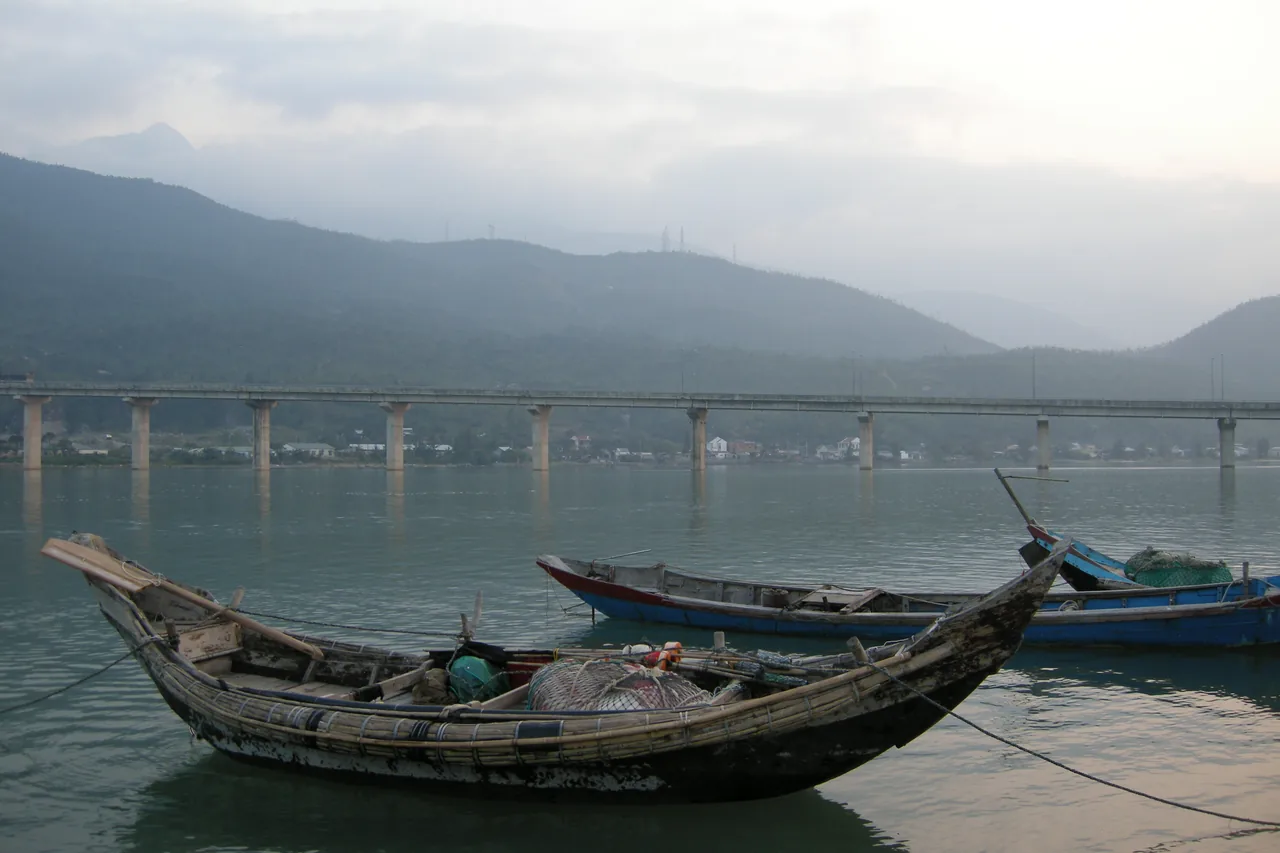
Drivers and motorbikes can either dive through the 6.28 km Hai Van Tunnel (fast, no views) or climb the Hai Van Pass (slower, spectacular). Motorbikes cannot use the tunnel, so on two wheels you take the pass anyway.
⚠️ A Grab or taxi to the lagoon is easy from Da Nang, but getting one back from this rural spot is hard — book a car that waits, or come by tour or private driver.
Sorting out rides around Da Nang first? See our transport & ride-app guide for Grab and taxi prices and the scams to avoid.
The lagoon’s signature experience is walking out on the sandbar that appears at low tide. A natural sandy path runs out into the water; with the tide low you can walk roughly 200–300 m from the shore, the lagoon shimmering on both sides and mountains wrapped all around. It feels like walking on water.
The best-known photo spots, roughly along the eastern (Lang Co side) shore:
🌳 The lone dead tree
The bare silver tree standing in the shallows is the Lap An icon — best with a still mirror behind it at dawn.
🛶 The oyster rafts
Circular bamboo rafts dot the water; framed against the mountains they make the most local, characterful shots.
🏞️ The sandbar path
At low tide, walk out the sandy spit for symmetrical reflection photos with the Bạch Mã range behind you.
💡 A drone gets the famous top-down patterns of the rafts and sandbars — but fly responsibly and avoid people. Even from the shore, a calm dawn does most of the work.
5. Oyster Farms & Lagoon Seafood
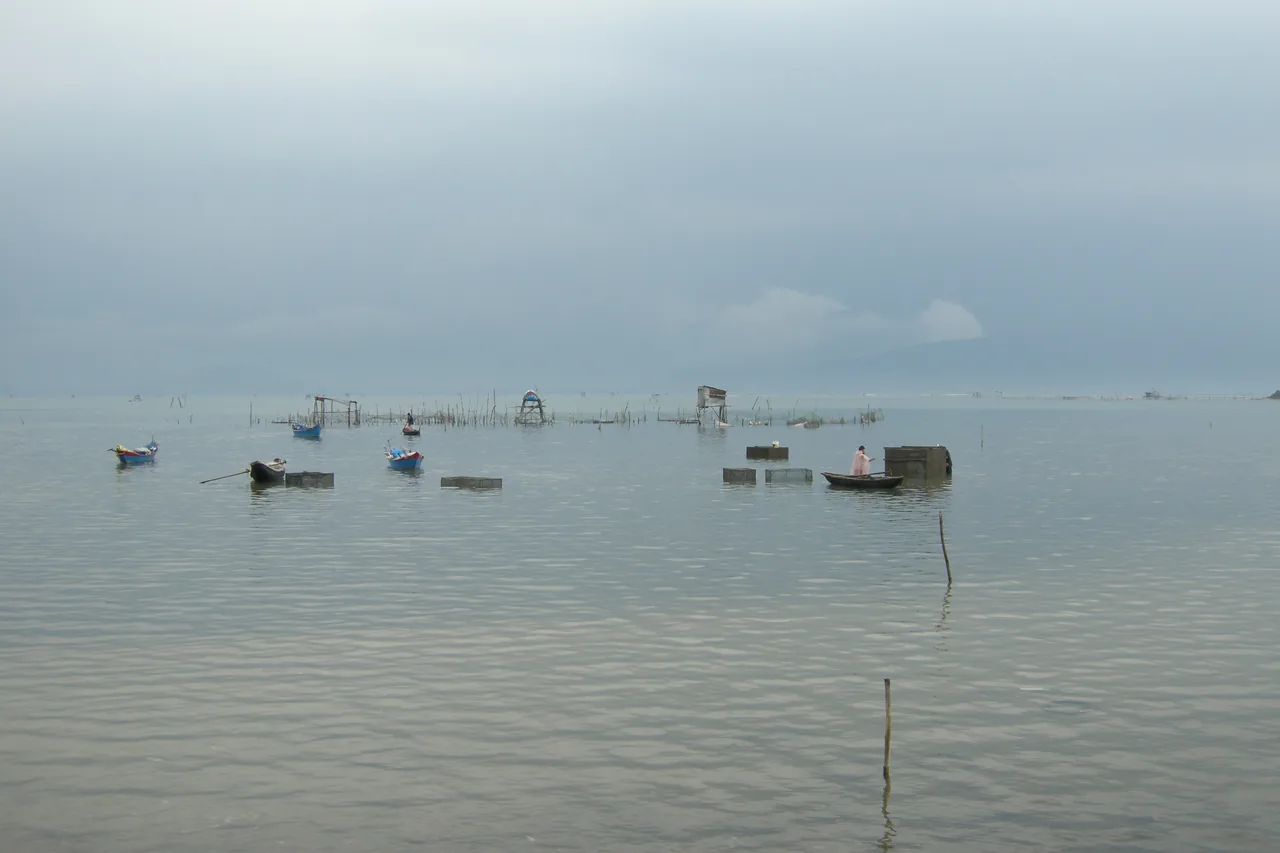
Lap An isn’t a manicured attraction — it’s a working oyster farm, and that’s a big part of its charm. Local families have farmed oysters here since around 2004; today roughly 245 households across five villages raise and harvest them, which is why bamboo poles, rafts and small boats fill every view.
That also means the lagoon is one of the best places nearby to eat fresh seafood. Simple floating shacks and stilt restaurants along the water serve:
Grilled oysters (hàu nướng) — the local speciality, often with spring onion and peanuts.
Steamed clams, snails and fresh fish, straight from the lagoon and bay.
Cold drinks with a view — a relaxed stop after sunrise or before the drive back.
💡 Prices are usually by weight and reasonable, but it’s worth confirming the price per kg before you order. For more on eating in the region, see our Da Nang food guide.
6. What to Combine Nearby
Lap An is best as part of a bigger day out along the coast. The natural pairings, north of Da Nang:
Hai Van Pass — the lagoon is the showpiece view on the Lang Co side of the pass; do them together.
Lang Co Beach — a long white-sand bay right beside the lagoon; a classic swim-and-lunch stop.
Elephant Springs (Suối Voi) — natural forest swimming pools between Lang Co and Hue, great on a hot day.
Hue — the old imperial capital is an easy continuation north; see the Hue day-trip in our complete Da Nang guide.
Hoi An & Da Nang — heading back south, it pairs naturally with Hoi An and Ba Na Hills on other days.
💡 A great loop: leave Da Nang before dawn → sunrise at Lap An → breakfast oysters → ride the Hai Van Pass back → beach at Lang Co or Da Nang. Half a day, one of the region’s best.
Because Lap An is all about still water and the tide, a little planning makes a huge difference:
Pick the season: dry months (≈Mar–Sep) for calm, clear conditions; the wet season flattens the reflections. Cross-check our Da Nang weather guide.
Check the tide: a low tide exposes the walkable sandbar — look up tide times for Lăng Cô the day before.
Go early: sunrise gives the calmest water and the fewest people; wind usually picks up later.
Wear sandals you can get wet, bring sun protection and water, and watch your footing on the slippery sandbar.
Leave no trace: it’s a livelihood, not a theme park — don’t disturb the oyster rafts or boats, and take your rubbish with you.
⚠️ Don’t wade out far on an incoming tide, and skip the sandbar in windy or rainy weather — the footing gets slippery and the magic mirror disappears anyway.
8. Costs & Planning Tips
Visiting Lap An itself is free — there’s no entrance fee. Your only real costs are getting there and whatever you eat. Typical 2026 prices:
What
Typical price (2026)
Notes
Lagoon entry
Free
No ticket; you can stop along the shore road
Private car (half-day, with pass & Lang Co)
~$35–60
Up to ~4 people; the easiest option
Easy rider / motorbike pillion
~$20–35
Scenic, over the pass, with photo stops
Self-drive motorbike
~120,000–150,000 VND/day
Plus fuel; confident riders only
Grilled oysters & seafood
~by weight (confirm per kg)
Floating shacks along the lagoon
Plan around the light and tide first, then pick your transport — a sunrise low tide is worth the early alarm.
Combine, don’t isolate: Lap An + the Hai Van Pass + Lang Co beach is a perfect half-day; tacking on Hue makes a full day.
If you only want the view, the pass overlook above the lagoon is free and stunning — you don’t have to drive down to the shore.
Bring cash for seafood and parking; card payment is rare out here.
🎟️ Getting a Grab back from the lagoon is the genuinely hard part, so a half-day private car at roughly $35–60 for up to four people, or an easy rider at $20–35, is the fix worth paying for.See on Klook →See on Viator →See on KKday →See on Trip.com →Affiliate link — we may earn a commission at no extra cost to you.
Yes — on a calm, clear morning it’s one of the most beautiful spots in central Vietnam, with mirror reflections of the mountains, oyster rafts and, at low tide, a sandbar you can walk out on. It’s free and easy to combine with the Hai Van Pass and Lang Co beach.
Q. When is the best time to visit Lap An Lagoon?
Sunrise or sunset in the dry season (roughly March to September), ideally on a calm, low tide. Early morning gives the stillest water, the best reflections and the fewest people. Midday and the wet season are far less impressive.
Q. How do I get to Lap An Lagoon from Da Nang?
It’s about 25–35 km (40–60 minutes) north of Da Nang, just past the Hai Van mountains by Lang Co. Go by private car, easy rider, self-drive motorbike or a day tour — either through the Hai Van tunnel or, better, over the scenic Hai Van Pass.
Q. Is there an entrance fee for Lap An Lagoon?
No — visiting the lagoon is free. You only pay for transport and any seafood you eat at the floating restaurants along the water.
Q. What is the low-tide walk at Lap An Lagoon?
At low tide a sandy path surfaces and you can walk roughly 200–300 metres out into the lagoon, with water and mountains on all sides. Check tide times for Lăng Cô beforehand, wear sandals you can get wet, and don’t wade out far on an incoming tide.
Q. Can you eat oysters at Lap An Lagoon?
Yes — the lagoon is a working oyster farm, and simple floating shacks along the shore serve grilled oysters and other fresh seafood. Prices are usually by weight, so confirm the rate per kilo before ordering.
Q. Can I combine Lap An Lagoon with the Hai Van Pass?
Absolutely — they’re the same trip. The lagoon is the famous view on the Lang Co side of the pass, so most visitors ride the pass and stop at the lagoon, often adding Lang Co beach or continuing to Hue.
Q. Do I need a drone to photograph Lap An Lagoon?
No. A drone captures the famous top-down raft patterns, but a calm dawn from the shore or the sandbar gives stunning mirror reflections with just a phone or camera. Fly responsibly and avoid people if you do bring one.