
Son Tra & the Lady Buddha: Da Nang’s Best Sunset Viewpoint
Da Nang’s green peninsula — home to Vietnam’s tallest Buddha, rare langurs and the best views over the city. What to see, how to get there and when to go.
- What: a forested peninsula (“Monkey Mountain”) with Linh Ung Pagoda and the Lady Buddha — at ~67 m, Vietnam’s tallest Buddha statue.
- Where: ~10 km northeast of central Da Nang — about 20 minutes by car or motorbike.
- Cost: the pagoda and Lady Buddha are free; you only pay for transport.
- When: early morning (cooler, best for spotting wildlife) or late afternoon for sunset over the city.
1. Son Tra & the Lady Buddha: What & Why
2. The Lady Buddha & Linh Ung Pagoda
3. Top Things to See on Son Tra
4. The Wildlife: Red-Shanked Douc Langurs
5. How to Get There & Around
6. Best Time to Visit
7. Practical Tips
8. Combine It with Your Da Nang Trip
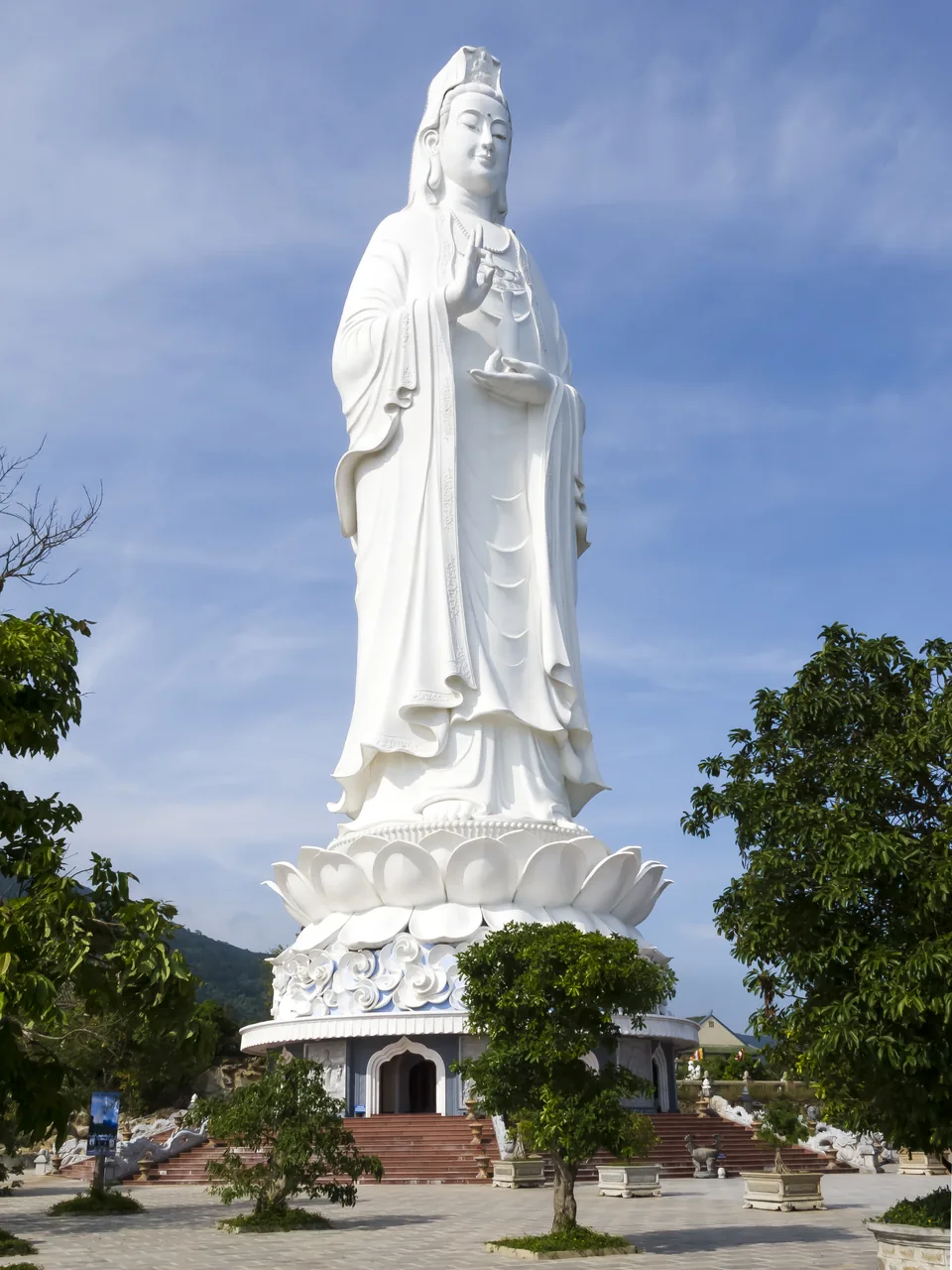
Son Tra Peninsula is Da Nang’s green lung — a forested nature reserve jutting into the sea just northeast of the city, nicknamed “Monkey Mountain.” Its star is the Lady Buddha, a 67-metre statue of Quan Am (the Goddess of Mercy) at Linh Ung Pagoda, gazing out over the bay. But Son Tra is more than one statue: it has the city’s best viewpoints, quiet beaches, a famous old banyan tree, the chess-board summit of Ban Co Peak, and rare langurs in the trees. This guide covers the Lady Buddha and pagoda, the top sights, the wildlife, how to get around the steep roads, and when to go. (New to the city? Start with our complete Da Nang guide.)
1. Son Tra & the Lady Buddha: What & Why
Son Tra Peninsula is a forested nature reserve on the coast just northeast of Da Nang — and Linh Ung Pagoda on its slopes is home to the Lady Buddha, at about 67 metres the tallest Buddha statue in Vietnam. US troops nicknamed the peninsula “Monkey Mountain,” and it’s still wild: protected forest, winding sea-view roads and rare wildlife.
- The Lady Buddha (Quan Am) stands on a lotus facing the sea, said to watch over fishermen — visible from much of the city.
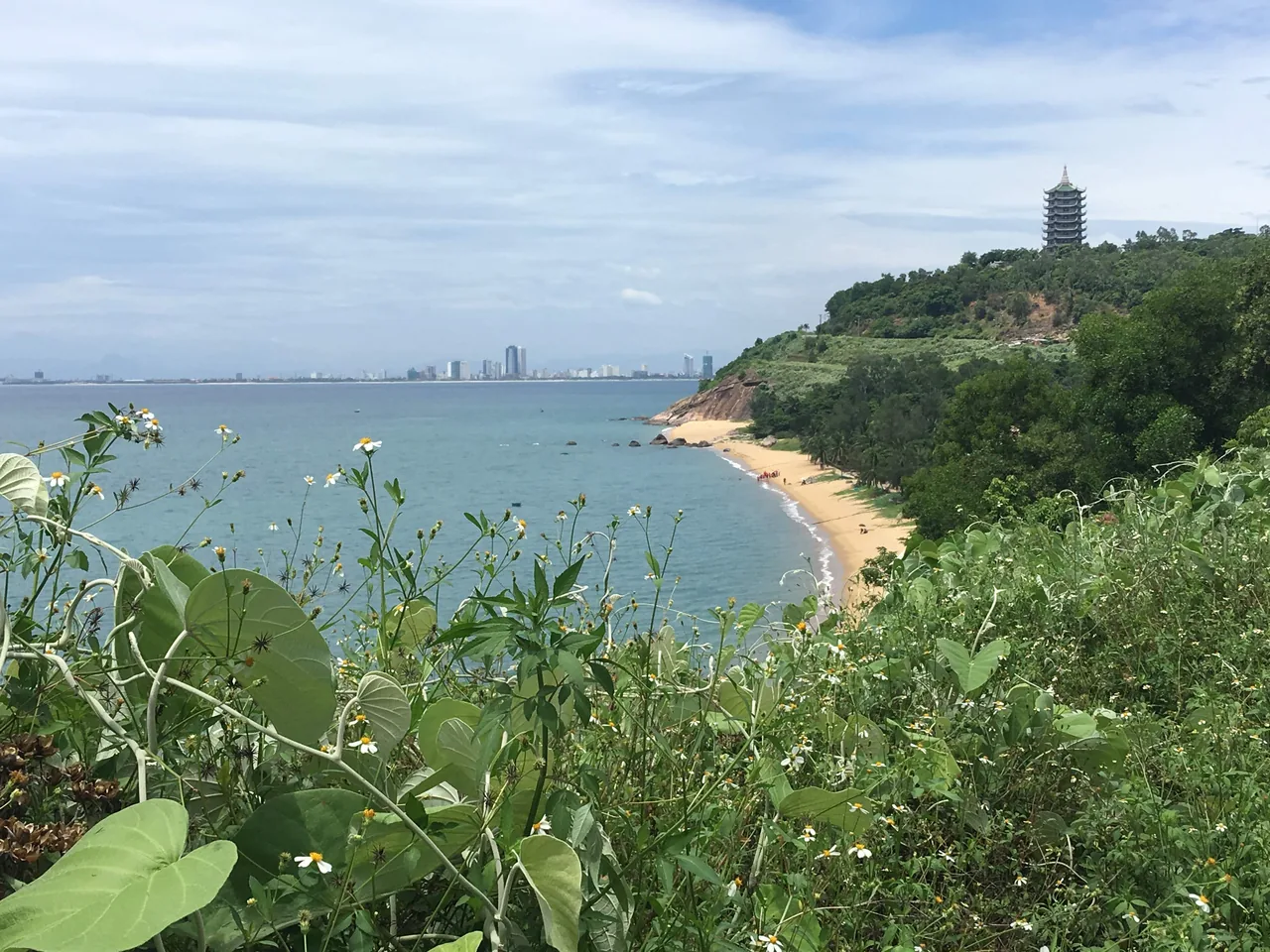
- The peninsula wraps Da Nang’s northern bay, giving the best high viewpoints over the city and beaches.
- It’s free and uncrowded compared with the big ticketed attractions — a refreshing half-day in nature.
2. The Lady Buddha & Linh Ung Pagoda
🚗 Hiring a car and driver in Da Nang: how it is priced and when it beats Grab →
The heart of any Son Tra visit is Linh Ung Pagoda (Bai But) and its giant statue:
- The statue: the Lady Buddha rises ~67 m (about a 30-storey building) on a lotus base — Vietnam’s tallest. You can step inside the base, which has multiple floors of shrines.
- The grounds: manicured gardens, bonsai, a row of carved arhat (Buddhist saint) statues, and terraces with sweeping sea views.
- Cost & hours: entry is free, open daily; allow about an hour.
- Dress code: it’s an active temple — cover your shoulders and knees.
3. Top Things to See on Son Tra
Beyond the pagoda, the peninsula rewards a half-day loop:
🙏 Lady Buddha & Linh Ung
The 67 m statue, pagoda and sea-view terraces — the essential first stop.
♟️ Ban Co Peak
The highest point (~700 m), with a statue of a god playing chess and a 360° panorama — on a clear day, unbeatable.
🌳 Thousand-year banyan tree
A vast, centuries-old banyan deep in the forest — a short walk from the road.
Add the peninsula’s viewpoints and quiet beaches (Bai But, Bai Rang) and you have a varied half-day mixing temple, forest, sea and city panoramas.
4. The Wildlife: Red-Shanked Douc Langurs
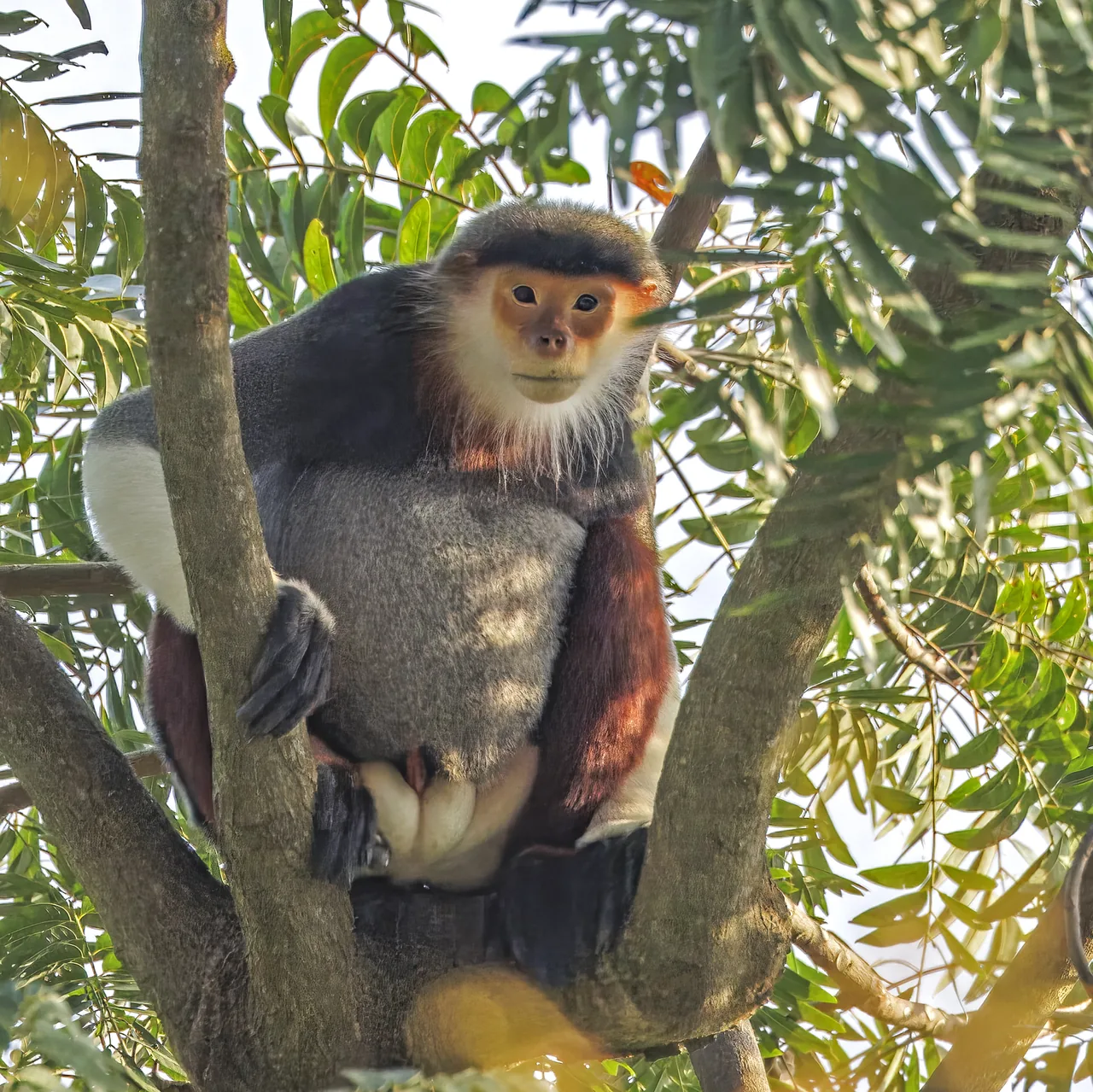
Son Tra is a genuine nature reserve, and its emblem is the red-shanked douc langur — a strikingly colourful, endangered monkey sometimes called the “queen of primates.” Spotting one is a real highlight:
- Best at dawn: langurs are most active and visible early in the morning, feeding in the treetops.
- Look up, go slow: drive quietly along the forest roads and scan the canopy; binoculars help.
- Don’t feed the animals — including the macaque monkeys near viewpoints, which can snatch food and bags.
5. How to Get There & Around
Son Tra starts about 10 km from the city centre, so plan your wheels:
| Option | Good for | Notes |
|---|---|---|
| Motorbike | The full loop & Ban Co Peak | Most freedom; roads are steep — ride confidently |
| Private car / taxi | Families, the Lady Buddha | Comfortable to the pagoda; can’t do all peaks |
| Ride app | One-way to Linh Ung | A Grab is ~20 min from the centre; won’t wait or loop |
If you’re not a confident rider, a private car gets you comfortably to the Lady Buddha, but to reach Ban Co Peak you’ll want a motorbike or a small-car tour.
6. Best Time to Visit
Son Tra is an all-day option, but two windows are best:
- Early morning: cool, quiet, soft light, and the best chance to see langurs — ideal for the loop and Ban Co Peak.
- Late afternoon: golden light and sunset over the city from the viewpoints (and the Lady Buddha glows at dusk).
- Avoid midday heat, and skip the higher roads in rain or fog — check our Da Nang weather guide first, as the peninsula clouds over in the wet season.
7. Practical Tips
- Fuel up first: there are no petrol stations on the peninsula — fill the tank in the city before you ride up.
- Ride within your limits: the roads are steep and winding; if you’re unsure, take a car or tour.
- Dress modestly for the pagoda (shoulders and knees covered).
- Bring water & sun protection — and a light layer, as it’s breezy up high.
- Mind the monkeys: don’t feed them and keep food and bags zipped near viewpoints.
- Respect closures: some zones are protected or restricted — stay on open roads.
8. Combine It with Your Da Nang Trip
Son Tra sits right beside the city, so it slots easily into a wider plan:
- With the beaches: the peninsula rises just past My Khe — pair a Son Tra morning with an afternoon on the sand (see our Da Nang hotels & beach areas guide).
- With the Marble Mountains: two contrasting half-days — forest-and-statue here, cave-temples there.
- Sunset finish: end a city day with the golden-hour view from Son Tra before dinner downtown.
🎡Things to Do52
🍜Food8
🏨Where to Stay6
🚇Getting Around9
🧭Travel Tips21
🧭Vietnam-wide essentials58
Frequently asked questions