
Sapa, Vietnam: A Complete Guide to the Rice Terraces, the Trekking & Fansipan
Cloud-wrapped rice terraces, trails that drop you into Hmong and Dao villages, and the highest mountain in Indochina — here’s how to choose your trek, when the terraces turn green or gold, how to get up from Hanoi, and what Sapa is really like once the day-trippers leave.
| Where | Sa Pa, Lao Cai province · the far northwest mountains, ~315 km from Hanoi |
|---|---|
| Famous for | Rice terraces (Muong Hoa Valley) · village trekking · Hmong & Red Dao culture · Fansipan |
| Get there | Limousine van / sleeper bus from Hanoi (~5.5–6 hr) or the night train to Lao Cai (then ~1 hr up) |
| The one thing | A guided valley trek (Lao Chai–Ta Van) with a homestay night — Sapa’s whole point |
| Fansipan | Cable car to the 3,143 m summit (~850,000 VND); or a 2-day climb for the fit |
| Best time | Sep (golden harvest) & May–Jun (green) for terraces · Oct–Nov dry & clear for trekking |
| Stay & time | 2–3 days: town + at least one night in a valley homestay (Ta Van / Lao Chai) |
1. Sapa in one answer
2. The rice terraces & the Muong Hoa Valley
3. Trekking & the villages — the heart of Sapa
4. The hill-tribe cultures & the markets
5. What to eat in Sapa
6. Fansipan — the Roof of Indochina
7. Sapa town & the sights around it
8. How to get to Sapa from Hanoi
9. Getting around once you’re there
10. Where to stay — town or valley?
11. Best time to visit Sapa
12. Costs, tickets & tours
13. Sapa itineraries: 2 or 3 days
14. Practical tips for Sapa
1. Sapa in one answer
Sapa is Vietnam’s great mountain escape — a former French hill station at 1,500 m where rice terraces pour down the valleys and ethnic-minority villages cling to the slopes, all under the shadow of Fansipan, the highest peak in Indochina. People come for three things: to walk the rice terraces of the Muong Hoa Valley, to meet the hill-tribe cultures — Black Hmong, Red Dao, Tay, Giay — in their own villages, and to stand on top of Fansipan (3,143 m), now reachable by a record-breaking cable car. Get those three right and Sapa is one of the best things you’ll do in Vietnam.
The base is Sapa town Map, a busy, much-developed little town with a stone church, a lake and a foggy market square. It’s not pretty in the postcard sense any more — the magic is in the valley below it, not the town itself — so think of Sapa as a launchpad: sleep in town for a night or two, but spend your days (and ideally one night) out in the terraces and villages.
Want the logistics handled? You can book the village treks, the Fansipan cable car, day tours and your transfer up from Hanoi all in one place:
2. The rice terraces & the Muong Hoa Valley
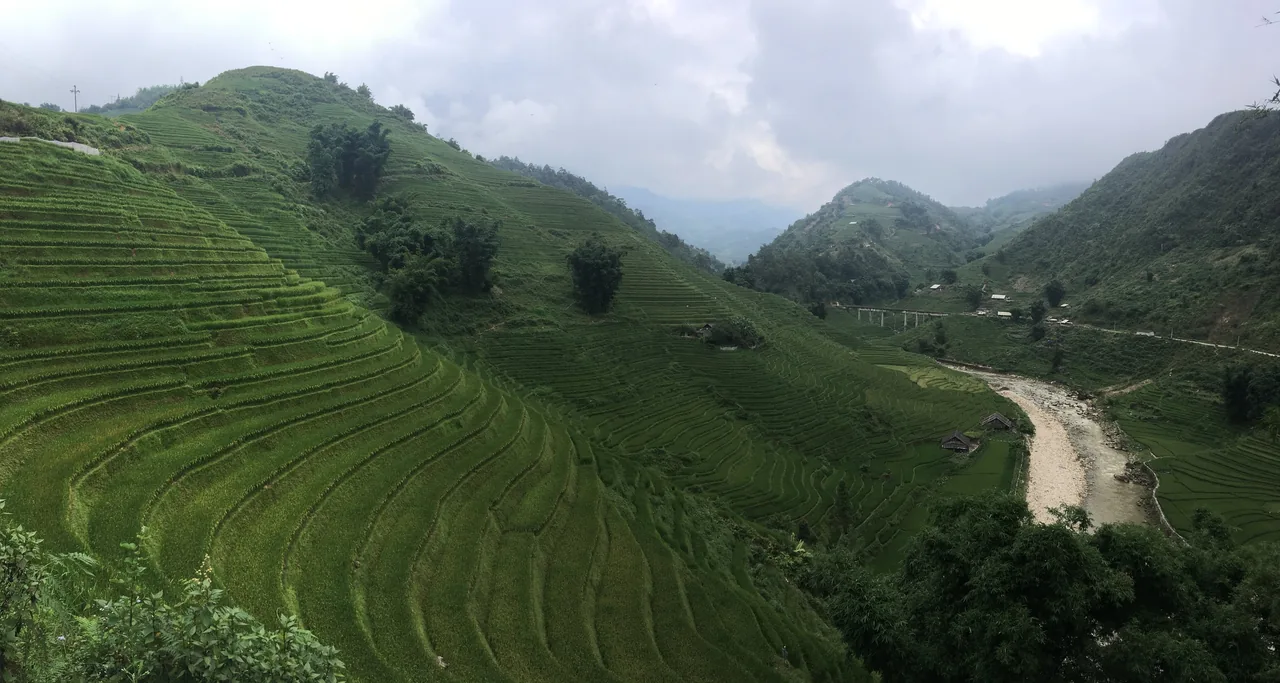
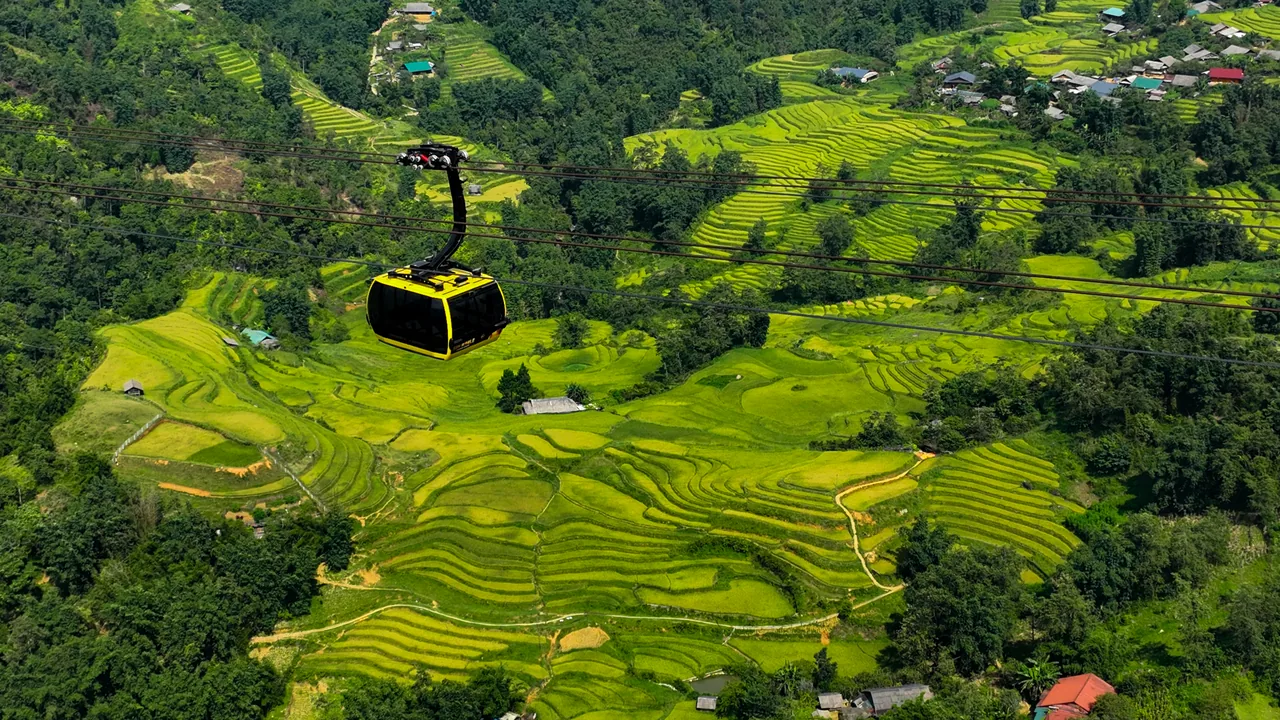
The terraces are the reason Sapa is on every Vietnam itinerary. The Muong Hoa Valley Map runs roughly 15 km southeast of the town, a vast amphitheatre of rice terraces carved over centuries by the Hmong, Dao, Tay and Giay who farm them. They step down the mountainsides in thousands of curved tiers, dotted with stilt houses, water buffalo and the silver thread of the Muong Hoa stream at the bottom.
What the terraces look like depends entirely on the season — and getting the timing right is the single biggest factor in how jaw-dropping your trip is:
| Season | The terraces | Verdict |
|---|---|---|
| Apr–early May | Flooded, mirror-like before planting | Reflections, water and sky — quietly beautiful |
| May–June | Vivid new green as the rice grows | The lush “green season” — a top pick |
| Jul–Aug | Deep green, tall rice (also the wettest) | Green but rainy; mornings are best |
| Sep–early Oct | Golden harvest — the famous shot | The peak. Book ahead; everyone wants it |
| Late Oct–Mar | Bare stubble, brown, sometimes frosty | Stark; come for culture/trekking, not terraces |
You don’t see the terraces from a viewpoint so much as walk through them. The classic way in is the Lao Chai–Ta Van trek (below), but even a short stroll down toward the northern valleys from the edge of town drops you straight into the rice fields. There’s a small valley/conservation entry fee (around 75,000–90,000 VND) collected on the main trekking routes.
3. Trekking & the villages — the heart of Sapa
If you do one thing in Sapa, trek the valley. The walking is the experience: down through the terraces, across streams, into villages where Hmong and Dao families live much as they have for generations. You don’t need to be an athlete — most routes are half- or full-day walks on farm paths — but good shoes and a willingness to get muddy help.
The classic routes
- Cat Cat village Map — the easiest taste, a 2.5 km walk straight downhill from town to a Black Hmong village with a waterfall and old hydro station. Pretty but the most touristy and commercial; a half-day at most (entry ~150,000 VND).
- Lao Chai → Ta Van Map — the signature trek. A 10–14 km walk through the best of the Muong Hoa terraces, passing the Black Hmong village of Lao Chai Map and ending in Ta Van (Giay and Hmong), where the homestays are. Do it over two days with a night in Ta Van and it’s unbeatable.
- Y Linh Ho — a steeper, wilder add-on often walked before Lao Chai, through narrow trails and bamboo; quieter and more dramatic.
- Ta Phin Map — 12 km northeast, the heartland of the Red Dao, famous for their herbal bath (see the next section). A different valley, fewer crowds.
| Route | Distance | Difficulty | Time | Best for |
|---|---|---|---|---|
| Cat Cat loop | ~3–4 km | Easy | 2–3 hr | A quick taste from town, no guide needed |
| Lao Chai → Ta Van | ~10–14 km | Moderate | 1–2 days | The signature trek + homestay night |
| Y Linh Ho → Lao Chai → Ta Van | ~12–16 km | Moderate–hard | 2 days | Wilder, steeper, quieter trails |
| Ta Phin (Red Dao) | ~8–10 km | Easy–moderate | Half/full day | Red Dao culture + a herbal bath |
| Fansipan summit | ~11–19 km | Hard | 2 days | Fit hikers; permit + guide required |
Should you hire a guide?
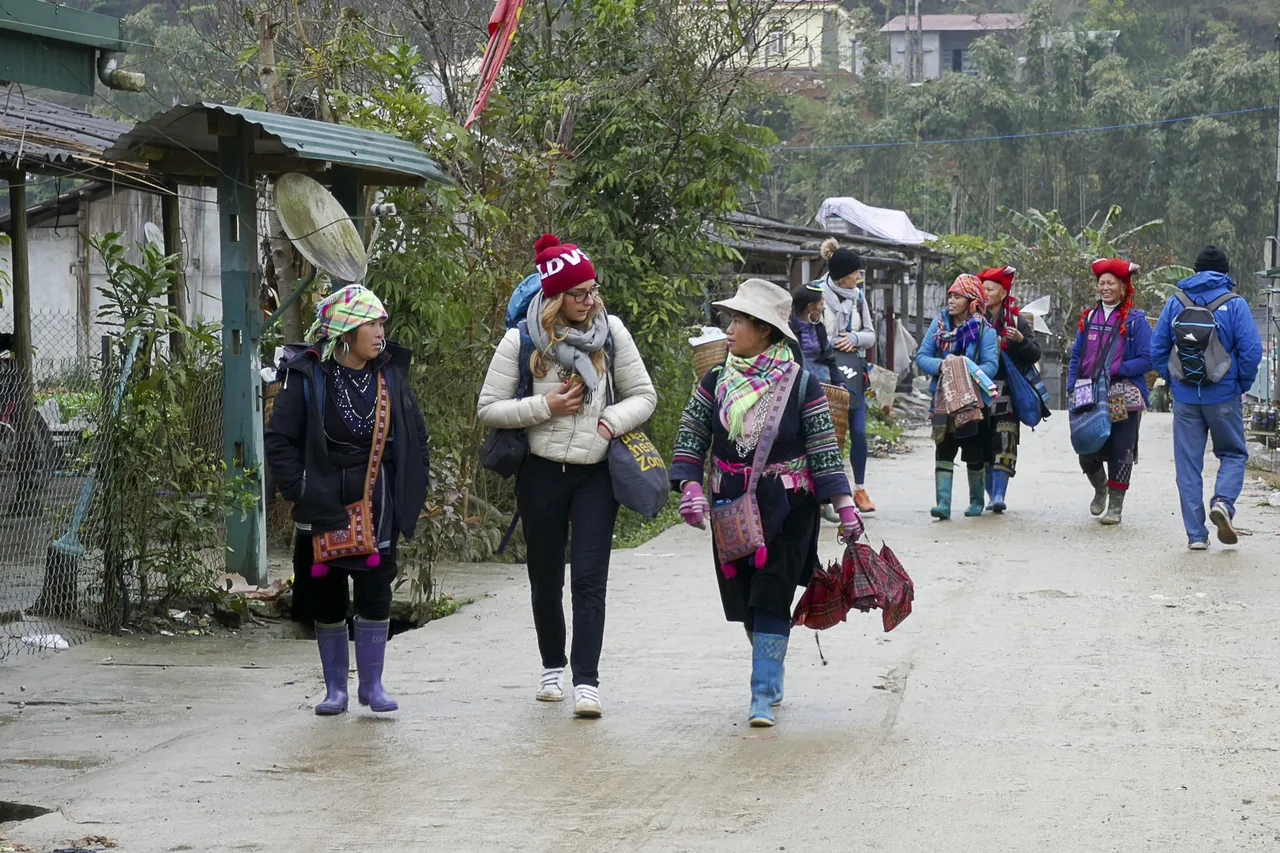
Yes — and hire a local ethnic-minority guide. A Hmong or Dao guide (often booked through your homestay or a community-tourism outfit) costs roughly 500,000–700,000 VND for a day, reads the trails and weather, gets you into homes for tea, and — crucially — means your money goes straight to the valley’s families. The women who walk with you and sell their embroidery are the backbone of the local economy; buying a piece or tipping a guide is money far better spent than any souvenir shop in town.
4. The hill-tribe cultures & the markets
Sapa district is home to several ethnic groups, each with its own language, dress and customs — and meeting them, respectfully, is as much the point as the scenery.
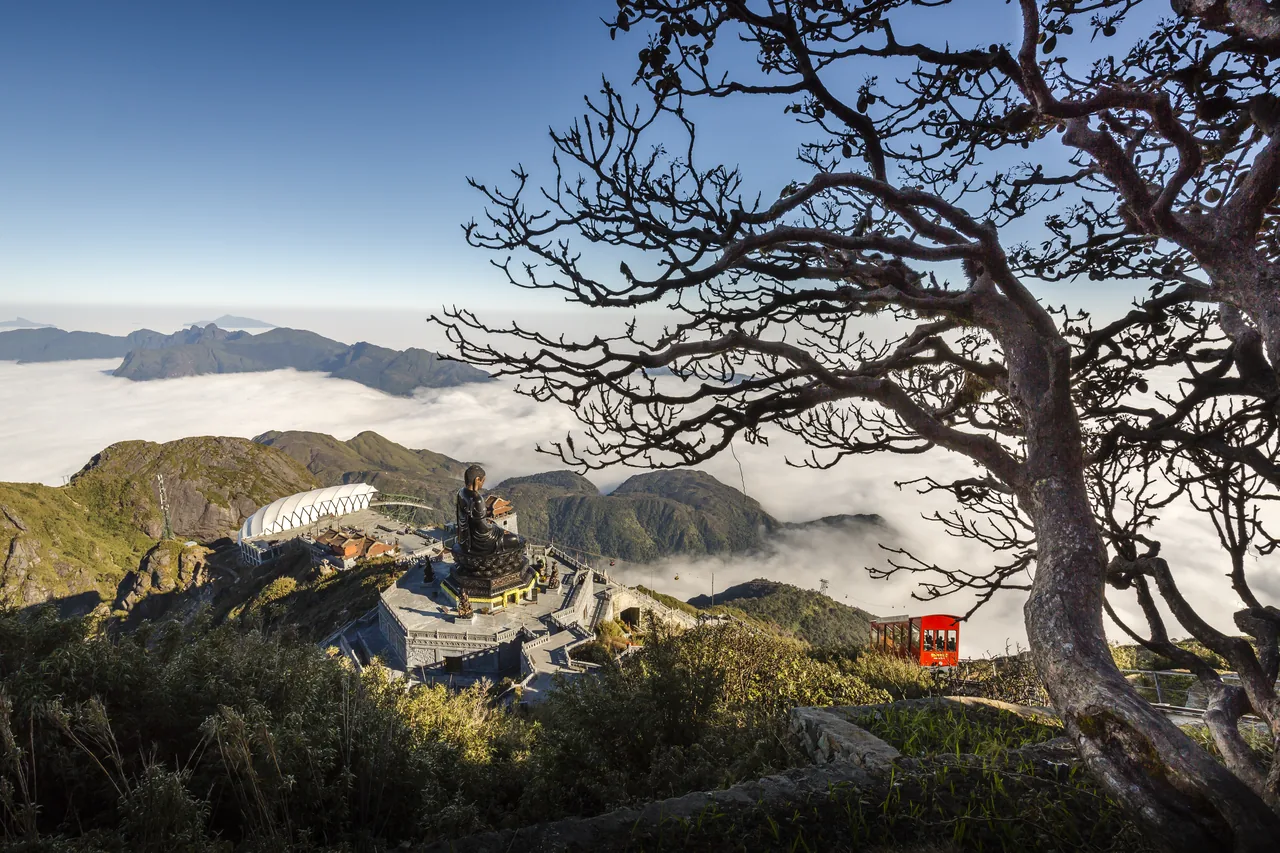
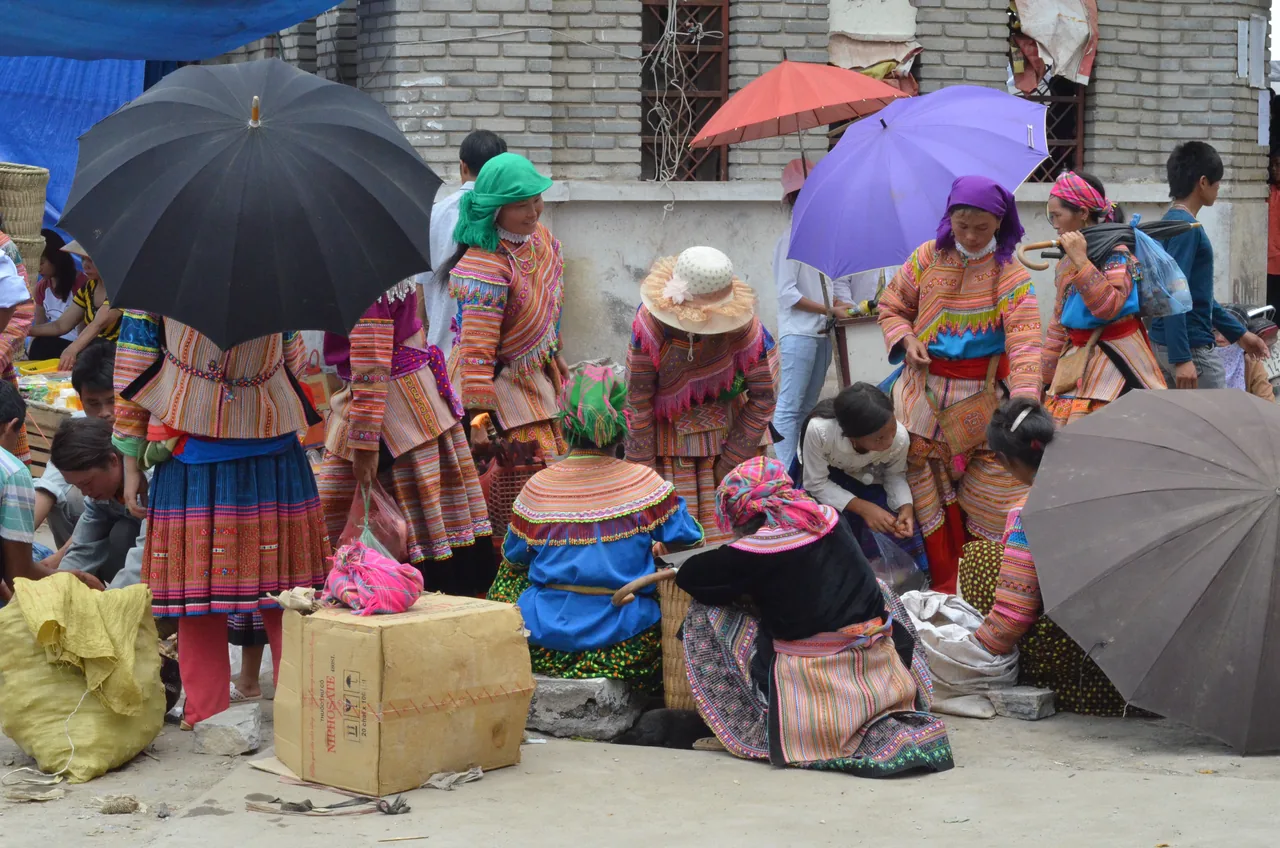
- Black Hmong — the largest group around Sapa; you’ll see their indigo hemp clothing, dyed dark with a tell-tale sheen, in Cat Cat, Lao Chai and the town market.
- Red Dao (Yao) — centred on Ta Phin, known for bright red headscarves and the famous Dao herbal bath: a steaming tub of forest medicine that’s the perfect end to a cold trekking day (most Ta Phin homestays offer it).
- Tay & Giay — valley-floor rice farmers, including much of Ta Van; their stilt houses are where many homestays are.
The markets — and Bac Ha
Sapa’s own market is a daily affair near the square, busiest at weekends. But the real spectacle is Bac Ha Sunday market Map, about 3 hours away by road — the biggest ethnic market in the northwest, a riot of Flower Hmong colour, livestock, textiles and corn wine. It only runs on Sundays; the smaller Can Cau market nearby runs Saturdays. If your dates include a Sunday, a Bac Ha day trip is well worth it.
5. What to eat in Sapa
Mountain cold and a mix of cultures give Sapa a kitchen all its own — warming hotpots, smoky grills and Hmong dishes you won’t find in the lowlands. Here’s what to actually order.
| Dish | What it is |
|---|---|
| Salmon & sturgeon hotpot (lẩu cá hồi / cá tầm) | Sapa’s signature. Cold-water salmon and sturgeon are farmed in the mountain streams here; the firm, sweet fish is cooked at your table in a hot-and-sour broth with Sapa-grown herbs and vegetables. The dish to have at least once. |
| Thắng cố | The “soul of Northwest cuisine” — a 200-year-old Hmong stew of horse (or buffalo) meat, bones and offal simmered with a dozen mountain spices like mắc khén and black cardamom. Pungent, rich and adventurous; traditionally eaten at markets with corn wine. |
| Grilled skewers (đồ nướng) | The heart of Sapa’s night market: charcoal grills of pork, chicken, eggs, tofu, corn and mountain greens, eaten hot off the coals on a cold evening. Cheap, social and delicious. |
| Cơm lam | Sticky rice roasted inside a bamboo tube until fragrant, peeled and dipped in sesame salt. A classic trail and market snack, often paired with grilled meat. |
| Black (“H’Mong”) chicken (gà đen) | A native silkie breed with black skin and lean, sweet meat, usually stewed or hot-potted with medicinal herbs — clean, comforting and a local point of pride. |
| Cap nach pig (lợn cắp nách) | Small free-range “armpit pigs” raised in the hills, grilled or roasted — tender meat, crackling skin, a Sapa speciality. |
| Thắng dền | The night-market sweet: warm glutinous rice balls in a sweet ginger-and-coconut syrup, perfect for a foggy evening. Order it as dessert after the grills. |
Round it out with the local produce: su su (chayote) tips stir-fried with garlic, cải mèo (Hmong mustard greens), smoked buffalo (thịt trâu gác bếp) and a glass of táo mèo (Sapa wild-apple) wine or corn wine. The best, cheapest eating is the night market grills near the church and the lake; for the salmon hotpot, the dedicated fish restaurants along the road toward the cable car are the real thing. For more on Vietnamese dining, see our Vietnam travel guide.
6. Fansipan — the Roof of Indochina
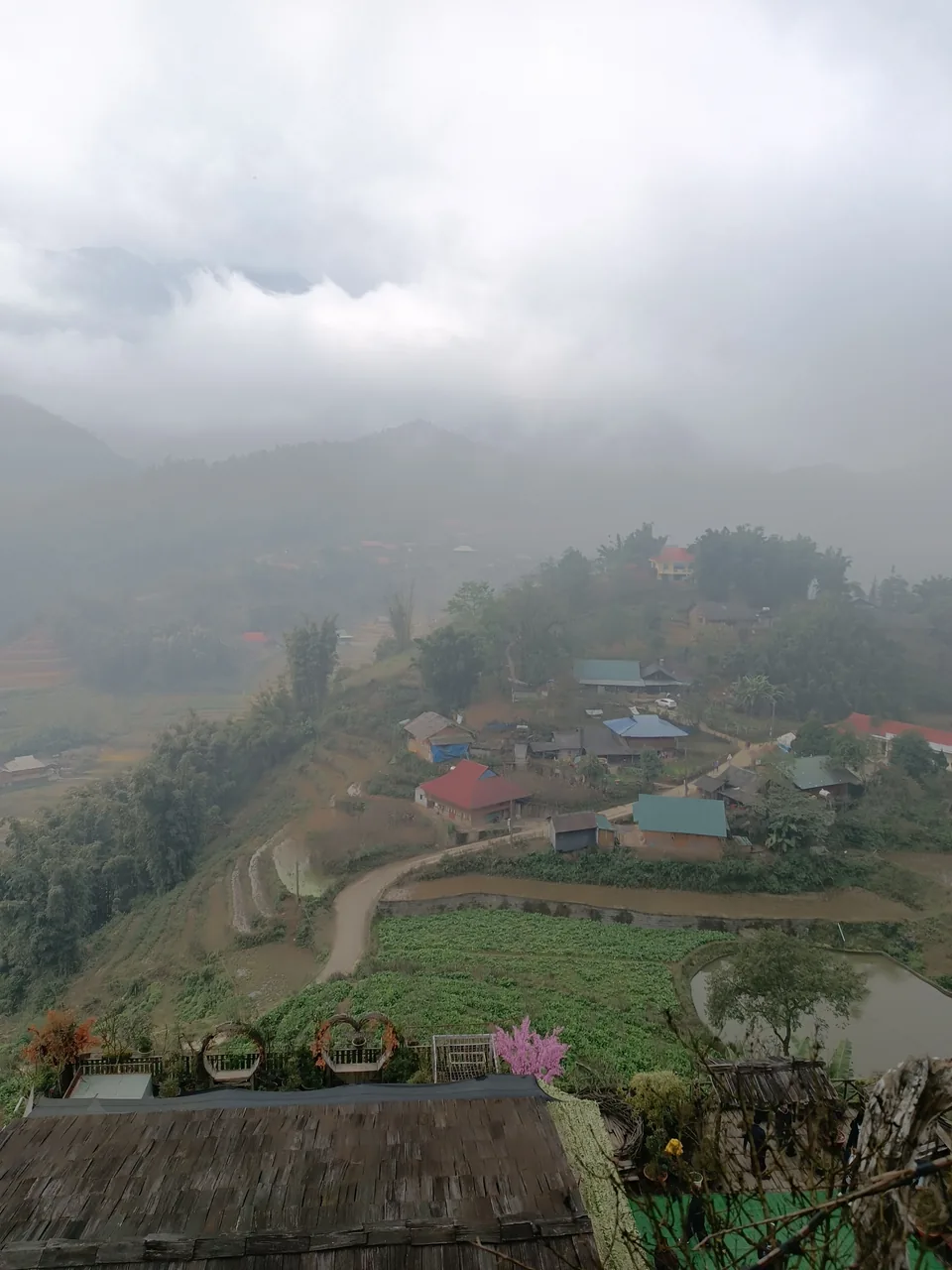
Fansipan Map, at 3,143 m, is the highest mountain in Vietnam — and in all of former Indochina. Until recently only trekkers reached the top; today a cable car does the hard part, which means almost anyone can stand on the Roof of Indochina.
By cable car (the easy way)
The Sun World cable car holds two Guinness World Records — the longest non-stop three-rope cable car (6,292 m) and the greatest elevation gain (1,410 m) — and climbs from the valley to near the summit in about 15 minutes, gliding over the Muong Hoa terraces and the Hoang Lien Son range. From the upper station a short funicular or around 600 stone steps takes you to the very top, where a spiritual complex of pagodas, a giant bronze Amitabha Buddha and (if you’re lucky) a sea of clouds awaits. Tickets are around 850,000 VND on weekdays, a little more on weekends/holidays; the funicular from town to the cable-car station is a separate small fare. Allow half a day.
On foot (the climb)
The classic 2-day, 1-night trek to the summit and back is still possible with a licensed guide and a permit — a tough but rewarding climb through the Hoang Lien National Park, camping or staying in a mountain hut. It’s for fit, prepared hikers only, and the weather makes or breaks it. Many people now climb up and ride the cable car down (or vice-versa).
7. Sapa town & the sights around it
The town itself is workmanlike, but a few things are worth your time, and several easy sights ring the valley:
- Sapa Stone Church Map — the 1930s French stone church on the main square, the town’s landmark and meeting point; the square in front fills with market sellers and evening crowds.
- Ham Rong Mountain Map — a landscaped hill park right behind the church with orchid gardens and a panoramic view over the town and valley (entry ~70,000 VND).
- Sapa Lake — the small lake in the centre, pleasant for an evening stroll.
- Silver Waterfall (Thac Bac) Map — a tall roadside waterfall ~12 km west toward the pass; quick stop, often paired with the next one.
- O Quy Ho Pass & Heaven’s Gate Map — the highest, longest mountain pass in Vietnam, with a famous cloud-level viewpoint (‘Cong Troi’, ~2,000 m, entry ~120,000 VND) looking across to Fansipan. Spectacular on a clear afternoon.
You can string the church, Cat Cat and Ham Rong into an easy first day, then save the valley trek and Fansipan for when you’ve found your legs.
8. How to get to Sapa from Hanoi
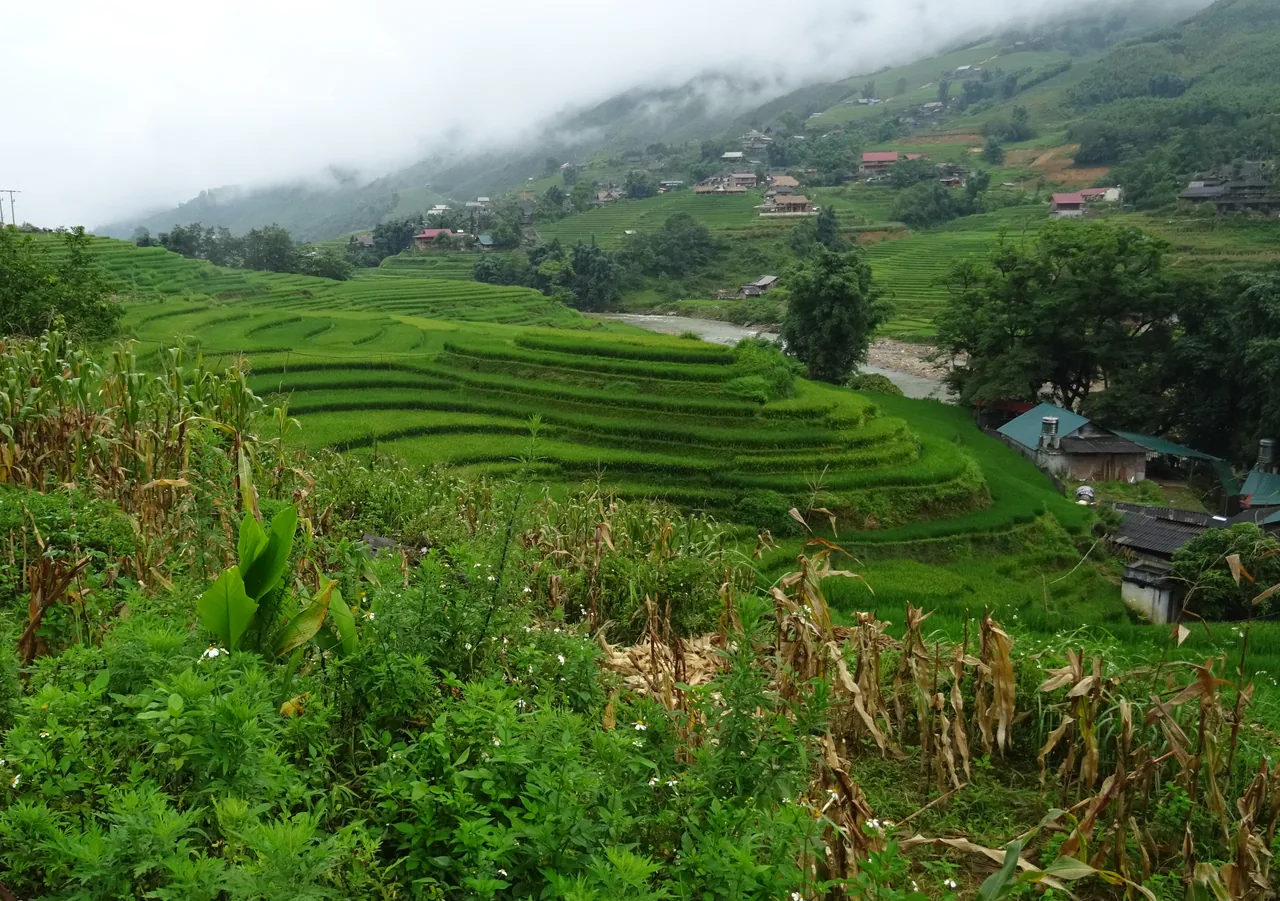
Sapa is about 315 km northwest of Hanoi, and everything starts there. There’s no airport at Sapa; you either drive up the expressway or take the train to Lao Cai and transfer. Hanoi itself is worth a day or two either side — see our Hanoi travel guide.
Limousine van / sleeper bus (most popular, ~5.5–6 hr)
The fast, direct option since the Noi Bai–Lao Cai expressway opened. Limousine vans (9-seat Mercedes-style minibuses with reclining seats) and full sleeper buses run all day and overnight straight from Hanoi to Sapa town for roughly 320,000–450,000 VND (US$13–18) one way. Day vans take about 5.5–6 hours with a rest stop; sleeper buses let you travel overnight and save a hotel night. This is how most international travellers now go.
Night train to Lao Cai + transfer (the romantic way, ~8 hr)
The old classic: an overnight sleeper train from Hanoi to Lao Cai Map (departing ~22:00, arriving ~06:00), in a 4-berth soft sleeper cabin, then a ~1-hour shared minibus up the mountain to Sapa town (33.4 km). Train berths run roughly US$22–65 depending on the carriage; the transfer is a few dollars. Slower and a touch pricier than the bus, but you sleep flat, skip the winding road at night and get a proper adventure-train experience.
Set up data before you leave the city — coverage is good in town but patchy on the trails, and offline maps help. Sort an eSIM and check the visa rules before you fly.
For the journey on its own, how to get from Hanoi to Sapa sets out the pickup times across Hanoi, the 04:00 drop-off on the night services and the 33.4km still left from Lao Cai station.
9. Getting around once you’re there
Sapa town is small and walkable. For everything beyond it:
- On foot, with a guide — the whole point in the valley. Trails, not roads, are how you reach the best of it.
- Xe om (motorbike taxi) or taxi — for the church-to-Cat Cat-to-Ham Rong loop, or out to Silver Waterfall and the pass. Easy to arrange in town; agree the price first.
- Rent a scooter (~150,000 VND/day) — great for the waterfalls and O Quy Ho pass if you’re a confident rider; the mountain roads are steep, often wet and foggy, so this is not the place to learn. Our Grab & ride-app guide covers how rides work in Vietnam (note: Grab cars are limited up here).
- The Muong Hoa funicular — a scenic mountain train from town down to the Fansipan cable-car station, a sight in itself.
10. Where to stay — town or valley?
The big decision is town vs. valley homestay, and the best answer for most people is both: a night in town to arrive and explore, and at least one night down in the rice fields.
| Where | Good for | Rough nightly |
|---|---|---|
| Valley homestay (Ta Van, Lao Chai) | The real Sapa — rice-field views, home cooking, the trek | US$12–40 |
| Town guesthouses & mid-range hotels | Convenience, the church, restaurants, early departures | US$15–50 |
| Town view hotels & resorts | Comfort, valley-view rooms, spas, warmth in winter | US$50–150+ |
| Ta Phin (Red Dao) homestays | Quieter culture, the herbal bath, fewer crowds | US$12–30 |
Modern “homestay” in Ta Van usually means a comfortable guesthouse with hot water and a shared dinner, not a mat on a family floor — easy and lovely. Book ahead for the September harvest and around Vietnamese holidays. For how Sapa slots into a longer route, our Northern Vietnam guide and Vietnam travel guide map the connections — many people pair it with Ha Long Bay and Ninh Binh.
11. Best time to visit Sapa
Sapa has two clocks: the rice calendar (what the terraces look like) and the weather (how comfortable the trekking is). The sweet spots line up in autumn.
- September–early October — the golden harvest. The terraces turn gold and the weather is mostly dry and clear. The most beautiful — and busiest — time; book early.
- May–June — lush green. The rice is freshly planted and vivid; late April–May also gives the flooded “mirror” terraces. Warm, increasingly humid.
- October–November — dry & clear. Harvest is over and the terraces brown off, but the air is crisp and visibility is superb — arguably the best trekking weather of the year.
- December–February — cold & misty. Frost, heavy fog, even rare light snow on Fansipan; few crowds, low prices, atmospheric but the terraces are bare and views are hit-or-miss.
- July–August — green but wet. The terraces are at their tallest green; it’s also the rainy season, so expect afternoon downpours and the odd landslide-delayed road.
12. Costs, tickets & tours
Sapa can be done cheaply and independently, or smoothed out with tours. Rough 2026 prices:
| Item | Rough cost | Notes |
|---|---|---|
| Hanoi ⇄ Sapa (van/bus, one way) | 320,000–450,000 VND | Train + transfer: ~US$25–70 |
| Fansipan cable car (adult) | ~850,000 VND | + small funicular fares; more on weekends |
| Local trekking guide (per day) | 500,000–700,000 VND | Hire a local Hmong/Dao guide |
| Valley homestay (per night) | US$12–40 | Often includes dinner & breakfast |
| Cat Cat village entry | ~150,000 VND | Includes the waterfall & shows |
| Muong Hoa trek/valley fee | ~75,000–90,000 VND | Collected on the main routes |
| O Quy Ho Heaven’s Gate | ~120,000 VND | Includes a drink voucher |
Doing it independently — book your own van, hire a guide through your homestay, buy tickets at each gate — is cheap and flexible. A tour (from Hanoi or locally) bundles transport, a guide, the homestay and Fansipan into one price, which suits short trips. Many Hanoi tours run as 2- or 3-day packages. Bring cash, and dodge the usual booking traps with our Vietnam scams guide.
13. Sapa itineraries: 2 or 3 days
2 days / 1 night (the essential trip)
Day 1: Arrive by morning van, drop bags, walk the church/Ham Rong or down to Cat Cat. After lunch, start the Lao Chai–Ta Van trek with a guide and overnight in a Ta Van homestay. Day 2: Morning walk through the terraces, then either the Fansipan cable car or a transfer back to catch an evening bus/train to Hanoi.
3 days / 2 nights (the sweet spot)
Day 1: Town, Cat Cat, Ham Rong; night in town. Day 2: Full Lao Chai–Ta Van (or Y Linh Ho) trek; night in a Ta Van homestay. Day 3: Fansipan by cable car, or — if it’s a Sunday — a Bac Ha market day trip, then travel back. This is the version that does Sapa justice.
Add-ons for longer stays
Ta Phin and a Red Dao herbal bath, the O Quy Ho pass and Silver Waterfall, a deeper multi-day trek, or the Fansipan summit climb. Sapa rewards slowing down.
14. Practical tips for Sapa
- Pack for cold and wet. A warm layer, a rain jacket and trekking shoes with grip — the trails get slick, and the weather changes fast.
- Hire local, buy local. A Hmong/Dao guide and a homestay put your money where it belongs and make the trip immeasurably better.
- Carry cash in small notes. Guides, homestays, markets and village stops are cash-only; ATMs are in town only (money guide).
- Trek in the morning. Skies are clearest early; afternoon cloud and rain roll in, especially May–August.
- Be a respectful guest. Ask before photographing people, don’t buy from young children, and a firm-but-kind “no thank you” handles the hard sell (etiquette guide).
- Set up data & insurance before you arrive. Sort an eSIM and check the weather; the mountains are remote, so cover is wise.
Sapa, done right — boots on, in the valley, with a local guide and a homestay night — is one of the most rewarding corners of northern Vietnam. Skip the day-trip; walk it slowly.
🎡Things to Do4
🏨Where to Stay1
🚇Getting Around3
🧭Travel Tips2
🧭Vietnam-wide essentials146
Sapa: FAQ
Planning the wider region? See our complete Northern Vietnam travel guide →