
Ha Long Bay Cruise: The Complete Guide to Choosing the Right One
You’ve seen it a hundred times — on Instagram, in Kong: Skull Island, on every Vietnam highlight reel: thousands of limestone towers rising out of jade water. The catch is that “booking Ha Long” means choosing a cruise from hundreds of them, at wildly different quality. This is the no-nonsense guide to getting it right: day trip or overnight, which bay, how to dodge the cheap-cruise trap, and what a night on the water is actually like.
| What it is | A boat trip through a UNESCO bay of ~1,600 limestone islands — day cruise or overnight |
|---|---|
| From Hanoi | ~2.25–2.5 hr each way on the new expressway; most cruises include the shuttle |
| Day vs night | A day cruise = a taster; one overnight is the sweet spot; two nights for the quiet far bays |
| Which bay | Ha Long = iconic & busy · Lan Ha = greener & calmer · Bai Tu Long = remote & quiet |
| Rough cost | Day cruise from ~US$55–110 · good 1-night cruise ~US$130–200 pp (all-in) |
| Best months | Oct–Dec & Mar–Apr · avoid the Jun–Sep typhoon window |
1. Why a cruise — and the short answer
2. Day cruise, one night, or two?
3. Ha Long vs Lan Ha vs Bai Tu Long: which bay?
4. Getting there: Hanoi to the cruise port
5. How to choose a cruise (and dodge the cheap-cruise trap)
6. What you actually do on board
7. A 2-day, 1-night cruise, hour by hour
8. Cabins, food & what’s included
9. Costs, tickets & the bay fee
10. When to go: weather, fog & typhoons
11. Seasickness, packing & practical tips
12. Day trip or overnight — the honest verdict
13. Beyond the bay: Cat Ba, Ninh Binh & going further
14. Final booking checklist

1. Why a cruise — and the short answer
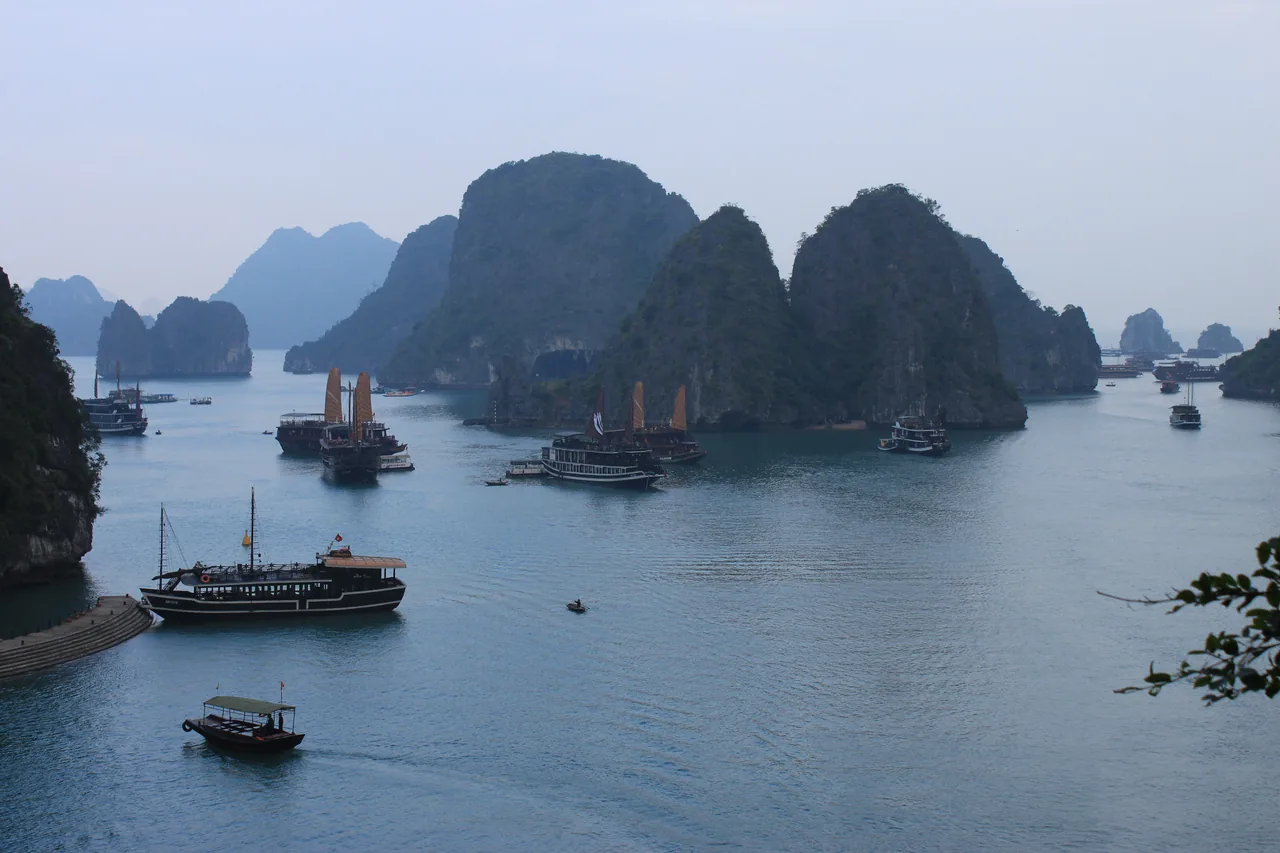
Ha Long Bay is a sea of roughly 1,600 limestone islands and islets in the Gulf of Tonkin, and the honest truth is that there’s no good way to see it from land. The towns on the shore are ordinary; the magic is out among the karsts, in the channels and lagoons and caves that only a boat can reach. So a “Ha Long Bay trip” really means choosing a cruise — and the whole job of planning is picking the right one.
That breaks down into three decisions, and the rest of this guide walks each one in depth:
- How long — a day cruise (4–6 hours on the water, back in Hanoi by night), one overnight (the classic, and what most people should do), or two nights (for the remote far bays).
- Which bay — the famous, busy Ha Long Bay proper, the greener and calmer Lan Ha Bay by Cat Ba, or the quiet, far-flung Bai Tu Long Bay.
- Which boat — this matters more than anything, because the gap between a cheap cruise and a good one is the difference between a trip you love and one you endure.
“Is it a tourist trap?” It’s the honest question every traveller asks, because yes, Ha Long is busy and yes, the cheap end is a grind. But the bay itself is genuinely world-class, and the difference between a forgettable trip and a magical one is almost entirely which cruise you book — not whether you go. Get that right and it lives up to the hype; get it wrong and you’ll write the bad review yourself. This guide is mostly about getting it right.
The short version: for most first-timers, a 2-day / 1-night cruise on a solid mid-range boat in Ha Long or Lan Ha Bay is the answer. It gives you a sunset and a sunrise among the karsts, a cave, a kayak, a fishing village and a good night’s sleep on the water — the full experience, without the cost or the dead time of a longer trip.
2. Day cruise, one night, or two?
This is the first real decision, and it’s mostly about how much time you have and how much of the bay you actually want to feel. Here’s the honest trade-off:
| Option | Time on the water | Rough price (pp) | Best for |
|---|---|---|---|
| Day cruise | ~4–6 hr (plus ~5 hr driving) | ≈ US$55–110 | Tight schedules; a taste of the bay in one day from Hanoi |
| 2 days / 1 night | ~24 hr aboard | ≈ US$130–250 | Most people — sunset, sunrise, caves, kayak, one good night |
| 3 days / 2 nights | ~48 hr aboard | ≈ US$280–600 | Slowing down and reaching the quiet, far corners of the bay |
A day cruise is a real option if Hanoi is your only base and you can’t spare a night — modern day boats now run the same headline route as the overnighters (Sung Sot Cave, Ti Top, a kayak) with a seafood lunch aboard. The catch is the maths: it’s roughly five hours of round-trip driving for four hours on the water, and you miss the two best moments — sunset and sunrise, when the day-trippers have all gone home and the bay goes quiet and golden.
One night is the sweet spot, and it’s what we’d steer almost everyone toward. You board around midday, sail out as the crowds thin, do the caves and a kayak in the afternoon, watch the sun go down from the top deck, sleep on the water, and catch a misty sunrise and tai-chi before a second, quieter activity and a late-morning return. It’s about 24 hours and it feels complete.
Two nights isn’t twice as good — but it’s the only way to reach the genuinely remote water (deep Bai Tu Long, or out toward Cat Ba‘s far side) without rushing, swim more, and trade the conveyor-belt sights for places almost no one goes. Worth it if you love being on boats and have the days to spare.
3. Ha Long vs Lan Ha vs Bai Tu Long: which bay?
Here’s the thing the brochures gloss over: the karst seascape you’re picturing actually spans three connected bays, and they’re sold as if they’re interchangeable. They aren’t. Same geology, very different day out.
| Ha Long Bay | Lan Ha Bay | Bai Tu Long Bay | |
|---|---|---|---|
| Vibe | The icon — biggest, busiest | Greener, beaches, calmer | Remote, wild, almost empty |
| Crowds | Heavy (500+ boats some days) | ~30% of Ha Long’s traffic | ~15% — you may see a handful of boats |
| Departs from | Tuan Chau / Sun Port (Ha Long city) | Got Pier (Hai Phong) / Cat Ba | Hon Gai (Ha Long city) |
| Highlights | Sung Sot Cave, Ti Top, Luon Cave | Hidden beaches, Cat Ba park, kayaking | Vung Vieng village, Thien Canh Son cave |
| Pick it for | The famous postcard, first-timers | Swimming & fewer crowds, same scenery | Real quiet, on a 2-night trip |
Map Ha Long Bay proper is the one on the postcards — the densest, most dramatic cluster of karsts and the big-ticket sights. It’s also the busiest, with hundreds of boats sharing the same channels in peak season. If you want the iconic view and don’t mind company, it delivers.
Map Lan Ha Bay, just southwest by Cat Ba Island, is the quiet winner for a lot of travellers: the same limestone drama but greener, dotted with little swimmable beaches, and far less crowded because it’s regulated separately. Cruises leave from Got Pier near Hai Phong, which is actually a touch closer to Hanoi than Ha Long city.
Map Bai Tu Long Bay, to the northeast, is the wild card — protected, sparsely visited, and genuinely tranquil. You trade a few famous photo-stops for water you might have almost to yourself. It shines on a 2-night cruise; on a single night you’ll spend too much of it getting there and back.
4. Getting there: Hanoi to the cruise port
Ha Long is about 170 km east of Hanoi, and since the expressways opened it’s an easy run — the days of a grinding four-hour bus are gone. The honest comparison:
| How | Time | Cost (one way) | Notes |
|---|---|---|---|
| Cruise shuttle bus | ~2.25–2.5 hr | Usually included / ~$12–20 | The default — hotel pickup in the Old Quarter, drop at the pier |
| Limousine van | ~2.5 hr | ≈ $12–18 | 9–16 seat shuttles, hourly; book a seat in advance |
| Private car | ~2.25 hr | ≈ $70–110 (vehicle) | Door to door, your own schedule; best for families |
| Public bus | ~3–3.5 hr | ≈ $5–8 | From My Dinh station to Ha Long bus station, then a taxi to the pier |
For almost everyone, the answer is simple: let the cruise handle it. Nearly every overnight (and most day cruises) includes a shuttle from Map the Old Quarter, or offers one as a cheap add-on, and it drops you right at the boarding lounge. The newer expressway route via Hai Phong has cut the drive to a little over two hours, usually with one short rest stop. Seaplane transfers, by the way, were discontinued in early 2026, so road is now the only way.
You’ll be coming via Hanoi, which most travellers reach on a direct flight and enter visa-free or on a quick e-visa: UK, most EU countries and many others get 45 days visa-free (valid through 2028), while everyone else applies online for the e-visa in a few minutes. The cruise is a side-trip from the capital, so sort the flight and visa once, and the bay slots in. Details in our visa guide.
If you’re sailing Lan Ha Bay, your transfer goes to Map Got Pier near Hai Phong instead of Ha Long city — slightly closer, and the operator sorts it either way. Whatever you book, you’ll want mobile data for the journey and the bay (most cabins have patchy signal at best) — see our Vietnam eSIM guide, and our Grab & ride-app guide if you’re getting yourself to the pickup point. Set the eSIM up before you fly and you’re online the moment you land.
5. How to choose a cruise (and dodge the cheap-cruise trap)
This is where Ha Long trips are made or ruined. The bay has hundreds of boats at every price point, and you genuinely get what you pay for — the single most common regret is booking the cheapest cruise to save $40 and spending 24 hours wishing you hadn’t. A few rules keep you safe:
- Read recent reviews, not the brochure. Check Google, TripAdvisor and Booking.com for reviews from the last few months — boats change hands and standards slip fast. A vague itinerary (“visit a cave, do some activities”) is a red flag; good operators tell you exactly which cave and when.
- Know the floor. A credible all-inclusive overnight starts around US$130–160 per person; a polished 4–5 star one is ~$180–250. Anything advertised well below that is cutting corners somewhere you’ll feel — food, safety, or crowding.
- Confirm what’s actually included. Get it in writing: transfers, the bay entrance fee, which activities, meals and drinking water. The classic scams are quietly dropping the kayak or cave “due to weather,” then charging for everything on board.
- Match the boat to you. Big boats (40+ cabins) are stable, social and cheaper per head; small boats (8–12 cabins) are intimate and reach quieter spots. Couples often prefer the latter; families like the pools and space of the former.
Booking platforms make the comparison easy and show real traveller reviews and what each fare includes, which is exactly what you want for a purchase this easy to get wrong. For a day cruise from Hanoi, these are solid, well-reviewed options:
6. What you actually do on board
A cruise isn’t just floating and looking at rocks (though there’s plenty of that, happily). A standard itinerary threads together a sequence of stops and activities, and knowing them helps you judge whether a cruise is giving you the real thing:
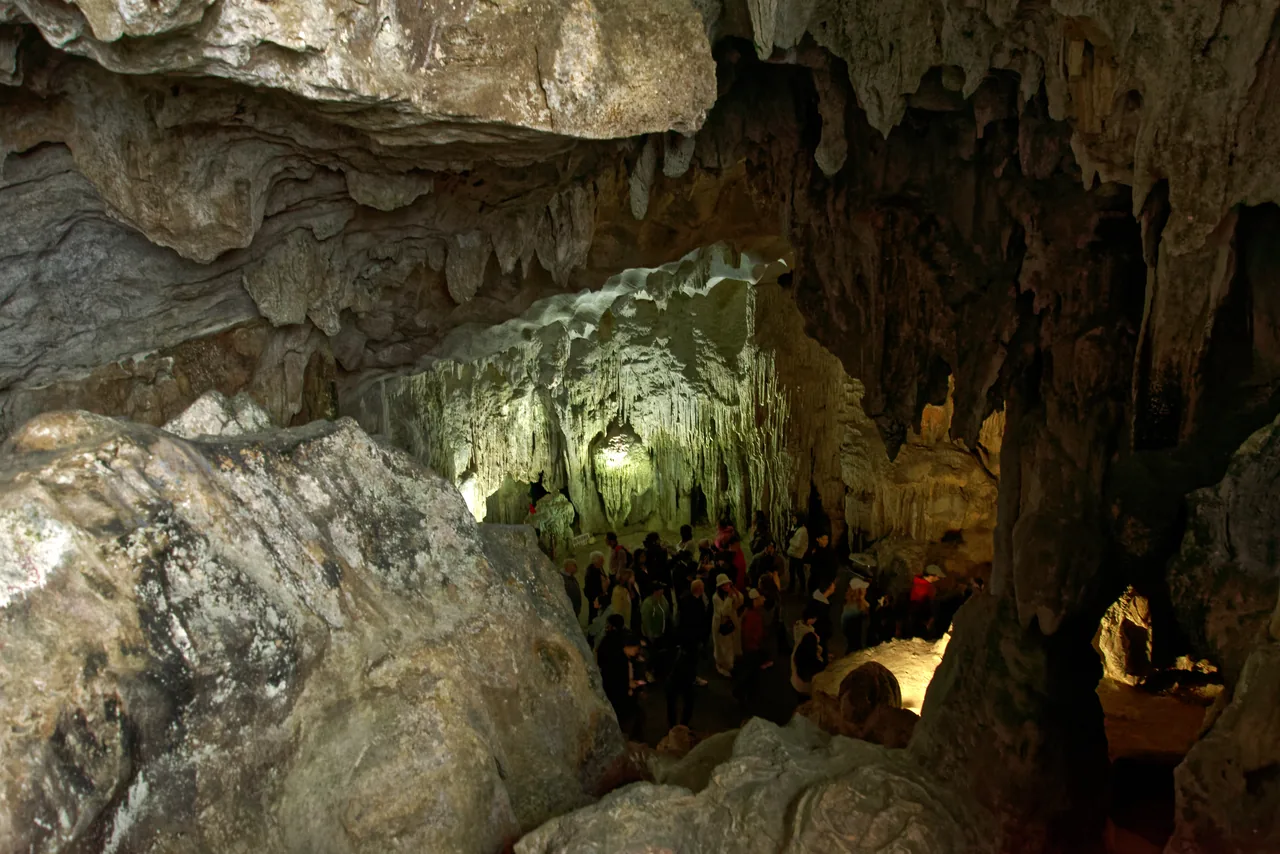
- Map Sung Sot (Surprise) Cave — the bay’s biggest and most famous grotto, two vast floodlit chambers of stalactites reached by a stone path up the hillside. On nearly every Ha Long route; expect company at midday.
- Map Ti Top Island — a short, steep climb (~400 steps) to a viewpoint over the classic karst panorama, plus a small crescent beach for a swim. The postcard shot is from up here.
- Kayaking at Map Luon Cave — paddle (or take a bamboo rowboat) through a low rock tunnel into a hidden, cliff-ringed lagoon. For many people this is the highlight — the bay at water level, in silence.
- A floating fishing village — Cua Van in Ha Long, or Vung Vieng in Bai Tu Long: generations of families living on the water, visited by a local-rowed sampan. A genuine look at a vanishing way of life.
- Swimming, sunset & tai chi — overnight boats anchor in a quiet spot to swim off the deck, serve drinks for the sunset, and run a (very optional) dawn tai-chi session on the top deck.
- A cooking class & squid fishing — most overnighters do a hands-on spring-roll demo before dinner and hand out rods for night squid fishing off the back of the boat. Low-key fun, and very on-theme.
A good cruise paces these so you’re never rushed; a cheap one crams them or quietly skips one. If kayaking and a cave matter to you, confirm they’re included and not weather-optional before you pay.
7. A 2-day, 1-night cruise, hour by hour
To make the overnight concrete, here’s how the classic 2D1N actually unfolds — the rhythm is similar across most boats:
Day 1
- 8:00–8:30 — hotel pickup in Hanoi; the shuttle runs the expressway with one rest stop.
- 11:30–12:30 — arrive the pier, check in at the lounge, tender out to your boat as the day-trippers start heading back.
- 12:30–14:00 — welcome briefing and lunch as you sail into the bay, karsts sliding past the windows.
- 14:30–17:00 — the afternoon activity block: a cave (Sung Sot), kayaking at Luon Cave or a fishing village, maybe Ti Top.
- 17:30–19:00 — back aboard for sunset from the top deck, a drink, a cooking demo.
- 19:30 on — dinner, then squid fishing or just the quiet of the anchored bay under the stars.
Day 2
- 6:30–7:00 — sunrise and optional tai chi on the deck; this is the bay at its most beautiful, mist on the water and almost no one about.
- 7:30–9:30 — a light breakfast, then one more activity — another cave, a pearl farm, or a second kayak.
- 10:00–11:00 — brunch as the boat cruises back; check out of your cabin.
- 11:30–12:00 — disembark, meet the shuttle, back in Hanoi by mid-afternoon.
That arc — afternoon sights, sunset, a night on the water, a quiet sunrise — is exactly why one night beats a day trip. To book the overnight version, these are well-reviewed boats:
8. Cabins, food & what’s included
On an overnight, the boat is the destination for half the trip, so the cabin and the food matter more than on a normal hotel night.
Cabins. Even on mid-range boats, cabins are surprisingly hotel-like: ensuite bathroom, air-con, often a small private balcony — and that balcony is worth paying up for, because waking to the karsts from your own railing is the whole point. If you’re prone to motion, pick a lower-deck, midships cabin (steadier); for views and quiet, go higher. Bigger boats offer family cabins and connecting rooms.
Food. Meals are included and usually a highlight — multi-course Vietnamese seafood, often a fresh catch, with a cooking demo thrown in. Tell the operator in advance about any dietary needs (vegetarian, halal, allergies) and they’ll cater; on cheaper boats the food is the first place they save, which is another reason not to bottom-feed on price.
Drinks are the main thing not included — the bar runs a tab, and prices are inflated (it’s a boat). Water is usually free; alcohol and soft drinks are extra and add up. Some luxury cruises bundle them. Budget a little cash or card for the bar tab, and remember signal is patchy out in the bay, so download what you need and tell people you’ll be offline.
9. Costs, tickets & the bay fee
Cruises are nearly always sold all-inclusive — one price covering the boat, cabin, meals, activities and usually the transfer and the bay entrance fee. That makes budgeting simple, but it helps to know what sits inside the number:
| Item | Rough cost | Notes |
|---|---|---|
| Day cruise | US$55–110 pp | Boat, lunch, activities; transfer often included |
| 1-night cruise | US$130–250 pp | Mid-range to 5-star; all meals + activities |
| 2-night cruise | US$280–600 pp | Slower, quieter, far bays |
| Bay entrance fee | ~290,000 VND day / ~550,000–750,000 overnight | Almost always already inside the cruise price |
| Drinks (extra) | your own tab | Bar prices are high; water usually free |
| Tips (optional) | ~US$5–10 pp | For crew & guide, customary on overnights |
The one line that occasionally trips people up is the official bay sightseeing fee — Ha Long charges a per-person entrance fee by route (around 290,000 VND for a day visit, more for overnights). On a packaged cruise it’s almost always already included; just confirm, so you’re not surprised by a pier-side charge. Everything is settled in Vietnamese dong on the ground (the bar, tips, any extras), so carry some cash — our money guide covers ATMs and cards.
10. When to go: weather, fog & typhoons
Ha Long’s weather genuinely shapes the trip — this is a sea, and the season decides whether you get blue skies, moody mist, or a cancelled sailing. The quick read:
- October–December — the best window. Dry, cool, clear, calm seas and the cleanest visibility of the year. Peak for good reason; book ahead.
- March–April — the second-best. Warming up, green and pleasant, though spring can bring grey skies and a poetic fog that some people love and others find flat for photos.
- May & September — shoulder. Warm and swimmable, with a real but lower storm risk; good value either side of the peaks.
- June–August — summer, and typhoon season. Hot and great for swimming, but July–September carry the highest typhoon risk, and the bay’s authority will cancel sailings for safety when a storm threatens — usually for a day or two at a time.
- January–February — cold and often foggy. Atmospheric and quiet, but chilly (around 17°C) and the haze can hide the views.
For how the seasons play out across the whole region, our best time to visit guide goes month by month.
11. Seasickness, packing & practical tips
None of this is hard, but a few small things make a Ha Long cruise smoother:
- Seasickness is rarely an issue — the bay is sheltered and the water mostly glassy, so big boats barely move. If you’re sensitive, take a tablet before boarding, choose a low, central cabin, and you’ll likely forget you’re on a boat at all.
- Pack a small overnight bag, not your big case — many boats let you leave the main luggage at the pier or your Hanoi hotel. You need a swimsuit, a light layer for the evening deck, grippy shoes for the cave steps and Ti Top, sunscreen, and any meds.
- Bring cash in dong for the bar tab, tips and any extras; cards work on bigger boats but not all.
- Manage expectations on connectivity — signal comes and goes in the bay. Download maps, music and anything you need offline, and treat it as a feature, not a bug.
- Confirm pickup details the day before, and have your hotel address and the operator’s number handy — the eSIM keeps you reachable.
- Visa sorted? Same rules as the rest of Vietnam — check our visa guide before you fly.
And get online before you even reach the pier — an eSIM means maps, ride-hailing and messages work the moment you land in Hanoi:
12. Day trip or overnight — the honest verdict
If you take one thing from this guide: do the overnight if you possibly can. A day cruise is a genuine option and far better than skipping the bay entirely — but it’s a compressed taster, and you spend more of the day in a van than on the water, and you miss the two moments that make Ha Long unforgettable: the sun setting over the karsts with the crowds gone, and the misty hush of dawn before anyone else is awake.
Choose the day cruise if Hanoi is your only base, you’re short on time, or the budget is tight — and pick a well-reviewed boat that runs the full route.
Choose one night if you can spare it, which is most people — it’s the single best-value upgrade in northern Vietnam.
Choose two nights if you love being on the water and want the empty, far reaches of Bai Tu Long without a clock running.
13. Beyond the bay: Cat Ba, Ninh Binh & going further
A Ha Long cruise slots neatly into a bigger northern loop, and a couple of pairings are almost too good to skip:
- Cat Ba Island — the big island off Lan Ha Bay, with a national park, hiking, and beaches. Many Lan Ha cruises start or end here, and it makes an easy add-on if you want land legs and a slower pace after the boat.
- Ninh Binh — the “Ha Long Bay on land,” all the same limestone karst but threaded by rivers and rice fields instead of sea, and an easy day trip from Hanoi. Doing both gives you the karst landscape from the water and from a rowboat between the paddies — see our Hanoi to Ninh Binh day trip.
- Sapa & the far north — if the bay is the start of a longer northern adventure, the mountains are next; our North Vietnam guide maps the whole region, and the Vietnam travel guide zooms out to the country.
A common, well-balanced week: Hanoi → a Ha Long or Lan Ha overnight → Ninh Binh → Sapa. The bay is the centrepiece, and everything else clicks around it.
14. Final booking checklist
Before you pay, run down this short list — it’s the difference between a great cruise and a cautionary tale:
- Recent reviews (last few months) on Google/TripAdvisor/Booking — not just the operator’s own site.
- A specific itinerary — named caves, named activities, clear times. Vague = avoid.
- What’s included in writing — transfer, bay fee, which activities, meals, water. And what isn’t (usually drinks).
- The right boat for you — big and social, or small and intimate; balcony cabin if the budget stretches.
- The right bay — Ha Long for the icon, Lan Ha for calm and swimming, Bai Tu Long for two-night quiet.
- The right timing — aim for Oct–Dec or Mar–Apr, book early in your trip, watch the forecast.
- Cash, an eSIM and a small bag — for the bar, to stay reachable, and to travel light.
Get those right and Ha Long Bay lives up to every photo you’ve seen — and then some, because no photo captures the silence out among the karsts at dawn.
🎡Things to Do4
🏨Where to Stay1
🚇Getting Around3
🧭Travel Tips2
🧭Vietnam-wide essentials145
Ha Long Bay cruise: FAQ
Planning the whole north? See our complete North Vietnam travel guide →