
Long Thanh International Airport: What Travelers Need to Know Before It Opens
Vietnam’s next mega-hub isn’t taking passengers yet — here’s what’s confirmed, what’s still a plan, and why you should double-check which airport your ticket actually uses.
| Status | Not yet open for commercial flights — government target is Q4 2026 |
|---|---|
| Location | About 40 km east of central Ho Chi Minh City, Long Thanh District, Dong Nai Province |
| Phase 1 design capacity | 25 million passengers a year |
| Airport rating | ICAO Code 4F (the highest classification) |
| Airport you’re flying from today | Tan Son Nhat (SGN) — nothing has changed yet |
| Phase 1 investment | US$4.66 billion (~VND 109 trillion) |
1. Long Thanh International Airport at a Glance
2. Current Status: Not Yet Open for Commercial Flights
3. Location and Distance: How It Compares to Tan Son Nhat
4. Scale and Design: Lotus Roofs, Bamboo, and a 4F Rating
5. Passenger and Cargo Capacity: The Phased Build-Out
6. Who’s Paying for It: Investment and Ownership
7. Which Airlines and Routes Are Moving
8. Getting There by Road from Ho Chi Minh City
9. Public Bus Plans
10. Future Rail Connections (Not Yet Under Construction)
11. Tan Son Nhat vs. Long Thanh: How Not to Get Confused
12. The Overlooked Upside: Vung Tau and the Coast
13. What Travelers Should Actually Do Right Now
14. Quick FAQ Recap
1. Long Thanh International Airport at a Glance
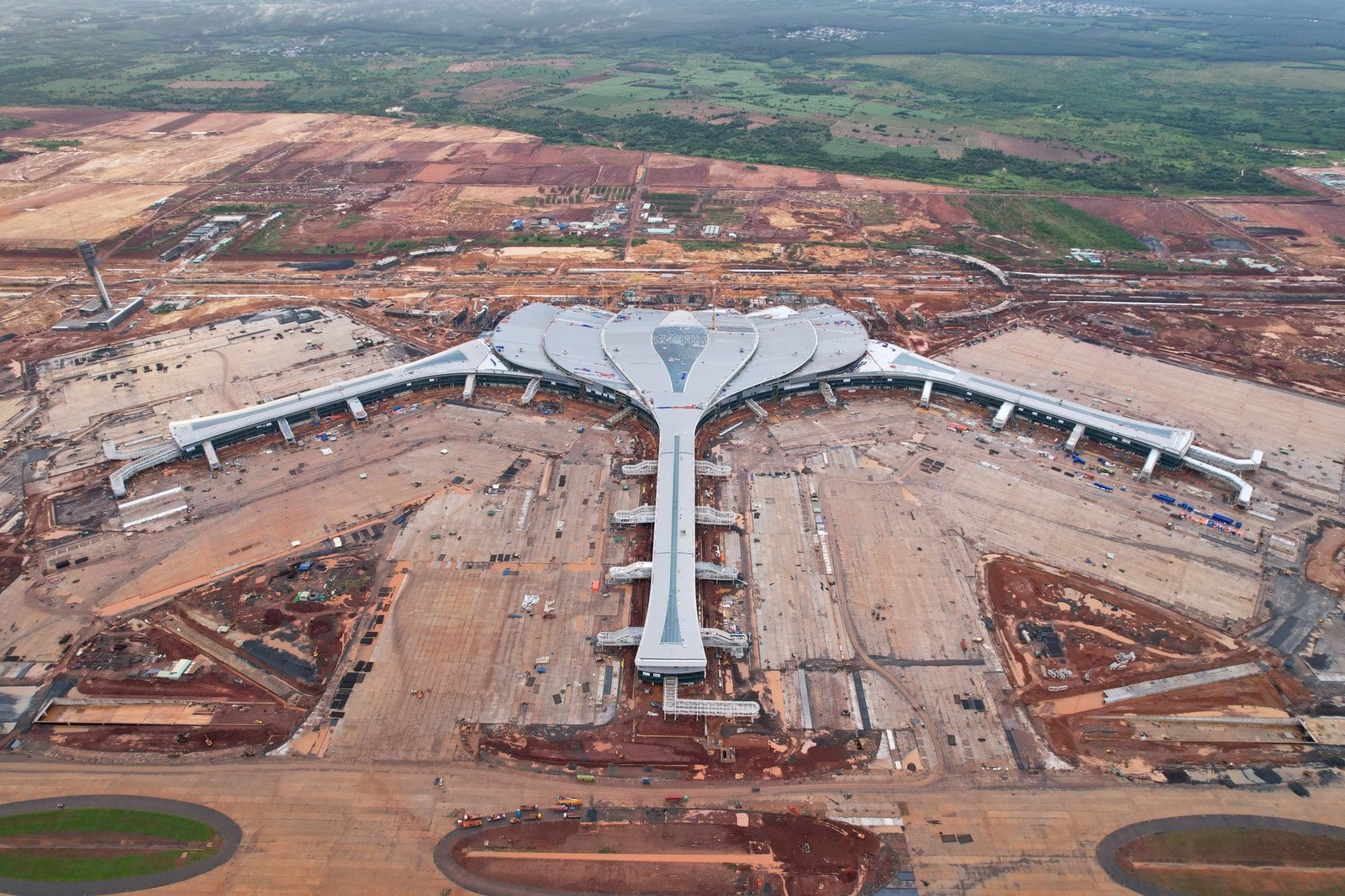
Long Thanh International Airport (LTIA) is Vietnam’s fix for a problem every Ho Chi Minh City traveler already knows: Tan Son Nhat is landlocked, boxed in by the city, and long past comfortable capacity. Long Thanh is being built from scratch on roughly 5,000 hectares in Long Thanh District, Map Dong Nai Province, about 40 km east of the city center.
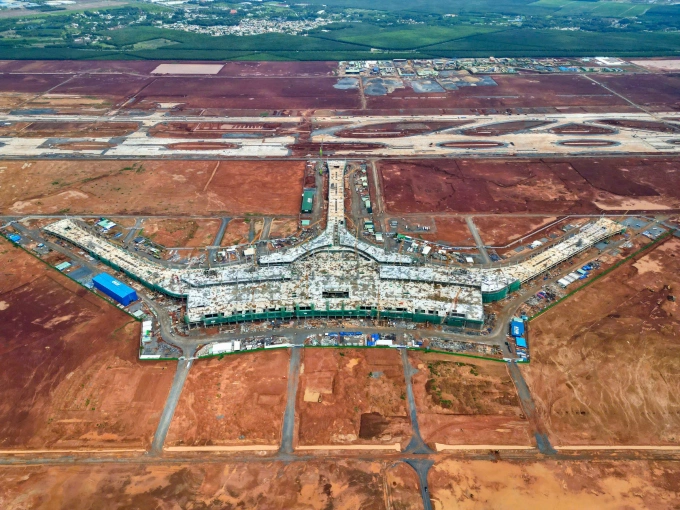
The headline: it is not open for commercial flights as of July 2026. The first runway is finished and a technical opening ceremony took place in December 2025, but no airline is selling tickets in or out of Long Thanh yet. Every flight to and from Ho Chi Minh City today still uses Tan Son Nhat (SGN).
If you’re planning a Vietnam trip before this airport’s commercial debut, the practical impact on you is close to zero. The transition is coming in stages rather than overnight, so it’s worth understanding now — before route reassignments start appearing on booking sites.
Vietnam eSIM cost calculator
Enter how long you stay and how much data you expect to use. The table shows what each provider actually charges for that trip, what you get, and how many days you end up paying for but not using.
Rows are in a fixed order by provider. That order is not a ranking.
They price on different axes. Airalo sells a fixed ladder of trip lengths alongside a grid of data caps. Yesim sells unlimited by the exact day, so a 12-day trip costs 12 days rather than a 15-day package. Saily sells a small set of data bundles with a fixed validity.
- Airalo · Network: VNPT 5G
- Airalo · Speed limit on unlimited packages: Unlimited means unlimited until 3 GB in one day. After that the speed drops to 1 Mbps for the rest of that day, then resets.
- Yesim ·
- Every option here is data only. None of them gives you a local phone number, so if you need one for calls, deliveries or SMS codes, an eSIM of this kind is not the answer.
Working out what data will cost before you land: the eSIM cost calculator
2. Current Status: Not Yet Open for Commercial Flights
| Date | Milestone |
|---|---|
| April 2025 | Runway 1 (4,000 m) completed ahead of schedule; lighting systems tested and signed off. |
| December 19, 2025 | “Technical opening” ceremony held. Three test flights (including one from Hanoi) landed and departed to validate the runway, control tower, and apron. This was a technical milestone, not the start of commercial service. |
| March 2026 | Prime Minister Pham Minh Chinh’s government formally adjusted the phase-1 commercial launch target to Q4 2026, after earlier informal targets (mid-2026, and a symbolic tie-in to the September 2 National Day) proved too tight for finishing the terminal. Construction progress on the terminal package (Component 3, led by ACV) reached roughly 74-75% of contract value, with completed work valued at about US$2.4 billion (~VND 64.1 trillion). |
| Q4 2026 (target, not confirmed) | Government’s stated goal for the start of phase-1 commercial operations. This is a target, not a guaranteed date — treat it as “sometime in the second half of 2026 at the earliest, officially aimed at Q4.” |
Why the caution? Vietnam’s mega-projects have a track record of shifting completion windows, and Long Thanh’s informal target already slid from mid-2026 to an official “Q4 2026” only months before this guide was written.
The terminal complex is made up of fifteen major construction packages. As of the last confirmed report, three were complete and twelve were running in parallel, with about 15,000 workers and 3,000-plus pieces of equipment on site. Any one of those slipping pushes the whole opening back — we’ll update this section the moment commercial operations are confirmed.
3. Location and Distance: How It Compares to Tan Son Nhat
Long Thanh sits in Long Thanh District, Dong Nai Province — a separate province from Ho Chi Minh City, not one absorbed into the city during Vietnam’s 2025 provincial mergers (those were the former Binh Duong and Ba Ria-Vung Tau). It’s commonly cited as about 40 km east of the city center in a straight line.
Because the road network curves around, actual driving distance runs closer to 50-60 km depending on route. Sources aren’t fully consistent, so treat “about 40 km, more like 50-60 km by road” as the honest range. Map
| Tan Son Nhat (SGN) — current | Long Thanh (LTIA) — under construction | |
|---|---|---|
| Distance to HCMC center (District 1) | ~6-8 km | ~40 km straight line, ~50-60 km by road |
| Status | Fully operational, handling all current flights | Not yet commercially operating |
| Airport classification | Existing international gateway | ICAO Code 4F (the top classification) |
| Phase-1 passenger capacity | Already well past its original design capacity | 25 million/year design target; ramping up from a smaller initial figure |
| Planned long-term role | Domestic-heavy: ~90% of domestic flights, ~20% of international | International-heavy: ~80% of international flights, ~10% of domestic |
The upshot: these are not interchangeable airports, and they won’t be within short-taxi distance of each other. If you ever need to connect between them, budget serious time for the transfer — it will not be a quick hop.
4. Scale and Design: Lotus Roofs, Bamboo, and a 4F Rating
Long Thanh is being built at a scale meant to last decades. Here are the core specs of the airport as designed:
| Feature | Detail |
|---|---|
| Site area | ~5,000 hectares (about 50 km²) — one of the largest single infrastructure footprints in Vietnam |
| Runways at full build-out | Four, each 4,000 m long and 60 m wide — enough for the largest wide-bodies flying |
| Runway at opening | One (Runway 1), completed April 2025 with lighting systems tested and signed off |
| Airport rating | ICAO Code 4F — the highest classification in the ICAO system |
| Terminal roof | Shaped to evoke a lotus, Vietnam’s national flower; natural ventilation and water-saving systems |
| Signature structure | A bamboo structure intended to be one of the largest of its kind in the world |
The design leans hard into national identity, pairing a culturally symbolic material (bamboo) with a real sustainability angle rather than mere decoration. On the technical side, that 4F rating covers the largest commercial jets in service.
5. Passenger and Cargo Capacity: The Phased Build-Out
One detail that’s easy to get wrong: the headline capacity numbers describe a design ceiling, not day-one throughput. Long Thanh is built in stages, and each has a very different real-world number attached.
| Stage | Passengers/year | Cargo/year | Notes |
|---|---|---|---|
| Opening (initial actual throughput) | ~2.6 million | — | The realistic starting point once commercial flights begin, well below the phase-1 design figure |
| By end of 2027 (ramp-up target) | ~15 million | — | Reported target for rapid scale-up in the first full years of operation |
| Phase 1 design capacity | 25 million | 1.2 million tonnes | The engineered ceiling for the current terminal and runway configuration |
| Final build-out (target ~2050, per JICA masterplan) | 100+ million | 5 million tonnes | All three phases complete, four runways operational — Vietnam’s largest airport and a top Southeast Asian hub |
The gap between opening-day throughput and phase-1 design capacity is deliberate — airports rarely run at full design load from day one. Don’t read early passenger figures as underperformance; it’s the planned ramp-up.
6. Who’s Paying for It: Investment and Ownership
The project is led by ACV — the Airports Corporation of Vietnam (Tổng công ty Cảng hàng không Việt Nam) — the state-linked operator acting as both primary investor and eventual operator. It’s one of Vietnam’s largest-ever infrastructure undertakings, split across component projects rather than one lump sum.
| Scope | Investment |
|---|---|
| Phase 1, total | US$4.66 billion (~VND 109 trillion) |
| Component 3 — terminal and core facilities, ACV’s direct share | US$4.3 billion (~VND 99 trillion) |
| Whole project, all phases combined (estimate) | US$12.8 billion (~VND 337 trillion) |
The project runs in three broad phases:
- Phase 1 — nearing completion now; the smallest by scope but still billions in committed spending.
- Phases 2 & 3 — would bring the airport to its four-runway, 100-million-passenger final form, but are further out and less firmly scheduled.
Expect those later milestones to be measured in decades, matching the 2050 target horizon in the JICA-backed masterplan.
7. Which Airlines and Routes Are Moving
Once Long Thanh is commercially operating, the government’s roadmap calls for a clear division of labor between the two airports:
| Traffic type | Long Thanh (target) | Tan Son Nhat (target) |
|---|---|---|
| International flights | ~80% | ~20% |
| Domestic flights | ~10% | ~90% |
The first wave, expected around summer 2026 onward, prioritizes long-haul international routes to Europe, the Americas, and Oceania — the flights that benefit most from a more modern terminal. Here’s what the two big carriers have committed to so far:
- Vietnam Airlines — has floated moving roughly 12% of its international routes to Long Thanh.
- Vietjet — has committed to operating at least two international routes there once phase 1 opens.
Neither is planning a wholesale switch on day one; this is explicitly a gradual, route-by-route migration timed to how fast ground transport catches up. Some older sources (mostly pre-2025) floated a scenario where essentially all HCMC international flights end up at Long Thanh — treat that “everything eventually moves” idea as a distant possibility, not the confirmed 80%/gradual plan.
8. Getting There by Road from Ho Chi Minh City
Road access is where most of the near-term work is happening, since rail is still years away. Three highway projects do the heavy lifting, plus a pair of connector roads:
| Route | Length | Details |
|---|---|---|
| Ho Chi Minh City–Long Thanh–Dau Giay Expressway | 55 km | Normal drive 45-60 min; expected to carry ~80% of all city-to-airport traffic once Long Thanh operates |
| Bien Hoa–Vung Tau Expressway | 54+ km | Links Dong Nai, HCMC, and the former Ba Ria-Vung Tau area; a dedicated “Long Thanh interchange” targeted for completion before end of May 2026 |
| Ring Road 3 (Vành đai 3, HCMC) | Full loop, multiple segments | Targeted for full completion by end of June 2026; would cut Thu Thiem-to-airport time to ~30-40 min |
| Roads 25B / 25C | Connector roads | Link Ring Road 3 to National Route 51; Dong Nai Province is currently finishing these |
Put it together and the overall goal is a normal drive from central Ho Chi Minh City to the airport of about 1 to 1.5 hours once all of the above is complete.
9. Public Bus Plans
Ho Chi Minh City’s transport department has finalized a network plan built around 13 new high-quality bus routes to connect the city to Long Thanh. Phase 1, targeted from the third quarter of 2026, adjusts four existing routes and adds two new express services:
| Express route | Connects | Status |
|---|---|---|
| Express 1 | Saigon Bus Terminal ↔ Long Thanh | Targeted from Q3 2026 (planned) |
| Express 2 | Tan Son Nhat Airport ↔ Long Thanh | Targeted from Q3 2026 (planned) |
Inside the airport, planners have proposed five bus stop locations, though exact positions may still change as construction wraps up. These two express routes are the most concrete public-transport option on the table, and they’re specifically designed to bridge the two airports.
10. Future Rail Connections (Not Yet Under Construction)
Rail access to Long Thanh exists only on paper right now. Two ideas are on the table, and neither has broken ground:
| Project | Type | Status |
|---|---|---|
| Thu Thiem–Long Thanh rail line | New rail line | Proposed — pre-construction |
| HCMC metro extension to the airport | Existing metro extension | Under review — pre-construction |
This is typical for large airport projects worldwide — road comes first, rail often follows a decade later. If a firm rail construction start is announced, that will be a bigger signal of maturing infrastructure than any single terminal milestone.
11. Tan Son Nhat vs. Long Thanh: How Not to Get Confused
The single most important point in this guide: as of today, there is no such thing as a flight departing from or arriving at Long Thanh. If a booking site or itinerary lists Long Thanh before commercial operations are confirmed, treat it as an error and check directly with the airline.
Once the transition begins, the risk shifts to knowing which airport a given flight uses. Airlines migrate routes gradually, so for a while some international flights will use Long Thanh while others — plus essentially all domestic flights — still use Tan Son Nhat.
That’s exactly the setup where connections get missed. If your itinerary links an international and a domestic leg, verify both flights’ airports individually rather than assuming they match.
A new, high-profile airport is also where confused, jet-lagged travelers get targeted, so the usual advice about unlicensed taxi touts and inflated “official” transfer counters applies — see our guide to common travel scams in Vietnam for what to watch for at any Vietnamese airport, old or new.
12. The Overlooked Upside: Vung Tau and the Coast
Long Thanh’s location is usually framed as a downside for anyone headed into central Ho Chi Minh City — and it is, next to Tan Son Nhat’s spot just 6-8 km from District 1 (where a Grab currently runs roughly US$4-9.50 / 110,000-250,000 VND). At 40+ km out, Long Thanh is unambiguously farther from the city core.
But geography cuts both ways. Which airport actually suits your trip depends on where you’re headed:
| Your trip is built around… | Better airport | Why |
|---|---|---|
| Central Ho Chi Minh City | Tan Son Nhat (SGN) | Just 6-8 km from District 1 — unbeatably close to downtown |
| Vung Tau / the eastern coast | Long Thanh (once open) | Geographically closer in that direction; skips the drive into central HCMC first |
| Long-haul international connection | Long Thanh (once open) | Newer terminal, ICAO 4F rating; long-haul international routes shift here first |
The honest way to think about it: Long Thanh trades proximity to the city center for proximity to the coast in that direction. If your trip runs through downtown, that’s a net negative versus Tan Son Nhat — just don’t expect Long Thanh to beat SGN’s closeness to District 1. For how the region’s cities and beach towns fit together, see our South Vietnam travel guide.
13. What Travelers Should Actually Do Right Now
Nothing about Long Thanh affects a trip booked today, so the actual to-do list is short:
- Check your airport code, not just the city name. Every current Ho Chi Minh City flight uses Tan Son Nhat (SGN). Get in the habit now so it’s second nature once transfers begin.
- Handle your paperwork as normal. Long Thanh changes nothing about entry requirements — sort your Vietnam visa the way you always would.
- Arrange connectivity and cash the usual way. Pick up a Vietnam eSIM before you land📶 Grab, maps and the booking apps all need data from the moment you landSee on Yesim →See on Saily →See on Airalo →Affiliate link — we may earn a commission at no extra cost to you., and handle currency through your normal channels — see our guide to money and currency in Vietnam for the current rate (roughly 1 USD ≈ 26,300 VND as of mid-2026).
- Renting a car or booking a private transfer? For onward travel around southern Vietnam, book it the same way you would today🚐 Long Thanh is 40km from central Saigon, twice as far as Tan Son NhatSee on Klook →See on KKday →See on Trip.com →Affiliate link — we may earn a commission at no extra cost to you.— Long Thanh’s opening won’t change how ground transport works elsewhere.
- Bookmark this page. We’ll rewrite the status section the moment commercial operations are confirmed — with real fares, real transfer times, and real terminal details.
14. Quick FAQ Recap
A few of the most common questions about Long Thanh, answered in short form below — handy if you’re skimming before a booking or explaining the situation to a travel companion.
🎡Things to Do23
🍜Food2
🏨Where to Stay9
🚇Getting Around3
🧭Travel Tips9
🧭Vietnam-wide essentials116
Frequently Asked Questions
🧭 Planning the rest of your trip? See our full South Vietnam travel guide →