
Bánh Xèo & Nem Lụi in Da Nang: The Complete Guide (2026)
Central Vietnam’s crispy sizzling rice crepe and its grilled-pork sidekick — what they are, how to eat them, and where to find the best in Da Nang.
- What it is: bánh xèo is a crispy, golden, turmeric rice-flour crepe filled with shrimp, pork and bean sprouts — the name means ‘sizzling cake’ after the sound it makes in the pan.
- Its partner: nem lụi — grilled lemongrass pork skewers — is almost always ordered alongside; you wrap both in rice paper with herbs and dip.
- The famous spot: Bánh Xèo Bà Dưỡng, hidden down an alley off Hoàng Diệu, is Da Nang’s legendary address (now in the MICHELIN Guide), known for its peanut-and-liver dipping sauce.
- Cheap & cheerful: a filling meal runs roughly 50,000–120,000₫ (about US$2–5) per person. Go hungry.
1. What Is Bánh Xèo?
2. Central-Style: How Da Nang’s Bánh Xèo Differs
3. Nem Lụi: Bánh Xèo’s Inseparable Partner
4. How to Eat It Like a Local
5. Where to Eat in Da Nang
6. Prices & What to Order
7. Dietary Notes, Hygiene & Vegetarian Options
8. Pairings & What Else to Try
Of all the dishes that define Da Nang’s table, few are as fun to eat as bánh xèo — the crispy, sizzling rice crepe that you tear up, pile with herbs, roll in rice paper and dunk in a rich, nutty sauce. In Central Vietnam it almost never travels alone: its partner is nem lụi, fragrant grilled pork skewers wrapped the very same way. Together they’re a hands-on, build-your-own feast that’s cheap, social and utterly delicious. This guide explains what bánh xèo and nem lụi actually are, how Da Nang’s version differs from the giant southern one, the step-by-step way locals eat them, where to go (including the city’s most famous address), realistic prices and dietary tips. (New to the city? Start with our complete Da Nang guide, and for the bigger picture see the Da Nang food guide.)
1. What Is Bánh Xèo?
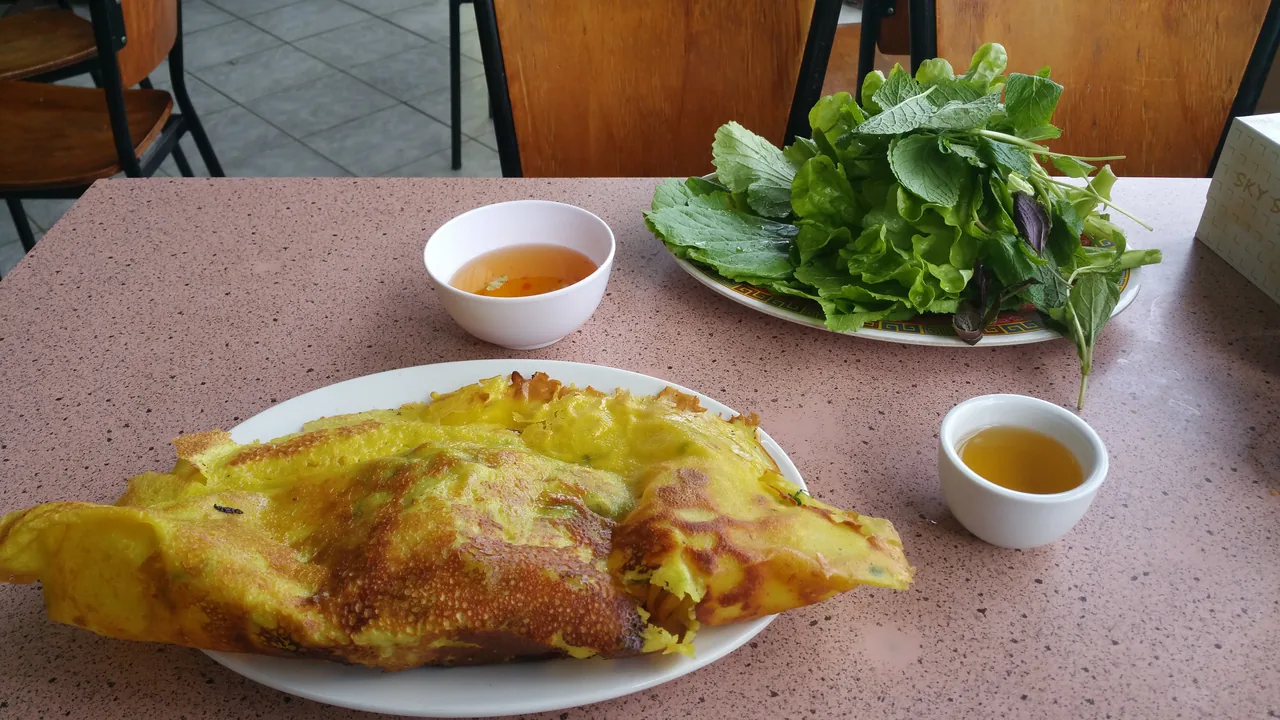
Bánh xèo (literally “sizzling cake”) is a savoury Vietnamese crepe made from a thin batter of rice flour, water and turmeric — which gives it that signature golden colour — poured into a screaming-hot pan, where it hisses and crackles (that’s the xèo sound). It’s filled with shrimp, slices of pork and bean sprouts, folded in half, and served crisp and hot.
You don’t eat it with a knife and fork. Instead you tear off a piece, lay it on a sheet of soft rice paper or a lettuce leaf, load it with fresh herbs, roll it into a parcel and dip it in sauce. It’s interactive, messy in the best way, and endlessly moreish — half the fun is assembling each bite yourself.
2. Central-Style: How Da Nang’s Bánh Xèo Differs
If you’ve had bánh xèo in Ho Chi Minh City, Da Nang’s will surprise you. Vietnam has two broad styles:
- Southern bánh xèo — large, plate-sized, often with coconut milk in the batter, very rich, eaten by tearing pieces off one big crepe.
- Central / Da Nang bánh xèo — much smaller, thinner and crispier, made without coconut milk, and served several little crepes at a time. They’re sized to wrap whole into a single rice-paper roll — perfect for eating with nem lụi.
The other big difference is the dipping sauce. While the south leans on a clear fish sauce (nước chấm), Central Vietnam — and Da Nang especially — is famous for a thick, savoury-sweet peanut-and-liver sauce (sometimes called nước lèo or tương), which clings to every bite. It’s the secret behind the city’s most celebrated bánh xèo shops.
| Element | What it is | Why it matters |
|---|---|---|
| The crepe | Rice flour + turmeric + water, pan-fried crisp | Light, golden, shatteringly crispy |
| The filling | Shrimp, pork, bean sprouts | Savoury heart of each roll |
| Bánh tráng | Soft rice paper for wrapping | Holds the whole parcel together |
| Herbs | Lettuce, mint, perilla, fig leaf & more | Freshness and crunch |
| The sauce | Thick peanut-&-liver dip (Central style) | The signature flavour |
3. Nem Lụi: Bánh Xèo’s Inseparable Partner
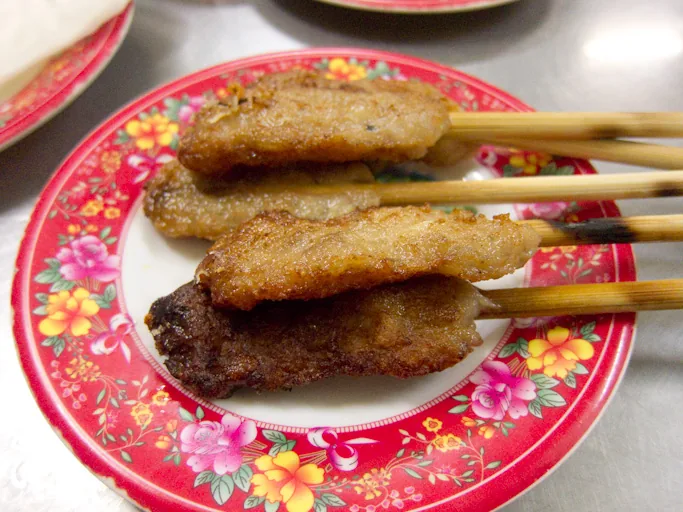
Order bánh xèo in Da Nang and you’ll almost always order nem lụi too — they’re served side by side and eaten the same way. Nem lụi is minced, seasoned pork (often with a little pork fat for juiciness) moulded around a stick of lemongrass or bamboo and grilled over charcoal until fragrant and lightly caramelised.
You slide the warm pork off the skewer, lay it on rice paper alongside a piece of bánh xèo, pile on herbs and maybe a sliver of green banana or star fruit, roll it up and dip. The smoky-sweet pork, the crisp crepe, the cool herbs and the rich sauce in one mouthful is exactly why this combination is a Central-Vietnam classic — and why visitors fall for it.
4. How to Eat It Like a Local
The assemble-it-yourself ritual is half the experience. Here’s the order locals follow:
- Lay down a sheet of rice paper (bánh tráng) or a lettuce leaf as your wrapper.
- Add herbs — a mix of lettuce, mint, perilla, fish-mint and whatever’s on the plate.
- Add the fillings — a torn piece of bánh xèo and/or the pork from a nem lụi skewer.
- Roll it up snugly into a parcel, tucking in the sides.
- Dip generously in the thick peanut sauce — and eat with your hands.
Don’t worry about getting it perfect; even messy rolls taste great, and the staff are used to first-timers. The only real rule is to eat the bánh xèo while it’s hot and crisp.
5. Where to Eat in Da Nang
Bánh xèo is everywhere in Da Nang, from humble street stalls to dedicated shops. One address stands above the rest:
Bánh Xèo Bà Dưỡng — the legend
Bánh Xèo Bà Dưỡng, tucked at the end of a narrow alley off Hoàng Diệu street (Hải Châu district), is Da Nang’s most famous bánh xèo spot — a no-frills, 30-year-plus institution now recognised in the MICHELIN Guide. It’s beloved for its crispy crepes, excellent nem lụi (often called the best in Central Vietnam) and, above all, its rich house peanut-and-liver dipping sauce. Expect a busy, canteen-style room down the lane — follow the crowds. (Hours are roughly late morning to evening, but they can change and it can sell out — check Google Maps before you go.)
Beyond Bà Dưỡng
Plenty of excellent, cheaper neighbourhood quán serve bánh xèo and nem lụi all over the city, especially around Hải Châu and the beach/An Thượng area. If there’s a stall busy with locals and a charcoal grill going, you’re in good hands. Search “bánh xèo” on Google Maps near you and pick one with lots of recent reviews.
| Where | Area | Known for | Approx / person |
|---|---|---|---|
| Bánh Xèo Bà Dưỡng | Off Hoàng Diệu, Hải Châu | The famous alley; peanut sauce, nem lụi | 60,000–120,000₫ |
| Local quán & stalls | Hải Châu, An Thượng/beach | Cheap, fresh, everywhere | 40,000–90,000₫ |
| Night-market stalls | Sơn Trà / Helio | Casual, with other street food | From ~40,000₫ |
Prices are rough per-person guides for a filling meal; confirm on the spot. Opening hours change — check Google Maps.
6. Prices & What to Order
Bánh xèo and nem lụi are some of Da Nang’s best-value eats. A typical order looks like this:
- Bánh xèo — usually priced per crepe or per portion; a portion of several small crepes is around 40,000–70,000₫.
- Nem lụi — priced per skewer (often quite cheap each); order a handful to share.
- The wrappers & herbs — rice paper, the big plate of herbs and the dipping sauce usually come included or for a small charge.
For two people, a generous spread of bánh xèo, a plate of nem lụi, herbs and drinks typically lands around 120,000–250,000₫ total (US$5–10). It’s hard to overspend.
7. Dietary Notes, Hygiene & Vegetarian Options
A few practical pointers:
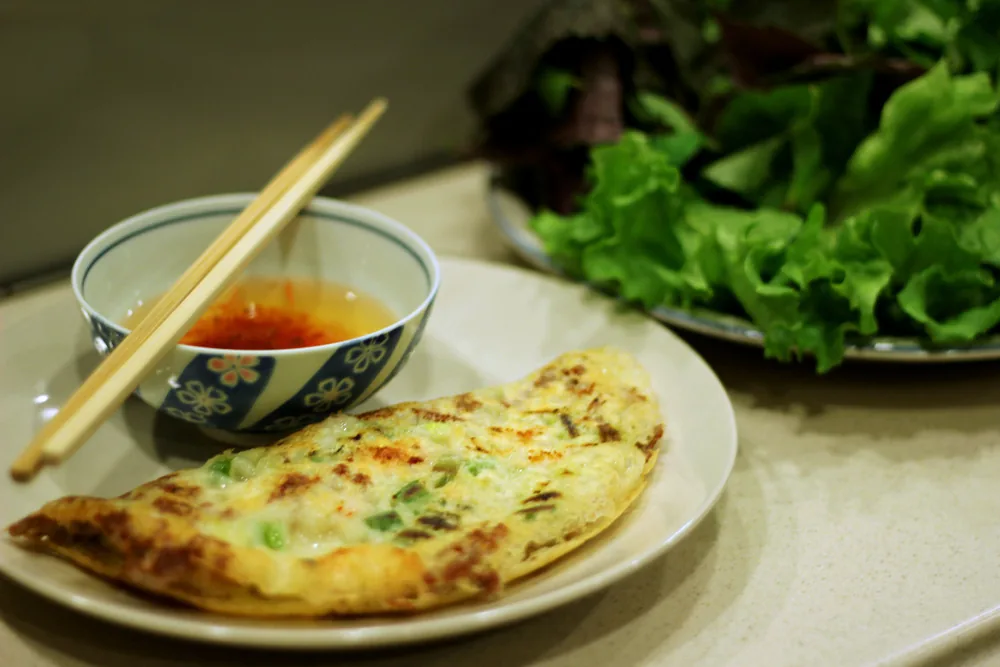
- Vegetarian? Standard bánh xèo contains shrimp and pork, and nem lụi is pork. Some places offer a meat-free bánh xèo (mushroom/bean sprout); ask for bánh xèo chay. Vegetarian Vietnamese (quán chay) restaurants are your safest bet.
- Allergies: the dipping sauce is usually peanut-based — a key point if you have a nut allergy. Shellfish (shrimp) is common in the filling. Ask, or choose a sauce-free option.
- Hygiene: busy places with high turnover, a hot grill and freshly cooked crepes are a good sign. As with all street food, pick stalls that are popular and cooking to order. See our money & safety guide for general tips.
- Spice: bánh xèo itself is mild; heat comes from chillies you add yourself, so it’s easy to keep gentle for kids.
8. Pairings & What Else to Try
Bánh xèo and nem lụi are a perfect introduction to Central Vietnamese eating — hands-on, herby and built around bold dipping sauces. If you enjoy them, line up these next:
- The full Da Nang food guide — your roadmap to the city’s must-eat dishes.
- Mì Quảng and bún chả cá — Da Nang’s two signature noodle dishes, covered in our food guides.
- Cao lầu & white-rose dumplings in nearby Hội An, an easy day trip and a food destination in its own right.
Bánh xèo is the dish people remember from Da Nang precisely because you make each bite yourself. Go hungry, embrace the mess, and don’t skip the nem lụi.