
Mì Quảng: Da Nang’s Signature Noodle Dish (How to Order It)
Turmeric-yellow noodles, a splash of intense broth, peanuts and a sesame cracker — what Mì Quảng is, which version to order and where to eat it in Da Nang.
- The dish: wide, turmeric-tinted rice noodles with only a splash of deeply savoury broth — not a soup. The signature dish of Quảng Nam and Da Nang.
- Order this: mì quảng tôm thịt (shrimp & pork) to start; then try chicken (gà), snakehead fish (cá lóc) or the local frog version (ếch).
- How to eat it: toss everything together, crush the toasted rice cracker on top, add chilli and a squeeze of lime.
- Price: ~25,000–50,000 VND a bowl. It’s a breakfast-to-lunch dish — many spots sell out by early afternoon.
1. What Is Mì Quảng?
2. What’s in the Bowl
3. The Versions Worth Ordering
4. How to Eat It Like a Local
5. Where to Eat Mì Quảng in Da Nang
6. Price, Timing & What to Expect
7. Mì Quảng vs Da Nang’s Other Noodles
8. Vegetarian Mì Quảng & Ordering Tips
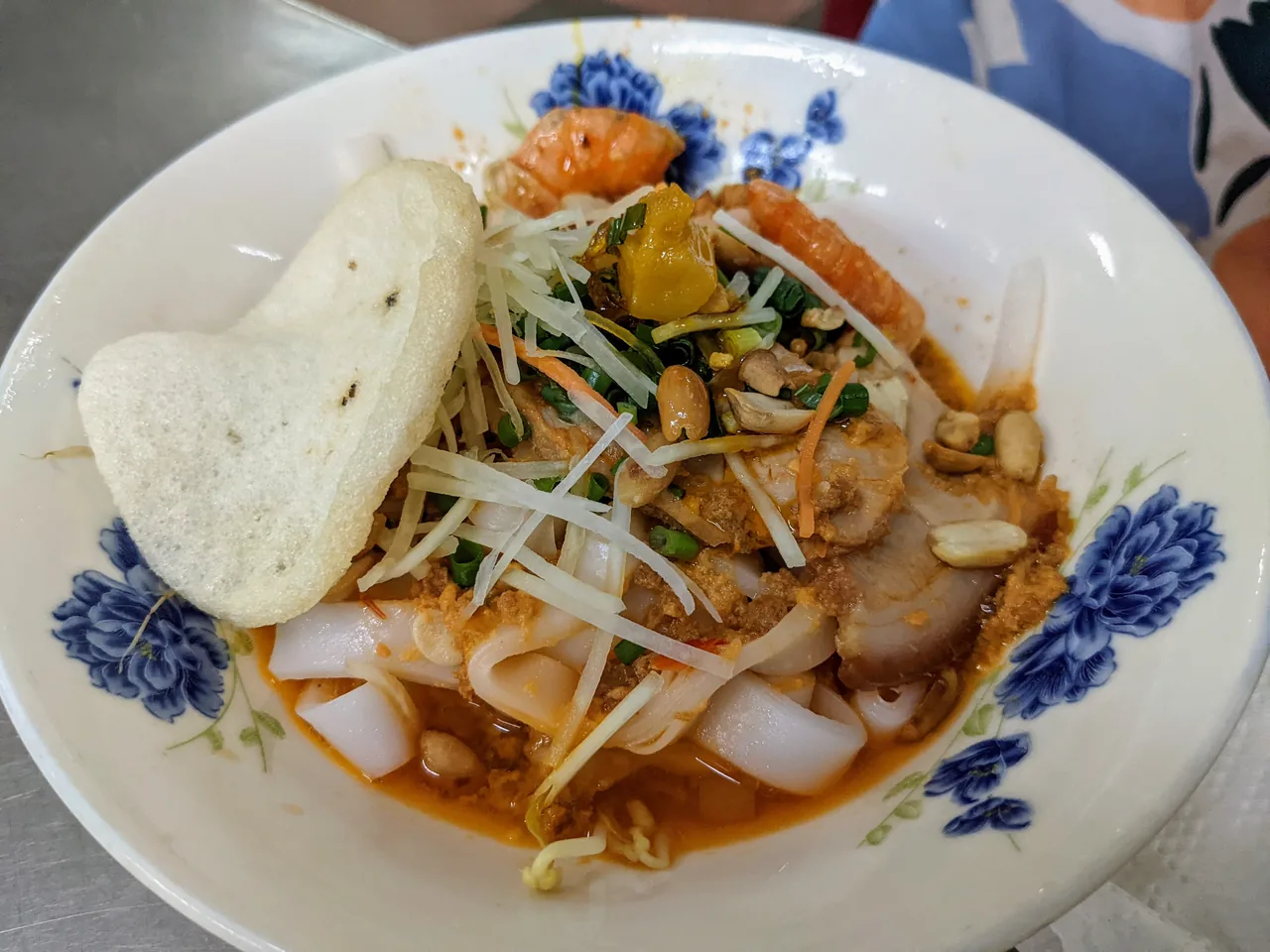
If Da Nang had one dish to its name, it would be Mì Quảng. Born in the surrounding Quảng Nam countryside, it’s the bowl locals grew up on — wide rice noodles stained gold with turmeric, dressed with just a ladle of intense, concentrated broth (not drowned like phở), then piled with a protein, roasted peanuts, fresh herbs and a shard of toasted sesame rice cracker. It’s earthy, herby, crunchy and savoury all at once, and every family and eatery makes it a little differently. This guide explains what Mì Quảng actually is, what’s in the bowl, the versions worth ordering, how to eat it like a local, where to find the good stuff in Da Nang — with real, named places — and how it differs from the city’s other noodles. (Want the bigger picture? Pair it with our Da Nang food guide, or plan the whole trip with our complete Da Nang guide.)
1. What Is Mì Quảng?
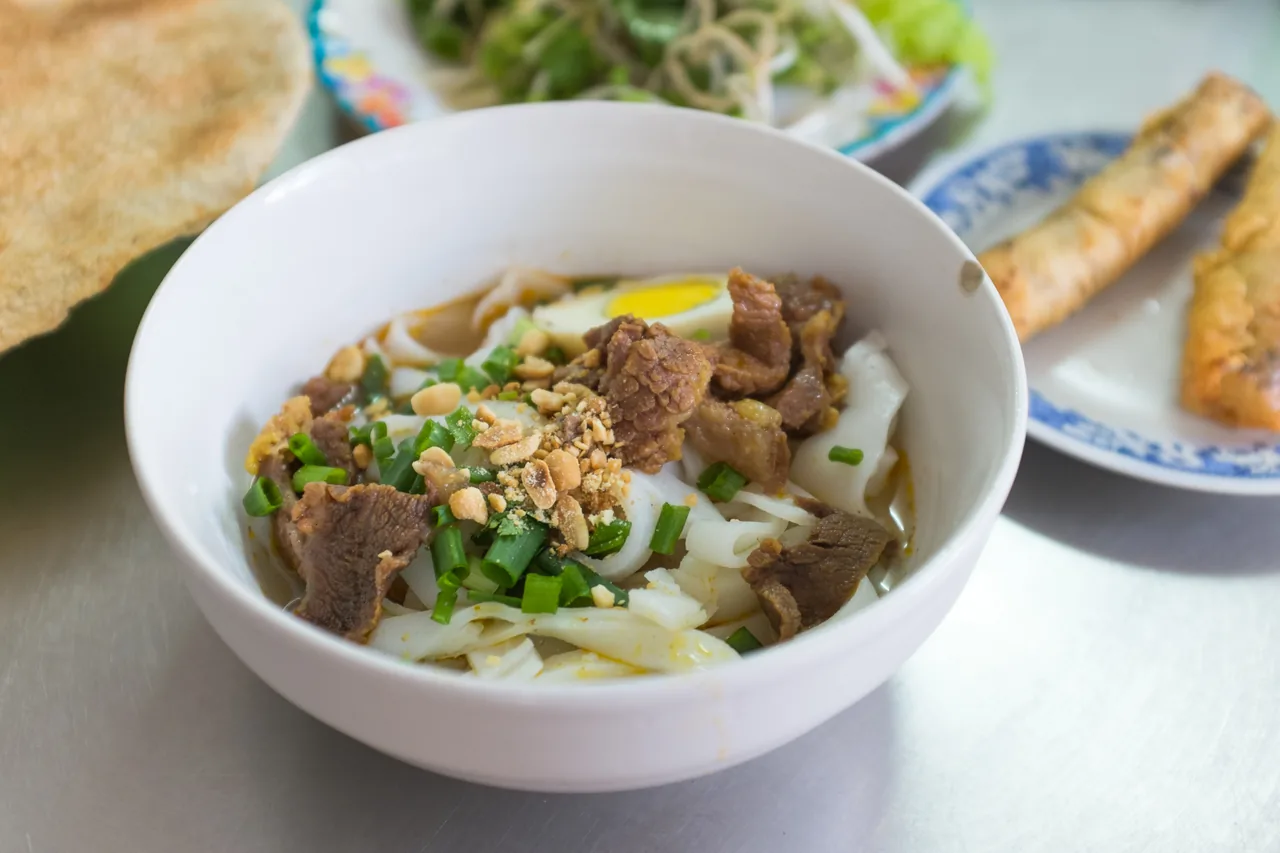
Mì Quảng (pronounced mee kwang) literally means “Quảng noodles” — it comes from Quảng Nam, the province that wraps around Da Nang and Hoi An. It’s not a soup and not a stir-fry; it sits somewhere in between. Wide, flat rice noodles — usually tinted yellow with turmeric — are topped with a protein and just a shallow pool of intensely flavoured broth (called nước nhưn), barely covering the bottom of the bowl. You toss it all together so every noodle gets coated, rather than slurping it like phở.
It’s the everyday comfort food of central Vietnam — sold at breakfast stalls, market counters and dedicated mì quảng shops — and it’s the single dish most associated with Da Nang.
2. What’s in the Bowl
A proper bowl of Mì Quảng is a layered, build-it-yourself affair. Here’s what you’ll find:
- The noodles: wide, flat rice noodles (mì), often dyed sunny yellow with turmeric, sometimes left white. Chewier and thicker than phở noodles.
- The broth: just a splash — a rich, concentrated stock simmered from pork, shrimp or chicken and seasoned hard. It’s meant to dress the noodles, not submerge them.
- The protein: shrimp and pork, chicken, snakehead fish, frog or eel depending on the version (see the table below).
- The crunch: roasted peanuts scattered on top, plus a toasted sesame rice cracker (bánh tráng mè) you crumble in by hand.
- The greens: a generous pile of fresh herbs and leaves — lettuce, Vietnamese mint, basil, banana blossom and bean sprouts — added to taste.
- The finishers: a wedge of lime, fresh chilli or chilli paste, and sometimes a dab of shrimp paste.
3. The Versions Worth Ordering
Mì Quảng is named after its protein. These are the ones you’ll see most:
| Version | Vietnamese | What it is |
|---|---|---|
| Shrimp & pork | mì quảng tôm thịt | The classic and most common — sliced pork and a couple of prawns. Start here. |
| Chicken | mì quảng gà | Free-range chicken, often on the bone — hugely popular and very Da Nang. |
| Snakehead fish | mì quảng cá lóc | De-boned river fish in a sweeter, lighter broth — a local favourite. |
| Frog | mì quảng ếch | A Da Nang specialty — tender frog meat, richer flavour. More adventurous, very tasty. |
| Eel | mì quảng lươn | Countryside-style with eel — deep and savoury. |
| Mixed / special | mì quảng đặc biệt | A bit of everything (usually shrimp, pork and a quail egg). Good for first-timers. |
4. How to Eat It Like a Local
Mì Quảng arrives looking a little dry and unmixed — that’s intentional. The ritual:
- Add your greens. Tear the herbs and leaves and pile them in.
- Crumble the cracker. Snap the toasted sesame rice cracker into the bowl.
- Season. Squeeze the lime, add chilli to taste, maybe a little shrimp paste.
- Toss, don’t slurp. Mix everything from the bottom up so the noodles get coated in that concentrated broth. Eat it like a tossed noodle, not a soup.
5. Where to Eat Mì Quảng in Da Nang
Mì Quảng is everywhere in Da Nang, from market stalls to dedicated shops. A few established, well-known spots locals and visitors both rate:
| Eatery | Known for | Note |
|---|---|---|
| Mì Quảng 1A | The tourist classic | On Hải Phòng St in the centre — the most famous name, reliable tôm thịt & gà. Busy and easy to find. |
| Mì Quảng Bà Mua | Clean & consistent | A popular local chain with several branches — a safe, tasty introduction. |
| Mì Quảng Bà Vị | Old-school local | A long-running neighbourhood favourite known for a traditional bowl. |
| Mì Quảng Ếch Bến Ngự | The frog version | The place to try mì quảng ếch (frog) if you’re feeling adventurous. |
6. Price, Timing & What to Expect
A few practical things:
- Price: a bowl runs about 25,000–50,000 VND (roughly US$1–2) at local shops; tourist-facing spots and special versions cost a little more. It’s cheap, filling and excellent value.
- When to eat it: Mì Quảng is a breakfast-to-lunch dish. Many of the best places open early and sell out by mid-afternoon, so go earlier rather than later.
- Portion: one bowl is a light-to-medium meal. Order the special (đặc biệt) or add a side of bánh tráng if you’re hungry.
- Hygiene: busy stalls with high turnover are your friend — fresh herbs and a steady stream of locals are good signs. See our transport & getting-around guide for getting to them by Grab.
7. Mì Quảng vs Da Nang’s Other Noodles
Central Vietnam is noodle country, and it’s easy to mix them up. Here’s how Mì Quảng stands apart:
- vs Phở: phở is a clear, brothy soup you slurp. Mì Quảng has barely any broth and is tossed — completely different texture and eating style.
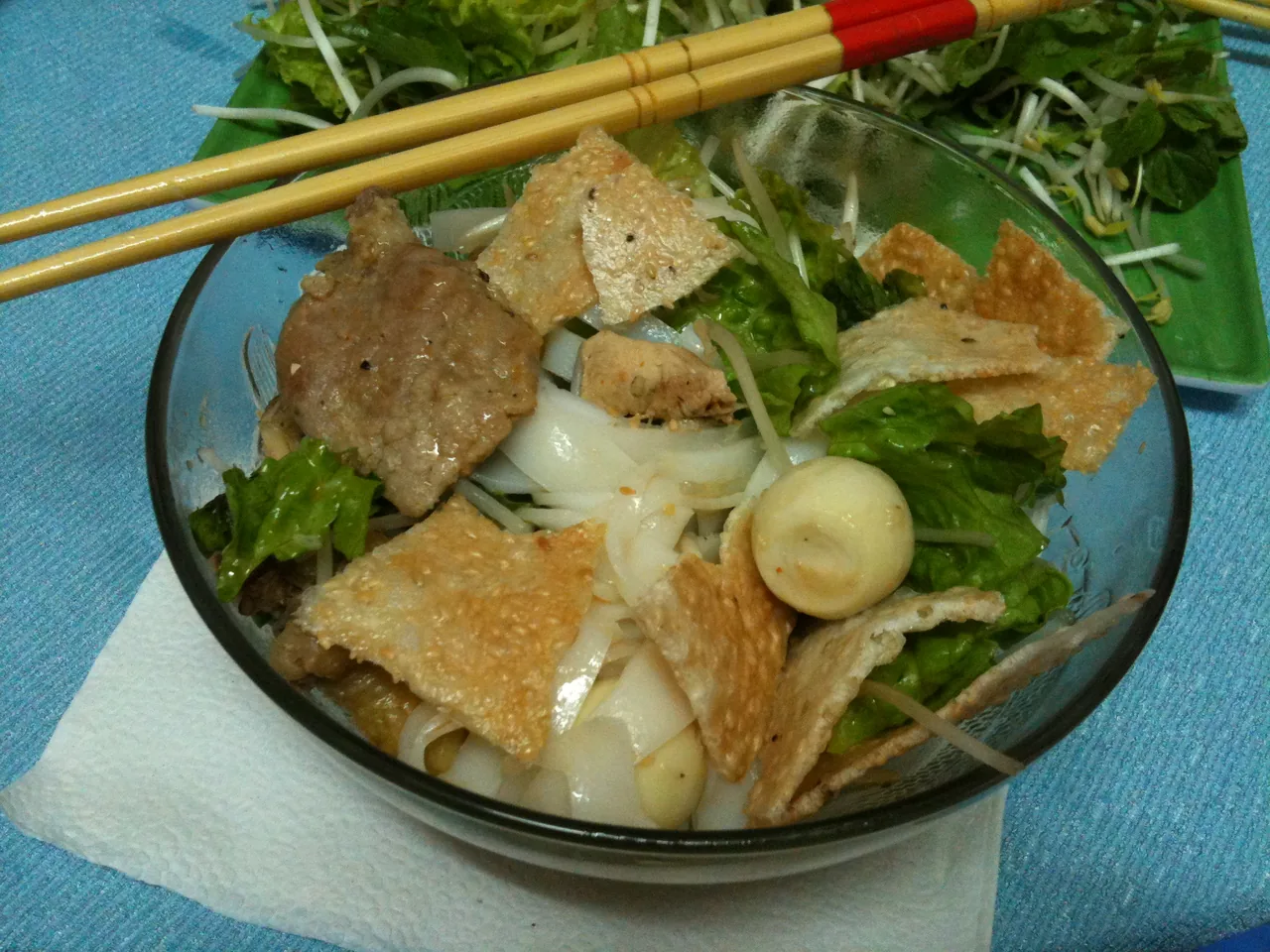
- vs Cao Lầu: Cao Lầu is Hoi An’s signature — thick, chewy noodles with even less liquid, crispy croutons and char siu pork. Related idea, but a distinct Hoi An dish (more in our Hoi An guide).
- vs Bún chả cá: Da Nang’s other famous bowl — a hot, soupy fish-cake noodle soup. Brothy where Mì Quảng is dry.
8. Vegetarian Mì Quảng & Ordering Tips
A few last things to make ordering easier:
- Vegetarian version: mì quảng chay exists and is common around Buddhist holidays and at vegetarian (chay) eateries — tofu, mushrooms and vegetables instead of meat. Ask for “mì quảng chay“.
- Say it right: “cho tôi một tô mì quảng” — “one bowl of mì quảng, please.” Add the version: tôm thịt, gà, cá lóc.
- Spice: chilli usually comes on the side, so you control the heat. “không cay” means “not spicy.”
- The cracker: if it doesn’t arrive, ask for bánh tráng — it really does complete the dish.