
Hue Travel Guide: Vietnam’s Imperial Capital, Done Properly
The Citadel, the royal tombs, the Perfume River, the DMZ and the best food in central Vietnam — how to get there, where to stay and how many days you really need.
| What | Vietnam’s imperial capital (1802–1945, Nguyen dynasty) and a UNESCO World Heritage city on the Perfume River — the Citadel, the royal tombs and a famous royal cuisine. |
|---|---|
| Why go | The richest concentration of history in Vietnam, plus the base for the DMZ, a beautiful lagoon and countryside, and food many travellers rate the country’s best. |
| How long | 1 day sees the headline sights in a rush; 2 days is the sweet spot; 3 days adds the DMZ, the lagoon or Bach Ma. |
| Getting there | Phu Bai airport (HUI); the coastal train; or ~2.5–3 h by car from Da Nang over the Hai Van Pass. |
| Best time | Dry season Feb–Aug. Avoid Oct–Nov — Hue is one of Vietnam’s rainiest cities and usually floods. |
| Don’t miss | The Imperial City, the tomb of Khải Định, a Perfume River boat to Thiên Mụ Pagoda, and a bowl of bún bò Huế. |
1. Why Hue Is Worth More Than a Day Trip
2. How to Get to Hue
3. Getting Around Hue
4. The Imperial City (Đại Nội)
5. The Royal Tombs
6. Thiên Mụ Pagoda & the Perfume River
7. Beyond the Monuments: Lagoon, Countryside & Bach Ma
8. The DMZ Day Trip from Hue
9. What to Eat in Hue
10. Where to Stay in Hue
11. Hue Itineraries: 1, 2 or 3 Days
12. Best Time to Visit & the Flood Season
13. Costs, Money & Practical Tips
14. Combining Hue with the Rest of Central Vietnam
15. Distances inside Hue, measured
16. Hue changed its administrative shape twice in 2025
17. Three things older guides still get wrong
1. Why Hue Is Worth More Than a Day Trip
Hue (Huế) was the capital of Vietnam for nearly 150 years — the seat of the Nguyen dynasty’s 13 emperors from 1802 to 1945. When the court settled here it built a vast walled citadel on the north bank of the Perfume River Map, an Imperial City modelled partly on Beijing’s Forbidden City, and a string of grand tombs in the pine hills upstream. In 1993 the whole ensemble became Vietnam’s first UNESCO World Heritage Site, the “Complex of Hue Monuments.”
If Da Nang is beaches and modern energy and Hoi An is lantern-lit charm, Hue is history and atmosphere — palaces, dynastic tombs, incense-thick pagodas, a slow brown river and a refined royal cuisine you can’t get anywhere else. Plenty of people “do” Hue as a day trip from Da Nang or Hoi An, and you can — but you’ll spend half of it in a car and see the headlines at a jog. Stay a night or two and Hue slows to its proper pace: tombs in the morning light, a boat at dusk, a long dinner of Hue’s little dishes.
One thing that’s new: since 1 January 2025, Hue is one of Vietnam’s six centrally-governed cities (a status above an ordinary province), so you’ll now see it written simply as “Hue city” rather than “Thua Thien Hue.” Nothing about visiting changes — but it’s a sign of how seriously Vietnam now treats its old capital.
2. How to Get to Hue
Hue sits on the central coast, almost exactly halfway down Vietnam. It has its own airport and a train station on the main north–south line, so you can reach it from just about anywhere.
By air — Phu Bai International Airport (HUI)
Hue’s airport Map is about 15 km south of the centre, ~20 minutes by road. It has frequent domestic flights from Hanoi (~1h15) and Ho Chi Minh City (~1h20), plus a handful of regional international routes. From the terminal, a metered/airport taxi into town runs about 270,000–300,000đ; Grab works too, and a couple of public buses (routes 2 and 11) run the route cheaply if you’re travelling light.
By train — the Reunification Express
Hue is one of the most rewarding stops on Vietnam’s coastal railway Map. The Da Nang–Hue leg is the famous one — about 2.5–3 hours hugging the coast and climbing over the Hai Van Pass, with the sea on one side and jungle on the other (see our Hai Van Pass guide). From further afield, the Hanoi–Hue sleeper takes ~12–14 hours (roughly US$20–60 depending on the berth); from Ho Chi Minh City it’s a long ~17–20 hours, so most southern travellers fly. Book a soft sleeper for overnight legs and you save a hotel night.
By car or limousine van from Da Nang
From Da Nang or Hoi An, a private car takes ~2.5–3 hours and lets you stop at the Hai Van Pass, Lang Co lagoon and Lap An on the way — easily the most scenic option, and what we cover in detail in the Hue day-trip guide. Shared “limousine” vans (9–11 seats, door to door) are the cheap-and-easy choice at roughly 120,000–180,000đ a seat. The local public bus is cheapest of all but slow.
| From | Best option | Time | Rough cost |
|---|---|---|---|
| Da Nang | Private car over Hai Van Pass | 2.5–3 h | US$45–70 / car |
| Da Nang / Hoi An | Limousine van | 2.5–3.5 h | 120–180k đ / seat |
| Da Nang | Coastal train | 2.5–3 h | 100–250k đ |
| Hanoi | Flight | 1h15 | from ~US$35 |
| Hanoi | Sleeper train | 12–14 h | US$20–60 |
| Ho Chi Minh City | Flight | 1h20 | from ~US$35 |
3. Getting Around Hue
Central Hue is compact and flat, and most hotels sit on the south bank of the Perfume River, a short walk or ride from the bridges to the Citadel. Getting around is easy and cheap.
- On foot: the south-bank hotel-and-restaurant district, the riverfront and Đông Ba market are all walkable. The Citadel itself is large — wear comfortable shoes.
- Grab: the ride-hailing app works well for cars and bikes and saves all haggling — see our Grab vs Xanh SM guide. Short hops across town are a dollar or two.
- Cyclo & dragon boat: a slow cyclo (pedal trishaw) along the river is a Hue cliché for a reason; agree the price first. A dragon-boat cruise on the Perfume River is the classic way to reach Thiên Mụ Pagoda.
- Bicycle & motorbike: the flat countryside south of town — tombs, Thuỷ Biều, Thanh Toàn — is lovely by bike or scooter. Rentals are cheap; ride carefully and never without a helmet and the right licence (more in our safety & scams guide).
- Tomb logistics: the royal tombs are spread over 10–16 km south of the centre, so most people see them by private car/driver for a half or full day, by an organised tour, or by motorbike. A car with driver for the tombs is the stress-free choice.
4. The Imperial City (Đại Nội)
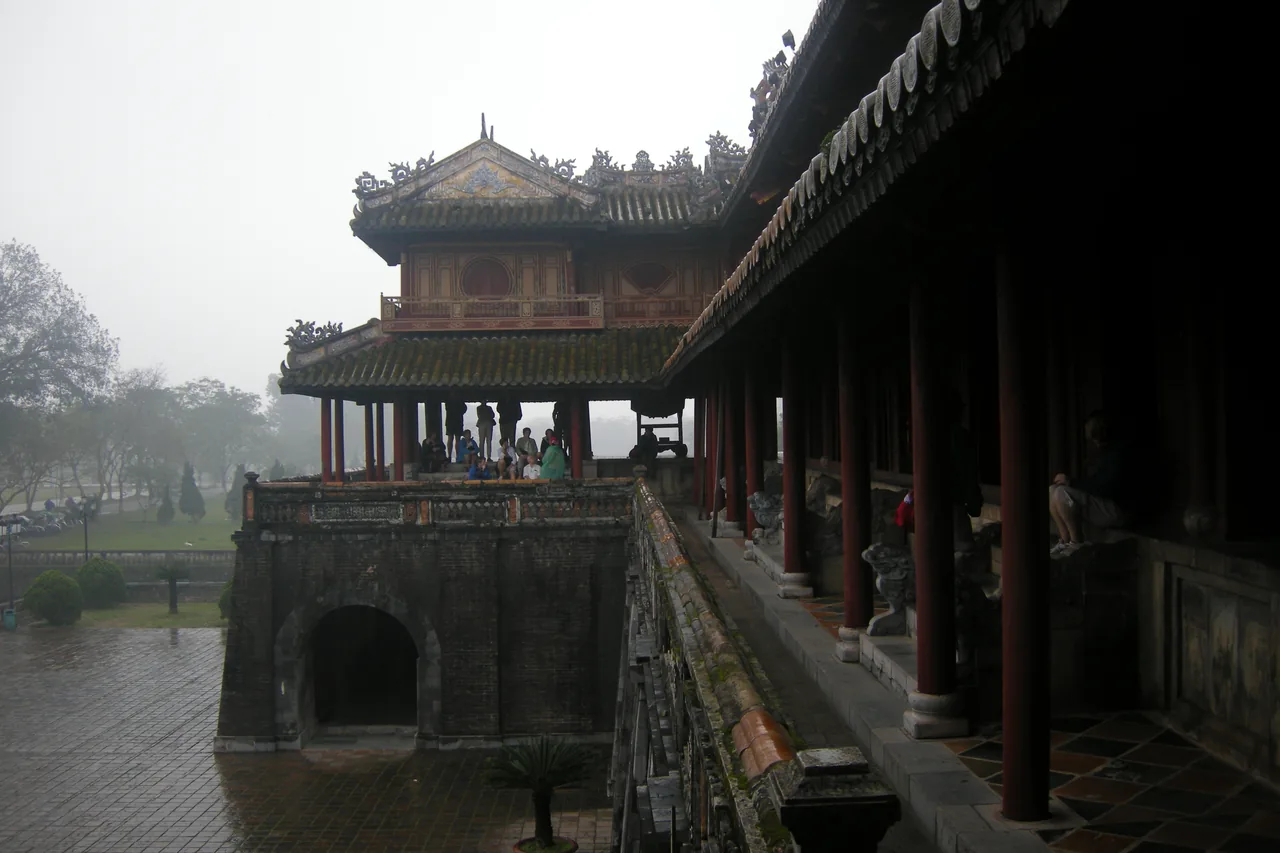
The walled Imperial City, or Đại Nội Map, is the heart of Hue and the single sight you can’t skip. It’s a citadel-within-a-citadel: an outer fortress wall encloses the city, and inside it a moated Imperial Enclosure holds the palaces, temples and gates of the Nguyen court, with the once-secret Forbidden Purple City at its core — the emperor’s private domain, where only the royal family and eunuchs could go.
What to see inside
- Ngọ Môn (the Meridian Gate) — the grand south gate and the ceremonial face of the whole complex; climb up to the Five Phoenix Pavilion for the view back over the courtyards.
- Điện Thái Hòa (Hall of Supreme Harmony) — the throne palace where emperors were crowned and held court, with its red-and-gold lacquered columns. Recently restored.
- The Forbidden Purple City — much was lost in the 1947 war and the 1968 Tết Offensive, so expect open foundations and gardens as much as buildings, but the scale still lands.
- The Halls of the Mandarins, the Nine Dynastic Urns, the royal theatre (Duyệt Thị Đường) and a string of restored side temples and gardens reward a slow loop.
Tickets, hours & the night opening
Admission to the Imperial City is 200,000đ for adults and 40,000đ for children aged 7 to 12 under the rates in force from 2 June 2026. It opens early (around 7:00–8:00) and you want at least two hours inside, ideally in the cooler morning. Hue also runs a night opening of the Imperial City (Đại Nội về đêm) with lighting and performances, and a separate Áo Dài / royal show (around 210,000đ) — atmospheric if you’re staying over.
5. The Royal Tombs
Strung along the Perfume River in the hills south of the city are the tombs of the Nguyen emperors — not single graves but sprawling landscaped complexes of pavilions, courtyards, lakes and stelae, each one a window into the emperor who built it. You don’t need to see all seven; three are the essential ones, and they’re very different from each other.
The three to prioritise
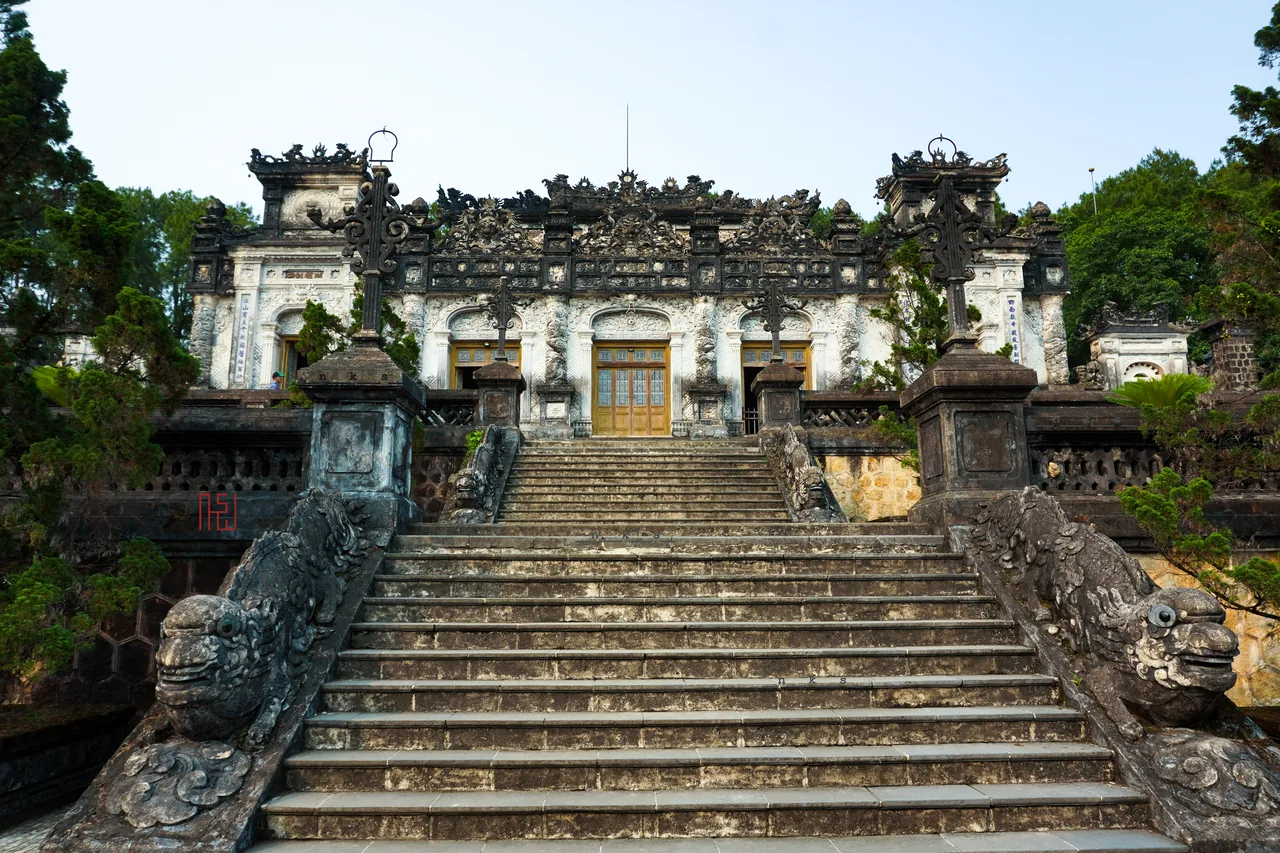
- Tomb of Khải Định Map — the last and most extravagant, built 1920–31. Small but jaw-dropping: a blackened concrete exterior hiding an interior of dazzling glass-and-porcelain mosaic and a gilded statue of the emperor. The fusion of Vietnamese and European styles makes it the most photographed.
- Tomb of Minh Mạng Map — the most classically beautiful and symmetrical, set among lakes and lotus ponds. Grand, formal, serene; allow time to walk the full axis.
- Tomb of Tự Đức Map — the most poetic and atmospheric, a garden retreat of pine, frangipani and a lake where the emperor (a poet) actually lived, boated and wrote before he died.
If you have more time, Gia Long (the dynasty’s founder, remote and wild) and Dục Đức or Đồng Khánh add depth, but the big three are the heart of it.
Tickets & combos (2026)
| Ticket | Covers | Price (adult) |
|---|---|---|
| Imperial City only | Đại Nội | 200,000đ |
| Single major tomb | Khải Định / Minh Mạng / Tự Đức | ~150,000đ each |
| Combo (Citadel + 2 tombs) | e.g. Đại Nội + Minh Mạng + Khải Định | ~420,000đ |
| Full route (Citadel + 3 tombs) | Đại Nội + Minh Mạng + Tự Đức + Khải Định | ~530,000đ |
Combo tickets are typically valid for two days, so you can split the Citadel and the tombs across a morning and an afternoon without rushing. Prices drift upward over time — treat these as a 2026 guide and confirm at the box office.
The tombs are 8–16 km apart, so the practical way to see all three in a day is a private car with a driver, an organised half/full-day tour, or a confident scooter ride. The classic combination is the Citadel in the morning, a boat to Thiên Mụ, then the tombs in the afternoon.
6. Thiên Mụ Pagoda & the Perfume River
The Perfume River (Sông Hương) Map is Hue’s soul — a slow, wide, brown-green river that the city was built around and named (it’s said) for the autumn scent of flowers washing down from upstream orchards. The classic Hue experience is a dragon-boat cruise: board near the city and motor upstream past river life to the pagoda, often combined with one or two tombs.
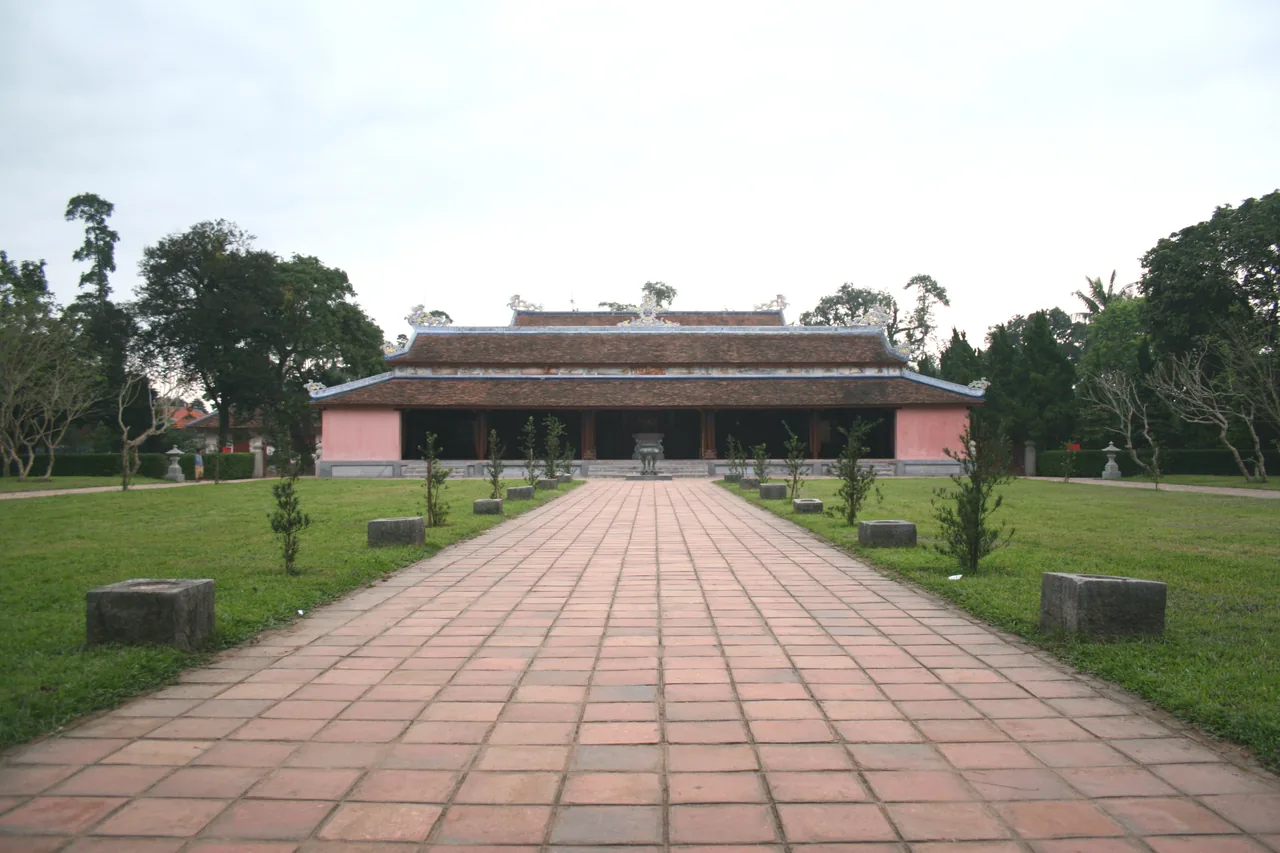
Thiên Mụ Pagoda Map, a few kilometres upstream on the north bank, is Hue’s most iconic image: a seven-tier octagonal tower (Phước Duyên), each storey a Buddha, founded in 1601 and standing on a low bluff over the water. Behind it sits a working monastery — and, poignantly, the powder-blue Austin car that carried the monk Thích Quảng Đức to his self-immolation in Saigon in 1963. It’s free to visit; go in the morning light or at golden hour.
7. Beyond the Monuments: Lagoon, Countryside & Bach Ma
Most visitors stop at the Citadel and the tombs — but Hue’s surroundings are quietly some of the most beautiful in central Vietnam, and a second or third day here is well spent escaping the crowds.
- Tam Giang Lagoon Map — the largest lagoon in Southeast Asia, a vast brackish mirror of fish traps and bamboo stakes northeast of the city. Come for sunset by boat, with seafood at a stilt restaurant; utterly different from the imperial sightseeing.
- Thuỷ Biều village Map — a peaceful riverside village of garden houses and thanh trà pomelo orchards just southwest of town; cycle the lanes, visit an incense or conical-hat workshop, and soak your feet in a foot bath at a garden house lunch.
- Thanh Toàn Bridge Map — an 18th-century tile-roofed wooden bridge (1776) in the rice fields east of the city, a quieter cousin of Hoi An’s Japanese Bridge, with a small folk museum and easy cycling all around.
- Bạch Mã National Park Map — a cool mountain park ~40 km south with waterfalls, the Five Lakes swimming pools and a summit (“Hải Vọng Đài”) with huge views to the coast; a great day out in the dry season, faded French hill-station ruins included.
- Thuận An & the beaches Map — Hue’s nearest stretch of coast, ~15 km out, where locals go to eat seafood and swim in summer.
- The abandoned water park (Hồ Thuỷ Tiên) Map — the eerie, half-reclaimed-by-nature dragon waterslide ruin that went viral years ago. Access and condition change, there’s no real safety oversight, and it may be cleared or redeveloped — go (if at all) at your own risk and check locally first.
8. The DMZ Day Trip from Hue
Hue is the jumping-off point for one of Vietnam’s most moving day trips: the former Demilitarized Zone (DMZ), the buffer along the 17th parallel that split North and South Vietnam from 1954 until reunification. It lies ~70 km north of the city, and seeing it from Hue is far easier than from anywhere else.
What you visit
- Vịnh Mốc Tunnels Map — an astonishing underground village where an entire coastal community lived through years of bombing, with three levels of tunnels, family chambers, a well and even a “maternity room.” More humbling than Củ Chi, and far less crowded.
- Khe Sanh Combat Base Map — the US Marine base near the Laos border, site of a ferocious 1968 siege, now a small museum with aircraft, tanks and the old airstrip.
- Hiền Lương Bridge & the Bến Hải River Map — the actual dividing line between North and South, with a reunification monument and flag tower.
It’s a long full day (roughly 7am–6pm) covering a lot of ground, so a guided tour is genuinely worth it here — the history makes far more sense with a good guide, and many were old enough to remember. Group tours are affordable; a private car is more comfortable for families.
9. What to Eat in Hue
Here’s the thing nobody tells first-timers: Hue might be the best food city in Vietnam. As the old royal capital it developed a refined court cuisine of many small, intricate dishes — and the everyday street food that grew up around it is fiery, fresh and unlike the food anywhere else in the country. Don’t leave without working through this list.
The dishes that define Hue
- Bún bò Huế — the city’s signature: a lemongrass-and-chilli beef noodle soup, richer and spicier than phở, with thick round rice noodles, beef shank, and often pork knuckle and a slab of congealed blood. The benchmark dish.
- The rice-cake trio — bánh bèo, bánh nậm, bánh lọc — tiny steamed cakes of rice (and tapioca) flour topped or filled with shrimp and pork, eaten with sweet-savoury fish sauce. Order a mixed platter and graze.
- Bánh khoái — Hue’s crispy folded “happy pancake,” smaller and crunchier than the southern bánh xèo, stuffed with pork, shrimp and bean sprouts and eaten with a thick peanut-and-liver sauce.
- Nem lụi — lemongrass-skewered grilled pork you wrap at the table in rice paper with herbs and dip in that same rich peanut sauce.
- Cơm hến — a humble, beloved bowl of rice with tiny clams from the river’s Cồn Hến island, herbs, crackling and clam broth; a fierce local breakfast.
- Chè Huế — the city’s sweet dessert soups in dozens of varieties, from lotus seed to the famous chè bột lọc heo quay (candied pork in tapioca). Don’t overthink it; just point.
Where to eat
You’ll eat well just by following locals, but a few names come up again and again: Lạc Thiện / Lạc Thành for bánh khoái near the Citadel; bà Đỏ and Hàng Me for the rice-cake trio; Quán Cẩm and stalls near Cồn Hến for bún bò; and the lanes around Đông Ba market Map for everything at once. Hue is also strongly vegetarian-friendly thanks to its Buddhist temples — look for cơm chay (vegetarian rice) places, especially around the full moon.
10. Where to Stay in Hue
Almost everyone sleeps on the south bank of the Perfume River, and the numbers are lopsided: of 280 bookable properties, 241 are on that side and 139 sit within a kilometre of the backpacker street. Only 30 are on the Citadel side of the water.
The short version by area: the walking street (Pham Ngu Lao, Chu Van An, Vo Thi Sau) has 63 places and closes to traffic on Friday, Saturday and Sunday evenings; the Le Loi riverfront holds the older four and five-star hotels; the north bank is mostly small homestays next to the Imperial City; and a further 31 properties carry a Hue address but sit 5 to 57km out of town.
Where to stay in Hue maps all 280 with nightly rates, distances and which listings are not in the city at all.
11. Hue Itineraries: 1, 2 or 3 Days
How long do you need? One day hits the highlights in a hurry, two days is the comfortable sweet spot, and three days lets you add the DMZ, the lagoon or Bach Ma. Here’s a sensible shape for each.
One day (the essentials)
Morning: the Imperial City early, before the heat. Late morning: a boat up the Perfume River to Thiên Mụ Pagoda. Afternoon: the tombs of Khải Định and Tự Đức by car. Evening: bún bò Huế and a stroll along the lit riverfront. (Doing this from Da Nang? Use the Hue day-trip guide.)
Two days (the sweet spot)
Day 1 — Imperial City in the morning, Đông Ba market and the rice-cake lunch, Thiên Mụ by boat, then a slow afternoon and a Perfume River dinner cruise. Day 2 — the three royal tombs (Minh Mạng, Tự Đức, Khải Định) by car or scooter, with a Thuỷ Biều garden lunch, and sunset at Tam Giang Lagoon.
Three days (go deeper)
Add a full-day DMZ tour (Vịnh Mốc and Khe Sanh), or a day in Bạch Mã National Park, or a slow countryside day by bike — Thanh Toàn Bridge, the lagoon and Thuận An beach. Three nights is also when a quieter riverside resort starts to make sense.
12. Best Time to Visit & the Flood Season
Hue has a clear split between a long dry season (roughly February–August) and a wet one — and the wet one matters, because Hue is one of the rainiest cities in Vietnam and floods most years. Plan around it.
- Feb–Apr — the sweet spot. Warm, mostly dry, gardens green, comfortable for the tombs and the countryside. The most pleasant months overall.
- May–Aug — hot & dry. Reliable sun but genuinely hot and humid; start early, rest at midday. Best if you want to add the beach or the lagoon.
- Sep — the turn. Heat eases but the rains begin to return; can go either way.
- Oct–Nov — the wettest, and flood season. Hue’s heaviest rain, and the months it most often floods — streets, and sometimes the tombs and lagoon, can be cut off. 2025 brought record central-Vietnam flooding. Visitable between fronts, but plan loosely and watch the forecast.
- Dec–Jan — cool & damp. Drizzly and surprisingly cool (a jacket helps), quieter, atmospheric around the Citadel.
For the regional picture and a month-by-month read you can apply to Hue too, see our best time to visit guide. The biennial Hue Festival (a big cultural event) is worth timing for if your dates line up.
13. Costs, Money & Practical Tips
Hue is excellent value, generally a touch cheaper than Da Nang or Hoi An. Sightseeing tickets are the one place the money adds up, so budget for the combo.
| Style | Per day (excl. big tickets) | Notes |
|---|---|---|
| Backpacker | US$25–40 | Hostel/budget room, street food, Grab, shared tours |
| Mid-range | US$60–110 | Comfortable 3–4★, sit-down meals, a private driver day |
| Comfort+ | US$150+ | Heritage/4–5★, private guide & car, river dinner cruise |
- Money: pay cash for street food, markets and tomb tickets; cards work at hotels and bigger restaurants. ATMs are everywhere — see our Vietnam money guide.
- Getting online: grab an eSIM before you land so Grab and maps work from minute one.
- Visa: most visitors need an e-visa — sort it before you fly with our Vietnam visa & e-visa guide.
- Getting around & staying safe: use Grab to avoid fare haggling, agree cyclo and boat prices up front, and skim our scams & safety guide. Hue is relaxed and low-pressure compared with big-city Vietnam.
- Insurance: worth it for any trip — especially if you’ll ride a scooter or hike Bach Ma.
14. Combining Hue with the Rest of Central Vietnam
Few people visit Hue alone, and you shouldn’t either — it’s the northern anchor of an easy, gorgeous stretch of coast. The most popular routes:
- Hue ↔ Da Nang ↔ Hoi An — the classic trio. The Hai Van Pass between Hue and Da Nang is one of the great coastal drives; do it one-way by private car and stop for photos. Base yourself in Da Nang for beaches and Hoi An for the old town.
- Hue → Phong Nha — Hue is the usual southern gateway to the caves of Phong Nha-Kẻ Bàng, ~4 hours north, often combined with a DMZ stop on the way.
- Hue as part of a north–south trip — on a Hanoi-to-Saigon railway journey, Hue is the obvious central stop; see the Vietnam master guide to slot it into the bigger picture.
However you build it, treat Hue as the place you slow down and look back in time — then let the coast road carry you on.
15. Distances inside Hue, measured
Hue looks compact on a map and then spreads out once you drive it. These are road distances and driving times from the walking street, measured on the OSRM road router rather than taken from brochures.
| From the walking street to | Distance | By car |
|---|---|---|
| Imperial City (Meridian Gate) | 2.23km | 3.0 min |
| Dong Ba Market | 1.43km | 2.0 min |
| Hue railway station | 2.23km | 3.0 min |
| Thien Mu Pagoda | 6.14km | 7.2 min |
| Tu Duc tomb | 7.02km | 14.6 min |
| Khai Dinh tomb | 9.59km | 10.2 min |
| Minh Mang tomb | 13.52km | 10.2 min |
| Thuan An beach | 16.56km | 20.1 min |
| Phu Bai airport | 14.95km | 15.7 min |
| Bach Ma National Park | 55.66km | 92.2 min |
| Lang Co beach | 56.11km | 53.8 min |
| Da Nang city centre | 95.30km | 85.5 min |
| Hoi An | 120.14km | 103.8 min |
What the numbers change about planning
Two of them decide most itineraries. Tu Duc is closer than Khai Dinh in kilometres but takes longer, because the approach runs through lanes rather than the main road. And Bach Ma is only slightly further than Lang Co yet takes 38 minutes more, since the last stretch climbs.
The three main tombs also sit close to one another: Tu Duc to Khai Dinh is 7.53km and 17.1 minutes, Khai Dinh to Minh Mang 4.47km and 4.7 minutes. Chaining them in one afternoon costs about half an hour of driving in total, which is why the combination tickets are built around exactly that route.
16. Hue changed its administrative shape twice in 2025
Two changes in one year altered how Hue is written in addresses, booking systems and official documents, and both still cause confusion in older material.
| Date | Change | What you notice |
|---|---|---|
| 1 January 2025 | Thua Thien Hue province became Hue, a centrally governed city | Addresses read “Hue City”; the province name is gone |
| 1 July 2025 | Districts abolished, wards redrawn | New ward names such as Thuan Hoa, Phu Xuan, Vy Da, Thuy Xuan |
Two practical effects
The first is that Lang Co and Phu Loc are now inside the city boundary. Search for hotels in Hue and resorts 40 to 57km down the coast appear in the same list, because booking platforms group by administrative area.
The second is address matching. A hotel listed under “Phuong Thuan Hoa” is in the middle of the south bank, while “Phuong Phu Xuan” is the Citadel side. Older reviews and blog posts still use the pre-2025 district numbers, so the two do not line up.
17. Three things older guides still get wrong
Hue’s published information moved faster than the guides that quote it. These three come up most often.
1. The Imperial City ticket
Plenty of pages still list 150,000 dong. The conservation centre’s own price list, in force from 2 June 2026, sets the Imperial City at 200,000 dong for adults and 40,000 for children aged 7 to 12.
| Site | Adult | Child 7–12 |
|---|---|---|
| Imperial City | 200,000đ | 40,000đ |
| Minh Mang, Tu Duc, Khai Dinh tombs | 150,000đ each | 30,000đ each |
| Gia Long tomb | 150,000đ | Free |
| Dong Khanh tomb | 100,000đ | Free |
| An Dinh Palace, Nam Giao, antiquities museum, Hon Chen, Thieu Tri, Duc Duc | 50,000đ each | Free |
| Hai Van Quan | 70,000đ | Free |
2. What the combination tickets cover
The combination fares changed on 4 January 2026 and are worth checking against the single-site prices before buying.
| Combination | Adult | Child | Bought separately |
|---|---|---|---|
| Imperial City + 2 tombs | 420,000đ | 80,000đ | 500,000đ |
| Imperial City + 3 tombs | 530,000đ | 100,000đ | 650,000đ |
| Minh Mang + Gia Long | 240,000đ | 30,000đ | 300,000đ |
| Tu Duc + Dong Khanh | 200,000đ | 30,000đ | 250,000đ |
| All monuments | 600,000đ | 120,000đ | – |
Children under six and visitors with severe disabilities enter free, and entry is free for everyone on the first three days of the lunar new year, on 2 September and on 26 March.
3. How wet the autumn actually is
October averages 772.7mm of rain over 20.8 days and November 641.7mm over 20.9 days, against 63.3mm in February. In late October 2025 the city took 800 to 1,500mm in a week and 32 of its 40 wards flooded, with around 35,000 homes affected. A guide that describes autumn as “showers” is describing a different city.