
Phong Nha Caves: A Complete Guide to Vietnam’s Greatest Cave Country
Paradise Cave, the Phong Nha river cave, the Dark Cave mud bath — and, somewhere out in the jungle, the biggest cave on Earth. Here’s which caves to actually visit, what each one is like inside, and how to plan the trip from Hue, Da Nang or Hanoi.
| Where | Quang Binh province, north-central Vietnam · ~45 km from Dong Hoi, ~210 km north of Hue |
|---|---|
| Gateway | Dong Hoi (trains + a small airport), then ~45 km to Phong Nha village (Son Trach) |
| The 4 easy caves | Paradise (Thien Duong) · Phong Nha river cave · Dark Cave (Hang Toi) · Tien Son |
| If you see only one | Paradise Cave — the most spectacular, and an easy boardwalk walk |
| For adventure | Hang En 2-day trek · Tu Lan from ~US$75 · Son Doong (~US$3,000, Oxalis only, booked a year out) |
| Best time | February–August (dry); some caves close roughly September–November in the floods |
| Stay & time | Phong Nha village · give it 2 days / 1 night to do it properly |
1. Phong Nha in one answer
2. Which cave should you actually visit?
3. Paradise Cave (Thien Duong) — the showpiece
4. The Phong Nha river cave — entered by boat
5. Dark Cave (Hang Toi) — zipline, mud bath, kayak
6. The great adventure caves — Hang En, Tu Lan & Son Doong
7. Beyond the caves: eco-trails, valleys & village life
8. How to get to Phong Nha
9. Getting around once you’re there
10. Where to stay
11. Best time to visit — and when caves close
12. Tickets, costs & day tour vs doing it yourself
13. Itineraries: 1, 2 or 3 days
14. Practical tips for Phong Nha
1. Phong Nha in one answer
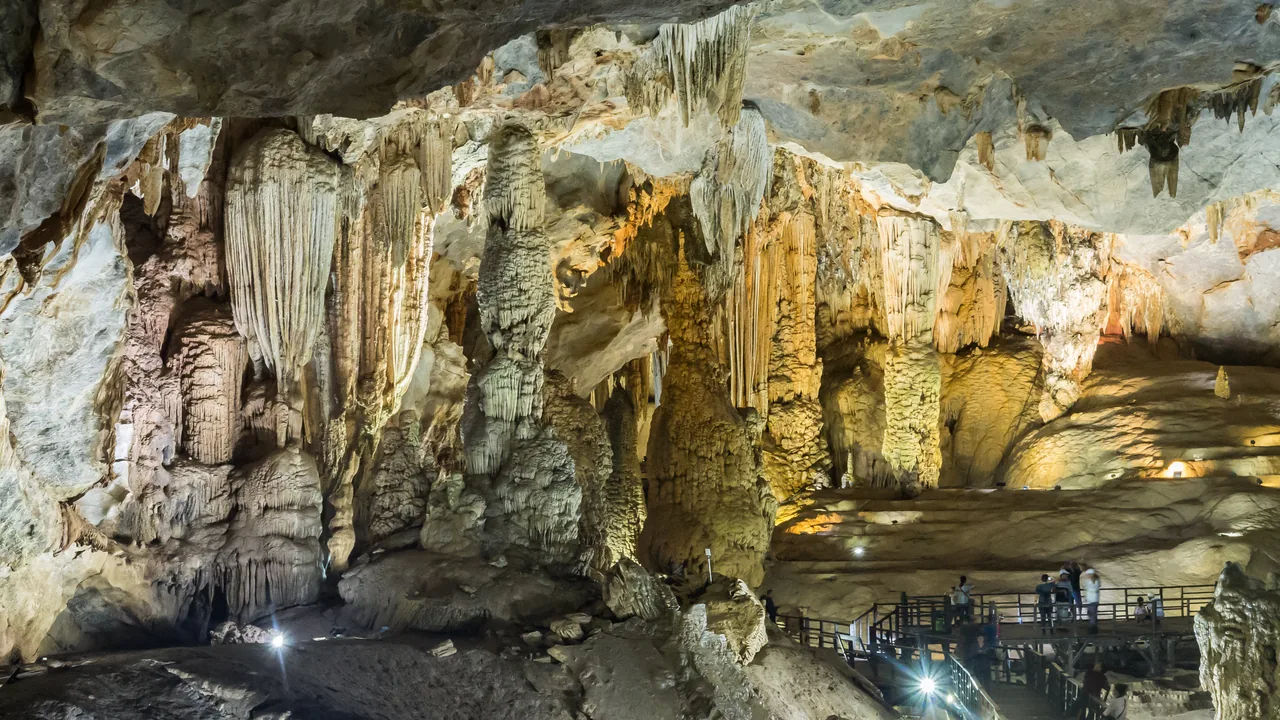
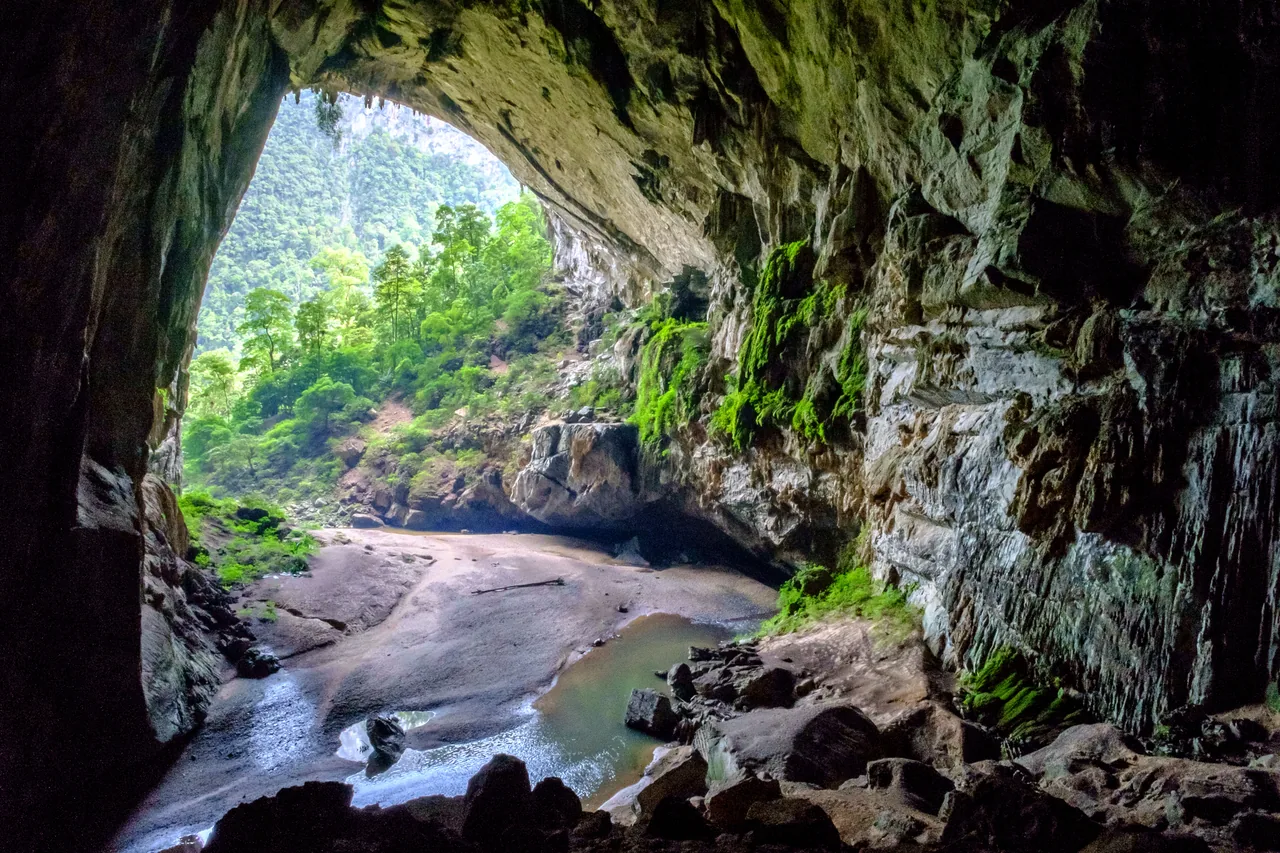
Phong Nha is the cave capital of Vietnam — a UNESCO-listed national park in Quang Binh province where rivers vanish into mountainsides and re-emerge kilometres later, leaving behind some of the largest caves on the planet. For most travellers the trip comes down to three or four show-caves you can visit in a day or two: Paradise Cave, a vast lit “dry” cave you walk into on a boardwalk; the Phong Nha river cave, which you enter by boat; and the adventurous Dark Cave, with its zipline and underground mud bath. Out beyond them, in the jungle, lie the giants — Hang En and Son Doong, the biggest cave on Earth — reachable only on multi-day expeditions.
The base for all of it is Phong Nha village (officially Son Trach) Map, a one-street riverside town that has grown from a sleepy farming community into a friendly traveller hub of homestays, cafés and tour offices. You reach it through Dong Hoi, 45 km away, which has the nearest train station and airport.
2. Which cave should you actually visit?
You don’t need to see them all. Here’s the honest shortlist, matched to what you’re after.
| You want… | Go to | Why |
|---|---|---|
| The single most jaw-dropping cave, with no effort | Paradise Cave | Cathedral-scale chambers, a flat lit boardwalk, comfortable for any age |
| A boat ride and the classic Phong Nha experience | Phong Nha river cave | The original cave; a peaceful river journey, then paddled inside |
| Adrenaline, zipline, mud and a swim | Dark Cave | Adventure park energy; great with kids/teens or a group |
| A real expedition, camping in the jungle | Hang En (2 days) | The world’s 3rd-largest cave, with a beach and a camp inside it |
| The ultimate — and you planned ahead | Son Doong | The largest cave on Earth; a once-in-a-lifetime, sold out a year out |
The simplest great trip: Paradise Cave + the Phong Nha river cave in one day, then the eco-trails or Dark Cave the next. That covers the two most beautiful caves plus an adventure, without rushing. If you only have one day, do Paradise Cave.
3. Paradise Cave (Thien Duong) — the showpiece
If you visit one cave in Phong Nha, make it this one. Paradise Cave Map — Thien Duong in Vietnamese — is a “dry” cave, meaning no river runs through it, so you explore on foot. And what you explore is staggering: a passage 31 km long in total, with the first chambers soaring to over 70 metres high and stretching wider than a cathedral.
From the ticket gate it’s about 1.5 km uphill to the cave mouth — either a 10-minute walk through forest or a short ride on an electric buggy (a small extra fee), then a final flight of wooden steps down into the entrance. The moment you descend, the temperature drops and the scale hits you: tour groups below look like ants under columns the size of office blocks.
What you actually see
A 1 km wooden boardwalk, tastefully lit, runs along the cave floor and back. Along it you pass draped “curtains” of flowstone, stalactites hanging like organ pipes, stalagmites built up over hundreds of thousands of years, and formations people have nicknamed for their shapes. It’s well lit and flat — comfortable for grandparents and kids alike — and most people spend about an hour inside. Unlike the wet caves, you need no special gear: just decent shoes and a light layer, because it’s cool inside.
Going deeper (the 7 km adventure)
Beyond the boardwalk, the cave continues into wild, undeveloped passages. A guided 7 km adventure tour (book ahead through a licensed operator) takes you past the public section to an underground river, sandy floors and far quieter chambers — head-torch, helmet and a guide required. It’s a half-day and a completely different experience from the boardwalk crowds.
4. The Phong Nha river cave — entered by boat
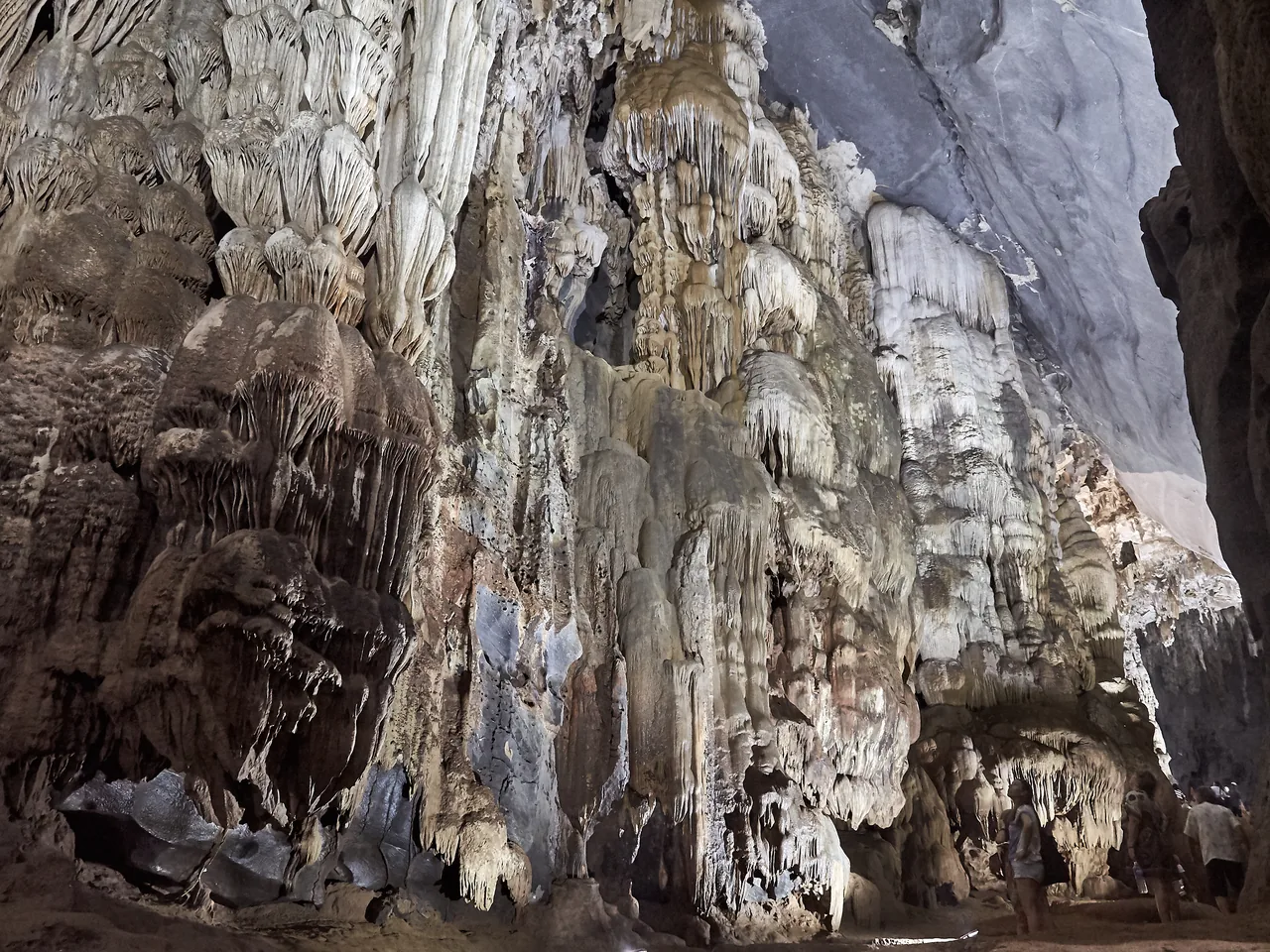
The cave that gave the whole park its name is a wet cave: a river flows out of it, and you go in the way explorers first did — by boat. It’s the most relaxed half-day in Phong Nha and a lovely contrast to Paradise Cave’s grandeur.
You board a colourful dragon boat at the boat station in the village Map and motor about 30 minutes up the Son River, past karst peaks, rice paddies, water buffalo and kids fishing from the banks. At the cave mouth Map the engine cuts, the boatman switches to a paddle, and you glide in silence about a kilometre into the mountain, past stalactites pouring down to the water. You step out partway to walk a lit section, then float back out to the light.
Tien Son Cave, on the way back
On the return you can climb ~330 steps up the hillside to Tien Son Cave (a small separate ticket), a dry cave with the remains of 9th-century Cham altars and inscriptions — a quiet, atmospheric add-on most people skip, which is exactly why it’s worth it if your legs are willing.
5. Dark Cave (Hang Toi) — zipline, mud bath, kayak
This is the fun one. Dark Cave Map — Hang Toi — has been turned into a brilliantly run adventure circuit, and it’s the highlight of many trips, especially with teenagers or a group.
It starts with a 400 m zipline — the longest in Vietnam — that launches you from a tower across the Chay River straight toward the cave mouth. You drop into the water, swim to the entrance, and then wade and clamber through pitch-black passages by headlamp until you reach the prize: a natural mud pool deep inside. The mud is so dense you float in it like a cork, the way you would in the Dead Sea — it’s impossible to take seriously, and that’s the point. You rinse off in the river afterwards, then there’s kayaking and a small water-zipline playground back at the entrance.
The full package (zipline + cave + mud bath + kayak) runs about 450,000 VND (~US$19) for adults; a cut-down version without the zipline/cave is around 250,000 VND. Many day tours pair it with Paradise Cave.
6. The great adventure caves — Hang En, Tu Lan & Son Doong
Beyond the show-caves is the reason serious cavers fly across the world to Quang Binh. These are real expeditions — fitness and a booking are required — and they’re all run, by national-park rules, through licensed operators (above all Oxalis, the only company permitted in Son Doong).
Hang En — camp inside the world’s 3rd-largest cave
The classic “gateway” expedition: a 2-day, 1-night trek through jungle and a river valley to Hang En Map, a cavern so vast it has its own beach and an opening you camp beneath, watching swifts wheel against a circle of sky. It’s the same valley the Son Doong expeditions pass through, and it’s achievable for any reasonably fit walker. Expect roughly US$300+ per person, all-inclusive.
Tu Lan — the “Kong: Skull Island” country
The Tu Lan system Map, run exclusively by Oxalis, ranges from a day trip (~US$75) with river-cave swims to multi-day camping expeditions up to ~US$680. It’s the best mid-range adventure if Hang En or Son Doong are out of budget or booked out.
Son Doong — the largest cave on Earth
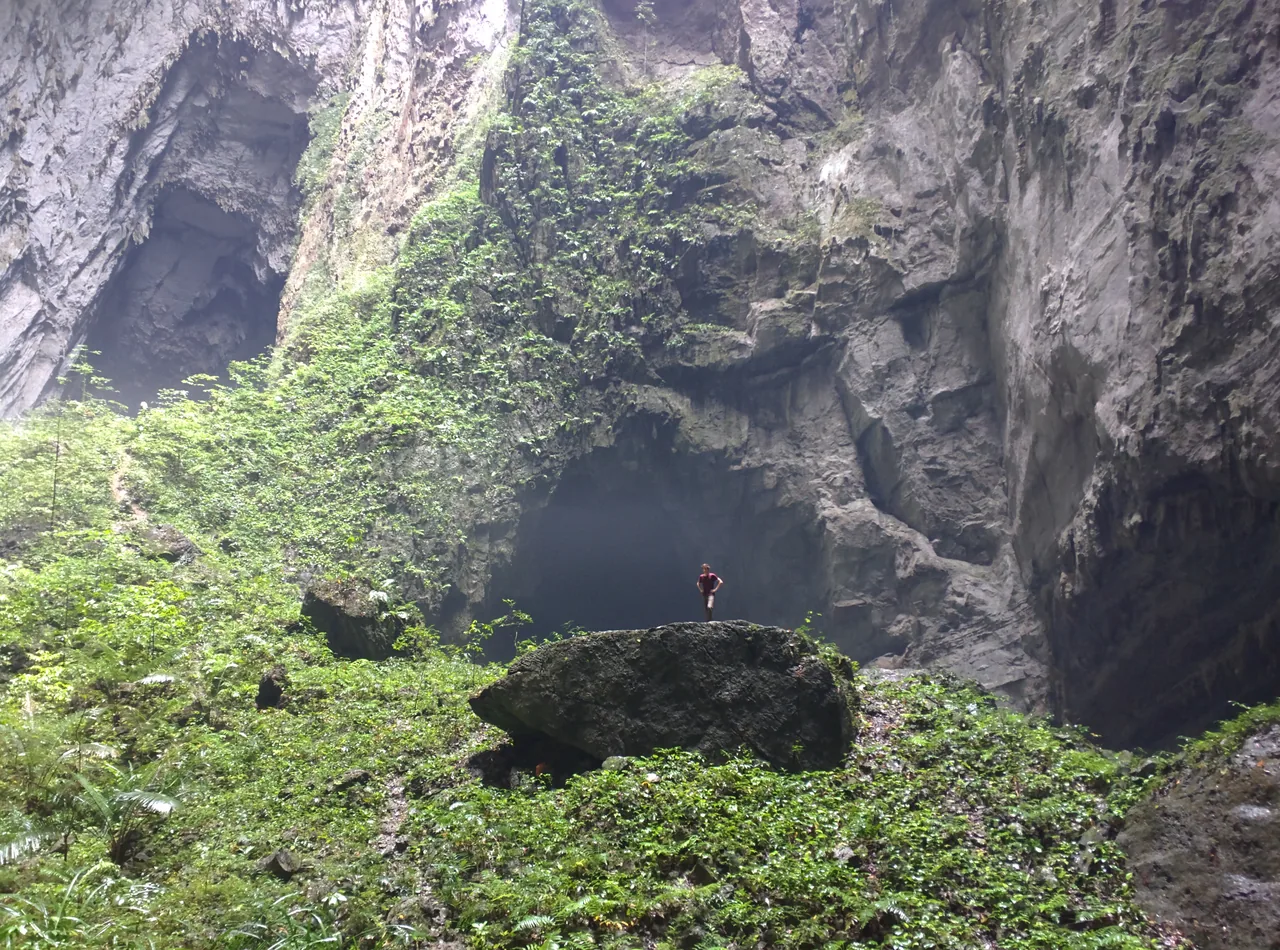
Son Doong Map is big enough to hold a city block, complete with its own jungle and clouds. The expedition is a 4-day, 3-night undertaking costing around US$3,000, limited to roughly 1,000 visitors a year and run only by Oxalis — and it sells out a year or more ahead (recent seasons booked out into 2028). If it’s a dream, book first and plan the trip around the date.
7. Beyond the caves: eco-trails, valleys & village life
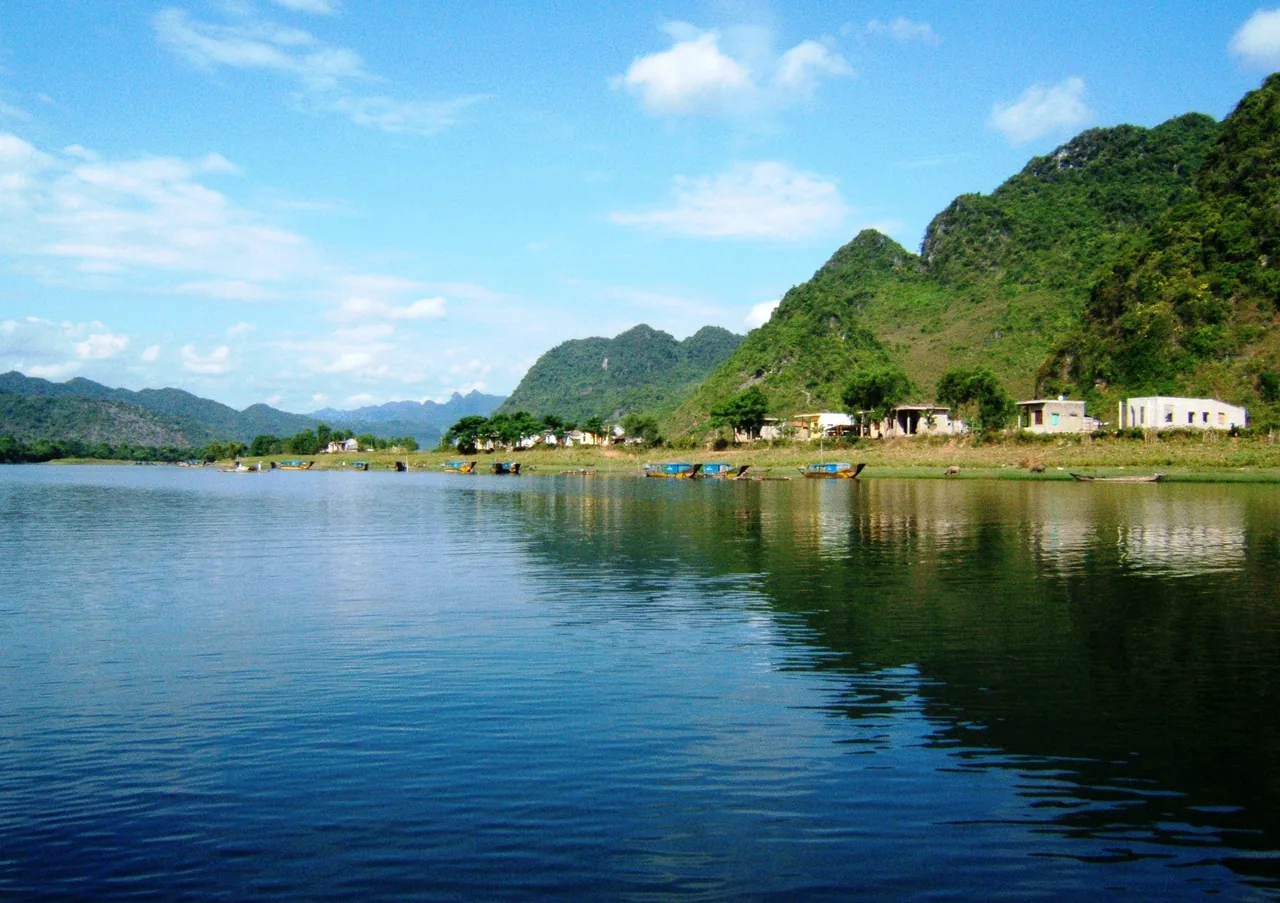
Phong Nha rewards a slower second day above ground, too.
- Nuoc Mooc (Mooc Spring) Eco-Trail Map — bamboo boardwalks over impossibly clear blue-green spring water, with swimming spots, kayaks and a high zipline through the jungle canopy. The best place in the park to cool off on a hot day.
- Vườn thực vật Phong Nha, Quảng Bình Map — forest trails to a waterfall and a swimming hole; quiet, green and good for a couple of hours.
- The Bong Lai Valley Map — a flat countryside loop best done by bicycle or scooter, strung with famous farm-stops like The Pub with Cold Beer and the Duck Stop. Rice fields, water buffalo and cold drinks; the most relaxed afternoon in Phong Nha.
- The Eight Ladies Cave (Hang Tam Co) — a sombre wartime memorial on the old Ho Chi Minh Trail, where eight young volunteers were sealed in by a bombing. A moving stop on the way to the more remote caves.
Renting a scooter for a day to link these is the classic Phong Nha move — see how riding works in Vietnam in our Grab & ride-app guide for when you’d rather not drive yourself.
8. How to get to Phong Nha
Everything routes through Dong Hoi Map, the provincial capital 45 km away. Get to Dong Hoi, and the last leg to the village is short.
From Hue (~3–4 hr)
The easiest mainstream option. Take the train Hue → Dong Hoi (about 3 hours), or a tourist/limousine van straight to the village. Many people visit on an organised day tour from Hue that bundles the transfer, both caves, lunch and tickets — long but efficient if you’re short on time. Hue itself is worth a day either side; see our Hue day-trip guide.
From Da Nang (~6 hr)
Further, but doable. The train to Dong Hoi is a scenic ~6-hour ride (a soft seat is ~250,000–300,000 VND); the stretch along the coast over the Hai Van Pass is one of the best rail journeys in Vietnam. From Dong Hoi station, a taxi or transfer covers the last 45 km in about an hour. Most Da Nang visitors stay at least one night rather than day-tripping. Our Da Nang travel guide covers the city end.
From Hanoi (~overnight)
A night train or sleeper bus down the coast (about 10 hours; a Dong Hoi sleeper berth runs ~370,000–635,000 VND), or a 1-hour flight Hanoi → Dong Hoi, which is the fastest option of all. Phong Nha pairs naturally with a wider northern Vietnam trip.
The last 45 km, Dong Hoi → Phong Nha
From Dong Hoi: a local bus from near the post office (~35,000 VND, ~90 min), a taxi/Grab (~400,000–450,000 VND, ~1 hr), or a homestay pickup. Many Phong Nha guesthouses will arrange a shared transfer from the station if you message ahead.
9. Getting around once you’re there
Phong Nha village is tiny and walkable, but the caves are spread across the park, 10–30 km out.
- Rent a scooter (~120,000–150,000 VND/day) — the freedom option, ideal for linking Paradise Cave, the eco-trails and the Bong Lai Valley at your own pace. Roads are quiet and scenic.
- Hire a xe om (motorbike taxi) or private car/driver — best if you’d rather not ride. Guesthouses arrange these easily.
- Join a day tour — the simplest way to see the two big caves without logistics; transport, tickets and lunch are handled.
You’ll want mobile data for maps and booking rides — set up an eSIM before you arrive, and our Grab guide explains the local ride apps.
10. Where to stay
Stay in Phong Nha village (Son Trach), not Dong Hoi. The village puts you minutes from the boat station, the tour offices and the countryside, and the homestay scene is genuinely one of the nicest in Vietnam.
| Style | Good for | Rough nightly |
|---|---|---|
| Riverside homestays & guesthouses | Most travellers — friendly, great value, home cooking | US$12–30 |
| Farmstays in the countryside | Couples, peace, rice-field views (e.g. around Bong Lai) | US$25–60 |
| Boutique riverside resorts | A bit of comfort, pools, the Son River on your doorstep | US$60–120 |
| Dong Hoi hotels | Only if you have an early train/flight or want a beach | US$20–70 |
Book ahead in the March–August peak and around Vietnamese holidays. For how Phong Nha fits a bigger route, our Central Vietnam guide and Vietnam travel guide map the connections.
11. Best time to visit — and when caves close
The sweet spot is February to August, and especially March–April: dry, warm, green, with the lowest flood risk and the adventure caves all open. May–August is hotter (the caves stay cool inside, so it barely matters there), and it’s the busiest stretch.
December–January is cooler and can be wet but quiet and atmospheric; the dry Paradise Cave is fine year-round since no river runs through it. For the regional weather pattern, see our best-time-to-visit guide.
12. Tickets, costs & day tour vs doing it yourself
Phong Nha can be very cheap independently, or stress-free on a tour. Rough 2026 prices:
| Cave / activity | Ticket (adult) | Notes |
|---|---|---|
| Paradise Cave (boardwalk) | ~270,000 VND | + small buggy fee from the gate |
| Phong Nha river cave | ~150,000 VND | + ~550,000–750,000 VND per boat (shared) |
| Tien Son Cave | ~80,000 VND | Optional add-on, 330 steps |
| Dark Cave (full) | ~450,000 VND | Zipline + mud bath + kayak included |
| Nuoc Mooc Eco-Trail | ~180,000 VND | Swimming, kayak, canopy zipline |
Doing it yourself saves money and lets you set the pace — rent a scooter, buy tickets at each gate, share boats with other travellers. A day tour (from Phong Nha, Dong Hoi or Hue) bundles transport, tickets and lunch into one fuss-free price, which is the smart call if you’re short on time or don’t want to drive. Bring cash: most on-the-ground tickets and boats are cash-only — see our Vietnam money guide. And dodge the usual booking traps with our Vietnam scams guide.
13. Itineraries: 1, 2 or 3 days
1 day (from Hue/Dong Hoi or based in the village)
Morning: Paradise Cave. Lunch in the village. Afternoon: the Phong Nha river cave by boat. That’s the two best caves in one full day. Add the Dark Cave only if you skip the river cave.
2 days / 1 night (the sweet spot)
Day 1: Paradise Cave + Phong Nha river cave (and Tien Son if you’re game). Day 2: Dark Cave in the morning, then the Nuoc Mooc eco-trail or a Bong Lai Valley scooter loop in the afternoon. Sunset by the Son River.
3 days (or an expedition)
Add a Hang En 2-day trek (or a Tu Lan day adventure), or simply slow down: the Botanic Garden, more of the valley, the village cafés. Three days is also the minimum if you’re tying in a Son Doong booking around the dates.
14. Practical tips for Phong Nha
- Wear proper shoes. Cave boardwalks and steps get slick; the adventure caves need grippy footwear you don’t mind soaking.
- Bring a light layer. Paradise Cave is cool inside even when it’s 35°C out.
- Carry cash in small notes. Tickets, boats, the buggy and village meals are cash-only on the ground (money guide).
- Pre-book the big stuff. Son Doong (a year+), Hang En and Tu Lan fill up; the day caves you can buy on arrival.
- Set up data before you arrive. Coverage is patchy in the park — useful to download offline maps. Sort an eSIM and check the visa rules before you fly.
- Respect the flood season. If you visit Sep–Nov, confirm the wet caves are open before you commit a day.
Phong Nha is the wildest, most spectacular corner of central Vietnam — and still one of its friendliest. Build it into a central Vietnam loop with Hue and Da Nang, and you’ve got one of the best weeks the country offers.
🎡Things to Do52
🍜Food8
🏨Where to Stay6
🚇Getting Around9
🧭Travel Tips21
🧭Vietnam-wide essentials59
Phong Nha caves: FAQ
Planning the wider region? See our complete Central Vietnam travel guide →