
My Khe Beach (Da Nang): Sand, Surf, Sunrise & the ‘China Beach’ Story
Da Nang’s Forbes-famous white-sand beach — its wartime history, the best time to swim or surf, how to get there, what to do, rip-current safety and the seafood strip.
- What: Da Nang’s signature white-sand beach on the east coast — fine sand, warm water and a famous sunrise — named one of the world’s ‘six most charming beaches’ by Forbes (2005).
- History: the US troops’ R&R beach in the war, nicknamed China Beach; today a free, lively city beach lined with resorts and seafood.
- Getting there: just 2–5 km / 10–15 min from the city centre — walk, bicycle, motorbike, Grab or local bus. Free to enter.
- When: swim season ~Feb–Sep (calmest May–Aug); surf season ~Sep–Mar (best in Oct). Always swim inside the flagged, lifeguarded zones.
1. My Khe Beach: What It Is & Why It’s Famous
2. ‘China Beach’: The Wartime Story
3. Best Time to Visit: Swimming vs Surf Season
4. How to Get to My Khe Beach
5. Things to Do at My Khe
6. Beach Safety: Rip Currents & Swim Zones
7. Seafood & Beachfront Dining
8. Where to Stay & What to Combine Nearby
9. Costs & Practical Tips
My Khe Beach (Bãi biển Mỹ Khê) is Da Nang’s signature stretch of coast — kilometres of fine white sand running along the Võ Nguyên Giáp seafront, just a few minutes from the city centre. Forbes once named it one of the “six most charming beaches on Earth,” and it carries a layer of history too: in the Vietnam War this was the US troops’ R&R beach, the original “China Beach.” Today it’s a free, easygoing city beach where locals swim at dawn, surfers chase autumn swells, and a strip of seafood restaurants lines the road behind. This guide covers exactly what makes it special, the wartime story, the best time to swim or surf, how to get there, the things to do, the rip-current safety you really need to know, the seafood, and where to stay and what to combine nearby. (New to the city? Start with our complete Da Nang guide.)
1. My Khe Beach: What It Is & Why It’s Famous
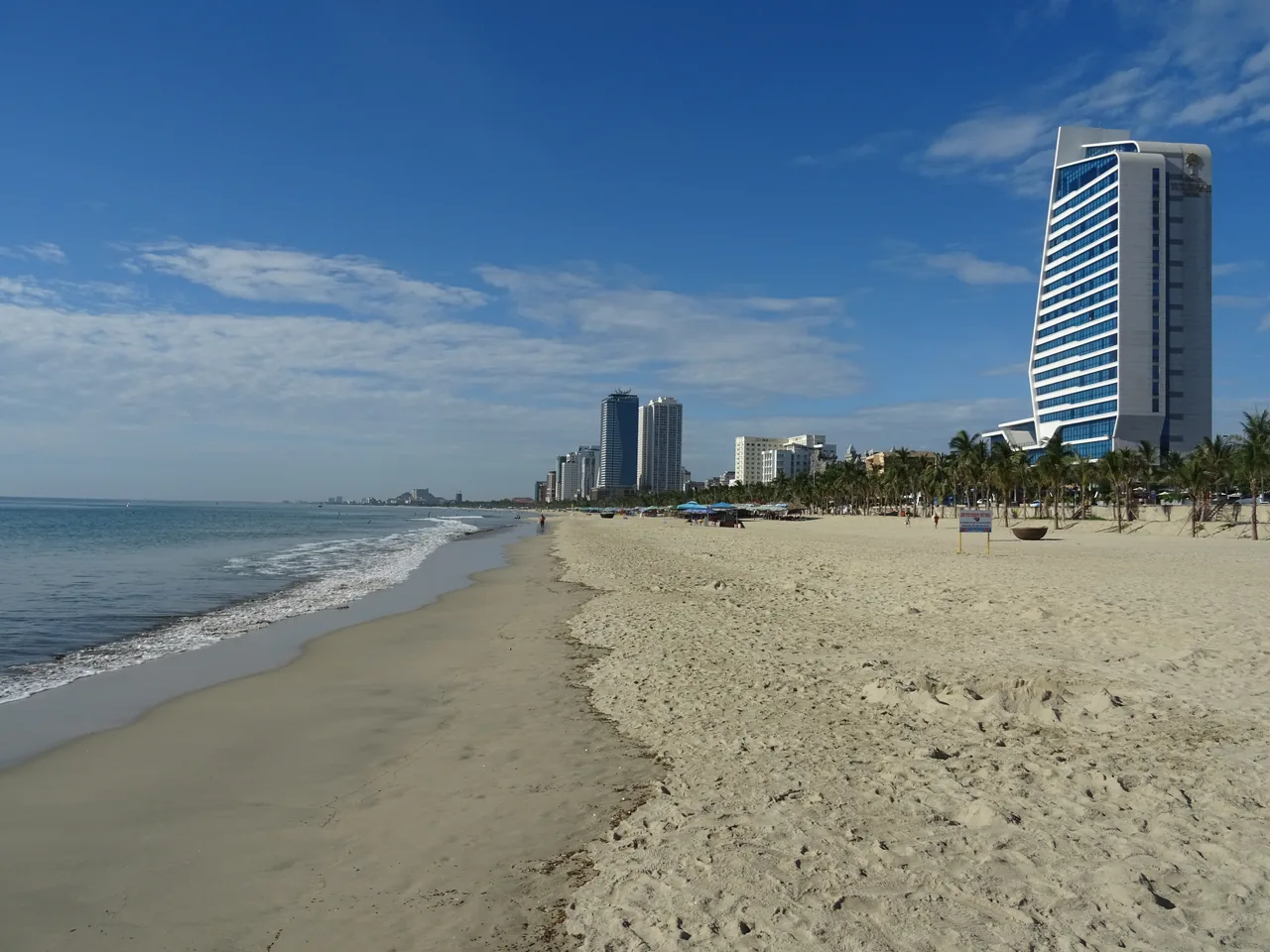
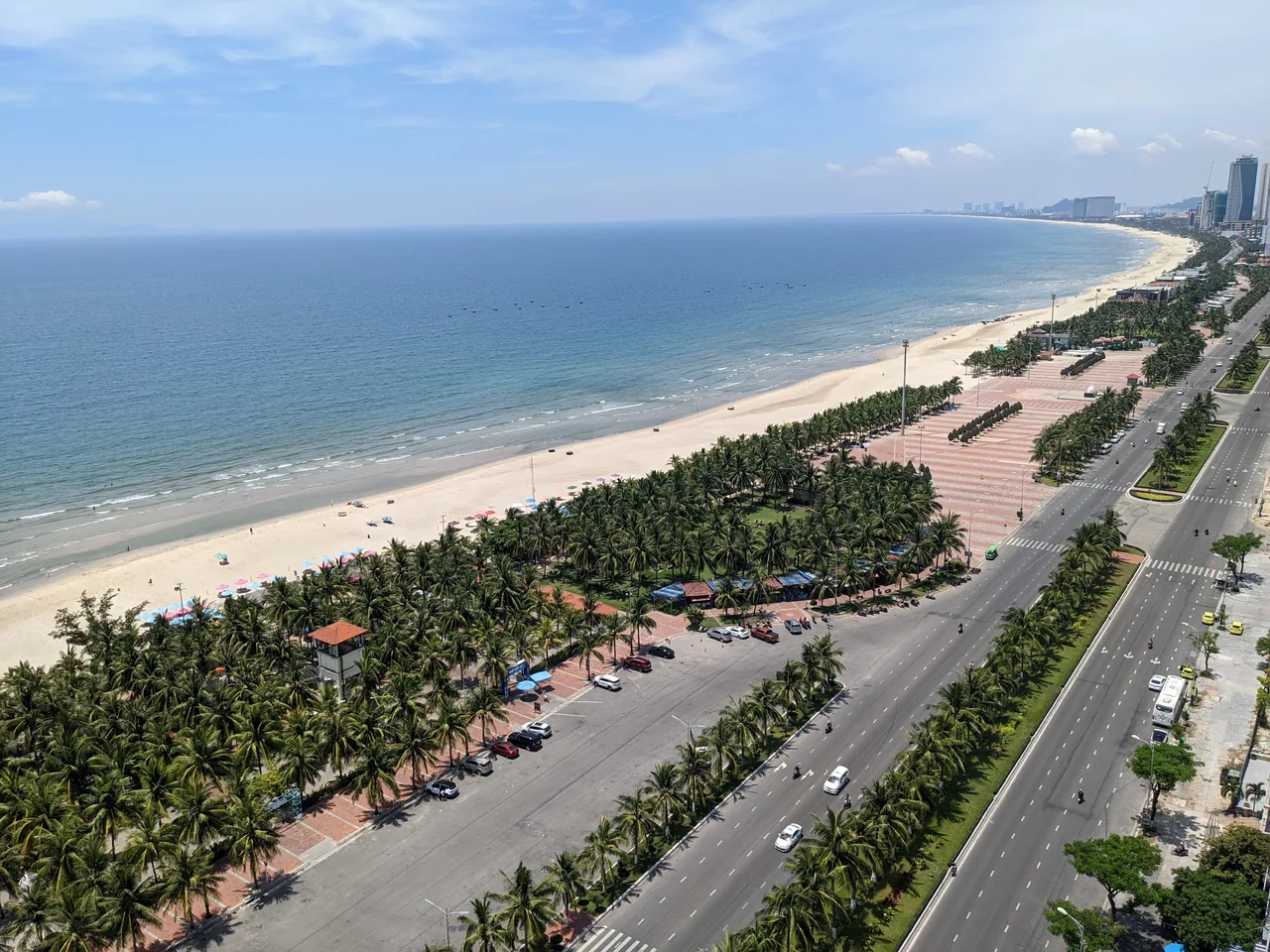
My Khe is Da Nang’s main beach — a long ribbon of fine, pale sand on the city’s east coast, with warm, gently shelving water and the Son Tra peninsula closing off the northern end. The core stretch most people mean by “My Khe” is roughly 900 metres, but the connected city beaches run for several kilometres along the Võ Nguyên Giáp and Trường Sa seafront, so there’s always space to find.
A few things put it on the map:
- The Forbes nod. Back in 2005 Forbes listed My Khe among the “six most charming beaches on Earth” — a tag the city has worn proudly ever since.
- It faces east. That means sunrise over the sea, and a strong local culture of swimming at dawn before the heat — one of the most authentic things you can do in Da Nang.
- It’s a true city beach. Free to enter, a few minutes from downtown, backed by resorts, cafés and a seafood strip — beach in the morning, city by night.
2. ‘China Beach’: The Wartime Story
My Khe has a second name that older travellers may know: China Beach. During the Vietnam War (1960s–70s) this was the spot where US troops came for rest and recreation (R&R), and American servicemen nicknamed it “China Beach” — simply because it sits on the shore of what English maps call the South China Sea.
The name stuck in Western pop culture: from 1988 to 1991 a US television drama called China Beach, set at a wartime base on this coast, ran for four seasons. For a generation abroad, that show was Da Nang.
- Why you won’t see the name here. Inside Vietnam the “China Beach” name is avoided — the beach is Vietnamese, not Chinese — so locally it’s always Mỹ Khê (or simply “Da Nang Beach”).
- What’s left to see. Nothing of the wartime base remains; today it’s resorts and sand. The history is a story you carry, not a monument you visit — but it adds a layer to a sunrise swim here.
3. Best Time to Visit: Swimming vs Surf Season
My Khe is a year-round beach, but what it’s good for swings with the season. The short version: come in spring and summer to swim and sunbathe; come in autumn and winter to surf.
| Season | Conditions | Best for |
|---|---|---|
| Feb–May | Warm, dry, calm clear water, building heat | Swimming, sunbathing, the all-round sweet spot |
| Jun–Aug | Hot and dry, calm sea, busy with domestic tourists | Swimming & water sports (peak summer) |
| Sep–Dec | Bigger swell, wind, rain, rougher sea | Surfing — but watch flags; swimming often unsafe |
| Oct (surf peak) | The cleanest, most consistent waves of the year | Surfing & SUP |
Swim season runs roughly February to September, calmest from May to August. Surf season is roughly September to March, and most surfers agree October brings the best, cleanest waves. The wet, rough months (around Oct–Dec) can make swimming genuinely dangerous, so let the lifeguard flags — not the calendar — make the final call. Check our Da Nang weather guide before you pick dates.
4. How to Get to My Khe Beach
One of My Khe’s best features is how close it is: just 2–5 km from the city centre, usually 10–15 minutes away. Most of central Da Nang is a short hop from the sand.
| Option | Approx. cost (2026) | Notes |
|---|---|---|
| Walk / bicycle | Free | Many hotels are a 5–15 min stroll or ride from the beach |
| Motorbike | Parking ~5,000–10,000 VND | Via Phạm Văn Đồng or Nguyễn Văn Thoại; beach parking lots |
| Grab / taxi | ~50,000–100,000 VND | Easiest with kids or luggage; quick from anywhere in town |
| Local bus (2, 5, 12) | ~8,000–15,000 VND | Stops on Ngô Quyền / Võ Nguyên Giáp, near the beach |
If you’re sorting out rides around the city — Grab, taxis and the scams to dodge — see our Da Nang transport & ride-app guide.
5. Things to Do at My Khe
My Khe is more than a place to lie down — though it’s excellent for that too. The main ways to spend a few hours:
🏊 Swim & sunbathe
Warm, gently shelving water and soft sand. Rent a sun lounger and parasol, grab a cold drink from a beach vendor and settle in — inside the flagged zones.
🏄 Surf & SUP
Da Nang has a real little surf scene. Board rentals and lessons are easy to find in season (autumn–winter); stand-up paddle is calmer and year-round.
🚤 Jet ski & parasailing
Operators along the busy stretches offer jet skis, banana boats and parasailing for a thrill with a view of the coastline.
🌅 Sunrise watching
The east-facing beach delivers a spectacular sunrise — the calmest, prettiest, least crowded time to be here.
By late afternoon the beach fills with locals cooling off after work, and the beach bars and cafés behind the sand are a relaxed spot for a sunset drink.
6. Beach Safety: Rip Currents & Swim Zones
My Khe is beautiful but it is an open ocean beach, and the single most important thing to know is that it has rip currents — strong, narrow channels of water flowing back out to sea that can pull even strong swimmers offshore. Take the safety setup seriously and it’s a very safe swim.
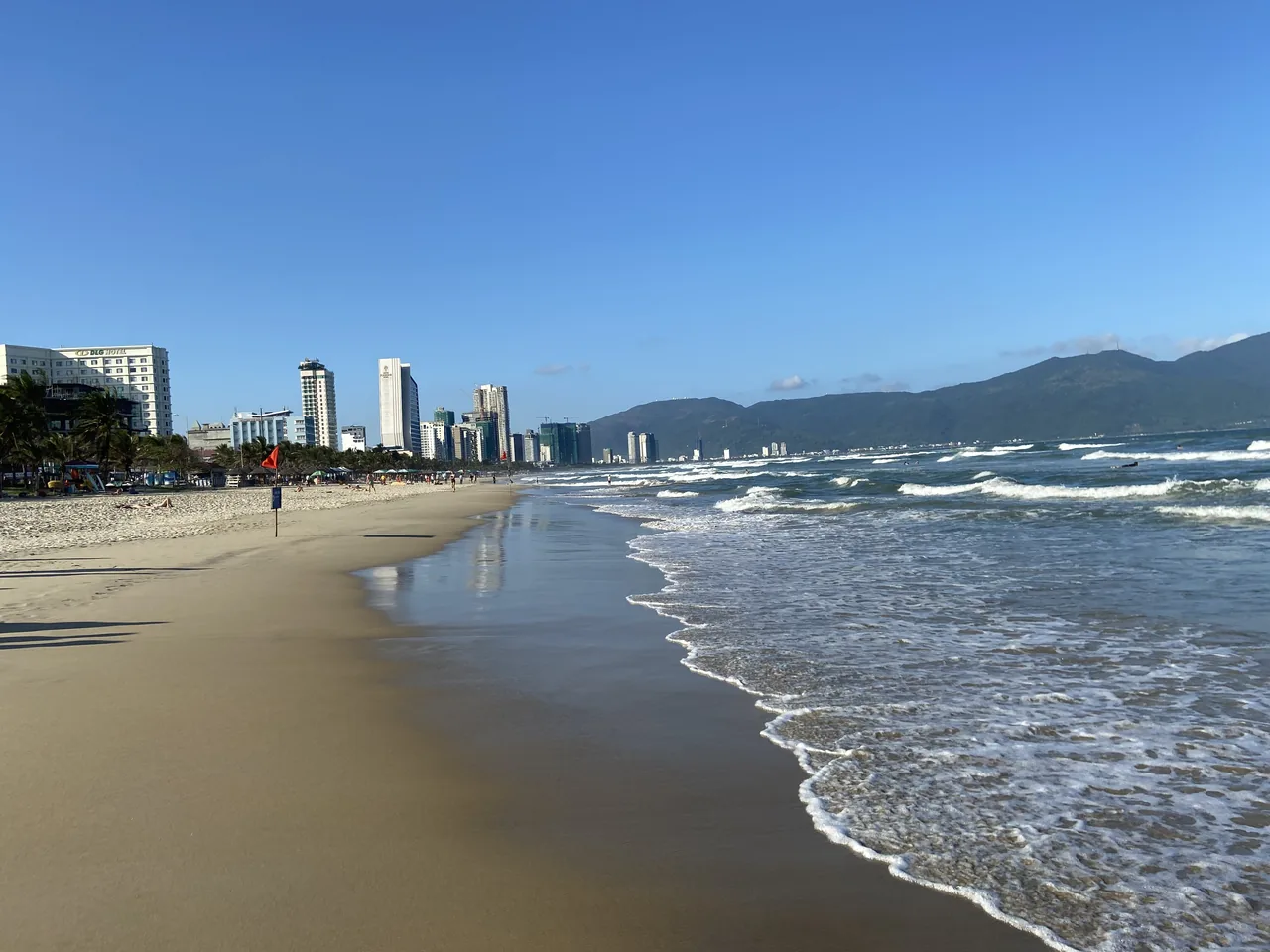
- Swim only in the flagged zones. Lifeguards mark safe areas with flags and ropes; swimming is permitted roughly 5 am to 8 pm, and you should not swim outside the marked zones or after hours.
- Learn to spot a rip. Look for a channel of water that is darker, calmer or choppier than the breaking waves on either side, often with foam or debris streaming out to sea. If a patch of sea looks oddly flat between the waves, avoid it.
- If you’re caught in one: don’t fight it. Don’t try to swim straight back to shore against the current — you’ll exhaust yourself. Stay calm, float, and swim parallel to the beach until you’re out of the channel, then angle back in. Raise an arm and shout for the lifeguard.
- Other basics. Don’t swim alone or after drinking, keep a close eye on children, and check for jellyfish warnings in summer. The Da Nang sun is fierce — sunscreen, water and shade matter.
7. Seafood & Beachfront Dining
One of the great pleasures of My Khe is eating right where you swam. The Võ Nguyên Giáp seafront road behind the beach is lined with seafood restaurants, and prices are reasonable for what’s often a same-day catch.
What to order:
- Grilled prawns with salt and chilli (tôm nướng) — the local classic.
- Steamed crab with lemongrass, clams, snails, squid and oysters — fresh and simple.
- Seafood hotpot (lẩu hải sản) — great to share, especially on a cooler evening.
Most seafood is priced by weight, so glance at the tank and confirm the price per kilo before you order. For the wider Da Nang food scene — Mì Quảng, banh mi, Vietnamese coffee and the best local spots — see our Da Nang food guide.
8. Where to Stay & What to Combine Nearby
My Khe is the reason most people stay on the beach side of Da Nang at all — and it’s superbly placed for the city’s best day trips.
- Stay on the beach. The My An / My Khe strip behind the sand is packed with beachfront resorts and good-value hotels; see our best Da Nang resorts & hotels guide for where to base yourself.
- Son Tra Peninsula (north). The jungly headland closing the bay — the giant Lady Buddha, viewpoints and rare langurs are 15–20 minutes from the sand.
- Marble Mountains (south). Cave temples and a coastal viewpoint, a short hop down the same coast road.
- The city & beyond. Ba Na Hills, Hoi An and the Dragon Bridge are all easy from a beach base — slot them into our day-by-day Da Nang itinerary.
9. Costs & Practical Tips
My Khe is one of the best-value things to do in Da Nang — the beach itself is free. Typical 2026 costs are small:
| What | Typical cost (2026) | Notes |
|---|---|---|
| Beach entry | Free | Public beach; no ticket |
| Sun lounger + parasol | ~40,000 VND/day | Vendors sell drinks, coconuts, beer nearby |
| Motorbike parking | ~5,000–10,000 VND | Use the marked lots |
| Surfboard / SUP rental | ~from ~100,000–200,000 VND | Seasonal; lessons cost more |
| Jet ski / parasailing | ~by the ride (agree first) | Confirm price & duration before you start |
| Seafood | by weight (confirm per kg) | Võ Nguyên Giáp seafront restaurants |
- Bring cash for loungers, parking, snacks and most seafood — card payment is patchy on the beach.
- Go early for sunrise, calm water, easy parking and fewer crowds; afternoons are hotter and busier.
- Mind your valuables — don’t leave phones and bags unattended on the sand while you swim.
- Respect the flags — swim in the zones, heed the lifeguards, and stay out when the red flag flies.