
Hue Day Trip from Da Nang: Imperial City, Tombs & How to Go
Vietnam’s old imperial capital is an easy day trip ~95 km north of Da Nang — the Citadel, the royal tombs, the Perfume River and what it costs.
- What: Huế, Vietnam’s imperial capital from 1802–1945 and a UNESCO World Heritage city — the walled Imperial City, royal tombs and the Perfume River.
- How far: ~95–100 km north of Da Nang; ~2.5–3.5 hrs by car over the Hai Van Pass, or a scenic ~3 hr coastal train.
- Best way: a private car or day tour (often combined with the Hai Van Pass), the scenic train, or a cheap limousine van.
- Worth it? Yes for history lovers — but a day is rushed; an overnight lets you slow down. Go in the dry season (Feb–Aug).
1. Hue: What It Is & Why Go
2. Getting from Da Nang to Hue
3. The Imperial City (Đại Nội)
4. The Royal Tombs
5. Perfume River, Thien Mu Pagoda & More
6. Hue Royal Cuisine: What to Eat
7. A Realistic Hue Day-Trip Plan
8. Tickets, Weather & When to Go
Hue (Huế) was the capital of Vietnam for nearly 150 years — the seat of the Nguyen dynasty’s 13 emperors from 1802 to 1945 — and its walled Imperial City, riverside royal tombs and refined court cuisine are unlike anything else in the country. It sits about 95–100 km north of Da Nang, just over the spectacular Hai Van Pass, which makes it one of the most rewarding day trips in central Vietnam. This guide covers how to get there, what to see in a day, the famous royal tombs, the food, a realistic day-trip plan, and the tickets, weather and timing you need to get it right. (New to the region? Start with our complete Da Nang guide.)
1. Hue: What It Is & Why Go
Hue was the imperial capital of Vietnam from 1802 to 1945, the home of the Nguyen dynasty — the country’s last royal line of 13 emperors. When the court moved here, it built a vast walled citadel, an Imperial City modelled in part on Beijing’s Forbidden City, and a string of grand tombs in the hills along the Perfume River. In 1993 the whole ensemble became Vietnam’s first UNESCO World Heritage Site, the “Complex of Hue Monuments.”
If Da Nang is beaches and modern energy and Hoi An is lantern-lit charm, Hue is history — palaces, dynastic tombs, dragon-boat rivers and a famously elegant royal cuisine. It’s the cultural heart of central Vietnam, and close enough to visit from Da Nang in a single (long) day.
2. Getting from Da Nang to Hue
Hue is about 95–100 km north of Da Nang, and there are four sensible ways to cover it. The scenic route runs over the Hai Van Pass; the fast route takes the tunnel.
| Option | Approx. price (2026) | Time | Best for |
|---|---|---|---|
| Private car / day tour | ~$55–90 car · ~$20–35 group seat | 2.5–3.5 hrs each way | Most people — door to door, stops at the pass & tombs |
| Train | ~80,000–150,000 VND | ~2.5–3 hrs | Scenery — the coastal Da Nang–Hue line is gorgeous |
| Limousine van / bus | ~120,000–150,000 VND | ~2.5 hrs | Budget travellers; frequent door-to-door vans |
| Motorbike / easy rider | ~$30–50 with a rider | 3–4 hrs with stops | Riders who want the Hai Van Pass as the main event |
For a day trip, a private car or small-group tour is the easiest choice: it usually bundles the Hai Van Pass, a Lang Co photo stop and the main Hue sights into one loop, with no logistics to manage. Doing Da Nang → Hue independently? See our “+_a(‘en’,’scams’,’transport & ride-app guide’)+” for getting around once you arrive.
3. The Imperial City (Đại Nội)
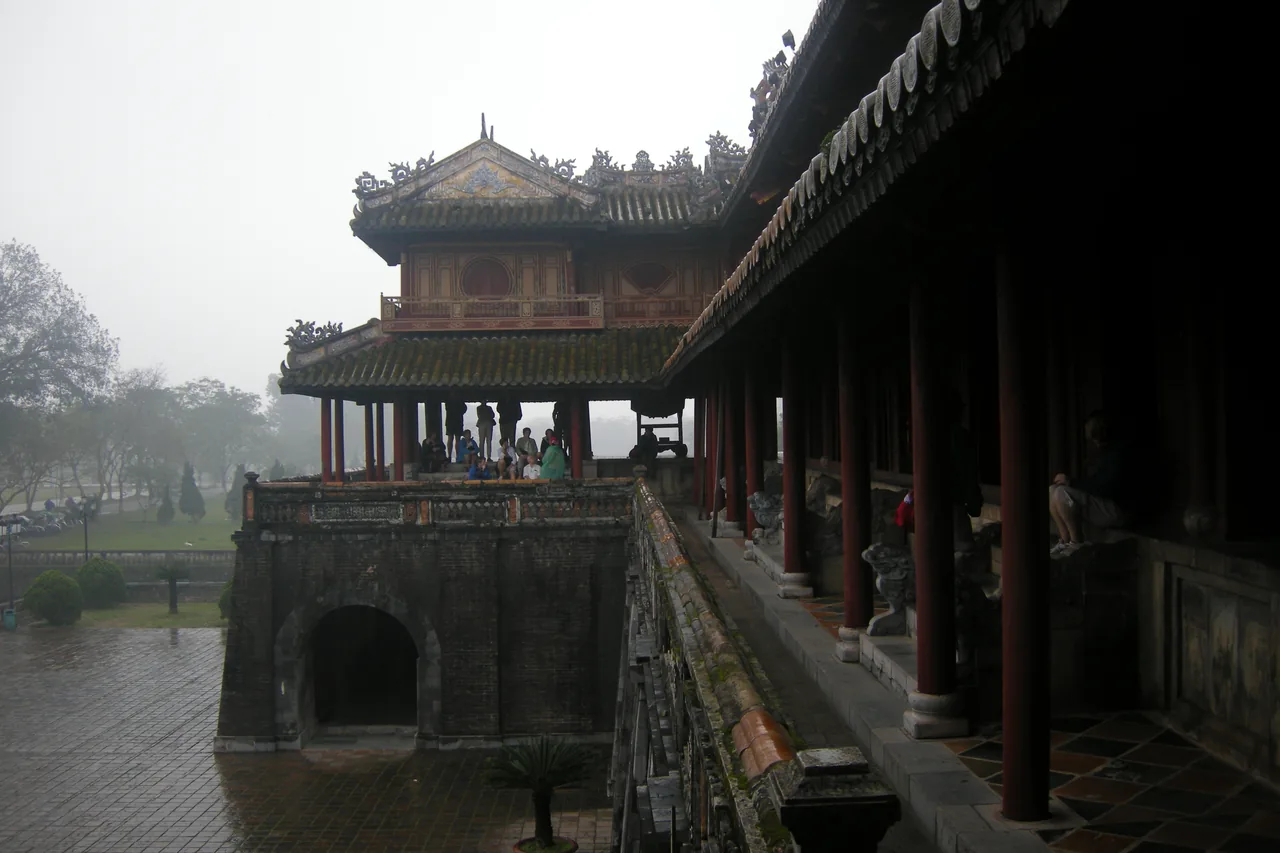
The Imperial City — locally Đại Nội — is the walled heart of the old capital and the one sight nobody skips. You enter through the magnificent Ngọ Môn (Meridian Gate), the emperor’s ceremonial entrance, and step into a 6 km² complex of palaces, courtyards, gates and gardens enclosed by a moat and thick stone walls.
Inside, the highlights are:
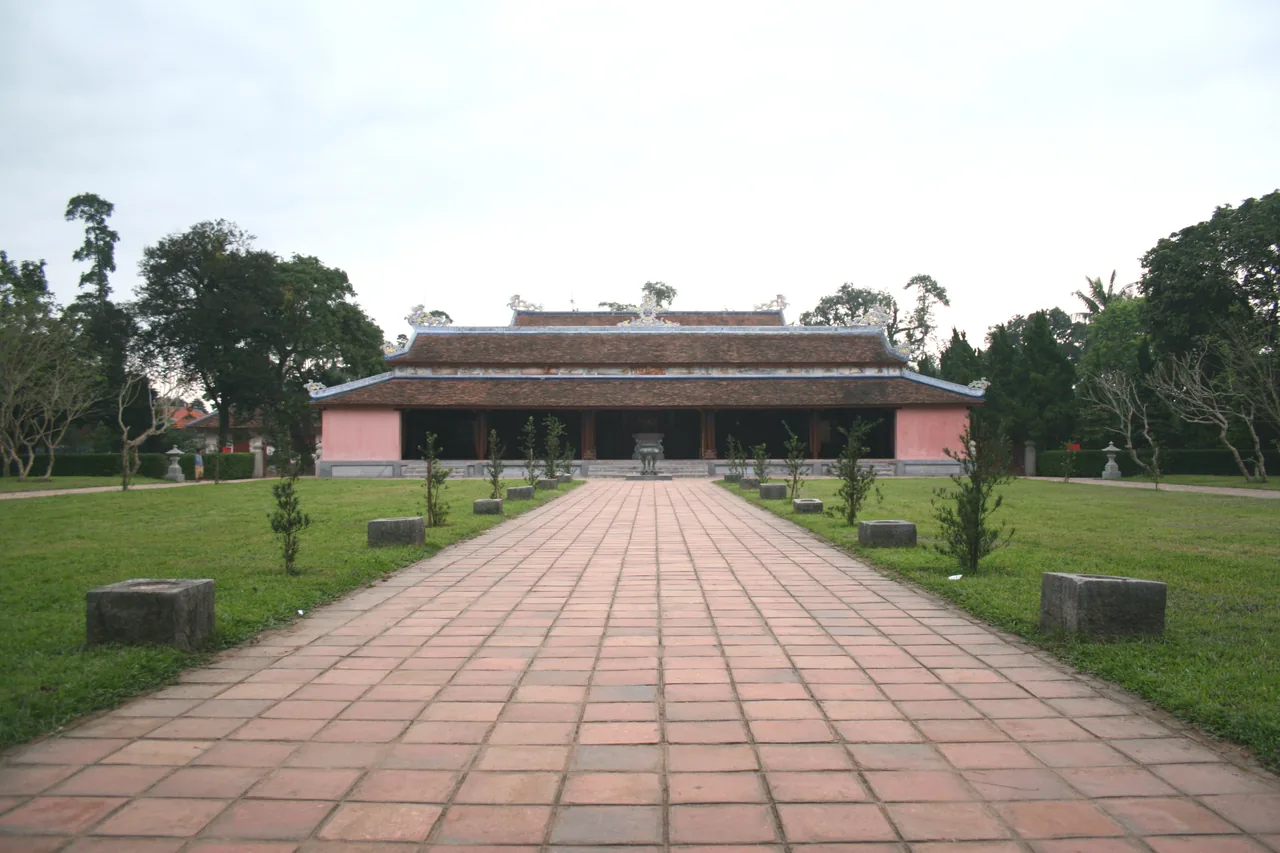
- Thái Hòa Palace — the throne hall, with its red-and-gold lacquered columns, where emperors held court.
- The Forbidden Purple City (Tử Cấm Thành) — once the emperor’s private residence; much was destroyed in 1968, but the foundations and surviving halls are slowly being restored.
- The Halls of the Mandarins, the Nine Dynastic Urns, and the royal reading pavilions, set among lotus ponds and bonsai gardens.
4. The Royal Tombs
Scattered in the hills south of the city, along the Perfume River, are the elaborate tombs of the Nguyen emperors — each one a walled garden-palace built as the emperor’s retreat in life and resting place in death. They’re spread out, so on a day trip most people pick one or two. The three best are very different in character:
| Tomb | Character | Why visit |
|---|---|---|
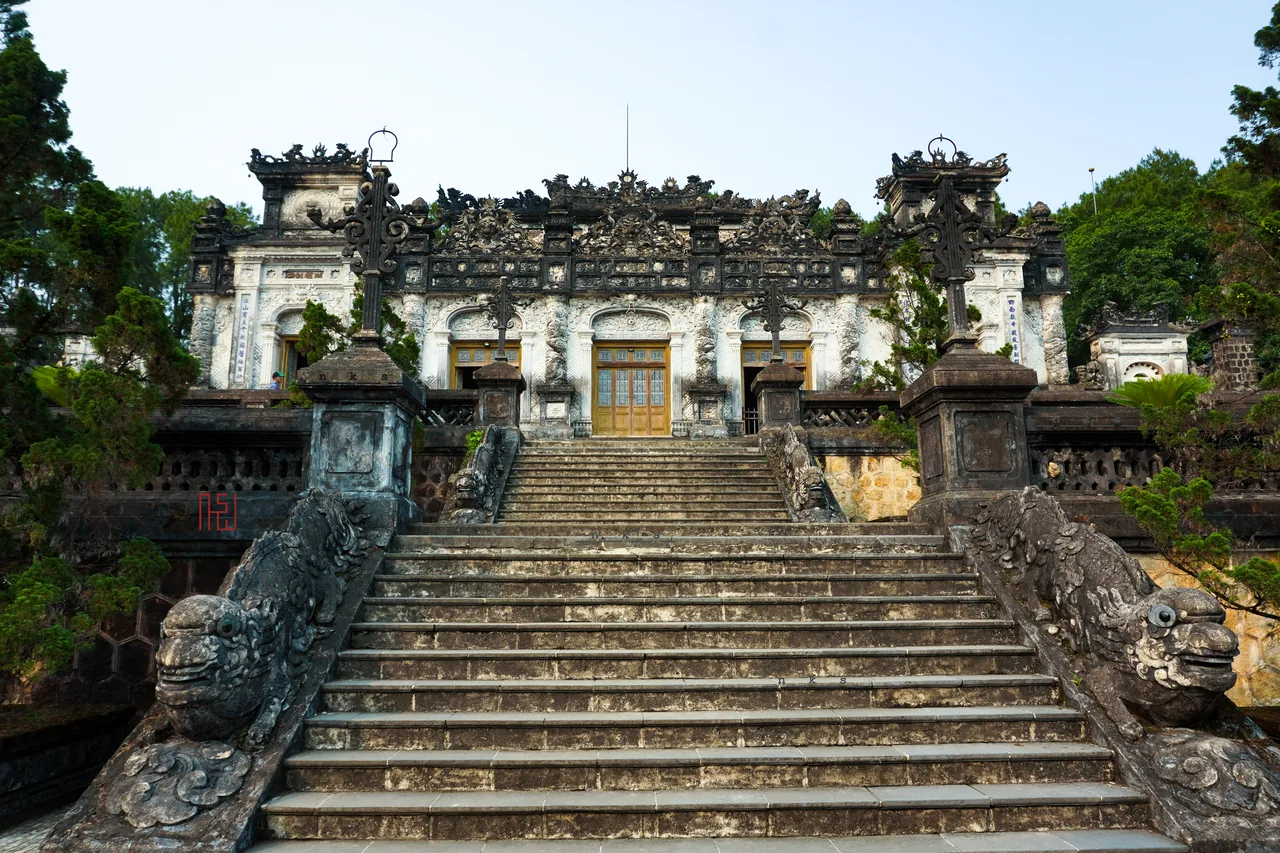
| Khải Định | Ornate & European | The most lavish — a hillside of blackened concrete and dazzling glass-and-ceramic mosaic interiors. The ‘wow’ tomb. |
| Minh Mạng | Symmetrical & classical | The most harmonious — a serene axis of courtyards, lakes and pavilions in a huge garden. The ‘beautiful’ tomb. |
| Tự Đức | Poetic & leafy | The most atmospheric — pine-shaded lakes and pavilions where the emperor wrote poetry. The ‘peaceful’ tomb. |
5. Perfume River, Thien Mu Pagoda & More
Beyond the citadel and tombs, a few more sights round out a Hue visit:
🛕 Thiên Mụ Pagoda
Hue’s iconic temple, with a seven-tier tower (1601) above the Perfume River. Home to the Austin car of the monk Thích Quảng Đức. Free and beautiful at sunset.
🚣 Perfume River cruise
A dragon-boat ride on the Sông Hương links the city to Thiên Mụ and the tombs — a relaxed way to see Hue from the water.
🏮 Đông Ba Market
The city’s big riverside market — conical hats, Hue specialties, sesame sweets (mè xửng) and a hit of everyday local life.
With a second day you could add Thuận An beach, the Abandoned Water Park (an offbeat photo favourite), or Bạch Mã National Park on the way back toward Da Nang.
6. Hue Royal Cuisine: What to Eat
Hue takes its food seriously — this was the imperial court, after all, where dishes were once prepared to please emperors. The city’s cooking is refined, a little spicy, and full of small, beautiful plates.
- Bún bò Huế — the city’s signature: a lemongrass-and-chilli beef noodle soup, richer and spicier than phở. Eat it where it was born.
- Bánh khoái — a crispy, folded savoury pancake served with a thick peanut-sesame dipping sauce.
- Bánh bèo, nậm & lọc — delicate steamed rice cakes topped with shrimp and crispy pork, served in little dishes.
- Cơm hến — humble but beloved: baby clams over rice with herbs, crackling and chilli.
- Chè & royal vegetarian food — Hue’s sweet soups (chè) and its Buddhist vegetarian cuisine are both local institutions.
7. A Realistic Hue Day-Trip Plan
Hue in a day from Da Nang is doable but full — expect an early start and a late return. Here’s a sensible loop:
- ~7:30 am — leave Da Nang; drive north over the Hai Van Pass with a photo stop and a Lang Co Bay viewpoint.
- ~10:00 am — arrive Hue; explore the Imperial City (2–3 hrs).
- ~1:00 pm — lunch: a bowl of bún bò Huế in the city.
- ~2:30 pm — visit Khải Định tomb (and Thiên Mụ Pagoda if time allows).
- ~4:30 pm — start back; return via the Hai Van Tunnel (faster) to reach Da Nang by ~7 pm.
8. Tickets, Weather & When to Go
A little planning saves money and disappointment in Hue.
- Tickets (2026, approximate): the Imperial City is around 200,000 VND; each major tomb (Khải Định, Minh Mạng, Tự Đức) is around 150,000 VND. Combo tickets covering the Imperial City plus two or three tombs save money if you’re visiting several — check current prices and combos at the gate.
- Weather: Hue is noticeably wetter and cooler than Da Nang. The dry season (roughly February–August) is best; September–December brings heavy rain and occasional flooding. Check our Da Nang & Hue weather guide before you go.
- Dress: the sites are cultural and religious — modest clothing (shoulders and knees covered) is appropriate at temples and tombs.
- Timing: start early. The Imperial City and tombs involve a lot of open-air walking, so the cooler morning hours are far more pleasant than midday.