
Getting Around Hoi An (2026): The Pedestrian Zone, Grab, Motorbikes & Parking Explained
When the Old Town goes car-free, exactly how far a Grab can take you, where to call one from, how far you can ride a motorbike, and where to park — the practical transport guide first-timers actually need.
- The Old Town is a pedestrian zone. During roughly 08:30–11:00 and 15:00–21:30 no cars, taxis or motorbikes (and at peak times, not even bicycles) may enter the protected core.
- Grab can’t drive into the core. A Grab/taxi drops you at the edge of the Old Town; you walk the last few minutes in.
- Call your Grab from a through-road, not from inside the maze — pin a landmark on a road a car can actually reach (the app may give you a fixed pickup point).
- Motorbikes are banned in the core during pedestrian hours too — park at an attended lot at the edge (~5,000–10,000 VND) and walk in.
- Best ways inside: your own two feet, a bicycle, or a cyclo (xích lô). For the beach and Da Nang, use Grab or a bike.
1. Getting Around Hoi An at a Glance
2. The Pedestrian Zone: When the Old Town Goes Car-Free
3. Grab & Taxi: How Far Can They Take You?
4. Where to Call a Grab From (so it actually finds you)
5. Motorbike & Scooter: Where You Can and Can’t Ride
6. Bicycle: The Loveliest Way to Explore
7. Cyclo (Xích Lô): The Classic Old-Town Ride
8. Walking: The Old Town Is Built For It
9. Getting to the Beaches & Countryside
10. To & From Da Nang and the Airport
11. Practical Tips & Common Mistakes
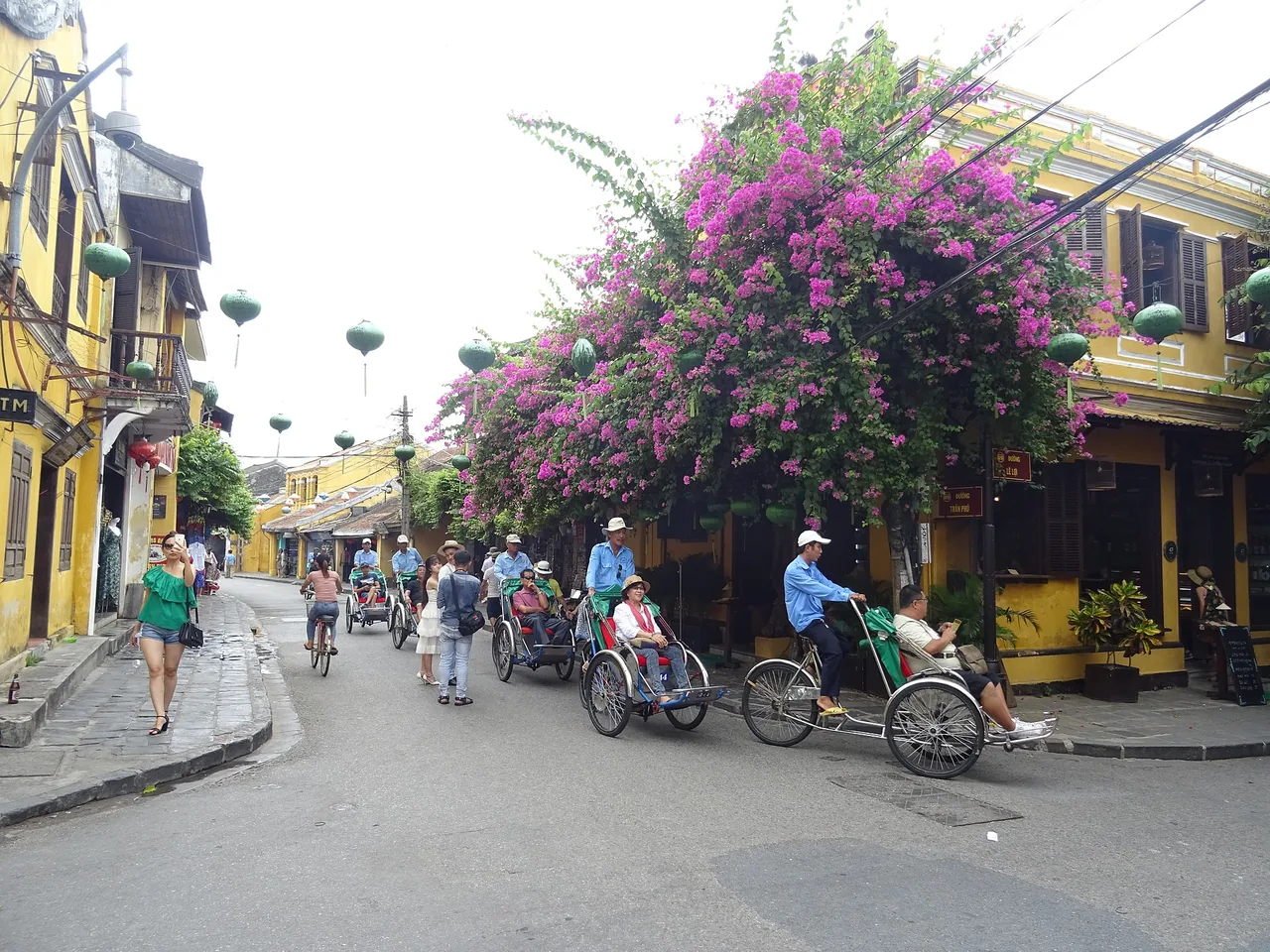
Hoi An’s magic comes partly from a simple fact: cars can’t get into most of it. The UNESCO-protected Old Town is a tangle of narrow, car-free lanes, and for big chunks of the day it becomes a strict pedestrian zone where even motorbikes are turned away. That’s wonderful to walk, but it confuses a lot of first-timers — where does my Grab actually drop me? How do I call one back? Can I ride a scooter in? Where do I park? This guide answers all of it clearly: the pedestrian-zone hours, exactly how far Grab and taxis can take you, the best places to call a ride from, where you can and can’t ride a motorbike, parking, bicycles, cyclos and how to reach the beaches and Da Nang. (New to the town? Start with our complete Hoi An travel guide and the things to do in our Hoi An experiences guide.)
1. Getting Around Hoi An at a Glance
Short version: walk or cycle inside the Old Town, and use Grab or a bike to reach the beach and Da Nang. Here’s every option and where it actually works:
| How | Best for | Cost | Can it enter the Old Town core? |
|---|---|---|---|
| On foot | The whole Old Town | Free | ✅ Yes — it’s made for walking |
| Bicycle | Old Town + countryside + An Bang | Often free at hotels | △ Yes, except peak pedestrian hours |
| Cyclo (xích lô) | A slow Old-Town loop | ~150,000–200,000 VND / 15–20 min | △ Yes, outside the strictest hours |
| Grab / Xanh SM (app) | To/from the edge, beach, Da Nang | From ~$1–2 in town | ❌ No — drops at the edge |
| Taxi | Same as Grab | Similar or a bit more | ❌ No — drops at the edge |
| Motorbike / scooter | Beaches, countryside, Da Nang | ~$6–8/day | ❌ Banned in the core at peak hours; park & walk |
| Electric shuttle / car | Short hops & tours of the fringe | Varies | △ Limited electric carts only |
2. The Pedestrian Zone: When the Old Town Goes Car-Free
This is the single most important thing to understand about getting around Hoi An. The protected Ancient Town core is closed to motor traffic for big parts of the day, and at peak times it’s people-only.
- Vehicles banned (cars, taxis, motorbikes, xe om): roughly 08:30–11:00 and 15:00–21:30 every day. During these windows the heritage streets are a strict pedestrian zone.
- Pedestrian / lantern hours run about 09:00–21:30 in summer (to ~21:00 in winter), when the lanes are at their most magical and busiest.
- At the very peak (evenings), even bicycles and cyclos are often waved out of the core — it becomes walking only.
- Outside those windows (e.g. late morning, early afternoon) motorbikes may pass slowly, but the lanes are narrow and cars still rarely enter.
3. Grab & Taxi: How Far Can They Take You?
A Grab or taxi cannot drive into the Old Town core — full stop during pedestrian hours, and barely at any time because the lanes are too narrow. What actually happens:
- Your driver takes you to a road on the edge of the protected zone — common drop-offs are around the An Hoi bridge area, Nguyễn Phúc Chu (the riverside on the An Hội side), Hoàng Diệu, Trần Hưng Đạo, and the main car parks. From there it’s a 2–10 minute walk into the lanes.
- During the car-free windows, even the edge roads can be busy and blocked — your driver may stop a little further out. That’s normal; don’t argue, just walk the last stretch.
- Coming back works the same way: walk out to a through-road first, then book (see the next section).
For how the apps work, fares and avoiding taxi traps, see our Grab vs Xanh SM guide; to get to/from Da Nang see the Da Nang–Hoi An transport guide.
4. Where to Call a Grab From (so it actually finds you)
The #1 Grab frustration in Hoi An is booking a car you can’t reach (or the driver can’t reach you). Avoid it:
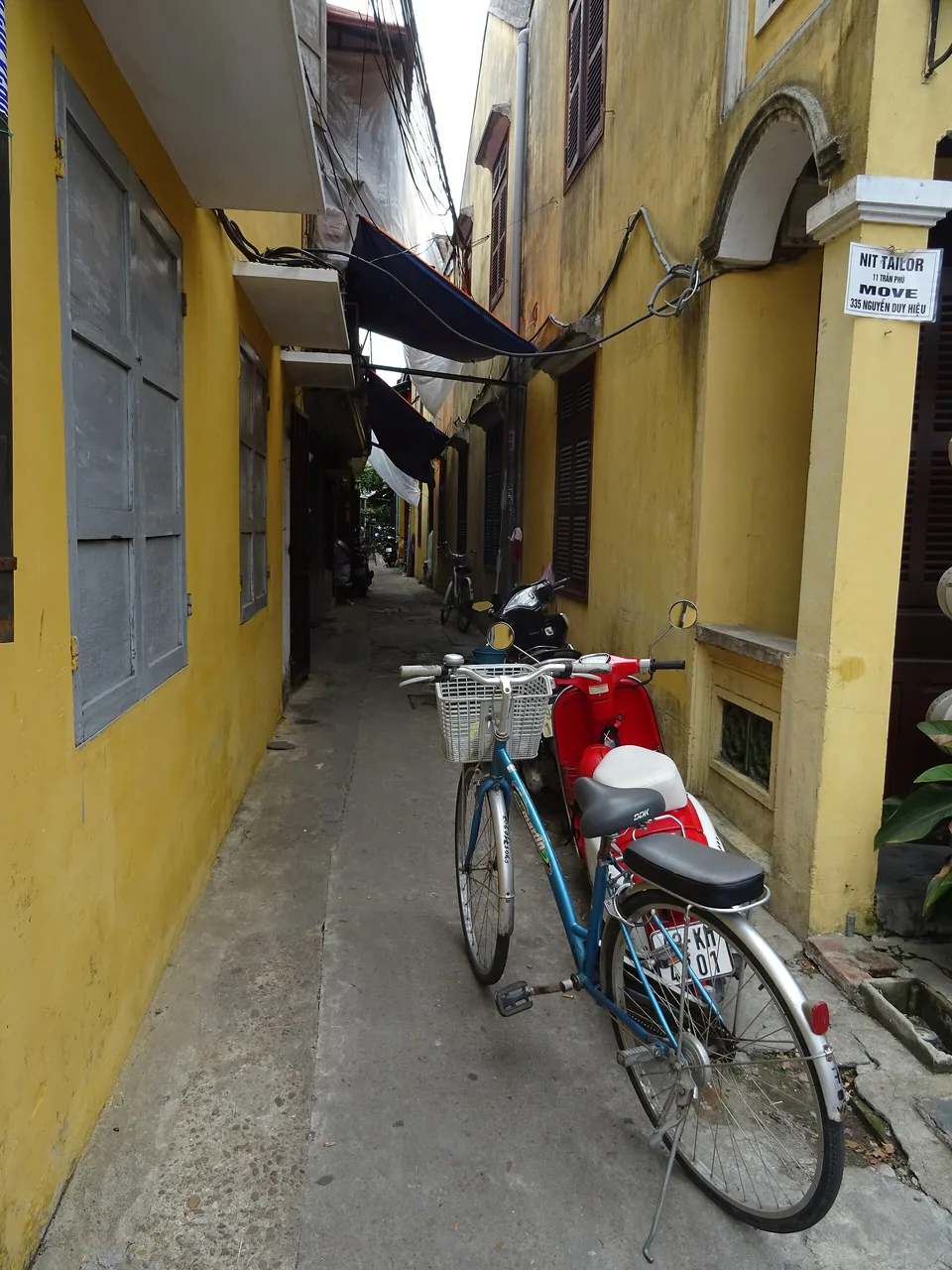
- Walk to a through-road first. Pin your pickup on a street a car can actually drive down — the riverside roads, the An Hội side across the bridge, or a main car park — not a tiny lane inside the maze.
- Use a clear landmark as the pickup (a named bridge, a hotel, the market, a car park). The app often suggests a fixed pickup point nearby — use it, and stand exactly there.
- Drop a pin slightly OUTSIDE the pedestrian zone if you’re booking during car-free hours, then walk out to meet the car.
- Message the driver a simple landmark in the app, and watch the car icon — if it’s circling, walk toward the nearest big road.

5. Motorbike & Scooter: Where You Can and Can’t Ride
A rented scooter is great for the beaches, the countryside and day trips — but not for the Old Town itself.
- The core is closed to motorbikes during pedestrian hours (≈08:30–11:00 and 15:00–21:30), exactly like cars. Outside those hours you can ride the fringe slowly, but the lanes are tight and not worth the stress.
- Park at an attended lot at the edge. Paid bike parking (“giữ xe”) rings the Old Town and the beaches — an attendant gives a ticket and watches your bike for about 5,000–10,000 VND. Never just leave it on a heritage street.
- Use the scooter for what it’s good at: An Bang & Cua Dai beaches, Tra Que, Cam Thanh, and the ride to/from Da Nang — then park and walk into the Old Town.
Where to rent, licence rules and safety are in our scooter rental guide — and remember a licence valid in Vietnam and a helmet are required.
6. Bicycle: The Loveliest Way to Explore
Hoi An is flat, compact and made for cycling, and most hotels lend bikes free. It’s the best way to link the Old Town, the rice paddies and An Bang Beach.
- Inside the Old Town: you can cycle the lanes outside the strictest pedestrian hours; during the busy evening you’ll be asked to walk it or park up.
- Park it at the same attended lots as motorbikes (a few thousand dong), or where your hotel/restaurant allows.
- Out of town: the flat back-roads to An Bang, Tra Que and the paddies are a joy early morning or late afternoon — see the rides in our things to do in Hoi An guide.
7. Cyclo (Xích Lô): The Classic Old-Town Ride
For a slow, old-fashioned loop, hop in a cyclo — the three-wheeled pedal trishaw that’s been touring Hoi An’s streets for generations. A driver pedals you past the lanterns and old houses while you sit back.
- Price: about 150,000–200,000 VND for a 15–20 minute ride — agree the price and route before you sit down, as it’s negotiable and quoted per ride.
- When: cyclos work the fringe and the lanes outside the strictest pedestrian hours; in the peak evening crush they’re limited.
- It’s touristy but genuinely pleasant — a nice way to rest your feet and see the town from a cushion.
8. Walking: The Old Town Is Built For It
Honestly, your feet are the best transport in Hoi An. The Old Town is barely a kilometre across, flat, shaded by old houses and (for much of the day) free of traffic — you can wander the whole thing without a map.
- Wear comfortable shoes for the cobbles and bring a hat/fan for the midday sun.
- Crossing the edge roads: step out slowly and steadily and let the motorbikes flow around you — don’t dart or freeze.
- Everything you’ll want — the Japanese Bridge, the tailors, the food, the lantern riverfront — is within an easy stroll.
9. Getting to the Beaches & Countryside
The coast and the rice paddies are a short hop from the Old Town:
- An Bang Beach (~4 km): a 10–15 minute Grab/taxi, a flat 20-minute bicycle ride, or a quick scooter trip. There’s attended parking at the beach.
- Cua Dai Beach: similar, a touch further east.
- Tra Que & Cam Thanh (basket boats): lovely by bicycle or a short Grab.
What to do once you’re there is in our things to do in Hoi An guide.
10. To & From Da Nang and the Airport
Hoi An has no airport or train station, so you’ll arrive via Da Nang, ~30 km (about 45 minutes) north:
- Grab / Xanh SM car: the simplest door-to-edge option, around $11–17 (≈ 280,000–420,000 VND) one way.
- Private car / airport transfer: easiest with luggage or late arrivals; worth it if you stop at the Marble Mountains.
- Shuttle & public buses: the cheapest options on a set route.
Full prices, schedules and the best pick are in our Da Nang to Hoi An transport guide, and the wider city in our getting around Da Nang guide.
11. Practical Tips & Common Mistakes
Save yourself the classic Hoi An transport headaches:
- Don’t book a Grab to a spot inside the pedestrian zone — it can’t get there. Walk out to a through-road first.
- Always use attended parking for bikes and motorbikes; keep the little ticket, and never leave a bike unattended on a heritage lane.
- Agree cyclo and any non-metered fare up front, including the route, to avoid surprises — see our Vietnam scams guide.
- Allow extra time in the evening: the car-free zone, the crowds and the one-way edge roads slow everything down.
- Keep data on your phone so Grab, maps and pickup points work — an eSIM sorts this the moment you land.
Get online the moment you land — instant install, no physical SIM, and you keep your own number.
Affiliate link — we may earn a commission at no extra cost to you.