
How We Review Hotels
An honest look at how Breeze Vietnam decides which places to recommend, where to stay, and who each one actually suits.
| What we are | A decision layer, not a personal-stay diary |
|---|---|
| Main signal | The repeated point across hundreds of recent guests |
| Recency | We weight reviews from the last ~12 months |
| Location | Distances and walk times we check on the map ourselves |
| Money | Some links are affiliate; rankings are never for sale |
1. The short, honest answer
2. The data we actually use
3. How we read reviews
4. Location, checked on the map
5. Who it’s for, not a “best hotel” list
6. Independence and how we make money
7. What we will never do
8. How to use our guides

1. The short, honest answer
We have not personally slept in every hotel we write about, and we will never pretend otherwise. What we do instead is read large amounts of real, recent guest data and turn it into a clear answer: which area suits which traveller, which specific places fit, and what their honest downsides are.
Here is the part worth thinking about. One reviewer sleeps in one room, on one night, in one season, and tells you about that single visit. We read the pattern across hundreds of recent guests on multiple platforms. That wider view is harder to fool and less swayed by a single good or bad night than any one firsthand stay.
So this page is not an apology. It explains why a careful synthesis can be more useful to you than one person’s anecdote, and exactly how we build it. If you want the result of this method in action, see our where to stay in Da Nang guide.
2. The data we actually use
A recommendation is only as good as what it is built on. We pull from several sources at once and look at where they agree, rather than leaning on a single score.
- Guest reviews across platforms. We read reviews from multiple booking sites and map listings, looking for the recurring theme instead of one headline rating.
- Recent reviews, weighted. We prioritise roughly the last twelve months. Hotels change owners, renovate, or quietly decline, so an old five-star average can be misleading.
- Price ranges and seasonal movement. We note what a place tends to cost and flag that rates swing hard by date, so you know what “expect roughly this” means.
- Map data we check ourselves. Real distance and walking time to the beach, airport, and landmarks, not the wording on a listing.
- Published property facts. Number of pools, kids-club age ranges, cancellation terms, and room types, taken from the property’s own details.
3. How we read reviews
Reading reviews well is a skill, and most of it is filtering. A pile of star ratings is not insight until you separate the signal from the noise.
- We look for the repeated point. When dozens of independent guests mention the same thing, that is real. A single furious or single glowing review is noise we set aside.
- We surface the honest cons. Thin walls, a long walk to food, tired rooms, surprise fees. A guide that lists only good points is an advert, not a guide.
- We watch for fake patterns. Sudden bursts of identical five-star reviews with generic text get discounted, not counted.
- We cross-check platforms. If the same complaint shows up on several sites, we treat it as a genuine, repeatable problem.
4. Location, checked on the map
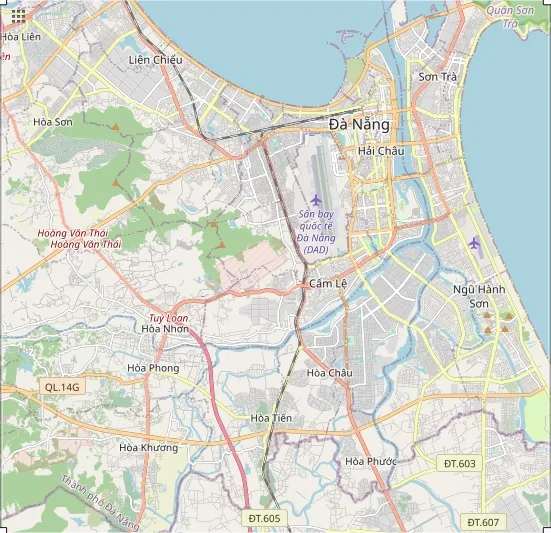
Location decides most of how a trip feels, and it is the easiest thing for a listing to fudge. So we verify it ourselves rather than repeating marketing language.
“Five-minute walk to the beach” gets measured on a map before we agree with it. We also explain the trade-offs a single photo hides: the price gap between a beach-road room and a back-street one, a beautiful resort that turns out to be twenty-five minutes from any outside restaurant, or a pretty alley that is genuinely loud at one in the morning.
That kind of context is the difference between a place that photographs well and a place that fits your actual days. To plan the rest of your trip around where you sleep, our things to do in Da Nang guide pairs naturally with this step, and our complete Vietnam travel guide covers the wider picture.
5. Who it’s for, not a “best hotel” list
There is no single best hotel, because there is no single traveller. A spot that delights a couple on a quiet getaway can be the wrong call for a family with a toddler, or for a budget backpacker counting every dong.
So instead of one ranking pretending to suit everyone, we tell you who a place fits and who should skip it:
- Families with young kids who need a pool, space, and a short walk to food.
- Couples after quiet, a view, and a calmer street.
- Digital nomads who care about reliable wifi and a desk.
- Budget travellers who will trade a beach view for a much lower rate.
- First-timers who want to be central and never feel stranded.
A ranking that ignores who you are ends up fitting no one. Matching the place to the traveller is the whole point.
6. Independence and how we make money
We would rather be plain about this than have you wonder. Running an independent site costs money, and here is exactly how ours works.
- Some links are affiliate links. If you book through one, we may earn a small commission, at no extra cost to you. You pay the same price you would anyway.
- This never changes a ranking. No hotel pays us to be recommended or placed higher. A property cannot buy a better position on this site.
- Honest fit is the business model. We would rather you book the place that genuinely suits you, have a good trip, and come back, than send you somewhere that simply pays the most.
If a recommendation and a commission ever pulled in different directions, the recommendation wins. That is not a slogan; it is the only way a trust page like this is worth writing.
7. What we will never do
A method is defined as much by its hard limits as by its steps. These are lines we do not cross, full stop.
- No fake firsthand experience. We will never write “when I stayed here, the breakfast was…” about a place we have not stayed in. If we did not sleep there, we do not pretend we did.
- No invented specifics. We do not make up a room number, a meal, or a staff member’s name to sound more convincing.
- No hidden problems. We never quietly drop a known, repeated complaint to protect a commission.
- No pay-to-rank lists. We never publish a “Top 10” that is really just the ten highest-paying links wearing a number.
If you ever spot us breaking one of these, we want to hear about it, because the whole site depends on them holding.
8. How to use our guides
Here is the practical close, in the order that actually works. Follow these three steps and you will book well almost every time.
- 1. Pick the area first. Location shapes more of how a trip feels than anything else, so settle on the neighbourhood before any specific hotel.
- 2. Shortlist the places that fit you. Use the who-it’s-for notes to cut a long list down to two or three real candidates.
- 3. Check live prices for your exact dates. Rates move a lot by date and season, so the live check is the true final step, not an afterthought.
As a quick example of that last step, you can pull up live prices and availability for your dates right here:
Start with the area decision in our where to stay in Da Nang guide, then zoom out to the rest of your trip with the complete Vietnam travel guide.